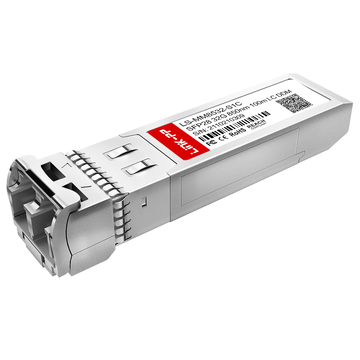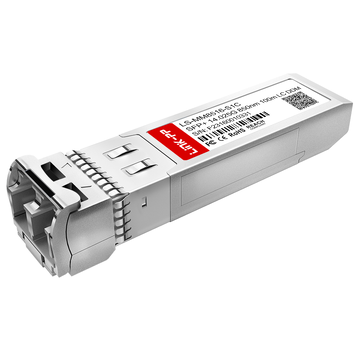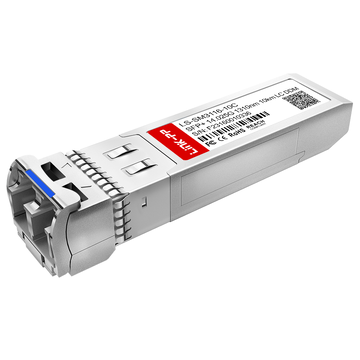
Cisco DS-SFP-FC16G-LW is a 16G Fibre Channel SFP+ optical transceiver designed to support high-speed, long-distance storage networking in modern data center environments. As enterprise storage demands continue to grow, especially with virtualization, cloud integration, and high-performance databases, reliable and scalable Fibre Channel connectivity has become a critical requirement for maintaining consistent data throughput and low-latency performance.
This module operates over single-mode fiber using a 1310nm wavelength, enabling stable transmission over distances of up to 10km. It is widely used in Storage Area Networks (SANs) where high availability and predictable performance are essential, particularly in environments that require interconnection between separate buildings or geographically distributed data centers. By supporting 16G Fibre Channel speeds, it provides a balance between bandwidth efficiency and infrastructure flexibility without requiring immediate migration to higher-cost next-generation systems.
Understanding the Cisco DS-SFP-FC16G-LW is important not only from a hardware perspective but also from a network design standpoint. Factors such as compatibility with Cisco MDS or Nexus platforms, fiber type selection, and link budget planning all directly influence deployment success. In addition, proper evaluation of optical characteristics and interoperability considerations helps ensure stable long-term operation in mission-critical storage environments.
This guide provides a structured breakdown of the module's specifications, use cases, compatibility requirements, and deployment considerations, helping readers gain a clear and practical understanding of how the Cisco DS-SFP-FC16G-LW fits into modern Fibre Channel architectures.
🔯 Overview of Cisco DS-SFP-FC16G-LW
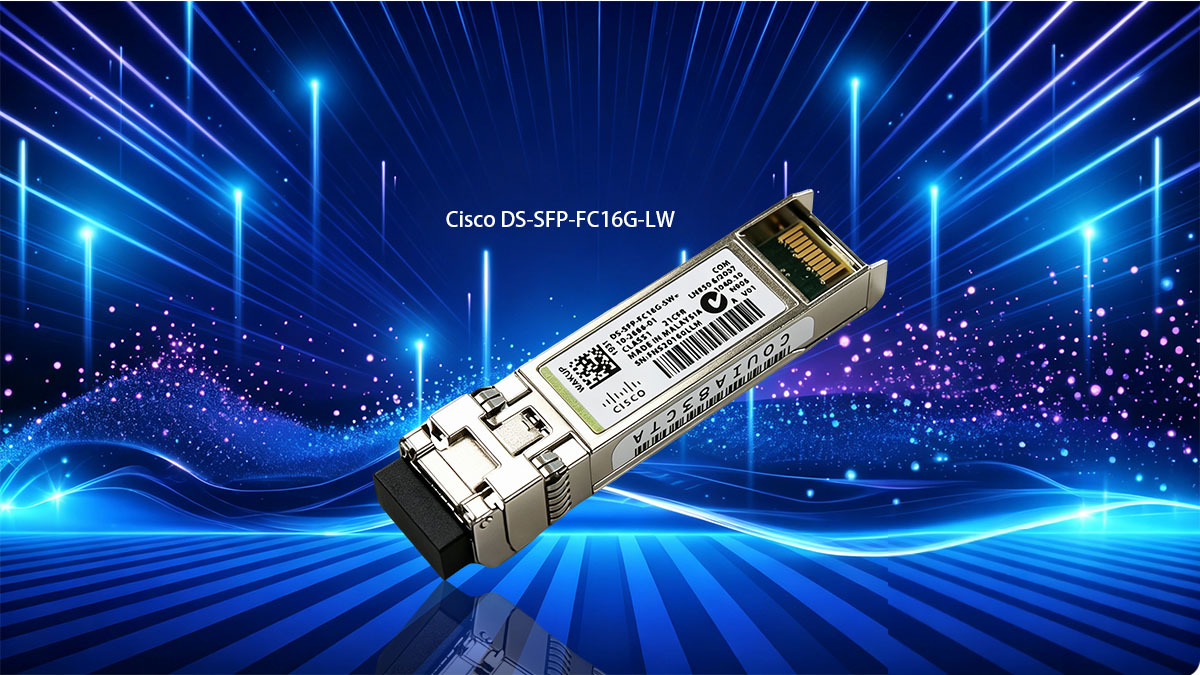
Cisco DS-SFP-FC16G-LW is a long-wave 16G Fibre Channel SFP+ transceiver designed for high-performance storage networking over single-mode fiber. In practical terms, it is used to connect Fibre Channel switches and storage devices across medium to long distances while maintaining stable, loss-resistant data transmission. Its main value lies in enabling reliable SAN connectivity where reach and signal integrity are both critical requirements.
What Is Cisco DS-SFP-FC16G-LW
The Cisco DS-SFP-FC16G-LW is a 16G Fibre Channel SFP+ optical module built for long-distance data transmission in storage area networks.
In simple terms, it functions as a high-speed optical interface that converts electrical signals from a switch into optical signals for transmission over single-mode fiber. It is specifically engineered for environments requiring consistent performance across extended distances, typically up to 10km.
To better understand its role, it can be broken down into key functional characteristics:
- It operates under the 16G Fibre Channel standard for high-throughput storage traffic
- It uses a 1310nm wavelength optimized for long-distance transmission
- It is designed for single-mode fiber (SMF) infrastructure
- It follows the SFP+ form factor for hot-swappable deployment in Cisco platforms
These characteristics make it a foundational component in enterprise SAN architectures where predictable latency and data integrity are required.
Key Features and Highlights
The Cisco DS-SFP-FC16G-LW is widely used because it combines standardized Fibre Channel performance with long-reach optical capability. Its design focuses on stability, compatibility, and consistent data delivery under enterprise workloads.
Before listing its features, it is important to note that these attributes directly influence deployment decisions in storage networking environments:
- Supports up to 14.025Gbps Fibre Channel data rate (16G FC class)
- Operates at 1310nm wavelength for long-distance transmission efficiency
- Enables link distances up to approximately 10km over single-mode fiber
- Hot-swappable SFP+ form factor simplifies installation and maintenance
- Built for low-latency, loss-sensitive storage traffic environments
These features collectively ensure that the module can sustain high-performance SAN connectivity without frequent signal regeneration or intermediate amplification.
Typical Use Cases
Cisco DS-SFP-FC16G-LW is primarily deployed in environments where storage traffic must be carried reliably over longer distances or across separate infrastructure zones.
In real-world deployments, its usage is concentrated in several key scenarios where performance and reach are equally important:
- Enterprise Storage Area Networks (SANs) connecting servers and storage arrays
- Data center interconnects requiring stable Fibre Channel links over fiber backbones
- Campus or metro-area storage connectivity between geographically separated facilities
- High-availability environments where redundant long-distance paths are required
These use cases highlight that the module is not intended for short-range intra-rack connectivity, but rather for structured, long-reach storage networking designs.
🔯 Technical Specifications Explained
The Cisco DS-SFP-FC16G-LW is defined by a set of optical, electrical, and environmental specifications that determine how it performs in real Fibre Channel SAN deployments. Understanding these parameters is essential for correctly planning link budgets, ensuring compatibility, and maintaining stable long-distance connectivity.
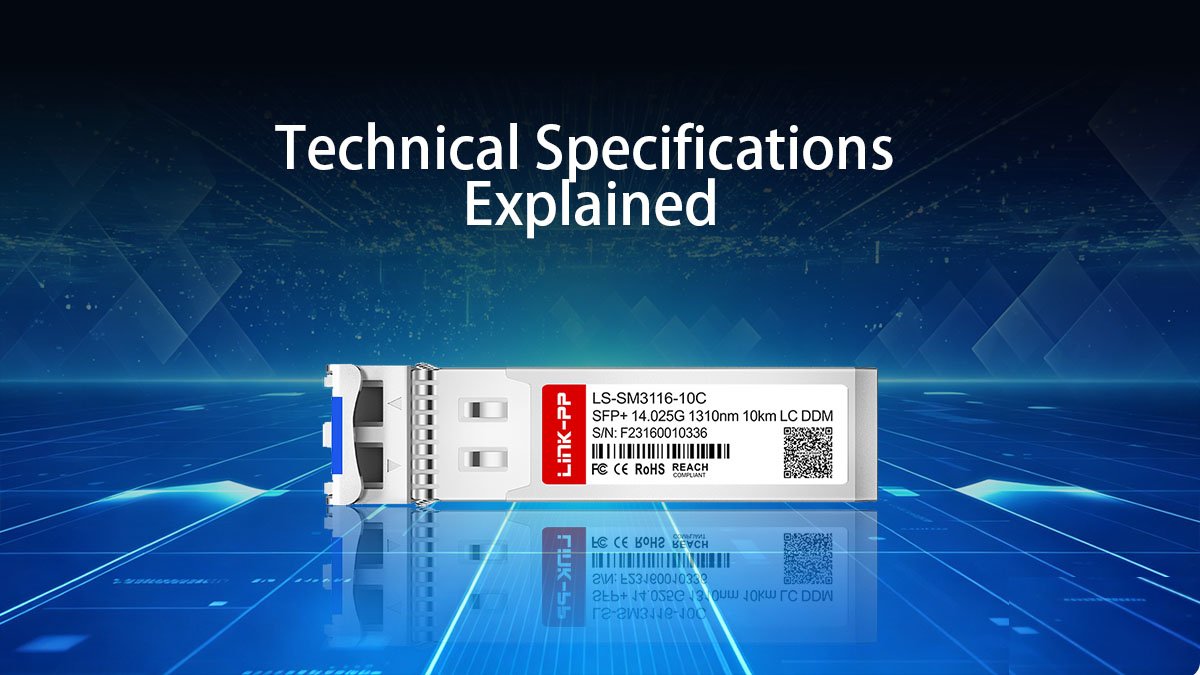
To begin with, the most critical aspect of this module is its optical performance, which directly impacts transmission distance and signal integrity.
Optical Performance Parameters
The optical characteristics of the Cisco DS-SFP-FC16G-LW define how efficiently it transmits Fibre Channel signals over single-mode fiber and how far those signals can reliably travel without degradation.
These parameters are especially important in SAN design because they determine link stability and maximum deployment distance.
| Parameter | Specification | Impact on Network Performance |
|---|---|---|
| Wavelength | 1310nm | Optimized for long-distance transmission over SMF |
| Data Rate | Up to 14.025Gbps (16G FC) | Supports high-speed storage traffic with low latency |
| Transmission Distance | Up to 10km | Enables inter-building and metro data center connectivity |
| Optical Power Budget | Defined by Tx/Rx levels | Determines allowable loss across fiber link |
| Receiver Sensitivity | High sensitivity for weak signals | Improves link reliability over long spans |
These values collectively ensure that the module maintains stable signal quality even in extended reach environments, making it suitable for enterprise-grade SAN architectures.
In addition to optical behavior, electrical interface compliance also plays a key role in ensuring interoperability and consistent operation across Cisco platforms.
Electrical and Interface Standards
Beyond optical performance, the Cisco DS-SFP-FC16G-LW is built to meet strict electrical and protocol standards that ensure compatibility within Fibre Channel ecosystems.
These standards guarantee that the module can integrate seamlessly into supported switching platforms without requiring protocol conversion or special configuration.
Key electrical and interface characteristics include:
- Complies with SFP+ Multi-Source Agreement (MSA) standards for physical and electrical interface compatibility
- Supports Fibre Channel Protocol (FC-PI-5) specifications for 16G operation
- Designed for native integration with Cisco MDS and compatible switching platforms
- Hot-pluggable electrical interface allows live insertion and removal without system downtime
- Standardized signaling ensures interoperability within multi-vendor Fibre Channel environments (subject to validation)
These properties ensure consistent communication between the transceiver and host equipment, reducing integration complexity in SAN deployments.
While electrical and optical specifications define performance, environmental factors determine operational reliability over time.
Environmental and Reliability Metrics
The Cisco DS-SFP-FC16G-LW is engineered for enterprise environments where continuous operation and hardware reliability are critical requirements.
These environmental parameters ensure the module can operate consistently under typical data center conditions without performance degradation.
Before listing the key metrics, it is important to understand that these values directly influence deployment stability and long-term maintenance requirements:
- Operating temperature range typically suited for data center environments (commercial-grade conditions)
- Low power consumption design to reduce thermal load in high-density switch configurations
- High MTBF (Mean Time Between Failures) for long-term operational reliability
- Compliance with industry-standard environmental and safety certifications for optical modules
- Resistance to normal vibration and handling conditions in rack-mounted systems
These characteristics ensure that the module can maintain stable operation even in dense, high-traffic SAN environments where uptime is critical.
Together, optical performance, electrical compliance, and environmental resilience form the foundation of the Cisco DS-SFP-FC16G-LW's suitability for enterprise Fibre Channel deployments.
🔯 Compatibility and Platform Support
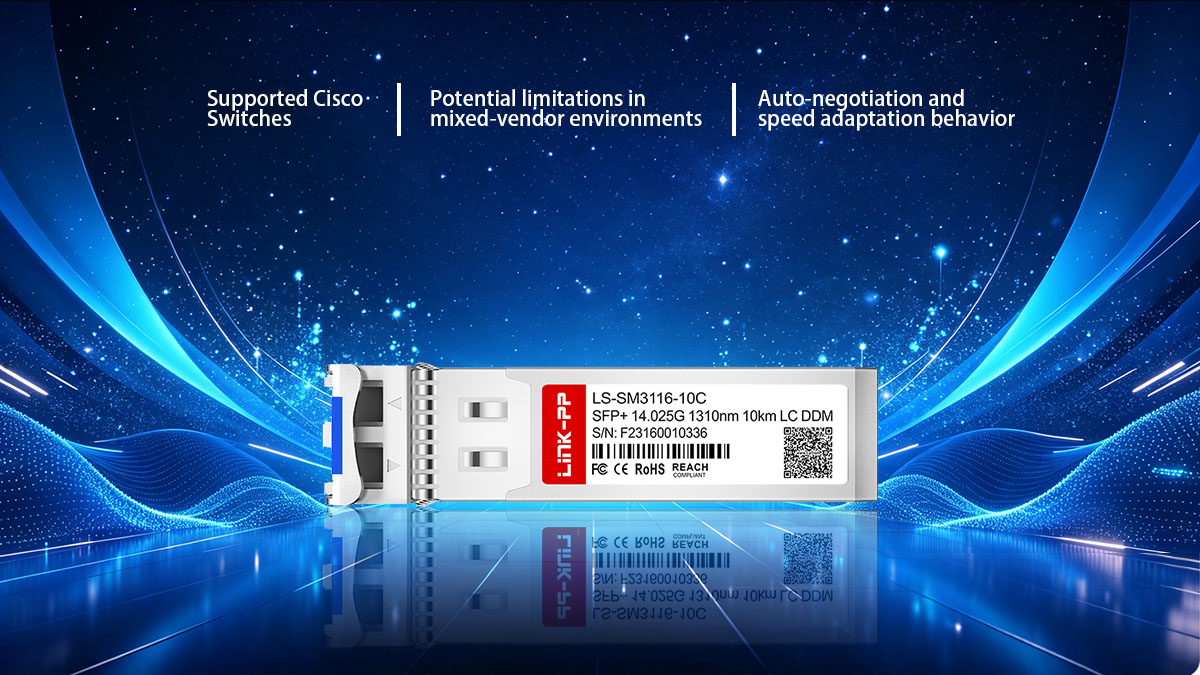
The Cisco DS-SFP-FC16G-LW is designed to integrate into Cisco Fibre Channel ecosystems while maintaining standards-based interoperability. In practical deployment terms, compatibility determines whether the module can operate reliably within a given switch platform, firmware version, and mixed-vendor SAN environment. Proper compatibility planning helps prevent link failures, negotiation issues, or unsupported transceiver warnings.
Supported Cisco Switches
The Cisco DS-SFP-FC16G-LW is primarily intended for use in Cisco's Fibre Channel switching platforms, especially within enterprise SAN infrastructures.
Before listing typical platform support, it is important to understand that compatibility may depend on software version, port configuration, and licensing in certain environments.
Common supported environments include:
- Cisco MDS Series Fibre Channel switches used in enterprise SAN deployments
- Cisco Nexus platforms with Fibre Channel over Ethernet (FCoE) or native FC modules (where supported)
- Director-class Cisco SAN switches designed for high-density storage connectivity
- Modular line cards that support 16G Fibre Channel modules
These platforms are typically validated for Cisco-branded optics, ensuring full feature support including diagnostics and digital monitoring.
In addition to hardware compatibility, firmware and system software play a critical role in ensuring stable operation.
Key considerations include:
- Switch NX-OS or SAN-OS version must support 16G FC optics
- Port configuration must match 16G Fibre Channel mode settings
- Some environments may require explicit transceiver validation or command-level enabling
When properly aligned with supported platforms, the module operates with full functionality and predictable performance.
Interoperability with Third-Party Equipment
Although the Cisco DS-SFP-FC16G-LW is optimized for Cisco environments, it is based on industry standards that enable a certain level of interoperability with third-party Fibre Channel hardware.
However, interoperability is not always guaranteed and should be validated before deployment in mixed-vendor environments.
Key points to consider include:
- The module follows Fibre Channel and SFP+ MSA standards, enabling baseline compatibility with non-Cisco switches
- Some third-party systems may require vendor coding compatibility to recognize the module correctly
- Digital diagnostics (DOM/DDM) features may be partially limited or unavailable in non-Cisco platforms
- Performance behavior may vary depending on firmware and optical validation policies of the host device
In practice, interoperability is often used in heterogeneous SAN environments, but careful testing is required to ensure link stability and feature support consistency.
Backward Compatibility Considerations
One of the practical advantages of the Cisco DS-SFP-FC16G-LW is its ability to operate within mixed-speed Fibre Channel environments, supporting gradual infrastructure upgrades rather than full system replacement.
This backward compatibility is particularly useful in phased migration strategies where older storage systems remain in operation.
Key compatibility behaviors include:
- Support for interoperability with 8G and 4G Fibre Channel infrastructure through auto-negotiation mechanisms
- Ability to operate in reduced-speed mode depending on connected port capabilities
- Seamless integration into hybrid SAN environments during upgrade transitions
- Maintains optical compatibility over standard single-mode fiber links regardless of speed tier
These characteristics allow organizations to extend the lifecycle of existing infrastructure while gradually transitioning to higher-speed storage networks.
🔯 Deployment Scenarios and Best Practices
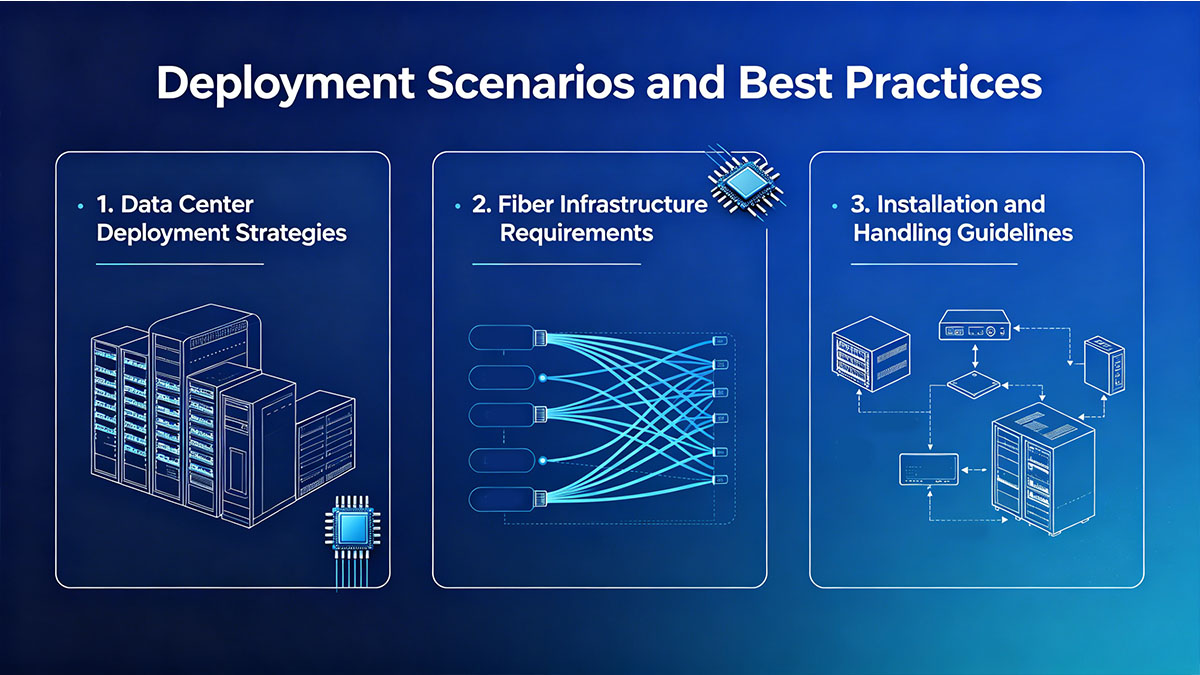
The Cisco DS-SFP-FC16G-LW is typically deployed in environments where storage traffic requires both high performance and stable long-distance connectivity. In real SAN designs, its value is not only defined by speed, but also by how effectively it integrates into structured fiber infrastructure and redundancy strategies. Proper deployment practices directly influence link stability, latency consistency, and long-term maintenance efficiency.
Data Center Deployment Strategies
In modern data center environments, the Cisco DS-SFP-FC16G-LW is commonly used to support scalable and resilient storage architectures. Its long-reach capability makes it suitable for interconnecting separate storage zones or extending SAN fabrics across buildings.
Before listing typical deployment patterns, it is important to note that SAN design focuses heavily on redundancy and deterministic performance.
Common deployment strategies include:
- Core-to-edge SAN connectivity, linking core Fibre Channel directors to edge switches
- Inter-switch links (ISLs) between Cisco MDS switches for fabric expansion
- Redundant dual-fabric architecture to ensure high availability and failover capability
- Cross-data-center replication links for disaster recovery (DR) environments
These strategies help ensure that storage traffic remains resilient even under link or device failure scenarios, which is critical for enterprise workloads such as databases and virtualization platforms.
Fiber Infrastructure Requirements
The performance of the Cisco DS-SFP-FC16G-LW depends heavily on the quality and configuration of the underlying optical fiber infrastructure. Since it operates over long-wave 1310nm transmission, it is specifically optimized for single-mode fiber environments.
Before listing requirements, it is important to emphasize that improper fiber selection or installation can significantly reduce link performance or stability.
Key infrastructure requirements include:
- Use of single-mode fiber (SMF), typically OS1 or OS2 grade
- LC duplex connectors for standardized SFP+ interfacing
- Clean and properly polished connectors to minimize insertion loss
- Accurate fiber attenuation planning to stay within optical budget limits
- Proper cable management to avoid micro-bending and physical stress
These requirements ensure that optical signals remain stable over long distances, especially in 10km-scale deployments.
Installation and Handling Guidelines
Correct installation and handling of the Cisco DS-SFP-FC16G-LW is essential for maintaining both optical performance and hardware longevity. Even small handling errors can lead to signal degradation or transceiver damage.
Before outlining best practices, it is important to recognize that SFP+ modules are sensitive optical components requiring careful physical management.
Recommended installation and handling practices include:
- Always handle the module by its edges and avoid touching optical connectors directly
- Ensure SFP+ ports are clean before insertion to prevent contamination-related signal loss
- Insert and remove the module gently to avoid damaging the SFP+ cage or connector pins
- Use proper ESD (electrostatic discharge) protection during handling and installation
- Verify secure seating of the module to ensure stable electrical and optical contact
Additional operational recommendations:
- Avoid exposing the module to dust or unprotected environments outside of installed chassis
- Label and document fiber connections for easier troubleshooting and maintenance
- Follow manufacturer and platform-specific installation procedures for Cisco switches
When these practices are followed consistently, the module can deliver stable long-distance Fibre Channel performance with reduced risk of link instability or hardware failure.
🔯 Performance Advantages in SAN Environments
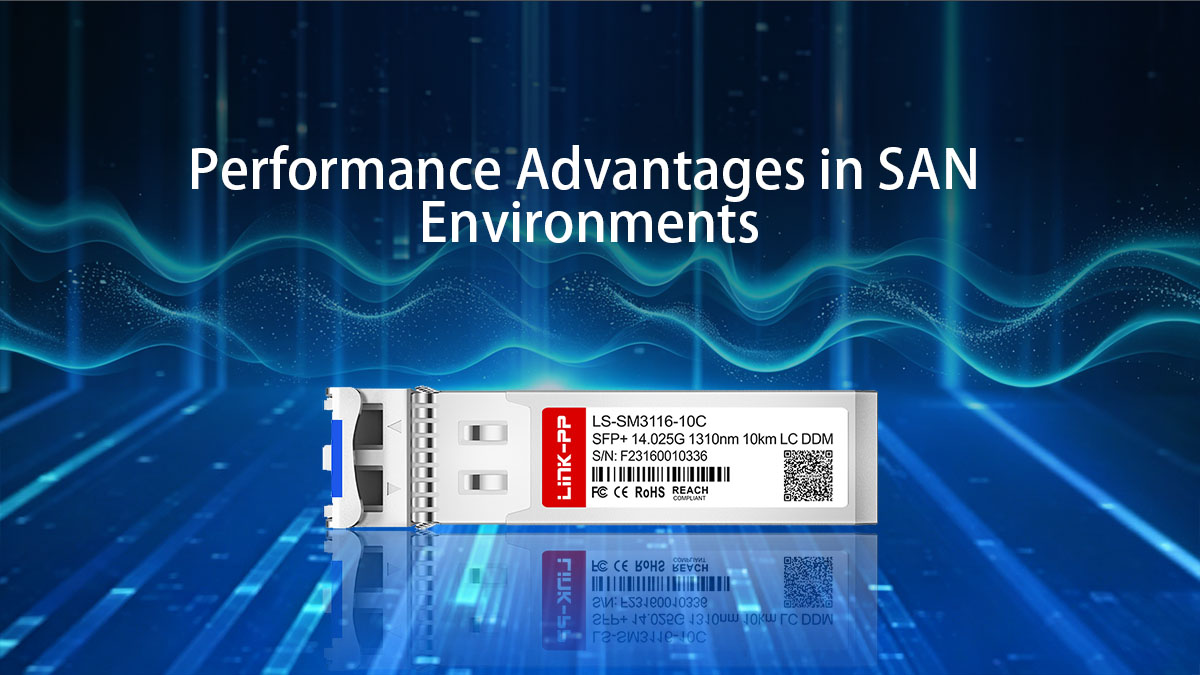
The Cisco DS-SFP-FC16G-LW delivers measurable performance benefits in Storage Area Network (SAN) environments where throughput consistency, low latency, and long-distance reliability are essential. In practical deployments, its advantages are not limited to raw speed, but extend to how efficiently it supports enterprise storage workloads under sustained traffic conditions.
High-Speed Data Transmission
The primary performance advantage of the Cisco DS-SFP-FC16G-LW is its ability to support 16G-class Fibre Channel data rates, enabling fast and stable storage communication between servers and storage arrays.
Before breaking down its benefits, it is important to understand that SAN performance depends heavily on predictable latency and consistent throughput rather than peak speed alone.
Key performance characteristics include:
- Supports up to 14.025Gbps Fibre Channel throughput for high-volume storage traffic
- Reduces bottlenecks in virtualized environments with heavy I/O workloads
- Maintains stable transmission rates under sustained read/write operations
- Optimized for low-latency communication between storage nodes
These capabilities make it particularly effective in environments such as database clusters, virtualization platforms, and high-performance computing storage systems, where consistent data delivery is critical.
Long-Distance Connectivity
One of the most important advantages of the Cisco DS-SFP-FC16G-LW is its ability to maintain reliable Fibre Channel communication over long distances using single-mode fiber.
Before listing its benefits, it is important to note that long-distance SAN links are often used in distributed data center architectures and disaster recovery setups.
Key advantages include:
- Supports transmission distances up to 10km over single-mode fiber
- Enables inter-building SAN connectivity without signal regeneration equipment
- Supports metro-area data center linking for geographically distributed storage systems
- Reduces infrastructure complexity by eliminating the need for intermediate optical amplification in many cases
This long-reach capability allows organizations to design more flexible storage architectures, especially where physical separation between compute and storage resources is required.
Reliability and Stability
In mission-critical storage networks, consistent performance under continuous load is more important than peak theoretical speed. The Cisco DS-SFP-FC16G-LW is engineered to provide stable and predictable behavior in such environments.
Before outlining specific benefits, it is important to emphasize that SAN instability can lead to data access delays or application-level performance degradation.
Key reliability advantages include:
- Low bit error rate (BER) performance ensures data integrity during transmission
- Stable optical signaling reduces risk of link flapping or intermittent connectivity
- Consistent performance under high traffic utilization scenarios
- Built-in support for digital diagnostics helps monitor real-time optical health
Additional operational benefits:
- Supports continuous 24/7 operation in enterprise data center environments
- Designed for predictable performance under varying workload conditions
- Integrates well into redundant SAN fabric architectures for high availability
These reliability characteristics make the module suitable for environments where downtime or inconsistent storage access can directly impact business operations.
🔯 Comparison with Other Fibre Channel Transceivers
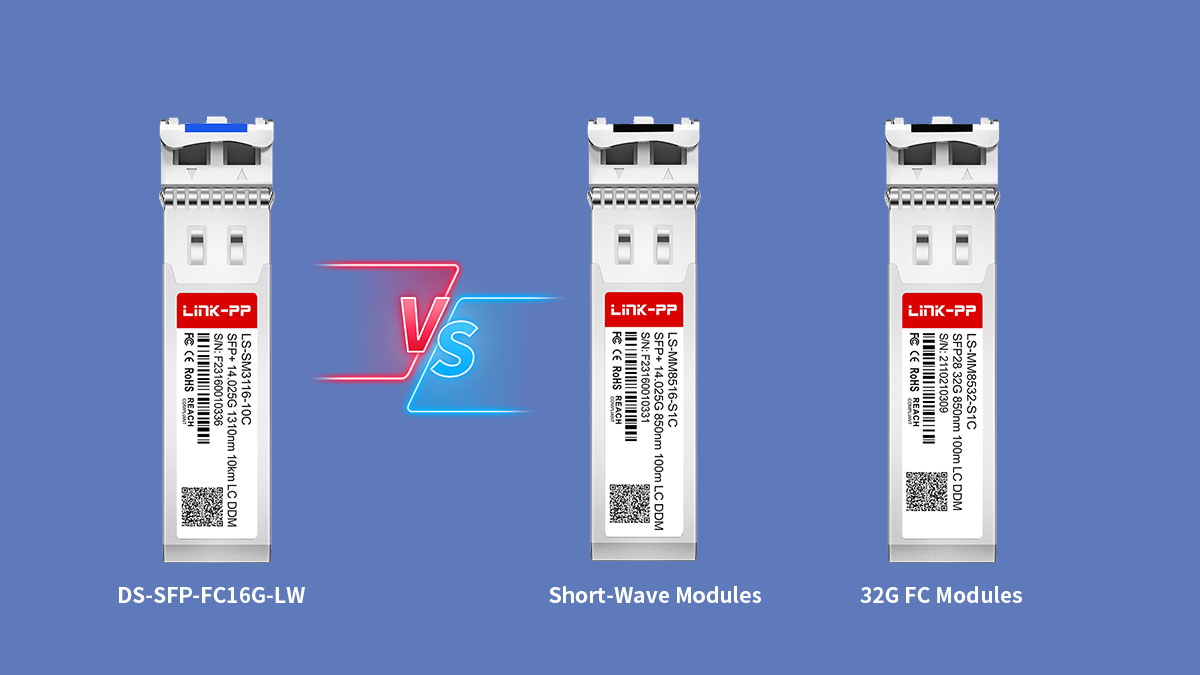
The Cisco DS-SFP-FC16G-LW is often evaluated alongside other Fibre Channel optical transceivers when designing or upgrading SAN environments. In practice, the key comparison factors include transmission distance, fiber type, supported data rate, and upgrade path. Understanding these differences helps ensure the right module is selected for specific infrastructure requirements rather than relying solely on speed classification.
DS-SFP-FC16G-LW vs Short-Wave Modules
The Cisco DS-SFP-FC16G-LW (long-wave) and short-wave Fibre Channel modules (such as Cisco DS-SFP-FC16G-SW) serve different deployment scenarios, primarily distinguished by fiber type and transmission distance.
Before comparing specific attributes, it is important to note that short-wave modules are typically optimized for intra-data-center, short-range connectivity, while long-wave modules are designed for extended reach.
| Feature | DS-SFP-FC16G-LW (Long-Wave) | Short-Wave 16G FC Module |
|---|---|---|
| Wavelength | 1310nm | 850nm |
| Fiber Type | Single-mode fiber (SMF) | Multimode fiber (MMF) |
| Transmission Distance | Up to 10km | Typically up to 100–300m |
| Deployment Scope | Inter-building / metro SAN | Intra-data center / rack-level |
These differences clearly show that long-wave modules are selected when distance is a primary constraint, while short-wave modules are preferred for cost-efficient, short-range deployments within a single facility.
DS-SFP-FC16G-LW vs 32G FC Modules
As storage networks evolve, 32G Fibre Channel modules (such as Cisco DS-SFP-FC32G-LW and DS-SFP-FC32G-SW) have become increasingly common in next-generation SAN environments. Comparing them with the 16G DS-SFP-FC16G-LW highlights differences in bandwidth, infrastructure requirements, and upgrade considerations.
Before the comparison, it is important to understand that 32G modules are typically part of infrastructure modernization rather than direct replacements in existing 16G environments.
| Feature | DS-SFP-FC16G-LW | 32G Fibre Channel Module |
|---|---|---|
| Data Rate | 16G FC (up to 14.025Gbps) | 32G FC (higher throughput) |
| Fiber Type | Single-mode fiber | Single-mode fiber (typically) |
| Latency Efficiency | Low latency, enterprise-grade | Lower latency with higher throughput |
| Infrastructure Requirement | Lower upgrade barrier | Requires more advanced switching support |
Key takeaways from this comparison include:
- 32G modules provide higher bandwidth but require compatible switching infrastructure
- 16G modules like DS-SFP-FC16G-LW offer a balanced performance-to-cost profile for many enterprise SANs
- Infrastructure readiness often determines upgrade feasibility more than raw performance differences
In many environments, 16G and 32G modules coexist during phased upgrade cycles.
When to Choose Long-Wave Solutions
Long-wave Fibre Channel transceivers such as the Cisco DS-SFP-FC16G-LW are not universally required in every SAN deployment. Instead, they are selected based on specific architectural and distance requirements.
Before listing decision factors, it is important to emphasize that fiber infrastructure and physical topology are the primary drivers.
Long-wave solutions are typically preferred in the following scenarios:
- SAN links spanning multiple buildings or campuses
- Metro-area data center interconnects requiring up to 10km reach
- Environments with existing single-mode fiber infrastructure
- Disaster recovery architectures requiring geographically separated storage replication
Additional selection considerations include:
- Need for consistent long-distance performance without signal repeaters
- Requirement for scalable interconnects between distributed storage systems
- Future-proofing infrastructure for cross-site expansion
When these conditions are present, long-wave modules provide a more efficient and reliable solution compared to short-wave alternatives, particularly in distributed enterprise storage architectures.
🔯 Troubleshooting and Maintenance Insights
The Cisco DS-SFP-FC16G-LW is designed for stable long-distance Fibre Channel connectivity, but like any optical transceiver, its performance depends heavily on fiber condition, configuration accuracy, and environmental stability. In real SAN operations, most issues are not caused by the module itself, but by fiber contamination, compatibility mismatches, or incorrect optical budgets. A structured troubleshooting and maintenance approach helps ensure consistent link performance and reduces downtime risk.
Common Issues and Symptoms
When the Cisco DS-SFP-FC16G-LW experiences operational problems, symptoms typically appear at the link or performance level rather than complete hardware failure. Identifying these symptoms early helps prevent broader SAN disruptions.
Before listing common issues, it is important to understand that Fibre Channel environments are highly sensitive to optical signal quality.
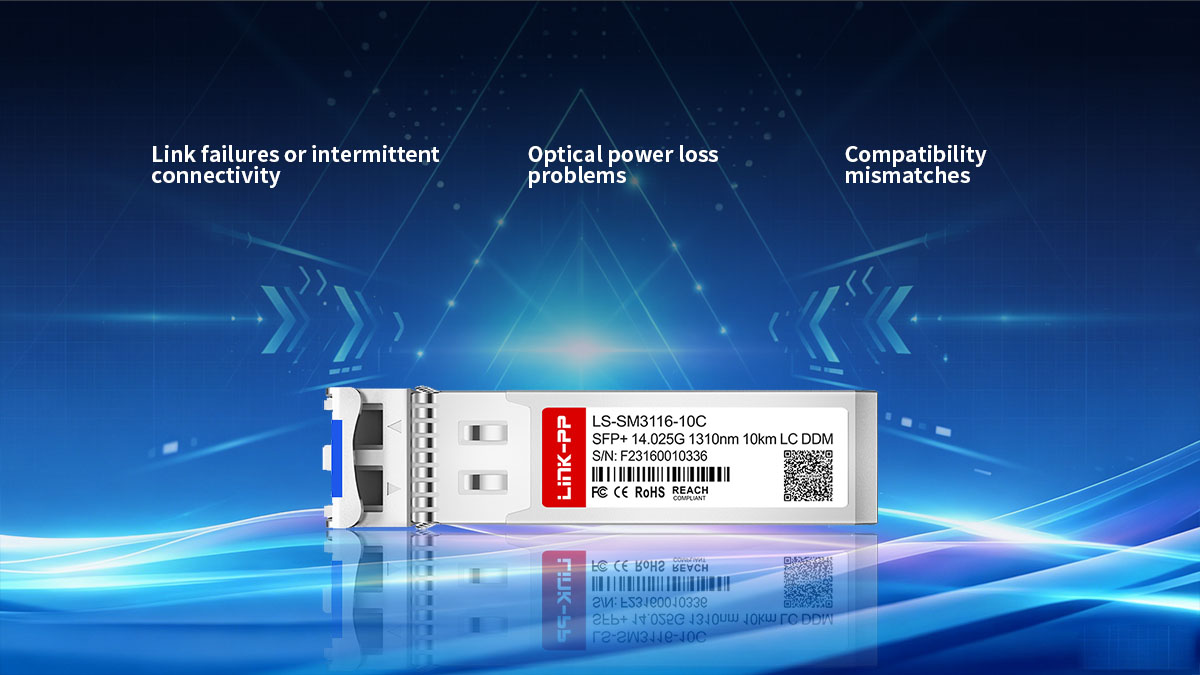
Typical issues include:
- Intermittent link up/down status between switches and storage devices
- Reduced or unstable data throughput under normal workload conditions
- Link initialization failures after installation or maintenance
- Optical signal loss due to fiber attenuation or contamination
- Transceiver compatibility warnings reported by Cisco switches
These symptoms often indicate external factors rather than internal module defects.
In practice, most problems fall into three main categories:
- Optical issues (dirty connectors, bent fiber, excessive attenuation)
- Configuration issues (incorrect speed settings or port mismatch)
- Compatibility issues (unsupported firmware or non-validated optics)
Understanding this classification helps narrow down root causes more efficiently.
Diagnostic Tools and Methods
Effective troubleshooting of the Cisco DS-SFP-FC16G-LW relies on both switch-level diagnostics and optical monitoring data. Cisco SAN environments typically provide built-in tools to evaluate transceiver health and link quality.
Before listing tools, it is important to emphasize that most optical issues can be detected through Digital Optical Monitoring (DOM) data before they cause full link failure.
Common diagnostic methods include:
- Digital Optical Monitoring (DOM/DDM) to check Tx/Rx power levels
- Switch CLI commands to verify transceiver detection and status
- Fibre Channel port diagnostics for link initialization errors
- Loopback testing to isolate whether issues are optical or switch-related
- Fabric login (FLOGI) logs to detect authentication or negotiation failures
Key indicators to monitor:
- Receive power levels outside acceptable thresholds
- Sudden drops in transmit signal strength
- CRC errors or frame loss in SAN traffic statistics
- Repeated link resets or renegotiation events
These diagnostic signals help isolate whether the issue originates from fiber, transceiver, or switch configuration layers.
Preventive Maintenance Practices
Preventive maintenance is essential in ensuring long-term stability of Cisco DS-SFP-FC16G-LW deployments, especially in high-density SAN environments where multiple optical links operate continuously.
Before outlining practices, it is important to note that most Fibre Channel issues develop gradually due to contamination or environmental stress rather than sudden failure.
Recommended maintenance practices include:
- Regular inspection and cleaning of LC connectors using approved fiber cleaning tools
- Periodic validation of optical power levels through DOM monitoring
- Ensuring proper fiber cable management to avoid bending stress or micro-fractures
- Maintaining dust-free environments in patch panels and switch racks
- Documenting fiber link mappings for faster fault isolation during incidents
Additional operational recommendations:
- Replace or clean connectors immediately if insertion loss increases unexpectedly
- Avoid repeated unnecessary insertion/removal of SFP modules
- Monitor long-term trends in optical performance rather than only reacting to failures
- Align maintenance schedules with broader SAN lifecycle management practices
When these preventive measures are consistently applied, the Cisco DS-SFP-FC16G-LW can maintain stable performance over extended periods, reducing both unplanned downtime and troubleshooting complexity in enterprise storage environments.
🔯 Future Trends in Fibre Channel Optics
Fibre Channel optics continue to evolve in response to growing storage demands, virtualization density, and hybrid cloud architectures. While modules like the Cisco DS-SFP-FC16G-LW remain widely deployed in enterprise SAN environments, the broader optical landscape is gradually shifting toward higher speeds, smarter diagnostics, and more efficient infrastructure utilization. Understanding these trends helps organizations plan sustainable storage network upgrades without unnecessary disruption.
Evolution Beyond 16G Fibre Channel
The transition from 16G Fibre Channel to higher-speed generations is driven primarily by increasing data throughput requirements in modern applications such as AI workloads, large-scale virtualization, and high-performance databases.
Before listing specific trends, it is important to note that Fibre Channel evolution tends to be incremental rather than disruptive, allowing coexistence between generations.
Key developments include:
- Gradual migration from 16G to 32G and 64G Fibre Channel standards
- Increased adoption of higher-density storage arrays requiring greater bandwidth per port
- Continued reliance on single-mode fiber for long-distance SAN connectivity
- Emphasis on backward compatibility to support phased infrastructure upgrades
These trends indicate that 16G optics remain relevant in many environments, particularly where infrastructure investment cycles are longer or where existing SAN fabrics are already optimized for 16G performance.
Role of Optical Modules in Modern Data Centers
Optical transceivers are no longer viewed as simple connectivity components; they are now integral parts of intelligent, software-driven data center infrastructures. Their role is expanding beyond signal transmission into monitoring, automation, and performance optimization.
Before outlining key changes, it is important to highlight that modern SAN environments are increasingly driven by visibility and automation requirements.
Key trends include:
- Integration of advanced Digital Optical Monitoring (DOM) for real-time performance tracking
- Increased use of telemetry data for predictive maintenance and failure prevention
- Greater alignment between optical layer monitoring and SAN management software
- Expansion of automation tools for configuration and lifecycle management
Additional developments shaping optical module usage:
- Improved interoperability across hybrid cloud and on-premise storage architectures
- Greater emphasis on visibility into latency, error rates, and signal degradation trends
- Enhanced support for large-scale distributed storage environments
These advancements shift optical modules from passive hardware components to active contributors in network intelligence and reliability management.
Sustainability and Efficiency Considerations
As data center scale continues to grow, energy efficiency and infrastructure sustainability have become key design priorities. Fibre Channel optics, including long-wave modules like the Cisco DS-SFP-FC16G-LW, are also influenced by this shift.
Before listing specific trends, it is important to recognize that power consumption and thermal efficiency are now key evaluation criteria in SAN design decisions.
Key sustainability trends include:
- Development of lower-power optical transceivers to reduce per-port energy consumption
- Optimization of heat generation in high-density switch environments
- Increased focus on lifecycle efficiency and reduced hardware replacement frequency
- Adoption of standardized components to minimize waste and simplify upgrades
Additional industry directions:
- Consolidation of storage networks to reduce physical infrastructure footprint
- Improved thermal design integration within modular switch platforms
- Greater alignment with green data center initiatives and regulatory standards
These trends collectively indicate that future Fibre Channel optical designs will not only focus on speed and distance but also on operational efficiency, energy optimization, and long-term sustainability.
🔯 Conclusion
The Cisco DS-SFP-FC16G-LW plays an important role in modern Fibre Channel SAN architectures, particularly in environments that require a balance between 16G performance and long-distance optical connectivity. Across enterprise data centers, it is widely used to support stable storage communication over single-mode fiber, enabling reliable interconnection between switches, storage arrays, and geographically separated infrastructure.
From a technical perspective, its 1310nm long-wave design, up to 10km transmission capability, and standardized SFP+ form factor make it well-suited for structured SAN deployments. When combined with proper compatibility planning, fiber infrastructure design, and preventive maintenance practices, it delivers consistent performance for mission-critical storage workloads such as virtualization, databases, and disaster recovery systems.
Key takeaways from the discussion include:
- It is optimized for 16G Fibre Channel environments requiring long-distance connectivity
- Single-mode fiber deployment is essential for achieving full performance potential
- Compatibility with Cisco MDS and related platforms is a key deployment factor
- Proper optical hygiene and monitoring significantly improve long-term stability
- It remains relevant in hybrid SAN environments alongside newer 32G technologies
As Fibre Channel networks continue to evolve toward higher speeds and smarter infrastructure management, 16G long-wave modules like the Cisco DS-SFP-FC16G-LW remain a stable and widely adopted option for organizations with established SAN architectures.
For organizations evaluating reliable optical transceiver options and compatible alternatives for enterprise storage networks, the LINK-PP Official Store provides a broad range of Fibre Channel and SFP+ solutions designed to support scalable and cost-efficient SAN deployments while maintaining performance and interoperability standards.