When looking at the ports on a network switch, router, or server, you may notice labels such as 1000BASE-T next to a familiar RJ45 Ethernet port. But what exactly does 1000BASE-T RJ45 mean, and how does it differ from other Ethernet interfaces?
Many people who are new to networking often ask questions like:
- Is a 1000BASE-T port compatible with 100BASE-TX devices?
- What type of cable is required for a 1000BASE-T RJ45 connection?
- How does it compare with fiber SFP ports in terms of performance and distance?
The 1000BASE-T RJ45 interface is one of the most widely deployed Gigabit Ethernet technologies, enabling 1Gbps data transmission over standard copper twisted-pair Ethernet cables. Because of its backward compatibility, cost efficiency, and ease of deployment, it has become the default Ethernet interface in many enterprise and campus networks.
To effectively design or troubleshoot Ethernet networks, it is important to understand the technology behind the 1000BASE-T RJ45 interface. This interface forms the foundation of many Gigabit Ethernet connections and plays a key role in delivering reliable high-speed communication across copper network infrastructures.
❄️ Overview of 1000BASE-T RJ45 Interface Technology
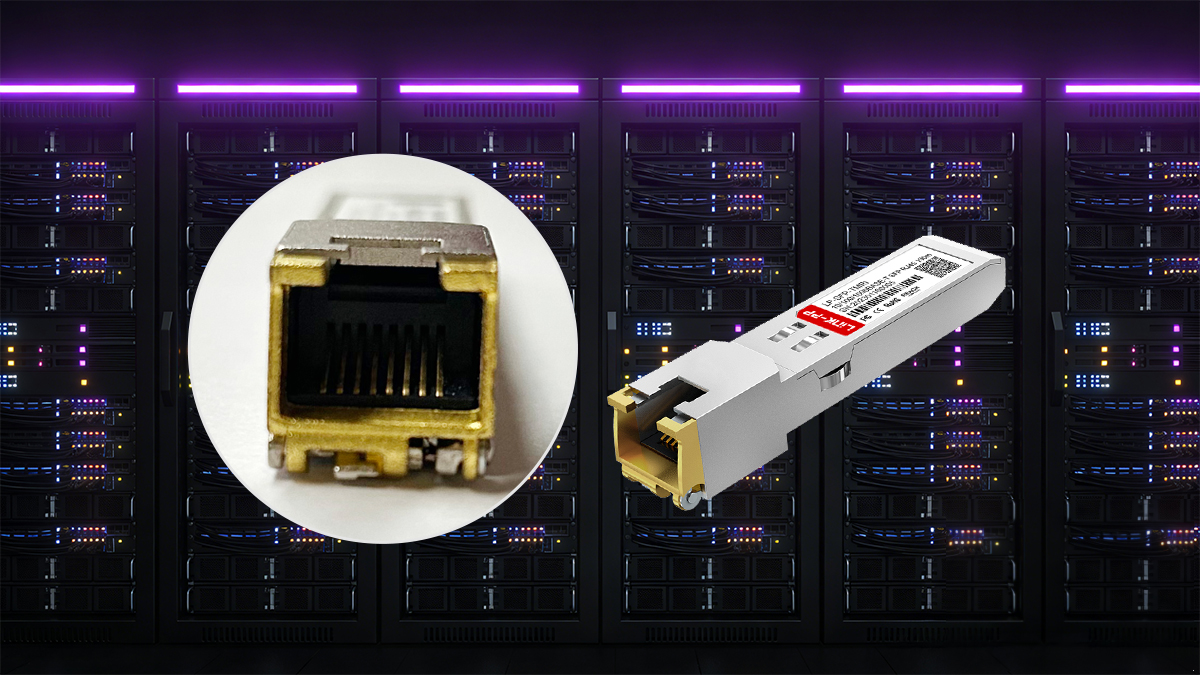
The 1000BASE-T RJ45 interface is a Gigabit Ethernet technology designed to deliver 1Gbps data transmission over copper twisted-pair Ethernet cables. It combines the IEEE 1000BASE-T physical layer standard with the widely used RJ45 connector, allowing high-speed Ethernet connectivity using familiar network cabling infrastructure.
Because it supports Gigabit speeds while remaining compatible with traditional Ethernet wiring, the 1000BASE-T RJ45 interface has become a standard port type on many networking devices such as switches, routers, and servers. Its design allows organizations to achieve higher network performance without requiring major changes to existing copper cabling systems.
Key Features of 1000BASE-T RJ45 Interface
The 1000BASE-T RJ45 interface includes several technical characteristics that make it suitable for Gigabit Ethernet networks.
❇️ Gigabit Data Rate
The primary capability of 1000BASE-T is its ability to transmit data at 1 gigabit per second (1000Mbps). This speed significantly improves network throughput compared with earlier Ethernet standards such as 10BASE-T and 100BASE-TX, making it suitable for modern applications including cloud services, large file transfers, and high-definition media streaming.
❇️ Operation over Twisted-Pair Copper Cabling
1000BASE-T operates over Category 5e, Category 6, or higher Ethernet cables, which are widely deployed in structured cabling systems. This allows many networks to upgrade to Gigabit Ethernet without replacing their entire cabling infrastructure.
❇️ Full-Duplex Communication
The interface supports full-duplex data transmission, enabling devices to send and receive data simultaneously. This capability increases network efficiency and eliminates collisions that were common in earlier shared Ethernet environments.
❇️ Standardized RJ45 Physical Connector
The technology uses the RJ45 modular connector, which is the most common Ethernet interface for copper networking. This standardized connector simplifies installation and ensures compatibility across a wide range of networking equipment.
❇️ Backward Compatibility
1000BASE-T ports typically support auto-negotiation, allowing them to operate with slower Ethernet standards such as 100BASE-TX or 10BASE-T when connected to legacy devices.
How 1000BASE-T RJ45 Port Enables Gigabit Ethernet Networks
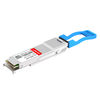
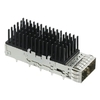
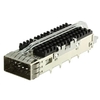
A 1000BASE-T RJ45 port serves as the physical interface of an SFP copper transceiver that connects devices to a Gigabit Ethernet network using standard copper twisted-pair cabling. By supporting the 1000BASE-T Ethernet standard and utilizing the widely adopted RJ45 connector, the port allows network equipment such as switches, routers, servers, and computers to establish high-speed wired connections within a local area network. Once an Ethernet cable is connected, the port creates the electrical link required for data transmission between devices across the network infrastructure.
In addition to providing physical connectivity, a 1000BASE-T RJ45 port enables devices to communicate at Gigabit speeds while maintaining compatibility with other Ethernet interfaces. Through built-in features such as automatic speed and duplex negotiation, the port can determine the highest supported transmission rate between connected devices and adjust accordingly. This capability ensures efficient network communication and allows Gigabit Ethernet networks to operate smoothly even when different generations of Ethernet devices are connected.
❄️ 1000BASE-T RJ45 Interface Standards and Specifications

1000BASE-T RJ45 is built upon rigorous technical standards that ensure interoperability, performance, and reliability across modern Ethernet networks. Understanding the rules that govern its design and operation helps deploy stable and efficient gigabit connections.
IEEE 802.3ab Standard for 1000BASE-T RJ45
The IEEE 802.3ab standard defines the technical specifications for 1000BASE-T Gigabit Ethernet over twisted-pair copper cables. Introduced as part of the IEEE 802.3 Ethernet standard family, it enables network devices to transmit data at 1Gbps over Category 5e or higher cabling using the RJ45 interface.
Under this standard, the maximum channel length for a 1000BASE-T RJ45 connection is 100m, which includes horizontal cabling and patch cords. The specification also defines how Ethernet devices perform link establishment, manage duplex communication, and maintain reliable transmission over copper infrastructure.
Electrical and Signaling Requirements of 1000BASE-T RJ45
The electrical characteristics of a 1000BASE-T RJ45 interface are carefully defined to support high-speed data transmission over copper cables. These requirements include voltage levels, signal timing, impedance matching, and noise tolerance, all of which help maintain signal integrity across twisted-pair wiring.
To achieve reliable Gigabit communication, the interface relies on advanced digital signal processing techniques to manage interference and maintain stable connections. The specification also requires support for echo cancellation and crosstalk suppression, which help separate transmitted and received signals traveling through the same cable pairs. These electrical design requirements allow 1000BASE-T RJ45 ports to deliver consistent performance even in environments with electrical noise or dense cabling installations.
Data Transmission Method in 1000BASE-T RJ45
The data transmission method used by the 1000BASE-T RJ45 interface differs from earlier Ethernet standards because it utilizes all four twisted pairs in a standard Ethernet cable. Each pair participates in bidirectional communication, allowing the interface to transmit and receive data simultaneously.
To maximize bandwidth efficiency, 1000BASE-T employs Pulse Amplitude Modulation with five voltage levels (PAM-5). This encoding technique enables the transmission of multiple bits per signaling cycle, increasing the overall data throughput while maintaining reliable signal interpretation. Combined with error correction and signal processing mechanisms, this transmission method enables the RJ45 interface to achieve stable 1Gbps Ethernet communication over copper cabling.
❄️ 1000BASE-T RJ45 Port Compatibility with Other Ethernet Standards
One of the major advantages of the 1000BASE-T RJ45 port is its ability to operate alongside earlier generations of Ethernet technologies. This compatibility allows networks to gradually upgrade to Gigabit speeds while still supporting legacy devices and infrastructure.
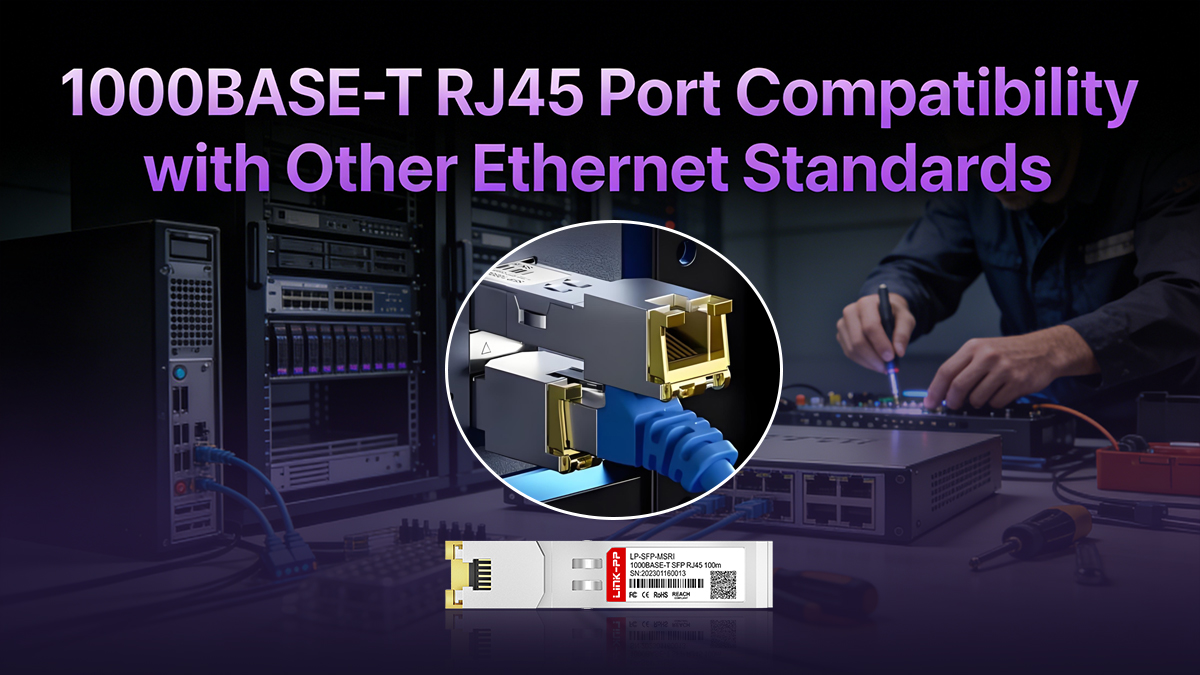
Backward Compatibility of 1000BASE-T RJ45 with 10BASE-T
A 1000BASE-T RJ45 port is designed to remain compatible with older 10BASE-T Ethernet devices, which operate at 10Mbps. When a Gigabit port is connected to a device that only supports 10BASE-T, the connection can still be established, allowing basic Ethernet communication to occur over the same RJ45 interface.
Although the connection speed is reduced to match the capabilities of the older device, this backward compatibility ensures that existing equipment can continue to function within upgraded networks. As a result, organizations can introduce Gigabit Ethernet infrastructure without immediately replacing all legacy hardware.
Compatibility Between 1000BASE-T RJ45 and 100BASE-TX
The 1000BASE-T RJ45 port is also fully compatible with 100BASE-TX Fast Ethernet, which operates at 100Mbps. When connected to a Fast Ethernet device, the port adjusts its operating speed to match the supported standard, enabling seamless communication between devices running at different speeds.
This compatibility is particularly important in mixed network environments where Gigabit switches may connect to older access devices or legacy endpoints. By supporting both standards through the same RJ45 interface, network administrators can maintain stable connectivity while gradually upgrading network components.
Auto-Negotiation Mechanisms in 1000BASE-T RJ45 Ports
To ensure smooth interoperability between different Ethernet standards, 1000BASE-T RJ45 ports typically support an auto-negotiation mechanism. During link initialization, the connected devices exchange capability information to determine the highest mutually supported speed and duplex mode.
Through this negotiation process, the port automatically selects the optimal configuration, whether it is 1Gbps, 100Mbps, or 10Mbps, along with the appropriate duplex mode. This automated adjustment helps prevent configuration conflicts, improves network stability, and simplifies deployment in environments where devices with varying Ethernet capabilities coexist.
❄️ Cabling Requirements for 1000BASE-T RJ45 Interface Connections
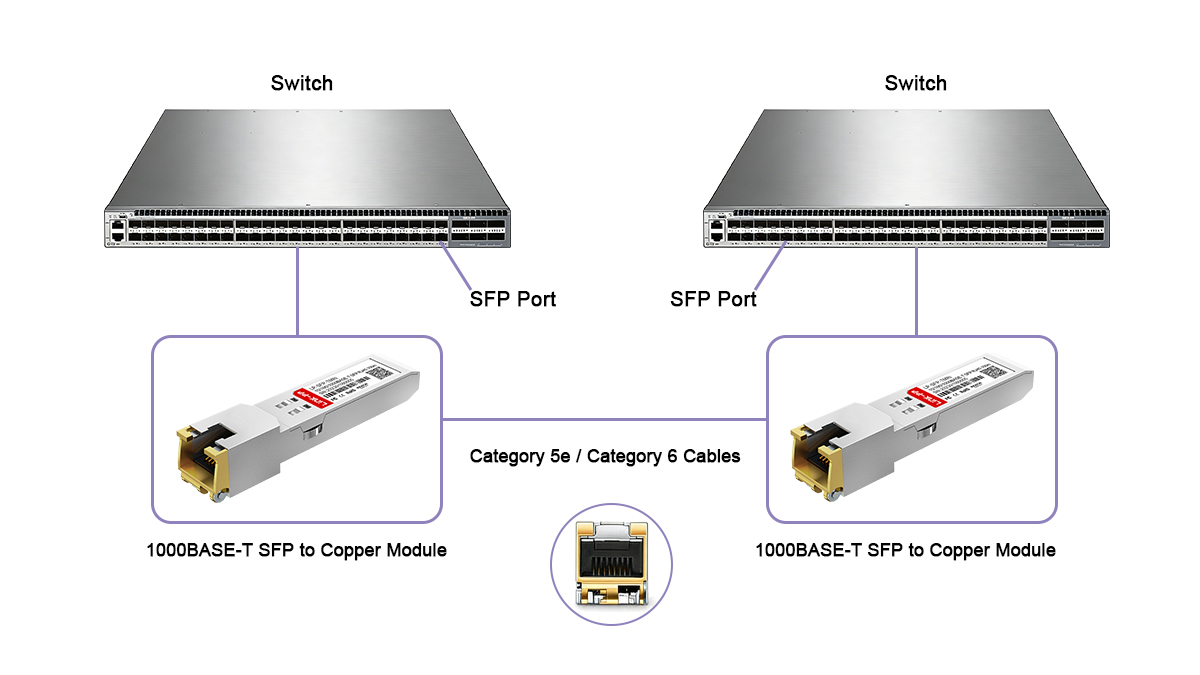
To achieve optimal performance with a 1000BASE-T RJ45 interface, the right cabling is essential. The choice of cable directly impacts the quality, reliability, and speed of data transmission over the network.
Properly selected and installed cabling ensures that the 1Gbps data rate specified by the 1000BASE-T standard is maintained, while also supporting the various network infrastructures in place, whether in home networks, data centers, or office environments.
Category 5e and Category 6 Cables for 1000BASE-T RJ45
The 1000BASE-T RJ45 interface supports both Category 5e (Cat 5e) and Category 6 (Cat 6) cables, but these cables have differences in performance and suitability for various network environments.
Category 5e cables are the most common cabling standard used for Gigabit Ethernet connections. They support speeds of up to 1Gbps over distances of up to 100m, which is sufficient for most office and home networking environments. Cat 5e cables feature improved specifications compared to older Cat 5 cables, specifically in terms of reducing crosstalk and maintaining signal integrity.
On the other hand, Category 6 cables offer higher performance than Cat 5e. These cables support Gigabit speeds and are certified to carry up to 10Gbps over shorter distances (up to 55m), making them a better choice for environments where high-performance networking or future-proofing is a priority. Cat 6 has more stringent specifications for reducing crosstalk and electromagnetic interference (EMI) compared to Cat 5e, offering better overall signal quality and higher potential data rates at short to medium distances.
Here is a comparison of the key differences between Category 5e and Category 6 cables:
| Feature |
Category 5e |
Category 6 |
| Bandwidth |
100MHz |
250MHz |
| Data Rate |
1Gbps |
1Gbps / 10Gbps |
| Max Distance |
Up to 100m |
Up to 100m at 1G; 55m at 10G |
| Crosstalk Performance |
Basic NEXT and FEXT improvements over Cat 5 |
Significantly lower crosstalk and return loss |
| Shielding Options |
Typically UTP (unshielded) |
Available in both UTP and shielded (STP) types |
| Ideal Use Case |
Standard office or home Gigabit Ethernet networks |
High‑density, high‑interference, or data‑center environments |
Performance Impact of Cable Quality on 1000BASE-T RJ45
The quality of the Ethernet cable used with a 1000BASE-T RJ45 interface plays a key role in maintaining stable Gigabit network performance. High-quality cables help preserve signal integrity by minimizing issues such as attenuation, crosstalk, and electromagnetic interference. When cables meet the required category standards — such as Cat 5e or Cat 6 — they are better able to support consistent 1Gbps data transmission over the full 100-meter channel defined by the Ethernet specification.
In contrast, low-quality or damaged cables may cause signal degradation, which can lead to packet errors, unstable connections, or reduced link speeds. Problems such as poorly twisted wire pairs, excessive cable length, or inferior materials can prevent a 1000BASE-T RJ45 port from operating at full Gigabit speed. For this reason, using certified cables and maintaining proper cable condition are important factors in ensuring reliable Gigabit Ethernet connectivity.
Installation Best Practices for 1000BASE-T RJ45 Cabling
Proper installation of 1000BASE-T RJ45 cabling is just as important as choosing the right cable. To ensure maximum signal integrity and prevent issues like crosstalk or electromagnetic interference (EMI), it is crucial to follow best practices during installation.
Avoid Excessive Bending: Cables should not be bent excessively, as tight bends can damage the copper wires inside and result in reduced signal quality or outright failure. Maintain a minimum bend radius according to the cable specifications.
Keep Cables away from Sources of Interference: Ethernet cables should be routed away from sources of electrical interference, such as power cables, fluorescent lighting, and electrical panels, to avoid signal degradation. If cables must cross power lines, ensure that they are properly shielded.
Use Cable Management Tools: Proper cable management techniques — such as using cable trays, ties, or conduits — help prevent cables from becoming tangled, which could lead to damaged cables or poor signal transmission.
Test Cable Connections: After installation, use a cable tester to ensure that each cable is connected correctly and that no pairs are miswired. This ensures that the 1000BASE-T RJ45 port operates without performance issues due to faulty cabling.
❄️ Typical Devices That Use 1000BASE-T RJ45 Ports
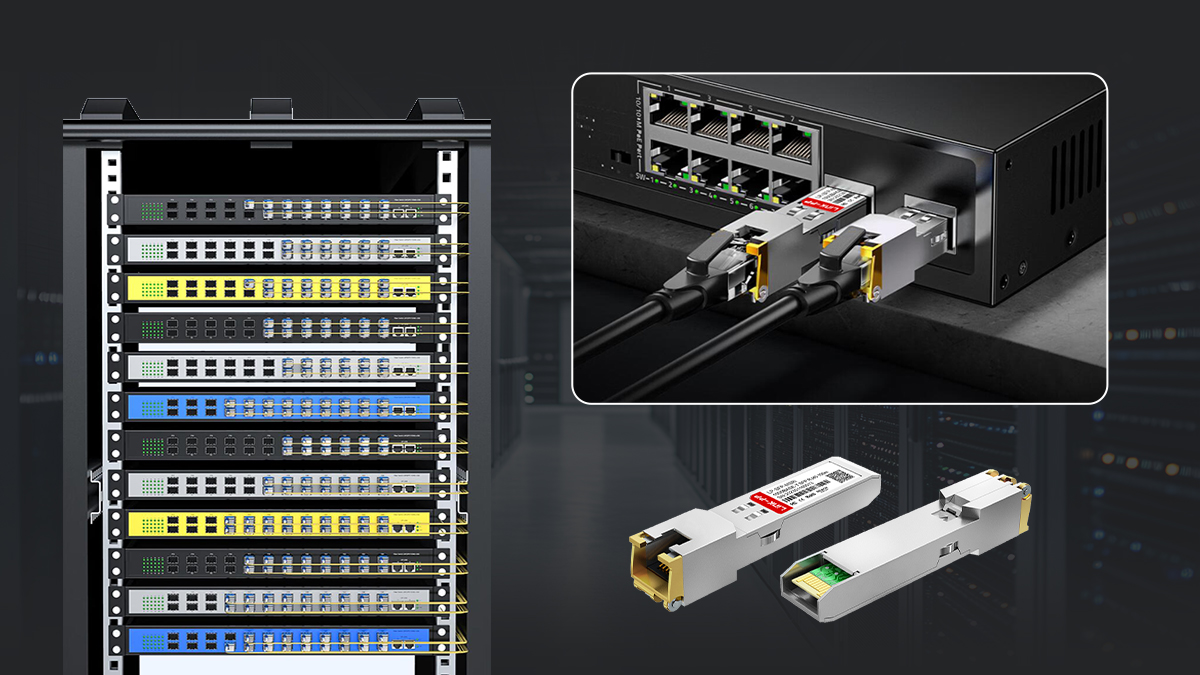
The 1000BASE-T RJ45 port is widely used across many types of networking equipment because it provides reliable Gigabit Ethernet connectivity over copper cabling. Its compatibility with standard Ethernet infrastructure makes it a common interface in both enterprise networks and small office environments.
1000BASE-T RJ45 Ports in Network Switches
Network switches are among the most common devices equipped with 1000BASE-T RJ45 ports. These ports allow switches to connect multiple devices within a local area network (LAN), enabling high-speed communication between computers, servers, and other network equipment. In many access-layer switches, 1000BASE-T RJ45 ports serve as the primary interface for connecting end-user devices, while also supporting uplinks to other switches or network infrastructure.
1000BASE-T RJ45 Interfaces in Routers and Firewalls
Routers and firewalls frequently include 1000BASE-T RJ45 interfaces to handle Gigabit Ethernet connections between internal networks and external network segments. These ports enable secure and efficient data routing by connecting the device to switches, internet gateways, or other network appliances. In many enterprise and branch network deployments, RJ45 Gigabit ports are used for LAN interfaces, WAN connections, or management access.
Use of 1000BASE-T RJ45 Ports in Servers
Servers often rely on 1000BASE-T RJ45 ports as their standard network interface for connecting to Ethernet networks. Integrated network interface cards (NICs) with RJ45 ports allow servers to communicate with switches and other infrastructure devices at Gigabit speeds, supporting applications such as data storage, virtualization, and enterprise services.
❄️ 1000BASE-T RJ45 Interface vs Fiber SFP Port
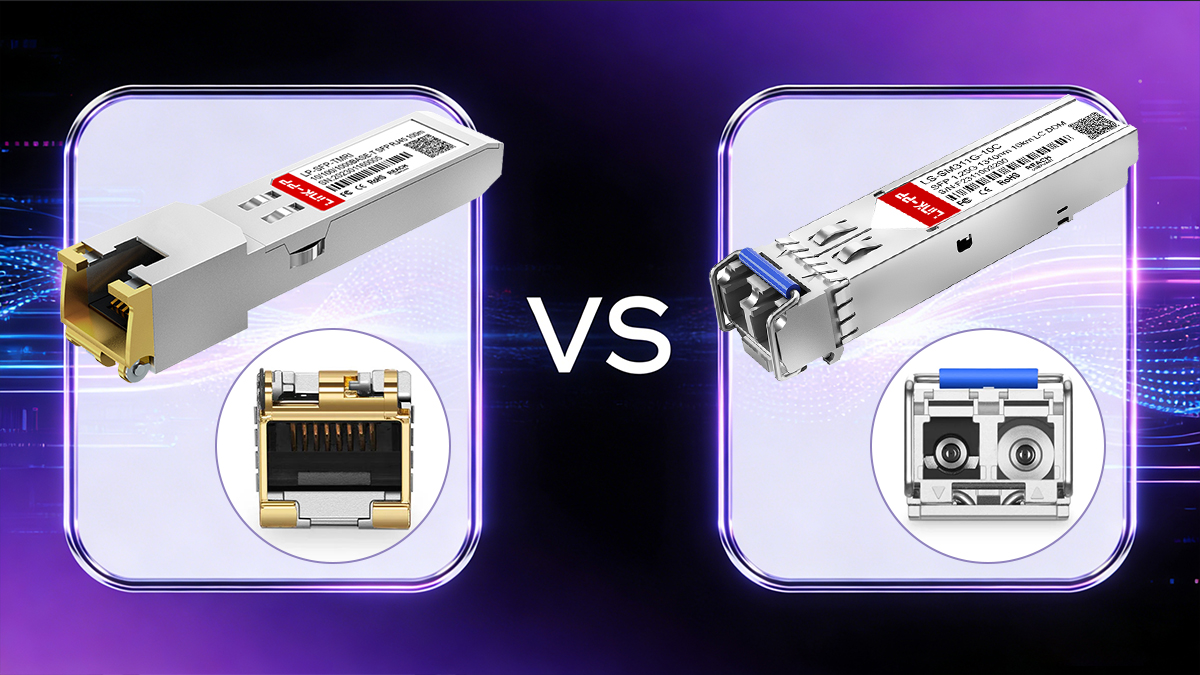
When designing or upgrading a network, understanding the differences between 1000BASE-T RJ45 interfaces and fiber SFP ports is essential. Both offer Gigabit Ethernet connectivity, but their performance characteristics, cost, and deployment scenarios differ significantly, making the choice dependent on network requirements.
Performance Comparison Between 1000BASE-T RJ45 and Fiber SFP
1000BASE-T RJ45 ports provide Gigabit Ethernet over copper cabling, typically achieving full 1Gbps speeds over distances up to 100m. Fiber SFP ports, in contrast, use optical signals that allow much higher bandwidth and longer distances, often exceeding tens of kilometers with single-mode fiber. While RJ45 is sufficient for most office and data center deployments, fiber SFP is preferred in high-speed backbone connections or long-distance inter-building links where copper cabling would be limited by attenuation or electromagnetic interference.
Cost Considerations of 1000BASE-T RJ45 vs Fiber SFP
From a cost perspective, 1000BASE-T RJ45 ports and copper cabling are generally less expensive to deploy and maintain. Copper cables, RJ45 connectors, and associated switch ports are widely available and simple to terminate, making them ideal for cost-sensitive networks. Fiber SFP solutions, however, involve higher costs for transceivers, fiber optic cables, and sometimes specialized installation, but they offer advantages in scalability, distance, and resistance to interference, which may justify the investment in large or high-performance networks.
Distance Limitations of 1000BASE-T RJ45 Compared to Fiber SFP
The maximum reach of a 1000BASE-T RJ45 connection is limited to approximately 100 meters over copper cabling, constrained by signal attenuation and noise. Fiber SFP connections, however, can span tens of kilometers depending on the fiber type (single-mode or multi-mode) and transceiver specifications, making them suitable for connecting distant buildings, campus networks, or long-haul backbone links where copper cabling is impractical or unreliable.
When to Use 1000BASE-T Interface vs Fiber SFP Port
A 1000BASE-T RJ45 interface is ideal for short-distance connections within offices, data centers, or environments where existing copper infrastructure is available. Fiber SFP ports are better suited for scenarios that require long-distance transmission, higher bandwidth, or immunity to electromagnetic interference. Choosing between the two should consider network layout, performance requirements, cost, and future scalability, ensuring the selected interface aligns with both current and anticipated network needs.
❄️ Common Compatibility Issues with 1000BASE-T RJ45 Ports
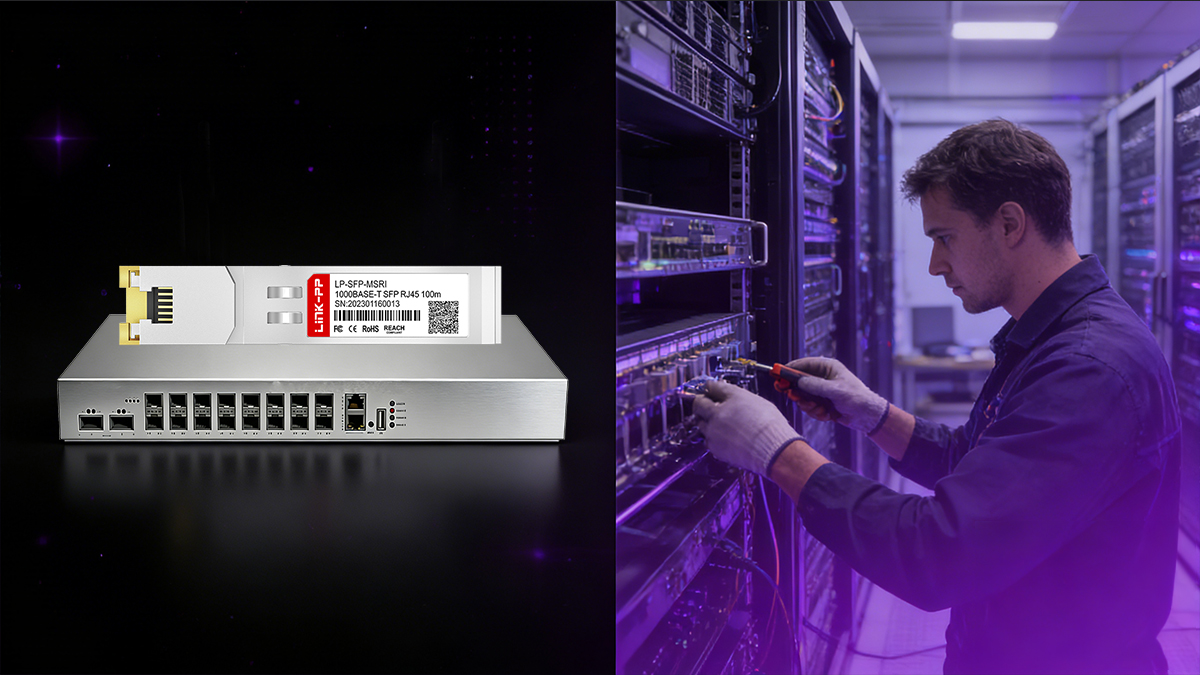
Even though 1000BASE-T RJ45 ports are widely compatible and reliable, certain issues can affect performance and connectivity. Identifying and understanding these common problems is crucial for maintaining stable Gigabit Ethernet networks.
Speed Mismatch Problems in 1000BASE-T RJ45 Networks
A speed mismatch occurs when a 1000BASE-T RJ45 port connects to a device that does not support Gigabit speeds or has incompatible auto-negotiation settings. This can result in the link dropping to 100Mbps or 10Mbps, causing reduced network throughput and potential latency for data-intensive applications.
Cabling Errors Affecting 1000BASE-T RJ45 Performance
Improper cabling is another common source of network issues. Using lower-category cables, damaged cables, or improperly terminated RJ45 connectors can lead to signal degradation, packet loss, or intermittent connectivity, preventing the port from operating at full Gigabit capacity.
Hardware Compatibility Challenges with 1000BASE-T RJ45
Although standardized, certain hardware combinations can create compatibility problems. Variations in network interface cards (NICs), switches, or routers may result in inconsistent auto-negotiation, duplex mismatches, or even link failures, especially when connecting devices from different manufacturers.
Diagnosing Connectivity Problems in 1000BASE-T RJ45 Ports
Troubleshooting a 1000BASE-T RJ45 port typically involves checking cable quality, verifying port speed and duplex settings, and testing the connection with a known-good device. Network administrators often use cable testers, loopback tests, and port monitoring tools to quickly isolate and resolve connectivity issues, ensuring stable Gigabit network performance.
❄️ Final Thoughts on 1000BASE-T RJ45 Interface

The 1000BASE-T RJ45 interface remains a foundational option for Gigabit Ethernet, delivering 1Gbps connectivity over standard twisted-pair copper cabling with the familiar RJ45 form factor. When deployed with compliant Cat 5e or Cat 6 cabling and properly functioning Ethernet ports, it provides stable, cost-effective network links for common LAN scenarios across switches, routers, firewalls, and servers.
In many real deployments, the key value of 1000BASE-T RJ45 is its balance of performance, simplicity, and interoperability. It fits naturally into existing copper-based network layouts, supports typical Ethernet link behaviors such as speed/duplex negotiation, and remains easy to integrate for short-to-medium distance connections where fiber is unnecessary. As long as cabling and port settings are aligned, it continues to be a practical standard for building reliable Gigabit access networks.
If you are planning to upgrade or expand your network, consider using 1000BASE-T RJ45 SFP modules to add flexible copper Gigabit ports to your existing SFP-based switches. You can explore high-quality 1000BASE-T RJ45 SFP module options at the LINK-PP Official Store, where a variety of copper SFP transceivers are available to meet different requirements.