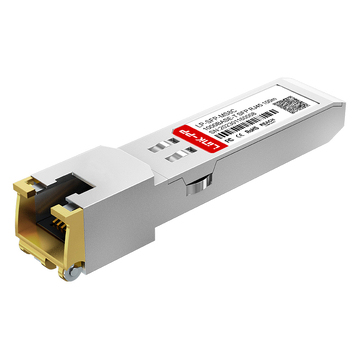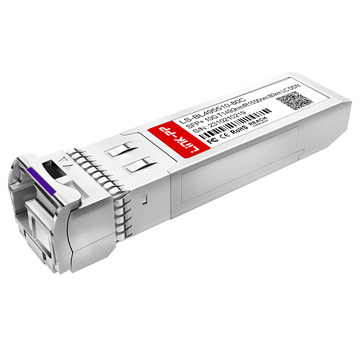

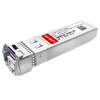



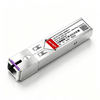
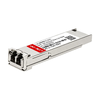

























The SFP-10G-ZR is a 10 Gigabit Small Form-Factor Pluggable transceiver designed for 80km extended-reach transmission over Single-Mode Fiber (SMF) utilizing a 1550nm wavelength. While OEM Cisco SFP-10G-ZR prices typically exceed $2,000, MSA-compliant third-party alternatives range between $80 and $150. Safe deployment requires strict optical budget planning and the mandatory use of inline optical attenuators on links shorter than 25km to prevent receiver diode burnout.
In modern Data Center Interconnect (DCI) and ISP backbone networks, bridging massive geographic distances without deploying expensive intermediate repeaters is a critical engineering challenge. When the 10km limit of a standard 1310nm LR (Long Reach) module is insufficient, network architects turn to the 10GBASE-ZR SFP+ transceiver.
While standard 10G optics are defined by the IEEE 802.3ae specification (such as 10GBASE-LR and 40km 10GBASE-ER), the "ZR" (Zeetta Reach / Extended Reach) specification is defined by Multi-Source Agreement (MSA) standards. By leveraging high-power 1550nm Distributed Feedback (DFB) or Externally Modulated Lasers (EML), ZR optics push 10 Gbps data streams up to 80 kilometers.
However, deploying these modules introduces two distinct challenges for IT administrators: cost control and optical physics. The SFP-10G-ZR price disparity between legacy OEMs (like Cisco and Juniper) and third-party vendors is one of the widest in the networking hardware industry. Furthermore, treating a ZR optic like a standard plug-and-play module often results in catastrophic hardware failure due to over-powered laser transmission.
This professional guide delivers a precise breakdown of SFP-10G-ZR pricing tiers, the architectural differences between standard ZR and Cisco's S-Class (ZR-S) modules, and a step-by-step methodology for calculating your 80km optical power budget.
🌟 Understanding SFP-10G-ZR: Core Specs and Distance Capabilities
The SFP-10G-ZR is a 10 Gigabit Ethernet transceiver engineered to transmit data up to 80 kilometers over Single-Mode Fiber (SMF). It operates at a 1550nm wavelength, utilizing an Externally Modulated Laser (EML) and a highly sensitive Avalanche Photodiode (APD) receiver to achieve an optical power budget of approximately 24 dB. It is governed by Multi-Source Agreement (MSA) standards rather than the base IEEE 802.3ae specification.
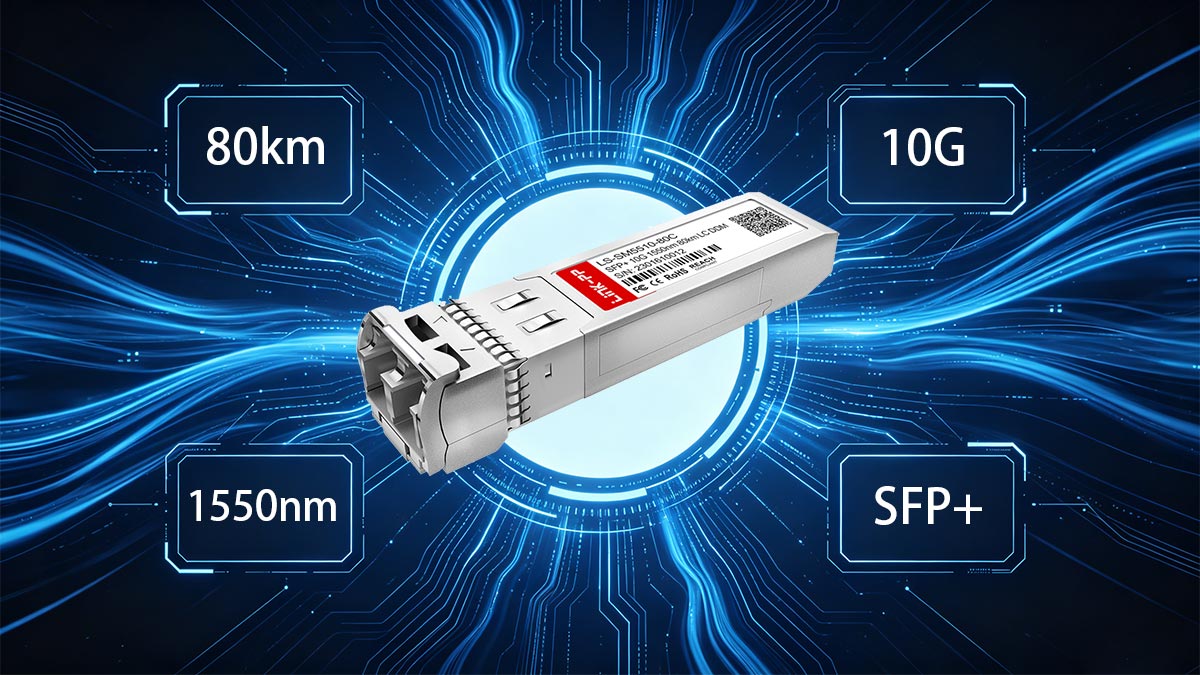
To make accurate purchasing decisions regarding the SFP-10G-ZR price, network engineers must first understand the underlying optical physics and hardware specifications that justify its cost. Unlike 10GBASE-SR (Short Reach) or 10GBASE-LR (Long Reach) modules, the "ZR" designation—unofficially standing for Zeetta Reach or Extended Reach—represents the absolute maximum distance achievable for standard, unamplified 10G SFP+ optics.
While the IEEE 802.3ae standard officially defines 10G optics up to 40km (10GBASE-ER), the 80km ZR specification is an industry-standardized extension created by the Multi-Source Agreement (MSA). This ensures that a 10GBASE-ZR module from a third-party vendor maintains strict interoperability with OEM switches from Cisco, Juniper, or Arista.
The Physics of 80km Transmission: 1550nm and EML Lasers
Achieving an 80km reach requires overcoming two major optical networking hurdles: attenuation (signal loss) and chromatic dispersion (signal smearing).
- Why 1550nm? Standard silica glass fiber (OS1/OS2) experiences its lowest rate of optical attenuation at the 1550nm wavelength (typically 0.20 to 0.25 dB/km). This allows the light pulse to travel significantly further than the 1310nm wavelength used in 10km LR modules.
- EML Transmitters: Because 1550nm light is highly susceptible to chromatic dispersion over long distances, SFP-10G-ZR modules cannot use cheaper Direct Modulated Lasers (DML). Instead, they utilize Externally Modulated Lasers (EML), which provide a narrower spectral width and maintain signal integrity over the 80km span.
- APD Receivers: (Micro-definition: An Avalanche Photodiode is a highly sensitive semiconductor receiver capable of amplifying weak light signals.) To detect the heavily attenuated signal after 80 kilometers of travel, ZR modules employ APDs, which boast a receiver sensitivity of roughly -24 dBm.
SFP-10G-ZR Technical Parameter Matrix
Below is the standardized technical specification matrix for MSA-compliant SFP-10G-ZR transceivers. These baseline parameters are critical for calculating your optical budget.
| Parameter | Specification |
|---|---|
| Form Factor | SFP+ (Small Form-factor Pluggable Plus) |
| Data Rate | 10.3125 Gbps (10G Ethernet Line Rate) |
| Center Wavelength | 1550nm |
| Supported Media | Single-Mode Fiber (SMF) - OS1/OS2 |
| Maximum Distance | 80 Kilometers |
| Transmit Power (Tx) | 0 dBm to +4.0 dBm |
| Receiver Sensitivity (Rx) | -24.0 dBm |
| Optical Components | EML Transmitter / APD Receiver |
🌟 SFP-10G-ZR Price Comparison: OEM vs. Third-Party Optics
The SFP-10G-ZR price varies drastically depending on the vendor. Original Equipment Manufacturer (OEM) modules from brands like Cisco or Juniper typically cost between $1,500 and $3,000. In contrast, MSA-compliant third-party optics from vendors like FS or 10Gtek range from $80 to $150. Because both tiers utilize identical internal optical components, network architects frequently use third-party modules to reduce capital expenditure (CapEx) by over 90%.
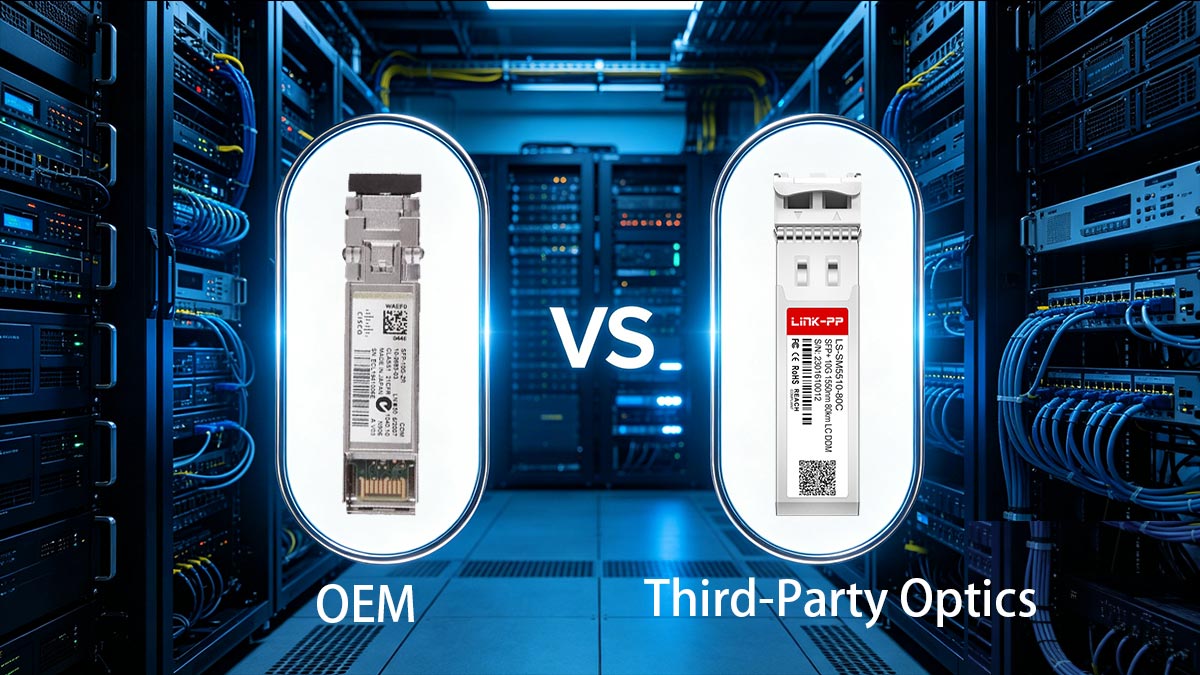
For IT directors and network engineers planning a Data Center Interconnect (DCI) or a long-haul ISP ring, optical transceivers often represent a disproportionately large segment of the hardware budget. When sourcing 80km 1550nm modules, the sticker shock of the OEM SFP-10G-ZR price is a common pain point.
To make an informed purchasing decision, it is essential to understand the structural differences—or lack thereof—between OEM and third-party optical modules.
The MSA Standard: Why Third-Party Optics Work
(Micro-definition: The Multi-Source Agreement (MSA) is a collaborative hardware standard established by a consortium of manufacturers. It dictates the exact mechanical dimensions, electrical interfaces, and signaling protocols for transceivers to ensure universal interoperability.)
Networking giants like Cisco, Arista, and Juniper do not manufacture their own optical transceivers from raw silicon. Instead, they purchase optical sub-assemblies (like EML lasers and APD receivers) from specialized fabrication plants, flash them with proprietary firmware, and apply a massive brand markup. Reputable third-party vendors (such as FS.com, AddOn Networks, or 10Gtek) purchase from these exact same fabrication plants. Because they strictly adhere to MSA standards, third-party 10GBASE-ZR optics provide identical physical and optical performance to their OEM counterparts.
Price and Performance Matrix: OEM vs. Compatible Optics
Below is a structural comparison to assist in evaluating the Total Cost of Ownership (TCO) for your 80km fiber deployment.
| Evaluation Criteria | OEM Optics (e.g., Cisco SFP-10G-ZR) | Third-Party MSA Compatibles |
|---|---|---|
| Average Price Per Unit | $1,500 - $3,000+ | $80 - $150 |
| Hardware Quality | Tier-1 EML Lasers / APD Receivers | Identical Tier-1 Components |
| Vendor Support (TAC) | Fully supported; zero warranty friction | May require swapping to OEM during TAC tickets |
| Lead Times & Availability | Often subject to global supply chain delays | Typically kept in massive bulk stock for next-day shipping |
Pros & Cons: Decision Support for Network Architects
Third-Party Optics
- Pros: Reduces SFP-10G-ZR price by over 90%. Allows for keeping multiple cold spares on-site within budget. Immediate shipping availability.
- Cons: If a complex switch issue arises, OEM TAC (Technical Assistance Center) may blame the third-party optic and refuse support until a branded module is inserted.
OEM Optics
- Pros: Guarantees frictionless support from the switch manufacturer. Ideal for highly regulated compliance environments.
- Cons: Exorbitant cost prevents the stocking of adequate redundant spares, potentially increasing downtime during an optical failure.
Expert Deployment Strategy: The Hybrid Approach
Drawing upon extensive deployment experience in enterprise environments, the most pragmatic solution is the Hybrid Spares Strategy.
Instead of fully committing to one path, network engineers should populate their production environment with high-quality, MSA-compliant third-party ZR optics. Simultaneously, they purchase one or two genuine OEM SFP-10G-ZR modules to keep in the data center as "TAC spares." If a link drops and official vendor support is required, the engineer temporarily swaps the third-party optic for the OEM optic before generating the support logs. This satisfies the vendor's diagnostic requirements while effectively saving thousands of dollars per link.
🌟 Cisco SFP-10G-ZR vs. SFP-10G-ZR-S: Which is More Cost-Effective?
The primary difference between the Cisco SFP-10G-ZR and the SFP-10G-ZR-S is protocol support. The standard "ZR" is a carrier-grade module supporting multiple protocols, including Ethernet, OTN (OTU2/OTU2e), and FCoE. The "ZR-S" (S-Class) module is designed strictly for enterprise 10G Ethernet applications. Because it strips away multi-protocol support, the S-Class module is significantly more cost-effective for standard data center deployments.
When navigating the procurement process for 80km optical modules, network engineers frequently encounter two nearly identical part numbers in the Cisco catalog: SFP-10G-ZR and SFP-10G-ZR-S. This minor difference in nomenclature can translate to a price difference of hundreds of dollars per unit.
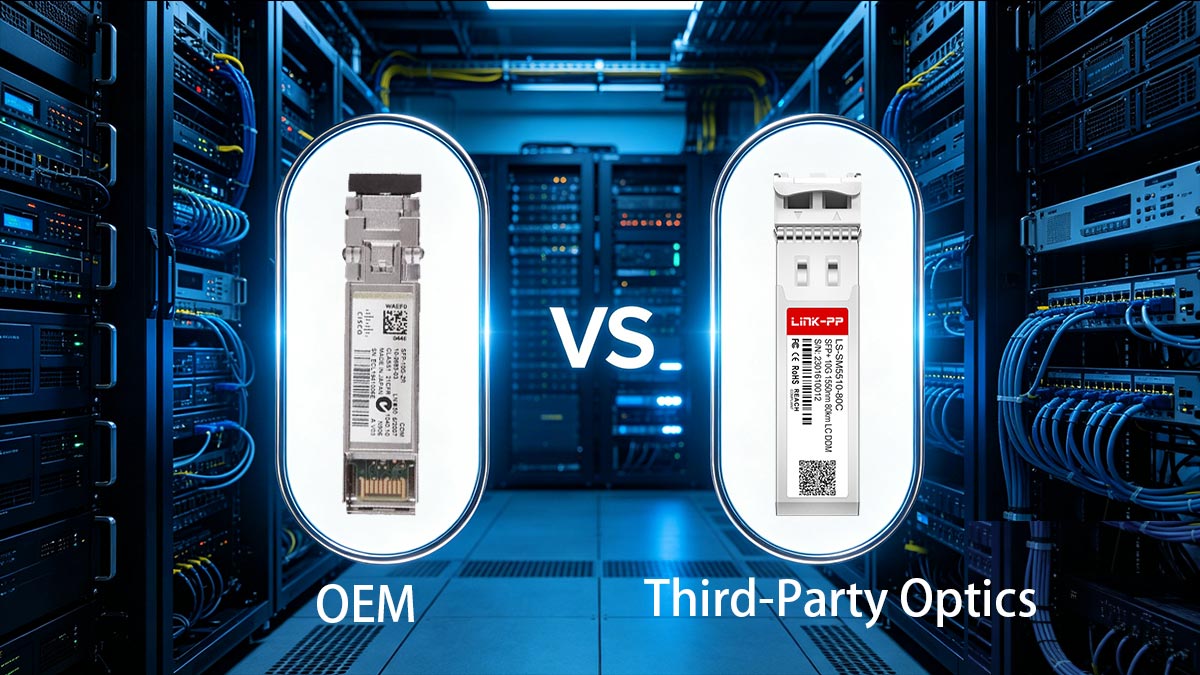
To optimize your network budget without sacrificing link integrity, you must align the module's technical capabilities with your specific architectural requirements. Cisco introduced the "S-Class" (denoted by the -S suffix) specifically to offer a more aggressively priced optic for enterprise customers who do not require the rigorous, multi-protocol features demanded by Tier-1 Service Providers.
Technical Distinctions: Carrier-Grade vs. Enterprise (S-Class)
The physical optical components (the 1550nm EML laser and APD receiver) are functionally identical between the two modules, meaning both will achieve the full 80km optical reach. The divergence lies in the firmware and protocol handling.
- SFP-10G-ZR (Standard/Carrier-Grade): This module is engineered for telecommunications environments. It supports standard 10GBASE-ZR (Ethernet), but also supports 10GBASE-ZW (SONET/SDH) and OTN. (OTN - Optical Transport Network is an industry-standard protocol used by ISPs to multiplex, route, and encapsulate different types of data traffic over long-haul fiber optic networks.)
- SFP-10G-ZR-S (S-Class): Designed for standard enterprise data centers and campus networks. It strictly supports 10GBASE-ZR Ethernet. It drops support for Fibre Channel over Ethernet (FCoE) and OTN, allowing Cisco to offer it at a lower price point.
Feature Compatibility Matrix
| Feature / Specification | SFP-10G-ZR (Standard) | SFP-10G-ZR-S (S-Class) |
|---|---|---|
| Target Environment | Service Providers / ISPs | Enterprise / Data Centers |
| Ethernet Support | Yes (10GBASE-ZR) | Yes (10GBASE-ZR) |
| OTN Support (OTU2/OTU2e) | Yes | No |
| Operating Temperature | Commercial (0°C to 70°C) | Commercial (0°C to 70°C) |
| Relative OEM Cost | Highest Premium | Cost-Optimized |
Clear Decision Support: Which Should You Buy?
The Expert Recommendation
If your infrastructure relies entirely on standard IPv4/IPv6 Ethernet traffic routed between switches—which accounts for over 90% of enterprise deployments—the SFP-10G-ZR-S is the correct and most cost-effective choice. Paying the premium for the standard SFP-10G-ZR provides zero performance benefit unless your specific architecture requires OTN encapsulation or Fibre Channel routing over the WAN.
Note on Third-Party Optics: If you are purchasing MSA-compatible optics from third-party vendors (like FS or AddOn), the price difference between their ZR and ZR-S equivalents is usually negligible (often identical). In these scenarios, purchasing the standard ZR compatible module is recommended to ensure maximum protocol flexibility for future network iterations.
🌟 How to Plan the Optical Budget for an SFP-10G-ZR 80km Link (Calculating dB Loss)
To plan the optical budget for an SFP-10G-ZR link, subtract the receiver sensitivity (typically -24 dBm) from the minimum transmit power (0 dBm), yielding a maximum allowable loss of 24 dB. Calculate total link loss by multiplying your fiber distance by the 1550nm attenuation rate (approx. 0.22 dB/km), then add insertion losses for LC connectors (0.5 dB per pair) and fusion splices (0.1 dB each). Always reserve a 3 dB safety margin.
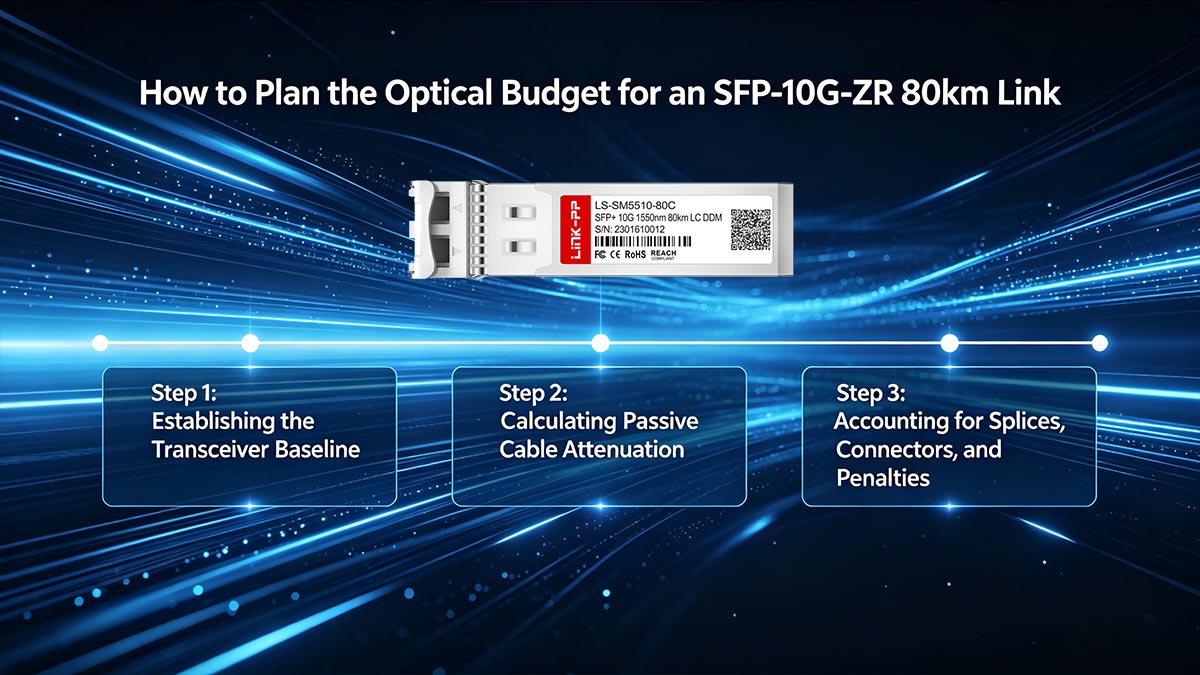
Deploying an 80km fiber optic link is not a plug-and-play operation. When data travels across dozens of miles of glass, optical power is continuously lost due to scattering, absorption, and physical connections. Before evaluating the SFP-10G-ZR price or executing a purchase order, network architects must perform a rigorous mathematical calculation known as optical budget planning.
(Micro-definition: An Optical Power Budget is the maximum amount of signal loss—measured in decibels, or dB—that a data link can tolerate before the receiving photodiode can no longer accurately read the transmission.)
Step 1: Establishing the Transceiver Baseline
To determine how much loss your link can handle, you must define the power parameters of your specific 10GBASE-ZR module. (Note: Always use the minimum guaranteed transmit power to ensure worst-case scenario reliability).
- Minimum Transmit Power (Tx): 0 dBm (The absolute lowest power the EML laser will output).
- Minimum Receiver Sensitivity (Rx): -24 dBm (The weakest signal the APD receiver can detect).
Formula: Optical Budget = Minimum Tx Power - Receiver Sensitivity
Calculation: 0 dBm - (-24 dBm) = 24 dB Total Budget
Step 2: Calculating Passive Cable Attenuation
The physical fiber itself is the primary source of signal degradation. At the 1550nm wavelength used by ZR optics, standard OS2 Single-Mode Fiber (SMF) exhibits very low attenuation, typically ranging from 0.20 dB/km to 0.25 dB/km. For professional planning, a conservative baseline of 0.22 dB per kilometer is heavily recommended.
Step 3: Accounting for Splices, Connectors, and Penalties
A continuous 80km strand of fiber rarely exists in the real world. The light must pass through patch panels, LC connectors, and underground fusion splices. Furthermore, a Chromatic Dispersion Penalty must be factored in, as 1550nm light pulses tend to spread out over extreme distances, requiring extra power for the receiver to resolve the signal.
Real-World Calculation Table: 75km DCI Link
Below is a structural breakdown of a highly typical 75km Data Center Interconnect (DCI) deployment, utilizing standard OS2 SMF.
| Component / Factor | Formula (Worst-Case Estimates) | Total Loss (dB) |
|---|---|---|
| Fiber Attenuation (75km) | 75 km × 0.22 dB/km | 16.5 dB |
| LC Connector Pairs (4) | 4 pairs × 0.5 dB per pair | 2.0 dB |
| Fusion Splices (6) | 6 splices × 0.1 dB per splice | 0.6 dB |
| Dispersion Penalty (1550nm) | Standard baseline allowance | 2.0 dB |
| Total Calculated Loss | Sum of all variables | 21.1 dB |
Expert Analysis: The Safety Margin
In the example above, the total calculated loss is 21.1 dB. Given that our SFP-10G-ZR transceiver provides a budget of 24 dB, this link will function perfectly. Crucially, it leaves a remaining buffer of 2.9 dB. This is known as the Link Safety Margin. Over the next decade, the physical fiber will degrade slightly, and terrestrial backhoe strikes may require ISP technicians to perform emergency fiber splicing (adding more loss). A strict engineering standard mandates maintaining a minimum 2 to 3 dB safety margin to ensure long-term network uptime.
🌟 When SFP-10G-ZR Is Worth Paying For—and When It Is Not
Paying the premium SFP-10G-ZR price is only justified for passive dark fiber links spanning between 40km and 80km, where it eliminates the need for expensive inline optical amplifiers. It is not worth the investment for links under 40km, where 10GBASE-ER (40km) or 10GBASE-LR (10km) modules provide identical 10Gbps performance at a fraction of the cost, without the risk of receiver burnout.
Over-engineering optical links is a primary cause of inflated IT budgets. Because the 10GBASE-ZR is the most powerful transceiver in the standard 10G SFP+ form factor, network architects are sometimes tempted to deploy it as a "catch-all" solution to guarantee signal delivery. However, applying maximum optical power to shorter fiber runs is not only financially inefficient, but it also introduces severe hardware risks.
To maximize Return on Investment (ROI), organizations must strategically evaluate when to deploy a ZR module and when to step down to a lower-tier optic defined by the IEEE 802.3ae standard.
When SFP-10G-ZR Delivers Massive ROI
Despite the high unit cost (especially for OEM brands like Cisco or Juniper), the SFP-10G-ZR can actually save an organization tens of thousands of dollars in specific architectural scenarios.
- Bypassing Active Amplification: (Micro-definition: An EDFA, or Erbium-Doped Fiber Amplifier, is an expensive, powered hardware device spliced into a long-haul fiber link to boost fading light signals.) If your data center link is 75km long, using standard 40km optics would require buying, powering, and maintaining an EDFA repeater site at the midpoint. A passive 80km SFP-10G-ZR completely eliminates this massive Capital Expenditure (CapEx).
- Maximized Dark Fiber Utilization: For ISPs leasing rural dark fiber, pushing a 10Gbps signal directly from switch to switch over 80km without intermediate routing hardware significantly reduces points of failure and operational overhead.
When SFP-10G-ZR Is a Wasted Investment
If your fiber link falls well below the 80km threshold, utilizing a ZR module introduces unnecessary costs and operational hazards.
- Links Under 40 Kilometers: If your optical budget calculation yields a total loss of under 11 dB, you do not need a ZR module. The 10GBASE-ER (Extended Reach) module utilizes the same 1550nm wavelength to reach 40km, but its standard market price is typically 40% to 60% lower than the SFP-10G-ZR price.
- Links Under 10 Kilometers: For standard campus networks and metropolitan rings under 10km, the 10GBASE-LR (Long Reach) is the industry standard. Operating at 1310nm, LR modules cost under $30 from third-party vendors and carry zero risk of receiver burnout on short patch cables.
- The "Attenuator Tax": As previously established, deploying an SFP-10G-ZR on a link shorter than 25km requires the mandatory installation of inline optical attenuators to prevent laser burnout. If you are buying attenuators just to make a ZR module safe for a 15km link, you have purchased the wrong transceiver.
Optical Transceiver Decision Matrix
Use the following technical breakdown to align your required fiber distance with the most cost-effective transceiver specification.
| Target Distance | Recommended Module | Wavelength | Relative Cost Tier | Attenuator Required? |
|---|---|---|---|---|
| Up to 10km | 10GBASE-LR | 1310nm | $ (Lowest) | No |
| 10km to 40km | 10GBASE-ER | 1550nm | $$ (Medium) | Rarely (< 5km links) |
| 40km to 80km | 10GBASE-ZR | 1550nm | $$$ (Highest) | Yes (If link is < 25km) |
Final Takeaway for Procurement
The SFP-10G-ZR is a highly specialized piece of optical hardware engineered to solve a specific problem: unamplified 80-kilometer data transmission. By strictly calculating your 1550nm dB loss, implementing a hybrid spares strategy (mixing third-party optics with a single OEM module for TAC support), and avoiding ZR deployments on sub-40km links, organizations can drastically reduce their SFP-10G-ZR cost footprint while maintaining carrier-grade network reliability.
🌟 FAQs About SFP-10G-ZR Price and 80km Deployment
Quick Answer: Common questions regarding the SFP-10G-ZR center around hardware safety and cost control. Crucially, an inline optical attenuator must be used on links shorter than 25km to prevent laser burnout. Furthermore, the massive SFP-10G-ZR price difference between OEM and third-party modules is purely due to brand markup; both tiers utilize identical Multi-Source Agreement (MSA) compliant optical sub-assemblies.
When planning high-capacity, long-haul data center interconnects, network engineers frequently encounter the same operational and financial hurdles. Below are the definitive answers to the most common questions regarding 10GBASE-ZR deployments.
1. Why do you need an SFP-10G-ZR attenuator?
Direct Answer: You must use an SFP-10G-ZR attenuator on links shorter than 25km to prevent the module's high-power laser from permanently destroying the sensitive receiving diode on the opposite end.
Technical Context: ZR modules are equipped with powerful Externally Modulated Lasers (EML) designed to push light through 80km of glass, outputting a minimum transmit power of 0 dBm. The Avalanche Photodiode (APD) receiver on the other side is incredibly sensitive (designed to read signals as faint as -24 dBm) and has a strict "overload threshold" (typically around -7 dBm). If you connect two ZR modules using a standard 2-meter patch cable in a lab environment, the 0 dBm laser will overwhelm the -7 dBm threshold, physically blinding and burning out the APD receiver. Always use a 10dB to 15dB inline attenuator for short-distance testing.
2. Why is the SFP-10G-ZR price so much lower from third-party vendors?
Direct Answer: Third-party vendors offer lower prices by eliminating the massive brand markup applied by OEMs like Cisco or Juniper, despite utilizing the exact same underlying optical components.
Technical Context: Transceiver manufacturing is governed by the Multi-Source Agreement (MSA). Independent optical fabricators produce the raw laser and receiver assemblies. OEMs buy these, add proprietary firmware, bundle them with their Technical Assistance Center (TAC) support warranties, and mark up the price by over 1,000%. Reputable third-party vendors (e.g., FS.com, AddOn) buy from the same fabricators and sell directly to consumers. The physical performance over an 80km link is mathematically identical.
3. Can I connect an SFP-10G-ZR to an SFP-10G-LR module?
Direct Answer: No, a 10GBASE-ZR module cannot establish a link with a 10GBASE-LR module due to completely incompatible optical wavelengths and power thresholds.
Technical Context: An LR (Long Reach) module transmits and receives at the 1310nm wavelength and is designed for a maximum distance of 10km. A ZR (Extended Reach) module operates at the 1550nm wavelength. Even if the fiber distance is only 5km, the LR receiver physically cannot read the 1550nm light pulse. Furthermore, the immense transmit power of the ZR module would likely destroy the LR module's standard PIN receiver.
4. What is the difference between SFP-10G-ZR and SFP-10G-ER?
Direct Answer: The SFP-10G-ER (Extended Reach) supports distances up to 40km, while the SFP-10G-ZR (Zeetta Reach) supports distances up to 80km.
Technical Context: Both modules utilize the 1550nm wavelength over Single-Mode Fiber (SMF). However, the ZR module uses higher-tier laser diodes and vastly more sensitive APD receivers to achieve a 24 dB optical budget, compared to the roughly 15 dB budget of an ER module. Consequently, the SFP-10G-ZR price is substantially higher than the ER variant.
🌟 How to Choose a Reliable 10G ZR Module (Conclusion)
To choose a reliable 10G ZR module, procurement teams must verify strict Multi-Source Agreement (MSA) compliance, mandate Digital Optical Monitoring (DOM/DDM) support for real-time diagnostics, and ensure the vendor performs 100% pre-shipment interoperability testing on target OEM switches. Balancing the SFP-10G-ZR price with these quality assurance metrics prevents costly network downtime.
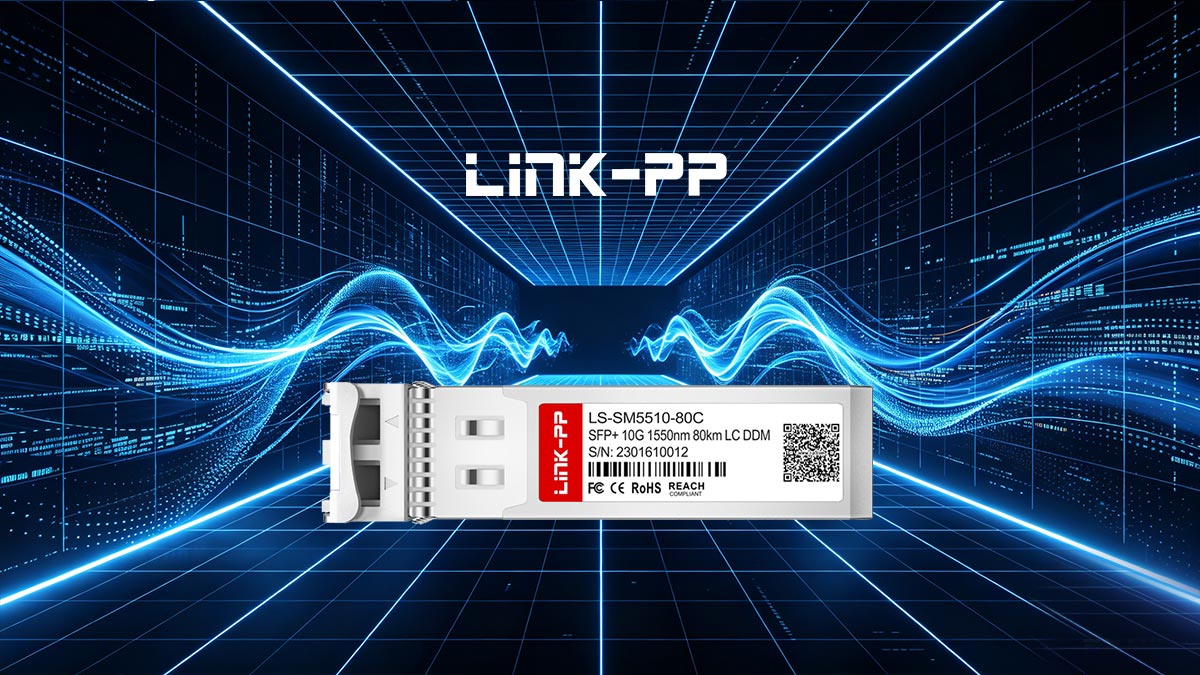
Deploying an 80-kilometer optical link is a high-stakes engineering task. As established throughout this guide, the SFP-10G-ZR transceiver relies on highly sensitive Avalanche Photodiodes (APDs) and precise 1550nm Externally Modulated Lasers (EMLs). If these components degrade or fail, the resulting network outage across a 50-mile Data Center Interconnect (DCI) can be catastrophic.
While opting for third-party optics is the mathematically correct decision for reducing Total Cost of Ownership (TCO), network architects cannot simply purchase the cheapest module available. Procurement must be driven by strict technical evaluation.
The 3-Point Procurement Checklist for 80km Optics
- 1. Mandatory DOM/DDM Support: (Micro-definition: Digital Optical Monitoring allows the network switch to read the transceiver's real-time temperature, voltage, Tx output, and Rx input power.) For an 80km link, DOM is not optional. Engineers must continuously monitor the Rx power to ensure the signal stays above the -24 dBm threshold as the physical fiber ages.
- 2. Strict MSA Compliance: The transceiver's EEPROM must be precisely coded to match the Multi-Source Agreement standards. If the coding is sloppy, a Cisco Catalyst or Arista switch will immediately place the port into an err-disable state, refusing to pass traffic.
- 3. Documented Interoperability Testing: A reliable vendor does not simply ship raw hardware. They must possess a testing lab where modules are physically plugged into the exact brand of switch you are deploying (e.g., Juniper EX-series, Ubiquiti, or Cisco Nexus) to verify firmware handshakes before shipment.
Final Recommendation & Next Steps
Mastering your 80km optical budget and understanding the critical need for inline attenuators will protect your hardware. The final step is sourcing a module that guarantees carrier-grade reliability without the exorbitant OEM brand markup.
Optimize Your Optical Network Deployment
For network architects and IT directors seeking rigorous quality control, strict MSA interoperability, and highly competitive pricing, sourcing directly from specialized optical manufacturers is the most efficient procurement strategy. To explore enterprise-grade 10GBASE-ZR transceivers backed by comprehensive pre-shipment testing and reliable DOM support, visit the LINK-PP Official Store. Ensure your next 80km deployment is executed with absolute precision and maximum ROI.