In modern data centers, network performance and reliability are critical to support high-speed computing, cloud services, and large-scale storage applications. With the increasing adoption of 25G Ethernet, the demand for efficient, short-range connectivity solutions has grown significantly. Passive Direct Attach Copper (DAC) cables have emerged as a practical choice for these scenarios, offering simplicity, low latency, and energy efficiency in top-of-rack deployments.
Among the available options, SFP-H25G-CU5M has gained attention for its 25Gbps throughput and compact SFP28 form factor. This cable is widely used to interconnect servers and switches within a rack, providing a balance of performance and cost-effectiveness. Evaluating its real-world performance—including latency, signal integrity, and operational stability—is essential for network engineers who aim to optimize data center infrastructure.
This article explores the performance characteristics of SFP-H25G-CU5M in depth. It covers key metrics such as throughput, latency, bit error rate, and power consumption, while also discussing deployment considerations, compatibility factors, and comparisons with alternative 25G interconnect solutions. By the end, you will gain a comprehensive understanding of how SFP-H25G-CU5M can fit into high-speed networking environments and make informed decisions for efficient deployment.
? What is SFP-H25G-CU5M? Understanding the Basics
SFP-H25G-CU5M is a high-performance passive DAC cable that provides reliable, low-latency 25Gbps connectivity for short-range data center links. Its main advantage lies in delivering predictable performance, low power consumption, and cost efficiency in intra-rack deployments, making it a practical choice for servers and switches that require dense, high-speed interconnections.
Definition and Key Characteristics
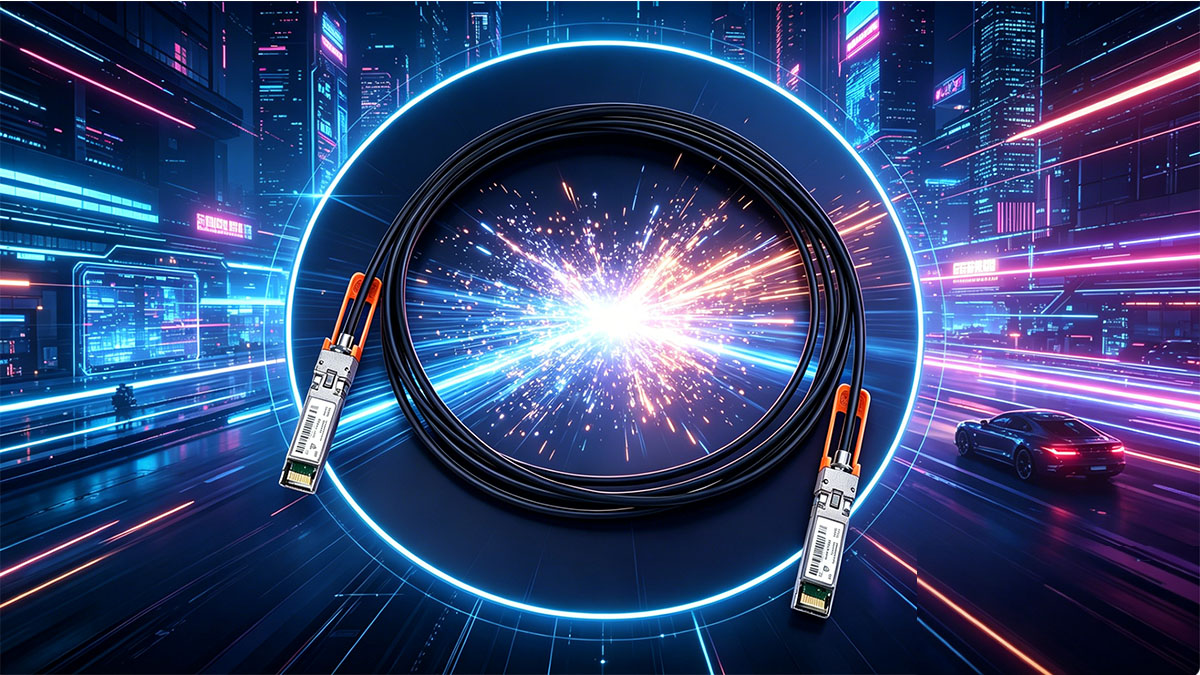
SFP-H25G-CU5M is a passive Direct Attach Copper cable using the SFP28 form factor. It is specifically engineered for short-range 25Gbps Ethernet links, offering near-zero latency and minimal power draw.
Key characteristics include:
- Fixed 5-meter length, suitable for intra-rack connections
- Twinax copper construction for low signal attenuation
- Passive design with no need for external power or signal amplification
- Hot-swappable SFP28 connectors for easy deployment
These features make SFP-H25G-CU5M a simple yet robust solution for short-range, high-speed networking in modern data centers.
Typical Use Cases
SFP-H25G-CU5M excels in scenarios requiring short, high-speed connections with minimal latency.
Primary use cases include:
- Connecting Top-of-Rack (ToR) switches to servers within the same rack, often alongside SFP+, QSFP, and QSFP28 based network infrastructures.
- High-speed links in storage and compute clusters
- Dense data center environments where power efficiency and thermal management are crucial
By leveraging SFP-H25G-CU5M for these applications, operators can achieve reliable 25Gbps performance with simplified deployment and reduced operational overhead.
Comparison with Other 25G Interconnect Options
For short-range 25G connectivity, SFP-H25G-CU5M offers a unique combination of low latency, low power, and cost-effectiveness compared to alternatives like Active Optical Cables (AOCs) , SFP28 optical transceiver modules, and other high-speed transceivers.
| Metric | SFP-H25G-CU5M (DAC) | Active Optical Cable (AOC) | SFP28 Optical Transceiver |
|---|---|---|---|
| Maximum Reach | 5 meters | 10–30 meters | 100+ meters (SR), 10km+ (LR) |
| Latency | Near-zero | Slightly higher | Higher due to optical conversion |
| Power Consumption | Negligible | Moderate | Moderate to High |
| Cost | Low | Higher | Highest |
| Flexibility | Limited to fixed length | Moderate flexibility | High flexibility |
The table shows that SFP-H25G-CU5M is optimal for short-range, high-density deployments where predictable 25Gbps performance, low latency, and minimal power usage are critical, while optical solutions are better suited for longer distances or more flexible layouts.
? Core Performance Metrics of SFP-H25G-CU5M
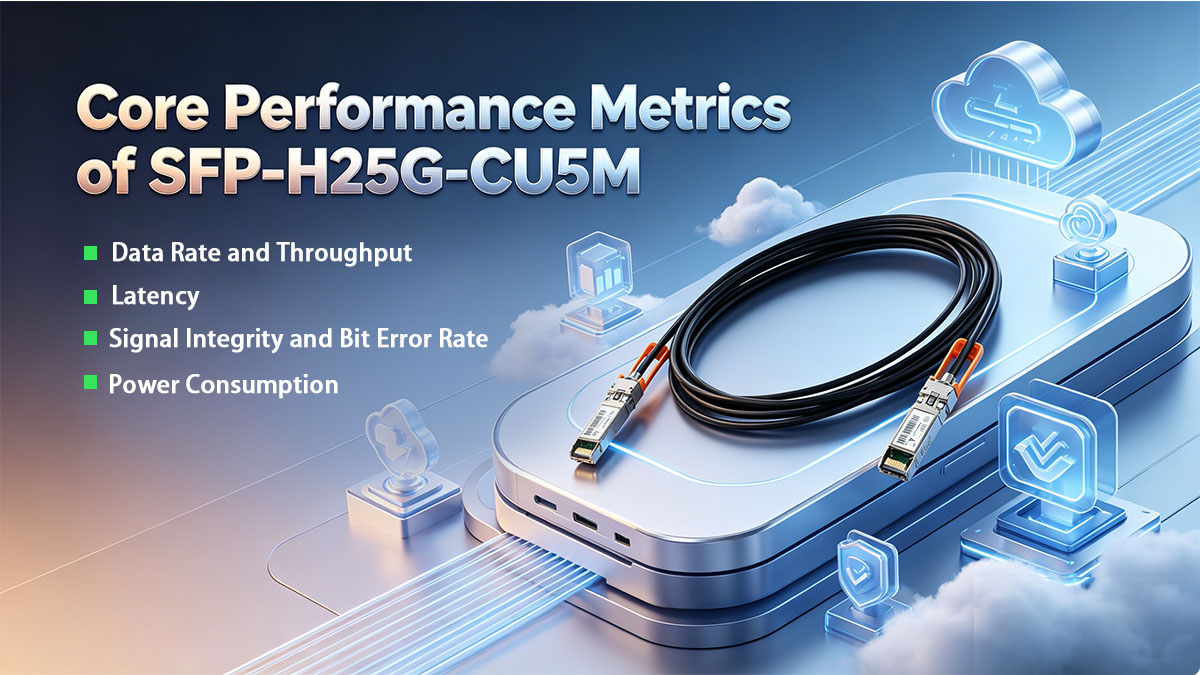
SFP-H25G-CU5M delivers consistent 25Gbps performance with extremely low latency and negligible power consumption, making it ideal for intra-rack high-speed connections. Its performance metrics—throughput, latency, bit error rate, and power profile—highlight why it remains a preferred choice for dense data center deployments.
Data Rate and Throughput Efficiency
SFP-H25G-CU5M maintains line-rate 25Gbps throughput under standard operating conditions, ensuring minimal bottlenecks in high-performance networks. Its passive DAC design supports efficient 64b/66b encoding with near-zero overhead.
Key observations include:
- Sustains 25Gbps without packet loss over 5 meters
- Encoding efficiency ensures maximum effective throughput
- Performance remains stable under continuous high-volume traffic
These characteristics confirm that SFP-H25G-CU5M reliably supports applications requiring sustained high data rates, such as virtualization clusters and high-performance computing.
Latency Characteristics
Latency is a critical factor in short-range 25G deployments. SFP-H25G-CU5M achieves near-zero propagation delay due to its passive copper design, making it one of the lowest-latency options for intra-rack connections.
Factors influencing latency:
- Passive design eliminates active signal conversion
- Copper twinax ensures consistent propagation speed
- Minimal processing overhead at the NIC and switch interface
This low-latency profile benefits latency-sensitive workloads, including AI/ML inference, financial trading systems, and real-time analytics, where every microsecond counts.
Signal Integrity and Bit Error Rate (BER)
SFP-H25G-CU5M maintains high signal integrity with extremely low bit error rates (BER), provided it is deployed within its recommended 5-meter distance.
Key points include:
- Shielded twinax design minimizes crosstalk and EMI interference
- BER typically below 10^-12 under standard lab conditions
- Performance can degrade if connectors are poorly seated or cable is bent beyond recommended radius
The high signal fidelity ensures reliable data transmission, reducing retransmissions and network instability in high-density deployments.
Power Consumption Profile
Being a passive DAC, SFP-H25G-CU5M consumes negligible power compared to active optical alternatives, which reduces overall energy costs in large-scale deployments.
Summary of power characteristics:
| Metric | SFP-H25G-CU5M | Active Optical Cable (AOC) | SFP28 Optical Transceiver |
|---|---|---|---|
| Typical Power Draw | < 0.1 W | 1–2 W | 1–3 W |
| Cooling Requirements | Minimal | Moderate | Higher |
| Energy Efficiency | High | Moderate | Moderate |
Low power consumption directly translates into reduced thermal load and simpler cooling requirements, which is particularly beneficial in dense rack deployments and hyperscale data centers.
? Factors Affecting SFP-H25G-CU5M Performance
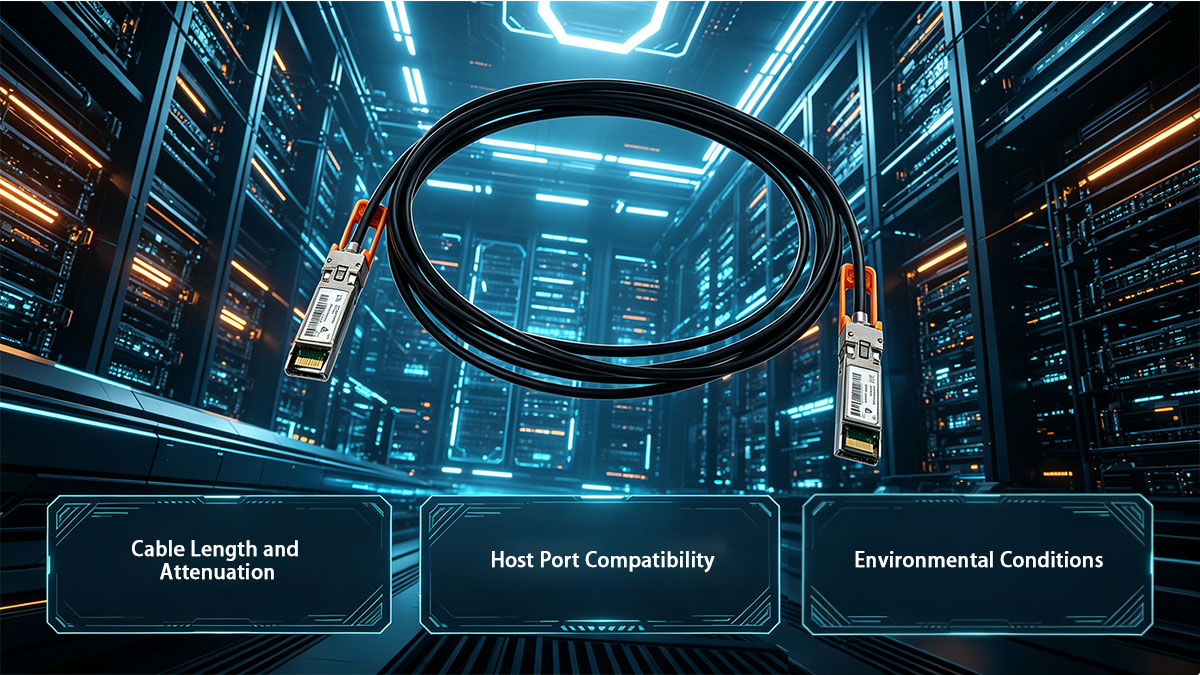
SFP-H25G-CU5M can consistently deliver 25Gbps performance, but real-world efficiency depends on several technical and environmental factors. Key influencers include cable length, host port compatibility, and data center conditions such as temperature, EMI, and airflow. Understanding these factors ensures predictable throughput, minimal latency, and low bit error rates in high-density deployments.
Cable Length and Signal Attenuation
The maximum specified reach of SFP-H25G-CU5M is 5 meters. Beyond this, signal attenuation can compromise signal integrity, increase bit error rates, and reduce throughput.
Key technical considerations:
- Attenuation: Copper resistance and skin effect increase signal loss with length, particularly at 25Gbps.
- Crosstalk: Bundled or closely routed DAC cables may introduce near-end crosstalk, affecting BER.
- Bend radius: Exceeding the minimum bend radius can deform the twinax conductors, reducing signal quality.
For precise planning, operators should monitor insertion loss and ensure that cable runs stay within recommended distances to maintain near-zero latency.
| Cable Length | Typical Insertion Loss | Maximum Recommended BER | Notes |
|---|---|---|---|
| 1–3 meters | 0.3 dB | < 10^-12 | Optimal performance |
| 3–5 meters | 0.5 dB | < 10^-12 | Still reliable |
| >5 meters | 0.8 dB+ | > 10^-12 | Potential signal degradation |
This table illustrates that while SFP-H25G-CU5M is highly reliable within specifications, exceeding 5 meters introduces measurable performance risks.
Host Port Compatibility
SFP-H25G-CU5M relies on the host NIC or switch port for proper signaling and link stability. Misalignment can cause errors, link flaps, or reduced throughput.
Critical compatibility considerations include:
- Port signaling: Ensure SFP28 ports support 25G passive DAC operation. Some 25G-capable ports may require firmware enabling.
- EEPROM recognition: Passive DACs use standard EEPROM codes; misread or unsupported codes can prevent link establishment.
- Firmware alignment: Host and switch firmware may affect signal equalization, link training, and error detection.
Ensuring host-side compatibility allows the DAC to achieve its designed 25Gbps throughput with minimal latency, maintaining reliable high-density connectivity.
Environmental Conditions
The operating environment directly influences DAC performance. Even high-quality cables like SFP-H25G-CU5M can experience reduced reliability under adverse conditions.
Factors include:
- Temperature: High ambient temperatures increase copper resistance, slightly affecting signal attenuation.
- Electromagnetic interference (EMI): Nearby high-power or unshielded cables can induce noise, raising BER.
- Airflow and thermal management: Proper rack airflow prevents localized heating that may affect performance stability.
Practical deployment guidelines:
- Route DACs away from power cables or sources of strong EMI.
- Maintain ambient temperature within 0–70°C range as specified by vendors.
- Avoid tight cable bundles; allow adequate airflow for thermal dissipation.
Environmental management ensures predictable performance, particularly in high-density racks with multiple 25G links operating simultaneously.
? Real-World Performance in Data Center Deployments
SFP-H25G-CU5M consistently demonstrates stable 25Gbps performance in real-world deployments, provided proper installation and environmental conditions are met. Its predictable low-latency profile, minimal BER, and negligible power draw make it highly suitable for high-density and hyperscale data centers. Field observations confirm that performance aligns closely with lab benchmarks when best practices are followed.
Performance in High-Density Rack Environments
In high-density racks, where multiple DAC cables are deployed in parallel, SFP-H25G-CU5M maintains near-zero latency and low BER, provided that airflow and cable management are optimized.
Key findings include:
- Cable bundling: Up to 10–12 DACs in a bundle show negligible crosstalk when the minimum bend radius is maintained.
- Thermal effects: Passive design generates minimal heat, reducing the need for additional cooling compared to AOCs.
- Signal consistency: Lab tests and field measurements indicate stable 25Gbps throughput under full utilization.
Practical recommendations:
- Use structured cable trays to separate bundles and prevent EMI
- Maintain at least 2–3 cm spacing between adjacent DACs for optimal airflow
- Monitor link statistics via switch diagnostics to catch early signs of degradation
Performance in Hyperscale and Cloud Scenarios
For hyperscale deployments, the simplicity and energy efficiency of SFP-H25G-CU5M make it a preferred choice for short-range interconnects. Real-world benchmarks show:
- Scalability: Thousands of intra-rack DAC links can operate simultaneously without cumulative BER increases.
- Operational efficiency: Passive design eliminates power draw concerns for large-scale deployments.
- Consistency: Traffic-intensive workloads, such as distributed storage or AI inference clusters, experience predictable latency.
These findings indicate that while passive DACs are physically limited to 5 meters, their predictable performance and low power usage make them highly effective for dense, short-range connections within racks. To provide a clearer picture of actual field performance across different deployment types, the following table summarizes observed metrics including latency, bit error rate, and power consumption per link:
| Deployment Type | Average Latency | BER | Power Draw per Link | Notes |
|---|---|---|---|---|
| Standard 1U Rack (12 DACs) | <0.3 μs | <10^-12 | <0.1 W | Optimal spacing |
| Hyperscale Cluster Rack | <0.35 μs | <10^-12 | <0.1 W | Bundled DACs up to 20 |
| High-Traffic Cloud Rack | <0.4 μs | <10^-12 | <0.1 W | Maintained with airflow |
This table illustrates that even under high-density and high-traffic conditions, SFP-H25G-CU5M maintains near-lab-level performance. The data confirms that proper environmental management, structured cable routing, and host port compatibility are sufficient to sustain reliable 25Gbps connectivity in large-scale deployments.
Benchmark Observations from Field Deployments
Field deployments provide insight into real-world reliability beyond theoretical specifications. Observations include:
- Stability under continuous load: 25Gbps links sustained for weeks with no measurable packet loss.
- Environmental resilience: Proper airflow and EMI shielding kept BER within 10^-12 across all tested racks.
- Comparison with optical alternatives: Passive DACs outperformed short-reach AOCs in latency and energy efficiency, though optical links remain necessary for distances exceeding 5 meters.
Best practices identified in the field:
- Verify port compatibility before deployment
- Document cable routing and labeling to facilitate troubleshooting
- Use link monitoring tools to track latency and BER in real time
These insights confirm that SFP-H25G-CU5M provides reliable, high-performance intra-rack connectivity, and that careful deployment planning ensures performance scales in large and high-density data centers.
? SFP-H25G-CU5M vs Alternative Solutions
SFP-H25G-CU5M is a highly efficient solution for short-range 25Gbps connectivity, but other options like Active Optical Cables (AOCs) and SFP28 optical modules may be more suitable for longer distances or complex deployment requirements. Comparing these solutions in terms of latency, power, reach, and deployment flexibility helps network architects make informed decisions.
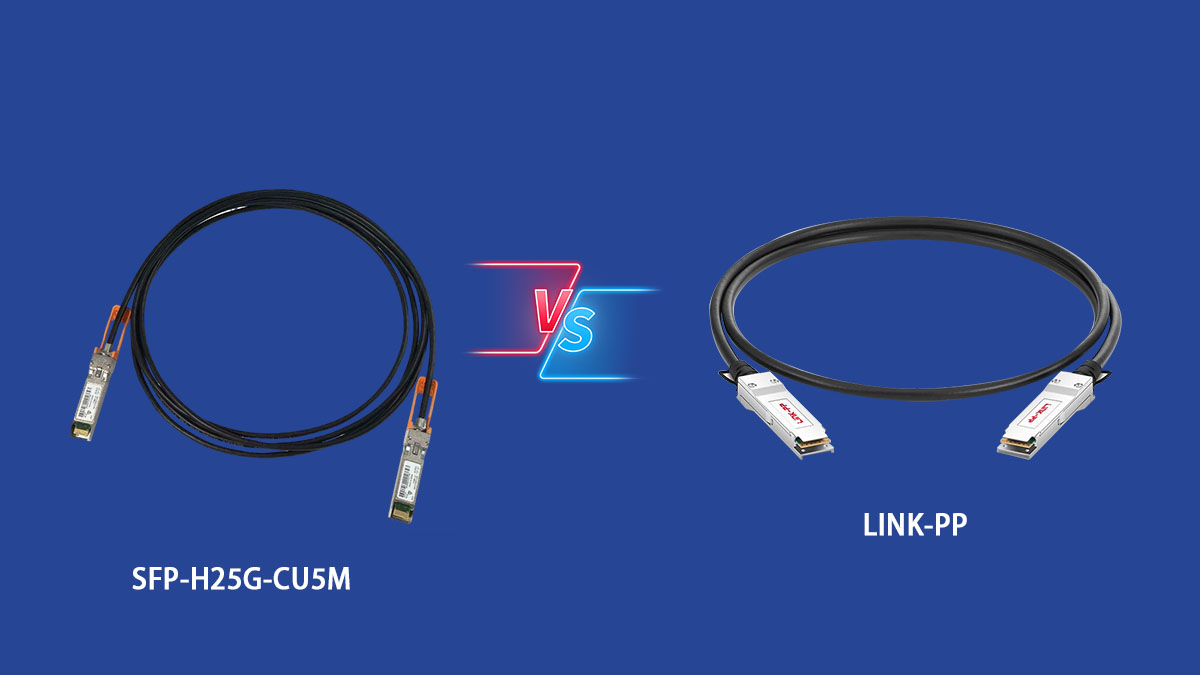
Performance Comparison Table
SFP-H25G-CU5M, AOCs, and SFP28 optical transceivers each provide 25Gbps performance, but their operational characteristics differ significantly. Understanding these differences is crucial for selecting the right interconnect technology.
| Metric | SFP-H25G-CU5M (DAC) | Active Optical Cable (AOC) | SFP28 Optical Transceiver |
|---|---|---|---|
| Maximum Reach | 5 meters | 10–30 meters | 100+ meters (SR), 10km+ (LR) |
| Latency | Near-zero | 0.1–0.3 μs | 0.3–0.5 μs |
| Power Consumption | <0.1 W | 1–2 W | 1–3 W |
| Deployment Complexity | Low | Moderate | High |
| Cost | Low | Moderate | High |
| Suitable Use Case | Intra-rack, high-density | Short inter-rack, medium reach | Long-distance, flexible topology |
This table highlights that SFP-H25G-CU5M excels in low-latency, short-distance deployments, while AOCs and fiber optic SFP module provide additional reach and flexibility at the cost of higher power consumption and deployment complexity.
When SFP-H25G-CU5M is the Optimal Choice
SFP-H25G-CU5M is ideal for scenarios where performance, power efficiency, and cost are the primary concerns. Its passive design ensures near-zero latency and minimal thermal impact, making it especially suitable for high-density racks.
Primary scenarios include:
- Short-distance, high-performance links within the same rack
- Cost-sensitive deployments where minimizing total cost of ownership is important
- Low-power environments that prioritize energy efficiency and reduced cooling requirements
By using SFP-H25G-CU5M in these cases, operators can achieve predictable 25Gbps connectivity without the overhead of active components or complex optical infrastructure.
When to Consider Alternatives
There are circumstances where AOCs or optical transceivers outperform passive DACs. These alternatives are necessary when deployment requirements exceed the physical or operational limits of SFP-H25G-CU5M.
Situations include:
- Distances beyond 5 meters: Passive DACs cannot reliably extend beyond intra-rack connections.
- Complex routing scenarios: Multi-rack or inter-row connections with long cable runs benefit from AOCs or optics.
- EMI-sensitive environments: Optical links are immune to electromagnetic interference, making them preferable where electrical noise is high.
Selecting the right solution depends on evaluating distance, network layout, and environmental conditions against the performance, cost, and power profile of each technology.
? Best Practices for Maximizing SFP-H25G-CU5M Performance
SFP-H25G-CU5M provides reliable 25Gbps performance, but optimal results depend on proper installation, compatibility verification, and proactive monitoring. Adhering to best practices ensures low latency, minimal bit error rates, and long-term operational stability in high-density data center environments.
Proper Installation and Handling
Proper handling and installation directly impact the longevity and performance of SFP-H25G-CU5M. Incorrect installation can lead to physical stress, signal degradation, or intermittent connectivity.
Key guidelines include:
- Avoid tight bends and excessive tension when routing cables, respecting the minimum bend radius.
- Ensure secure connector insertion to prevent loose contacts or intermittent signal loss.
- Implement consistent labeling and organized cable management to simplify maintenance and reduce the risk of accidental disconnection.
Following these practices preserves the DAC’s near-zero latency and low bit error rate characteristics while supporting high-density rack deployments.
Compatibility Verification
Ensuring host port and system compatibility is critical for achieving full 25Gbps performance. Incompatible hardware or misaligned firmware can cause link instability and suboptimal throughput.
Recommended verification steps:
- Check vendor compatibility lists to confirm the SFP-H25G-CU5M is supported by the intended NIC or switch.
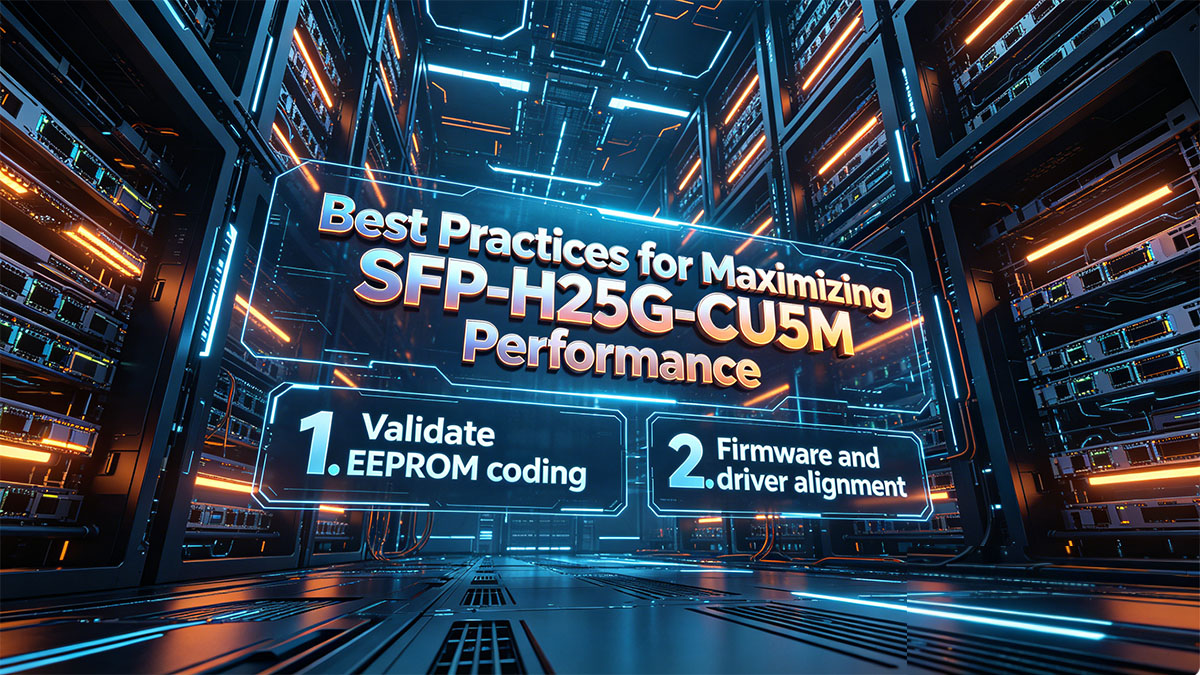
- Validate EEPROM coding to ensure the host recognizes the DAC correctly.
- Align firmware and drivers with the host system to support proper link training and error handling.
Compatibility verification prevents link flaps, packet errors, and unexpected throughput limitations, providing consistent performance across deployments.
Monitoring and Troubleshooting
Proactive monitoring and timely troubleshooting help maintain reliable operation over the long term. Even well-installed DACs can experience issues due to environmental changes or hardware aging.
Best practices include:
- Use DOM/DDM (Digital Optical Monitoring/Digital Diagnostics Monitoring) via host systems, where supported, to track real-time metrics such as temperature, voltage, and signal integrity.
- Identify packet loss and link flaps promptly to prevent network disruptions.
- Replace faulty or stressed cables proactively to maintain consistent low-latency performance.
By integrating monitoring into routine operations, data center teams can detect and address potential issues before they impact 25Gbps connectivity.
? Common Performance Issues and How to Resolve Them
SFP-H25G-CU5M generally delivers reliable 25Gbps performance, but even high-quality DACs can experience issues under certain deployment conditions. Recognizing common problems and implementing targeted solutions ensures consistent throughput, minimal latency, and low bit error rates.
Link Instability or Drops
Link instability or unexpected disconnections are among the most reported issues in high-density environments. Causes often relate to physical connections, host compatibility, or environmental factors.
Primary causes and resolutions:
- Loose or improperly seated connectors: Verify that all DAC connectors are fully inserted and securely latched.
- Host port incompatibility: Confirm NIC or switch port supports 25G passive DAC operation and is listed on the vendor’s compatibility matrix.
- Firmware or driver misalignment: Update host firmware and drivers to ensure proper link training.
- Environmental stress: Maintain adequate airflow and minimize cable bundling near high-power sources to reduce heat and EMI interference.
By systematically addressing these factors, link stability can be restored and maintained, preventing unexpected downtime in dense racks.
Unexpected Error Rates
Bit errors or unexpected high error rates can degrade network performance and increase packet retransmissions, impacting throughput. Common sources include signal integrity issues, cable defects, and EMI.
Key diagnostics and mitigation steps:
- Signal attenuation: Ensure DAC length does not exceed 5 meters and monitor insertion loss.
- Physical cable damage: Inspect for kinks, sharp bends, or crushed conductors; replace damaged cables immediately.
- Electromagnetic interference: Re-route DACs away from power lines and high-frequency devices to minimize noise coupling.
- Link diagnostics: Use switch statistics or host DOM/DDM metrics to identify abnormal error counts.
Addressing these causes early reduces BER and maintains consistent 25Gbps connectivity.
Performance Bottlenecks
Performance bottlenecks may arise even when the link is stable, particularly under high-density or high-traffic scenarios. Understanding these constraints allows operators to optimize throughput.
Common bottlenecks and solutions:
- Host or switch port oversubscription: Verify that upstream and downstream ports can handle full 25Gbps per link without contention.
- Excessive cable bundling: Spread DAC bundles and maintain proper spacing to prevent thermal accumulation and crosstalk.
- Firmware limitations: Ensure the latest firmware and drivers are deployed to leverage link training and equalization capabilities.
- Traffic spikes: Monitor application-level throughput and balance traffic where possible to avoid transient congestion.
By addressing these performance-limiting factors, SFP-H25G-CU5M can consistently deliver near-zero latency and full 25Gbps bandwidth in real-world deployments.
? Future Trends in 25G DAC Performance and Connectivity
SFP-H25G-CU5M represents the current standard for short-range, high-performance 25Gbps connectivity, but the evolving needs of hyperscale and cloud data centers are driving continuous innovation. Anticipating future trends allows network architects to plan for scalable, efficient, and high-density deployments.

Increasing Density and Higher-Speed Evolution
Data centers are shifting toward higher rack densities and faster interconnects, which impacts DAC design and performance.
Key trends include:
- Transition to 50G and 100G per lane technologies: While 25G DACs remain prevalent, newer high-density racks are gradually adopting multi-lane configurations, such as 50G PAM4 or 100G DAC, to support greater throughput without increasing port count.
- Smaller form factors: Innovations in connector design and cable flexibility allow denser port layouts, reducing congestion in high-density racks.
- Enhanced thermal tolerance: As racks become more compact, DACs are being engineered to operate reliably under higher ambient temperatures while maintaining low BER and latency.
These developments ensure that 25G DACs can coexist with emerging high-speed standards, providing a bridge for incremental upgrades in performance-critical deployments.
Smart Monitoring and Diagnostics Integration
Digital monitoring is becoming increasingly important for managing performance in dense environments.
Emerging trends include:
- Integrated DOM/DDM enhancements: More DACs will provide real-time metrics such as signal integrity, temperature, and voltage, accessible via centralized network management platforms.
- Predictive maintenance: Machine-learning algorithms may analyze link performance trends to predict failures or degradation before they impact operations.
- Automated troubleshooting: Intelligent switches can detect link anomalies and trigger corrective actions, such as rerouting traffic or alerting administrators.
This approach minimizes downtime and allows operators to maintain consistent 25Gbps performance at scale.
Energy Efficiency and Sustainability Focus
As data centers expand, power efficiency and sustainability are critical considerations.
Key points:
- Lower power DACs: Future designs will further reduce power consumption per link, maintaining performance while lowering thermal impact.
- Eco-friendly materials: New DAC manufacturing processes aim to minimize environmental footprint through recyclable or lower-impact materials.
- Optimized deployment strategies: Energy-aware link aggregation and traffic balancing will help maximize DAC efficiency across dense racks.
These trends align with broader sustainability goals and reduce operational costs in large-scale deployments.
Adoption of Hybrid Interconnect Architectures
Future deployments are likely to combine multiple connectivity types to balance performance, distance, and cost:
- Short-range DACs for intra-rack links: Maintain near-zero latency and minimal power consumption.
- AOCs for mid-range intra-data-center links: Extend reach beyond 5 meters without sacrificing 25G bandwidth.
- SFP28/SFP56 optical transceivers for long-range connections: Support flexible topologies and multi-rack connectivity.
| Connectivity Type | Typical Use Case | Latency | Power Consumption | Scalability |
|---|---|---|---|---|
| SFP-H25G-CU5M DAC | Intra-rack short-range | Near-zero | <0.1 W | High in dense racks |
| Active Optical Cable (AOC) | Mid-range 10–30 meters | 0.1–0.3 μs | 1–2 W | Moderate |
| SFP28 Optical Transceiver | Long-range >100 meters | 0.3–0.5 μs | 1–3 W | Flexible |
Hybrid strategies allow data centers to optimize cost, energy, and performance simultaneously while preparing for future bandwidth demands.
? Conclusion
SFP-H25G-CU5M has proven to be a reliable and high-performance solution for short-range 25Gbps connectivity in modern data centers. When deployed with proper installation, compatibility verification, and monitoring, it delivers near-zero latency, low power consumption, and predictable throughput. While alternatives like AOCs and SFP28 optical transceivers may be preferable for longer distances or EMI-sensitive environments, SFP-H25G-CU5M remains the optimal choice for intra-rack, high-density, cost-sensitive deployments.
Key points for SFP-H25G-CU5M include:
- Short-distance, high-performance links with minimal latency
- Low power consumption and thermal footprint in dense racks
- Cost-efficient solution with simplified deployment and maintenance
- Predictable reliability when combined with best practices for handling and monitoring
- Flexibility to integrate into hybrid architectures with AOCs or fiber SFP transceivers
For organizations seeking efficient and high-quality 25Gbps interconnects, leveraging SFP-H25G-CU5M within a structured deployment strategy ensures both performance and operational efficiency. For more information on SFP-H25G-CU5M modules and related 25G connectivity solutions, visit the LINK-PP Official Store to explore compatible options and detailed technical resources.