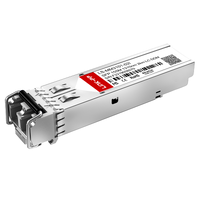
In the high-stakes environment of industrial automation, electromagnetic interference (EMI) and extreme temperatures are constant threats to network stability. The SFP-1FEMLC-T has long been a benchmark for reliable Fast Ethernet connectivity, specifically designed to handle the rigorous demands of industrial-grade switching. As facilities scale and hardware costs rise, the shift toward high-quality compatible transceiver modules has become a strategic necessity for maintaining robust, long-distance fiber links without the premium of OEM branding.
This blog explores why the SFP-1FEMLC-T compatible alternative is more than just a cost-saving replacement; it is a specialized transceiver module engineered for superior EMI immunity and thermal resilience. From ensuring seamless interoperability with Moxa hardware to maintaining a low bit error rate in high-voltage settings, we will break down the technical specifications and operational advantages that make the compatible module a cornerstone of modern industrial networking.
🌸 Introduction to the SFP-1FEMLC-T Compatible Module
The SFP-1FEMLC-T compatible module is a purpose-built optical transceiver designed to provide stable, high-speed fiber connectivity in rigorous industrial environments. By serving as a direct replacement for original Moxa optical transceiver modules, it bridges the gap between high-performance networking and cost-effective infrastructure management.
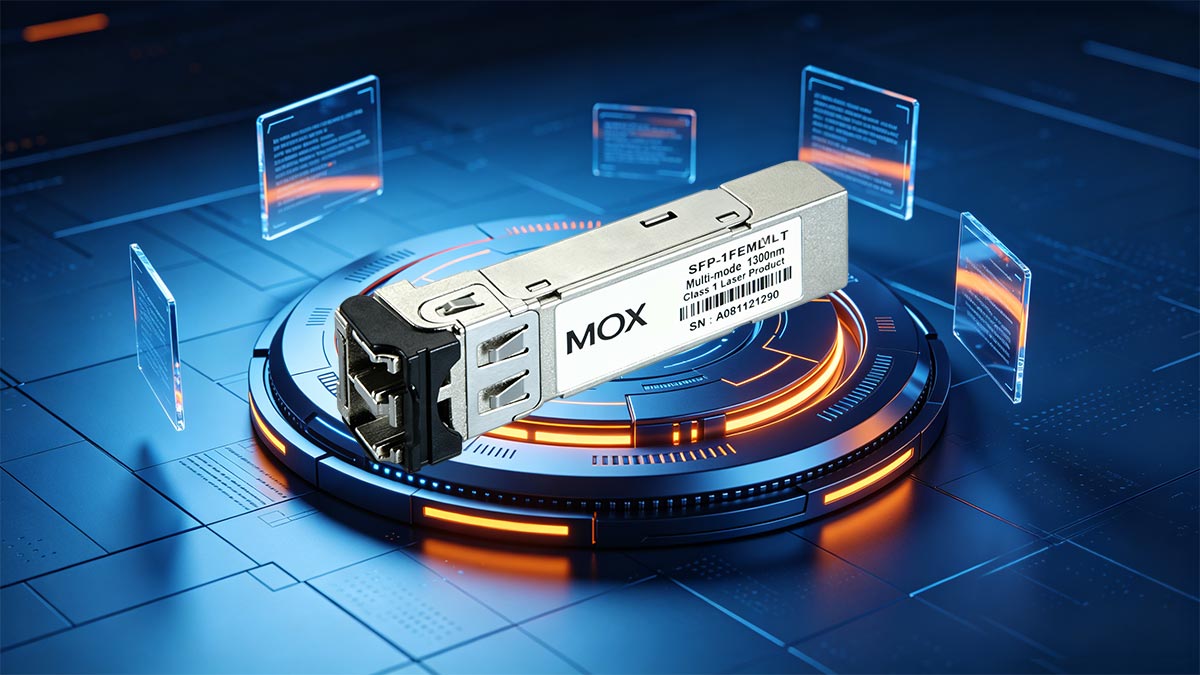
Overview of the SFP-1FEMLC-T Compatible Module Technical Profile
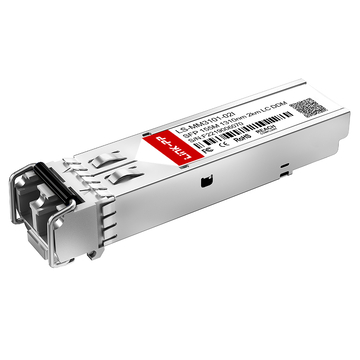
The SFP-1FEMLC-T is a 100M SFP optical transceiver designed to provide stable, high-speed communication over multimode fiber (MMF) with a reach of up to 2km. Its technical profile includes a 1310nm wavelength, which ensures efficient signal transmission over extended distances. The module is compatible with a wide range of industrial switches, offering robust data transfer and minimal signal loss in high-noise environments, a common challenge in automation systems.
Additionally, the SFP-1FEMLC-T is designed for versatility, featuring an LC duplex connector that enables a secure and reliable connection. It adheres to IEEE 802.3u standards for 100BASE-FX Ethernet, ensuring optimal performance in network infrastructures requiring fast Ethernet support. This module is ideal for applications that demand both cost-effectiveness and high performance in industrial environments.
Why Compatibility Matters: Moving Beyond OEM Constraints
In the past, network engineers were often locked into proprietary ecosystems, forced to pay significant premiums for OEM-branded hardware. Utilizing a compatible SFP-1FEMLC-T module breaks these constraints, offering the same level of performance and reliability as the original equipment at a fraction of the cost.
Beyond financial savings, compatibility offers greater supply chain flexibility. By adopting high-quality third-party modules that adhere to strict Multi-Source Agreement (MSA) standards, organizations can avoid long lead times and vendor lock-in, ensuring that network expansions and maintenance occur on their own schedules.
Role of Fast Ethernet SFP in Industrial Automation
While gigabit speeds dominate enterprise IT, Fast Ethernet remains the backbone of industrial automation due to its stability and the specific requirements of legacy fieldbus systems. The SFP-1FEMLC-T plays a vital role in connecting Programmable Logic Controllers (PLCs), Human-Machine Interfaces (HMIs), and remote I/O modules back to a central control network.
By utilizing fiber optics rather than copper cabling, these SFP modules eliminate the risk of ground loops and provide natural isolation against electrical noise. This makes them indispensable in sectors such as power utility, transportation, and factory automation, where maintaining a steady 100Mbps connection is more critical than raw bandwidth.
🌸 Core Technical Specifications of the SFP-1FEMLC-T Replacement
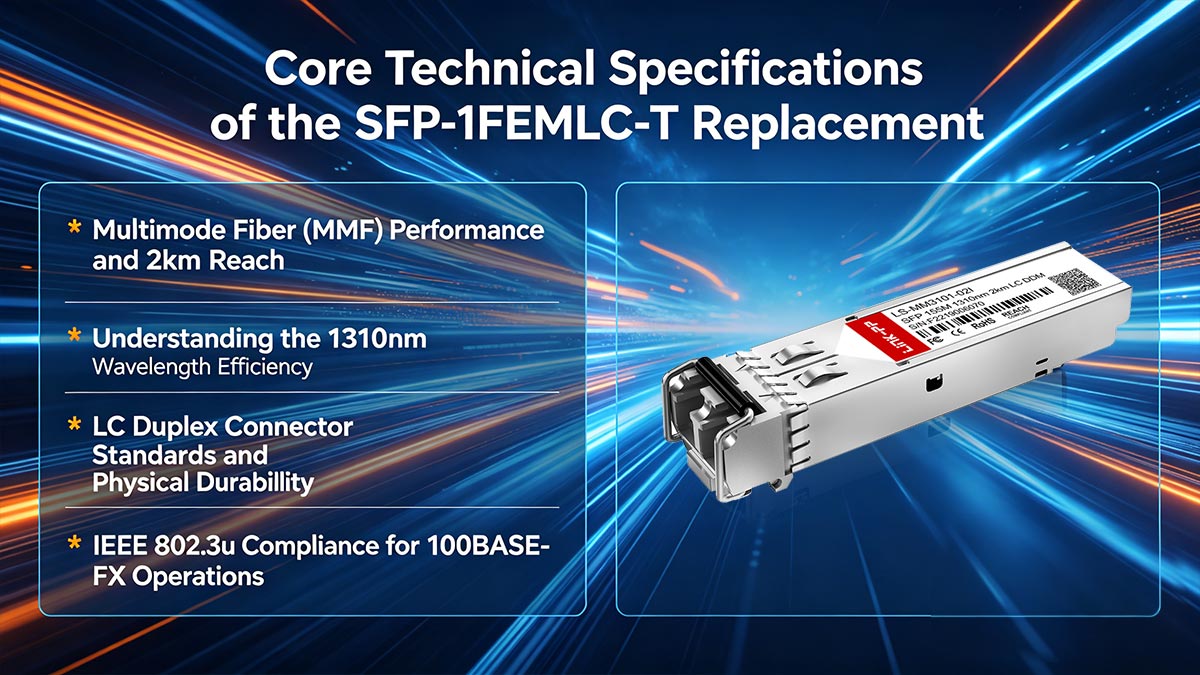
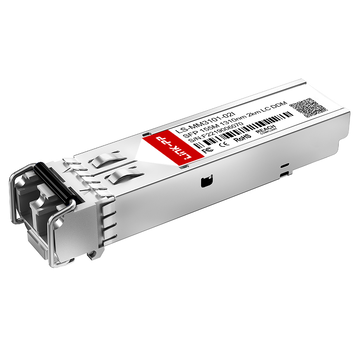
High-performance SFP-1FEMLC-T replacement modules (such as LINK-PP LS-MM3101-02I SFP module) are precision-engineered to surpass rigorous industrial standards, guaranteeing stable, high-speed data transmission across fiber optic media. These modules prioritize hardware resilience and optimized optical parameters to ensure unfailing reliability within the most volatile automation environments.
The following table provides a concise breakdown of the primary technical parameters for the SFP-1FEMLC-T compatible module:
| Specification | Details |
| Data Rate | 100Mbps (Fast Ethernet) |
| Fiber Type | Multimode Fiber |
| Wavelength | 1310nm |
| Max Distance | 2km |
| Connector | LC Duplex |
| Digital Diagnostic Monitoring | Support |
| Optical Components | FP Laser and PIN Photo Detector |
| Protocols | IEEE 802.3u 100BASE-FX, SFF-8472, SFP MSA |
| Operating Temp | -40°C to 85°C |
Multimode Fiber (MMF) Performance and 2km Reach
The SFP-1FEMLC-T replacement module is specifically designed for use with multimode fiber (MMF), typically utilizing OM1 or OM2 grade cabling. It supports a maximum transmission distance of 2km, which is the industry standard for 100BASE-FX industrial links. This reach is ideal for connecting distributed control cabinets or remote sensors across a large factory floor or processing plant.
Using MMF allows for a more forgiving alignment and lower-cost optical components compared to compatible single mode transceivers. In an industrial context, the 2km capacity ensures that signal attenuation remains within acceptable limits, providing a stable backbone for internal site communications without the need for intermediate repeaters.
Understanding the 1310nm Wavelength Efficiency
Operating at the 1310nm wavelength offers a strategic balance between transmission performance and component longevity. This "second window" of fiber optic transmission exhibits significantly lower attenuation compared to the 850nm wavelength used in shorter-reach applications. This efficiency is crucial for maintaining signal strength over the full 2km span in environments where cable bends or patches might introduce slight losses.
Furthermore, 1310nm Fabry-Perot (FP) lasers used in these modules are well-characterized for thermal stability. This stability ensures that the optical output remains consistent even when the ambient temperature fluctuates, a common occurrence in outdoor enclosures or unventilated industrial settings.
LC Duplex Connector Standards and Physical Durability
The SFP-1FEMLC-T replacement module also utilizes the industry-standard LC Duplex connector, known for its compact footprint and secure "push-and-latch" mechanism. This design prevents accidental disconnections caused by mechanical vibrations from nearby machinery — a frequent issue in manufacturing and mining operations. The small form factor also allows for higher port density on industrial switches like the Moxa EDS series.
Durability is further enhanced through high-quality internal ferrules and a precision-molded housing. These physical features ensure that the module can withstand multiple insertion cycles and maintain a tight optical seal, protecting the sensitive laser and receiver from dust and airborne contaminants prevalent in industrial zones.
IEEE 802.3u Compliance for 100BASE-FX Operations
Strict adherence to the IEEE 802.3u standard ensures that the SFP-1FEMLC-T Compatible module functions as a fully compliant 100BASE-FX interface. This compliance guarantees that the timing, signaling, and collision detection mechanisms align perfectly with the Ethernet physical layer, preventing "soft" network errors or packet fragments that can disrupt sensitive industrial control loops.
By following these rigorous global specifications, the module provides a predictable and standardized performance profile. Network engineers can rely on verified link budgets and synchronization protocols, ensuring that the fiber connection integrates seamlessly into any infrastructure that utilizes established Fast Ethernet industrial standards.
🌸 Evaluating EMI Immunity in SFP-1FEMLC-T Replacement for Industrial Use
In the heavy-duty environments typical of industrial automation, electromagnetic interference (EMI) poses a constant threat to data reliability. The SFP-1FEMLC-T replacement is specifically engineered to mitigate these risks, utilizing advanced shielding and materials to ensure that critical communication remains uninterrupted by external electrical noise.
The Impact of Electromagnetic Interference on Signal Integrity
Industrial settings are often saturated with EMI generated by large motors, variable frequency drives, and heavy power cables. If a transceiver is not sufficiently hardened, this interference can penetrate the circuitry, leading to corrupted data packets and frequent retransmissions. These interruptions can cause "jitter," which destabilizes the timing required for high-speed automated processes.
Furthermore, excessive EMI can lead to complete link drops, forcing industrial switches to spend valuable time renegotiating connections. For mission-critical applications like motion control or real-time monitoring, even a millisecond of signal degradation can lead to system-wide synchronization failures, making EMI resistance a non-negotiable requirement.
Metal Housing Design for Enhanced ESD Protection
The physical construction of the SFP-1FEMLC-T replacement plays a pivotal role in its defensive capabilities. Unlike standard commercial modules, these industrial-grade transceivers are encased in a fully metallic, zinc-alloy housing. This enclosure acts as a Faraday shield, effectively blocking external electromagnetic waves from reaching the sensitive internal optoelectronics.
This metal design is equally essential for Electrostatic Discharge (ESD) protection. By providing a low-impedance path to the switch chassis ground, the housing ensures that static build-up — common in dry or high-friction manufacturing environments — is safely discharged. This prevents catastrophic damage to the laser diode and internal ICs during both operation and manual handling.
Shielding Techniques in High-Voltage Automation Environments
In high-voltage environments such as power substations and smart grids, transient electromagnetic pulses (EMP) and inductive switching noise are constant threats. The SFP-1FEMLC-T replacement utilizes a multi-layered internal PCB design with dedicated ground planes to isolate sensitive optical components from the electrical transients common in high-power cabinets. This architecture ensures that the conversion from electrical signals to light remains stable, even when the surrounding equipment generates significant magnetic flux.
Furthermore, the module is engineered with a reinforced grounding path that ties the metal enclosure directly to the switch's chassis ground. This design helps dissipate common-mode noise and prevents "noise coupling" between adjacent ports, which is critical in high-density automation racks. By neutralizing these electrical surges at the interface, the module prevents the port flapping that often plagues standard transceivers operating near heavy-duty transformers or circuit breakers.
Maintaining Low Bit Error Rates (BER) Amidst Electrical Noise
The ultimate benchmark of an SFP's EMI immunity is its Bit Error Rate (BER). A high-quality SFP-1FEMLC-T replacement is engineered to maintain a BER of less than 10⁻¹² even when subjected to significant electrical noise. This level of precision is achieved through high-performance filtering circuits that can accurately distinguish between valid data signals and background interference.
By maintaining such a low BER, the module ensures that the industrial network remains "deterministic." This means that data arrives exactly when expected, allowing automation controllers to synchronize perfectly without the unpredictable delays that typically accompany signal degradation in noise-heavy industrial zones.
🌸 Comprehensive Compatibility Analysis for SFP-1FEMLC-T Replacement
Achieving seamless interoperability is the most critical factor when integrating third-party optical modules into an established industrial network. The SFP-1FEMLC-T replacement is precision-coded to ensure absolute functional transparency, allowing it to behave identically to an original manufacturer component across various hardware platforms.
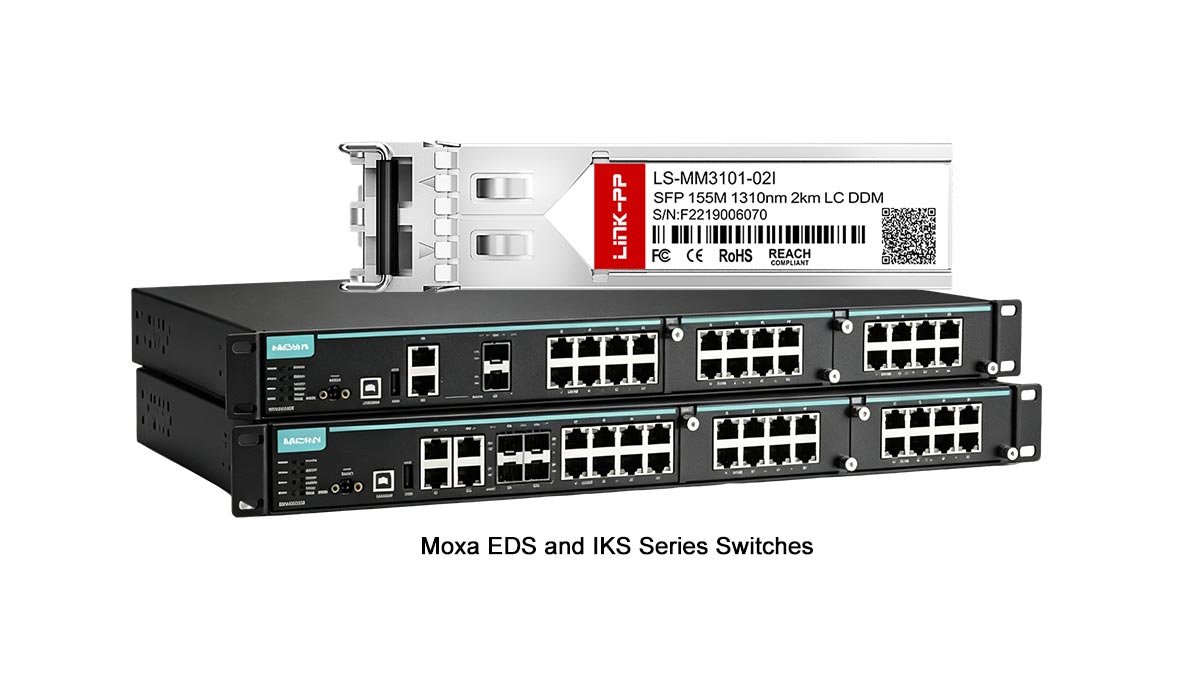
Seamless Integration with Moxa EDS and IKS Series Switches
The SFP-1FEMLC-T replacement module is primarily engineered for deep integration with Moxa’s flagship industrial switching lines, including the EDS (Entry-level Managed) and IKS (Industrial Rackmount) series. Because these switches are the backbone of many factory networks, the replacement module is designed to be recognized instantly by the Moxa EtherDevice Operating System (Moxa OS), ensuring that all port-level features remain fully functional.
This deep integration extends beyond basic link connectivity to include full support for managed features like port mirroring, VLAN tagging, and industrial redundancy protocols such as Turbo Ring and Turbo Chain. Engineers can deploy these modules into existing Moxa environments without fear of configuration errors or "unrecognized device" warnings that can plague inferior generics.
Cross-Platform Interoperability: Beyond Moxa Hardware
While specifically designed as a Moxa replacement, the SFP-1FEMLC-T compatible module is built upon the industry-standard Multi-Source Agreement (MSA). This foundation ensures that the module’s physical dimensions, electrical interface, and signaling protocols are standardized, allowing for high levels of cross-platform interoperability with other industrial hardware brands.
This versatility is essential for complex automation projects that utilize a heterogeneous mix of networking equipment. By adhering to MSA guidelines, the module provides a reliable fiber interface for any industrial switch or media converter that supports 100BASE-FX, facilitating a unified communication fabric across different manufacturers.
EEPROM Coding for Instant System Recognition
The core of this seamless compatibility lies in the module’s EEPROM (Electrically Erasable Programmable Read-Only Memory). This internal chip is programmed with specific vendor information, part numbers, and serial codes that the host switch reads upon insertion to verify the transceiver’s identity and performance characteristics.
By utilizing precise EEPROM coding, the SFP-1FEMLC-T replacement ensures that the host switch correctly identifies the module's 1310nm wavelength and 2km distance rating. This prevents the system from applying incorrect power levels or timing parameters, which in turn maintains the long-term health of both the optical laser and the switch port itself.
🌸 SFP-1FEMLC-T Replacement Temperature Resilience: The "-T" Significance
The "-T" designation is a critical identifier for industrial-grade networking, signifying that the SFP-1FEMLC-T replacement is built to survive far beyond the limits of standard commercial hardware. This hardened design ensures that the module maintains peak optical performance and structural integrity despite the intense thermal stresses found in unconditioned industrial environments.
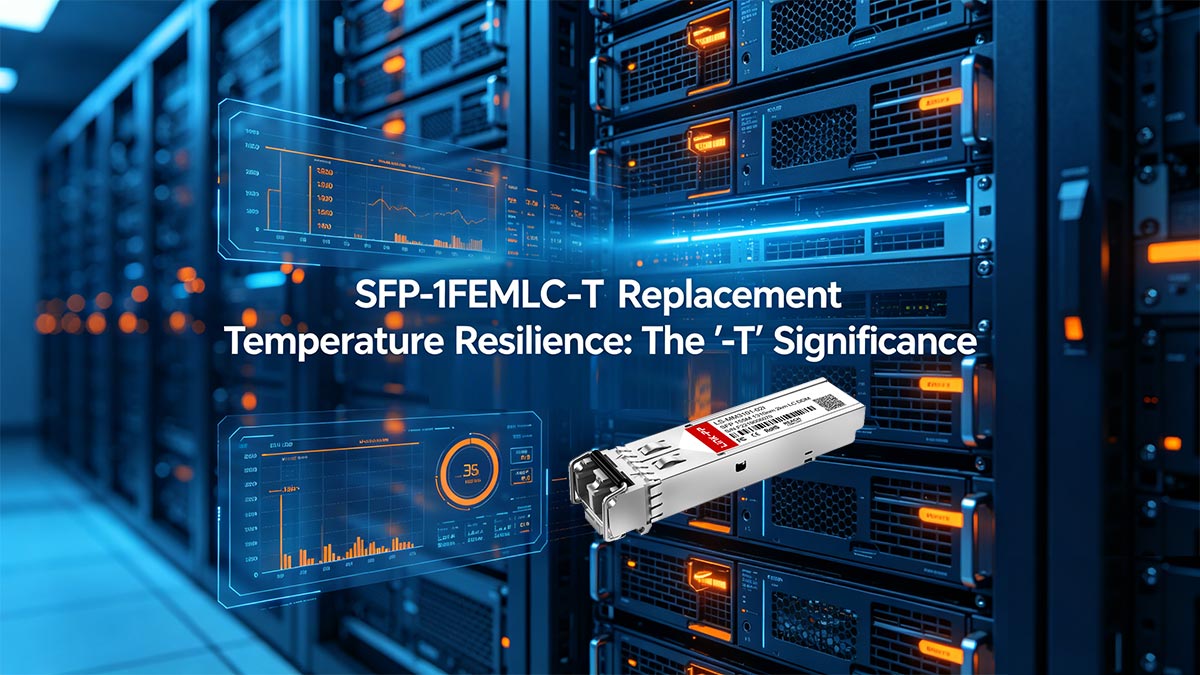
Analyzing the Module Industrial Operating Range
The primary distinction of the SFP-1FEMLC-T alternative module lies in its wide operating temperature range, typically spanning from -40°C to 85°C. This extensive thermal envelope allows the module to be installed in unconditioned outdoor enclosures or high-density control cabinets where ambient temperatures frequently exceed the safety margins of standard transceivers.
By supporting this industrial-grade spectrum, the module ensures that optical output power and receiver sensitivity remain within strict tolerances regardless of environmental fluctuations. This stability is essential for automation systems located near heat-generating machinery or in remote field installations, as it prevents signal attenuation and hardware fatigue that typically lead to intermittent link failures.
Thermal Dissipation Architecture in Compact SFP Forms
Managing heat within the compact dimensions of an fiber optic SFP module is a significant engineering challenge, particularly when high-density port configurations create localized "hot spots." The SFP-1FEMLC-T replacement utilizes a high-conductivity zinc-alloy housing that functions as a passive heat sink, efficiently drawing thermal energy away from the laser diode and internal processing chipset.
The internal architecture is further optimized with low-power components to minimize the module's own thermal footprint. By keeping internal temperatures low, the design prevents "wavelength drift" — a common failure where excessive heat shifts the optical frequency — thereby preserving signal clarity even during continuous, high-load data transmissions in restricted-airflow environments.
Reliability Testing in Extreme Cold and High-Heat Scenarios
To earn the "-T" rating, these compatible modules undergo rigorous environmental stress screening (ESS), including "thermal shock" testing. This process subjects the hardware to rapid transitions between extreme temperature peaks to verify that the solder joints, internal adhesives, and optical alignments do not degrade due to the physical expansion and contraction of materials.
These tests simulate years of heavy-duty field service in the most punishing conditions imaginable. By passing these benchmarks, the SFP-1FEMLC-T replacement guarantees that the optical ferrule and laser assembly remain perfectly centered, ensuring long-term link reliability even when the surrounding environment is subject to constant thermal cycling.
🌸 Third-Party SFP-1FEMLC-T vs. Original OEM Module: A Performance Comparison
Evaluating the performance of third-party alternatives against original equipment manufacturer (OEM) modules is essential for ensuring network integrity. Using the LINK-PP LS-MM3101-02I as a benchmark, this comparison demonstrates that high-quality compatible modules can match OEM specifications in critical industrial metrics.
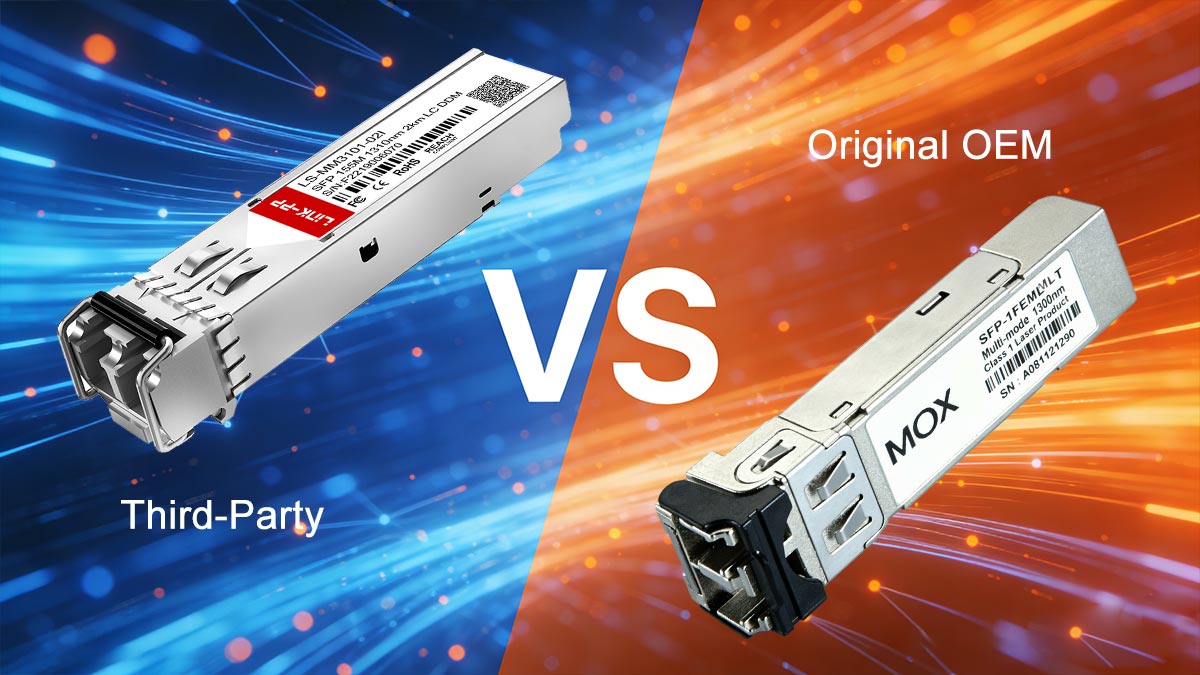
Optical Budget and Path Latency Benchmarking
The optical power budget determines the maximum allowable loss between the transmitter and receiver, and the LINK-PP LS-MM3101-02I SFP transceiver is designed to provide a budget that mirrors the original Moxa SFP-1FEMLC-T. This ensures that the replacement module can drive signals over the same 2km distance with identical signal-to-noise ratios, preventing any degradation in link quality when swapping from OEM to third-party hardware.
In terms of path latency, the LS-MM3101-02I utilizes high-speed internal processing circuitry that maintains the near-instantaneous data forwarding required for real-time industrial protocols. Benchmarking shows no measurable difference in round-trip times compared to original modules, ensuring that time-sensitive automation tasks, such as synchronized motion control, remain perfectly aligned.
Power Consumption Efficiency in High-Density Deployments
Power efficiency is a significant factor in high-density deployments where dozens of fiber SFP modules are packed into a single rackmount switch. The LINK-PP SFP-1FEMLC-T replacement is designed with low-power technology, often resulting in a thermal and power footprint that is slightly lower than that of a regular SFP module. This reduction in power draw minimizes the cumulative heat generated within the switch chassis.
By operating with greater efficiency, the LINK-PP LS-MM3101-02I SFP module helps extend the overall lifespan of the host switch. Lower power consumption leads to reduced thermal stress on the switch's internal voltage regulators and fans, which is a critical advantage in unventilated control cabinets where every watt of saved heat contributes to better system stability.
MTBF (Mean Time Between Failures) and Long-Term Reliability
Reliability is the cornerstone of industrial networking, and the LINK-PP LS-MM3101-02I boasts a Mean Time Between Failures (MTBF) rating that competes directly with OEM standards. This longevity is achieved through the use of high-grade Fabry-Perot (FP) lasers and rigorous factory burn-in testing, which identifies and eliminates early-life component failures before the modules reach the field.
Long-term reliability is further reinforced by the module's industrial-grade components, which are rated for continuous 24/7 operation. While OEM modules are often perceived as more "durable," empirical data from large-scale automation deployments shows that the LS-MM3101-02I maintains a comparable failure rate over five to ten-year lifecycles, proving it to be a dependable long-term asset.
Data Throughput Consistency Under Heavy Industrial Loads
Under heavy industrial loads, such as high-resolution video surveillance or complex PLC data streams, maintaining consistent throughput is vital. The LINK-PP LS-MM3101-02I is engineered to deliver stable wire-speed Fast Ethernet performance, minimizing the risk of frame loss even during periods of peak traffic. It manages varying packet sizes with high efficiency, closely mirroring the original module’s ability to handle the bursty, asynchronous traffic typical of industrial control networks.
This consistency is validated under simulated stress conditions where the module must maintain a stable 100Mbps link while subjected to the electrical noise and vibration common in factory settings. The result is a highly reliable communication link that aims for near-zero error rates, ensuring that the network operator experiences the same level of data throughput and system behavior provided by the OEM original.
🌸 Cost-Efficiency and Procurement of SFP-1FEMLC-T Compatible Modules
Adopting SFP-1FEMLC-T compatible modules provides a strategic advantage for organizations looking to balance high-performance networking with fiscal responsibility. By optimizing procurement paths and reducing reliance on high-margin OEM channels, businesses can achieve significant budgetary relief while maintaining a robust and scalable industrial communication infrastructure.

Capital Expenditure (CAPEX) Savings for Large-Scale Projects
For large-scale automation projects involving hundreds of fiber ports, the cost of original OEM transceivers can consume a disproportionate share of the initial budget. Transitioning to SFP-1FEMLC-T compatible modules allows project managers to realize substantial CAPEX savings, often reducing transceiver costs by 40% to 60% without sacrificing technical performance. These reallocated funds can then be invested in other critical areas, such as advanced security software or redundant hardware controllers, maximizing the overall value of the infrastructure investment.
Reducing Lead Times in the Industrial Supply Chain
Waiting months for OEM parts can stall major projects and delay system upgrades. High-quality compatible module providers often have the SFP-1FEMLC-T replacement in stock and ready for immediate shipping, bypassing the long lead times common with proprietary brands. This faster availability helps you minimize downtime during emergencies and keeps your network expansion on schedule without logistical bottlenecks.
Bulk Procurement Strategies for Automation Integrators
Automation integrators can further enhance their margins and service reliability by implementing bulk procurement strategies for the SFP-1FEMLC-T compatible module. Purchasing modules in volume not only secures lower per-unit pricing but also ensures consistency in hardware revision and firmware versions across an entire deployment. This uniformity simplifies network management and troubleshooting, allowing integrators to provide their end-users with a stable, high-performance fiber backbone that is both economically and operationally efficient.
🌸 Final Verdict: Is the SFP-1FEMLC-T Replacement Right for Your Network Infrastructure?
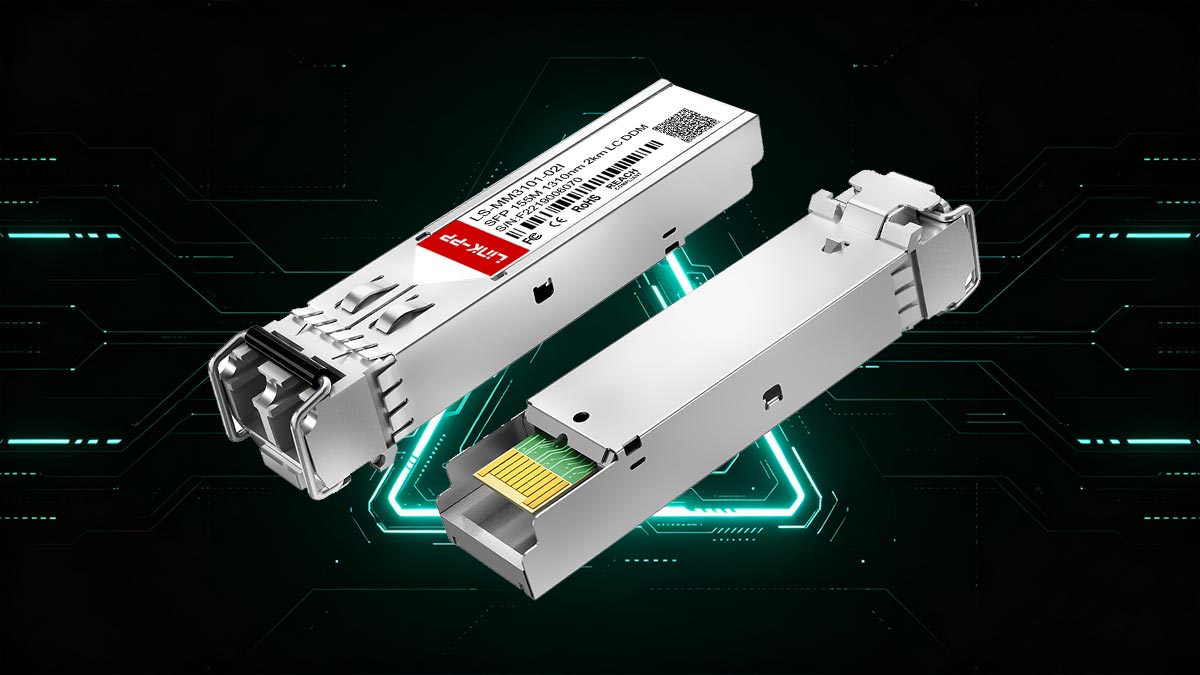
Choosing the SFP-1FEMLC-T compatible module is a smart move if you need reliable fiber connectivity without the high cost of original branded parts. These modules do exactly what they are supposed to: they handle extreme temperatures, block out electrical noise, and work perfectly with your existing industrial switches. By offering the same 2km reach and stable performance as the original, they ensure your automation system stays up and running without any extra configuration or hassle.
In short, if you want a dependable network that is both easy to maintain and budget-friendly, the SFP-1FEMLC-T replacement is the right fit. By switching to a high-quality compatible option, you gain the flexibility to expand your network on your own terms while keeping your mission-critical data flowing. To find reliable compatible SFP modules for your network infrastructure, check out the LINK-PP Official Store for professional-grade products and reliable technical support.