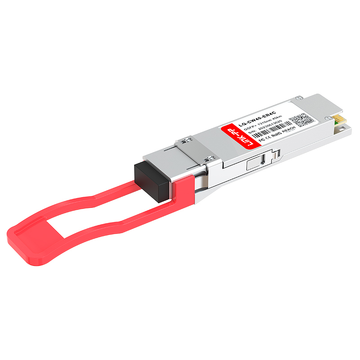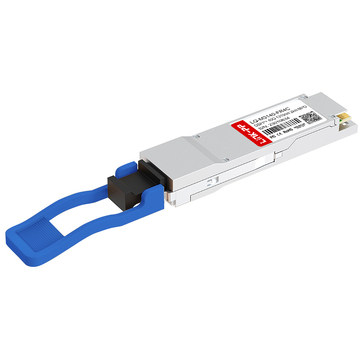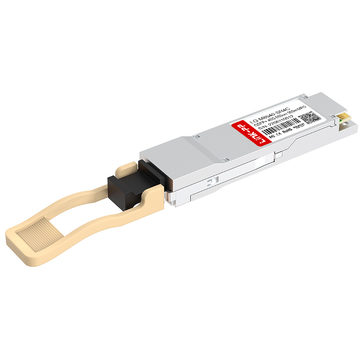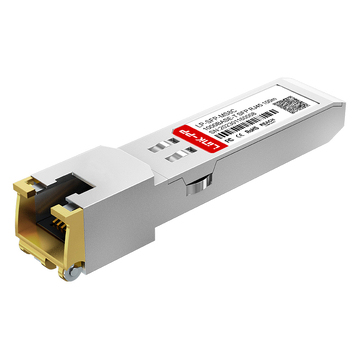





























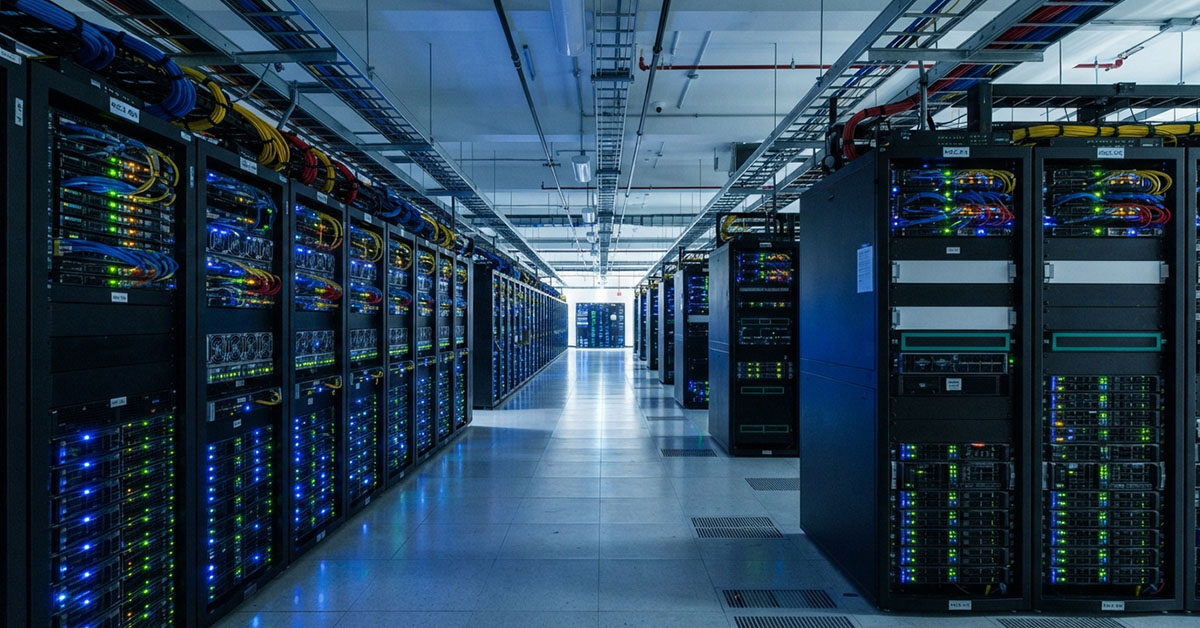
In modern high-speed networking environments, data centers are continuously evolving toward higher bandwidth density and lower latency requirements. As 40G, 100G, 200G, and 400G Ethernet become mainstream, hardware design challenges such as power efficiency and thermal control have become increasingly critical. Among the key interface technologies supporting this transition, the QSFP port plays a central role in enabling scalable and compact connectivity solutions across enterprise and hyperscale infrastructures.
The increasing demand for higher data throughput has significantly raised concerns about energy consumption and heat generation inside network switches. QSFP ports, while highly efficient in terms of port density, introduce complex engineering challenges due to their multi-lane architecture and high-speed optical or electrical signaling. Understanding how these ports manage power usage and dissipate heat is essential for optimizing both performance and long-term system reliability in dense networking environments.
This article provides a structured analysis of QSFP port efficiency, focusing on power consumption characteristics and thermal dissipation behavior. It will help readers better understand:
- How QSFP port architecture influences energy usage
- The relationship between data rate scaling and heat generation
- Key thermal management mechanisms in high-density deployments
- Practical considerations for improving operational efficiency
By exploring these aspects in detail, the discussion offers a clear technical foundation for evaluating QSFP-based networking designs in real-world applications and supports more informed infrastructure planning decisions.
☑️ Understanding QSFP Port Architecture
The QSFP port architecture is fundamentally designed to support high-density, multi-lane data transmission while maintaining a compact form factor suitable for modern high-speed networks. Its efficiency is determined by how effectively it integrates electrical signaling, optical conversion, and thermal control within a constrained physical interface, making it a critical building block in 40G to 400G networking environments.
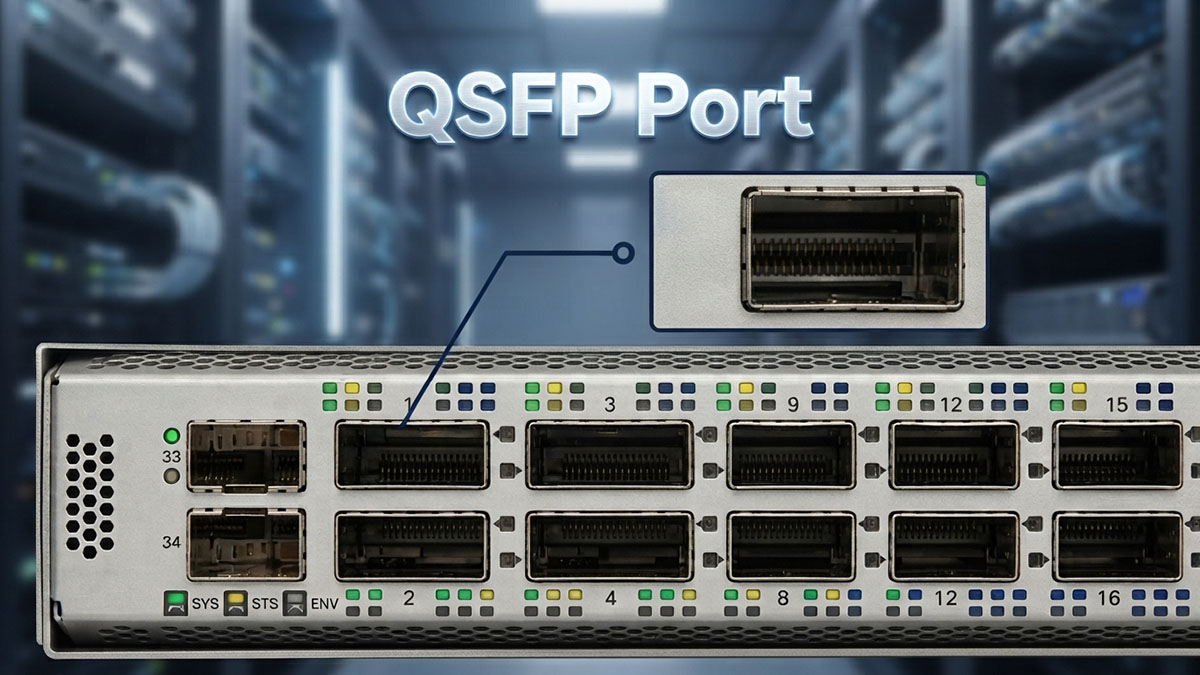
What Is a QSFP Port?
A QSFP port is a high-speed networking interface that supports multiple data lanes within a single compact module slot, enabling aggregated bandwidth transmission over fiber or copper links. It is widely used in data center switches, routers, and high-performance computing systems where port density and throughput efficiency are essential.
In practical deployment, a QSFP port serves as the physical interface that hosts pluggable transceivers, allowing flexible adaptation to different transmission standards and media types. It is commonly associated with evolving Ethernet standards such as QSFP+, QSFP28, QSFP56, and QSFP-DD, each supporting progressively higher data rates.
To better understand its functional role, key characteristics include:
- Multi-lane parallel transmission supporting aggregated bandwidth
- Hot-pluggable design enabling operational flexibility
- Compatibility with optical and direct attach copper solutions
- Scalable architecture supporting successive Ethernet generations
These characteristics define why the QSFP port is widely adopted in modern networking hardware where scalability and efficiency are essential design requirements.
Internal Components Affecting Efficiency
The efficiency of a QSFP port is strongly influenced by its internal electrical and optical components, which collectively determine power consumption and thermal output. Each subsystem contributes to overall signal integrity and energy performance, especially at higher transmission speeds.
Key internal elements that impact efficiency include:
- Serializer/Deserializer (SerDes) modules for signal conversion
- Digital Signal Processing (DSP) units for PAM4 and error correction
- Laser drivers and photodiodes in optical transceivers
- High-speed PCB traces and connector interfaces
These components work together to maintain high-speed data transmission while balancing energy usage and heat generation across the module.
Evolution of QSFP Port Speeds and Power Profiles
The QSFP port has evolved significantly alongside Ethernet standards, with each generation introducing higher data rates and corresponding changes in power consumption and thermal behavior. This evolution reflects the growing demand for bandwidth-intensive applications such as cloud computing and AI workloads.
Over successive generations, key changes include:
- QSFP+ supporting 40G with relatively moderate power usage
- QSFP28 enabling 100G with increased DSP reliance
- QSFP56 introducing 200G with higher lane efficiency demands
- QSFP-DD enabling 400G with significantly higher power density
This progression illustrates a clear trend toward higher integration and increased electrical complexity.
☑️ Power Consumption Characteristics of QSFP Ports
Power consumption in QSFP ports is a defining factor in modern network design because it directly impacts switch energy efficiency, thermal load, and overall data center operating costs. As data rates increase from 40G to 400G and beyond, QSFP modules require more complex electronic and optical processing, which leads to higher and more variable power profiles depending on deployment scenarios.
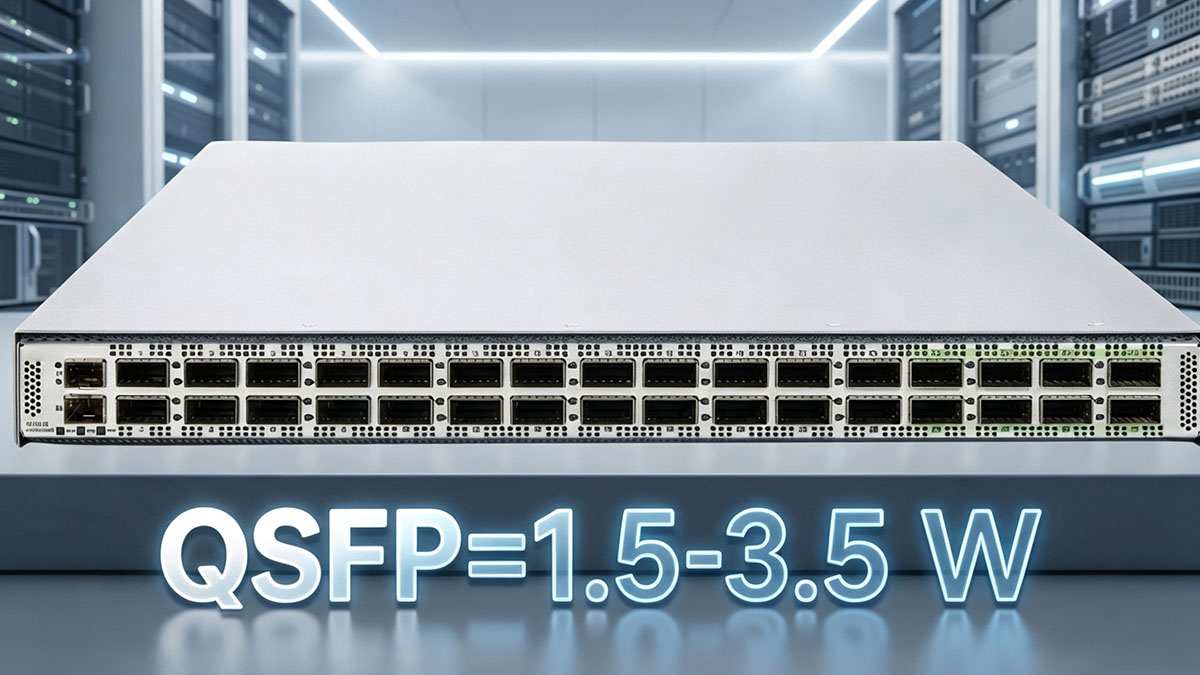
Typical Power Consumption by QSFP Type
QSFP port power usage varies significantly depending on the module generation and transmission technology used. In general, higher-speed modules and longer-reach optics consume more power due to increased signal processing and laser drive requirements.
To better understand these differences, typical power ranges across common QSFP types can be summarized as follows:
| QSFP Type | Common Data Rate | Typical Power Consumption | Key Characteristics |
|---|---|---|---|
| QSFP+ | 40G | ~1.5W–3.5W | Lower DSP usage, mature technology |
| QSFP28 | 100G | ~2.5W–4.5W | Balanced performance and efficiency |
| QSFP56 | 200G | ~3.5W–6.5W | Higher DSP dependency, PAM4 signaling |
| QSFP-DD | 400G | ~8W–12W+ | High-density design, significant thermal load |
These values show a clear trend: as bandwidth doubles, power consumption does not scale linearly but increases due to greater signal processing complexity and tighter optical tolerances.
Factors That Influence QSFP Port Power Usage
The power consumption of QSFP ports is not fixed; it is influenced by multiple operational and environmental factors. Understanding these variables helps in predicting energy requirements and optimizing system design.
Key influencing factors include:
- Transmission distance, where longer reaches require stronger laser output and higher power
- Optical technology type, such as SR, LR, or ER modules with different power demands
- Modulation scheme complexity, especially PAM4 signaling in higher-speed modules
- Traffic utilization level, where active data load can increase DSP processing requirements
These factors collectively determine how efficiently a QSFP port operates under real-world conditions. For example, a short-reach SR module typically consumes less power than a long-reach LR module operating at the same data rate.
Switch-Level Power Density Considerations
At the system level, QSFP ports contribute directly to the overall power density of network switches, especially in spine-leaf architectures and hyperscale data centers. As port counts increase, cumulative power consumption becomes a major design constraint.
From a deployment perspective, key considerations include:
- Total rack power budget limitations in high-density environments
- Cooling system capacity required to offset thermal output
- Energy efficiency metrics such as watts per gigabit
- Power scaling behavior as switch port density increases
In high-port-count switches, even small increases in per-port power can translate into substantial system-level energy demand. This makes efficient QSFP port selection and architecture planning essential for maintaining balanced performance and operational cost control.
☑️ Heat Dissipation Mechanisms in QSFP Ports
Heat dissipation in QSFP ports is a critical aspect of high-speed network design because thermal buildup directly affects signal stability, module lifespan, and overall system reliability. As QSFP modules operate at higher data rates and power levels, efficient heat removal becomes essential to maintain stable performance in densely populated switch environments.
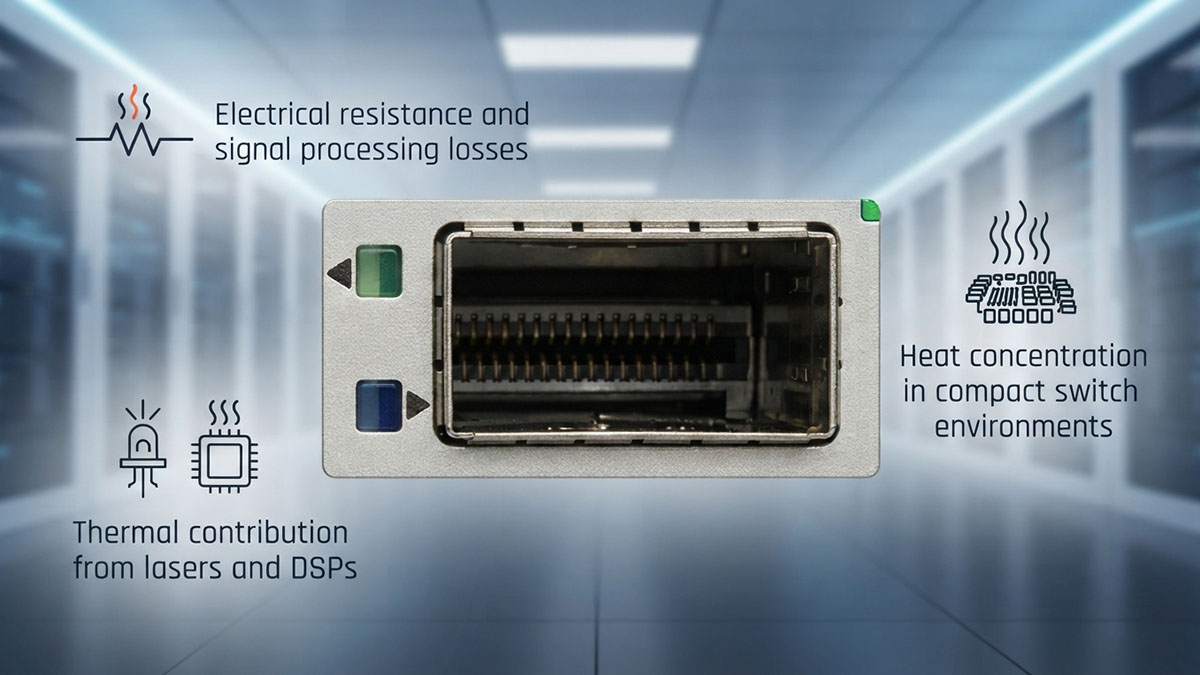
How QSFP Ports Generate Heat
QSFP ports generate heat primarily as a byproduct of high-speed electrical processing and optical signal conversion. As data rates increase, more complex circuitry is required, which increases power consumption and consequently thermal output.
The main sources of heat generation include:
- DSP and SerDes processing for high-speed signal encoding and decoding
- Laser drivers and optical transmitters converting electrical signals to light
- Electrical resistance in high-frequency PCB traces and connectors
- Power regulation circuits inside the module
Each of these components contributes to localized heat zones within the QSFP module, especially in high-density switch panels where airflow is limited. Higher-speed standards such as 200G and 400G significantly intensify this effect due to increased integration complexity.
Thermal Transfer Paths Inside Network Equipment
Once heat is generated inside a QSFP module, it must be efficiently transferred away to prevent overheating. Network equipment is designed with multiple thermal pathways to manage this energy flow from the module to the surrounding environment.
Key thermal transfer mechanisms include:
- Metal cage structures that conduct heat away from the module body
- Heat sinks integrated into switch front panels for passive dissipation
- Directed airflow systems using high-speed internal fans
- Thermal interface materials that improve conduction between module and chassis
These mechanisms work together to create a controlled thermal pathway, moving heat from the QSFP module to the external airflow system. In most enterprise and data center switches, forced-air cooling is the primary method of maintaining safe operating temperatures.
Common Thermal Challenges in Dense Deployments
In high-density switch configurations, QSFP ports are often placed closely together, which significantly increases the risk of localized heat accumulation. This creates several operational challenges that must be addressed during system design.
Key thermal challenges include:
- Formation of hot spots in tightly packed front-panel layouts
- Restricted airflow due to high port density and cable congestion
- Increased risk of thermal throttling under sustained traffic loads
- Uneven temperature distribution across switch chassis
These challenges are especially pronounced in 100G and 400G deployments, where each QSFP module generates more heat while occupying the same physical space as lower-speed generations.
To mitigate these issues, network systems often rely on:
- High-efficiency fan modules with adaptive speed control
- Strategic port layout design to improve airflow distribution
- Thermal monitoring sensors embedded within modules and chassis
Ultimately, effective heat dissipation is not only about cooling individual QSFP ports but also about managing system-wide thermal balance. Proper thermal design ensures stable signal integrity, prevents premature hardware degradation, and supports long-term operational efficiency in high-performance networking environments.
☑️ Airflow Design and Cooling Optimization
Airflow design is one of the most important factors in maintaining QSFP port efficiency because it directly determines how effectively heat is removed from high-density switch environments. Even when power consumption is well managed, insufficient cooling can lead to thermal instability, reduced performance, and accelerated hardware aging.
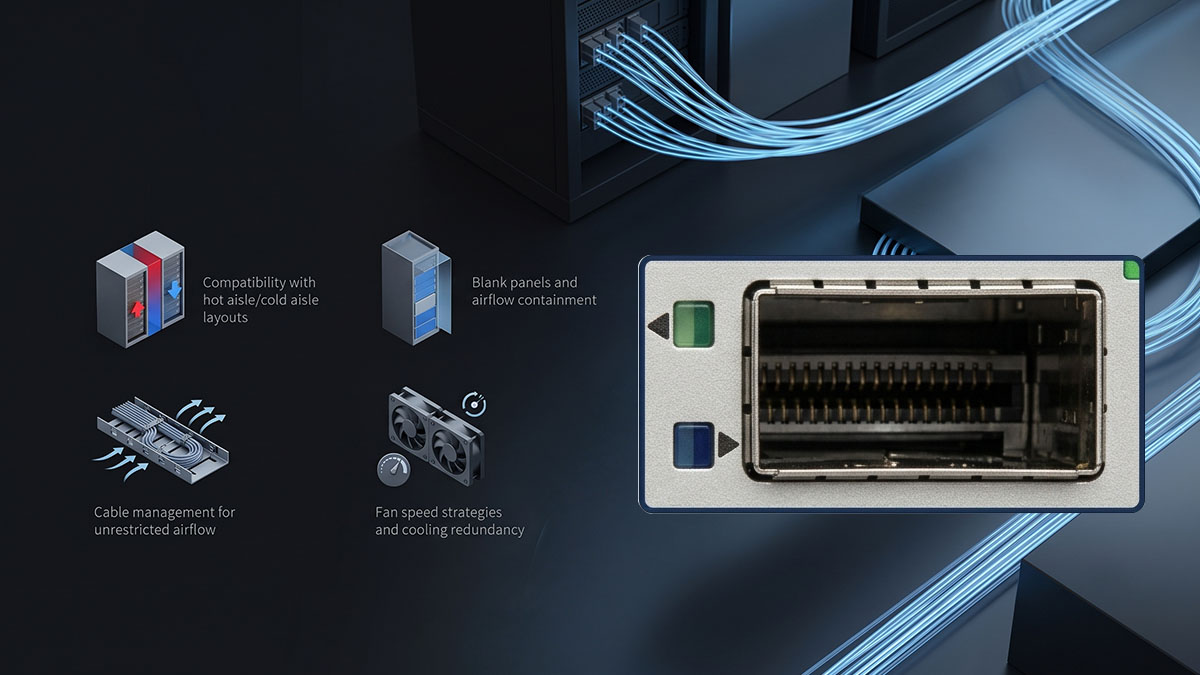
Front-to-Back vs Back-to-Front Cooling
Airflow direction plays a decisive role in QSFP port thermal performance, especially in rack-scale deployments where consistent cooling paths are required. The two most common airflow designs are front-to-back and back-to-front cooling, each optimized for different data center layouts.
To understand their differences, key characteristics include:
| Cooling Type | Airflow Direction | Typical Usage Scenario | Thermal Efficiency |
|---|---|---|---|
| Front-to-Back | Front intake → Rear exhaust | Standard data center racks | High consistency with hot aisle/cold aisle design |
| Back-to-Front | Rear intake → Front exhaust | Telecom or mixed environments | Requires careful rack planning |
These designs influence how effectively QSFP ports maintain stable operating temperatures under continuous load. Front-to-back cooling is generally preferred in modern data centers because it aligns with structured airflow strategies.
Optimizing Rack-Level Thermal Management
Rack-level thermal optimization ensures that QSFP ports operate within safe temperature ranges even under heavy traffic loads. Proper airflow management at the rack level reduces the burden on individual switch cooling systems and improves overall energy efficiency.
Key optimization practices include:
- Maintaining unobstructed front and rear airflow paths within racks
- Using blanking panels to prevent air recirculation and hot air mixing
- Organizing cable routing to avoid blocking QSFP port ventilation zones
- Balancing server and switch placement to distribute thermal load evenly
Each of these practices contributes to a more predictable and stable thermal environment. For example, proper cable management not only improves accessibility but also prevents airflow disruption at the switch front panel, where QSFP ports are typically concentrated.
Importance of Ambient Temperature Control
Ambient temperature control is a foundational requirement for maintaining QSFP port efficiency because external environmental conditions directly influence internal switch temperatures. Even with advanced cooling systems, high ambient temperatures can reduce thermal headroom and increase fan power consumption.
Key environmental considerations include:
- Maintaining recommended operating temperature ranges in data center zones
- Preventing hot air recirculation within enclosed rack spaces
- Monitoring temperature fluctuations across different rack rows
- Ensuring consistent cooling performance across all equipment zones
Stable ambient conditions reduce the workload on internal cooling systems, allowing QSFP ports to operate more efficiently with lower thermal stress. This not only improves performance stability but also helps extend hardware lifespan in long-term deployments.
☑️ QSFP Port Efficiency Comparison Across Media Types
QSFP port efficiency varies significantly depending on the transmission medium used, because optical and electrical solutions differ in power consumption, heat generation, and signal processing requirements. Understanding these differences is essential for selecting the most energy-efficient connectivity option for specific deployment scenarios in high-speed networks.
Optical Modules vs DAC vs AOC
Different QSFP media types exhibit distinct efficiency profiles based on how signals are transmitted and processed. Optical modules convert electrical signals into light, while copper and hybrid solutions rely on electrical transmission with varying levels of signal conditioning.
To clarify their efficiency differences, key characteristics can be compared as follows:
| Media Type | Typical Use Case | Power Consumption Level | Heat Output | Key Efficiency Trait |
|---|---|---|---|---|
| Optical QSFP Modules | Long-distance interconnects | Medium to High | Moderate to High | High scalability over distance |
| DAC (Direct Attach Copper) | Short-reach rack connections | Low | Low | Minimal signal conversion overhead |
| AOC (Active Optical Cable) | Medium-reach flexible links | Medium | Moderate | Balanced performance and flexibility |
These differences show that DAC solutions generally provide the highest energy efficiency at short distances, while optical modules trade higher power usage for extended reach and scalability.
Multimode vs Single-Mode QSFP Solutions
Optical QSFP modules can further be divided into multimode fiber (MMF) and single-mode fiber (SMF) solutions, each with distinct efficiency characteristics influenced by laser technology and transmission distance.
Key differences include:
- Multimode QSFP modules typically use VCSEL-based lasers, which consume less power but are limited to shorter distances
- Single-mode QSFP modules rely on more powerful laser sources, increasing energy consumption but enabling long-range transmission
- Signal dispersion and optical complexity are higher in single-mode deployments, contributing to additional processing overhead
These differences can be summarized in terms of efficiency impact:
- MMF solutions generally offer lower power consumption per port in short-reach environments
- SMF solutions provide higher scalability for long-distance links but require more energy per transmission channel
- Thermal output tends to increase with optical reach complexity and signal conditioning requirements
In data center environments, multimode solutions are often preferred for intra-rack or inter-rack connectivity due to their lower thermal footprint, while single-mode solutions dominate backbone and inter-building links where distance is a critical factor.
Passive and Active Cable Efficiency Differences
Copper and hybrid cable solutions used with QSFP ports also vary significantly in efficiency depending on whether they are passive or active designs. The presence or absence of signal conditioning electronics is the key factor influencing power consumption and heat generation.
Important distinctions include:
- Passive DAC cables do not require additional signal amplification, resulting in extremely low power consumption and minimal heat output
- Active cables include built-in signal conditioning circuits, which increase power usage but extend usable transmission distance
- Optical conversion is absent in DAC solutions, reducing overall processing overhead at the port level
From an efficiency standpoint:
- Passive DAC represents the lowest power and heat solution for short-range QSFP connectivity
- Active cable solutions provide a compromise between reach and energy consumption
- Optical solutions remain necessary when distance exceeds copper limitations, despite higher thermal impact
In practical deployments, these efficiency differences directly influence QSFP port thermal planning and switch-level power budgeting. Selecting the appropriate medium ensures that performance requirements are met without unnecessarily increasing heat density or energy consumption across the system.
☑️ Impact of QSFP Port Efficiency on Network Reliability
QSFP port efficiency directly influences network reliability because power consumption and heat dissipation determine whether high-speed links can maintain stable operation under sustained workloads. When thermal and electrical conditions are well controlled, QSFP-based systems deliver consistent throughput; when they are not, performance degradation and link instability become more likely.
Thermal Effects on Signal Integrity
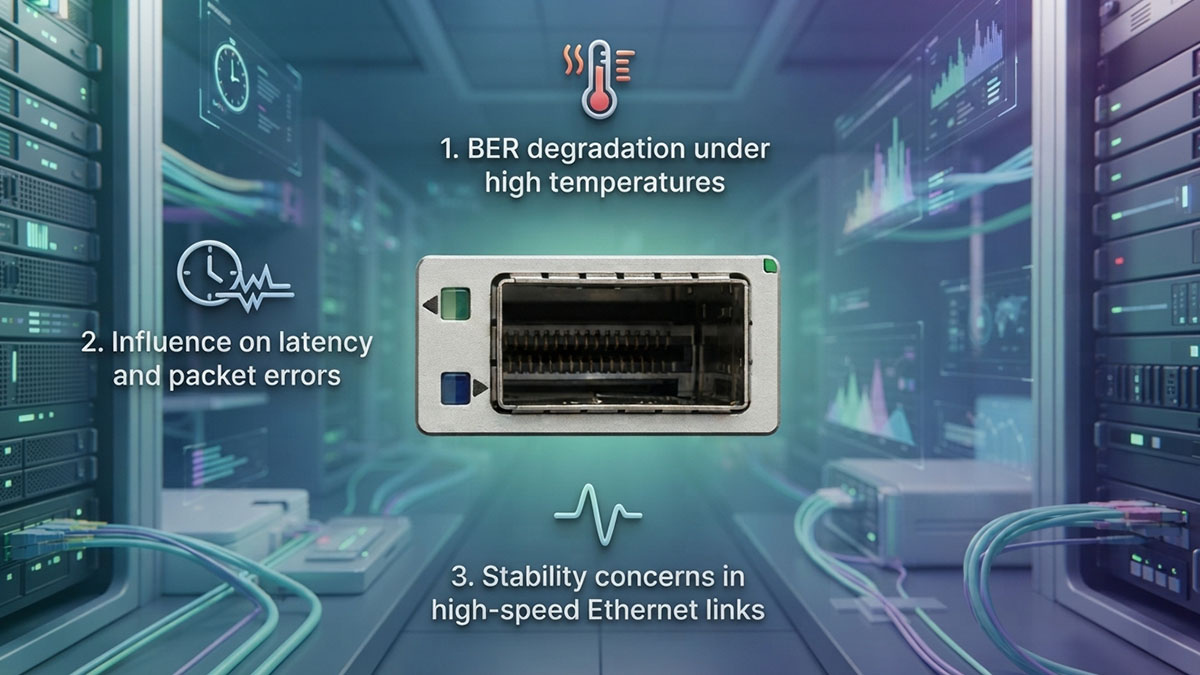
QSFP port temperature has a direct impact on signal integrity because high-speed electrical and optical components are highly sensitive to thermal variation. As temperature increases, signal noise, jitter, and error rates tend to rise, which can degrade overall link quality.
Key ways thermal conditions affect signal integrity include:
- Increased bit error rate (BER) due to higher electronic noise levels
- Timing instability in high-speed SerDes circuits under thermal stress
- Reduced laser efficiency in optical modules at elevated temperatures
- Greater signal attenuation in copper-based interconnects
These effects become more pronounced at higher data rates such as 100G, 200G, and 400G, where signal margins are already tight. Even small temperature increases can reduce the operational margin required for stable transmission.
Long-Term Hardware Reliability Considerations
Beyond immediate performance effects, sustained thermal stress on QSFP ports can significantly reduce hardware lifespan and overall system reliability. High operating temperatures accelerate component aging and increase the likelihood of failure over time.
Key reliability risks include:
- Accelerated degradation of laser diodes in optical modules
- Reduced lifespan of capacitors and high-speed integrated circuits
- Increased mechanical stress on solder joints and PCB structures
- Higher failure rates of cooling fans working under constant high load
These factors collectively contribute to a reduction in mean time between failures (MTBF), especially in high-density deployments where many QSFP ports operate continuously at elevated temperatures.
Operational Efficiency and Energy Costs
QSFP port efficiency also affects broader operational efficiency because power consumption and cooling requirements scale directly with thermal output. Inefficient ports increase both electrical usage and cooling system demand, raising overall infrastructure costs.
Key operational impacts include:
- Higher energy consumption due to increased port-level power draw
- Greater cooling system load in data center environments
- Reduced overall energy efficiency measured in watts per gigabit
- Increased operational expenditure (OPEX) for large-scale deployments
In high-density network architectures, even small inefficiencies at the port level can accumulate into significant energy costs across thousands of active QSFP interfaces. This makes efficiency optimization not only a technical requirement but also an economic necessity.
☑️ Best Practices for Improving QSFP Port Efficiency
Improving QSFP port efficiency requires a combined focus on module selection, thermal design, and continuous operational monitoring. Because QSFP ports operate at high data rates with significant power density, small design choices can have a large impact on overall system stability, energy usage, and heat generation in real deployments.
Selecting the Right QSFP Solution
Choosing the appropriate QSFP module type is one of the most effective ways to improve efficiency, as different transceiver designs vary significantly in power consumption and thermal output. Matching the module to the actual transmission requirement prevents unnecessary energy overhead.
Key selection principles include:
- Use short-reach (SR) modules for intra-rack or intra-row connections to minimize power usage
- Avoid over-specifying long-reach optics when distance requirements are limited
- Prefer DAC solutions for short-distance links where optical conversion is unnecessary
- Ensure compatibility between switch platform and QSFP generation to avoid inefficiency from protocol mismatches
A well-matched QSFP selection strategy ensures that power is not wasted on unnecessary optical amplification or signal processing, which directly reduces heat generation at the port level.
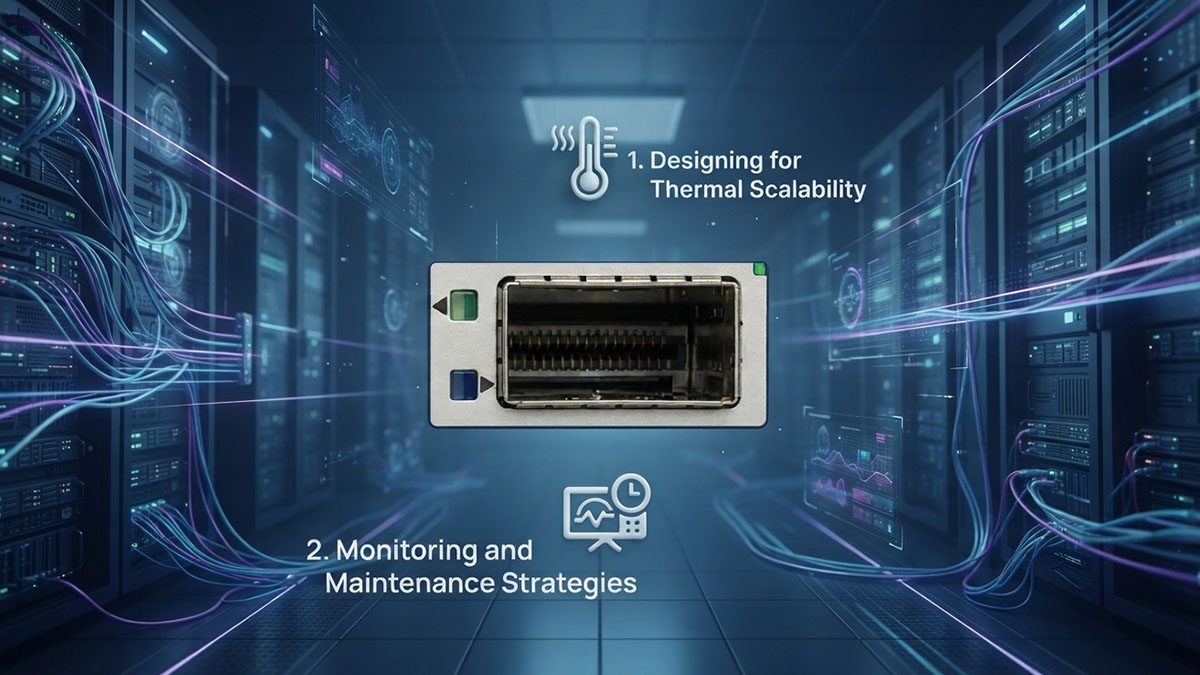
Designing for Thermal Scalability
Thermal scalability refers to the ability of a network system to maintain stable cooling performance as port density and traffic load increase. Since QSFP ports are often deployed in high-density configurations, forward-looking thermal design is essential for preventing future bottlenecks.
Key design practices include:
- Planning switch placement to ensure consistent airflow paths across racks
- Avoiding excessive front-panel congestion that can trap heat around QSFP cages
- Ensuring sufficient spacing between high-power switches in multi-rack deployments
- Designing cooling systems with headroom for future bandwidth expansion
These practices help prevent localized overheating and ensure that additional QSFP ports can be added without requiring major infrastructure redesign.
Monitoring and Maintenance Strategies
Continuous monitoring and proactive maintenance are essential for sustaining QSFP port efficiency throughout the lifecycle of network equipment. Real-time visibility into temperature and power usage allows operators to identify inefficiencies before they impact performance.
Key monitoring strategies include:
- Using DOM/DDM telemetry to track QSFP temperature, voltage, and optical power levels
- Monitoring switch-level power consumption trends to detect abnormal increases
- Conducting periodic airflow inspections to ensure cooling paths remain unobstructed
- Updating firmware to benefit from improved thermal and power management algorithms
These practices provide early detection of potential thermal issues and help maintain stable operating conditions even under fluctuating workloads.
☑️ Future Trends in QSFP Port Thermal and Power Efficiency
The evolution of QSFP port technology is increasingly driven by the need to reduce power consumption while supporting higher data rates. As networks transition toward 800G and beyond, improvements in thermal efficiency and energy-per-bit performance are becoming central design goals rather than secondary optimizations.
Advancements in Silicon Photonics
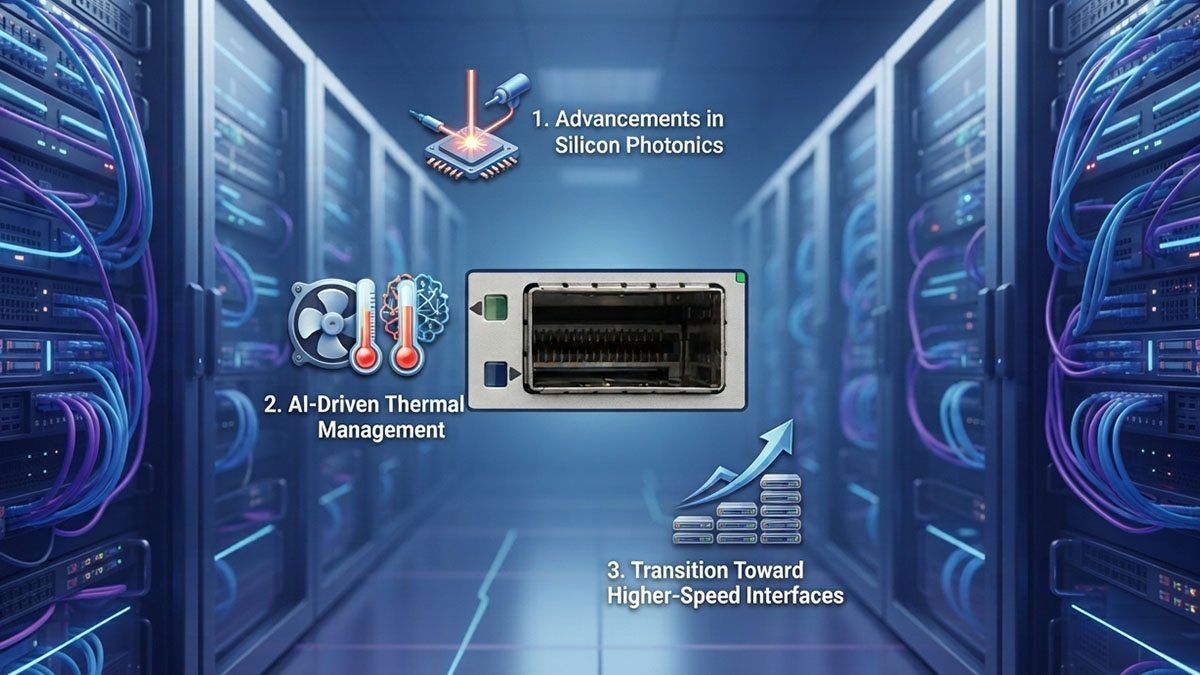
Silicon photonics is emerging as one of the most important technologies for improving QSFP port efficiency because it significantly reduces the need for discrete optical and electrical components. By integrating optical functions directly onto silicon-based chips, systems can achieve higher performance with lower energy loss.
Key efficiency improvements enabled by silicon photonics include:
- Reduced electrical-to-optical conversion overhead inside transceiver modules
- Lower power consumption per transmitted gigabit of data
- Smaller physical footprint, reducing localized heat density
- Improved signal stability through tighter integration of optical pathways
These advantages directly reduce both power draw and thermal output at the QSFP port level, making silicon photonics a foundational technology for next-generation high-speed networking.
AI-Driven Thermal Management
Artificial intelligence is increasingly being used to optimize thermal behavior in high-density networking systems, including QSFP port environments. Instead of relying solely on static fan curves or manual configuration, AI-based systems dynamically adjust cooling based on real-time workload and temperature patterns.
Key capabilities of AI-driven thermal systems include:
- Predictive fan speed adjustment based on traffic and temperature trends
- Dynamic power balancing across switch ports to reduce localized heating
- Early detection of thermal anomalies before performance degradation occurs
- Adaptive workload distribution to minimize hot spot formation
These intelligent systems improve QSFP efficiency by ensuring that cooling resources are allocated precisely where and when they are needed. This reduces unnecessary energy consumption while maintaining stable operating conditions under variable network loads.
Transition Toward Higher-Speed Interfaces
The ongoing shift toward 800G and 1.6T networking introduces new challenges for QSFP-class interfaces, particularly in terms of power density and heat dissipation. As data rates increase, each port must handle more complex signal processing, which places additional strain on thermal design.
Key trends shaping this transition include:
- Increased use of PAM4 and advanced modulation techniques, raising DSP power requirements
- Higher front-panel density leading to more concentrated heat zones
- Greater reliance on co-packaged optics to reduce electrical losses
- More aggressive cooling system designs to handle elevated thermal loads
These developments indicate that future QSFP-like interfaces will require more advanced integration between optical components and system-level cooling architectures.
At the same time, innovations in packaging and thermal materials are expected to offset some of these challenges by improving heat transfer efficiency and reducing localized temperature buildup.
☑️ Conclusion
QSFP port efficiency plays a decisive role in modern high-speed networking because it directly determines how effectively QSFP Port systems manage power consumption and heat dissipation across 40G, 100G, 200G, and 400G environments. As data rates continue to increase, both power efficiency and thermal management performance become critical factors influencing network stability, scalability, and long-term reliability in dense infrastructure deployments.
To clearly summarize the core insights discussed throughout the article, the most important points include:
- QSFP port architectures integrate high-speed electrical and optical components that inherently increase power and thermal density
- Power consumption scales with data rate, modulation complexity, and transmission distance requirements
- Heat dissipation is driven by DSP processing, optical conversion, and dense switch-level integration
- Airflow design and rack-level cooling are essential for maintaining stable operating temperatures
- Media type selection (DAC, AOC, optical) significantly impacts overall energy efficiency
- Thermal stability directly affects signal integrity, hardware lifespan, and network reliability
- Future technologies such as silicon photonics and AI-driven cooling will further enhance efficiency
These points highlight that QSFP efficiency is not a single-component issue but a system-level design consideration spanning hardware, environment, and architecture.
As networking infrastructures continue evolving toward higher bandwidth and lower energy consumption targets, selecting optimized QSFP solutions becomes increasingly important for achieving balanced performance and operational efficiency. For enterprises and data center operators seeking reliable high-speed connectivity solutions with strong attention to power and thermal efficiency, exploring advanced optical modules and interconnect options is a key step toward future-ready network design.
To support these evolving requirements, the LINK-PP Official Store provides a wide range of QSFP-compatible solutions designed for modern data center and enterprise applications, helping ensure stable performance while maintaining efficient power and heat profiles in high-density networking environments.