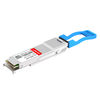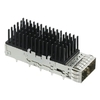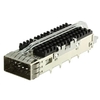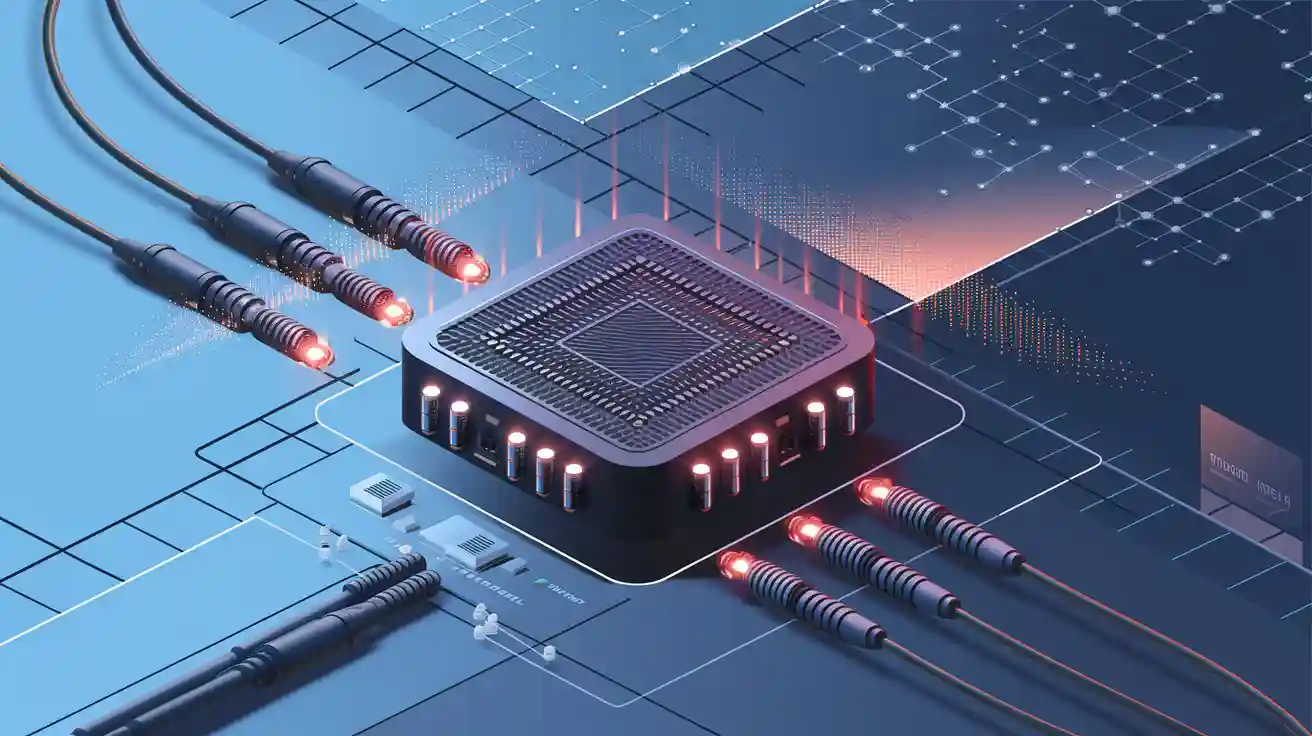
QSFP-DD and OSFP are two leading form factors designed to meet the growing demands of modern high-speed networks. As data centers and cloud infrastructures move toward 400GBASE and 800GBASE connectivity, choosing the right module becomes critical for performance, power efficiency, and scalability. QSFP-DD offers a compact design with backward compatibility, making it suitable for incremental upgrades, while OSFP provides higher power capacity and improved thermal management, catering to hyperscale environments. Understanding their differences, strengths, and ideal deployment scenarios helps network planners make informed decisions for both enterprise and large-scale data center networks.
? Introduction to QSFP-DD and OSFP
QSFP-DD and OSFP are two advanced optical transceiver form factors designed to address the rapid growth of high-speed networks. Both support 400G and emerging 800G connectivity, but their design philosophies and deployment advantages differ, making it essential for network planners to understand which module fits specific environments. QSFP-DD emphasizes backward compatibility and high port density, while OSFP focuses on thermal efficiency and higher power support.
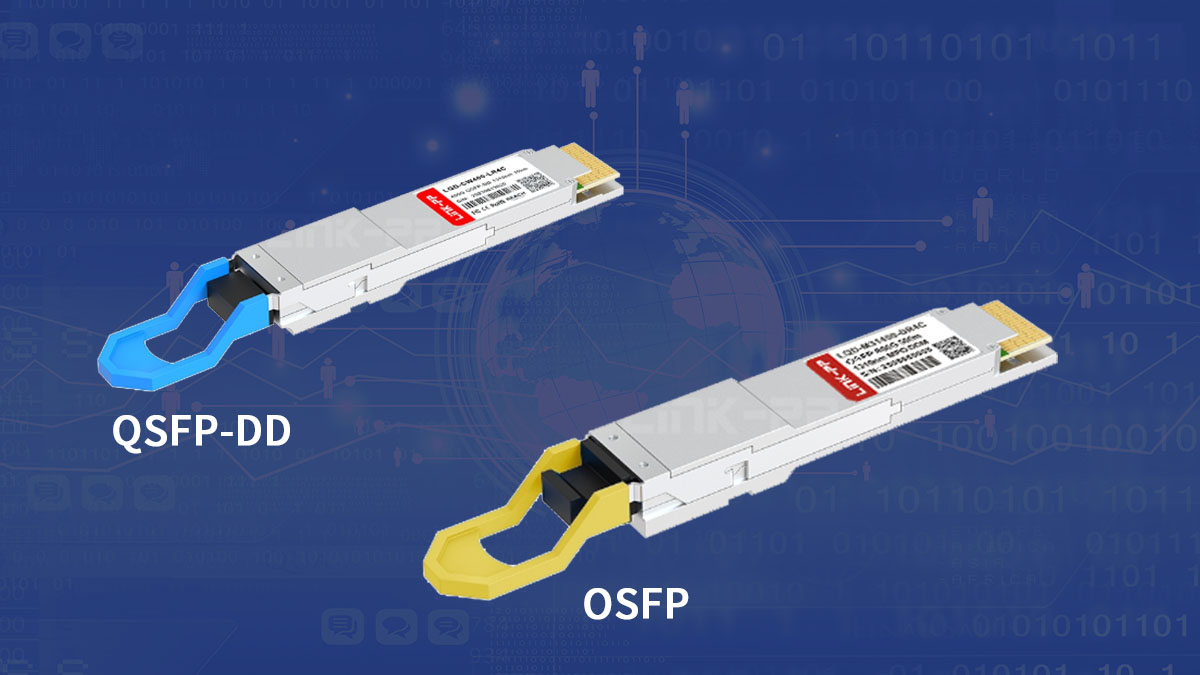
What is QSFP-DD?
QSFP-DD (Quad Small Form-factor Pluggable Double Density) doubles the number of electrical lanes compared with QSFP28, increasing from 4 to 8 lanes. This enables support for higher data rates up to 400G and beyond, while retaining a compact footprint compatible with existing QSFP infrastructures.
Key characteristics and benefits of QSFP-DD include:
- Incremental upgrades through backward compatibility with QSFP28 ports.
- Support for high-density switch deployments without increasing port spacing.
- Use of PAM4 signaling to achieve higher per-lane speeds.
QSFP-DD is particularly suitable for enterprise networks, colocation data centers, and environments where maximizing port density while minimizing infrastructure changes is a priority.
What is OSFP?
OSFP (Octal Small Form-factor Pluggable) was developed with hyperscale and cloud-scale data centers in mind. Its slightly larger size allows for higher power delivery and improved heat dissipation, which is critical for high-speed, high-power applications. OSFP modules support 400G and 800G connectivity and are positioned to handle future 1.6T modules.
Key characteristics and benefits of OSFP include:
- Enhanced thermal management through larger heat sinks and better airflow.
- Higher power allowance for emerging high-speed optics and coherent optics applications.
- Optimized for hyperscale environments requiring sustained high-speed performance.
Why QSFP-DD vs OSFP Matters in Modern Networks
The choice between QSFP-DD and OSFP affects network scalability, reliability, and upgrade strategy. QSFP-DD’s compact design and backward compatibility make it ideal for incremental upgrades and high-density switches, whereas OSFP’s thermal advantages and higher power support are suited for hyperscale deployments where sustained performance is critical. Selecting the right form factor ensures optimal bandwidth utilization, efficient cooling, and long-term compatibility with evolving network standards.
? Physical Design and Form Factor Comparison
QSFP-DD and OSFP differ significantly in size, port density, and mechanical design. Understanding these differences is crucial for deciding which module aligns with your network’s performance, power, and density requirements. QSFP-DD prioritizes compactness and backward compatibility, while OSFP emphasizes thermal headroom and high-power support.
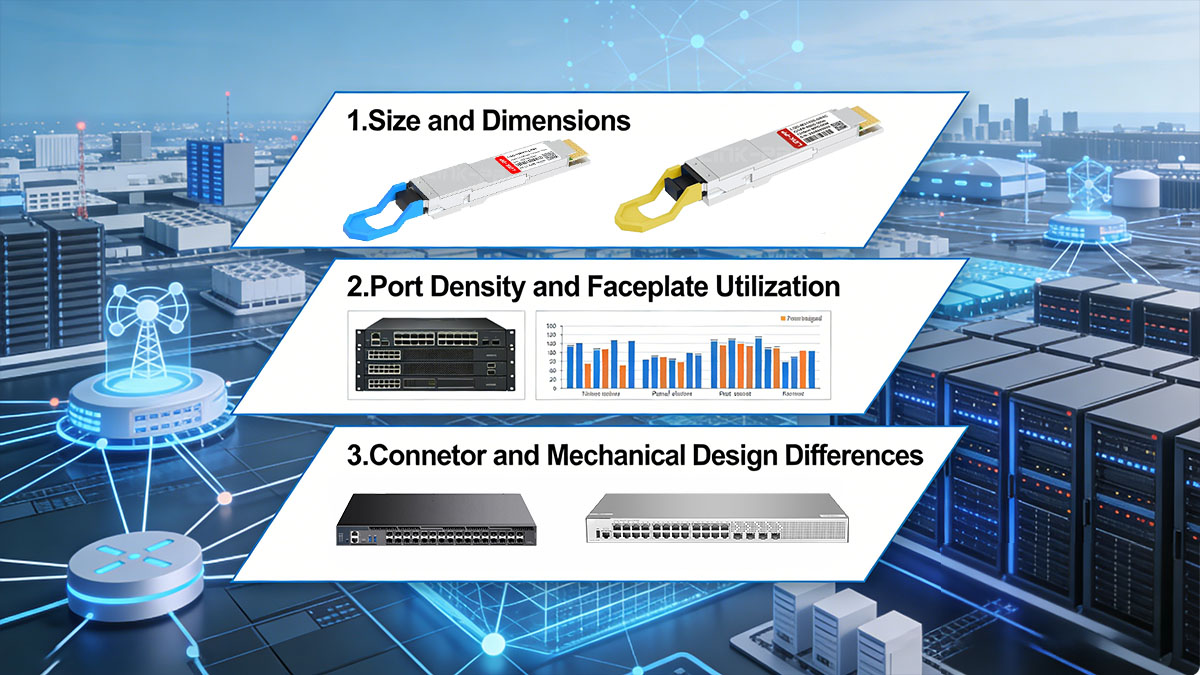
Size and Dimensions
QSFP-DD maintains a compact footprint compatible with QSFP28 ports, allowing high port density on switch faceplates. OSFP modules are slightly larger, providing better heat dissipation and power support. The main design trade-off is between raw density and thermal capacity.
Key points to consider:
- QSFP-DD is ideal for deployments prioritizing maximum port density.
- OSFP’s larger size allows higher module power and better thermal management.
- Selection depends on whether density or thermal headroom is more critical for the network.
Port Density and Faceplate Utilization
The impact of module size on port density can be summarized as follows:
- QSFP-DD supports more ports per switch, maximizing available faceplate space.
- OSFP reduces port count slightly but enables higher power modules without thermal throttling.
- Network designers must balance port count against module performance and cooling requirements.
Connector and Mechanical Design Differences
The connectors and latching mechanisms differ between QSFP-DD and OSFP to support their respective design goals:
- QSFP-DD uses a stacked cage connector compatible with QSFP28 infrastructure, allowing incremental upgrades.
- OSFP employs a more robust connector with a latching mechanism designed for higher power and improved mechanical stability.
- QSFP-DD’s insertion/removal process is similar to previous QSFP+/QSFP28 modules, whereas OSFP requires compatible OSFP cages and ports.
Physical Specification Comparison
A side-by-side comparison highlights the main design differences:
| Feature |
QSFP-DD |
OSFP |
| Module Size |
Compact, QSFP28 footprint |
Slightly larger, more thermal headroom |
| Port Density |
High |
Moderate |
| Power Support |
Typical 12–15W |
Up to 25W+ |
| Thermal Management |
Switch-level airflow |
Integrated heat sinks and improved airflow |
| Backward Compatibility |
QSFP28 compatible |
Not backward compatible |
QSFP-DD provides a high-density, upgrade-friendly solution for enterprise environments, while OSFP offers higher power handling and advanced thermal capabilities, making it suitable for hyperscale and high-performance deployments.
? Electrical Architecture and Performance
QSFP-DD and OSFP share a similar fundamental electrical architecture, as both are designed to handle 400G and higher data rates. However, their lane configuration, power handling, and signal integrity considerations create distinct advantages for different deployment scenarios. Understanding these differences is key to selecting the optimal module for a network’s performance and scalability needs.
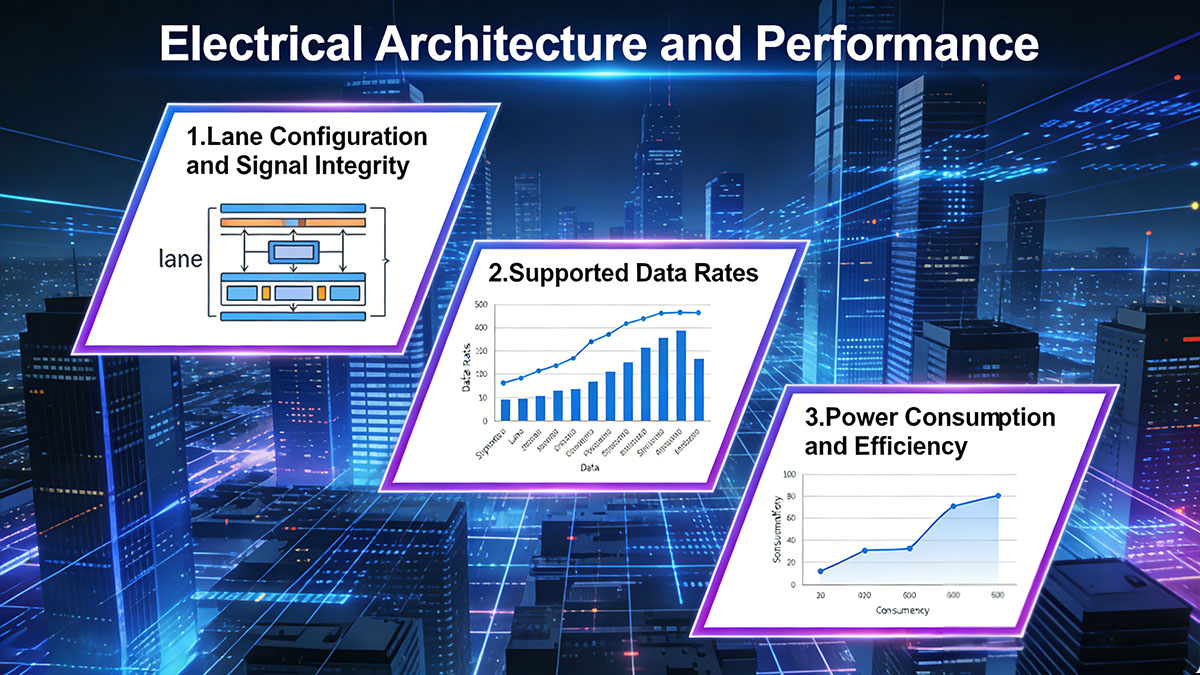
Lane Configuration and Signal Integrity
Both QSFP-DD and OSFP use 8 electrical lanes, each capable of transmitting high-speed signals, typically using PAM4 modulation for 50G or higher per lane. The main differences lie in how each form factor manages signal integrity at high speeds:
- QSFP-DD’s compact design requires careful PCB layout and switch-level signal management to maintain low crosstalk and minimal signal degradation.
- OSFP’s larger size allows for wider trace spacing and better connector design, improving signal integrity under high-power, high-speed conditions.
- Both modules rely on advanced equalization and pre-emphasis techniques to maintain performance over standard backplane distances.
Supported Data Rates
QSFP-DD and OSFP both support multiple speed tiers, with OSFP offering slightly more thermal headroom for sustained high-speed operation:
- QSFP-DD: 200G, 400G, and planned 800G support.
- OSFP: 400G, 800G, and potential for 1.6T modules in future deployments.
- Selection depends on immediate network needs versus anticipated future scaling.
A comparison of typical data rate support:
| Module |
Typical Data Rates |
Future Expansion Potential |
| QSFP-DD |
200G, 400G |
800G |
| OSFP |
400G, 800G |
1.6T |
Power Consumption and Efficiency
Power consumption is a critical consideration for both form factors. QSFP-DD modules typically operate within a 12–15W envelope, while OSFP modules can reach 25W or higher due to their larger size and enhanced thermal design.
Key considerations:
- QSFP-DD is more energy-efficient per port, making it suitable for high-density switches with limited power budgets.
- OSFP supports higher power optics without throttling, ideal for hyperscale environments where maximum throughput and sustained performance are prioritized.
- Network designers must evaluate total power and cooling infrastructure to ensure compatibility with the chosen module.
In summary, QSFP-DD offers a compact, backward-compatible solution that balances density and performance, while OSFP provides superior power handling and signal integrity, making it the preferred choice for high-speed, high-power deployments.
? Thermal Management and Cooling Efficiency
Thermal performance is a critical factor for high-speed optical modules, as excessive heat can reduce reliability, limit data rates, and shorten module lifespan. QSFP-DD and OSFP adopt different approaches to heat dissipation, reflecting their respective design priorities. QSFP-DD focuses on compactness and relies on switch-level airflow, whereas OSFP provides enhanced thermal headroom for sustained high-power operation.
Heat Dissipation Challenges in High-Speed Optics
High-speed modules generate significant heat, particularly at 400G and 800G speeds. Inefficient thermal management can lead to:
- Reduced module lifespan and increased failure rates.
- Thermal throttling that limits achievable data rates.
- Increased cooling requirements at the switch or data center level.
Network planners must consider both the module design and the overall airflow within racks and switches to maintain performance under heavy workloads.
QSFP-DD Cooling Design
QSFP-DD’s compact form factor limits the space available for integrated heat sinks. As a result, it relies primarily on switch-level cooling:
- Airflow across the module is critical to prevent hotspots.
- High-density switch configurations may require additional fan speed or optimized airflow channels.
- Suitable for environments where power consumption per port is limited and cooling infrastructure is carefully managed.
OSFP Advanced Thermal Design
OSFP modules benefit from their larger size, which allows more robust thermal solutions:
- Integrated heat sinks help dissipate heat directly from the module.
- Larger surface area and airflow channels reduce the risk of thermal throttling even at higher power levels.
- Supports sustained operation of high-power 400G and 800G modules, as well as future 1.6T modules.
A comparison of thermal and power characteristics:
| Feature |
QSFP-DD |
OSFP |
| Typical Power Range |
12–15W |
20–25W+ |
| Cooling Mechanism |
Switch airflow |
Integrated heat sink + airflow |
| Thermal Headroom |
Moderate |
High |
| Sustained High-Power Support |
Limited |
Excellent |
In practice, QSFP-DD is well-suited for enterprise and colocation data centers with existing high-density switches and controlled airflow, whereas OSFP is optimized for hyperscale or HPC environments that demand sustained performance under high-power operation. Choosing the right module depends on evaluating both network performance requirements and cooling capabilities.
? Compatibility and Ecosystem Support
Compatibility and ecosystem support play a crucial role when choosing between QSFP-DD and OSFP. Selecting a module that aligns with existing infrastructure, vendor support, and future network upgrades ensures smooth deployment, cost efficiency, and long-term scalability. QSFP-DD emphasizes backward compatibility, while OSFP prioritizes performance in hyperscale and cloud-scale environments.
Backward Compatibility of QSFP-DD
QSFP-DD is designed to be backward-compatible with QSFP28 ports, enabling gradual network upgrades without replacing existing hardware. Key considerations include:
- QSFP-DD modules (like 400GBASE-LR4) can operate in QSFP28 cages at reduced data rates, allowing phased adoption.
- Incremental upgrades help manage costs and minimize network downtime.
- Compatibility with existing transceivers and switch backplanes reduces integration complexity.
OSFP Ecosystem and Adoption
OSFP is slightly larger and not backward-compatible with QSFP28 or QSFP-DD modules. Its adoption is driven by hyperscale and cloud providers prioritizing performance over density:
- Supported by major hyperscale vendors for 400G/800G deployments.
- Optimized for high-power modules and advanced optics, including coherent optics and emerging 1.6T solutions.
- Rapid ecosystem growth in data centers requiring thermal headroom and sustained high-speed operation.
Vendor Support and Industry Trends
Vendor and industry support directly impact module availability and long-term deployment strategy.
- QSFP-DD has broad adoption among enterprise switch vendors, making it easier to integrate into existing networks.
- OSFP adoption is growing in hyperscale networks where thermal management and power requirements are critical.
- Standardization efforts by IEEE and consortiums continue to influence module compatibility, ensuring interoperability across vendors.
A summary of ecosystem characteristics:
| Feature |
QSFP-DD |
OSFP |
| Backward Compatibility |
QSFP28 supported |
Not supported |
| Vendor Adoption |
Broad (enterprise-focused) |
Hyperscale-focused |
| Thermal & Power Support |
Moderate |
High |
| Emerging Standards |
IEEE 400G/800G |
IEEE 400G/800G, 1.6T roadmap |
In conclusion, QSFP-DD is ideal for networks requiring high-density deployments and gradual upgrades, while OSFP excels in environments demanding high power, advanced thermal management, and support for next-generation optics. Network architects must evaluate both the existing ecosystem and future scalability requirements when choosing between the two form factors.
? Use Cases and Deployment Scenarios
QSFP-DD and OSFP modules serve different roles depending on network architecture, throughput requirements, and thermal/power constraints. Selecting the right module ensures reliability, scalability, and performance efficiency.
Data Center Spine-Leaf Architectures
QSFP-DD (like QDD-400G-LR4-S) is preferred for leaf switches where port density is critical, while OSFP is ideal for spine switches that require sustained high-speed links and superior thermal handling.
Deployment considerations:
- QSFP-DD maximizes 400G port density on leaf switches.
- OSFP provides high-power capacity and heat dissipation for spine or aggregation layers.
- Leaf-to-spine connections benefit from mixed deployment: QSFP-DD in dense leaf layers, OSFP in spine layers.
- Consider airflow, power budget, and potential upgrade paths to 800G or higher.
Key roles:
- Leaf layer: QSFP-DD for high-density server connections.
- Spine layer: OSFP for high-throughput aggregation and long-reach connectivity.
- Mixed deployment: balancing density, thermal efficiency, and upgrade scalability.
AI and High-Performance Computing (HPC)
OSFP modules are generally preferred for AI/HPC workloads due to their higher power envelope and thermal headroom, while QSFP-DD may be used for short-reach intra-rack links where density is more important than peak power.
Deployment considerations for ultra-high throughput and low latency:
- OSFP supports sustained 400G–800G links without thermal throttling.
- QSFP-DD is suitable for short intra-node connections with moderate power requirements.
- OSFP enables integration with silicon photonics and coherent optics for high-speed, long-distance connections.
- Plan deployment to accommodate future 1.6T modules in high-performance clusters.
Checklist for AI/HPC deployments:
- Evaluate thermal capacity to sustain continuous high-throughput workloads.
- Align power envelope with GPU/accelerator density.
- Balance QSFP-DD density with OSFP spine/backbone performance.
- Consider future-proofing to avoid infrastructure replacement during upgrades.
Enterprise vs Hyperscale Deployments
QSFP-DD is optimal for enterprise networks prioritizing port density and backward compatibility, while OSFP is better suited for hyperscale deployments that demand high-power, thermally robust modules capable of handling 400G–1.6T links.
Enterprise deployment considerations:
- High port density allows incremental upgrades without replacing switches.
- Moderate thermal constraints make QSFP-DD sufficient.
- Cost-efficiency is critical: prioritize modules that reduce downtime and power consumption.
Hyperscale deployment considerations:
- OSFP supports sustained high-power, high-speed links in spine/core layers.
- Thermal management is critical for AI, cloud, and hyperscale workloads.
- Dense QSFP-DD can still serve leaf switches, but OSFP dominates for aggregation and backbone layers.
- Future scalability to 800G and 1.6T is a key factor in deployment planning.
? QSFP-DD vs OSFP: Side-by-Side Comparison
Selecting between QSFP-DD and OSFP depends on network goals, thermal and power constraints, and future scalability. While both modules support high-speed networking, their form factors and design priorities create distinct strengths.
Key Specification Comparison Table
QSFP-DD is compact and high-density, suitable for leaf deployments, whereas OSFP supports higher power and superior thermal management, making it ideal for spine and hyperscale environments.
| Specification |
QSFP-DD |
OSFP |
| Physical Size |
Compact, QSFP28-compatible |
Larger, optimized for cooling |
| Port Density |
High (more ports per switch) |
Moderate (fewer ports per switch) |
| Electrical Lanes |
8 lanes, PAM4 signaling |
8 lanes, PAM4 signaling, improved spacing |
| Supported Data Rates |
200G, 400G, future 800G |
400G, 800G, future 1.6T |
| Power Consumption |
12–15W typical |
20–25W+ |
| Thermal Management |
Switch airflow dependent |
Integrated heat sinks, high efficiency |
| Backward Compatibility |
Supports QSFP28 |
Limited compatibility |
| Typical Use Case |
Enterprise leaf, colocation |
Hyperscale spine, HPC, AI workloads |
| Upgrade Potential |
Incremental upgrades |
Future-proof for high-speed modules |
The table highlights trade-offs between density, thermal handling, and scalability. QSFP-DD prioritizes compactness and backward compatibility, while OSFP focuses on power, cooling, and future-ready high-speed operation.
Advantages of QSFP-DD
QSFP-DD’s main advantage lies in high port density and compatibility with existing QSFP28 infrastructure, making it ideal for enterprise and colocation networks.
- High-density deployment: Maximizes the number of 400G ports per switch.
- Backward compatibility: Supports QSFP28 modules (like QSFP28-100G-SR4) for phased upgrades.
- Moderate power consumption: Fits well within standard switch airflow without requiring specialized cooling.
- Incremental upgrade path: Allows network expansion with minimal infrastructure disruption.
- Cost-efficient for leaf layers: Reduces CapEx and OpEx for enterprise networks.
QSFP-DD is typically deployed in leaf or top-of-rack switches where density and incremental upgrades are more critical than maximum power and thermal headroom.
Advantages of OSFP
OSFP excels in high-power, thermally demanding environments, making it suitable for spine, hyperscale, AI, and HPC deployments.
- High thermal headroom: Integrated heat sinks support sustained 400G–800G links.
- High power capacity: Supports high-speed optics and advanced modules, including silicon photonics.
- Future scalability: Can accommodate 1.6T links, enabling long-term network growth.
- Long-reach capability: Better signal integrity for spine and aggregation layers.
- Robust performance under continuous load: Ideal for AI/HPC clusters and hyperscale data centers.
OSFP is preferred in spine or core layers where sustained high-speed operation, low latency, and future-proofing outweigh port density considerations.
? Future Trends: 800G, 1.6T, and Beyond
As data center traffic continues to grow exponentially, next-generation pluggable optics are evolving to meet bandwidth, latency, and power efficiency demands. Both QSFP-DD and OSFP are central to this evolution, supporting emerging 800G and 1.6T networks while enabling future-proof deployments.
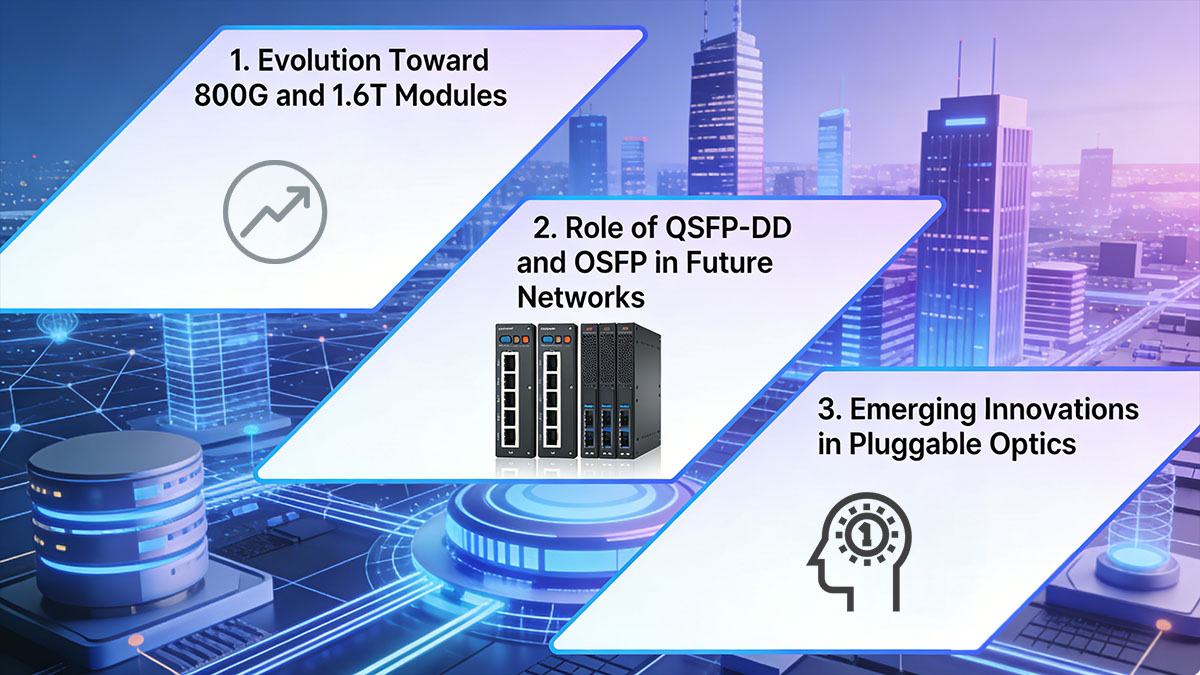
Evolution Toward 800G and 1.6T Modules
The network industry is rapidly moving toward 800G and 1.6T modules to meet hyperscale, AI, and cloud computing requirements, with form factors selected based on density, power, and thermal capabilities.
- QSFP-DD: Supports 800G through advanced PAM4 signaling over 8 lanes. Its compact design favors high-density deployments but imposes thermal limits for sustained high-power operation.
- OSFP: Supports 800G and is better positioned for future 1.6T modules due to higher power tolerance and superior thermal management, making it suitable for spine and aggregation layers in hyperscale networks.
Deployment considerations for 800G and 1.6T:
- Evaluate power delivery and cooling infrastructure to prevent throttling.
- Ensure PCB and connector designs support higher lane speeds and signal integrity.
- Plan upgrade paths considering port density, thermal headroom, and module size.
Role of QSFP-DD and OSFP in Future Networks
QSFP-DD will remain relevant for high-density leaf switches, while OSFP will dominate hyperscale, AI, and HPC backbone deployments requiring high power and long-term scalability.
- QSFP-DD Applications:
- Leaf/top-of-rack switches requiring maximum port density.
- Incremental network upgrades where backward compatibility is essential.
- Short-reach interconnects that do not exceed thermal limits.
- OSFP Applications:
- Spine and aggregation layers in hyperscale and AI data centers.
- High-power optics and long-reach modules requiring efficient cooling.
- Future-ready deployments that anticipate 800G–1.6T upgrades.
Many networks will use a hybrid approach, deploying QSFP-DD for dense leaf layers and OSFP for spine/backbone layers, balancing density, thermal efficiency, and future scalability.
Emerging Innovations in Pluggable Optics
Conclusion: New technologies in pluggable optics are accelerating high-speed network adoption, including silicon photonics, co-packaged optics, and advanced modulation schemes.
- PAM4 and Higher-Order Modulation: Doubling data rates per lane enables 800G–1.6T performance without significantly increasing lane count.
- Co-Packaged Optics (CPO): Integrates optical transceiver modules with ASICs, reducing power consumption and improving thermal performance.
- Silicon Photonics: Offers high-speed optical interconnects with lower power and improved thermal efficiency, especially suitable for OSFP modules in hyperscale networks.
- Advanced Cooling and Form Factor Innovations: OSFP continues to evolve with enhanced heat sinks and airflow management, ensuring reliable operation under high-power, high-speed workloads.
Deployment implications:
- Early adoption of silicon photonics and CPO may influence future OSFP module design.
- Network architects should plan for mixed deployments to integrate legacy QSFP-DD with emerging OSFP-based high-speed backbones.
- Thermal and power planning will become increasingly critical as link speeds increase toward 1.6T and beyond.
This evolution ensures that QSFP-DD remains a density-optimized choice for enterprise and leaf deployments, while OSFP provides a future-proof platform for spine, aggregation, and hyperscale high-performance networks. By understanding these trends, network planners can design infrastructure that scales efficiently with emerging 800G–1.6T demands.
? How to Choose Between QSFP-DD and OSFP
Choosing between QSFP-DD and OSFP requires careful consideration of network requirements, power and thermal budgets, deployment strategy, and long-term scalability. Correct selection ensures reliable operation, optimal performance, and future-proofing for high-speed networks.
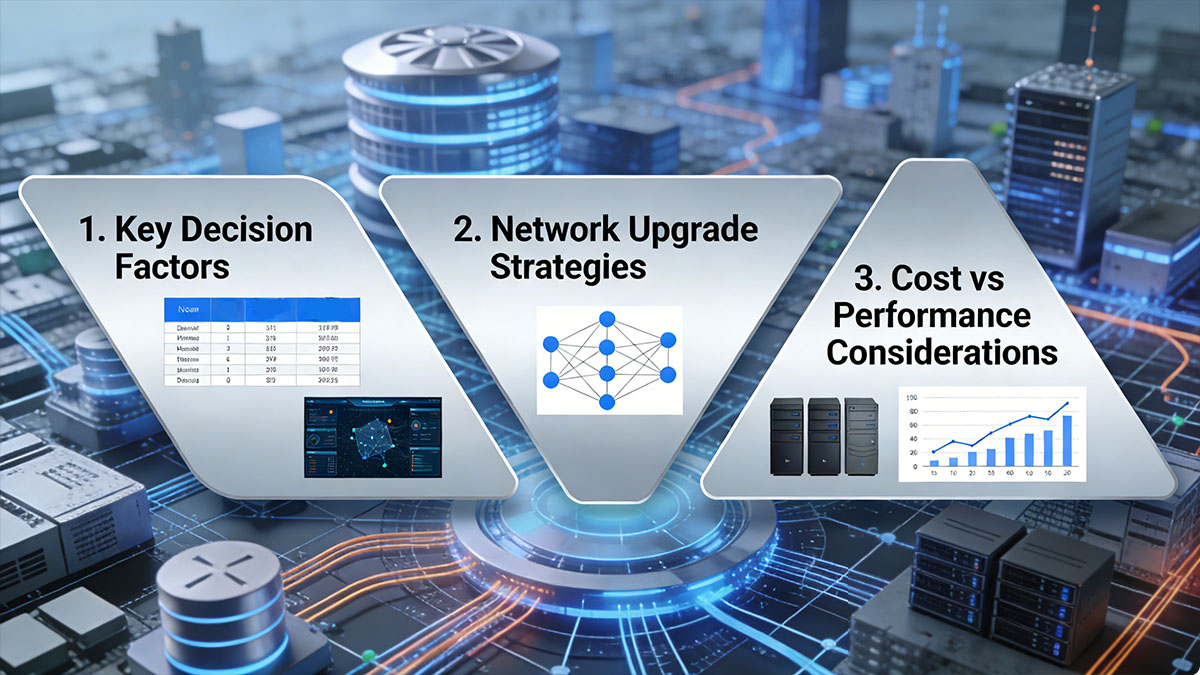
Key Decision Factors
The selection depends primarily on power availability, cooling capacity, and port density requirements, as these factors directly impact performance and deployment feasibility.
- Power Budget: QSFP-DD modules typically draw 12–15W, suitable for standard leaf switches. OSFP modules consume 20–25W or more, requiring higher-capacity power infrastructure in spine or aggregation layers.
- Cooling Capability: QSFP-DD relies on switch airflow and may face limitations during sustained high-speed operations. OSFP integrates heat sinks and enhanced thermal design, enabling reliable operation under continuous high-power workloads.
- Port Density Requirements: QSFP-DD’s compact form allows more ports per switch unit, maximizing density in leaf deployments. OSFP’s larger size reduces port density but supports high-power, long-reach modules for spine or core layers.
Evaluate the network layer and expected workloads. High-density leaf switches favor QSFP-DD, while spine or backbone layers requiring high throughput and thermal headroom benefit from OSFP.
Network Upgrade Strategies
QSFP-DD supports incremental upgrades from QSFP+ 40G and QSFP28 100G infrastructures with minimal disruption, whereas OSFP is better suited for greenfield deployments requiring high-power, future-ready modules.
- Gradual Upgrade with QSFP-DD:
- Replaces existing QSFP28 modules such as 100GBASE-LR4 incrementally.
- Minimizes downtime and disruption to operations.
- Provides cost-efficient expansion for enterprise and colocation networks.
- Greenfield Deployment with OSFP:
- Ideal for hyperscale, AI, or HPC networks.
- Supports high-power 400G–800G links and future 1.6T modules.
- Future-proofs network infrastructure and accommodates emerging technologies like silicon photonics and co-packaged optics.
Network architects must align upgrade strategy with current infrastructure, anticipated workloads, and long-term scaling goals.
Cost vs Performance Considerations
TCO and scalability are more important than upfront costs when choosing between QSFP-DD and OSFP.
- Total Cost of Ownership (TCO):
- QSFP-DD reduces CapEx for leaf switches due to higher port density and backward compatibility.
- OSFP may have higher initial costs but avoids performance degradation in high-power deployments and supports future upgrades.
- Long-Term Scalability:
- QSFP-DD is optimal for incremental scaling but may face limits for 800G–1.6T applications.
- OSFP ensures spine and aggregation layers remain future-proof for next-generation data rates.
Evaluate cost-performance trade-offs over the network lifecycle, considering power, cooling, upgrade flexibility, and anticipated bandwidth demands.
In summary, QSFP-DD is best for dense, backward-compatible leaf deployments with moderate power and thermal requirements, offering cost-effective incremental upgrades. OSFP is tailored for high-power, thermally demanding spine and hyperscale environments, providing long-term scalability for 800G–1.6T networks. Selecting the right module requires balancing power, cooling, density, upgrade strategy, and TCO to optimize performance and future-proof the network.
? Conclusion
Choosing between QSFP-DD and OSFP ultimately depends on network requirements, deployment strategy, and long-term scalability. QSFP-DD is ideal for high-density leaf deployments where backward compatibility and incremental upgrades are priorities. OSFP excels in high-power, thermally demanding environments, such as hyperscale, AI, and HPC networks, offering superior cooling and future-ready support for 800G–1.6T links.
By carefully evaluating power budgets, cooling capabilities, port density, and total cost of ownership, network architects can design infrastructure that balances performance, reliability, and future scalability. Whether optimizing enterprise leaf switches or building hyperscale spine layers, selecting the appropriate form factor ensures both current efficiency and long-term network growth.
For reliable QSFP-DD and OSFP modules that meet industry standards and support high-speed network deployments, visit the LINK-PP Official Store to explore a wide range of compatible optical solutions.