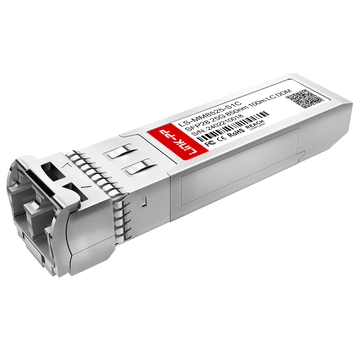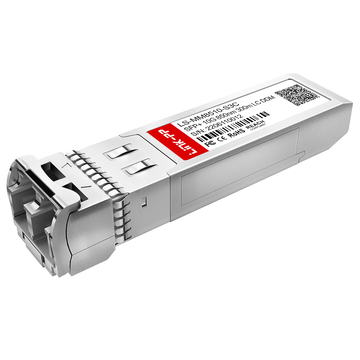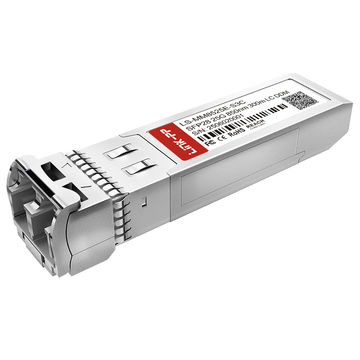
Cisco SFP-10/25G-CSR-S is widely used in modern data center environments where high-speed, short-reach optical connectivity is required. As network architectures continue to evolve toward 10G and 25G dual-rate designs, compatibility becomes a critical factor that directly affects deployment stability, performance consistency, and infrastructure scalability.
For many network engineers and IT teams, challenges often arise not from the transceiver itself, but from how it interacts with switches, firmware versions, fiber types, and existing cabling systems. Even small mismatches in compatibility can lead to link failures, reduced throughput, or unrecognized modules, making proper evaluation essential before deployment.
This guide focuses on clarifying how Cisco SFP-10/25G-CSR-S works within Cisco ecosystems and multi-vendor environments. It also highlights key compatibility requirements across hardware platforms, optical fiber standards, and software conditions. By understanding these relationships, organizations can ensure stable high-speed connectivity while preparing their network for future bandwidth upgrades.
🅾️ Overview of Cisco SFP-10/25G-CSR-S
Cisco SFP-10/25G-CSR-S is a dual-rate SFP28 10G/25G short-reach optical transceiver designed for high-speed data center interconnects. It is primarily used for 10Gbps and 25Gbps Ethernet links over multimode fiber, making it a flexible option for environments that require scalable bandwidth without changing physical cabling infrastructure.
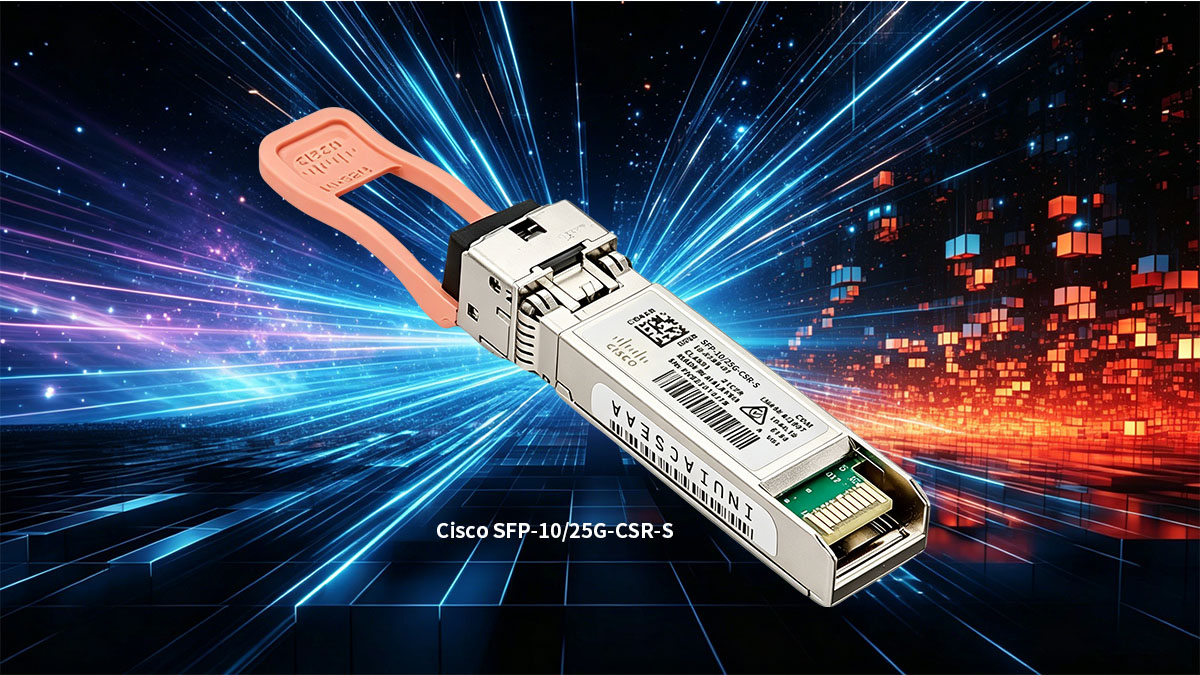
Key Technical Specifications
The core value of Cisco SFP-10/25G-CSR-S lies in its ability to support dual data rates while maintaining consistent optical performance. It is commonly deployed in modern leaf-spine architectures where both 10G and 25G links coexist.
Before reviewing the specification details, it is important to understand that these parameters directly influence compatibility with switches, fiber types, and link distance planning.
| Parameter | Specification |
|---|---|
| Data Rate | 10Gbps / 25Gbps |
| Wavelength | 850nm |
| Maximum Distance | Up to 300m (OM3), up to 400m (OM4) |
| Fiber Type | Multimode fiber (MMF) |
| Connector Type | Duplex LC |
| Form Factor | SFP28 |
These specifications show that the module is optimized for short-reach, high-bandwidth environments. The use of 850nm wavelength aligns with standard multimode fiber transmission, ensuring broad compatibility within data center infrastructures.
After reviewing these parameters, the key takeaway is that Cisco SFP-10/25G-CSR-S is designed to maximize flexibility in environments transitioning from 10G to 25G without requiring immediate fiber upgrades.
Typical Application Scenarios
Cisco SFP-10/25G-CSR-S is widely used in environments where both performance and scalability are required. Its dual-rate capability allows it to support mixed-speed deployments, which is common in evolving network infrastructures.
The most common use cases include:
- Data center leaf-spine network architectures
- Server-to-switch high-speed uplinks
- Aggregation layer connections in enterprise networks
- Virtualized computing and cloud infrastructure environments
These scenarios share a common requirement: stable high-throughput connectivity with minimal infrastructure changes. The module's compatibility with existing multimode fiber makes it particularly suitable for incremental network upgrades.
In practical deployment, this transceiver is often selected when organizations want to transition gradually from 10Gbps to 25Gbps without redesigning the entire physical layer.
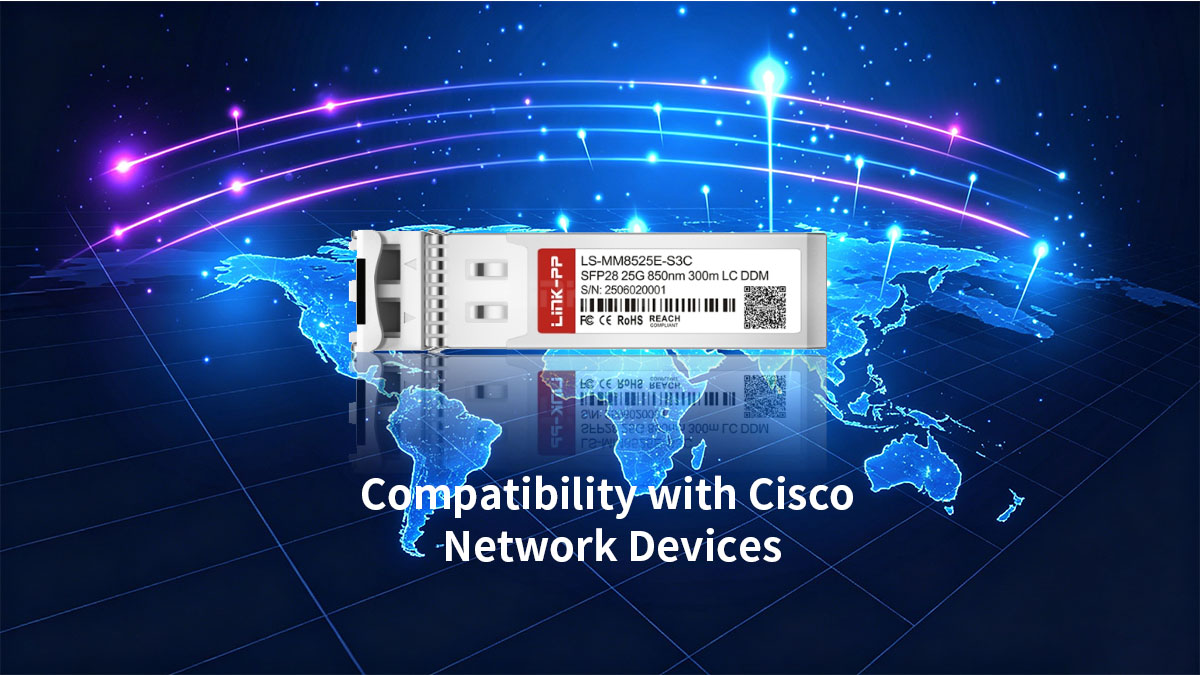
🅾️ Compatibility with Cisco Network Devices
Cisco SFP-10/25G-CSR-S shares similar deployment scenarios with Cisco SFP-25G-SR-S, although the latter operates exclusively at 25Gbps. Cisco SFP-10/25G-CSR-S is designed to operate within Cisco's high-speed switching ecosystem, but its compatibility is not universally automatic across all devices. In practice, compatibility depends on switch model, port capability, and software/firmware support. Understanding these factors is essential to ensure stable module recognition and full optical performance.
Supported Cisco Switch Series
The module is primarily intended for use in Cisco platforms that support SFP28 interfaces and dual-rate 10G/25G operation. However, actual compatibility varies by hardware generation and port configuration.
Before listing specific platforms, it is important to note that even within the same product family, compatibility may differ depending on line cards and software versions.
Common compatible Cisco families include:
- Cisco Nexus 3000 Series
- Cisco Nexus 5000 Series (select models and line cards)
- Cisco Nexus 9000 Series (leaf and spine architectures)
- Cisco Catalyst 9000 Series (high-speed uplink ports only)
These platforms are commonly deployed in data center and enterprise aggregation layers where 10G and 25G optical flexibility is required. In these environments, SFP28-capable ports are the key requirement for physical compatibility.
The key takeaway is that Cisco SFP-10/25G-CSR-S is not limited to a single switch family, but it requires SFP28-ready hardware to function correctly.
Software and Firmware Requirements
Hardware compatibility alone is not sufficient. Cisco devices also rely on firmware and operating system validation to properly recognize optical transceiver modules. If software requirements are not met, the module may be rejected or operate in a limited state.
Key requirements typically include:
- Cisco NX-OS or IOS-XE versions that support SFP28 modules
- Updated transceiver compatibility databases within the switch OS
- Enabled support for third-party or Cisco-certified optics policies (depending on configuration)
In many cases, older firmware versions may block module initialization or display compatibility warnings, even if the hardware is physically supported.
The main implication is that firmware alignment is just as important as port capability when deploying Cisco SFP-10/25G-CSR-S in production networks.
Cisco Compatibility Verification Methods
To ensure proper deployment, Cisco provides multiple ways to verify whether SFP-10/25G-CSR-S is supported and functioning correctly. These methods help prevent configuration errors and reduce troubleshooting time during installation.
Common verification approaches include:
- Using CLI commands such as
show interface transceiverorshow inventory - Checking module identification via EEPROM data read by the switch
- Reviewing Cisco compatibility matrices for specific switch models
- Validating software release notes for supported transceiver lists
These methods are typically used together to confirm both physical detection and logical support. If any mismatch is found, it usually indicates either firmware limitation or platform incompatibility.
The most important takeaway is that compatibility validation is not a single-step check, but a combination of hardware inspection and software verification processes.
🅾️ Fiber and Cabling Compatibility
Cisco SFP-10/25G-CSR-S relies heavily on multimode fiber infrastructure, and its performance is directly influenced by fiber type, cabling quality, and connector conditions. In real deployments, compatibility issues are often caused not by the transceiver itself, but by mismatches in optical fiber specifications or suboptimal cabling practices.
To ensure stable transmission, it is essential to align the module's optical requirements with the correct fiber standards and physical layer components.
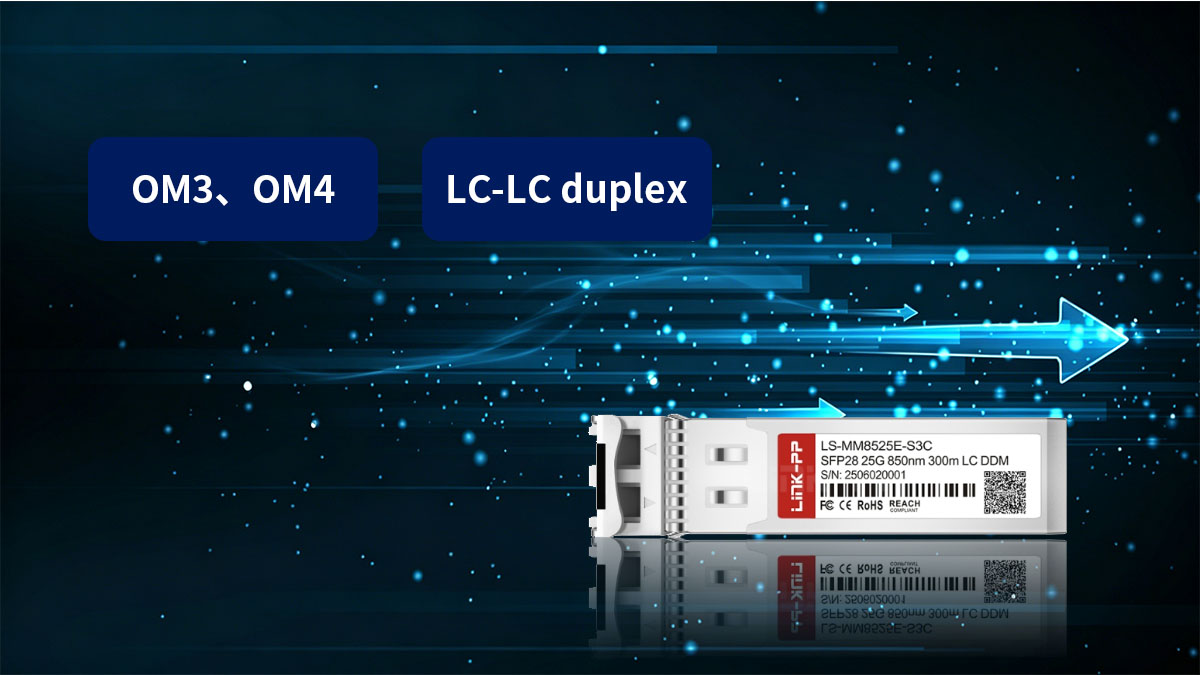
Supported Fiber Types
Cisco SFP-10/25G-CSR-S is specifically optimized for multimode fiber (MMF), operating at an 850nm wavelength. This makes it suitable for short-reach high-speed links commonly found in data center environments.
Before reviewing supported fiber grades, it is important to understand that fiber quality directly impacts maximum achievable distance and signal stability.
| Fiber Type | Typical Reach | Performance Notes |
|---|---|---|
| OM3 MMF | Up to 300m | Standard support for 10G/25G short reach |
| OM4 MMF | Up to 400m | Enhanced reach and better signal integrity |
OM4 fiber provides improved modal bandwidth, which allows more stable operation at higher speeds and longer distances compared to OM3. In contrast, older multimode standards may significantly reduce effective transmission range or cause link instability.
The key takeaway is that OM3 and OM4 are the primary supported fiber types, with OM4 offering better future-proofing for 25G deployments.
Connector and Patch Cable Requirements
To maintain optimal optical performance, Cisco SFP-10/25G-CSR-S requires high-quality duplex LC connectors. Even though the physical interface appears simple, connector quality plays a critical role in insertion loss and return loss performance.
Before listing key requirements, it is important to note that poor cabling is one of the most common causes of degraded link performance in short-reach optical networks.
Key cabling requirements include:
- Duplex LC-LC connectors on both ends
- Low-loss multimode patch cords rated for 10G/25G transmission
- Clean and dust-free ferrule surfaces to avoid signal attenuation
- Proper bend radius control to prevent microbending losses
In practical deployments, even minor contamination or improper handling of connectors can result in significant optical power degradation. This is especially critical in high-density data center environments where patch panels are frequently accessed.
Interoperability with MPO/MTP Systems
In large-scale data center environments, structured cabling systems often use MPO/MTP infrastructure for high-density fiber management. Cisco SFP-10/25G-CSR-S can interoperate with these systems through breakout and conversion configurations.
Before listing considerations, it is important to understand that MPO-based systems are typically used for backbone distribution rather than direct transceiver connections.
Key interoperability scenarios include:
- MPO trunk cables with LC breakout harnesses for switch connections
- Migration from parallel fiber architectures to duplex LC-based links
- Integration into high-density patch panel systems for scalable design
Important considerations include:
- Ensuring correct polarity in MPO-to-LC breakout assemblies
- Matching fiber grades (OM3/OM4) across the entire optical path
- Avoiding excessive adapter points that increase insertion loss
The key takeaway is that while MPO/MTP systems can be integrated, the final connection to Cisco SFP-10/25G-CSR-S must still meet strict LC duplex and multimode fiber requirements to ensure reliable performance.
🅾️ Compatibility with Third-Party Equipment
Cisco SFP-10/25G-CSR-S is primarily designed for Cisco networking environments, but in real-world deployments it is often evaluated for use in multi-vendor networks. Compatibility with third-party equipment depends on standards compliance, device-level restrictions, and how strictly the host system enforces transceiver validation.
In practical terms, the module may function in non-Cisco platforms, but stability and feature support are not guaranteed unless compatibility has been explicitly validated.
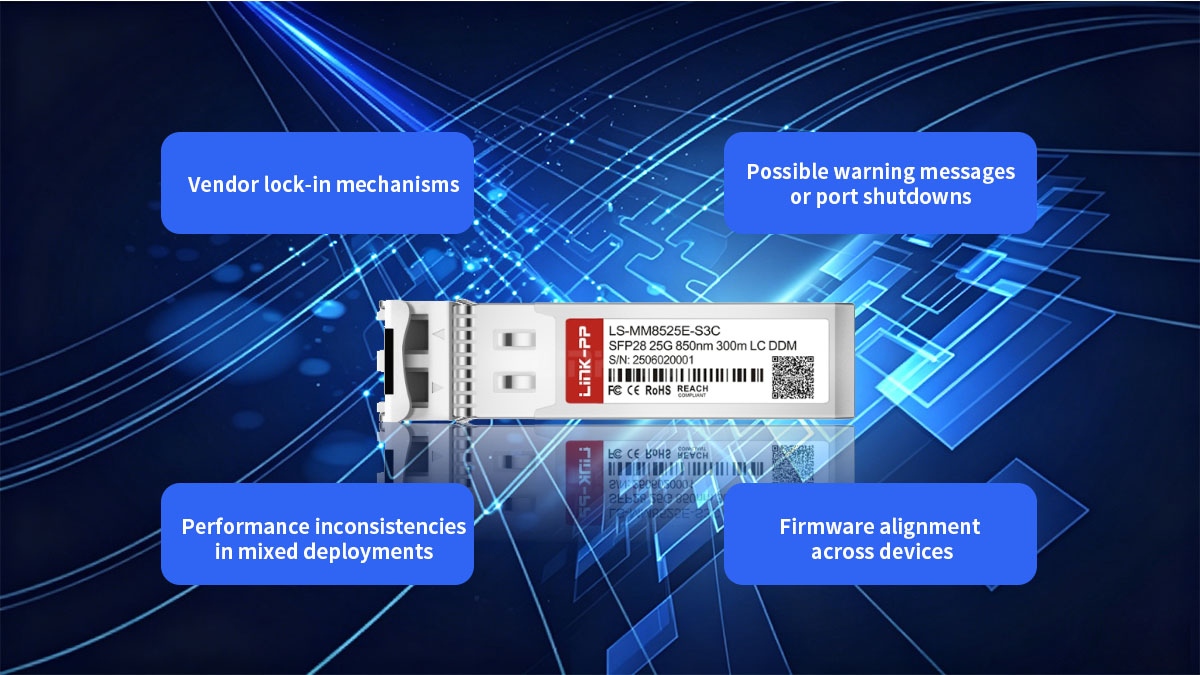
Multi-Vendor Interoperability
Cisco SFP-10/25G-CSR-S is built around IEEE Ethernet optical standards, which allows a certain level of interoperability with third-party switches and network devices. However, real compatibility is determined by how strictly each vendor implements module validation and optical detection rules.
Before listing common interoperability behaviors, it is important to note that physical compatibility does not always equal functional compatibility.
Typical interoperability scenarios include:
- Operation in standard SFP28 ports that support 10G/25G multimode optics
- Recognition in open or less-restrictive switch platforms
- Basic link establishment without advanced telemetry features
However, limitations may still occur depending on the host device's policy enforcement. Some platforms may allow link up but restrict monitoring functions or generate compatibility warnings.
Risks and Considerations
When deploying Cisco SFP-10/25G-CSR-S in third-party equipment, several technical risks must be evaluated. These risks are not necessarily related to optical performance, but rather to system-level recognition and operational stability.
Before listing key risks, it is important to understand that most issues arise from firmware enforcement rather than physical incompatibility.
Common risks include:
- Transceiver rejection due to vendor-specific coding checks
- Persistent warning messages in system logs
- Disabled or degraded port functionality
- Inconsistent Digital Optical Monitoring (DOM) support
In some cases, even if the link appears operational, the switch may restrict diagnostic visibility or performance reporting, making long-term troubleshooting more difficult.
Another important consideration is firmware updates. A system upgrade on a third-party switch may suddenly change compatibility behavior, causing previously working modules to stop functioning correctly.
Best Practices for Cross-Platform Compatibility
To reduce compatibility risks in multi-vendor environments, a structured validation approach is required before large-scale deployment of Cisco SFP-10/25G-CSR-S in third-party systems.
Before listing best practices, it is important to emphasize that pre-deployment testing is more reliable than post-deployment troubleshooting.
Recommended practices include:
- Conducting lab validation with target switch models before production rollout
- Verifying SFP28 port support for 10G and 25G multimode optics
- Testing firmware versions to ensure consistent module recognition behavior
- Monitoring optical parameters (Tx/Rx power, temperature) during stress tests
Additional operational recommendations:
- Standardizing fiber types (preferably OM4) across mixed environments
- Avoiding mixed vendor optics in the same link path where possible
- Documenting compatibility results for each hardware combination
The key takeaway is that controlled validation environments significantly reduce deployment risk and ensure predictable behavior when Cisco SFP-10/25G-CSR-S is used outside native Cisco ecosystems.
🅾️ Backward and Forward Compatibility
Cisco SFP-10/25G-CSR-S is designed as a dual-rate optical module, meaning it can operate in both 10Gbps and 25Gbps modes. This makes it an important component in networks that are transitioning between generations of Ethernet speeds. However, its backward and forward compatibility depends on port capabilities, switch architecture, and link configuration.
In practice, compatibility is not only about speed support, but also about how the module interacts with legacy infrastructure and next-generation network upgrades.
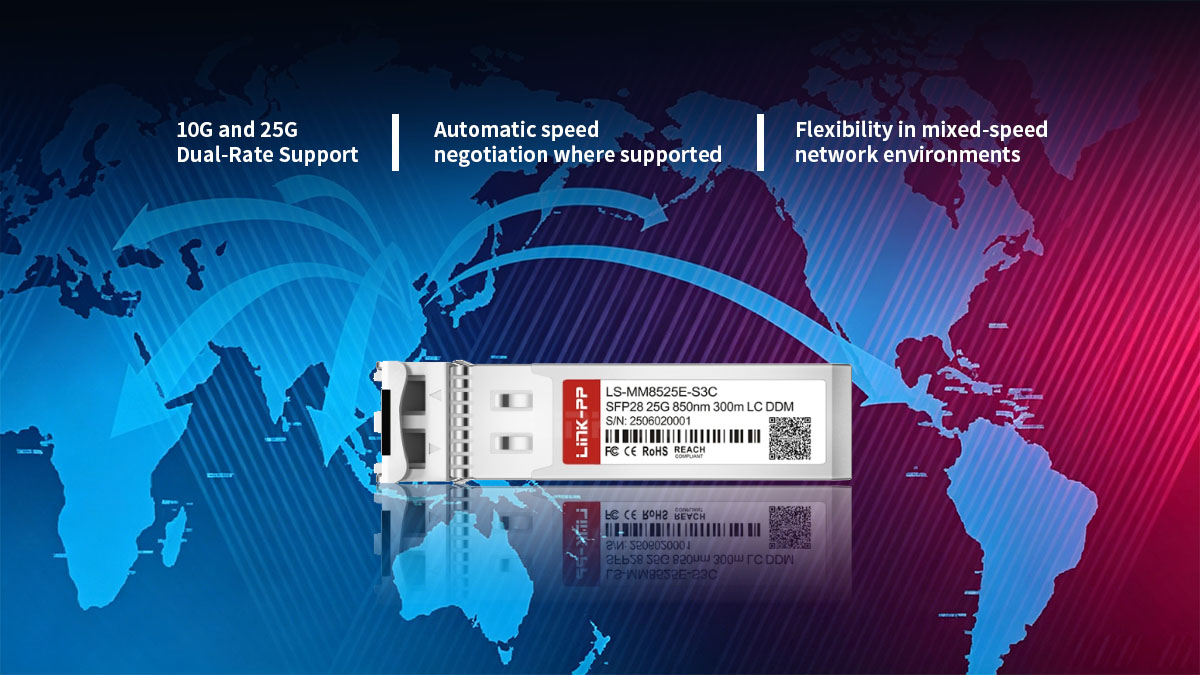
10G and 25G Dual-Rate Support
Cisco SFP-10/25G-CSR-S supports automatic operation at either 10Gbps or 25Gbps, depending on the connected device and port configuration. This dual-rate capability allows a single optical module to be used across different network layers.
Before listing functional behavior, it is important to understand that speed negotiation depends on both ends of the link supporting compatible optical standards.
Typical dual-rate behavior includes:
- Operating at 10Gbps in legacy SFP+ environments
- Operating at 25Gbps in SFP28-capable ports
- Automatic rate adaptation based on switch configuration
- Stable optical performance across both modes using OM3/OM4 fiber
In many deployments, this flexibility reduces the need for immediate hardware replacement when upgrading network speed tiers.
Migration from 10G to 25G Networks
Cisco SFP-10/25G-CSR-S is frequently used in staged network upgrades where organizations gradually migrate from Cisco SFP-10G-SR deployments to 25G infrastructure. This approach helps reduce capital expenditure while maintaining operational continuity.
Before outlining migration behavior, it is important to note that fiber infrastructure often remains unchanged during this transition.
Common migration characteristics include:
- Reusing existing OM3/OM4 multimode fiber infrastructure
- Upgrading switch ports from SFP+ 10G to SFP28 25G
- Incremental bandwidth scaling without redesigning physical topology
- Coexistence of 10G and 25G links within the same data center fabric
In practical environments, this means a single network can support mixed-speed operation during migration phases, reducing downtime and migration risk.
Limitations to Consider
Although Cisco SFP-10/25G-CSR-S provides flexible compatibility, there are important limitations that must be considered during deployment planning. These limitations are typically related to hardware constraints rather than optical performance.
Before listing key restrictions, it is important to understand that not all ports interpret dual-rate optics in the same way.
Common limitations include:
- SFP+ ports that only support 10Gbps cannot operate at 25Gbps
- Some older switch platforms may not recognize SFP28 modules
- Auto-negotiation behavior may vary between Cisco and non-Cisco devices
- Power and thermal limits differ between 10G and 25G operation modes
Additionally, forward compatibility is not unlimited. While the module supports current 25G standards, it is not designed for QSFP28 50G or 100G evolution paths, which require different form factors and optical technologies.
🅾️ Common Compatibility Issues and Troubleshooting
Cisco SFP-10/25G-CSR-S is generally stable when deployed in supported environments, but compatibility issues can still occur due to mismatched hardware, firmware limitations, or fiber-related problems. In most cases, these issues are not caused by the transceiver itself, but by system configuration or physical layer conditions.
Understanding common failure patterns helps significantly reduce downtime and speeds up root-cause identification in production networks.
Module Not Recognized
When a Cisco switch fails to detect the SFP-10/25G-CSR-S module, it is typically related to software restrictions, unsupported hardware, or firmware mismatches.
Before listing specific causes, it is important to note that detection issues are usually logical (software-level), not physical failures.
Common causes include:
- Unsupported switch model or line card
- Outdated NX-OS or IOS-XE firmware version
- Disabled third-party or non-approved optics policy
- Incorrect port type (non-SFP28 interface)
Typical troubleshooting actions:
- Verify switch compatibility using system documentation
- Upgrade firmware to a supported release version
- Check module status using CLI commands such as
show inventory - Reload the interface after configuration changes
The key takeaway is that most recognition failures are resolved through firmware alignment and platform validation rather than hardware replacement.
Link Instability or No Signal
Link instability or complete signal loss is often related to optical path issues rather than module incompatibility. Even when the transceiver is fully supported, poor physical conditions can prevent stable communication.
Before listing causes, it is important to emphasize that optical links are highly sensitive to fiber quality and cleanliness.
Common causes include:
- Dirty or contaminated LC connectors
- Incorrect fiber type (non-OM3/OM4 multimode fiber)
- Excessive link distance beyond specification
- High insertion loss due to poor patch cables or adapters
Recommended troubleshooting steps:
- Clean LC connectors using proper fiber cleaning tools
- Replace or verify multimode fiber grade (prefer OM4)
- Check optical power levels using DOM monitoring
- Reduce link length or remove unnecessary patch points
The key takeaway is that signal issues are most often physical-layer problems rather than transceiver defects.
Diagnostic Tools and Methods
Effective troubleshooting of Cisco SFP-10/25G-CSR-S requires a combination of software diagnostics and optical performance monitoring. Cisco devices provide built-in tools that help identify whether the issue is related to hardware, firmware, or fiber infrastructure.
Before listing tools, it is important to understand that diagnostics should be performed in a structured sequence.
Common diagnostic methods include:
- CLI commands such as
show interface transceiver details - Checking Digital Optical Monitoring (DOM) values
- Reviewing system logs for transceiver-related warnings
- Performing loopback tests to isolate switch vs fiber issues
Key DOM parameters to monitor:
- Transmit (Tx) optical power
- Receive (Rx) optical power
- Temperature and voltage levels
- Alarm and warning thresholds
In complex environments, comparing DOM values across multiple links can help identify degraded fiber segments or inconsistent module behavior.
🅾️ Key Factors to Evaluate Before Deployment
Before deploying Cisco SFP-10/25G-CSR-S in a production network, it is essential to evaluate several technical and environmental factors. Compatibility is not determined by the transceiver alone, but by how well it aligns with the switching platform, optical infrastructure, and expected traffic load.
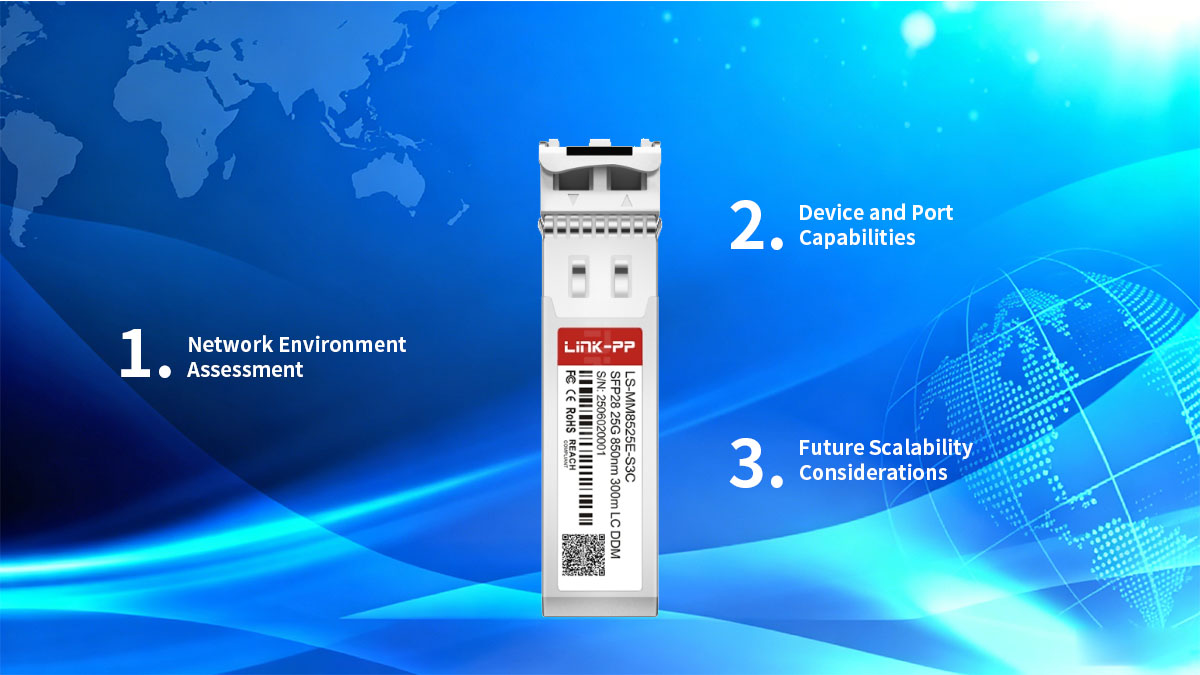
A structured pre-deployment assessment helps prevent link failures, reduces troubleshooting effort, and ensures stable long-term operation.
Network Environment Assessment
The first step is to evaluate the existing network environment, especially the optical topology and bandwidth requirements. This ensures the module is deployed in a context where it can perform reliably.
Before listing key points, it is important to note that environment mismatch is one of the most common causes of post-deployment instability.
Key evaluation points include:
- Required link speed (10Gbps, 25Gbps, or mixed mode)
- Physical distance between network nodes
- Data center architecture (leaf-spine, aggregation-core, etc.)
- Expected traffic load and peak utilization levels
Additional considerations:
- Whether existing links are already operating at or near capacity
- Availability of multimode fiber infrastructure (OM3/OM4)
- Future bandwidth scaling requirements
The key takeaway is that environmental planning determines whether dual-rate capability is fully utilized or underutilized.
Device and Port Capabilities
Even if the optical module is technically compatible, the host device must fully support SFP28 functionality for correct operation. Port limitations are often the primary bottleneck in deployment.
Before listing requirements, it is important to understand that hardware capability is more critical than module flexibility.
Key device considerations include:
- Availability of SFP28-capable ports
- Support for dual-rate 10G/25G operation on the same interface
- Switch model and hardware generation compatibility
- Line card and port firmware support for optical modules
Important validation steps:
- Confirm port speed configuration support (10G vs 25G mode)
- Verify transceiver detection behavior in system logs
- Check vendor compatibility matrices for exact model support
The key takeaway is that Cisco SFP-10/25G-CSR-S cannot overcome hardware limitations of non-SFP28 ports.
Future Scalability Considerations
One of the main advantages of Cisco SFP-10/25G-CSR-S is its role in network scalability. Evaluating future growth requirements ensures that the deployment remains relevant as bandwidth demands increase.
Before listing considerations, it is important to recognize that network upgrades are often incremental rather than immediate.
Key scalability factors include:
- Planned migration from 10G to 25G infrastructure
- Expected increase in application bandwidth demand
- Data center expansion plans and new rack deployments
- Compatibility with future switch upgrades
Strategic planning considerations:
- Standardizing on 25G-ready switching infrastructure
- Maintaining consistent fiber standards (preferably OM4)
- Avoiding mixed-speed bottlenecks in aggregation layers
The key takeaway is that early planning for scalability allows Cisco SFP-10/25G-CSR-S to serve as a transitional technology rather than a short-term solution.
🅾️ Future Trends in 10G/25G Optical Compatibility
The evolution of optical networking is steadily moving toward higher bandwidth density, and 10G/25G compatibility plays a transitional but critical role in this shift. Cisco SFP-10/25G-CSR-S sits in this middle layer, where legacy 10G infrastructure and next-generation 25G networks coexist. Understanding future trends helps explain how compatibility requirements are changing across modern data centers.
Increasing Adoption of 25G Networks
The industry is rapidly shifting from 10G to 25G as a new baseline for server-to-switch connectivity. This transition is driven by higher application throughput demands and more efficient bandwidth utilization per lane.
Before listing key drivers, it is important to understand that 25G does not simply replace 10G—it optimizes port density and cost efficiency in modern architectures.
Key adoption drivers include:
- Higher bandwidth per lane compared to 10G without proportional cost increase
- Better scalability in leaf-spine data center designs
- Improved efficiency for virtualization and cloud workloads
- Reduced cabling complexity at higher aggregate throughput
In practice, this means that dual-rate modules like Cisco SFP-10/25G-CSR-S are increasingly used as transitional components in evolving networks.
Evolution Toward 50G and 100G Architectures
As network demand continues to grow, 25G itself is becoming part of a broader scaling path toward 50G and 100G QSFP28 Ethernet. This evolution impacts how compatibility is defined across optical modules and switch platforms.
Before listing key trends, it is important to note that higher speeds require different optical architectures beyond SFP28.
Key evolution trends include:
- Transition from SFP28 (25G) to QSFP-based 50G and 100G interfaces
- Increasing use of parallel optics and advanced modulation techniques
- Greater reliance on breakout configurations for scalability
- Gradual retirement of standalone 10G-only infrastructures
Important implications:
- Existing 10G/25G fiber infrastructure may be reused in some cases, but not all
- Module form factors will continue to evolve beyond traditional SFP design
- Compatibility becomes more tightly controlled at higher speeds
The key takeaway is that while Cisco SFP-10/25G-CSR-S supports current-generation needs, future architectures will progressively move beyond its operational scope.
Enhanced Monitoring and Automation
Future optical networks are not only defined by speed, but also by intelligence. Monitoring, automation, and predictive diagnostics are becoming standard requirements in modern data center environments.
Before listing key developments, it is important to understand that optical compatibility is increasingly tied to software-driven network management.
Key advancements include:
- Real-time Digital Optical Monitoring (DOM) integration with AI-based analytics
- Automated fault detection and self-healing network configurations
- Centralized telemetry collection across multi-vendor environments
- Predictive maintenance based on optical signal degradation trends
Operational improvements:
- Faster identification of fiber degradation or contamination
- Reduced manual troubleshooting for transceiver issues
- Improved lifecycle management of optical components
The key takeaway is that compatibility is no longer purely hardware-based; it is increasingly defined by software visibility and automation capabilities.
🅾️ Conclusion
Cisco SFP-10/25G-CSR-S is a dual-rate optical transceiver designed to support both 10Gbps and 25Gbps connectivity over multimode fiber, making it a practical choice for modern data center environments that require flexibility and scalability. Throughout its compatibility scope, the key factors influencing performance are not limited to the module itself, but extend to switch hardware support, firmware versions, fiber type selection, and overall network architecture design.
From a deployment perspective, several core points define successful usage:
- Compatibility depends heavily on SFP28-capable Cisco switches such as Nexus and Catalyst series
- OM3 and OM4 multimode fiber are essential for stable short-reach transmission
- Firmware and software validation are required to ensure proper module recognition
- Dual-rate operation enables smooth migration from 10G to 25G infrastructure
- Physical layer quality (connectors, cabling, cleanliness) directly impacts link stability
When these factors are properly aligned, Cisco SFP-10/25G-CSR-S provides a reliable bridge between legacy 10G environments and next-generation 25G networks, supporting gradual infrastructure upgrades without major redesign of existing fiber systems.
At the same time, organizations planning large-scale or cost-sensitive optical deployments often evaluate compatible alternatives to optimize procurement flexibility while maintaining performance standards. In such cases, exploring reliable optical solutions from established suppliers such as the LINK-PP Official Store can provide additional options for scalable and standards-compliant transceiver deployments across different network environments.