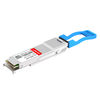
As data center bandwidth demands continue to scale toward 400G and beyond, choosing the right optical transceiver has become a critical design decision rather than a simple component selection. Among the available options, 400G SR4.2 has emerged as a practical solution for short-reach, high-density multimode interconnects—but it is often compared with other 400G optics such as SR4, SR8, DR4, FR4, as well as DAC and AOC solutions.
This comparison is not always straightforward. While all of these solutions deliver 400G throughput, they differ significantly in fiber usage, reach distance, wavelength architecture, cost efficiency, and deployment flexibility. As a result, network engineers and data center architects frequently search for clear guidance on when 400G SR4.2 is the right choice—and when an alternative optic may be more suitable.
In simple terms, 400G SR4.2 is designed to optimize multimode fiber usage through a bidirectional dual-wavelength architecture, making it especially attractive for short-range data center links where existing infrastructure (such as OM4 or OM5 fiber and MPO cabling) is already in place. However, depending on the topology and upgrade path, other 400G optics may offer better cost, reach, or scalability advantages.
This article provides a structured, engineering-focused comparison of 400G SR4.2 vs. other 400G optical modules, helping you understand not only how each technology works, but also where each one performs best in real-world deployments. Whether you are planning a new leaf-spine architecture or upgrading an existing 100G/200G network, this guide will help you make a more informed, future-proof decision.
✅ What Is 400G SR4.2?
400G SR4.2 is a short-reach 400 Gigabit Ethernet optical transceiver standard designed for high-speed data center interconnects over multimode fiber. In simple terms, it is a way to transmit 400Gbps of data between network devices over relatively short distances using existing fiber infrastructure such as OM4 or OM5.
Unlike earlier 400G solutions that rely on straightforward single-wavelength transmission per fiber lane, SR4.2 uses a more efficient dual-wavelength bidirectional design, allowing it to carry more data through fewer physical fiber resources. This makes it especially useful in modern data centers where fiber space, port density, and cabling efficiency are critical constraints.
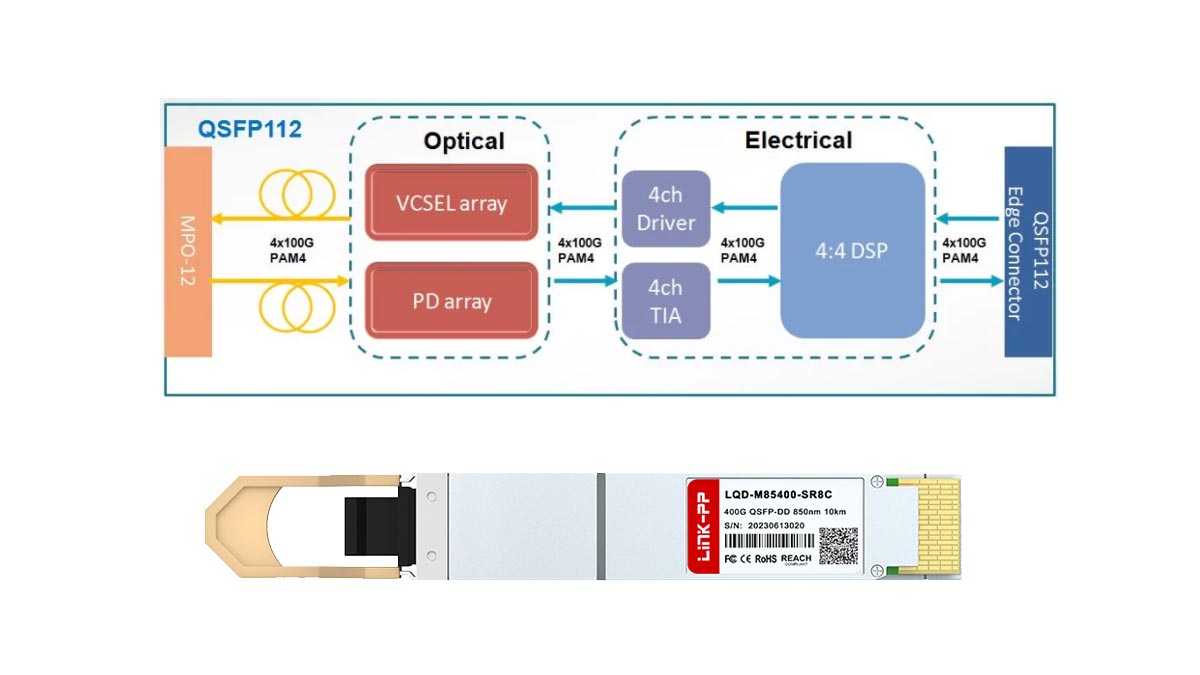
How 400G SR4.2 Works (Simple Explanation)
At a technical level, 400G SR4.2 is based on:
- 4 optical lanes (4 fiber pairs)
- PAM4 modulation (Pulse Amplitude Modulation 4-level)
- Dual wavelengths per lane (typically 850 nm + 910 nm)
- Bidirectional transmission over multimode fiber
Each fiber pair can transmit data in both directions using different wavelengths. This means SR4.2 effectively doubles the transmission efficiency per fiber pair compared to traditional single-wavelength designs.
In practice, the 400G signal is distributed across these lanes and then recombined at the receiving end, allowing full 400G throughput over a compact multimode cabling system (typically MPO/MTP connectors).
Key Characteristics of 400G SR4.2
To understand what makes SR4.2 distinct, here are its core attributes:
- Speed: 400 Gigabit Ethernet
- Fiber type: Multimode fiber (OM4 / OM5)
- Connector: MPO-12 / MTP-12
- Typical reach: ~70m (OM3), ~100m (OM4), up to ~150m (OM5)
- Architecture: 4 lanes, dual-wavelength BiDi design
- Use case: Short-reach intra–data center links
Why 400G SR4.2 Exists
The main purpose of SR4.2 is to solve a practical data center challenge:
How can we increase bandwidth to 400G without completely redesigning existing multimode fiber infrastructure?
Traditional approaches like increasing fiber count (e.g., SR8) or switching to single-mode optics can increase cost and cabling complexity. SR4.2 takes a different approach by maximizing the efficiency of existing multimode fiber through wavelength multiplexing and bidirectional signaling.
What “SR4.2” Actually Means
- SR = Short Reach (optimized for intra–data center distances)
- 4 = Four optical lanes (fiber pairs)
- .2 = Dual-wavelength (BiDi / two wavelengths per lane design)
So, SR4.2 literally describes a 4-lane short-reach optic using a dual-wavelength architecture.
✅ 400G SR4.2 vs. SR4 vs. SR8
When comparing 400G SR4.2, SR4, and SR8, the key differences come down to fiber usage, optical design (wavelength strategy), reach, and deployment efficiency. Although all three are short-reach multimode 400G solutions, they are optimized for different cabling strategies and data center architectures.
1. Fiber Count and Cabling Structure
- 400G SR4
Uses 8 fibers (4 transmit + 4 receive) in a straightforward parallel optical design. Each lane carries one wavelength and one direction.
- 400G SR8
Uses 16 fibers total (8 transmit + 8 receive), effectively doubling the fiber count compared to SR4. It is a more traditional PAM4-based parallel solution designed for simpler optics but higher cabling density.
- 400G SR4.2
Uses 8 fibers (4 fiber pairs), but each fiber pair carries bidirectional traffic using dual wavelengths. This reduces fiber demand while maintaining 400G throughput.
Key takeaway: SR8 uses the most fiber, SR4 is moderate, and SR4.2 achieves similar bandwidth with higher fiber efficiency.
2. Wavelength and Transmission Design
- SR4: Single wavelength per lane, unidirectional transmission
- SR8: Single wavelength per fiber pair, unidirectional, more parallel lanes
- SR4.2: Dual-wavelength BiDi design (commonly 850 nm + 910 nm) enabling bidirectional transmission on each fiber pair
This is where SR4.2 stands out: it maximizes fiber utilization through wavelength multiplexing instead of increasing fiber count.
3. Reach and Fiber Type Support
Standard Typical Fiber Reach (Approx.) SR4 OM3 / OM4 ~70–100 m SR8 OM4 ~100 m SR4.2 OM4 / OM5 ~100 m (OM4), up to ~150 m (OM5)
SR4.2 benefits most from OM5 fiber, which supports wider wavelength spacing and improves BiDi performance.
4. Best-fit Use Cases
🔹 400G SR4
- Traditional leaf-spine connections
- Data centers already standardized on 8-fiber parallel optics
- Simpler deployment model with minimal wavelength complexity
🔹 400G SR8
- High-performance clusters requiring straightforward parallel optics
- Environments where fiber availability is not a constraint
- Migration from older parallel 100G/200G architectures
🔹 400G SR4.2
- Dense modern data centers with fiber optimization requirements
- Upgrades from 100G/200G multimode infrastructure
- Environments prioritizing cabling reduction and port efficiency
- Ideal for OM5-based greenfield deployments
5. Practical Comparison Summary
- SR4: Balanced, traditional 400G multimode design
- SR8: Fiber-heavy but operationally simple parallel model
- SR4.2: Most fiber-efficient and modern design, optimized for scalability and dense architectures
Key insight
SR4 and SR8 prioritize simplicity and parallel transmission, while SR4.2 prioritizes efficiency and fiber optimization through dual-wavelength BiDi technology.
This is why SR4.2 is increasingly seen in newer data center designs where fiber savings and scalability matter more than legacy parallel compatibility.
✅ 400G SR4.2 vs. DAC vs. AOC
When evaluating 400G interconnect options inside a data center, most real-world decisions come down to three choices: 400G SR4.2 optical modules, DAC (Direct Attach Copper), and AOC (Active Optical Cable). Although they all deliver 400G connectivity, they differ significantly in cost structure, thermal behavior, cabling flexibility, and deployment scalability.
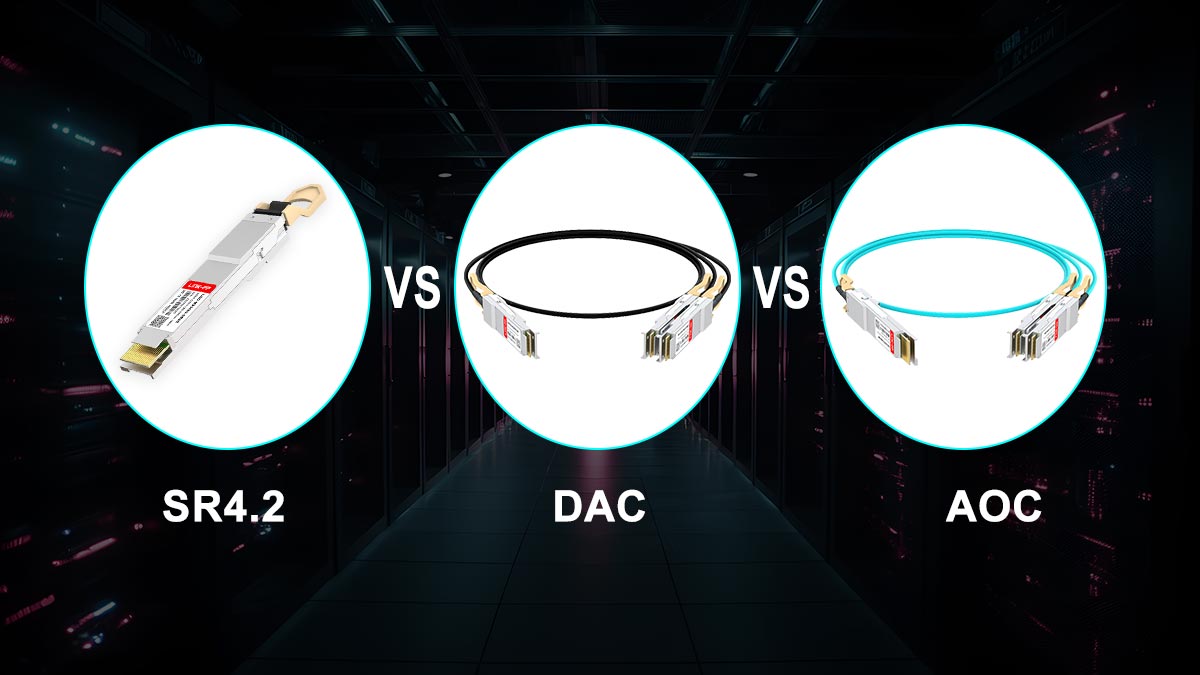
1. Cost Comparison (Upfront vs. Long-term)
- DAC (Direct Attach Copper)
Lowest upfront cost
No optics required
Limited to very short distances
Becomes impractical at 400G due to stiffness and port density challenges
- AOC (Active Optical Cable)
Mid-range cost
Integrated optics (no separate transceivers needed)
Fixed length, not reusable across different layouts
Higher replacement cost if one end fails
- 400G SR4.2
Higher initial cost than DAC/AOC
Uses pluggable optics (reusable across switches and upgrades)
Better long-term value in scalable architectures
Key insight: DAC is cheapest upfront, but SR4.2 often wins in lifecycle cost and flexibility.
2. Heat and Power Consumption
- DAC:
- Very low power consumption
- Minimal heat generation
- AOC:
- Moderate power usage (active electronics embedded in cable)
- Slight heat generation at cable ends
- SR4.2:
- Highest power consumption among the three
- Requires transceiver-level thermal management
Trade-off: SR4.2 sacrifices power efficiency for distance, flexibility, and modularity.
3. Cable Management and Physical Deployment
- DAC:
- Very stiff at higher speeds (especially 400G)
- Difficult to manage in dense racks
- Limited bend radius
- AOC:
- Flexible and easier to route than DAC
- But fixed-length constraints reduce design flexibility
- SR4.2:
- Uses MPO/MTP structured cabling
- Modular and easier to scale in structured data center environments
- Better suited for patch-panel-based architectures
SR4.2 wins in structured cabling environments, while DAC/AOC are more “point-to-point convenience solutions.”
4. Installation Flexibility
- DAC: Plug-and-play, but only for very short links (rack-to-rack or same rack)
- AOC: Plug-and-play with longer reach, but no reconfiguration flexibility
- SR4.2: Requires optical modules + fiber patching, but supports reusable infrastructure and scalable layouts
SR4.2 is less “instant plug-in” but far more architecture-friendly for large-scale deployments.
5. Real-world Deployment Trade-offs
| Factor |
DAC |
AOC |
400G SR4.2 |
| Cost |
Lowest |
Medium |
Higher upfront |
| Reach |
Very short |
Short–medium |
Short (data center scale) |
| Flexibility |
Low |
Medium |
High |
| Heat |
Very low |
Medium |
Higher |
| Scalability |
Poor |
Limited |
Strong |
| Infrastructure reuse |
Low |
Low |
High |
Final takeaway
- DAC = best for ultra-short, low-cost links
- AOC = balanced plug-and-play solution for fixed deployments
- 400G SR4.2 = best choice for scalable, structured, high-density data centers
In modern 400G deployments, SR4.2 is increasingly preferred when teams need long-term scalability and fiber infrastructure reuse, even though DAC and AOC may look simpler at first glance.
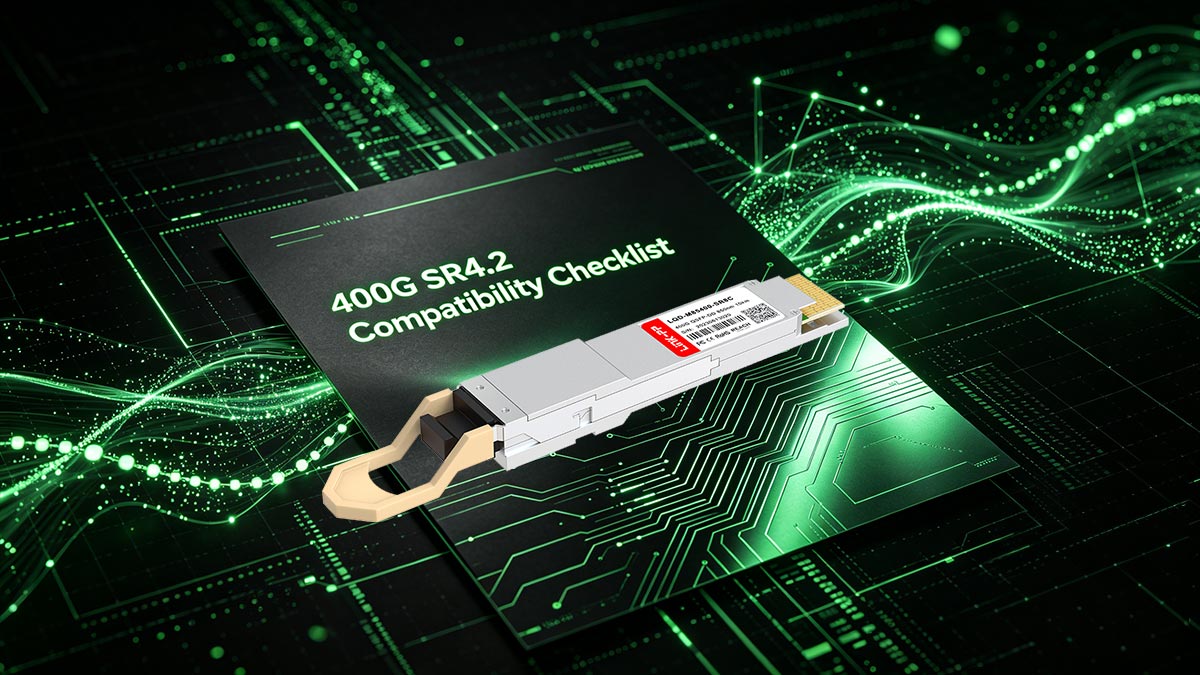
✅ 400G SR4.2 Compatibility Checklist
One of the most important factors when evaluating 400G SR4.2 is not just its performance, but whether it will work correctly within your existing data center environment. Many real deployment issues come from compatibility mismatches rather than the optic itself. This section provides a practical checklist covering fiber type, connectors, signaling, and platform support.
▶ Fiber Type: OM4 vs. OM5 Support
- OM4 multimode fiber
✔ Fully supported in most deployments
✔ Typical reach: ~70–100 meters
✔ Common in existing data centers
- OM5 multimode fiber
✔ Optimized for SR4.2 wavelength diversity
✔ Better performance for BiDi and multi-wavelength transmission
✔ Extended reach potential: up to ~150 meters
Key takeaway: SR4.2 works on OM4, but OM5 unlocks its full efficiency and reach potential.
▶ Connector Type: MPO-12 / MTP-12
- Standard interface for 400G SR4.2 is MPO-12 (or MTP-12 equivalent)
- Typically uses 8 active fibers + 4 unused guide pins (depending on implementation)
- Requires correct polarity configuration (Type A/B/C depending on topology)
Common deployment issue: incorrect polarity mapping leads to link failure even when optics are correct.
▶ Polarity Management
Polarity is critical in multimode MPO-based systems:
- Ensure correct Tx-to-Rx alignment across fiber pairs
- Use structured cabling (Type A / Type B / Type C) consistently
- Validate patch panel configuration before optic insertion
In SR4.2 environments, polarity errors are one of the most common causes of link instability.
▶ FEC (Forward Error Correction) Compatibility
- SR4.2 uses PAM4 signaling, which requires FEC at the host level
- Common FEC modes:
- RS-FEC (Reed-Solomon Forward Error Correction)
- Firecode or vendor-specific implementations
Important consideration:
- Host switch and NIC must support compatible FEC mode
- Mismatch can lead to link down or high error rates
▶ Breakout Capabilities
One of the key advantages of SR4.2 is its support for flexible breakout configurations:
- 400G → 4×100G SR1.2 breakout (common in modern deployments)
- Enables migration from 100G architectures without full rewiring
- Supports high-density leaf-spine scaling strategies
This makes SR4.2 especially valuable in incremental upgrade environments.
▶ Host platform considerations
Before deploying 400G SR4.2, verify:
- Switch or NIC supports 400G SR4.2 or equivalent BiDi optics
- QSFP-DD or OSFP form factor compatibility
- Firmware support for PAM4 optics
- Correct port configuration (400G native or breakout mode)
Not all 400G ports automatically support SR4.2, even if they support other 400G optics like DR4 or FR4.
▶ Environmental and deployment checks
- Rack density and airflow (SR4.2 optics generate more heat than DAC/AOC)
- Patch panel density for MPO cabling
- Fiber cleanliness (critical for high-speed multimode links)
- Cable routing to avoid excessive bend loss in OM4/OM5 systems
Quick compatibility checklist summary
✔ OM4 or OM5 fiber installed
✔ MPO-12 / MTP-12 structured cabling in place
✔ Correct polarity scheme verified
✔ FEC mode supported by switch/NIC
✔ Host platform supports SR4.2 optics
✔ Breakout architecture planned (if needed)
400G SR4.2 performance depends as much on system compatibility (fiber, polarity, FEC, and platform support) as it does on the optic itself.
A properly validated SR4.2 deployment delivers high efficiency and scalability—but small mismatches in cabling or FEC configuration are often the root cause of real-world deployment issues.
✅ Best Use Cases for 400G SR4.2 in Data Centers
400G SR4.2 is not a universal 400G solution—it is specifically designed for short-reach, high-density, multimode fiber environments where efficiency, scalability, and structured cabling matter more than ultra-long reach or ultra-low power. Understanding where it fits best helps avoid over-engineering or misapplication in data center design.
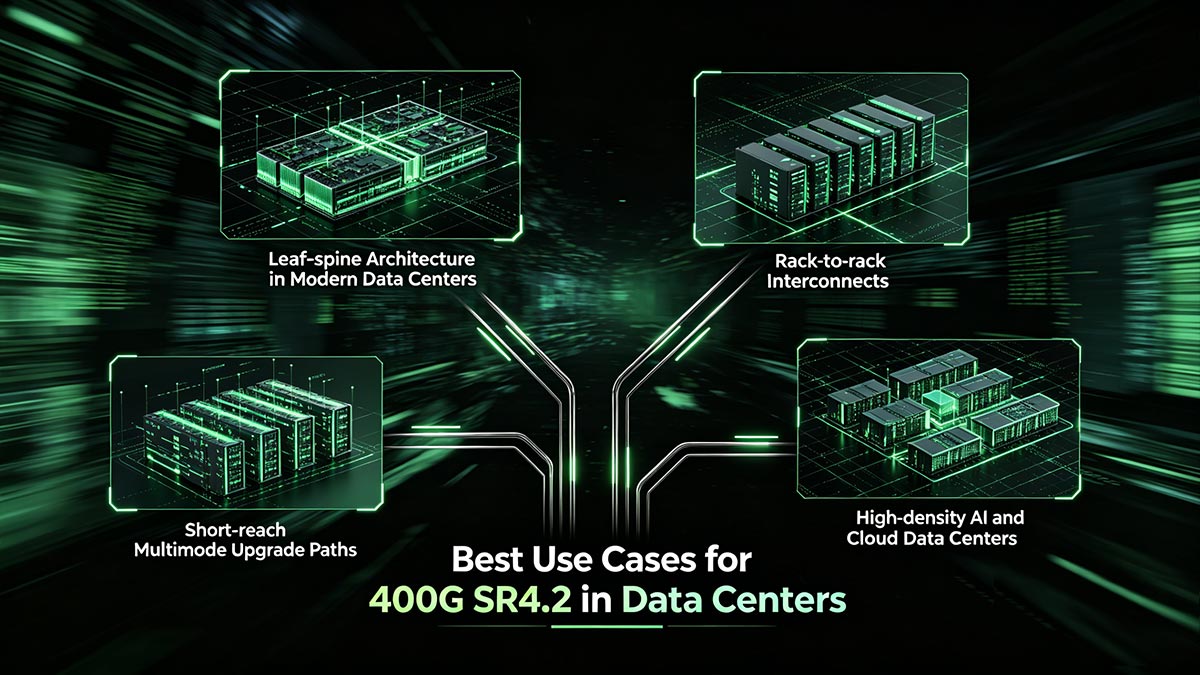
♦ Leaf–spine Architecture in Modern Data Centers
One of the most common use cases for 400G SR4.2 is in leaf-to-spine interconnects within a leaf–spine topology.
In this scenario:
- Leaf switches connect upward to spine switches at 400G speeds
- Traffic is highly east–west and requires consistent high bandwidth
- Short-reach multimode fiber is typically already deployed
Why SR4.2 fits well:
- Efficient use of existing OM4/OM5 infrastructure
- Reduces fiber congestion compared to higher-fiber-count solutions
- Supports scalable 400G fabric expansion without redesigning the physical layer
Best fit outcome: High-density spine aggregation with optimized fiber usage
♦ Rack-to-rack Interconnects
Another strong use case is rack-to-rack connectivity within the same data hall or row.
Typical scenarios include:
- High-performance compute clusters (HPC, AI training nodes)
- Storage-heavy environments (distributed storage systems)
- GPU cluster interconnects requiring low-latency 400G links
Why SR4.2 is ideal:
- Supports ~100m reach on OM4 (sufficient for most intra-room layouts)
- Structured MPO cabling simplifies large-scale deployments
- Avoids the stiffness and management issues of DAC at 400G
Best fit outcome: Clean, scalable rack-to-rack 400G fabric with manageable cabling
♦ Short-reach Multimode Upgrade Paths (100G → 400G Migration)
Many real-world deployments use 400G SR4.2 as a migration technology rather than a greenfield design.
Common upgrade paths:
- 4×100G → 1×400G consolidation
- 100G SR4 → 400G SR4.2 transition
- Incremental bandwidth scaling in existing OM4/OM5 environments
Why SR4.2 fits well:
- Compatible with existing multimode fiber plant
- Enables gradual migration without full recabling
- Supports breakout configurations (400G → 4×100G)
Best fit outcome: Cost-efficient evolution of existing 100G infrastructure
♦ High-density AI and Cloud Data Centers
In modern AI and hyperscale environments, SR4.2 is increasingly used for:
- GPU cluster interconnects
- AI training fabric networks
- High-throughput east–west traffic between compute nodes
Why SR4.2 fits well:
- High port density with structured MPO cabling
- Balanced trade-off between fiber efficiency and performance
- Works well in OM5-optimized AI fabric designs
Best fit outcome: Scalable 400G fabric for compute-heavy workloads
♦ When 400G SR4.2 is NOT the best choice
To fully understand its positioning, it is also important to identify scenarios where SR4.2 is less suitable:
- Long-distance data center interconnects (DCI > 500m) → use DR4/FR4
- Ultra-low power point-to-point links → DAC may be better
- Very simple, fixed-length cabling setups → AOC may be more cost-effective
Key Takeaway
400G SR4.2 is best used in structured, short-reach multimode environments where scalability, fiber efficiency, and upgrade flexibility are more important than absolute lowest cost or longest reach.
It is especially powerful in leaf–spine networks, rack-to-rack interconnects, and AI-driven high-density data centers, where modern architectures demand both performance and long-term infrastructure reuse.
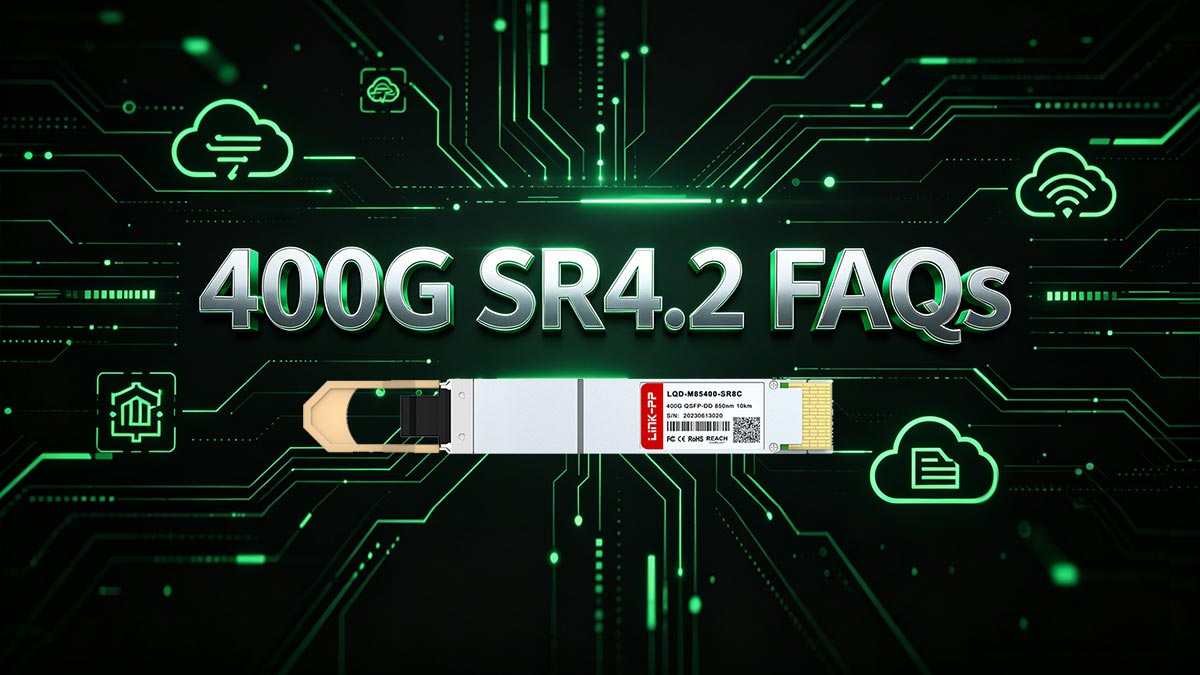
✅ 400G SR4.2 FAQs
1. What is 400G SR4.2 in simple terms?
400G SR4.2 is a short-reach 400G multimode optical transceiver that uses 4 fiber pairs and dual-wavelength bidirectional transmission to deliver 400G connectivity inside data centers.
2. What is the difference between 400G SR4 and SR4.2?
- SR4: Uses single-wavelength, unidirectional transmission per lane
- SR4.2: Uses dual-wavelength bidirectional (BiDi) transmission, improving fiber efficiency
SR4.2 reduces fiber usage compared to traditional SR4 designs.
3. What is the difference between 400G SR4.2 and SR8?
- SR8 uses 16 fibers (higher fiber count)
- SR4.2 uses 8 fibers with dual-wavelength design
SR4.2 is more fiber-efficient, while SR8 is more traditional and parallel-based.
4. What fiber type does 400G SR4.2 support?
- OM4 multimode fiber: standard support (~100m)
- OM5 multimode fiber: optimized support (up to ~150m depending on deployment)
5. What connector does 400G SR4.2 use?
MPO-12 / MTP-12 connector is commonly used for 400G SR4.2 deployments in structured cabling systems.
6. What is the typical reach of 400G SR4.2?
- ~70 meters on OM3
- ~100 meters on OM4
- Up to ~150 meters on OM5
Designed for data center intra-building connectivity only.
7. Can 400G SR4.2 support breakout connections?
Yes. Common breakout configuration:
This makes it useful for upgrading existing 100G architectures.
8. Is 400G SR4.2 compatible with DAC or AOC?
No.
- DAC and AOC are different physical media types
- SR4.2 requires optical transceivers and multimode fiber infrastructure
9. Where is 400G SR4.2 mainly used?
- Leaf-spine data center networks
- Rack-to-rack interconnects
- AI / HPC cluster networking
- High-density multimode fiber environments
10. Is 400G SR4.2 better than SR8 or DAC?
It depends on the use case:
- Better than SR8 for fiber efficiency and scalability
- Better than DAC for reach and structured cabling flexibility
- Not always better for lowest cost or ultra-short links
✅ How to Choose the Right 400G SR4.2 Module
Selecting the right 400G SR4.2 module is not just about meeting the speed requirement—it is about ensuring end-to-end compatibility, deployment stability, and long-term scalability in your data center network. A structured buying decision helps avoid issues such as link failure, FEC mismatch, or incompatible switch platforms.
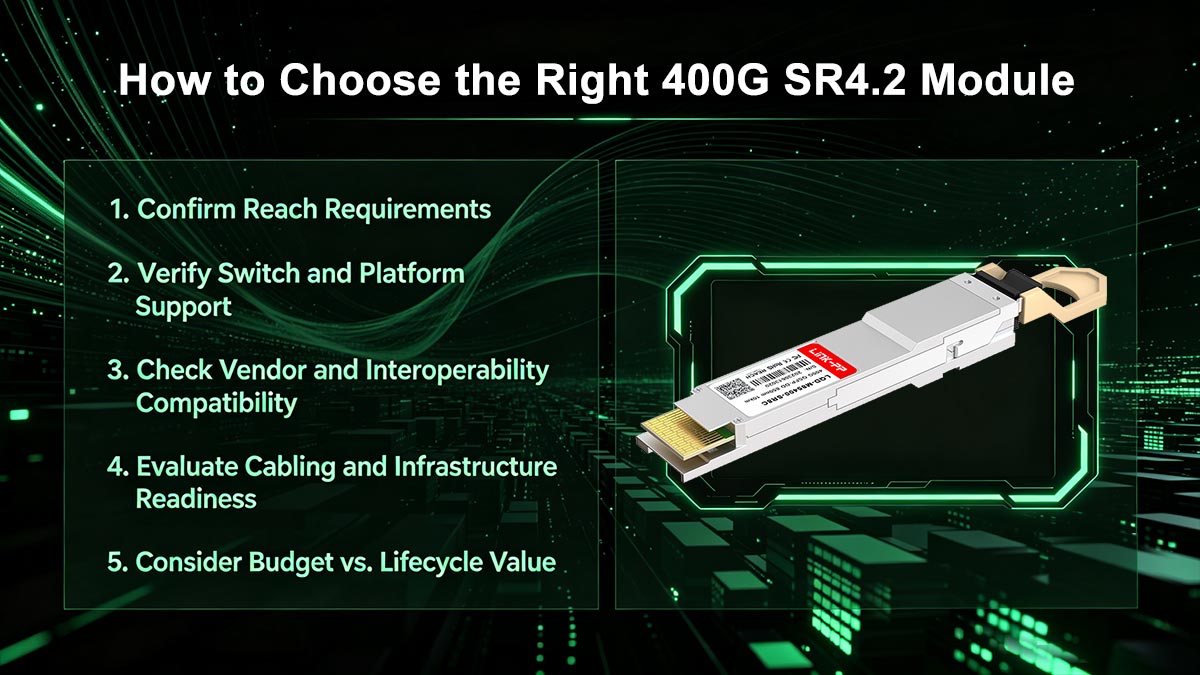
Below is a practical framework used by network engineers when evaluating 400G SR4.2 optics.
1. Confirm Reach Requirements
Start by defining the physical distance between devices:
- Up to ~70m (OM3) → basic short-reach deployment
- Up to ~100m (OM4) → standard data center use case
- Up to ~150m (OM5) → optimized SR4.2 deployment scenario
Key decision point: If your links exceed multimode limits, SR4.2 is not suitable—consider DR4 or FR4 instead.
2. Verify Switch and Platform Support
Not all 400G ports automatically support SR4.2 optics.
Check:
- Switch/NIC compatibility with QSFP-DD or OSFP SR4.2 optics
- Firmware support for PAM4 and BiDi operation
- FEC mode compatibility (RS-FEC or vendor-specific settings)
Critical insight: Even if a port supports 400G, it may still require explicit SR4.2 validation from the vendor.
3. Check Vendor and Interoperability Compatibility
400G SR4.2 modules can vary across vendors in terms of:
- Firmware implementation
- DOM (Digital Optical Monitoring) behavior
- Interoperability with Cisco, Arista, Juniper, etc.
Best practice: Choose modules that are tested against your switch ecosystem to avoid cross-vendor negotiation issues.
4. Evaluate Cabling and Infrastructure Readiness
Before purchasing SR4.2 modules, confirm:
- MPO-12 / MTP-12 structured cabling is installed
- Correct polarity scheme (Type A/B/C) is in place
- Fiber cleanliness and patch panel quality are maintained
- OM4 or OM5 fiber is available
SR4.2 performance depends heavily on physical layer quality, not just the optics.
5. Consider Budget vs. Lifecycle Value
When comparing cost:
- DAC = lowest upfront cost, limited scalability
- AOC = mid-range cost, fixed flexibility
- SR4.2 = higher initial cost, but better long-term infrastructure reuse
Key decision logic: If your network is evolving toward 400G scale, SR4.2 often provides the best total cost of ownership (TCO) over time.
6. Plan your Migration Path
A good SR4.2 deployment should align with future scaling:
- 100G → 400G consolidation paths
- 400G leaf-spine expansion strategy
- Breakout planning (400G → 4×100G SR1.2)
SR4.2 is most valuable when it supports incremental network evolution, not just a one-time upgrade.
Final Takeaway
The right 400G SR4.2 module is not just about speed—it is about matching reach, switch compatibility, fiber infrastructure, and long-term scalability strategy.
A well-planned selection ensures stable performance today and flexible upgrades for tomorrow’s high-density data center demands.
🚀 Where to get reliable 400G SR4.2 modules
For high-quality, tested, and compatible optical transceivers, you can explore: LINK-PP Official Store
A trusted source for data center interconnect solutions, offering a wide range of 400G optical modules designed for real-world compatibility and performance.