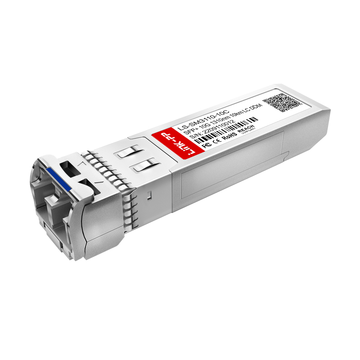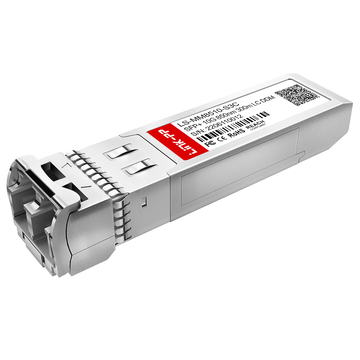
If you are trying to decide whether 10GBASE-SR is single-mode or multimode, the answer is straightforward: 10GBASE-SR is designed exclusively for multimode fiber (MMF). It uses an 850 nm VCSEL laser and is typically deployed with OM3, OM4, or OM5 multimode fiber for short-reach connections inside data centers and enterprise buildings.
Despite this, the question “SR single mode or multimode?” remains one of the most frequently searched topics in fiber networking. The confusion usually comes from real-world deployment challenges—engineers often deal with mixed fiber environments, legacy cabling, or incorrect optic selection between SR (Short Range) and LR (Long Range) modules.
In practice, 10GBASE-SR is optimized for distances up to ~300 meters on OM3 and ~400+ meters on OM4, making it ideal for high-density, short-distance links such as server-to-switch connections, top-of-rack architectures, and intra-data center networks. By contrast, single-mode fiber solutions like 10GBASE-LR are used for long-distance links up to 10 km.
Key takeaway
- 10GBASE-SR = Multimode fiber (MMF), 850 nm, short reach
- 10GBASE-LR = Single-mode fiber (SMF), 1310 nm, long reach
This guide breaks down everything you need to know about 10GBASE-SR fiber type, compatibility, real-world usage, and common mistakes, helping you choose the right optical transceiver with confidence and avoid costly mismatches in your network design.
🔵 What Is 10GBASE-SR?
10GBASE-SR Is A 10 Gigabit Ethernet Optical Transceiver Standard Designed For Short-Distance Transmission Over Multimode Fiber (MMF). The term “SR” Stands For “Short Reach,” which directly defines its purpose: high-speed data transmission over relatively short distances, typically within data centers, enterprise networks, or building-level infrastructure.
Technically, 10GBASE-SR operates at a wavelength of 850 nm and uses a VCSEL (Vertical Cavity Surface Emitting Laser). This design is optimized for multimode fiber types such as OM3, OM4, and OM5, which support multiple light paths within the fiber core. As a result, it enables cost-efficient and high-performance 10G SFP+ connectivity over distances of approximately 300 meters on OM3 and up to 400 meters or more on OM4 under ideal conditions.
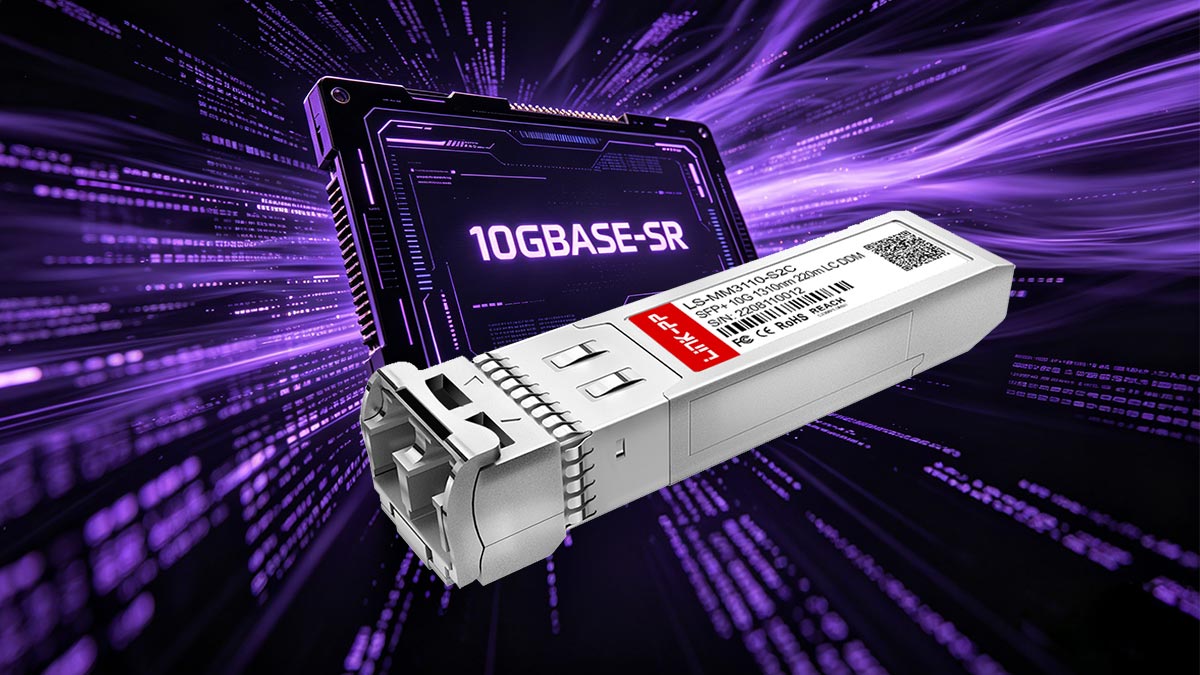
Direct Answer to the Key Question
To answer the most common search intent clearly:
10GBASE-SR is NOT single-mode. It is strictly a multimode fiber (MMF) solution.
This distinction is fundamental. Short-range optics are engineered for the larger core diameter and light propagation characteristics of multimode fiber. In contrast, single-mode solutions (such as 10GBASE-LR) use a narrower laser beam optimized for long-distance transmission over single-mode fiber.
Why The “Short Reach” Design Matters
The “Short Reach” classification reflects real-world deployment scenarios. 10GBASE-SR is widely used in environments where high bandwidth is needed over short distances, including:
- Server-To-Switch Connections In Data Centers
- Top-Of-Rack (ToR) And Leaf-Spine Architectures
- Intra-Building Backbone Links
- High-Density Enterprise Switching Environments
Because multimode fiber is generally more cost-effective for short-range deployments, 10GBASE-SR remains one of the most widely adopted solutions for 10G Ethernet inside modern data center infrastructures.
Key Takeaway: 10GBASE-SR Is A Short-Reach, Multimode-Only Optical Standard Designed For High-Speed Networking Over Limited Distances. It Should Not Be Confused With Single-Mode Solutions, As The Two Technologies Differ In Fiber Type, Wavelength, And Intended Use Case.
🔵 Is 10GBASE-SR Single-Mode Or Multimode?
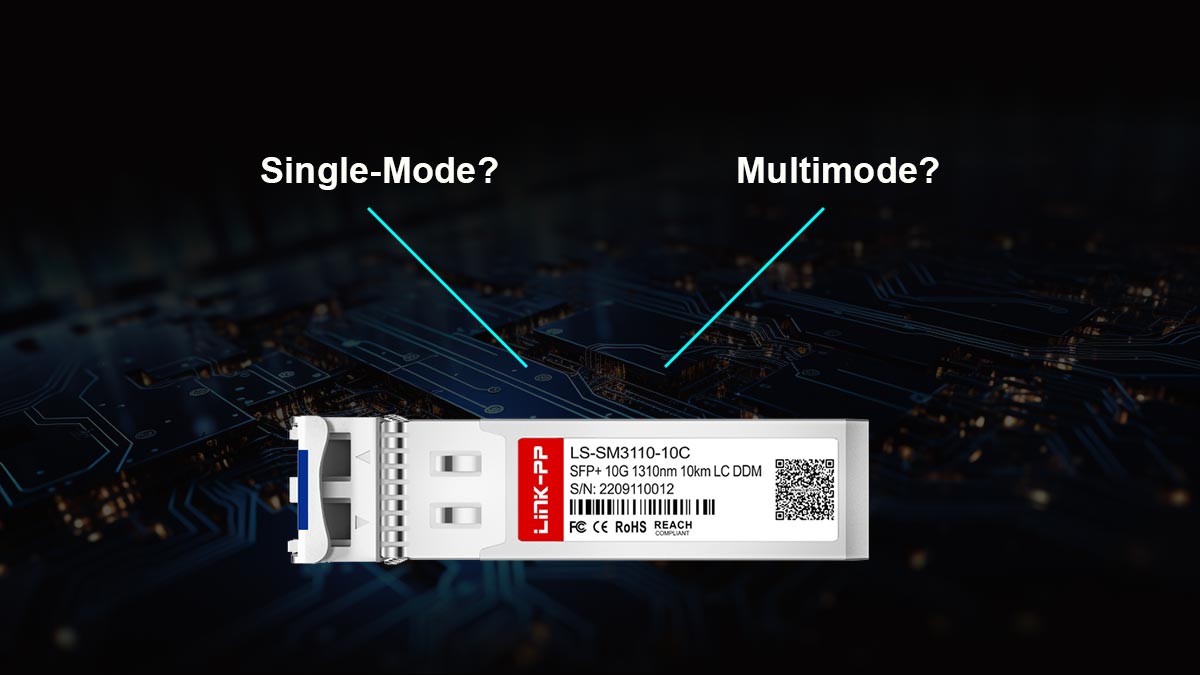
10GBASE-SR Is A Multimode Fiber (MMF) Standard, Not A Single-Mode Solution.
This is the most important point to understand: 10GBASE-SR is explicitly designed for multimode fiber environments and is not intended for single-mode fiber (SMF) transmission.
Why 10GBASE-SR Uses Multimode Fiber
The reason 10GBASE-SR is tied to multimode fiber comes from its optical design and intended use case:
- Wavelength: 850 nm Operation
10GBASE-SR uses an 850 nm VCSEL laser, which is optimized for short-distance transmission. This wavelength is well-suited for multimode fiber because it efficiently propagates through the larger fiber core while maintaining cost-effectiveness and energy efficiency. - Fiber Core Compatibility
Multimode fiber (such as OM3 and OM4) has a larger core size compared to single-mode fiber. This allows multiple light modes to travel simultaneously, which is ideal for short-range, high-speed links like those in data centers. - Short Reach Design Philosophy
The “SR” in 10GBASE-SR stands for Short Reach, meaning it is engineered specifically for intra-building and data center connections, typically within a range of 300–400 meters depending on fiber type.
Why It Is Not Designed For Single-Mode Fiber
Single-mode fiber is fundamentally different. It has a much smaller core and is designed for long-distance, low-loss transmission using a 1310 nm or 1550 nm laser source. Because of this:
- The 850 nm VCSEL used in SR optics cannot efficiently propagate in single-mode fiber
- Signal behavior becomes unstable or non-functional when mismatched with SMF
- The optics are not optimized for long-distance, low-attenuation transmission
For single-mode applications, the correct standard is 10GBASE-LR, which is specifically designed for SMF and supports distances up to 10 km.
Key Takeaway: 10GBASE-SR is a multimode-only, 850 nm short-reach optical standard. It is engineered for cost-effective, high-speed connections over short distances and should not be used as a single-mode solution in structured fiber networks.
🔵 10GBASE-SR vs. 10GBASE-LR: Which One Should You Use?
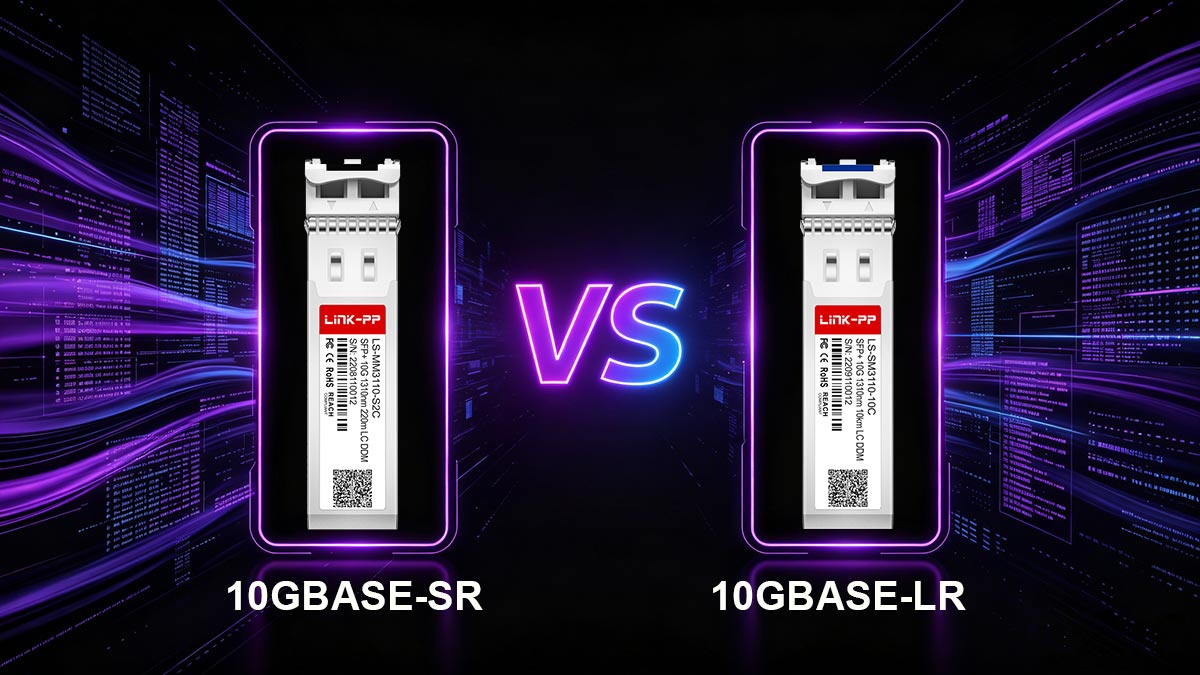
Choosing between 10GBASE-SR and 10GBASE-LR depends mainly on fiber type, transmission distance, and deployment environment. While both support 10 Gigabit Ethernet, they are designed for completely different networking scenarios.
- 10GBASE-SR is optimized for short-range connections over multimode fiber (MMF) inside data centers or buildings.
- 10GBASE-LR is designed for long-range transmission over single-mode fiber (SMF), typically across campuses or between buildings.
Understanding these differences is critical to avoid compatibility issues and ensure stable network performance.
10GBASE-SR vs. 10GBASE-LR Comparison Table
| Feature | 10GBASE-SR (Short Reach) | 10GBASE-LR (Long Reach) |
|---|---|---|
| Fiber Type | Multimode Fiber (MMF) | Single-Mode Fiber (SMF) |
| Wavelength | 850 nm (VCSEL) | 1310 nm (Laser) |
| Typical Reach | 300 m (OM3), 400 m+ (OM4) | Up to 10 km |
| Core Size | Larger (50/62.5 µm) | Smaller (9 µm) |
| Use Case | Data centers, intra-building links | Campus, metro, inter-building links |
| Cost | Lower | Higher |
| Deployment Focus | Short-distance, high-density | Long-distance, low-loss transmission |
| Typical Module | SFP-10G-SR | SFP-10G-LR |
Which One Should You Use?
- Choose 10GBASE-SR if your network uses multimode fiber (OM3/OM4) and links are within a data center or a single building. It is the most cost-effective option for short-range, high-density environments.
- Choose 10GBASE-LR if your connection requires single-mode fiber (SMF) or spans long distances up to 10 km, such as campus backbone or inter-building connectivity.
Key Insight: The decision is not about which is “better,” but about matching the correct optic to your fiber infrastructure and distance requirements. Using SR on SMF or LR on MMF without proper design consideration can lead to link failure or unstable performance.
🔵 Supported Fiber Types For 10GBASE-SR
10GBASE-SR Is Designed Exclusively For Multimode Fiber (MMF), With Optimal Performance On OM3, OM4, And OM5 Fiber Types. These fiber grades differ mainly in bandwidth capacity and achievable transmission distance, which directly impacts real-world 10G network design.
Unlike single-mode optics, which are focused on long-haul transmission, 10GBASE-SR is optimized for high-density, short-reach environments such as data centers and enterprise LANs.
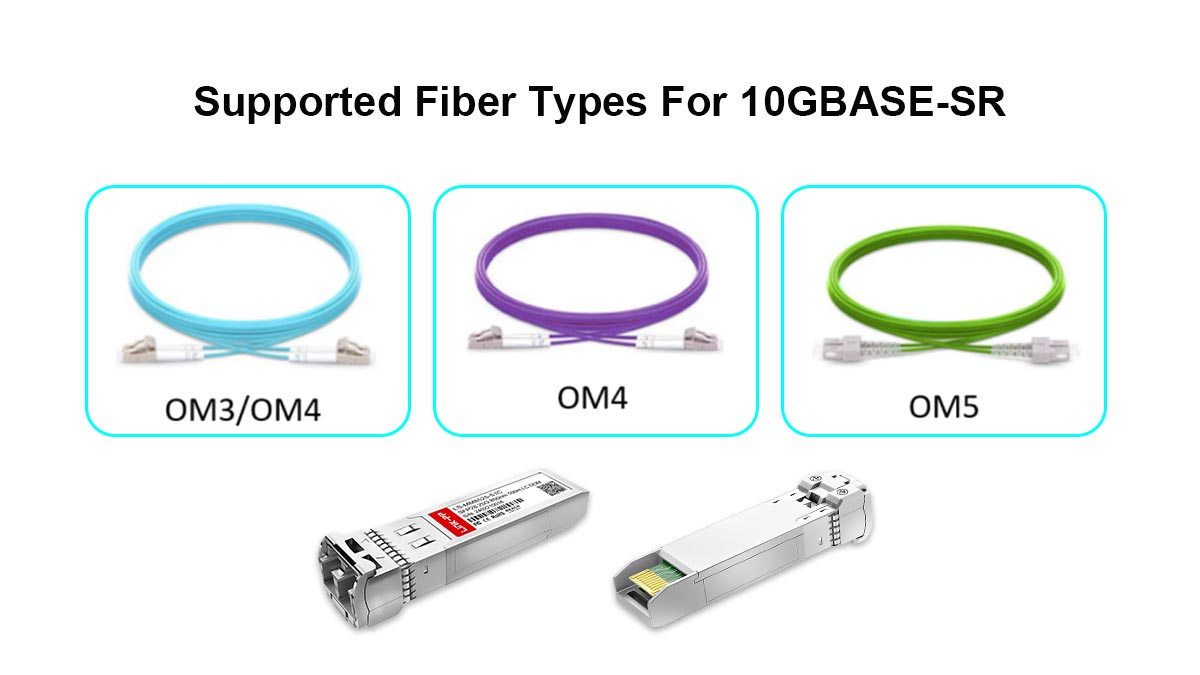
OM3 Fiber: Entry-Level Multimode For 10GBASE-SR
OM3 is the baseline fiber type for 10GBASE-SR deployments.
- Typical Distance: Up to ~300 meters
- Core Size: 50/125 µm
- Optimization: Designed for 850 nm VCSEL transmission
- Use Case: Server-to-switch links in standard data centers
In practice, OM3 is widely used in legacy and cost-sensitive environments where ultra-long reach is not required.
OM4 Fiber: Preferred Standard For Modern Data Centers
OM4 is the most commonly recommended fiber for 10GBASE-SR today.
- Typical Distance: Up to ~400 meters (and sometimes slightly more in ideal conditions)
- Core Size: 50/125 µm (higher bandwidth grade than OM3)
- Performance Advantage: Lower modal dispersion, better signal integrity
OM4 is widely deployed in modern leaf-spine architectures and high-density switch fabrics, where future scalability and signal stability are important.
OM5 Fiber: Extended Multimode Capability
OM5 is the newest multimode standard, designed for wavelength-division multiplexing (WDM) support.
- Typical Distance (10GBASE-SR): Similar to OM4 (~400 meters range for SR)
- Key Advantage: Supports multiple short-wavelength transmission channels
- Use Case: Future-proof data centers preparing for higher-speed upgrades (SFP28 25G/QSFP+ 40G/QSFP28 100G SR optics)
While OM5 does not significantly extend 10GBASE-SR distance compared to OM4, it improves long-term scalability and multi-wavelength efficiency.
Practical Distance Expectations In Real Networks
In real-world deployments, theoretical maximum distances are often reduced due to:
- Connector losses and patch panel insertion loss
- Fiber aging or contamination
- Bend radius violations in cable management
- Dense cabling environments in racks and pathways
As a result, most engineers consider these more realistic design ranges:
- OM3: ~200–250 meters reliable operating range
- OM4: ~300–350 meters typical stable range
- OM5: Similar to OM4 for 10GBASE-SR, with better scalability for higher speeds
Key Takeaway: 10GBASE-SR performs best on OM4 multimode fiber, which provides the most balanced combination of distance, stability, and modern data center compatibility. OM3 remains widely used for cost-effective deployments, while OM5 is mainly chosen for future-ready high-speed network design rather than extended 10G reach.
🔵 Can You Use An SR SFP With Single-Mode Fiber?
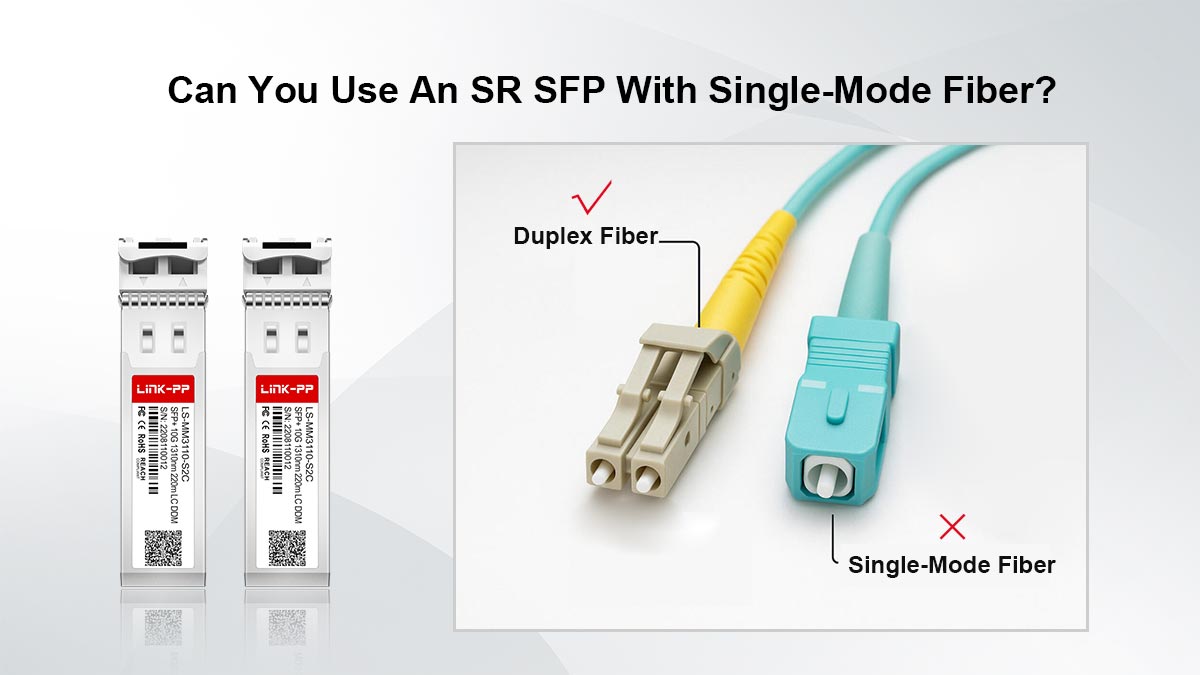
No, A 10GBASE-SR SFP Is Not Designed To Operate Over Single-Mode Fiber (SMF), And It Should Not Be Used As A Standard Or Reliable Solution In SMF Networks.
10GBASE-SR is built specifically for multimode fiber (MMF) using an 850 nm VCSEL laser, which is fundamentally incompatible with the transmission characteristics of single-mode fiber.
Why SR SFPs Do Not Work Properly On Single-Mode Fiber
There are three core technical reasons:
- Wavelength Mismatch (850 nm vs SMF Optimization)
Single-mode fiber is optimized for 1310 nm or 1550 nm wavelengths, not 850 nm. When an SR module transmits at 850 nm into SMF, signal propagation becomes inefficient and unstable. - Core Size Mismatch
SMF has a very small core (~9 µm), while SR optics are designed for the larger core of multimode fiber (50/62.5 µm). This mismatch leads to poor coupling efficiency. - Laser Design Limitation
SR modules use VCSEL-based short-reach lasers, which are not engineered for long-distance, low-loss propagation required in SMF systems.
What Happens If You Try To Use SR Over SMF
In real-world scenarios, engineers sometimes test SR modules on single-mode fiber due to spare inventory or temporary lab setups. The results are typically inconsistent and unreliable:
- Link may not come up at all
- Intermittent connectivity or high packet loss
- Severe signal attenuation over short distances
- Unpredictable performance under load
Even if a link appears to “work” at very short distances, it is not stable, not standards-compliant, and not recommended for production environments.
Proper Alternative: 10GBASE-LR For Single-Mode Fiber
If your network uses single-mode fiber, the correct choice is 10GBASE-LR, which is specifically designed for:
- 1310 nm wavelength operation
- Long-distance transmission up to 10 km
- Stable coupling into 9 µm SMF core
- Enterprise, campus, and metro network deployments
Key Takeaway: 10GBASE-SR SFPs Are Not Intended For Single-Mode Fiber And Should Not Be Used In SMF Networks. While temporary or lab-level operation may sometimes appear functional over very short distances, production networks require proper matching of optics and fiber types—meaning SR for multimode and LR for single-mode.
🔵 How To Tell Whether An SFP Is Single-Mode Or Multimode
Identifying whether an SFP transceiver is single-mode (SMF) or multimode (MMF) is essential for avoiding link failures and ensuring proper fiber compatibility. In practice, you don’t need advanced tools—most of the information is already available through the module labeling, part number, and datasheet.
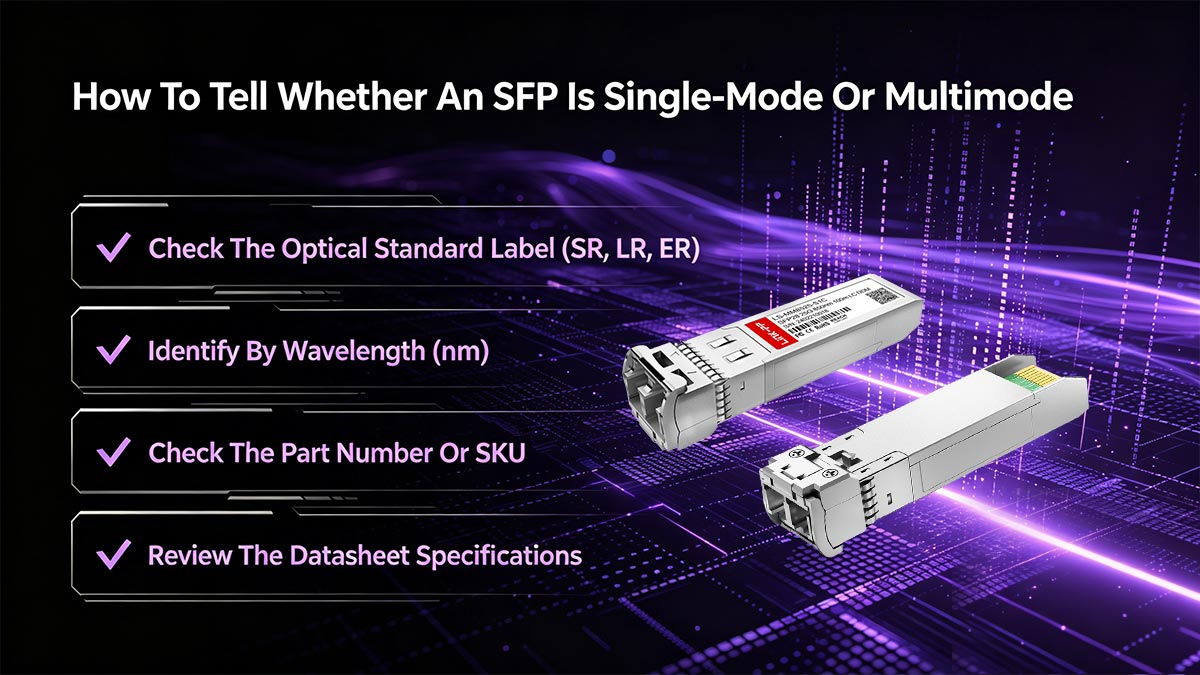
Below are the most reliable ways to distinguish them.
Check The Optical Standard Label (SR, LR, ER)
The fastest method is to look at the optical suffix in the module name:
- SR (Short Reach) → Multimode Fiber (MMF), 850 nm
- LR (Long Reach) → Single-Mode Fiber (SMF), 1310 nm
- ER/ZR → Extended reach single-mode (long-haul applications)
Example:
- 10GBASE-SR = Multimode
- 10GBASE-LR = Single-mode
This naming convention is widely used across Cisco, Juniper, and third-party optics vendors.
Identify By Wavelength (nm)
Another clear indicator is the operating wavelength, usually printed on the label:
- 850 nm → Multimode (SR optics)
- 1310 nm → Single-mode (LR optics)
- 1550 nm → Long-range single-mode (ER/ZR optics)
This is one of the most technically reliable identifiers because wavelength directly determines fiber compatibility.
Check The Part Number Or SKU
Manufacturers encode fiber type directly into the part number.
Typical patterns:
- SR models often include: “SR”, “SFP-10G-SR”, or similar
- LR models often include: “LR”, “SFP-10G-LR”, etc.
If you are using third-party optical transceiver modules, always cross-check the SKU with the vendor datasheet to avoid misleading naming variations.
Review The Datasheet Specifications
The datasheet is the most authoritative source. It will clearly state:
- Fiber type: MMF or SMF
- Supported cable types: OM3/OM4 or OS2
- Maximum transmission distance
- Optical budget and power levels
For example:
- SR datasheets specify OM3/OM4 multimode fiber
- LR datasheets specify OS2 single-mode fiber
Use Device Commands (For Managed Switches)
In enterprise environments, you can verify the module using network equipment commands such as:
show interface transceiver details(Cisco)show inventory- DOM (Digital Optical Monitoring) output
These outputs often display:
- Wavelength
- Vendor part number
- Optical power levels
The easiest way to identify an SFP type is:
SR = Multimode (850 nm), LR = Single-mode (1310 nm)
For accurate deployment, always confirm using label + datasheet together, especially in mixed-vendor environments where naming conventions may vary slightly.
🔵 Common 10GBASE-SR Deployment Mistakes And Troubleshooting
Even though 10GBASE-SR is one of the most widely used 10G optical standards, deployment issues are still common—especially in data centers where fiber types, patch cords, and optics from different vendors are mixed.
Most problems are not caused by the SR module itself, but by mismatches in fiber type, poor installation practices, or incorrect assumptions about compatibility.
Using SR On The Wrong Fiber Type (MMF vs. SMF Mismatch)
One of the most frequent mistakes is attempting to use 10GBASE-SR with single-mode fiber (SMF).
Typical symptoms:
- Link does not come up
- High error rate or unstable connection
- No optical signal detected
Root cause: SR optics are designed for 850 nm transmission over multimode fiber (OM3/OM4/OM5). When used with SMF, signal coupling is inefficient and unreliable.
Fix:
- Use multimode fiber (OM3 or OM4) for SR
- Or switch to 10GBASE-LR for single-mode fiber environments
Dirty Or Contaminated Fiber Connectors
Fiber contamination is one of the most underestimated causes of link failure.
Typical symptoms:
- Intermittent link drops
- Reduced optical power
- Unexpected packet loss
Common causes:
- Dust on LC connectors
- Fingerprints on fiber ends
- Improper handling during installation
Fix:
- Always inspect and clean connectors before insertion
- Use certified fiber cleaning tools
- Avoid touching fiber end faces directly
Exceeding Distance Limits Of Multimode Fiber
Each multimode fiber type has a strict performance limit for 10GBASE-SR:
- OM3: ~300 meters
- OM4: ~400 meters
- OM5: Similar to OM4 for 10G applications
Typical real-world issue:
Links may appear to work during installation but become unstable under traffic load when distance exceeds design limits.
Fix:
- Recalculate total fiber length including patch panels
- Reduce link distance or upgrade to higher-grade fiber or LR optics
Mixing Incompatible Optics Or Vendors
Although many SFP+ modules are technically interoperable, compatibility issues still occur.
Symptoms:
- “Unsupported transceiver” alerts
- Link not established despite correct fiber
- Device rejects optic initialization
Fix:
- Ensure optics match the same standard (SR ↔ SR)
- Verify vendor compatibility list
- Disable restrictive vendor coding where supported (if allowed by network policy)
Incorrect Polarity Or Fiber Pairing
Another common installation mistake is reversed fiber polarity.
Symptoms: No link light even though optics are installed correctly
Fix:
- Swap Tx/Rx fiber pairs
- Use labeled duplex LC cables (A/B polarity-aware patch cords)
Key Takeaway: Most 10GBASE-SR deployment issues are not optical failures, but installation and compatibility errors, especially:
- Using SR on single-mode fiber
- Dirty or damaged connectors
- Exceeding multimode distance limits
- Incorrect fiber polarity or patching
Proper fiber matching (SR → MMF only) and disciplined installation practices will eliminate the majority of real-world 10G connectivity problems.
🔵 FAQ About 10GBASE-SR Single Mode Or Multimode
1. Is 10GBASE-SR Single Mode Or Multimode?
10GBASE-SR Is Multimode Fiber (MMF) Only.
It is designed for 850 nm transmission over OM3, OM4, or OM5 fiber and is not intended for single-mode fiber (SMF).
2. What Type Of Fiber Does 10GBASE-SR Use?
10GBASE-SR Uses Multimode Fiber.
It is optimized for OM3 and OM4 multimode fiber, enabling short-reach connections typically within data centers and enterprise buildings.
3. What Is The Maximum Distance Of 10GBASE-SR?
Up To 300 Meters On OM3 And Around 400 Meters On OM4.
Actual distance may vary depending on connector quality, fiber condition, and installation environment.
4. What Is The Difference Between 10GBASE-SR And 10GBASE-LR?
SR Is For Multimode Short-Distance Links, While LR Is For Single-Mode Long-Distance Links.
SR typically supports up to ~400 m, while LR can reach up to 10 km over single-mode fiber.
5. Can 10GBASE-SR Work On Single-Mode Fiber?
No, It Is Not Designed For Single-Mode Fiber.
Although it may sometimes appear to function over very short distances in lab conditions, performance is unreliable and not standards-compliant.
6. How Do I Know If My SFP Is SR Or LR?
Check The Label, Wavelength, Or Part Number.
- SR = 850 nm, multimode fiber
- LR = 1310 nm, single-mode fiber
The suffix “SR” or “LR” is usually clearly printed on the module.
7. Which Is Better: SR Or LR?
Neither Is Better Universally—It Depends On The Use Case.
- SR is best for cost-effective, short-distance multimode links
- LR is best for long-distance single-mode fiber networks
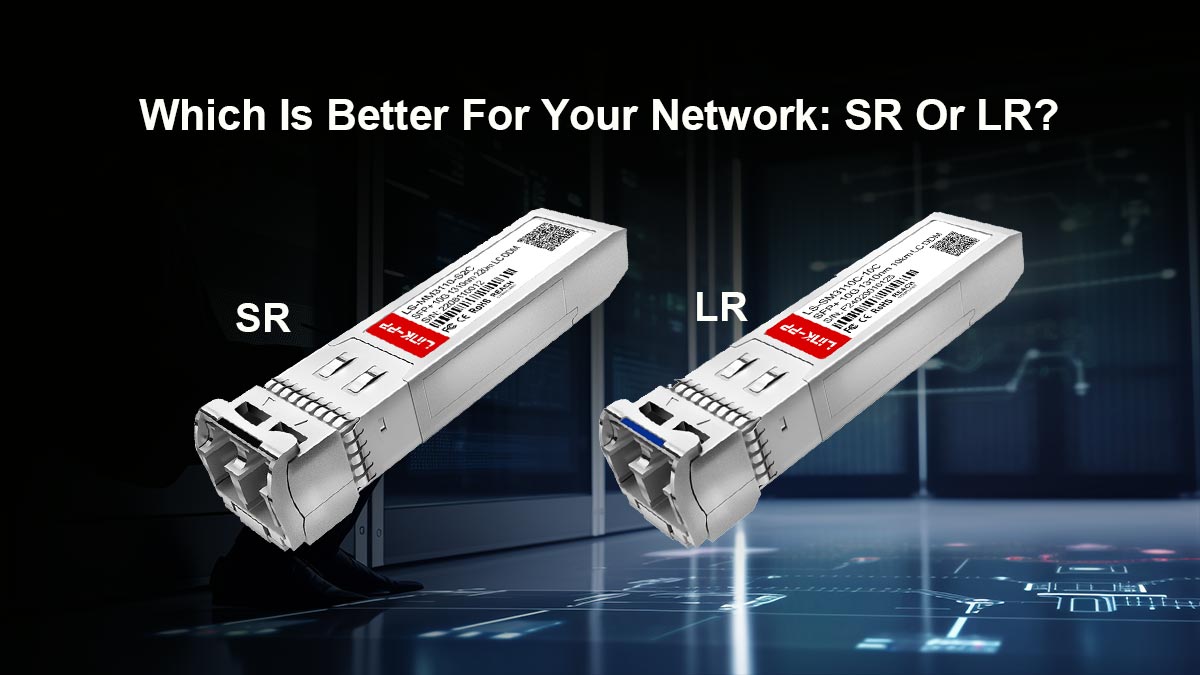
🔵 Which Is Better For Your Network: SR Or LR?
Choosing between 10GBASE-SR and 10GBASE-LR is not about which optic is “better” in general—it is about matching the right solution to your fiber infrastructure, distance requirements, and network architecture. Both standards are widely used in enterprise and data center environments, but they serve very different roles.
When To Choose 10GBASE-SR
10GBASE-SR is the best choice when your network uses multimode fiber (MMF) and operates over short distances.
You should choose SR if:
- Your infrastructure uses OM3, OM4, or OM5 multimode fiber
- Link distances are typically within 300–400 meters
- You are building or expanding a data center network
- You need cost-effective, high-density 10G connections
- You are connecting servers to top-of-rack (ToR) or leaf switches
Typical use cases:
- Data center server-to-switch links
- Intra-building network connections
- High-density switching environments
SR is generally the most economical option for short-range 10G deployments due to lower fiber and transceiver costs.
When To Choose 10GBASE-LR
10GBASE-LR is the correct choice for single-mode fiber (SMF) and long-distance transmission.
You should choose LR if:
- Your network uses single-mode fiber (OS2)
- You need to connect locations up to 10 km apart
- You are building campus, metro, or inter-building links
- You require lower signal loss over longer distances
Typical use cases:
- Campus backbone networks
- Inter-building connectivity
- Enterprise WAN or metro aggregation links
LR is the standard choice for long-distance, stable optical transmission where multimode fiber cannot meet reach requirements.
Practical Decision Guide
| Scenario | Recommended Optic |
|---|---|
| Short-distance data center (≤400m) | 10GBASE-SR |
| Existing multimode fiber (OM3/OM4) | 10GBASE-SR |
| Campus or inter-building links | 10GBASE-LR |
| Single-mode fiber (OS2) infrastructure | 10GBASE-LR |
Final Recommendation
The decision is simple in practice:
Use 10GBASE-SR for multimode, short-reach data center links.
Use 10GBASE-LR for single-mode, long-distance network connections.
Matching the optic type to your fiber infrastructure ensures stable performance, avoids compatibility issues, and reduces long-term operational costs.
If you are planning a network upgrade or sourcing compatible optical modules, always verify both fiber type and link distance before purchasing. For reliable, standards-compliant 10G SFP+ modules and compatible networking components, you can explore solutions at the LINK-PP Official Store, where a wide range of SR and LR transceivers are available for different enterprise and data center applications.