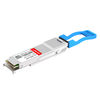
The shift to 400G networking is no longer optional for modern data centers—it is a direct response to explosive growth in cloud computing, AI workloads, and high-performance applications. Within this transition, QSFP112 vs QSFP-DD has become a critical comparison, as both form factors represent different technological paths to achieving 400G optical connectivity.
At a high level, QSFP-DD focuses on backward compatibility and ecosystem maturity, while QSFP112 emphasizes higher per-lane efficiency and future scalability toward 800G and beyond. Understanding this distinction early is essential, because it directly impacts hardware design, deployment strategy, and long-term network evolution.
To clarify why this comparison matters, the two form factors address different priorities in real-world deployments:
- QSFP-DD is designed to extend existing QSFP infrastructure while enabling 400G through an 8-lane architecture
- QSFP112 leverages 112G PAM4 signaling to reduce lane count and improve bandwidth efficiency
- Both support 400G optics, but differ significantly in power consumption, signal complexity, and upgrade pathways
- Their adoption reflects a broader industry trade-off between compatibility and forward-looking performance
These differences are not just theoretical—they influence how data centers are built, cooled, and scaled. For example, choosing between QSFP112 and QSFP-DD can affect port density, PCB design complexity, and even operational costs over time.
This article provides a structured, in-depth comparison of QSFP112 vs QSFP-DD in 400G optics, focusing on architecture, performance, deployment considerations, and future trends. The goal is to help network engineers and decision-makers align their transceiver strategy with both current requirements and long-term infrastructure goals.
💠 Understanding 400G Optical Transceiver Evolution
The evolution of 400G optical transceivers is fundamentally driven by the need to increase bandwidth while balancing power, density, and cost. In simple terms, the transition from QSFP+ to QSFP-DD and then to QSFP112 reflects a shift from increasing lane count to increasing per-lane speed, which directly shapes how modern 400G optics are designed and deployed.
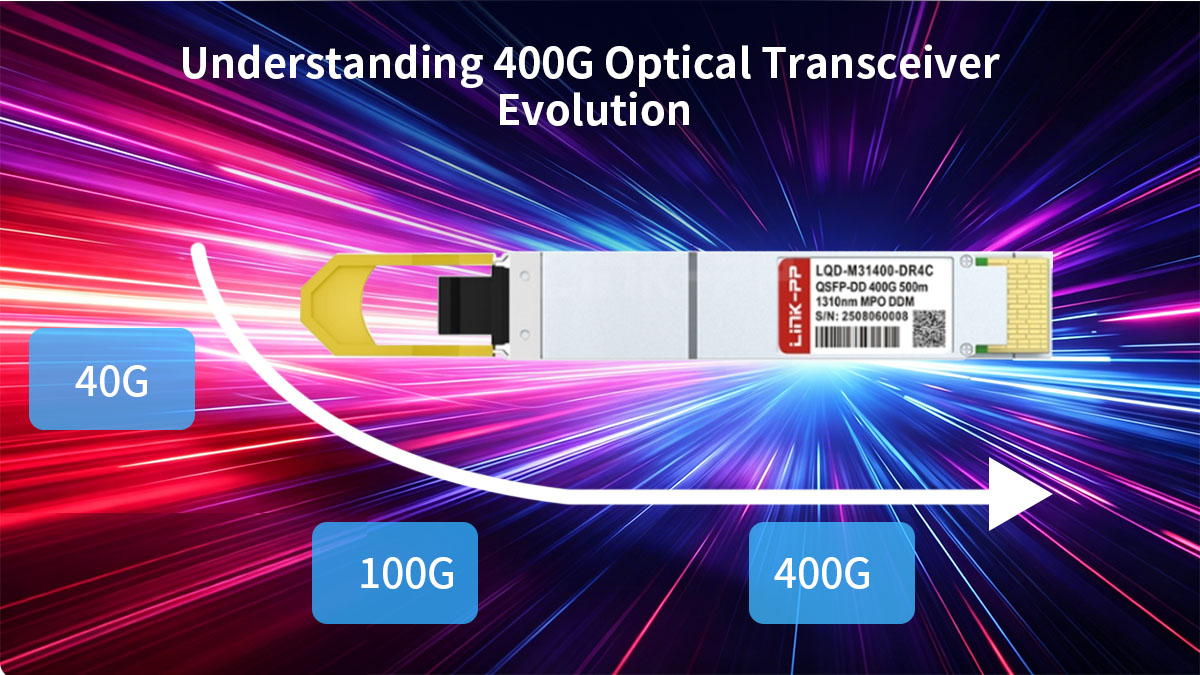
To understand this progression clearly, it is important to examine both the historical transition and the technological breakthrough introduced by QSFP112.
From QSFP+ to QSFP-DD
The move from QSFP+ to QSFP-DD represents a scaling strategy based on adding more electrical lanes to achieve higher total bandwidth. This approach enabled the industry to reach 400G without immediately requiring breakthroughs in per-lane signaling speed.
This transition can be broken down into key stages:
- QSFP+ (40G)
- 4 lanes at 10Gbps each
- Based on NRZ signaling
- Primarily used in early data center interconnects
- QSFP28 (100G)
- 4 lanes at 25Gbps
- Improved density and efficiency over QSFP+
- Became the mainstream 100G form factor
- QSFP-DD (400G)
- 8 electrical lanes
- Supports 50G PAM4 per lane (or backward-compatible NRZ modes)
- Doubles the lane count while maintaining similar physical dimensions
This evolution shows that QSFP-DD achieves 400G primarily by increasing the number of lanes rather than dramatically increasing the speed of each lane.
From a design perspective, this approach offers clear advantages. It allows reuse of existing technologies and ensures compatibility with earlier QSFP modules. However, it also introduces trade-offs such as increased power consumption and more complex PCB routing due to the higher lane count.
Introduction of QSFP112 Technology
QSFP112 represents a different scaling philosophy: instead of adding more lanes, it increases the data rate per lane to reduce overall complexity at the system level. This is achieved through 112G PAM4 signaling, which significantly boosts bandwidth efficiency.
The core characteristics of QSFP112 include:
- 112Gbps per lane using PAM4 modulation
- Only 4 electrical lanes required to reach 400G
- Reduced pin count compared to QSFP-DD
- Alignment with future 800G (8 × 112G) architectures
This shift has important implications for hardware design and network scalability:
- Fewer lanes simplify PCB routing and connector design
- Higher per-lane speed increases signal integrity challenges
- Advanced DSP and forward error correction (FEC) become essential
- Thermal density increases due to higher processing requirements
In practical terms, QSFP112 is not just an incremental improvement—it represents a foundational change in how bandwidth scaling is achieved. While QSFP-DD prioritizes compatibility and incremental evolution, QSFP112 is designed to support the next generation of high-speed networking.
Understanding this divergence is critical, because it sets the stage for the deeper comparison of QSFP112 vs QSFP-DD in terms of architecture, performance, and deployment strategy in modern 400G optics environments.
💠 What Is QSFP-DD? Architecture and Features
QSFP-DD is a widely adopted 400G optical transceiver form factor designed to balance high bandwidth with backward compatibility. In practical terms, it enables 400G connectivity by doubling the electrical lane count of earlier QSFP modules, making it a stable and deployable solution for current data center networks.
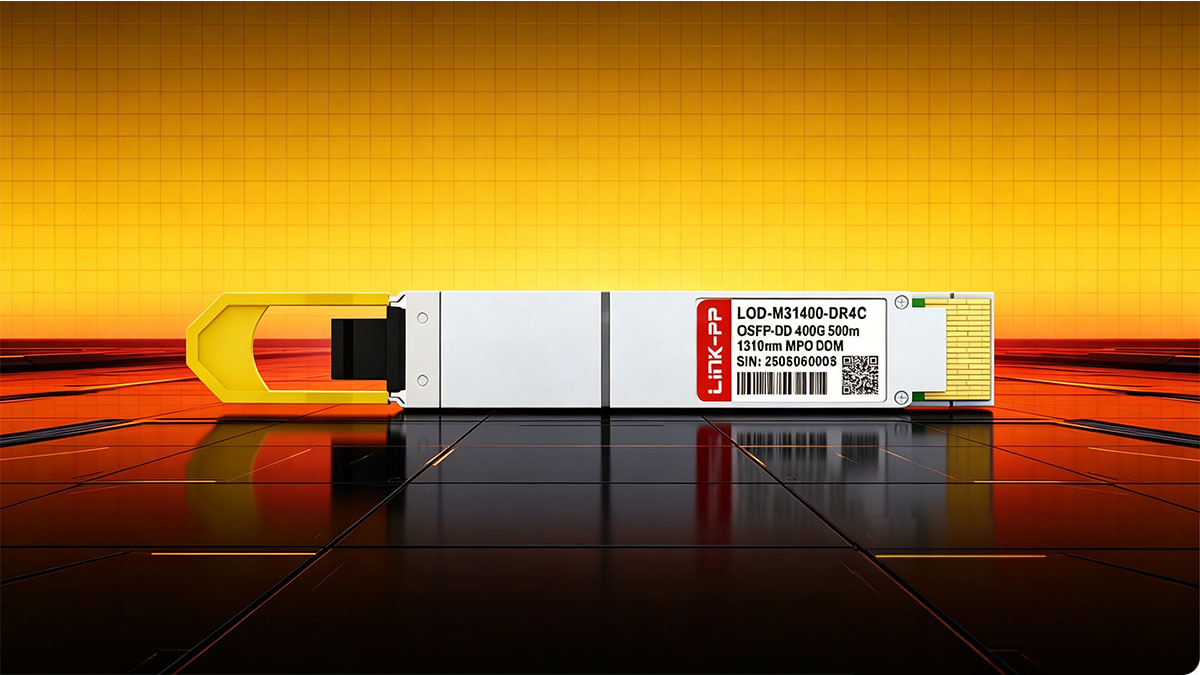
Electrical Interface and Lane Structure
QSFP-DD achieves 400G primarily through an 8-lane electrical architecture, which allows it to scale bandwidth without requiring extremely high per-lane speeds. This design makes it easier to implement using mature signaling technologies.
The key characteristics of its electrical interface include:
- 8 electrical lanes (8x)
- Supports 50Gbps PAM4 per lane for 400G transmission
- Backward compatibility with NRZ signaling for lower speeds
- Total bandwidth aggregation to reach 400Gbps
This structure provides a practical balance between performance and engineering complexity. By distributing the total bandwidth across more lanes, QSFP-DD reduces the burden on individual signal channels, improving reliability and manufacturability.
However, the increased lane count also introduces certain trade-offs. More lanes require more PCB traces, tighter signal routing, and higher connector pin density, which can complicate hardware design in high-density switches.
Mechanical Design and Backward Compatibility
One of the most significant advantages of QSFP-DD is its mechanical continuity with earlier QSFP form factors. This ensures that network operators can upgrade to 400G without completely redesigning their infrastructure.
The mechanical and compatibility features include:
- Same front-panel port dimensions as QSFP28/QSFP+
- Additional row of electrical contacts to support 8 lanes
- Ability to accept QSFP28 and QSFP+ modules in the same cage
- Support for mixed-speed deployments (10G, 25G, 100G, 400G)
This backward compatibility is a major reason for its rapid adoption. It allows incremental upgrades, where existing hardware investments can still be utilized while gradually introducing 400G capabilities.
At the system level, this flexibility reduces deployment risk and simplifies migration strategies, especially in large-scale data centers where full hardware replacement is costly and disruptive.
Typical Applications
QSFP-DD is primarily deployed in environments where stability, compatibility, and ecosystem maturity are more important than cutting-edge efficiency. It is particularly well-suited for current-generation 400G network architectures.
Common deployment scenarios include:
- Data center spine-leaf architectures
- High-capacity interconnects between spine and leaf switches
- Balanced performance and reliability requirements
- Cloud and hyperscale networking
- Large-scale east-west traffic handling
- Gradual upgrade paths from 100G to 400G
- Enterprise core and aggregation networks
- Integration with existing QSFP-based infrastructure
- Mixed-speed operation across different network layers
These use cases highlight a key point: QSFP-DD is not just a technical solution, but a practical one. Its design aligns with real-world operational needs, making it the preferred choice for organizations prioritizing compatibility, scalability, and proven deployment models.
💠 What Is QSFP112? Architecture and Features
QSFP112 is a next-generation optical transceiver form factor designed to deliver higher bandwidth efficiency by increasing per-lane data rates. In essence, it achieves 400G using fewer electrical lanes than QSFP-DD, making it a forward-looking solution aligned with 800G and future high-speed network architectures.
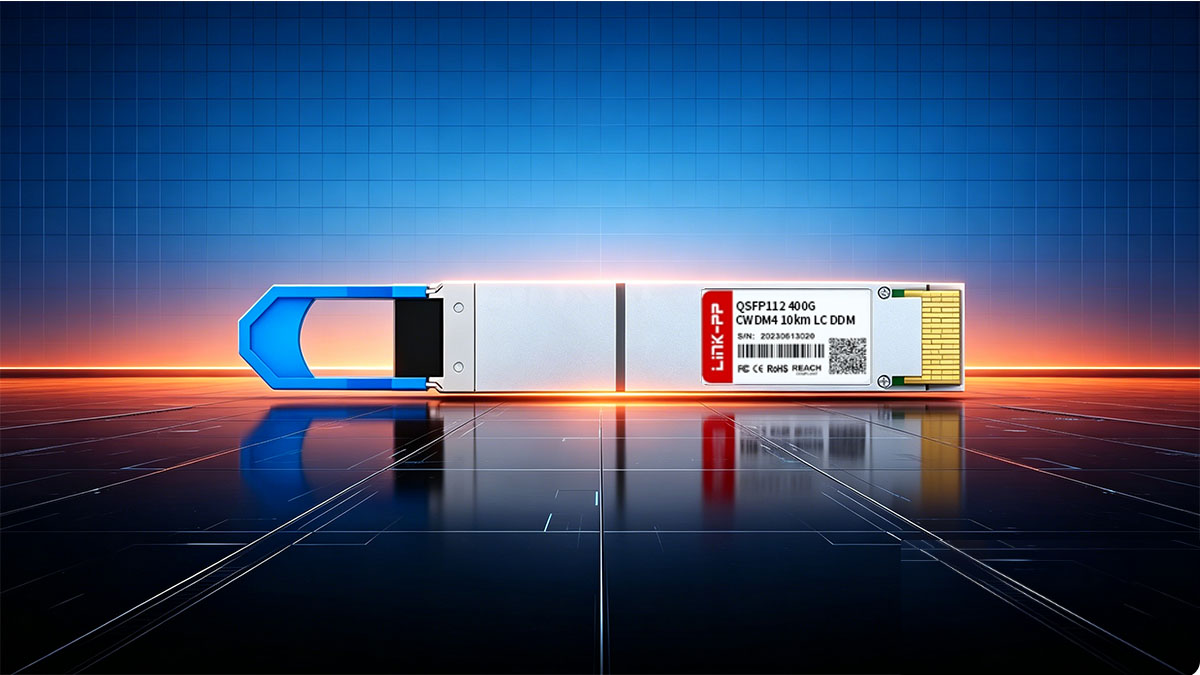
112G PAM4 Signaling Explained
QSFP112 is fundamentally built around 112Gbps PAM4 signaling, which allows it to transmit significantly more data per lane compared to earlier technologies. This enables a more efficient approach to achieving 400G bandwidth.
The core characteristics of this signaling approach include:
- 112Gbps per lane using PAM4 modulation
- Only 4 electrical lanes required to achieve 400G
- Higher spectral efficiency compared to 50G PAM4
- Reduced number of interconnects between ASIC and module
This design provides a clear advantage in terms of bandwidth density. By cutting the lane count in half compared to QSFP-DD, QSFP112 reduces the physical and electrical complexity at the interface level.
However, this efficiency comes with increased technical challenges. Higher signaling speeds make the system more sensitive to noise, loss, and interference, requiring more advanced signal processing techniques.
Hardware Design Considerations
While QSFP112 simplifies lane count, it significantly increases the demands on hardware design, particularly in terms of signal integrity and thermal performance. These factors are critical when deploying high-speed optical modules in dense environments.
Key design considerations include:
- Signal integrity challenges
- Higher susceptibility to channel loss and crosstalk
- Requires advanced equalization and DSP technologies
- Thermal management requirements
- Increased power density due to high-speed processing
- Need for improved cooling solutions in switches
- PCB and connector design
- Fewer lanes simplify routing complexity
- Higher frequency signals demand stricter design tolerances
- DSP and FEC dependency
- Heavy reliance on digital signal processing
- Strong forward error correction needed to maintain link quality
These factors illustrate that QSFP112 shifts complexity from physical lane count to signal processing and system design. As a result, it requires more advanced hardware platforms compared to QSFP-DD.
Emerging Use Cases
QSFP112 is primarily targeted at next-generation networking environments where performance, density, and scalability are critical. It is not just a replacement for QSFP-DD, but a technology designed to support future bandwidth demands.
Typical use cases include:
- 400G and 800G network upgrades
- Enables smoother transition to higher-speed architectures
- Reduces redesign effort for future expansion
- AI and machine learning clusters
- High bandwidth and low-latency interconnect requirements
- Supports intensive east-west traffic patterns
- Hyperscale data centers
- Demand for higher port density and efficiency
- Focus on long-term scalability and performance optimization
These scenarios highlight the strategic value of QSFP112. It is particularly suitable for environments where infrastructure is being designed with future growth in mind, rather than optimized solely for current compatibility.
💠 QSFP112 vs QSFP-DD: Core Technical Differences
The core differences between QSFP112 and QSFP-DD lie in how they achieve 400G bandwidth. QSFP-DD scales performance by increasing the number of electrical lanes, while QSFP112 increases per-lane speed to reduce overall lane count. This fundamental design divergence affects architecture, power, compatibility, and long-term scalability.
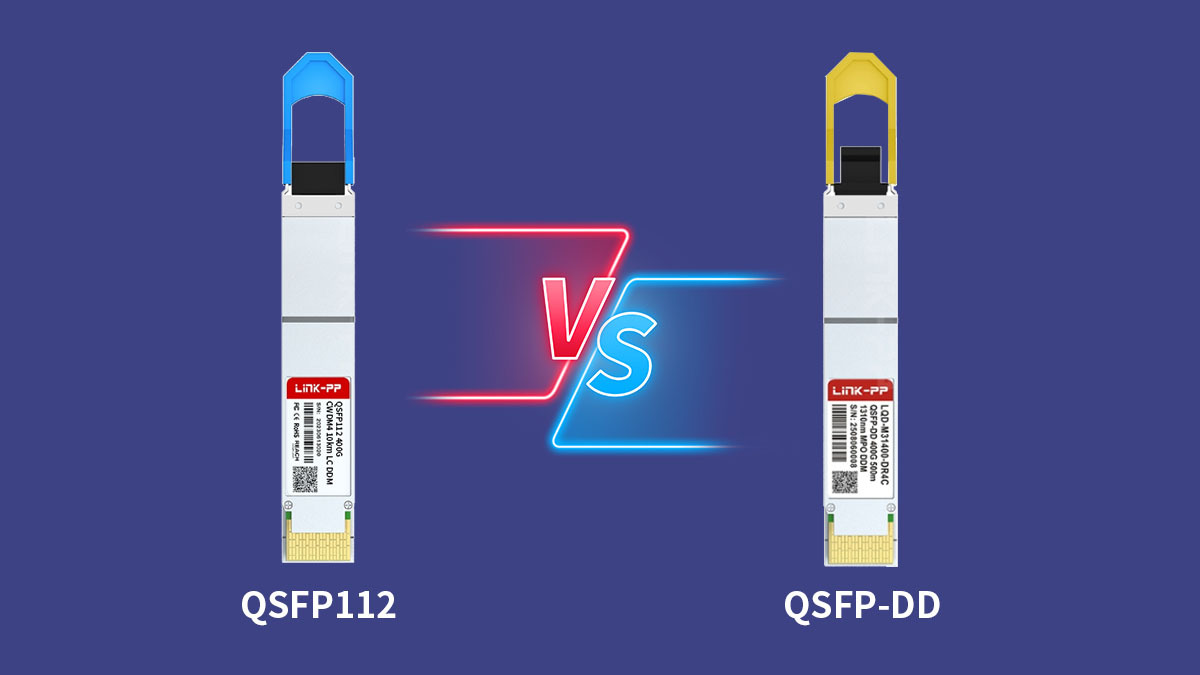
To make the comparison clearer, it is useful to analyze their differences across key engineering dimensions.
Lane Configuration and Bandwidth Efficiency
The most fundamental distinction between QSFP112 and QSFP-DD is the lane structure used to deliver 400G throughput.
QSFP-DD relies on a higher lane count, while QSFP112 prioritizes higher signaling speed per lane.
| Parameter |
QSFP-DD |
QSFP112 |
| Total lanes |
8 lanes |
4 lanes |
| Per-lane speed |
50G PAM4 |
112G PAM4 |
| Total bandwidth |
400G |
400G |
| Design approach |
Parallel scaling |
Speed scaling |
| PCB routing complexity |
Higher |
Lower |
From this comparison, QSFP-DD distributes bandwidth across more lanes, which reduces per-lane stress but increases routing complexity. QSFP112, on the other hand, reduces physical complexity but demands much higher performance per channel.
This means QSFP-DD is generally easier to implement in existing hardware ecosystems, while QSFP112 is more efficient in terms of physical interface design.
Power Consumption and Thermal Performance
Power efficiency and heat dissipation are critical considerations in 400G optics design, especially in dense data center environments.
| Parameter |
QSFP-DD |
QSFP112 |
| Power profile |
Moderate per lane |
Higher per lane |
| DSP load |
Lower per lane |
Higher per lane |
| Thermal density |
Distributed |
Concentrated |
| Cooling requirement |
Standard airflow |
Enhanced cooling needed |
QSFP-DD spreads processing across more lanes, which helps distribute thermal load. QSFP112 concentrates processing into fewer, higher-speed lanes, which increases localized heat generation.
In practical deployment, this means QSFP112 systems often require more advanced cooling strategies, especially in high-density AI or hyperscale environments.
Signal Integrity and Complexity
Signal integrity becomes increasingly important as data rates rise, and this is where QSFP112 introduces a significant shift in design complexity.
Key differences include:
- QSFP-DD
- Lower per-lane signaling rate (50G PAM4)
- Easier signal conditioning requirements
- More tolerant of longer PCB traces
- QSFP112
- Extremely high 112G PAM4 per lane
- Requires advanced equalization and DSP
- More sensitive to channel loss and noise
This means QSFP112 pushes more complexity into the electrical and digital signal processing domain, while QSFP-DD distributes complexity across physical lanes.
As a result, QSFP-DD is generally more forgiving in legacy environments, while QSFP112 demands stricter system-level engineering.
Backward Compatibility
Compatibility with existing infrastructure is one of the most practical differences between the two form factors.
- QSFP-DD
- Fully backward compatible with QSFP28 and QSFP+ modules
- Supports mixed-speed deployments in the same port
- Easier migration from 100G networks
- QSFP112
- No direct backward compatibility with older QSFP standards
- Requires newer generation hardware ecosystems
- Designed primarily for next-generation deployments
This makes QSFP-DD a safer choice for gradual upgrades, while QSFP112 is more suitable for greenfield deployments where systems are designed from the ground up for high-speed networking.
💠 Deployment Considerations in 400G Networks
Deploying 400G optical networks is not just a matter of choosing a transceiver form factor. It involves balancing infrastructure constraints, thermal limits, port density, and long-term scalability. In the context of QSFP112 vs QSFP-DD, deployment decisions are often driven more by system design priorities than by raw bandwidth alone.
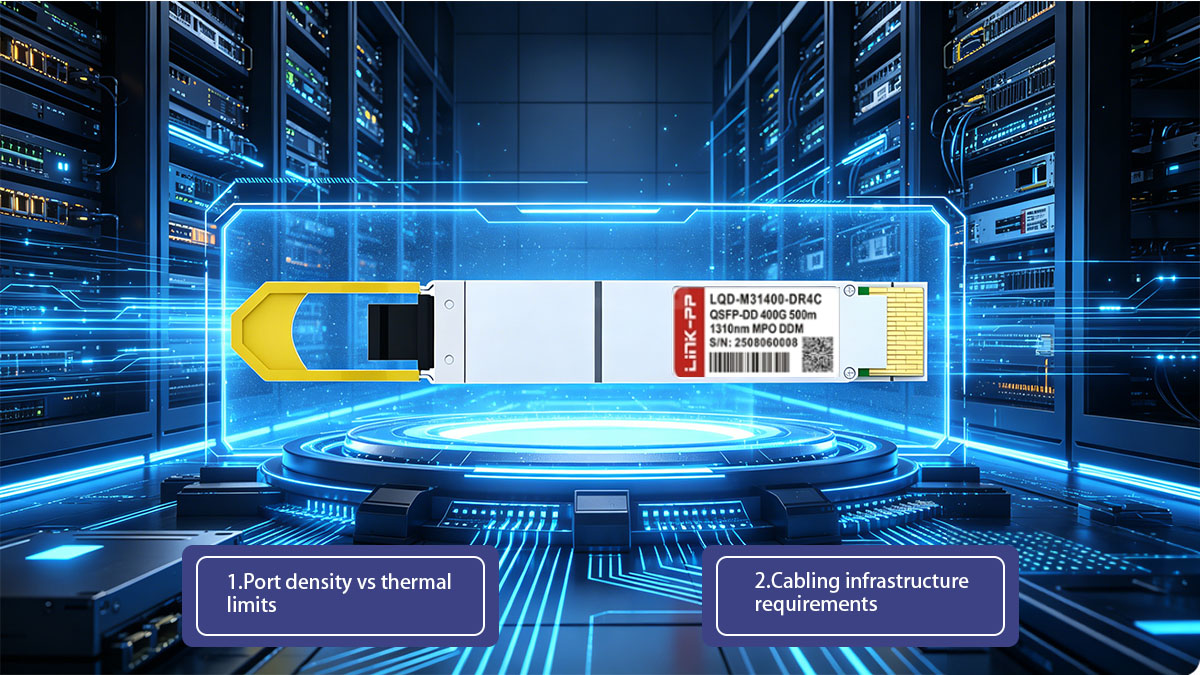
Understanding how each option fits into real-world environments helps clarify why both technologies coexist in modern data center architectures.
Data Center Design Trade-offs
In 400G deployments, data center architects must optimize between density, power efficiency, and physical layout constraints. QSFP112 and QSFP-DD influence these trade-offs in different ways.
The main design considerations include:
- Port density vs thermal limitations
- QSFP-DD: higher lane count increases routing but spreads thermal load
- QSFP112: fewer lanes improve density but increase localized heat
- PCB and switch design complexity
- QSFP-DD requires more extensive trace routing
- QSFP112 reduces lane routing but increases signal integrity demands
- Rack space efficiency
- QSFP112 enables more compact high-speed designs
- QSFP-DD integrates more smoothly into existing chassis designs
These factors show that QSFP-DD is often favored in retrofit or incremental upgrade scenarios, while QSFP112 is better suited for new-generation architectures optimized for density and performance.
Cost and Ecosystem Maturity
Cost is not only determined by the transceiver itself, but also by supporting infrastructure, compatibility, and supply chain maturity.
Key differences include:
- QSFP-DD
- Mature ecosystem with wide vendor support
- Lower integration risk due to established standards
- Broader availability across multiple suppliers
- QSFP112
- Emerging ecosystem with fewer qualified vendors
- Higher initial deployment cost due to early-stage adoption
- Rapidly evolving design and manufacturing processes
From a procurement and operational perspective, QSFP-DD offers predictability and stability, while QSFP112 introduces higher innovation potential but with less ecosystem maturity.
This makes QSFP-DD more common in production environments today, while QSFP112 is often adopted in early-stage or forward-looking deployments.
Scalability and Future-Proofing
Scalability is one of the most important factors when selecting a 400G optical solution, especially in environments expected to evolve toward 800G and beyond.
The scalability differences can be summarized as follows:
- QSFP-DD
- Optimized for 400G transition from 100G infrastructure
- Limited alignment with next-generation 800G architectures
- Better suited for mid-term network evolution
- QSFP112
- Designed with 112G per lane scaling in mind
- Naturally extends toward 800G (8 × 112G configuration)
- Strong alignment with future hyperscale requirements
This means QSFP112 offers a more direct upgrade path to next-generation bandwidth levels, while QSFP-DD is primarily focused on maximizing the lifespan of existing QSFP-based infrastructure.
In practical terms, organizations planning incremental upgrades may prefer QSFP-DD, while those building AI-driven or hyperscale networks with long-term expansion goals may lean toward QSFP112.
💠 Performance Comparison in Real-World Scenarios
In real-world 400G deployments, the difference between QSFP112 and QSFP-DD is not only visible in specifications, but also in how networks behave under load. Factors such as latency stability, error rates, and energy efficiency become more important than theoretical bandwidth alone. This section compares both form factors from an operational performance perspective.
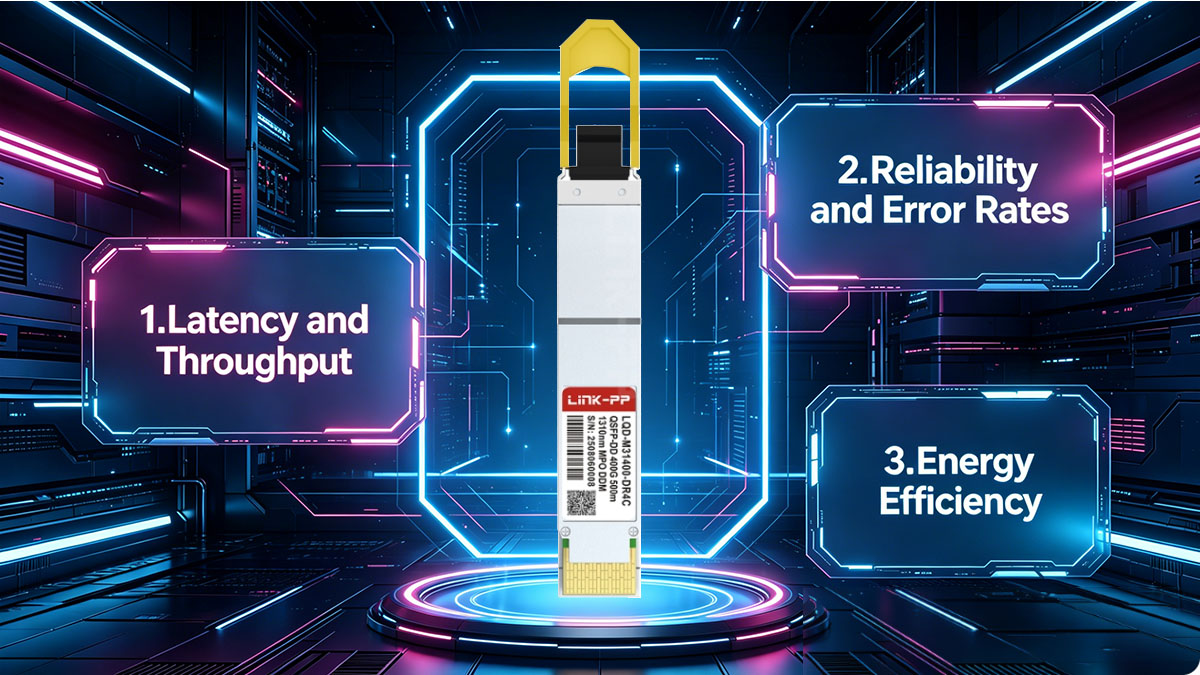
Latency and Throughput Behavior
In practical deployments, both QSFP112 and QSFP-DD deliver 400G throughput, but the way they process and transmit data can influence latency consistency and system overhead.
Key performance characteristics include:
- QSFP-DD
- Uses 8 lanes at lower per-lane speed (50G PAM4)
- More parallel data paths reduce per-lane stress
- Slightly more deterministic latency in stable environments
- DSP processing is distributed across more channels
- QSFP112
- Uses 4 lanes at 112G PAM4
- Higher per-lane processing intensity
- Potentially lower internal serialization overhead
- Latency depends heavily on DSP efficiency and system tuning
In summary, QSFP-DD tends to offer more predictable latency under mixed workloads, while QSFP112 can achieve highly efficient data handling when optimized, especially in next-generation hardware platforms.
Reliability and Error Rates
Signal reliability becomes increasingly important as data rates increase, particularly with PAM4 modulation. In real-world environments, noise, crosstalk, and channel loss directly affect bit error rates (BER).
A comparison of reliability characteristics is shown below:
| Parameter |
QSFP-DD |
QSFP112 |
| Per-lane speed |
Lower (50G PAM4) |
Higher (112G PAM4) |
| Signal margin |
Wider |
Narrower |
| BER sensitivity |
Lower |
Higher |
| DSP dependency |
Moderate |
High |
| Environmental sensitivity |
Medium |
High |
From this comparison, QSFP-DD is generally more tolerant of imperfect conditions such as longer PCB traces or less optimal cooling. QSFP112, while more efficient, requires stricter system design to maintain signal integrity.
This makes QSFP-DD more suitable for heterogeneous or legacy-integrated environments, whereas QSFP112 performs best in carefully engineered, controlled infrastructure.
Energy Efficiency and Power Scaling
Energy consumption is a critical metric in modern data centers, where power density directly impacts operating costs and cooling design.
Performance differences in energy efficiency include:
- QSFP-DD
- Power distributed across 8 lower-speed lanes
- Typically more stable power-per-bit ratio in current implementations
- Mature silicon optimization reduces inefficiencies
- QSFP112
- Higher power consumption per lane due to 112G PAM4 signaling
- More advanced DSP required for signal conditioning
- Potential for improved efficiency in future silicon generations
In current deployments, QSFP-DD often demonstrates more stable and predictable energy performance. However, QSFP112 is designed with long-term efficiency improvements in mind, especially as semiconductor process technology advances.
💠 Choosing Between QSFP112 and QSFP-DD
Selecting between QSFP112 and QSFP-DD in 400G networks is ultimately a system-level decision rather than a purely optical specification choice. Both support 400G bandwidth, but they serve different deployment philosophies: one emphasizes compatibility and incremental upgrades, while the other prioritizes efficiency and future scalability.
To make a practical decision, it is important to evaluate infrastructure constraints, upgrade strategy, and long-term network evolution goals.
When QSFP-DD Is the Better Choice
QSFP-DD is generally preferred in environments where stability, compatibility, and gradual migration are the primary concerns. It is especially suitable for organizations upgrading existing 100G infrastructures to 400G without redesigning the entire network architecture.
Typical scenarios where QSFP-DD is advantageous include:
- Existing QSFP-based infrastructure upgrades
- Smooth transition from QSFP28 and QSFP+ ecosystems
- Minimal disruption to existing switch and cabling design
- Production environments requiring high stability
- Mature silicon and well-established interoperability
- Lower risk of compatibility issues across vendors
- Mixed-speed network deployments
- Support for 10G, 25G, 100G, and 400G in the same platform
- Easier phased rollout strategies
In these cases, QSFP-DD reduces deployment complexity and allows organizations to extend the lifecycle of existing infrastructure while still achieving 400G performance.
When QSFP112 Is the Better Choice
QSFP112 is more suitable for next-generation network designs where efficiency, density, and future scalability are more important than backward compatibility.
It is particularly well aligned with environments such as:
- AI and machine learning clusters
- Extremely high east-west traffic demands
- Need for reduced latency and high throughput efficiency
- Hyperscale data center builds
- Optimization for space, power, and thermal density
- Designed for large-scale, forward-looking architectures
- Greenfield 400G/800G deployments
- No dependency on legacy QSFP infrastructure
- Direct path toward 800G (8×112G) evolution
In these scenarios, QSFP112 enables a more efficient physical design by reducing lane count, which simplifies interconnect architecture while increasing per-lane performance requirements.
Decision Framework for 400G Deployment
Choosing between QSFP112 and QSFP-DD should be based on a structured evaluation of technical and operational priorities. The following framework can help guide the decision:
- Infrastructure compatibility
- Existing QSFP-based systems → QSFP-DD
- New architecture designs → QSFP112
- Upgrade strategy
- Incremental migration → QSFP-DD
- Full-scale redesign → QSFP112
- Performance vs complexity trade-off
- Lower design risk and proven deployment → QSFP-DD
- Higher efficiency and reduced lane complexity → QSFP112
- Future scalability requirements
- Medium-term 400G focus → QSFP-DD
- Long-term 800G readiness → QSFP112
This framework highlights that neither solution is universally superior; instead, each aligns with a different network evolution strategy.
💠 Future Trends in 400G and Beyond
The evolution of 400G optics is not an endpoint but a transition stage toward higher-speed networking such as 800G and 1.6T. Both QSFP112 and QSFP-DD play important roles in this roadmap, but the industry is clearly shifting toward higher per-lane speeds and more efficient form factors. Understanding these trends helps clarify why QSFP112 is gaining attention as a forward-looking technology.
Transition Toward 800G and 1.6T Networks
The next major milestone after 400G is 800G, followed by early development efforts toward 1.6T architectures. This evolution is driven by AI workloads, cloud-scale data processing, and increasingly dense traffic patterns inside data centers.
Key directional changes include:
- Shift from 8×50G to 8×112G architectures
- Enables 800G using QSFP112-based lane scaling
- Reduces dependency on high lane-count designs
- Increased adoption of high-speed PAM4 signaling
- 112G PAM4 becomes the new baseline per-lane rate
- Future exploration of 224G PAM4 in research stages
- Higher aggregation of optical bandwidth per port
- More traffic handled per physical interface
- Reduced number of required transceivers per switch
In this context, QSFP112 aligns more naturally with next-generation bandwidth scaling, while QSFP-DD remains largely centered around the current 400G generation.
Industry Standardization and Ecosystem Evolution
The future of 400G and beyond is also shaped by ongoing standardization efforts led by IEEE and industry multi-source agreements (MSAs). These standards define how optical interfaces evolve across vendors and platforms.
Key industry trends include:
- Standard convergence around higher per-lane speeds
- 112G PAM4 becoming widely adopted baseline
- Early exploration of 224G signaling technologies
- MSA-driven form factor evolution
- QSFP-DD supporting current-generation 400G ecosystems
- New form factors emerging for 800G and beyond
- Increased interoperability focus
- Ensuring multi-vendor compatibility across high-speed optics
- Reducing fragmentation in data center deployments
These developments indicate that while QSFP-DD will remain important in current infrastructures, future innovation is increasingly centered around QSFP112-class architectures and beyond.
Long-Term Outlook for QSFP112 vs QSFP-DD
Looking forward, the roles of QSFP112 and QSFP-DD are expected to diverge further rather than converge:
- QSFP-DD
- Continues as a stable, widely deployed 400G solution
- Maintains relevance in legacy and mid-transition networks
- Serves as a bridge technology for incremental upgrades
- QSFP112
- Becomes the foundation for 800G and future high-speed optics
- Gains adoption in AI-driven and hyperscale environments
- Defines the direction of next-generation bandwidth scaling
In summary, QSFP-DD represents the maturity phase of 400G deployment, while QSFP112 represents the architectural foundation for what comes next.
💠 Conclusion
The comparison of QSFP112 vs QSFP-DD in 400G optics ultimately reflects two different engineering philosophies for scaling modern data center networks. QSFP-DD focuses on proven compatibility and smooth migration from existing QSFP-based infrastructures, while QSFP112 introduces a more forward-looking approach built around higher per-lane efficiency and future scalability toward 800G and beyond.
From an architectural and deployment perspective, the key takeaways can be summarized as follows:
- QSFP-DD is best suited for evolutionary upgrades, where compatibility with existing 100G/400G systems and mature ecosystem support are critical
- QSFP112 is designed for next-generation network architectures, emphasizing reduced lane count, higher signaling efficiency, and long-term scalability
- Both solutions deliver 400G performance, but differ significantly in signal design, power distribution, and system complexity
- QSFP-DD offers lower deployment risk today, while QSFP112 aligns more closely with future AI, cloud, and hyperscale demands
In practical terms, choosing between these two technologies is less about which is technically superior and more about aligning with infrastructure strategy. Organizations optimizing for stability and incremental upgrades tend to favor QSFP-DD, while those designing for long-term bandwidth expansion and next-generation workloads increasingly consider QSFP112.
As 400G networks continue to mature and transition toward 800G architectures, both form factors will play important roles at different stages of the evolution. However, the direction of the industry clearly points toward higher per-lane speeds and more efficient optical designs, where QSFP112 is expected to become increasingly influential.
For organizations planning optical network deployments or evaluating compatible 400G transceiver solutions, it is important to work with reliable supply and technical expertise. Resources such as the LINK-PP Official Store can help ensure access to compliant, high-quality optical modules that align with both current deployment needs and future network evolution strategies.