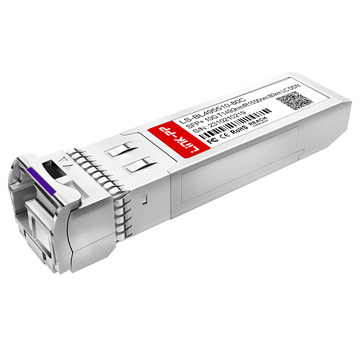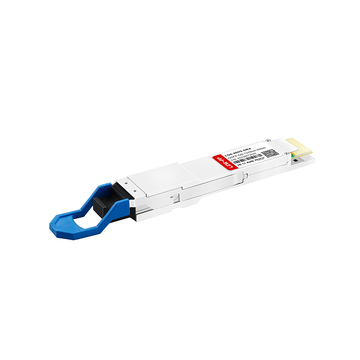
TP-Link SFP modules are widely used in enterprise, SMB, and ISP network environments to enable reliable fiber connectivity between switches, routers, and other networking devices. As network bandwidth demands continue to increase, organizations are no longer only focusing on basic connectivity—they are prioritizing scalability, interoperability, and long-term infrastructure efficiency.
In many real-world deployments, TP-Link SFP modules serve as a dependable baseline for Gigabit and 10G optical links. However, as networks evolve into multi-vendor ecosystems and higher-speed architectures, users often begin to evaluate TP-Link SFP transceiver alternatives to better align with performance requirements, budget planning, and compatibility flexibility.
The decision to consider alternative optical transceivers is typically driven by several practical factors. These include the need for broader switch compatibility, support for higher data rates, improved supply availability, and more flexible sourcing strategies in large-scale deployments. In addition, enterprises operating hybrid networks often require optical modules that can integrate seamlessly across different hardware platforms without performance degradation.
This article provides a structured and in-depth exploration of TP-Link SFP Module alternatives, focusing on how they compare in terms of compatibility, performance, deployment scenarios, and long-term network planning. It is designed to help network engineers, IT buyers, and infrastructure planners understand the key evaluation factors behind selecting the right optical connectivity solution for modern network environments.
✅ Understanding TP-Link SFP Modules and Their Market Position
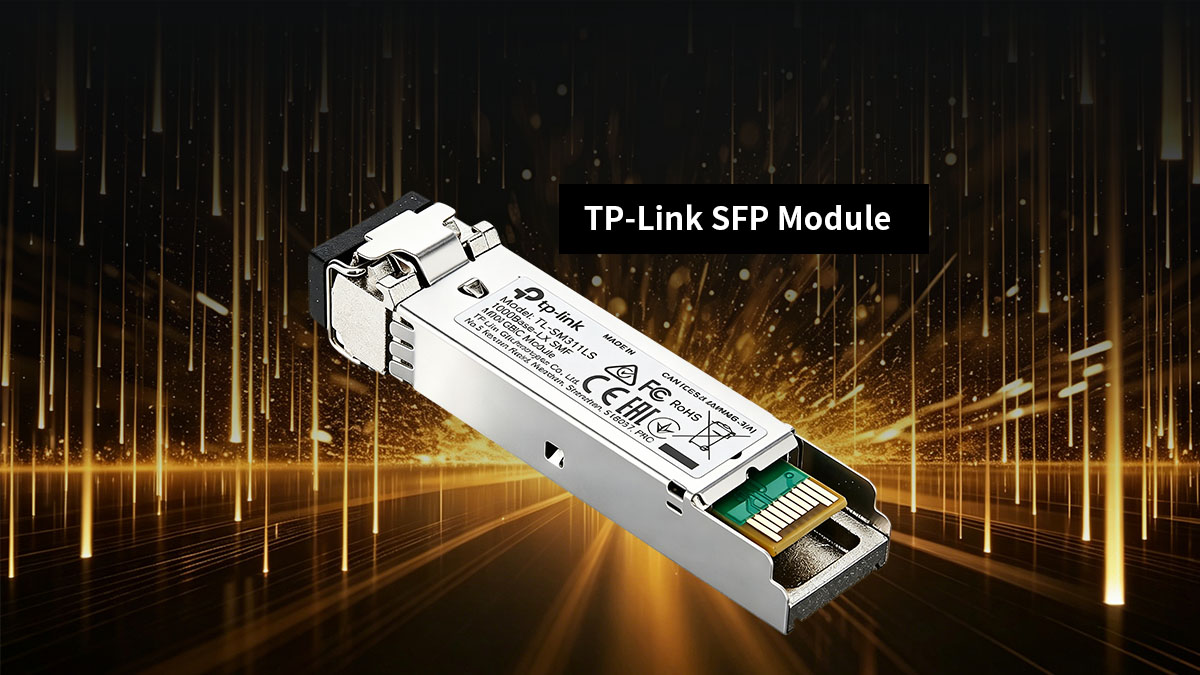
TP-Link SFP modules are standard pluggable optical transceivers designed to provide fiber connectivity for TP-Link switches and compatible networking devices. They are widely recognized as cost-effective and easy-to-deploy components for Gigabit and 10G Ethernet environments, especially in SMB and light enterprise networks.
What Is a TP-Link SFP Module?
A TP-Link SFP module is a hot-pluggable optical transceiver that converts electrical Ethernet signals into optical signals for fiber transmission. It is designed for use in switches and routers equipped with SFP or SFP+ ports.
These modules are typically categorized by:
- 1G SFP modules for standard Gigabit connectivity
- 10G SFP+ modules for higher-speed uplink transmission
- Single-mode optics for long-distance links
- Multimode optics for short-range, high-density environments
In practical deployments, they are mainly used for switch-to-switch connectivity, campus interconnections, and fiber uplinks where copper Ethernet is insufficient.
Why TP-Link SFP Modules Are Widely Used
TP-Link SFP modules are widely adopted because they offer a practical balance between cost, usability, and baseline performance, especially within TP-Link-managed networks.
Their common advantages include:
- Seamless integration with TP-Link switches and routers
- Stable performance for standard Gigabit and 10G workloads
- Broad availability across common optical specifications
- Simple plug-and-play deployment without complex configuration
- Suitable cost structure for SMB and branch office networks
Overall, they are designed to support straightforward networking needs rather than highly specialized or carrier-grade optical architectures.
Common Limitations That Lead Users to Explore Alternatives
While TP-Link SFP modules perform well in standard environments, their limitations become more visible in scaled or multi-vendor deployments.
Key constraints include:
- Limited support for advanced optical use cases such as DWDM or extended-reach scenarios
- Reduced flexibility in heterogeneous (multi-brand) network infrastructures
- Scalability challenges in high-density or high-speed architectures
- Fewer customization options for specialized coding or interoperability requirements
These factors often become more relevant as organizations expand beyond basic Gigabit networking into more complex and performance-driven infrastructures.
✅ Why Organizations Consider TP-Link SFP Module Alternatives
Organizations begin evaluating TP-Link SFP Module alternatives mainly when network requirements exceed basic connectivity needs. As infrastructure grows in scale, speed, and complexity, decision-makers often require more flexible, interoperable, and future-ready optical solutions.
In most cases, the shift is not driven by dissatisfaction with TP-Link modules, but by practical operational demands such as cost optimization, multi-vendor integration, and higher bandwidth planning.
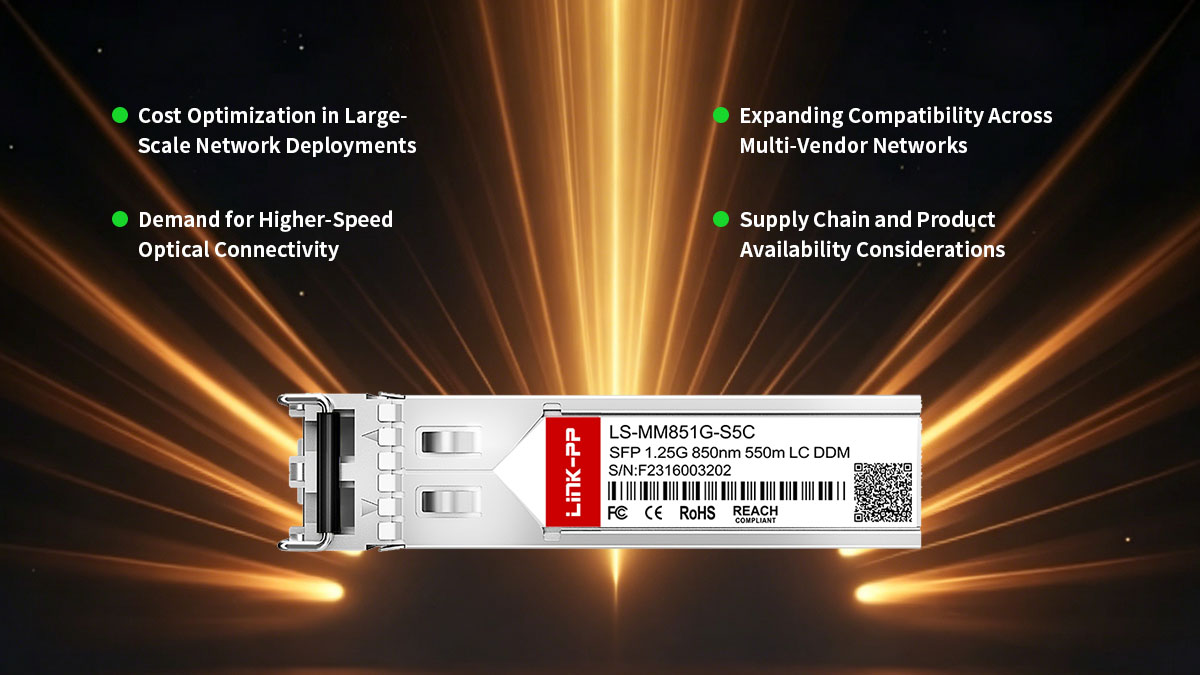
Cost Optimization in Large-Scale Network Deployments
Cost efficiency becomes a key driver when networks scale across multiple buildings, campuses, or data centers. While individual SFP modules may have relatively low unit costs, large deployments significantly amplify total expenditure.
In this context, organizations typically focus on reducing total lifecycle cost rather than just upfront pricing.
Common cost-related considerations include:
- High-volume procurement across hundreds or thousands of ports
- Replacement and maintenance cycles over time
- Budget allocation between optics and switching infrastructure
- Total cost of ownership (TCO) across multi-year deployments
Beyond initial deployment costs, organizations also evaluate long-term operational efficiency. This includes minimizing downtime risks and ensuring consistent module availability across expansion phases.
Expanding Compatibility Across Multi-Vendor Networks
Modern enterprise networks rarely rely on a single hardware vendor. Instead, they often combine switching and routing equipment from multiple manufacturers to optimize performance, pricing, and feature sets.
In such environments, compatibility becomes a critical requirement for optical modules.
Key interoperability challenges include:
- Ensuring SFP modules work across different switch brands
- Avoiding vendor-specific coding restrictions
- Maintaining stable performance under mixed firmware environments
- Simplifying inventory management across platforms
As a result, organizations often look for more universal or broadly compatible transceiver options that reduce dependency on a single vendor ecosystem while maintaining reliable optical performance.
Demand for Higher-Speed Optical Connectivity
Network bandwidth requirements continue to grow due to cloud computing, virtualization, video traffic, and data-intensive applications. In many cases, existing 1G or 10G infrastructure becomes insufficient.
To address this, organizations increasingly plan upgrades toward higher-speed architectures.
Typical upgrade paths include:
- Migration from SFP 1G to SFP+ 10G for access and aggregation layers
- Expansion into SFP28 25G and QSFP+ 40G for data center environments
- Adoption of QSFP28 100G and beyond for core network backbones
In these scenarios, decision-makers often evaluate alternatives that provide smoother scalability and broader support across evolving speed standards, especially when long-term infrastructure planning is involved.
Supply Chain and Product Availability Considerations
Beyond technical performance, supply chain reliability plays a significant role in optical module selection. Large organizations require consistent availability to support expansion projects, maintenance operations, and urgent replacements.
Common supply-related concerns include:
- Lead time variability for specific module types
- Inventory consistency across multiple deployment phases
- Regional availability differences in global operations
- Risk of project delays due to component shortages
To mitigate these risks, many organizations explore alternative sourcing options that offer more stable supply continuity and broader product coverage across different optical specifications.
✅ Main Types of TP-Link SFP Module Alternatives
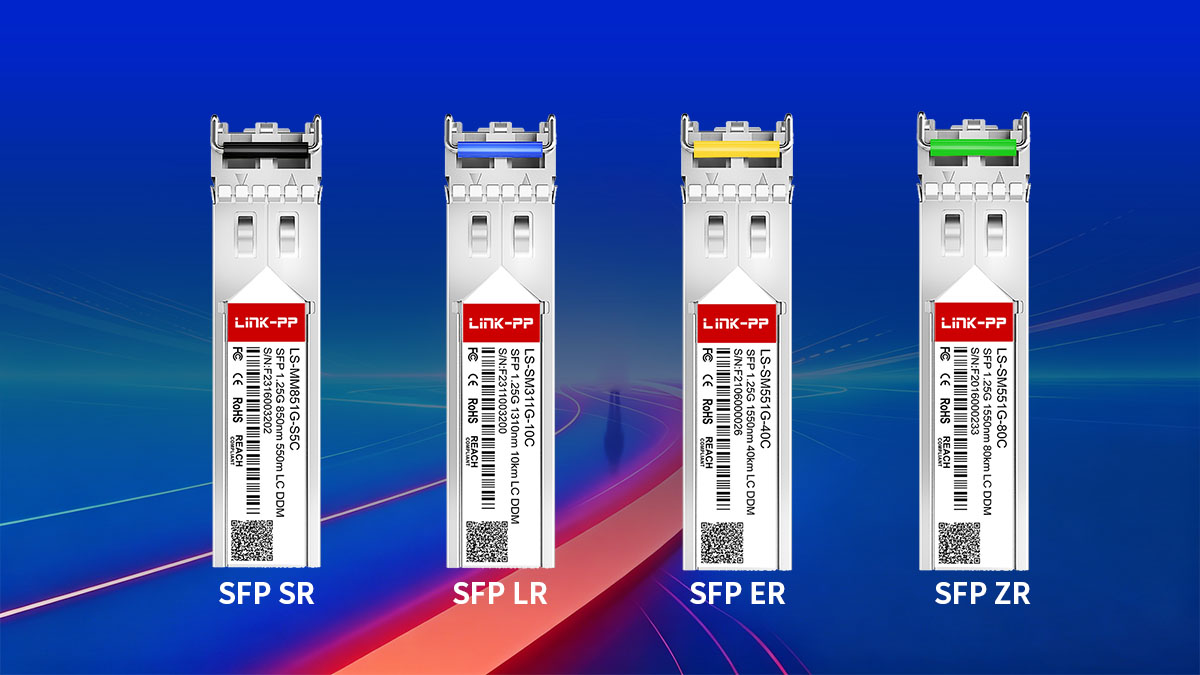
When organizations begin exploring TP-Link SFP Module alternatives, they are typically looking at different categories of optical transceivers that vary in compatibility, coding behavior, and deployment flexibility. These alternatives are not uniform; instead, they fall into several distinct types depending on network requirements and integration strategy.
OEM-Compatible Optical Modules
OEM-compatible optical modules are designed to function within specific networking ecosystems while also supporting coded compatibility for targeted switch brands. These modules are often programmed or tested to ensure proper recognition by designated hardware platforms.
In practical use, they are widely adopted because they balance controlled compatibility with deployment flexibility.
Key characteristics include:
- Pre-coded or adaptable EEPROM configuration for switch recognition
- Tested interoperability with specific vendor platforms, including TP-Link environments
- Stable performance under standard enterprise workloads
- Suitable for structured deployments where compatibility validation is required
From an operational perspective, OEM-compatible modules are often chosen when organizations want predictable behavior without fully relying on a single original equipment manufacturer’s product line.
Multi-Vendor Compatible Transceivers
Multi-vendor compatible transceivers are designed to operate across different networking brands and switch ecosystems. They are engineered with broader coding profiles and compatibility testing to support heterogeneous infrastructure environments.
These modules are especially relevant in networks where multiple hardware vendors coexist.
Typical advantages include:
- Cross-platform compatibility across different switch manufacturers
- Reduced dependency on vendor-specific optical modules
- Simplified inventory management in mixed-network environments
- Flexibility for network expansion or hardware replacement scenarios
In many enterprise deployments, multi-vendor compatibility becomes a strategic advantage, especially when organizations prioritize infrastructure flexibility over strict vendor alignment.
Generic Fiber Transceivers
Generic fiber transceivers represent a more standardized category of optical modules designed around common industry specifications rather than vendor-specific optimization. They are typically built to meet MSA (Multi-Source Agreement) standards, which define physical and electrical compatibility across the industry.
These modules are often used in cost-sensitive or large-scale environments where standardized performance is sufficient.
Key attributes include:
- Compliance with industry-wide MSA optical standards
- Broad compatibility with a wide range of networking devices
- Simplified product selection based on standard parameters such as speed and reach
- Suitable for general-purpose networking deployments
While they may lack advanced vendor-specific optimization, their strength lies in predictable interoperability across standard fiber networking architectures.
Refurbished and Legacy-Compatible Modules
Refurbished and legacy-compatible optical modules are designed to support older networking infrastructure that may still be in active operation. These modules help extend the lifecycle of existing systems without requiring immediate hardware replacement.
They are commonly used in environments with long-term infrastructure retention strategies.
Typical use cases include:
- Maintaining legacy switch infrastructures
- Supporting gradual network upgrade transitions
- Extending operational life of existing fiber deployments
- Reducing capital expenditure in non-critical upgrades
However, their selection requires careful evaluation of reliability, as performance consistency may vary depending on refurbishment quality and lifecycle condition.
✅ Key Technical Factors When Evaluating Alternatives
When selecting TP-Link SFP Module alternatives, technical evaluation is the most critical step because optical transceivers directly affect link stability, network performance, and long-term scalability. In practice, organizations focus on a set of core engineering parameters that determine whether a module can operate reliably within existing and future network architectures.
Compatibility With TP-Link Switches and Routers
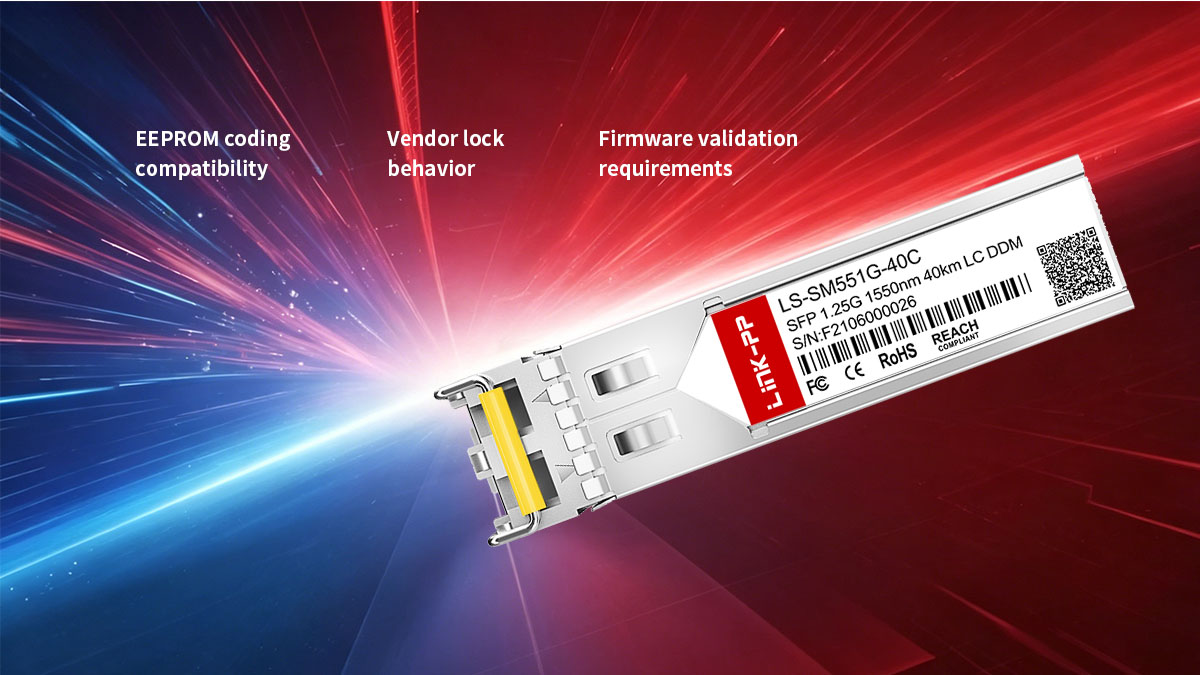
Compatibility is the first and most important factor because even technically high-quality optical modules may fail if they are not properly recognized by the host device. TP-Link switches may enforce identification checks that require correct module coding or protocol alignment.
Key compatibility considerations include:
- EEPROM coding alignment with TP-Link device recognition logic
- Firmware compatibility between switches and transceivers
- Support for third-party or multi-vendor coded modules
- Stability after firmware upgrades or system patches
In real deployments, compatibility validation is often performed before large-scale rollout to ensure modules are correctly detected and function without link negotiation errors or port blocking issues.
Transmission Distance and Fiber Type
Transmission distance and fiber type determine how far and under what conditions a module can reliably operate. These parameters are directly tied to optical power budget, wavelength, and fiber medium.
A common comparison of typical deployment characteristics is shown below:
| Fiber Type | Wavelength | Typical Distance Range | Common Use Case |
|---|---|---|---|
| Multimode (MMF) | 850nm | Up to 300–550m | Data centers, short links |
| Single-mode (SMF) | 1310nm | Up to 10–20km | Campus networks |
| Single-mode (SMF) | 1550nm | 40km and beyond | Metro and long-haul links |
These parameters help determine whether a module is suitable for intra-building connections, campus backbones, or metropolitan area deployments.
Data Rate and Bandwidth Requirements
Data rate compatibility ensures that the optical module matches both current and future bandwidth demands. Mismatched speed configurations can lead to underutilization or link instability.
Key data rate categories include:
- 1G SFP modules for access layer and basic uplinks
- 10G SFP+ transceivers for aggregation and backbone links
- 25G and above for high-performance data center environments
In practical planning, organizations often evaluate not only current traffic requirements but also projected growth over 3–5 years. This helps avoid frequent hardware replacement cycles and supports smoother scaling strategies.
Optical Wavelength and Network Architecture
Wavelength selection directly influences signal behavior, distance capability, and network design architecture. Different wavelengths are optimized for different transmission scenarios.
Common considerations include:
- 850nm for short-range multimode transmission
- 1310nm for standard single-mode enterprise links
- 1550nm for extended reach and metro network deployments
- BiDi optics for single-fiber bidirectional communication
These variations are often chosen based on fiber availability, network topology, and port density requirements. In more advanced deployments, CWDM/DWDM SFP technologies may also be considered for wavelength multiplexing and capacity expansion.
Power Consumption and Thermal Stability
Power efficiency and thermal behavior are increasingly important in high-density switching environments where many SFP ports operate simultaneously. Poor thermal design can reduce module lifespan and affect network stability.
Key evaluation points include:
- Power consumption per module under full load
- Heat dissipation performance in dense switch chassis
- Stability under continuous 24/7 operation
- Impact on overall switch thermal budget
In modern data centers, even small differences in power efficiency can scale significantly when multiplied across hundreds or thousands of optical ports, making this a critical selection factor in large deployments.
✅ TP-Link SFP Module Alternatives vs Original Modules
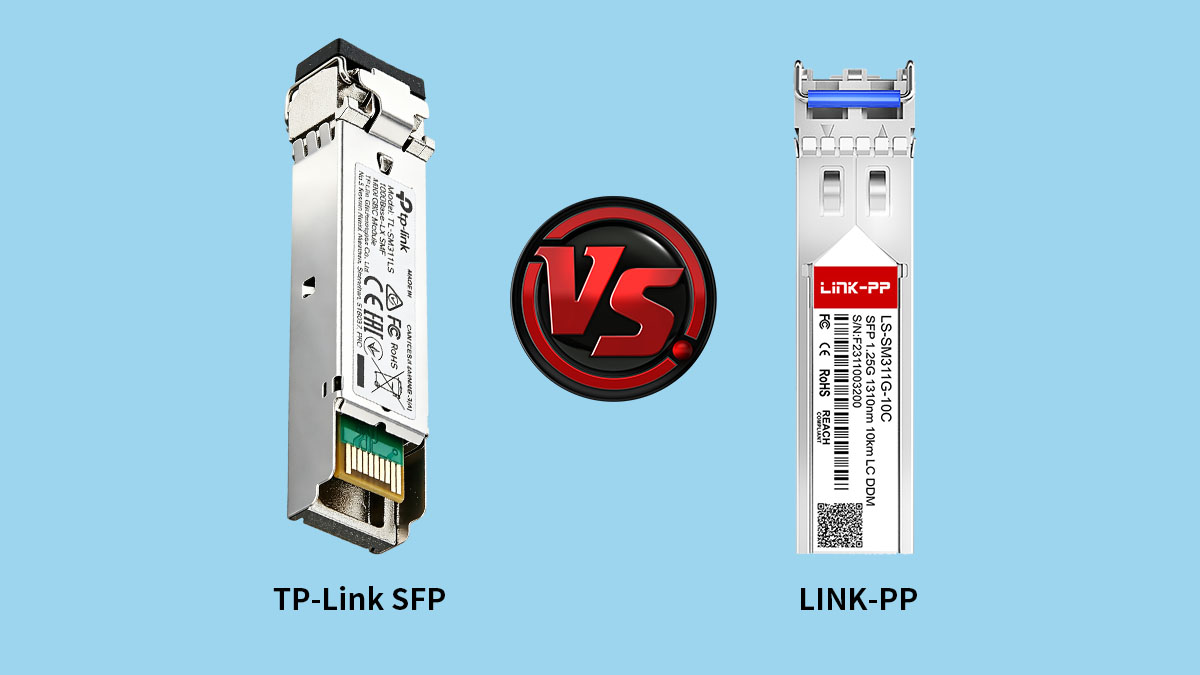
When comparing TP-Link SFP modules with alternative optical transceivers, the evaluation is not simply about “better or worse.” Instead, it is about how each option aligns with different network requirements such as performance consistency, deployment scale, interoperability, and long-term operational strategy.
Performance Comparison
Performance is typically the first concern when evaluating optical modules, especially in environments where uptime and data integrity are critical. Both TP-Link original modules and high-quality alternatives can achieve stable transmission, but their optimization focus may differ.
Key performance considerations include:
- Signal integrity under continuous traffic load
- Bit error rate (BER) stability in long-distance transmission
- Latency consistency across aggregation and backbone links
- Optical power budget margin under varying environmental conditions
To better understand the technical differences, a simplified comparison is shown below:
| Evaluation Factor | TP-Link Original Modules | Alternative Modules |
|---|---|---|
| Signal Optimization | Optimized for TP-Link devices | Broader device adaptability |
| Stability in Native Env | High | High (if properly coded) |
| Multi-vendor Operation | Limited | Strong |
| Flexibility in Deployment | Moderate | High |
From a practical standpoint, original modules tend to perform most predictably within their native ecosystem, while alternatives provide greater adaptability across diverse network environments.
Reliability and Quality Assurance
Reliability is a key factor in long-term network design, especially for enterprise and service provider infrastructures. Both original and alternative modules can be reliable, but their quality assurance processes may differ in scope and validation approach.
Key reliability aspects include:
- Manufacturing consistency and component sourcing
- Optical testing procedures (power, wavelength, sensitivity)
- Environmental stress testing (temperature, humidity, vibration)
- Compliance with industry standards such as MSA specifications
Original modules typically follow tightly controlled vendor-specific validation processes, while alternative modules often rely on standardized interoperability testing to ensure broader compatibility across multiple platforms.
Cost Efficiency Analysis
Cost efficiency is one of the most significant factors influencing the decision between original modules and alternatives, particularly in large-scale deployments.
Instead of focusing only on unit pricing, organizations typically evaluate total cost of ownership (TCO), which includes procurement, maintenance, and lifecycle replacement costs.
Key cost-related considerations include:
- Unit cost differences in high-volume deployments
- Replacement frequency over time
- Inventory standardization across multiple projects
- Downtime-related operational costs
Original modules are often positioned at a higher price point due to ecosystem optimization and brand assurance, while alternatives are commonly selected when organizations prioritize scalable deployment economics without sacrificing core performance requirements.
Warranty and Technical Support Differences
Support structure is another important distinction between original TP-Link modules and alternative optical solutions, especially in enterprise environments where rapid issue resolution is critical.
Key differences include:
- Scope of warranty coverage and replacement policies
- Availability of vendor-level technical support
- Access to firmware updates and compatibility documentation
- Response time for troubleshooting and escalation
Original modules generally benefit from direct vendor support within the TP-Link ecosystem. Alternative modules, on the other hand, may rely on supplier-level technical assistance and compatibility engineering support, which can vary depending on provider capability.
✅ Best Practices for Selecting Reliable TP-Link SFP Module Alternatives
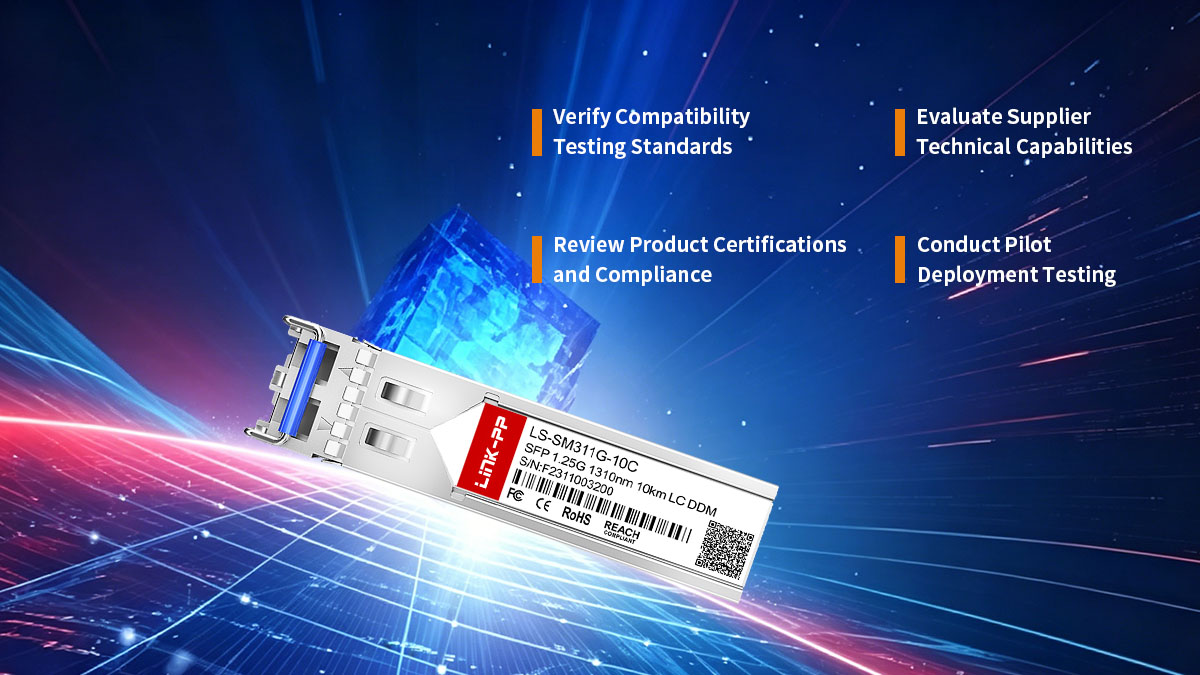
Selecting TP-Link SFP Module alternatives requires more than matching basic specifications such as speed or wavelength. In real network deployments, reliability, interoperability, and lifecycle stability are equally important. A structured selection process helps reduce deployment risks and ensures consistent performance across different environments.
Verify Compatibility Testing Standards
Compatibility verification is the foundation of selecting reliable optical modules. Even when specifications appear identical, differences in coding or firmware recognition can impact actual performance in TP-Link environments.
Key validation steps include:
- Ensuring compliance with MSA (Multi-Source Agreement) optical standards
- Confirming EEPROM coding compatibility with target TP-Link switches
- Testing module recognition under real switch firmware versions
- Validating link stability after device reboot and configuration changes
Before full deployment, many organizations perform controlled compatibility testing in a lab environment. This helps identify issues such as port rejection, link flapping, or speed negotiation failures early in the selection process.
Evaluate Supplier Technical Capabilities
The technical strength of the supplier plays a significant role in determining the overall quality and consistency of alternative SFP modules. A capable supplier not only provides hardware but also ensures engineering-level support for deployment scenarios.
Important evaluation criteria include:
- Availability of optical engineering support for troubleshooting
- Transparency in product design and manufacturing processes
- Consistency in batch-to-batch product performance
- Ability to provide detailed compatibility matrices across devices
In enterprise deployments, suppliers with stronger technical capabilities are often preferred because they can help resolve interoperability issues quickly and reduce deployment uncertainty across heterogeneous networks.
Review Product Certifications and Compliance
Certifications and compliance standards are key indicators of product quality, safety, and long-term reliability. They also help ensure that optical modules can be deployed across different regulatory environments without operational risk.
Common certifications and compliance factors include:
- RoHS compliance for environmental safety standards
- CE and FCC certifications for regulatory approval
- Industry-standard optical performance testing validation
- Quality management system certifications (e.g., ISO-based processes)
These certifications do not only reflect regulatory alignment but also indicate that the product has undergone structured testing for electrical, optical, and environmental stability.
Conduct Pilot Deployment Testing
Pilot deployment is a critical step before large-scale rollout of TP-Link SFP Module alternatives. It allows organizations to verify real-world performance under actual network conditions rather than relying solely on datasheet specifications.
A typical pilot testing process includes:
- Installing modules in a controlled subset of network ports
- Monitoring optical signal strength and error rates over time
- Testing performance under peak traffic loads
- Evaluating compatibility after firmware upgrades or configuration changes
After pilot testing, organizations can identify potential issues such as intermittent link instability or temperature-related performance variations. This step significantly reduces risk when scaling to full production environments.
✅ Common Risks to Avoid When Choosing Alternatives
When evaluating TP-Link SFP Module alternatives, technical fit alone is not enough to guarantee stable deployment. In real-world networking environments, many failures are caused not by specification mismatches, but by overlooked risks related to firmware behavior, component quality, documentation gaps, and scalability planning.
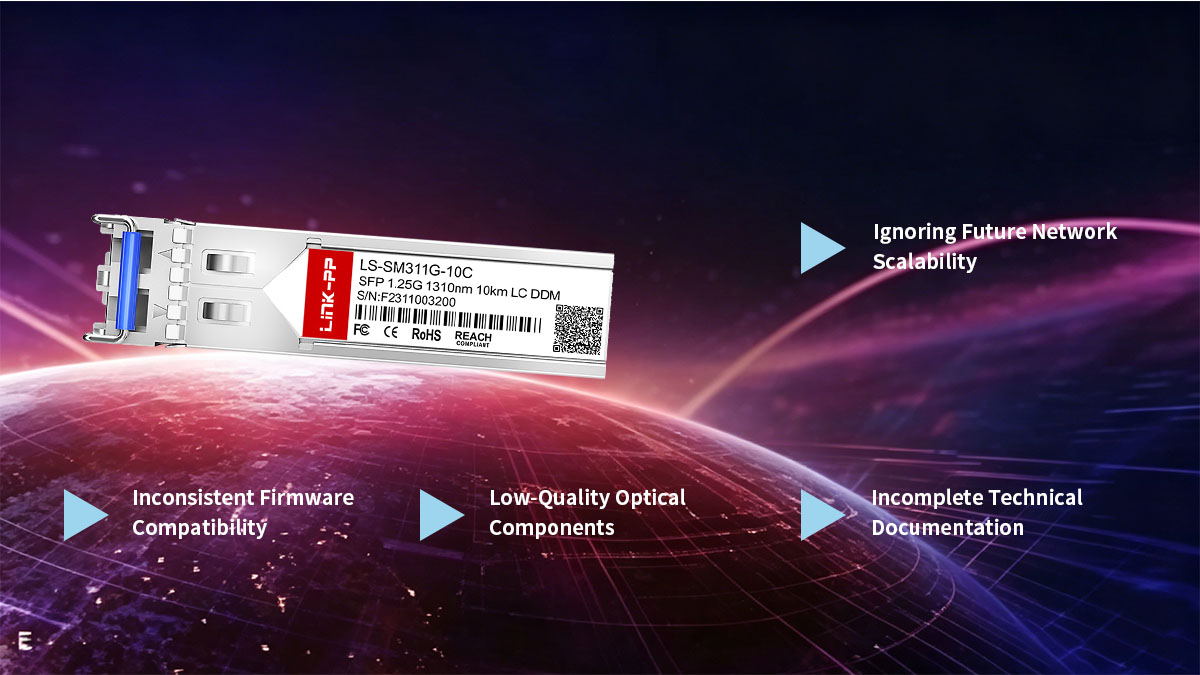
Understanding these risks helps organizations avoid unexpected downtime, interoperability issues, and long-term operational inefficiencies.
Inconsistent Firmware Compatibility
Firmware compatibility is one of the most frequently underestimated risks when deploying optical transceivers in TP-Link-based environments. Even if a module works initially, firmware updates on switches can change how modules are identified or validated.
Key risk scenarios include:
- Modules no longer being recognized after switch firmware upgrades
- Sudden port shutdowns due to stricter vendor validation rules
- Link instability caused by changes in auto-negotiation behavior
- Inconsistent performance across different firmware versions
To reduce these risks, organizations typically validate compatibility across multiple firmware versions rather than relying on a single test condition. This ensures long-term stability in evolving network environments.
Low-Quality Optical Components
The quality of internal optical components directly impacts transmission stability, signal integrity, and module lifespan. Low-quality alternatives may initially appear functional but often degrade under sustained load or environmental stress.
Common issues associated with poor-quality components include:
- Reduced optical power stability over time
- Higher bit error rates under heavy traffic conditions
- Shortened operational lifespan in 24/7 environments
- Sensitivity to temperature fluctuations in dense switch chassis
In large-scale deployments, even a small percentage of unstable modules can lead to significant troubleshooting overhead and increased maintenance costs.
Incomplete Technical Documentation
Comprehensive technical documentation is essential for smooth deployment, especially in complex or multi-vendor networks. Missing or incomplete documentation can slow down installation, troubleshooting, and long-term maintenance.
Typical documentation gaps include:
- Lack of detailed compatibility matrices for different switch models
- Missing guidance for firmware or coding requirements
- Insufficient troubleshooting procedures for link failures
- Limited optical specification transparency (power budget, sensitivity range)
Without proper documentation, network engineers may struggle to diagnose issues efficiently, leading to longer downtime and reduced operational efficiency.
Ignoring Future Network Scalability
One of the most strategic risks is failing to consider long-term scalability when selecting optical modules. A solution that works well today may become restrictive as network demands increase.
Scalability-related risks include:
- Inability to support future upgrades to 25G, 40G, or 100G infrastructure
- Limited flexibility in multi-vendor or hybrid network expansion
- Frequent replacement cycles due to outdated module specifications
- Bottlenecks caused by mismatched optical architecture planning
To avoid these issues, organizations should evaluate alternatives not only based on current requirements but also on projected network growth over a multi-year horizon.
✅ Deployment Scenarios for TP-Link SFP Module Alternatives
TP-Link SFP Module alternatives are widely adopted in environments where network flexibility, scalability, and multi-vendor interoperability are required. In practical deployments, their value becomes most evident when network architecture extends beyond basic switch-to-switch connectivity and requires structured, high-performance optical design.
Different scenarios place different demands on optical transceivers, including distance, bandwidth, redundancy, and environmental resilience.
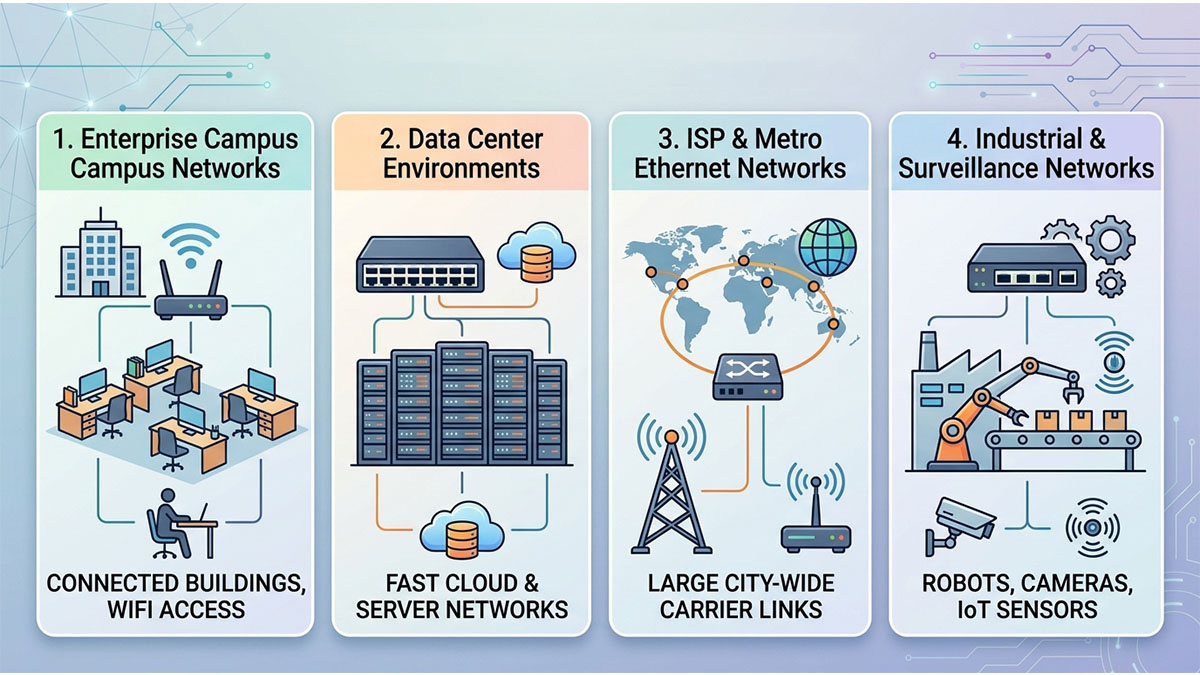
Enterprise Campus Networks
In enterprise campus environments, TP-Link SFP Module alternatives are commonly used to build scalable fiber backbones that interconnect multiple buildings, departments, and network layers. These environments typically require stable performance across medium-distance links with predictable traffic patterns.
Key deployment characteristics include:
- Inter-building fiber connectivity for campus backbones
- Aggregation layer uplinks between access switches and core switches
- Support for both 1G and 10G uplink transitions
- Mixed-vendor switching environments across different departments
In these scenarios, alternatives are often preferred because they provide greater flexibility in device compatibility, allowing network architects to standardize optical infrastructure across heterogeneous hardware.
Data Center Environments
Data centers require high-density, high-bandwidth optical connectivity where performance consistency and scalability are critical. TP-Link SFP Module alternatives are often deployed in access-to-aggregation and top-of-rack (ToR) architectures.
Typical use cases include:
- High-speed switch interconnects within racks
- Short-reach and medium-reach optical links (SR and LR optics)
- Scalable bandwidth expansion from 10G to 25G and beyond
- Redundant paths for high availability architectures
A key advantage of alternatives in this environment is their ability to support broader high-speed optical ecosystems, which is essential for evolving data center architectures driven by virtualization, cloud computing, and AI workloads.
ISP and Metro Ethernet Networks
Internet service providers (ISPs) and metro Ethernet operators rely heavily on long-distance and high-reliability optical connections. In these environments, TP-Link SFP Module alternatives are often selected for their extended reach capabilities and interoperability across diverse network infrastructure.
Common deployment scenarios include:
- Long-distance point-to-point fiber links between network nodes
- Aggregation of subscriber traffic at metro edge locations
- Backbone connectivity across regional network hubs
- High-availability uplinks supporting continuous service delivery
These environments require modules that can maintain stable optical performance over long distances and under varying environmental conditions, making flexibility and reliability key selection factors.
Industrial and Surveillance Networks
Industrial and surveillance environments often operate under challenging physical conditions, including temperature variation, electromagnetic interference, and remote deployment locations. TP-Link SFP Module alternatives are frequently used to ensure stable fiber connectivity in these demanding settings.
Key applications include:
- Fiber links for IP surveillance camera networks
- Connectivity in manufacturing and automation systems
- Remote site monitoring and control infrastructure
- Harsh-environment network deployments requiring extended temperature support
In these scenarios, durability and long-term operational stability are often more important than raw bandwidth, making carefully selected alternatives a practical choice for maintaining continuous network uptime.
✅ Conclusion
TP-Link SFP Module alternatives have become an important part of modern optical networking strategies, especially as enterprises and service providers move toward more scalable, multi-vendor, and bandwidth-intensive infrastructures. While TP-Link original modules provide stable and straightforward performance within their ecosystem, alternatives offer greater flexibility for compatibility, deployment diversity, and long-term network expansion planning.
Across the key evaluation areas discussed in this article, several consistent conclusions emerge:
- Compatibility remains the foundation of reliable deployment, especially in TP-Link-managed environments
- Performance differences are often less about raw speed and more about stability, coding, and interoperability
- Cost efficiency is best evaluated through total lifecycle value rather than unit pricing alone
- Technical factors such as wavelength, distance, and power budget directly determine real-world usability
- Deployment success depends heavily on proper testing, documentation, and supplier capability
When viewed as a whole, selecting optical modules is not a purely product-level decision but a network architecture decision that impacts scalability, uptime, and operational efficiency over time.
For organizations seeking stable and compatible optical connectivity solutions, working with experienced suppliers that focus on tested interoperability and consistent product quality is essential. Platforms such as the LINK-PP Official Store can serve as a reference point for exploring compatible optical transceiver options designed to support diverse networking environments while maintaining reliability and deployment flexibility.
Ultimately, the right choice of TP-Link SFP Module alternatives depends on aligning technical requirements with long-term infrastructure strategy, ensuring that today’s network design remains adaptable for future growth and evolving bandwidth demands.