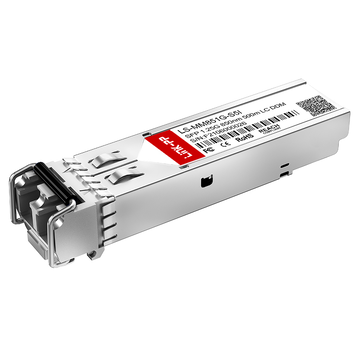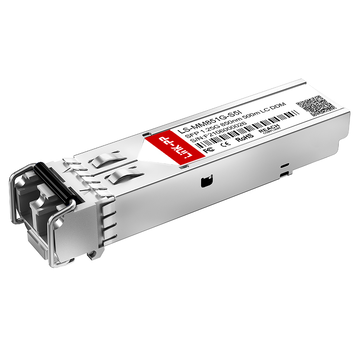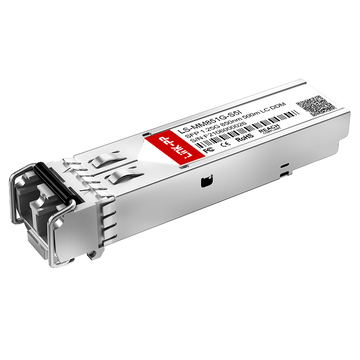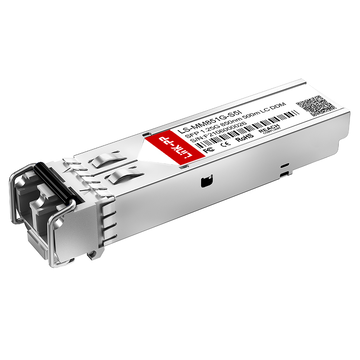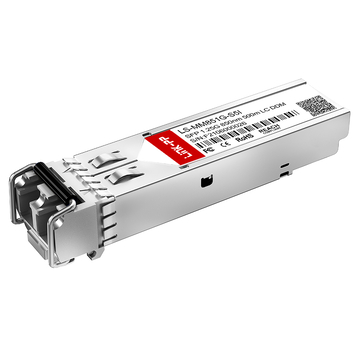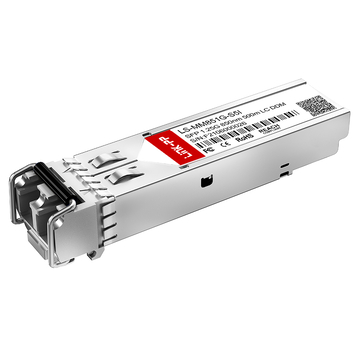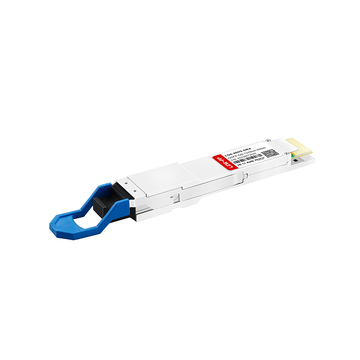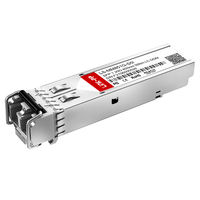






























The TN-GLC-SX-MM is an MSA-compliant, third-party 1000BASE-SX SFP transceiver designed as a direct, cost-effective replacement for the OEM Cisco GLC-SX-MM. Operating at an 850nm wavelength over multimode fiber (MMF), it supports 1 Gbps data rates up to 550 meters (on OM2/OM3 fiber). Enterprise IT teams procure this module to reduce optical networking costs by up to 80% while maintaining IEEE 802.3z compliance and hardware warranty integrity.
For IT procurement managers and network architects, optical transceivers represent a massive, often heavily marked-up segment of the infrastructure budget. The "TN" prefix—typically associated with carrier-grade third-party optics like Transition Networks (now integrated into Lantronix)—signals a critical middle ground in the optics market: bridging the gap between exorbitant OEM pricing and unreliable ultra-budget alternatives.
However, procuring the right third-party optics is rarely a simple click-to-buy process. Buyers frequently encounter wild price disparities across distributor listings, ranging anywhere from $6 to $60 per unit. Furthermore, network engineers face legitimate operational hurdles, such as navigating Cisco IOS compatibility protocols to bypass the notorious %PHY-4-UNSUPPORTED_TRANSCEIVER error.
This comprehensive 2025 selection guide is designed to eliminate procurement ambiguity. By standardizing physical layer parameters and analyzing real-world deployment data, we will deconstruct TN-GLC-SX-MM pricing models, clarify the technical distinctions between standard, DOM-enabled (-MMD), and ruggedized (-RGD) variants, and provide an actionable framework for safely integrating third-party optics into OEM-dominated switch environments.
🔵 What is the TN-GLC-SX-MM?
The TN-GLC-SX-MM is a commercial-grade, third-party optical transceiver engineered to provide 1 Gigabit Ethernet (1 GbE) connectivity over multimode fiber (MMF). Utilizing an 850nm VCSEL transmitter, it adheres strictly to the Multi-Source Agreement (MSA) and IEEE 802.3z standards, guaranteeing 100% form-factor and electrical interoperability with Cisco Catalyst and Nexus switching platforms that require the OEM GLC-SX-MM module.

To fully understand its place in enterprise network architecture, it is helpful to deconstruct the specific nomenclature of this SKU. Network hardware naming conventions are highly standardized to communicate physical layer capabilities at a glance.
Decoding the TN-GLC-SX-MM SKU:
- TN (Manufacturer Identifier): Denotes a third-party compatible brand, historically associated with Transition Networks (a prominent, NDAA-compliant B2B manufacturer). This distinguishes it from "white-label" or OEM optics.
- GLC (Gigabit Interface Converter): Cisco’s legacy identifier for 1 Gbps transceiver modules. While the term originally referred to the older GBIC form factor, in modern context, GLC designates the much smaller SFP (Small Form-factor Pluggable) footprint.
- SX (Short Wavelength): Indicates that the transceiver utilizes an 850 nanometer (nm) laser. Short wavelength optics are exclusively designed for short-reach, intra-building data transmission.
- MM (Multimode): Specifies the required fiber optic cable type. It operates over standard 62.5/125µm (OM1) or 50/125µm (OM2, OM3, OM4) multimode fiber cores using a standard Dual LC connector.
The Role of the Multi-Source Agreement (MSA)
An MSA is an industry-level hardware standard agreed upon by competing optical transceiver manufacturers to guarantee standardized physical dimensions, electrical interfaces, and optical performance.
The TN-GLC-SX-MM is fundamentally an MSA-compliant optic programmed with Cisco-specific EEPROM coding. Because the internal optoelectronic components (such as the TOSA and ROSA assemblies) are often manufactured by the exact same fabrication plants that supply Cisco, the TN module delivers identical bit-error rates (BER) and optical link budgets as the OEM counterpart. The only material difference between the two modules lies in the branding and the supply chain markup.
🔵 TN-GLC-SX-MM Pricing Analysis: Why Listings Vary So Much
Price variations for the TN-GLC-SX-MM—ranging from $6 to over $60—are dictated by vendor support tiers, supply chain provenance, and warranty SLAs. While the baseline optical components cost mere dollars to manufacture, enterprise-tier compatible optics (like Transition Networks) carry a premium over budget brands because they include guaranteed Cisco EEPROM coding accuracy, NDAA compliance, localized B2B engineering support, and advanced replacement lifetime warranties.
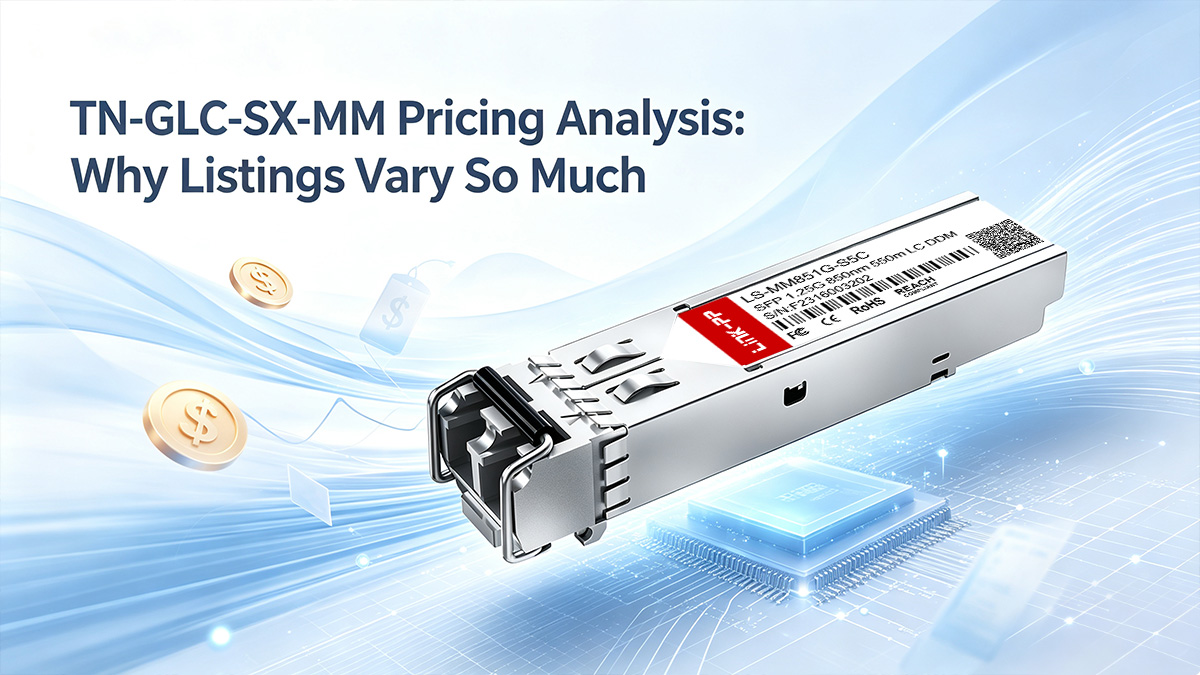
When procurement managers search for the TN-GLC-SX-MM across IT distributors (such as CDW, SHI, or Insight) and direct-to-consumer platforms, the extreme price delta can cause hesitation. Understanding the "Three Tiers of Optical Pricing" is critical to avoiding both unnecessary OEM premiums and the hidden operational costs of ultra-budget optics.
Market Pricing Tiers for 1000BASE-SX Transceivers:
| Optic Tier | Brand Examples | Est. Unit Price | Procurement Profile & Use Case |
|---|---|---|---|
| 1. OEM (Original) | Cisco (GLC-SX-MM=) | $150 - $300+ | Zero compatibility risk. Mandated by strict government or internal compliance policies. |
| 2. Tier-1 Compatible | Transition Networks (TN), AddOn, Proline | $35 - $65 | The Enterprise Sweet Spot. Sourced via major VARs. Includes dedicated rep, NDAA compliance, and SLA guarantees. |
| 3. Budget / Direct | FS.com, 10Gtek, Generic Amazon Sellers | $6 - $15 | Ideal for homelabs or non-mission-critical edge deployments. May lack domestic B2B accountability for RMAs. |
The Hidden Costs of Tier 3 (Budget) Optics
While a $6 optic is mathematically appealing, enterprise procurement must account for the Total Cost of Ownership (TCO).
EEPROM Coding is the firmware flashed onto the transceiver's memory chip that identifies its manufacturer, part number, and capabilities to the host switch.
Budget optics often suffer from inconsistent EEPROM batch coding. A network engineer might deploy 50 cheap modules, only to find that 5 of them are rejected by the Cisco Catalyst switch because the vendor ID string was improperly flashed. In a Tier 3 scenario, the RMA (Return Merchandise Authorization) process often involves shipping parts overseas, resulting in weeks of link downtime.
Why the TN-GLC-SX-MM Commands a $40 Price Point:
- Supply Chain Accountability: Transition Networks and similar Tier-1 compatibles maintain strict quality assurance (QA) testing facilities. The optic is tested on actual Cisco hardware before shipping.
- Advanced Replacement Agreements: If a TN module fails, enterprise distributors typically ship a replacement the next business day, prior to receiving the defective unit.
- NDAA & TAA Compliance: For federal agencies and their contractors, hardware must comply with the Trade Agreements Act (TAA) and the National Defense Authorization Act (NDAA). Many ultra-budget brands fail these regulatory checks, whereas Tier-1 TN optics are explicitly certified for government procurement.
Ultimately, paying $40 for a TN-GLC-SX-MM instead of $8 is not a hardware premium; it is an insurance policy for your network's uptime and your engineering team's operational efficiency.
🔵 TN-GLC-SX-MM Technical Specifications and Fiber Compatibility
The TN-GLC-SX-MM operates on the IEEE 802.3z 1000BASE-SX standard, delivering 1 Gbps data rates exclusively over multimode fiber (MMF). Utilizing an 850nm VCSEL transmitter and a duplex LC connector, it achieves a maximum link distance of 220 meters on legacy OM1 (62.5µm) fiber, and up to 550 meters on OM2, OM3, and OM4 (50µm) fiber classifications.
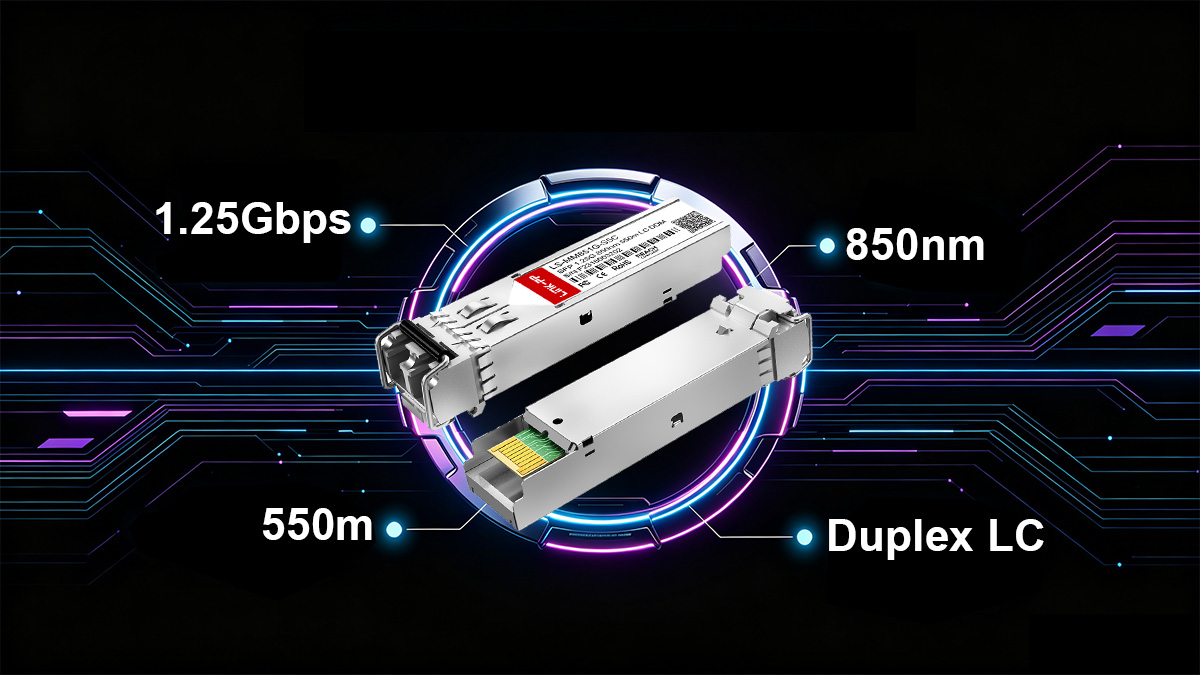
For network architects, verifying physical layer (Layer 1) parameters prior to procurement is critical to preventing link failures and optical budget overruns. The TN-GLC-SX-MM is a highly standardized module, but its performance is strictly bound by the quality and modal bandwidth of the fiber optic cable plant it is connected to.
Baseline Optical Parameters:
| Specification | Parameter Value |
|---|---|
| Industry Standard | IEEE 802.3z (1000BASE-SX) |
| Form Factor | SFP (Small Form-factor Pluggable) / Mini-GBIC |
| Data Rate | 1.25 Gbps (Gigabit Ethernet) |
| Central Wavelength | 850 nm (VCSEL Laser) |
| Connector Interface | Duplex LC |
| Tx Power (Transmit) | -9.5 to -3 dBm |
| Rx Sensitivity (Receive) | < -17 dBm |
Multimode Fiber (MMF) Distance Limitations
The most common deployment error with the TN-GLC-SX-MM involves pushing the optic beyond its supported fiber distance. Because 850nm wavelengths travel through a wider core, they are subject to modal dispersion.
Micro-definition: Modal Dispersion occurs in multimode fiber when light rays (modes) travel different paths and arrive at the receiver at different times, causing signal smearing and data loss over long distances.
To ensure a stable 1 Gbps link, procurement teams must match the module to the correct fiber classification:
- OM1 (62.5/125µm, 200 MHz·km): Maximum distance of 220 meters. (Common in legacy building backbones installed before 2005).
- OM2 (50/125µm, 500 MHz·km): Maximum distance of 550 meters.
- OM3 / OM4 / OM5 (Laser-optimized 50/125µm): Maximum distance is also capped at 550 meters for the 1000BASE-SX standard. While OM3/OM4 cables are physically capable of carrying signals further, the IEEE 802.3z standard limits the official SX specification to 550m to guarantee zero packet loss.
Crucial Procurement Warning: 1G vs. 10G Port Compatibility
Do not confuse the TN-GLC-SX-MM with 10G SFP+ modules (such as the SFP-10G-SR). The TN-GLC-SX-MM is strictly a 1 Gigabit optic. If you attempt to plug this 1G SFP module into a 10G-only SFP+ switch port (such as certain Nexus top-of-rack switches), the link will fail to auto-negotiate unless the host switch explicitly supports dual-rate (1G/10G) port configurations. Always verify your switch's port capabilities before issuing a purchase order.
🔵 TN-GLC-SX-MM vs. MMD vs. 2K vs. RGD: Choosing the Right Variant
While the base TN-GLC-SX-MM is the standard 550m commercial optic, specific network environments require specialized variants. The -MMD adds Digital Optical Monitoring (DOM) for real-time diagnostics. The -2K utilizes a 1310nm laser to extend multimode distance to 2 kilometers. The -RGD is a ruggedized module built for extreme industrial temperatures (-40°C to 85°C). For modern indoor enterprise deployments, the -MMD variant is the recommended standard.
A frequent pitfall in IT procurement is ordering the baseline SKU without accounting for environmental factors or the engineering team's diagnostic requirements. Third-party manufacturers like Transition Networks provide specialized variants of the GLC-SX-MM to solve specific physical layer challenges that the standard IEEE 802.3z specification cannot address.
Variant Comparison Matrix:
| Variant SKU | Key Feature | Operating Temp | Wavelength & Max Distance | Primary Use Case |
|---|---|---|---|---|
| TN-GLC-SX-MM | Baseline Standard | 0°C to 70°C (Commercial) | 850nm / 550m | Standard climate-controlled data centers and wiring closets. |
| TN-GLC-SX-MMD | DOM / DDM Enabled | 0°C to 70°C (Commercial) | 850nm / 550m | Enterprise networks requiring proactive link monitoring and SNMP alerting. |
| TN-GLC-SX-MM-2K | Extended Reach | 0°C to 70°C (Commercial) | 1310nm / 2,000m (2km) | Large campus networks needing to push Gigabit speeds over legacy MMF beyond 550m. |
| TN-GLC-SX-MM-RGD | Ruggedized | -40°C to 85°C (Industrial) | 850nm / 550m | Outdoor NEMA enclosures, manufacturing floors, and cell tower deployments. |
Deep Dive: Why the "-MMD" is the Modern Procurement Standard
The "D" in MMD stands for Digital Optical Monitoring (DOM), governed by the SFF-8472 MSA standard.
Micro-definition: Digital Optical Monitoring (DOM) is a diagnostic feature that allows the host switch to monitor the transceiver's real-time operating parameters, including optical transmit (Tx) power, receive (Rx) power, temperature, and laser bias current.
Without DOM, a network engineer is flying blind. If a fiber optic cable is bent or degrading, a standard optic will simply drop the link unexpectedly. A DOM-enabled optic (TN-GLC-SX-MMD) allows the switch to trigger an SNMP trap warning the engineering team that Rx light levels are dropping dangerously low, enabling proactive maintenance before an outage occurs. Given that the price difference between standard and MMD variants is often negligible (less than $5), procurement should always specify the MMD variant for enterprise deployments.
Overcoming the 550m Limit: The "-2K" Variant
The IEEE 802.3z specification hard-caps 850nm lasers at 550 meters on OM2/OM3 fiber. If a campus deployment requires a 1,500-meter run between buildings, standard protocol dictates replacing the multimode fiber with single-mode fiber (SMF)—a highly expensive trenching and cabling project. The TN-GLC-SX-MM-2K bypasses this by utilizing a 1310nm Fabry-Perot (FP) laser over existing multimode fiber, successfully extending the link up to 2 kilometers without requiring a Layer 1 infrastructure overhaul.
Thermal Stress: When to use "-RGD"
Standard commercial optics are rated for 0°C to 70°C (32°F to 158°F). If placed in an un-air-conditioned warehouse switch or an outdoor traffic control cabinet, the optic's internal laser will overheat, causing bit-errors and eventual hardware failure. The -RGD (Rugged) variant utilizes industrial-grade components designed to withstand extreme thermal fluctuations from -40°C to 85°C, ensuring continuous operation in harsh edge-computing environments.
🔵 Cisco and MSA Platform Compatibility
The TN-GLC-SX-MM is engineered for 100% plug-and-play compatibility with Cisco Catalyst, Nexus, and Meraki platforms that natively support the GLC-SX-MM SKU. Because it adheres to the Multi-Source Agreement (MSA), it will also function in open-standard switches (like Arista or Juniper), provided the vendor ID EEPROM coding aligns with the host switch's operating system requirements.

Compatibility is the primary friction point when transitioning from OEM to third-party optics. Network hardware vendors utilize proprietary software checks to detect the origin of an SFP module. When a transceiver is inserted into a port, the switch's operating system reads the EEPROM chip (specifically the Vendor Name and Part Number fields encoded in hex values) via the I2C bus.
If the switch OS reads "Transition Networks" instead of "Cisco-Systems," it may trigger a software safeguard. Tier-1 compatible manufacturers resolve this by flashing the exact Cisco vendor string onto the TN-GLC-SX-MM prior to shipping. However, in mixed-vendor environments or during IOS upgrades, engineering teams must still be prepared to manage software-level optical rejections.
How to Fix the "Unsupported Transceiver" Error in Cisco IOS
When a Cisco Catalyst or Nexus switch detects an optic that it considers uncertified, it will immediately place the interface into an err-disable state, severing the network link. The console will output the following syslog message:
%GBIC_SECURITY_CRYPT-4-VN_DATA_CRC_ERROR: GBIC in port Gi1/0/1 has bad crc
%PM-4-ERR_DISABLE: gbic-invalid error detected on Gi1/0/1, putting Gi1/0/1 in err-disable state
This is not a hardware failure; it is an intentional software blockade. Cisco IOS includes hidden command-line interface (CLI) commands designed specifically to bypass this check, allowing the use of third-party MSA-compliant optics like the TN-GLC-SX-MM.
The CLI Remediation Process:
To safely enable third-party transceivers, a network administrator must enter Global Configuration mode and apply the following commands. (Note: These commands are undocumented by Cisco, meaning they will not auto-complete if you press the 'Tab' key, and you must type them out entirely).
Switch(config)# service unsupported-transceiver
! The switch will display a warning message here. Press Enter to confirm.
Switch(config)# no errdisable detect cause gbic-invalid
Switch(config)# end
Switch# write memory
The service unsupported-transceiver command forces the Cisco IOS to ignore the vendor ID check on the EEPROM, while the no errdisable detect cause gbic-invalid command prevents the switch from administratively shutting down the port when an unrecognized optic is detected.
Post-Remediation Steps:
If the port was already placed into an err-disable state prior to entering the commands, you must manually bounce the interface to restore the link:
Switch(config)# interface GigabitEthernet 1/0/1
Switch(config-if)# shutdown
Switch(config-if)# no shutdown
Implementing these commands is an industry-standard practice across enterprise and data center environments. It allows procurement teams to confidently leverage the cost-savings of the TN-GLC-SX-MM without fearing catastrophic link failures during deployment.
🔵 OEM vs. Third-Party Compatible Optics: What Buyers Actually Worry About
Procurement teams primarily fear that deploying third-party optics like the TN-GLC-SX-MM will void their OEM switch warranties, degrade hardware, or result in denied technical support. In reality, federal law (the Magnuson-Moss Warranty Act) prohibits manufacturers from voiding hardware warranties due to third-party peripherals. Because Tier-1 compatible optics utilize the same internal optoelectronic components as OEM modules, the hardware failure rates are statistically identical. The true operational challenge is managing vendor support dynamics, not mitigating hardware risk.
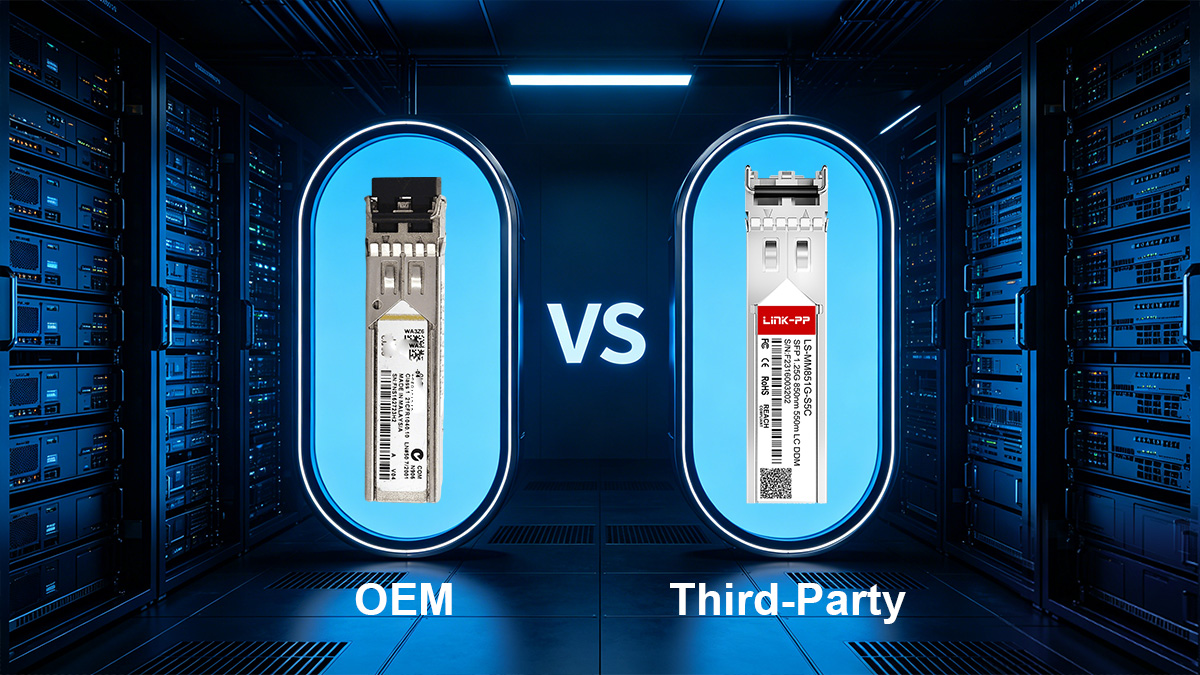
When transitioning from a strictly OEM purchasing model to a blended or third-party optical strategy, IT directors and procurement managers face intense pushback. This friction is rarely based on technical specifications; rather, it stems from psychological barriers and aggressive OEM sales tactics.
Here is a breakdown of the three primary concerns buyers have regarding third-party optics, and the objective realities behind them.
Worry 1: "Will Using the TN-GLC-SX-MM Void My Cisco SmartNet Warranty?"
This is the most pervasive myth in enterprise IT networking. OEM sales representatives frequently imply—or sometimes directly state—that inserting a non-Cisco SFP module into a Catalyst or Nexus switch will immediately void the chassis warranty or SmartNet support contract.
The Reality: It is legally prohibited.
In the United States, this practice is governed by the Magnuson-Moss Warranty Act of 1975 (15 U.S.C. § 2302(c)). The act specifically outlines "Tie-In Sales" provisions.
A Tie-In Sales Provision makes it illegal for a manufacturer to condition a warranty upon the consumer's use of an article or service identified by brand, trade, or corporate name.
In plain terms: Cisco cannot legally void your $10,000 switch warranty simply because you used a $40 Transition Networks transceiver. The only exception is if the OEM can definitively prove that the third-party module physically caused the hardware failure—an incredibly rare scenario given how SFP ports are engineered.
Worry 2: "Will a Cheap Optic Damage My Switch Hardware?"
Network engineers often worry that an inferior third-party optic might overheat, short-circuit, and "fry" the ASIC (Application-Specific Integrated Circuit) or the motherboard of the host switch.
The Reality: SFP modules are optically and electrically isolated.
The Multi-Source Agreement (MSA) standards mandate strict electrical isolation protocols. An SFP module is essentially a localized media converter. If the internal VCSEL laser of a TN-GLC-SX-MM fails, or if the module overheats, the failure is contained entirely within the SFP casing. The link will drop, but it will not send a catastrophic electrical surge back into the switch's backplane. Furthermore, Tier-1 compatible brands source their internal components (TOSA/ROSA assemblies) from the exact same fabrication plants (such as Finisar or Lumentum) that manufacture the OEM optics.
Worry 3: The "Vendor Finger-Pointing" Dilemma
While warranty voiding is a myth, the "finger-pointing" dilemma is a very real operational headache. If a port experiences high packet loss and your engineer calls Cisco Technical Assistance Center (TAC), the automated system will generate a show tech-support log.
If TAC sees a non-Cisco optic in the log, standard Level 1 support protocol is to halt troubleshooting and blame the third-party module. They will state: "We cannot verify the integrity of this third-party transceiver. Please replace it with a genuine Cisco optic before we continue."
The Procurement Solution: The "Golden Spares" Strategy
- Do not buy 100% third-party optics. Instead, procure 95% TN-GLC-SX-MM modules to capture the massive cost savings, and purchase 5% genuine OEM Cisco GLC-SX-MM modules.
- Keep these OEM modules in the IT storage room as "Golden Spares."
- If a complex network issue arises and TAC attempts to blame the third-party optic, simply swap the TN module out for the OEM Golden Spare. If the issue persists, TAC is forced to escalate and resolve the switch configuration issue.
By understanding the legal protections and preparing for TAC support workflows, procurement teams can confidently bypass OEM fear tactics and secure massive budget reductions.
🔵 FAQ About TN-GLC-SX-MM Pricing and Compatibility
Below are the technical and procurement-focused answers to the most frequently asked questions regarding the TN-GLC-SX-MM.
1. Can I mix a TN-GLC-SX-MM with an OEM Cisco GLC-SX-MM on the same fiber link?
Yes. Optical transceivers do not communicate brand information across the fiber cable. They only transmit pulses of light. Because both the TN and the Cisco optic operate on the standardized IEEE 802.3z 1000BASE-SX protocol (850nm wavelength over multimode fiber), they are 100% interoperable. You can place a TN optic in a distribution switch and a Cisco optic in an edge switch without any packet loss or auto-negotiation failures.
2. Why is the TN-GLC-SX-MM distance limited to 550 meters, even on high-grade OM4 fiber?
The 550-meter limitation is an IEEE standard constraint, not a hardware defect. The 1000BASE-SX specification utilizes an 850nm VCSEL (Vertical-Cavity Surface-Emitting Laser). At this wavelength, light rays travel through the multimode core at slightly different angles, causing modal dispersion (signal smearing). While OM4 fiber has higher modal bandwidth than OM2, the IEEE 802.3z standard strictly caps the certified distance at 550 meters to guarantee a zero Bit Error Rate (BER). To exceed this distance, you must use a 1310nm variant (like the TN-GLC-SX-MM-2K) or switch to single-mode fiber (SMF).
3. Does the TN-GLC-SX-MM support Digital Optical Monitoring (DOM)?
No, not the base SKU. The standard TN-GLC-SX-MM is a "blind" optic, meaning it passes data but does not report internal telemetry (Tx/Rx power, temperature, or voltage) to the host switch. If your network engineering team requires SNMP traps or real-time diagnostic data via the show interfaces transceiver command, you must procure the TN-GLC-SX-MMD variant.
4. Is the TN-GLC-SX-MM NDAA and TAA compliant?
Yes. Tier-1 third-party manufacturers like Transition Networks (now Lantronix) maintain strict supply chain provenance. Their enterprise optics are compliant with the Trade Agreements Act (TAA) and the National Defense Authorization Act (NDAA), making them fully eligible for United States federal, state, and local government procurement (GSA schedules) and educational (E-Rate) funding.
5. Will the TN-GLC-SX-MM work if I plug it into a 10G SFP+ port?
It depends on the host switch ASIC architecture. The physical footprint of a 1G SFP optic is identical to a 10G SFP+ optic. Many modern enterprise access switches (such as the Cisco Catalyst 9300 series) feature "dual-rate" SFP+ uplink ports that will successfully auto-negotiate down to 1 Gbps when a TN-GLC-SX-MM is inserted. However, certain data center switches (like specific Cisco Nexus models) feature locked 10G-only ports. You must verify the switch datasheet for "1G/10G dual-rate support" before attempting to use a Gigabit optic in an SFP+ cage.
🔵 The Ultimate Procurement Checklist for TN-GLC-SX-MM
Before issuing a Purchase Order (PO) for TN-GLC-SX-MM transceivers, procurement teams must verify five critical parameters: host switch port speed compatibility, fiber optic core size (OM1-OM4), DOM/DDM diagnostic requirements, EEPROM vendor coding, and warranty SLAs. Skipping these validation steps frequently results in dead links, RMA delays, and unexpected Layer 1 troubleshooting costs.
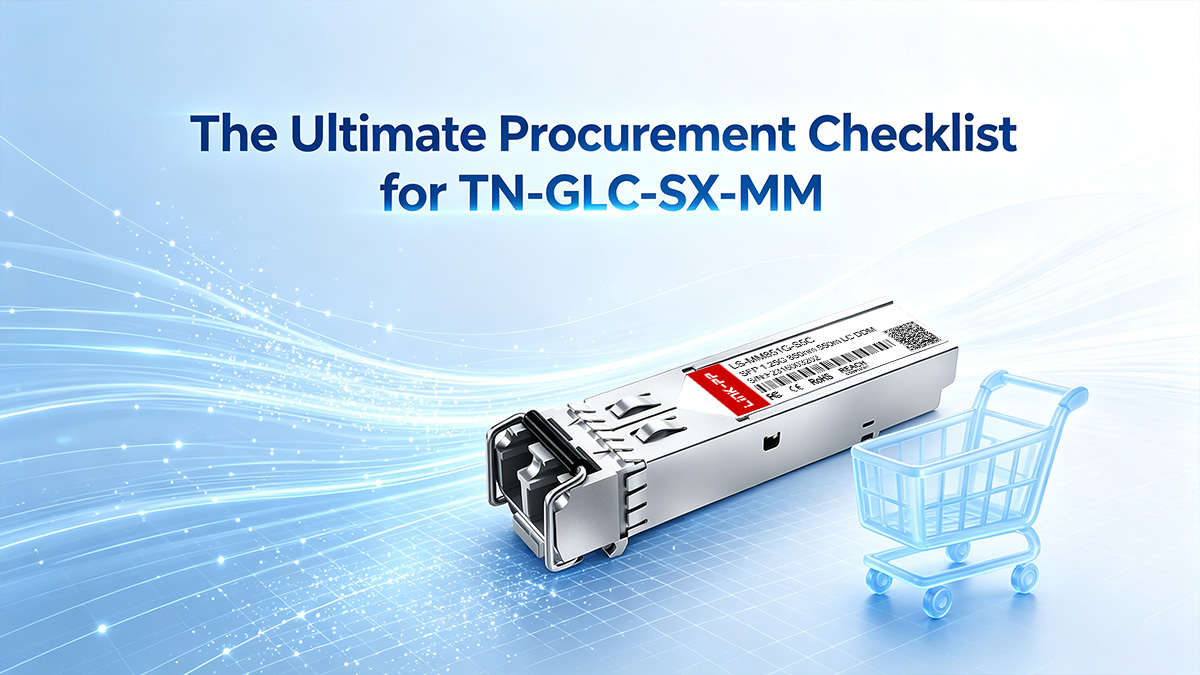
To bridge the gap between network engineering requirements and IT procurement workflows, use the following checklist to ensure you are purchasing the correct optical modules for your specific infrastructure.
1. Verify Switch Port Capabilities (1G vs. 10G)
Do not assume a 1G SFP module will automatically function in a 10G SFP+ port. While the physical form factor is identical, the switch's ASIC must support dual-rate (1G/10G) auto-negotiation. Action item: Check the host switch datasheet. If the port is hard-coded for 10Gbps only, the TN-GLC-SX-MM will fail to establish a link.
2. Audit the Physical Fiber Plant
The TN-GLC-SX-MM is strictly a multimode (MMF) optic. Action item: Verify the jacket color of the fiber patch cables in your datacenter. If the cables are orange (OM1/OM2) or aqua/magenta (OM3/OM4), you are cleared for SX optics. If the cables are yellow (Single-Mode Fiber / SMF), you must halt the purchase and procure an LX optic (e.g., TN-GLC-LH-SM) instead.
3. Specify DOM Requirements
Determine if your network operations center (NOC) relies on SNMP traps to monitor optical light levels and temperatures. Action item: If real-time physical layer diagnostics are required, ensure your PO specifies the TN-GLC-SX-MMD (DOM-enabled) variant rather than the baseline SKU.
4. Confirm EEPROM Vendor Coding
An MSA-compliant optic is useless if it is coded for the wrong hardware ecosystem. Action item: Explicitly state the target switch brand (e.g., "Cisco Catalyst 9300" or "Arista 7050X") on your procurement request so the supplier can flash the correct vendor ID onto the transceiver's EEPROM before shipping.
5. Vet the Supplier and Warranty SLAs
Enterprise optics require enterprise support. Action item: Ensure your supplier offers an Advanced Replacement Lifetime Warranty and complies with necessary federal regulations (NDAA/TAA) if you are operating within the public sector.
Streamlining Your Optics Procurement
Navigating third-party optics vendors can be challenging due to inconsistent quality assurance and varying degrees of technical support. For procurement managers seeking a streamlined purchasing experience with guaranteed MSA compliance, strict QA testing, and precise EEPROM coding, sourcing directly from established networking component manufacturers is highly recommended. You can explore a comprehensive catalog of rigorously tested, enterprise-grade optical transceivers—including exact 1000BASE-SX equivalents—by visiting the LINK-PP Official Store.