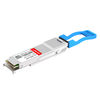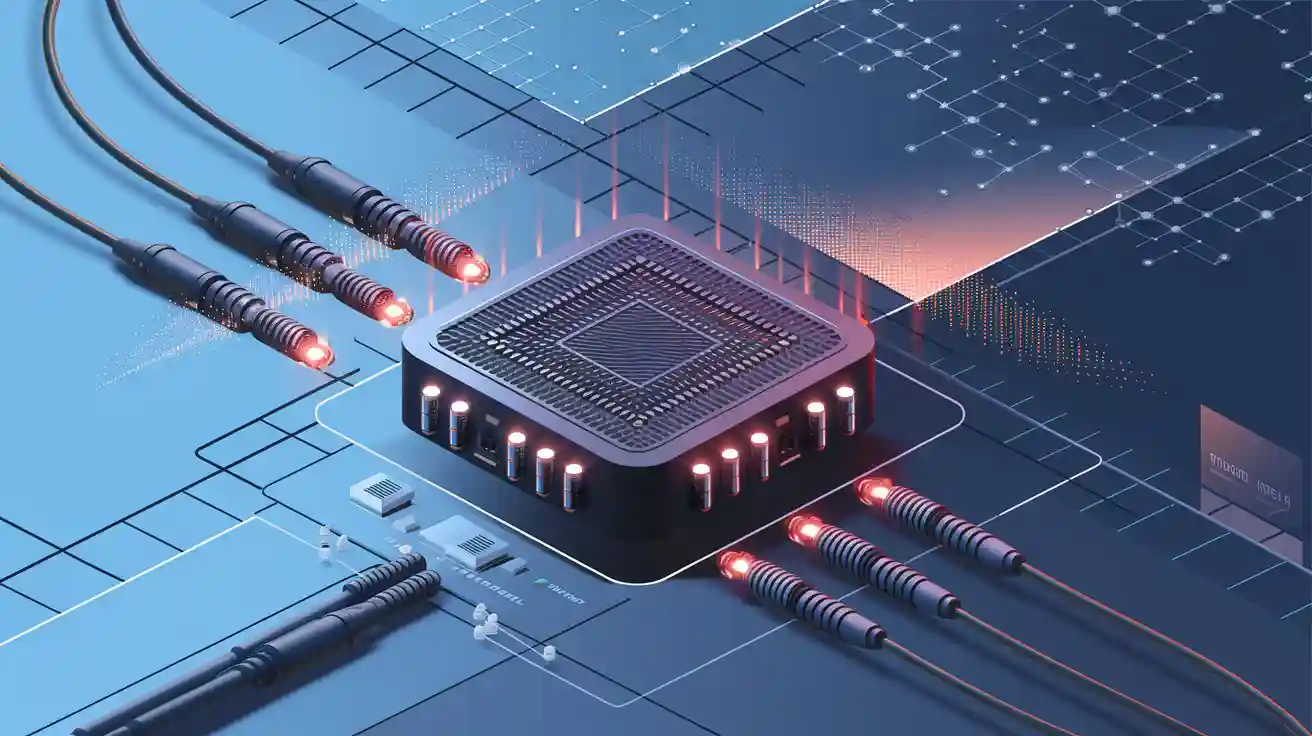
Modern fiber networks rely heavily on Huawei LX SFP modules to send data over long distances. These small but powerful plugins use a 1310nm laser to push signals through single-mode fiber, reliably reaching up to 10km. Whether you are connecting different floors in a large building or linking two separate offices, these modules are the "workhorses" that keep your high-speed internet and data moving without interruption.
While many companies feel stuck buying expensive original hardware, choosing high-quality Huawei LX compatible modules has become a smart business strategy. These compatible SFP transceivers offer the same "plug-and-play" performance at an affordable price, making it easier to stock up on spares. By understanding how these modules work with Huawei switches, you can build a faster, more reliable network while keeping your budget under control.
♻️ Understanding Technical Standards for Huawei LX SFP Transceivers
To build a stable and high-performing network, it is essential to understand the core technical specifications that govern Huawei LX modules. These standards ensure that every transceiver communicates correctly with your switches and fiber cables, maintaining signal clarity over long distances. By mastering these technical basics, you can ensure your hardware remains compatible and efficient across your entire infrastructure.

IEEE 802.3z Compliance and 1310nm Wavelength Characteristics
The Huawei LX standard is built upon the IEEE 802.3z (1000BASE-LX) protocol, which defines the physical layer requirements for Gigabit Ethernet over fiber. These modules operate at a 1310nm center wavelength, a "sweet spot" in optical networking that offers low signal loss and minimal dispersion. This specific wavelength is ideal for medium-to-long range transmissions, providing a reliable balance between cost and performance.
Adhering to these industry-wide standards ensures that the modules are compatible with a wide range of networking equipment. Because they follow the Multi-Source Agreement (MSA), these transceivers can seamlessly integrate into Huawei’s high-density environments while maintaining the strict timing and signaling required for 1.25Gbps data rates.
Single-Mode Fiber (SMF) Distances: Standard 10km vs. Extended Reach
The standard Huawei LX SFP module (also called SFP-GE-LX-SM1310) is designed to send data over single-mode fiber for up to 10km. This distance is usually enough for connecting different parts of a large office or nearby buildings. It uses an FP laser that is cost-effective and reliable for most common networking needs.
In cases where the fiber cables are longer than 10km, an "Extended Reach" version is used. These versions can reach up to 20km because they use a more powerful laser and a more sensitive receiver. Selecting the right version depends on the actual length of your fiber path and whether there are many connections along the way that might weaken the signal.
LC Duplex Connector Specifications and Physical Form Factors
The physical interface of a Huawei LX SFP module almost exclusively uses the LC Duplex connector. This small-form-factor plug features a "push-and-latch" design that provides a secure, vibration-proof connection, which is vital for high-density switch panels where space is limited. The ceramic ferrules inside the LC connector ensure precise alignment of the fiber cores, minimizing insertion loss.
In terms of form factor, these modules follow the standard SFP (Small Form-factor Pluggable) dimensions. This "hot-swappable" design allows network technicians to replace or upgrade modules without powering down the switch. This significantly reduces downtime during maintenance and makes it easy to scale port density as your bandwidth needs grow.
Optical Budget Calculations for Long-Haul Connectivity
To ensure a successful link, you must calculate the optical power budget, which is the difference between the minimum transmitter power and the receiver sensitivity. For Huawei LX SFP modules, you must account for "loss events" such as fiber attenuation (typically 0.35dB/km at 1310nm), patch panel connections, and fusion splices. If the total loss exceeds the budget, the link may suffer from high bit error rates or complete failure.
It is also important to leave a "safety margin" (usually 2 - 3dB) to account for component aging or future repairs. By performing these calculations during the design phase, you can determine if a standard 10km Huawei LX module is sufficient or if your specific fiber path requires a high-sensitivity receiver to maintain a stable 1GbE connection.
♻️ Procurement Strategies for High-Volume Huawei LX Sourcing
Acquiring networking hardware at scale requires a strategic approach that balances cost, performance, and availability. For high-volume deployments, procurement professionals must look beyond simple transactions to establish a sustainable supply chain for Huawei LX modules. By implementing the right sourcing strategies, organizations can ensure they have the necessary components to maintain network growth without overextending their budgets.
Balancing OEM Originality with Third-Party Compatible Module Performance
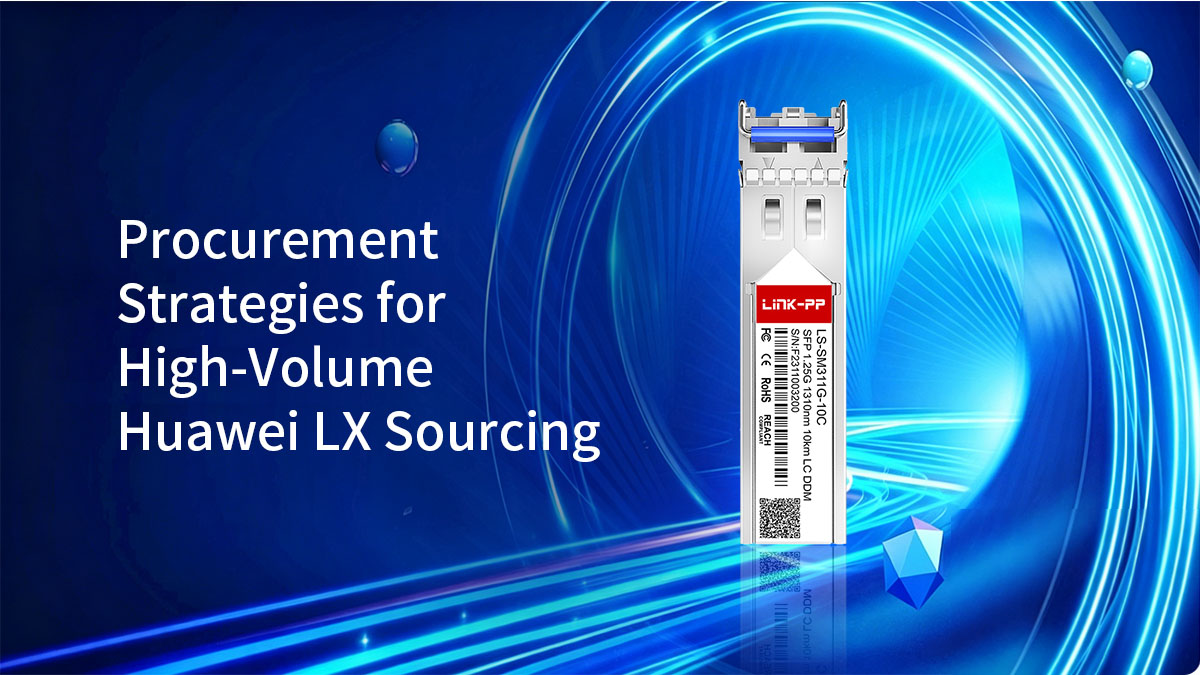
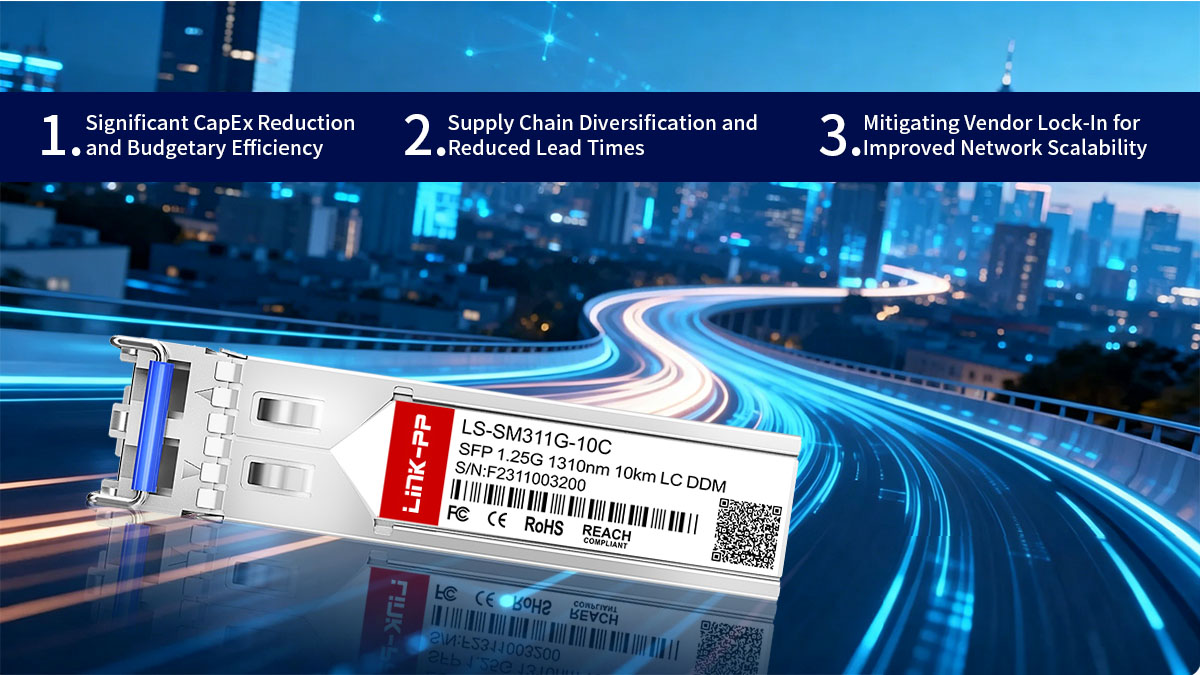
Choosing between original equipment manufacturer (OEM) modules and high-quality third-party compatible alternatives is a primary consideration in large-scale sourcing. While OEM modules offer a sense of security, reliable third-party options like the LINK-PP LS-SM311G-10C 1000BASE-LX SFP provide identical 1310nm 10km performance at a significantly lower price point. These compatible modules are designed to meet the same Multi-Source Agreement (MSA) standards as original hardware, ensuring that the optical output and data integrity remain consistent across all Huawei switching platforms.
Evaluating Lead Times for Global Logistics and Buffer Stock
Lead times for OEM Huawei LX modules can be unpredictable due to global supply chain constraints, making it essential to assess vendor inventory capacity and logistics capabilities. Third-party suppliers often provide shorter delivery cycles and flexible fulfillment options, allowing businesses to maintain adequate buffer stock and avoid service disruptions during peak demand or urgent network expansions.
Bulk Pricing Tiers and Contract Negotiation Tips
High-volume procurement of Huawei LX SFP modules opens opportunities for tiered pricing and long-term contract optimization. Buyers should negotiate volume discounts, warranty terms, and replacement policies while comparing multiple vendors to secure the best value. Establishing strategic partnerships with reliable suppliers can further reduce per-unit costs and ensure consistent supply over time.
♻️ The Business Case for Huawei LX Compatible Solutions
Adopting compatible optical modules is no longer just a cost-saving tactic; it is a strategic business decision that enhances financial and operational agility. By integrating high-quality Huawei LX compatible solutions, organizations can optimize their infrastructure spending while maintaining the high performance required for carrier-grade networks.
Significant CapEx Reduction and Budgetary Efficiency
The most immediate advantage of integrating compatible Huawei LX modules is the optimization of Capital Expenditure (CapEx). Original brand optics often carry premium pricing that reflects brand positioning rather than a difference in internal components or manufacturing standards. By selecting high-quality compatible alternatives, organizations can significantly lower the cost per port, allowing for a more efficient distribution of the overall technology budget.
These financial savings enable IT departments to stretch their resources further, supporting larger infrastructure projects or accelerating hardware refresh cycles. In high-density environments where thousands of transceivers are required, the improved budgetary efficiency allows for the procurement of essential network upgrades that might otherwise be delayed due to cost constraints. This approach ensures that the network remains modern and capable without overextending financial limits.
Supply Chain Diversification and Reduced Lead Times
Relying on a single hardware vendor for all optical components creates a significant risk of supply chain bottlenecks. During periods of high demand or global logistics disruptions, original manufacturers often prioritize their largest accounts, leaving smaller or medium-sized enterprises with long lead times that can stall critical deployments. Compatible Huawei LX modules offer a faster path to procurement because they are produced by a wider variety of specialized manufacturers.
By diversifying the supply chain, businesses can source from multiple vendors to ensure a steady flow of inventory. This increased availability means that new network segments can be brought online in days rather than months. Having access to a broader market of compatible hardware ensures that your project timelines remain predictable and that your team can respond quickly to sudden increases in bandwidth demand.
Mitigating Vendor Lock-In for Improved Network Scalability
Using Huawei LX compatible modules helps your business avoid being "locked in" to just one manufacturer. When you rely only on original brand hardware, you are often forced to follow that vendor’s specific pricing and upgrade schedules. By choosing compatible options that follow universal industry standards, you gain the freedom to use different brands of equipment together. This flexibility makes it much easier to grow your network because you aren't restricted by a single company's rules.
This open approach is a major benefit when you need to expand. As your network grows, you can mix and match the best switches and cables for your needs without worrying if the parts will fit together. It allows you to shop around for the best deals and the newest technology, ensuring your network can scale up quickly and smoothly. By keeping your options open, you protect your infrastructure from being dependent on a single supplier’s stock or price changes.
♻️ Verification Protocols for Third-Party Huawei LX Module Compatibility
Ensuring compatibility of third-party Huawei LX SFP modules is critical for maintaining stable network operations and avoiding unexpected failures. Even when modules meet industry standards, proper validation procedures are necessary to guarantee seamless integration with Huawei devices. The following verification protocols help minimize risks and ensure reliable “plug-and-play” performance.
EEPROM Coding Requirements for "Plug-and-Play" Recognition
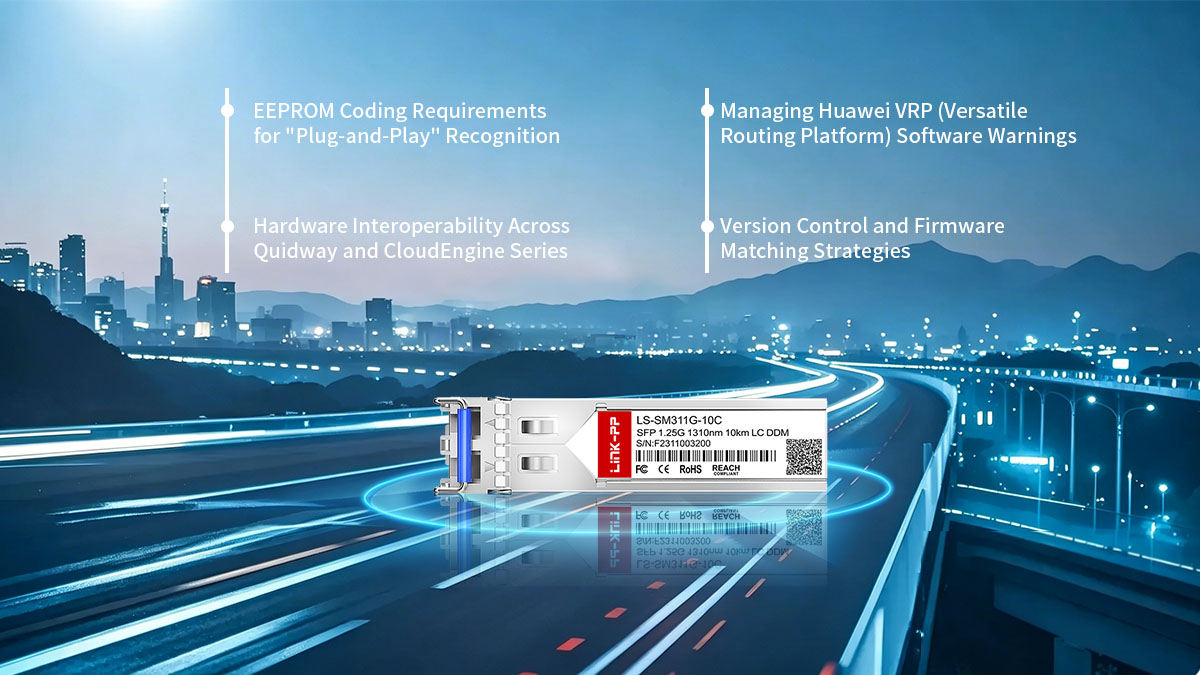
Correct EEPROM coding is the foundation of compatibility, as Huawei devices rely on encoded vendor and parameter information to recognize SFP modules. Third-party compatible modules must be pre-programmed to match Huawei-specific identification fields, ensuring the device accepts them without errors.
To verify proper EEPROM functionality, consider the following key checks:
- Vendor Name and OUI Matching: Ensure the module reports Huawei-compatible identifiers.
- Checksum Integrity: Validate that EEPROM data is correctly written and error-free.
- Digital Diagnostics (DDM) Fields: Confirm accurate reporting of temperature, voltage, and optical power.
- Plug-and-Play Testing: Insert the module into Huawei equipment to verify immediate recognition without manual intervention.
A well-coded EEPROM ensures seamless deployment and eliminates the need for additional configuration.
Managing Huawei VRP (Versatile Routing Platform) Software Warnings
Huawei’s Versatile Routing Platform (VRP) is designed to detect non-original modules and may trigger automated warning messages in the system logs. While these warnings — often labeled as "Non-Huawei Certified Transceiver" — do not necessarily indicate a hardware failure, they must be managed to ensure they do not clutter monitoring systems.
Effective management involves using VRP commands to suppress these notifications or verifying that the compatible module is coded well enough to bypass certain "unauthorized" flags. In most cases, a high-quality compatible module will still allow for full data transmission and monitoring, provided the administrator acknowledges the warning or uses the proper software overrides to maintain a clean status report.
Hardware Interoperability Across Quidway and CloudEngine Series
Interoperability testing is crucial because different Huawei hardware series may have different levels of sensitivity toward third-party modules. A module that works perfectly in a Quidway campus switch might behave differently when installed in a high-density CloudEngine data center switch.
- Quidway Series Verification: Testing focuses on the module's ability to handle standard enterprise features like VLAN tagging and STP (Spanning Tree Protocol) without signal drops.
- CloudEngine Series Testing: For these advanced platforms, verification shifts toward high-density port stability and the module's ability to maintain low latency during heavy traffic bursts.
- Physical Fit and Ejection: Beyond software, the mechanical latching mechanism must be tested to ensure the module can be easily inserted and removed from the chassis without damaging the SFP cage.
Version Control and Firmware Matching Strategies
Firmware and software version alignment plays a crucial role in ensuring stable operation of Huawei LX compatible modules. Differences in device OS versions or transceiver firmware can lead to compatibility issues, even when hardware specifications are correct.
To mitigate such risks, organizations should adopt structured version control practices:
- Maintain a compatibility matrix mapping module versions to Huawei device firmware.
- Standardize firmware versions across network devices where possible.
- Regularly test new firmware updates before large-scale deployment.
- Keep detailed records of module batches and corresponding firmware configurations.
A disciplined approach to version control ensures long-term stability and reduces troubleshooting complexity in large-scale deployments.
♻️ Critical Performance Metrics for Huawei LX Compatible Module
To ensure carrier-grade reliability, Huawei LX compatible modules must meet strict performance benchmarks that go beyond basic connectivity. Monitoring these metrics allows network administrators to predict potential failures and maintain a stable data flow across the fiber plant. By focusing on precision engineering and real-time data, you can ensure your third-party hardware performs identically to original equipment.
Industry-Standard Bit Error Rate (BER) Thresholds
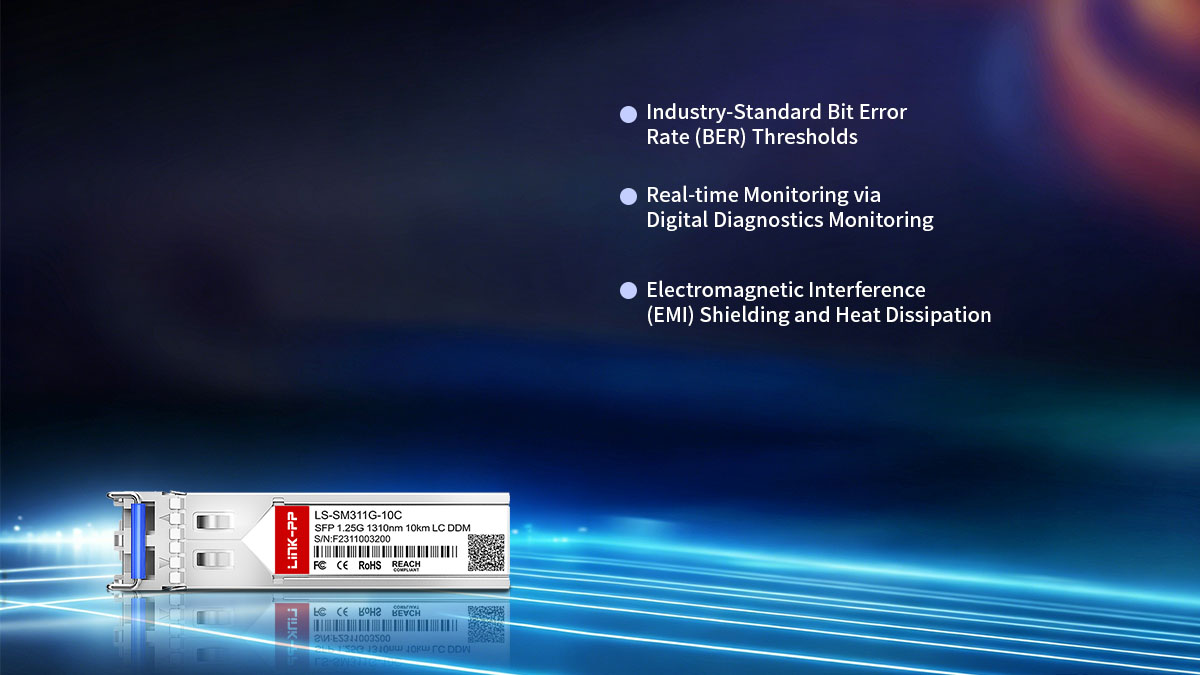
The bit error rate (BER) is the ultimate measure of a transceiver's health, representing the percentage of bits that have errors relative to the total number of bits received. For a Huawei LX compatible module to be considered reliable, it must adhere to the industry-standard threshold of 10⁻¹². This means that, at most, only one error occurs for every trillion bits transmitted, ensuring that high-speed data remains clean and usable.
Maintaining this low BER requires high-quality internal components, such as a stable laser driver and a precise optical sub-assembly. If the BER begins to rise, it is often a sign of signal attenuation or a failing laser. Regular testing during deployment ensures that the module provides the "error-free" performance necessary for mission-critical applications where even minor data loss can lead to system-wide latency or crashes.
Real-time Monitoring via Digital Diagnostics Monitoring
Digital diagnostics monitoring (DDM), also known as digital optical monitoring (DOM), is a vital feature that allows the switch to monitor the internal health of the Huawei LX compatible module in real time. Through the I2C interface, the module reports critical environmental and optical data directly to the Huawei VRP system. This proactive monitoring helps technicians identify issues like overheating or fiber micro-bends before they lead to a complete link failure.
The following table outlines the key parameters monitored by DDM and their significance in maintaining a healthy network link:
| DDM Parameter |
Function |
Importance for Huawei LX Compatible Module |
| TX Optical Power |
Measures the light output from the laser. |
Ensures the laser is operating within the 10km power range. |
| RX Optical Power |
Measures the light level received from the far end. |
Helps detect fiber breaks, dirty connectors, or excessive loss. |
| Temperature |
Monitors the internal heat of the SFP module. |
Prevents hardware damage caused by poor airflow or high port density. |
| Laser Bias Current |
Tracks the electrical current used to drive the laser. |
Acts as an "early warning" sign for laser aging and future failure. |
| Supply Voltage |
Monitors the voltage being delivered by the switch. |
Ensures the module has stable power for consistent signal integrity. |
Electromagnetic Interference (EMI) Shielding and Heat Dissipation
In high-density environments like the Huawei CloudEngine series, physical resilience is just as important as optical performance. Huawei LX compatible modules must be designed with robust metal housing to provide effective Electromagnetic Interference (EMI) shielding. This shielding prevents external signals from disrupting the delicate optical data and ensures the module itself does not interfere with neighboring electronics, which is crucial for maintaining a clean signal in a crowded server rack.
Furthermore, efficient heat dissipation is a critical metric for long-term durability. Quality compatible modules are built with thermal-conductive materials that quickly pull heat away from the internal laser and circuitry. By keeping the operating temperature within standard ranges (typically 0°C to 70°C for commercial grade), the module avoids "thermal throttling" and premature aging, ensuring a lifespan that matches or exceeds the switch it is plugged into.
♻️ Sourcing Quality Huawei LX Compatible Module: Vendor Audit Checklist
Selecting a reliable supplier for compatible optics transceivers requires a thorough evaluation process that goes beyond comparing price tags. A professional vendor audit ensures that every Huawei LX compatible module you purchase has undergone rigorous quality control and technical validation. By following a standardized checklist, procurement teams can partner with manufacturers who prioritize consistency, longevity, and high-level engineering.
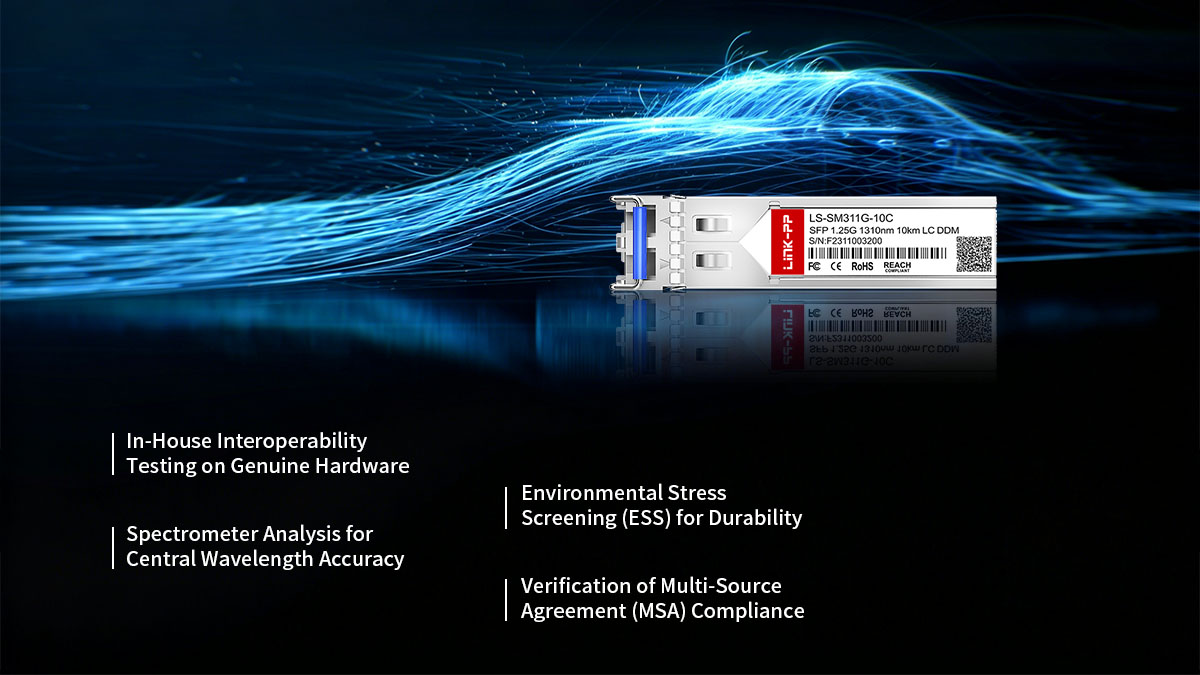
In-House Interoperability Testing on Genuine Hardware
The most critical step in a vendor audit is verifying that the manufacturer tests their products on actual Huawei switches. A reputable vendor should maintain a "compatibility lab" featuring various generations of Huawei hardware, such as Quidway campus switches and CloudEngine data center platforms. This ensures that the Huawei LX compatible modules are tested against the real-world software environment of the Versatile Routing Platform (VRP), rather than just being simulated on a generic tester.
In-house testing should also cover port-density stability, where multiple modules are populated in adjacent ports to check for interference or heat buildup. When a vendor can demonstrate successful "plug-and-play" recognition and error-free data transmission on genuine hardware, it significantly reduces the risk of field failures during your deployment.
Spectrometer Analysis for Central Wavelength Accuracy
For a Huawei LX compatible module to function correctly over 10km of fiber, its central wavelength must be precisely tuned to 1310nm. During a vendor audit, you should verify that the manufacturer uses high-precision spectrometers to measure the spectral width and center wavelength of every batch. Even a slight deviation from the 1310nm standard can lead to increased chromatic dispersion, which weakens the signal over long distances.
In addition to wavelength accuracy, spectrometer analysis helps identify the quality of the laser itself. A stable laser output with minimal "noise" ensures that the optical signal remains crisp as it travels through the fiber. Ensuring your vendor performs this level of optical testing guarantees that the Huawei LX compatible module will provide the necessary reach and performance without premature signal degradation.
Environmental Stress Screening (ESS) for Durability
Reliable modules must be able to withstand the harsh conditions sometimes found in network closets or outdoor enclosures. Environmental Stress Screening (ESS) involves subjecting the Huawei LX compatible modules to extreme temperature cycles and burn-in tests before they are shipped. This process helps identify "infant mortality" cases — modules that might fail within the first few hours of use due to microscopic manufacturing defects.
A vendor who utilizes ESS will typically run modules at high workloads and elevated temperatures for an extended period. This ensures that the solder joints, internal circuitry, and optical sub-assemblies are robust enough for long-term use. By sourcing from a vendor that prioritizes environmental durability, you can be confident that your network spares will remain functional even after years of storage or in challenging operating environments.
Verification of Multi-Source Agreement (MSA) Compliance
The Multi-Source Agreement (MSA) is a set of industry standards that define the physical dimensions and electrical interfaces of SFP modules. Verification of MSA compliance is essential because it guarantees that the Huawei LX compatible module will physically fit into any standard SFP port and communicate correctly with the switch's electrical system. During your audit, you should request documentation or certifications that prove the modules adhere to these universal design rules.
Compliance also ensures that the internal digital diagnostics monitoring maps correctly to the switch's software. When a module is fully MSA-compliant, it functions as a standardized component, allowing for easier replacements and better interoperability across different hardware brands. This adherence to industry-wide rules is what makes high-quality compatible modules a safe and strategic alternative to original OEM modules.
♻️ Inventory Management Best Practices for Huawei LX Compatible Module Spares
Effective inventory management ensures that your network remains operational even during unexpected hardware failures or rapid expansion phases. By maintaining an organized and protected stock of Huawei LX compatible spares, organizations can minimize downtime and streamline maintenance workflows. Implementing these best practices allows for a more responsive infrastructure that can adapt to changing technical demands without delay.
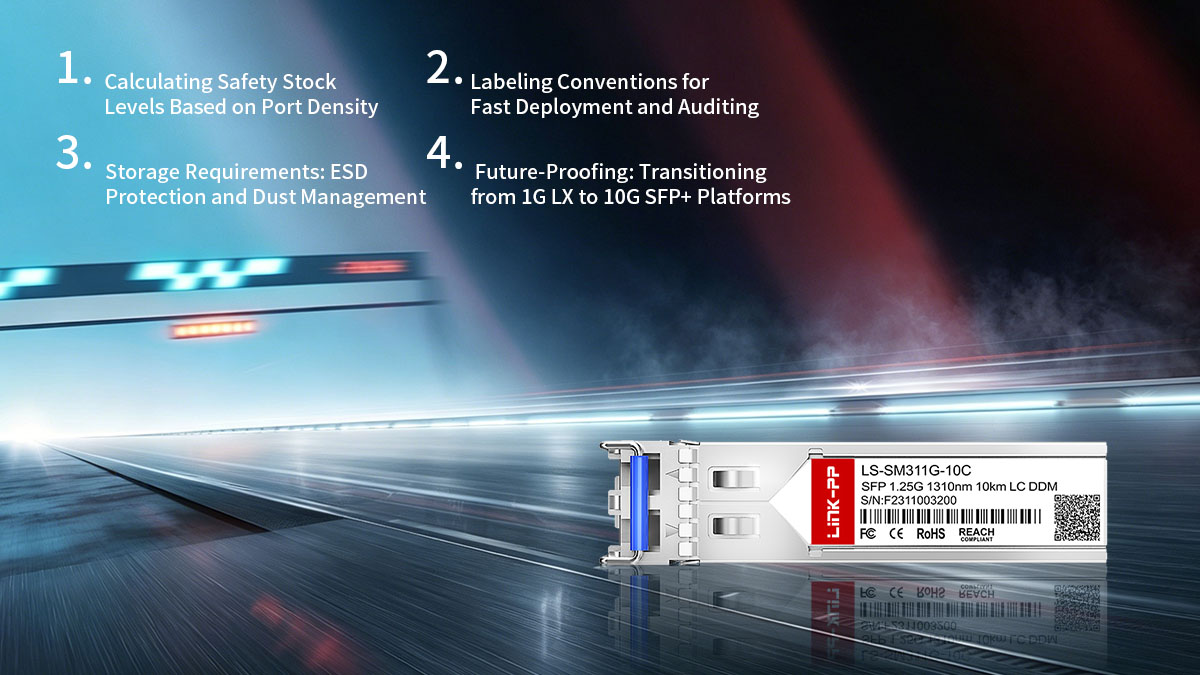
Calculating Safety Stock Levels Based on Port Density
To determine the ideal number of spare Huawei LX modules, administrators should analyze the total port density across their Huawei switch fabric. A common industry benchmark is to maintain a 5% to 10% spare ratio for each unique module type deployed in the network. For high-priority links, such as core uplinks in a CloudEngine environment, this ratio should be slightly higher to account for the critical nature of the connection and the potential for simultaneous port expansions.
Storage Requirements: ESD Protection and Dust Management
Optical transceivers are sensitive electronic components that require specific storage conditions to prevent premature failure. Huawei LX spares should always be kept in anti-static bags or original ESD (Electrostatic Discharge) protective packaging to avoid damage from static electricity. Furthermore, it is vital to keep the protective dust caps on the LC duplex connectors at all times until the moment of installation, as even microscopic dust particles can settle on the 1310nm laser aperture and cause significant signal loss or hardware damage.
Labeling Conventions for Fast Deployment and Auditing
Clear and consistent labeling is essential for identifying the right module quickly during a network emergency. Each spare should be labeled with its compatibility type (e.g., "Huawei Compatible"), wavelength (1310nm), and maximum distance (10km). By using standardized labeling conventions, onsite technicians can instantly distinguish between a standard Huawei LX module and an extended-reach version, reducing the risk of installation errors and making the annual inventory auditing process much more efficient.
Future-Proofing: Transitioning from 1G LX to 10G SFP+ Platforms
While Huawei LX 1G SFP compatible modules remain a staple for many long-haul connections, inventory planning should also consider the inevitable transition to higher speeds. Organizations should monitor their bandwidth utilization trends to determine when to begin phasing out 1G spares in favor of 10G SFP+ LR modules. Strategic future-proofing involves maintaining a dual-inventory system where 1G SFP modules support legacy hardware while 10G components are prioritized for new, high-capacity switch deployments, ensuring a smooth and cost-effective migration path.
♻️ Conclusion: Optimizing Your Network ROI with Strategic Huawei LX Module Sourcing
Building a strong and reliable network doesn't have to be overly expensive. By choosing a smart strategy for your Huawei LX modules, you can get the high performance your business needs while staying well within your budget. Moving away from pricey original hardware to high-quality compatible options gives you more freedom to grow and makes it much easier to keep spare parts on hand. When you focus on the right technical standards and keep your inventory organized, you ensure that your network stays fast and connected without any unexpected interruptions.
In the end, the secret to a great network is using parts that work perfectly with your equipment every time you plug them in. By following the tips in this article, you can build a more flexible system that is easy to manage and affordable to scale. If you are looking for reliable, high-quality optical transceivers that are built to last, check out the wide selection available at the LINK-PP Official Store. Our transceiver modules are designed to give you the best performance for your investment, helping you keep your network running smoothly for years to come.