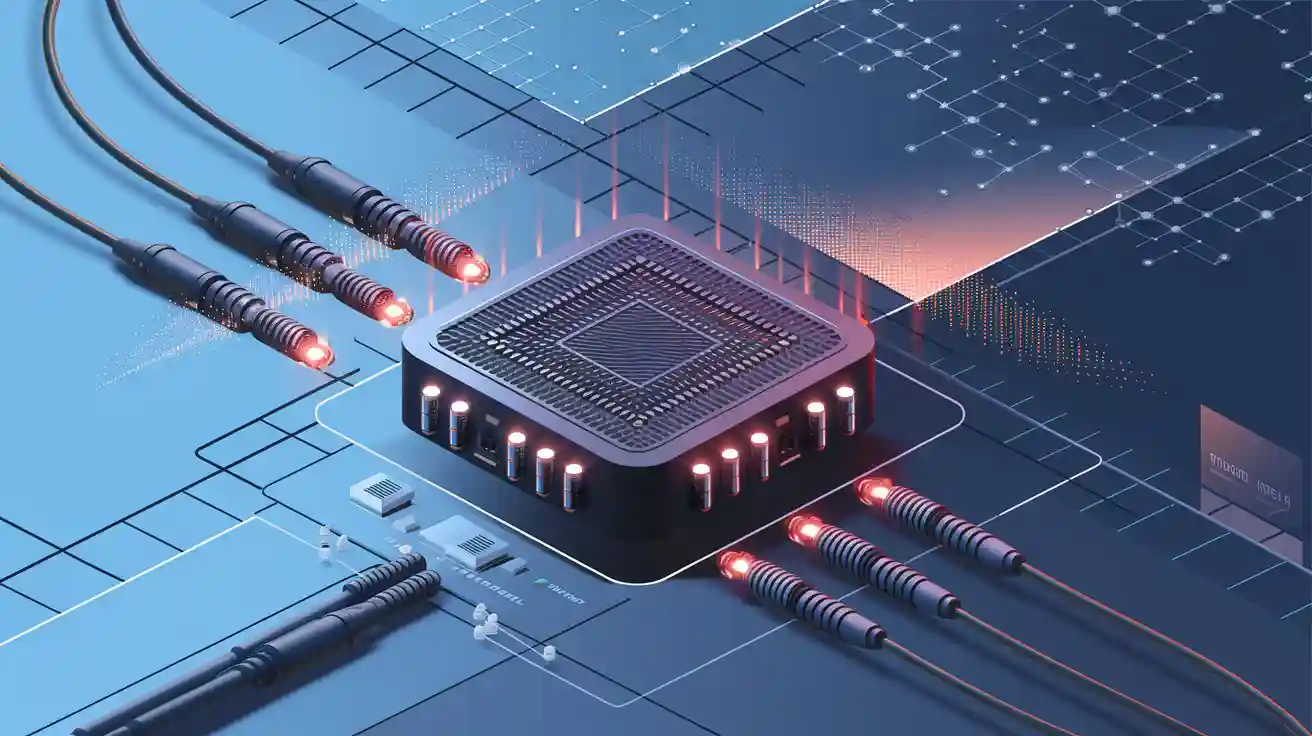
Storage platforms require a connection method that is both cost-efficient and operationally reliable. For these scenarios, a Direct Attach Copper solution often provides a more practical alternative than deploying separate optical transceivers and fiber patch cords.
HPE 487655-B21 is a 3-meter SFP+ to SFP+ Direct Attach Copper (DAC) cable engineered for stable 10Gb Ethernet connectivity in HPE BladeSystem c-Class infrastructures, HPE networking platforms, Aruba-compatible SFP+ switch uplinks, and other short-range data center interconnect applications.
Because the cable integrates twinax copper cabling with fixed SFP+ terminations on both ends, it simplifies installation while reducing transceiver power consumption, lowering hardware cost, and minimizing latency across high-speed 10G links.
Compared with fiber-based deployments, this type of passive DAC assembly eliminates the need for additional optical modules, patch cables, and optical compatibility planning, making it especially suitable for:
-
switch-to-switch uplinks,
-
top-of-rack to server aggregation,
-
adjacent rack interconnects,
-
and short in-row 10GbE network extensions.
Its 3-meter reach also makes it one of the most practical lengths for structured rack deployments where clean cable routing and manageable bend radius are important.
However, selecting a 10G DAC cable is not only about connector type and length. In production environments, administrators must also consider platform recognition, firmware acceptance, interoperability behavior, and whether a passive copper assembly is a better fit than fiber optics or 10GBASE-T alternatives.
This is where HPE 487655-B21 stands out as more than just a standard SFP+ cable. It is a purpose-built HPE 10GbE direct attach interconnect designed for short-range, low-complexity, and high-stability network links where dependable port-to-port communication matters.
In the following sections, we will examine its technical specifications, BladeSystem and Aruba compatibility, deployment advantages, real-world interoperability considerations, and the situations where this 3m SFP+ DAC cable is the most effective choice.
🟢 What Is HPE 487655-B21?
HPE 487655-B21 is a 3-meter SFP+ to SFP+ passive Direct Attach Copper (DAC) cable designed to deliver 10 Gigabit Ethernet connectivity between two SFP+ enabled devices over short distances. It was originally introduced as part of the HPE BladeSystem c-Class 10GbE interconnect portfolio, where low-latency and low-power copper uplinks are preferred for in-rack and adjacent-rack network links.

Unlike a traditional fiber optic solution that requires two separate SFP+ transceivers plus an optical patch cord, HPE 487655-B21 combines both SFP+ termination ends and the twinax copper transmission medium into one integrated assembly. This plug-and-play construction reduces installation complexity while offering a simpler and more economical way to establish high-speed 10G server-to-switch or switch-to-switch communication.
From a hardware standpoint, the cable features:
-
Connector Type: SFP+ to SFP+
-
Cable Type: Passive Direct Attach Copper (Twinax)
-
Cable Length: 3 meters
-
Application Speed: 10GbE / 10 Gigabit Ethernet
-
Primary Deployment: Short-range data center interconnects
This means the cable is specifically engineered for environments where:
-
transmission distance is short,
-
low latency is required,
-
transceiver power draw should be minimized,
-
and overall cabling cost needs to stay below fiber-based alternatives.
Because passive DAC cables transmit electrical signals directly over copper without optical conversion, they are widely used inside enterprise racks, blade enclosures, top-of-rack switching systems, and clustered storage platforms where physical proximity makes fiber unnecessary.
Why HPE 487655-B21 Is Different from a Standard Network Cable
Although it may look similar to a simple copper jumper, HPE 487655-B21 is not an Ethernet patch cable and not a generic RJ45 copper cable. It is an SFP+ coded high-speed twinax interconnect that communicates directly with SFP+ ports at the transceiver level.
This distinction is important because:
-
it supports native 10Gb serial communication,
-
it relies on SFP+ EEPROM compatibility recognition,
-
and it is designed for networking hardware that expects validated SFP+ module handshaking.
In other words, this is a data center interconnect accessory rather than a standard LAN cable.
Typical Use Cases of HPE 487655-B21
In practical deployment, HPE 487655-B21 is commonly used for:
-
connecting HPE BladeSystem interconnect modules to external 10G switches,
-
linking HPE or Aruba SFP+ switches across short rack distances,
-
server NIC to top-of-rack SFP+ uplinks,
-
storage appliance 10GbE direct copper aggregation,
-
and other low-distance SFP+ port-to-port connections.
Its 3-meter factory-terminated length makes it especially suitable for structured cabinet layouts where a 1m cable is too short and a longer optical run would be unnecessary.
HPE 487655-B21 is a 3m passive SFP+ Direct Attach Copper cable used to create low-cost, low-latency 10GbE links between two SFP+ networking devices in short-distance HPE and compatible data center environments.
This is the core reason it remains a practical solution for many 10G infrastructure deployments even as fiber optics become more common.
🟢 HPE 487655-B21 Specifications and Key Features
Before deploying any 10G Direct Attach Copper assembly, verifying the physical and electrical specifications is essential. Although SFP+ DAC cables are often treated as simple plug-in accessories, details such as cable length, bend radius, crosstalk tolerance, signal delay, and connector construction directly influence installation flexibility and long-term link stability.
HPE 487655-B21 is engineered as a passive 3-meter SFP+ twinax cable optimized for short-distance 10GbE transmission where low power draw, minimal latency, and clean rack-level cable routing are required.
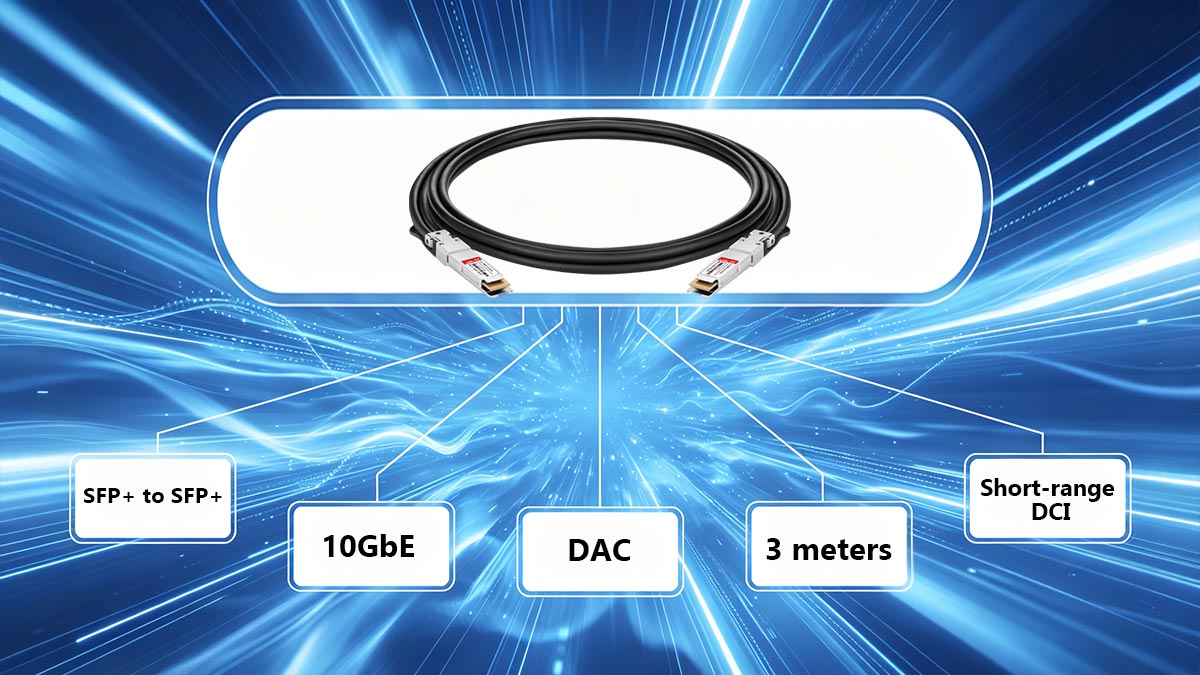
Below are the core technical specifications of this HPE DAC cable.
Core Technical Specifications of HPE 487655-B21
|
Specification
|
Details
|
|
Product Model
|
HPE 487655-B21
|
|
Product Type
|
Direct Attach Copper (DAC) Cable
|
|
Connector Type
|
SFP+ to SFP+
|
|
Cable Construction
|
Passive Twinax Copper
|
|
Data Rate
|
10 Gigabit Ethernet (10GbE)
|
|
Cable Length
|
3 meters
|
|
Cable Diameter
|
0.180 inch
|
|
Maximum Crosstalk
|
2% max
|
|
Time Delay
|
1.31 nsec/ft
|
|
Minimum Bend Radius
|
1.0 inch
|
|
Cable Weight
|
0.22 kg (0.49 lb)
|
|
Typical Application
|
BladeSystem / Switch / Server SFP+ Interconnect
|
SFP+ to SFP+ Passive DAC Architecture
One of the most important characteristics of HPE 487655-B21 is that it is a passive DAC cable rather than an active optical or active copper assembly.
This means:
-
no optical laser components are involved,
-
no external transceiver modules are required,
-
and signal transmission occurs directly over shielded twinax copper conductors.
Because passive DACs do not perform optical-electrical conversion, they typically offer:
For short 10Gb links inside racks, this makes passive DAC a highly efficient physical-layer solution.
Why the 3-Meter Length Matters
The 3-meter reach offers practical flexibility for:
-
switch-to-switch uplinks,
-
top-of-rack to server links,
-
adjacent cabinet connections,
-
and BladeSystem enclosure interconnects.
Compared with shorter DAC assemblies, it allows cleaner cable routing without creating excessive slack inside standard racks.
Key Performance Advantages
From a deployment perspective, HPE 487655-B21 delivers several important benefits:
-
low-latency electrical transmission,
-
reduced hardware cost,
-
low transceiver power draw,
-
stable short-distance 10GbE communication,
-
and simpler rack-level cable management.
These features make it a practical SFP+ direct attach solution for HPE BladeSystem, Aruba-compatible networking, and other 10G data center environments.
🟢 HPE 487655-B21 vs. Fiber vs. RJ45: Which Is Better for 10G?
When building a 10GbE connection, the transmission medium matters just as much as the port type. Although HPE 487655-B21 provides a practical SFP+ Direct Attach Copper solution, it is not the only option available. In many deployments, administrators also compare DAC cables with fiber optic transceivers and 10GBASE-T RJ45 copper modules before deciding which link method is the most efficient.
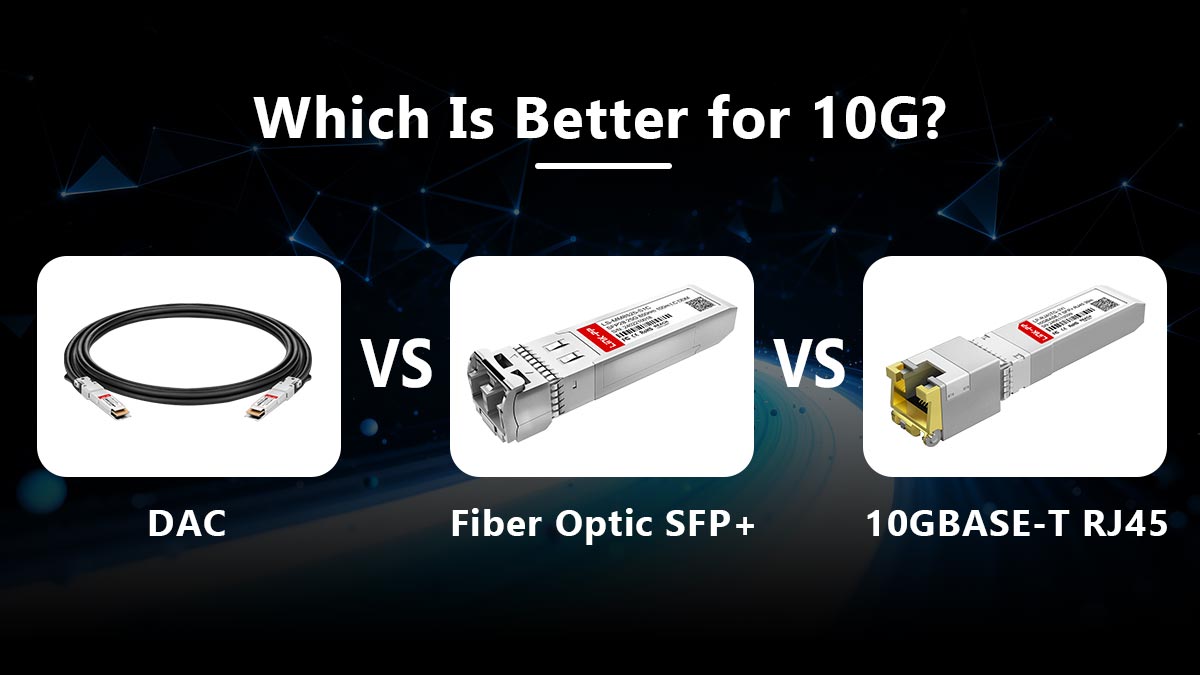
Each option has its own advantages depending on distance, budget, heat, and installation complexity.
Quick Comparison Table
|
Option
|
Best Distance
|
Cost
|
Power Use
|
Latency
|
Installation
|
|
HPE 487655-B21 DAC
|
Short (up to 3m)
|
Low
|
Very Low
|
Very Low
|
Simple
|
|
Fiber SFP+ Optics
|
Medium to Long
|
Higher
|
Low to Medium
|
Low
|
Moderate
|
|
RJ45 SFP+ Modules
|
Short to Medium
|
Medium to High
|
Higher
|
Medium
|
Flexible
|
HPE 487655-B21 (DAC) vs. Fiber Optic SFP+ Modules
Fiber optics are ideal for longer-distance links, but they require:
-
two separate SFP+ optical transceivers,
-
one fiber patch cord,
-
optical wavelength matching,
-
and additional compatibility verification.
By comparison, HPE 487655-B21 combines both SFP+ ends and the transmission cable into one passive DAC assembly, making deployment faster and significantly more cost-effective for short-range links.
DAC also typically offers:
Fiber remains the better choice when:
-
cable distance exceeds DAC limits,
-
lightweight cable management is required,
-
or electromagnetic isolation is preferred.
HPE 487655-B21 (DAC) vs. 10GBASE-T RJ45 Modules
RJ45 SFP+ copper modules are often selected when an environment already uses Cat6/Cat6a structured cabling. However, RJ45 transceivers generally introduce:
-
higher power consumption,
-
more heat generation,
-
greater transceiver cost,
-
and slightly higher latency.
In contrast, HPE 487655-B21 passive DAC does not require pluggable copper transceiver modules at all, which helps keep both thermal load and hardware expense lower.
For short point-to-point 10G uplinks inside racks, DAC is usually the cleaner and more stable choice than RJ45.
RJ45 becomes useful only when:
Which One Is Better for 10G?
There is no universal winner—the right choice depends on deployment distance and infrastructure design.
-
Choose HPE 487655-B21 DAC when you need a low-cost, low-latency, short-range SFP+ interconnect.
-
Choose fiber optics when longer transmission distance and lighter cable routing are required.
-
Choose RJ45 modules when existing twisted-pair copper infrastructure must be retained.
For most rack-level HPE BladeSystem, Aruba switch, or adjacent SFP+ networking links, HPE 487655-B21 remains one of the most practical and economical 10G connection methods.
🟢 What Systems Is HPE 487655-B21 Compatible With?
Compatibility is one of the most important considerations when selecting an SFP+ Direct Attach Copper cable. Although HPE 487655-B21 uses a standard SFP+ to SFP+ interface, DAC assemblies are not always universally interchangeable because some networking platforms verify cable EEPROM coding, vendor ID recognition, and firmware-level transceiver acceptance before establishing a stable 10GbE link.
For this reason, HPE 487655-B21 is best understood as an HPE-coded passive 10G DAC cable designed primarily for HPE server and switching ecosystems, while also being deployable in certain compatible SFP+ environments.
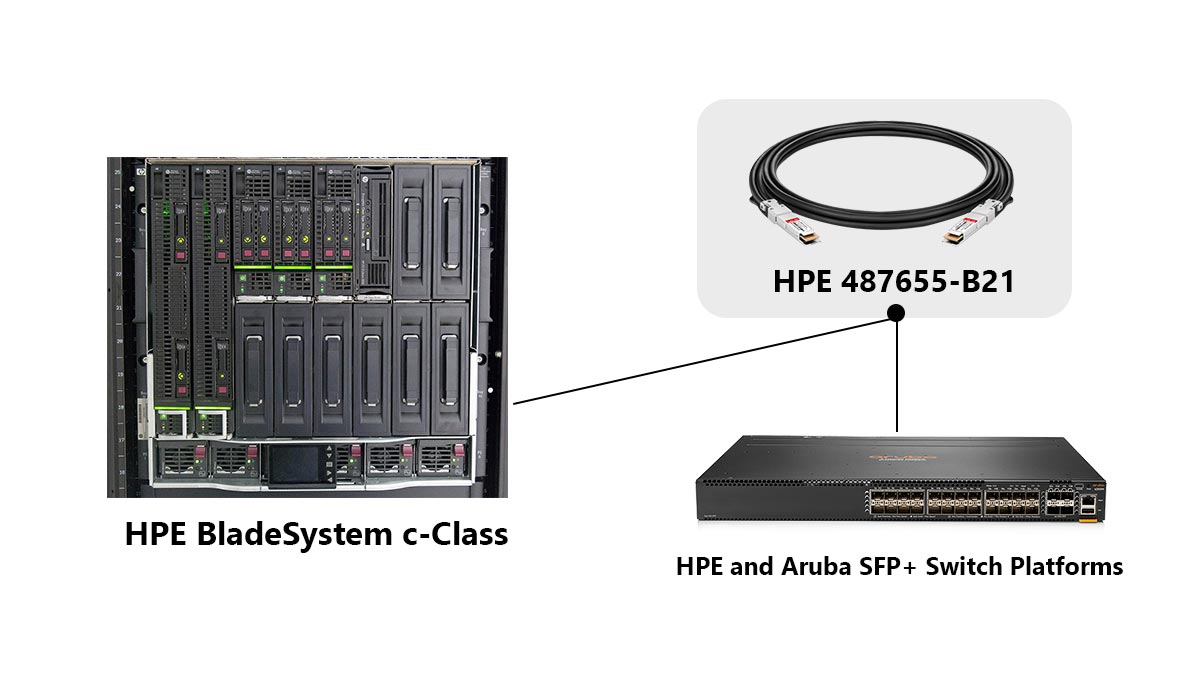
HPE BladeSystem c-Class Environments
HPE 487655-B21 was originally introduced for HPE BladeSystem c-Class 10GbE infrastructures, where it is commonly used to connect:
-
BladeSystem interconnect modules,
-
Virtual Connect uplinks,
-
enclosure networking bays,
-
and external 10G aggregation switches.
In these deployments, the cable provides a simple low-latency copper uplink without requiring separate SFP+ optical transceivers.
Because it is an HPE-native coded assembly, BladeSystem platforms generally offer the most straightforward interoperability.
HPE and Aruba SFP+ Switch Platforms
Beyond BladeSystem, this DAC cable is also commonly used in:
Since Aruba networking is now part of the broader HPE infrastructure portfolio, many administrators use HPE-coded DAC assemblies like 487655-B21 in mixed HPE/Aruba environments where short passive copper links are preferred.
For standard HPE-recognized SFP+ ports, this cable is generally a natural fit for short-distance rack interconnects.
Mixed-Vendor SFP+ Compatibility
Physically, any SFP+ port can accept the cable connector, but physical insertion does not always guarantee full operational compatibility.
Some third-party switches, routers, servers, or storage appliances may:
-
reject unsupported vendor coding,
-
generate transceiver warning messages,
-
negotiate unstable links,
-
or require manual compatibility overrides.
This behavior is not unique to HPE 487655-B21—it is a common characteristic of SFP+ DAC deployments across enterprise hardware.
Therefore, when using this cable outside HPE-oriented systems, administrators should always verify:
-
SFP+ DAC support policy,
-
passive cable acceptance,
-
vendor lock restrictions,
-
and firmware transceiver whitelist behavior.
Key Compatibility Check Before Purchase
Before selecting HPE 487655-B21, it is best to confirm four practical items:
-
Both devices must have SFP+ 10G ports
This cable is not compatible with RJ45 Ethernet ports or QSFP interfaces.
-
Both devices should support passive DAC operation
Some platforms are more tolerant with active modules than passive twinax.
-
Vendor coding acceptance should be verified
HPE-coded cables work best in HPE ecosystems, while mixed-vendor use may require validation.
-
The required cable distance should fit within a 3-meter layout
DAC is intended for short-range copper interconnect only.
HPE 487655-B21 is best suited for HPE BladeSystem c-Class, HPE SFP+ networking hardware, Aruba-compatible 10G switch uplinks, and other SFP+ platforms that support HPE-coded passive DAC cables.
For native HPE environments, deployment is typically straightforward. For third-party hardware, compatibility verification is recommended before purchase.
🟢 HPE DAC Compatibility and Installation Notes
Although HPE 487655-B21 is designed as a plug-and-play SFP+ passive DAC cable, real-world deployment is not always as simple as matching two SFP+ ports. In enterprise environments, cable recognition, firmware behavior, and physical rack layout can all affect whether a DAC link performs as expected.
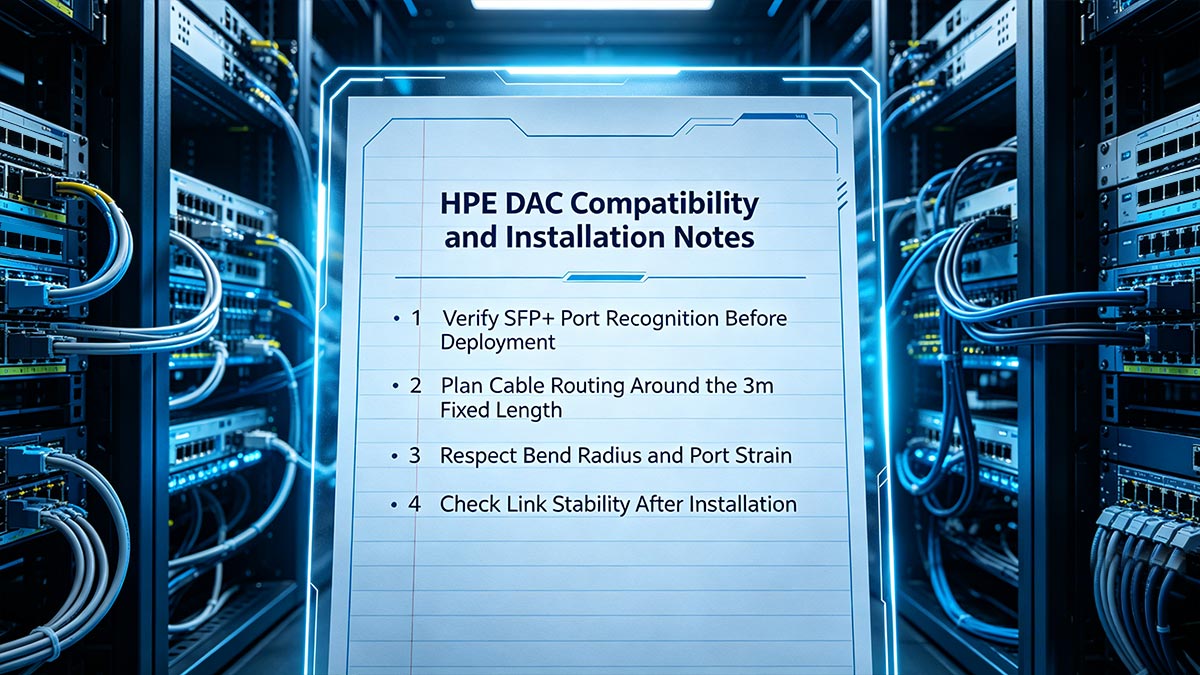
Understanding these practical factors before installation helps avoid unnecessary link failures and replacement costs.
Verify SFP+ Port Recognition Before Deployment
The first requirement is straightforward: both endpoints must support 10G SFP+ passive DAC connectivity.
While the connectors are physically standardized, some switches and servers check:
In native HPE BladeSystem, HPE server, and many Aruba SFP+ environments, HPE 487655-B21 is generally recognized without issue. In mixed-vendor setups, however, unsupported cable warnings or unstable link negotiation can occasionally occur.
For this reason, it is always advisable to confirm:
before final installation.
Plan Cable Routing Around the 3m Fixed Length
Unlike optical modules that use detachable patch cords, DAC cables are a single fixed assembly. This means cable management should be planned according to the physical rack path before deployment.
The 3-meter length is well suited for:
-
top-of-rack to server connections,
-
neighboring switch uplinks,
-
BladeSystem enclosure to aggregation switch links,
-
and adjacent cabinet SFP+ runs.
However, administrators should avoid excessive slack loops, as thick twinax DAC cables occupy more airflow space than fiber patch cords.
Respect Bend Radius and Port Strain
HPE specifies a 1.0-inch minimum bend radius, which should be maintained during routing.
Over-bending or sharply folding a DAC cable may lead to:
Because passive twinax assemblies are heavier and less flexible than optical jumpers, supporting the cable path with proper cable guides is recommended, especially in dense rack environments.
Check Link Stability After Installation
After both SFP+ ends are inserted, administrators should verify:
-
negotiated 10Gb link speed,
-
interface error counters,
-
port flap behavior,
-
and transceiver warning logs.
A DAC cable can appear physically connected while still experiencing firmware-level compatibility messages or unstable signal negotiation if the host hardware does not fully accept the cable coding.
A short validation test after installation helps identify these issues early.
Best Practice Summary
For the most stable deployment of HPE 487655-B21, keep the following installation practices in mind:
-
confirm both devices support passive SFP+ DAC,
-
verify HPE-coded cable recognition when mixing vendors,
-
route the 3m cable according to actual rack distance,
-
avoid tight bends and unsupported hanging weight,
-
and validate 10Gb link health after connection.
With proper compatibility checking and cable routing, HPE 487655-B21 provides a very efficient short-range 10GbE interconnect with minimal deployment complexity.
🟢 Common Questions About HPE 487655-B21
Even though HPE 487655-B21 is a relatively straightforward 3m SFP+ Direct Attach Copper cable, administrators often have several practical questions before deploying it in a 10GbE environment. Most of these concerns involve cable type, interoperability, deployment distance, and whether DAC is the best alternative to optical or RJ45 solutions.
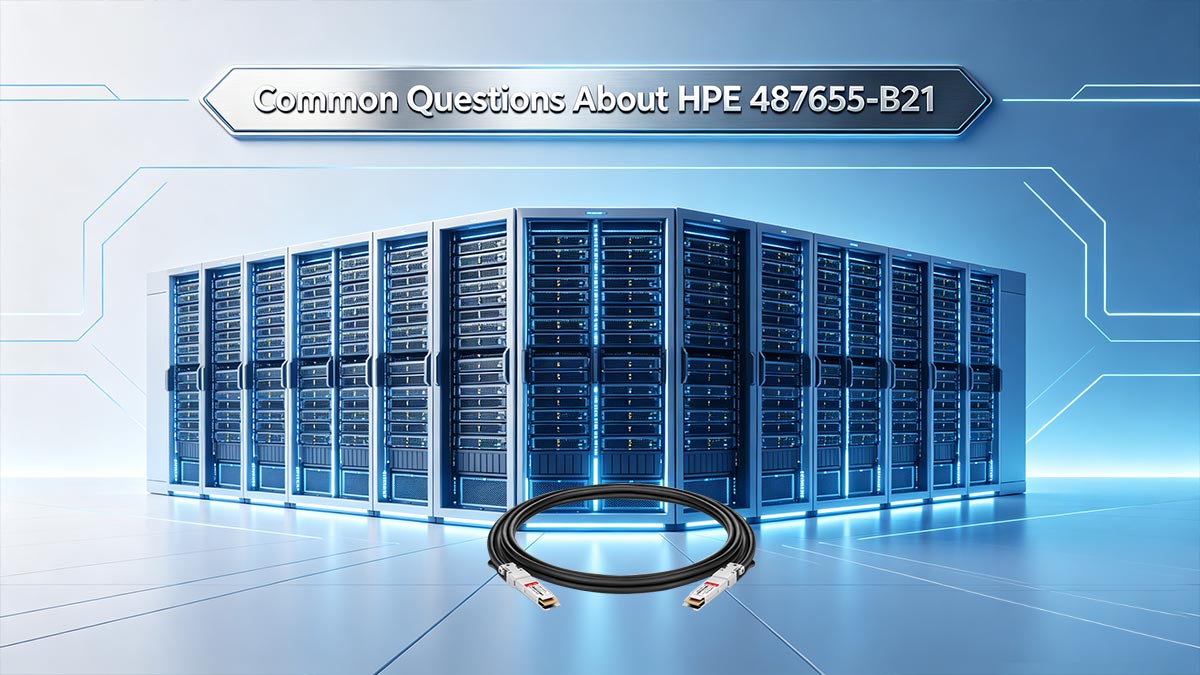
Below are the most common technical questions surrounding this HPE DAC assembly.
1. Is HPE 487655-B21 a passive or active DAC cable?
HPE 487655-B21 is a passive SFP+ Direct Attach Copper cable.
It does not contain active signal conditioning or optical conversion components. Instead, it transmits electrical data directly through twinax copper conductors, which keeps power consumption low and latency minimal.
Passive DAC is typically preferred for short-range 10G links where both devices are located within the same rack or nearby cabinets.
2. Can HPE 487655-B21 work with Aruba switches?
Yes—provided the Aruba switch supports HPE-coded passive SFP+ DAC assemblies.
Because Aruba networking is part of the broader HPE infrastructure ecosystem, many Aruba SFP+ switch deployments can recognize HPE DAC cables without issue. However, firmware version and transceiver acceptance policies should still be verified when deploying in mixed or newer switch environments.
3. Is HPE 487655-B21 compatible with non-HPE equipment?
Physical SFP+ compatibility does not always guarantee full operational support.
Some third-party servers, storage devices, or switches may accept the cable normally, while others may display unsupported transceiver warnings or negotiate unstable links if vendor EEPROM validation is strict.
For non-HPE platforms, compatibility confirmation is recommended before production deployment.
4. Is 3 meters a good length for a DAC cable?
Yes. A 3-meter DAC cable is one of the most practical lengths for:
-
rack-to-rack uplinks,
-
top-of-rack to server links,
-
BladeSystem to switch connections,
-
and adjacent SFP+ device interconnects.
It provides more routing flexibility than a 1-meter cable without creating the excessive bulk often seen with longer copper assemblies.
5. Is HPE 487655-B21 better than fiber for 10G?
For short-distance SFP+ links, HPE 487655-B21 is usually the more economical and simpler choice.
Fiber becomes the better option only when:
-
longer transmission distance is required,
-
lighter cable weight is preferred,
-
or the environment demands optical isolation.
Within standard rack-level deployments, passive DAC generally offers lower total cost and easier installation.
6. Does HPE 487655-B21 require separate transceiver modules?
No.
This is a fully integrated SFP+ to SFP+ DAC assembly with fixed transceiver terminations on both ends. No additional optical modules or copper RJ45 adapters are required.
That is one of the main reasons it reduces both hardware expense and deployment complexity.
🟢 Final Recommendation: Is HPE 487655-B21 the Right 10G DAC Choice?
For short-distance 10GbE SFP+ interconnects, HPE 487655-B21 remains a highly practical solution. Its passive twinax design, integrated SFP+ terminations, low power draw, and simple one-piece installation make it especially effective in environments where fiber optics would add unnecessary cost and deployment complexity.
Rather than functioning as a general-purpose network cable, this model is specifically built for stable point-to-point 10G communication between nearby SFP+ devices in enterprise racks, blade enclosures, and switch uplink scenarios.

Best-Fit Users
HPE 487655-B21 is best suited for:
-
administrators running HPE BladeSystem c-Class infrastructures,
-
HPE or Aruba networking environments with native SFP+ uplinks,
-
data centers requiring low-latency rack-level 10G connections,
-
and IT teams looking for a cost-efficient alternative to separate SFP+ optics and fiber patch cords.
If the deployment distance is short and both endpoints support passive DAC recognition, this cable offers one of the simplest and most economical 10G connection methods available.
When to Choose
This model is a strong choice when:
-
the required cable run is within 3 meters,
-
both devices use SFP+ 10Gb ports,
-
low power consumption is preferred,
-
minimal latency is important,
-
and quick plug-and-play installation is needed.
In these cases, HPE 487655-B21 can reduce both hardware spending and installation time compared with optical alternatives.
When to Skip It
HPE 487655-B21 may not be the ideal option when:
-
the link distance exceeds short rack-level deployment,
-
the hardware requires non-HPE vendor coding,
-
highly flexible lightweight cabling is preferred,
-
or existing structured RJ45 copper infrastructure must be retained.
For longer transmission paths or mixed-vendor uncertainty, fiber optics or specially coded compatible DAC solutions may be a better fit.
Closing Recommendation
Overall, HPE 487655-B21 is a dependable 3m SFP+ to SFP+ passive DAC cable for HPE-centered 10G networking environments where simplicity, stability, and lower deployment cost matter most.
For buyers seeking a fully compatible replacement, a tested third-party equivalent, or a more cost-effective HPE-coded 10G DAC solution, the LINK-PP Official Store offers enterprise-ready SFP+ direct attach copper alternatives designed for reliable interoperability across HPE, Aruba, and other mainstream networking platforms.