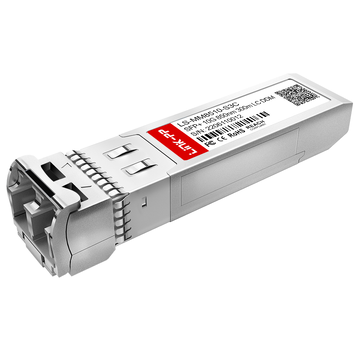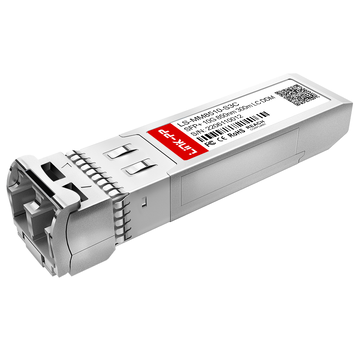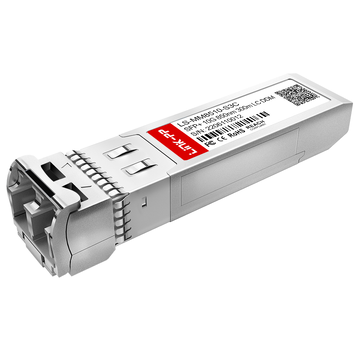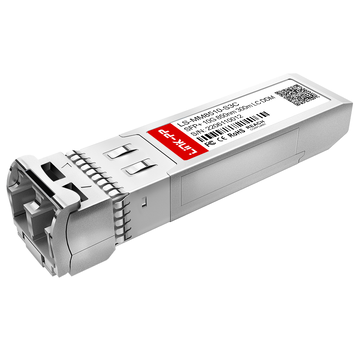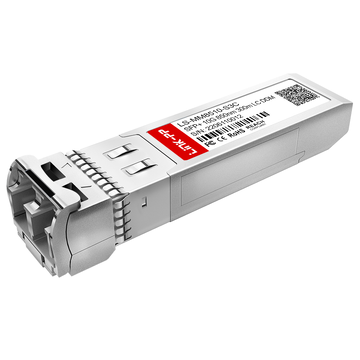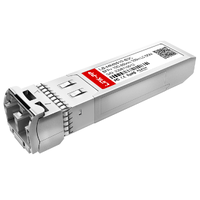




















H3C SFP-XG-SX-MM850-E is a 10G SFP+ short-range optical transceiver designed for high-speed multimode fiber connections in enterprise and data center environments. It operates at an 850nm wavelength and is typically used to enable reliable 10G Ethernet links over OM3 and OM4 fiber infrastructure.
From a practical deployment perspective, this module is widely adopted in network architectures where stable, low-latency, and cost-efficient optical connectivity is required over short distances. It is commonly integrated into top-of-rack switches, aggregation switches, and high-density server interconnect systems.
In modern network planning, selecting a compatible and reliable 10G SFP+ module directly impacts system performance, interoperability, and long-term maintenance cost. Therefore, understanding the technical role, compatibility requirements, and sourcing considerations of the H3C SFP-XG-SX-MM850-E is essential for IT teams and procurement professionals.
This article provides a structured evaluation of its specifications, application scenarios, compatibility landscape, and market considerations to support informed decision-making in 10G optical network deployments.
🥏 What Is H3C SFP-XG-SX-MM850-E?
The H3C SFP-XG-SX-MM850-E is one of the 10Gbps SFP+ short-range optics designed for multimode fiber networks. It is used to convert electrical signals into optical signals, enabling high-speed 10G Ethernet connectivity between switches, servers, and other networking devices over short distances.
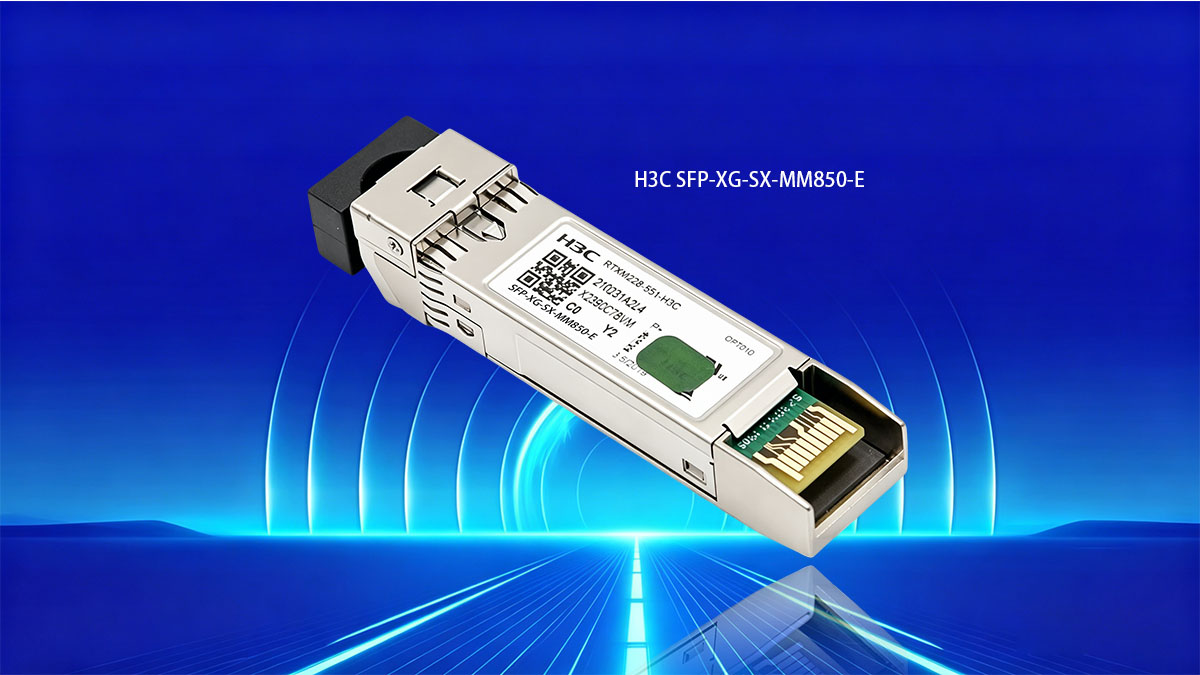
Product Definition and Functional Role
The H3C SFP-XG-SX-MM850-E is a hot-pluggable SFP+ optical module built for 10G Ethernet transmission over multimode fiber (MMF). Its main role is to provide a standardized optical interface that supports short-reach data communication in enterprise and data center environments.
In practical terms, this module is used wherever high-speed, short-distance fiber connections are required. It ensures stable data transmission by converting electrical signals from networking equipment into optical signals transmitted through fiber cabling.
To better understand its functional value in real-world networks, the following points summarize its core role:
- Enables 10Gbps optical connectivity between network devices
- Supports short-range transmission in structured cabling systems
- Provides a pluggable interface for SFP+ compatible ports
- Ensures interoperability in standardized Ethernet environments
These functions make it a fundamental component in modular and scalable 10G network architectures.
Key Technical Specifications
The H3C SFP-XG-SX-MM850-E is defined by standardized optical parameters that determine its performance and compatibility in 10G networks. These specifications are essential for evaluating deployment suitability.
| Parameter | Specification |
|---|---|
| Data Rate | 10Gbps |
| Wavelength | 850nm |
| Transmission Distance | 300m (OM3), 400m (OM4) |
| Connector Type | LC Duplex |
| Fiber Type | Multimode Fiber (MMF) |
| Form Factor | SFP+ |
These parameters confirm that the module is optimized for short-range, high bandwidth optical links rather than long-distance transmission.
From a deployment standpoint, these specifications align with common data center fiber standards, especially OM3 and OM4 cabling used in high-density switching environments.
Typical Deployment Scenarios
The H3C SFP-XG-SX-MM850-E is commonly deployed in environments where reliable short-distance 10G connectivity is required. It is widely used in structured network designs that prioritize performance and port density.
Typical use cases include:
- Top-of-rack (ToR) switch connections in data centers
- Server-to-switch 10G Ethernet links
- Enterprise network backbone aggregation
- High-performance computing (HPC) clusters
These scenarios reflect environments where low-latency and high-throughput communication is essential. The module's multimode design also simplifies fiber management in tightly packed infrastructure layouts.
In summary, its deployment focus is on enabling efficient and stable 10G optical connectivity within modern enterprise and data center networks.
🥏 Market Positioning and Equivalent Models
The H3C SFP-XG-SX-MM850-E is positioned in the mainstream 10G multimode SFP+ transceiver segment, primarily serving enterprise and data center short-reach connectivity needs. It competes in a mature market where interoperability, cost efficiency, and multi-vendor compatibility are key purchasing considerations rather than raw technological differentiation.
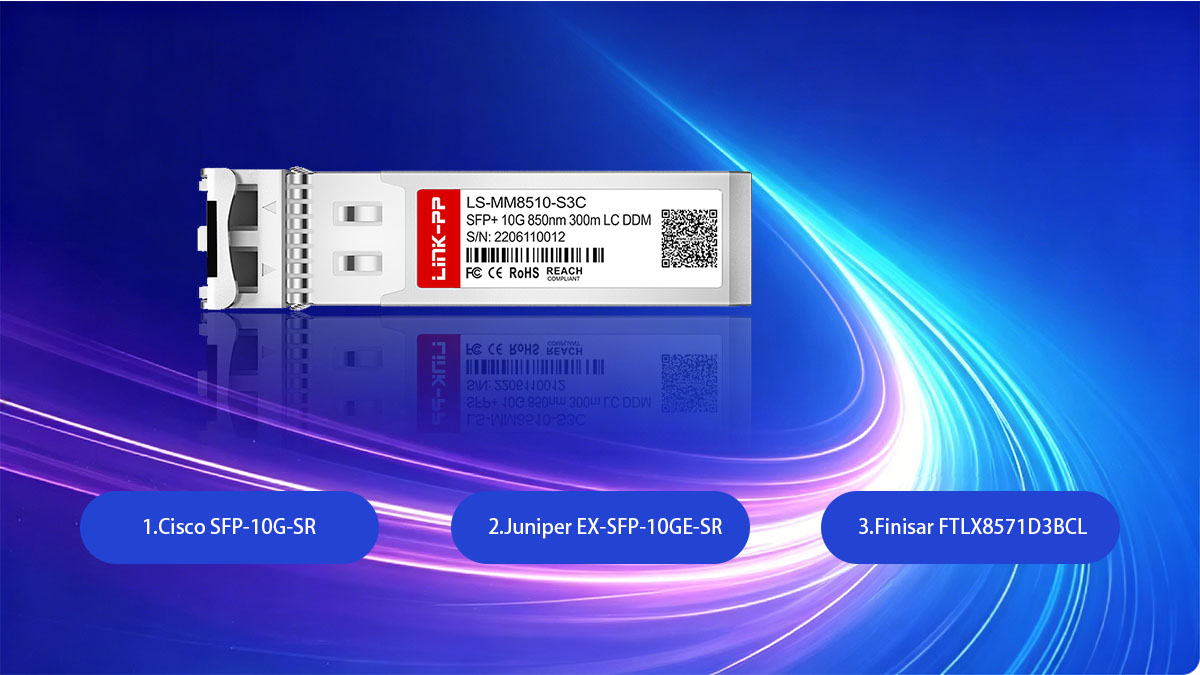
Comparable Transceivers from Other Vendors
The H3C SFP-XG-SX-MM850-E is technically aligned with other widely adopted 10GBASE-SR SFP+ modules. These alternatives are often used interchangeably in compatible switch environments when MSA standards are followed.
Common equivalent models include:
- Cisco SFP-10G-SR
- Juniper EX-SFP-10GE-SR
- Finisar FTLX8571D3BCL
- Arista SFP-10G-SR
Before listing technical similarities, it is important to understand that these transceiver modules are generally designed under the same IEEE 10GBASE-SR standard, which ensures baseline interoperability across vendors.
From a functional standpoint, these equivalents share key characteristics:
- 10Gbps data transmission rate
- 850nm wavelength for multimode fiber
- LC duplex interface design
- Short-reach optical transmission (typically up to 300–400m depending on fiber type)
These similarities make them interchangeable in many standardized network deployments, provided device compatibility is confirmed.
Interoperability and Compatibility Considerations
Compatibility is one of the most important factors when evaluating the H3C SFP-XG-SX-MM850-E in multi-vendor environments. While the module follows industry standards, real-world interoperability depends on switch firmware and vendor restrictions.
To better understand deployment risks and requirements, key compatibility factors include:
- Device vendor coding restrictions (e.g., H3C, Cisco, or others)
- IEEE 802.3ae 10GBASE-SR compliance level
- EEPROM identification and authentication checks
- Switch firmware compatibility lists
These factors determine whether a module will be recognized and operate correctly in a given system. Even when hardware specifications match, software-level validation may still affect usability.
In practical deployments, engineers often verify compatibility through:
- Switch compatibility matrices
- Pre-deployment testing in lab environments
- Firmware version validation
- Vendor-approved transceiver lists
This ensures stable operation and reduces integration risks in production networks.
OEM vs Compatible Modules
In the 10G optical transceiver market, there are typically two categories of sourcing options: original equipment manufacturer (OEM) modules and compatible third-party alternatives. The H3C SFP-XG-SX-MM850-E falls into the OEM category, while equivalent modules may be offered by third-party manufacturers.
Before comparing them, it is important to recognize that both types often share the same optical standards and functional performance when properly manufactured.
Key differences include:
- OEM modules are vendor-branded and fully validated for specific hardware ecosystems
- Compatible modules are produced by third-party manufacturers based on MSA standards
- Pricing structures differ significantly between OEM and compatible options
- Firmware coding may vary depending on supplier implementation
From a practical standpoint, compatible modules are widely used in cost-sensitive deployments where multi-vendor flexibility is required, while OEM modules are preferred in environments requiring strict vendor compliance.
In summary, the market positioning of the H3C SFP-XG-SX-MM850-E sits within a competitive ecosystem where technical equivalence exists across multiple vendors, but selection decisions are primarily driven by compatibility requirements, sourcing strategy, and deployment policies.
🥏 Pricing Structure and Cost Factors
The pricing of the H3C SFP-XG-SX-MM850-E is not fixed by a single variable; instead, it is influenced by multiple technical, supply chain, and procurement-related factors. In the 10G SFP+ market, cost differences are often driven more by sourcing strategy and vendor positioning than by core optical performance.
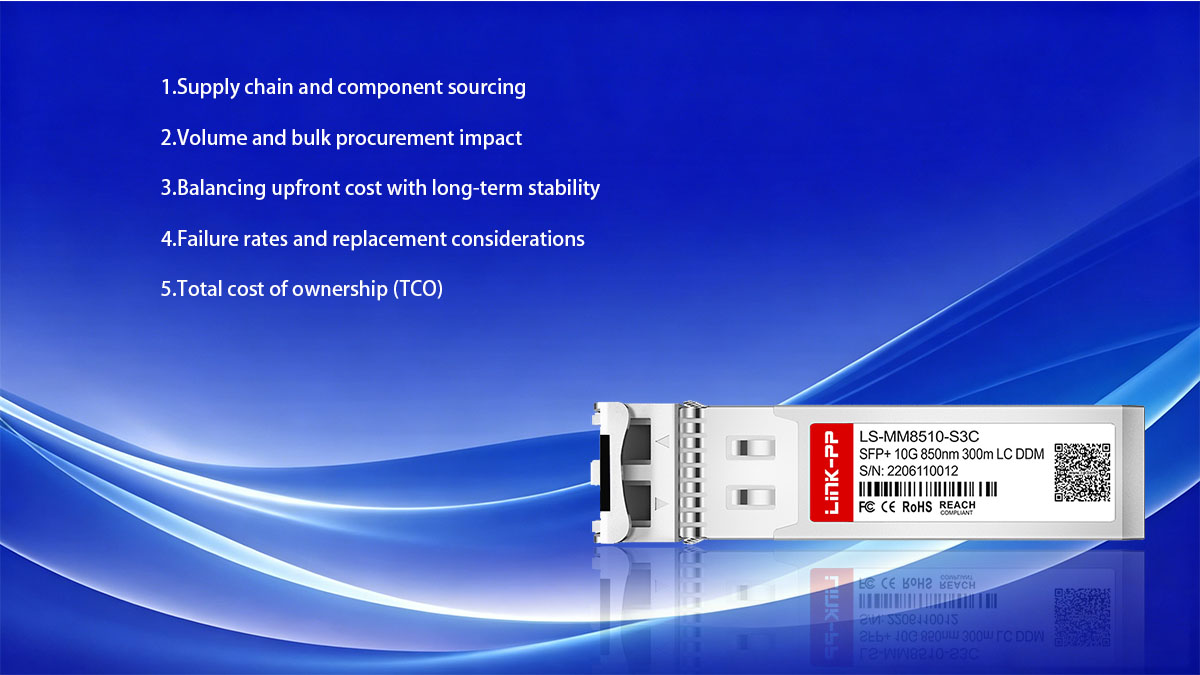
Key Elements Influencing Price
The cost of the H3C SFP-XG-SX-MM850-E is shaped by several interconnected factors, including brand positioning, production economics, and distribution channels. Understanding these variables helps explain why identical-spec modules can have different price ranges in the market.
Before listing the main drivers, it is important to note that most 10GBASE-SR compatible modules share similar hardware foundations, so pricing is rarely based purely on technical capability.
Key pricing factors include:
- Vendor branding and OEM certification level
- Manufacturing scale and supply chain efficiency
- EEPROM coding and compatibility customization
- Distribution channel (authorized reseller vs open market supply)
- Inventory availability and regional logistics costs
These elements collectively determine the final cost structure, especially in enterprise procurement environments where consistency and warranty coverage may also be included in pricing.
Cost vs Performance Evaluation
When evaluating the H3C SFP-XG-SX-MM850-E, cost should not be considered in isolation from performance and operational stability. In 10G optical networks, the total cost of ownership (TCO) is often more relevant than unit price alone.
To better understand this balance, several key evaluation dimensions should be considered:
- Initial procurement cost per transceiver
- Expected operational lifespan under continuous use
- Failure rate and replacement frequency
- Network downtime risk and maintenance impact
- Compatibility stability across switch platforms
These factors help determine whether a lower-cost option truly delivers long-term value or introduces hidden operational expenses.
From a practical deployment perspective, slightly higher upfront investment in validated modules can sometimes reduce long-term maintenance costs, particularly in large-scale data center environments.
Market Availability and Supply Trends
The availability of H3C SFP-XG-SX-MM850-E and equivalent 10G SFP+ modules is closely tied to the maturity of the 10G Ethernet market. As 10G infrastructure remains widely deployed, this product segment continues to see stable but gradually evolving demand.
Before outlining trends, it is important to recognize that 10G transceivers are considered a mature technology category with established manufacturing ecosystems.
Current market trends include:
- Stable demand in enterprise and campus networks
- Gradual price normalization due to large-scale production
- Increasing competition from third-party compatible manufacturers
- Inventory fluctuations influenced by global semiconductor supply cycles
- Continued coexistence with newer SFP28 25G and QSFP+ 40G technologies
These trends indicate that while newer technologies are emerging, 10G SFP+ modules remain highly relevant in existing network infrastructures where upgrades are incremental rather than immediate.
In summary, the pricing structure of the H3C SFP-XG-SX-MM850-E is shaped by a combination of brand positioning, compatibility requirements, and market supply dynamics, rather than purely by technical specifications.
🥏 How to Evaluate Reliable Suppliers
The reliability of a supplier for H3C SFP-XG-SX-MM850-E is a critical factor that directly affects module performance, compatibility stability, and long-term network maintenance costs. In the 10G optical transceiver market, even identical specifications can behave differently depending on manufacturing quality, testing standards, and supply chain control.
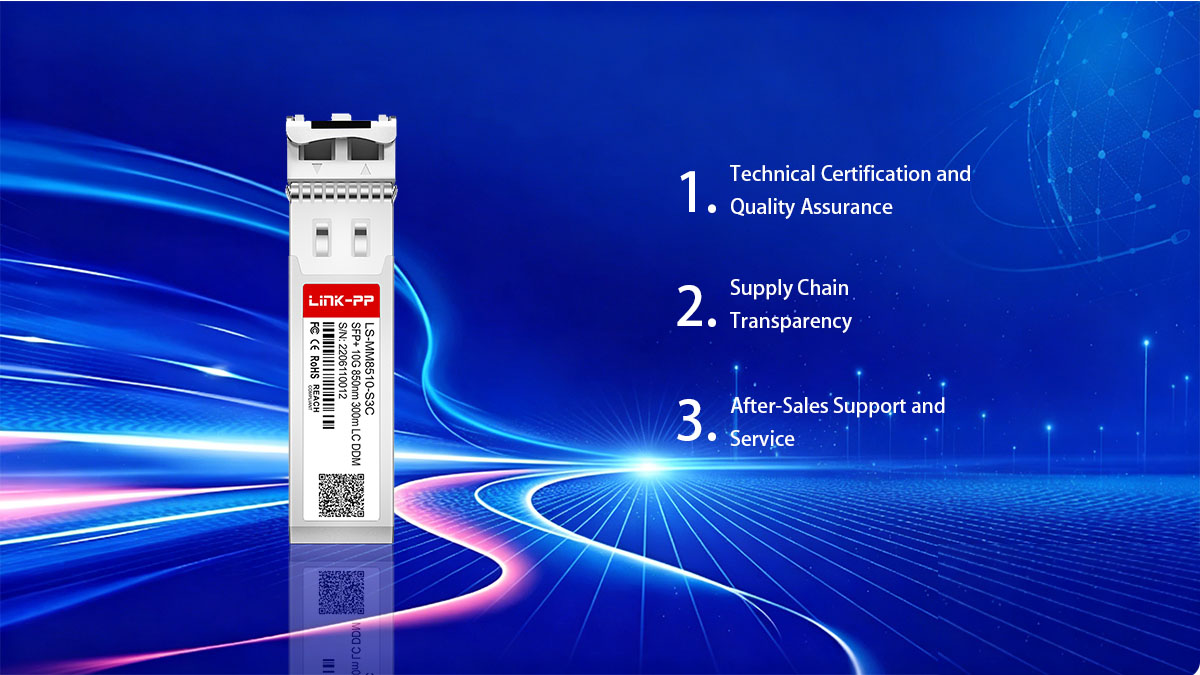
Technical Certification and Quality Assurance
The H3C SFP-XG-SX-MM850-E should only be sourced from suppliers that demonstrate strict adherence to recognized optical networking standards and quality control processes. This ensures that the module performs consistently in real-world 10G environments.
Before listing specific evaluation points, it is important to understand that optical transceivers are highly sensitive components where small manufacturing deviations can impact signal integrity and link stability.
Key quality assurance indicators include:
- Compliance with IEEE 802.3ae 10GBASE-SR standards
- Full MSA (Multi-Source Agreement) compatibility
- Multi-stage optical testing (wavelength accuracy, power levels, sensitivity)
- Digital Diagnostic Monitoring (DDM/DOM) validation
- High-temperature aging and stress testing
These criteria help ensure that each transceiver maintains stable performance under continuous network load conditions, especially in dense data center deployments.
Supply Chain Transparency
A reliable supplier must provide clear visibility into product origin, manufacturing processes, and distribution channels. This is particularly important in the optical transceiver market, where unverified components can lead to interoperability issues.
Before outlining specific factors, it is important to note that supply chain transparency directly reduces the risk of counterfeit or substandard modules entering enterprise networks.
Key evaluation aspects include:
- Clear identification of manufacturing source (OEM or certified factory)
- Traceable batch and serial number documentation
- Stable inventory availability across procurement cycles
- Defined product lifecycle and revision control
- Consistent packaging and labeling standards
These elements help ensure that the delivered H3C SFP-XG-SX-MM850-E modules are authentic, consistent, and suitable for long-term deployment.
After-Sales Support and Service
Beyond product specifications, the level of after-sales support provided by a supplier plays a major role in operational reliability. In large-scale network environments, quick response and technical assistance can significantly reduce downtime risks.
Before listing key service factors, it is important to recognize that optical transceivers are often deployed in mission-critical environments where replacement speed and technical guidance are essential.
Important support considerations include:
- Technical compatibility consultation before deployment
- Warranty coverage period and replacement policies
- Response time for troubleshooting support
- Availability of replacement stock for urgent needs
- Documentation support for integration and testing
These service capabilities ensure that any deployment issues can be resolved efficiently, minimizing disruption to network operations.
In summary, evaluating suppliers for H3C SFP-XG-SX-MM850-E requires a balanced assessment of technical certification, supply chain integrity, and after-sales support quality, all of which directly influence deployment stability and long-term network performance.
🥏 Deployment Best Practices for H3C SFP-XG-SX-MM850-E
The H3C SFP-XG-SX-MM850-E delivers stable 10Gbps short-range optical connectivity when it is correctly installed and configured within compatible network environments. In real-world deployments, performance issues are more often caused by installation practices, fiber selection, or compatibility mismatches than by the module itself.
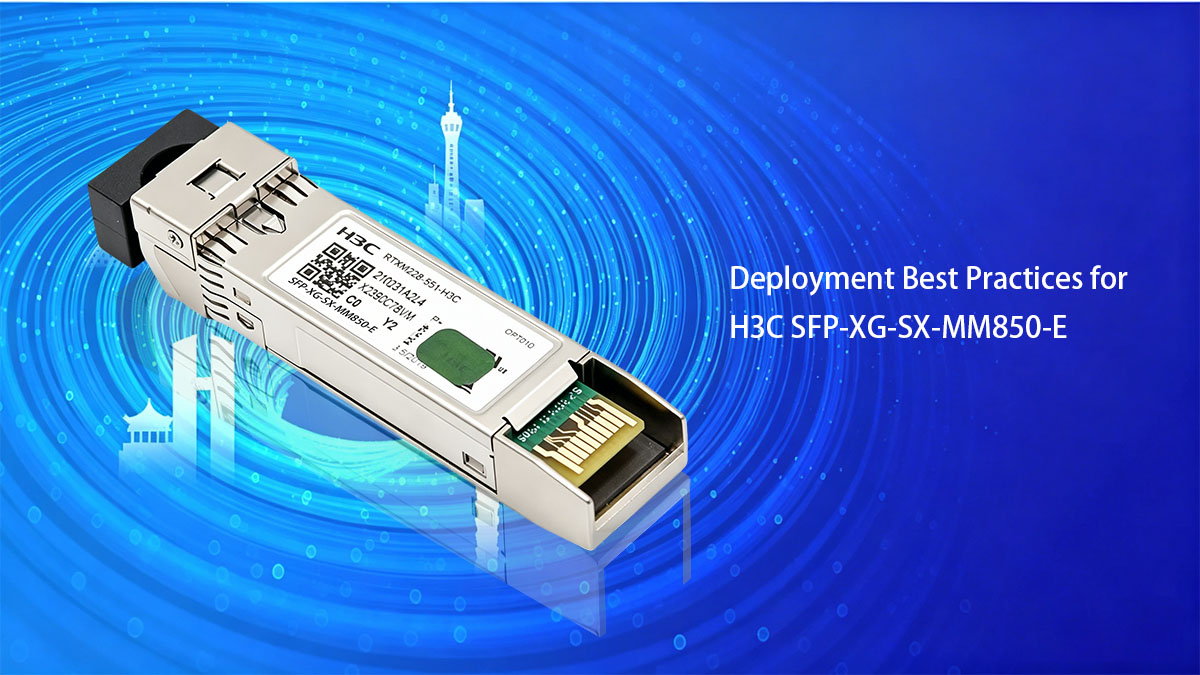
Installation and Compatibility Checks
The H3C SFP-XG-SX-MM850-E should be installed only after verifying hardware compatibility and system readiness. Proper pre-deployment checks help ensure the module is correctly recognized and operates at full 10G speed without link instability.
Before listing specific steps, it is important to note that SFP+ modules are hot-swappable, but incorrect handling or compatibility assumptions can still lead to link failures or degraded performance.
Key installation and validation practices include:
- Confirming switch or router supports SFP+ 10G ports
- Checking vendor compatibility lists or firmware support matrices
- Ensuring correct multimode fiber (OM3 or OM4) is used
- Inserting the module firmly into the SFP+ slot until fully latched
- Verifying link status after installation through device monitoring tools
These steps help ensure that the module is properly recognized and immediately operational within the network environment.
Performance Optimization Tips
Once the H3C SFP-XG-SX-MM850-E is installed, network performance depends heavily on cabling quality, optical conditions, and link configuration. Proper optimization ensures stable throughput and minimizes signal degradation.
Before listing optimization practices, it is important to understand that multimode 10G links are sensitive to fiber quality, bend radius, and connector cleanliness.
Key optimization recommendations include:
- Using OM3 or OM4 fiber to achieve full supported transmission distance
- Maintaining proper bend radius to avoid signal loss
- Keeping LC connectors clean and dust-free before connection
- Avoiding mixed fiber types within the same link path
- Monitoring optical power levels through DDM/DOM functions
These practices help maintain consistent signal integrity and ensure the module operates within its designed optical parameters.
Troubleshooting Common Issues
Even with correct installation, issues may occasionally arise due to configuration errors, fiber faults, or compatibility mismatches. Effective troubleshooting helps quickly restore link stability and prevent extended downtime.
Before outlining common issues, it is important to recognize that most 10G optical problems can be diagnosed through systematic physical and configuration checks.
Typical troubleshooting steps include:
- Verifying link status indicators on both network devices
- Checking for incorrect or unsupported SFP+ coding restrictions
- Testing fiber continuity and replacing damaged patch cables
- Ensuring correct polarity of transmit and receive fibers
- Reviewing optical power levels for abnormal attenuation
These actions allow network engineers to isolate whether the issue is related to hardware, cabling, or configuration layers.
To sum up, proper deployment of the H3C SFP-XG-SX-MM850-E depends on careful installation verification, optimized fiber management, and structured troubleshooting procedures, all of which contribute to stable and high-performance 10G network operation.
🥏 How to Choose the Right Alternative
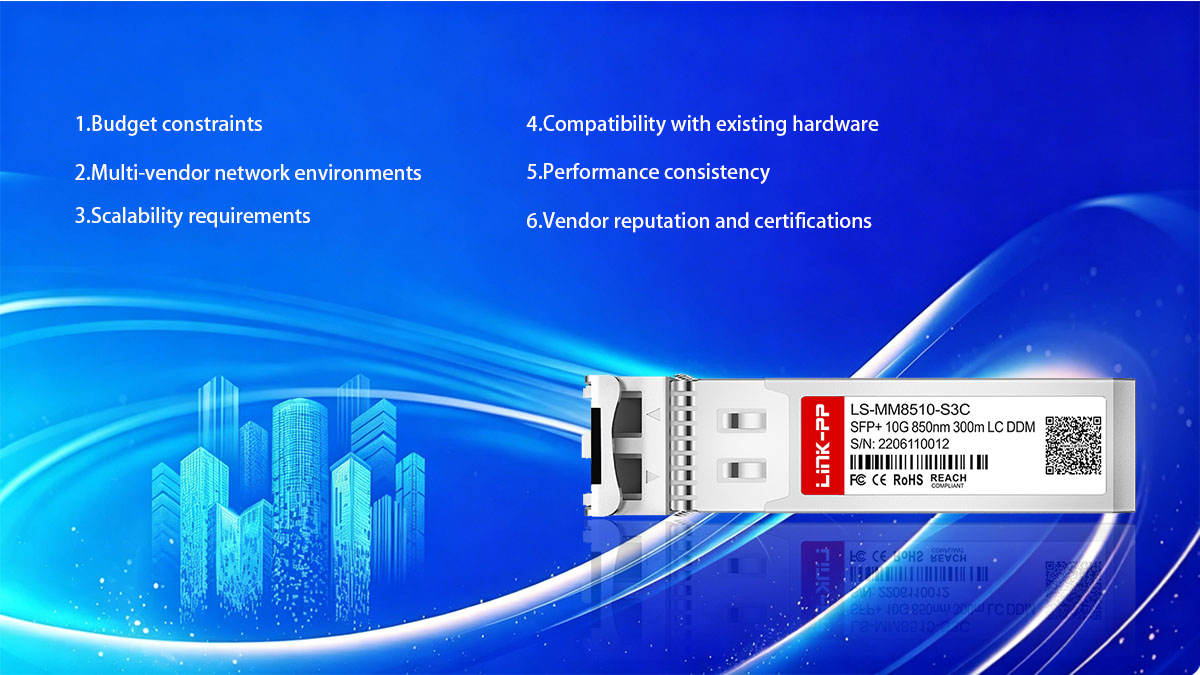
Selecting an alternative to the H3C SFP-XG-SX-MM850-E is common in multi-vendor or cost-optimized network environments. The key is not only matching optical specifications but also ensuring consistent interoperability, long-term stability, and predictable performance in real deployments.
When to Consider Alternatives
The H3C SFP-XG-SX-MM850-E may not always be the only suitable option in a network design. In many cases, alternatives are evaluated due to procurement strategy, infrastructure diversity, or scalability requirements.
Before listing specific scenarios, it is important to understand that 10G SFP+ modules are largely standardized, meaning functional equivalents often exist across multiple vendors.
Common situations where alternatives are considered include:
- Multi-vendor network environments requiring cross-brand compatibility
- Cost optimization in large-scale deployments with hundreds of ports
- Expansion of existing infrastructure with mixed switch platforms
- Replacement planning for aging or end-of-life optical modules
- Standardization toward vendor-neutral hardware strategies
These scenarios typically require a balance between compatibility assurance and operational efficiency.
Key Selection Criteria
Choosing the right alternative to H3C SFP-XG-SX-MM850-E requires evaluating both technical specifications and operational compatibility. Matching only the data rate is not sufficient for stable long-term deployment.
Before outlining criteria, it is important to note that most alternatives are based on the same 10GBASE-SR multimode standard, but implementation quality can vary.
Key selection factors include:
- Full compliance with 10GBASE-SR IEEE standards
- Verified compatibility with target switch or router models
- Matching optical parameters (850nm wavelength, MMF support)
- Reliable DOM/DDM monitoring support for diagnostics
- Proven performance in OM3 and OM4 fiber environments
- Consistent manufacturing quality and batch stability
These criteria ensure that the selected alternative behaves predictably under real network load conditions and integrates smoothly into existing infrastructure.
Risk Mitigation Strategies
Even when specifications match, deploying alternative optical modules without proper validation can introduce operational risks. A structured evaluation process helps minimize compatibility and performance issues.
Before listing mitigation steps, it is important to understand that most failures in alternative transceiver deployments come from undocumented compatibility differences rather than hardware defects.
Recommended risk control practices include:
- Conducting small-scale lab testing before full deployment
- Validating compatibility with specific switch firmware versions
- Using sample units to confirm optical link stability
- Ensuring supplier provides consistent product revision control
- Monitoring real-time optical power and error rates after installation
These measures help identify potential issues early and reduce the risk of large-scale deployment failures.
Key takeaways: choosing a suitable alternative to the H3C SFP-XG-SX-MM850-E requires careful attention to compatibility, optical standards, and supplier reliability, combined with structured testing to ensure stable integration into existing 10G network environments.
🥏 Future Outlook of 10G Multimode Transceivers
The 10G multimode transceiver market, including products like the H3C SFP-XG-SX-MM850-E, remains an important part of enterprise and data center networking even as higher-speed technologies continue to emerge. Its future is defined by gradual coexistence with newer standards rather than rapid replacement.
Market Evolution Trends
The H3C SFP-XG-SX-MM850-E operates within a mature 10G ecosystem, and its relevance is shaped by how network infrastructures evolve toward higher bandwidth while still maintaining large installed bases of 10G equipment.
Before listing key trends, it is important to understand that 10G multimode technology is already widely standardized and deployed globally, making it a long-life infrastructure segment rather than an emerging one.
Key market evolution trends include:
- Continued widespread use in enterprise campus and data center access layers
- Gradual integration with 25G and 40G uplink architectures
- Stable demand driven by existing installed switch bases
- Increasing preference for flexible, multi-vendor optical ecosystems
- Ongoing optimization of cost per port in large-scale deployments
These trends indicate that 10G multimode transceivers will remain operationally relevant for many years, particularly in environments where incremental upgrades are preferred over full infrastructure replacement.
Investment Considerations
From an infrastructure planning perspective, the H3C SFP-XG-SX-MM850-E represents a mature technology investment that continues to provide value in stable, high-density network environments. Its role is increasingly tied to lifecycle extension strategies rather than new network design builds.
Before outlining considerations, it is important to note that many organizations still rely heavily on 10G access layers, even while adopting higher-speed aggregation technologies.
Key investment factors include:
- Long-term cost efficiency of maintaining existing 10G infrastructure
- Compatibility with mixed-speed network architectures (10G/25G/40G)
- Availability of replacement modules across multiple suppliers
- Predictable performance in established multimode fiber environments
- Upgrade planning alignment with future bandwidth migration strategies
These considerations help organizations balance current operational stability with future scalability requirements.
In a word, 10G multimode transceivers like the H3C SFP-XG-SX-MM850-E will continue to play a stable role in enterprise networking, serving as a foundational connectivity layer while higher-speed technologies gradually expand across core and aggregation network segments.
🥏 Conclusion
The H3C SFP-XG-SX-MM850-E is a 10Gbps SFP+ multimode short-range optical transceiver designed for stable, high-speed connectivity in enterprise and data center networks. As a 10GBASE-SR compatible module, it plays a critical role in enabling reliable short-distance fiber links while maintaining interoperability across standardized networking environments.
To simplify the main insights discussed throughout the article:
- Supports 10Gbps transmission over OM3/OM4 multimode fiber
- Operates at 850nm wavelength with LC duplex interface
- Compatible with a wide range of 10G SFP+ networking equipment
- Positioned within a mature and stable optical transceiver market
- Availability of OEM and compatible alternatives offers flexible sourcing options
- Performance and reliability depend heavily on installation and compatibility validation
For organizations planning network expansion or replacement of 10G optical modules, selecting a reliable and fully tested solution is essential to ensure long-term stability and interoperability. Evaluating compatibility, supplier credibility, and deployment requirements helps reduce operational risks and optimize infrastructure performance.
For consistent quality options and professionally tested optical transceivers, you can explore solutions through the LINK-PP Official Store, where a wide range of compatible 10G SFP+ modules are available to support enterprise networking needs.