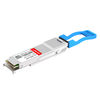
Finisar FTLF8524P2BNV is a 4G Fibre Channel SFP optical transceiver widely used in enterprise storage networks and data center interconnect environments. It is designed to deliver stable short-range multimode optical transmission, making it a dependable component in legacy SAN infrastructures where performance consistency and interoperability are critical.
From a sourcing perspective, this module is often evaluated not only by its original manufacturer specifications but also by compatibility across multi-vendor networking ecosystems. In real-world deployments, procurement teams typically prioritize three core factors: system compatibility, optical performance reliability, and long-term availability within evolving supply chains.
In today’s networking market, demand for 4G Fibre Channel optics like the Finisar FTLF8524P2BNV is driven by ongoing maintenance of existing storage infrastructures rather than new high-speed deployments. As organizations extend the lifecycle of their SAN systems, sourcing decisions become increasingly strategic, balancing cost efficiency, verified compatibility, and operational stability.
This guide is structured to help readers understand the technical foundation of the Finisar FTLF8524P2BNV, evaluate sourcing considerations, compare module options, and identify reliable supply channels for sustained network performance.
📡 Understanding Finisar FTLF8524P2BNV Fundamentals
The Finisar FTLF8524P2BNV is a 4G Fibre Channel SFP optical transceiver designed for short-reach multimode fiber communication in storage and data center networks. Its primary value lies in stable 4.25Gbps data transmission, broad interoperability, and long-term reliability in SAN environments where legacy infrastructure is still widely deployed.
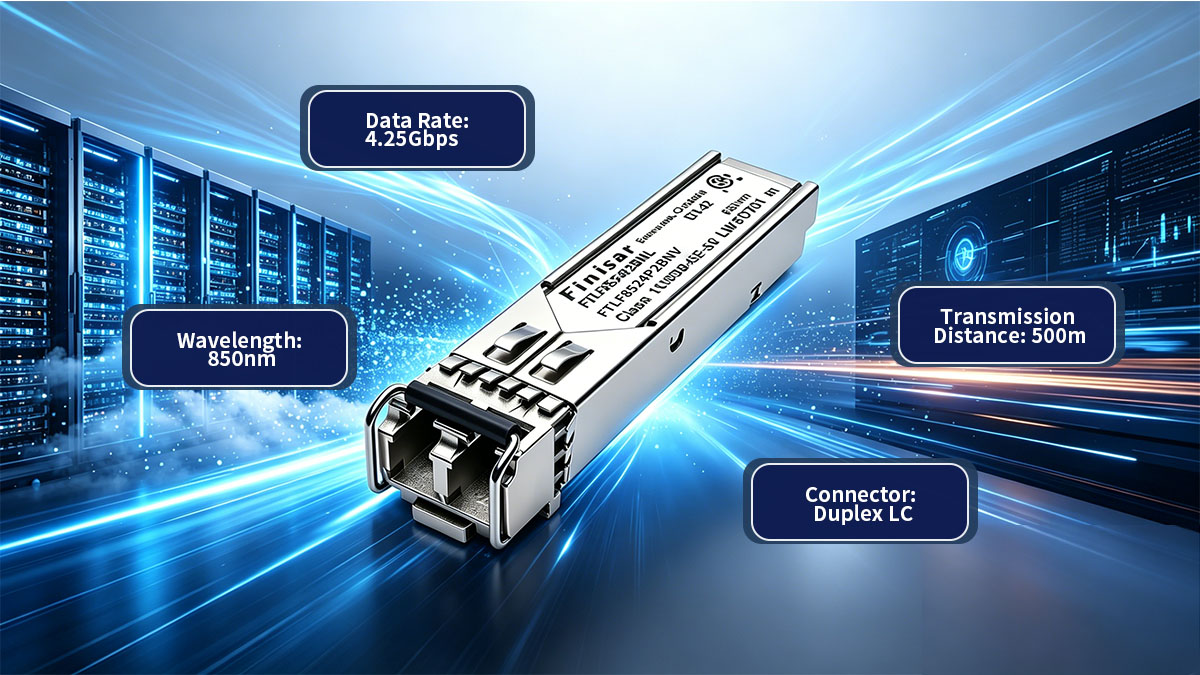
To understand its role in real-world networks, it is important to break down its technical structure, supported standards, and typical deployment use cases.
Product Overview and Key Specifications
The Finisar FTLF8524P2BNV is best understood as a short-range 4G Fibre Channel SFP module optimized for multimode fiber links. It is commonly used in switch-to-storage or switch-to-switch connections within controlled data center environments.
Its key technical characteristics can be summarized as follows:
- Form factor: SFP (Small Form-factor Pluggable)
- Data rate: 4.25Gbps (Fibre Channel)
- Wavelength: 850nm
- Fiber type: Multimode fiber (MMF)
- Maximum reach: up to 500m on OM2 fiber
- Connector type: LC duplex interface
To make these specifications easier to compare in procurement or engineering planning, the core parameters are organized below.
| Parameter |
Specification |
Relevance |
| Data Rate |
4.25Gbps |
Supports 4G Fibre Channel SAN traffic |
| Wavelength |
850nm |
Optimized for multimode short-range transmission |
| Reach |
Up to 500m (OM2) |
Suitable for intra-data center connections |
These specifications highlight that the module is optimized for short-distance, high-stability optical links rather than long-haul transmission scenarios.
A key takeaway is that this transceiver is purpose-built for controlled enterprise environments where predictable optical performance is more important than distance scalability.
Supported Standards and Protocols
The Finisar FTLF8524P2BNV is engineered to comply with established Fibre Channel and industry interoperability standards, ensuring consistent operation across multi-vendor environments.
Its core protocol and compliance characteristics include:
- Fibre Channel support: 1G / 2G / 4G backward compatibility
- Compliance with MSA (Multi-Source Agreement) specifications
- Support for standardized SFP electrical and optical interfaces
- RoHS compliance for environmental safety requirements
These standards ensure that the module can integrate into heterogeneous storage networks without requiring proprietary configurations.
To better understand its interoperability positioning, consider the following functional grouping:
- Protocol compatibility: Enables integration across multiple Fibre Channel generations
- Mechanical standardization: Ensures physical fit across standard SFP ports
- Environmental compliance: Supports enterprise-grade regulatory requirements
This combination of standards compliance makes the module suitable for mixed-vendor SAN environments, where interoperability is often a key procurement requirement.
Typical Deployment Environments
The Finisar FTLF8524P2BNV is primarily deployed in legacy and mid-generation storage networks where 4G Fibre Channel remains in active use. Its role is not centered on high-speed expansion but on maintaining stable connectivity within existing architectures.
Common deployment scenarios include:
- Storage Area Networks (SANs) in enterprise data centers
- Switch-to-storage array interconnections
- Switch-to-switch short-range backbone links
- Infrastructure extension of legacy Fibre Channel fabrics
In practical deployment planning, these environments share several common requirements:
- Stable low-latency optical transmission
- Predictable signal integrity over multimode fiber
- Compatibility with existing Fibre Channel switching equipment
A key operational insight is that this module is often used in lifecycle extension strategies, where organizations aim to maximize existing SAN investments rather than migrate immediately to higher-speed architectures.
As a result, its relevance remains strong in environments prioritizing operational continuity, controlled upgrade cycles, and cost-efficient infrastructure maintenance.
📡 Key Factors Influencing Sourcing Decisions
Selecting a Finisar FTLF8524P2BNV module is not just a technical decision—it is a sourcing decision that directly affects network compatibility, long-term stability, and operational cost efficiency. In most enterprise environments, procurement teams evaluate this module based on three core dimensions: compatibility assurance, performance reliability, and lifecycle value.
A structured sourcing approach helps reduce deployment risks while ensuring the module integrates seamlessly into existing Fibre Channel infrastructures.
Compatibility with Network Equipment
Compatibility is the first and most critical factor when sourcing the Finisar FTLF8524P2BNV, as Fibre Channel environments often involve multi-vendor hardware ecosystems where interoperability is essential.
The module must be validated against switch and storage platforms to ensure proper recognition and stable operation.
Key compatibility considerations include:
- Vendor interoperability with platforms such as Cisco, Brocade, and HPE
- SFP port recognition behavior in host devices
- EEPROM coding alignment with switch firmware expectations
- Firmware compatibility across different Fibre Channel generations
To better structure evaluation priorities, compatibility checks typically focus on the following layers:
- Physical compatibility: Ensures proper SFP form factor fit
- Electrical compatibility: Guarantees correct signaling behavior
- Logical compatibility: Confirms device recognition by host systems
A key insight is that even when optical specifications match, improper EEPROM coding or firmware mismatch can still result in link failure or degraded performance. Therefore, compatibility validation is a non-negotiable step in sourcing decisions.
Performance and Reliability Metrics
Once compatibility is confirmed, the next sourcing priority is performance consistency and operational reliability under real-world conditions. The Finisar FTLF8524P2BNV is typically deployed in environments where downtime is costly, making stability more important than peak performance.
Key performance and reliability factors include:
- Optical power budget stability over time
- Signal integrity across supported multimode fiber types
- Operating temperature range consistency (commercial-grade environments)
- MTBF (Mean Time Between Failure) expectations in continuous operation
To evaluate these parameters more effectively, they can be grouped into operational reliability categories:
- Transmission stability: Ensures consistent data delivery without packet loss
- Environmental resilience: Maintains performance under standard data center conditions
- Lifecycle durability: Supports long-term continuous deployment cycles
A practical takeaway is that in Fibre Channel environments, small variations in optical performance can lead to link instability. Therefore, reliability is often prioritized over marginal specification differences.
Cost vs Value Evaluation
Cost is an important sourcing factor, but in enterprise Fibre Channel environments, value is typically evaluated beyond initial pricing. The Finisar FTLF8524P2BNV is often assessed based on total lifecycle cost rather than upfront acquisition cost alone.
Key evaluation points include:
- Price variation between OEM and compatible modules
- Expected operational lifespan under continuous load
- Maintenance and replacement frequency
- Warranty coverage and technical support availability
To better understand cost-value trade-offs, procurement teams often evaluate across three dimensions:
- Initial cost: Direct acquisition expense per module
- Operational cost: Maintenance, downtime, and replacement impact
- Risk cost: Potential failure impact on network uptime
A key insight is that lower-cost alternatives may increase long-term operational risk if quality control and compatibility testing are insufficient. Conversely, higher-cost OEM modules may not always deliver proportional performance benefits in well-validated environments.
Ultimately, sourcing decisions for the Finisar FTLF8524P2BNV require balancing budget constraints with network reliability expectations to achieve optimal total cost of ownership.
📡 Original vs Compatible Modules: What to Know
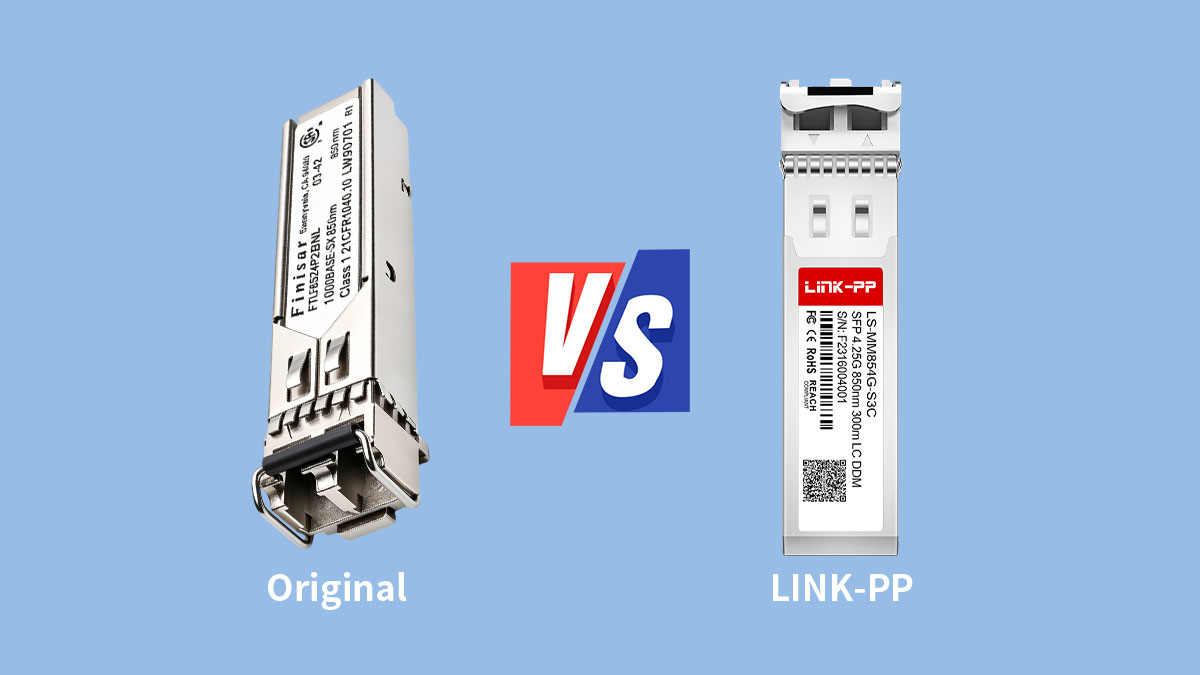
When sourcing the Finisar FTLF8524P2BNV, one of the most important decisions is choosing between original OEM modules and third-party compatible alternatives. This choice directly impacts compatibility assurance, cost structure, and long-term network reliability.
In most Fibre Channel environments, both options are technically viable, but they serve different operational priorities and risk profiles.
OEM (Original Finisar) Modules
Original Finisar modules are manufactured under the original design and validation standards of Finisar (now part of II-VI / Coherent ecosystem). They are typically selected in environments where maximum compatibility assurance and vendor-backed reliability are required.
The key characteristics of OEM modules include:
- Fully validated performance under original design specifications
- Guaranteed compatibility with supported Fibre Channel platforms
- Strict quality control and manufacturing consistency
- Vendor-backed firmware and lifecycle support
To better understand their operational role, OEM modules are typically evaluated across three dimensions:
- Compatibility assurance: Highest level of guaranteed interoperability
- Operational stability: Predictable performance in certified environments
- Support coverage: Access to official technical and lifecycle support channels
A key takeaway is that OEM modules are often preferred in mission-critical systems where downtime risk must be minimized, even if procurement cost is higher.
Third-Party Compatible Alternatives
Compatible modules are independently manufactured alternatives designed to match the specifications and functionality of the original Finisar FTLF8524P2BNV. They are widely used in cost-sensitive or large-scale deployments where procurement flexibility is important.
Their primary characteristics include:
- Functionally equivalent optical and electrical specifications
- Broader multi-vendor compatibility options
- More flexible supply chain availability
- Lower overall procurement cost compared to OEM modules
To evaluate them properly, it is useful to categorize their strengths:
- Cost efficiency: Reduces capital expenditure in large deployments
- Deployment flexibility: Easier sourcing across global suppliers
- Scalability advantage: Suitable for bulk infrastructure expansion
A key insight is that not all compatible modules are equal—performance depends heavily on manufacturing quality, testing rigor, and firmware accuracy.
Risk Assessment and Mitigation
While both OEM and compatible modules can operate effectively, sourcing decisions must account for potential risks, especially in high-density Fibre Channel environments where link stability is critical.
Common risks include:
- EEPROM or coding mismatch leading to switch incompatibility
- Inconsistent optical power levels affecting link stability
- Variability in production quality between suppliers
- Limited technical support in case of deployment issues
To mitigate these risks, procurement strategies typically include:
- Verifying compliance with MSA and Fibre Channel standards
- Requesting full compatibility test reports before deployment
- Prioritizing suppliers with structured quality control processes
- Conducting small-scale validation before bulk rollout
A practical conclusion is that compatible modules can perform reliably when sourced from qualified vendors with strong testing frameworks, but they require more rigorous validation compared to OEM components.
📡 How to Identify Reliable Suppliers
Identifying a reliable supplier for the Finisar FTLF8524P2BNV is a critical step in ensuring consistent module performance, long-term availability, and reduced network risk. In Fibre Channel sourcing, supplier quality often has as much impact as the module specification itself, especially in multi-vendor environments where interoperability must be guaranteed.
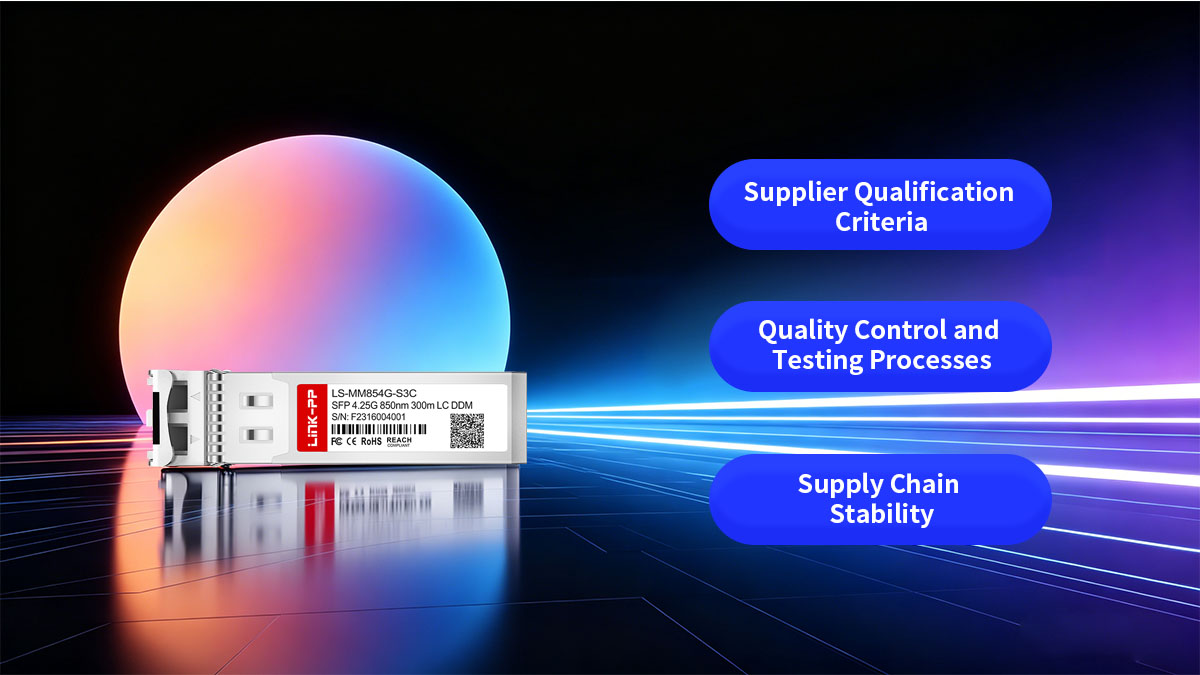
A structured supplier evaluation process typically focuses on qualification standards, testing transparency, and supply chain stability.
Supplier Qualification Criteria
A reliable supplier should demonstrate verifiable capability in optical transceiver distribution, technical validation, and enterprise-level support. This ensures that the Finisar FTLF8524P2BNV modules meet consistent quality expectations before deployment.
Key qualification indicators include:
- Industry certifications such as ISO 9001 or equivalent quality systems
- Proven experience in optical networking or data center components
- Availability of technical documentation and compatibility references
- Ability to support multi-vendor environments
To better structure evaluation, supplier qualification is typically reviewed across three layers:
- Organizational credibility: Establishes operational legitimacy and industry presence
- Technical expertise: Confirms understanding of Fibre Channel and optical standards
- Support capability: Ensures responsiveness during deployment or troubleshooting
A key takeaway is that suppliers with deep technical specialization in optical modules generally provide more consistent compatibility assurance than generic electronic distributors.
Quality Control and Testing Processes
Quality control is one of the most important differentiators among suppliers of Finisar FTLF8524P2BNV modules. Even when specifications appear identical, internal testing standards can significantly impact real-world performance.
Key quality assurance practices include:
- Digital Diagnostics Monitoring (DDM) validation for optical parameters
- End-to-end functional testing in simulated network environments
- Temperature and stress testing under controlled conditions
- Compatibility verification with multiple switch platforms
To better understand testing depth, quality assurance is usually categorized as follows:
- Optical testing: Confirms signal strength, wavelength accuracy, and power budget stability
- Environmental testing: Ensures performance across temperature and humidity ranges
- Interoperability testing: Validates multi-vendor switch and storage compatibility
A key insight is that suppliers who publish or provide structured test reports significantly reduce deployment risk, especially in large-scale SAN environments where failure impact can be costly.
Supply Chain Stability
Beyond product quality, supply chain reliability plays a major role in sourcing decisions for Finisar FTLF8524P2BNV modules. Even technically qualified modules may cause operational challenges if availability or delivery consistency is weak.
Key supply chain considerations include:
- Inventory depth and real-time availability levels
- Lead time consistency across multiple order cycles
- Global logistics and distribution capability
- After-sales responsiveness and replacement handling
To evaluate supply chain strength more effectively, it can be viewed across three operational dimensions:
- Availability stability: Ensures continuous access to required modules
- Delivery predictability: Reduces deployment delays in network expansion projects
- Service continuity: Supports long-term infrastructure maintenance cycles
A practical conclusion is that reliable suppliers are not only defined by product quality, but also by their ability to maintain consistent availability and support throughout the module lifecycle.
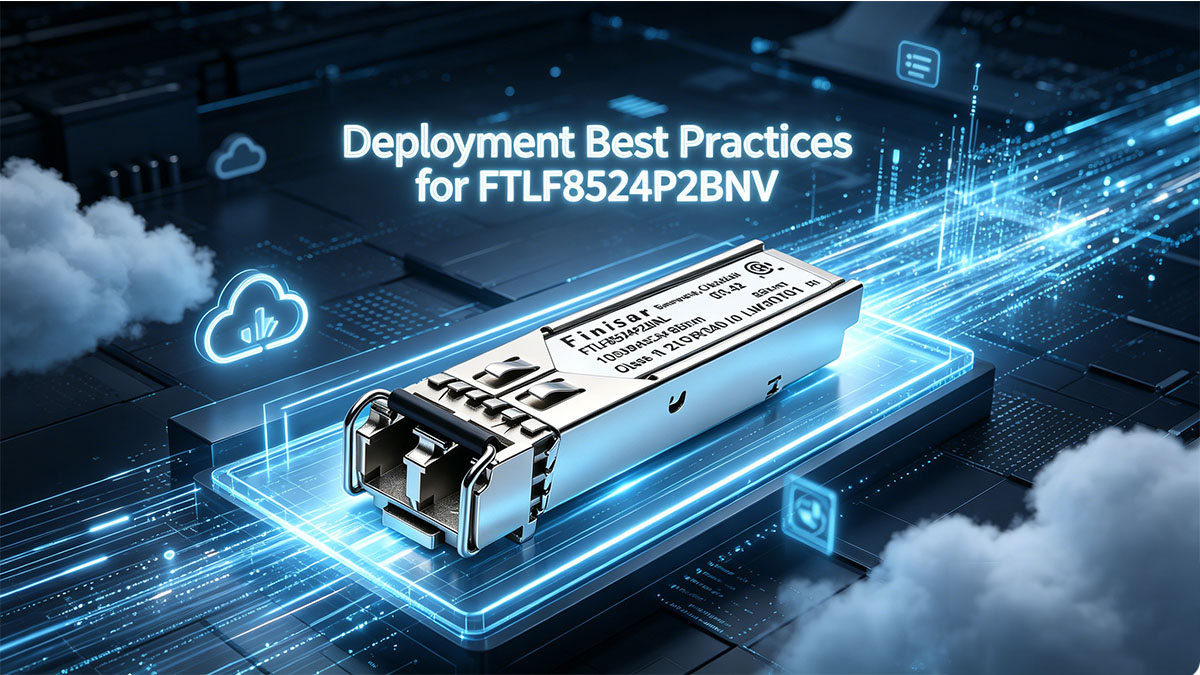
📡 Deployment Best Practices for FTLF8524P2BNV
Proper deployment of the Finisar FTLF8524P2BNV is essential to ensure stable Fibre Channel connectivity, minimize signal loss, and extend the operational lifecycle of SAN infrastructure. In practical environments, most performance issues are not caused by the module itself but by installation handling, fiber conditions, or configuration mismatches.
A disciplined deployment approach helps maintain consistent link quality and reduces troubleshooting overhead in enterprise data center operations.
Installation Guidelines
The most reliable way to deploy the Finisar FTLF8524P2BNV is to follow controlled installation procedures that protect both the optical module and fiber infrastructure. Proper handling and insertion practices directly impact link stability and long-term module health.
Key installation practices include:
- Handle modules using anti-static protection (ESD-safe environment)
- Avoid direct contact with optical connectors and fiber ends
- Ensure LC duplex connectors are clean before insertion
- Insert the SFP module firmly until fully seated in the port
- Verify correct port mapping on switches and storage devices
To better structure the installation process, it can be viewed in three stages:
- Pre-installation preparation: Cleaning and inspection of fiber and ports
- Physical installation: Correct insertion and secure seating of the module
- Post-installation validation: Link detection and initial signal verification
A key takeaway is that improper handling during installation is one of the most common causes of early link instability, even when the module is fully compatible.
This leads directly into the importance of optimizing operational conditions after installation.
Performance Optimization Tips
Once the Finisar FTLF8524P2BNV is installed, optimizing link performance ensures stable data transmission and reduces optical degradation over time. Even within specification limits, fiber type selection and environmental conditions significantly affect performance consistency.
Key optimization practices include:
- Use appropriate multimode fiber types (OM2, OM3, or OM4 as applicable)
- Maintain proper bend radius to avoid signal attenuation
- Keep fiber connectors clean and dust-free at all times
- Monitor optical power levels using DDM (Digital Diagnostics Monitoring)
To better understand optimization focus areas, they can be grouped as follows:
- Physical layer optimization: Fiber quality, cleanliness, and routing integrity
- Signal integrity management: Ensuring stable optical power levels
- Environmental control: Maintaining stable temperature and airflow conditions
A key insight is that even high-quality transceivers can experience degraded performance if fiber hygiene or routing practices are poor, making physical infrastructure equally important as the module itself.
With performance stabilized, attention should shift to maintaining operational reliability through effective troubleshooting practices.
Troubleshooting Common Issues
Even in well-designed Fibre Channel environments, occasional connectivity issues may occur. When using the Finisar FTLF8524P2BNV, most problems can be resolved through systematic diagnosis of optical, configuration, or compatibility factors.
Common troubleshooting areas include:
- Link failure or no signal detection
- Intermittent connectivity or packet loss
- Incompatible or unrecognized SFP module
- Degraded optical performance over distance
To isolate issues efficiently, troubleshooting is typically structured as follows:
- Physical inspection: Check fiber cleanliness, connector condition, and seating
- Configuration validation: Confirm switch port settings and compatibility mode
- Optical diagnostics: Review DDM values for power levels and signal quality
A key takeaway is that most FTLF8524P2BNV-related issues are not hardware failures but configuration or physical layer problems, which can usually be resolved without module replacement.
This reinforces the importance of a systematic diagnostic approach, ensuring stable long-term operation in Fibre Channel networks.
📡 Market Trends and Availability Insights
The market for the Finisar FTLF8524P2BNV is shaped less by new technology adoption and more by lifecycle extension of existing Fibre Channel infrastructures. As enterprises continue operating 4G SAN environments, demand for this module remains steady despite broader industry movement toward higher-speed optical standards.
Understanding current market dynamics helps procurement teams anticipate availability risks, pricing fluctuations, and long-term sourcing strategy.
Lifecycle Status of 4G Fibre Channel Modules
The Finisar FTLF8524P2BNV belongs to an established generation of 4G Fibre Channel optics that are no longer at the forefront of new deployments but remain essential in legacy systems.
Its lifecycle position can be summarized as follows:
- Mature product category with stable but declining new deployment demand
- Continued relevance in installed base SAN environments
- Gradual replacement pressure from 8G/16G/32G Fibre Channel upgrades
- Strong dependency on maintenance-driven procurement rather than expansion-driven demand
To better understand its lifecycle role, usage patterns typically fall into three categories:
- Maintenance use: Replacing failed or aging modules in existing systems
- Expansion within legacy systems: Adding ports without upgrading full infrastructure
- Transitional deployments: Bridging older SAN components during phased upgrades
A key takeaway is that while it is not a growth-market product, its operational importance remains high due to the long lifespan of enterprise storage systems.
Pricing Trends and Supply Dynamics
Pricing behavior for the Finisar FTLF8524P2BNV is influenced more by supply chain conditions and inventory availability than by technological changes. As production volumes decrease over time, market pricing becomes more sensitive to availability and sourcing channels.
Key pricing and supply drivers include:
- Limited OEM production output for legacy 4G modules
- Increased reliance on secondary and aftermarket supply channels
- Variability in global inventory distribution
- Demand spikes driven by infrastructure failure replacements
To better interpret market behavior, pricing trends can be grouped into:
- OEM pricing stability: Generally higher and more consistent but less flexible in availability
- Compatible market pricing: More variable but often significantly lower in cost
- Secondary market fluctuations: Dependent on stock levels and regional distribution
A key insight is that availability often has a stronger impact than specification differences, meaning procurement timing can significantly influence cost outcomes.
Future Outlook for Optical Transceivers
The broader optical transceiver market is steadily transitioning toward higher-speed architectures, but legacy modules like the Finisar FTLF8524P2BNV continue to play a critical supporting role in enterprise environments.
Key future trends include:
- Continued migration toward 16G, 32G, and higher Fibre Channel speeds
- Gradual reduction in new manufacturing focus for 4G modules
- Increased importance of backward compatibility in hybrid SAN environments
- Growing reliance on validated compatible modules for legacy support
To better understand the evolution path, the market is effectively splitting into two parallel directions:
- High-speed growth segment: Focused on new deployments and cloud-scale infrastructure
- Legacy support segment: Focused on maintenance, replacement, and lifecycle extension
A key takeaway is that while innovation drives the industry forward, legacy modules like the FTLF8524P2BNV remain structurally important for sustaining long-lived enterprise storage systems.
📡 How to Choose the Right FTLF8524P2BNV Alternative
Selecting an alternative for the Finisar FTLF8524P2BNV is typically driven by lifecycle extension needs, cost optimization, or supply continuity challenges. In most enterprise environments, the goal is not simply substitution, but ensuring equivalent performance, compatibility, and operational stability within existing Fibre Channel networks.
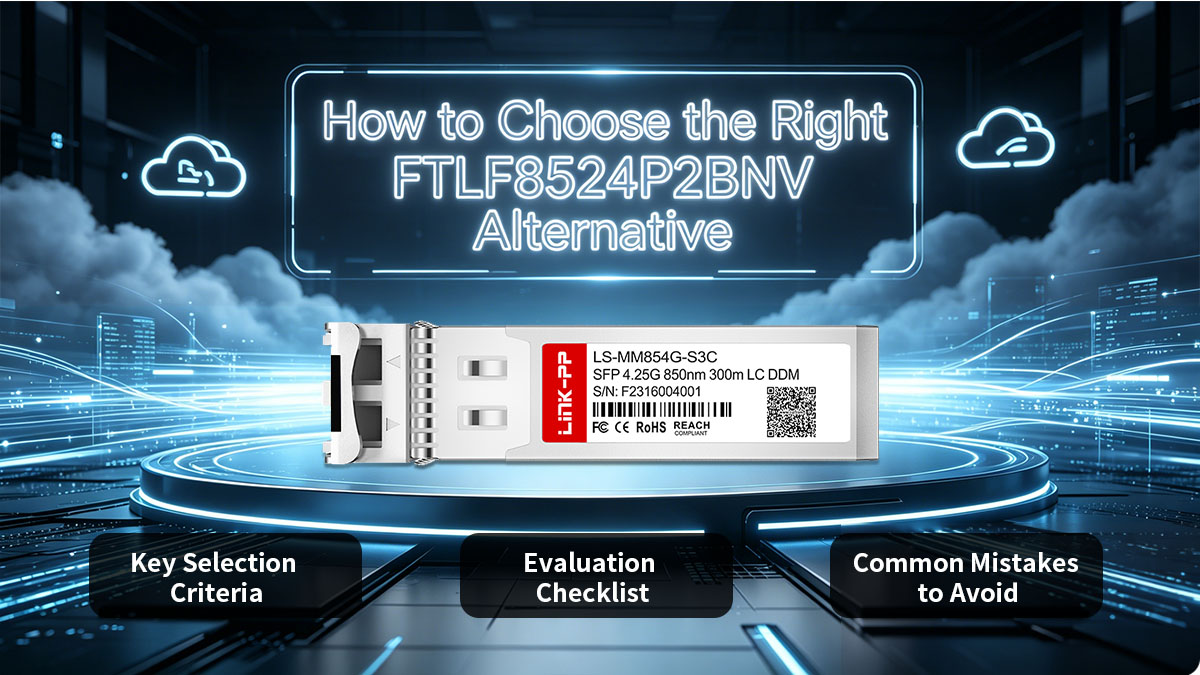
A structured selection process helps reduce deployment risk while maintaining consistent SAN performance across mixed-vendor environments.
Key Selection Criteria
The most suitable alternative must match both the technical and operational characteristics of the original Finisar FTLF8524P2BNV. Since Fibre Channel systems are highly sensitive to optical and protocol-level mismatches, selection must go beyond basic specification alignment.
Key criteria include:
- Data rate compatibility: Must support 4.25Gbps Fibre Channel operation
- Wavelength alignment: 850nm for multimode fiber transmission
- Distance support: At least up to 500m on OM2 or equivalent fiber types
- Protocol interoperability: Compatibility with 1G/2G/4G Fibre Channel environments
To better structure evaluation priorities, selection is typically grouped into three dimensions:
- Physical compatibility: Ensures proper SFP form factor and fiber interface match
- Optical compatibility: Confirms correct wavelength and power budget alignment
- System compatibility: Ensures recognition by switches and storage platforms
A key insight is that even minor mismatches in optical budget or firmware coding can result in link instability, making full compatibility validation essential rather than optional.
Evaluation Checklist
To reduce procurement risk, organizations often rely on a structured evaluation checklist when selecting an alternative for the Finisar FTLF8524P2BNV. This ensures consistency across vendors and minimizes unexpected deployment issues.
Key evaluation points include:
- Compliance with MSA (Multi-Source Agreement) standards
- Availability of documented compatibility testing reports
- Verification of Digital Diagnostics Monitoring (DDM) support
- Evidence of successful deployment in similar Fibre Channel environments
- Warranty terms and technical support responsiveness
To better organize decision-making, evaluation can be divided into:
- Technical validation: Ensures performance and interoperability requirements are met
- Quality assurance validation: Confirms manufacturing and testing consistency
- Operational validation: Ensures suitability for real-world deployment conditions
A key takeaway is that reliable alternatives are defined not only by specifications, but by proven interoperability in production environments.
Common Mistakes to Avoid
When selecting an alternative to the Finisar FTLF8524P2BNV, sourcing errors often arise from incomplete validation or overly cost-driven decisions. These mistakes can lead to compatibility failures or unexpected operational disruptions.
Common pitfalls include:
- Selecting modules based solely on lowest price without testing validation
- Ignoring switch-level compatibility requirements and EEPROM coding differences
- Overlooking fiber type and distance limitations in real deployment environments
- Failing to verify supplier quality control processes
To better understand risk areas, common mistakes can be categorized as:
- Technical oversights: Incomplete compatibility or performance validation
- Procurement bias: Overemphasis on cost rather than lifecycle value
- Supplier risk: Choosing vendors without proven optical expertise
A key insight is that in Fibre Channel networks, the cost of incompatibility or failure often far exceeds any initial savings from improper selection.
Careful evaluation across technical, operational, and supplier dimensions ensures that any alternative to the FTLF8524P2BNV can operate reliably within existing infrastructure without introducing network instability.
📡 Conclusion
The Finisar FTLF8524P2BNV remains a widely used 4G Fibre Channel SFP transceiver that continues to support legacy storage and data center networks. Although newer high-speed optical technologies dominate current deployments, this module still plays a critical role in maintaining stable SAN operations, especially where infrastructure lifecycle extension is a priority rather than full system replacement.
From a sourcing perspective, successful procurement depends on balancing compatibility assurance, performance stability, and long-term availability. OEM modules provide the highest level of validation and vendor support, while carefully qualified compatible alternatives can deliver strong cost efficiency when backed by rigorous testing and verified interoperability.
To summarize the key insights discussed throughout this guide:
- The Finisar FTLF8524P2BNV is optimized for 4G Fibre Channel multimode short-range transmission
- Compatibility validation is the most critical factor in sourcing decisions
- Performance reliability depends heavily on optical quality and deployment conditions
- OEM and compatible modules each serve different operational and budget strategies
- Supplier qualification and testing transparency significantly reduce deployment risk
In real-world Fibre Channel environments, the most effective sourcing strategy is not defined by price alone, but by the ability to ensure stable, predictable network performance over time. This includes verifying compatibility across multi-vendor systems, maintaining strict quality control standards, and selecting suppliers capable of consistent supply chain support.
For organizations managing legacy SAN infrastructure, working with a technically reliable sourcing partner becomes essential. Platforms such as the LINK-PP Official Store provide access to a wide range of optical transceivers with validated compatibility and structured quality assurance processes, helping enterprises maintain network stability while optimizing procurement efficiency.
Ultimately, a well-planned sourcing strategy for the Finisar FTLF8524P2BNV ensures not only operational continuity but also long-term value across the entire Fibre Channel infrastructure lifecycle.