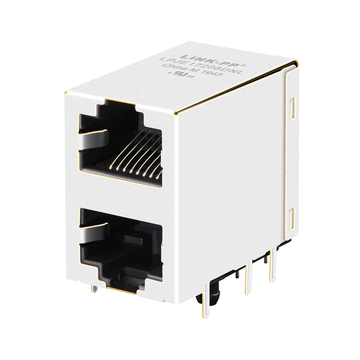




















What Are Modular Jacks?
Modular jacks are standardized electrical female connectors designed for rapid, secure wire termination and plug-and-play signal transmission. These modular interconnects serve key structural and electrical functions:
- Interface Coupling: Mate securely with modular plugs (such as RJ45 or RJ11) using an internal latching mechanism.
- Signal Routing: Maintain continuous pin-to-contact conductivity with low contact resistance.
- EMI Suppression: Provide grounding and noise shielding when configured with integrated metal shielding shells.
Common Types of Modular Jacks
Modular jacks are primarily categorized by their housing size and contact configuration, commonly expressed as Position/Contact (P/C). Below are the most widely used types across modern networking and telecommunication hardware.
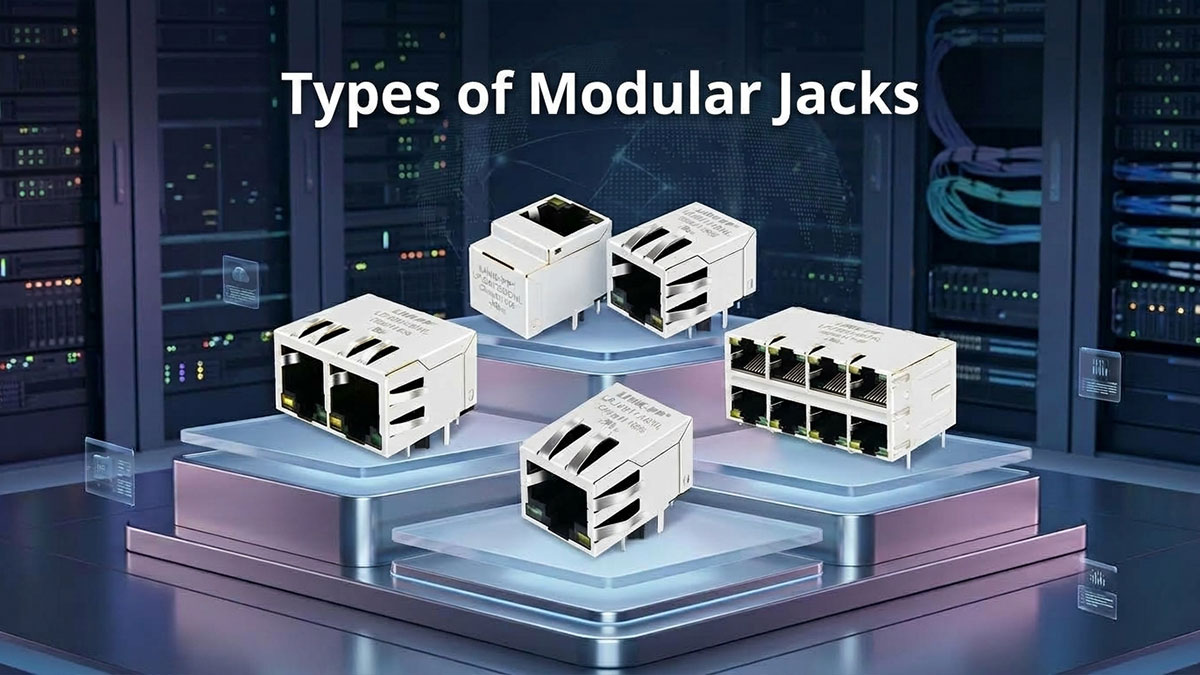
RJ45 Modular Jack
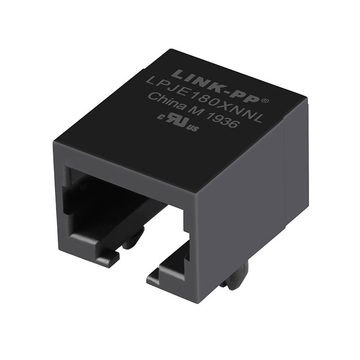
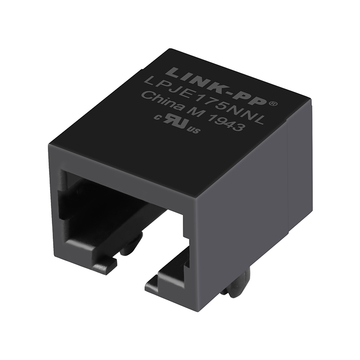
Non-magnetic RJ45 jacks are available in 8-position or 10-position contact configurations, routing pin-to-board signals directly and offering an economical choice when magnetic filtering is handled on the main board or not required.
- 8P8C Jack: The universal standard for Ethernet networking, featuring 8 positions loaded with 8 gold-plated contacts for balanced 4-pair data links.
- 10P10C Jack: An expanded 10-position, 10-contact layout offering extra conductive lines for proprietary signaling, specialized industrial I/O, or auxiliary power delivery.
RJ11 Modular Jack
Smaller modular jacks, such as RJ11 jacks, typically utilize 4-position or 6-position housings. They are built for low-bandwidth voice, legacy serial interfaces, and compact peripheral links.
- 6P6C Jack: Fully loaded 6-position housing (often designated as RJ12 or RJ25) supporting up to three telephony lines or dedicated control signaling.
- 6P4C Jack: The standard residential telephone connector, utilizing the same 6-position physical shell as 6P6C but loaded with only 4 active contacts for dual-line connections.
- 4P4C Jack: A narrower 4-position body (frequently used for telephone handset cords and lightweight peripheral connections) carrying 4 conductive pins.
How to Choose the Right Modular Jack
Choosing the right modular jack ensures reliable signal integrity and a precise fit on your PCB. Subtle layout differences directly affect mechanical assembly, panel alignment, and manufacturing cost. Evaluate these five core parameters to match your hardware design constraints:
| Key Parameter | Options | Selection Impact |
| Position & Contact (P/C) | 8P8C, 10P10C, 6P4C, 6P6C, 4P4C | Determines plug mating and available signal channels. |
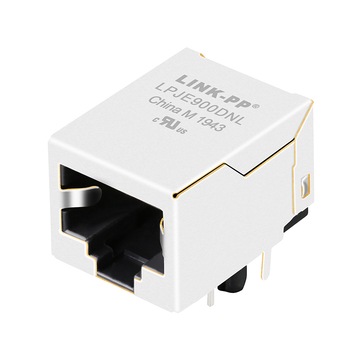
| Shielding Type | Shielded vs. Unshielded | Shielded blocks EMI noise; unshielded reduces BOM cost. |
| PIN Style | THT (Through-Hole) vs. SMT | THT adds retention strength; SMT supports automated reflow. |
| Entry Orientation | 90° (Right Angle) vs. 180° (Vertical) | Dictates cable access angle and panel cutout position. |
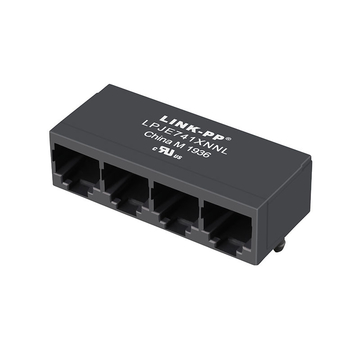
| Port Configuration | Single-Port, Multi-Port (1xN, 2xN) | Balances I/O port density with PCB space constraints. |
Always match contact plating thickness to your required mating cycle lifespan. In addition, ensure the housing material tolerates your specific lead-free reflow or wave soldering profile.
Applications of Modular Jacks

Modular jacks serve as the standard physical interface for wired networking hardware across diverse sectors. By delivering stable transmission, low latency, and robust electromagnetic protection, these compact connectors form the vital link between printed circuit boards and Ethernet cables.
Key deployment scenarios and industry use cases include:
- Enterprise LANs & Offices: Connects desktop PCs, workstations, and VoIP phones to local corporate networks with reliable gigabit throughput.
- Data Centers & Infrastructure: Powers high-density patch panels, core switches, and rack servers for streamlined cable management and hot-swap servicing.
- Industrial Automation: Links PLCs, robotic controllers, and SCADA systems under harsh environmental conditions with heavy EMI resistance.
- Power over Ethernet (PoE) Systems: Supplies simultaneous DC power and high-speed data to security IP cameras, wireless APs, and building sensors.
- Smart Home & Residential: Provides stable, low-latency bandwidth for 4K media streaming hubs, gaming consoles, and desktop network adapters.
- IoT Gateways & Embedded Systems: Equips compact edge devices and industrial gateways with reliable wired communication in space-constrained enclosures.
From cost-effective standalone connectors to advanced integrated connector modules (ICMs) with internal magnetics and LEDs, modular jacks adapt to varied operational demands. Their consistent performance and mechanical resilience make them indispensable components in modern wired network architectures.
FAQ
Review our frequently asked questions for essential guidance on modular jack fundamentals, configurations, and connectivity requirements.
What is a modular jack with integrated magnetics (Magjack)?
It integrates Ethernet signal filtering, isolation transformers, and impedance matching inside the connector housing instead of requiring discrete board components. This design saves valuable PCB space and improves EMI suppression for high-speed network interfaces.
When should I choose a shielded modular jack (STP) over an unshielded one (UTP)?
Choose shielded modular jacks in industrial or high-density environments where severe electromagnetic interference (EMI) can degrade signal integrity. Unshielded jacks are sufficient and more cost-effective for standard residential and typical office spaces.
Can I insert an RJ11 plug directly into an RJ45 modular jack?
Mechanically it will fit, but it is not recommended because the narrower RJ11 housing can permanently bend and damage the outer pins of the RJ45 jack. Doing so can cause intermittent network connectivity and ruin future Ethernet connections.
What do "positions" and "contacts" mean on a modular jack (e.g., 8P8C)?
"Positions" refers to the number of physical channels available for wire contacts inside the jack housing, while "contacts" indicates how many metal contact blades are actually loaded. For instance, an 8P8C jack has eight physical slots and all eight are populated with electrical conductors.
Standards and Certifications
LINK-PP modular jacks are designed to meet applicable international electrical, environmental, and quality-management requirements:
- UL Recognition: Supports verified material flammability and electrical-safety requirements for communication connectors.
- CE Compliance: Supports applicable EU requirements when integrated into compliant end equipment.
- RoHS & REACH Compliant: Uses materials compliant with applicable hazardous-substance restrictions.
- ISO 9001:2015: Ensures controlled quality management throughout stamping, molding, plating, and assembly.
Supported by these quality and compliance practices, our modular jacks are suitable for networking, industrial automation, and consumer-electronics applications worldwide.
Ordering and Support for Modular Jacks
To help you integrate the right modular jack into your hardware design, we offer direct technical and procurement assistance:
- Selection Support: Verification of pinouts, footprints, and shielding requirements for your board layout.
- Free Samples: Available for physical fit checks and signal evaluation before committing to production.
- Custom Options: Adjustments to pin lengths, plating thickness, and housing materials to fit specific enclosures.
- Low MOQs: Support for small batch runs during prototyping and pilot phases.
For technical datasheets or sample requests, feel free to contact our team, or browse our wide range of modular jacks directly through the LINK-PP Official Store.