





























Deploying high-performance networks often comes with unexpected hurdles, particularly when sourcing specific components like the MMA2P00-AS 25G SFP28 optical transceiver. While this NVIDIA LinkX module delivers exceptional reliability for data centers, IT procurement managers frequently face long supply chain lead times and steep OEM price premiums. When scaling a network under tight deadlines, relying solely on a single proprietary hardware source can create a frustrating bottleneck for your entire infrastructure.
How can you bypass these hardware shortages and high CAPEX costs without sacrificing network stability or risking compatibility issues? The answer lies in finding third-party compatible alternatives that perfectly match the technical specifications, EEPROM coding, and firmware requirements of the original MMA2P00-AS. This guide will explore how to identify, test, and seamlessly integrate reliable, cost-effective compatible modules into your NVIDIA switches and ConnectX NICs.
💦 Understanding the NVIDIA MMA2P00-AS 25G SFP28 Architecture
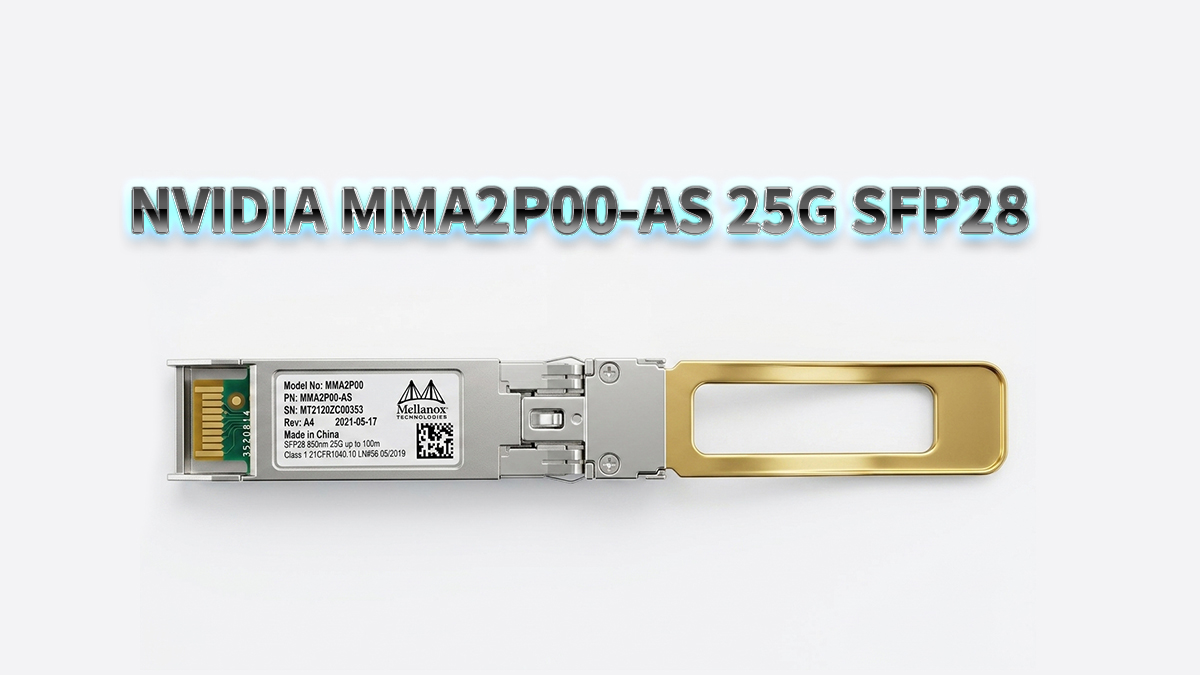
The NVIDIA MMA2P00-AS is a foundational component in modern high-speed data center environments, engineered specifically for seamless 25GbE transmission. To successfully evaluate third-party alternatives, it is essential to first grasp the underlying engineering standards and design principles that define this OEM module. Appreciating these architectural mechanics ensures that any substitute hardware can deliver identical performance and reliability.
Core Technical Specifications and Performance Benchmarks
The MMA2P00-AS operates on the SFP28 form factor, delivering a dedicated 25Gbps line rate for high-throughput networking. It features low power consumption and optimized thermal dissipation, ensuring steady performance even in high-density switch configurations.
By adhering strictly to IEEE 802.3by standards, this transceiver maintains ultra-low latency and minimal bit error rates. These benchmarks are critical for supporting high-performance computing (HPC) and enterprise cloud workloads without bottlenecks.
Optical Wavelength and Reach Capabilities
Operating at a short-reach (SR) nominal wavelength of 850nm, the MMA2P00-AS is optimized for short-distance data transmission over multi-mode fiber. This makes it an ideal and cost-effective choice for connecting switches and servers within the same rack or across adjacent rows.
It reliably supports connections up to 70m over OM3 multi-mode fiber and up to 100m over OM4 fiber infrastructure. Maintaining these precise distance thresholds ensures that signal attenuation remains well within safe operational margins.
Host-Managed FEC (Forward Error Correction) Requirements
Unlike some plug-and-play modules, the MMA2P00-AS relies heavily on host-managed Forward Error Correction (FEC) to ensure data integrity at 25Gbps. The host system — such as an NVIDIA ConnectX network interface card — controls the error correction mechanisms to compensate for signal degradation over the fiber.
Third-party alternatives must seamlessly support the specific FEC modes configured by the host OS to prevent packet loss or link failure. The table below outlines the primary FEC modes required by the host architecture for reliable 25G operation.
| FEC Mode Type | Technical Standard | Primary Application / Use Case |
| RS-FEC | IEEE 802.3by (Clause 108) | Extended distance over OM4 fiber with maximum error correction |
| Base-R FEC (Firecode) | IEEE 802.3by (Clause 74) | Low-latency optimization for shorter cable runs |
| No-FEC | Bypass Mode | Ultra-low latency environments with high-quality, short-range media |
EEPROM Coding and NVIDIA LinkX Operating System Detection
NVIDIA network operating systems use strict security and identification checks, scanning the module’s internal EEPROM for genuine LinkX coding. The MMA2P00-AS contains specific vendor data, serial numbers, and cryptographic signatures within its memory registers.
When plugged into an NVIDIA switch, the operating system reads this EEPROM data to instantly recognize and configure the port. Therefore, any successful alternative must precisely emulate these EEPROM register values to avoid triggering "unsupported transceiver" warnings and port disabling.
💦 Why IT Procurement Managers Seek MMA2P00-AS Alternatives
Managing data center infrastructure requires a careful balance between high network performance and strict budget constraints. While the original MMA2P00-AS transceiver offers guaranteed compatibility, purchasing limitations often force organizations to look elsewhere. Exploring third-party compatible alternatives has become a strategic necessity for infrastructure teams aiming to keep projects moving forward efficiently.
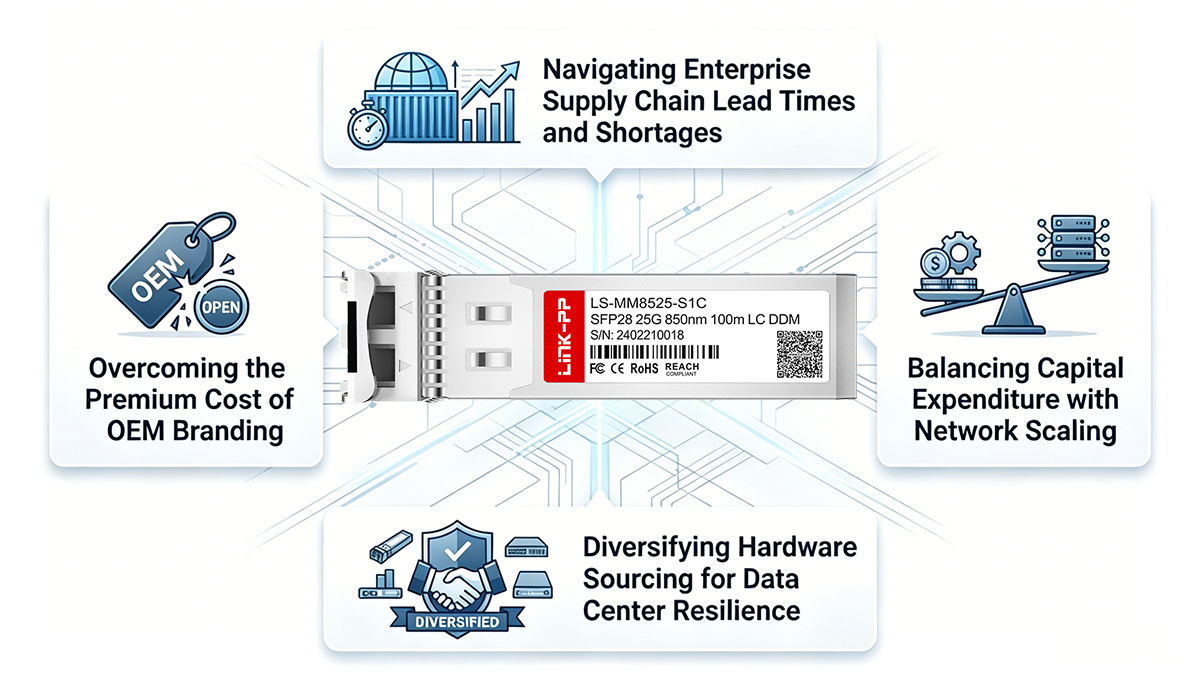
Navigating Enterprise Supply Chain Lead Times and Shortages
Enterprise IT projects frequently encounter sudden delays due to global supply chain disruptions and unpredictable OEM manufacturing schedules. Procurement managers often face weeks or even months of lead time just to secure basic optical components like the MMA2P00-AS. These unexpected delays can completely stall critical data center expansions and disrupt major project timelines.
By qualifying reliable third-party alternatives, procurement teams can bypass OEM supply bottlenecks and keep their deployments on track. Compatible vendors often maintain larger safety stocks and offer much faster shipping turnarounds. This agility allows data centers to adapt quickly to changing network demands without waiting on OEM factory backlogs.
Overcoming the Premium Cost of OEM Branding
Sourcing original MMA2P00-AS optics directly from the OEM typically comes with a heavy price premium that impacts the bottom line. This inflated cost is largely driven by brand markup rather than any underlying difference in hardware manufacturing. When purchasing components in high volumes, these premium fees quickly add up to a massive financial burden.
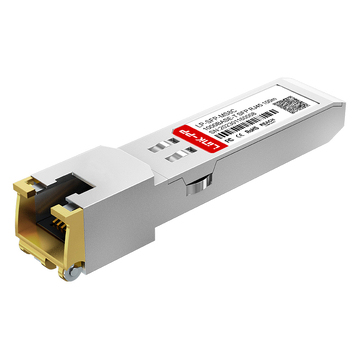
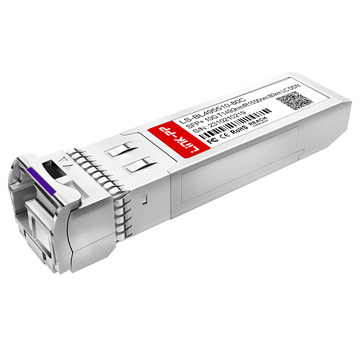
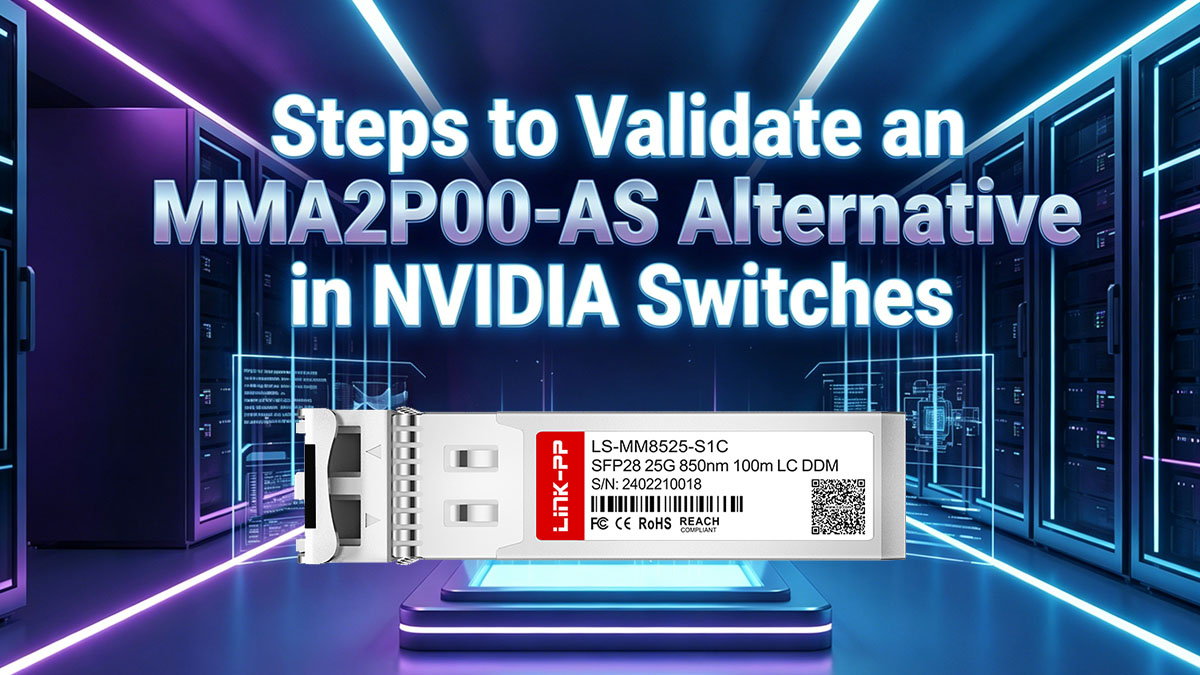
Choosing premium third-party compatible modules like the LINK-PP LS-MM8525-S1C 25G SFP28 allows data centers to get the exact same performance standards at a fraction of the cost. The resulting savings can free up significant portions of the IT budget for other critical infrastructure needs. This financial flexibility makes it much easier to optimize overall technology investments without sacrificing hardware quality.
Diversifying Hardware Sourcing for Data Center Resilience
Relying entirely on a single vendor for critical network components creates a major single point of failure in supply chain management. If that specific supplier experiences production issues or logistic failures, the entire data center scaling strategy risks a total shutdown. Diversification is a fundamental rule for maintaining operational resilience in modern enterprise environments.
Integrating approved MMA2P00-AS equivalent modules into the supply chain establishes a dependable multi-vendor sourcing strategy. This approach guarantees that network engineers always have access to functional hardware, regardless of any individual vendor's market challenges. Ultimately, a diversified inventory protects the data center from unexpected market volatility and component scarcity.
Balancing Capital Expenditure with Network Scaling
As data demands explode, enterprise networks must scale up their bandwidth rapidly to keep pace with modern workloads. However, purchasing high volumes of OEM optics can quickly exhaust the allocated Capital Expenditure (CAPEX) budget before scaling goals are met. Procurement managers are constantly tasked with expanding network capacity while keeping expenses under control.
Opting for high-quality MMA2P00-AS alternatives provides an effective way to maximize network scaling per dollar spent. Lower component costs allow teams to deploy more 25G ports across the fabric within the same budgetary boundaries. This smart allocation of resources ensures that infrastructure growth keeps up with corporate data demands efficiently.
💦 Key Compatibility Metrics for MMA2P00-AS Third-Party Modules
Evaluating third-party MMA2P00-AS alternatives requires a strict focus on specific engineering benchmarks to ensure seamless network integration. A compatible module must do more than simply fit into the physical port; it must interact perfectly with the host system's hardware and software layers. Prioritizing these critical compatibility metrics protects your data center from unexpected link drops and configuration errors.
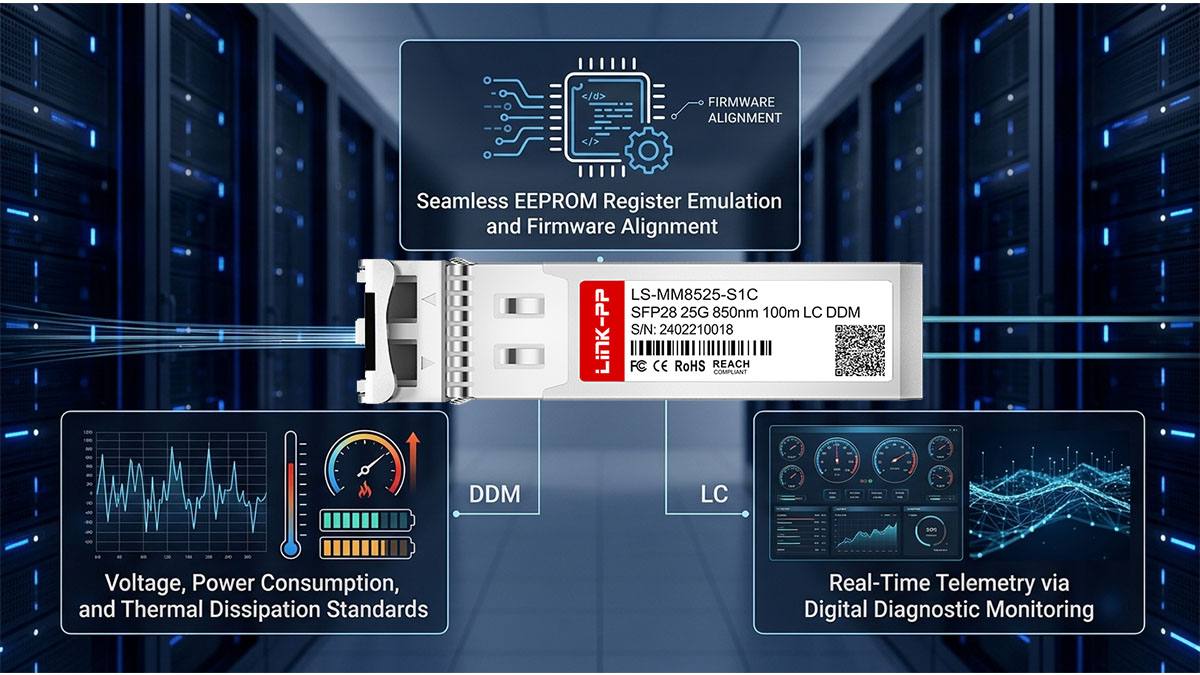
Seamless EEPROM Register Emulation and Firmware Alignment
NVIDIA operating systems immediately check a transceiver’s internal memory to verify its identity and operational parameters. If the EEPROM data does not precisely match what the switch expects, the port will be disabled automatically. High-quality MMA2P00-AS alternatives utilize advanced firmware programming to emulate original coding flawlessly.
The module's internal coding must successfully align with the following software parameters:
- Vendor Name: Must reflect approved OEM identification strings.
- Part Number: Crucial matching with the MMA2P00-AS designation code.
- Checksum Verification: Eliminates firmware reading errors during system boot.
- Custom Serial Formatting: Follows the precise structure required by NVIDIA switches.
Voltage, Power Consumption, and Thermal Dissipation Standards
Data center switches operate under tight power budgets and strict airflow configurations to keep temperatures stable. A poorly engineered alternative can draw too much power, causing localized voltage drops or excessive heat buildup. Third-party modules must mirror the exact electrical and thermal profiles of the original MMA2P00-AS transceiver. Key electrical and thermal specifications include the following criteria:
- Supply Voltage: Must strictly maintain a stable 3.3V power input.
- Power Consumption: Needs to stay well below the 1-watt threshold.
- Operating Temperature: Must safely handle standard 0°C to +70°C commercial ranges.
- Heat Dissipation: Requires efficient casing to prevent port overheating.
Real-Time Telemetry via Digital Diagnostic Monitoring
Network administrators rely heavily on real-time diagnostics to catch hardware issues before they lead to serious network downtime. Digital Diagnostic Monitoring (DDM) allows the switch to continuously track the health of the optical link. Compatible MMA2P00-AS modules must provide accurate data feeds that the host operating system can read effortlessly.
The integrated DDM system must accurately report these specific real-time metrics:
- Laser Bias Current: Monitors the health of the internal transmitter.
- TX Optical Power: Measures the strength of the outgoing light signal.
- RX Optical Power: Tracks the incoming signal level to detect fiber damage.
- Module Temperature: Provides continuous thermal tracking inside the switch port.
Interoperability Testing with NVIDIA ConnectX-5 and ConnectX-6 NICs
25G transceivers are deployed just as frequently in high-speed server interface cards as they are in core network switches. The MMA2P00-AS is heavily used alongside ConnectX-5 and ConnectX-6 network interface cards (NICs) for cloud and AI clusters. Testing third-party modules across these specific hardware environments ensures complete end-to-end compatibility.
Full physical interoperability relies on meeting the following testing checkpoints:
- PCIe Slot Recognition: Smooth detection within standard high-density server chassis.
- Driver Compatibility: Works instantly with standard NVIDIA MLNX_OFED drivers.
- Link Auto-Negotiation: Locks onto the correct 25G speed instantly upon insertion.
- Flawless Port State Transitions: Handles system reboots and hot-swaps without dropping the link.
💦 Optical and Distance Compliance for MMA2P00-AS Substitutes
Maintaining reliable data transmission requires strict adherence to physical layer optical standards. A compatible transceiver must match the precise optical behavior of the original MMA2P00-AS to prevent signal degradation over distance. Verifying these optical compliance factors guarantees that your physical cable plant can support stable 25G data rates without introducing errors.
Multi-Mode Fiber (MMF) OM3 vs. OM4 Distance Thresholds
The MMA2P00-AS is designed to transmit signals over multi-mode fiber cabling using short-reach optical lasers. The total distance your signal can travel depends entirely on the grade of fiber optic cable deployed in your racks. Third-party substitutes must match these exact reach thresholds to ensure consistent performance across existing infrastructure.
The maximum supported distances rely on the following cable classifications:
- OM3 MMF Reach: Supports stable links up to 70m.
- OM4 MMF Reach: Extends the transmission range up to 100m.
- Core Diameter: Utilizes standard 50-micron multi-mode fiber cores.
- Modal Bandwidth: Requires standard optimized laser bandwidth ratings.
Bit Error Rate (BER) Verification at 25Gbps Line Rates
At high speeds like 25Gbps, even tiny signal distortions can cause massive data corruption and dropped packets. The Bit Error Rate (BER) measures the exact ratio of corrupted bits to the total transmitted data. Reliable MMA2P00-AS alternatives must maintain an ultra-low pre-FEC and post-FEC error rate during operation.
Meeting standard performance benchmarks requires achieving the following BER targets:
- Target BER Threshold: Must achieve 10⁻¹² or better efficiency.
- Signal-to-Noise Ratio: Requires high clarity to prevent data corruption.
- Data Integrity: Guarantees zero dropped packets during peak traffic.
- Transmission Stability: Ensures steady performance over long uptime periods.
Transmitter and Dispersion Eye Closure (TDEC) Alignment
Transmitter and Dispersion Eye Closure (TDEC) mathematically measures the vertical closure of the optical eye diagram caused by laser noise and fiber dispersion. If a third-party module exhibits a TDEC value that is too high, the host system's receiver will struggle to distinguish between binary signals accurately. Aligning with the precise TDEC thresholds of the original MMA2P00-AS ensures that alternative optics provide optimal signal clarity across the network link.
Verifying high-quality laser performance requires meeting these specific algorithmic metrics:
- Maximum TDEC Limit: Must remain strictly within industry-defined 4.3dB limits.
- Center Wavelength: Must stay locked near the standard 850nm range.
- Spectral Width: Requires narrow laser lines to minimize chromatic dispersion.
- Eye Mask Compliance: Guarantees a wide, clean opening for reliable data sampling.
LC Duplex Connector and Cable Plant Integrity
The physical connection point between the optical transceiver and the patch cable must be perfectly flush. The MMA2P00-AS utilizes a standard LC duplex interface designed for quick latching and secure alignment. Compatible modules must feature high-quality physical housings to prevent mechanical connection issues.
Ensuring a secure physical connection depends on the following mechanical factors:
- LC Duplex Interface: Fits standard multi-mode LC patch cables perfectly.
- Insertion Loss: Keeps connection light loss below 0.25dB.
- Physical Latch Mechanism: Provides a secure click-lock into the port.
- Dust Cap Protection: Keeps internal optical components clean before installation.
💦 Evaluating Hardware Vendor Selection for MMA2P00-AS Equivalent Testing
Selecting the right third-party supplier is just as important as verifying the technical specifications of the optical hardware itself. A trustworthy vendor ensures that every batch of transceivers performs consistently and integrates smoothly into your existing network infrastructure. Establishing strict evaluation criteria for your hardware partners minimizes deployment risks and protects your data center from unreliable components.
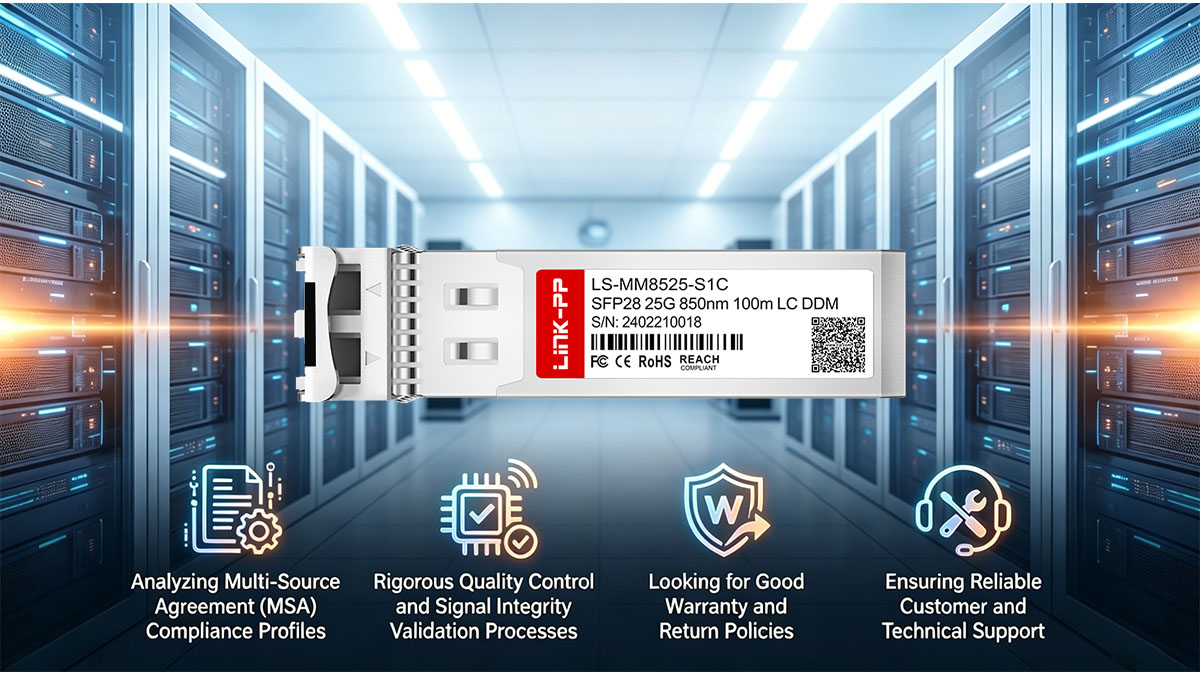
Analyzing Multi-Source Agreement (MSA) Compliance Profiles
Multi-Source Agreement (MSA) compliance guarantees that third-party optical modules conform to standardized physical dimensions and electrical interfaces. Choosing a vendor that strictly follows these industry blueprints ensures that their MMA2P00-AS equivalent fits perfectly into any standard SFP28 port. This universal standardization allows different hardware brands to operate together smoothly without mechanical or electrical mismatches.
Procurement teams should verify that a vendor's manufacturing process is fully backed by formal MSA documentation. This alignment proves that the alternative modules undergo standardized design practices during development. Ultimately, working with MSA-compliant suppliers gives you total peace of mind regarding basic physical and electrical interoperability.
Rigorous Quality Control and Signal Integrity Validation Processes
Top-tier hardware vendors do not rely on random sample testing; they implement comprehensive quality control protocols for every single module produced. They test their MMA2P00-AS equivalents under real-world conditions, simulating extreme temperatures and high data traffic loads. This rigorous screening process catches early component defects before the products ever leave the factory floor.
A dependable supplier should willingly provide detailed validation reports showing how their optics interact with genuine NVIDIA switches and ConnectX NICs. These testing processes ensure that signal integrity remains pristine and error rates stay well within safe limits. Investing in thoroughly tested hardware reduces the likelihood of facing unexpected port failures later during live data center operations.
Looking for Good Warranty and Return Policies
Even with exceptional manufacturing standards, high-density optical hardware can occasionally experience unexpected performance issues over time. A robust, long-term warranty acts as a direct reflection of a vendor’s ultimate confidence in their own hardware reliability. Procurement managers must prioritize suppliers that offer clear, multi-year protection plans alongside straightforward Return Merchandise Authorization (RMA) procedures.
A fair and customer-friendly return policy ensures that any defective or mismatched modules can be sent back without unnecessary administrative friction. This financial safety net allows data center teams to test and deploy alternative modules with complete confidence. Ultimately, clear and supportive warranty terms shield your organization from sudden financial losses and hardware replacement headaches.
Ensuring Reliable Customer and Technical Support
When configuring third-party optics in complex enterprise environments, network engineers may occasionally need immediate configuration advice or troubleshooting help. Having access to knowledgeable, responsive technical support teams makes a massive difference during time-sensitive network expansions. A premium vendor provides direct access to expert engineers who understand both firmware coding and advanced network operating systems.
Before making a bulk purchase, it is wise to test the vendor's response times and technical expertise through their support channels. Reliable communication channels ensure that firmware updates or compatibility questions are resolved efficiently without stalling your project. Strong customer support transforms a simple hardware vendor into a valuable long-term technology partner.
💦 Steps to Validate an MMA2P00-AS Alternative in NVIDIA Switches
Before deploying third-party MMA2P00-AS optics across a live data center fabric, running a methodical verification process is essential. Following a structured testing checklist ensures that the alternative hardware interacts flawlessly with the switch's operating system and physical ports. This hands-on validation minimizes the risk of sudden network instability and guarantees long-term operational success.
Hardware Installation and Port Status Diagnostics Verification
The validation process begins with the physical insertion of the substitute module into an available SFP28 slot on the NVIDIA switch. Network engineers must observe both the physical LED indicators and the immediate system reactions to ensure proper seating. A perfectly compatible module will initialize immediately without causing any hardware error alarms.
Once inserted, engineers should check the port interface status through the management dashboard to verify that it brings the link up properly. The switch should automatically negotiate the correct speed and establish a stable connection with the connected device. Monitoring this initial physical link state helps confirm that the module's electrical interfaces align correctly with the switch hardware.
Interpreting Cumulus Linux and Mellanox Onyx CLI Commands
NVIDIA switches run sophisticated network operating systems like Cumulus Linux or Mellanox Onyx, which offer powerful Command Line Interfaces (CLI). Engineers must execute specific inventory commands to verify that the OS reads the third-party EEPROM registers accurately. Correct CLI readouts prove that the alternative module is fully recognized and not blacklisted by the platform software.
By analyzing the output of commands like show interfaces transceiver detail, teams can verify the recognized vendor info, part number, and serial records. If the firmware emulation is accurate, the operating system will treat the alternative module exactly like an original transceiver. Catching any configuration anomalies or software errors at this stage prevents provisioning headaches down the road.
Monitoring Real-Time Optical Power Levels via DDM/DOM
Once the module is successfully recognized, tracking its physical operating thresholds is crucial for preventing intermittent link drops. Digital Diagnostic Monitoring (DDM) tools allow administrators to read internal module diagnostics directly through the switch management console. Keeping these values within safe boundaries prevents early component burnout and signal degradation.
Engineers must pay close attention to critical metrics such as internal transceiver temperatures, voltage levels, and laser bias currents. Crucially, the transmitted (TX) and received (RX) optical power levels must stay well within standard operational margins. Consistent telemetry readouts over time indicate that the compatible hardware is stable and safe for production workloads.
Executing High-Throughput Stress Tests and Packet Drop Audits
The final validation phase involves pushing the third-party module to its performance limits using automated traffic generation tools. Running a high-throughput stress test simulates peak data center workloads to reveal hidden hardware flaws or timing issues. Monitoring the port over an extended period ensures the optical link remains stable under heavy enterprise pressure.
During these rigorous stress tests, network diagnostics should be reviewed frequently to verify total frame delivery across the interface. The error counters must remain entirely clean, showing an absolute zero packet drop rate during the test cycle. Achieving flawless data throughput under full load proves that the alternative module is ready for mission-critical enterprise deployment.
💦 Conclusion: Maximizing Network Reliability with Premium MMA2P00-AS Compatible Alternatives
Transitioning to high-quality compatible transceivers is a smart, proven way to bypass OEM supply delays and high branding costs without losing any performance. By selecting modules that match the strict engineering standards, host-managed FEC requirements, and EEPROM firmware coding of the original MMA2P00-AS, your data center can maintain peak reliability. This approach allows your infrastructure to scale rapidly and smoothly while keeping infrastructure budgets under control.
If you are looking for a trusted, high-performance alternative, the LINK-PP LS-MM8525-S1C 25G SFP28 is the ideal drop-in replacement. This premium module is fully optimized for NVIDIA switches and ConnectX-5/6 NICs, offering identical 850nm short-reach performance, ultra-low latency, and zero packet drop rates at a fraction of the OEM cost. To see how you can optimize your next network deployment with this fully tested module, head over to the LINK-PP Official Store for full technical details.