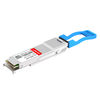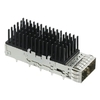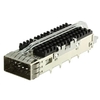
The rapid growth of data-intensive applications, from artificial intelligence to high-performance computing, has placed unprecedented demands on network infrastructure. Traditional SFP transceiver and SFP+ modules, while reliable, are reaching their bandwidth limits, prompting the need for more advanced solutions. The SFP112 standard emerges as a pivotal technology, offering 112Gbps per lane in a compact form factor, designed to address the scalability and performance requirements of modern networks. This guide explores the technical foundations, advantages, deployment scenarios, and future trends of SFP112, providing network engineers and IT planners with a comprehensive roadmap for future-proofing high-speed optical infrastructure.
? What Is SFP112 and Why It Matters
SFP112 is a next-generation pluggable optical module standard that delivers 112Gbps per lane, designed to meet the increasing bandwidth and density demands of modern networks. Its primary significance lies in enabling higher-speed connections within the same compact SFP form factor, allowing data centers and high-performance computing environments to scale efficiently without requiring larger ports or extensive cabling overhauls.

Definition and Core Concept of SFP112
SFP112 builds on the legacy of SFP, SFP+, and SFP56 modules, leveraging advancements in signal modulation to double lane throughput. Unlike earlier transceiver modules limited to 25G or 50G per lane, SFP112 uses PAM4 (4-level pulse amplitude modulation) to encode two bits per symbol, effectively enabling 112Gbps transmission in a single lane while maintaining backward compatibility with smaller form factors in network equipment. This combination of high speed and compact design allows for seamless integration into existing switch ports, reducing the need for costly infrastructure upgrades.
Key Technical Characteristics
SFP112 modules exhibit several defining technical characteristics that distinguish them from earlier optical modules:
- Electrical Interface: Designed to handle 112G PAM4 signaling, with advanced equalization and signal conditioning to preserve signal integrity across short to medium distances.
- Thermal and Power Considerations: Operating at higher speeds increases both power consumption and heat generation, requiring careful thermal management within switches and servers.
- Form Factor Consistency: Maintains the same physical dimensions as SFP+ and SFP28, supporting higher port density without redesigning chassis layouts.
A comparative table highlights how SFP112 improves over prior standards:
| Module Type |
Lane Speed |
Modulation |
Typical Use Case |
| SFP28 |
25G |
NRZ |
Standard 25G Ethernet |
| SFP56 |
50G |
PAM4 |
High-speed servers, storage |
| SFP112 |
112G |
PAM4 |
Next-gen data center, AI/ML clusters |
The table shows that SFP112 doubles the per-lane throughput compared to SFP56, supporting applications that demand extreme bandwidth in a compact module.
Industry Demand Driving SFP112 Adoption
The adoption of SFP112 is fueled by several trends in networking and computing:
- Data Center Bandwidth Growth: Hyperscale and enterprise data centers increasingly require higher per-port speeds to handle exponential traffic growth.
- AI and High-Performance Computing Workloads: GPU clusters and AI training environments need ultra-high-speed links for efficient interconnects.
- Future Network Evolution: With 400GBASE and 800GBASE deployments on the horizon, SFP112 provides a scalable stepping stone that fits within existing infrastructure while supporting future upgrades.
In summary, SFP112 is not just an incremental improvement; it addresses fundamental limitations of previous fiber SFP standards while enabling high-density, high-performance networks that are ready for the next decade of data growth.
? Evolution Path to SFP112
The SFP112 standard represents a deliberate evolution in optical module technology, addressing the bandwidth, density, and scalability limitations of its predecessors. Understanding this progression is essential for network planners seeking to optimize infrastructure for future workloads.
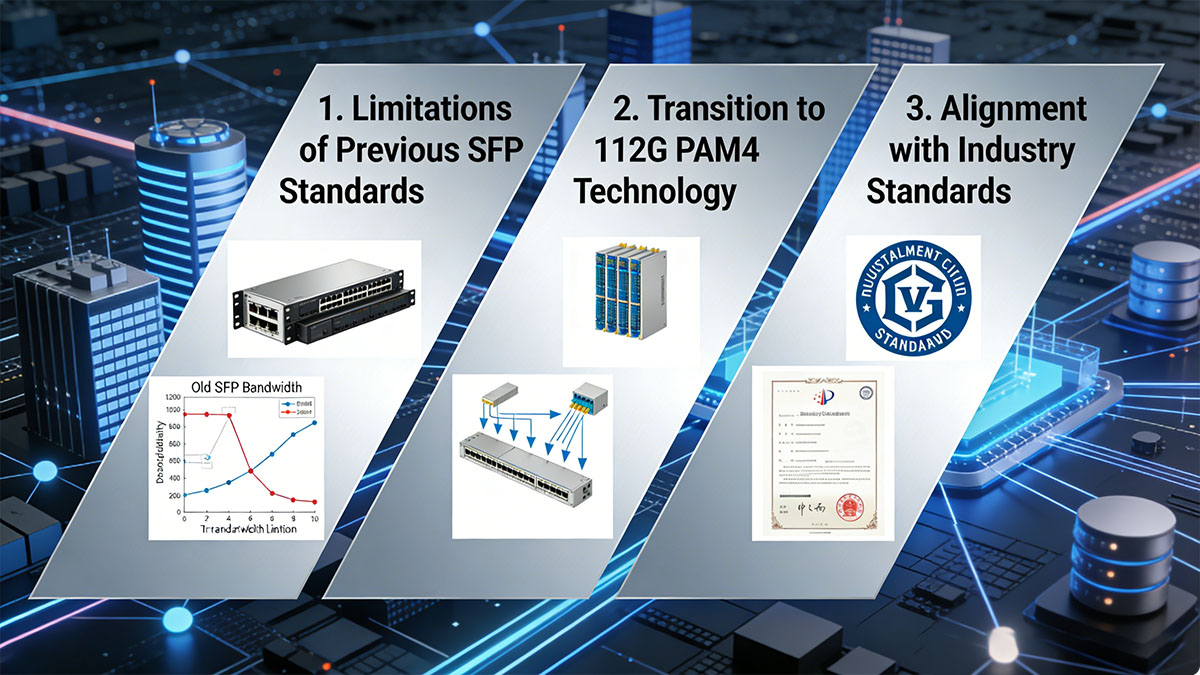
Limitations of Previous SFP Standards
Earlier SFP-based modules, including legacy 10G optics such as SFP-10G-SR and SFP28 (25G) or SFP56 (50G) transceivers, served their purpose in conventional networks but began showing constraints as data demands surged:
- Bandwidth Ceilings: SFP28 modules maxed out at 25Gbps per lane, and SFP56 at 50Gbps, limiting throughput for modern multi-GPU servers and high-speed storage networks.
- Port Density Constraints: Higher-speed alternatives often required larger form factors like QSFP, reducing switch port density and increasing rack footprint.
- Infrastructure Inefficiencies: Scaling beyond 50G typically meant deploying additional cables and optical transceiver modules, adding complexity and cost.
These limitations created a clear demand for a solution that combined higher speed with compact form factor compatibility.
Transition to 112G PAM4 Technology
SFP112 addresses these constraints primarily through the adoption of PAM4 modulation. The benefits and technical implications include:
- Increased Data Rate: PAM4 encodes two bits per symbol, doubling the lane throughput compared to NRZ signaling used in SFP28.
- Signal Integrity Management: Higher data rates introduce greater sensitivity to noise and loss, requiring advanced equalization, pre-emphasis, and forward error correction (FEC).
- Compact Integration: By retaining the SFP form factor, SFP112 supports existing chassis and switch designs without sacrificing port density.
The transition from NRZ to PAM4 is critical, as it allows data centers to achieve higher speeds without immediately adopting larger, more expensive form factors like QSFP-DD or OSFP.
Alignment with Industry Standards
SFP112 development has been guided by multiple standardization efforts to ensure interoperability and ecosystem support:
- IEEE 802.3ck: Defines 100GBASE and 112GBASE per lane Ethernet specifications, including electrical interfaces and signal integrity requirements.
- Multi-Source Agreements (MSA): Industry consortia provide guidelines for module form factor, connector interfaces, and interoperability testing, ensuring broad vendor support.
- Vendor Ecosystem Readiness: Leading switch and module manufacturers have started integrating SFP112-compatible ports, facilitating gradual adoption in enterprise and hyperscale networks.
In short, the evolution from SFP28 and SFP56 to SFP112 represents a combination of technological innovation and industry coordination, enabling data centers to scale bandwidth efficiently while maintaining compatibility with existing infrastructure.
? SFP112 Technical Architecture Explained
SFP112 achieves high-speed performance without increasing module size by combining advanced electrical, optical, and thermal engineering. Its architecture is designed to optimize signal integrity, minimize power consumption, and maintain backward-compatible form factors, making it suitable for modern high-density network deployments.

Electrical and Optical Interface Design
SFP112's electrical and optical design is central to its 112Gbps per lane capability. The main conclusions are:
- Electrical Interface: SFP112 relies on 112G PAM4 signaling with advanced SerDes (serializer/deserializer) technology. Equalization and pre-emphasis circuits compensate for signal loss over PCB traces and cables.
- Optical Interface: Supports both multimode transceivers for short-reach (SR) applications and Single mode transceivers for long-reach (LR) deployments.. The optical front-end includes high-speed lasers and photodiodes optimized for low insertion loss and minimal signal distortion.
- Error Correction: Forward Error Correction (FEC) is essential to maintain low bit error rates (BER) at these speeds, particularly over longer links.
A summary of interface characteristics:
| Parameter |
Description |
Typical Value |
| Lane Speed |
Electrical signaling per lane |
112Gbps PAM4 |
| Host Interface |
Connection to switch ASIC |
112G SerDes |
| Optical Reach |
Distance over fiber |
100m–10km |
| BER |
Target bit error rate |
≤10⁻¹² |
This combination of electrical and optical optimization allows SFP112 to deliver high-speed performance while maintaining reliability across typical data center distances.
Form Factor and Mechanical Design
SFP112 preserves the compact SFP form factor, which offers several advantages:
- High Port Density: Enables more ports per switch without increasing chassis size.
- Physical Compatibility: Fits existing SFP cages and connectors, simplifying infrastructure upgrades.
- Mechanical Reliability: Enhanced connector tolerances and latch mechanisms maintain signal integrity at high speeds.
Maintaining this form factor allows network operators to achieve 112G speeds without redesigning racks or panels.
Thermal Management and Power Efficiency
High-speed operation increases power consumption and heat generation, which must be carefully managed:
- Power Consumption: Typical SFP112 modules consume more power than SFP28 or SFP56, often in the 5–7W range per module.
- Heat Dissipation: Proper airflow in switch chassis or server ports is critical to prevent thermal throttling.
- Efficiency Strategies: Techniques such as improved DSP efficiency, lower voltage drivers, and optimized PCB layout reduce energy waste.
By balancing electrical, optical, and thermal considerations, SFP112 achieves reliable high-speed operation while remaining practical for dense deployment scenarios.
In summary, SFP112's technical architecture integrates advanced modulation, precise optical components, and efficient thermal design, creating a module that is both high-performance and adaptable to existing infrastructure.
? Key Advantages of SFP112 in Modern Networks
SFP112 offers clear benefits that address the critical demands of modern data centers, high-performance computing clusters, and next-generation telecom networks. Its combination of high speed, compact design, and energy efficiency makes it a strategic choice for scaling network infrastructure.

Higher Bandwidth per Port
SFP112 doubles the lane throughput compared to SFP56, delivering 112Gbps in a single-lane module. This higher bandwidth enables:
- Faster Data Transfers: Reduces bottlenecks in server-to-server and switch-to-switch communication.
- Support for Multi-GPU and AI Workloads: Handles high-throughput data streams required for AI training and inference.
- Reduced Latency: Fewer modules are needed to achieve equivalent bandwidth, lowering the number of hops and interconnect delays.
A comparison of per-lane bandwidth across common modules:
| Module Type |
Lane Speed |
Typical Deployment |
| SFP28 |
25G |
Standard Ethernet |
| SFP56 |
50G |
Storage and high-speed servers |
| SFP112 |
112G |
Next-gen data centers, AI/ML clusters |
The table highlights how SFP112 enables high-speed links without increasing physical port count.
Improved Network Scalability
The compact form factor of SFP112 supports higher port density in switches and servers. Key benefits include:
- Dense Deployments: More 112G ports per chassis compared to QSFP or OSFP alternatives.
- Simplified Cabling: Fewer cables are required to reach the same aggregate bandwidth, reducing management complexity.
- Flexible Architecture: Supports both spine-leaf and access-aggregation designs without redesigning racks or panels.
Cost Efficiency in High-Speed Deployments
While the upfront cost of SFP112 modules may be higher than legacy modules, the overall value proposition is strong:
- Lower Cost per Bit: Fewer modules and ports are needed to achieve equivalent throughput.
- Infrastructure Optimization: Enables existing switches and cabling to support higher speeds, deferring larger-scale upgrades.
- Energy Efficiency: Advanced thermal and DSP designs minimize power consumption relative to aggregate bandwidth delivered.
In essence, SFP112 provides a balance of high performance, density, and efficiency, making it suitable for scaling networks to meet future traffic demands while optimizing operational costs.
? SFP112 vs Other High-Speed Optical Modules
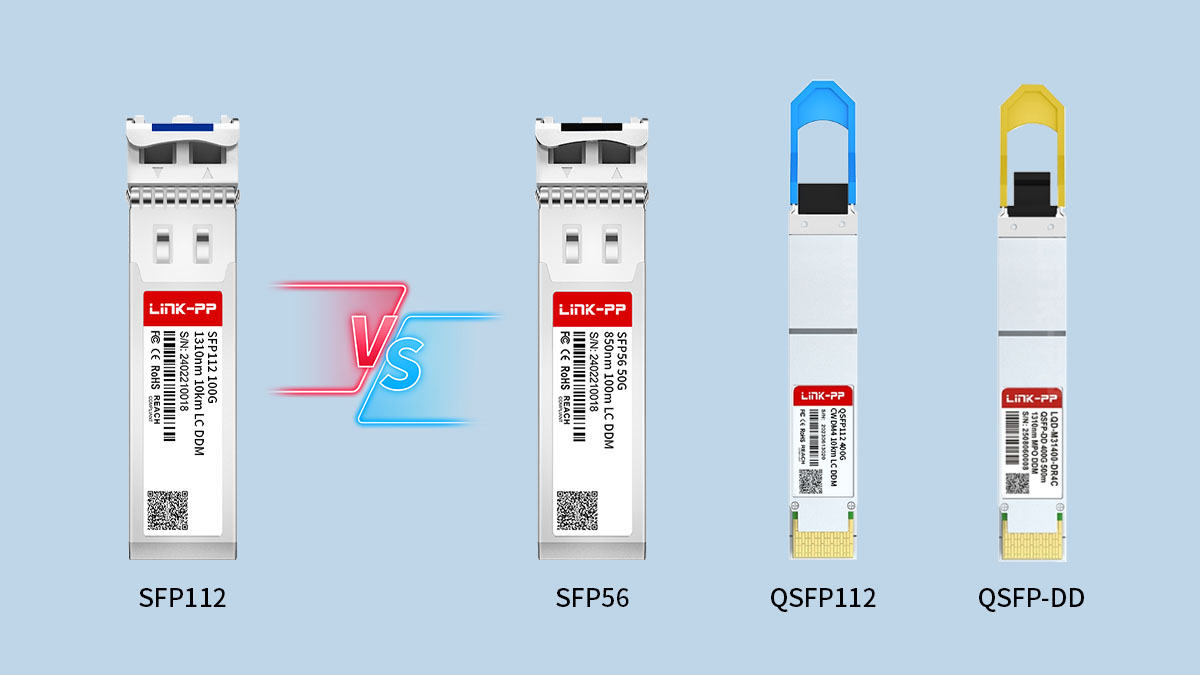
SFP112 distinguishes itself from other high-speed optical modules by offering a unique combination of compact form factor and high per-lane bandwidth. Understanding its position relative to SFP56, QSFP112, and larger form factors helps network planners make informed deployment decisions.
SFP112 vs SFP56
SFP112 doubles the per-lane speed compared to SFP56, making it suitable for environments where higher throughput is critical without changing switch port density.
- Bandwidth: 112G vs 50G per lane
- Form Factor: Both maintain SFP dimensions, allowing direct chassis compatibility
- Use Case: SFP112 is preferred for next-generation AI/ML clusters or data center uplinks, while SFP56 suffices for conventional storage and server interconnects
A quick comparison:
| Feature |
SFP56 |
SFP112 |
| Lane Speed |
50G |
112G |
| Modulation |
PAM4 |
PAM4 |
| Port Density |
Standard SFP |
Standard SFP |
| Typical Use Case |
High-speed servers |
AI clusters, future-proof data centers |
SFP112 vs QSFP112
QSFP112 provides multi-lane aggregation, typically four 112G lanes for 448G total, but occupies more space. SFP112 is advantageous when port density is critical:
- Density: SFP112 allows more high-speed ports per chassis than QSFP112
- Flexibility: Easier to deploy in existing SFP cages without modifying switch designs
- Application: SFP112 suits access-layer or server uplinks; QSFP112 is ideal for spine-leaf aggregation where higher aggregate bandwidth is prioritized
SFP112 vs QSFP-DD and OSFP
For 400G or 800G deployments, QSFP-DD and OSFP modules dominate due to higher lane counts. SFP112 still has relevance for incremental upgrades:
- Incremental Scaling: SFP112 can provide 112G links in legacy SFP-compatible slots
- Cost Efficiency: Avoids immediate replacement of chassis or cabling for high-speed links
- Strategic Deployment: Useful for bridging older switches to next-generation backbone infrastructure
In conclusion, SFP112 strikes a balance between lane speed, port density, and deployment flexibility, making it an ideal choice for environments that require high-speed connections without the footprint or cost of multi-lane modules.
? Deployment Scenarios for SFP112
SFP112's high-speed, compact design makes it suitable for a wide range of modern networking environments. Its adoption is driven by applications that require both ultra-high bandwidth and efficient port density.

Hyperscale Data Centers
SFP112 supports high-density deployments in hyperscale data centers, enabling scalable spine-leaf and access-aggregation architectures:
- Spine-Leaf Integration: Each leaf switch can host multiple 112G uplinks to spine switches, increasing total network throughput without expanding chassis size.
- Port Optimization: Maintaining SFP form factor allows more high-speed ports per rack unit, maximizing hardware utilization.
- Simplified Cabling: Fewer modules and cables are needed to achieve the same aggregate bandwidth, reducing complexity and maintenance overhead.
AI and High-Performance Computing Clusters
High-performance computing (HPC) and AI/ML workloads demand extremely low latency and high throughput, which SFP112 can deliver:
- GPU Interconnects: Supports high-bandwidth server-to-server connections necessary for multi-GPU training and inference.
- Low Latency: Fewer hops are required for equivalent bandwidth, improving application responsiveness.
- Scalability: Easily integrated into existing server racks without requiring larger QSFP or OSFP modules.
Telecom and 5G Transport Networks
SFP112 is also relevant in next-generation telecom networks, particularly for 5G fronthaul and backhaul applications:
- Bandwidth Scaling: Supports increasing traffic demands from 5G base stations without requiring a complete infrastructure overhaul.
- Compact Deployment: Ideal for central offices or remote radio head locations where space is limited.
- Future-Proofing: Provides an intermediate upgrade path toward 400G/800G transport networks, ensuring compatibility with evolving network standards.
In summary, SFP112 is highly versatile, bridging the gap between legacy infrastructure and next-generation high-speed networks. Its form factor and performance characteristics make it suitable for data centers, AI/HPC clusters, and telecom environments, providing scalable, high-performance connectivity without the footprint or cost of larger multi-lane modules.
? Challenges and Considerations in SFP112 Adoption
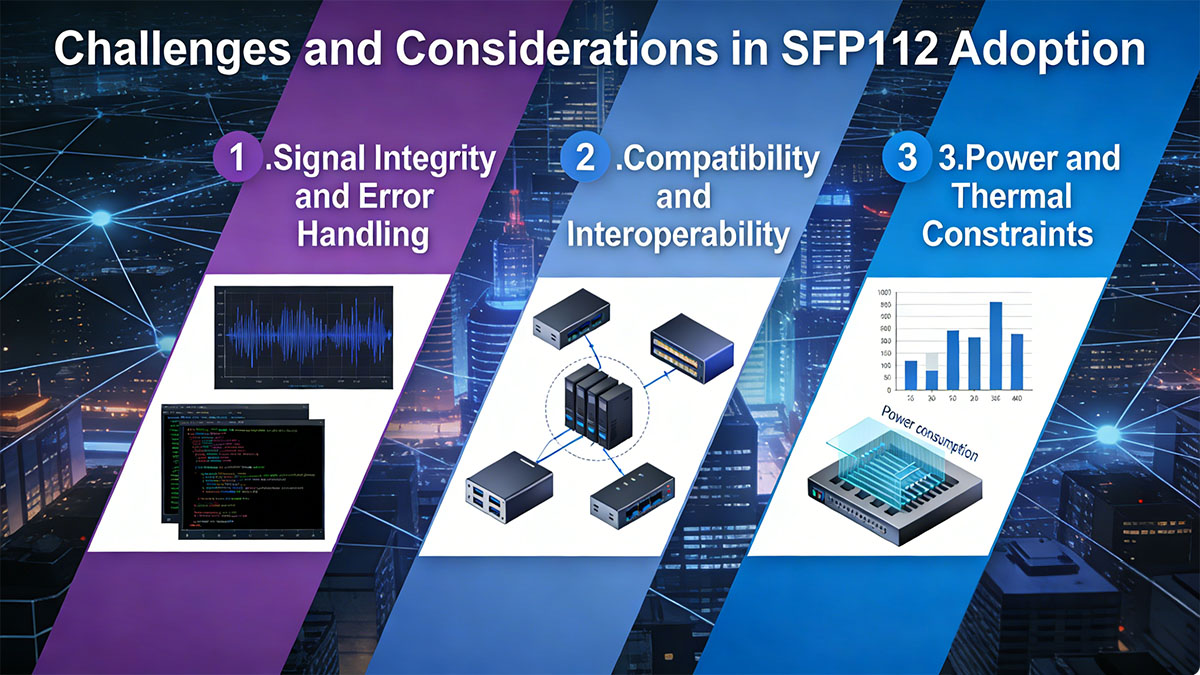
While SFP112 offers high-speed performance and compact design, its adoption presents several technical and operational challenges. Understanding these considerations is crucial for ensuring reliable deployment and long-term network efficiency.
Signal Integrity and Error Handling
High-speed PAM4 signaling introduces greater sensitivity to noise and loss compared to NRZ, requiring advanced techniques to maintain data integrity:
- Bit Error Rate (BER) Management: PAM4 doubles the bits per symbol but is more prone to errors. Forward Error Correction (FEC) is essential to maintain BER below 10⁻¹².
- Equalization and Pre-Emphasis: Signal degradation over PCB traces and cables is compensated by adaptive equalization and transmitter pre-emphasis.
- Optical Link Quality: High-quality connectors, low-loss fiber, and precise alignment of lasers and photodiodes are critical to prevent signal degradation.
Compatibility and Interoperability
Despite retaining the SFP form factor, SFP112 adoption requires careful consideration of equipment compatibility:
- Switch and Server Ports: Not all existing SFP+ or SFP28 slots support 112G PAM4 without firmware or hardware upgrades.
- Vendor Ecosystem: Interoperability testing between modules and switch vendors is essential to avoid link failures.
- Backward Compatibility: While SFP112 can physically fit older SFP cages, electrical and signaling differences may limit operational compatibility with lower-speed ports.
Power and Thermal Constraints
High-speed operation increases both power consumption and heat generation, requiring attention to thermal design:
- Power Budgeting: SFP112 modules typically consume 5–7W per port, higher than SFP56. Data center operators must ensure switch and rack power allocations accommodate these modules.
- Cooling Requirements: Adequate airflow and thermal management strategies are essential to prevent thermal throttling and ensure reliability.
- Trade-offs: Operators must balance performance, density, and energy efficiency when deploying large numbers of SFP112 modules.
In summary, while SFP112 provides significant performance and density advantages, successful deployment depends on managing signal integrity, ensuring interoperability, and addressing power and thermal challenges. Proper planning and testing are essential to fully realize the benefits of this high-speed optical module.
? Future Trends of SFP112 and Beyond
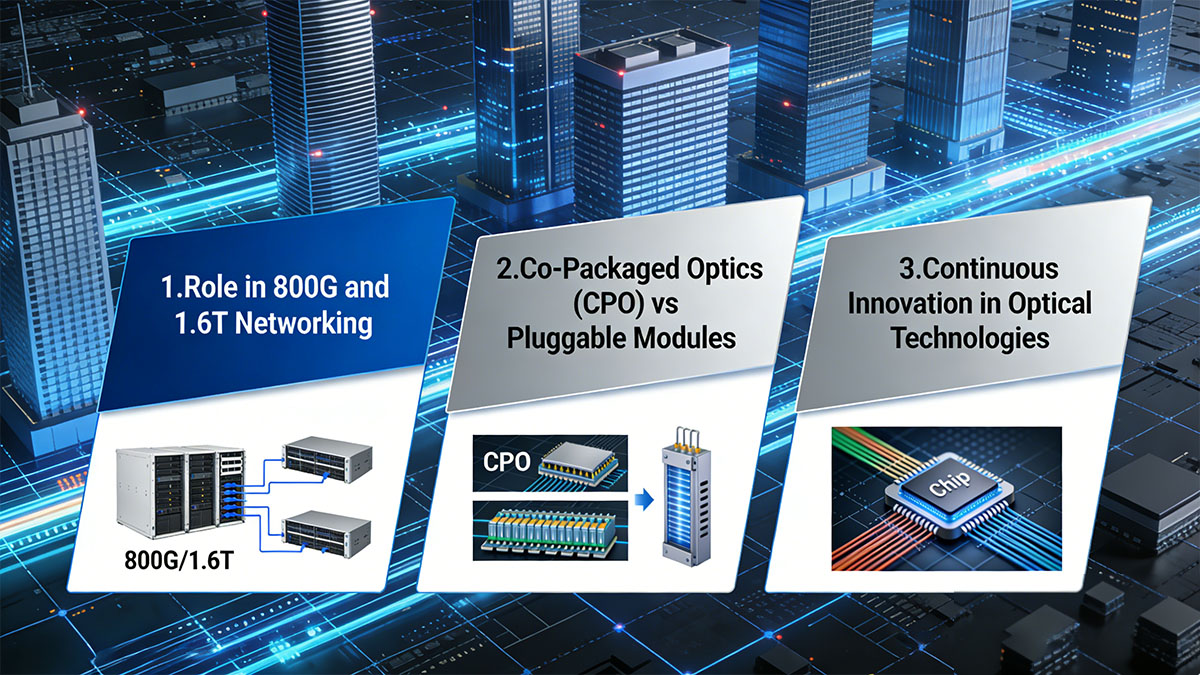
SFP112 is a key stepping stone in the evolution of optical networking, bridging current high-speed deployments with emerging 400G, 800G, and even 1.6T infrastructures. Its trajectory highlights both technological innovation and strategic deployment trends in data centers and telecom networks.
Role in 800G and 1.6T Networking
SFP112 provides an incremental upgrade path for networks transitioning to ultra-high-speed architectures:
- Multi-Lane Aggregation: Multiple SFP112 modules can be combined to achieve aggregate bandwidths approaching 400G or higher without moving immediately to QSFP-DD or OSFP.
- Infrastructure Compatibility: Retains the SFP form factor, allowing gradual network upgrades while leveraging existing switch ports and cabling.
- Scalable Interconnects: Enables spine-leaf and server uplinks to scale performance without increasing port footprint, facilitating incremental network expansion.
Co-Packaged Optics (CPO) vs Pluggable Modules
The evolution toward co-packaged optics represents a potential long-term shift in optical interconnect design:
- CPO Advantages: Reduces electrical trace lengths and power loss by integrating optical transceivers directly with switch ASICs, supporting speeds beyond 1Tbps per lane.
- Trade-Offs: Requires specialized hardware and cooling infrastructure, making widespread deployment more complex and capital-intensive.
- SFP112 Relevance: While CPO will dominate ultra-high-speed backbone links, SFP112 remains essential for incremental upgrades, edge deployments, and environments prioritizing modularity and flexibility.
Continuous Innovation in Optical Technologies
The optical module landscape continues to evolve, with trends that may influence SFP112 adoption and design:
- Advanced DSP and Silicon Photonics: DSP algorithms improve signal equalization and PAM4 performance, while silicon photonics enables more energy-efficient, high-speed transceivers.
- Energy-Efficient Interconnects: Network operators increasingly prioritize low-power modules to reduce operational costs, driving innovation in thermal and power management.
- Flexible Modulation and Reach: Future modules may offer tunable data rates or multi-reach capabilities, allowing networks to dynamically adjust link performance based on traffic demands.
In summary, SFP112 is both a current solution and a transitional technology. It bridges legacy SFP-based infrastructure and next-generation optical networks, enabling high-density, high-speed deployments today while providing a foundation for incremental upgrades toward 800G, 1.6T, and beyond. Continuous innovation in modulation, silicon photonics, and energy efficiency will determine how SFP112 and its successors evolve in the coming years.
? Best Practices for Integrating SFP112 into Networks
Successful deployment of SFP112 requires careful planning and adherence to best practices in network design, equipment selection, and maintenance. Proper implementation ensures that networks can fully leverage 112G per lane performance while avoiding common pitfalls.

Network Design Considerations
Proper network planning is essential to maximize the benefits of SFP112:
- Capacity Planning: Evaluate current and projected bandwidth requirements to determine the number of SFP112 modules needed per switch or server.
- Link Distance Optimization: Match module type (short-reach or long-reach) to actual fiber distances to maintain signal integrity and reduce unnecessary power consumption.
- Redundancy and Resilience: Design links with redundancy where possible, ensuring failover paths for critical high-speed connections.
Vendor Selection and Testing
Compatibility and interoperability are critical factors for high-speed optical modules:
- Interoperability Testing: Validate SFP112 modules with target switches and servers under real-world conditions to ensure reliable link performance.
- Certification and Compliance: Choose modules that comply with IEEE 802.3ck, MSA specifications, and industry-standard FEC requirements.
- Vendor Ecosystem Assessment: Ensure that module suppliers have proven compatibility with the switch and server vendors used in the network.
Monitoring and Maintenance Strategies
Ongoing monitoring and proactive maintenance ensure long-term performance and reliability:
- Real-Time Performance Monitoring: Track metrics such as BER, signal loss, and power consumption to identify potential issues early.
- Predictive Failure Analysis: Use analytics to detect patterns that could indicate future module or link failures.
- Thermal Management Checks: Periodically inspect airflow and cooling systems, especially in high-density deployments, to prevent thermal throttling.
By following these best practices, network operators can deploy SFP112 modules efficiently, ensuring high-speed performance, reliability, and scalability while minimizing operational risk. Proper planning, testing, and monitoring are key to fully realizing the advantages of this next-generation optical technology.
? FAQs About SFP112
What does SFP112 mean?
SFP112 refers to a small form-factor pluggable module capable of transmitting 112Gbps per lane, using PAM4 signaling for high-speed network connections.
Is SFP112 backward compatible?
Physically, SFP112 fits into standard SFP slots, but electrical and signaling differences may prevent full compatibility with lower-speed SFP28 or SFP56 ports.
Where is SFP112 typically used?
It is commonly deployed in hyperscale data centers, AI/HPC clusters, and telecom 5G networks where high bandwidth and dense port configurations are required.
How does SFP112 compare to QSFP112?
SFP112 provides 112G per lane in a single-lane module, offering higher port density, while QSFP112 aggregates multiple lanes for higher total bandwidth but requires more space.
Can SFP112 support future network upgrades?
Yes, SFP112 serves as a bridge to 400G, 800G, and beyond, allowing incremental network upgrades while maintaining compatibility with existing SFP-compatible infrastructure.
? Conclusion
SFP112 represents a major step forward in optical networking, combining high-speed 112Gbps per lane performance with the compact SFP form factor. It addresses the growing demands of modern data centers, AI/HPC clusters, and telecom networks by enabling high-density, scalable, and energy-efficient connectivity. While deployment requires careful attention to signal integrity, compatibility, and thermal management, following best practices ensures that SFP112 can deliver reliable, future-proof performance. As networks evolve toward 400G, 800G, and beyond, SFP112 provides a flexible, incremental upgrade path that balances speed, density, and cost-effectiveness.
For detailed specifications, deployment guidance, and the latest SFP112 modules, visit the LINK-PP Official Store to explore compatible solutions for your network infrastructure.