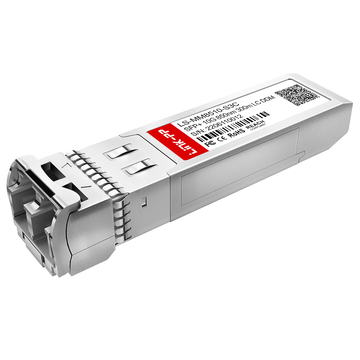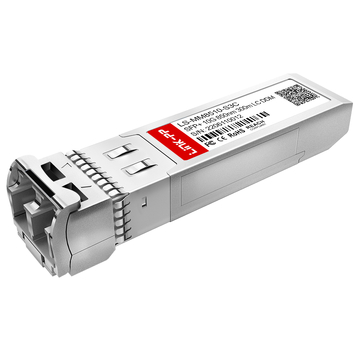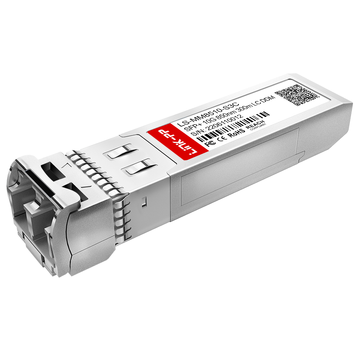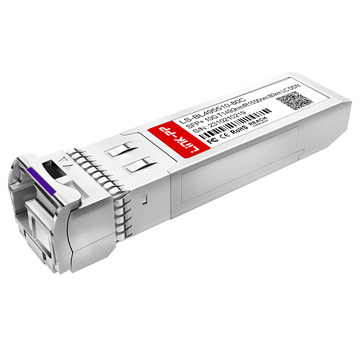






























In modern high-speed networking environments, 10Gbps optical connectivity has become a foundational requirement for enterprises, data centers, and campus networks. As traffic volumes continue to increase due to virtualization, cloud computing, and high-performance applications, the need for stable, low-latency, and short-reach optical interconnects is more important than ever.
Huawei SFP-10G-USR is designed to address this demand by providing a compact and efficient 10G SFP+ transceiver solution optimized for ultra-short reach fiber links. It is commonly deployed in high-density switching environments where devices are located within the same rack or adjacent racks, enabling fast and reliable data transmission over multimode fiber infrastructure.
Unlike long-reach optical transceiver modules that prioritize distance, this type of transceiver focuses on maximizing performance and efficiency over short distances. This makes it particularly suitable for intra-data center connections, server-to-switch links, and aggregation layer deployments where bandwidth density and signal integrity are critical.
Understanding the role, capabilities, and deployment scenarios of Huawei SFP-10G-USR is essential for network engineers and IT planners who aim to build scalable 10G architectures. In the following sections, we will explore its technical specifications, key features, application environments, and compatibility considerations in detail to provide a complete technical reference.
☑️ What Is Huawei SFP-10G-USR?
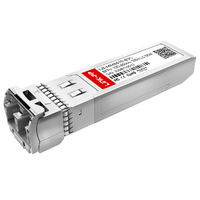
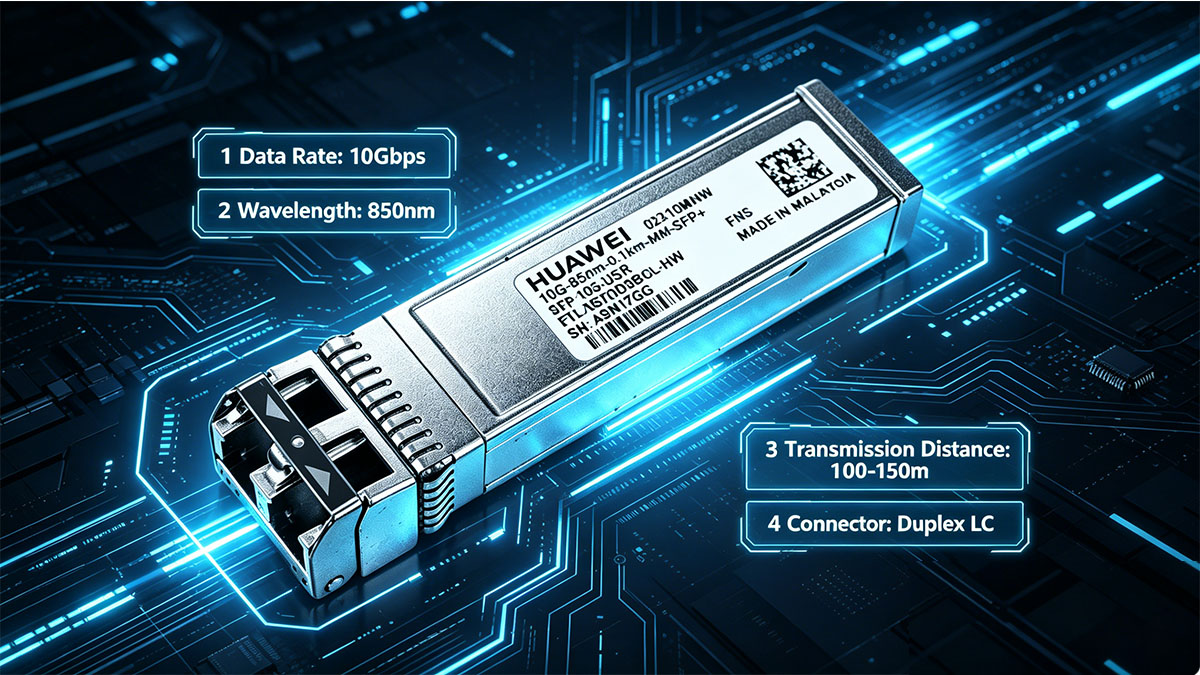
Huawei SFP-10G-USR is a 10Gbps SFP+ optical transceiver module designed for ultra-short reach data transmission over multimode fiber. It is primarily used to establish high-speed optical links within close-range network environments, such as within the same rack or between adjacent racks in data centers. Its core value lies in delivering stable 10G connectivity with low latency and efficient power usage in high-density networking scenarios.
This module belongs to the SFP+ (Small Form-factor Pluggable Plus) family, which is widely adopted in modern Ethernet infrastructures for its compact size and hot-swappable capability. Compared to standard 10G optical modules, the USR (Ultra Short Reach) variant is optimized specifically for very short transmission distances, making it ideal for internal switching architectures rather than long-haul communication.
Definition and Product Overview
The Huawei SFP-10G-USR is a hot-pluggable optical transceiver that converts electrical signals into optical signals and vice versa, enabling 10Gbps Ethernet communication over multimode fiber. It is typically used in Huawei networking equipment such as switches and routers, forming part of the physical layer infrastructure in enterprise and data center networks.
Its primary role is to support high-speed short-distance interconnects where copper cables are insufficient in performance or scalability. By leveraging optical transmission, it reduces electromagnetic interference and improves signal integrity in dense deployments.
From a functional perspective, it serves as a bridging component between network devices, ensuring reliable data exchange at high throughput levels while maintaining low latency characteristics.
Key Technical Specifications
The performance characteristics of Huawei SFP-10G-USR are defined by a set of standardized optical and electrical parameters that ensure compatibility and stability in 10G Ethernet environments.
The table below summarizes its core technical specifications:
| Parameter | Specification | Description |
|---|---|---|
| Data Rate | 10Gbps | Supports 10 Gigabit Ethernet transmission |
| Wavelength | 850nm | Optimized for multimode fiber operation |
| Fiber Type | MMF (OM3/OM4) | Compatible with standard multimode fiber cabling |
| Transmission Distance | Up to 100m–150m | Depends on fiber grade (OM3 vs OM4) |
| Connector Type | Duplex LC | Standard optical fiber interface |
These specifications highlight its focus on short-reach, high-performance environments. The use of 850nm wavelength and multimode fiber ensures cost-effective deployment while maintaining high bandwidth efficiency across short distances.
Compliance and Standards
Huawei SFP-10G-USR is designed in alignment with widely accepted networking standards to ensure interoperability and predictable performance across compatible systems. It follows the IEEE 802.3ae 10GBASE-SR standard, which defines the requirements for 10Gbps Ethernet over short-range multimode fiber links.
In addition to IEEE compliance, the module adheres to the Multi-Source Agreement (MSA) standards, which define physical form factor, electrical interface, and interoperability guidelines for SFP+ transceivers. This ensures that the module can operate reliably within standardized SFP+ ports across supported Huawei networking devices.
It also typically supports Digital Diagnostic Monitoring (DDM), allowing real-time tracking of optical parameters such as temperature, voltage, transmit power, and receive power. This capability is particularly valuable for network administrators performing proactive maintenance and performance monitoring in production environments.
☑️ Key Features and Advantages of Huawei SFP-10G-USR
Huawei SFP-10G-USR is widely adopted in high-density optical networks because it balances performance, efficiency, and deployment simplicity in short-reach 10Gbps environments. Its design focuses on optimizing intra-data center connectivity, where reliability and port density are more critical than long-distance transmission.
High-Speed Data Transmission
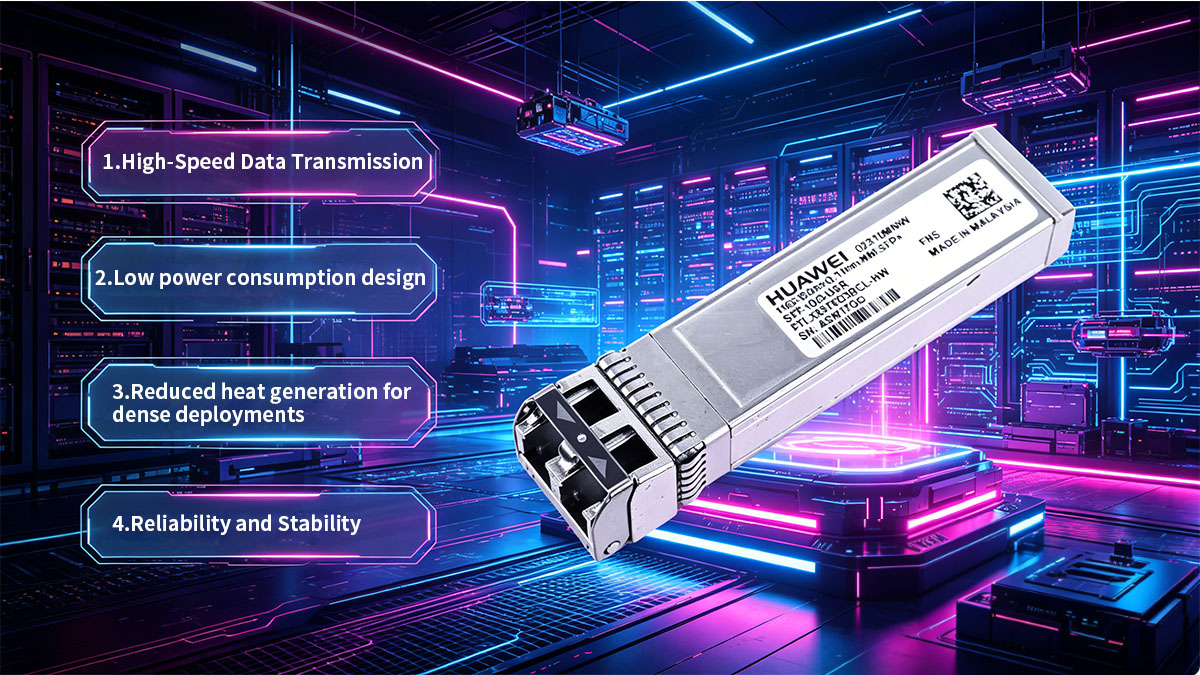
At its core, Huawei SFP-10G-USR delivers stable 10Gbps full-duplex data transmission, making it suitable for modern Ethernet backbones and server interconnects. It is engineered to maintain consistent throughput under heavy traffic loads, which is essential for virtualization clusters and cloud-based workloads.
To better understand its performance positioning, the following table summarizes its transmission characteristics in typical deployment conditions:
| Feature | Description | Network Benefit |
|---|---|---|
| Bandwidth | 10Gbps full duplex | Supports high-throughput applications |
| Latency | Very low | Improves real-time data exchange |
| Link Stability | High | Reduces packet loss in dense environments |
| Use Case Fit | Short-range interconnects | Optimized for intra-rack or inter-rack links |
This performance profile makes it particularly effective in environments where multiple high-speed links operate simultaneously within confined physical spaces.
Energy Efficiency and Thermal Performance
One of the key advantages of Huawei SFP-10G-USR is its low power consumption design. Compared to longer-reach optical modules, it requires less optical amplification and signal processing, which directly reduces energy usage.
From a thermal perspective, lower power consumption translates into reduced heat output, which is especially important in high-density switch chassis where airflow and cooling capacity are limited. This allows network engineers to deploy more transceivers per device without significantly increasing thermal stress.
In practical deployments, this efficiency contributes to:
- Lower overall power budget per switch
- Improved thermal stability in dense racks
- Reduced cooling requirements in data center environments
Plug-and-Play Capability
Huawei SFP-10G-USR supports hot-swappable installation, allowing it to be inserted or removed without powering down the network device. This capability significantly simplifies network maintenance and upgrades.
In operational environments, this feature is particularly valuable because it enables:
- Fast replacement of faulty modules without downtime
- Flexible network scaling in live systems
- Simplified inventory management for IT teams
The plug-and-play nature of SFP+ modules also reduces deployment complexity, making them suitable for both large-scale enterprise networks and smaller campus infrastructures.
Reliability and Stability
Huawei designs SFP-10G-USR modules with enterprise-grade optical components to ensure long-term operational stability. In short-reach environments, where high port density can increase the risk of signal interference and thermal accumulation, reliability becomes a critical factor.
Key reliability-oriented advantages include:
- Consistent optical signal integrity under continuous operation
- Strong resistance to electromagnetic interference (EMI)
- Stable performance in high-density switching environments
These characteristics make the module suitable for mission-critical applications such as data center switching fabrics and enterprise backbone networks, where downtime or performance degradation can have significant operational impact.
☑️ Typical Application Scenarios
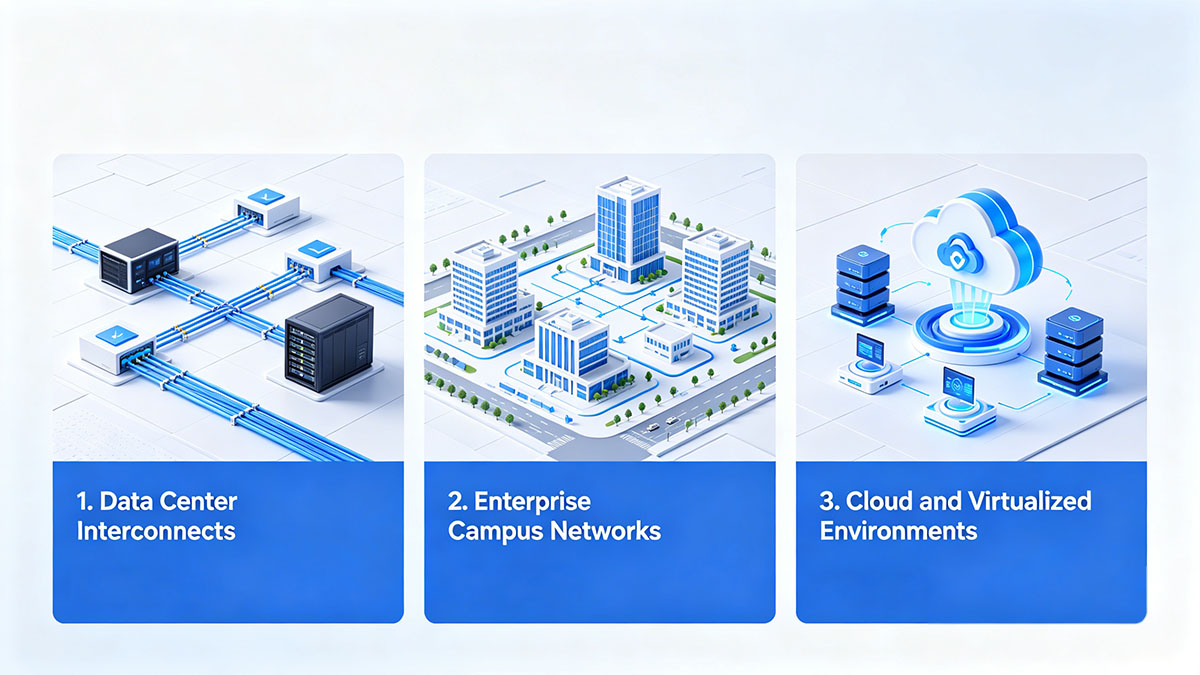
Huawei SFP-10G-USR is primarily designed for short-reach, high-density optical networking environments where devices are physically close and require stable 10Gbps connectivity. Its optimized performance for multimode fiber links makes it especially suitable for modern data-driven infrastructures such as data centers, enterprise networks, and cloud environments.
In practical deployments, its usage is driven by the need to reduce latency, improve bandwidth utilization, and simplify high-speed interconnect architecture within confined network zones.
Data Center Interconnects
In data center environments, Huawei SFP-10G-USR is commonly used for intra-facility connections, particularly between servers and Top-of-Rack (ToR) switches or between adjacent switches within the same rack row. These short-distance links are critical for maintaining high-speed east-west traffic flow in modern distributed computing architectures.
A typical deployment pattern can be summarized as follows:
| Connection Type | Typical Distance | Function |
|---|---|---|
| Server to ToR Switch | 1–10m | High-speed access layer connectivity |
| ToR to Aggregation Switch | 10–50m | Traffic aggregation within rack rows |
| Switch to Switch (same rack row) | Up to 100m | High-density backbone interconnect |
These scenarios benefit from the module's low latency and stable 10Gbps throughput, which ensures efficient handling of large-scale virtual machine migration, storage replication, and distributed application traffic.
Enterprise Campus Networks
In enterprise campus environments, Huawei SFP-10G-USR is widely used to upgrade legacy Gigabit Ethernet backbones to 10Gbps links. It is typically deployed in core-to-distribution or distribution-to-access layer connections where devices are located within relatively short distances.
Common application points include:
- Core switch interconnections within network closets
- Aggregation of departmental switches in office buildings
- High-speed links between campus network segments
By leveraging multimode fiber infrastructure already installed in many enterprise buildings, organizations can achieve significant performance improvements without major cabling overhauls. This makes the module a cost-efficient option for network modernization projects.
Cloud and Virtualized Environments
Cloud computing and virtualization platforms generate large volumes of east-west traffic between virtual machines, storage systems, and hypervisors. Huawei SFP-10G-USR plays a key role in supporting these workloads by providing low-latency and high-bandwidth connectivity within clustered environments.
Its use in these environments typically focuses on:
- High-performance computing (HPC) clusters
- Virtual machine migration networks (live migration)
- Software-defined storage (SDS) interconnects
In these scenarios, consistent throughput is more important than long-distance capability. The module's short-reach optimization ensures predictable performance, which is essential for maintaining service stability in cloud-native architectures.
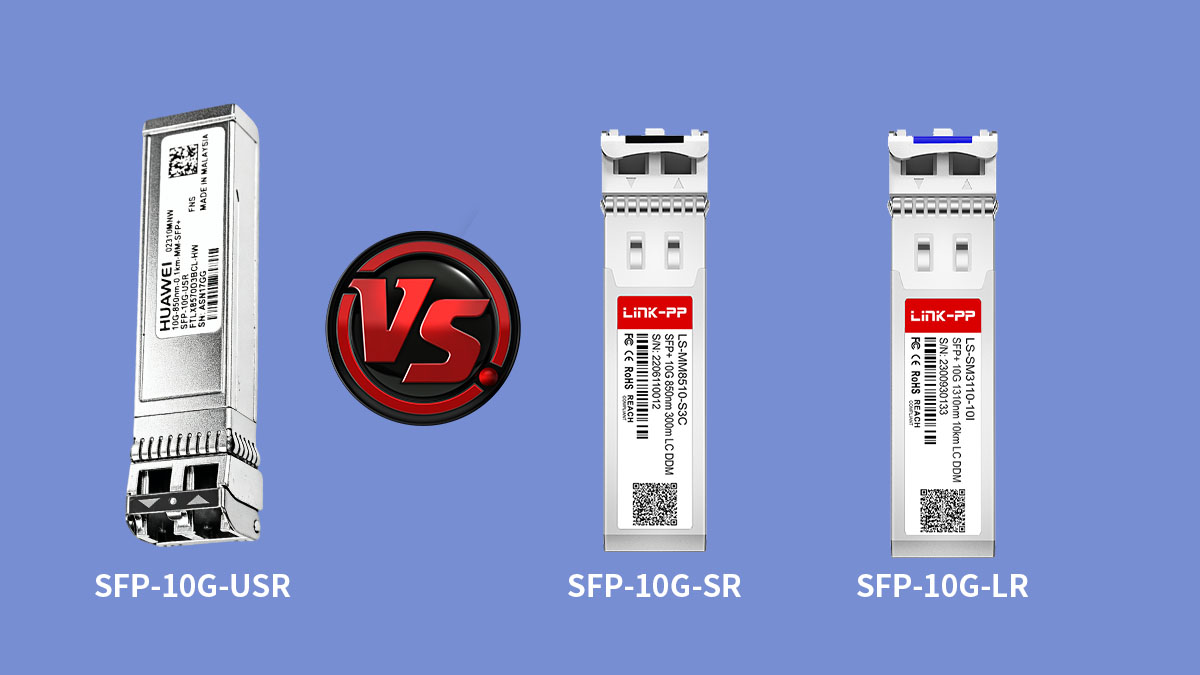
☑️ Huawei SFP-10G-USR vs Other 10G SFP+ Modules
Huawei SFP-10G-USR is part of a broader family of 10G SFP+ modules, each designed for different transmission distances and fiber types. The key differences between USR, SR, and LR modules lie in reach capability, wavelength, and fiber compatibility, which directly determine where each module should be deployed in a network.
In practical network design, selecting the correct 10G module is not about performance superiority, but about matching the optical characteristics to the physical topology.
SFP-10G-USR vs SFP-10G-SR
Huawei SFP-10G-USR and SFP-10G-SR are both designed for multimode fiber environments using an 850nm wavelength, but they are optimized for different short-range transmission profiles. SR is the more standardized option under IEEE 10GBASE-SR, while USR is tuned for even shorter reach scenarios in dense switching environments.
The comparison below highlights their key technical differences:
| Parameter | SFP-10G-USR | SFP-10G-SR |
|---|---|---|
| Standard | 10GBASE-USR (non-standard) | 10GBASE-SR (IEEE standard) |
| Wavelength | 850nm | 850nm |
| Fiber Type | Multimode (OM2/OM3/OM4) | Multimode (OM3/OM4/OM5) |
| Max Distance | ~30m–150m (depending on fiber) | Up to ~300m (OM3/OM4 dependent) |
| Typical Use | Ultra-short rack-level links | Data center short-range links |
USR is typically chosen when the network design involves extremely short interconnects where minimizing cost and optimizing port density is more important than extending distance. SR, on the other hand, provides greater flexibility for slightly longer intra-data center links.
SFP-10G-USR vs SFP-10G-LR
The difference between USR and LR optics is much more fundamental, as they are designed for entirely different fiber infrastructures. LR uses single-mode fiber (SMF) and a 1310nm wavelength, enabling long-distance transmission, while USR remains limited to multimode fiber.
The comparison is summarized below:
| Parameter | SFP-10G-USR | SFP-10G-LR |
|---|---|---|
| Fiber Type | Multimode (MMF) | Single-mode (SMF) |
| Wavelength | 850nm | 1310nm |
| Max Distance | Up to ~150m | Up to 10km |
| Application | Data center short links | Campus / inter-building links |
| Cost Structure | Lower | Higher |
USR is not suitable for long-distance connectivity due to modal dispersion limitations in multimode fiber. LR modules solve this by using single-mode fiber, which allows light to travel longer distances with minimal signal degradation. This makes LR the preferred option for campus backbone and metro-scale networks.
When to Choose Huawei SFP-10G-USR
In real-world deployment planning, Huawei SFP-10G-USR is best selected based on physical layout constraints rather than bandwidth requirements alone. Its use case becomes clear when the network environment is highly compact.
Typical selection scenarios include:
- Server-to-switch connections within the same rack
- Top-of-rack to adjacent rack switch links
- High-density switch stacking in confined enclosures
- Environments where multimode fiber is already deployed and short reach is guaranteed
Because it is optimized for ultra-short distances, it helps reduce unnecessary optical power consumption and simplifies cabling complexity in dense architectures.
☑️ Compatibility and Interoperability
Huawei SFP-10G-USR is designed to operate within Huawei's networking ecosystem while also aligning with widely adopted SFP+ standards. In real-world deployments, compatibility and interoperability are critical factors because optical modules must reliably communicate with switches, routers, and fiber infrastructure without signal mismatch or link instability.
Understanding compatibility requirements helps ensure stable performance, reduces deployment risks, and avoids unnecessary network troubleshooting after installation.
Huawei Device Compatibility
Huawei SFP-10G-USR is primarily optimized for use with Huawei's own switching and routing platforms that support SFP+ 10Gbps optical interfaces. These devices are engineered to recognize and configure the module automatically when inserted into a compatible port.
In typical deployments, compatibility depends on both hardware and software alignment. The following table summarizes key considerations:
| Compatibility Factor | Requirement | Impact |
|---|---|---|
| Device Type | Huawei SFP+ supported switches/routers | Ensures physical interface match |
| Firmware Version | Up-to-date system software | Enables proper module recognition |
| Port Configuration | 10Gbps SFP+ enabled ports | Prevents link negotiation issues |
| Optical Type Match | Multimode fiber support | Ensures signal integrity |
When these conditions are met, the module can operate in a plug-and-play manner, allowing seamless integration into Huawei-managed networks.
Third-Party Compatibility Considerations
In many enterprise environments, network operators may deploy mixed-vendor infrastructures. While Huawei SFP-10G-USR is designed for Huawei systems, interoperability with third-party devices depends on how strictly those devices enforce transceiver validation.
Key factors affecting third-party compatibility include:
- EEPROM coding and vendor identification checks
- Firmware restrictions on non-native optical modules
- Differences in optical power thresholds and diagnostics reporting
- Variations in SFP+ implementation across vendors
In some cases, modules may function normally at the physical layer but generate compatibility warnings at the system level. This does not always impact data transmission, but it can affect monitoring visibility and system logs.
Interoperability Best Practices
To ensure stable performance in mixed or complex network environments, proper interoperability planning is essential. Network engineers typically follow a structured approach to minimize risks associated with optical mismatches.
Common best practices include:
- Verifying compatibility matrices provided by device vendors before deployment
- Conducting lab testing with representative hardware configurations
- Ensuring consistent fiber types (OM3/OM4) across all short-reach links
- Avoiding mixing different optical standards within the same link path
Additionally, maintaining consistent firmware versions across switching platforms helps reduce unexpected compatibility behavior, especially in large-scale data center environments where multiple switch generations may coexist.
☑️ Installation and Deployment Guidelines
Proper installation and deployment of Huawei SFP-10G-USR is essential to ensure stable 10Gbps performance, minimize signal loss, and extend the lifespan of both the optical module and the fiber infrastructure. Although the module supports hot-swappable operation, correct handling procedures and deployment planning remain critical in high-density network environments.
In most real-world cases, performance issues are not caused by the module itself, but by improper fiber handling, dust contamination, or mismatched infrastructure.
Pre-Installation Checklist
Before inserting Huawei SFP-10G-USR into a network device, it is important to verify both physical and environmental readiness. This helps prevent avoidable link failures and ensures optimal optical performance from the start.
Key checks include:
- Confirm that the switch or router supports SFP+ 10Gbps optical modules
- Verify that multimode fiber (OM3 or OM4) is being used
- Ensure fiber connectors (LC duplex) are clean and undamaged
- Check that port speed is configured to 10Gbps if manual configuration is required
- Inspect the module for visible physical defects or contamination
These steps help establish a stable baseline for deployment and reduce troubleshooting efforts after installation.
Installation Steps
Huawei SFP-10G-USR is designed for plug-and-play installation, but correct handling is still necessary to avoid ESD damage or connector contamination. The installation process should be carried out in a controlled and static-safe environment.
A typical installation sequence includes:
- Power on the networking device or ensure it is operational
- Remove the protective dust cap from the SFP+ port and module
- Align the module with the SFP+ slot and gently insert it until it clicks into place
- Connect the LC duplex fiber cable to the module interface
- Verify link status indicators on the device interface
After installation, the device should automatically detect the module and establish a 10Gbps link if all conditions are correctly met.
Troubleshooting Common Issues
Even with proper installation, certain issues may arise due to environmental factors or configuration mismatches. Understanding common failure scenarios helps accelerate diagnosis and recovery.
Typical issues include:
- No link detected: Often caused by incompatible fiber type or incorrect port configuration
- Intermittent connectivity: May result from dirty connectors or poor cable quality
- High error rates: Typically linked to excessive bending of fiber or signal degradation
- Module not recognized: Usually related to firmware limitations or compatibility restrictions
To assist in diagnostics, Digital Diagnostic Monitoring (DDM) can be used to observe real-time optical parameters such as transmit power, receive power, temperature, and voltage. Abnormal readings often indicate physical layer issues that require inspection.
In addition, simple corrective actions like cleaning LC connectors with proper fiber cleaning tools or replacing damaged patch cords can resolve a significant portion of connectivity problems.
☑️ Performance Optimization Tips
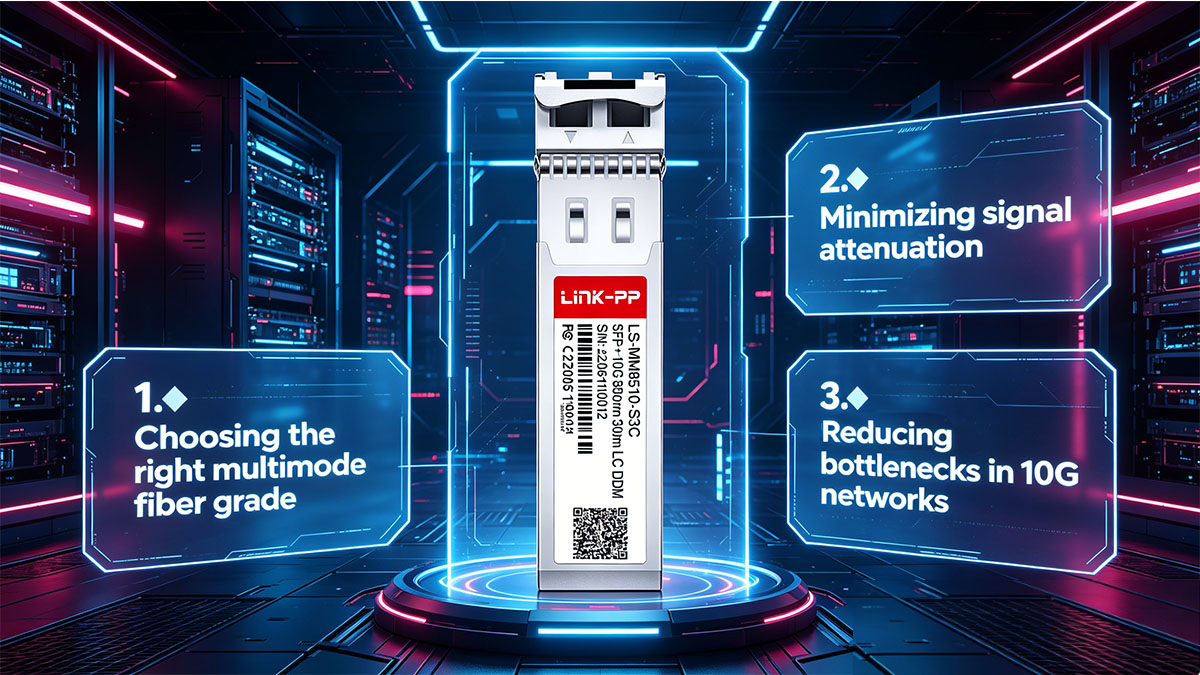
Optimizing the performance of Huawei SFP-10G-USR is not only about the optical module itself, but also about the surrounding fiber infrastructure, network design, and ongoing monitoring practices. Since this module is typically deployed in high-density, short-reach environments, even small physical or configuration issues can significantly impact link stability and throughput consistency.
A well-optimized deployment ensures low latency, stable 10Gbps transmission, and reduced packet loss across critical network paths.
Fiber Infrastructure Optimization
The quality and specification of multimode fiber directly influence how effectively Huawei SFP-10G-USR performs. Even though the module is designed for short-distance transmission, improper fiber selection or handling can degrade signal quality.
To maintain optimal performance, the following practices are commonly recommended:
- Use OM3 or OM4 multimode fiber for consistent 10Gbps support
- Avoid mixing different fiber grades within the same transmission path
- Keep fiber patch cords within recommended distance limits
- Ensure LC connectors are clean and free from dust or scratches
- Maintain proper bend radius to prevent signal distortion
These measures help minimize modal dispersion and optical loss, which are critical factors in multimode transmission environments.
Network Design Considerations
Beyond physical fiber quality, network architecture plays a major role in determining overall performance stability. Huawei SFP-10G-USR performs best in well-structured, short-reach topologies where signal paths are predictable and controlled.
Key design considerations include:
- Keep server-to-switch and switch-to-switch links as short as possible
- Avoid unnecessary optical hops within the same data flow path
- Balance traffic loads across multiple 10G links to prevent congestion
- Ensure consistent port speed configuration across connected devices
When designing high-density networks, minimizing oversubscription at aggregation points is also essential to fully utilize 10Gbps link capacity without bottlenecks.
Monitoring and Maintenance
Continuous monitoring is critical for maintaining long-term stability in environments using Huawei SFP-10G-USR modules. Since optical performance can gradually degrade due to environmental or physical factors, proactive diagnostics help prevent unexpected failures.
Important monitoring practices include:
- Regular use of Digital Diagnostic Monitoring (DDM) to track optical power levels
- Periodic inspection of fiber cleanliness and connector condition
- Monitoring temperature and voltage levels of transceiver modules
- Logging link error rates to detect early signs of degradation
A simplified overview of key DDM parameters and their relevance is shown below:
| Parameter | Purpose | Indication of Issue |
|---|---|---|
| Tx Power | Transmission strength | Low value may indicate module aging |
| Rx Power | Signal reception quality | Weak signal suggests fiber loss |
| Temperature | Thermal condition | High values may affect stability |
| Voltage | Power supply stability | Fluctuations may indicate hardware issues |
By combining real-time monitoring with routine maintenance, network administrators can significantly reduce downtime and ensure consistent performance across all 10G links.
☑️ FAQs about Huawei SFP-10G-USR
What is Huawei SFP-10G-USR used for?
Huawei SFP-10G-USR is used for short-range 10Gbps optical connections, typically within the same rack or between nearby switches in data centers and enterprise networks.
What type of fiber does SFP-10G-USR support?
It supports multimode fiber, mainly OM3 and OM4, which are commonly used in high-speed short-distance network environments.
How far can Huawei SFP-10G-USR transmit data?
Its typical transmission distance ranges from about 100 meters to 150 meters, depending on the quality of the multimode fiber used.
Is Huawei SFP-10G-USR compatible with non-Huawei switches?
It may work with some third-party devices, but compatibility depends on vendor restrictions, firmware policies, and SFP+ validation mechanisms.
What is the difference between USR and SR modules?
USR is optimized for ultra-short reach scenarios, while short-range optics support longer short-range distances and follow the IEEE 10GBASE-SR standard.
Does Huawei SFP-10G-USR support monitoring functions?
Yes, it supports Digital Diagnostic Monitoring (DDM), which provides real-time data such as optical power, temperature, and voltage.
☑️ Conclusion
Huawei SFP-10G-USR stands out as a dedicated 10Gbps short-reach optical transceiver designed for high-density, low-latency networking environments. Its primary value lies in enabling stable and efficient multimode fiber connectivity within data centers and enterprise infrastructures where devices are located in close proximity. As a result, it remains a practical solution for optimizing intra-network performance while maintaining deployment simplicity and cost efficiency.
To summarize the most important aspects of Huawei SFP-10G-USR in practical deployment scenarios:
- Designed for 10Gbps short-distance optical transmission over multimode fiber
- Best suited for intra-rack and inter-switch connections in data centers
- Supports OM3/OM4 fiber with reliable performance over short ranges
- Offers plug-and-play installation with hot-swappable capability
- Provides real-time monitoring through Digital Diagnostic Monitoring (DDM)
- Delivers low latency and stable throughput for high-density network environments
These points highlight its role as a specialized component optimized for performance within controlled, short-reach network architectures rather than long-distance communication.
In modern network planning, selecting the right optical module is essential for balancing performance, scalability, and infrastructure efficiency. Huawei SFP-10G-USR is particularly effective when the design goal focuses on maximizing 10G density within confined physical spaces while maintaining stable and predictable connectivity.
For organizations evaluating optical transceiver solutions across different performance tiers and compatibility requirements, exploring a reliable supply source with a broad product range is a practical next step. LINK-PP Official Store provides a comprehensive selection of compatible optical modules and networking components to support diverse deployment needs across enterprise and data center environments.