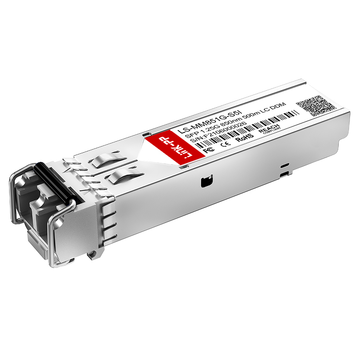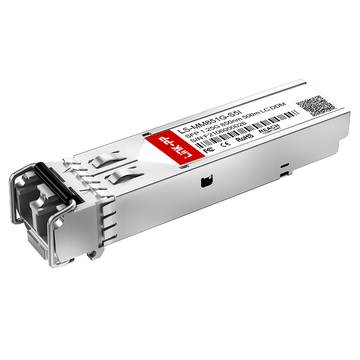
In modern enterprise and data center networks, the Huawei eSFP-GE-SX-MM850 transceiver serves as a foundational component for reliable, short-reach Gigabit Ethernet connectivity. Operating over multimode fiber at an 850nm wavelength, this optical module is widely deployed to link critical campus switches and edge routers. However, as network operators face pressure to scale bandwidth while managing tight budgets and supply chain bottlenecks, third-party compatible equivalents have emerged as a highly viable alternative to OEM-branded hardware.
To successfully deploy an alternative to the Huawei eSFP-GE-SX-MM850, network engineers must look beyond basic optical specifications. Achieving seamless, plug-and-play interoperability requires an equivalent module to perfectly match Huawei's EEPROM coding, bypass VRP host-verification protocols, and support precise digital optical monitoring diagnostics. This technical deep dive explores the exact hardware, firmware, and quality standards required of a third-party module to deliver identical performance and reliability to the original Huawei transceiver.
✳️ Demystifying the Market for Huawei eSFP-GE-SX-MM850 Compatible Modules
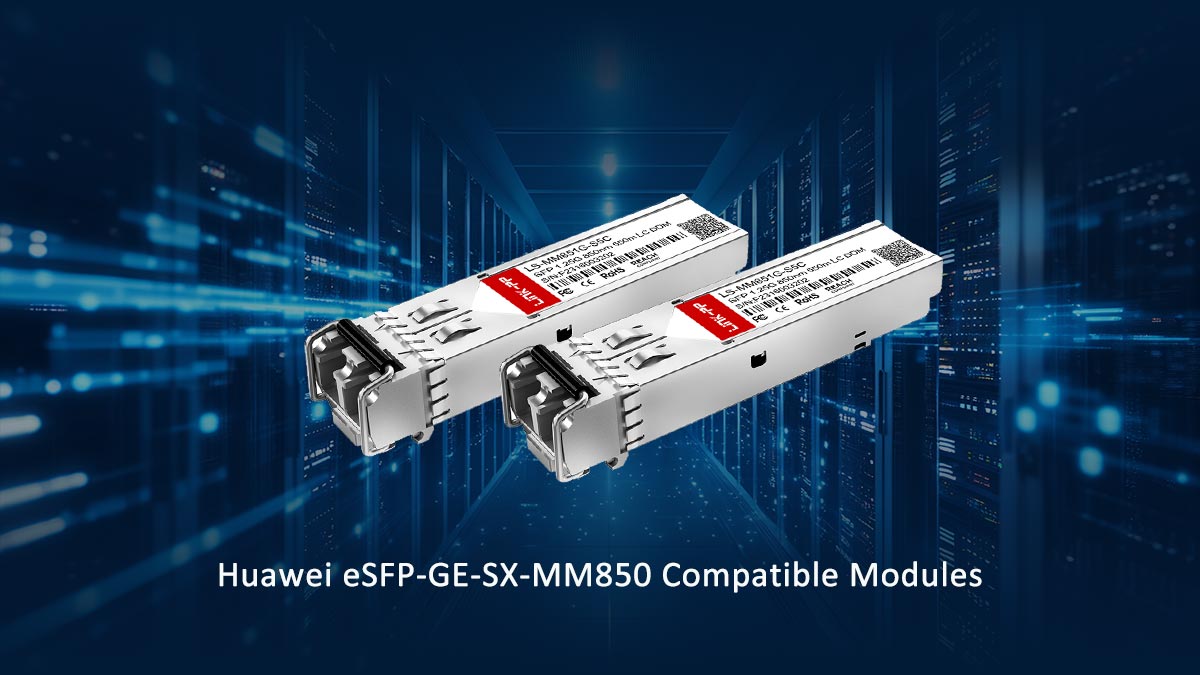
For years, the third-party transceiver market was viewed with a healthy dose of skepticism, often associated with cheap, hit-or-miss hardware. Today, however, the industry has matured into a highly standardized sector where qualified equivalents easily match the performance of original OEM optics. For network administrators looking to replace or supplement the Huawei eSFP-GE-SX-MM850, the challenge isn't finding a cheap module — it's understanding how to identify a third-party alternative that truly matches Huawei's rigorous hardware and software standards.
Defining Third-Party Compatibility for Huawei SFP Hardware
True compatibility for Huawei eSFP-GE-SX-MM850 hardware goes far beyond matching physical dimensions and basic optical wavelengths. A fully compatible third-party module must be designed to meet the exact electrical and optical specifications defined by the Multi-Source Agreement (MSA), while simultaneously incorporating Huawei-specific firmware. This firmware allows the host switch to recognize the module as an official transceiver, enabling seamless initialization and access to all diagnostic features.
Historically, the industry viewed third-party optics with skepticism due to early manufacturing inconsistencies and lack of rigorous firmware testing. Today, reputable third-party manufacturers utilize advanced optical programming boards and state-of-the-art testing environments to ensure their modules are indistinguishable from OEM counterparts at the system level. These equivalents are built using tier-one optical components, such as high-grade 850nm VCSEL lasers, ensuring they operate reliably within the original hardware design parameters.
Why Network Engineers Choose OEM Alternatives
Network engineers consistently turn to OEM alternatives to escape the restrictive ecosystem pricing and artificial limitations often imposed by major hardware manufacturers. High-quality third-party transceivers offer identical optical performance, diagnostic monitoring, and system stability as the original Huawei eSFP-GE-SX-MM850 1G SFP, but at a fraction of the cost. This allows engineering teams to allocate their budgets more effectively, redirecting savings toward scaling network capacity or upgrading core routing infrastructure.
In addition to cost savings, OEM alternatives grant engineers greater architectural flexibility. Many premium third-party modules can be pre-configured to support multi-vendor environments, allowing a single transceiver type to work seamlessly across both Huawei switches and other major networking platforms. This versatility simplifies deployment logistics, reduces the complexity of spare parts inventory, and eliminates the operational headaches associated with managing vendor-locked hardware.
The Economic and Supply Chain Benefits of Equivalent Transceivers
From a procurement perspective, integrating equivalent transceivers into a sourcing strategy significantly mitigates supply chain risks and lowers Capital Expenditure (CapEx). Relying solely on OEM channels can lead to project delays due to long manufacturing lead times and unpredictable component shortages. Third-party suppliers typically maintain robust inventories and highly agile distribution networks, ensuring that compatible SFP modules are readily available for immediate deployment.
Furthermore, adopting compatible modules breaks vendor lock-in, giving procurement managers stronger negotiating leverage and protecting the organization from sudden OEM price hikes. By establishing relationships with reliable alternative optical manufacturers, enterprises can secure steady, predictable pricing structures. This supply chain resilience, combined with substantial CapEx reduction, ensures that network expansion and maintenance projects remain on schedule and within budget.
✳️ Core Specifications of a Valid Huawei eSFP-GE-SX-MM850 Equivalent
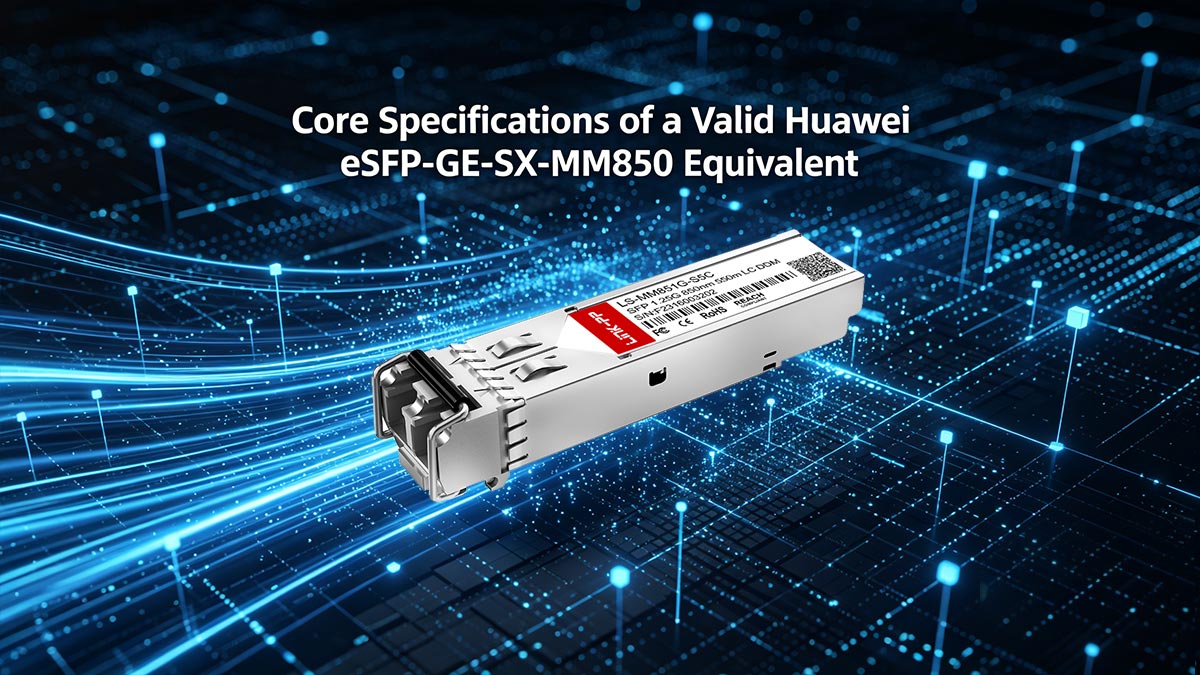
Evaluating a third-party equivalent to the Huawei eSFP-GE-SX-MM850 begins with a strict audit of its physical and optical parameters. A truly compatible module must align perfectly with the original OEM specifications to prevent link degradation, physical port damage, or electrical strain on the host switch. The following details the core engineering standards and benchmarks that define a high-quality eSFP-GE-SX-MM850 alternative module.
Optical Specifications: 850nm VCSEL Transmitter and PIN Receiver
The backbone of any Huawei eSFP-GE-SX-MM850 equivalent is its optical engine, which must utilize an 850nm Vertical-Cavity Surface-Emitting Laser (VCSEL) as the transmitter and a highly sensitive PIN photodiode as the receiver. The 850nm VCSEL is the industry standard for short-reach applications, offering high reliability, low power consumption, and excellent modulation speeds. The PIN receiver complements this by converting incoming light back into electrical signals with minimal noise, ensuring stable data transmission across the physical link.
When sourcing a third-party compatible optics transceiver, the quality of these internal components is critical. Lower-tier manufacturers may use sub-par lasers that suffer from accelerated spectral aging or wider spectral widths, which can lead to high dispersion and premature link failure. A premium equivalent utilizes high-grade, hermetically sealed VCSELs that maintain a narrow spectral width and stable optical center wavelength, guaranteeing consistent performance across the module's entire operating temperature range.
Transmission Distances Over OM1 and OM2 Multimode Fiber
The Huawei eSFP-GE-SX-MM850 is designed for short-reach, multi-mode fiber (MMF) infrastructure. Because multimode fibers rely on light traveling through a wider core than single-mode fibers, modal dispersion represents the primary limiting factor for transmission distance. The module’s maximum reach is directly determined by the core diameter and modal bandwidth of the OM1 and OM2 fiber media in use.
To assist in infrastructure planning, the table below outlines the precise transmission limits and core diameters supported by a standard-compliant equivalent over OM1 and OM2 fiber types:
| Fiber Type | Core Diameter (μm) | Modal Bandwidth (MHz⋅km) | Maximum Cable Distance (m) |
| OM1 | 62.5/125 | 200 | 275 |
| OM2 | 50/125 | 500 | 550 |
Optical Power Budget: Match Tx Power and Receiver Sensitivity
To establish a highly stable link, the alternative module must deliver an optical power budget that mirrors the OEM transceiver. This requires a precise alignment of the transmitter's launch power and the receiver's detection limits. For a valid eSFP-GE-SX-MM850 equivalent (such as the LINK-PP LS-MM851G-S5I multimode SFP transceiver), the typical transmit optical power must range between -9dBm and 0dBm, while the receiver sensitivity must be capable of detecting signals as faint as -18dBm.
This yields a robust optical power budget of 9dB, providing more than enough margin to tolerate connector insertion losses, patch panel splices, and fiber attenuation. Using a module with a weak Tx output or poor Rx sensitivity can lead to intermittent packet loss, while a module that transmits too loudly risks oversaturating and permanently damaging the PIN receiver on the opposing end of the fiber.
Power Consumption Limits and Data Rate Benchmarks
Operating within the thermal and electrical design limits of the host switch is critical for maintaining overall system reliability. A standard Huawei eSFP-GE-SX-MM850 module typically consumes less than 1.0W of power, and high-quality equivalents often operate efficiently at around 0.8W or lower. Keeping power draw within this envelope prevents excessive localized heat dissipation, which can degrade the switch's internal circuitry over time and trigger port-shutdown safety protocols.
In terms of data rate benchmarks, the module is engineered to support a native transmission speed of 1.25Gbps for 1000BASE-SX Gigabit Ethernet applications. The electrical interface of the transceiver must seamlessly bridge these optical speeds to the switch's internal bus without introducing phase noise, jitter, or timing errors, ensuring stable and reliable throughput under continuous maximum-capacity traffic loads.
MSA and SFF-8472 Compliance for SFP Form Factors
The physical and operational design of the transceiver is governed by international industry agreements, ensuring universal hardware interoperability. A valid equivalent must fully comply with the SFP Multi-Source Agreement (MSA). This strict compliance guarantees that the physical dimensions of the module's metal housing, the latching mechanism, and the electrical connector alignment precisely match the mechanical constraints of any standard SFP cage.
Beyond mechanical dimensions, the module must adhere to the SFF-8472 specification, which defines the standard management interface and memory mapping layout for optical transceivers. SFF-8472 compliance ensures that the host switch can query the module’s serial ID, manufacturing details, and operating parameters through a standardized I²C serial interface. Without this compliance, host switches cannot pull basic device inventory, resulting in configuration failures and diagnostic blindness.
✳️ EEPROM Coding and Firmware Matching for Huawei eSFP-GE-SX-MM850 Equivalents
While matching physical and optical specifications ensures the module fits and transmits light, firmware compatibility determines whether the host switch will actually let it operate. Huawei switches run sensitive operating systems that perform strict cryptographic and data integrity checks on inserted transceivers. A truly Huawei eSFP-GE-SX-MM850 compatible equivalent must feature precisely programmed firmware to guarantee seamless recognition and avoid system-level port blocking.

Decoding the SFF-8472 EEPROM Memory Map Structure
The internal memory of an fiber optic SFP module is governed by the SFF-8472 standard, which defines a 256-byte EEPROM memory map divided into two primary address spaces: A0h and A2h. The A0h address block is dedicated to read-only serial identification data, storing essential information such as the transceiver type, connector style, transfer distance, and manufacturer details.
For a third-party eSFP-GE-SX-MM850 equivalent to successfully communicate with a Huawei host, these memory addresses must be formatted flawlessly. The host switch reads this data via a 2-wire I²C serial interface during the initial boot sequence. Any formatting mismatch or unexpected value in the memory layout will cause the switch to flag the module as invalid or completely unreadable.
Programming the Huawei-Specific Vendor OUI and Part Number Keys
To be recognized as a genuine equivalent, the transceiver’s EEPROM must be coded with specific cryptographic identifiers that match Huawei's expectations. This includes writing the correct Organizationally Unique Identifier (OUI) — the specific vendor code assigned to Huawei — as well as the exact OEM part numbers and serial keys.
Premium manufacturers utilize specialized programming boards to write these proprietary hex codes into the A0h registry of compatible fiber SFP modules like the LINK-PP LS-MM851G-S5I. By matching the target OEM's precise vendor name, part number string, and checksum algorithms, the transceiver presents itself to the switch as a fully authorized eSFP-GE-SX-MM850 module.
Bypassing VRP Host-Verification and "Uncertified Module" Warnings
Huawei switches run the Versatile Routing Platform (VRP) operating system, which features active host-verification security protocols. When an unprogrammed or poorly coded third-party transceiver is inserted, VRP immediately detects the anomaly, logs a system alarm, and may disable the port entirely while throwing "Uncertified Module" warnings in the CLI.
A high-quality eSFP-GE-SX-MM850 equivalent bypasses these security barriers entirely by presenting the exact handshake protocols expected by VRP. This ensures that when the module is plugged into a live port, it initializes instantly, the Link LED illuminates green, and the switch permits full data traffic without requiring manual overrides or risky configuration bypass commands.
Firmware Synchronization for Multi-Platform Switch Interoperability
To ensure seamless operation, the transceiver's firmware must be compatible across Huawei's diverse hardware ecosystem. A qualified equivalent is programmed with a versatile firmware profile that is recognized uniformly across different generations of Huawei equipment. This broad compatibility guarantees that the same module performs reliably whether it is installed in a legacy edge device or a modern core switch.
This uniform firmware matching simplifies network maintenance and deployment logistics. Instead of sourcing and managing different transceiver variants for different product families, engineering teams can rely on a single, standardized eSFP-GE-SX-MM850 equivalent across their entire Huawei-based infrastructure. This consistent behavior across platforms prevents configuration conflicts and ensures stable link initialization.
✳️ Digital Optical Monitoring in Huawei eSFP-GE-SX-MM850 Alternatives
Digital optical monitoring is essential for proactive network maintenance, allowing real-time tracking of transceiver health. A fully compatible Huawei eSFP-GE-SX-MM850 equivalent must support standard-compliant diagnostics to prevent sudden link failures. This capability enables network administrators to isolate fiber faults and monitor environmental metrics directly from the host switch.

SFF-8472 Compliance for Real-Time Diagnostic Telemetry
An eSFP-GE-SX-MM850 compatible transceiver must comply with the SFF-8472 industry standard to support real-time Digital Optical Monitoring. This standard reserves the A2h address space in the module's EEPROM to continuously update diagnostic telemetry.
During operation, the host switch regularly queries this memory address over the I²C serial interface. If the module is built with non-compliant microcontrollers, the switch will fail to read this telemetry data, rendering the DOM function entirely inactive.
Monitoring TX/RX Power, Laser Bias Current, Temperature, and Voltage
To prevent link degradation, a valid equivalent like the LINK-PP LS-MM851G-S5I SFP module must accurately measure and report five critical internal physical parameters:
- TX/RX Optical Power: Monitors the transmitted and received light levels to verify the optical budget and identify fiber micro-bends or connector dirt.
- Laser Bias Current: Measures the drive current of the 850nm VCSEL laser, which serves as a key indicator of transmitter aging and impending physical failure.
- Operating Temperature: Tracks the internal temperature of the SFP module to prevent thermal damage within high-density switch ports.
- Supply Voltage: Monitors the incoming 3.3V electrical supply from the host switch to ensure stable internal circuitry operation.
Command-Line Interface (CLI) Diagnostics via Huawei VRP
The primary benefit of a DOM-enabled eSFP-GE-SX-MM850 equivalent is its direct integration with Huawei's Versatile Routing Platform (VRP). Network engineers rely on standard CLI commands to query the diagnostic state of any optical interface without interrupting live traffic.
When a fully compatible module is inserted, administrators can run the following diagnostic commands within the VRP CLI:
- display transceiver verbose: Retrieves detailed, real-time operating metrics, including current, voltage, temperature, and transmit/receive power.
- display transceiver diagnosis: Displays current diagnostic alarm and warning thresholds, indicating whether any parameters have crossed safe operating limits.
✳️ Hardware Quality Standards for a Reliable Huawei eSFP-GE-SX-MM850 Equivalent
A robust alternative to the Huawei eSFP-GE-SX-MM850 must match the structural integrity and electrical tolerances of OEM hardware. Substandard materials lead to physical port damage, poor signal transfer, or premature component failure under continuous operation. Reliable third-party modules rely on premium mechanical housings, durable electrical contacts, and international safety certifications.
Gold-Finger Connector Durability and Mechanical Housing Quality
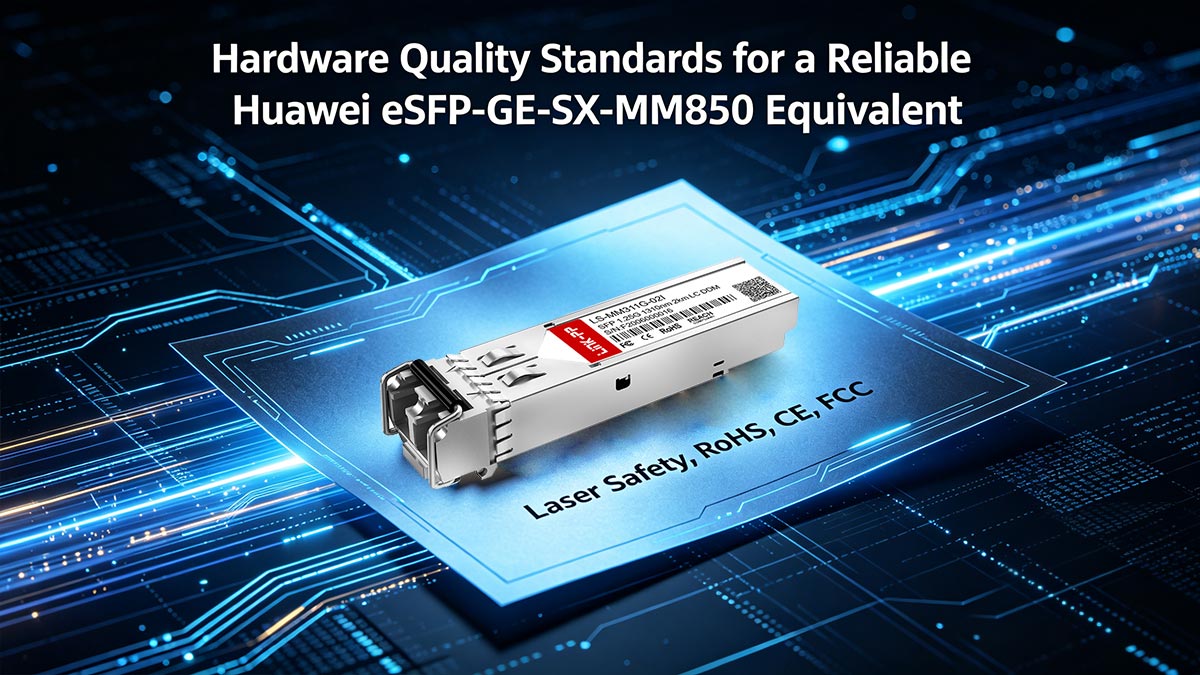
The electrical interface of the SFP module relies on its gold-finger connector to maintain a stable connection with the host switch's backplane. High-quality eSFP-GE-SX-MM850 equivalents feature a gold-plating thickness of at least 30µin on these contacts to prevent corrosion and withstand hundreds of insertion cycles.
The mechanical housing must be constructed from heavy-duty, zinc alloy die-cast metal, which provides superior electromagnetic interference (EMI) shielding and efficient heat dissipation. This rugged design ensures the module slides smoothly into standard SFP cages, seats securely, and resists structural deformation during maintenance.
Dual LC Optical Connector Tolerances and Insertion Loss Standards
Optical connection stability requires precise physical alignment of the LC duplex optical interface. Premium Huawei eSFP-GE-SX-MM850 equivalents enforce strict mechanical tolerances to ensure the fiber ferrule aligns perfectly with the internal 850nm transmitter and PIN receiver.
This precise alignment minimizes optical insertion loss, keeping it strictly below 0.3dB per connection. Poorly manufactured ports can cause fiber misalignment, resulting in high back-reflection (return loss), localized signal attenuation, and eventual link instability.
Compliance Certifications: Class 1 Laser Safety, RoHS, CE, and FCC
A deployable optical transceiver must comply with international regulatory and safety standards to guarantee safe operation in production environments. Class 1 Laser Safety certification under IEC 60825-1 is mandatory, ensuring the 850nm VCSEL transmitter remains safe for human eyes under all normal operating conditions.
Additionally, modules must carry CE, FCC, and RoHS markings. This verifies compliance with electromagnetic compatibility (EMC) regulations to prevent interference with adjacent hardware, and guarantees the construction is free from hazardous materials.
✳️ Performance Validation Metrics for Huawei eSFP-GE-SX-MM850 Alternatives
Before deploying any third-party eSFP-GE-SX-MM850 equivalent into a production environment, it must undergo strict quality assurance testing. These validation protocols measure signal integrity, optical clarity, and thermal endurance under maximum traffic loads. Following these rigorous benchmarks ensures the alternative transceiver delivers stable, long-term performance identical to the OEM module.
Bit Error Rate (BER) Testing and the 10⁻¹² Signal Integrity Threshold
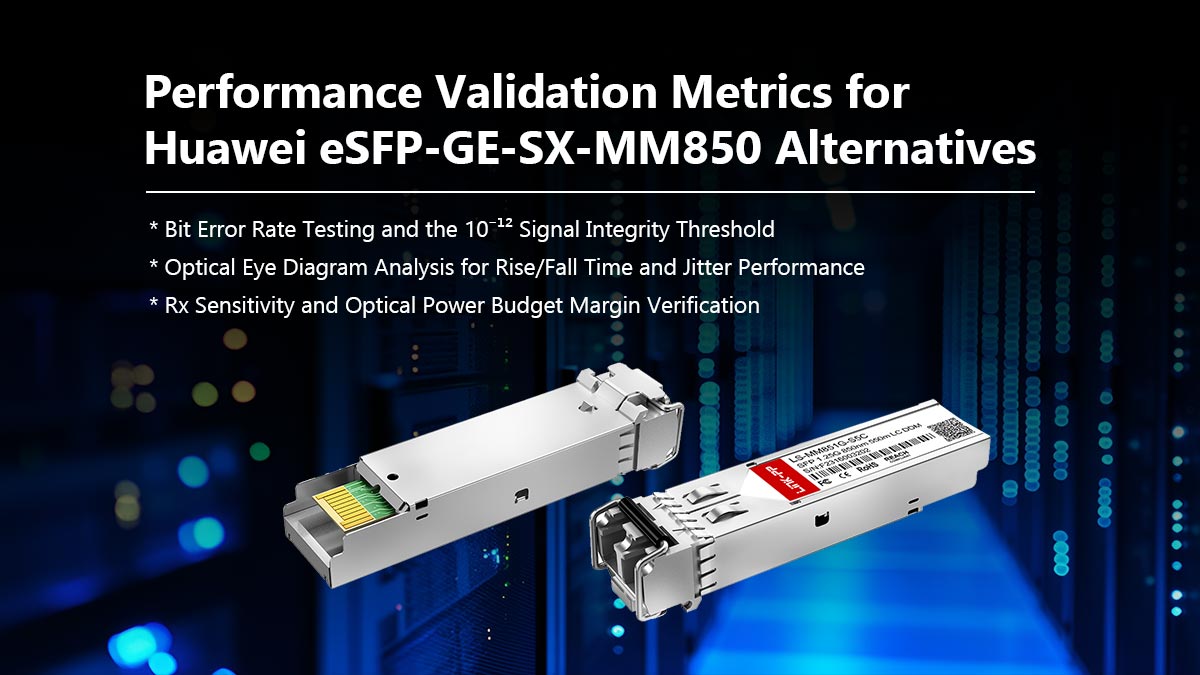
The ultimate measure of an optical link's reliability is its Bit Error Rate (BER), which quantifies the percentage of transmitted bits received with errors. For a qualified Huawei eSFP-GE-SX-MM850 equivalent, validation protocols require the transceiver to meet or exceed a BER threshold of 10⁻¹² during continuous high-throughput testing. This industry standard means the module will transmit no more than one erroneous bit for every one trillion bits sent, preventing packet loss and expensive retransmissions.
To verify this threshold, testing labs connect the alternative transceiver to a Bit Error Rate Tester (BERT) and run continuous pseudo-random binary sequence (PRBS) patterns. This test simulates worst-case network traffic conditions over maximum supported fiber lengths. Achieving a 10⁻¹² BER validates the structural integrity of the internal optical components and guarantees that the module will maintain a clean, stable channel in demanding enterprise environments.
Optical Eye Diagram Analysis for Rise/Fall Time and Jitter Performance
Optical eye diagram analysis is a critical diagnostic tool used to visualize the overall health of the transmitter's optical signal. By superimposing thousands of electrical-to-optical waveforms on an oscilloscope, engineers can analyze key signal parameters such as rise time, fall time, and jitter. A clean, wide-open "eye" indicates a high-performance 850nm VCSEL transmitter with minimal signal distortion.
The rise and fall times must be fast enough to prevent inter-symbol interference (ISI) at the 1.25Gbps transmission rate. Jitter — which measures the timing deviations of the signal transitions — must remain well within the limits defined by IEEE 802.3z standards. If a third-party eSFP-GE-SX-MM850 compatible module exhibits a closed or noisy eye diagram during testing, it indicates a low-quality laser that will likely cause intermittent link drops and poor data integrity.
Rx Sensitivity and Optical Power Budget Margin Verification
While transmitter performance is critical, receiver sensitivity defines the module's ability to decode weak incoming optical signals. Verification protocols require testing the PIN receiver across its entire dynamic range, focusing on the minimum detectable power threshold of -18 dBm. This verification is performed by gradually introducing optical attenuation into the link until the BER begins to degrade, identifying the absolute limits of the receiver.
Simultaneously, the overall optical power budget margin is calculated and verified. High-quality Huawei eSFP-GE-SX-MM850 equivalents are designed to maintain a healthy operating margin beyond the absolute minimum requirements. This design buffer helps accommodate minor link impairments, such as typical connector insertion loss and standard fiber attenuation, ensuring stable and consistent performance across the physical cabling infrastructure.
✳️ Conclusion: Ensuring Seamless Performance with a Qualified Huawei eSFP-GE-SX-MM850 Equivalent
Integrating third-party transceivers into your network does not mean you have to compromise on reliability. By selecting a qualified Huawei eSFP-GE-SX-MM850 equivalent that matches the original optical specifications, aligns with standard firmware requirements, and supports real-time Digital Optical Monitoring (DOM), you can achieve seamless compatibility. When these modules undergo rigorous physical testing — including bit error rate evaluations and strict hardware quality checks — they easily deliver the same level of link stability and performance as original OEM hardware.
Scaling your fiber infrastructure while keeping project costs and procurement timelines under control is much easier with a trusted hardware partner. If you are looking for highly reliable, pre-tested optical modules that install smoothly into your switches without any warning flags, you can find fully compatible options directly through the LINK-PP Official Store.