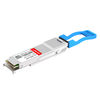
As 100Gb Ethernet continues to become the standard architecture inside modern data centers, many IT teams are searching for reliable short-reach optical modules that can support high-density switching, low latency, and scalable multimode fiber infrastructure. One of the most commonly deployed options in HPE networking environments is the 845966-B21 HPE 100Gb QSFP28 MPO SR4 100m Transceiver.
Designed for high-speed 100GBase-SR4 connectivity, the HPE 845966-B21 uses a QSFP28 form factor, 850nm VCSEL optics, and an MPO multimode fiber interface to deliver up to 100 meters over OM4 fiber and 70 meters over OM3 fiber. It is widely used for top-of-rack switching, spine-leaf architectures, server aggregation, and high-bandwidth east-west traffic inside enterprise and hyperscale data centers.
However, despite the seemingly straightforward specifications, many buyers and network engineers still encounter practical deployment questions before purchasing or installing this module:
-
Does 845966-B21 use MPO-8 or MPO-12?
-
What cable polarity is required?
-
Will it work with third-party switches or mixed-vendor environments?
-
Is OM3 sufficient for stable 100G transmission?
-
Should you choose SR4, BiDi, DAC, or LR4 instead?
These are not just theoretical concerns. Across technical forums and Reddit discussions, real users frequently report confusion around MPO polarity, fiber lane mapping, cassette compatibility, and interoperability between HPE and other networking vendors. In many cases, incorrect MPO cabling—not the optic itself—is the real reason a 100G link fails to initialize.
This guide is designed to answer those exact deployment and purchasing questions with a practical, search-intent-focused approach. Instead of repeating generic datasheet information, we will explain:
-
What the HPE 845966-B21 transceiver actually does
-
Which fiber and cabling infrastructure it requires
-
The differences between MPO-8 and MPO-12 implementations
-
Real-world compatibility considerations
-
Common SR4 deployment mistakes and troubleshooting methods
-
When this transceiver is the best choice—and when another 100G option may be better
Whether you are upgrading an enterprise backbone, building a new 100G spine-leaf network, or simply trying to verify compatibility before ordering optics, this guide will help you make a technically correct and cost-effective decision.
By the end of this article, you will have a clear understanding of how the 845966-B21 HPE 100Gb QSFP28 MPO SR4 100m Transceiver fits into modern 100Gb Ethernet infrastructure and how to deploy it correctly for stable high-speed optical networking.
⏩ What Is the HPE 845966-B21 100Gb QSFP28 MPO SR4 Transceiver?
The HPE 845966-B21 100Gb QSFP28 MPO SR4 Transceiver is a short-reach, high-speed optical module designed to deliver 100 Gigabit Ethernet connectivity over multimode fiber (MMF) inside modern data center environments. It belongs to the 100GBase-SR4 standard, meaning it uses four parallel transmit lanes and four receive lanes over an MPO fiber interface, enabling high-throughput, low-latency communication between switches, servers, and aggregation layers. In simple terms, it is a plug-in optical transceiver that allows HPE-compatible networking equipment to transmit 100G data over short distances efficiently and reliably.
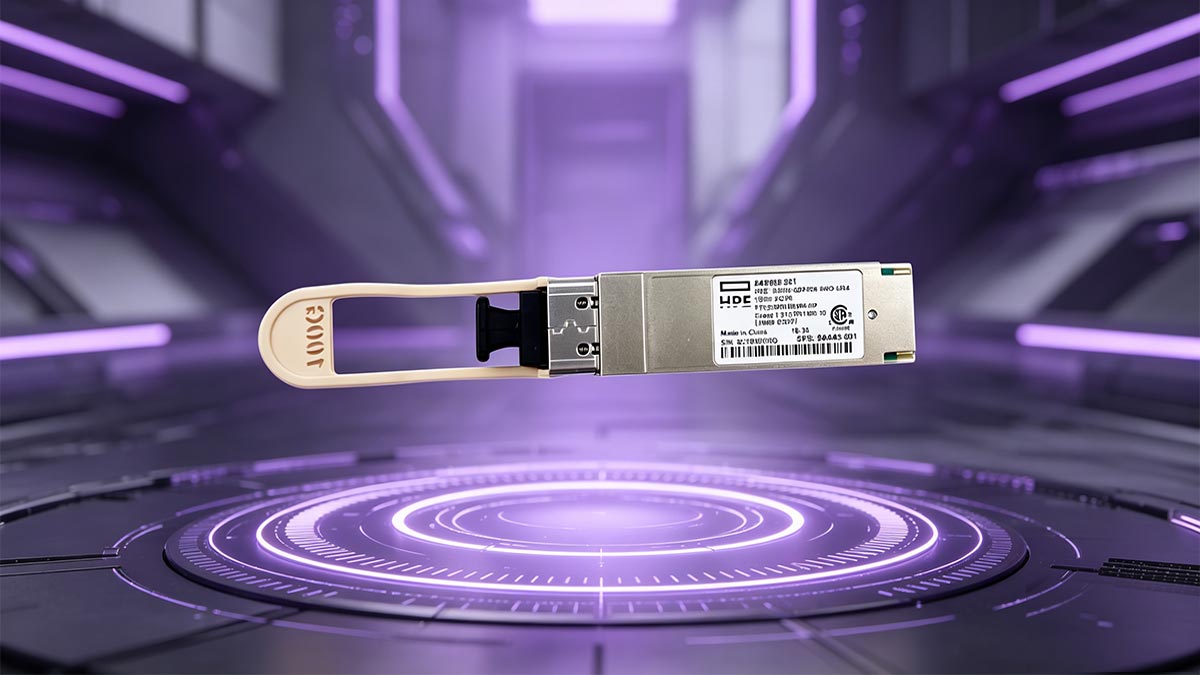
From a technical standpoint, this module is built in a QSFP28 form factor, which is the industry standard for 100Gbps interfaces. It operates at an 850nm wavelength, using VCSEL-based multimode optics optimized for high-speed transmission over OM3 and OM4 fiber. The module uses an MPO (Multi-Fiber Push-On) connector, typically supporting 8 active fibers for data transmission (4 transmit + 4 receive lanes), which is a defining characteristic of SR4 architecture.
In practical deployment, the HPE 845966-B21 is primarily used in data center spine-leaf networks, rack-to-rack interconnects, and high-density switching environments where short-range, high-bandwidth links are required. It is not designed for long-haul transmission, but rather for efficient intra-data-center connectivity where speed, density, and cost-efficiency matter most.
This combination of QSFP28 speed class, SR4 parallel optics, and MPO multimode connectivity is what makes the 845966-B21 a standard building block for 100G Ethernet infrastructure in HPE environments.
⏩ HPE 845966-B21 Specs, Fiber Type, and Distance Limits
The HPE 845966-B21 100Gb QSFP28 MPO SR4 Transceiver is built around a well-defined set of short-reach optical specifications optimized for multimode fiber data center environments. At its core, it operates on the 100GBASE-SR4 standard, using 850 nm VCSEL-based optics and parallel transmission over an MPO multimode interface, making it ideal for high-speed, intra-rack and inter-rack connectivity where low latency and high bandwidth are critical.
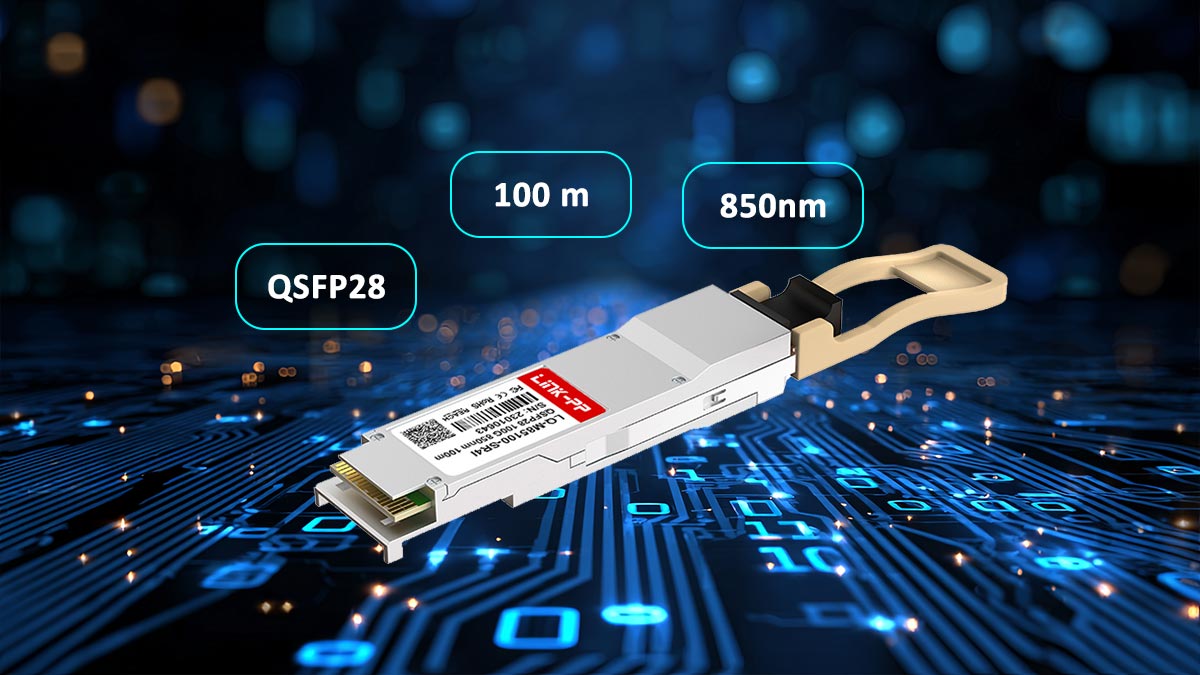
From a fiber perspective, this transceiver is designed exclusively for multimode fiber (MMF) infrastructure—specifically OM3 and OM4 cabling systems. These fiber types are widely deployed in modern data centers due to their balance of performance, cost efficiency, and ease of installation.
Key Performance Characteristics:
The HPE 845966-B21 100Gb QSFP28 MPO SR4 Transceiver is designed around high-density multimode 100G architecture, optimized for short-reach data center interconnects. Below are its core technical specifications for quick reference and technical validation.
Specification Table
|
Parameter
|
Specification
|
|
Wavelength
|
850 nm
|
|
Fiber Type
|
Multimode Fiber (MMF)
|
|
Connector Type
|
MPO (Parallel optics, 8 active fibers: 4 Tx + 4 Rx)
|
|
Form Factor
|
QSFP28 (100GbE)
|
|
Protocol
|
100GBASE-SR4
|
Distance Limits
One of the most important practical considerations for this module is its reach limitation, which is strictly defined by fiber grade:
This distinction is not just theoretical—it directly impacts real-world deployment decisions. Many network designs fail not because of the transceiver itself, but because OM3 fiber is mistakenly used in scenarios requiring full 100-meter reach. In spine-leaf architectures or long rack-to-rack runs, this can lead to link instability or complete failure to bring up the optical connection.
Practical Deployment Insights
In real data center deployments, the HPE 845966-B21 performs best under the following conditions:
-
Short-reach switch-to-switch links inside the same row or pod
-
High-density leaf-spine architecture interconnects
-
Environments already standardized on MPO trunking infrastructure
-
Clean, low-loss multimode fiber plant (especially OM4 for full reach)
However, there are a few important “gotchas” that frequently appear in real-world installations:
-
OM3 vs OM4 confusion: OM3 may work, but often limits flexibility in rack planning
-
MPO polarity mismatches: incorrect Type A/B polarity is a common reason links do not initialize
-
Dirty or damaged MPO endfaces: SR4 optics are highly sensitive to contamination
-
Distance overestimation: SR4 is not designed for campus or long-haul links
The HPE 845966-B21 is a strictly short-reach 100G optical solution, designed to deliver maximum performance over multimode fiber up to 100 meters (OM4). Its strength lies in predictable, high-density data center connectivity—not long-distance transmission. For engineers designing or upgrading 100G networks, correctly matching fiber type, MPO cabling, and distance budget is just as important as selecting the transceiver itself.
⏩ What Cable Does 845966-B21 Need? MPO, Polarity, and Connector Compatibility
If there is one section that causes the most real-world confusion with the 845966-B21 HPE 100Gb QSFP28 MPO SR4 100m Transceiver, it is the cabling layer. On paper, SR4 looks simple: plug in an MPO cable and you get 100G. In practice, however, MPO type, fiber count, and polarity alignment determine whether the link comes up instantly—or fails silently.
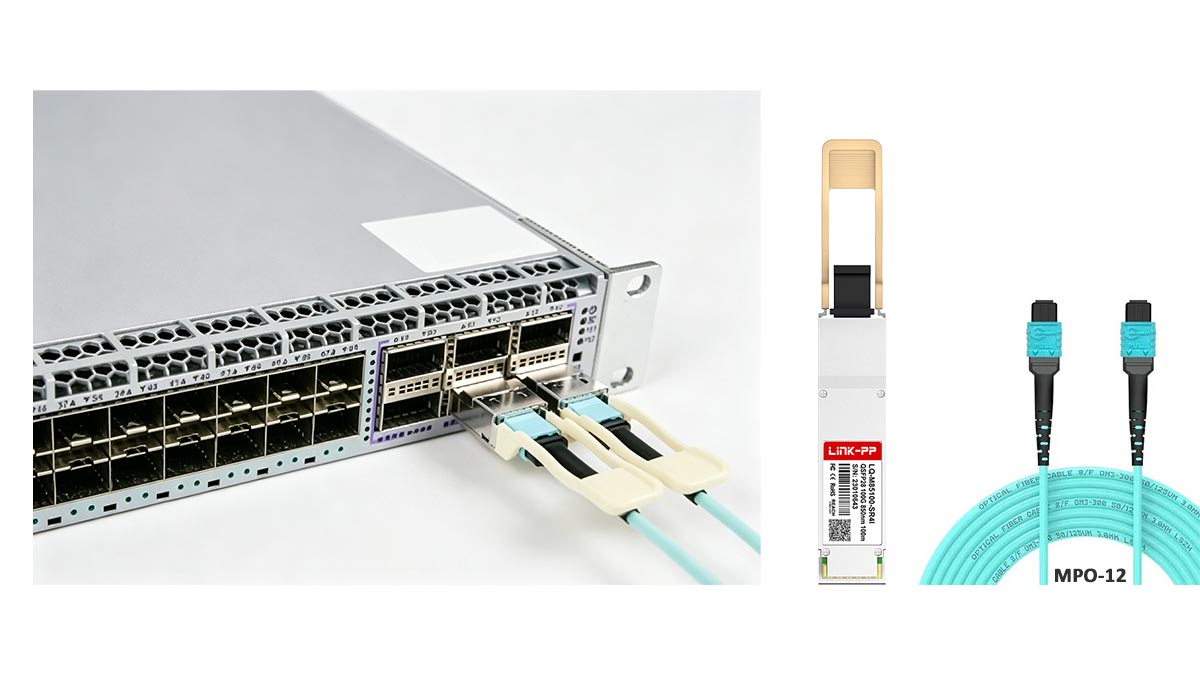
At a basic level, the 845966-B21 uses a multimode MPO interface (parallel optics SR4), meaning it transmits data over 8 active fibers (4 transmit + 4 receive). This is where most of the confusion starts, because the physical connector ecosystem does not always match the logical lane structure.
MPO Cable Type: MPO-12 is the Real-World Standard
Although SR4 only uses 8 fibers, most deployments use MPO-12 trunk cables rather than MPO-8. The reason is simple: MPO-12 is the industry standard for structured cabling, and SR4 optics are designed to work with it by leaving 4 fibers unused in the connector.
This leads to a common misunderstanding:
In real deployments, the extra fibers are simply not used, but the physical connector remains MPO-12 for compatibility with patch panels, trunks, and cassettes.
Polarity: The Real-World Failure Point
Across engineering forums and Reddit discussions, polarity is consistently the most common issue when 100G SR4 links fail to initialize.
MPO systems require correct alignment of transmit and receive lanes, and there are three main polarity methods:
For SR4, the goal is simple: ensure Tx lanes map correctly to Rx lanes across both ends of the link
If polarity is wrong, the optic will power on, but the link will stay down—this often leads to unnecessary troubleshooting at the switch or transceiver level, when the real issue is purely cabling.
MPO-8 vs. MPO-12 Confusion (Why It Matters)
One of the most frequently searched and discussed topics in community threads is whether SR4 should use MPO-8 or MPO-12.
Here’s the practical breakdown:
-
MPO-8: matches the exact 8-fiber SR4 lane structure, but is less common in structured cabling systems
-
MPO-12: industry standard, widely used in data centers, supports SR4 by using only 8 fibers
-
MPO-24 (less common for SR4): typically used for higher-density breakout architectures
In most enterprise environments, MPO-12 is the default and recommended choice for 845966-B21 deployments.
Connector Compatibility and Cleanliness
Another overlooked factor is physical connector quality. SR4 optics are highly sensitive to:
Even when the correct cable type is used, contamination or misalignment can prevent the link from establishing.
Practical Deployment Summary
To ensure a successful installation of the HPE 845966-B21, the safest and most common setup is:
-
MPO-12 multimode trunk cable (OM3 or OM4)
-
Correct polarity mapping (verified before deployment)
-
Clean, certified MPO connectors (no field-damaged ferrules)
-
Proper alignment of SR4 lanes (Tx ↔ Rx)
The transceiver itself is rarely the problem. In real-world 100G SR4 deployments, the success of the 845966-B21 HPE 100Gb QSFP28 MPO SR4 100m Transceiver depends far more on MPO cabling architecture and polarity discipline than on the optic specification itself. Getting this layer right is what separates a stable 100G link from hours of unnecessary troubleshooting.
⏩ Is HPE 845966-B21 Compatible with My Switch or Server?
Compatibility is one of the most important concerns behind searches for the HPE 845966-B21 100Gb QSFP28 MPO SR4 Transceiver, and in most cases, the question is not just “will it fit?” but “will it actually work in my existing network without surprises?” This is especially common in mixed environments where HPE hardware is integrated with Cisco, Arista, Dell, or other vendor switches.
At a standards level, the 845966-B21 is a 100GBASE-SR4 QSFP28 transceiver, which means it follows an IEEE-based multimode fiber standard. In theory, this makes it broadly interoperable with other SR4-compliant 100G optics. However, in real deployments, compatibility is influenced by several additional factors beyond the protocol itself.
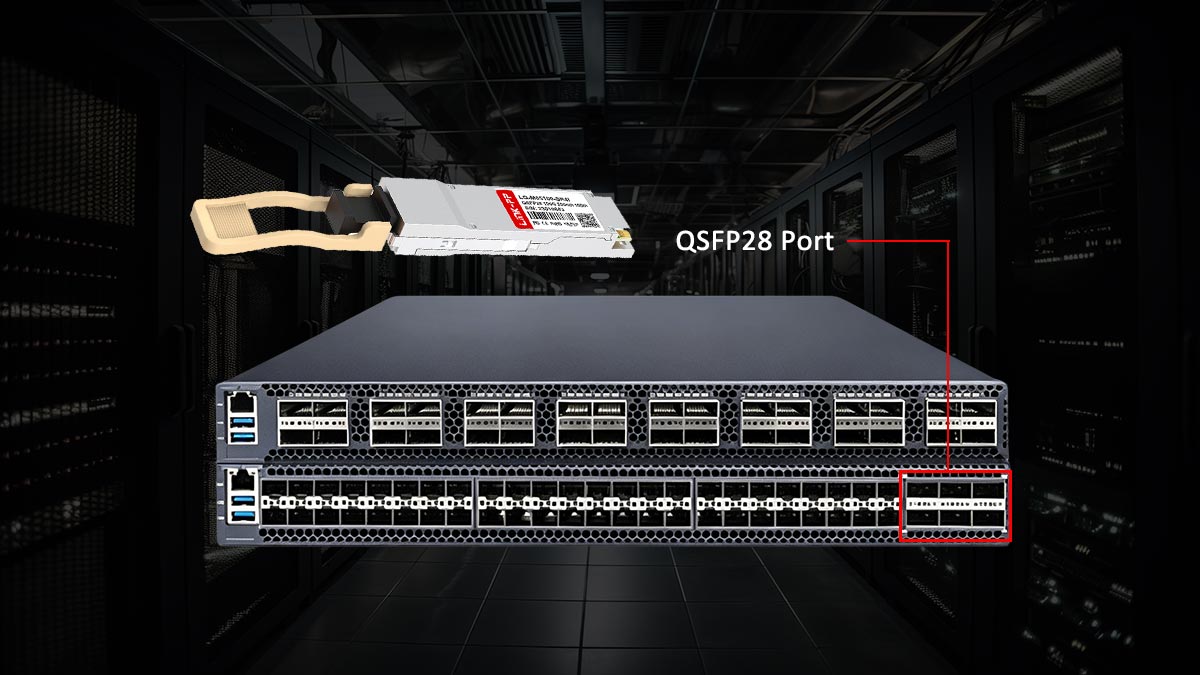
▶ Physical Compatibility: QSFP28 Slot Support
The first requirement is straightforward:
Most modern 100G-capable data center switches support this form factor, but older platforms or breakout-configured ports may not.
▶ Vendor Compatibility and Firmware Restrictions
Even when optics are standards-based, many enterprise switches implement vendor validation mechanisms:
-
HPE switches may prefer or enforce HPE-coded optics
-
Some third-party switches may allow “unsupported optics” with warnings
-
Certain platforms may block non-branded modules unless explicitly overridden
This creates what users often describe as “it fits but doesn’t come up” scenarios.
In practice, engineers typically fall into three deployment models:
-
Fully HPE environment: lowest friction, plug-and-play behavior
-
Mixed vendor environment: works, but may require optics validation override
-
Strict vendor-locked environments: may require approved transceiver lists
▶ Standards-Based Interoperability (SR4 Advantage)
Because the 845966-B21 uses IEEE 100GBASE-SR4 multimode optics, it is generally compatible at the protocol level with other SR4 devices.
However, interoperability still depends on:
-
Matching optical standard (SR4 ↔ SR4 only)
-
Correct fiber type (OM3/OM4 multimode)
-
Proper MPO polarity alignment
-
Consistent FEC (Forward Error Correction) settings on both ends
If any of these layers are mismatched, the link may fail even if the optics are technically “compatible.”
▶ What Should Verify Before Purchasing
To avoid compatibility issues, network engineers typically validate the following before deploying the 845966-B21:
-
✔ Switch or server supports QSFP28 100G SR4 optics
-
✔ Firmware allows HPE or third-party transceivers (if mixed vendor)
-
✔ Fiber plant is multimode (OM3 or OM4)
-
✔ MPO cabling system matches SR4 architecture
-
✔ FEC settings are aligned across both ends of the link
-
✔ No mismatch between SR4, LR4, or BiDi optical types
These checks are often more important than the transceiver itself.
▶ Real-World Compatibility Insight
In real deployments, the 845966-B21 is most commonly used in:
-
HPE-based spine-leaf data center architectures
-
High-density 100G aggregation switches
-
Environments standardized on MPO multimode trunking
In mixed environments, it often works successfully—but only when standards alignment and vendor restrictions are properly understood.
The HPE 100Gb QSFP28 MPO SR4 100m Transceiver is standards-based and widely deployable, but real compatibility depends on more than just the QSFP28 form factor. The key risks come from vendor validation rules, FEC configuration, and MPO fiber infrastructure alignment, not from the optical standard itself.
For buyers, the safest approach is to verify both hardware compatibility (port + firmware) and physical layer readiness (fiber + MPO cabling) before deployment—because in 100G SR4 networks, compatibility is always a system-level equation, not just a transceiver decision.
⏩ Common Problems With 100G QSFP28 MPO SR4 Links
Most issues with the HPE 845966-B21 100Gb QSFP28 MPO SR4 Transceiver are not caused by the optic itself, but by the surrounding fiber infrastructure. In real deployments, SR4 links are highly sensitive to polarity, cleanliness, and cabling design choices, which is why troubleshooting often starts at the physical layer—not the switch.
Below are the most common problems engineers encounter when deploying 100G QSFP28 MPO SR4 links, along with practical, field-proven explanations.
1. Link Not Coming Up (No Light / No Connectivity)
Answer: The most common cause is incorrect MPO polarity or mismatched SR4 lane mapping.
Even when the transceiver is fully functional, the link will stay down if:
-
Tx and Rx lanes are not correctly aligned
-
MPO polarity type (A/B/C) is mismatched between endpoints
-
The fiber trunk or cassette is incorrectly pinned
In SR4, data is transmitted over 4 parallel lanes in each direction, so even a single lane misalignment can prevent the entire 100G link from initializing.
2. Wrong MPO Polarity Configuration
Answer: Polarity mismatch is the #1 hidden failure in SR4 deployments.
Many engineers assume MPO is “plug and play,” but SR4 requires correct mapping of:
Typical symptoms include:
-
Link lights appear but no data passes
-
One side shows “up/down flapping”
-
Switch logs show optics detected but no stable link
This is why polarity planning must be done before installation—not after.
3. Dirty or Contaminated MPO Endfaces
Answer: Even microscopic contamination can break a 100G SR4 link.
Because SR4 uses high-density parallel optics, it is extremely sensitive to:
Unlike lower-speed links, SR4 does not tolerate minor optical degradation well. A small contamination can cause:
In practice, cleaning and inspection of MPO connectors is one of the first troubleshooting steps.
4. Wrong Trunk or Cassette Selection
Answer: Incorrect MPO infrastructure design often breaks otherwise correct optics.
Common mistakes include:
-
Using incompatible MPO cassette types (Type A vs Type B mismatch)
-
Mixing single-mode and multimode infrastructure unintentionally
-
Using low-quality or high-loss MPO trunks
-
Deploying breakout assemblies not designed for SR4 lane structure
SR4 requires a clean, loss-controlled multimode MPO environment, and mismatched components can easily exceed link budget limits.
5. OM3 vs OM4 Distance Misunderstanding
Answer: Many “failed links” are actually distance budget violations.
The HPE 845966-B21 supports:
However, in real deployments, users often:
-
Assume OM3 behaves like OM4
-
Overestimate trunk distance including patch panels and slack
-
Ignore additional insertion loss from connectors and cassettes
The result is a link that works in testing but fails intermittently in production due to margin loss.
6. FEC or Switch Configuration Mismatch
Answer: Even perfect optics can fail if Forward Error Correction settings are misaligned.
Some 100G platforms require:
If mismatched, the link may appear active but will show high error rates or unstable throughput.
Quick Diagnostic Summary
If a 100G SR4 link with 845966-B21 fails, check in this order:
-
MPO polarity alignment
-
Fiber cleanliness (endface inspection)
-
OM3/OM4 distance budget
-
Cassette/trunk compatibility
-
FEC configuration on both devices
Most issues with 100G QSFP28 MPO SR4 links are physical-layer problems, not transceiver defects. In practice, the HPE 845966-B21 performs reliably when MPO polarity, cleanliness, and fiber budgeting are correctly engineered, and nearly all “non-working optics” cases can be traced back to cabling or configuration rather than the module itself.
⏩ When to Choose 845966-B21 vs. Other 100G Transceiver Options
Choosing the 845966-B21 HPE 100Gb QSFP28 MPO SR4 100m Transceiver is not just a specification decision—it is an infrastructure strategy decision. The right choice depends on three core factors: distance, fiber type, and cabling architecture. In 100G networks, each transceiver type solves a different physical-layer problem, and mixing them incorrectly is one of the most common causes of deployment issues.
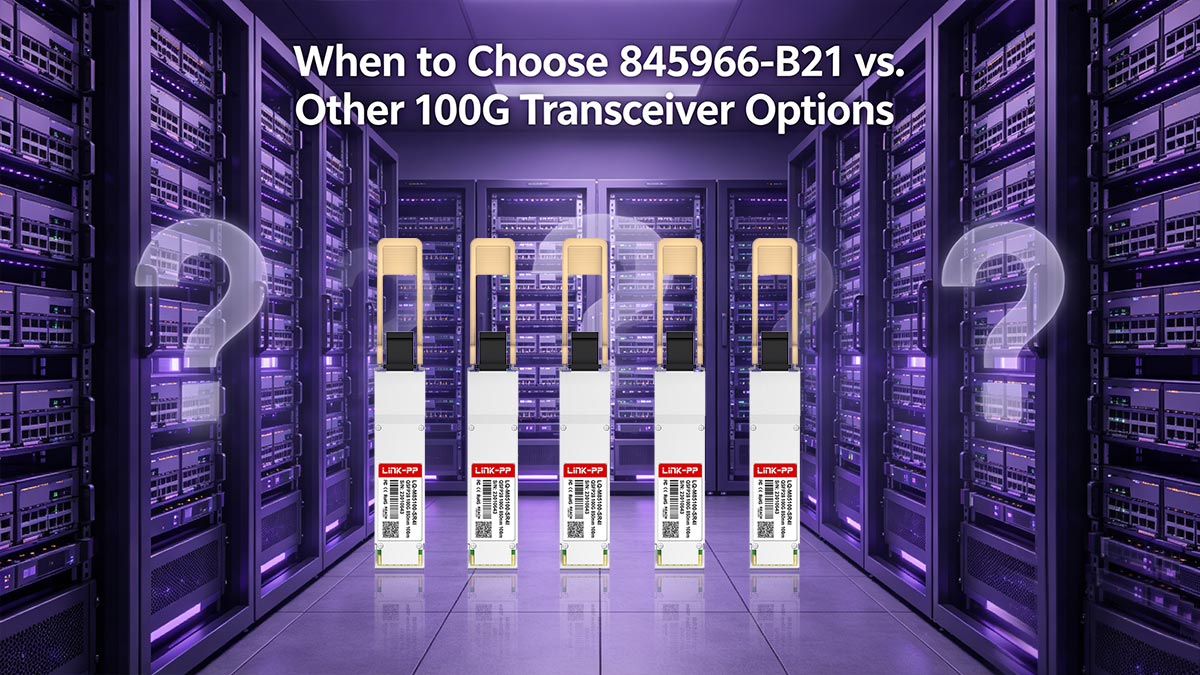
Below is a practical, intent-driven comparison to help buyers quickly self-select the right 100G solution.
Choose 845966-B21 (SR4) When You Have Multimode Fiber + Short Reach
The 845966-B21 is the correct choice if your environment meets all of the following:
-
You are using multimode fiber (OM3 or OM4)
-
Your links are short-range (≤70 m OM3 / ≤100 m OM4)
-
You already have or plan to use MPO trunking infrastructure
-
Your deployment is inside a data center rack-to-rack or leaf-spine topology
SR4 is the most cost-efficient and widely deployed option for intra–data center 100G connectivity because it uses parallel 850 nm VCSEL optics over MPO cables, making it simple and high-density compared to long-reach optics.
👉 In short: SR4 = best for existing multimode + high-density short reach
Choose DAC When You are Inside a Single Rack (Ultra-short Distance)
If your links are extremely short:
Then 100G QSFP28 DAC (Direct Attach Copper) is usually a better option.
DAC is:
But it is physically limited to very short distances and does not scale beyond rack-level interconnects.
👉 In short: DAC = cheapest + simplest, but only for intra-rack links
Choose AOC When You Need Flexibility without Fiber Management
Active Optical Cable (AOC) is a hybrid solution:
-
Optical transceivers integrated into the cable
-
Supports up to ~100 m depending on model
-
No separate MPO trunking required
AOCs are often used when teams want:
However, they are less flexible for structured cabling upgrades compared to SR4-based systems.
👉 In short: AOC = plug-and-play fiber alternative, but less scalable than SR4
Choose LR4 When You Move to Single-mode Fiber (Long Reach)
If your environment uses:
-
Single-mode fiber (OS2)
-
Distances up to 10 km
Then 100G QSFP28 LR4 is the correct alternative.
Key differences vs SR4:
-
Uses LC duplex connectors instead of MPO
-
Uses wavelength multiplexing (WDM) instead of parallel lanes
-
Designed for campus or inter-building links
👉 In short: LR4 = long-distance + single-mode fiber backbone
Choose BiDi When Fiber Count is Limited
100G BiDi optics are used when:
-
Fiber availability is limited
-
You want to use a single fiber pair instead of multiple lanes
-
You are optimizing for cabling constraints
However, BiDi typically has:
👉 In short: BiDi = fiber-saving architecture, not density optimization
Choose Third-party Compatible Modules When Cost Optimization Matters
Many data center operators also consider compatible (non-HPE branded) SR4 modules, especially when:
-
Running large-scale deployments
-
Standardizing on open optics policies
-
Reducing per-port cost across hundreds of links
However, trade-offs include:
-
Vendor validation restrictions on some switches
-
Firmware compatibility considerations
-
Varying support policies depending on platform
👉 In short: third-party = cost savings, but requires compatibility validation
Quick Decision Summary
-
845966-B21 (SR4): best for OM3/OM4 multimode + MPO-based data center links
-
DAC: best for ultra-short rack connections
-
AOC: best for simple fiber replacement without structured cabling
-
LR4: best for long-distance single-mode backbone
-
BiDi: best when fiber pairs are limited
The HPE 845966-B21 100Gb QSFP28 MPO SR4 Transceiver is the default choice for modern high-density 100G data center fabrics—but only when the infrastructure is already built around multimode MPO cabling and short-reach design principles. Once distance increases or fiber architecture changes, alternatives like LR4, DAC, or AOC become more appropriate, depending on whether your constraint is reach, cost, or cabling complexity.
⏩ FAQs About 845966-B21 HPE 100Gb QSFP28 MPO SR4 100m Transceiver
1. What is HPE 845966-B21?
Answer:
The HPE 845966-B21 is a 100Gb QSFP28 SR4 optical transceiver that provides 100 Gigabit Ethernet connectivity over multimode fiber using an MPO interface. It is commonly used in data centers for short-reach, high-speed switch-to-switch connections.
2. What fiber does HPE 845966-B21 use?
Answer:
It uses multimode fiber (MMF), specifically OM3 or OM4 fiber types, operating at 850 nm wavelength with VCSEL-based parallel optics (100GBASE-SR4 standard).
3. How far does HPE 845966-B21 reach?
Answer:
Its maximum reach depends on fiber grade:
This makes it suitable for short-range data center interconnects such as rack-to-rack or leaf-spine links.
4. What MPO cable is required for 845966-B21?
Answer:
It requires an MPO multimode cable system, typically:
-
MPO-12 trunk cable (most common in structured cabling)
-
Using 8 active fibers (4 Tx + 4 Rx) for SR4 operation
-
Proper polarity configuration (Type A/B/C depending on design)
MPO cleanliness and polarity alignment are critical for stable link performance.
5. What is the difference between OM3 and OM4 for this transceiver?
Answer:
The main difference is transmission distance capability:
OM4 offers lower attenuation and better performance margin, making it more suitable for larger data center layouts.
6. Is HPE 845966-B21 compatible with other vendors?
Answer:
Yes, at the protocol level it follows the IEEE 100GBASE-SR4 standard, which allows interoperability with other SR4-compatible devices. However, actual compatibility may depend on switch vendor firmware restrictions, optics validation policies, and FEC configuration alignment.
7. What is the most common issue with 845966-B21 deployment?
Answer:
The most common issues are:
Most “link down” problems are caused by cabling or configuration rather than the transceiver itself.
⏩ Final Recommendation: Is HPE 845966-B21 the Right Choice?
The HPE 845966-B21 100Gb QSFP28 MPO SR4 100m Transceiver is not a “universal” 100G optic—it is a purpose-built short-reach multimode solution designed for specific data center architectures. Whether it is the right choice depends almost entirely on your fiber infrastructure, distance requirements, and cabling strategy, not just switch compatibility.
✔ Who Should Choose the 845966-B21?
This transceiver is the right fit if your environment has the following characteristics:
-
You are building or maintaining a leaf–spine data center architecture
-
Your links are short-range (≤70m OM3 / ≤100m OM4)
-
Your infrastructure is already based on multimode fiber (MMF)
-
You are using or planning MPO-based structured cabling
-
You want a high-density, low-latency 100G interconnect
In these scenarios, SR4 is often the most cost-efficient and operationally stable 100G solution, especially when compared to long-reach or single-mode alternatives.
⚠ When you Should NOT Choose it
Despite its strengths, the 845966-B21 is not suitable for every deployment. You should consider alternatives if:
-
Your network uses single-mode fiber (OS2)
-
Your distances exceed 100 meters
-
You are deploying campus or inter-building links
-
You want to avoid MPO polarity and structured cabling complexity
-
You only need very short intra-rack connectivity (DAC may be better)
In these cases, options like 100G LR4, DAC, or AOC solutions will usually be more appropriate and simpler to manage operationally.
🔍 Strategic Decision Summary
Think of the decision like this:
-
SR4 (845966-B21) = best for structured multimode data centers
-
DAC = best for rack-level ultra-short connections
-
AOC = best for simplified fiber replacement without MPO complexity
-
LR4 = best for long-distance single-mode backbones
The biggest mistake in real-world deployments is not choosing the wrong optic—it is mixing the optic with the wrong physical layer design (fiber type + MPO architecture).
Final Takeaway
The HPE 845966-B21 100Gb QSFP28 MPO SR4 Transceiver is an excellent choice when deployed in the right environment: a multimode, MPO-based, short-reach 100G data center fabric. In that context, it delivers reliable performance, predictable latency, and high-density scalability.
However, outside that design envelope, it quickly becomes more complex than necessary.
If your infrastructure aligns with SR4 principles, this is one of the most widely used and proven 100G optics in enterprise data centers today.
👉 For organizations standardizing or expanding their 100G optical infrastructure, you can also explore compatible solutions and alternatives at the LINK-PP Oficial Store, where SR4, LR4, and high-density transceiver options are available for different deployment scenarios.