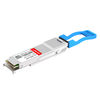
As data center interconnect (DCI), metro aggregation, and cloud backbone traffic continue moving toward 400G transmission, traditional optical transport architectures are facing a familiar challenge: higher bandwidth demand with stricter power, space, and cost constraints. This is where 400G ZR/ZR+ optics have become one of the most discussed coherent pluggable solutions in modern high-speed optical networks.
Unlike conventional client-side 400G transceivers, 400G ZR and 400G ZR+ modules are designed to carry 400Gbps Ethernet traffic directly across DWDM fiber infrastructures using coherent DSP technology. In simple terms, they make it possible to extend high-capacity links far beyond standard data center optical reaches while reducing the need for bulky standalone transponder equipment.
However, many engineers quickly discover that searching for 400G ZR/ZR+ optics raises more practical questions than vendor brochures answer.
What is the real difference between 400G ZR and 400G ZR+?
How far can these coherent optics actually reach under real optical loss conditions?
What exactly is the 400G ZR standard, and where does OpenZR+ fit into the ecosystem?
More importantly, can these pluggable coherent modules truly simplify metro and regional transport deployment without introducing hidden interoperability or amplifier challenges?
This guide is written to answer those exact questions.
In the following sections, we will explain what 400G ZR/ZR+ optics are, compare their standards and real deployment capabilities, analyze practical distance and compatibility limitations, and help you determine which coherent module is the right fit for DCI, metro, and high-speed optical transport applications.
⏩ What Are 400G ZR and 400G ZR+ Optics?
400G ZR and 400G ZR+ optics are high-speed coherent pluggable transceivers designed to transmit 400Gbps Ethernet signals over much longer fiber distances than standard short-reach data center modules. Unlike conventional 400G SR8, DR4, or LR4 optics that are mainly used for intra-data-center connections, ZR-class coherent modules are built specifically for data center interconnect (DCI), metro transport, and regional optical backbone links where fiber spans can extend far beyond the reach of traditional client optics.
In plain terms, these modules allow network operators to plug a coherent 400G transport interface directly into supported high-speed routers or switches—typically through QSFP-DD or OSFP coherent-capable ports—and send traffic across DWDM networks without relying on large standalone transponder shelves. This is one of the main reasons why 400G ZR/ZR+ optics are increasingly viewed as a practical bridge between Ethernet switching infrastructure and long-haul optical transport systems.
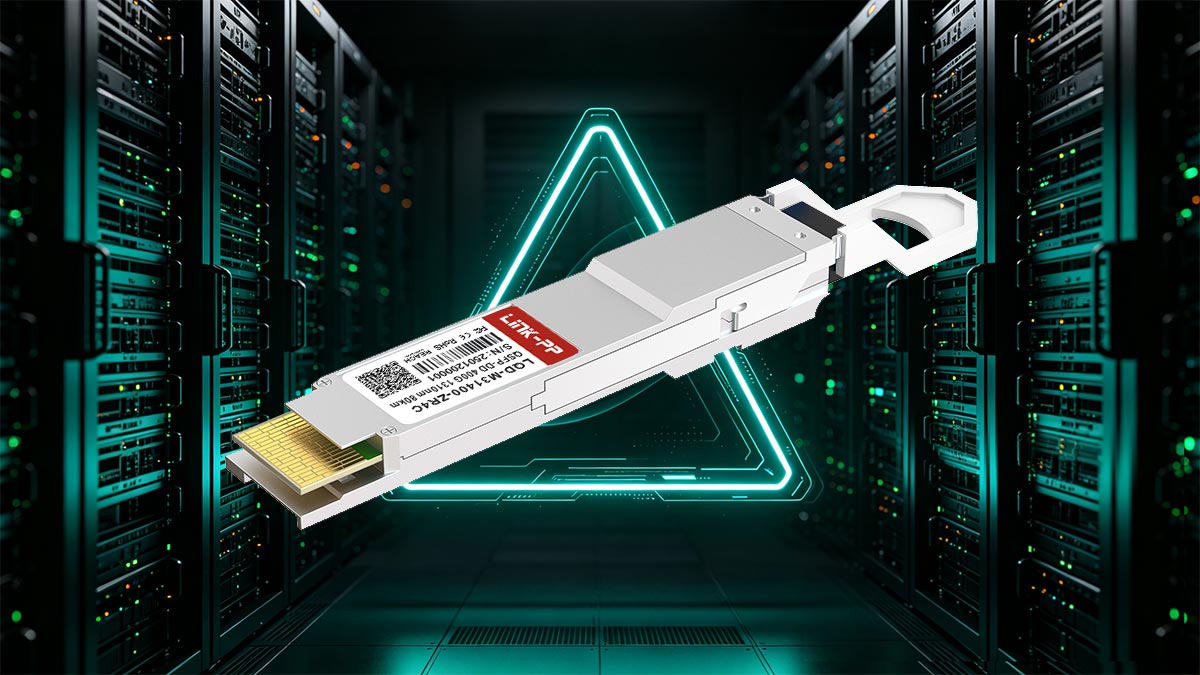
Understanding “ZR” in Simple Terms
The term “ZR” originally refers to a coherent optical transmission class developed for extended-reach 400GbE transport over DWDM fiber. In industry usage, when engineers ask “what is 400G ZR?”, they are usually referring to a standardized pluggable coherent module that supports:
-
400Gbps Ethernet client traffic,
-
coherent digital signal processing (DSP),
-
wavelength tunability for DWDM systems,
-
and operation over amplified point-to-point optical links.
The formal 400ZR framework was developed under the Optical Internetworking Forum to make interoperable coherent pluggables possible for compact DCI deployments, especially in the 80km class and beyond.
Instead of using intensity-modulated short-reach optics, a 400G ZR module uses advanced coherent modulation and DSP correction to tolerate chromatic dispersion, optical impairments, and dense wavelength multiplexing conditions that ordinary Ethernet optics cannot handle.
That means:
a 400G ZR optic is not just a faster transceiver—it is essentially a miniaturized coherent transport engine inside a pluggable module.
What Does “ZR+” or “OpenZR+” Mean?
If 400G ZR is the baseline interoperable coherent standard, then 400G ZR+ (often marketed in the industry as OpenZR+) is the performance-extended version designed to provide:
-
longer transmission reach,
-
higher optical margin,
-
more flexible baud/modulation modes,
-
stronger deployment adaptability across metro and regional networks.
Unlike strict OIF 400ZR profiles, ZR+ implementations are less constrained and can be optimized by vendors for scenarios where operators need more than short DCI spans—such as amplified metro rings, regional backbone segments, or mixed ROADM environments.
-
400G ZR = standardized, simpler, interoperability-focused coherent DCI
-
400G ZR+ = enhanced, longer-reach, more flexible coherent transport option
Why These Are Called “Coherent Pluggable Optics”
Traditional optical transport over long distances used to require:
Coherent pluggable optics changed that model by integrating:
into a compact hot-swappable transceiver form factor.
As a result, 400G ZR/ZR+ coherent pluggable optics allow service providers and cloud operators to simplify IP-over-DWDM architectures by moving long-distance optical transport functionality directly into the host networking equipment.
This shift offers several practical benefits:
-
reduced rack footprint,
-
lower transport-layer complexity,
-
improved power efficiency per transmitted bit,
-
and easier 400G service turn-up for metro and DCI applications.
In One Sentence
If explained in the simplest possible way:
400G ZR/ZR+ optics are pluggable coherent 400G transport modules that enable routers and switches to send high-capacity Ethernet traffic across metro and DWDM fiber links without traditional standalone optical transport hardware.
This definition is the foundation for understanding why these modules are now becoming central to modern high-speed optical network design.
⏩ Why 400G ZR/ZR+ Matters in Modern High-Speed Optical Networks
As 400G Ethernet traffic becomes the new backbone of cloud connectivity, metro aggregation, and data center interconnect, network operators need optical solutions that can deliver higher bandwidth without adding excessive transport hardware. This is why 400G ZR/ZR+ optics are gaining importance: they combine coherent long-reach transmission with the flexibility of compact pluggable modules, making high-speed optical deployment more scalable and cost-efficient.
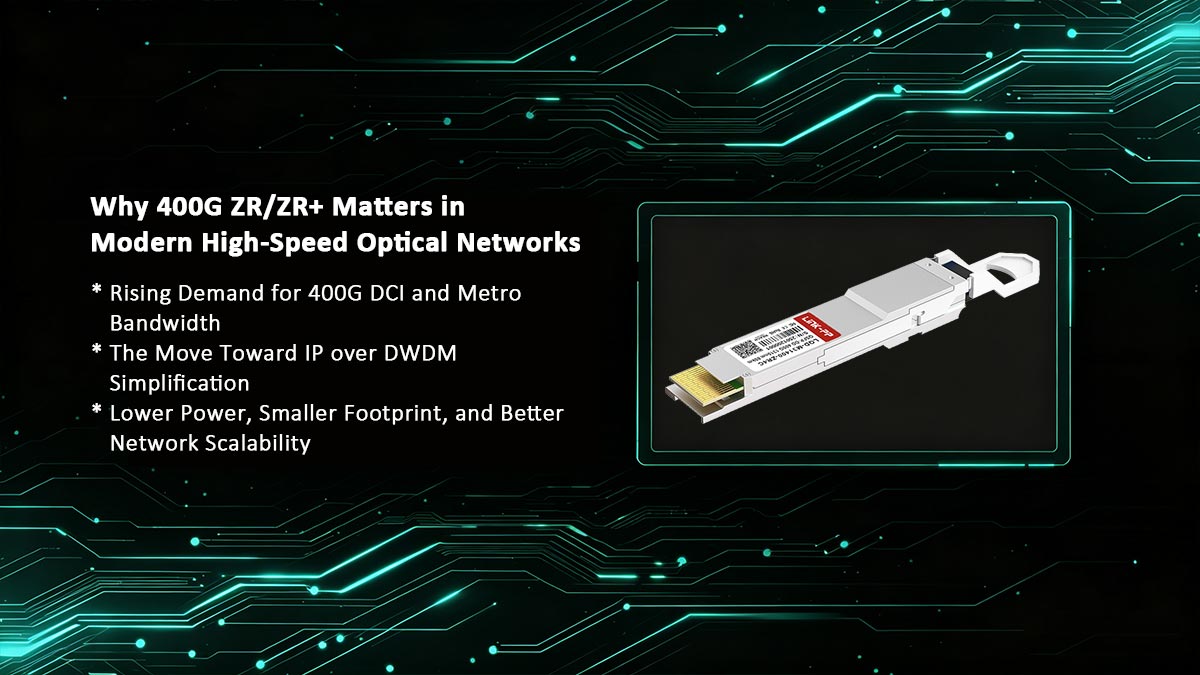
Rising Demand for 400G DCI and Metro Bandwidth
Modern DCI and metro networks are carrying significantly more east-west traffic than previous 100G architectures were designed to handle. Cloud computing, AI clusters, and distributed storage systems are pushing operators toward denser 400G wavelength deployment, especially across inter-data-center and metro backbone links where bandwidth expansion must happen quickly.
The Move Toward IP over DWDM Simplification
Traditional 400G transport often requires multiple hardware layers, including client optics, external transponders, and DWDM shelves. 400G ZR/ZR+ coherent pluggable optics simplify this design by allowing supported routers and switches to transmit coherent DWDM wavelengths directly, supporting the growing industry trend of IP over DWDM (IPoDWDM) and more streamlined routed optical architectures.
Lower Power, Smaller Footprint, and Better Network Scalability
By integrating coherent transport functions into QSFP-DD or OSFP pluggable modules, ZR-class optics help reduce rack space, interface complexity, and power overhead compared with traditional standalone transport systems. For operators planning long-term 400G expansion, this makes 400G ZR/ZR+ not just a module upgrade, but an important building block for more efficient high-speed optical networks.
⏩ 400G ZR vs. 400G ZR+: What Is the Difference?
Although 400G ZR and 400G ZR+ are both coherent pluggable optics designed for 400Gbps DWDM transmission, they are not interchangeable in every deployment. The biggest difference is that 400G ZR focuses on standardized interoperability for shorter DCI spans, while 400G ZR+ extends coherent performance for longer metro and regional transport links where more optical flexibility is required.
In practical terms, 400G ZR is usually chosen when operators want a simpler OIF-defined coherent interface with easier multi-vendor alignment, whereas 400G ZR+ is selected when the network needs stronger optical margin, extended reach, and broader line-system adaptability.
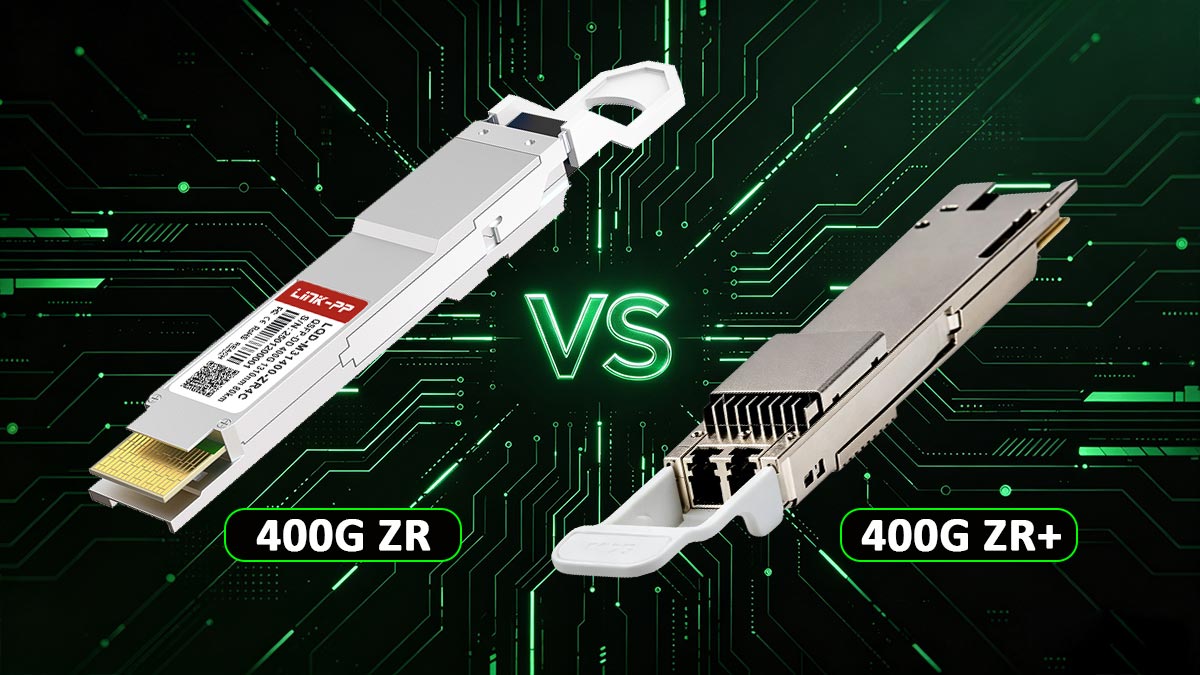
Quick Comparison Between 400G ZR and 400G ZR+
|
Feature
|
400G ZR
|
400G ZR+
|
|
Primary Positioning
|
Standard coherent DCI pluggable
|
Enhanced coherent metro/regional pluggable
|
|
Typical Reach
|
Short-to-medium amplified DCI spans
|
Longer metro and regional DWDM spans
|
|
Standard Basis
|
OIF 400ZR interoperable profile
|
Vendor-extended / OpenZR+ ecosystem
|
|
Optical Flexibility
|
More fixed
|
More tunable and adaptable
|
|
Host Power Budget
|
Lower
|
Usually higher
|
|
Amplification Tolerance
|
Limited to standard coherent conditions
|
Better suited for complex amplified paths
|
|
Multi-Vendor Interoperability
|
Stronger
|
Depends more on vendor implementation
|
|
Deployment Complexity
|
Simpler
|
More engineering planning required
|
Reach: 400G ZR Is Built for Compact DCI, While ZR+ Pushes Further
One of the most searched questions is how far each module can actually transmit.
The OIF-defined 400G ZR standard was primarily created for interoperable coherent transport in the 80km class DCI environment, typically over amplified point-to-point DWDM fiber with controlled line conditions.
By contrast, 400G ZR+ is designed to go beyond baseline DCI limitations. Through more flexible DSP profiles and vendor-optimized coherent settings, ZR+ modules can support longer metro and regional spans when optical loss, OSNR, and amplification are properly engineered.
So from a practical buying perspective:
-
choose 400G ZR when the fiber path is relatively controlled and standardized,
-
choose 400G ZR+ when the route introduces more attenuation, ROADM complexity, or longer regional reach demands.
Power Consumption and Thermal Design Requirements
Another major difference lies in host platform requirements.
Because 400G ZR+ coherent optics generally run more advanced DSP modes and broader transport profiles, they often consume more power than standard 400G ZR modules. That means not every router or switch that accepts QSFP-DD optics can fully support ZR+ coherent operation without thermal verification.
This is why engineers evaluating these modules must check:
-
host coherent optics support,
-
maximum port power allowance,
-
airflow direction,
-
software media profile compatibility.
In dense deployments, power and cooling can become a deciding factor between ZR and ZR+ adoption.
Modulation and Optical Transport Flexibility
Standard 400G ZR follows a narrower interoperable coherent transmission profile, which is excellent for simplicity but less forgiving when operators need to adapt to varied line-system conditions.
400G ZR+, often associated with OpenZR+ implementations, gives vendors more room to optimize:
This added flexibility is one of the reasons ZR+ performs better in more demanding metro and regional optical environments.
Interoperability: ZR Is More Open, ZR+ Is More Performance-Driven
If multi-vendor interoperability is a top priority, 400G ZR usually offers the safer path because it was built around a more strictly defined interoperable framework.
ZR+ is more powerful, but because implementations can vary by vendor and DSP ecosystem, interoperability often depends on:
-
host coding,
-
line system compatibility,
-
coherent profile matching,
-
firmware support.
In other words:
400G ZR prioritizes openness and deployment simplicity, while 400G ZR+ prioritizes transport performance and deployment flexibility.
Amplification and Real Deployment Complexity
Both ZR and ZR+ are coherent DWDM optics, so neither should be treated like plug-and-play gray Ethernet modules.
However, 400G ZR+ is generally better suited for amplified and more optically complex paths, especially where:
400G ZR can absolutely perform well, but it is more dependent on staying close to the intended standardized DCI optical envelope.
The Simplest Way to Understand the Difference
If reduced to one engineering decision:
400G ZR is the standardized coherent option for simpler 400G DCI transport, while 400G ZR+ is the extended coherent option for operators who need more reach, more optical tolerance, and more deployment flexibility.
That distinction becomes even clearer when we look at the formal standard behind these modules in the next section.
⏩ How Far Can 400G ZR/ZR+ Really Reach?
One of the most common misunderstandings in the coherent optics market is assuming that the published transmission distance of a module equals the distance it can support in every field deployment. In reality, the usable reach of 400G ZR/ZR+ optics depends far less on the number printed in a brochure and far more on the optical condition of the fiber path.
In other words:
the real question is not simply “How far can 400G ZR/ZR+ go?”
but “How clean is the DWDM link that the module has to survive?”
Standard 400G ZR Reach: Designed Around the 80km DCI Class
The formal 400G ZR standard was developed primarily for interoperable coherent transmission over approximately 80km amplified data center interconnect links under relatively controlled optical conditions.
This means 400G ZR is typically intended for:
-
point-to-point DCI spans,
-
stable amplified DWDM links,
-
predictable insertion loss environments,
-
limited optical filtering complexity.
Under these cleaner line conditions, 400G ZR performs very efficiently.
However, once the path begins to include:
-
multiple ROADMs,
-
patch panel loss,
-
aging fiber attenuation,
-
connector contamination,
-
uneven amplifier gain,
the practical margin can shrink much faster than many first-time buyers expect.
400G ZR+ Reach: More Margin, But Not Unlimited Distance
Because 400G ZR+ uses a more flexible coherent transport profile, it can generally support longer metro and regional routes than standard ZR when amplification and OSNR are properly managed.
But this does not mean:
“ZR+ automatically works on any long fiber route.”
Actual deployable reach is still governed by:
-
end-to-end insertion loss,
-
optical signal-to-noise ratio (OSNR),
-
span count,
-
amplifier quality,
-
ROADM filtering penalties,
-
dispersion tolerance margin.
This is why two networks with the same fiber distance may produce completely different coherent results.
A 120km clean amplified route may be easier than a heavily filtered 70km metro ring.
Distance alone never tells the full story.
Fiber Loss Often Matters More Than Kilometers
Many engineers focus first on transmission kilometers, but in coherent deployment the more important metric is often total optical path loss.
Real-world loss comes from:
Even when a route appears short on paper, accumulated insertion loss can reduce coherent receiver margin enough to destabilize performance.
This is why successful deployment planning for 400G ZR/ZR+ optics should always begin with a full optical budget review—not just a map distance estimate.
Amplification Is Usually Part of the Equation
Both 400G ZR and 400G ZR+ are coherent DWDM modules, which means they are commonly deployed on amplified optical paths rather than untreated raw gray fiber.
Depending on span loss, operators may require:
Without proper amplification planning, even technically “within distance” routes may fail to maintain sufficient coherent receive quality.
This is one of the main reasons real user discussions frequently report that coherent modules do not behave as simple plug-and-play long-distance optics—line engineering still matters.
OSNR Is the Hidden Reach Limiter
Among all deployment variables, OSNR (Optical Signal-to-Noise Ratio) is often the hidden factor that determines whether a 400G coherent wavelength remains stable.
Poor OSNR can be caused by:
-
over-amplification noise,
-
cascaded span penalties,
-
excessive ROADM stages,
-
poor launch power tuning,
-
degraded optical components.
When OSNR margin falls below what the coherent DSP can comfortably recover, operators may see:
This is why two modules with identical nominal reach can behave very differently in separate DWDM infrastructures.
Can 400G ZR/ZR+ Run on Dark Fiber?
Technically, yes—but only if the dark fiber is engineered as a coherent-capable optical path.
Using dark fiber does not automatically guarantee:
Operators still need to verify:
-
span loss,
-
connector quality,
-
possible amplification requirements,
-
chromatic dispersion conditions,
-
optical reflections.
Dark fiber can be an excellent deployment environment, but it is not a substitute for proper coherent link validation.
Reach Is a Network Design Question, Not a Spec Sheet Number
The most accurate way to understand 400G ZR/ZR+ reach is this:
400G ZR works best when the DWDM path stays close to standardized amplified DCI conditions, while 400G ZR+ offers more optical margin for longer or more complex metro and regional routes—but both still depend heavily on fiber loss, amplification design, and OSNR quality.
So before selecting a coherent pluggable based on advertised distance alone, engineers should evaluate the actual optical health of the entire transmission path.
⏩ How 400G ZR/ZR+ Fits into DCI, Metro, and Regional Networks
Because 400G ZR/ZR+ optics combine coherent DWDM transmission with a compact pluggable form factor, they are not limited to a single transport scenario. Their real value lies in serving as a flexible 400G wavelength interface across several layers of modern optical infrastructure—from short data center interconnects to more complex metro and regional backbone routes.
Data Center Interconnect (DCI)
One of the earliest and most common applications for 400G ZR optics is high-capacity data center interconnect. As cloud providers and enterprise campuses continue to exchange larger volumes of east-west traffic, standard gray Ethernet optics often lack the transmission reach needed for inter-site connectivity.
400G ZR solves this by allowing supported routers or switches to launch coherent 400G wavelengths directly across amplified DWDM fiber, making it ideal for:
-
campus-to-campus DCI,
-
cloud data center synchronization,
-
disaster recovery replication links,
-
low-latency inter-facility transport.
Its standardized interoperable design makes it especially attractive where operators need straightforward point-to-point DCI deployment.
Metro Transport Networks
Within metro rings and city-wide carrier aggregation networks, bandwidth demand is increasing rapidly as 100G services transition toward denser 400G service delivery. This creates a need for coherent pluggable optics that can support higher throughput without requiring a full standalone transport shelf for every wavelength.
In this environment, both 400G ZR and 400G ZR+ can be used to:
-
aggregate multiple high-capacity enterprise services,
-
connect metro edge routing nodes,
-
extend cloud access fabrics,
-
simplify wavelength provisioning on DWDM metro infrastructure.
Because metro paths often involve more optical filtering and variable span conditions, 400G ZR+ is commonly favored when additional coherent margin is needed.
Regional Backbone Expansion
For operators building out regional transport links between cities, campuses, or distributed POPs, traditional coherent transponder systems have long been the default choice. However, coherent pluggables are increasingly being evaluated as a more compact alternative for selected 400G routes.
With stronger optical flexibility and longer engineered reach, 400G ZR+ optics can support:
-
inter-city aggregation links,
-
regional service backbone growth,
-
POP-to-POP 400G wavelength expansion,
-
distributed cloud infrastructure transport.
This makes ZR+ particularly valuable in networks where operators want to increase wavelength density without proportionally increasing transport hardware footprint.
IP over DWDM and Routed Optical Networking
Perhaps the most strategic use case for 400G ZR/ZR+ coherent optics is enabling IP over DWDM (IPoDWDM).
Instead of following the traditional layered transport model of:
router → client optic → transponder → DWDM line system,
operators can increasingly deploy:
router → 400G ZR/ZR+ coherent optic → DWDM line system.
This reduces:
As a result, ZR-class coherent pluggables are becoming key enablers of routed optical networking, where the IP layer and optical layer are more tightly integrated for simpler long-term scaling.
A Flexible Coherent Platform Across Multiple Network Layers
The reason search interest around 400G ZR/ZR+ optics continues to rise is that these modules are no longer viewed as niche DCI optics only. They now serve as practical coherent building blocks across:
-
short amplified DCI spans,
-
metro aggregation wavelengths,
-
regional transport extensions,
-
and converged IP over DWDM architectures.
That deployment flexibility is exactly what makes them increasingly important in high-speed optical network planning.
⏩ Key Deployment Considerations Before Using 400G ZR/ZR+ Optics
Although 400G ZR/ZR+ optics offer a much more compact way to deliver coherent 400G transport, they are not simple plug-and-play replacements for standard Ethernet transceivers. Before deployment, engineers must verify that both the host platform and the optical line environment can fully support coherent operation. Ignoring these factors can lead to unstable links, thermal alarms, or interoperability issues even when the fiber distance appears acceptable.
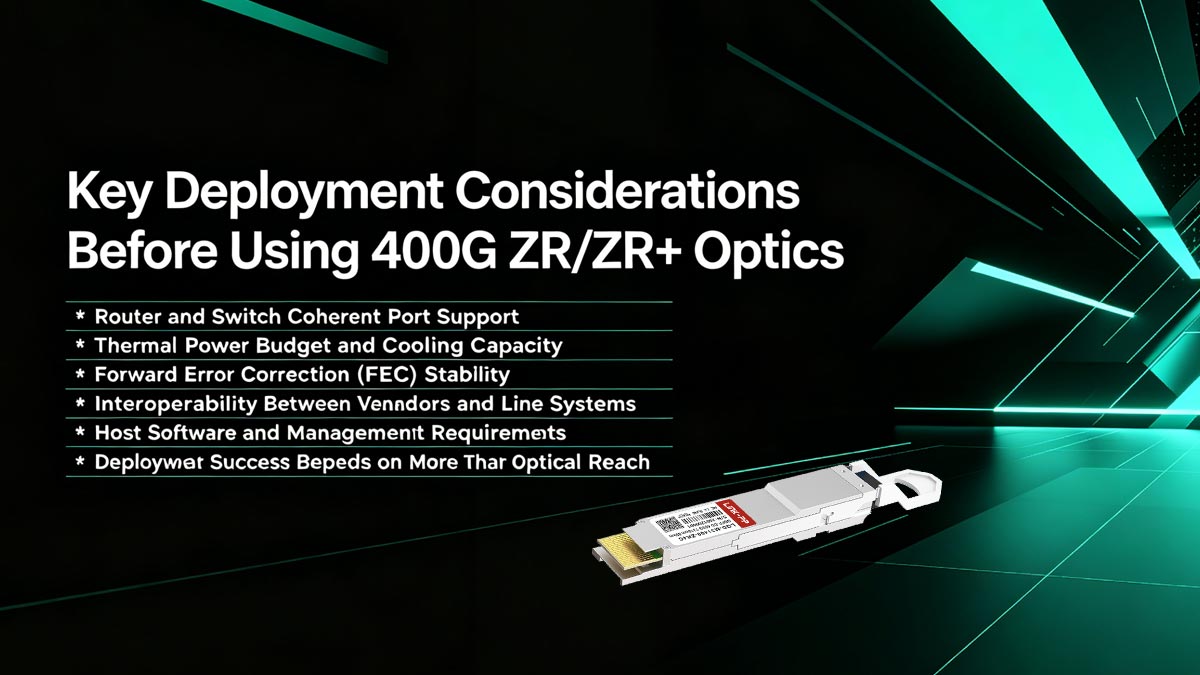
Router and Switch Coherent Port Support
The first requirement is confirming whether the target router or switch truly supports coherent pluggable optics—not just whether it has a QSFP-DD or OSFP slot.
Many platforms can physically accept the module, but successful coherent operation still depends on:
-
coherent media profile recognition,
-
supported DSP communication,
-
host firmware compatibility,
-
wavelength tuning control,
-
optical diagnostics access.
Without explicit coherent support from the host system, the module may fail to initialize correctly or may operate without full transport visibility.
Thermal Power Budget and Cooling Capacity
Compared with standard 400G SR, DR, or LR optics, 400G ZR/ZR+ coherent modules consume significantly more power because they integrate advanced DSP processing and tunable coherent optics.
This means engineers need to confirm:
-
maximum allowable wattage per port,
-
adjacent port thermal derating,
-
front-to-back airflow consistency,
-
chassis cooling density.
In high-port-count routers, thermal limitations can directly affect how many coherent pluggables can be deployed simultaneously. A platform that supports a few coherent ports may not always support full-density coherent population.
Forward Error Correction (FEC) Stability
Coherent transmission relies heavily on strong Forward Error Correction (FEC) to maintain link integrity under optical impairment.
However, FEC is not just an automatic background function. Stable operation depends on:
If the FEC correction load remains consistently high, the link may appear active but still operate close to failure threshold. This is why monitoring pre-FEC and post-FEC health is essential during commissioning.
Interoperability Between Vendors and Line Systems
One of the most overlooked deployment risks is assuming that all 400G ZR/ZR+ optics behave identically across different vendors.
In reality, successful operation may depend on:
Standard 400G ZR generally offers better multi-vendor interoperability because it follows a more tightly defined coherent profile, while 400G ZR+ may require closer validation when mixed across different host or line-system environments.
Host Software and Management Requirements
Beyond hardware support, coherent pluggables often require software-level integration for:
If the host NOS or operating system does not expose sufficient coherent management controls, troubleshooting becomes significantly harder after installation.
For this reason, coherent deployment should always include verification of:
-
supported software release,
-
vendor coding profile,
-
DOM/DDM coherent monitoring access,
-
transport alarm reporting.
Deployment Success Depends on More Than Optical Reach
Many buyers focus first on transmission distance, but field experience shows that successful 400G ZR/ZR+ deployment depends just as much on:
Only after these conditions are validated can the optical reach advantages of ZR-class coherent modules be fully realized.
⏩ Cost, Power, and TCO: Is 400G ZR/ZR+ Worth It?
For many operators, the decision to deploy 400G ZR/ZR+ optics is not based on transmission capability alone. The bigger question is whether these coherent pluggable modules can deliver a better total cost of ownership (TCO) than maintaining traditional transponder-based DWDM architectures. In most modern DCI and metro scenarios, the answer is increasingly yes—but only when the deployment model is matched to the right network conditions.

Lower Hardware Footprint Than Legacy Transport Layers
Traditional long-distance 400G transport usually requires multiple optical layers:
-
client-side Ethernet optics,
-
standalone transponders or muxponders,
-
DWDM transport shelves,
-
additional patch interfaces.
Each of these layers adds:
By comparison, 400G ZR/ZR+ coherent pluggable optics allow much of the coherent transport function to move directly into the router or switch port, reducing the need for dedicated external transport hardware on many point-to-point and metro wavelength deployments.
This means fewer devices to purchase, fewer spare units to stock, and fewer optical conversion points to manage.
Better Rack Space and Power Efficiency
Space and power are major hidden contributors to long-term network cost.
Because coherent pluggables eliminate or reduce standalone transponder shelves, operators can save:
-
rack units,
-
power feeds,
-
cooling resources,
-
cable management space.
Even though 400G ZR/ZR+ modules consume more power than standard client optics, they often consume significantly less total power than the combined client-optic-plus-transponder architecture they are replacing.
In high-density metro and DCI environments, this can produce meaningful long-term savings in colocation and facility operating costs.
Faster Provisioning and Simpler Operations
TCO is not only about equipment price—it also includes the operational cost of deploying and maintaining wavelengths.
Using coherent pluggables can simplify:
With fewer independent transport devices in the chain, operators often gain a cleaner routed optical model that is easier to scale as 400G wavelengths increase.
This operational simplicity is one of the main reasons IP over DWDM architectures continue to gain momentum.
Where 400G ZR/ZR+ Can Replace Legacy DWDM Hardware
In the right scenario, coherent pluggables can reduce dependence on legacy transport shelves for:
-
compact DCI links,
-
metro point-to-point wavelengths,
-
moderate regional aggregation routes,
-
router-native DWDM expansion.
Instead of treating every new 400G wavelength as a transponder project, operators can often provision coherent capacity directly from coherent-capable routing equipment.
However, this replacement is not universal.
Very long-haul or highly engineered multi-degree optical networks may still require traditional transport-layer platforms for maximum line management flexibility.
⏩ Frequently Asked Questions About 400G ZR/ZR+ Optics
1. Can 400G ZR/ZR+ optics be used in any QSFP-DD port?
Not necessarily. Although many 400G ZR/ZR+ optics use QSFP-DD form factors, coherent pluggables require much higher power, deeper host DSP communication, and software-level coherent support than standard Ethernet optics. A router or switch may physically recognize the module while still lacking full coherent transport compatibility. For this reason, host platform validation is always recommended before deployment.
2. Do 400G ZR/ZR+ optics require a separate DWDM transponder?
In many DCI and metro point-to-point deployments, no separate transponder is required. One of the biggest advantages of 400G ZR/ZR+ coherent optics is that they integrate coherent transport functionality directly into the pluggable module, allowing supported routers and switches to launch DWDM wavelengths natively. However, the surrounding line system still needs to provide proper multiplexing, amplification, and wavelength management where necessary.
3. Are 400G ZR/ZR+ optics suitable for future 800G network upgrades?
Yes. In many cases, deploying coherent-capable ZR-class architectures now helps operators build a more scalable optical foundation for later 800G coherent evolution. While the modules themselves are 400G interfaces, the routed optical design principles—such as IP over DWDM simplification, coherent host integration, and line-system convergence—align closely with future higher-speed coherent transport strategies.
4. Is third-party vendor compatibility possible with 400G ZR/ZR+ optics?
Yes, but compatibility depends heavily on three layers:
Standardized 400G ZR usually offers a smoother path for multi-vendor deployment, while enhanced 400G ZR+ solutions often require more careful interoperability testing. Choosing a supplier with verified host compatibility and coherent validation experience is therefore especially important.
5. How should engineers evaluate a 400G ZR/ZR+ supplier?
Beyond basic module specifications, engineers should verify:
-
host platform compatibility reports,
-
optical interoperability testing,
-
coherent DSP stability,
-
DOM/DDM monitoring support,
-
production consistency,
-
field deployment validation.
Because coherent pluggables operate in far more demanding optical environments than ordinary Ethernet optics, supplier testing capability is often just as important as nominal datasheet performance.
⏩ How to Choose the Right 400G ZR/ZR+ Optic for Your Network
After comparing standards, reach, deployment requirements, and long-term operating costs, the most practical way to choose between 400G ZR and 400G ZR+ optics is to start with one simple question:
How demanding is the optical path that your 400G wavelength must cross?
If your network is primarily built around:
-
short-to-medium amplified DCI spans,
-
relatively clean point-to-point DWDM links,
-
stronger multi-vendor interoperability requirements,
-
and simpler coherent provisioning,
then 400G ZR is usually the more efficient and standardized choice. It offers a streamlined path for operators who want compact coherent transport without introducing unnecessary optical engineering complexity.
On the other hand, if your application involves:
-
longer metro or regional fiber routes,
-
more insertion loss and ROADM filtering,
-
tighter OSNR conditions,
-
or greater deployment flexibility across mixed optical environments,
then 400G ZR+ typically provides the additional coherent margin and transport adaptability needed for more challenging network designs.
The Fastest Way to Match the Right Optic to the Right Link
In real deployment planning, the selection process should follow this order:
-
Evaluate the actual DWDM path condition — not just map distance, but total fiber loss, optical filtering, and amplifier availability.
-
Confirm host coherent compatibility — including router support, thermal budget, and software media profile readiness.
-
Define whether interoperability or performance is the higher priority — ZR for cleaner standardization, ZR+ for deeper optical flexibility.
-
Compare long-term architecture efficiency — consider whether the optic helps reduce external transponder dependence and simplify future 400G scaling.
When these four checkpoints are clear, choosing the right coherent pluggable becomes much easier.
Ultimately, 400G ZR/ZR+ optics are not just transceivers—they are strategic components in how modern DCI, metro, and routed optical networks are built. Selecting the correct module means balancing transmission reach, host readiness, interoperability, and long-term transport efficiency rather than relying on datasheet distance alone.
For engineers and buyers looking for verified coherent solutions, tested host compatibility, and deployment-ready 400G ZR/ZR+ optical modules, the LINK-PP Official Store provides a practical starting point for comparing high-speed coherent optics built for real network environments.