10G Ethernet has become a foundational technology for modern networks, supporting everything from data center interconnects to enterprise backbones. At the core of many 10GbE optical standards lies 10GBASE-R, a physical layer specification that enables efficient, high-speed data transmission through advanced encoding and streamlined architecture. While often referenced alongside familiar variants such as SR, LR, and ER, 10GBASE-R itself represents the underlying mechanism that makes these implementations possible.
Understanding 10GBASE-R is essential for anyone designing, deploying, or optimizing optical networks. It introduces a shift from earlier encoding methods to a more efficient 64b/66b scheme, reducing overhead while maintaining signal integrity and synchronization. This improvement not only enhances bandwidth utilization but also lays the groundwork for the evolution of higher-speed Ethernet technologies.
This article explores how 10GBASE-R works, how it differs from other 10GBASE standards, and where it fits in real-world networking environments. By examining its architecture, variants, performance characteristics, and deployment considerations, readers can gain a deeper understanding of its role in today’s and future high-speed networks.
? What Is 10GBASE-R?
10GBASE-R is a 10 Gigabit Ethernet physical layer specification defined by IEEE that uses 64b/66b encoding to deliver efficient, high-speed data transmission over primarily optical media. It serves as the foundational PHY for most modern 10GbE fiber standards, enabling improved bandwidth utilization, lower overhead, and better scalability compared to earlier encoding schemes.
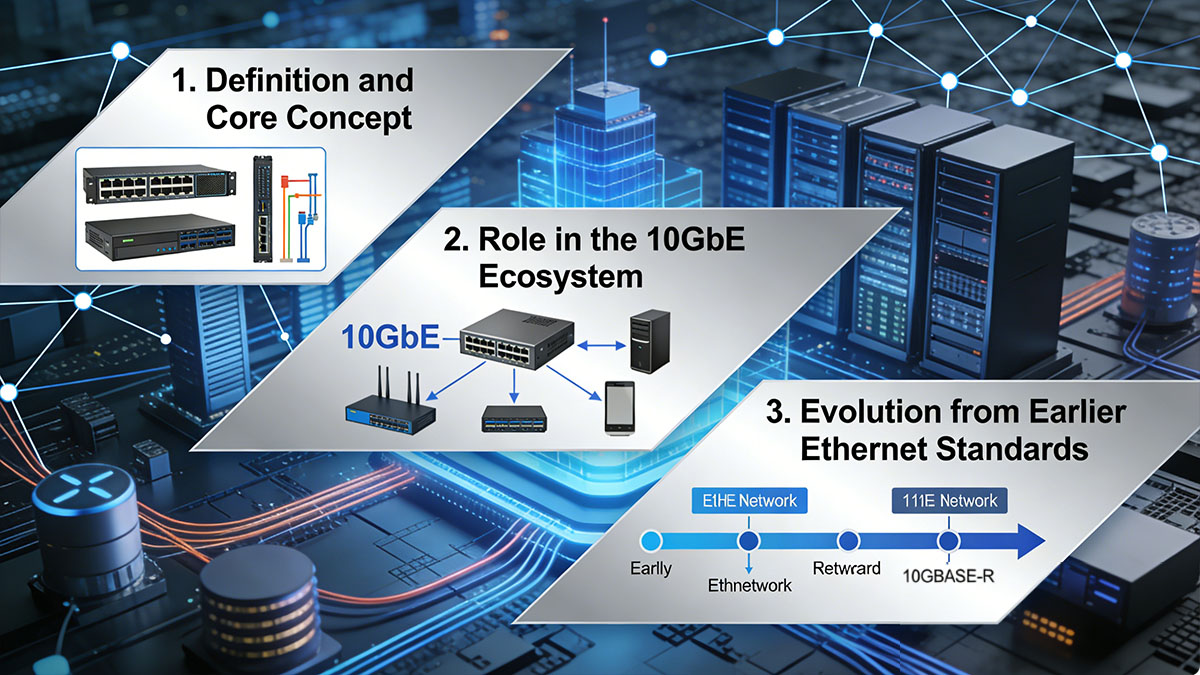
Definition and Core Concept
10GBASE-R refers to a Physical Coding Sublayer (PCS) specification within the 10 Gigabit Ethernet framework, designed to encode and prepare data for transmission using a more efficient method than legacy standards.
At its core, it introduces 64b/66b encoding, which transforms data into structured blocks before transmission. Each block consists of a 64-bit payload and a 2-bit header that indicates whether the block contains data or control information. This structure allows the receiver to maintain synchronization while minimizing overhead.
Unlike earlier Ethernet standards that relied on 8b/10b encoding, 10GBASE-R significantly reduces redundancy. The result is a more efficient transmission process that preserves bandwidth while still supporting essential features like clock recovery and error detection. This makes it particularly suitable for high-speed, high-capacity network environments.
Role in the 10GbE Ecosystem
10GBASE-R acts as the underlying physical layer for most optical 10GbE standards, meaning that widely used variants such as 10GBASE-SR, 10GBASE-LR, and 10GBASE-ER all rely on its encoding and PCS structure.
Its role can be understood through the following key functions:
- Provides a common encoding framework across different transmission media
- Enables interoperability between optical modules and network equipment
- Supports LAN PHY implementations for data center and enterprise networks
- Serves as the baseline for higher-speed Ethernet evolution
Because of this foundational role, 10GBASE-R is not tied to a single distance or fiber type. Instead, it operates as a universal encoding and transmission mechanism that adapts to different Physical Medium Dependent (PMD) layers depending on the deployment scenario.
Evolution from Earlier Ethernet Standards
10GBASE-R represents a significant step forward from earlier Ethernet PHY standards by improving encoding efficiency and preparing the groundwork for future high-speed networking.
The key differences between traditional 8b/10b encoding and 64b/66b encoding are summarized below:
| Feature |
1000BASE-X (8b/10b) |
10GBASE-R (64b/66b) |
| Encoding Scheme |
8b/10b |
64b/66b |
| Overhead |
~25% |
~3% |
| Bandwidth Efficiency |
Lower |
Higher |
| Scalability |
Limited |
High |
This reduction in overhead directly translates into more usable bandwidth and improved performance. Additionally, the simplified encoding process reduces latency and processing complexity, which becomes increasingly important in high-speed environments such as data centers and cloud infrastructure.
By moving away from legacy encoding techniques, 10GBASE-R establishes a more scalable and efficient model that continues to influence newer standards like 25GBASE-R and beyond.
? Technical Architecture of 10GBASE-R
10GBASE-R achieves high-speed and efficient data transmission through a layered physical architecture that combines 64b/66b encoding, a robust Physical Coding Sublayer (PCS), and a media-dependent transmission layer. This structure ensures reliable signal delivery, low overhead, and compatibility across different optical and electrical environments.
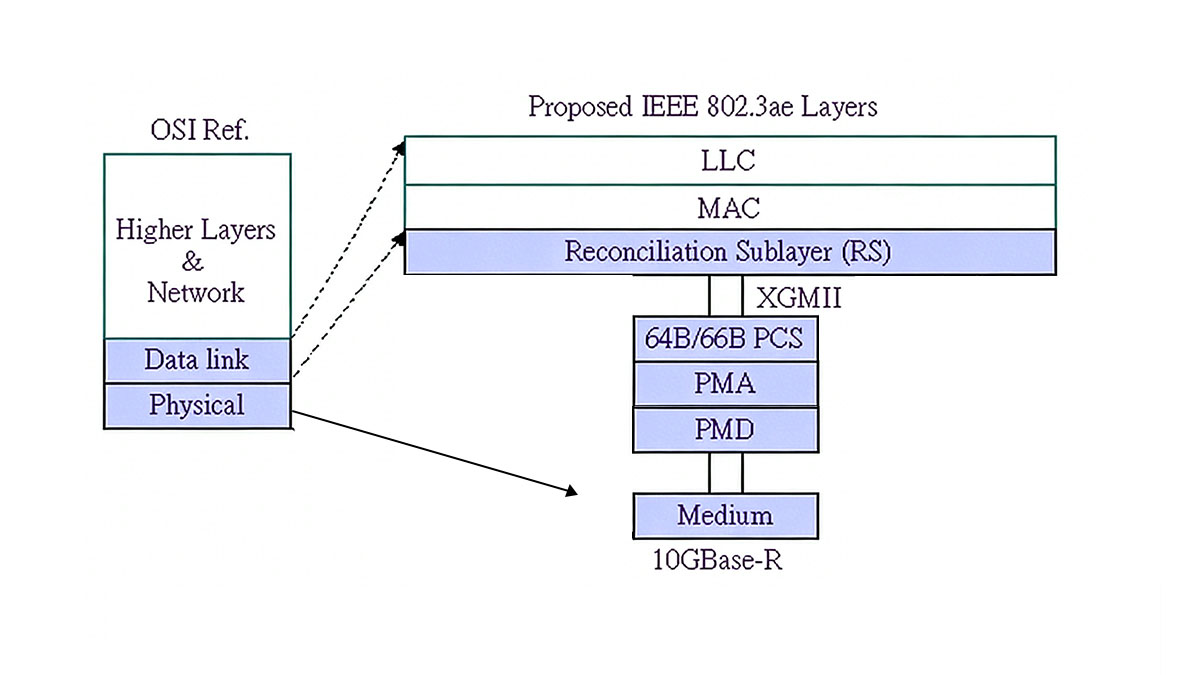
64b/66b Encoding Mechanism
10GBASE-R uses 64b/66b encoding to significantly reduce transmission overhead while maintaining synchronization and signal integrity. Compared to legacy encoding schemes, this approach improves efficiency without sacrificing reliability.
The encoding structure is summarized below:
| Component |
Bit Length |
Function |
| Payload |
64 bits |
Carries actual data |
| Header |
2 bits |
Identifies data or control block |
| Total Block |
66 bits |
Encoded transmission unit |
The 2-bit header plays a critical role in distinguishing between data and control information, enabling the receiver to interpret incoming streams correctly. To further enhance transmission quality, the encoded data is passed through a scrambling process. Scrambling randomizes bit patterns, reducing the risk of long sequences of identical bits that could interfere with clock recovery.
This encoding method strikes a balance between efficiency and robustness, making it well-suited for high-speed Ethernet environments where both bandwidth and signal stability are critical.
Physical Coding Sublayer (PCS)
The Physical Coding Sublayer (PCS) in 10GBASE-R is responsible for preparing data for transmission and ensuring that it can be accurately reconstructed at the receiving end. It acts as the bridge between higher-level data processing and the physical transmission medium.
Key PCS functions include:
- Block encoding using the 64b/66b scheme
- Data scrambling to improve signal randomness
- Frame alignment and synchronization
- Error detection through structured block interpretation
Within the PCS, incoming data is segmented into fixed-size blocks, encoded, and then aligned into a continuous stream. Synchronization markers embedded in the bitstream allow the receiver to maintain alignment even in the presence of minor transmission disturbances.
The PCS also supports lane distribution in multi-lane implementations, although 10GBASE-R itself is typically deployed as a single-lane serial interface. This design ensures scalability for future multi-lane Ethernet standards.
Physical Medium Dependent (PMD) Layer
The Physical Medium Dependent (PMD) layer is responsible for converting encoded digital signals into physical signals suitable for transmission over a specific medium, such as optical fiber or copper.
The differences between PMD types are summarized below:
| Aspect |
Optical PMD |
Electrical PMD |
| Transmission Medium |
Fiber (SMF/MMF) |
Copper (DAC/Backplane) |
| Signal Type |
Optical (light) |
Electrical |
| Typical Reach |
Long (meters to kilometers) |
Short (meters) |
In optical implementations, the PMD converts electrical signals into light using lasers and transmits them over fiber. In electrical implementations, such as direct attach copper (DAC), the signal remains electrical and is transmitted over short distances.
The PMD layer directly determines key performance characteristics such as transmission distance, signal attenuation, and power requirements. It also interfaces with pluggable transceivers, which encapsulate both optical components and electrical interfaces.
By separating encoding (PCS) from transmission (PMD), 10GBASE-R achieves flexibility, allowing the same encoding standard to be used across multiple physical media types while maintaining consistent performance characteristics.
? Key 10GBASE-R Variants and Standards
10GBASE-R is implemented through multiple PHY variants that differ primarily in transmission distance, fiber type, and optical characteristics. These variants share the same encoding and PCS foundation but adapt the PMD layer to suit different deployment environments, ranging from short-reach data center links to long-distance backbone connections.
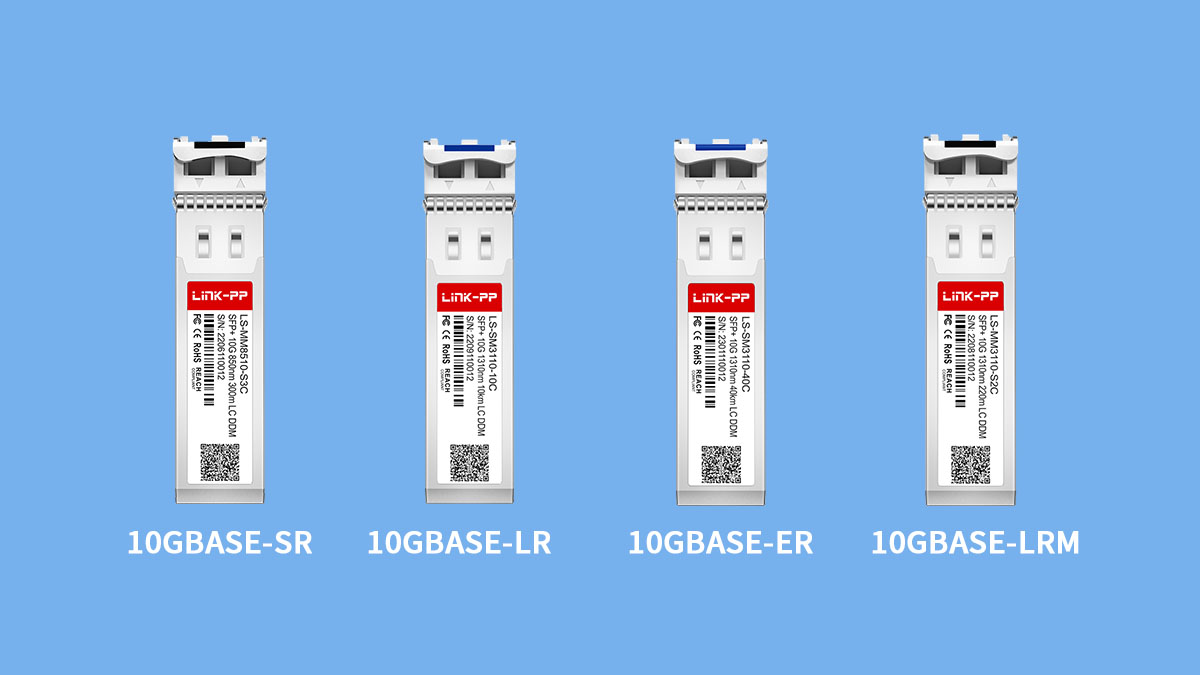
10GBASE-SR (Short Range)
10GBASE-SR (such as SFP-10G-SR) is designed for short-distance transmission over multimode fiber and is widely used in data center environments due to its cost efficiency and ease of deployment.
- Operates over multimode fiber (OM3/OM4)
- Uses 850nm wavelength
- Typical reach:
- Up to 300m on OM3
- Up to 400m on OM4
- Common use cases:
Because of its lower cost optics and relaxed alignment requirements, SR is often the preferred choice for high-density, short-reach deployments.
10GBASE-LR (Long Range)
10GBASE-LR (such as SFP-10G-LR) is optimized for longer-distance transmission over single-mode fiber, making it suitable for campus and enterprise backbone networks.
- Operates over single-mode fiber (SMF)
- Uses 1310nm wavelength
- Typical reach: up to 10km
- Common use cases:
- Building-to-building connectivity
- Campus aggregation layers
LR provides a balance between cost and reach, offering reliable performance for medium-distance optical links without the higher complexity of extended-range solutions.
10GBASE-ER (Extended Range)
10GBASE-ER (such as SFP-10G-ER) supports long-distance transmission and is commonly used in metropolitan and carrier networks where extended reach is required.
- Operates over single-mode fiber (SMF)
- Uses 1550nm wavelength
- Typical reach: up to 40km
- Deployment scenarios:
- Metro network links
- Long-distance backbone connections
Due to higher optical power requirements and stricter signal constraints, ER modules are generally more expensive and require careful link budgeting.
10GBASE-LRM and Other Variants
10GBASE-LRM (such as SFP-10G-LRM) was introduced to extend the usability of legacy multimode fiber infrastructure while maintaining compatibility with 10GBASE-R encoding.
The main variants can be compared as follows:
| Variant |
Fiber Type |
Wavelength |
Max Distance |
| SR |
MMF |
850nm |
300–400m |
| LR |
SMF |
1310nm |
10km |
| ER |
SMF |
1550nm |
40km |
| LRM |
MMF |
1310nm |
~220m |
LRM uses electronic dispersion compensation (EDC) to operate over older MMF types, but this introduces additional complexity and potential interoperability challenges.
Other less common variants and extensions may exist for specific vendor implementations or niche use cases, but SR, LR, and ER remain the dominant standards in most modern deployments.
By selecting the appropriate variant, network designers can optimize cost, performance, and scalability based on distance requirements and existing fiber infrastructure.
? How 10GBASE-R Differs from Other 10GBASE Types
10GBASE-R distinguishes itself from other 10GBASE standards primarily through its encoding efficiency, PCS design, and intended deployment environment. Understanding these differences helps network engineers choose the right standard for specific applications, whether in data centers, enterprise networks, or WAN environments.
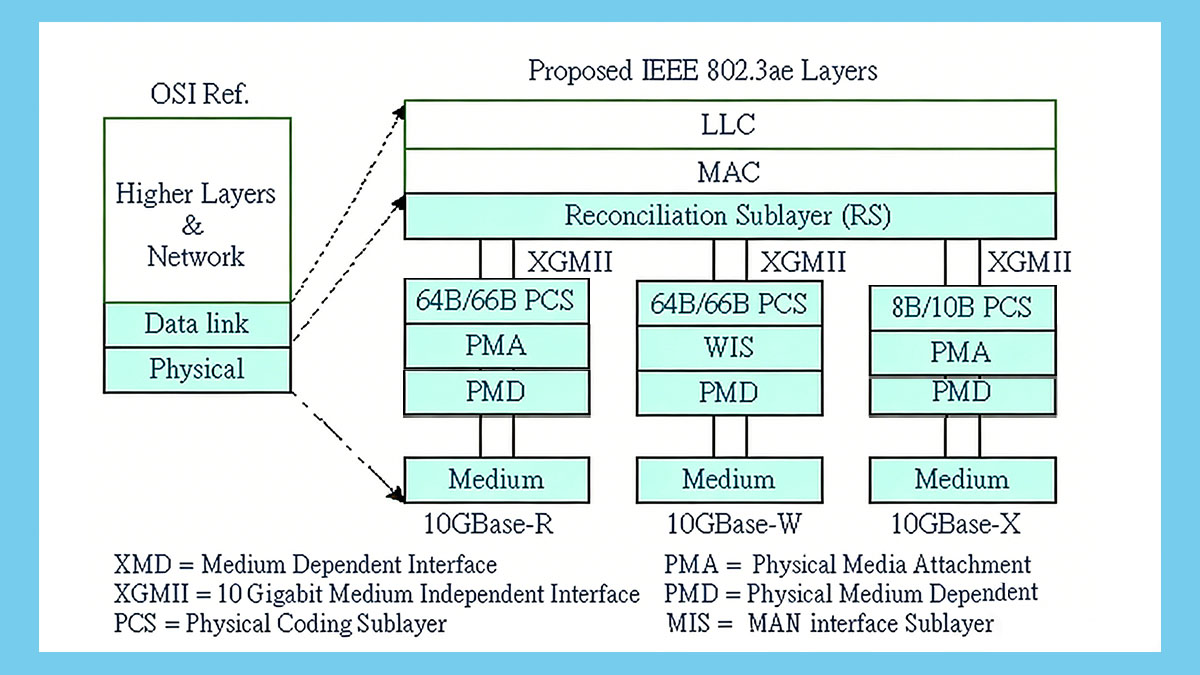
Comparison with 10GBASE-X
10GBASE-X was an earlier 10GbE PHY standard that used 8b/10b encoding. In contrast, 10GBASE-R employs 64b/66b encoding, which reduces overhead and improves efficiency.
| Feature |
10GBASE-X |
10GBASE-R |
| Encoding |
8b/10b |
64b/66b |
| Bandwidth Efficiency |
~80% |
~97% |
| Latency |
Higher |
Lower |
| Typical Use |
Legacy fiber deployments |
Modern data center and LAN PHY |
Key points:
- 10GBASE-R achieves higher usable bandwidth due to minimal encoding overhead.
- Lower latency improves performance in applications sensitive to delay, such as high-frequency trading or AI workloads.
- 10GBASE-R is the preferred choice in contemporary optical networks because of its scalability and efficiency.
Comparison with 10GBASE-W
10GBASE-W is designed for WAN PHY applications, supporting compatibility with SONET/SDH networks. Unlike 10GBASE-R, which is optimized for LAN and data center environments, 10GBASE-W introduces additional framing and clocking to align with telecommunications standards.
Key differences include:
- WAN PHY compatibility adds extra overhead, reducing effective data throughput.
- Clocking and framing mechanisms differ, making 10GBASE-W less suited for short-distance, high-speed LAN applications.
- 10GBASE-R maintains a simpler, more efficient structure for high-throughput environments.
Advantages Over Legacy PHYs
Compared to legacy PHYs such as 10GBASE-X or slower Gigabit Ethernet PHYs, 10GBASE-R offers several distinct advantages:
- Reduced overhead and higher efficiency through 64b/66b encoding
- Lower latency due to simplified encoding and decoding processes
- Enhanced signal integrity via structured block alignment and scrambling
- Greater scalability for future speed upgrades, including 25GBASE, 40GBASE, and beyond
These improvements make 10GBASE-R a versatile and reliable choice for modern networking scenarios, particularly where high throughput, low latency, and long-term scalability are critical considerations.
? Performance Characteristics and Benefits
10GBASE-R delivers a combination of high efficiency, low latency, and robust signal integrity, making it a cornerstone of modern 10 Gigabit Ethernet networks. Its performance characteristics stem from the integration of 64b/66b encoding, a well-structured Physical Coding Sublayer (PCS), and flexible PMD options. Understanding these traits is essential for designing networks that fully utilize 10GbE capabilities.
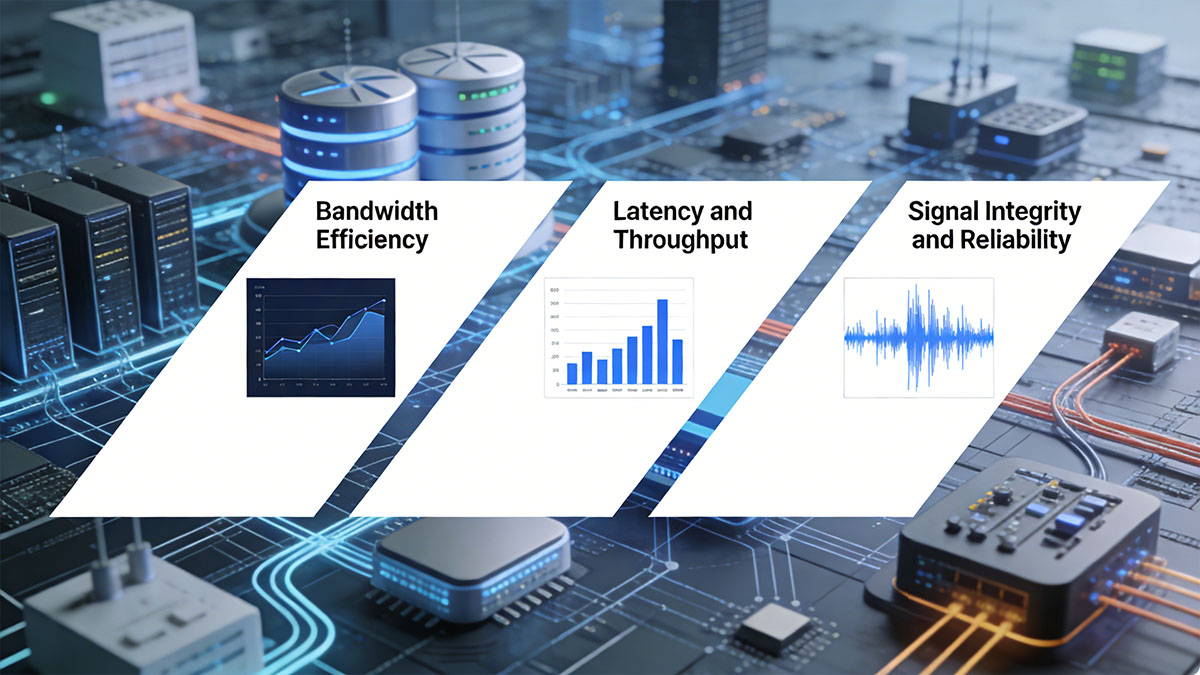
Bandwidth Efficiency
10GBASE-R achieves significantly higher bandwidth efficiency compared to earlier 10GbE standards. By using 64b/66b encoding, it reduces the overhead to approximately 3%, allowing nearly all transmitted bits to carry meaningful data.
Key implications:
- More usable bandwidth per fiber link compared to 8b/10b encoded standards
- Supports high-throughput applications such as virtualization, big data analytics, and cloud computing
- Reduces network congestion by maximizing payload utilization
This efficiency makes 10GBASE-R particularly advantageous in data center environments, where dense traffic and multi-rack communication demand optimized bandwidth.
Latency and Throughput
The simplified 64b/66b encoding mechanism also contributes to reduced latency and improved throughput. Fewer bits are required for encoding compared to older standards, which reduces the processing time per data block at both transmitter and receiver ends.
Performance considerations include:
- Deterministic low latency suitable for time-sensitive workloads
- Higher aggregate throughput on optical links
- Minimal packet serialization delay, critical for real-time applications
In practice, 10GBASE-R can sustain near-line-rate performance even in high-density configurations, supporting thousands of concurrent data flows without significant latency penalties.
Signal Integrity and Reliability
Maintaining signal quality over high-speed links is a critical concern in 10GbE networks. 10GBASE-R addresses this through a combination of encoding, scrambling, and PCS functions.
- Scrambling ensures pseudo-random bit sequences, reducing the risk of long sequences of identical bits that can impair clock recovery
- Structured block alignment enables accurate detection of data and control blocks, enhancing error detection
- PMD layer adaptations (SR, LR, ER) allow signal optimization for specific media and distances
| Feature |
Impact |
Benefit |
| Scrambling |
Reduces bit repetition |
Improves clock recovery and reduces error rates |
| Block Alignment |
Maintains data/control distinction |
Enhances signal stability and reliability |
| PMD Variants |
Match fiber type and distance |
Optimizes link performance across environments |
The combined effect is a highly reliable high-speed link suitable for mission-critical environments, including financial systems, enterprise backbones, and large-scale cloud infrastructure.
Summary of Benefits
By integrating efficient encoding, low-latency operation, and reliable signal management, 10GBASE-R provides the following advantages for network designers and operators:
- High usable bandwidth with minimal overhead
- Deterministic low-latency performance for sensitive applications
- Robust signal integrity across varying media types and distances
- Flexibility to support short-, medium-, and long-range optical deployments
- Scalable foundation for future high-speed Ethernet standards
These characteristics make 10GBASE-R a preferred choice in data centers, enterprise networks, and carrier-grade optical infrastructures where performance, reliability, and scalability are critical.
? Real-World Applications of 10GBASE-R
10GBASE-R is widely deployed across multiple networking environments due to its efficiency, reliability, and adaptability. Its versatility allows it to serve in high-density data centers, enterprise networks, and telecommunications infrastructure, providing consistent 10GbE performance over various distances and fiber types.

Data Center Networking
10GBASE-R is a foundational technology in modern data centers, enabling high-speed interconnects between servers, storage, and network switches.
- Typical deployments:
- Server-to-switch uplinks
- Spine-leaf and top-of-rack (ToR) architectures
- Advantages:
- Supports high-density rack environments
- Enables multi-terabit aggregate throughput with minimal latency
- Compatible with SR, LR, and LRM variants depending on distance requirements
By providing low-latency, high-bandwidth connections, 10GBASE-R ensures efficient data exchange between compute and storage resources, which is critical for cloud services, virtualization, and large-scale distributed applications.
Enterprise and Campus Networks
In enterprise networks, 10GBASE-R facilitates scalable backbone connectivity across buildings or campus networks. It balances performance, reach, and cost, making it ideal for high-speed aggregation and core layers.
- Common use cases:
- Connecting multiple buildings or floors within a campus
- Aggregating traffic from departmental switches to core switches
- Supporting high-performance applications such as video conferencing, large file transfers, and real-time collaboration
The flexibility of 10GBASE-R variants allows network engineers to tailor solutions based on fiber infrastructure and required distances, ensuring consistent 10GbE performance without overprovisioning.
Telecommunications and Metro Networks
10GBASE-R is also utilized in carrier and metro networks where extended reach and high reliability are essential.
- Deployment scenarios:
- Metro aggregation links
- Carrier backbone connections
- Service provider optical networks
- Benefits:
- Supports LR and ER variants for distances up to 40km
- Maintains signal integrity over long-haul fiber
- Provides a cost-effective solution for high-capacity data transport
In these environments, 10GBASE-R bridges enterprise and metro networks, offering standardized 10GbE connectivity while maintaining compatibility with multi-vendor optical components.
? Deployment Considerations and Best Practices
Effective deployment of 10GBASE-R requires careful planning across variant selection, compatibility verification, and infrastructure design. Proper consideration ensures reliable performance, optimal bandwidth utilization, and long-term scalability in both data center and enterprise networks.
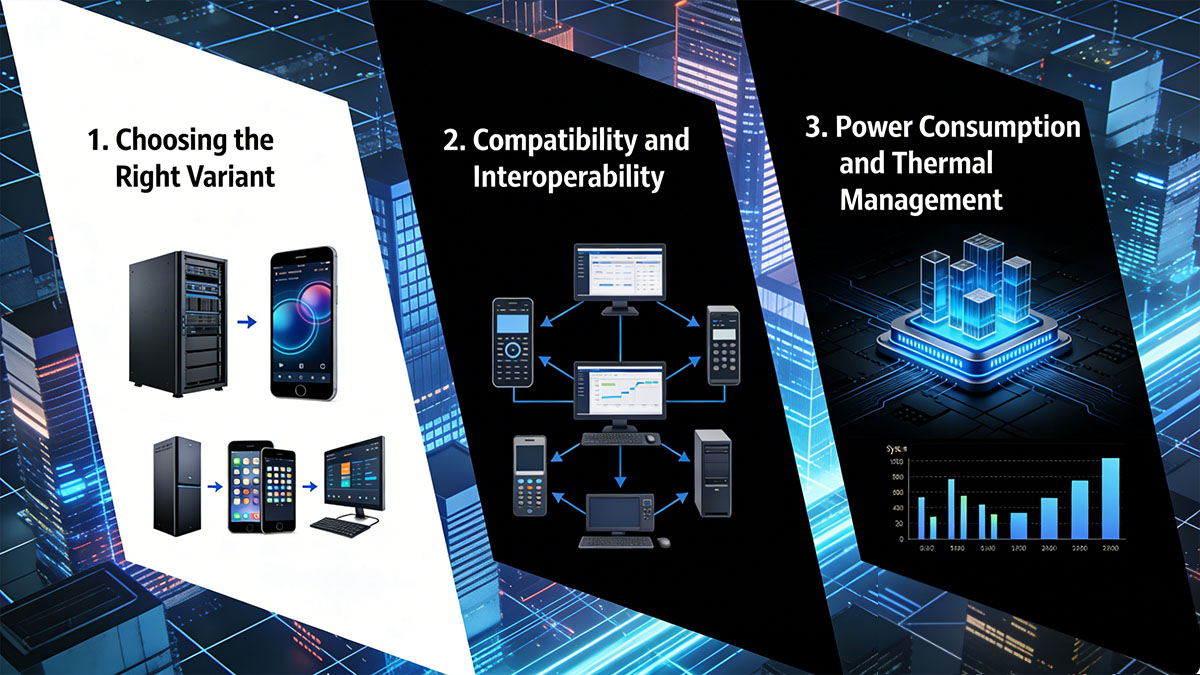
Choosing the Right Variant
Selecting the appropriate 10GBASE-R variant is crucial for balancing reach, performance, and cost. The decision depends on fiber type, distance, and deployment environment.
Key decision factors:
- Distance Requirements:
- SR for short distances up to 300–400m on multimode fiber
- LR for medium distances up to 10km on single-mode fiber
- ER for extended distances up to 40km
- LRM for legacy multimode fiber up to ~220m
- Fiber Infrastructure:
- Availability of single-mode or multimode fiber
- Fiber quality and mode type (OM3/OM4 vs older MMF)
- Cost Considerations:
- Higher optical power modules (ER) are more expensive
- SR modules typically offer lower cost and easier deployment
Choosing the right variant ensures efficiency while avoiding unnecessary expense and complexity.
Compatibility and Interoperability
Although IEEE compliance ensures broad interoperability, validating compatibility with network equipment is essential to avoid link failures or degraded performance.
Best practices include:
- Confirm switch or router support for the chosen 10GBASE-R variant
- Verify optical transceiver modules compliance with IEEE 802.3ae
- Test link performance under expected load conditions
- Ensure firmware and driver compatibility for network devices
Proper validation minimizes risks of mismatched modules and ensures predictable performance across multi-vendor environments.
Power Consumption and Thermal Management
High-speed 10GBASE-R SFP+ optical modules can generate significant heat, especially in dense rack environments. Effective thermal planning is essential to maintain reliability.
Considerations:
- Evaluate power consumption per module and per switch port
- Plan adequate airflow and cooling within racks and enclosures
- Space modules appropriately to reduce heat accumulation
- Monitor temperature and performance during high traffic periods
| Factor |
Impact |
Recommended Action |
| Module Power |
Heat generation |
Ensure sufficient cooling and spacing |
| Rack Density |
Airflow restriction |
Optimize module placement and airflow paths |
| Fiber Type |
Attenuation and loss |
Use high-quality fiber to reduce signal degradation |
Managing power and thermal conditions prevents signal degradation, reduces module failure rates, and ensures consistent 10GbE performance.
? Limitations and Challenges
While 10GBASE-R offers efficient 10GbE performance and broad applicability, it comes with inherent limitations that network designers must consider. These limitations primarily involve cost, distance, fiber quality, installation, and scalability. Understanding these constraints is critical to ensuring reliable and future-proof network deployments.
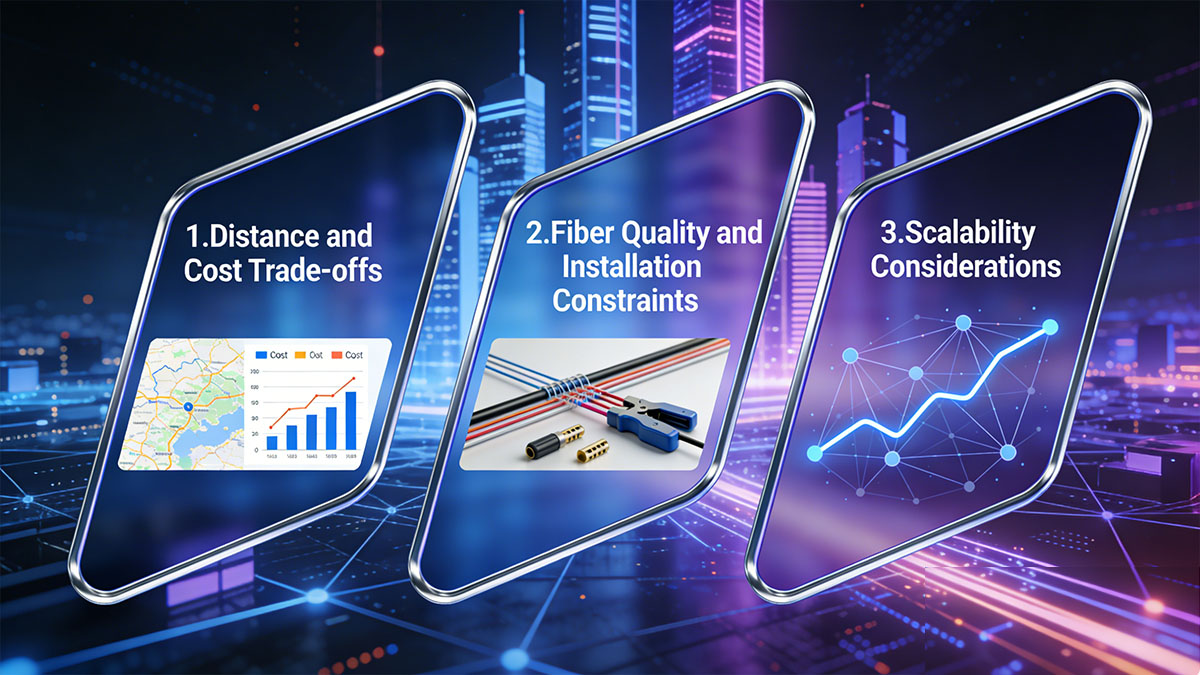
Distance and Cost Trade-offs
Longer reach 10GBASE-R links, such as LR and ER variants, inevitably involve higher costs and infrastructure considerations. The trade-off between distance and cost must be carefully managed.
- Higher-cost optics: LR and ER transceivers require more powerful lasers and precise optics, increasing equipment expenses.
- Infrastructure upgrades: Longer links may necessitate improved fiber, repeaters, or dispersion compensation to maintain signal integrity.
- Planning considerations: Evaluating link budgets and optical losses is essential before deployment to avoid costly post-installation fixes.
By balancing reach requirements against cost, network engineers can optimize deployment efficiency without overprovisioning.
Fiber Quality and Installation Constraints
The performance of 10GBASE-R links is highly dependent on fiber quality and proper installation practices. Poor fiber can severely impact signal integrity, limiting the achievable distance and increasing error rates.
- Sensitivity to signal loss and dispersion: 10GBASE-R requires minimal attenuation and precise alignment, especially for longer-range LR and ER links.
- Importance of proper cable management: Bends, splices, or connectors can introduce losses that degrade link performance. Structured installation, including adherence to bend radius limits and clean connector handling, is critical.
- Maintenance considerations: Regular inspection and testing help detect early signs of fiber degradation before network performance is affected.
Attention to fiber quality and installation practices ensures predictable 10GBASE-R operation and reduces long-term maintenance costs.
Scalability Considerations
As networks evolve toward higher-speed standards, 10GBASE-R deployments face challenges related to scalability and legacy integration.
- Transition to 25G SFP28, 40G QSFP+, and 100G QSFP28 technologies: Single-lane 10GBASE-R links may need replacement or aggregation to support next-generation speeds.
- Legacy system integration: Existing multimode or single-mode fiber infrastructure may not be compatible with higher-speed Ethernet, requiring upgrades or complex migration planning.
- Planning for future growth: Engineers must consider fiber type, link budgets, and equipment compatibility when designing 10GBASE-R networks to reduce future upgrade costs.
Proactive planning and awareness of scalability limits allow 10GBASE-R deployments to serve as a stable bridge toward higher-speed Ethernet without disrupting existing services.
? Future Trends and Evolution Beyond 10GBASE-R
10GBASE-R has established a strong foundation for high-speed Ethernet, but as network demands grow, its architecture and principles are influencing the evolution toward higher-speed and more flexible Ethernet standards. Understanding these trends helps network designers plan long-term infrastructure strategies.

Migration to Higher-Speed Ethernet
The fundamental 64b/66b encoding and PCS architecture of 10GBASE-R serve as the basis for newer Ethernet standards such as 25GBASE-R, 50GBASE-R, and 100GBASE-R. These standards maintain the reliability and efficiency of 10GBASE-R while supporting higher throughput.
- Multi-lane approaches:
- 25G SFP28 and 50G SFP56 links often use single or multiple 10GBASE-R-like lanes aggregated for higher bandwidth.
- 100GBASE-R commonly uses four 25G lanes, leveraging the same encoding logic.
- Efficiency retention: Higher-speed PHYs continue to minimize encoding overhead to preserve usable bandwidth.
- Backward compatibility: Networks can integrate 10GBASE-R with upgraded lanes to ensure smooth migration without full infrastructure replacement.
This trend allows enterprises and data centers to scale bandwidth while leveraging existing 10G investments.
Integration with Cloud, AI, and High-Performance Computing
Modern workloads demand low-latency, high-throughput connectivity. 10GBASE-R’s design principles are directly applied in cloud, AI, and HPC environments:
- Low-latency aggregation: Efficient encoding reduces serialization and processing delays.
- Dense data center interconnects: Short- and medium-range 10GBASE-R links are used alongside faster lanes for spine-leaf and rack aggregation.
- AI and analytics workloads: Consistent, high-throughput links support real-time data movement for training and inference processes.
As applications continue to demand ultra-high data rates, 10GBASE-R serves as a reliable backbone while higher-speed PHYs handle bulk traffic.
Advancements in Optical and Copper PHYs
The evolution of physical media is shaping the future of 10GBASE-R-derived technologies:
| Trend |
Description |
Impact on Deployment |
| Single-mode fiber optimization |
Longer reach with lower loss |
Enables efficient metro and carrier links using 10G principles |
| Low-power optics |
Reduced thermal and energy footprint |
Supports high-density deployments in modern data centers |
| Multi-lane copper and DAC improvements |
Short-range, high-speed interconnects |
Extends usability of existing copper infrastructure for 25G and 40G |
These advancements allow future Ethernet networks to maintain efficiency and reliability while scaling to higher speeds and more complex topologies.
? Conclusion
10GBASE-R has proven to be a versatile and reliable standard for 10 Gigabit Ethernet, combining high efficiency, low latency, and broad compatibility across various deployment scenarios. From data centers and enterprise backbones to metro and carrier networks, its variants—SR, LR, ER, and LRM—allow network architects to optimize performance based on distance, fiber type, and application requirements. While considerations such as cost, fiber quality, and scalability need careful planning, 10GBASE-R’s foundational architecture continues to influence the evolution of higher-speed Ethernet, including 25G, 40G, and 100G deployments.
For professionals seeking high-quality optical transceivers and modules compatible with 10GBASE-R networks, visit the LINK-PP Official Store to explore a wide range of reliable, standards-compliant solutions designed for both current and future network requirements.