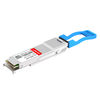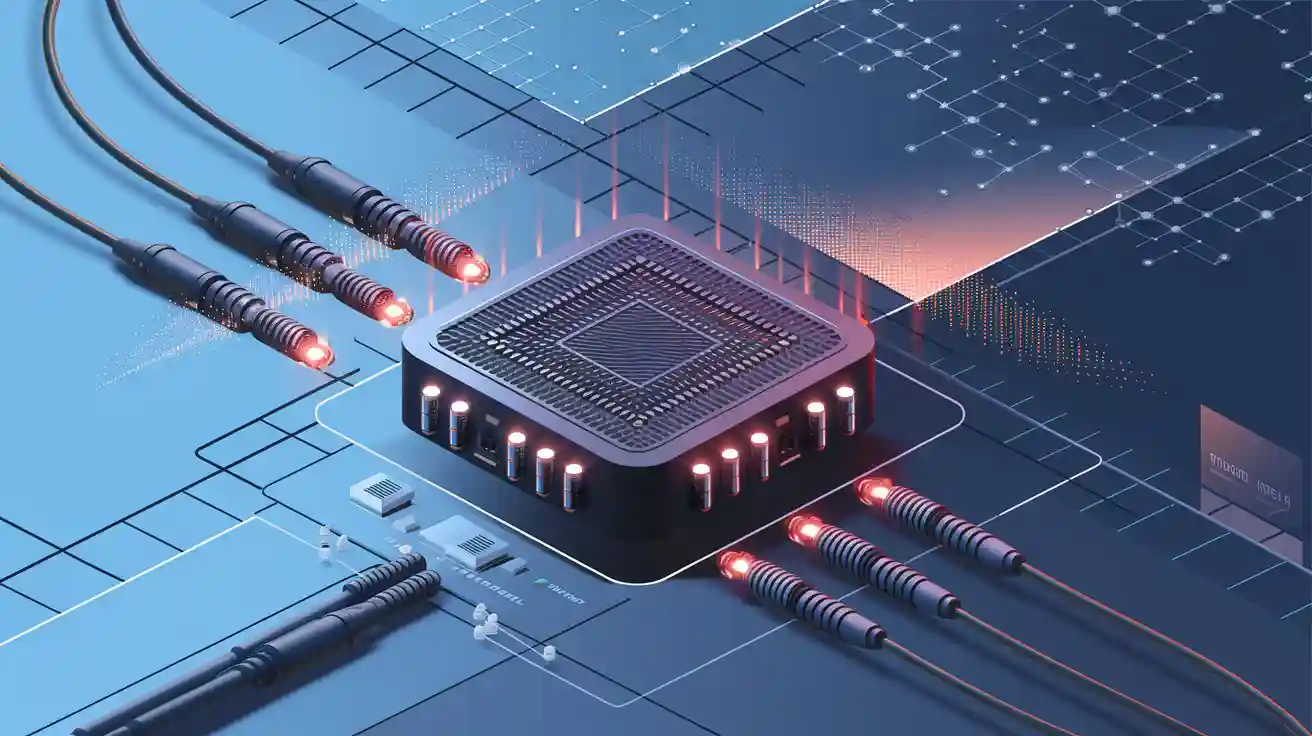
Ethernet has evolved significantly over the past several decades, but one standard continues to appear on nearly every network device: 10 100 1000 Base T. This specification is commonly seen on routers, switches, computers, and network interface cards, indicating that a device supports multiple Ethernet speeds over copper twisted-pair cables. For many modern networks, it represents the baseline for reliable wired connectivity.
In practical terms, 10 100 1000 Base T refers to Ethernet ports capable of operating at 10Mbps, 100Mbps, or 1000Mbps (1Gbps) using standard RJ45 connectors and twisted-pair cabling such as Cat5e or Cat6. Through auto-negotiation, devices automatically select the highest supported speed, allowing older and newer equipment to coexist within the same network infrastructure. This flexibility has made Gigabit Ethernet over copper one of the most widely deployed networking technologies in homes, offices, and enterprise LAN environments.
Understanding how 10BASE-T, 100BASE-TX, and 1000BASE-T evolved—and how they differ in speed, cabling requirements, and transmission methods—helps clarify why this technology remains relevant today. The following sections explain the meaning of 10 100 1000 Base T, the technical principles behind it, and the network scenarios where it is most commonly used.
? What Does 10 100 1000 Base T Mean
10 100 1000 Base T refers to Ethernet interfaces that support three different transmission speeds—10Mbps, 100Mbps, and 1000Mbps—over twisted-pair copper cabling using RJ45 connectors. Devices labeled with this specification can automatically negotiate the highest compatible speed between connected endpoints, enabling backward compatibility across multiple generations of Ethernet technology.
In practical networking environments, this means a single Ethernet port can communicate with both legacy equipment and modern Gigabit devices without requiring separate interfaces. The term itself follows a standardized Ethernet naming convention that describes the data rate, signaling method, and physical transmission medium.
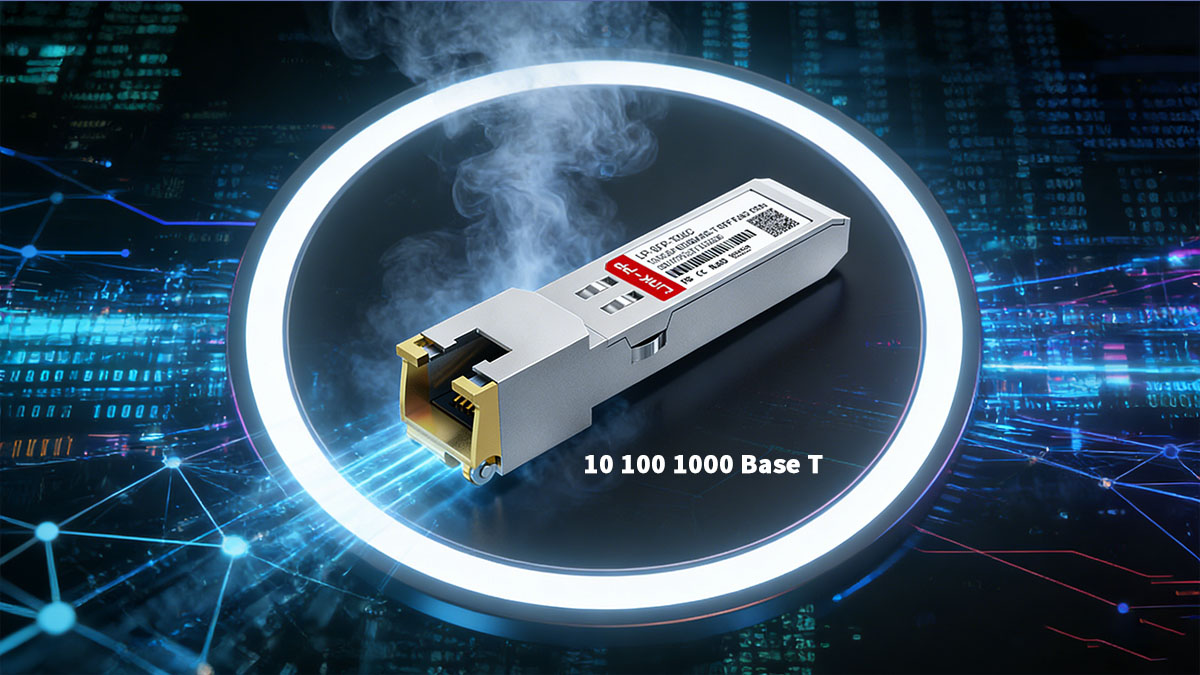
Breaking Down the Ethernet Naming Convention
The naming structure used in Ethernet standards provides a concise description of how a particular technology operates. Each part of “10 100 1000 Base T” represents a specific technical characteristic of the network link.
The components of the naming convention can be interpreted as follows:
| Component |
Meaning |
Example in Ethernet |
| 10 / 100 / 1000 |
Data transmission rate in megabits per second |
10Mbps, 100Mbps, 1Gbps |
| Base |
Baseband signaling method |
Single channel transmission |
| T |
Twisted-pair copper cabling |
Cat5e, Cat6 Ethernet cables |
The speed value indicates the maximum theoretical throughput supported by the Ethernet standard. As network demands increased over time, the industry introduced higher-speed versions while maintaining the same twisted-pair copper infrastructure.
The term Base refers to baseband signaling, which means the entire cable bandwidth is used to transmit a single data signal rather than multiple frequency channels. This approach simplifies Ethernet communication and has been used across most copper-based Ethernet standards.
The letter T indicates that the physical medium is twisted-pair copper cable. These cables consist of pairs of insulated wires twisted together to reduce electromagnetic interference and crosstalk, enabling reliable data transmission across local networks.
Evolution from Fast Ethernet to Gigabit Ethernet
The development of 10M-T, 100M-T, and 1G-T reflects the gradual increase in bandwidth requirements within local area networks. As applications such as file sharing, video streaming, and cloud services became more demanding, Ethernet standards evolved to deliver higher speeds while preserving compatibility with existing infrastructure.
The progression of these Ethernet standards can be summarized as follows:
| Ethernet Standard |
Maximum Speed |
Typical Network Era |
| 10BASE-T |
10Mbps |
Early Ethernet LANs |
| 100BASE-T |
100Mbps |
Fast Ethernet deployments |
| 1000BASE-T |
1Gbps |
Modern Gigabit networks |
10BASE-T was one of the earliest twisted-pair Ethernet standards, widely adopted in office networks during the 1990s. It replaced earlier coaxial cable systems and introduced the familiar RJ45 Ethernet port.
100BASE-T later increased network throughput tenfold, supporting faster data transfers for growing enterprise workloads and improving performance for networked applications.
1000BASE-T, commonly known as Gigabit Ethernet, further expanded bandwidth to 1Gbps while still using standard copper cabling. This standard introduced more advanced signal processing techniques and simultaneous transmission over all four twisted pairs, enabling significantly higher throughput without changing the physical connector type.
Because these standards share the same basic cabling architecture and connector format, modern Ethernet devices can automatically negotiate the highest supported speed when establishing a link. This backward compatibility is a key reason why 10 100 1000 Base T remains a common specification on network hardware today.
? Speed Differences Between 10BASE-T, 100BASE-T, and 1000BASE-T
10BASE-T, 100BASE-T, and 1000BASE-T represent three generations of Ethernet standards that differ primarily in data transmission speed, signaling methods, and cable utilization. While all three operate over twisted-pair copper cabling with RJ45 connectors and share a maximum distance of 100 meters, each standard was designed to meet the bandwidth requirements of its era.
The most significant difference is throughput. 10BASE-T module supports 10Mbps, 100BASE-T module increases capacity to 100Mbps, and 1000BASE-T module delivers 1Gbps performance. As network applications such as file transfers, streaming, virtualization, and cloud services became more data-intensive, higher-speed Ethernet standards were introduced to maintain efficient LAN performance.
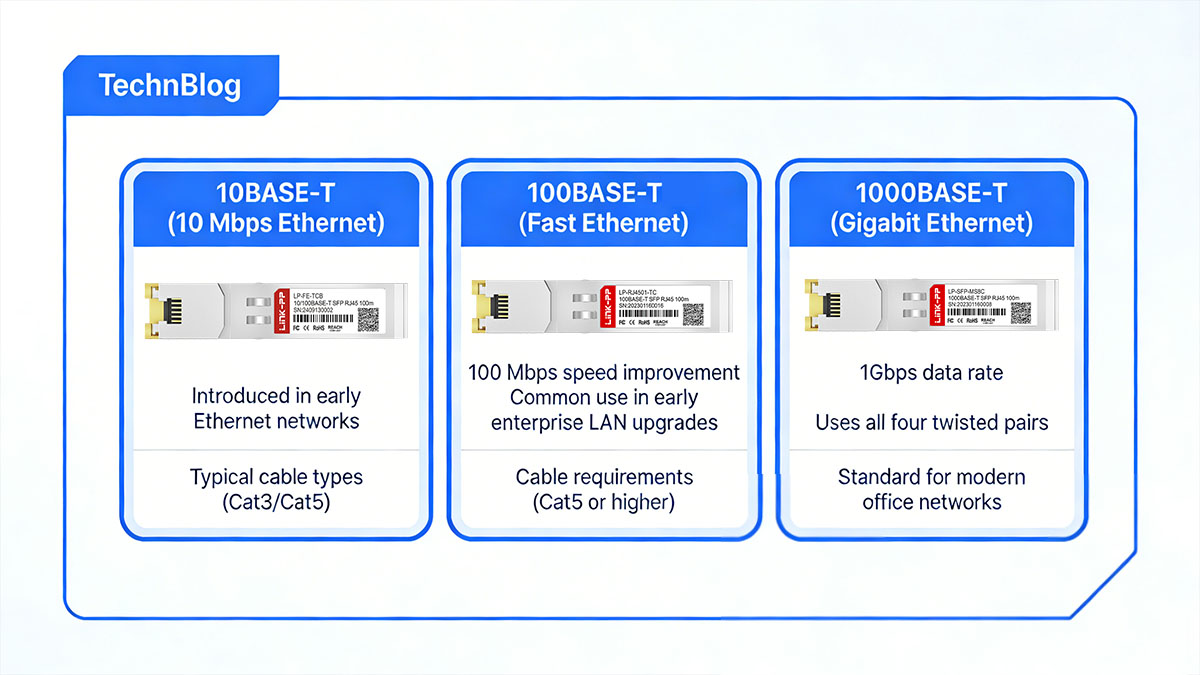
The core characteristics of these three Ethernet standards are summarized below.
| Ethernet Standard |
Maximum Data Rate |
Twisted Pairs Used |
Typical Cable Type |
| 10BASE-T |
10Mbps |
2 pairs |
Cat3 or higher |
| 100BASE-T |
100Mbps |
2 pairs |
Cat5 or higher |
| 1000BASE-T |
1Gbps |
4 pairs |
Cat5e or higher |
Although they share the same RJ45 interface and general cabling structure, their internal transmission technologies differ significantly. Higher-speed standards require more advanced encoding methods and more efficient use of available cable bandwidth.
10BASE-T (10 Mbps Ethernet)
10BASE-T was one of the first Ethernet standards designed specifically for twisted-pair copper cabling. It enabled Ethernet networks to move away from coaxial cables and toward structured cabling systems commonly used in office environments.
This standard operates at a data rate of 10Mbps and uses two twisted pairs within the cable—one pair for transmitting data and another for receiving. The remaining pairs are unused. Because of its relatively low bandwidth requirements, 10BASE-T transceiver can function on older cable categories such as Cat3.
Typical characteristics of 10BASE-T RJ45 include:
-
Data rate of 10Mbps
-
Half-duplex or full-duplex operation
-
Two twisted pairs used for transmission
-
Maximum cable distance of 100 meters
While largely replaced by faster Ethernet technologies, 10BASE-T may still appear in legacy devices, industrial systems, or older network equipment.
100BASE-T (Fast Ethernet)
100BASE-T significantly increased Ethernet throughput by raising the transmission speed to 100Mbps. This standard became widely adopted in enterprise networks during the late 1990s and early 2000s as organizations required faster file transfers and improved application performance.
Like 10BASE-T, 100BASE-T transceiver uses two twisted pairs for communication: one pair for transmitting and one for receiving. However, the higher data rate requires improved signal encoding and better cable quality, typically Cat5 or higher.
Key characteristics of 100BASE-T RJ45 include:
-
Data rate of 100Mbps
-
Two twisted pairs used for data transmission
-
Support for full-duplex communication
-
Maximum cable distance of 100 meters
Fast Ethernet remained the dominant LAN technology for many years and laid the foundation for the transition to Gigabit Ethernet.
1000BASE-T (Gigabit Ethernet)
1000BASE-T represents a major advancement in copper Ethernet technology, increasing throughput to 1Gbps while still maintaining compatibility with the same RJ45 connector and structured cabling systems.
Unlike earlier standards, 1000BASE-T transceiver uses all four twisted pairs simultaneously for bidirectional data transmission. This allows the network to achieve significantly higher bandwidth while maintaining the same 100-meter maximum link distance.
The primary characteristics of 1000BASE-T RJ45 include:
-
Data rate of 1Gbps
-
Four twisted pairs used simultaneously
-
Full-duplex communication on all pairs
-
Advanced signal processing and encoding techniques
Technologies such as echo cancellation, digital signal processing, and PAM-5 encoding enable Gigabit Ethernet to transmit large volumes of data efficiently over copper cabling. As a result, 1000BASE-T has become the standard Ethernet speed for most modern local area networks.
Because Ethernet devices support automatic speed negotiation, a network interface labeled 10 100 1000 Base T can dynamically select the highest supported speed between connected devices. This capability ensures compatibility across multiple generations of Ethernet equipment while maximizing available bandwidth.
? Cabling Requirements for 10 100 1000 Base T
10 100 1000 Base T transceiver operates over twisted-pair copper cabling and relies on standardized cable categories to ensure stable data transmission. Although these Ethernet standards share the same RJ45 connector and maximum link distance of 100 meters, the required cable quality varies depending on the supported data rate. Higher transmission speeds require better shielding, lower signal attenuation, and improved resistance to crosstalk.
In most modern network deployments, Cat5e or Cat6 cables are commonly used to support Gigabit Ethernet while maintaining compatibility with lower-speed standards such as 10BASE-T and 100BASE-T.
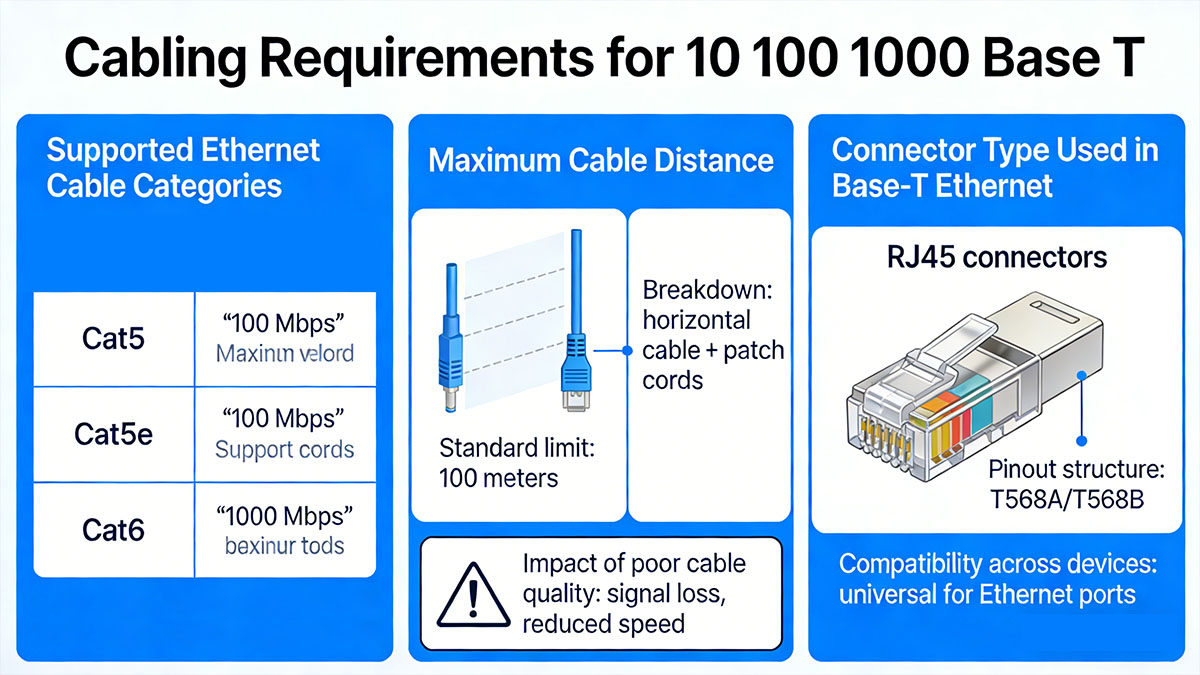
Supported Ethernet Cable Categories
Different Ethernet speeds are designed to operate with specific cable categories. While lower-speed standards may function on older cabling, Gigabit Ethernet typically requires higher-quality twisted-pair cables to maintain reliable performance.
The relationship between Ethernet standards and cable categories is summarized below.
| Ethernet Standard |
Typical Cable Category |
Maximum Supported Speed |
| 10BASE-T |
Cat3, Cat5, Cat5e |
10Mbps |
| 100BASE-T |
Cat5, Cat5e |
100Mbps |
| 1000BASE-T |
Cat5e, Cat6 |
1Gbps |
Although 1000BASE-T can sometimes operate on older Cat5 cables under ideal conditions, Cat5e is generally recommended because it provides improved performance characteristics such as reduced crosstalk and better signal integrity. Cat6 cables offer additional headroom and are often used in newer installations where future upgrades may be required.
Choosing the appropriate cable category helps ensure stable network performance, especially in environments with high traffic or electrical interference.
Maximum Cable Distance
One of the defining characteristics of twisted-pair Ethernet standards is the standardized maximum transmission distance of 100 meters. This limit applies to 10BASE-T SFP, 100BASE-T SFP, and 1000BASE-T SFP connections.
The typical Ethernet channel is composed of two main segments:
| Segment Type |
Typical Length |
Description |
| Horizontal cable |
Up to 90 meters |
Permanent cable run inside walls or ceilings |
| Patch cords |
Up to 10 meters total |
Short cables connecting devices to wall outlets or switches |
This structure ensures that the total channel length does not exceed 100 meters. Exceeding this limit can lead to signal degradation, packet loss, or unstable network connections.
In larger buildings or campus environments where longer distances are required, fiber optic Ethernet is often used instead of copper cabling.
Connector Type Used in Base-T Ethernet
All 10 100 1000 Base T Ethernet connections use the RJ45 connector, which has become the standard interface for copper-based networking equipment. This connector provides eight electrical contacts that correspond to the eight wires inside a twisted-pair Ethernet cable.
The typical characteristics of RJ45 Ethernet connectors include:
-
Eight-pin modular connector design
-
Compatibility with Cat5, Cat5e, Cat6, and higher cable categories
-
Support for Power over Ethernet (PoE) in many network deployments
-
Widely supported across switches, routers, computers, and network interface cards
Inside the cable, the eight wires are organized into four twisted pairs. Twisting the wires helps reduce electromagnetic interference and minimizes crosstalk between pairs, which is essential for maintaining reliable high-speed data transmission.
Because the RJ45 interface and twisted-pair structure remain consistent across multiple Ethernet generations, network infrastructure built for 10BASE-T Ethernet module or 100BASE-T Ethernet module can often be upgraded to 1000BASE-T Ethernet module without replacing the entire cabling system, provided the cable quality meets the necessary specifications.
? 10 100 1000 Base T in Copper SFP Modules
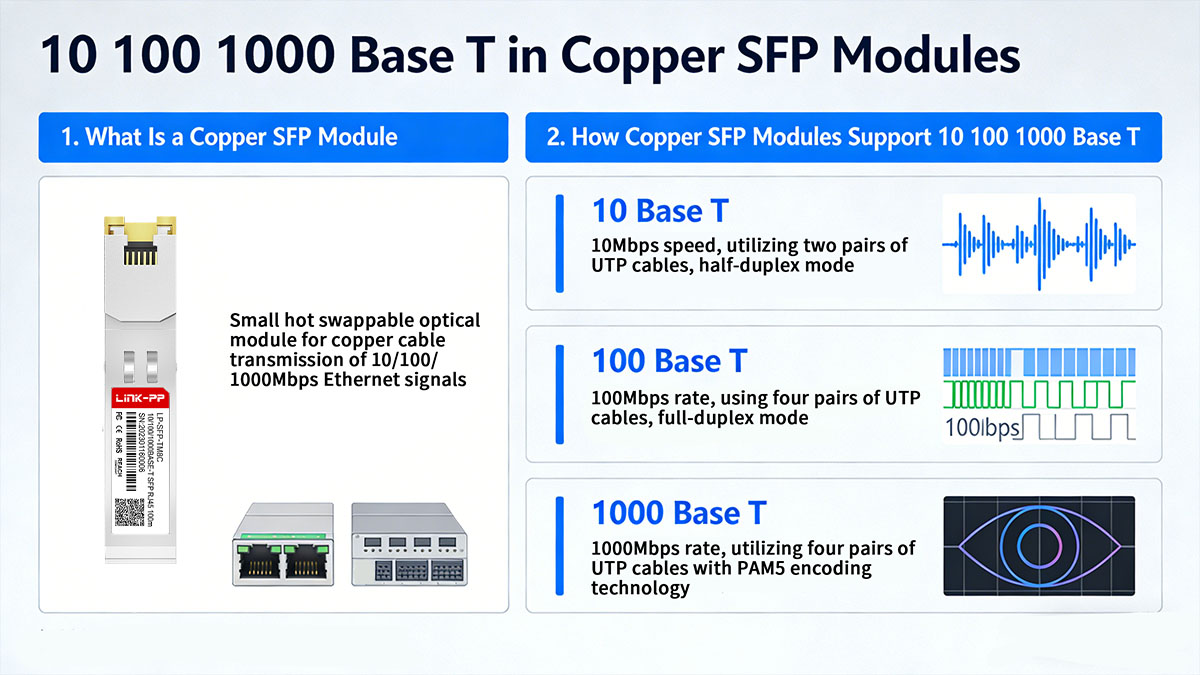
10 100 1000 Base T connectivity can also be delivered through copper SFP modules, which provide an RJ45 Ethernet interface inside a standard SFP slot. These modules allow switches or routers designed for optical transceivers to connect directly to twisted-pair copper networks while maintaining support for 10Mbps, 100Mbps, and 1Gbps Ethernet speeds.
Copper SFP modules are widely used in enterprise and data center environments where networking equipment primarily relies on SFP ports but still needs compatibility with traditional RJ45 Ethernet connections. By supporting Ethernet auto-negotiation, these modules automatically match the highest speed supported by connected devices.
What Is a Copper SFP Module
A copper SFP module is a small pluggable transceiver that converts an SFP interface into a standard RJ45 Ethernet port. Instead of transmitting optical signals through fiber, the module contains a physical layer (PHY) chip that enables electrical communication over twisted-pair copper cables.
Unlike fiber SFP transceivers, which require optical cabling, copper SFP modules connect directly to Ethernet patch cables such as Cat5e or Cat6. This design makes it possible to integrate copper-based Ethernet devices into switching platforms that mainly provide SFP expansion slots.
Typical characteristics of copper SFP modules supporting 10 100 1000 Base T are summarized below.
| Feature |
Description |
Typical Value |
| Supported speeds |
Auto-negotiated Ethernet rates |
10Mbps / 100Mbps / 1000Mbps |
| Connector type |
Twisted-pair Ethernet interface |
RJ45 |
| Maximum cable distance |
Standard copper Ethernet link |
100 meters |
| Cable compatibility |
Ethernet twisted-pair cabling |
Cat5e / Cat6 |
These modules operate according to the same Ethernet standards as traditional RJ45 ports, which allows them to integrate seamlessly into existing LAN environments.
How Copper SFP Modules Support 10 100 1000 Base T
Copper SFP modules support multiple Ethernet speeds through integrated auto-negotiation and PHY processing. When a device connects to the module using an Ethernet cable, the module and the remote device exchange capability information to determine the highest mutually supported speed.
The connection process typically includes the following steps:
-
The module detects the presence of a copper Ethernet link
-
Both devices exchange supported speed and duplex capabilities
-
Auto-negotiation selects the highest compatible speed
-
The link is established using the selected Ethernet standard
This process allows a single SFP port to support devices operating at 10BASE-T, 100BASE-T, or 1000BASE-T without requiring manual configuration.
? How 1000BASE-T Transmits Data Over Copper
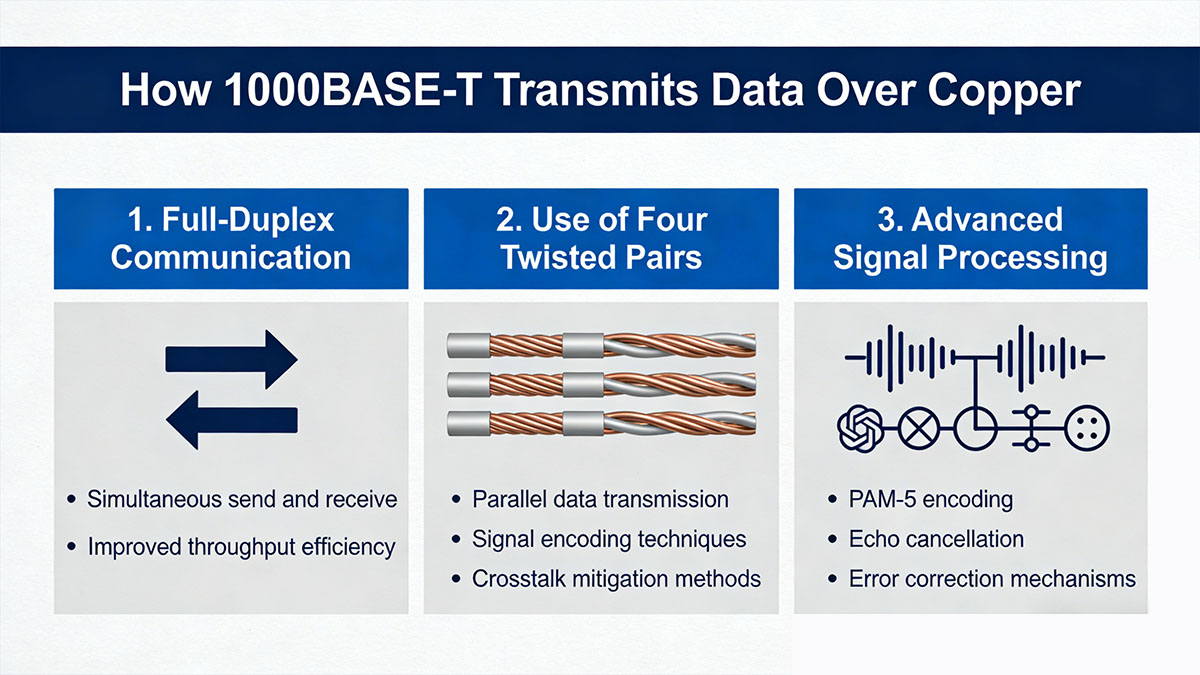
1000BASE-T enables Gigabit Ethernet transmission over standard twisted-pair copper cables by combining parallel data transmission, advanced encoding techniques, and digital signal processing. Unlike earlier Ethernet standards that used separate wire pairs for sending and receiving data, 1000BASE-T enables bidirectional communication across all four twisted pairs simultaneously—an approach conceptually similar to BiDi optical transceivers, which also transmit and receive signals over a single medium. This approach makes it possible to achieve a total throughput of 1Gbps while maintaining the same 100-meter maximum cable distance used by other Base-T Ethernet technologies.
Because copper cabling introduces interference, echo, and signal attenuation at higher frequencies, 1000BASE-T relies on sophisticated physical-layer technologies to maintain reliable data communication.
Full-Duplex Communication
1000BASE-T operates exclusively in full-duplex mode, meaning devices can transmit and receive data at the same time. This eliminates the need for collision detection mechanisms used in early shared Ethernet networks and allows both endpoints to utilize the full bandwidth of the connection.
The duplex behavior of common twisted-pair Ethernet standards can be summarized below.
| Ethernet Standard |
Duplex Modes Supported |
Transmission Behavior |
| 10BASE-T |
Half or full duplex |
Separate transmit and receive pairs |
| 100BASE-T |
Half or full duplex |
Separate transmit and receive pairs |
| 1000BASE-T |
Full duplex only |
Bidirectional transmission on all pairs |
Because data flows simultaneously in both directions, full-duplex communication significantly improves network efficiency and reduces latency in modern switched Ethernet environments.
Use of Four Twisted Pairs
Another major difference between Gigabit Ethernet and earlier copper Ethernet standards is the use of all four wire pairs within the cable. While 10BASE-T and 100BASE-T use only two pairs, 1000BASE-T distributes data transmission across four pairs at the same time.
Using multiple pairs increases the total data throughput while maintaining compatibility with standard Ethernet cabling.
| Ethernet Standard |
Twisted Pairs Used |
Transmission Structure |
| 10BASE-T |
2 pairs |
One transmit pair, one receive pair |
| 100BASE-T |
2 pairs |
One transmit pair, one receive pair |
| 1000BASE-T |
4 pairs |
Bidirectional transmission on each pair |
Each twisted pair carries a portion of the data stream in both directions simultaneously. This parallel transmission model allows the network to achieve Gigabit speeds without requiring a different connector or cable layout.
However, sending and receiving signals on the same wire pair introduces echo and interference challenges. To address this, Gigabit Ethernet uses advanced signal processing techniques that separate transmitted signals from received signals and maintain clear communication.
Advanced Signal Processing
To achieve reliable 1Gbps transmission over copper cables, 1000BASE-T RJ45 SFP uses several advanced encoding and signal management techniques. These technologies help reduce interference between signals and ensure accurate data delivery across the cable.
Key technologies used in Gigabit Ethernet include:
-
PAM-5 encoding, which uses five signal voltage levels to represent multiple bits per symbol
-
Echo cancellation, which separates outgoing and incoming signals traveling on the same wire pair
-
Crosstalk cancellation, which reduces interference between adjacent twisted pairs
-
Forward error correction, which detects and corrects transmission errors
PAM-5 modulation allows each symbol transmitted over the cable to represent more information than traditional binary signaling. Combined with simultaneous transmission across four pairs, this encoding method enables the system to reach an aggregate data rate of 1Gbps.
Digital signal processors inside Ethernet PHY chips continuously analyze the signal environment, adjusting parameters such as equalization and noise cancellation in real time. These mechanisms allow 1000BASE-T SFP module to maintain stable performance even in complex electromagnetic environments commonly found in office and enterprise network installations.
Through the combination of full-duplex operation, four-pair transmission, and advanced signal processing, 1000BASE-T copper SFP successfully delivers high-speed Ethernet connectivity using the widely deployed twisted-pair copper infrastructure.
? Advantages of 10 100 1000 Base T Ethernet
10 100 1000 Base T Ethernet remains one of the most widely deployed networking technologies because it combines compatibility, affordability, and ease of deployment. By supporting multiple Ethernet speeds over standard twisted-pair copper cabling, this technology allows networks to scale gradually while maintaining interoperability with existing devices.
For home networks, enterprise LANs, and many access-layer connections, 10 100 1000 Base T module provides a practical balance between performance and infrastructure requirements.
Backward Compatibility
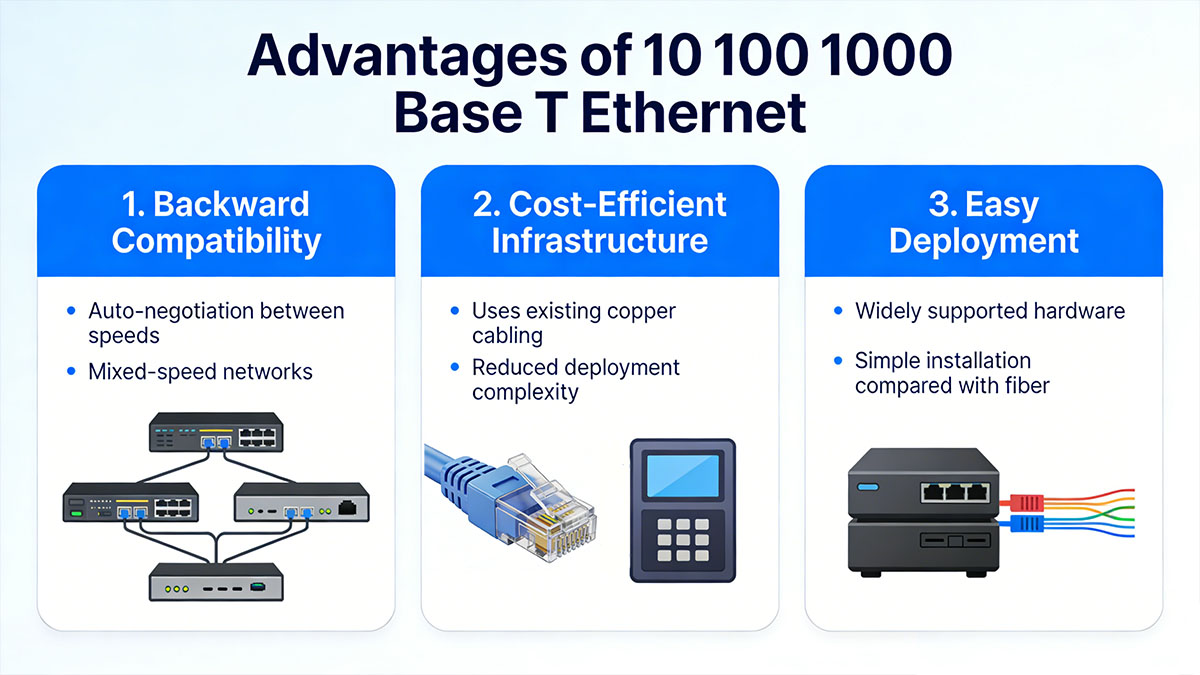
One of the most important advantages of 10 100 1000 Base T RJ45 module is its strong backward compatibility across multiple Ethernet generations. Devices supporting this standard can communicate with equipment operating at 10Mbps, 100Mbps, or 1Gbps speeds without requiring manual configuration.
This compatibility is enabled by Ethernet auto-negotiation, which automatically selects the highest supported speed between two connected devices.
| Device Capability |
Negotiated Link Speed |
Result |
| 1000BASE-T device + 1000BASE-T device |
1Gbps |
Maximum performance |
| 1000BASE-T device + 100BASE-T device |
100Mbps |
Compatible operation |
| 1000BASE-T device + 10BASE-T device |
10Mbps |
Legacy device support |
Because of this flexibility, organizations can upgrade network equipment gradually rather than replacing all infrastructure at once.
Cost-Efficient Infrastructure
Another advantage of 10 100 1000 Base T Ethernet is the ability to use widely available copper cabling instead of more specialized transmission media. Twisted-pair Ethernet cables are inexpensive, easy to install, and already present in most buildings.
Compared with alternative networking technologies, copper Ethernet typically requires fewer specialized components.
Common cost-related benefits include:
-
Use of existing structured cabling systems
-
Lower cable and connector costs compared with optical fiber
-
Wide availability of compatible network devices
-
Simplified installation and maintenance procedures
Because most offices and residential buildings are already wired with Ethernet-compatible cables, upgrading network speeds often requires only replacing switches or network interface cards.
Easy Deployment
10 100 1000 Base T Ethernet is designed for straightforward installation and integration. Standardized connectors, cable categories, and automatic configuration features make it easy to deploy across a wide range of networking environments.
Several factors contribute to the simplicity of deployment:
-
Standard RJ45 transceiver used across most network devices
-
Support for auto-negotiation and automatic duplex detection
-
Compatibility with common Ethernet cable categories such as Cat5e and Cat6
-
Consistent maximum link distance of 100 meters
These characteristics allow network administrators to deploy wired connections quickly without requiring specialized optical equipment or complex configuration procedures.
Because of its combination of compatibility, affordability, and simplicity, 10 100 1000 Base T Ethernet continues to serve as the foundation for many wired local area networks. Even as higher-speed Ethernet technologies emerge, Gigabit Ethernet over copper remains a reliable and practical solution for a large portion of network connectivity requirements.
? Limitations of 10 100 1000 Base T
Although 10 100 1000 Base T Ethernet is widely used in modern networks, it also has several technical limitations compared with newer Ethernet standards and alternative transmission media. These limitations are primarily related to transmission distance, electromagnetic interference, and bandwidth scalability.
Understanding these constraints helps network designers determine when copper Ethernet is appropriate and when other technologies, such as fiber optic Ethernet or multi-gigabit standards, may be more suitable.
Distance Restrictions
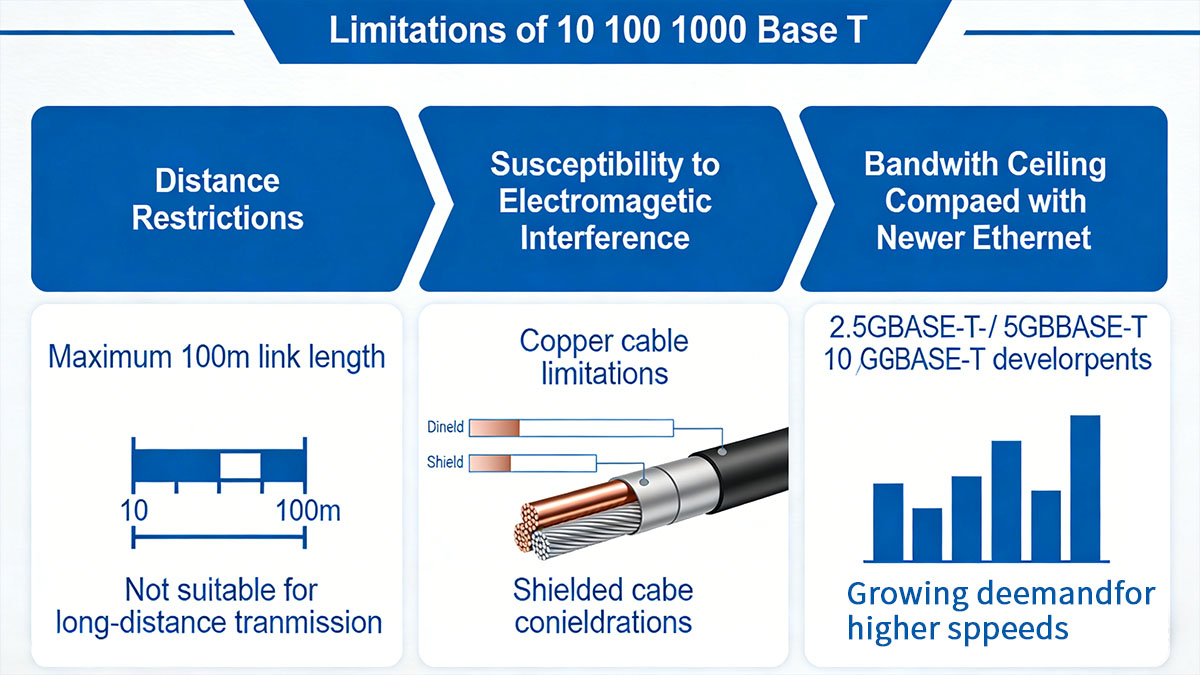
One of the main limitations of 10 100 1000 Base T Ethernet is the maximum transmission distance supported by twisted-pair copper cabling. All three standards—10BASE-T, 100BASE-T, and 1000BASE-T—share the same maximum link distance of 100 meters.
This limitation is defined by Ethernet cabling standards and is necessary to maintain signal integrity and reliable communication.
| Ethernet Standard |
Maximum Distance |
Transmission Medium |
| 10BASE-T |
100 meters |
Twisted-pair copper |
| 100BASE-T |
100 meters |
Twisted-pair copper |
| 1000BASE-T |
100 meters |
Twisted-pair copper |
In larger environments such as campuses, data centers, or industrial facilities, this distance constraint can require additional networking equipment such as intermediate switches or media converters. For longer connections, fiber optic Ethernet is typically used because it supports significantly greater transmission distances.
Susceptibility to Electromagnetic Interference
Copper-based Ethernet cables are more susceptible to electromagnetic interference (EMI) compared with fiber optic cables. Electrical noise generated by nearby equipment, power lines, or industrial machinery can affect signal quality and potentially reduce network reliability.
Common sources of interference in copper Ethernet installations include:
-
Electrical motors and heavy machinery
-
High-voltage power cables
-
Radio frequency devices
-
Improper cable shielding or grounding
Twisted-pair cable design helps reduce interference by twisting pairs of wires together, which minimizes electromagnetic coupling. In environments with significant electrical noise, shielded twisted-pair (STP) cables may be used to provide additional protection.
Despite these mitigation techniques, copper cabling generally remains more vulnerable to environmental interference than optical fiber.
Bandwidth Ceiling Compared with Newer Ethernet Standards
Another limitation of 10 100 1000 Base T Ethernet is its maximum bandwidth of 1Gbps. While this speed is sufficient for many applications, modern networks increasingly require higher throughput to support data-intensive workloads.
Newer Ethernet technologies have been developed to address these growing bandwidth demands.
| Ethernet Standard |
Maximum Data Rate |
Typical Use Environment |
| 1000BASE-T |
1Gbps |
General LAN connectivity |
| 2.5GBASE-T |
2.5Gbps |
High-performance office networks |
| 5GBASE-T |
5Gbps |
Enterprise wireless backhaul |
| 10GBASE-T |
10Gbps |
Data center and high-speed LAN |
As applications such as cloud computing, large-scale storage systems, and high-resolution video become more common, higher-speed Ethernet standards are increasingly deployed in core and aggregation layers of modern networks.
Despite these limitations, 10 100 1000 Base T Ethernet remains highly practical for access-layer connectivity, where its balance of performance, cost efficiency, and infrastructure compatibility continues to make it a widely adopted networking solution.
? 10 100 1000 Base T vs Other Ethernet Standards
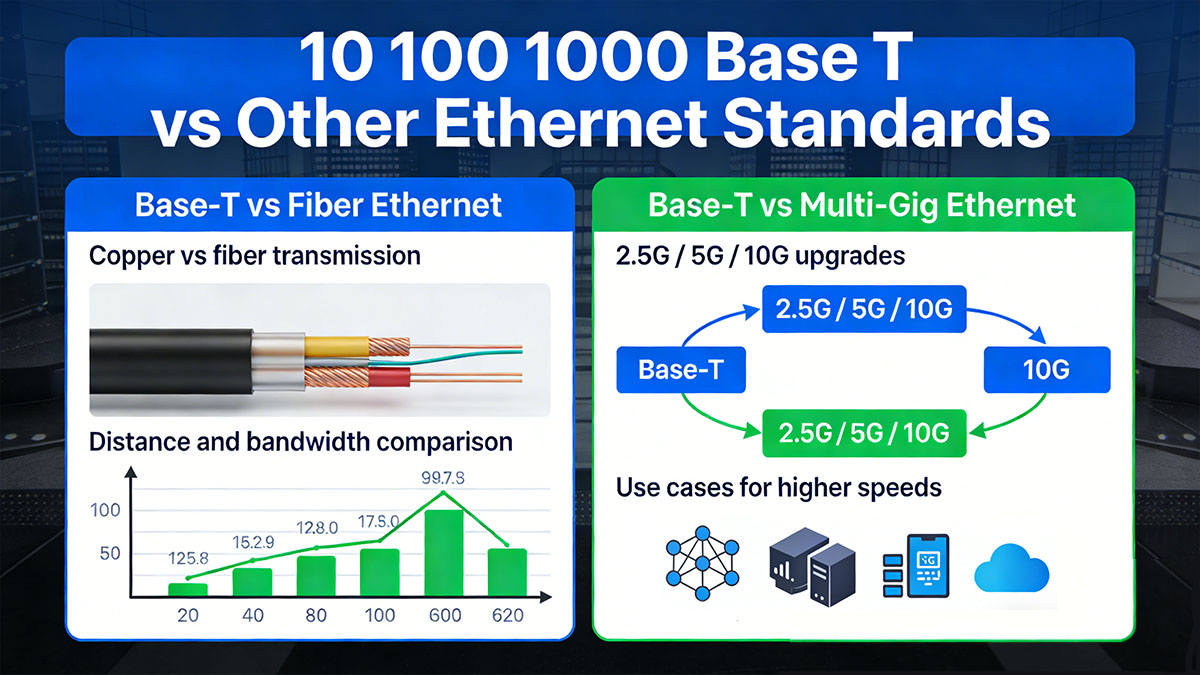
10 100 1000 Base T is one of the most widely used Ethernet technologies for local area networks, but it is not the only option available. Other Ethernet standards use different transmission media or support higher data rates to meet specific networking requirements. Comparing Base-T Ethernet with fiber-based and multi-gigabit technologies helps clarify where Gigabit copper Ethernet is most suitable.
In general, 10 100 1000 Base T copper module is commonly used for short-distance access networks, while fiber Ethernet and higher-speed standards are often deployed in backbone, aggregation, or high-performance environments.
Base-T vs Fiber Ethernet
The primary difference between Base-T Ethernet and fiber Ethernet lies in the transmission medium. Base-T standards transmit data through twisted-pair copper cables, while fiber Ethernet uses optical fibers to carry light signals.
Copper Ethernet is typically easier to deploy and more cost-effective for short-distance connections, while fiber provides advantages in distance, bandwidth, and resistance to interference.
| Feature |
10 100 1000 Base T |
Fiber Ethernet |
| Transmission medium |
Twisted-pair copper |
Optical fiber |
| Maximum typical distance |
100 meters |
Several kilometers |
| Interference resistance |
Moderate |
Very high |
| Common use |
LAN access connections |
Backbone and long-distance links |
Fiber module is often preferred in environments where longer cable runs are required, such as campus networks or inter-building connections. In contrast, Base-T module remains practical for connecting end-user devices within offices or buildings.
Another advantage of fiber is its immunity to electromagnetic interference. Because optical signals are transmitted as light rather than electrical signals, fiber links are not affected by electrical noise from nearby equipment.
Base-T vs Multi-Gig Ethernet
Another comparison involves newer multi-gigabit Ethernet standards that extend copper Ethernet speeds beyond 1Gbps. Technologies such as 2.5GBASE-T, 5GBASE-T, and 10GBASE-T were developed to support higher throughput while still using twisted-pair cabling.
These standards are designed for environments where network traffic exceeds the capacity of Gigabit Ethernet but upgrading entirely to fiber infrastructure may not be necessary.
| Ethernet Standard |
Maximum Data Rate |
Typical Use Case |
| 1000BASE-T |
1Gbps |
Standard office LAN |
| 2.5GBASE-T |
2.5Gbps |
Wi-Fi access point uplinks |
| 5GBASE-T |
5Gbps |
High-bandwidth enterprise networks |
| 10GBASE-T |
10Gbps |
Data center or aggregation layers |
Multi-gig Ethernet standards often use higher-quality cabling, such as Cat6 or Cat6a, to maintain reliable performance at increased speeds. These technologies are particularly useful for supporting high-performance wireless access points, large storage systems, and high-density enterprise networks.
Despite the availability of faster Ethernet technologies, 10 100 1000 Base T continues to serve as the baseline wired connectivity standard for many network devices. Its widespread compatibility and stable performance make it suitable for a large portion of everyday networking scenarios.
? FAQs About 10 100 1000 Base T
What does 10 100 1000 Base T mean on an Ethernet port?
10 100 1000 Base T indicates that an Ethernet port supports three data rates—10Mbps, 100Mbps, and 1000Mbps—over twisted-pair copper cabling. The port automatically negotiates the highest compatible speed with the connected device using standard Ethernet auto-negotiation.
Is 10 100 1000 Base T the same as Gigabit Ethernet?
Not exactly. Gigabit Ethernet specifically refers to 1000BASE-T when using copper cables. The label 10 100 1000 Base T means the interface supports multiple Ethernet speeds, including 10BASE-T, 100BASE-T, and 1000BASE-T.
Can 10 100 1000 Base T work with Cat5 cable?
It may work under certain conditions, but Cat5e or higher cables are generally recommended for reliable 1000BASE-T operation. Cat5 cables were originally designed for lower-speed Ethernet and may not consistently support Gigabit performance.
What connector is used for 10 100 1000 Base T?
10 100 1000 Base T Ethernet uses the RJ45 connector, which supports twisted-pair copper cables with eight electrical contacts arranged as four wire pairs.
What is the maximum distance for 1000BASE-T?
The maximum standard distance for 1000BASE-T over twisted-pair copper cable is 100 meters. This limit typically consists of up to 90 meters of permanent cabling and up to 10 meters of patch cords.
Do 10 100 1000 Base T ports support automatic speed detection?
Yes. Most Ethernet ports supporting 10 100 1000 Base T use auto-negotiation to detect the capabilities of the connected device and automatically establish the highest supported speed and duplex mode.
Can a 1000BASE-T device connect to a 100BASE-T network?
Yes. Ethernet standards are backward compatible. When a 1000BASE-T device connects to a device that only supports 100BASE-T, the link will automatically operate at 100Mbps.
Is 10 100 1000 Base T still commonly used today?
Yes. 1000BASE-T remains the most widely deployed Ethernet standard for wired LAN connections in homes, offices, and enterprise access networks due to its balance of performance, compatibility, and infrastructure availability.
? Conclusion
10 100 1000 Base T Ethernet has become a foundational technology for modern wired networking. By supporting 10Mbps, 100Mbps, and 1Gbps transmission over standard twisted-pair copper cables, it enables flexible connectivity across multiple generations of network equipment. Its compatibility with common cabling systems, automatic speed negotiation, and straightforward deployment make it a practical solution for homes, offices, and enterprise local area networks.
Although newer Ethernet technologies now provide higher bandwidth, 1000BASE-T Ethernet transceiver continues to play an important role in access-layer connectivity where stable performance and infrastructure compatibility are essential. Understanding how these standards differ in speed, cabling requirements, and transmission methods helps network administrators design more efficient and scalable network environments.
For environments that require flexible copper connectivity through modular networking hardware, copper SFP modules supporting 10 100 1000 Base T can provide an effective solution. Additional technical details and compatible transceiver options can be explored through the LINK-PP Official Store, where a wide range of Ethernet transceivers and networking components are available for different deployment scenarios.