




























In enterprise and campus networks, reliable short-distance fiber connectivity remains a cornerstone of stable data transmission. Among the widely deployed optical modules for Gigabit Ethernet over multimode fiber, GLC-SX-MM stands out as a commonly used Cisco-branded 1G SFP transceiver. Whether upgrading legacy infrastructure, expanding access-layer switches, or seeking cost-effective alternatives, understanding GLC-SX-MM and its compatible SFP options is essential for network administrators.
This article explores everything you need to know about GLC-SX-MM compatible 1G SFP modules. We will begin by explaining what GLC-SX-MM is, including its standards and typical deployment scenarios. Then, we will discuss the key specifications to consider when choosing compatible alternatives, compare Cisco original modules with third-party options, examine common compatibility challenges, and explain EEPROM coding. Finally, we will recommend reliable alternatives and answer frequently asked questions to help you choose the right GLC-SX-MM compatible SFP with confidence.
📻What Is GLC-SX-MM
The GLC-SX-MM is a popular Cisco 1G SFP transceiver designed for short-range data transmission over multimode fiber (MMF). It provides fast, stable, and cost-efficient optical connectivity, making it ideal for access-level or intra-building networking.

Overview of GLC-SX-MM Transceiver Module
The GLC-SX-MM is a Cisco 1000BASE-SX SFP transceiver module designed for Gigabit Ethernet transmission over multimode fiber (MMF). Operating at a wavelength of 850nm, it uses a VCSEL (Vertical-Cavity Surface-Emitting Laser) light source to deliver high-speed data transmission across short distances.
This hot-pluggable SFP module supports data rates up to 1.25Gbps, compliant with Gigabit Ethernet standards. It typically uses a duplex LC connector, allowing bidirectional communication via two fiber strands — one for transmitting (Tx) and one for receiving (Rx). Due to its compact SFP form factor, it can be easily inserted into compatible Cisco switches, routers, and other networking devices without requiring system shutdown.
GLC-SX-MM is primarily intended for short-reach applications inside buildings, data centers, or campus networks, where multimode fiber infrastructure is already deployed.
GLC-SX-MM Standards & Compliance
GLC-SX-MM is designed to comply with several key industry standards to ensure interoperability and performance reliability:
- IEEE 802.3z 1000BASE-SX standard for Gigabit Ethernet over multimode fiber
- SFP Multi-Source Agreement (MSA) specifications for mechanical and electrical compatibility
The IEEE 802.3z standard defines the physical layer specifications for 1000BASE-SX transmission, including wavelength, signaling, and supported distances. Compliance with the SFP MSA ensures that the module follows standardized form factor dimensions, power requirements, and electrical interfaces, enabling cross-vendor compatibility — provided firmware and coding are properly aligned.
These standards collectively guarantee stable link performance, interoperability, and predictable transmission characteristics when deployed in compliant networking equipment.
Typical Deployment Scenarios of GLC-SX-MM
The GLC-SX-MM is specifically designed for short-distance multimode fiber applications, making it ideal for in-building and intra–data center connectivity rather than long-haul or inter-building links. With its 850nm wavelength and support for up to 550m over OM2/OM3 fiber (and shorter distances over OM1), it is best suited for compact, structured cabling environments.
Common deployment scenarios include:
1️⃣Data Center Rack-to-Rack Connections
GLC-SX-MM is widely used to connect switches within the same row or adjacent rows in a data center. It provides stable Gigabit Ethernet links between top-of-rack (ToR), end-of-row (EoR), or aggregation switches over multimode fiber.
2️⃣Switch-to-Server Fiber Links
In enterprise server rooms, GLC-SX-MM modules are frequently deployed to connect servers equipped with SFP ports to access or aggregation switches, ensuring reliable 1G fiber connectivity within the same room.
3️⃣Access-to-Distribution Layer Connections
Within office buildings or campus floors, GLC-SX-MM is commonly used to link access switches to distribution switches over multimode fiber backbones installed inside the building.
4️⃣Network Closet Interconnections
For organizations with multiple telecom closets on different floors of the same building, GLC-SX-MM provides a cost-effective and stable short-range fiber solution.
Because it is optimized for short-reach transmission, GLC-SX-MM delivers excellent performance in controlled indoor environments where multimode fiber infrastructure is already in place. It is not intended for long-distance outdoor runs but excels in compact, high-density network deployments.
📻Key Specifications to Look for in GLC-SX-MM Compatible Alternatives
When selecting a GLC-SX-MM compatible 1G SFP alternative, it is essential to evaluate several technical specifications to ensure reliable performance and seamless interoperability. The right combination of optical characteristics, fiber compatibility, and standards compliance will help guarantee stable Gigabit Ethernet connectivity in your network environment.
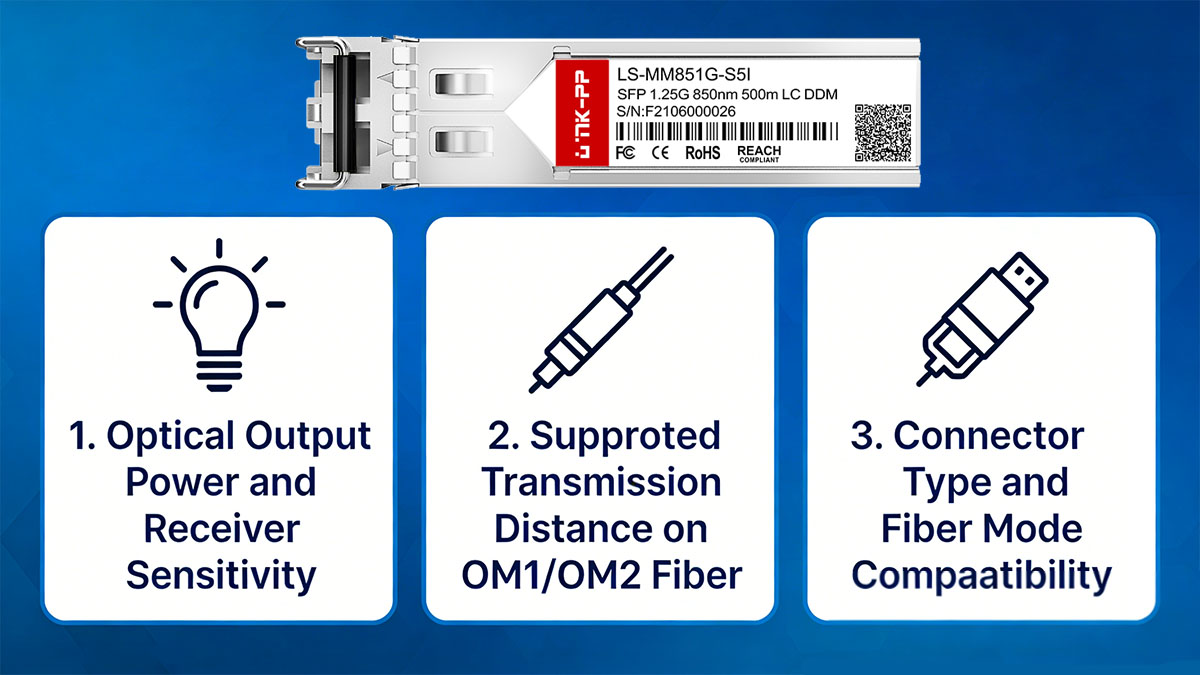
Optical Output Power and Receiver Sensitivity
Optical output power and receiver sensitivity directly impact link stability and transmission quality. For a typical 1000BASE-SX GLC-SX-MM compatible module, the transmit (Tx) optical power usually ranges between approximately -9.5dBm and 0dBm, while receiver (Rx) sensitivity is commonly around -18dBm or better.
A sufficient optical power budget ensures the signal can travel the required distance without excessive attenuation, especially in environments with patch panels, connectors, or longer fiber runs. When comparing alternatives, make sure the power budget aligns with Cisco’s original specifications to avoid link flapping, packet loss, or reduced performance.
Supported Transmission Distance on OM1/OM2 Fiber
Transmission distance is fiber-dependent. Typically, a 1000BASE-SX module like GLC-SX-MM supports up to 300m on OM1 and 550m on OM2 multimode fiber. When reviewing third-party alternatives, check that their reach aligns with or exceeds these baselines to maintain expected network coverage without signal degradation.
Connector Type and Fiber Mode Compatibility
GLC-SX-MM compatible SFP modules use a duplex LC connector and are designed specifically for multimode fiber (MMF) operation at an 850nm wavelength.
When evaluating third-party alternatives, verify:
- The connector type is LC duplex (not SC or single LC/BiDi).
- The module operates at 850nm for short-range multimode applications.
- It is clearly specified as multimode, not single-mode (SMF).
Using the wrong fiber type or connector configuration can result in immediate link failure or severe performance issues.
📻Cisco GLC-SX-MM vs. Third-party Alternatives: Compatibility Differences

When choosing between an original Cisco GLC-SX-MM module and a third-party compatible alternative, compatibility is often the primary concern. While both options are designed to support 1000BASE-SX over multimode fiber, there are differences in coding, firmware behavior, and cost structure that can affect deployment decisions.
Below is a high-level comparison between Cisco GLC-SX-MM and reputable third-party LINK-PP GLC-SX-MM compatible SFP:
| Feature | Cisco GLC-SX-MM | LINK-PP GLC-SX-MM Compatible SFP |
| Wavelength | 850nm | 850nm |
| Transmission Distance | Up to 550m over OM2 MMF Fiber | Up to 550m over OM2 MMF Fiber |
| Compatibility | Native support on Cisco devices | Coded for Cisco compatibility |
| Firmware Authentication | Fully recognized by Cisco firmware | Require Cisco-coded EEPROM |
| Compliance | IEEE 802.3z, SFP MSA | IEEE 802.3z, SFP MSA |
| Price | Higher | Lower |
Interoperability with Cisco Switches and Routers
Cisco original GLC-SX-MM modules are natively recognized by Cisco switches and routers without any compatibility concerns. They are fully supported across Cisco platforms, including Catalyst and Nexus series devices, and integrate seamlessly with Cisco IOS or NX-OS systems.
Third-party compatible alternatives, however, must be properly coded for Cisco compatibility. High-quality vendors program the module’s EEPROM to match Cisco’s vendor ID and compatibility requirements. When correctly coded, these modules function identically in most Cisco switches.
That said, potential interoperability considerations include:
- Some older Cisco firmware versions may display warning messages for non-Cisco optics.
- Certain platforms enforce strict optic validation unless specific commands (such as service unsupported-transceiver) are configured.
Choosing a reputable third-party supplier (like LINK-PP) that performs platform-specific testing significantly reduces interoperability risks.
Firmware and Coding Variations
The key technical difference between Cisco original modules and third-party GLC-SX-MM alternatives lies in EEPROM coding and firmware identification.
Cisco optics contain manufacturer-specific EEPROM data fields that identify the module as genuine Cisco hardware. This information includes:
- Vendor name
- Part number
- Serial number
- Compatibility identifiers
Third-party manufacturers replicate this structure by programming Cisco-compatible EEPROM data. However, the quality of coding varies between vendors. Poorly coded modules may:
- Trigger compatibility warnings
- Fail DOM monitoring features
- Experience link instability
Firmware upgrades on Cisco devices can sometimes introduce stricter optic validation rules. Well-established third-party vendors continuously test their modules against new firmware releases to ensure ongoing compatibility.
Optical Performance Comparison
From a pure transmission perspective, both Cisco original and high-quality third-party GLC-SX-MM modules are designed to comply with the same IEEE 802.3z 1000BASE-SX standard. This means that in properly manufactured modules, the following should be equivalent:
- Operating wavelength (850nm)
- Transmission distance (220m on OM1, 550m on OM2/OM3)
- Duplex LC interface
- 1.25Gbps data rate
In real-world deployments, optical performance differences are typically minimal when using modules from reputable third-party manufacturers that perform strict quality control and optical testing (including eye pattern test and bit error rate test).
The primary distinction is therefore not raw optical performance, but rather:
- Brand authentication
- Vendor support model
- Cost efficiency
For organizations seeking cost optimization without sacrificing performance, well-tested third-party GLC-SX-MM compatible SFP modules can provide equivalent network functionality at a significantly lower total cost.
📻How to Avoid Common GLC-SX-MM Compatibility Issues
Even though most third-party GLC-SX-MM SFPs are designed to match Cisco specifications, minor variations in firmware, coding, or cabling can still cause connectivity or recognition issues. By following a few essential checks before deployment, you can avoid most compatibility problems and ensure stable network performance.

Perform Pre-Installation Compatibility and Firmware Checks
Before installing a GLC-SX-MM compatible SFP, always verify that the module is supported by your specific switch or router model. Check the vendor’s compatibility matrix to confirm that the optic is coded for your device platform (e.g., Cisco Catalyst, Nexus, or other brands). Even within Cisco devices, compatibility may vary depending on hardware revision and software version.
In addition, review the firmware or operating system version running on your network device. Some firmware updates introduce stricter transceiver validation mechanisms, which may reject improperly coded or non-compliant optics. Ensuring your firmware is up to date — and that the SFP is programmed to match the required vendor ID and part number — helps avoid “unsupported transceiver” warnings and port shutdown issues.
If possible, perform a lab test before large-scale deployment. Testing a small batch of modules in your target environment allows you to detect interoperability problems early and avoid disruptions in production networks.
Verify Fiber and Cabling Details
GLC-SX-MM is a multimode 1000BASE-SX SFP designed for short-distance transmission over multimode fiber (MMF). One of the most common causes of compatibility issues is mismatched fiber types or improper cabling.
First, confirm that the fiber infrastructure matches the supported standards — typically OM1 or OM2 multimode fiber. The maximum transmission distance varies depending on the fiber grade (e.g., up to 550m on OM2). Using single-mode fiber (SMF) with a GLC-SX-MM module can result in poor signal performance or complete link failure.
Second, check connector types. GLC-SX-MM modules use a duplex LC connector. Ensure that patch cords and fiber panels are also LC-based and properly terminated. Dirty connectors, damaged fiber ends, or excessive insertion loss can lead to high error rates or unstable links. Cleaning fiber connectors and testing link loss with proper equipment can prevent many performance-related issues.
Finally, confirm that the polarity and patching are correct, especially in structured cabling environments. Incorrect polarity can prevent the link from coming up even when all components are technically compatible.
Validate Optic Coding and Features
Optic coding plays a critical role in ensuring that a GLC-SX-MM compatible SFP is recognized by your network device. The EEPROM inside the SFP stores identification data such as vendor name, part number, and compliance codes. If this information does not match what the switch expects, the device may generate warning messages or disable the port entirely.
When purchasing third-party alternatives, ensure the modules are correctly programmed (coded) for your target switch brand and model. Reliable suppliers typically offer brand-specific coding and guarantee interoperability. Re-coding services may also be available if you need to repurpose modules across different platforms.
Additionally, verify supported features such as Digital Optical Monitoring (DOM), if required. Some switches rely on DOM data for diagnostics and monitoring. If the compatible SFP does not fully support these features, you may lose visibility into parameters such as temperature, voltage, and optical power levels.
📻EEPROM Coding for GLC-SX-MM Compatible SFP
EEPROM coding is one of the most critical factors determining whether a GLC-SX-MM compatible SFP will function properly in a specific switch or router. Understanding how EEPROM data works helps explain why some third-party modules operate seamlessly while others trigger compatibility warnings or fail to initialize.

Understanding SFP EEPROM Structure and Data Fields
Every SFP transceiver module contains an onboard EEPROM (Electrically Erasable Programmable Read-Only Memory) that stores identification and operational data. This memory structure follows the SFP Multi-Source Agreement (MSA) standard, which defines specific memory addresses and data fields used by network equipment to identify and manage the transceiver.
Key EEPROM data fields typically include:
- Vendor Name and OUI (Organizationally Unique Identifier)
- Part Number (e.g., GLC-SX-MM)
- Serial Number and Manufacturing Date
- Transceiver Type and Compliance Codes (1000BASE-SX)
- Supported Features (e.g., DOM/DDM capability)
When an SFP is inserted into a switch, the device reads these EEPROM fields to determine the module’s specifications and compatibility. Properly programmed EEPROM ensures that the optic reports accurate wavelength (850nm), transmission speed (1G), fiber type (multimode), and distance capability.
High-quality third-party GLC-SX-MM compatible SFP modules strictly follow MSA-defined memory mapping and populate these fields accurately to match the expected vendor profile.
How Coding Affects Switch Recognition
Switches and routers rely heavily on EEPROM data to recognize inserted optics. If the vendor name, part number, or compliance codes do not match what the system firmware expects, the device may:
- Display an “unsupported transceiver” warning
- Log error messages
- Disable the port automatically
- Limit certain features, such as DOM monitoring
Brand-specific coding ensures that the EEPROM information is programmed to match the target manufacturer’s requirements (for example, Cisco-compatible coding). This allows the switch to identify the module as a supported optic, even though it is manufactured by a third-party vendor.
It’s important to note that recognition behavior can vary depending on firmware version. Some operating systems apply stricter validation rules, making accurate EEPROM coding even more essential. Reliable suppliers typically test their coded modules across multiple hardware platforms and software versions to ensure consistent interoperability.
The Role of EEPROM in Switch Authentication
Beyond basic identification, EEPROM coding plays a role in switch-level authentication mechanisms. Some network devices perform additional checks to validate:
- Vendor ID authenticity
- Checksum consistency
- Feature compliance
- Digital diagnostics support
In these cases, the switch not only reads static identification fields but also verifies data integrity. If inconsistencies are detected, the system may generate security alerts or block the transceiver.
For GLC-SX-MM compatible SFP modules, proper EEPROM programming ensures:
- Accurate vendor-specific identification
- Full compatibility with Cisco IOS or other network operating systems
- Reliable reporting of DOM parameters (temperature, voltage, optical power)
- Stable long-term operation without authentication-related interruptions
📻Best GLC-SX-MM Compatible 1G SFP Alternatives
Selecting the right GLC-SX-MM compatible transceiver ensures both cost efficiency and consistent performance in Gigabit Ethernet networks. High-quality alternatives provide the same optical and functional characteristics as the original Cisco GLC-SX-MM while offering better flexibility for multi-vendor environments.

Factors to Consider Before Buying GLC-SX-MM Alternatives
When choosing a GLC-SX-MM compatible SFP, pay close attention to several key parameters.
Compliance and interoperability: Ensure the transceiver meets IEEE 802.3z and MSA standards, which define the 1000BASE-SX specification and pin assignments. Compatibility with Cisco IOS versions and other major switch platforms should be confirmed before deployment.
Optical performance: Check that the transmitter wavelength is 850nm and that the module supports typical distances of up to 550m over OM2 or OM3 multimode fiber. Output power, receiver sensitivity, and link budget values should closely match Cisco’s original specification to maintain link reliability.
DOM support and reliability: Digital Optical Monitoring is essential for real-time performance tracking. Well-built third-party models offer stable operation across the standard temperature range (-40 – 85°C) and pass extensive quality tests for interoperability and longevity.
LINK-PP GLC-SX-MM Compatible 1000BASE-SX SFP
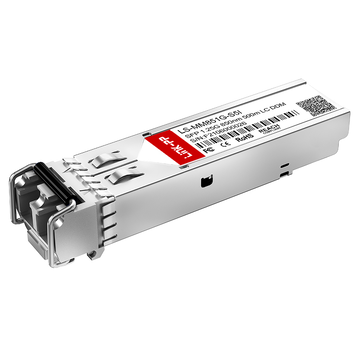
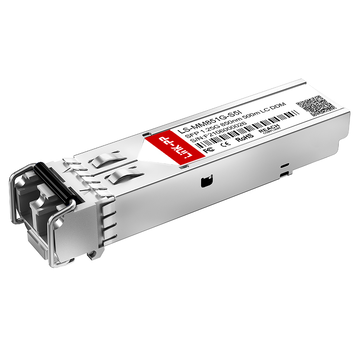
For organizations seeking a high-quality and cost-effective alternative, the LINK-PP LS-MM851G-S5I compatible 1000BASE-SX SFP is an excellent choice.
The LINK-PP LS-MM851G-S5I is a 1000BASE-SX multimode SFP module designed to operate at 850nm with a maximum transmission distance of up to 550m over OM2 multimode fiber. It uses a duplex LC connector and fully complies with IEEE 802.3z and SFP MSA standards, ensuring reliable interoperability.
Key advantages of the LINK-PP LS-MM851G-S5I include:
- Brand-specific EEPROM coding for seamless Cisco compatibility
- Stable optical performance with strict power and sensitivity control
- Full DOM/DDM support for real-time diagnostics
- Low power consumption and high signal integrity
- 100% factory testing for compatibility and performance
In addition, LINK-PP modules are engineered to match the original Cisco GLC-SX-MM specifications while offering significant cost savings. With proper coding and rigorous quality control, the LS-MM851G-S5I ensures smooth switch recognition, eliminates compatibility warnings, and delivers stable 1Gbps connectivity in enterprise LAN and data center environments.
📻FAQs about GLC-SX-MM

What is the maximum distance for GLC-SX-MM?
The maximum transmission distance depends on the type of multimode fiber used. Typically, GLC-SX-MM supports up to 300m over OM1 and 550m over OM2/OM3 multimode fiber. Actual distance may vary slightly depending on link quality and insertion loss.
Is GLC-SX-MM single or multimode SFP module?
GLC-SX-MM is a multimode SFP module designed for short-range transmission over multimode fiber (MMF). It operates at an 850nm wavelength and is not intended for single-mode fiber applications.
What speed is GLC-SX-MM?
GLC-SX-MM is a Gigabit Ethernet SFP, so its line rate is 1Gbps (1000Mbps). In practice, the optical module typically supports a maximum data rate of about 1.25Gbps at the physical layer, which carries 1Gbps of usable Ethernet traffic.
Can I use GLC-SX-MM on single-mode fiber?
No, GLC-SX-MM is specifically designed for multimode fiber. Using it on single-mode fiber may result in unstable links or failure to establish a connection due to wavelength and fiber core mismatch.
Will third-party GLC-SX-MM compatible SFP trigger Cisco warnings?
If the module is not properly coded, Cisco devices may display an “unsupported transceiver” warning. However, professionally coded third-party GLC-SX-MM modules — such as those programmed for Cisco compatibility — typically function without warnings and provide stable performance.
📻Conclusion: Choosing the Right GLC-SX-MM Compatible Solution
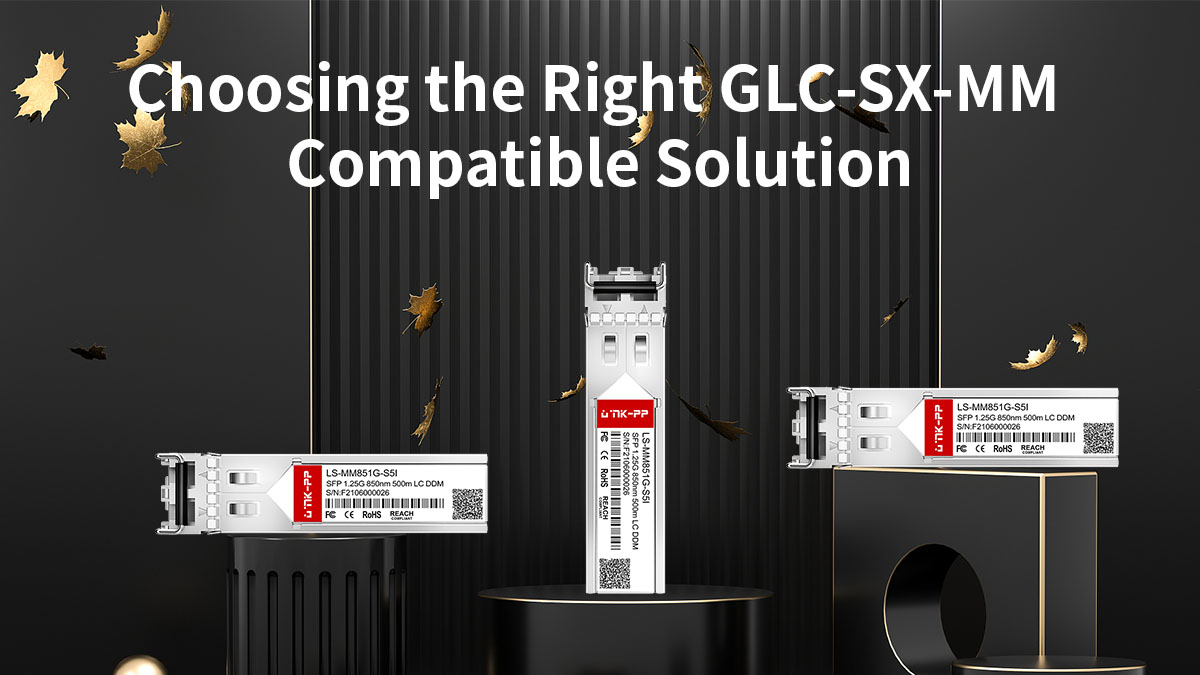
GLC-SX-MM remains a reliable and widely deployed 1G SFP solution for short-distance multimode fiber networks in enterprise and data center environments. Understanding its specifications, standards compliance and EEPROM coding mechanisms is essential when evaluating compatible alternatives.
While original Cisco modules provide native recognition and brand assurance, high-quality third-party GLC-SX-MM compatible SFP modules can deliver equivalent optical performance, seamless interoperability, and significant cost savings when properly coded and tested. The key lies in selecting modules that comply with IEEE 802.3z and MSA standards, match the required optical parameters, and are programmed for your specific switch platform.
If you are looking for a dependable and cost-effective GLC-SX-MM compatible solution, explore certified options available at the LINK-PP Official Store. With rigorous quality control, Cisco-compatible EEPROM coding, and full compliance testing, LINK-PP provides trusted compatible 1G SFP modules designed to ensure stable, high-performance network connectivity.