In modern enterprise networks, reliable 1G fiber connectivity remains a critical component for both campus and data center environments. Many organizations continue to operate Brocade switches and legacy network infrastructure that depend on SFP optical transceivers, such as the E1MG-LX-OM module, for stable and efficient communication over single-mode fiber. Ensuring consistent performance and minimizing downtime are key concerns when managing these networks.
As networking demands grow and hardware lifecycles evolve, businesses increasingly explore alternatives to OEM SFP modules like the E1MG-LX-OM. Third-party Brocade compatible SFP modules offer potential benefits, including cost efficiency, supply chain flexibility, and extended lifecycle support. Understanding which replacements provide reliable performance without compromising interoperability is essential for network administrators and IT professionals.
This article provides a comprehensive guide to E1MG-LX-OM Brocade replacements. It covers technical specifications, deployment scenarios, compatibility considerations, performance comparisons, and best practices for installation and maintenance. By exploring these factors, you can make informed decisions on integrating alternative optical modules into their existing Brocade networks while maintaining optimal performance and reliability.
?️? Understanding E1MG-LX-OM and Its Role in Network Infrastructure
E1MG-LX-OM modules play a foundational role in maintaining reliable 1G optical connectivity for Brocade switches and similar enterprise-grade network devices. These modules ensure stable data transmission over single-mode fiber while supporting a variety of deployment scenarios. Their design and specifications make them suitable for both campus networks and data center interconnects, balancing distance capability, signal integrity, and interoperability.
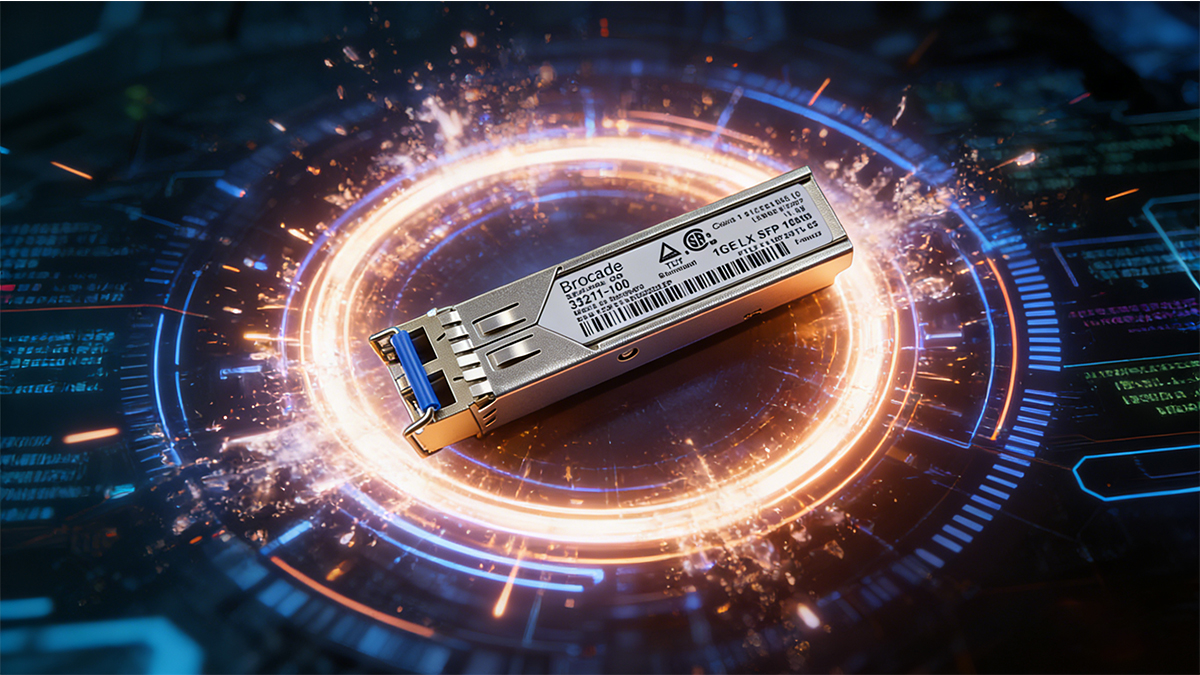
Key Specifications of E1MG-LX-OM
The E1MG-LX-OM module is engineered to deliver consistent 1Gbps performance across single-mode fiber, with features tailored to Brocade systems. Its specifications provide the baseline for network administrators to assess compatibility and performance.
The core specifications include transmission speed, wavelength, maximum reach, and connector type. A comparison table highlights these key parameters:
| Specification | E1MG-LX-OM | Typical Use Case |
|---|---|---|
| Data Rate | 1Gbps | Standard enterprise fiber links |
| Wavelength | 1310nm | Single-mode fiber transmission |
| Maximum Distance | 10km | Metro and campus networks |
| Connector Type | LC Duplex | SFP port compatibility |
These specifications make the module suitable for medium-range optical links, offering a balance between cost, performance, and deployment flexibility. The LC duplex connector and fiber SFP form factor allow easy integration into existing Brocade switch hardware.
Typical Deployment Scenarios
E1MG-LX-OM modules are widely deployed in environments that require stable, reliable 1G SFP fiber links. They support scenarios ranging from enterprise campuses to data center aggregation layers. Network administrators choose these modules for their proven interoperability and predictable performance.
Key deployment scenarios include:
- Enterprise campus networks, where fiber links connect multiple buildings and require low latency communication.
- Metro access and aggregation layers, supporting ISPs and regional network operators with stable 1G backhaul.
- Data center interconnects for short to medium distances, facilitating server-to-switch and switch-to-switch communication.
- Telecommunications infrastructure, where long-term reliability and vendor support are crucial.
Understanding these deployment patterns helps IT teams identify when a Brocade-compatible alternative fiber optic SFP module can meet operational needs without compromising network stability. The combination of standard optical parameters and broad compatibility ensures that E1MG-LX-OM modules remain a viable choice in diverse network topologies.
?️? Why Consider E1MG-LX-OM Brocade Alternatives
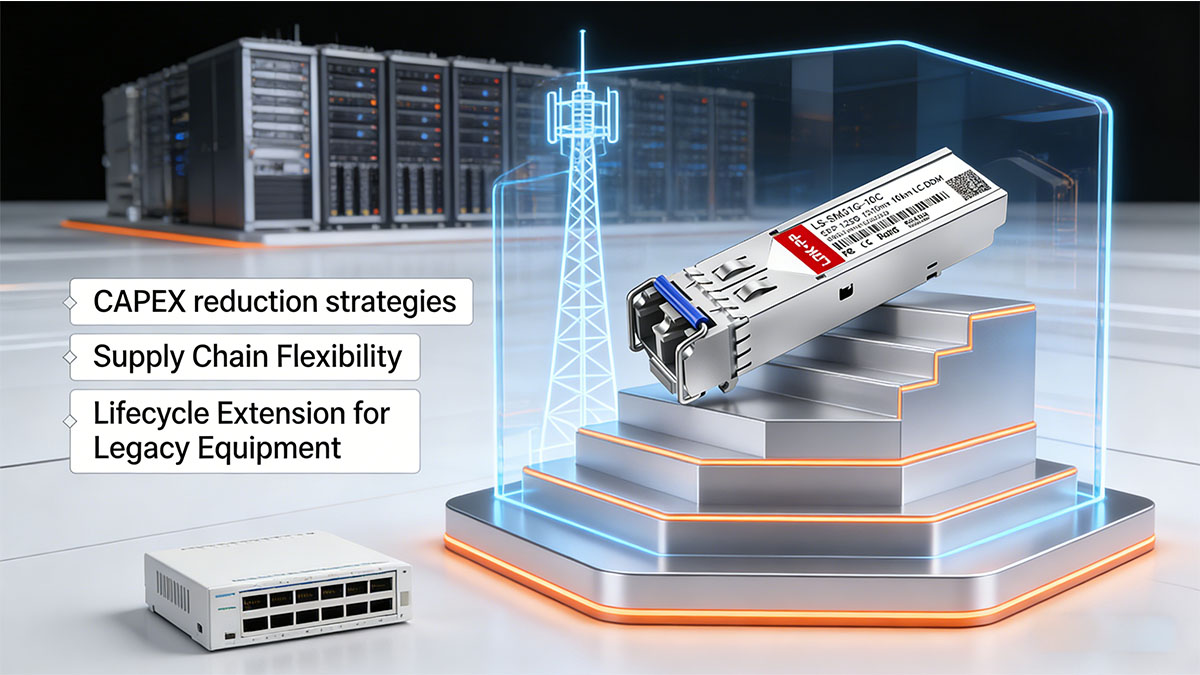
Choosing Brocade-compatible alternatives to the E1MG-LX-OM module can provide organizations with cost savings, supply chain flexibility, and extended lifecycle support while maintaining reliable network performance. These alternatives are particularly useful for enterprises seeking to optimize budgets without compromising interoperability or optical quality.
Cost Optimization Without Compromising Quality
Switching to high-quality third-party modules allows organizations to reduce capital expenditure without affecting network stability. While OEM E1MG-LX-OM modules guarantee compatibility, compatible alternatives often meet or exceed the same performance specifications at a lower cost.
Key points for cost optimization include:
- Reduced per-unit cost for large-scale deployments.
- Minimization of unnecessary upgrades for legacy systems.
- Budget allocation flexibility for network expansion or redundancy projects.
By carefully selecting alternatives that adhere to industry standards, IT teams can achieve cost efficiency without compromising signal integrity or network uptime.
Supply Chain Flexibility
Dependence on a single OEM supplier can result in long lead times or stock shortages, especially during periods of high demand. Brocade-compatible alternatives offer multiple sourcing options, allowing organizations to mitigate these risks and maintain uninterrupted network operations.
Benefits of supply chain flexibility include:
- Access to multiple vendors ensures SFP transceiver availability.
- Reduced impact of OEM discontinuation or regional supply delays.
- Ability to scale deployments quickly without waiting for OEM stock.
Flexibility in sourcing also enables IT teams to respond rapidly to network growth or unexpected hardware failures.
Lifecycle Extension for Legacy Equipment
Legacy Brocade switches and existing fiber infrastructure often continue to meet organizational needs, making premature upgrades unnecessary. High-quality replacement modules can extend the useful life of these systems while maintaining performance standards.
Advantages of lifecycle extension include:
- Continued support for older Brocade platforms without full hardware replacement.
- Preservation of existing network investment and reduced total cost of ownership.
- Alignment with sustainability initiatives by reducing electronic waste.
Replacing modules instead of full systems allows organizations to focus resources on strategic upgrades rather than routine equipment refresh.
?️? Operational and Deployment Benefits of E1MG-LX-OM Alternatives
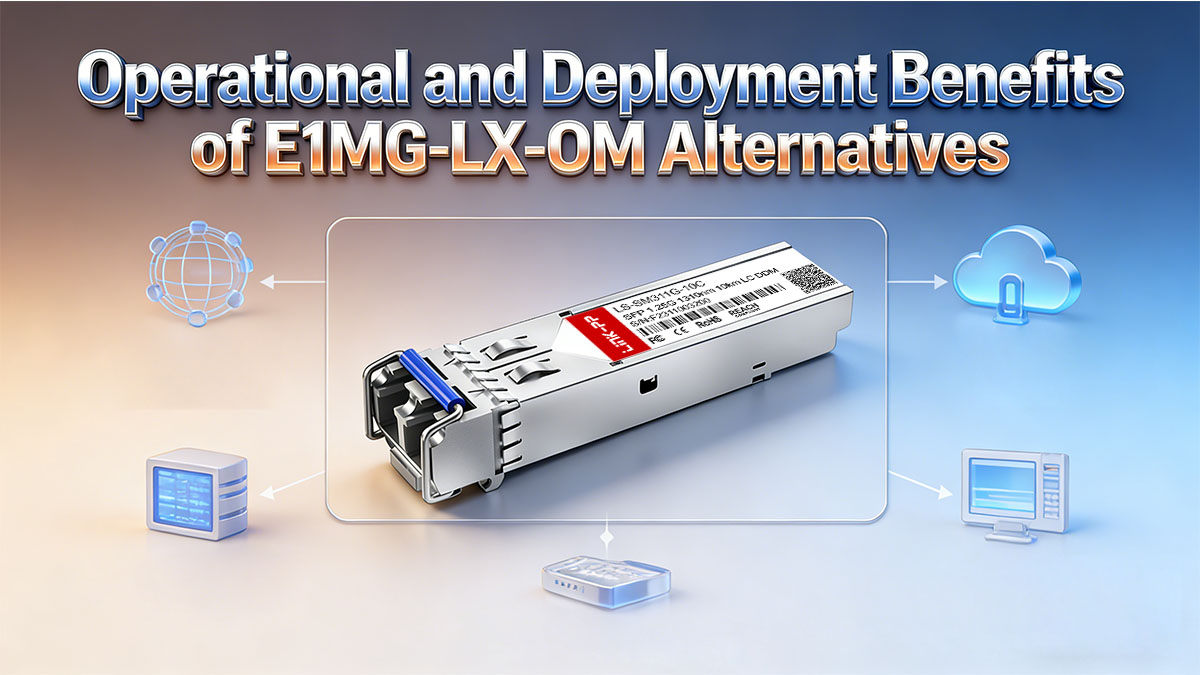
High-quality E1MG-LX-OM alternatives not only provide reliable 1G connectivity but also offer tangible operational and deployment advantages. When properly sourced and deployed, these modules streamline maintenance, improve deployment agility, and enhance overall network operational efficiency.
Simplified Network Maintenance
Replacement modules simplify day-to-day network operations by leveraging built-in monitoring features and reducing manual troubleshooting. Digital Optical Monitoring (DOM) support in these alternatives allows administrators to track real-time optical parameters such as transmit and receive power, voltage, and temperature. This visibility enables early detection of potential fiber issues before they escalate into network failures.
Key practices for simplified maintenance include:
- Utilizing DOM data to proactively schedule maintenance and prevent unexpected downtime.
- Reducing troubleshooting time with modules that are pre-validated for Brocade switches.
- Standardizing module types across multiple sites to streamline spare inventory management and support workflows.
By minimizing reactive maintenance tasks, IT teams can focus on strategic network upgrades and improvements rather than day-to-day firefighting.
Deployment Flexibility
Operational efficiency is also enhanced through deployment flexibility. Compatible E1MG-LX-OM modules allow network teams to respond quickly to both planned expansions and unplanned emergencies. Unlike OEM-only deployments, these alternatives can be sourced from multiple vendors, reducing the risk of supply chain delays.
Deployment benefits include:
- Rapid expansion or emergency replacement of optical links without waiting for OEM stock.
- Multi-vendor compatibility ensures modules can integrate seamlessly into both Brocade and heterogeneous network environments.
- Pre-validated modules reduce configuration overhead and minimize the risk of link negotiation errors during deployment.
This flexibility empowers IT teams to scale networks efficiently while maintaining high reliability standards.
Operational Efficiency
Beyond maintenance and deployment, E1MG-LX-OM alternatives improve overall operational efficiency. Standardized installation and handling procedures reduce human errors and downtime, while predictable module performance minimizes the frequency of maintenance interventions. Accurate documentation of module deployments across sites further supports lifecycle management and resource planning.
Operational efficiency benefits include:
- Streamlined installation processes that reduce potential for connector contamination or ESD damage.
- Consistent performance reduces the need for repeated link verification or troubleshooting.
- Centralized tracking of module inventory supports lifecycle planning and auditing.
By focusing on these operational improvements, organizations can achieve cost-effective and reliable network management without compromising performance or stability.
?️? Compatibility Considerations for Brocade Replacement Modules
Ensuring compatibility is the most critical factor when integrating E1MG-LX-OM alternatives into Brocade networks. A module that meets performance specifications but fails to communicate properly with the switch can cause port rejection, link instability, or degraded network performance. Careful evaluation of coding, interoperability, and monitoring features is essential for reliable deployment.
Vendor Coding and EEPROM Programming
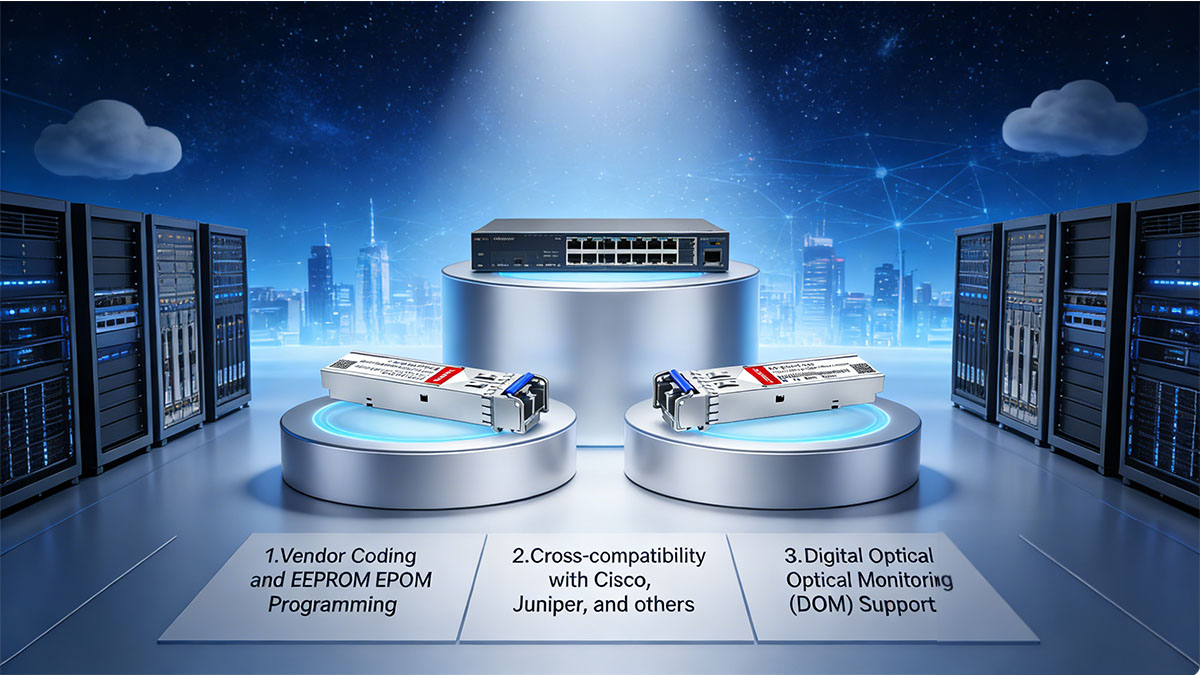
Replacement modules must replicate the correct vendor coding and EEPROM information to be recognized by Brocade switches. This includes device identifiers, supported wavelengths, and link capabilities. Without proper coding, a switch may reject the module or operate it at a reduced capacity.
Key considerations for vendor coding include:
- Verification that the module’s EEPROM matches Brocade-specific identifiers.
- Ensuring firmware or firmware-like settings align with OEM expectations.
- Testing modules in a controlled lab environment to confirm recognition before full deployment.
Proper coding ensures seamless communication between the module and the switch, avoiding downtime and troubleshooting overhead.
Interoperability Across Mixed Environments
Modern enterprise networks often involve devices from multiple vendors. A replacement module must not only be compatible with Brocade switches but also operate reliably alongside Cisco, Juniper, or other vendor equipment. Interoperability testing helps prevent link negotiation issues and network bottlenecks.
Best practices for mixed-environment interoperability include:
- Reviewing vendor-provided compatibility lists.
- Testing cross-vendor links for handshake stability and error-free operation.
- Documenting any limitations in mixed-vendor deployments to inform future upgrades.
This approach reduces unexpected network issues and ensures smooth integration in heterogeneous environments.
Digital Optical Monitoring (DOM) Support
Digital Optical Monitoring allows administrators to track real-time parameters such as optical power, voltage, and temperature. High-quality alternatives maintain DOM functionality, which is crucial for proactive maintenance and rapid troubleshooting.
Key points regarding DOM support:
- DOM provides early warning of fiber degradation or module issues.
- Continuous monitoring supports preventive maintenance strategies.
- Replacement modules should offer full DOM reporting equivalent to OEM units.
Without DOM, network teams may lose visibility into link health, increasing the risk of undetected failures.
?️? Performance Comparison: OEM vs Compatible E1MG-LX-OM
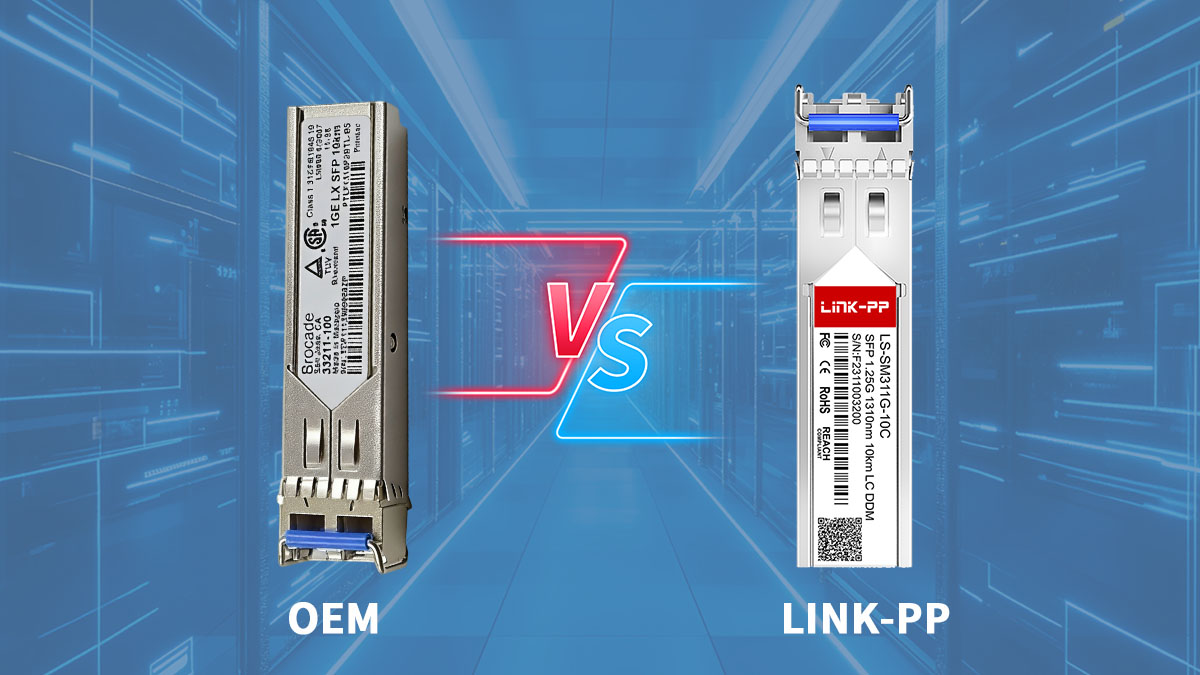
High-quality compatible modules can match the optical performance, reliability, and throughput of OEM E1MG-LX-OM modules. While OEM units are guaranteed by the manufacturer, carefully sourced alternatives undergo testing to ensure signal integrity, minimal latency, and long-term durability, making them suitable for production networks without noticeable differences in performance.
Optical Performance and Signal Integrity
Compatible modules that adhere to industry standards maintain comparable optical power levels and signal quality. Both OEM and reliable alternatives deliver stable 1Gbps transmission over single-mode fiber up to 10km. Differences, if any, are usually minimal and fall within acceptable operational margins.
A comparison table of typical optical parameters illustrates the performance equivalence:
| Parameter | OEM E1MG-LX-OM | Compatible Module |
|---|---|---|
| Data Rate | 1Gbps | 1Gbps |
| Wavelength | 1310nm | 1310nm |
| Maximum Distance | 10km | 10km |
| Transmit Power | -9.5 to -3 dBm | -9.5 to -3 dBm |
| Receive Sensitivity | -17 dBm | -17 dBm |
As shown, the optical specifications are aligned, confirming that compatible modules can operate within the same performance envelope as OEM units.
Reliability and Quality Assurance
The reliability of replacement modules is influenced by manufacturing standards, testing, and quality control. High-quality alternatives comply with MSA (Multi-Source Agreement) standards, undergo burn-in tests, and are designed to operate under the same environmental conditions as OEM units.
Key factors impacting reliability include:
- Compliance with ISO and MSA manufacturing standards.
- Burn-in and validation tests to ensure consistent performance.
- Resistance to temperature fluctuations and voltage variations typical in enterprise environments.
These practices ensure that compatible modules maintain network stability over long periods, reducing maintenance frequency and risk of unexpected failures.
Latency and Throughput Consistency
For most enterprise applications, latency differences between OEM and compatible E1MG-LX-OM modules are negligible. Both module types can sustain error-free 1Gbps throughput over standard single-mode fiber distances.
Factors influencing throughput consistency:
- Correct vendor coding and EEPROM programming for link negotiation.
- High-quality optical components that prevent signal degradation.
- Proper deployment and handling, including fiber cleaning and careful insertion.
Maintaining these practices ensures that performance metrics such as bit error rate (BER) and link stability remain consistent across both OEM and compatible modules.
?️? Deployment Best Practices for E1MG-LX-OM Alternatives
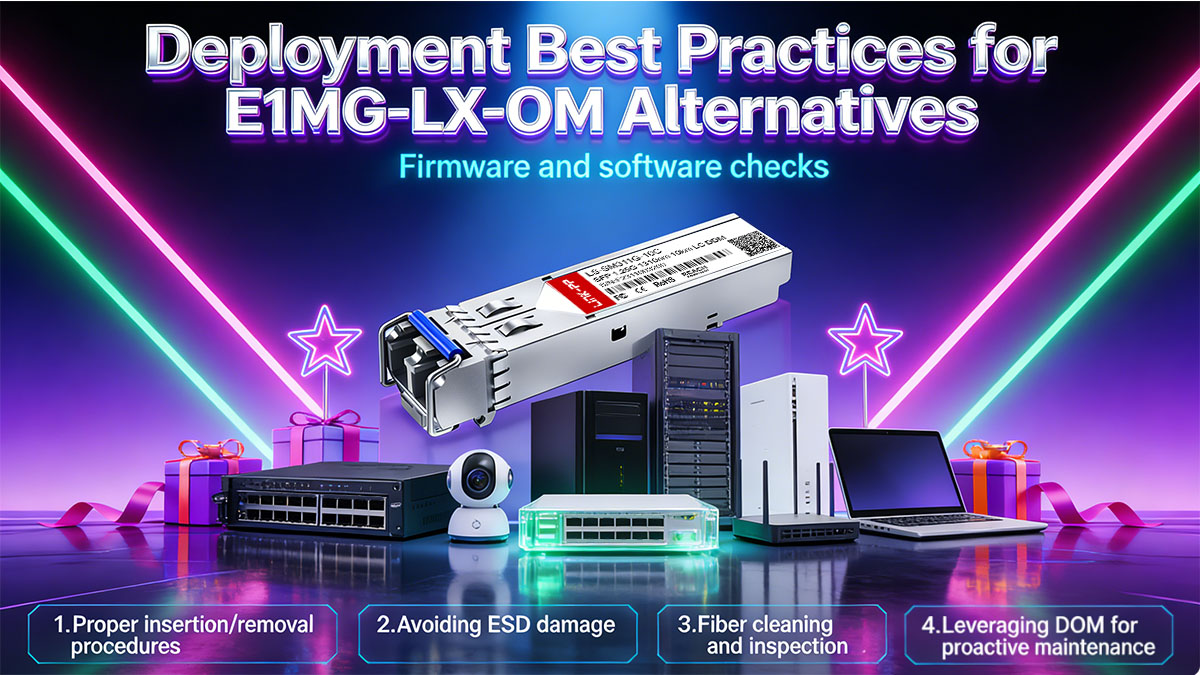
Proper deployment is essential to ensure that E1MG-LX-OM replacement modules operate reliably and achieve the same performance as OEM units. Following validation, installation, and maintenance best practices helps prevent port rejection, signal degradation, and unexpected downtime, while extending the lifecycle of the modules and network equipment.
Pre-Deployment Validation
Before full-scale deployment, replacement modules should undergo rigorous pre-deployment validation to confirm compatibility and performance. Testing in a controlled environment reduces the risk of operational issues in production networks.
Key steps for validation include:
- Reviewing the vendor’s compatibility matrix for the specific Brocade switch model.
- Conducting lab tests to verify module recognition and link negotiation.
- Monitoring basic optical parameters such as transmit/receive power and DOM readings.
- Ensuring firmware or switch software supports the alternative module without errors.
Pre-deployment validation allows network administrators to catch potential issues early, minimizing disruptions during network rollout.
Installation and Handling Guidelines
Correct installation and careful handling are critical for the performance and longevity of optical modules. Mishandling can lead to ESD damage, connector contamination, or link instability, even if the module is fully compatible.
Best practices for installation include:
- Proper insertion and removal procedures to prevent mechanical damage.
- Using ESD protection when handling modules.
- Cleaning fiber connectors with appropriate cleaning tools before connection.
- Verifying link status immediately after installation to confirm operational readiness.
Adhering to these practices ensures that the modules function as intended and reduces troubleshooting needs.
Monitoring and Maintenance
Ongoing monitoring and maintenance are necessary to maintain network stability and detect potential issues early. Leveraging the module’s DOM features and periodic inspections helps prevent link failures and optimize performance over time.
Recommended monitoring and maintenance practices:
- Use DOM data to track temperature, voltage, and optical power trends.
- Schedule periodic performance checks for key links.
- Replace or clean modules showing signs of optical degradation or contamination.
- Maintain accurate records of deployment locations and module specifications for future audits.
Regular monitoring and proactive maintenance ensure that replacement modules deliver long-term reliability comparable to OEM units.
?️? Common Challenges and How to Mitigate Them
While E1MG-LX-OM alternatives can perform on par with OEM modules, certain challenges may arise during deployment and operation. Awareness of these issues and implementing mitigation strategies is essential to maintain network reliability, prevent downtime, and optimize performance.
Compatibility Errors or Port Rejection
Replacement modules may occasionally be rejected by Brocade switches if vendor coding or EEPROM information is incorrect. This can lead to inactive ports, degraded link performance, or error messages on the switch.
Mitigation strategies include:
- Verifying the module’s vendor coding against Brocade switch requirements.
- Conducting initial tests in a lab environment to confirm proper link recognition.
- Updating switch firmware if necessary to support alternative modules.
- Keeping a small inventory of validated modules to swap in case of unexpected rejection.
By proactively checking compatibility, administrators can avoid the operational disruptions caused by module rejection.
Optical Signal Degradation
Signal quality can degrade due to fiber contamination, connector damage, or exceeding the module’s maximum distance. Even high-quality alternatives may experience reduced performance if environmental or handling factors are not addressed.
Preventive measures include:
- Cleaning all fiber connectors before installation using certified cleaning tools.
- Inspecting fiber cables and connectors for physical damage.
- Ensuring link distances do not exceed the module’s rated maximum.
- Using DOM monitoring to identify declining transmit or receive power early.
Maintaining clean and properly rated fiber infrastructure ensures consistent link stability and prevents intermittent errors.
Vendor Lock-In Concerns
Organizations may worry about relying too heavily on a single vendor or compatible module supplier. Vendor lock-in can limit flexibility, increase costs, or create supply chain risks.
Mitigation strategies include:
- Sourcing modules from multiple reputable vendors that adhere to MSA standards.
- Maintaining documentation of compatibility testing across vendors.
- Periodically evaluating new module options to diversify sources.
- Implementing a standardized testing procedure for any new module before deployment.
These practices ensure that network operations remain flexible and resilient to changes in supplier availability.
?️? Future Trends in 1G Optical Connectivity and Replacement Strategies
The landscape of 1G optical connectivity is gradually evolving, driven by the rise of higher-speed networks and the demand for sustainable, cost-effective infrastructure. Despite the growth of 10G SFP+ and 25G SFP28 deployments, 1G fiber links, such as those supported by E1MG-LX-OM modules, remain relevant in many enterprise and campus networks. Understanding emerging trends helps organizations plan replacement strategies that balance performance, cost, and long-term scalability.

Gradual Transition to Higher Speeds
Many enterprises are adopting multi-speed network environments, where 1G links coexist with 10G or 25G uplinks. In such hybrid networks, maintaining reliable 1G connectivity is essential for endpoints, legacy devices, and less bandwidth intensive applications.
Key trends in speed transition:
- 1G SFP links remain suitable for access layers while aggregation layers move to 10G SFP+/25G SFP28.
- Hybrid environments require careful compatibility planning to avoid link negotiation issues.
- Replacement modules must support current 1G standards while allowing smooth integration with higher-speed uplinks.
By adopting compatible E1MG-LX-OM modules, organizations can maintain operational stability while preparing for future speed upgrades.
Increasing Adoption of Third-Party Optics
The market for high-quality third-party optical modules is expanding as enterprises recognize their benefits. Reputable alternatives now offer performance, reliability, and DOM support equivalent to OEM modules, making them a practical choice for budget-conscious IT teams.
Factors driving third-party adoption:
- Proven interoperability with Brocade switches and other vendor equipment.
- Competitive pricing that reduces capital expenditure without compromising performance.
- Availability in diverse supply chains, mitigating risks of OEM stock shortages.
Third-party optics are becoming an established solution for extending network infrastructure life cycles while maintaining performance.
Sustainability and Cost Efficiency
Extending the lifecycle of existing Brocade switches and fiber infrastructure aligns with sustainability initiatives and cost-efficiency goals. Replacing modules rather than entire systems reduces electronic waste and maximizes asset utilization.
Sustainability-focused practices include:
- Deploying compatible modules to avoid premature system replacement.
- Monitoring module performance using DOM features to prevent unnecessary replacements.
- Standardizing modules across multiple sites to simplify management and reduce spare inventory.
Integrating sustainability considerations into replacement strategies ensures long-term operational and environmental benefits.
?️? FAQs About E1MG-LX-OM Brocade Replacement
Is a third-party E1MG-LX-OM fully compatible with all Brocade switches?
Most high-quality alternatives are compatible with major Brocade switch models, provided vendor coding and EEPROM programming match the switch requirements.
Can using a replacement module affect network reliability?
When sourced from reputable manufacturers and properly tested, replacement modules maintain the same stability, signal integrity, and DOM functionality as OEM units.
How can I verify a replacement module before deployment?
Pre-deployment lab testing, checking compatibility matrices, and monitoring optical parameters such as transmit/receive power and DOM readings are effective verification methods.
Do compatible modules support Digital Optical Monitoring (DOM)?
Yes, most quality alternatives include full DOM functionality for real-time voltage, temperature, and optical power monitoring.
Are there distance limitations for alternative E1MG-LX-OM modules?
Distance specifications remain the same as OEM units, typically supporting single-mode fiber links up to 10km.
Can replacement modules be used in multi-vendor network environments?
Yes, if proper interoperability testing is conducted, they can operate reliably alongside Cisco, Juniper, and other vendor equipment without performance degradation.
?️? Conclusion
E1MG-LX-OM Brocade replacement modules offer a reliable and cost-effective solution for maintaining stable 1G fiber connectivity in enterprise and data center networks. By carefully evaluating compatibility, performance, and deployment best practices, organizations can achieve operational stability comparable to OEM units while benefiting from supply chain flexibility and lifecycle extension. Proper pre-deployment validation, installation procedures, and ongoing monitoring ensure that these alternatives deliver consistent performance and long-term reliability.
As networking environments evolve and hybrid multi-speed networks become more common, high-quality third-party modules provide a practical way to sustain existing infrastructure while preparing for future upgrades. For IT teams seeking dependable Brocade-compatible modules that meet strict performance standards, LINK-PP Official Store offers a wide selection of E1MG-LX-OM alternatives, fully tested for compatibility and reliability.
Explore LINK-PP Official Store today to find certified replacement modules that help maintain network performance without compromise.