

























In modern network deployments, reliable and cost-effective optical transceivers are essential for ensuring stable data transmission across fiber infrastructures. The UACC-OM-MM-1G-D-2 is a commonly used 1G SFP module from Ubiquiti, designed for multimode fiber applications and short-distance connectivity. It is widely adopted in enterprise networks, campus environments, and small-to-medium business setups due to its compatibility with Ubiquiti devices and straightforward deployment.
However, as network demands grow and budgets become tighter, many users begin exploring alternatives to the UACC-OM-MM-1G-D-2 that offer similar performance and compatibility. Understanding its specifications, real-world performance, and deployment scenarios is key to identifying suitable substitutes. This article breaks down the core features of the UACC-OM-MM-1G-D-2 and highlights what to look for when choosing reliable, compatible alternatives.
💮 What is UACC-OM-MM-1G-D-2
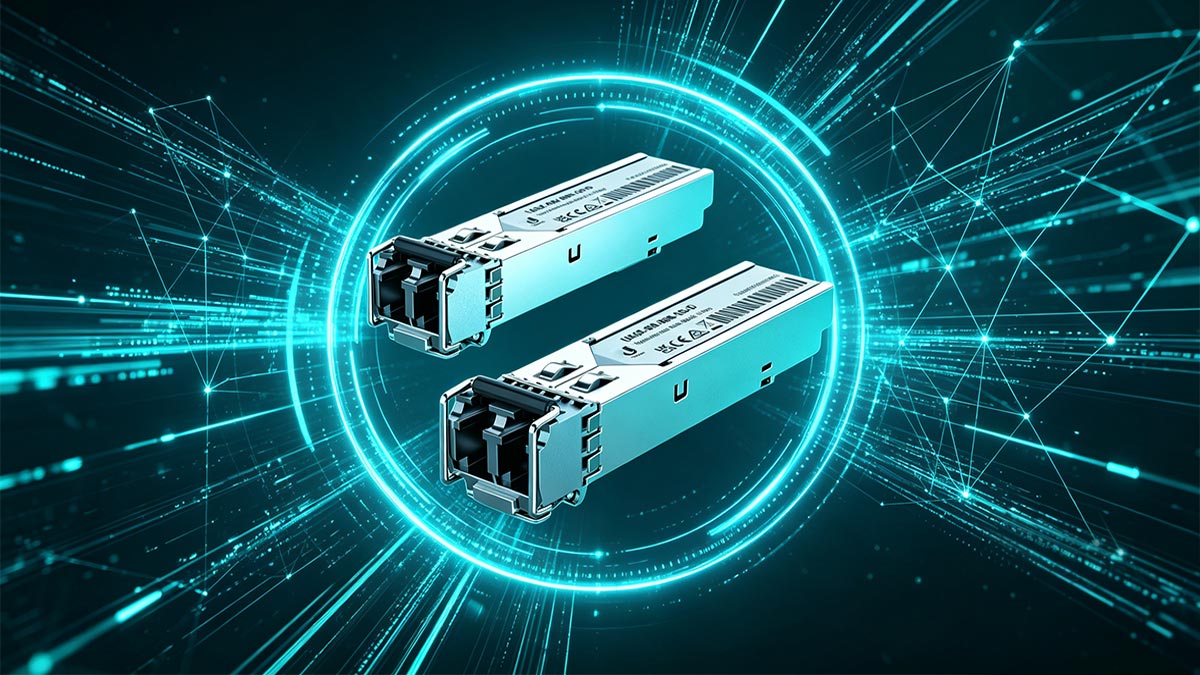
The UACC-OM-MM-1G-D-2 is a 1G SFP optical transceiver developed by Ubiquiti for short-range multimode fiber communication. It is designed to deliver stable and efficient data transmission in typical enterprise and access network environments. As a plug-and-play module, it simplifies fiber connectivity while maintaining compatibility with a wide range of Ubiquiti networking devices.
Introduction to UACC-OM-MM-1G-D-2
The UACC-OM-MM-1G-D-2 is part of Ubiquiti’s optical module lineup, specifically built for 1G Ethernet connections over multimode fiber (MMF). It operates using standard optical parameters, making it suitable for short-distance links such as intra-building or campus network connections. Its compact SFP form factor allows easy insertion into compatible switch or router ports.
In addition to its physical design, this SFP transceiver is engineered for reliable performance with minimal configuration. It supports hot-swapping, enabling network operators to install or replace the module without shutting down devices. This makes it a practical choice for maintaining uptime in dynamic network environments.
Typical Deployment Scenarios
UACC-OM-MM-1G-D-2 optical modules are most often deployed in short‑to‑medium‑distance optical links within enterprise or campus environments. Common use cases include connecting switches between network closets, linking servers to aggregation switches, or building fiber uplinks in high‑density rack systems. These connections benefit from the module’s strong signal stability and low error rate over multimode fiber.
They are also used in network architectures that require fast and reliable data transport without the cost and power requirements of long‑range or single‑mode solutions. By leveraging multimode fiber, administrators can achieve high‑speed interconnectivity across buildings, data rooms, or campus floors — all while maintaining cost efficiency and ease of management.
Compatibility with Ubiquiti Devices
The UACC-OM-MM-1G-D-2 is designed to integrate smoothly with a variety of Ubiquiti devices, including their popular UniFi and EdgeSwitch series. This module ensures that users can easily connect to Ubiquiti’s SFP-enabled switches and routers, offering plug-and-play functionality for hassle-free deployment. Thanks to its native support for Ubiquiti hardware, the module guarantees seamless communication and optimal performance without requiring complex setup procedures.
One of the key benefits of using the UACC-OM-MM-1G-D-2 with Ubiquiti devices is its automatic recognition by compatible equipment, making it a great fit for networks built around Ubiquiti products. The device instantly configures itself for proper operation, allowing for easy monitoring and management through Ubiquiti's user-friendly interfaces. This level of compatibility helps network administrators ensure a reliable and high-performing network environment with minimal configuration overhead.
💮 UACC-OM-MM-1G-D-2 Technical Specifications Breakdown
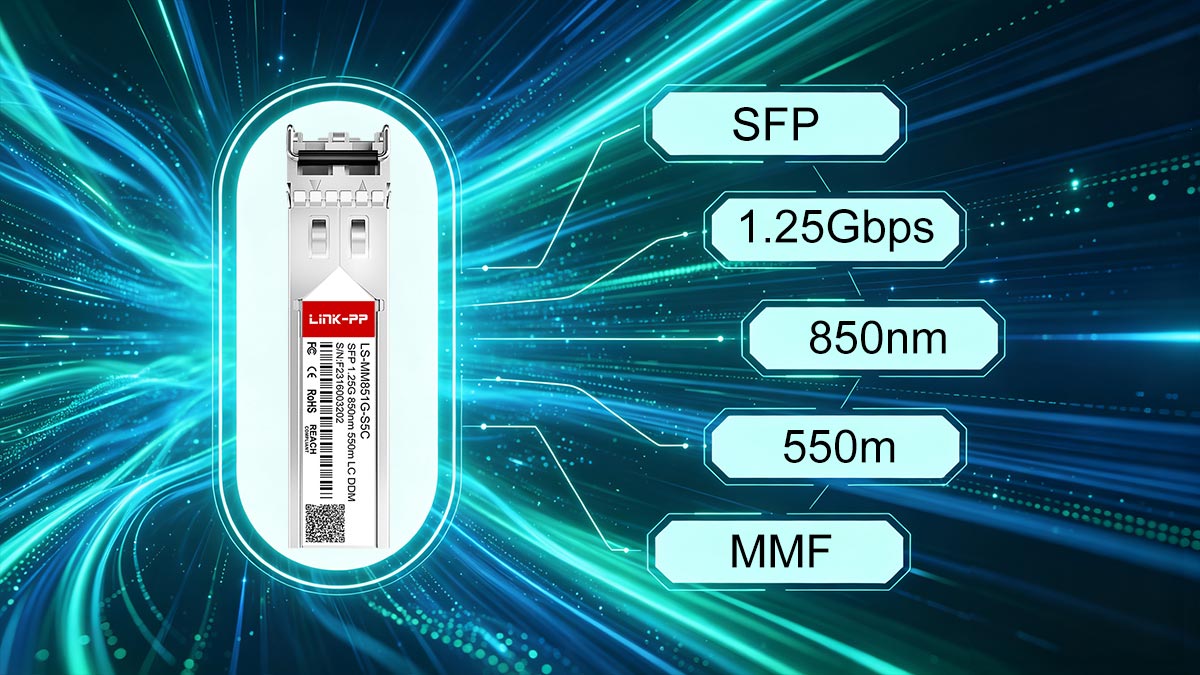
The UACC-OM-MM-1G-D-2 optical transceiver is built to meet the demands of high-speed data transmission over multimode fiber, providing reliable and cost-effective solutions for short-range optics networking. Understanding the key technical specifications of this module is crucial for making informed decisions about its deployment and performance.
Here’s a breakdown of the core technical specifications:
| Specification | Description |
| Brand | Ubiquiti |
| Manufacturer Part | UACC‑OM‑MM‑1G‑D‑2 |
| Form Factor | SFP |
| Data Rate | 1.25Gbps |
| Wavelength | 850nm |
| Fiber Type | Multimode Fiber |
| Connector Type | Duplex LC |
| Maximum Distance | Up to 550 m |
| Standard Compliance | IEEE 802.3z 1000BASE‑SX |
Data Rate and Transmission Speed
The UACC-OM-MM-1G-D-2 transceiver module supports a data rate of 1.25Gbps, which is ideal for typical enterprise network applications that require reliable, high-speed data transmission over fiber. This speed ensures smooth communication between devices, particularly in small-to-medium scale deployments, where stable throughput is critical. While not designed for higher-speed applications, it provides more than enough bandwidth for everyday networking needs in access and aggregation layers.
Wavelength and Fiber Type
Operating at a wavelength of 850nm, the UACC-OM-MM-1G-D-2 is tailored for multimode fiber (MMF) connections, which are commonly used for shorter distances. The 850nm wavelength ensures efficient data transmission with minimal signal loss over multimode fiber, providing an ideal solution for intra-building or campus network applications. This wavelength is widely supported by various multimode fiber types, including OM1, OM2, OM3, and OM4.
Connector Type and Form Factor
Designed in a standard SFP form factor, the UACC‑OM‑MM‑1G‑D‑2 fiber optic SFP module features a duplex LC connector, allowing compact, high‑density deployments. The LC interface ensures secure connections with minimal insertion loss, while the hot‑swappable fiber SFP design provides flexibility for maintenance or upgrades without interrupting network operations. Its durable construction and precision‑engineered optical components also help maintain signal stability and consistent performance in demanding enterprise environments.
Maximum Transmission Distance
The UACC-OM-MM-1G-D-2 supports a maximum transmission distance of up to 550m when used with 50/125µm multimode fiber (MMF), which is commonly referred to as OM2, OM3, or OM4 fiber. This allows for efficient long-range connectivity within buildings or campuses. For installations using 62.5/125µm MMF (OM1 fiber), the maximum transmission distance is reduced to 300m, which is still suitable for most short-range network applications. These distances ensure reliable performance while maintaining cost efficiency for medium-scale network deployments.
💮 UACC-OM-MM-1G-D-2 Performance in Real-World Applications
The UACC-OM-MM-1G-D-2 is designed to deliver consistent performance in real-world network deployments, providing stable throughput, low latency, and reliable connectivity over multimode fiber. Its performance is especially evident in environments where stable, high-speed communication is critical. Below are key aspects of its real-world performance, highlighting its suitability for various networking tasks.
Stable Throughput and Low Latency
One of the standout features of the UACC-OM-MM-1G-D-2 is its ability to provide stable throughput with minimal disruption. This is crucial in environments where data needs to flow without interruptions, such as during video calls or while accessing cloud applications.
- Consistent Data Flow: The module ensures that data transmission remains steady, even under heavy usage, providing uninterrupted service for day-to-day tasks like file transfers, web browsing, and streaming.
- Low Latency: With minimal delay, the UACC-OM-MM-1G-D-2 is ideal for applications that require quick response times, such as voice-over-IP (VoIP) and video conferencing, where even small delays can disrupt communication.
This combination of stable throughput and low latency makes it an excellent choice for network setups where performance is non-negotiable.
Signal Performance over Multimode Fiber
Because it uses 850nm VCSEL optics optimized for OM3 and OM4 multimode fiber, this multimode SFP module maintains a clear, distortion‑free signal across short and mid‑range spans. Its design minimizes modal dispersion and insertion loss, helping preserve strong optical power from transmit to receive ends.
In practical terms, administrators can expect:
- Consistent optical integrity within typical office or campus distances (up to 550 m).
- Reduced error rates compared to lower‑grade fiber modules.
- High immunity to electromagnetic noise, ensuring data packets arrive uncorrupted.
These qualities make it a dependable choice for fiber uplinks, aggregation links, and structured cabling systems where signal precision is crucial.
High-Density Deployment Performance
The UACC‑OM‑MM‑1G‑D‑2’s compact SFP design and duplex LC interface make it highly suitable for high‑density switch setups. Network administrators can populate numerous ports within limited rack space without increased thermal or power concerns.
Key performance advantages include:
- Efficient cooling due to low heat generation.
- Simplified maintenance via hot‑swappable installation, reducing service interruptions.
- Scalable connectivity, allowing easy expansion of backbone capacity as networks grow.
When deployed in large switching environments or cluster systems, the module delivers consistent throughput while minimizing downtime and operational overhead — an essential trait for modern enterprise infrastructures.
💮 Why Look for UACC-OM-MM-1G-D-2 Compatible Alternatives
While the UACC-OM-MM-1G-D-2 offers solid performance, there are several reasons why businesses might seek alternatives. These reasons typically revolve around cost efficiency, vendor flexibility, and ensuring a reliable supply chain. Exploring compatible alternatives can help users find solutions that better meet their specific needs, whether it's for budget constraints or greater compatibility with different network equipment.
Cost Efficiency and Budget Constraints
Cost is often a significant factor when choosing networking hardware. Although the UACC-OM-MM-1G-D-2 is an affordable option, looking for compatible alternatives can provide even more cost-effective solutions. Many third-party vendors offer transceiver modules with similar performance specs, allowing businesses to reduce costs without sacrificing network reliability.
For companies with tight budgets or large-scale network deployments, these savings can add up significantly. Choosing alternatives can also offer more flexibility in terms of purchasing in bulk, enabling businesses to negotiate better pricing or find bulk discounts that suit their financial plans.
Need for Multi-Vendor Compatibility
While the UACC-OM-MM-1G-D-2 is optimized for use with Ubiquiti devices, network environments often involve equipment from multiple vendors. In such cases, finding compatible alternatives ensures that all devices — whether from Ubiquiti, Cisco, or other manufacturers — work seamlessly together.
This multi-vendor compatibility allows businesses to diversify their network infrastructure without being locked into a single supplier. By exploring alternatives, companies can achieve a more flexible and scalable network design that supports a wider range of devices, providing long-term operational benefits.
Availability and Supply Chain Reliability
Supply chain issues and product shortages can lead to delays or difficulty in sourcing specific hardware. This is why looking for alternatives to the UACC-OM-MM-1G-D-2 can be a proactive solution. If there is an issue with availability or long lead times for the Ubiquiti module, businesses can turn to compatible alternatives that are more readily available or sourced from more reliable vendors.
Having access to alternatives ensures that network projects stay on schedule, preventing potential downtime or disruptions. Reliable supply chains are critical for maintaining network performance and meeting project timelines, making compatible alternatives a smart option in unpredictable market conditions.
💮 Key Features to Look for in UACC-OM-MM-1G-D-2 Alternatives
When selecting a compatible alternative to the UACC‑OM‑MM‑1G‑D‑2, it’s important to evaluate not only performance specifications but also quality standards and interoperability. A reliable replacement should deliver the same data throughput, maintain consistent optical performance, and integrate smoothly with Ubiquiti and other network devices. The following key features help ensure that the chosen alternative performs on par with the original module.
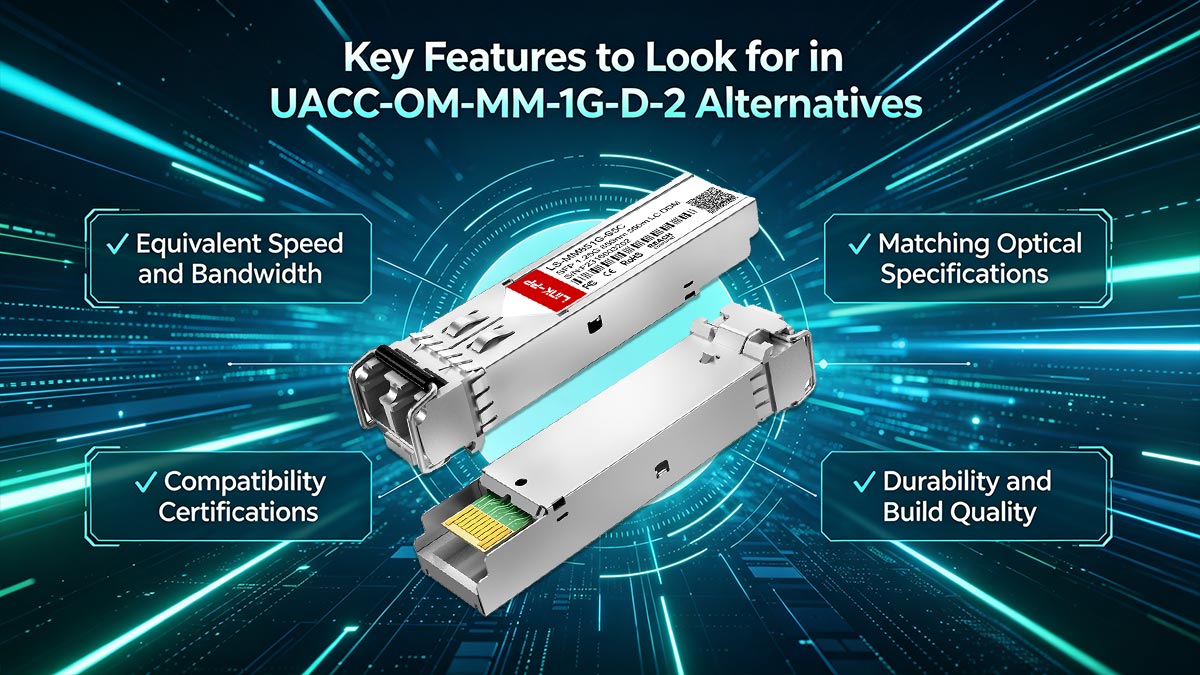
Equivalent Speed and Bandwidth
One of the first factors to consider is whether the alternative offers the same data rate and bandwidth capabilities as the UACC-OM-MM-1G-D-2. It’s essential that the alternative provides a 1Gbps data rate, as this is the standard for the module’s intended applications. This ensures that performance remains consistent without any bottlenecks or speed limitations.
- Matching Throughput: Look for alternatives that deliver the same 1Gbps throughput to guarantee consistent and reliable data transfer, particularly in networks where high-speed performance is critical.
- Bandwidth Capacity: The alternative should also be able to handle the required bandwidth demands, supporting multimode fiber and ensuring there is no congestion even with multiple users or devices connected.
Ensuring these factors match will help you avoid performance degradation and maintain the stability of your network.
Matching Optical Specifications
The optical specifications of an alternative module must align with those of the UACC-OM-MM-1G-D-2 to ensure seamless integration into your network. The wavelength, fiber type, and connector specifications are key elements to check.
- Wavelength: Ensure the alternative operates at 850nm, which is the wavelength that works best with multimode fiber, providing optimal performance and minimizing signal loss over short distances.
- Fiber Compatibility: The alternative should also be compatible with multimode fiber (OM1, OM2, OM3, or OM4), as this is the type of fiber the UACC-OM-MM-1G-D-2 was designed for. This ensures the module will work effectively over the expected distances (e.g., up to 550m with OM4).
By choosing alternatives that match the optical specs, you can be confident in their ability to deliver the same level of performance and compatibility.
Compatibility Certifications
It's crucial that the alternative modules are certified for compatibility with the devices you're using, particularly if you have a Ubiquiti-based network. Compatibility certifications ensure that the module will work without issues and provide the best performance with your network equipment.
- Industry Standards: Check for IEEE 802.3z 1000BASE-SX certification, which ensures that the module is compliant with industry standards for Gigabit Ethernet over fiber. This guarantees that the module will function as expected in your network, meeting quality and performance standards.
- Vendor Certification: Look for modules that are either certified or listed as compatible with your specific hardware, whether it’s from Ubiquiti or another vendor. Some modules are tested and approved for use in particular ecosystems, ensuring smooth integration and reliable performance.
Choosing alternatives with these certifications minimizes the risk of issues related to compatibility and network instability.
Durability and Build Quality
When selecting alternatives to the UACC-OM-MM-1G-D-2, it’s important to consider the durability and build quality of the module to ensure reliable performance over the long term. A well-built module will withstand daily usage in various environments, minimizing the risk of failure or degradation in performance.
- Environmental Resilience: Look for modules that can operate effectively in different temperature ranges and humidity conditions. If the module will be placed in harsh environments, such as data centers or outdoor installations, it’s essential to choose one with a robust design that can handle dust, moisture, and extreme temperatures without compromising its functionality.
- Long-Term Reliability: The alternative should be constructed with high-quality materials that ensure durability and longevity. Modules that use premium components are less likely to experience issues such as signal degradation or physical wear, offering a more reliable solution that won’t need frequent replacements.
Ensuring that the alternative module has a strong build quality will result in a more dependable network connection, reducing downtime and maintenance costs over time.
💮 Compatibility Guide to UACC-OM-MM-1G-D-2 Alternatives
Choosing a UACC-OM-MM-1G-D-2 compatible alternative is not just about matching the same speed and fiber type. You also need to confirm that the module works properly with the target switch, supports the expected link settings, and behaves reliably under the device’s firmware and port rules. A careful compatibility check helps avoid recognition issues, unstable links, or unnecessary troubleshooting later.
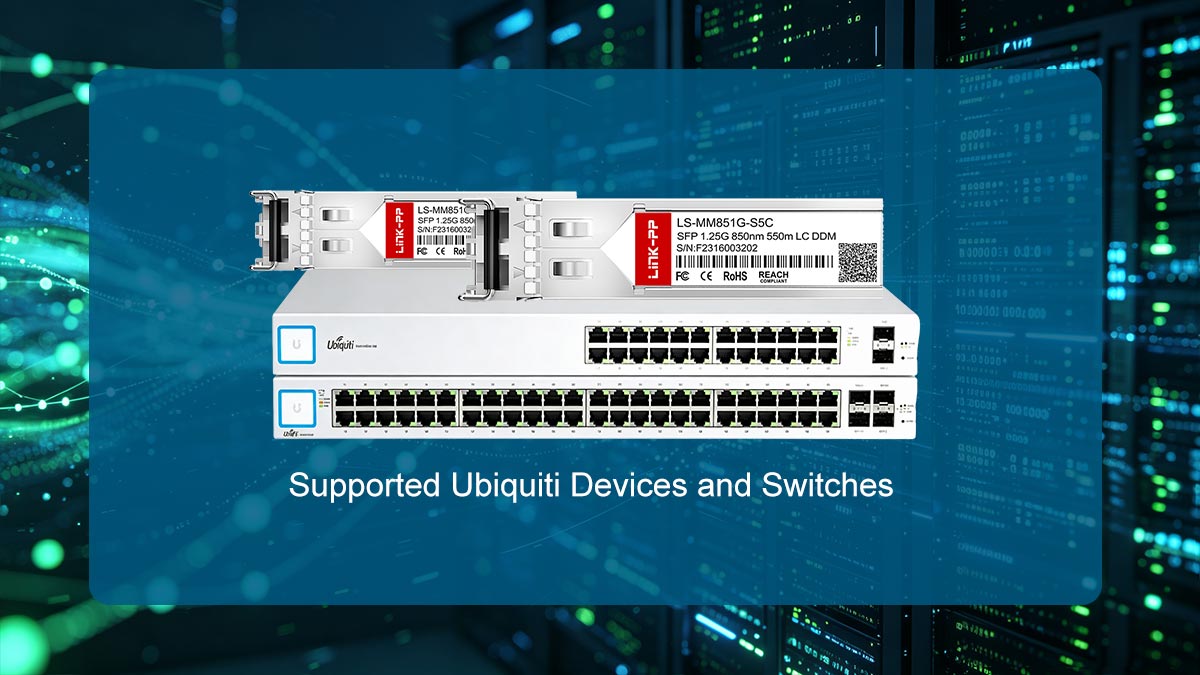
Supported Ubiquiti Devices and Switches
The UACC-OM-MM-1G-D-2 is specifically designed to work with Ubiquiti devices, and this compatibility is key to ensuring that any alternative module will function properly within a Ubiquiti-based network. It’s essential to verify that the alternative modules support the specific Ubiquiti devices and switches you're using, as not all third-party transceivers are universally compatible with Ubiquiti hardware.
- Device and Switch Compatibility: Check that the alternative modules are compatible with your Ubiquiti UniFi or EdgeSwitch devices, ensuring they fit the SFP ports correctly and allow for seamless operation within the network.
- Port Type and Features: Some Ubiquiti devices may have specific port configurations or features that require additional verification, such as speed or duplex settings. Ensure that the alternative modules meet these requirements to avoid operational issues.
Choosing an alternative that is supported by Ubiquiti’s hardware guarantees the same ease of installation and performance that users expect from native modules.
How to Verify SFP Module Compatibility
Verifying SFP module compatibility is essential to ensure that the alternative will work correctly with your network equipment. Not all SFP modules are designed to be interchangeable, even if they share similar technical specifications.
- Check Manufacturer Specifications: Always consult the manufacturer’s compatibility lists and documentation for both the alternative module and the Ubiquiti device you’re using. Many third-party compatible SFP modules will explicitly state the devices they are certified to work with.
- Test Before Full Deployment: If possible, conduct initial testing of the alternative module in a non-production environment to confirm its performance and compatibility. This will help identify any potential issues before full-scale deployment in your network.
By taking these steps, you can ensure that the alternative module will integrate smoothly with your existing setup without introducing compatibility problems.
Firmware and Version Requirements
Firmware can affect whether an SFP module is accepted and how well it is detected by the device. Even when the hardware is compatible on paper, an older firmware version may fail to identify a third-party alternative or may report incomplete module information. For that reason, keeping the switch or router firmware current is an important part of compatibility planning.
It is also wise to verify whether your specific device model has any module-handling quirks in its current software version. In some cases, updating firmware improves transceiver recognition and link stability, especially in mixed-vendor environments. A module that works at the hardware level but lacks firmware support can still create avoidable installation problems.
💮 Installation and Setup Tips for UACC-OM-MM-1G-D-2 Alternatives
Proper installation and setup are essential to ensure that UACC-OM-MM-1G-D-2 compatible alternatives perform as expected. Even if the specifications match, incorrect handling or configuration can lead to connectivity issues. The following tips will help you deploy alternative SFP modules smoothly and avoid common pitfalls.
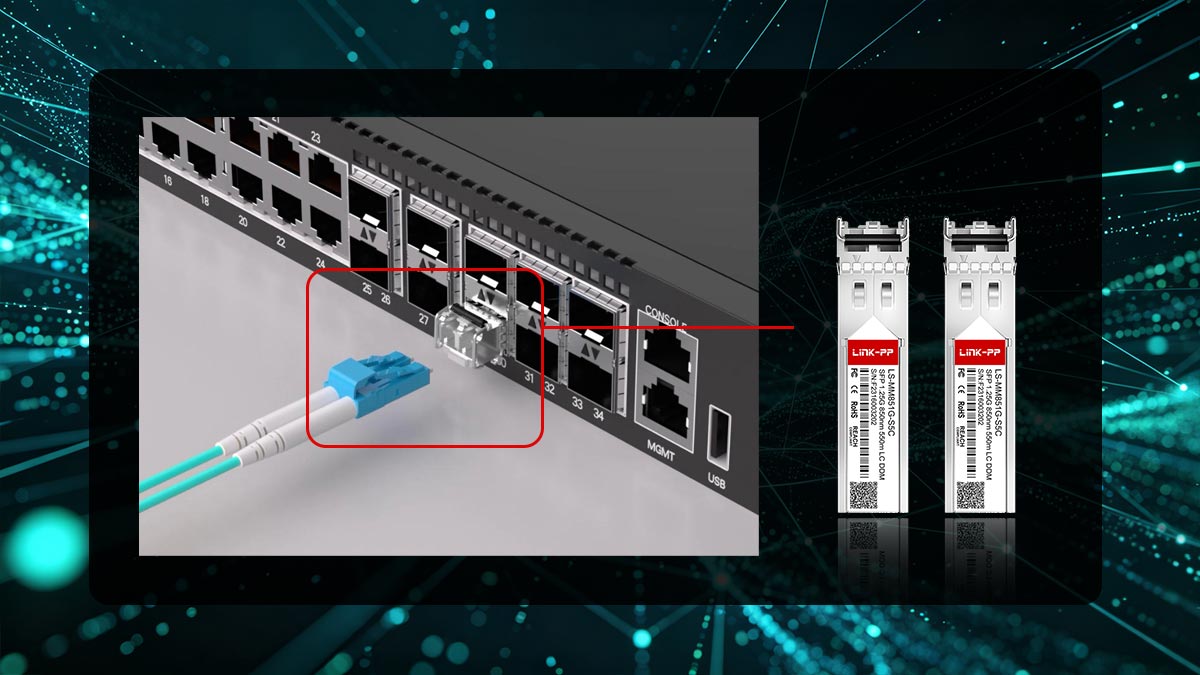
Step-by-Step Installation Guide
Installing an SFP module is generally straightforward, but following the correct steps ensures optimal performance and avoids hardware issues. A careful and methodical approach is recommended, especially in live network environments.
- Power Consideration: While most SFP modules support hot-swapping, it’s still good practice to ensure the device is stable and not under heavy load before insertion.
- Insert the Module Properly: Gently slide the SFP module into the SFP port until it clicks into place. Avoid using excessive force.
- Connect Fiber Cable: Attach the LC fiber connector securely, ensuring the transmit (Tx) and receive (Rx) sides are correctly aligned.
- Check Link Status: Once connected, verify that the link LED is active and that the device recognizes the module.
Following these steps helps ensure a smooth installation with minimal risk of physical or connectivity issues.
Troubleshooting Common Issues
Even with compatible modules, issues can occasionally arise during setup. Identifying and resolving them quickly is key to maintaining network stability.
- No Link Detected: Check fiber polarity (Tx/Rx), clean connectors, and ensure the fiber type matches the module (multimode vs single-mode).
- Module Not Recognized: Verify compatibility and check if the device firmware supports third-party modules.
- Intermittent Connectivity: Inspect fiber cables for damage or bending, and confirm the transmission distance is within supported limits.
Most issues are related to physical connections or compatibility mismatches, so a systematic check usually resolves them.
Ensuring Compatibility during Setup
To avoid problems during deployment, it’s important to confirm compatibility before and during installation. This reduces the risk of downtime and ensures stable operation from the start.
- Pre-Deployment Check: Confirm that the module matches required specs (1G, 850nm, MMF, LC duplex).
- Device Compatibility: Ensure the switch or router supports third-party compatible SFP modules if you're not using original Ubiquiti optics.
- Firmware Alignment: Update device firmware if needed to improve module recognition and stability.
Taking these precautions helps ensure that the UACC-OM-MM-1G-D-2 alternative module integrates seamlessly into your existing network.
Testing and Performance Verification
After installation, testing is critical to confirm that the module is working correctly and delivering expected performance. This step helps catch hidden issues before they impact users.
- Verify Link and Speed: Check that the link is up and running at 1Gbps as expected.
- Run Basic Connectivity Tests: Use ping or throughput tests to confirm stable communication between devices.
- Monitor Performance: Observe for packet loss, latency, or fluctuations over time to ensure consistent operation.
Thorough testing ensures that the deployed alternative performs just as reliably as the original UACC-OM-MM-1G-D-2, providing confidence in long-term network stability.
💮 Key Takeaways on UACC-OM-MM-1G-D-2 Specs and Alternatives
The UACC-OM-MM-1G-D-2 is a standard 1G multimode SFP module widely used for short-distance fiber connections, offering stable performance and easy integration with Ubiquiti devices. While it meets most basic networking needs, choosing the right compatible alternative can provide greater flexibility and cost efficiency.
When evaluating alternatives, keep these key points in mind:
- Ensure Equivalent Specifications: Look for 1G data rate, 850nm wavelength, and multimode fiber support to maintain consistent performance.
- Prioritize Compatibility: Choose modules that are tested with Ubiquiti or multi-vendor environments to avoid deployment issues.
- Balance Cost and Quality: Reliable third-party modules can significantly reduce costs without sacrificing stability.
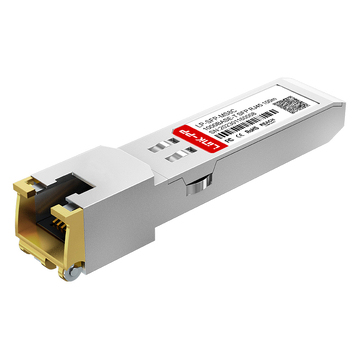
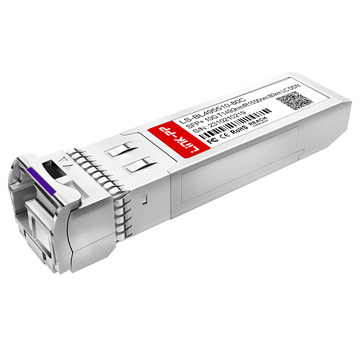
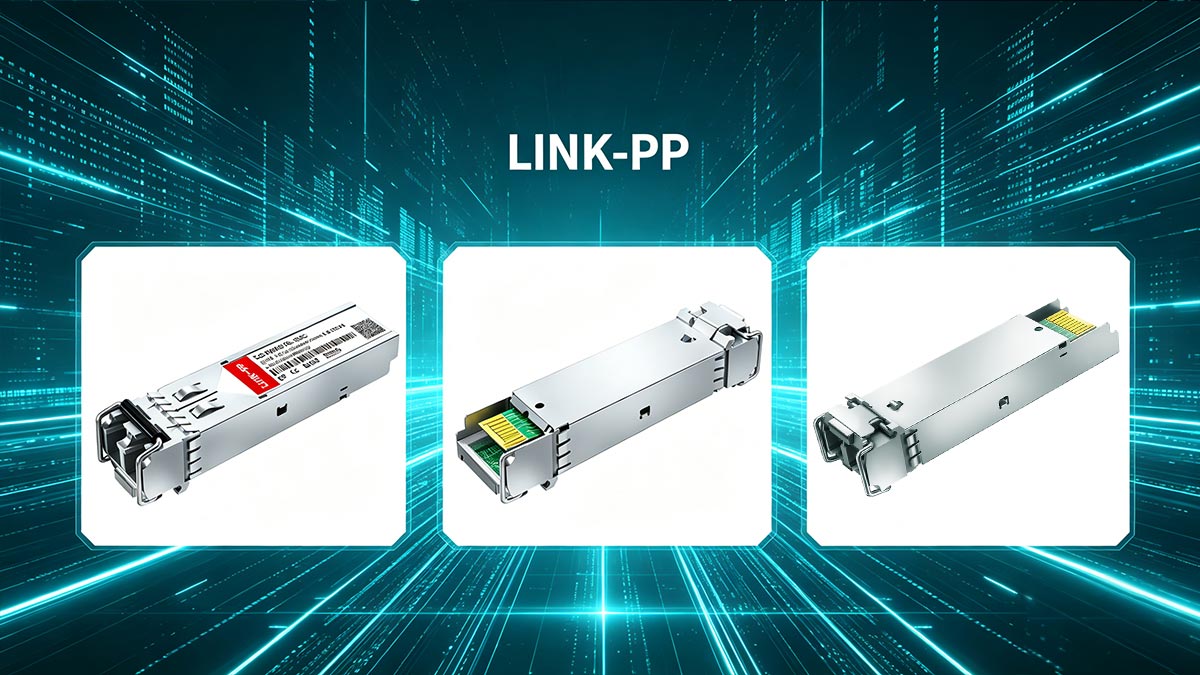
A recommended compatible option is the LINK-PP LS-MM851G-S5C 1000BASE-SX SFP, which delivers comparable performance, strong compatibility, and dependable build quality. This SFP module serves as an alternative to the UACC-OM-MM-1G-D-2 across a wide range of short-link network scenarios.
For a reliable and cost-effective upgrade, you can explore more compatible SFP modules directly from the LINK-PP Official Store, where you’ll find solutions tailored to your network needs.