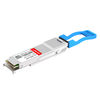
In modern network environments, ensuring seamless connectivity across devices from multiple vendors is a critical challenge. The TP-Link TL-SM311LM SFP module addresses this need by providing reliable gigabit fiber connectivity that works in diverse network setups. Its compatibility with a wide range of switches, routers, and media converters makes it an attractive option for enterprises and small-to-medium businesses aiming for flexible and cost-effective network deployment.
Understanding the multi-vendor interoperability of TL-SM311LM is essential for network engineers and IT administrators who want to avoid device lock-in and ensure consistent performance. This article explores the technical specifications of TL-SM311LM, its compatibility across leading vendors, key factors affecting interoperability, and best practices for deployment. You will gain practical insights on how to integrate this module into heterogeneous networks while maintaining network reliability and scalability.
✅ Overview of TL-SM311LM Specifications and Use Cases
The TL-SM311LM is a gigabit SFP module designed to deliver reliable long-distance fiber connectivity while maintaining compatibility with various networking devices. Its technical specifications make it suitable for enterprise and SMB environments where stable and interoperable links are critical. Understanding its key features and typical deployment scenarios helps IT administrators plan network architecture more effectively.
Key Technical Specifications
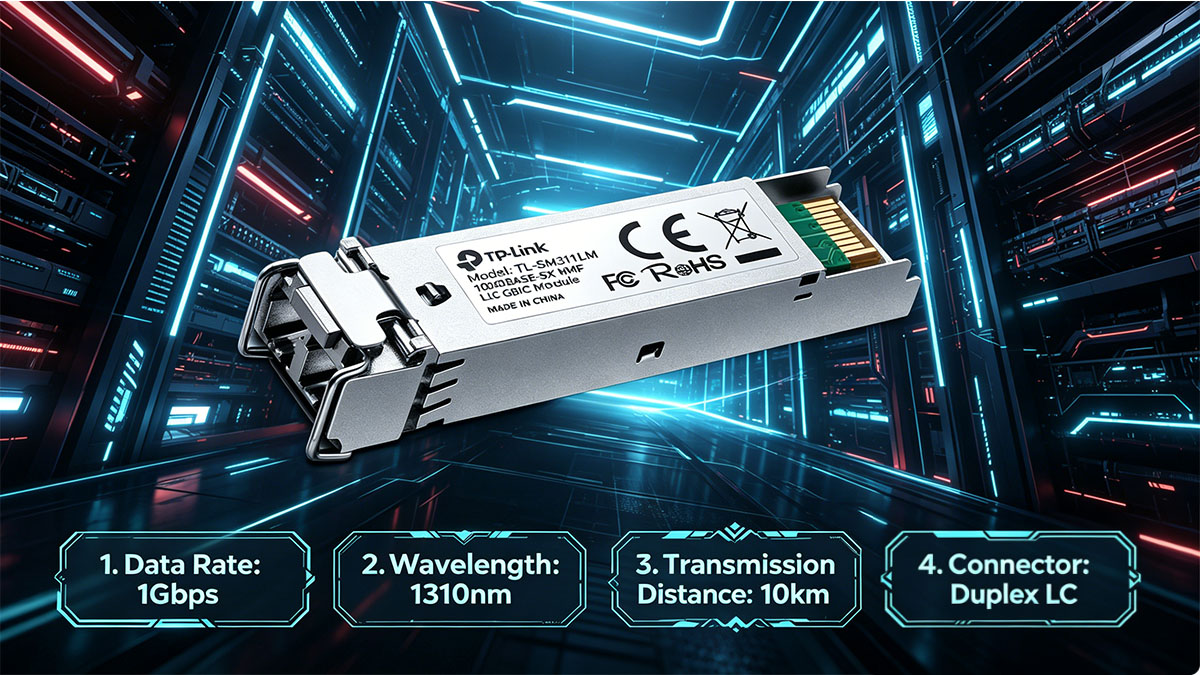
The TL-SM311LM supports standard 1000Base-LX operation and is designed for single-mode fiber. It provides predictable performance over extended distances, making it ideal for backbone connections and inter-building links. The main technical details are summarized in the table below:
| Specification |
TL-SM311LM Details |
Notes |
| Data Rate |
1 Gbps |
Standard gigabit speed |
| Wavelength |
1310 nm |
Single-mode fiber compatibility |
| Transmission Distance |
Up to 10 km |
Optimal for campus and metro networks |
| Connector Type |
LC duplex |
Widely used industry standard |
| DDM Support |
Yes |
Monitors temperature, voltage, optical power |
These specifications demonstrate that the TL-SM311LM is compliant with industry standards, ensuring basic interoperability with any MSA-compliant host device. The inclusion of Digital Diagnostic Monitoring allows administrators to monitor real-time operational parameters, reducing troubleshooting time and maintaining link reliability.
Typical Deployment Scenarios
The TL-SM311LM module is versatile and can be used in a variety of network environments. Its most common applications include:
- Enterprise campus networks where fiber links connect different buildings or floors
- ISP access networks and aggregation layers requiring stable long-distance links
- Fiber uplinks for small-to-medium business switches to improve network performance
- Integration with routers, managed switches, and media converters for network expansion
In practice, deploying the TL-SM311LM in these scenarios helps organizations reduce dependency on vendor-specific modules while maintaining predictable network performance. Proper selection of fiber type, distance planning, and connector maintenance ensures that the module delivers reliable service without frequent link interruptions.
✅ Why Multi-Vendor Compatibility Matters
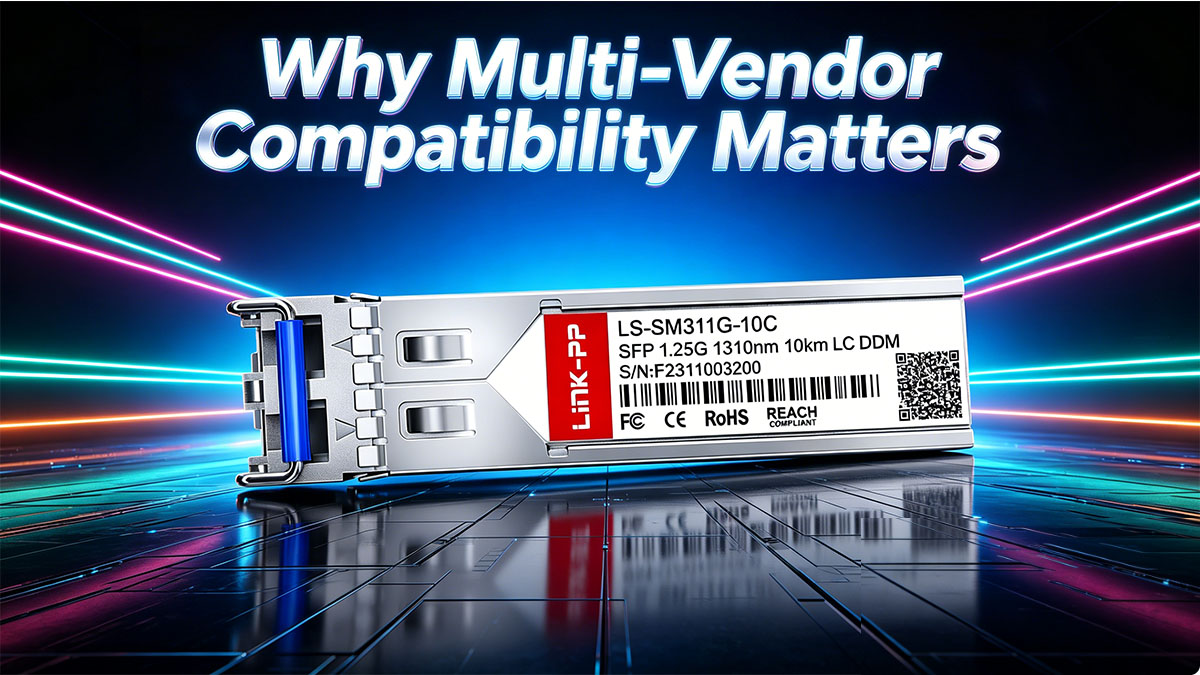
Ensuring multi-vendor compatibility for SFP modules like the TL-SM311LM is crucial for modern networks. Networks often include devices from different manufacturers, and using a module that reliably interoperates across these systems can prevent connectivity issues, reduce operational costs, and enhance overall network flexibility.
Heterogeneous Network Environments
In many organizations, switches, routers, and media converters come from multiple vendors. Without a compatible SFP module, administrators may face frequent link failures or vendor lock-in situations, where network expansion or upgrades are constrained to a single brand. TL-SM311LM's adherence to industry standards ensures it can function across diverse platforms, reducing the risk of incompatibility.
Cost and Operational Flexibility
Multi-vendor compatibility provides tangible operational benefits. Organizations can standardize on modules like the TL-SM311LM without being tied to specific vendor optics. The advantages include:
- Reduced dependency on original equipment manufacturer (OEM) branded modules
- Lower overall operational expenditure due to simplified spare parts inventory
- Easier network scaling without needing to match module brands to devices
By allowing IT teams to source compatible modules from multiple vendors, TL-SM311LM helps optimize budget allocation while maintaining network performance and reliability.
Network Reliability and Redundancy
Using a module that works across different vendors also strengthens network reliability. Compatible SFP modules allow for faster replacements during failures and enable diverse network design strategies, such as redundant uplinks and multi-path connectivity. Key benefits include:
- Ability to quickly replace failed modules without sourcing from the same brand
- Flexibility to design redundant paths using different devices
- Minimized downtime during maintenance or unexpected outages
In summary, the TL-SM311LM’s multi-vendor interoperability ensures that networks remain flexible, cost-efficient, and resilient. It allows organizations to focus on performance and scalability rather than worrying about vendor constraints.
✅ TL-SM311LM Compatibility with Major Vendors
The TL-SM311LM demonstrates strong compatibility across a wide range of network devices from different vendors, making it a reliable choice for heterogeneous network environments. Its adherence to MSA standards allows it to function with switches, routers, and media converters from multiple manufacturers, though practical interoperability can vary depending on the host device’s firmware and hardware design. Understanding vendor-specific behaviors helps ensure smooth deployment and stable link performance.
Compatibility with Cisco Devices
TL-SM311LM generally works with Cisco switches, including the Catalyst series, but some factors can affect performance:
- TL-SM311LM is recognized as a standard 1000Base-LX module and typically establishes a link without issues.
- Certain Cisco devices may require the module to be properly encoded; otherwise, a warning or port shutdown can occur.
- Digital Diagnostic Monitoring (DDM) functions may be partially limited depending on the switch model.
Before summarizing the overall compatibility across multiple vendors, it is helpful to provide a concise comparison table. This table highlights key Cisco models and shows how TL-SM311LM performs in terms of link establishment, DDM support, and any potential configuration considerations. Such a visual summary allows administrators to quickly identify which devices may require additional validation steps.
| Vendor |
Compatible Devices |
Key Notes on TL-SM311LM Performance |
| Cisco |
Catalyst 2960, 3750, 9200 Series |
May require EEPROM validation, partial DDM support |
| MikroTik |
CRS series, RouterBOARD switches |
Plug-and-play, full link stability |
| Ubiquiti |
UniFi switches and EdgeMAX routers |
Automatic negotiation, DDM generally supported |
| Other Vendors |
Netgear, D-Link, Huawei |
Compatibility depends on MSA compliance, minor firmware variations possible |
The table illustrates TL-SM311LM’s multi-vendor interoperability. While most devices accept the module without issue, administrators should verify firmware versions and check for any vendor-specific warnings during deployment to ensure predictable network behavior.
Interoperability with MikroTik and Ubiquiti
TL-SM311LM performs reliably in MikroTik and Ubiquiti environments:
- Links typically come up automatically without requiring additional configuration.
- Digital Diagnostic Monitoring (DOM) data is often fully accessible, allowing real-time monitoring of optical power, temperature, and voltage.
- Both RouterOS and UniFi environments handle auto-negotiation smoothly, ensuring stable gigabit connections.
This ease of integration makes TL-SM311LM a practical choice for SMB and enterprise deployments that rely on these vendors’ hardware.
Compatibility with Other Vendors
Other network equipment vendors, such as Netgear, D-Link, and Huawei, generally accept TL-SM311LM due to its MSA-compliant design. Key considerations include:
- Some devices may block unrecognized SFP modules unless a firmware update allows third-party optics.
- Minor performance variations can occur in link detection times or DOM reporting.
- Testing in a controlled lab environment before field deployment helps identify potential issues.
In conclusion, TL-SM311LM’s design ensures broad compatibility, but verifying device acceptance and performing pre-deployment testing is recommended to achieve predictable and reliable network performance across multiple vendors.
✅ Key Factors Affecting TL-SM311LM Interoperability
Successful deployment of the TL-SM311LM across different vendor devices depends on several technical and operational factors. Understanding these factors helps network administrators anticipate potential issues and ensures reliable network performance.
SFP MSA Compliance
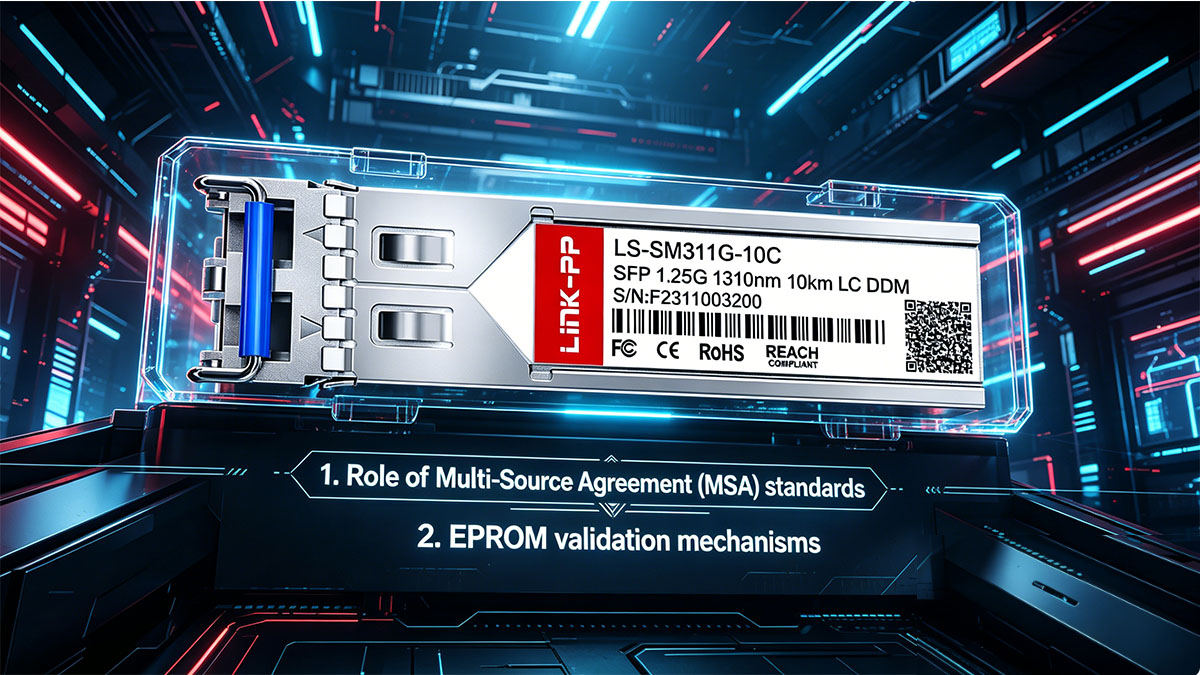
The primary factor enabling broad compatibility is adherence to the Multi-Source Agreement (MSA) standards. TL-SM311LM follows the 1000Base-LX MSA specifications, which define mechanical, electrical, and optical characteristics of SFP modules. This compliance ensures:
- Standardized physical form factor and connector types
- Predictable signal characteristics for long-distance single-mode fiber links
- Baseline interoperability with any MSA-compliant host device
MSA compliance provides a foundation for cross-vendor compatibility, but it does not guarantee full functionality, particularly when device-specific validation or coding checks are enforced.
Vendor Locking and Firmware Restrictions
Some vendors implement module verification or locking mechanisms that can affect third-party SFP operation. Key considerations include:
- EEPROM checks that may reject unrecognized modules
- Firmware versions that enable or disable DOM/DDM support
- Port shutdown or warning messages triggered by non-certified optics
These mechanisms are designed to protect device operation but can require administrators to validate TL-SM311LM functionality in lab environments before field deployment.
Optical and Physical Layer Considerations
Physical and optical characteristics also impact interoperability. Ensuring proper alignment between module capabilities and network design is critical. Important factors include:
- Fiber type: TL-SM311LM is optimized for single-mode fiber; using multimode fiber may result in attenuation or signal errors
- Distance and power budget: Exceeding the recommended 10 km range can lead to link instability
- Connector cleanliness: Dust or misalignment in LC duplex connectors can cause intermittent link failures
Addressing these factors during deployment planning minimizes performance degradation and reduces troubleshooting efforts.
Environmental and Operational Factors
Even fully compatible modules can be affected by environmental and operational conditions. Consider the following:
- Temperature variations can influence optical power and module longevity
- Humidity and dust in fiber pathways may degrade signal quality
- High-density switch environments require attention to airflow to prevent overheating
By monitoring these conditions and adhering to deployment best practices, administrators can maintain predictable TL-SM311LM performance across multiple vendors.
✅ Testing and Validation Strategies
Ensuring that TL-SM311LM modules function reliably across multiple vendors requires careful testing and validation. Proactive testing not only verifies interoperability but also helps identify potential issues before deployment, reducing downtime and operational risk.
Lab Testing for Cross-Vendor Environments
Before deploying TL-SM311LM modules in production networks, conducting controlled lab tests is essential. The key objectives are to confirm link stability, verify DOM/DDM functionality, and observe module behavior under varying conditions. Typical lab testing steps include:
- Device Selection: Include a range of switches and routers from all intended vendors to capture cross-vendor behavior.
- Module Installation: Insert TL-SM311LM into each device port and monitor for link establishment.
- Parameter Verification: Measure optical power, temperature, voltage, and error rates using DOM/DDM tools.
- Stress Testing: Simulate high network load to observe stability under operational conditions.
- Documentation: Record any warnings, errors, or deviations from expected behavior for each vendor device.
These steps allow IT teams to proactively identify potential incompatibilities or limitations and adjust configurations before live deployment.
Field Deployment Validation
Even after successful lab testing, real-world environments may introduce variables that affect module performance. Field validation focuses on monitoring actual network conditions and ensuring consistent performance. Best practices include:
- Initial Link Observation: Monitor new connections for a minimum of 24–48 hours to detect intermittent link flaps.
- Environmental Checks: Verify fiber cleanliness, correct type, and adherence to distance and power budget guidelines.
- Redundancy Testing: Test failover paths to ensure that backup links function correctly with TL-SM311LM.
Field validation ensures that modules not only meet theoretical specifications but also perform reliably under operational conditions.
Tools and Commands for Verification
A variety of tools and device commands can help validate TL-SM311LM functionality and detect issues early. Key methods include:
- CLI Diagnostics: Commands such as
show interface transceiver or show module provide link status and module health.
- DOM/DDM Monitoring Tools: Track optical power, voltage, and temperature in real-time.
- Link Quality Analysis: Use packet monitoring or error counters to detect intermittent issues or degraded performance.
Regular use of these tools during both lab and field testing helps maintain network stability and quickly identifies modules that may require replacement or firmware adjustment.
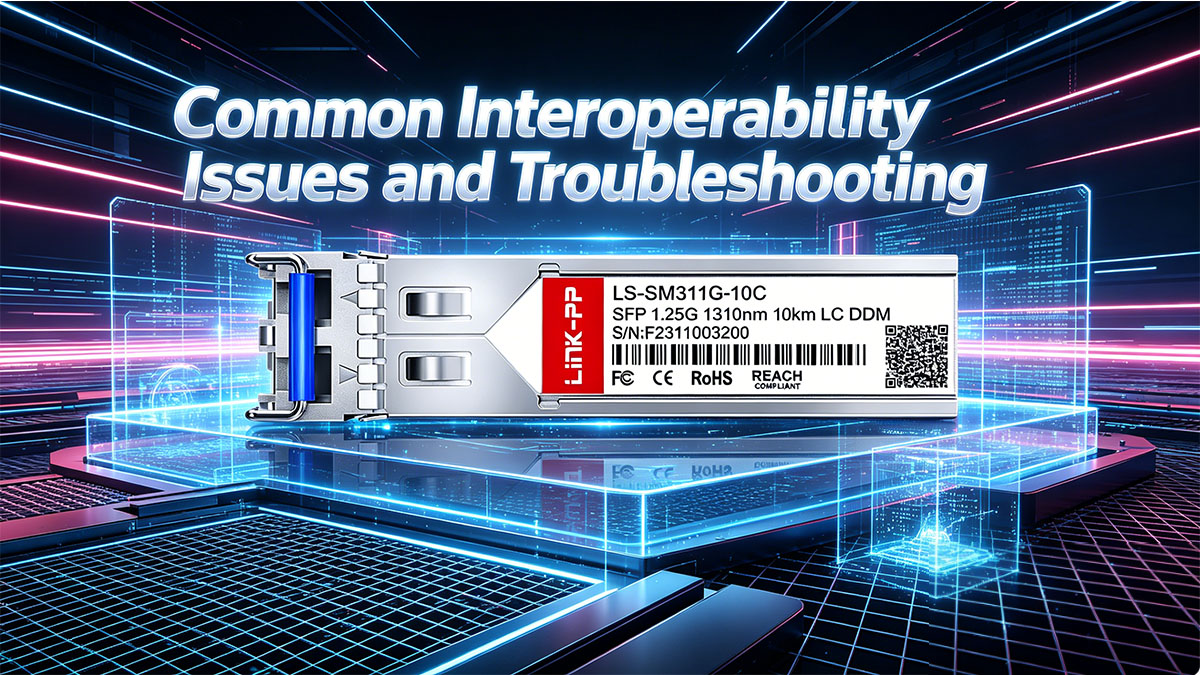
✅ Common Interoperability Issues and Troubleshooting
Even when TL-SM311LM modules are designed for multi-vendor compatibility, certain interoperability issues can arise due to firmware differences, environmental factors, or network design constraints. Recognizing these issues early and applying systematic troubleshooting ensures reliable network performance and minimizes downtime.
Link Not Detected or Flapping
A common challenge occurs when the module fails to establish a stable link or experiences intermittent connectivity. Causes and solutions include:
- EEPROM or Vendor Locking: Some devices reject unrecognized SFP modules. Confirm that the host device allows third-party optics or check for firmware updates.
- Incorrect Fiber Type or Distance: TL-SM311LM is designed for single-mode fiber up to 10 km. Using multimode fiber or exceeding the distance limit may cause flapping.
- Connector Contamination: Dust or misalignment in LC duplex connectors can degrade signal quality. Clean connectors before installation.
Systematically addressing these causes usually resolves link stability issues and ensures predictable performance.
DOM/DDM Data Not Available
Another frequent issue involves partial or missing Digital Optical Monitoring (DOM/DDM) data:
- Firmware Limitations: Some switches or routers may not fully support third-party DOM data. Verify device documentation for supported modules.
- Module-Specific Variations: Certain TL-SM311LM batches may have limited DDM reporting capabilities with specific vendor devices.
- Monitoring Tool Configuration: Ensure that network monitoring tools are correctly configured to read DOM parameters.
By understanding these limitations, administrators can set realistic expectations for monitoring and implement alternative verification methods if needed.
Inconsistent Performance Across Devices
Even when links are established, performance may vary due to environmental or operational factors:
- Port Sensitivity Differences: Vendor devices may have different optical thresholds, affecting signal quality and link stability.
- Fiber Quality and Path: Poorly installed fiber or bends exceeding minimum radius can introduce attenuation.
- Environmental Conditions: Temperature fluctuations, dust, or inadequate airflow in high-density racks can impact module reliability.
Addressing these factors through proper fiber management, environmental control, and network design optimization improves overall module performance.
Troubleshooting Workflow
A structured approach to troubleshooting TL-SM311LM interoperability issues can save time and prevent repeated failures:
- Identify the affected link and confirm the physical connection.
- Verify that the correct fiber type and distance are used.
- Check host device firmware and module acceptance logs.
- Monitor DOM/DDM readings to detect abnormal optical power or temperature.
- Test the module on an alternate port or device to isolate the issue.
- Replace or clean connectors if environmental factors are suspected.
Following this workflow ensures systematic diagnosis and enhances the likelihood of resolving issues efficiently.
✅ Best Practices for Ensuring Seamless Compatibility
Achieving reliable multi-vendor interoperability with TL-SM311LM requires proactive planning and adherence to best practices. Following structured deployment and maintenance strategies minimizes potential issues and maximizes network performance across heterogeneous environments.
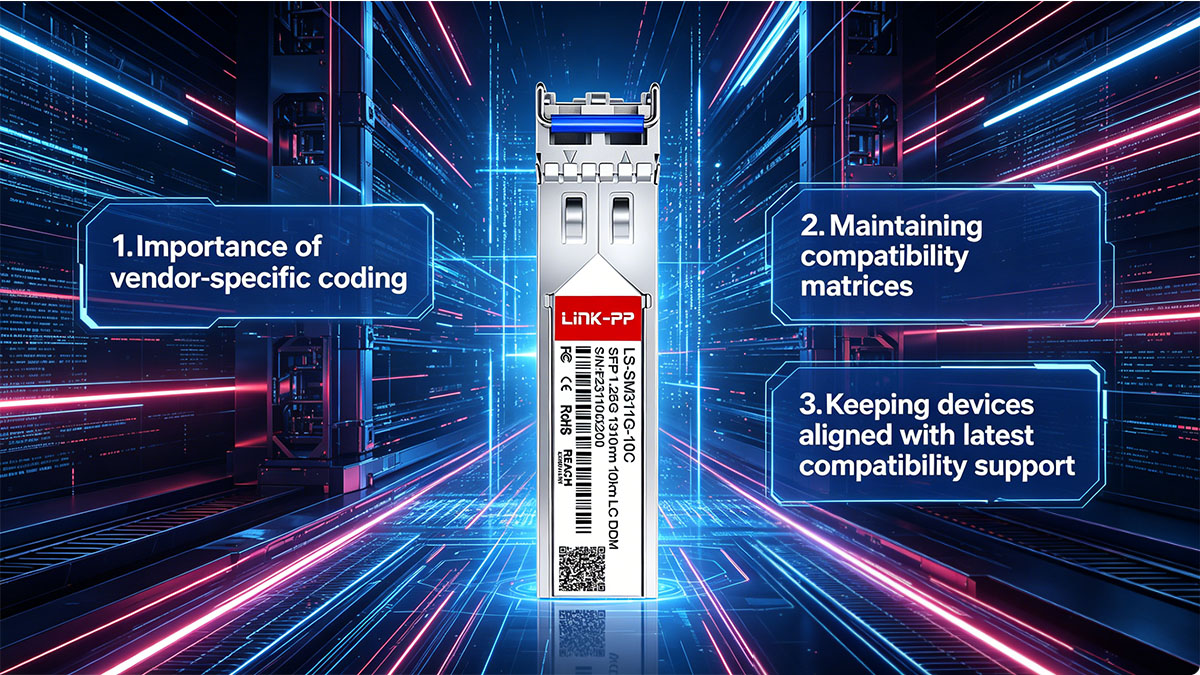
Selecting Properly Encoded Compatible Modules
Ensuring that the SFP modules are correctly encoded and recognized by host devices is critical for seamless operation. Key points include:
- Verify that TL-SM311LM modules comply with industry standards (MSA, 1000Base-LX).
- Pre-test modules in lab environments to ensure link establishment and DOM/DDM functionality across all intended devices.
- Consider using pre-validated modules when deploying in mixed-vendor networks to avoid unexpected port shutdowns or warnings.
Proper module selection reduces compatibility issues and eliminates the need for repeated troubleshooting in production networks.
Standardizing Network Components
Standardization of network components simplifies management and improves consistency in multi-vendor deployments:
- Maintain a consistent fiber type (single-mode for TL-SM311LM) and connector standard (LC duplex).
- Document compatible module lists for each switch and router model to guide procurement and replacement.
- Use uniform port configurations, such as speed, duplex, and flow control settings, to reduce link negotiation issues.
By reducing variability, administrators can minimize configuration errors and achieve predictable network behavior.
Regular Firmware and Hardware Updates
Keeping devices up to date ensures that TL-SM311LM modules function optimally across vendor platforms:
- Apply firmware updates that expand third-party module support and enhance DOM/DDM compatibility.
- Monitor vendor release notes for compatibility advisories related to SFP modules.
- Schedule periodic maintenance windows to validate module performance and adjust configurations as needed.
Regular updates not only improve interoperability but also enhance security and operational stability.
Monitoring and Documentation
Ongoing monitoring and accurate documentation are essential for maintaining long-term compatibility:
- Use DOM/DDM readings to track optical power, voltage, and temperature, identifying anomalies before failures occur.
- Maintain logs of module deployment locations, device models, and firmware versions.
- Implement automated alerts for link failures or abnormal optical readings to enable proactive intervention.
A structured monitoring strategy allows network teams to detect emerging issues early, ensuring that TL-SM311LM continues to perform reliably in multi-vendor environments.
In summary, following these best practices—careful module selection, standardization, firmware updates, and continuous monitoring—helps organizations maximize the value of TL-SM311LM while minimizing operational risks and ensuring stable network performance.
✅ Future Trends in Multi-Vendor Optical Interoperability
Multi-vendor optical interoperability is becoming increasingly critical as networks grow more complex and heterogeneous. Organizations are no longer limited to a single vendor ecosystem, and maintaining seamless connectivity across diverse hardware requires strategic planning and adoption of emerging technologies. The future will be shaped by open networking, smarter optical modules, and cross-vendor ecosystems, enabling more flexible, scalable, and resilient networks.
Evolution of Open Networking
Open networking is driving a paradigm shift in how networks are designed and deployed:
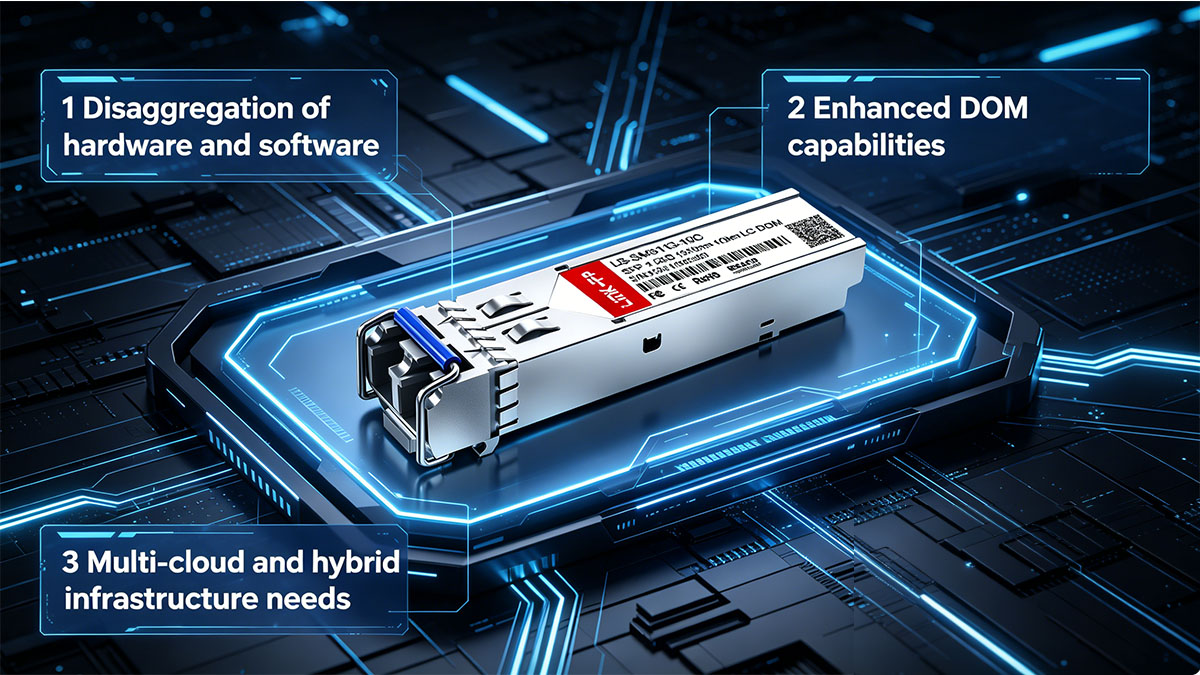
- Disaggregation of Hardware and Software: Traditional networking often ties the operating system to the hardware vendor. The disaggregation trend separates hardware from software, allowing network operating systems to run on white-box or third-party switches. This enables TL-SM311LM and other SFP modules to operate in multi-vendor environments with consistent link behavior.
- Increased Adoption of White-Box Switches: White-box switches provide flexibility in module selection, as they typically adhere strictly to MSA standards and support diverse optics. This reduces the risk of vendor lock-in and allows organizations to mix-and-match modules like TL-SM311LM across heterogeneous network devices, facilitating predictable interoperability and easier upgrades.
These developments support a more modular and cost-effective approach to optical networking, where modules and switches can be chosen based on performance and compatibility rather than vendor constraints.
Advancements in Optical Module Intelligence
The intelligence of optical transceivers is evolving, improving cross-vendor interoperability and proactive maintenance capabilities:
- Enhanced DOM Capabilities: Future modules will provide higher-resolution Digital Optical Monitoring (DOM) data, including precise measurements of optical power, voltage, temperature, and link quality. This enhanced telemetry allows administrators to detect anomalies across different vendor devices before they impact network performance.
- Predictive Maintenance and Telemetry: Machine learning and predictive analytics will analyze historical and real-time DOM data to forecast potential link failures or degradation. This proactive approach ensures that TL-SM311LM modules and their future equivalents can maintain high uptime across multi-vendor deployments, reducing manual troubleshooting and operational risk.
Intelligent optical modules transform networks from reactive maintenance models to proactive, self-aware systems that adapt to environmental and operational changes in real-time.
Growing Demand for Cross-Vendor Ecosystems
As enterprises embrace hybrid and multi-cloud infrastructures, interoperability across vendor devices becomes essential:
- Multi-Cloud and Hybrid Infrastructure Needs: Organizations increasingly deploy workloads across private data centers, public clouds, and edge sites. Maintaining consistent optical connectivity across diverse hardware requires modules that reliably operate in different vendor environments, ensuring seamless data flow.
- Standardization Driving Interoperability: Industry standards, such as MSA-compliant SFP modules, continue to underpin cross-vendor compatibility. Standardization ensures that modules like TL-SM311LM perform predictably, supporting scalable network expansion and simplifying operational management in multi-vendor deployments.
The growing reliance on heterogeneous networks and multi-cloud strategies reinforces the importance of interoperable optical modules and highlights the strategic value of adopting standards-compliant, intelligent transceivers.
✅ FAQs
Q1: What is the TL-SM311LM module used for?
A1: TL-SM311LM is a 1G SFP optical transceiver designed for single-mode fiber links up to 10 km, suitable for connecting switches, routers, and other network devices.
Q2: Is TL-SM311LM compatible with multiple vendors?
A2: Yes, it is MSA-compliant and interoperable with most major vendor devices, including Cisco, MikroTik, Ubiquiti, and other switches supporting 1000Base-LX.
Q3: Can TL-SM311LM support Digital Optical Monitoring (DOM)?
A3: TL-SM311LM supports basic DOM functions, providing real-time optical power, temperature, and voltage monitoring, although availability may vary by vendor device.
Q4: What factors affect TL-SM311LM interoperability?
A4: Key factors include vendor firmware restrictions, fiber type and quality, distance limitations, connector cleanliness, and environmental conditions such as temperature and airflow.
Q5: How should TL-SM311LM be tested before deployment?
A5: Conduct lab testing across all intended devices, verify link establishment, monitor DOM metrics, perform stress tests under load, and document any device-specific issues.
Q6: What are common issues when using TL-SM311LM in multi-vendor networks?
A6: Common issues include link flaps, partial DOM support, device warnings due to unrecognized modules, and performance variation due to fiber quality or port sensitivity.
✅ Conclusion
The TL-SM311LM module remains a reliable and versatile solution for multi-vendor optical networks, providing 1G connectivity over single-mode fiber with predictable performance. Its MSA compliance and interoperability with major vendors such as Cisco, MikroTik, and Ubiquiti make it an essential choice for organizations seeking stable, cross-platform optical links in heterogeneous network environments.
Key takeaways from this guide include:
- Cross-Vendor Compatibility: Works seamlessly with multiple switches and routers, reducing operational complexity.
- Enhanced Monitoring: Supports DOM/DDM features for real-time optical power, voltage, and temperature tracking.
- Deployment Best Practices: Pre-deployment testing, proper fiber selection, and standardized configurations improve link stability.
- Future-Proof Considerations: Open networking, intelligent modules, and predictive analytics ensure scalability and reliability in evolving multi-cloud infrastructures.
For network administrators looking to implement dependable and standards-compliant optical connectivity, the TL-SM311LM is a practical and proven choice. Explore the full range of compatible modules and solutions at the LINK-PP Official Store to ensure seamless multi-vendor network deployment and optimized performance across your infrastructure.