Modern enterprise networks and data centers demand high-speed, reliable connectivity to support cloud services, virtualization, and large-scale data transfer. The SFP-XG-LX-SM1310 optical transceiver has emerged as a popular choice for 10G single-mode applications, offering long-distance transmission capabilities and consistent performance. For organizations using H3C switches and routers, ensuring compatibility with this module is critical to maintaining stable network links and avoiding connectivity issues.
This guide provides a comprehensive overview of SFP-XG-LX-SM1310 compatibility with H3C devices, including technical specifications, deployment considerations, verification methods, and best practices for integrating this module into enterprise networks. Whether you are planning to expand your existing infrastructure or standardize 10G optical links across multiple sites, understanding the compatibility factors and performance requirements of SFP-XG-LX-SM1310 can help optimize network reliability and efficiency.
? Overview of SFP-XG-LX-SM1310 Optical Transceiver
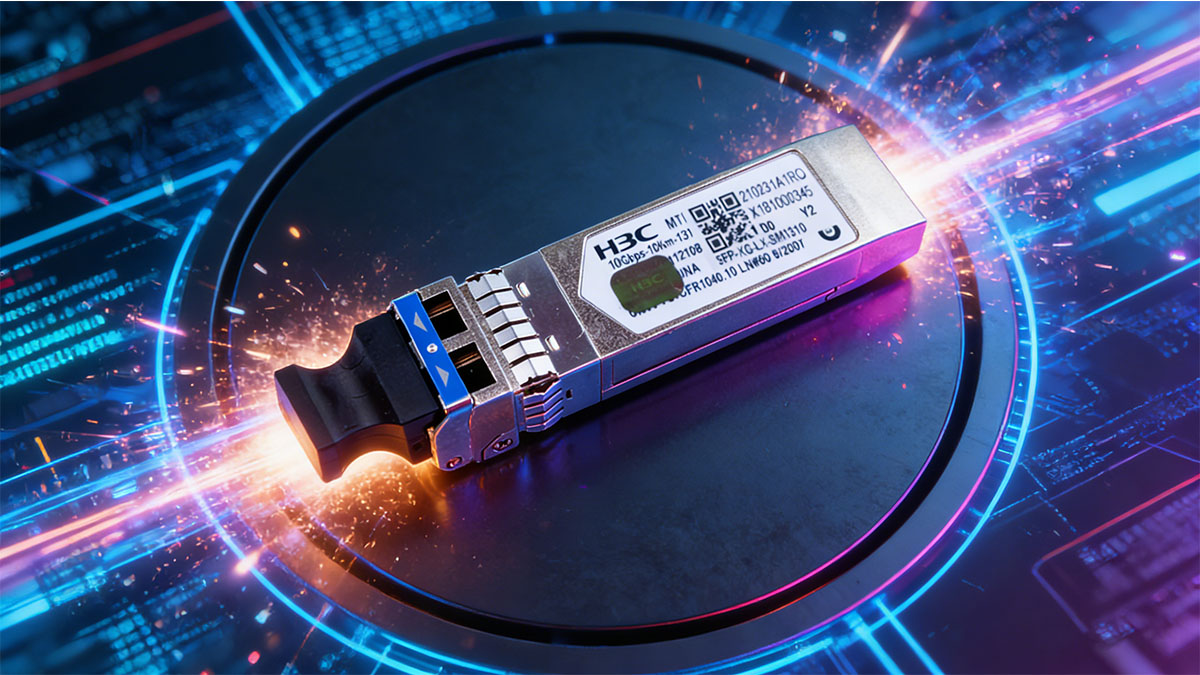
The SFP-XG-LX-SM1310 is a single-mode 10G optical module designed for long-distance network links. It provides reliable performance across enterprise and data center environments, making it a widely used solution for backbone connectivity. Its design balances transmission reach, optical power, and interoperability, which is essential for consistent network operation.
Key Technical Specifications
The module supports 10Gbps data rates and operates on a 1310nm wavelength, suitable for single-mode fiber. It is compliant with IEEE 802.3ae standards and features LC duplex connectors. Key technical parameters include:
| Parameter |
Specification |
| Data Rate |
10Gbps |
| Wavelength |
1310nm |
| Maximum Distance |
10km |
| Connector Type |
LC Duplex |
| Optical Power (Tx/Rx) |
-8.2 to 0.5 dBm / -8.2 to 0.5 dBm |
| DOM/DDM Support |
Yes |
This table provides a concise view of the module’s capabilities, highlighting its suitability for standard 10G SFP+ single-mode deployments. The optical power range ensures stable link performance across typical enterprise and campus distances.
Typical Application Scenarios
SFP-XG-LX-SM1310 is commonly deployed in environments requiring reliable 10G connectivity over single-mode fiber. Typical use cases include:
These scenarios illustrate the module’s versatility, showing that it can handle both intra-building and inter-building transmissions while maintaining high signal integrity.
Advantages of LX Single-Mode Modules
Compared to short-range optics, LX single mode transceivers like SFP-XG-LX-SM1310 offer several benefits:
- Extended reach up to 10km without signal degradation
- Lower attenuation over fiber distances, reducing the need for repeaters
- Compatibility with structured cabling and standard LC connectors
- Reduced interference and higher signal stability in multi-building or campus networks
These advantages make LX optics particularly suitable for network planners who need reliable performance over medium-to-long distances without sacrificing speed or stability.
? Understanding H3C Compatibility Requirements
Ensuring SFP-XG-LX-SM1310 modules work reliably with H3C switches and routers requires careful attention to compatibility factors. Proper alignment with H3C’s hardware and firmware ensures stable 10G links and avoids operational issues such as module recognition failures or link instability.
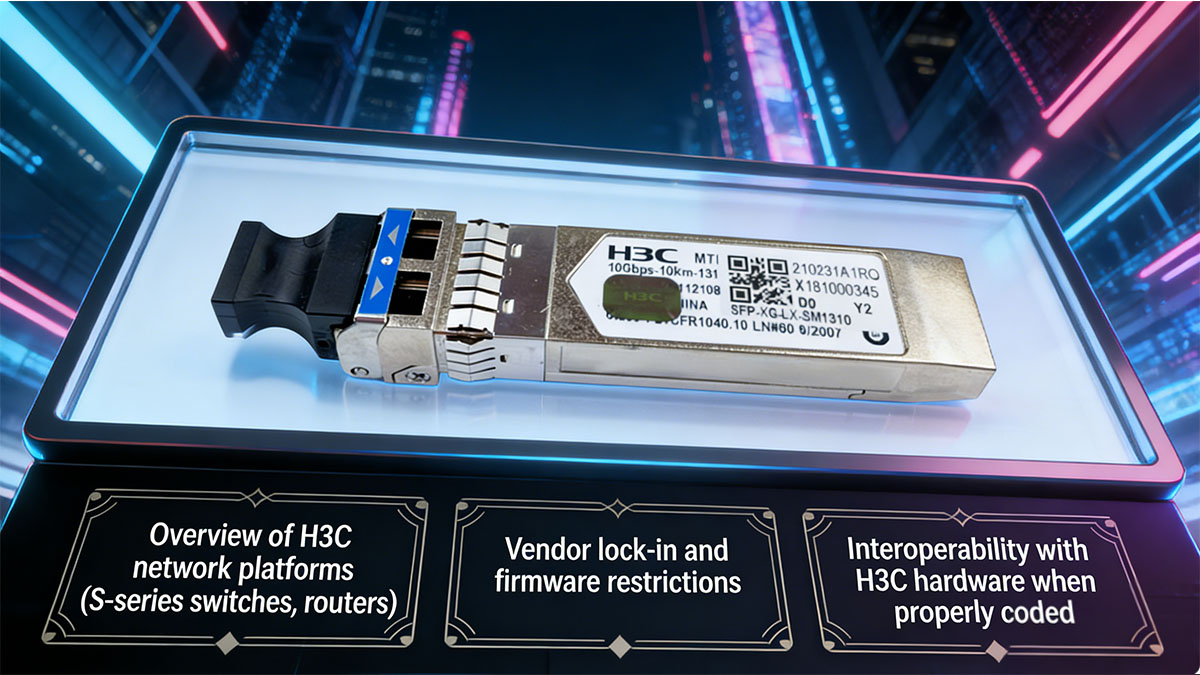
H3C Switch and Router Ecosystem
H3C devices, including S-series switches and enterprise routers, often use vendor-specific EEPROM coding to identify and validate optical transceiver modules. This coding ensures that the module is recognized correctly and operates at expected parameters. Compatibility requires matching the module’s electronic identification with the device firmware.
In practice, the module must report proper values for:
- Vendor ID and product type
- Serial number and part number
- Digital diagnostics monitoring (DOM) parameters
Without proper recognition, H3C devices may generate warnings, disable the port, or limit transmission speeds, even if the module is technically compliant with IEEE standards.
Compatibility Challenges
While SFP-XG-LX-SM1310 is IEEE 802.3ae compliant, several challenges can affect interoperability:
- Vendor lock-in: H3C devices may reject modules not encoded with recognized vendor IDs
- Firmware restrictions: Certain device firmware versions enforce stricter checks on optical modules
- Environmental variations: Power fluctuations, fiber type mismatches, or exceeding transmission distances can trigger alarms
Understanding these challenges helps network engineers plan for verification, testing, and mitigation before full-scale deployment.
Role of Third-Party Compatible Modules
Third-party modules can provide cost-effective alternatives to OEM optics when properly coded for H3C compatibility. These modules are increasingly used in enterprise and campus networks because they:
- Provide similar technical performance as OEM modules
- Support DOM/DDM monitoring for network diagnostics
- Can interoperate with multiple H3C models after proper verification
Using compatible transceivers requires careful validation to ensure the module’s EEPROM is aligned with H3C requirements and optical power levels meet the network design criteria.
? Compatibility Verification for SFP-XG-LX-SM1310
Before deploying SFP-XG-LX-SM1310 modules in H3C networks, verifying compatibility is crucial to avoid link failures and operational disruptions. Proper verification ensures that the module is recognized by the device, meets optical performance requirements, and functions reliably under expected network conditions.

Key Compatibility Factors
Successful interoperability with H3C devices depends on several core factors:
- EEPROM encoding: The module must report vendor ID, part number, and serial number consistent with H3C expectations.
- Optical power levels: Transmit (Tx) and receive (Rx) power must remain within device-supported ranges to prevent errors or port shutdowns.
- Interface standards: IEEE 802.3ae compliance ensures electrical and optical signaling matches device requirements.
- Firmware alignment: Device firmware should support the module’s identification codes and DOM/DDM features.
By ensuring these factors are met, network engineers can significantly reduce the risk of module rejection or link instability.
Methods to Verify Compatibility
Network engineers can apply a combination of CLI checks, documentation review, and lab testing to verify module compatibility:
- Use CLI commands to check module status and DOM parameters:
- Confirm module is detected and reporting correct vendor/product info
- Verify Tx/Rx power levels fall within operational range
- Check temperature and voltage readings for anomalies
- Review official H3C compatibility matrices:
- Cross-reference the module model with certified device lists
- Identify any firmware requirements or restrictions
- Conduct pre-deployment lab testing:
- Connect the module to the target H3C switch or router
- Simulate expected network traffic and monitor link stability
- Log DOM readings and error counters over several hours to ensure reliability
These verification steps provide confidence that the module will operate as intended in production environments.
Common Compatibility Issues and Fixes
Even with proper specifications, some issues may arise during deployment. Typical problems include:
- Module not recognized: Reprogram EEPROM with compatible vendor ID or use a verified compatible module.
- Link instability: Check fiber type, distance, and connector cleanliness; ensure optical budget is sufficient.
- DOM reading errors: Update device firmware or verify module’s DDM functionality.
By addressing these issues proactively, organizations can maintain consistent 10G connectivity and minimize network downtime.
? Deployment Considerations in H3C Networks
Proper deployment of SFP-XG-LX-SM1310 modules in H3C networks is essential to maintain link stability and long-term performance. This involves assessing fiber infrastructure, calculating optical budgets, and planning for cross-vendor interoperability.

Fiber Infrastructure Requirements
Before installing SFP-XG-LX-SM1310, ensure the fiber infrastructure meets single-mode standards and maintains signal integrity. Key considerations include:
- Using OS2 single-mode fiber to support distances up to 10km
- Ensuring LC connectors are clean and free from dust or debris
- Minimizing bends and maintaining proper bend radius to reduce attenuation
- Labeling and testing fiber routes to avoid accidental misconnection
By maintaining high-quality fiber infrastructure, the network can achieve consistent 10G transmission and reduce potential link failures.
Distance and Power Budget Planning
Even with compliant hardware, exceeding the optical power budget can cause errors or intermittent connectivity. When planning deployment:
- Calculate the total link loss: include fiber attenuation (dB/km) and connector losses.
- Compare with the module’s Tx/Rx power range: typically -8.2 to 0.5 dBm for SFP-XG-LX-SM1310.
- Include a safety margin of 3 dB to account for future fiber aging or connector wear.
This ensures the module operates within optimal optical levels and maintains reliable link performance.
Interoperability with Other Vendors
Many networks include devices from multiple vendors. Ensuring SFP-XG-LX-SM1310 modules work across mixed environments requires:
- Verifying IEEE 802.3ae compliance for standard optical signaling
- Testing interoperability with devices from Cisco, Huawei, or Juniper to confirm link stability
- Monitoring for unexpected alarms or errors during initial deployment
- Maintaining a log of cross-vendor compatibility results for future deployments
These practices help organizations integrate 10G modules without limiting hardware flexibility.
? Performance and Reliability Factors
Ensuring optimal performance and long-term reliability of SFP-XG-LX-SM1310 modules is critical for maintaining stable 10G connectivity in H3C networks. Understanding optical performance metrics, environmental tolerances, and monitoring options allows network engineers to proactively prevent failures and maximize uptime.
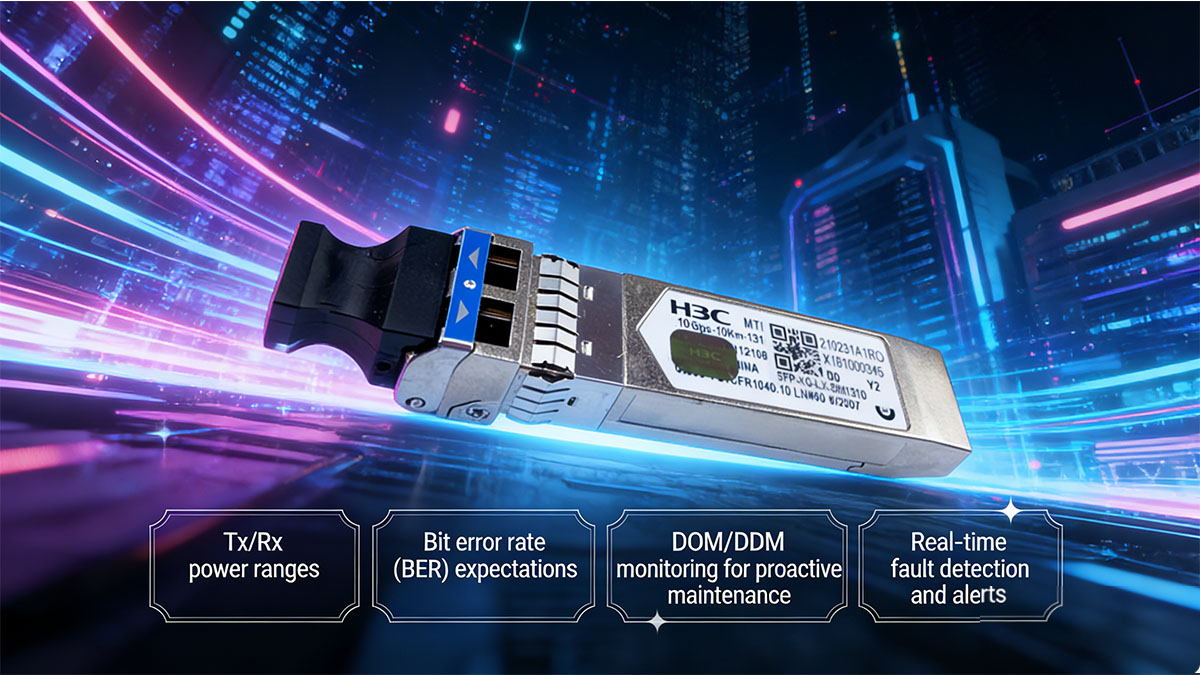
Optical Performance Metrics
SFP-XG-LX-SM1310 modules are designed to operate within specific optical power and signal quality ranges. Key performance metrics include:
These specifications ensure that the module maintains reliable 10G transmission over standard single-mode fiber. Monitoring these parameters helps prevent link degradation caused by fiber aging, dirty connectors, or optical power mismatches.
Environmental and Operational Stability
The operational environment directly impacts module reliability. SFP-XG-LX-SM1310 modules are rated for:
- Operating temperature: 0°C to 70°C
- Storage temperature: -40°C to 85°C
- Relative humidity: 5% to 95% non-condensing
Maintaining environmental conditions within these ranges minimizes the risk of thermal stress, voltage fluctuations, or moisture-related failures, which are common causes of module downtime.
Monitoring and Diagnostics
Digital Optical Monitoring (DOM) or Digital Diagnostics Monitoring (DDM) allows real-time assessment of module health. Key monitoring capabilities include:
- Monitoring Tx/Rx optical power and voltage levels
- Tracking temperature changes for early detection of overheating
- Logging link errors and signal deviations for troubleshooting
- Alerting network administrators to preempt potential failures
Using DOM/DDM not only provides visibility into module performance but also enables proactive maintenance, reducing the likelihood of unexpected outages.
? Troubleshooting Common Issues with SFP-XG-LX-SM1310
Even with proper selection and deployment, SFP-XG-LX-SM1310 modules may encounter operational issues in H3C networks. Understanding the root causes and implementing systematic troubleshooting practices can minimize downtime and maintain stable 10G connectivity.
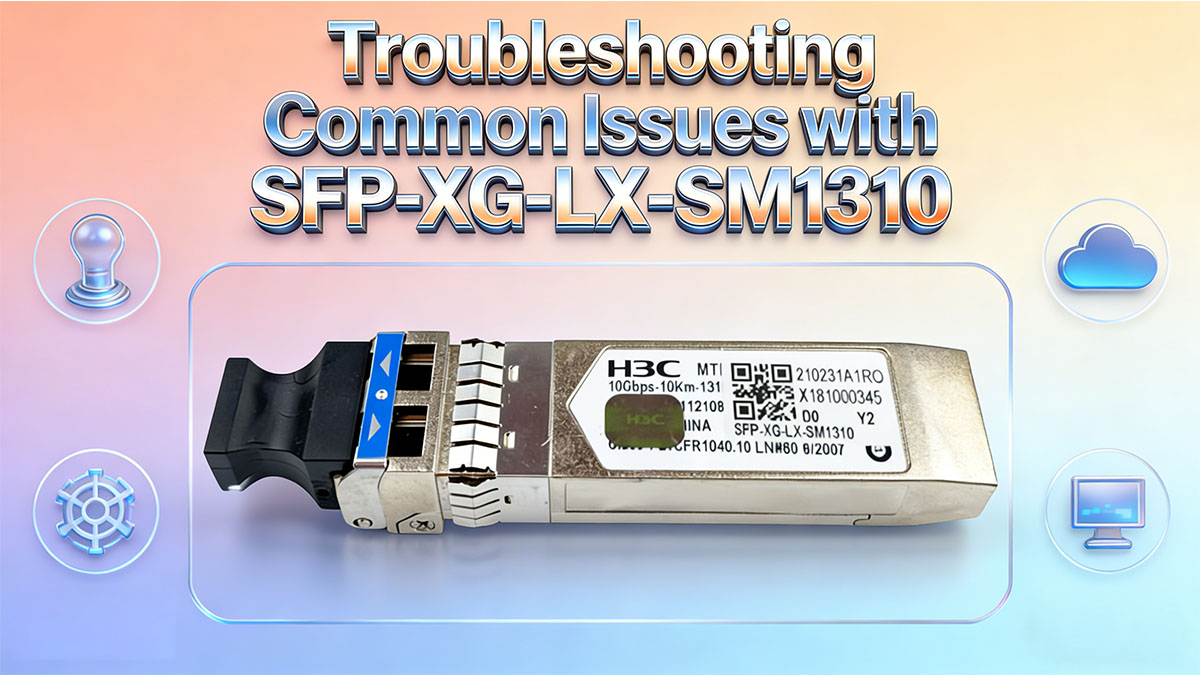
Module Recognition Failures
One common problem is the H3C device failing to recognize the module. This may occur due to:
- EEPROM coding mismatches or missing vendor ID
- Device firmware versions that enforce stricter module verification
- Port configuration errors or disabled interfaces
To resolve recognition issues:
- Confirm the module is correctly seated in the port and the LC connectors are clean.
- Check EEPROM data using CLI commands to ensure vendor ID, part number, and serial number are valid.
- Update the device firmware if recognition depends on specific firmware support.
- Test the module on a known compatible port or device to isolate potential device-related issues.
Proactive verification before deployment reduces the likelihood of recognition failures in production networks.
Link Instability and Intermittent Connectivity
Even recognized modules can experience unstable links if environmental or physical conditions are not optimal. Common causes include:
- Poor fiber quality or using multimode fiber instead of single-mode (OS2)
- Dirty or damaged LC connectors
- Excessive bend radius or sharp fiber bends that increase attenuation
Network engineers can address these issues by:
- Inspecting and cleaning connectors before installation
- Measuring optical power to ensure Tx/Rx levels are within specification
- Replacing or rerouting fiber that exceeds recommended bend limits
These steps help maintain a consistent 10G signal and reduce packet loss or link flapping.
DOM/DDM Errors and Alerts
Digital Optical Monitoring (DOM) or Digital Diagnostics Monitoring (DDM) provides real-time health information for SFP-XG-LX-SM1310 modules. Alerts may indicate:
- Abnormal temperature fluctuations
- Voltage deviations outside operational limits
- Tx/Rx power readings exceeding module specifications
To address DOM/DDM alerts:
- Compare readings to module specifications and device tolerances.
- Verify environmental conditions, including temperature and humidity.
- Check power supply stability and port configuration.
- Replace modules showing persistent or critical errors to prevent network disruption.
Monitoring DOM/DDM ensures early detection of potential failures and enables preemptive maintenance.
Preventive Troubleshooting Practices
To minimize recurring issues, networks should implement preventive measures:
- Establish routine monitoring of module status and optical parameters
- Perform lab testing of new modules before production deployment
- Maintain a compatibility log of modules, firmware versions, and error occurrences
- Schedule periodic cleaning and inspection of fiber and connectors
By integrating preventive troubleshooting practices, organizations can maintain the performance and reliability of SFP-XG-LX-SM1310 modules across H3C networks.
? Integration Strategies for Mixed 10G Network Environments
Integrating SFP-XG-LX-SM1310 modules into networks that include multiple vendors and different 10G technologies requires careful planning. Proper strategies ensure reliable connectivity, consistent performance, and smooth coexistence with higher-speed modules.
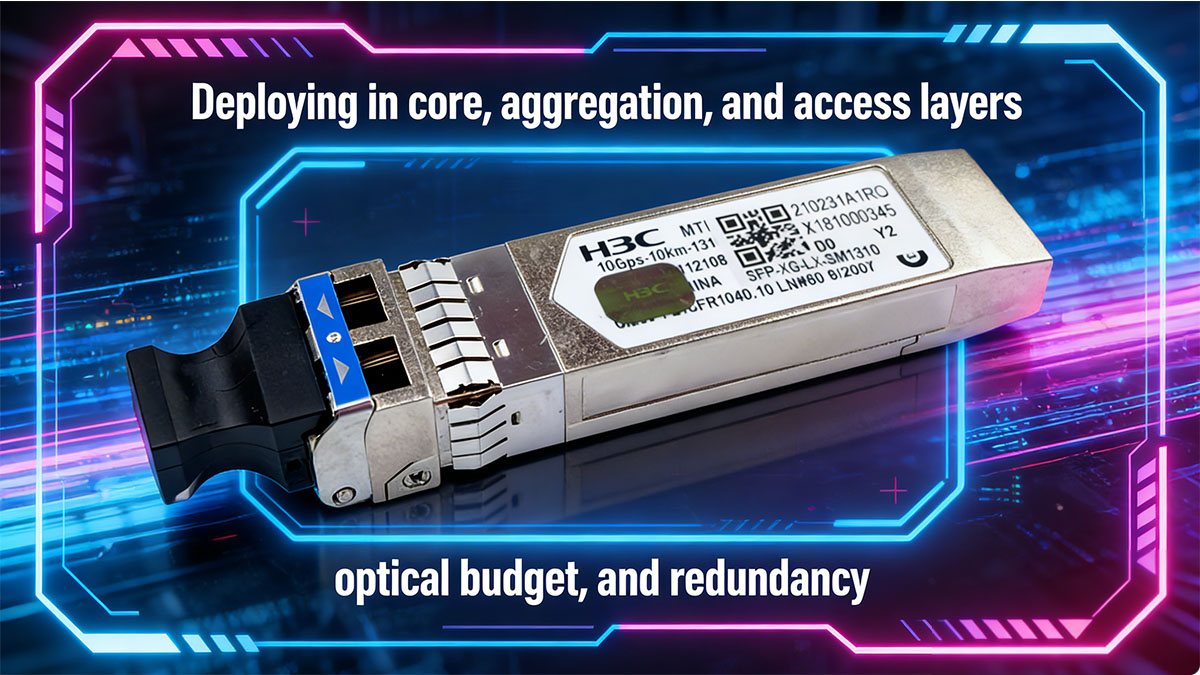
Cross-Vendor Connectivity
Many enterprise networks use hardware from multiple vendors, which can create interoperability challenges. Key strategies include:
- Verify IEEE 802.3ae compliance for all 10G single-mode transceivers
- Test module recognition on each vendor’s device before large-scale deployment
- Monitor link stability using CLI or network management tools to detect errors or alarms
- Document any device-specific quirks, such as port configuration requirements or firmware limitations
By systematically testing and documenting cross-vendor performance, network engineers can minimize compatibility issues and ensure seamless operation.
Network Segmentation Considerations
When deploying SFP-XG-LX-SM1310 modules in complex network topologies, consider how network layers affect performance:
- Core and aggregation layers benefit from redundant 10G links for high availability
- Access-layer connections may use shorter distances and fewer modules, but still require proper optical power budgeting
- Separate high-speed and standard 10G segments to prevent bandwidth contention and simplify troubleshooting
Planning network segmentation in advance ensures each link operates within its optical and performance parameters.
Upgrade Path Planning
Mixed networks often include both legacy 10G modules and newer high-speed transceivers such as SFP28 25G, QSFP28 100G, QSFP+ 40G or QSFP-DD 400G. Integration strategies include:
- Gradual migration from 10G to higher-speed links without disrupting existing services
- Testing coexistence of 10G LX modules alongside newer modules in the same infrastructure
- Monitoring traffic patterns and link utilization to determine when upgrades are necessary
A structured upgrade path allows organizations to leverage existing infrastructure while preparing for future bandwidth demands.
Documentation and Network Management
Effective integration relies on proper documentation and ongoing management:
- Maintain an inventory of all optical modules, including model, serial number, and DOM/DDM readings
- Track module placement and cross-vendor connections to simplify troubleshooting
- Use monitoring tools to continuously assess link performance and proactively address potential issues
Comprehensive documentation and active network management provide visibility across mixed environments, ensuring consistent 10G performance and reducing operational risks.
? Best Practices for Selecting Compatible Modules
Choosing the right SFP-XG-LX-SM1310 modules for H3C networks requires careful evaluation of compatibility, quality, and long-term reliability. Following best practices reduces the risk of link failures and ensures stable 10G connectivity across the network.
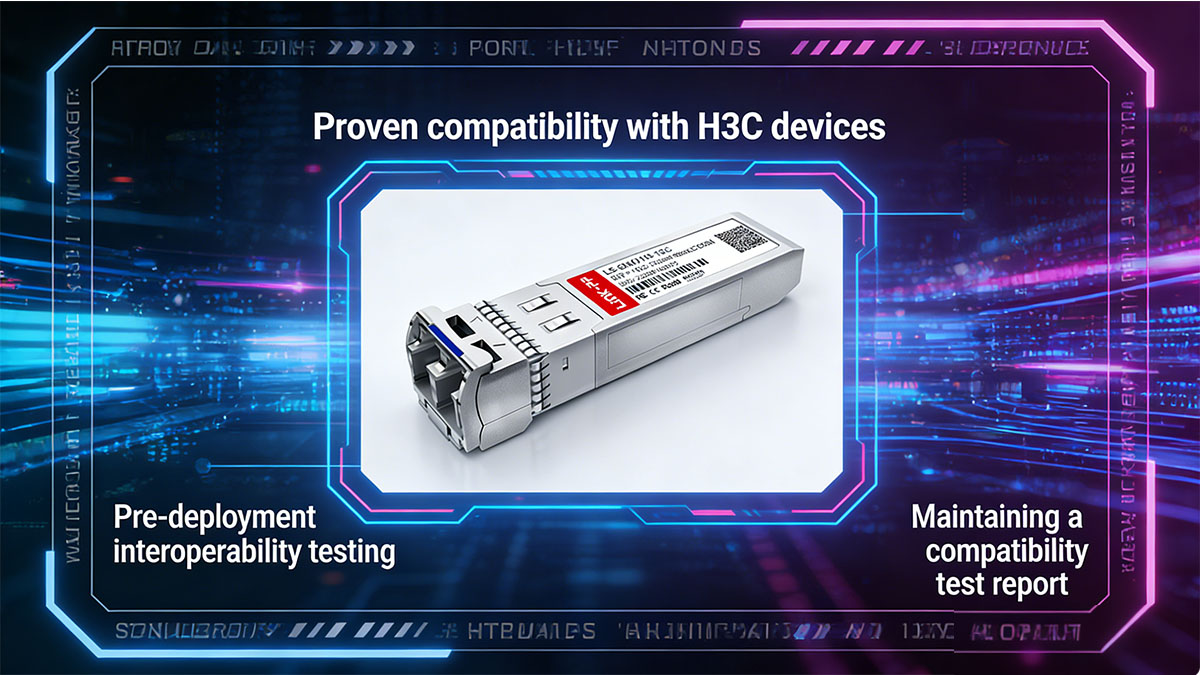
Vendor Selection Criteria
Selecting a vendor that provides proven compatibility with H3C devices is critical. Key factors to consider include:
- Verified interoperability with H3C switches and routers
- Compliance with IEEE 802.3ae standards for 10G transmission
- Quality certifications such as CE, RoHS, and FCC
- Availability of technical support for configuration and troubleshooting
Choosing modules from reputable vendors ensures that the optical transceivers meet performance specifications and are recognized by H3C hardware.
Testing and Validation Recommendations
Even when using verified vendors, pre-deployment testing is essential. Recommended validation steps include:
- Connect the module to a test H3C device and verify recognition and port status
- Measure Tx/Rx optical power and confirm it falls within specification ranges
- Run traffic simulations to observe link stability and error counters
- Document results for future reference and network audits
These steps provide confidence that the module will perform reliably in production environments and allows for early identification of potential issues.
Lifecycle and Maintenance Considerations
Long-term module performance depends on proper lifecycle management. Important considerations include:
- Regularly updating device firmware to maintain compatibility with optical modules
- Keeping spare modules on hand for rapid replacement in case of failure
- Monitoring DOM/DDM readings to proactively detect degradation
- Planning upgrades to higher-speed modules as network demands grow
By integrating lifecycle management into network planning, organizations can extend the service life of SFP-XG-LX-SM1310 modules and maintain consistent 10G connectivity.
? Future Trends in 10G Optical Transceivers
Even as networks move toward higher-speed technologies, 10G optical transceivers like SFP-XG-LX-SM1310 continue to play a vital role in enterprise and data center networks. Understanding current and emerging trends helps network planners make informed decisions for long-term deployments.

Evolution Toward Higher Speeds
The industry is gradually transitioning from 10G to 25G, 40G, and 100G connections, driven by increasing bandwidth requirements from cloud computing, virtualization, and high-density data centers. Key developments include:
- Adoption of SFP28 and QSFP28 modules for higher throughput in the same physical footprint
- Use of advanced modulation and signaling techniques to extend reach without additional fiber
- Migration strategies that allow coexistence of 10G LX modules with newer high-speed optics
While higher-speed modules are becoming more common, 10G LX transceivers remain widely deployed due to their proven reliability and compatibility with existing infrastructure.
Continued Relevance of 10G Modules
Despite advancements in speed, 10G modules remain relevant for several reasons:
- Cost-effective for maintaining legacy infrastructure
- Suitable for edge networks and access-layer connections where higher speeds are not critical
- Easier to manage and monitor compared to newer, higher-speed modules
Organizations often deploy 10G LX modules alongside newer optics, balancing cost, reach, and performance across their networks.
Impact of Cloud and Edge Computing
The growth of cloud services and edge computing is increasing demand for stable and scalable 10G connectivity:
- Data-intensive applications require reliable links between core, aggregation, and edge layers
- Edge deployments in campus, metro, or industrial networks often leverage existing 10G infrastructure
- Monitoring and diagnostics, including DOM/DDM, are essential for maintaining uptime in distributed environments
These trends indicate that, while network speeds are increasing, 10G LX transceivers will continue to provide essential connectivity in mixed-speed deployments for years to come.
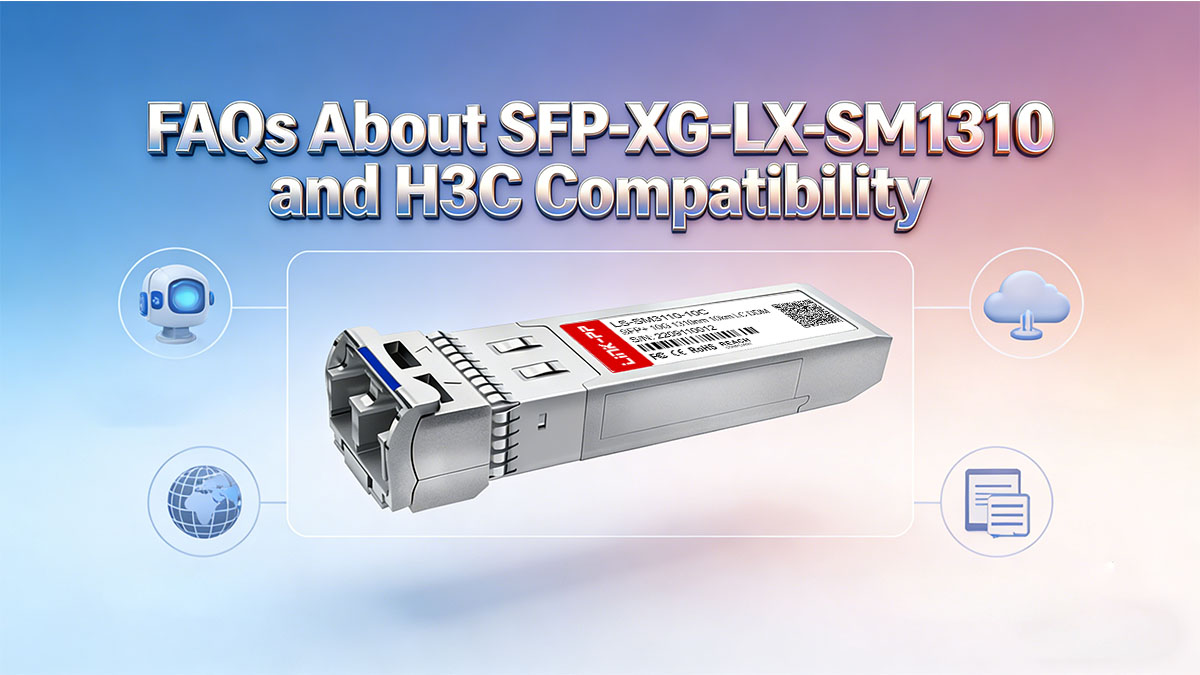
? FAQs About SFP-XG-LX-SM1310 and H3C Compatibility
Is SFP-XG-LX-SM1310 compatible with all H3C switches?
Compatibility depends on the device model and firmware version. Modules may require proper EEPROM encoding to be recognized.
Can it operate alongside other 10G LX modules?
Yes, as long as both modules meet IEEE 802.3ae standards and the optical budget supports the link distance.
How can I check if the module is working properly?
Use CLI commands to verify port status, Tx/Rx optical power, and DOM readings for any abnormal values.
What is the maximum supported distance for SFP-XG-LX-SM1310?
It can reliably transmit up to 10 kilometers over standard single-mode fiber (OS2).
Does it support digital diagnostics for proactive monitoring?
Yes, the module supports DOM/DDM, allowing monitoring of power levels, temperature, and voltage in real time.
Can it be used in mixed-vendor network environments?
Yes, if all devices comply with standard 10G single-mode specifications and optical power levels are within limits.
What steps should I take if the module is not recognized by an H3C device?
Check EEPROM coding, confirm firmware compatibility, and test in a controlled lab environment before deployment.
? Conclusion
SFP-XG-LX-SM1310 modules offer reliable 10G single-mode connectivity for H3C switches and routers, making them a practical choice for enterprise and data center networks. Ensuring proper compatibility, verifying optical performance, and following deployment best practices can significantly enhance network stability and minimize downtime. Attention to fiber infrastructure, optical budget planning, and proactive monitoring further ensures that these modules deliver consistent performance over their operational lifetime.
For organizations looking to integrate high-quality, H3C-compatible SFP-XG-LX-SM1310 modules, exploring a trusted source of compatible solutions can simplify deployment and maintenance. Additional information and options are available at LINK-PP Official Store, providing guidance and compatible modules that meet industry standards for reliable 10G networking.