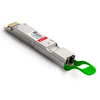






























In modern high-density data centers, optimizing rack connectivity requires a precise balance of performance, distance, and cost. The QSFP-H40G-CU3M serves as a cornerstone for 40G Cisco Nexus environments, offering a reliable, low-latency, and cost-effective passive copper solution for short-range links.
While this 3-meter Direct Attach Cable (DAC) is the "sweet spot" for Top-of-Rack (ToR) switching, its physical and distance limitations often necessitate a transition to active optical alternatives. This guide explores the technical specifications of the QSFP-H40G-CU3M, its deployment strategies within Cisco rack designs, and the critical criteria for when to pivot to optical fibers to ensure scalable, high-performance network architecture.
♠️ Introduction to QSFP-H40G-CU3M in Modern Data Centers
The QSFP-H40G-CU3M is a fundamental building block in high-velocity data environments, providing a 40Gbps link over passive copper cabling. As data centers migrate toward higher bandwidth, these 3-meter cables offer a near-zero latency interconnect solution that balances power efficiency with high-speed performance.
Defining the Role of 40G DACs in Cisco Nexus Environments
In the ecosystem of Cisco Nexus switches — specifically the 3000 and 9000 series — the QSFP-H40G-CU3M acts as the primary interconnect for high-bandwidth server-to-switch or switch-to-switch links. Because it is a passive Direct Attach Cable (DAC), it does not require active electronic components to transmit the signal, resulting in significantly lower power consumption and heat dissipation compared to optical transceivers.
For network engineers, these cables provide a "plug-and-play" experience within the Cisco NX-OS environment. They are essential for building non-blocking fabric architectures where low latency is critical, such as in high-frequency trading or large-scale virtualization clusters.
Physical Characteristics: 30AWG vs. 26AWG Passive Copper
QSFP-H40G-CU3M cables are available in two main wire gauge configurations: 30AWG and 26AWG. The choice between them affects bend radius, cable flexibility, and signal integrity. 30AWG cables are thinner and more flexible, making them ideal for dense cabling in tight racks, while 26AWG cables support longer reaches and offer lower insertion loss but are less flexible.
The table below highlights the key differences between 30AWG and 26AWG passive copper cables:
| Feature | 30AWG Cable | 26AWG Cable |
| Diameter | Thinner, more flexible | Thicker, more rigid |
| Maximum Recommended Length | ≤ 3m | ≤ 5m |
| Insertion Loss | Higher due to thinner conductor | Lower, better signal integrity |
| Bend Radius | Smaller, easier for dense racks | Larger, less flexible |
| Typical Use Case | High-density ToR connectivity | Row-to-row links |
Choosing the correct gauge ensures optimal performance while maintaining manageable cable routing and airflow.
Primary Use Cases: Top-of-Rack (ToR) and End-of-Row (EoR) Switching
The 3-meter reach of the QSFP-H40G-CU3M makes it the industry standard for Top-of-Rack (ToR) deployments. In this configuration, the cable connects servers located within the same 42U cabinet to a leaf switch at the top, where the short distance perfectly matches the passive copper's signal limits.
While less common for End-of-Row (EoR) setups due to distance constraints, it can be utilized in small-scale "pod" designs where adjacent racks are bolted together. However, its primary value remains in intra-rack connectivity, where it replaces more expensive optical modules without sacrificing 40G throughput.
Standard Compliance: IEEE 802.3ba and SFF-8436
The reliability of the QSFP-H40G-CU3M is rooted in its strict adherence to international networking standards. It complies with IEEE 802.3ba, which defines the 40Gb/s Ethernet physical layer, ensuring that the four 10Gbps lanes operate in perfect synchronization.
Additionally, the cable meets the SFF-8436 specification, which defines the mechanical form factor and electrical interface for the QSFP+ (Quad Small Form-factor Pluggable Plus) connector. This compliance ensures that the cable is physically compatible with any vendor-neutral port, though Cisco-specific coding is added to ensure seamless integration with proprietary Nexus firmware.
♠️ Technical Specifications of the QSFP-H40G-CU3M
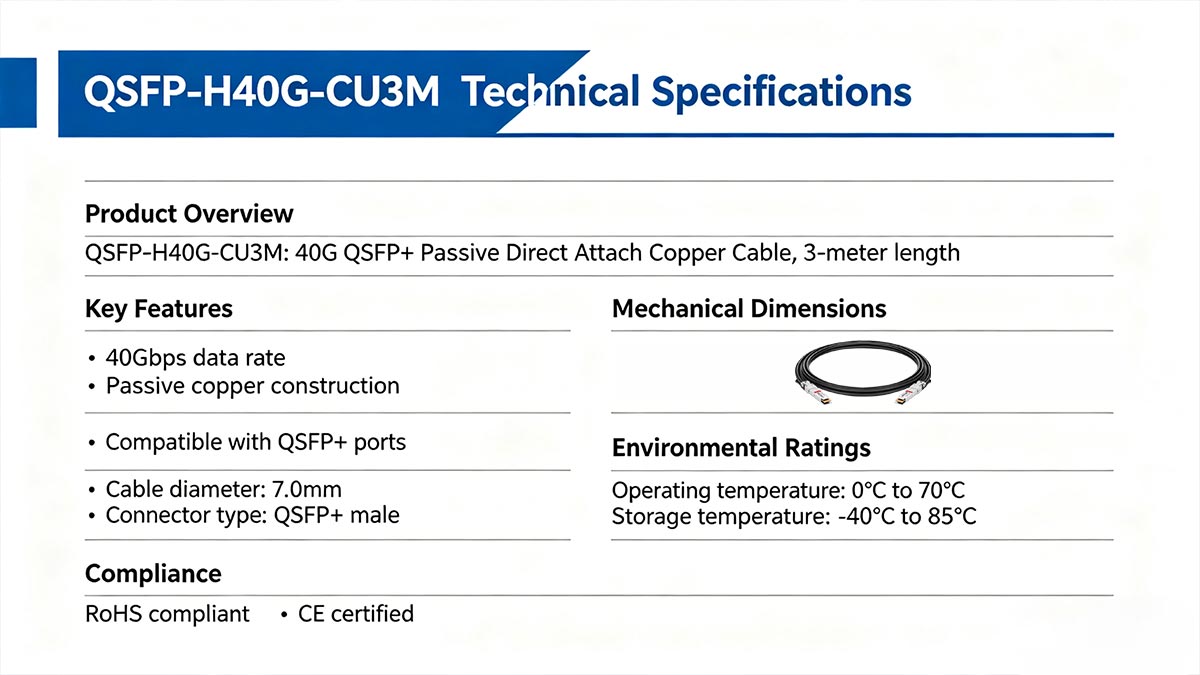
The QSFP-H40G-CU3M is engineered to provide a high-performance, low-latency interconnect by utilizing a robust copper architecture. Its technical profile is defined by a balance of passive electrical efficiency and mechanical durability, making it a reliable standard for short-range 40G Ethernet applications.
Electrical Interface and Power Consumption Analysis
The QSFP-H40G-CU3M utilizes a 38-pin high-density connector interface, fully compliant with the SFF-8436 management specification. This electrical interface facilitates a direct "copper-to-copper" connection between the host switch's internal circuitry and the cable’s twinaxial conductors. Because the signal remains in its native electrical format throughout the entire 3-meter span, there is no need for the complex electrical-to-optical conversion required by fiber optic modules.
From a power efficiency perspective, this passive architecture is highly advantageous for large-scale deployments. By eliminating the need for active components like lasers, drivers, and Clock and Data Recovery (CDR) circuits, the cable operates with negligible power draw. This design not only reduces the total energy expenditure of the data center but also minimizes heat generation at the switch port, allowing for high-density racking without straining the thermal management systems of the Cisco Nexus fabric.
Maximum Cable Bend Radius for High-Density Racking
The bend radius is a critical mechanical specification for the QSFP-H40G-CU3M, particularly when utilizing 30AWG conductors in high-density environments. Because 30AWG wire is thinner and more flexible than its 26AWG counterpart, it allows for a much tighter bend radius, which is essential for routing cables within the cramped side panels of a 42U rack or through dense cable managers. Typically, the minimum permanent bend radius for these thinner cables is approximately five to seven times the outer cable diameter.
Properly managing this radius ensures that the internal twinaxial pairs do not shift or deform, which would otherwise cause impedance mismatches and signal reflections. When deploying 30AWG DACs in a Cisco Nexus environment, engineers can take advantage of this increased flexibility to create cleaner, more organized cable runs that do not obstruct airflow or put undue mechanical stress on the switch's QSFP+ ports. Consistent adherence to these bend limits is vital for maintaining long-term signal integrity and preventing intermittent link failures.
Operating Temperature Ranges for Enterprise Environments
The QSFP-H40G-CU3M is designed to operate within standard enterprise data center temperature ranges, typically from 0°C to 70°C (32°F to 158°F). This wide operating range ensures stable performance even under varying thermal conditions commonly found in high-density racks and server rooms.
Because passive DACs generate minimal heat compared to active optical solutions, they are less susceptible to thermal-induced failures. However, maintaining proper airflow and adhering to recommended environmental conditions remains important to ensure consistent performance and longevity of both the cable and connected networking equipment.
Data Rate Capabilities and Protocol Support
Supporting a total aggregate bandwidth of 40Gbps, the QSFP-H40G-CU3M operates via four independent transmit and receive lanes, each capable of 10Gbps. This architecture is fully compatible with 40G Ethernet standards and is often backwards compatible with SFP+ 10G or SFP 1G signaling if the host switch port supports breakout or multi-rate configurations.
In addition to Ethernet, the cable provides robust support for InfiniBand QDR (Quad Data Rate) and Fiber Channel protocols. This multi-protocol versatility makes it an ideal solution for converged infrastructures where storage and data traffic coexist on the same physical fabric, ensuring consistent high-speed throughput across diverse workloads.
♠️ Rack Design Strategy Using QSFP-H40G-CU3M Passive DACs
Implementing the QSFP-H40G-CU3M within a rack involves more than simple plug-and-play connectivity; it requires a strategic approach to physical layout and logical redundancy. By understanding the spatial and economic advantages of this 3-meter solution, network architects can build a highly efficient and resilient Cisco-based fabric.
Calculating Cable Reach: Why 3 Meters is the Industry Sweet Spot
In a standard 42U or 45U data center rack, the 3-meter length of the QSFP-H40G-CU3M has emerged as the "golden standard" for Top-of-Rack (ToR) deployments. This specific length provides just enough slack to route from a switch at the top of the rack down to servers located in the middle or bottom U-positions, while accounting for the necessary routing through vertical cable managers.
The 3-meter reach is strategically balanced to minimize excess cabling. Shorter 1-meter cables often fail to reach the bottom half of the rack, while 5-meter copper cables introduce excessive bulk and potential signal attenuation issues. By standardizing on 3 meters, operators can maintain a uniform inventory that satisfies nearly all intra-rack connectivity requirements without the complexity of varying cable lengths.
Optimizing Airflow and Cable Management in 42U Racks
Effective rack design must prioritize thermal management, as dense clusters of copper DACs can inadvertently block exhaust paths. Because the QSFP-H40G-CU3M is thicker than optical fiber, its placement must be carefully planned to ensure that "hot aisle" air can escape the rear of the servers and switches efficiently.
To maintain optimal cooling and organization, consider the following best practices:
- Utilize Vertical Managers: Route DAC bundles through side-mounted vertical managers rather than directly across the rear of the equipment to keep the chassis exhaust ports clear.
- Staggered Port Loading: When possible, distribute connections across different line cards or port groups to prevent a single "curtain" of heavy copper cables from forming.
- Color-Coding and Labeling: Use colored boots or labels to distinguish between primary and redundant links, which simplifies troubleshooting in high-density environments where visibility is limited.
Cost-Benefit Analysis: DAC vs. AOC for Short-Range Links
When designing short-reach interconnects, the primary decision often comes down to choosing between passive Direct Attach Cables (DAC) and Active Optical Cables (AOC). The QSFP-H40G-CU3M offers a significant economic advantage for any link within its 3-meter boundary.
- Capital Expenditure (CapEx): Passive DACs are significantly less expensive than AOCs because they contain no lasers or expensive silicon chips for signal conversion.
- Operating Expenditure (OpEx): Since the QSFP-H40G-CU3M consumes virtually no power, the cumulative energy savings over hundreds of ports — and the subsequent reduction in cooling costs — provide a much lower Total Cost of Ownership (TCO).
- Reliability: With no active electronics to fail, the Mean Time Between Failures (MTBF) for passive copper is inherently higher than that of optical alternatives.
Redundancy Planning: Multi-Chassis EtherChannel (MCEC) Configurations
A robust rack design leverages the QSFP-H40G-CU3M to build redundant paths, ensuring that a single cable or switch failure does not result in a complete outage. In Cisco Nexus environments, this is typically achieved through Virtual Port Channels (vPC) or Multi-Chassis EtherChannel (MCEC).
By connecting a single server to two separate Nexus switches using two QSFP-H40G-CU3M cables, engineers create a highly available environment. This setup allows for seamless traffic failover and enables software updates on one switch without interrupting the data flow of the connected servers. The low latency of the copper link is particularly beneficial here, as it ensures that the synchronization traffic between the two switches (the vPC peer-link) remains as fast as possible.
♠️ Overcoming Distance Limitations of the QSFP-H40G-CU3M
While the QSFP-H40G-CU3M is an ideal solution for intra-rack connectivity, its passive copper architecture faces inherent physical boundaries. As data center layouts expand, understanding how to navigate the 3-meter limit is essential for maintaining high-speed signal integrity across larger rows.
The 3-Meter Passive Limit: When to Transition to AOC
The 3-meter threshold represents the maximum distance at which a passive copper cable can reliably transmit 40Gbps signals without active amplification. Beyond this point, the electrical signal degrades too significantly for the receiving switch port to interpret accurately. In most Top-of-Rack (ToR) configurations, 3m is sufficient, but for connections spanning across multiple cabinets, this distance is quickly exceeded.
When a link requirement reaches 5m or more, a transition to Active Optical Cables (AOC) or discrete transceivers becomes necessary. AOCs utilize internal electronics to convert electrical signals into light, allowing the data to travel much further — often up to 100m — without the signal loss associated with passive copper.
Signal Integrity Challenges in Long-Reach Copper Links
As copper cable length increases, signal integrity is primarily threatened by two factors: attenuation and electromagnetic interference (EMI). Attenuation causes the high-frequency 40G signal to lose strength as it travels through the copper wire, leading to a higher Bit Error Rate (BER). This is why longer passive cables require much thicker wire gauges, which can become too bulky for practical rack management.
Furthermore, long-reach copper links are more susceptible to external noise and crosstalk between adjacent cables. In high-density environments, this interference can disrupt the four 10Gbps lanes that make up the 40G link, causing intermittent port flapping or packet drops. Moving to optical alternatives eliminates these electrical issues entirely, as light pulses are immune to EMI.
Evaluating Active Optical Cables (AOC) for Row-to-Row Connectivity
For Middle-of-Row (MoR) or End-of-Row (EoR) architectures where distances range from 7m to 30m, Active Optical Cables offer a seamless upgrade path from the QSFP-H40G-CU3M. AOCs share the same QSFP+ form factor and "all-in-one" cable design, making them a familiar choice for technicians used to working with DACs, but they utilize lightweight multimode fiber instead of heavy copper.
The primary advantage of AOCs in row-to-row connectivity is their significantly reduced weight and diameter, which prevents cable congestion in overhead trays and under-floor cooling paths. While they do require more power than passive DACs, their ability to provide stable 40G throughput over distances that copper simply cannot reach makes them an essential tool for scaling modern data center fabrics.
♠️ Cisco Nexus Switch Compatibility with QSFP-H40G-CU3M
Ensuring seamless integration between the QSFP-H40G-CU3M and Cisco hardware is vital for network stability. While these cables are designed for broad compliance, specific configuration steps and coding requirements are necessary to ensure the Cisco Nexus fabric recognizes and optimizes the link.
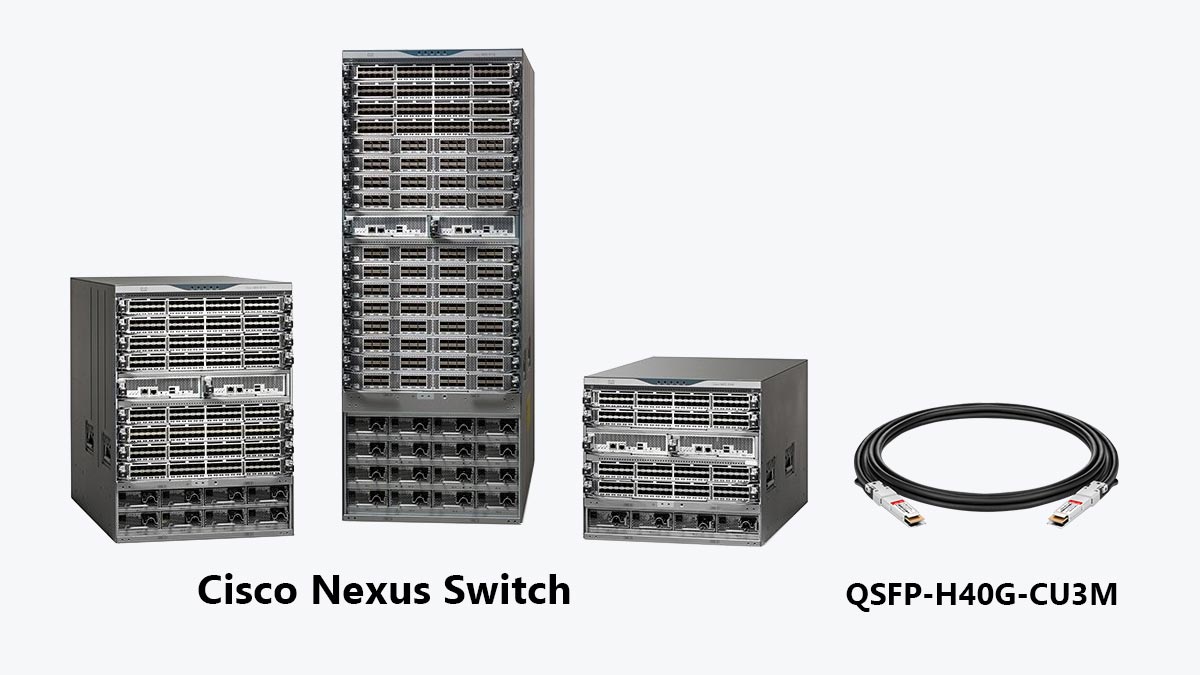
Deployment in Nexus 9000 and 3000 Series Platforms
The QSFP-H40G-CU3M is a staple for the Cisco Nexus 9000 and 3000 series, which are the backbone of high-performance data center switching. In these platforms, the 40G ports are specifically engineered to support passive copper links for low-latency leaf-to-spine or server-to-switch connections. Most Nexus models will automatically detect the 3-meter DAC upon insertion, configuring the port for 40G mode without manual intervention, provided the hardware matches the supported matrix.
Understanding the "Service Unsupported-Transceiver" Command
In instances where a third-party or generic DAC is used, Cisco switches may place the port into an "err-disable" state to protect the hardware. To bypass this, engineers often use the hidden global configuration command service unsupported-transceiver. This tells the NX-OS to attempt to initialize the module anyway, though it is always recommended to use Cisco-coded modules to avoid the "link down" status and ensure full telemetry and diagnostic support.
Verifying EEPROM Coding for Seamless Cisco Integration
For a QSFP-H40G-CU3M to be truly "plug-and-play," its internal EEPROM must be programmed with specific Cisco-compatible identification strings, such as the correct Vendor Name and Part Number. This coding allows the switch to verify the cable’s capabilities, including its 3-meter length and passive electrical nature. Without proper EEPROM synchronization, the switch might misinterpret the cable's power requirements or signal timing, leading to intermittent connection drops or poor performance.
Software Version Requirements for 40G Port Recognition
Proper hardware recognition is also dependent on the version of Cisco NX-OS running on the device. It is essential to ensure your software version is current, as newer releases often include updated transceiver support tables that improve the stability, diagnostics, and monitoring capabilities for passive copper links like the 3-meter DAC.
♠️ When to Switch from QSFP-H40G-CU3M to Optical Alternatives
While the QSFP-H40G-CU3M is a power-efficient workhorse for intra-rack links, certain environmental and architectural factors make copper impractical. Recognizing these "inflection points" is key to maintaining a stable network as your data center scales beyond a single cabinet.
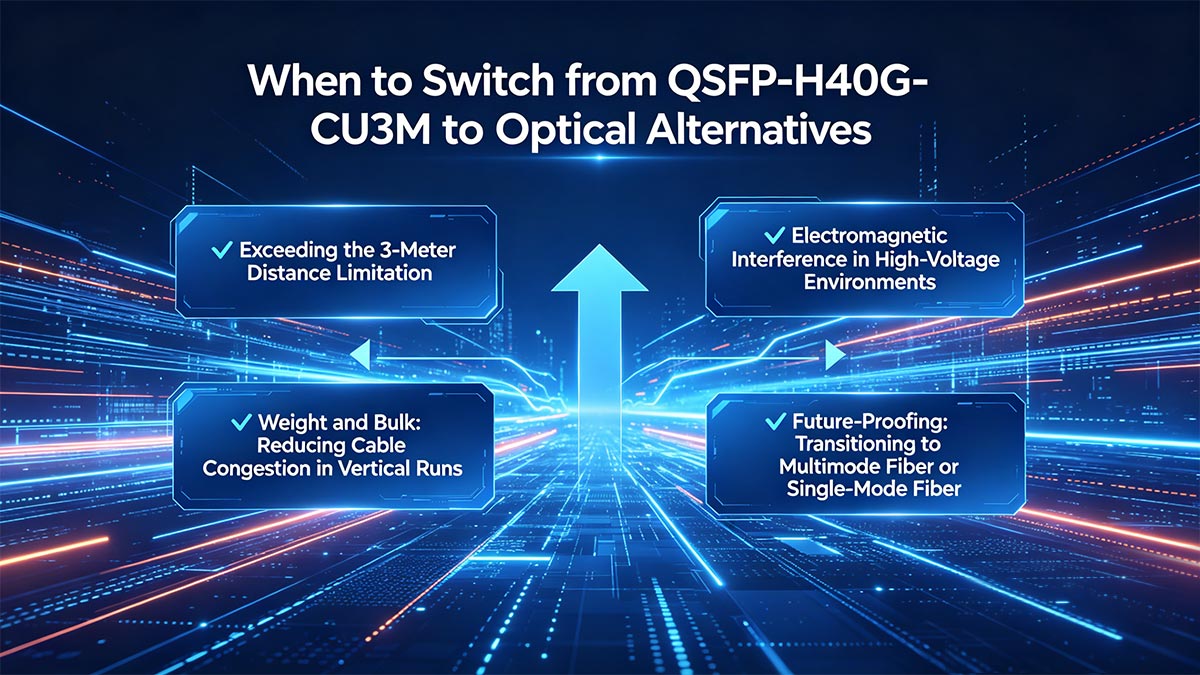
Exceeding the 3-Meter Distance Limitation
The most common trigger for switching to optics is simply running out of physical reach. Because passive copper signals lose strength rapidly, the 3-meter limit of the QSFP-H40G-CU3M is a hard boundary; attempting to use longer passive cables often results in high error rates or total link failure. If your connection needs to span across multiple racks or reach an End-of-Row switch, transitioning to Active Optical Cables (AOC) or SR4 transceivers is mandatory.
Electromagnetic Interference (EMI) in High-Voltage Environments
In industrial data centers or facilities where network cables run alongside high-voltage power lines, copper cables can act as antennas, picking up electromagnetic interference that disrupts data packets. Fiber optic alternatives are completely immune to EMI because they transmit data as pulses of light rather than electrical signals. Switching to optical transceiver modules ensures "clean" data transmission in electrically noisy environments where copper might struggle with port flapping.
Weight and Bulk: Reducing Cable Congestion in Vertical Runs
As cable density increases, the physical weight and volume of QSFP-H40G-CU3M bundles — even when utilizing thinner 30AWG copper — can eventually lead to significant congestion in vertical lace bars and overhead trays. While 30AWG is more manageable than thicker gauges, it still remains bulkier than optical fiber; therefore, transitioning to lightweight optical alternatives can reclaim critical space, improve airflow efficiency, and reduce the mechanical strain on switch ports in high-density 42U rack environments.
Future-Proofing: Transitioning to Multimode Fiber or Single-Mode Fiber
If your long-term roadmap includes moving from QSFP+ 40G to QSFP28 100G or QSFP 400G, investing in a structured fiber cabling plant now is a wise strategic move. While the QSFP-H40G-CU3M is a point-to-point solution that must be replaced entirely during an upgrade, a fiber-based infrastructure allows you to simply swap out the transceivers (like moving from QSFP-40G-SR4-S to QSFP-100G-SR4) while keeping the same underlying glass in place, greatly reducing future labor costs.
♠️ Optical Alternatives to the QSFP-H40G-CU3M for Extended Reach
When network requirements expand beyond the 3-meter reach of the QSFP-H40G-CU3M, shifting to optical technology becomes a necessity. Optical alternatives offer the scalability, distance, and electromagnetic immunity required to connect disparate rows and maintain signal integrity across large-scale Cisco Nexus fabrics.
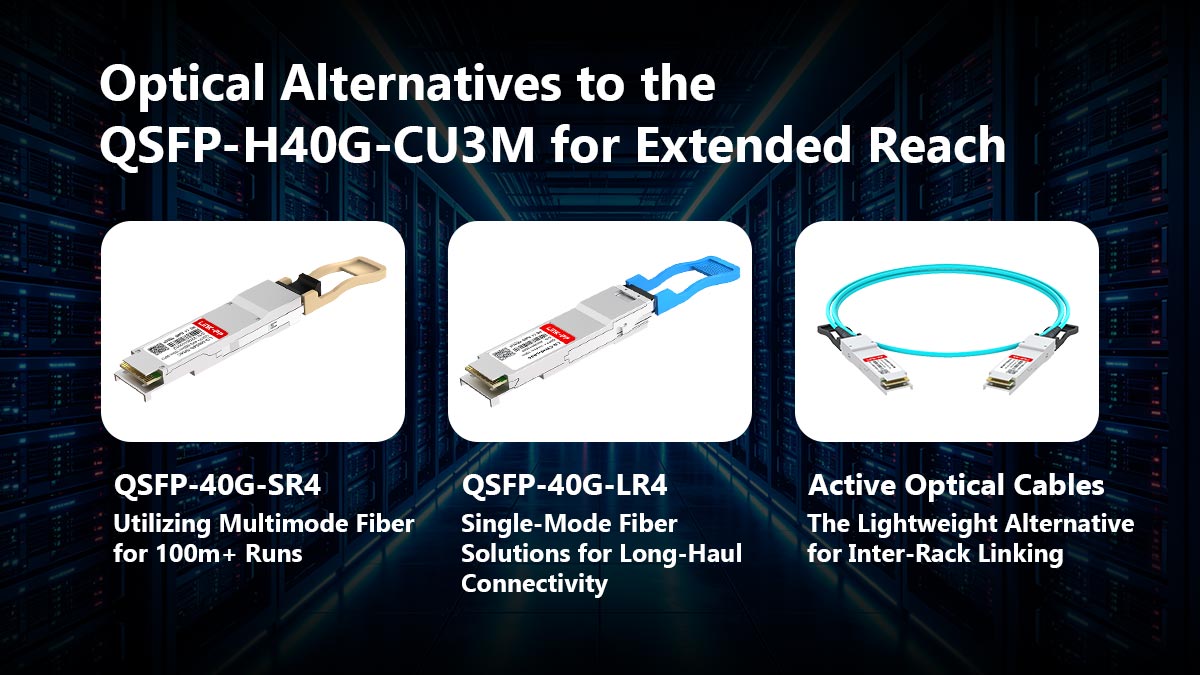
QSFP-40G-SR4: Utilizing Multimode Fiber (MMF) for 100m+ Runs
The QSFP-40G-SR4 transceiver is the natural progression for links that stay within the data center but exceed the reach of passive copper. By utilizing MPO/MTP connectors and parallel optics technology, this module transmits data over four lanes of multimode fiber. It is the preferred choice for high-speed interconnects where flexibility and distance are both required.
When deploying SR4 modules as an alternative to DACs, consider these key advantages:
- Extended Reach: Unlike the 3-meter limit of copper, SR4 modules can reach up to 100 meters over OM3 fiber or 150 meters over OM4 fiber, making them ideal for Middle-of-Row (MoR) architectures.
- Breakout Capability: These modules support "breakout" configurations, allowing a single 40G port to be split into four 10G SFP+ ports via a harness cable, a feature not typically available with standard passive DACs.
- Cable Management: Multimode fiber is significantly thinner and lighter than 30AWG copper, dramatically reducing congestion in overhead cable trays.
QSFP-40G-LR4: Single-Mode Fiber (SMF) Solutions for Long-Haul Connectivity
For connectivity that must span between different data center halls or across a large campus, the QSFP-40G-LR4 is the definitive solution. This module uses Wavelength Division Multiplexing (WDM) to multiplex four transmit frequencies onto a single pair of single-mode fibers, rather than using parallel ribbons.
This approach offers distinct benefits for long-distance infrastructure:
- Massive Distance Support: The LR4 standard supports distances up to 10km, far exceeding any copper or multimode solution.
- Fiber Efficiency: Because it utilizes only two strands of fiber (one for transmit, one for receive) via LC duplex connectors, it maximizes the utility of existing single-mode fiber plants.
- Signal Isolation: Single-mode fiber provides the highest level of protection against signal attenuation and interference, ensuring that data remains intact over kilometers of cabling.
Active Optical Cables (AOC): The Lightweight Alternative for Inter-Rack Linking
Active Optical Cables (AOCs) bridge the gap between the simplicity of the QSFP-H40G-CU3M and the performance of discrete transceivers. An AOC consists of two QSFP+ heads permanently factory-terminated to a length of multimode fiber, eliminating the need for separate fiber cleaning and matching.
AOCs are particularly effective for inter-rack linking due to the following characteristics:
- Ease of Deployment: Like the DAC, the AOC is a single assembly, which simplifies inventory management and reduces the risk of dust contamination on optical interfaces during installation.
- Weight Reduction: Because they use fiber instead of copper conductors, AOCs are much easier to route through vertical managers and do not add significant weight to the cable bundles.
- Plug-and-Play Compatibility: They are recognized by Cisco Nexus switches as a single cable unit, providing a reliable 40G link up to 100m without the complexity of managing individual transceivers and patch cords.
♠️ Final Verdict: Selecting the Right QSFP-H40G-CU3M or Optical Alternative for Your Rack
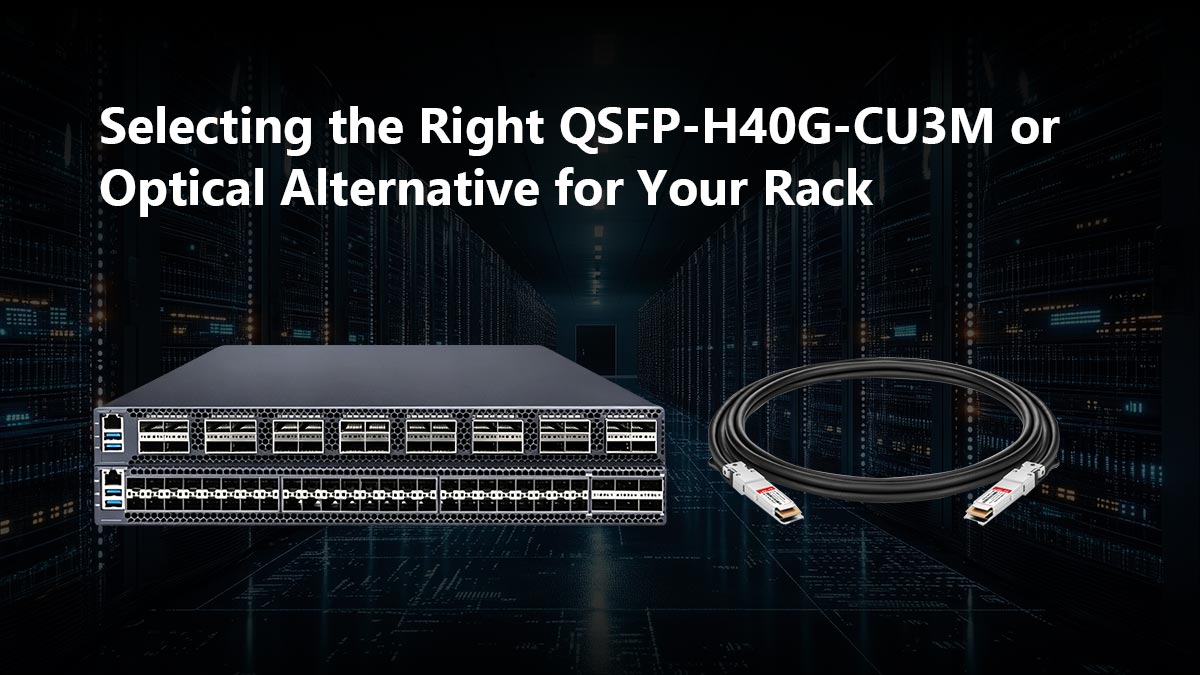
Deciding between the QSFP-H40G-CU3M and its optical counterparts ultimately depends on your specific rack density and distance requirements. For intra-rack connections under 3 meters, the passive copper DAC remains the most cost-effective and energy-efficient choice for Cisco Nexus environments. However, as your network scales toward inter-rack or row-to-row connectivity, transitioning to Active Optical Cables (AOC) or SR4/LR4 transceivers is essential to overcome the physical limitations of copper and ensure superior signal integrity.
Selecting high-quality, fully compatible components is the key to maintaining a resilient 40G infrastructure. Whether you are optimizing a Top-of-Rack design with reliable DACs or future-proofing your data center with high-performance fiber optics, choosing the right hardware ensures seamless multi-vendor interoperability. For a comprehensive selection of premium networking solutions tailored for Cisco compatibility, explore high-performance transceiver modules and DAC/AOC cables available at the LINK-PP Official Store.