As data centers and enterprise networks face an unprecedented demand for higher bandwidth, upgrading to higher speeds often comes with the costly and complex challenge of laying more physical fiber. Traditionally, moving to a 100G network required multiple fiber strands, rapidly draining existing infrastructure capacity and increasing cable clutter.
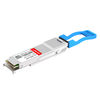
To solve this bottleneck, the 100G QSFP BiDi transceiver introduces a highly efficient alternative by doubling your existing fiber capacity without requiring new cabling. By leveraging Bidirectional (BiDi) technology and wavelength multiplexing, this innovative module allows data to transmit and receive simultaneously over just a single strand of single-mode fiber, cutting infrastructure costs in half while maximizing network performance.
⏳ Understanding the Core Technology of the 100G QSFP BiDi Transceiver
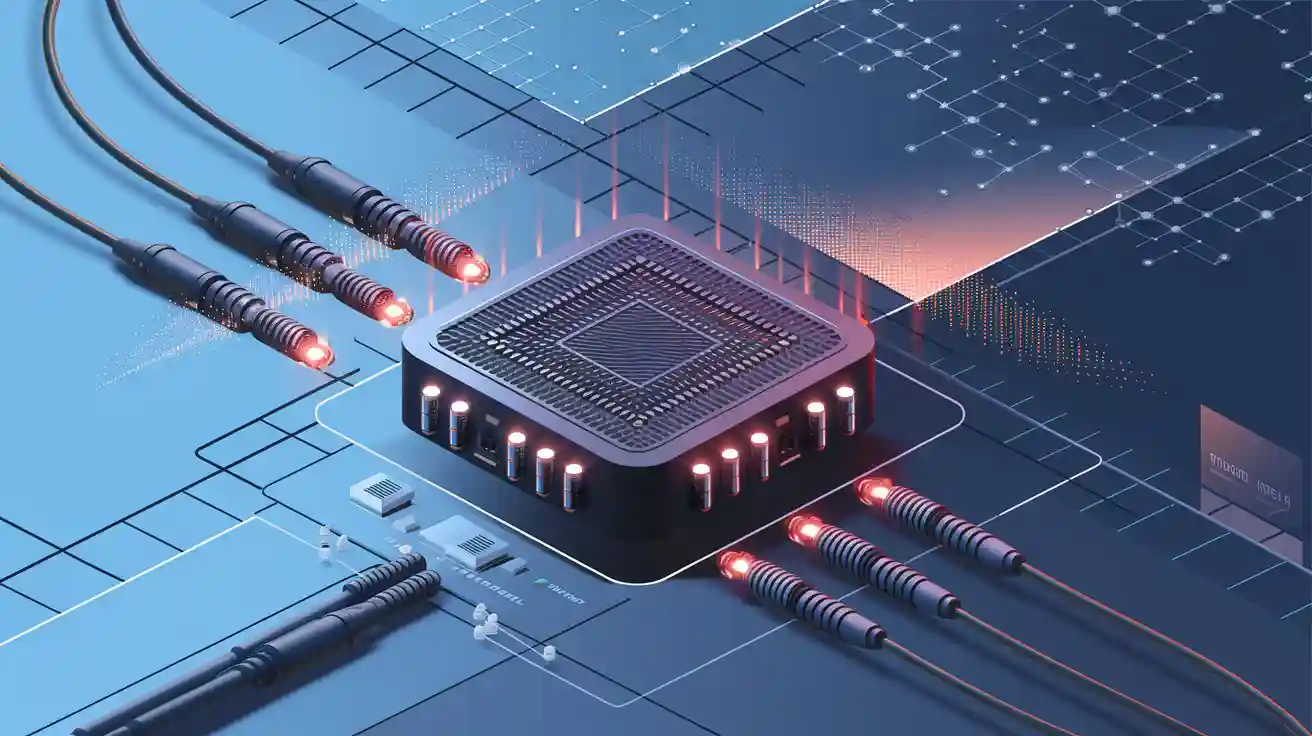
To truly appreciate the efficiency of the 100G QSFP BiDi transceiver, it is essential to explore the engineering marvels hidden inside its compact housing. By combining advanced optical design with intelligent wavelength management, this module completely redefines how high-speed data travels across a network. Let’s dive deeper into the core mechanisms that make this single-strand 100G transmission possible.
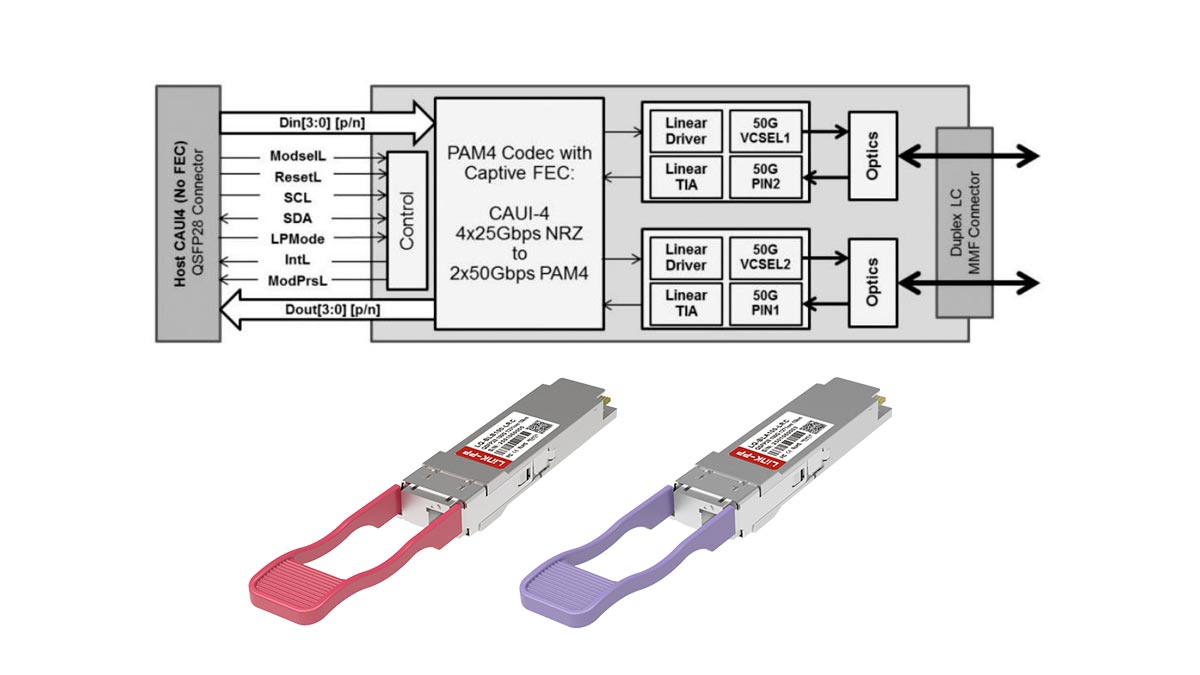
The Fundamental Principles of Bidirectional Optical Transmission
Regular optical transceivers rely on two separate strands of fiber: one dedicated to sending data (Tx) and the other dedicated to receiving data (Rx). This dual-strand approach inherently limits the capacity of existing cable plants, as a single connection consumes double the physical fiber resources.
Bidirectional (BiDi) transmission breaks this limitation by allowing simultaneous, two-way communication over a single strand of fiber. By using different optical wavelengths to isolate the upstream and downstream traffic, the data streams can pass each other seamlessly without causing signal collisions or interference.
Single-Mode Wavelength Multiplexing (WDM) Architecture Inside the Module
At the heart of the 100G QSFP BiDi transceiver is an integrated Single-Mode Wavelength Division Multiplexing (WDM) architecture. This internal design allows the module to combine multiple optical signals of different wavelengths into a single path for transmission, and then separate them at the receiving end without interference. To achieve this dual-highway communication over a single fiber strand, the transceivers must be deployed in complementary pairs that match each other's frequencies.
A perfect real-world example of this architecture is the pairing of the LINK-PP LQ-BLA100-LRC (Module A) and the LINK-PP LQ-BLB100-LRC (Module B). The following table breaks down how these two specific hardware components interlock their optical configurations to ensure error-free, high-capacity traffic flow:
| Architectural Component |
Module A Configuration
(LINK-PP LQ-BLA100-LRC)
|
Module B Configuration
(LINK-PP LQ-BLB100-LRC)
|
Technical Specification & Role |
| Transmit (Tx) Laser |
1271nm |
1311nm |
Converts electrical data into optical signals at the designated wavelength. |
| Receive (Rx) Photodiode |
1311nm |
1271nm |
Captures incoming light from the opposing module and converts it back to data. |
| Internal WDM Filter |
Passes 1271nm (Tx);
Reflects 1311nm (Rx)
|
Passes 1311nm (Tx);
Reflects 1271nm (Rx)
|
Combines and separates the Tx and Rx light paths inside the optical sub-assembly. |
| Physical Fiber Interface |
Simplex LC Connector |
Simplex LC Connector |
Connects to a standard single strand of OS2 Single-Mode Fiber (SMF). |
How Internal Optical Splitters Separate Transmit and Receive Signals
To manage the two distinct wavelengths running on the same fiber strand, the transceiver utilizes highly precise internal optical splitters and thin-film filters. These microscopic optical components act as traffic police inside the module, directing incoming and outgoing light to their correct destinations.
When a signal arrives at the module, the internal splitter isolates the specific receiving wavelength and routes it directly to the optical receiver photodiode. Meanwhile, the transmit laser fires its own wavelength into the exact same fiber strand through a different angle, ensuring the two signals never bleed into one another.
Comparing BiDi Multi-Wavelength Integration to Standard Parallel Optics
Standard 100G parallel optics, such as the QSFP28 SR4 or PSM4, typically require four or eight distinct fiber strands using complex MPO/MTP connectors. This multi-fiber requirement creates massive cable congestion in high-density racks and drastically increases infrastructure costs during network upgrades.
In contrast, the 100G BiDi module integrates multi-wavelength technology to deliver the exact same 100G throughput over a single, standard LC simplex fiber connector. This eliminates the need for expensive parallel cabling layouts, allowing network engineers to scale up speed while drastically downsizing physical hardware footprints.
⏳ How the Single-Mode 100G QSFP BiDi Solution Optimizes Fiber Infrastructure
Deploying the single-mode 100G QSFP BiDi solution is one of the most effective ways to modernize data center cabling and campus networks. By restructuring how data travels through the existing glass, this technology extracts maximum utility from legacy fiber plants. Let's look closer at how this solution optimizes infrastructure, simplifies cable management, and unlocks hidden bandwidth.
Achieving 100G Throughput Over a Single Strand of SMF
Traditional high-speed migrations often require network engineers to pull new fiber cables to support expanding bandwidth demands. The 100G QSFP BiDi module shatters this requirement by squeezing a full 100G pipe into a single strand of Single-Mode Fiber (SMF).
This radical efficiency boost alters how network administrators plan their physical layer upgrades by delivering several key operational advantages:
- Maximizes existing glass: Utilizes one strand instead of two or eight.
- Saves physical space: Frees up massive amounts of tray and conduit room.
- Delivers full 100G speed: Maintains line-rate performance without compromises.
- Simplifies migration: Upgrades network speeds while keeping the same cable plant.
Wavelength Division Multiplexing (WDM) Pairing Logic Explained
The magic behind single-strand 100G relies on a precise matching system known as WDM pairing logic. Because data travels both directions on one fiber, the optics on each end of the link must be perfectly complementary.
To create a functional bi-directional data highway, the system enforces a strict hardware pairing logic across the optical link:
- Uses Module A and B: Links must pair an "A" device with a "B" device.
- Interlocks optical frequencies: Matches the Tx of one to the Rx of the other.
- Prevents signal blinding: Ensures internal lasers never interfere with local receivers.
- Enforces strict cross-over: Guarantees data flows smoothly in opposite directions.
Eliminating the Need for Complex Dual-Fiber Patch Cords
Standard 100G setups clutter racks with complex duplex LC patch cords or bulky multi-fiber MPO/MTP trunk cables. The 100G QSFP BiDi module eliminates this physical headache by adopting a clean, single-port simplex connection interface.
By transitioning from dual-fiber or parallel cables to a simplex design, IT teams gain immediate benefits on the data center floor:
- Cuts patch cords in half: Swaps duplex LC cables for simple simplex LC cables.
- Eliminates polarity errors: Removes the risk of accidental Tx/Rx flipping during installation.
- Clears rack congestion: Reduces the physical bundle size of patch cables.
- Eases troubleshooting: Simplifies tracking and testing single-strand connections.
Real-World Scenarios for Instant Fiber Capacity Doubling
In the real world, running out of physical fiber strands can bring network expansion to a grinding, expensive halt. The 100G QSFP BiDi module acts as an instant infrastructure multiplier, rescuing enterprise networks from capacity dead-ends without requiring messy construction.
This plug-and-play capacity doubling proves incredibly valuable across a variety of common enterprise situations:
- Exhausted dark fiber: Instantly revives choked-out fiber runs between campus buildings without laying new cables.
- Leased fiber links: Cuts recurring monthly telecommunication rental fees in half by consolidating traffic onto a single leased strand.
- Emergency expansions: Speeds up urgent bandwidth allocation when physical trenching is physically or financially impossible.
- High-density patching: Avoids the need to purchase larger, more expensive patch panels by freeing up half of the existing ports.
⏳ Key Technical Specifications of the Single-Mode 100G QSFP BiDi Module
Evaluating the core performance metrics of the single-mode 100G QSFP BiDi module reveals why it is such a reliable choice for modern network architectures. These technical parameters determine how far the signal can travel, how much optical loss the link can tolerate, and how well the module integrates into existing switch hardware. A thorough grasp of these specifications ensures error-free deployments and stable long-term network operations.
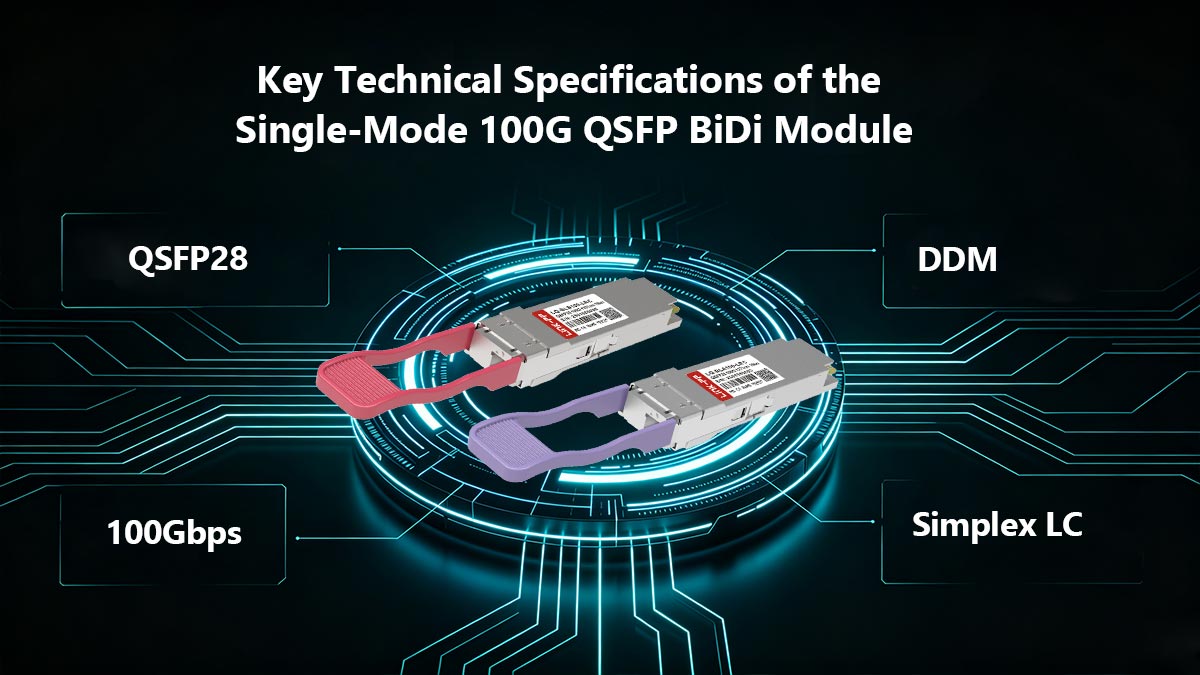
Wavelength Assignment and TX/RX Channel Crossover Frequencies
The engineering stability of a single-strand 100G link relies entirely on precise wavelength isolation. To prevent any signal overlapping, the optical channel frequencies are explicitly separated into independent upstream and downstream paths.
Typically, one transceiver transmits at 1271nm and receives at 1311nm, while its counter-piece reverses that exact assignment. This careful separation creates a clean crossover frequency grid, allowing massive data streams to pass each other continuously within the same core of glass without blending.
Optical Power Budgets, Receiver Sensitivity, and Link Distance over OS2 SMF
Operating over standard OS2 single-mode fiber, the 100G QSFP BiDi transceiver is engineered to deliver high-performance data transmission over standard enterprise and data center distances. Typically, these modules support link lengths from 10km to 80km over OS2 single-mode fiber (SMF), depending on the specific model variation deployed. This reach is achieved by utilizing advanced PAM4 (Pulse Amplitude Modulation 4-level) signaling, which packs more data into each optical pulse to maintain high throughput without succumbing to severe signal degradation over long spans of glass.
To guarantee link stability over these distances, the module relies on a tightly defined optical power budget and high receiver sensitivity. The optical power budget — the difference between the minimum transmit power and the maximum receiver sensitivity — is generally engineered around 6.5dB to 9dB. With a typical receiver sensitivity extending down to -11dBm or lower, the transceiver can accurately decode faint, attenuated light signals. This robust budget provides a comfortable safety margin, allowing the network to easily absorb signal losses caused by patch panel crossings, splices, and macro-bends without triggering bit errors or link drops.
Digital Diagnostic Monitoring (DDM) Parameters for Single-Strand Testing
Digital Diagnostic Monitoring (DDM) serves as an essential real-time health tracker for the optical link, which is especially critical when tracking both transmit and receive signals on a single glass strand. It gives network administrators a direct window into the physical performance of the module via the switch operating system.
The following table details the critical DDM telemetry parameters that engineers monitor to ensure optimal performance and catch potential fiber faults early:
| DDM Parameter |
Real-Time Monitoring Function |
Importance for Single-Strand Setup |
| Optical TX Power |
Measures the strength of the outgoing laser signal. |
Verifies that the internal laser is operating within safe, non-degraded limits. |
| Optical RX Power |
Measures the strength of the incoming light from the far end. |
Detects dirty connectors, excessive macro-bends, or fiber cuts immediately. |
| Laser Bias Current |
Tracks the driving electrical current sent to the Tx laser. |
Serves as an early warning system for laser aging before a hard failure occurs. |
| Module Temperature |
Monitors the internal heat levels of the QSFP28 housing. |
Prevents thermal throttling or damage in high-density, hot-aisle rack layouts. |
| Supply Voltage |
Measures the electrical power delivered by the host switch port. |
Ensures the switch chassis is providing clean, stable power to the transceiver. |
Compliance Standards: QSFP28 MSA and IEEE 802.3 Alignment
To guarantee that the 100G QSFP BiDi module works seamlessly across different hardware ecosystems, it strictly adheres to global industry standards. The mechanical dimensions, electrical interfaces, and pin assignments are fully compliant with the QSFP28 Multi-Source Agreement (MSA).
Additionally, the optical signaling protocols align with established IEEE 802.3 Ethernet standards, ensuring that the 100G data packets are packaged and processed correctly. This dual-layer compliance ensures that the transceivers plug into any standard QSFP28 port and talk to the host system without compatibility issues.
⏳ Cost-Benefit Analysis: The ROI of Deploying 100G QSFP BiDi in Enterprise Networks
Upgrading an enterprise network to 100G requires a careful balance between performance gains and financial investments. Analyzing the return on investment (ROI) reveals that the 100G QSFP BiDi module is not just a technological upgrade, but a powerful strategy for cost containment. By fundamentally altering how physical fiber resources are utilized, this solution drastically reduces both immediate capital expenses and long-term operational costs.

Capex Reduction: Cutting Fiber Optic Cable Procurement Costs by 50%
The most immediate financial benefit of adopting the 100G QSFP BiDi solution is the drastic reduction in raw material procurement. Traditional 100G network rollouts demand duplex or parallel fiber cables, which doubles the volume of fiber optic glass needed for every single link.
By migrating to a single-strand BiDi architecture, procurement managers can instantly cut their optical fiber purchasing requirements exactly in half. This 50% savings applies directly to bulk fiber reels, fiber patch cables, and associated connector hardware, leaving more room in the IT budget for other critical infrastructure needs.
Opex Savings: Minimizing Patch Panel Footprints and High-Density Rack Congestion
Beyond the initial purchase, the 100G QSFP BiDi module delivers continuous operational cost savings on the data center floor. High-density server environments often suffer from severe rack congestion, where massive bundles of duplex fiber cables block essential airflow and choke cooling systems.
Because BiDi modules utilize half the physical cables, they immediately reclaim valuable real estate inside high-density patch panels and cable trays. This reduction in physical bulk maximizes rack efficiency, optimizes server chassis airflow, and lowers the ongoing cooling and energy costs required to maintain the data center environment.
Avoiding the Financial Drain of Physical Fiber Trenching and Conduit Pulls
For sprawling enterprise campuses or metropolitan networks, the cost of buying cables is trivial compared to the immense expense of installing them. When an existing dual-fiber network runs out of capacity, engineers are typically faced with the financial nightmare of physical fiber trenching and pulling new conduits through concrete walls.
Deploying the 100G QSFP BiDi module completely eliminates these catastrophic labor and civil engineering costs by instantly doubling the capacity of the fiber already in the ground. By upgrading the endpoints instead of digging up the streets, enterprises can roll out 100G upgrades in hours rather than months, avoiding regulatory permits, expensive contractor labor, and disruptive construction downtime.
⏳ High-Density Application Scenarios Tailored for the 100G QSFP BiDi Module
The unique single-strand architecture of the 100G QSFP BiDi module makes it an ideal fit for modern, bandwidth-hungry environments where space and fiber resources are at a premium. From sprawling physical layouts to high-performance computing centers, certain deployment environments benefit immensely from this design. Exploring these specific application scenarios highlights where this technology provides the greatest operational advantage and maximum structural relief.
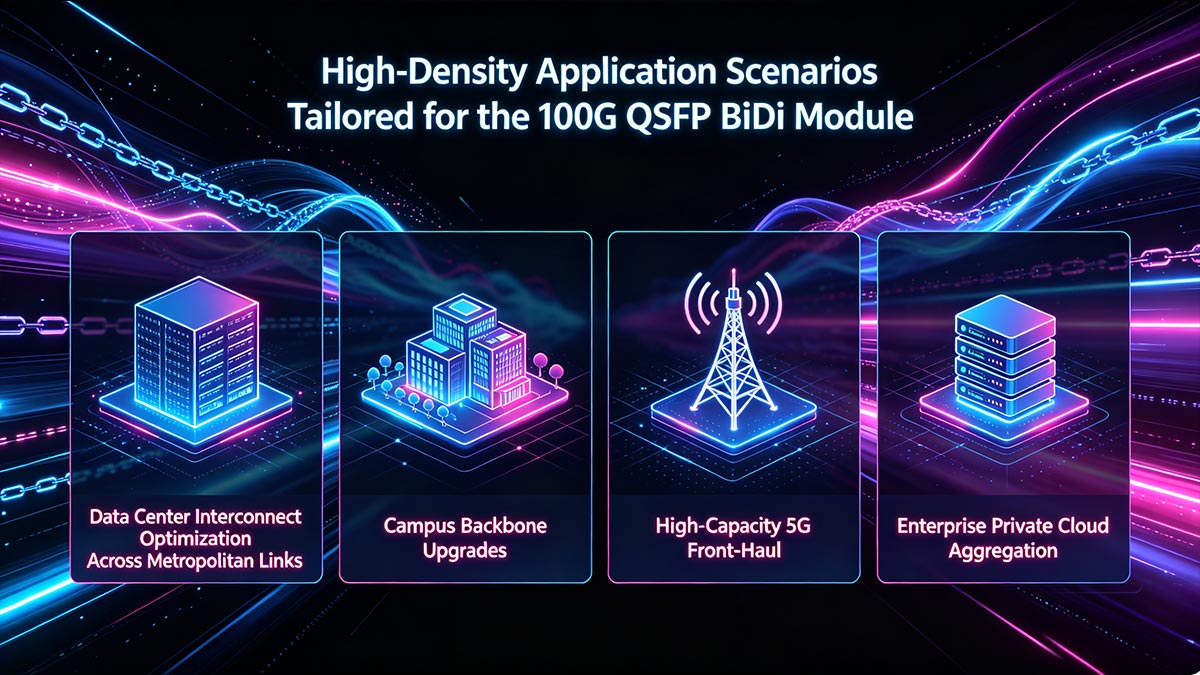
Data Center Interconnect (DCI) Optimization Across Metropolitan Links
Connecting separate data center facilities across a metropolitan area requires highly efficient use of leased or owned dark fiber lines. Because dark fiber rental costs are calculated per strand, running traditional dual-fiber 100G links across cities becomes a massive recurring financial burden over time.
Deploying 100G QSFP BiDi modules across these metropolitan links allows operators to consolidate their traffic, effectively cutting the number of required fiber lease lines in half. This consolidation optimizes the Data Center Interconnect (DCI) layer, freeing up valuable strands for redundancy or future cloud service expansions without increasing monthly operational fees.
Campus Backbone Upgrades: Scaling Bandwidth Instantly Over Legacy OS2 Fiber
University and corporate campuses frequently struggle with aging underground fiber plants that connect administrative buildings, labs, and student housing. As data traffic from cloud applications and high-definition video streaming spikes, these legacy OS2 single-mode backbones quickly run out of available strands.
Instead of undergoing the disruptive and budget-breaking process of digging up campus pathways to lay new glass, institutions can deploy the 100G BiDi solution. This allows network administrators to instantly upgrade building-to-building links to 100G speeds using just a single strand of the existing underground fiber infrastructure.
High-Capacity 5G Front-Haul and Telecommunication Transport Networks
Modern telecommunication networks require massive bandwidth and ultra-low latency to handle the heavy data loads generated by 5G mobile base stations. Remote Radio Heads (RRH) mounted on towers must constantly exchange dense data packets with centralized Baseband Units (BBU) located kilometers away.
The 100G QSFP BiDi module fits perfectly into these high-density front-haul architectures by streamlining the optical transport layer. By sending and receiving 100G signals on one fiber, telecom providers can maximize tower conduit space and drastically accelerate the rollout of high-speed mobile services.
Enterprise Private Cloud Aggregation: Switch-to-Switch Core Interconnections
Within the core of enterprise private clouds, core switches must aggregate massive amounts of data flowing from distribution and access layer switches. This concentration of data can create severe patch panel congestion and untamable cable nests at the main distribution frame (MDF).
Using 100G BiDi modules for switch-to-switch core interconnections drastically cleans up these high-density aggregation points. It slashes the physical cable count between core network racks by 50%, eliminating messy cable bundles while ensuring smooth, line-rate 100G throughput across the entire private cloud matrix.
⏳ Implementation Best Practices for 100G QSFP BiDi Infrastructure Upgrades
Successfully deploying 100G QSFP BiDi modules requires moving beyond traditional dual-fiber network habits. Because these transceivers handle two-way data on a single strand of glass, installation precision and proper planning are critical to network stability. Following industry-vetted best practices ensures a smooth hardware migration, minimal signal loss, and reliable long-term data transmission.
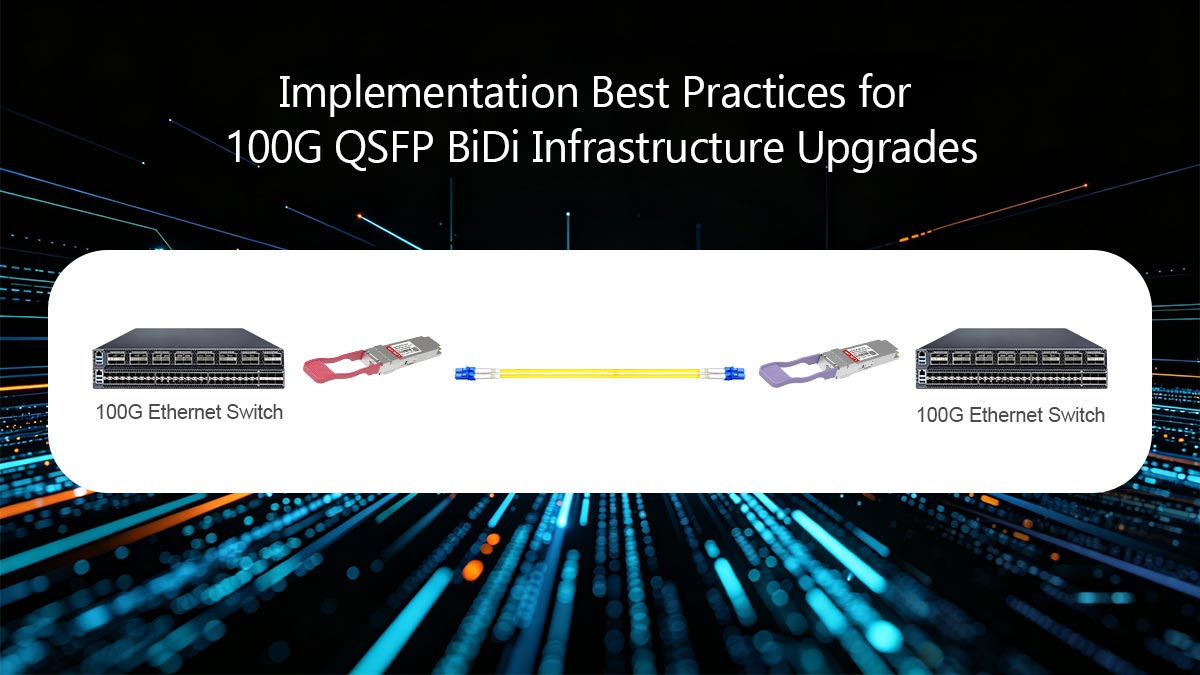
Selecting the Correct Optical Patch Cables: Simplex LC Singlemode OS2
Using the wrong physical patch cords is a frequent cause of deployment failure during high-speed network upgrades. Unlike standard dual-fiber setups that require duplex cords, the 100G BiDi module relies on a single strand of glass to complete the connection link.
To ensure optimal optical performance and physical compatibility, your patch cabling must meet the following hardware criteria:
- Uses simplex LC connectors: Matches the single-port design of the BiDi module.
- Requires single-mode fiber: Must use yellow OS2 cabling instead of multimode glass.
- Matches physical core sizes: Aligns perfectly with standard 9/125 micron fiber cores.
- Features ultra-low insertion loss: Prevents signal degradation right at the connection port.
Critical TX/RX Crossover Pairing: Deploying Module A and Module B Correctly
A functional bidirectional link cannot be established by using two identical transceivers on the opposite ends of a fiber run. Because one wavelength must transmit while the other receives, network engineers must deploy these modules in interlocking pairs.
To guarantee that your upstream and downstream data paths match perfectly, keep these critical pairing rules in mind during installation:
- Always pair A with B: Connect a Module A to a Module B across the link.
- Avoid matching AA or BB: Never install identical modules on both ends.
- Label the endpoints clearly: Mark your hardware to simplify future troubleshooting.
- Verify local switch ports: Ensure the host switch registers the correct device model.
Link Loss Budget Calculations and Chromatic Dispersion Mitigation Over Distance
As data signals travel over single-mode fiber, they naturally lose strength due to connector splices, patch panels, and the glass itself. Calculating an accurate link loss budget ensures the optical signal arrives within the operating window of the receiving photodiode.
When calculating your power limits to prevent bit errors over extended distances, engineers must account for several critical variables:
- Total link distance: Map out the exact fiber run length up to its maximum limit.
- Connector loss margins: Factory-calculate a 0.25dB to 0.5dB loss per patch panel connection.
- Chromatic dispersion limits: Monitor signal stretching over longer, high-speed spans.
- Safety padding: Add a 2.0dB safety margin to handle future fiber aging or repairs.
Advanced Connector Cleaning Protocols to Maintain Single-Strand Signal Integrity
Because a single strand of glass carries both your transmit and receive traffic, dust contamination can cause catastrophic reflections inside the fiber. A tiny speck of dust can bounce light backward, blinding the local receiver and taking down the entire 100G connection.
To protect your hardware and maintain flawless data streams, adopt a strict inspection and cleaning process every time you handle a cable:
- Inspect before you connect: Use a fiber scope to view the glass face before plugging it in.
- Use specialized click cleaners: Clean the optical ports with dry fiber cleaning tools.
- Avoid touching bare ferrules: Keep finger oils completely off the exposed optical connectors.
- Cap unused ports immediately: Protect exposed transceiver optics with dust caps when unpatched.
⏳ Compatibility and Interoperability Testing for 100G QSFP BiDi Across OEM Platforms
Deploying third-party 100G QSFP BiDi modules into an enterprise network requires careful validation of software and hardware compatibility. Because original equipment manufacturers (OEMs) often implement distinct firmware requirements, ensuring that these single-strand optics communicate flawlessly with your switches is essential. Comprehensive testing across different vendor operating systems prevents unexpected port errors and guarantees a stable, highly interoperable network fabric.
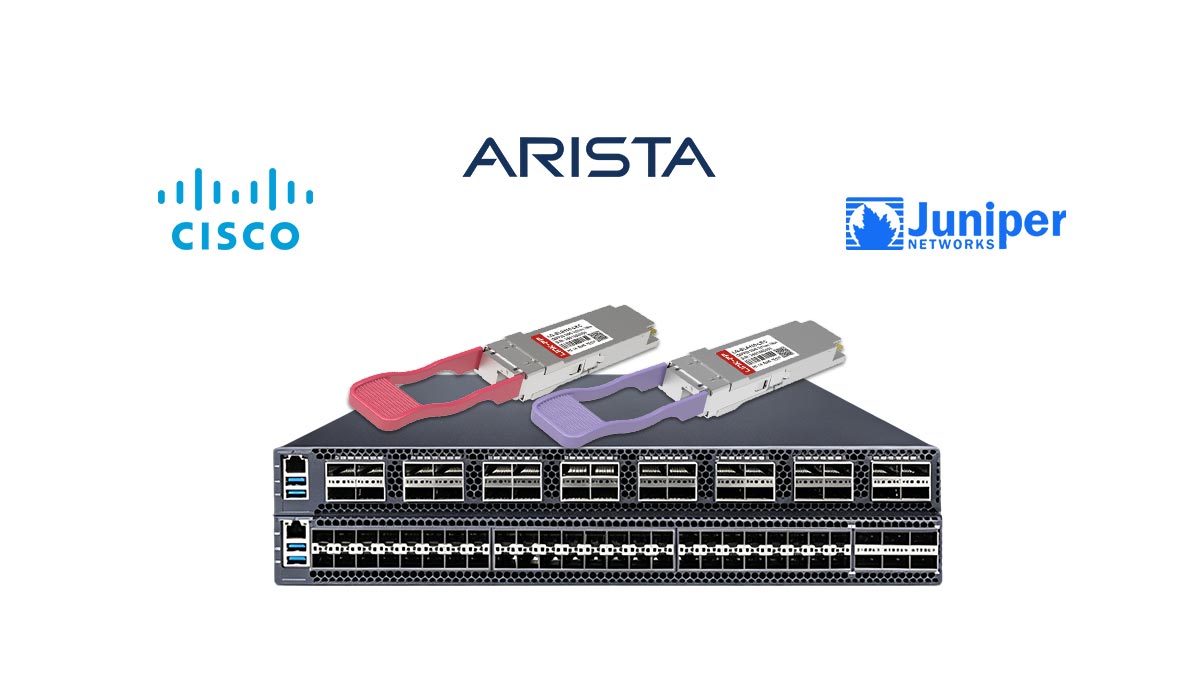
Navigating EEPROM Register Mapping and Vendor Hardware Locking Systems
Many network vendors utilize proprietary hardware locking systems within their switch operating systems to restrict the use of non-OEM transceivers. To bypass these restrictions and prevent frustrating "unsupported transceiver" error codes, the internal EEPROM of the 100G BiDi module must be programmed with exact register mappings that mimic original vendor codes. Experienced optical engineers carefully code these memory registers so that the host switch recognizes the module as a natively trusted component immediately upon insertion.
Cross-Brand Interoperability: Seamless Operation Between Cisco, Juniper, and Arista Hardware
In modern heterogeneous data centers, a single network link frequently spans across hardware from different vendors, such as connecting a Cisco core switch to an Arista aggregation leaf. Achieving cross-brand interoperability requires the 100G BiDi modules on both ends to share identical optical signaling rules and electrical interfaces regardless of the host chassis. Rigorous lab testing confirms that when Module A and Module B are coded for their respective switch brands, they still establish a flawless, high-speed connection across different vendor platforms.
Firmware Optimization for Error-Free Operating System (OS) Recognition
Host operating systems like Cisco NX-OS, Juniper Junos, and Arista EOS periodically scan plugged-in transceivers to verify their operational state and protocol compliance. If a 100G BiDi module runs outdated or poorly written firmware, it can cause erratic port flapping, intermittent link drops, or total recognition failure during switch reboots. Continuous firmware optimization ensures that the transceiver answers all operating system queries correctly, resulting in stable, error-free link initialization across all major enterprise OS versions.
Validating Digital Diagnostic Monitoring (DDM) Threshold Accuracy Across Switches
While a premium third-party compatible transceiver can successfully pass data, it must also accurately report its internal health telemetry to the host switch's monitoring system. Validating Digital Diagnostic Monitoring (DDM) means testing that critical parameters — such as single-strand laser power and voltage — are read accurately without triggering false alarm thresholds in the switch software. Ensuring this data alignment allows network administrators to confidently use native CLI commands to monitor link health and troubleshoot fiber issues in real time.
⏳ Conclusion: Maximizing Bandwidth and Doubling Capacity with the 100G QSFP BiDi Module
The single-mode 100G QSFP BiDi transceiver represents a massive leap forward in network infrastructure optimization. By squeezing high-capacity 100G throughput onto a single strand of OS2 fiber, this innovative solution allows enterprises to scale their bandwidth instantly while cutting cabling costs exactly in half. It effectively eliminates the need for expensive physical trenching and complex parallel optics, making it the ultimate tool for high-density data centers and expanding campus backbones.
Ready to optimize your fiber infrastructure and eliminate network bottlenecks without breaking the budget? Explore a comprehensive selection of high-performance, fully compatible bidirectional transceivers by visiting the LINK-PP Official Store. Upgrade your network to high-density 100G today with reliable third-party optics engineered for seamless multi-vendor interoperability.