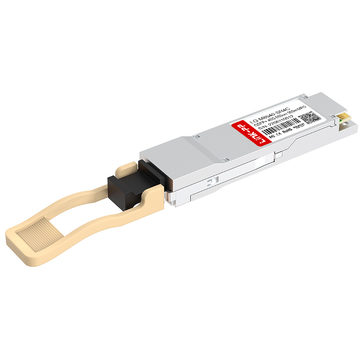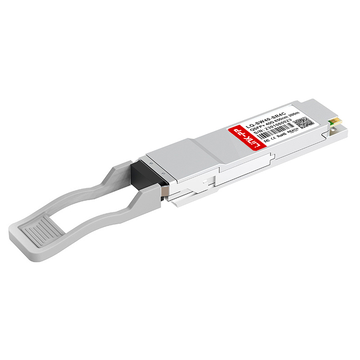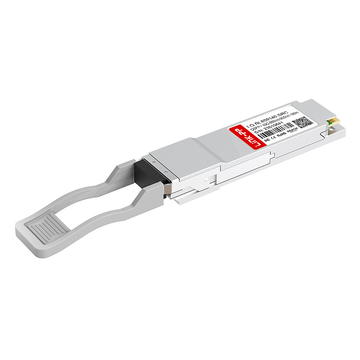


























As enterprise networks continue shifting from SFP+ 10G to QSFP+ 40G Ethernet, one practical challenge appears almost immediately: how to increase bandwidth without replacing existing multimode fiber cabling. Many data centers, campus backbones, and aggregation rooms were originally deployed with duplex LC multimode fiber for 10G links, but standard 40G migration paths such as QSFP-40G-SR4-S often require 8-fiber MPO/MTP infrastructure, which means higher recabling costs, longer downtime, and more complex installation.
This is exactly where the QSFP 40G BiDi Short Reach Transceiver becomes a highly searched and highly valued solution.
Designed specifically for short-distance 40GbE transmission over duplex multimode fiber, the QSFP 40G BiDi module allows network engineers to reuse their existing LC fiber plant while still upgrading to 40G speeds. Instead of requiring parallel fiber transmission like conventional SR4 optics, BiDi technology sends and receives signals bidirectionally on only two fibers, dramatically simplifying migration. According to Cisco Systems, standard QSFP 40G BiDi optics can support up to 100 meters on OM3 and 150 meters on OM4/OM5 multimode fiber, making them ideal for rack-to-rack, switch-to-switch, and short aggregation links in modern network environments.
Because of this unique advantage, search demand around terms like “QSFP 40G BiDi Short Reach Transceiver”, “QSFP-40G-SR-BD”, “40G BiDi vs SR4”, and “40G LC duplex transceiver” has grown steadily among IT buyers, network architects, and data center operators. These users are usually not looking for generic optical theory—they are trying to answer very practical questions:
-
Can I upgrade to 40G without installing MPO cabling?
-
Is QSFP 40G BiDi compatible with my switch?
-
How far can a 40G BiDi module really transmit on OM3 or OM4?
-
Is BiDi better than SR4 for short-reach links?
-
Are third-party compatible transceivers reliable enough for production use?
This means the keyword carries a strong commercial investigation + technical compatibility intent. Searchers are often close to making a purchasing or deployment decision, but they need authoritative technical guidance before they proceed.
In this article, we will provide a complete and engineer-friendly breakdown of the QSFP 40G BiDi Short Reach Transceiver, including:
-
how BiDi optical transmission works,
-
the real transmission distance on OM3/OM4 fiber,
-
BiDi vs SR4 cabling differences,
-
compatibility checkpoints before buying,
-
common deployment mistakes,
-
and how to choose a reliable vendor-compatible 40G BiDi module.
Whether you are planning a 10G-to-40G migration, trying to avoid expensive fiber replacement, or simply comparing QSFP+ short-reach optical solutions, this guide will help you make a technically sound and cost-efficient decision.
⭐ What Is a QSFP 40G BiDi Short Reach Transceiver?
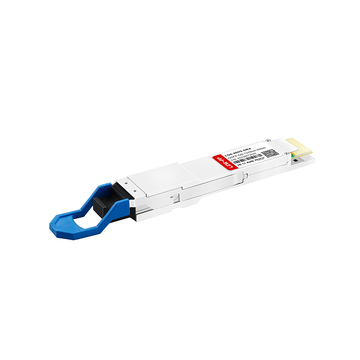
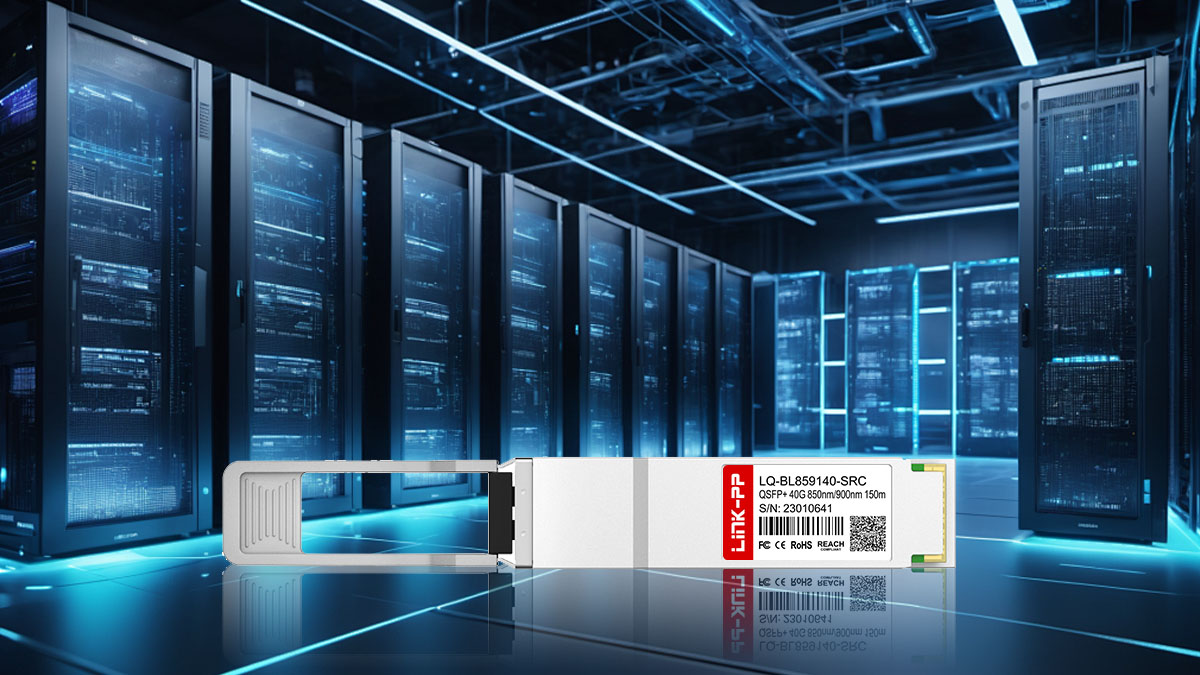
A QSFP 40G BiDi Short Reach Transceiver is a 40GbE QSFP+ optical module that uses bidirectional technology to transmit 40G data over standard duplex LC multimode fiber for distances up to 100 m on OM3 and 150 m on OM4/OM5, enabling low-cost 10G-to-40G network upgrades without MPO recabling.
What Does “BiDi” Mean in a 40G QSFP Module?
The term BiDi stands for Bidirectional.
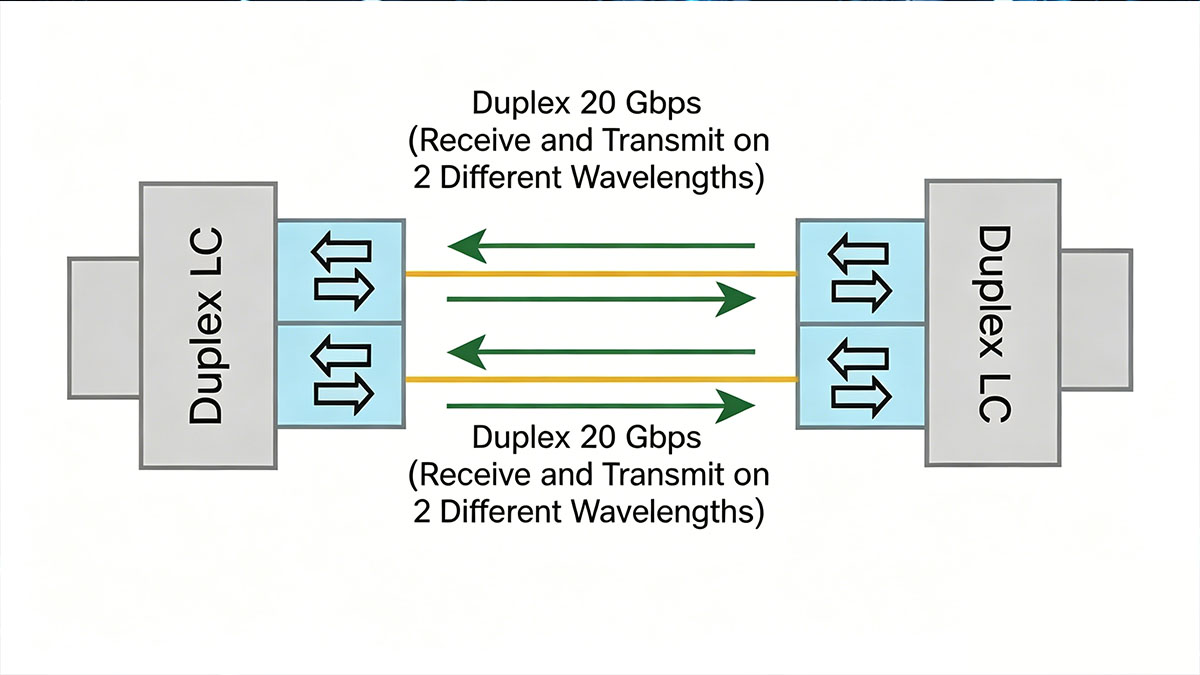
In ordinary optical links, one fiber is used to transmit data and another fiber is used to receive data. However, in a BiDi transceiver, two optical wavelengths are multiplexed so that transmitting and receiving can happen simultaneously on the same duplex fiber pair. In the QSFP 40G BiDi architecture, the module internally converts the four electrical 10G lanes of the QSFP+ interface into 2 × 20G bidirectional optical channels, allowing the full 40Gbps signal to pass through a simple LC duplex multimode cable.
This means:
-
fewer fiber strands are required,
-
no MPO polarity management is needed,
-
and existing LC patch panels can remain in service.
That practical fiber-saving advantage is exactly why many engineers on Reddit describe the QSFP-40G-SR-BD as the “right choice for 2-strand 40G over OM3/OM4 LC fiber” when short-distance multimode deployment is required.
What Does “Short Reach” Mean?
The phrase Short Reach refers to the module’s intended transmission distance.
QSFP 40G BiDi optics are not designed for long-haul campus or metro transmission. They are optimized specifically for:
-
switch-to-switch uplinks,
-
rack-to-rack aggregation,
-
leaf-spine interconnects,
-
server cluster backbones,
-
and short enterprise core links.
In most production environments, “short reach” means inside the same data hall, building floor, or wiring room—typically under 150 meters.
Because the optic uses multimode fiber and VCSEL-based shortwave optics rather than long-range single-mode lasers, it offers:
-
lower deployment complexity,
-
lower total optical path cost,
-
easier maintenance,
-
and much faster installation.
So when buyers search for “QSFP 40G BiDi Short Reach Transceiver,” they are usually looking for a compact 40G LC optical module specifically for nearby interconnects—not long-distance telecom links.
Why Was the QSFP 40G BiDi Module Created?
This module was created to solve a very common network upgrade problem: Standard 40G Ethernet was fast, but standard SR4 optics forced users to migrate from LC duplex cabling to MPO parallel fiber.
For many enterprises, this created three expensive issues:
-
existing LC multimode cabling became unusable for 40G SR4,
-
new MPO trunks increased installation cost,
-
migration downtime became much longer.
The QSFP 40G BiDi transceiver was introduced as the practical answer.
Instead of asking companies to rebuild their fiber plant, it allows them to:
-
keep their installed duplex MMF,
-
keep their LC patch cords,
-
keep their LC patch panels,
-
and still achieve 40Gb Ethernet speeds.
This “fiber reuse” benefit is the strongest real-world buying driver behind the product. In fact, many compatibility discussions from network administrators focus less on the optical theory and more on one central question:
“Can this module give me 40G over my existing two-strand LC OM3/OM4 cable?”
And the answer is yes—this is precisely what the QSFP 40G BiDi module was engineered to do.
⭐ How QSFP 40G BiDi Works on Multimode Fiber
The biggest advantage of the QSFP 40G BiDi Short Reach Transceiver is that it can transmit a full 40Gbps Ethernet signal over the same duplex LC multimode fiber used in many 10G networks. This allows network operators to upgrade bandwidth without replacing their existing OM3 or OM4 cabling.
Unlike standard QSFP+ SR4 optics, which require 8-core MPO/MTP parallel fiber, a QSFP 40G BiDi module uses only two multimode fibers with a duplex LC connector. Cisco specifically designed the QSFP-40G-SR-BD to help users reuse installed duplex multimode fiber infrastructure while migrating from 10G to 40G Ethernet. It supports up to 100 meters on OM3 and 150 meters on OM4/OM5 multimode fiber.
Duplex LC + BiDi Signaling = 40G on Two Fibers
Inside the QSFP+ port, the switch outputs four 10G electrical lanes.
A normal SR4 optic converts these into 8 optical lanes, which is why it needs MPO fiber.
A QSFP 40G BiDi transceiver works differently:
it converts the four electrical lanes into two 20G bidirectional optical channels, allowing transmit and receive traffic to run simultaneously over the same two LC multimode fibers.
This bidirectional wavelength multiplexing is what makes 40G over standard duplex MMF possible.
In practical terms, users can continue using:
-
existing LC patch cords,
-
installed OM3/OM4 multimode trunks,
-
current LC patch panels.
This is why many network engineers choose BiDi when they want 40G bandwidth without expensive recabling.
Real Transmission Distance on OM3 / OM4 / OM5 Multimode Fiber
Because the QSFP 40G BiDi module uses VCSEL-based multimode optics, it is classified as a short reach data center transceiver, not a long-haul enterprise or telecom optic.
Under standard deployment conditions, Cisco rates the module for:
|
Fiber Type |
Supported Distance |
|---|---|
|
OM2 MMF |
30 meters |
|
OM3 MMF |
100 meters |
|
OM4 MMF |
150 meters |
|
OM5 MMF |
150 meters |
Why Matched BiDi Optics Are Required
Because the module relies on bidirectional wavelength pairing, a QSFP 40G BiDi optic must connect to another compatible 40G BiDi optic at the far end.
It cannot directly link to:
-
QSFP-40G-SR4,
-
MPO parallel optics,
-
or standard non-BiDi 40G multimode optical modules.
This compatibility point is one of the most common deployment questions in real-world network forums, especially among users trying to reuse existing LC multimode fiber paths.
Quick Technical Summary
A QSFP 40G BiDi Short Reach Transceiver uses bidirectional optical signaling to send and receive 40GbE traffic over a standard duplex LC multimode fiber pair. By converting four 10G electrical lanes into two 20G optical channels, it enables 40G transmission on existing OM3/OM4/OM5 MMF links up to 100 m on OM3 and 150 m on OM4/OM5.
⭐ QSFP 40G BiDi vs. SR4: Which One Should You Choose?
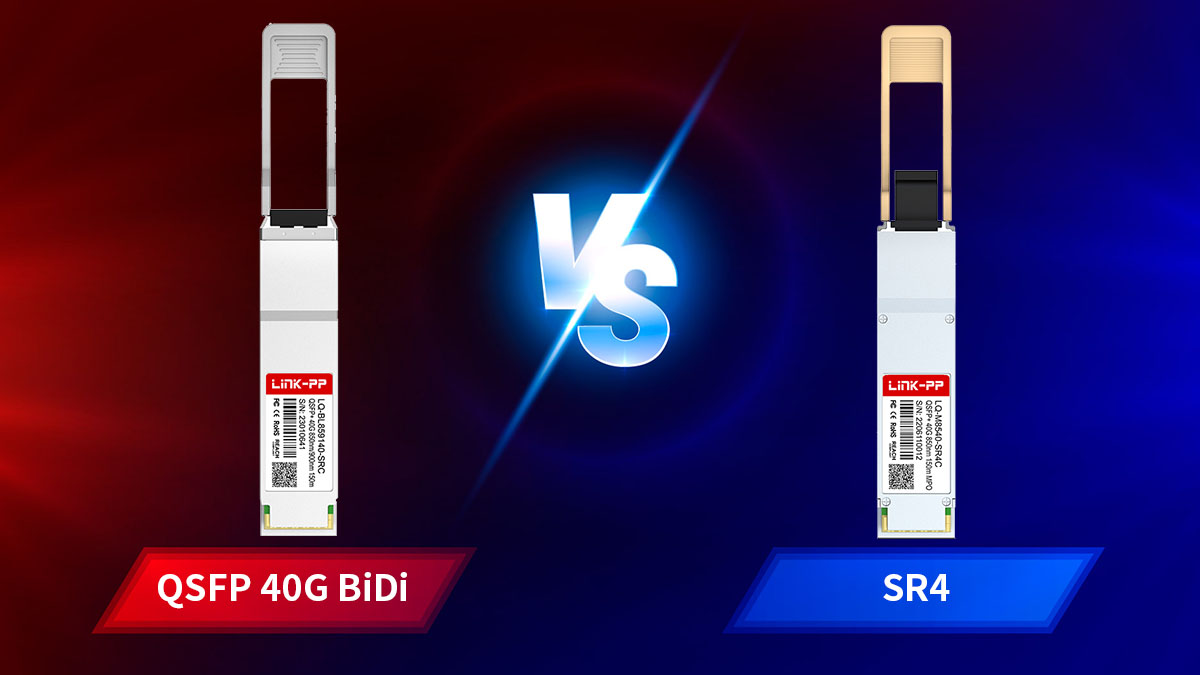
When planning a 40G multimode fiber upgrade, the two most common short-reach optical choices are QSFP 40G BiDi and QSFP+ SR4. Both deliver 40Gb Ethernet, but they are built for very different cabling environments.
The real question is not which optic is faster—both provide the same 40G throughput.
The real question is: Which module fits your existing fiber infrastructure with the lowest deployment cost and the least installation complexity?
That is where the difference becomes important.
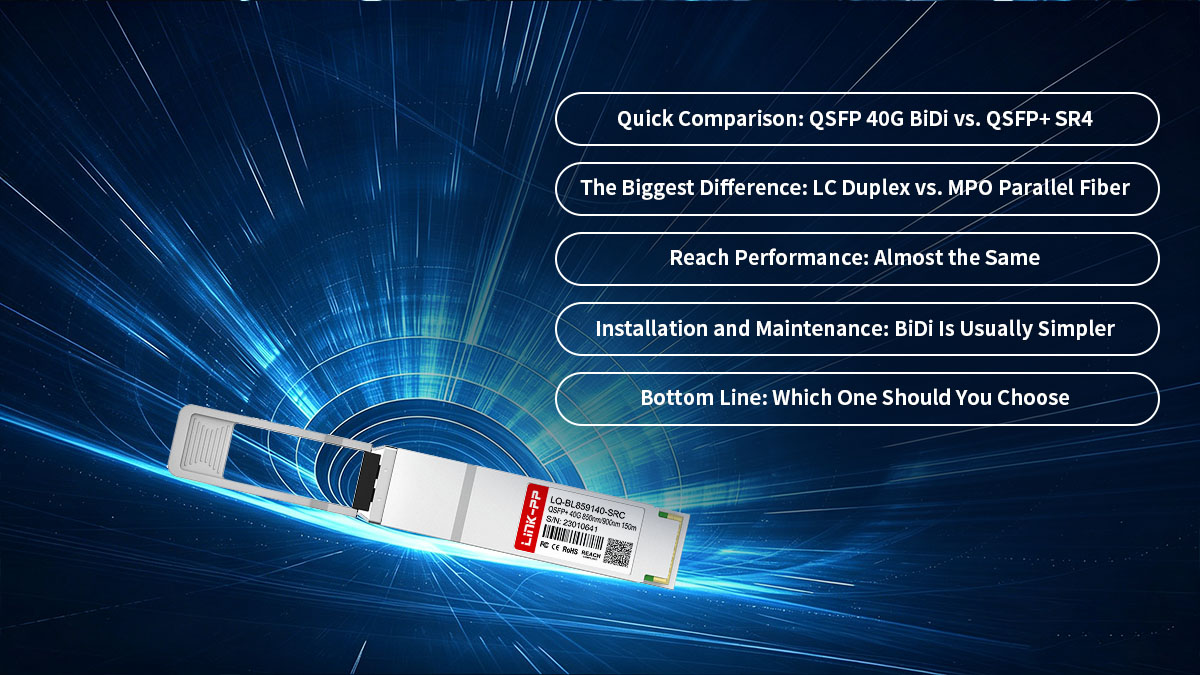
Quick Comparison: QSFP 40G BiDi vs. QSFP+ SR4
|
Feature |
QSFP 40G BiDi Short Reach |
QSFP+ SR4 |
|---|---|---|
|
Connector Type |
Duplex LC |
MPO/MTP-12 |
|
Required Fiber Count |
2-core MMF |
8-core MMF |
|
Fiber Type |
OM3 / OM4 / OM5 MMF |
OM3 / OM4 MMF |
|
Max Reach |
100m OM3 / 150m OM4/OM5 |
100m OM3 / 150m OM4 |
|
Transmission Method |
2 × 20G BiDi channels |
4 × 10G parallel lanes |
|
Existing 10G LC Fiber Reusable |
Yes |
No |
|
Cabling Upgrade Needed |
Usually No |
Usually Yes |
|
Installation Complexity |
Lower |
Higher |
|
Typical Deployment Cost |
Lower in retrofit projects |
Lower in new MPO environments |
Cisco confirms that both QSFP-40G-SR-BD and QSFP-40G-SR4 offer similar short-range multimode transmission distances, but the physical media architecture is completely different.
The Biggest Difference: LC Duplex vs. MPO Parallel Fiber
A QSFP+ SR4 optic uses:
-
four transmit fibers,
-
four receive fibers,
-
one MPO/MTP multi-fiber connector.
This means an SR4 deployment needs dedicated 8-fiber parallel multimode cabling.
If your current network is still based on:
-
duplex LC patch cords,
-
two-fiber OM3 trunks,
-
standard LC patch panels,
then SR4 usually requires:
-
replacing patch cords,
-
changing fiber trunks,
-
adding MPO cassette systems,
-
and reworking cable management.
By contrast, QSFP 40G BiDi uses a standard duplex LC connector and only two multimode fibers, making it far easier to deploy in existing 10G environments.
This is exactly why many engineers describe BiDi as the preferred 40G migration optic for legacy LC infrastructure.
Reach Performance: Almost the Same
From a transmission distance perspective, there is no major advantage for SR4 in short-range multimode applications.
Both technologies typically support:
-
100 meters over OM3
-
150 meters over OM4
and BiDi also commonly supports OM5 multimode links.
So if your link is:
-
rack to rack,
-
switch to switch,
-
or within the same equipment room,
BiDi provides essentially the same practical reach as SR4.
This means the buying decision is usually driven by fiber architecture, not by distance.
Installation and Maintenance: BiDi Is Usually Simpler
In retrofit enterprise networks, BiDi generally reduces installation work because technicians can continue using:
-
existing LC jumpers,
-
existing duplex patch panels,
-
familiar two-fiber routing.
There is no need to manage:
-
MPO polarity mapping,
-
8-fiber cleaning procedures,
-
MPO cassette conversion,
-
high-density parallel patching.
For many IT teams, that translates into:
-
shorter downtime,
-
easier troubleshooting,
-
lower labor cost.
This operational simplicity is one reason BiDi optics receive strong preference in user deployment discussions where existing LC MMF already exists.
Bottom Line: Which One Should You Choose?
-
If your network already has duplex LC multimode fiber, QSFP 40G BiDi is usually the smarter and more economical option because it delivers the same short-range 40G performance without MPO recabling.
-
If your network is already built around MPO parallel fiber, QSFP+ SR4 may be simpler to standardize.
For most practical enterprise upgrade projects, the decision is not about bandwidth—it is about how much existing infrastructure you can preserve.
⭐ Real-World Use Cases for Short-Reach 40G BiDi
The QSFP 40G BiDi Short Reach Transceiver was not created for long-distance carrier networks or telecom backbone transmission. Its real value appears in short indoor optical links where organizations need higher bandwidth but want to preserve their existing duplex LC multimode fiber infrastructure.
In practical deployment, this makes BiDi one of the most cost-effective 40G optics for enterprise retrofits, server aggregation, and data center bandwidth expansion.
1. 10G to 40G Data Center Upgrades Without Replacing Fiber
Many enterprise data centers were originally built with:
-
SFP 10G SR optics,
-
duplex LC patch panels,
-
OM3/OM4 multimode backbone cabling.
When bandwidth demand increases, the most common upgrade path is moving uplinks and aggregation links from 10G to 40G. The problem is that standard QSFP+ SR4 modules require MPO parallel fiber, which would force:
-
new trunk installation,
-
patch panel replacement,
-
additional fiber management work.
A QSFP 40G BiDi module avoids this issue by allowing the same two-fiber LC multimode path to carry 40GbE traffic.
This means organizations can achieve:
-
faster bandwidth expansion,
-
lower migration cost,
-
minimal service interruption.
For many retrofit projects, this is the single biggest reason BiDi is selected over SR4.
2. Legacy LC Duplex Fiber Reuse in Existing Buildings
In older enterprise campuses, office towers, and industrial control rooms, the installed optical plant is often based entirely on:
-
LC duplex patching,
-
two-core multimode runs,
-
conventional fiber trays.
Running new MPO cabling through these established pathways can be labor-intensive and expensive.
Because QSFP 40G BiDi optics use the same LC duplex optical layout, they allow network teams to:
-
keep current patch fields,
-
reuse existing cable channels,
-
avoid rebuilding cabinet fiber routing.
This is especially useful in:
-
older server rooms,
-
campus distribution closets,
-
building backbone upgrades.
Instead of redesigning the optical layer, teams can simply replace the transceiver modules at both ends.
3. Short Rack-to-Rack and Switch-to-Switch Interconnects
Most 40G BiDi short reach deployments occur over distances well below 150 meters, such as:
-
Top-of-Rack to End-of-Row switches,
-
leaf-to-spine switch uplinks,
-
storage switch interconnects,
-
aggregation switch backbones.
In these short in-room links, users generally care about:
-
easy patching,
-
low cabling bulk,
-
quick maintenance access.
Using only a duplex LC jumper is operationally much cleaner than routing MPO harnesses across crowded cabinets.
For dense data halls where cable management matters, BiDi often provides a simpler day-to-day maintenance experience.
4. Temporary Capacity Expansion Projects
Some organizations need to add 40G bandwidth quickly for:
-
virtualization growth,
-
backup traffic,
-
clustered storage,
-
temporary compute expansion.
In these situations, pulling new MPO structured cabling may not be realistic within the project timeline.
Because BiDi optics can usually be inserted into the existing LC multimode plant, they provide:
-
rapid deployment,
-
lower engineering overhead,
-
faster network turn-up.
This makes them practical for urgent bandwidth upgrades where speed of implementation matters more than redesigning the full optical architecture.
5. Cost-Sensitive Enterprise Network Modernization
Not every company building a 40G network is a hyperscale cloud provider.
Many mid-size enterprises simply want: more uplink bandwidth without a full cabling reconstruction project.
For these users, the cost of migration includes much more than transceiver price:
-
labor,
-
downtime,
-
patch panel conversion,
-
cable replacement,
-
installation planning.
QSFP 40G BiDi optics reduce these hidden infrastructure expenses because the organization keeps most of its original duplex MMF environment.
That is why BiDi is often considered a migration optic rather than just a transceiver.
Bottom Line: Where QSFP 40G BiDi Performs Best
QSFP 40G BiDi short-range optics are best suited for:
-
enterprise data center upgrades,
-
LC duplex multimode reuse projects,
-
rack-to-rack short optical links,
-
switch aggregation under 150m,
-
10G-to-40G migrations without MPO recabling.
Whenever the goal is to increase bandwidth while preserving an installed two-fiber LC multimode network, BiDi is usually one of the most practical 40G optical solutions available.
⭐ Common Problems, User Concerns, and Troubleshooting Tips
Although the QSFP 40G BiDi Short Reach Transceiver is designed to simplify 40G deployment over duplex LC multimode fiber, installation problems can still occur if compatibility or cabling details are overlooked. Most user concerns are not about the module’s optical theory—they are about why a newly installed 40G BiDi link does not come up as expected.
Below are the most common real-world issues engineers search for before and after deployment.
1. Link Down After Inserting the QSFP 40G BiDi Module
One of the most frequent complaints is:
“The module is detected, but the 40G link stays down.”
In most cases, this is caused by one of three reasons:
-
the host switch does not officially support BiDi optics,
-
the module EEPROM coding is rejected,
-
or the optic on the remote end is not a matching BiDi unit.
Because QSFP 40G BiDi optics use a different optical lane structure from SR4, the port may recognize the hardware physically but still fail to establish optical synchronization if the remote side is not compatible.
Quick check: confirm that both ends are using supported QSFP 40G BiDi modules from the same optical architecture.
2. Can a QSFP 40G BiDi Connect to a QSFP+ SR4 Module?
No—this is one of the most misunderstood deployment assumptions.
Even though both are 40G multimode QSFP+ optics, they use different transmission methods:
-
BiDi = 2 bidirectional optical channels over duplex LC
-
SR4 = 8 parallel optical lanes over MPO
Because the connector, wavelength mapping, and lane signaling are different, the two modules cannot directly establish a link.
This mismatch is a very common reason users report “no light” or “link fail” after mixing optical types.
3. Fiber Polarity or LC Patch Orientation Confusion
Since BiDi uses duplex LC fiber, many users assume polarity does not matter at all.
In reality, although BiDi is less complex than MPO parallel optics, improper LC orientation, damaged patch cords, or incorrect cross-connect routing can still interrupt the optical path.
Typical symptoms include:
-
intermittent LOS alarm,
-
unstable DOM power readings,
-
one-side link initialization only.
Quick check: swap LC jumpers, clean both connectors, and test the duplex path with a known-good LC multimode cord.
4. Wrong Fiber Type or Excessive Channel Loss
QSFP 40G BiDi optics are optimized for:
-
OM3,
-
OM4,
-
OM5 duplex multimode fiber.
If the installed path includes:
-
older OM2 fiber,
-
poor splice loss,
-
dirty patch interfaces,
-
multiple hidden coupler transitions,
the module may show weak receive power or unstable link behavior.
This is especially common in reused enterprise fiber runs where the physical cable is older than the switch hardware.
A simple insertion loss test often reveals the issue.
5. Third-Party Module Recognized but Not Stable
Another frequent user concern is:
“The third-party QSFP 40G BiDi works, but the link drops occasionally.”
This usually points to:
-
incomplete vendor coding,
-
non-standard EEPROM mapping,
-
poor thermal calibration,
-
inconsistent optical power tolerance.
Low-cost modules may initialize successfully but fail under long uptime or high-temperature conditions.
For production deployment, it is safer to use BiDi optics that are:
-
fully vendor coded,
-
MSA compliant,
-
compatibility tested on the target switch.
Quick Troubleshooting Checklist
If your QSFP 40G BiDi short reach link does not work correctly, verify:
-
both ends are true 40G BiDi modules,
-
the switch platform supports QSFP-40G-SR-BD type optics,
-
vendor EEPROM coding is accepted,
-
LC duplex polarity/path is clean,
-
OM3/OM4/OM5 fiber is being used,
-
optical loss is within specification.
Most QSFP 40G BiDi deployment failures are caused by compatibility mismatches or old fiber path issues—not by the BiDi technology itself.
⭐ FAQs About QSFP 40G BiDi Short Reach Transceivers
Q1. What is a QSFP 40G BiDi Short Reach Transceiver?
A QSFP 40G BiDi Short Reach Transceiver is a 40GbE QSFP+ optical module that uses bidirectional signaling to transmit data over standard duplex LC multimode fiber. It allows users to upgrade from 10G to 40G without replacing existing two-fiber LC cabling.
Q2. How far can a QSFP 40G BiDi transceiver transmit?
Under standard multimode deployment conditions, the typical transmission distance is 30 m over OM2, 100 m over OM3, and 150 m over OM4 or OM5 fiber. This makes it ideal for short data center and enterprise backbone links.
Q3. Does QSFP 40G BiDi use LC or MPO connectors?
QSFP 40G BiDi uses a duplex LC connector, not MPO or MTP. This is one of its biggest advantages because users can continue using traditional two-fiber multimode patch cords instead of deploying 8-fiber parallel MPO cabling.
Q4. Can QSFP 40G BiDi connect directly to QSFP+ SR4?
No. Although both are 40G multimode QSFP+ optics, they use different optical transmission architectures. BiDi uses duplex LC bidirectional transmission, while SR4 uses MPO parallel lane transmission. Because of this, they are not directly interoperable.
Q5. Do both ends need to use QSFP 40G BiDi modules?
Yes. A QSFP 40G BiDi optic must connect to another compatible QSFP 40G BiDi module using the same bidirectional wavelength design. A normal SR4 or other non-BiDi multimode optic will not establish a valid optical link.
Q6. Is QSFP 40G BiDi better than SR4?
It depends on the cabling environment. If your existing network uses duplex LC multimode fiber, BiDi is usually the better and more economical choice. If your site is already built on MPO or MTP parallel fiber, SR4 may be easier to standardize. For most 10G-to-40G retrofit upgrades, BiDi offers lower recabling cost.
Q7. Are third-party compatible QSFP 40G BiDi modules reliable?
Yes, if they are sourced from a qualified manufacturer. A reliable third-party QSFP 40G BiDi module should provide vendor-specific EEPROM coding, QSFP+ MSA compliance, DOM or DDM support, and 100% switch compatibility testing. Poorly coded low-cost optics may initialize but show unstable long-term performance, so supplier quality matters.
Q8. What is the biggest benefit of using QSFP 40G BiDi?
The biggest benefit is simple: it delivers 40Gb Ethernet over the same two-fiber LC multimode cabling already used by many 10G networks. This helps reduce recabling cost, installation time, migration complexity, and optical infrastructure downtime.
⭐ Conclusion: How to Choose the Right QSFP 40G BiDi Module
Selecting the right QSFP 40G BiDi Short Reach Transceiver is not simply a matter of choosing any 40G QSFP+ optic with an LC connector. For a stable and cost-efficient deployment, buyers should evaluate the module from five practical angles before purchasing.
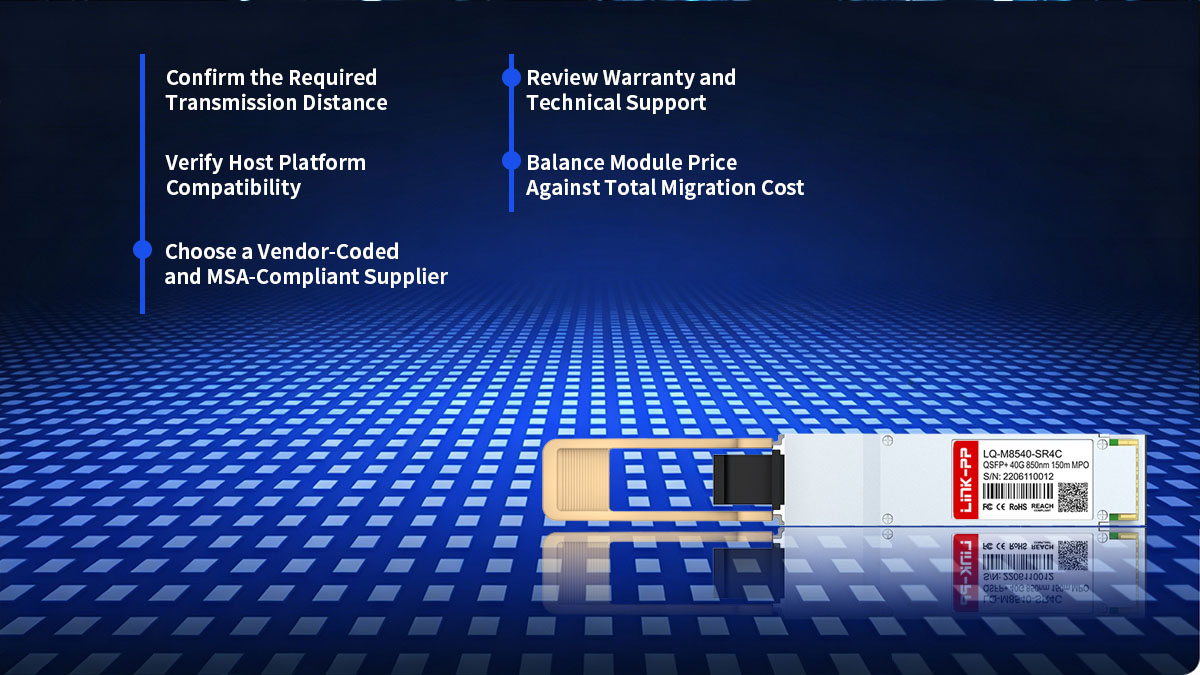
1. Confirm the Required Transmission Distance
First, make sure the optical link fits within the supported BiDi short-reach range:
-
up to 30 m on OM2,
-
up to 100 m on OM3,
-
up to 150 m on OM4/OM5.
If your fiber path exceeds this range, a standard QSFP 40G BiDi module may not be the correct choice.
2. Verify Host Platform Compatibility
Always confirm that the target switch, router, or server NIC can properly recognize:
-
QSFP-40G-SR-BD type optics,
-
vendor-coded EEPROM,
-
DOM/DDM diagnostics.
Even a mechanically compatible module may fail if the host firmware blocks unsupported transceivers.
3. Choose a Vendor-Coded and MSA-Compliant Supplier
A dependable third-party QSFP 40G BiDi module should offer:
-
target-brand compatibility coding,
-
full QSFP+ MSA compliance,
-
serialized optical testing,
-
stable thermal calibration,
-
long-term switch validation.
This directly affects operational stability after deployment.
4. Review Warranty and Technical Support
Because 40G aggregation links often carry critical uplink traffic, warranty coverage matters more than many buyers expect.
A professional supplier should provide:
-
product warranty,
-
compatibility assurance,
-
responsive pre-sale technical consultation,
-
after-sales troubleshooting support.
This helps reduce operational risk if the optic is deployed in a production environment.
5. Balance Module Price Against Total Migration Cost
The transceiver itself is only one part of the upgrade budget.
A poor-quality module can create:
-
repeated troubleshooting,
-
unexpected downtime,
-
unstable optical alarms,
-
replacement labor.
By contrast, a well-tested BiDi optic helps preserve:
-
existing duplex LC cabling,
-
installation efficiency,
-
long-term link reliability.
So the smartest purchasing decision is not always the cheapest optic—it is the module that delivers the lowest total deployment risk.
Final Recommendation
If your goal is to upgrade from 10G to 40G over existing duplex LC multimode fiber, the QSFP 40G BiDi Short Reach Transceiver remains one of the most practical and infrastructure-friendly optical solutions available. It combines:
-
40GbE bandwidth,
-
duplex LC simplicity,
-
OM3/OM4 short-range performance,
-
and reduced recabling cost.
For buyers looking for fully tested, vendor-compatible, MSA-compliant QSFP 40G BiDi modules, the LINK-PP Official Store offers professionally coded OEM-compatible optical transceivers backed by engineering validation, quality control, and technical support for enterprise deployment.
Whether you need Cisco-compatible QSFP-40G-SR-BD, customized coding, or bulk data center upgrade optics, LINK-PP provides a reliable sourcing option for stable 40G migration projects.