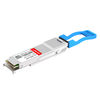
The Hirschmann M-SFP-LX-LC is widely recognized as a reliable single-mode SFP transceiver designed for industrial Ethernet environments that demand stability, durability, and long-distance connectivity. Supporting 1Gbps data rates over 1310nm wavelength with a reach of up to 20km, it is commonly deployed in critical infrastructure such as transportation systems, power utilities, and factory automation networks where consistent optical performance is essential.
As industrial networks continue to expand and evolve toward multi-vendor architectures, reliance on original equipment manufacturer (OEM) optics alone is becoming less practical. Challenges such as higher procurement costs, limited supply flexibility, and vendor lock-in are driving network engineers and operators to explore compatible alternatives that can deliver the same level of performance without compromising interoperability.
In this context, LINK-PP compatible modules have emerged as a practical solution. Designed to align with industry standards and replicate the functional characteristics of the original Hirschmann module, these alternatives aim to provide seamless integration into existing systems while maintaining stable transmission over long-distance single-mode fiber links.
This article examines the key specifications, compatibility considerations, and real-world performance of the Hirschmann M-SFP-LX-LC, with a particular focus on how LINK-PP compatible replacements compare in industrial deployment scenarios. It also explores best practices for ensuring reliable operation across extended distances of up to 20km, helping network designers make informed decisions in increasingly complex and cost-sensitive environments.
? Overview of Hirschmann M-SFP-LX-LC
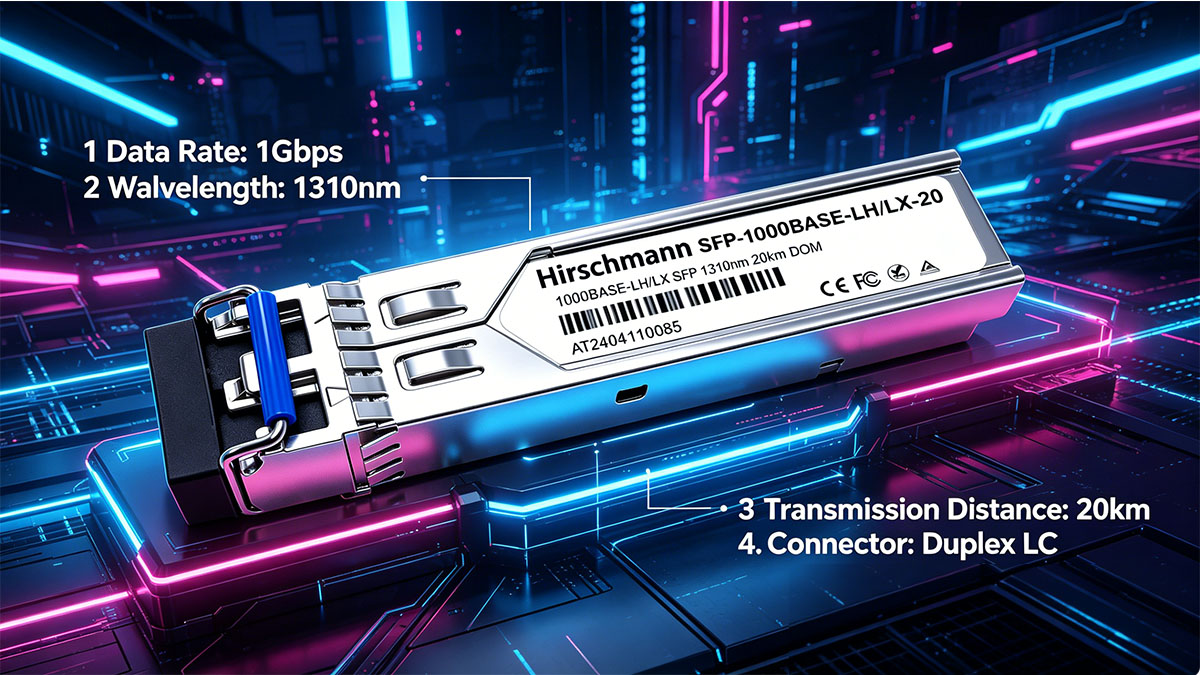
The Hirschmann M-SFP-LX-LC is designed for stable, long-distance Gigabit Ethernet transmission over single-mode fiber, with support for up to 20km links in industrial environments. It combines standard SFP form factor flexibility with industrial-grade reliability, making it suitable for harsh deployment scenarios where temperature variation, vibration, and electromagnetic interference are common.
Key Specifications and Technical Characteristics
The core capability of the module lies in delivering consistent optical performance over extended distances while maintaining compatibility with standard Gigabit Ethernet interfaces. Its specifications reflect a balance between transmission reach, signal stability, and environmental tolerance.
| Parameter |
Value |
Description |
| Data Rate |
1Gbps |
Supports Gigabit Ethernet transmission |
| Wavelength |
1310nm |
Suitable for single-mode fiber communication |
| Transmission Distance |
Up to 20km |
Designed for long-distance optical links |
| Connector Type |
LC Duplex |
Standard interface for fiber connectivity |
| Laser Type |
DFB |
Enables stable output for long-distance transmission |
| Detector Type |
PIN |
Provides reliable optical signal reception |
| DOM/DDM Support |
Yes |
Supports real-time optical diagnostics and monitoring |
This extended parameter set provides a more complete view of the module’s optical and diagnostic capabilities. The use of a DFB laser ensures signal stability over longer distances such as 20km links, while the PIN photodetector offers a balanced approach between sensitivity and cost efficiency for 1G applications.
The inclusion of DOM/DDM functionality is particularly important in industrial deployments, as it allows real-time monitoring of transmit power, receive power, temperature, and voltage. This helps network operators proactively identify potential issues before they impact link stability, especially in long-distance or harsh environment scenarios.
Typical Application Scenarios
The module is primarily used in environments where network reliability and long-distance connectivity are critical. Its design supports deployment across a range of industrial and infrastructure scenarios.
Common use cases include:
- Industrial automation networks
Used to connect PLCs, switches, and control systems across factory floors or distributed production lines
- Transportation and railway communication systems
Enables stable data transmission between signaling equipment, control centers, and trackside devices over long distances
- Power utilities and smart grid infrastructure
Supports communication between substations and control systems where electromagnetic interference and temperature variation are significant
- Outdoor and harsh environment deployments
Suitable for installations in enclosures exposed to dust, humidity, or temperature extremes
These scenarios share a common requirement: dependable optical connectivity over distance without frequent maintenance. The ability to maintain signal integrity across up to 20km makes this module particularly valuable in geographically distributed systems.
? Why Consider Alternatives to M-SFP-LX-LC
For most industrial network deployments, alternatives to the Hirschmann M-SFP-LX-LC are primarily considered to reduce costs, improve supply flexibility, and enable seamless operation in multi-vendor environments without sacrificing performance. As network scale and complexity increase, relying solely on OEM modules is no longer the most efficient or scalable approach.
Cost Optimization in Large-Scale Deployments
In large-scale industrial networks, the cost difference between OEM optics and compatible modules can significantly impact overall budget planning. While original modules are often positioned as premium components, their pricing structure may not always align with the actual performance requirements of standard 1G links.
A comparison of typical cost considerations is shown below:
| Factor |
OEM Module |
Compatible Module |
| Unit Cost |
Higher |
Lower |
| Performance Level |
Standardized |
Equivalent for 1G LX |
| Long-Distance Support |
Up to 20km |
Up to 20km |
| Deployment Scale Impact |
Higher CAPEX |
Reduced CAPEX |
This comparison shows that, for networks requiring dozens or hundreds of optical links, even a moderate unit cost difference can translate into substantial savings. Importantly, for standard 1310nm 20km applications, compatible modules are often engineered to match the same optical specifications, making them suitable substitutes in terms of functionality.
Supply Chain Flexibility
Another key driver for considering alternatives is the need for a more flexible and resilient supply chain. Industrial projects often operate under strict timelines, and delays in component availability can directly affect deployment schedules.
Relying on a single vendor introduces several limitations:
- Limited availability during high-demand periods
- Longer lead times for specific models
- Reduced bargaining flexibility in procurement
By contrast, compatible module providers typically maintain broader inventory availability and shorter delivery cycles. This allows network operators to respond more quickly to expansion needs or unexpected replacement requirements, especially in geographically distributed industrial systems.
Evolving Compatibility Requirements
Modern industrial networks are increasingly built on multi-vendor architectures, where switches, routers, and access devices may come from different manufacturers. In such environments, strict reliance on vendor-specific optics can create unnecessary constraints.
Key compatibility challenges include:
- Vendor-locked firmware restricting third-party modules
- Difficulty standardizing optical components across different platforms
- Increased operational complexity in mixed-vendor environments
Compatible SFP modules are designed to address these issues by aligning with Multi-Source Agreement (MSA) standards and supporting vendor-specific coding where required. This enables them to operate across a wider range of devices while maintaining plug-and-play functionality.
As a result, adopting compatible alternatives is not only a cost decision but also a strategic move toward more flexible, scalable, and interoperable network design.
? What Defines a Reliable Compatible SFP Module
A reliable compatible SFP module must deliver the same level of interoperability, optical performance, and operational stability as the original Hirschmann M-SFP-LX-LC, especially in long-distance industrial deployments up to 20km. The key is not just basic connectivity, but consistent behavior under real-world conditions such as temperature variation, signal attenuation, and multi-vendor integration.
Hardware-Level Compatibility
At the most fundamental level, compatibility depends on whether the module can be correctly recognized and initialized by the host device without errors. This is achieved through precise EEPROM programming and alignment with vendor-specific requirements.
A reliable module should meet the following hardware compatibility conditions:
- Correct vendor ID and part number encoding to match Hirschmann switch expectations
- Proper checksum and memory mapping to pass device validation checks
- Support for plug-and-play operation without requiring firmware modification
- Stable initialization without intermittent recognition issues
These factors ensure that the module behaves identically to an OEM optic from the perspective of the switch. In industrial environments where downtime must be minimized, consistent recognition is critical for both initial deployment and long-term maintenance.
Performance Consistency
Beyond recognition, the module must maintain stable optical performance across the full supported transmission distance. For 1310nm single-mode applications up to 20km, this requires careful control of both transmit and receive characteristics.
A comparison of key optical performance parameters is outlined below:
| Parameter |
Expected Range |
Importance |
| Transmit Power (Tx) |
Within LX standard range |
Ensures sufficient signal strength for 20km reach |
| Receiver Sensitivity (Rx) |
Aligned with LX specs |
Enables accurate signal detection over distance |
| Bit Error Rate (BER) |
≤ 10⁻¹² |
Indicates data transmission reliability |
| Optical Budget |
Matches 20km requirement |
Balances loss across fiber, connectors, and splices |
These parameters collectively determine whether the module can sustain a stable link over long distances. Even small deviations in transmit power or receiver sensitivity can lead to intermittent link issues, especially when the fiber infrastructure includes multiple connectors or splices.
Consistent performance is particularly important in industrial scenarios where environmental factors such as temperature fluctuations can influence optical behavior. A well-designed compatible module accounts for these variables and maintains stable output across its operating range.
Compliance with Industry Standards
Reliable compatible modules must also adhere to recognized industry standards to ensure interoperability and safety. Compliance is not just a certification requirement, but a practical necessity for predictable performance across different systems.
Key standards and compliance aspects include:
- MSA (Multi-Source Agreement) compliance for mechanical and electrical interoperability
- IEC standards for optical safety and industrial usage
- RoHS compliance for environmental and material safety
- Alignment with IEEE 802.3 specifications for Gigabit Ethernet
Adherence to these standards ensures that the module can function correctly in a wide range of devices and environments without introducing unexpected compatibility issues.
In addition, standards compliance provides a baseline for quality assurance, helping network operators avoid risks associated with poorly manufactured or non-compliant components. This is especially important in mission-critical industrial networks where reliability is a top priority.
? LINK-PP Compatible Alternative to Hirschmann M-SFP-LX-LC
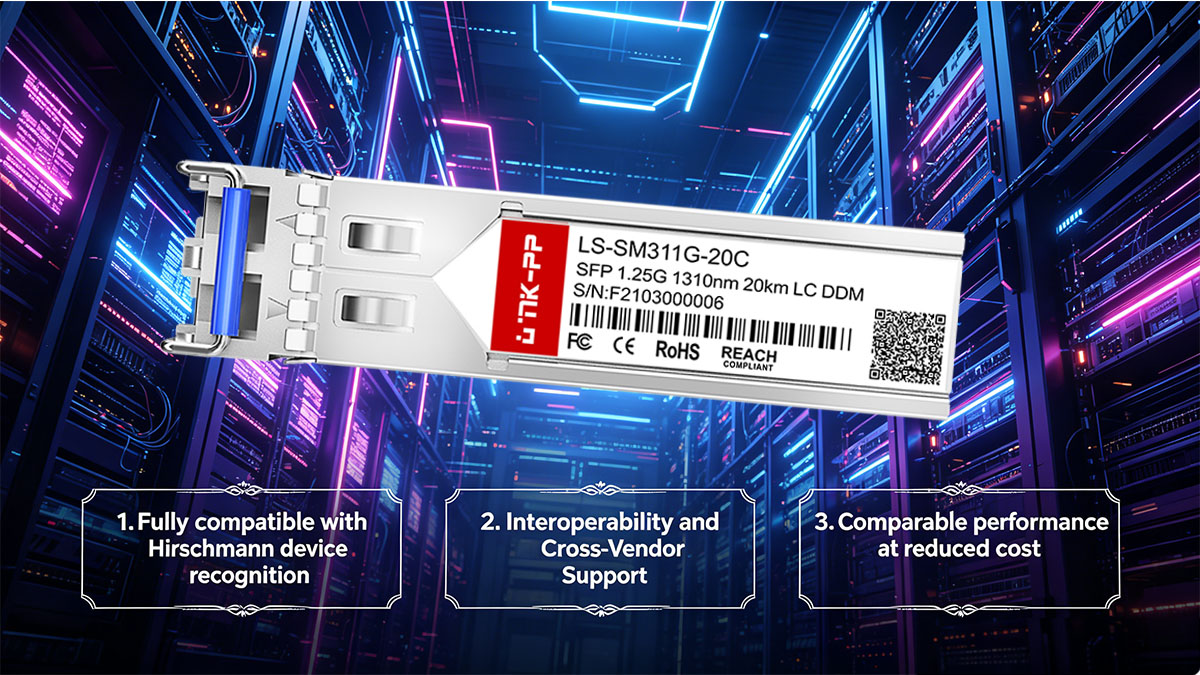
A LINK-PP compatible module is designed to function as a drop-in replacement for the Hirschmann M-SFP-LX-LC, delivering equivalent 1Gbps single-mode performance over distances up to 20km while ensuring seamless interoperability with industrial networking equipment. In most deployment scenarios, it can be integrated without configuration changes, offering a practical balance between performance, compatibility, and operational efficiency.
Core Features of LINK-PP Equivalent Modules
The LINK-PP alternative is engineered to replicate the essential characteristics of the original module, ensuring that it meets the same transmission and environmental requirements expected in industrial networks.
Key technical features include:
- 1310nm wavelength optimized for single-mode fiber transmission
- Support for up to 20km link distance under standard optical budgets
- LC duplex interface compatible with existing fiber infrastructure
- Industrial-grade temperature range suitable for harsh environments
- Pre-programmed EEPROM for Hirschmann device recognition
To better understand how closely the LINK-PP module aligns with the original, the following comparison highlights core feature parity:
| Parameter |
Original Module |
LINK-PP Compatible |
| Data Rate |
1Gbps |
1Gbps |
| Wavelength |
1310nm |
1310nm |
| Max Distance |
Up to 20km |
Up to 20km |
| Form Factor |
SFP |
SFP |
| Industrial Temperature |
Supported |
Supported |
This alignment indicates that, from a technical standpoint, the LINK-PP module is built to meet the same operational requirements as the original. For standard Gigabit LX applications, this level of parity is typically sufficient to ensure stable and predictable performance.
Interoperability and Cross-Vendor Support
One of the primary advantages of LINK-PP compatible modules is their ability to operate across a wide range of networking platforms. In industrial environments where multiple vendors are often involved, this flexibility becomes essential.
LINK-PP modules are typically validated for interoperability through:
- Vendor-specific coding to ensure recognition by Hirschmann switches
- Testing across different industrial Ethernet switch platforms
- Compliance with MSA standards for mechanical and electrical compatibility
- Stable link establishment without requiring manual overrides
This approach allows network operators to standardize on a single type of optical module across diverse hardware environments, reducing operational complexity. It also simplifies inventory management, as fewer module variants are needed to support different devices.
In multi-vendor deployments, this level of interoperability minimizes the risk of incompatibility issues and reduces the need for device-specific troubleshooting.
Cost-Performance Advantage Analysis
From a cost-performance perspective, LINK-PP compatible modules are positioned to deliver equivalent functionality at a more efficient cost structure. This is particularly relevant in large-scale or distributed industrial networks.
A comparison of cost-performance factors is outlined below:
| Factor |
Original Module |
LINK-PP Compatible |
| Optical Performance |
Standard LX (20km) |
Equivalent LX (20km) |
| Interoperability |
Vendor-specific |
Multi-vendor capable |
| Unit Cost |
Higher |
More cost-efficient |
| Availability |
Limited channels |
Broader supply options |
This comparison highlights that the primary differences lie not in performance, but in procurement flexibility and overall cost efficiency. For networks that require consistent 1G long-distance connectivity, the LINK-PP alternative provides a viable way to optimize total cost of ownership without introducing technical compromise.
In practice, this makes LINK-PP compatible modules particularly suitable for projects involving network expansion, hardware refresh cycles, or environments where maintaining spare inventory is critical.
? Performance Comparison: Original vs LINK-PP Compatible
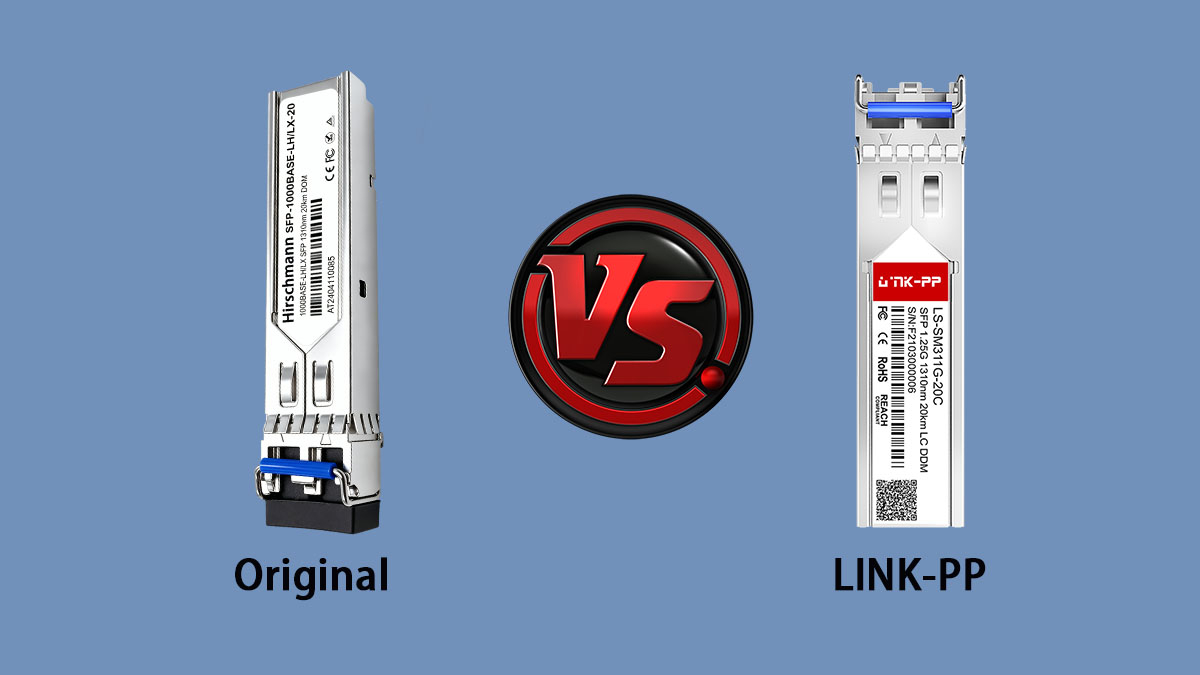
In practical deployments, the performance of a LINK-PP compatible module is expected to closely match that of the original Hirschmann M-SFP-LX-LC, particularly in terms of optical stability, long-distance transmission, and reliability under industrial conditions. For standard 1G LX applications up to 20km, differences are typically minimal when the compatible module is properly engineered and validated.
Optical Performance Metrics
From an optical perspective, both the original and compatible modules must operate within the same LX specification envelope to ensure stable communication over single-mode fiber. This includes transmit power, receiver sensitivity, and overall optical budget.
The following table outlines a typical comparison of key optical parameters:
| Parameter |
Original Module |
LINK-PP Compatible |
| Transmit Power (Tx) |
LX standard range |
Matched to LX range |
| Receiver Sensitivity (Rx) |
LX compliant |
LX compliant |
| Optical Budget |
Supports up to 20km |
Supports up to 20km |
| Wavelength |
1310nm |
1310nm |
This comparison shows that both modules are designed to meet the same transmission requirements. As long as the optical budget is properly maintained, both can deliver stable links over distances approaching 20km.
In real deployments, the limiting factors are often not the module itself, but external elements such as fiber attenuation, connector quality, and splice loss. When these factors are controlled, compatible modules can perform on par with the original.
Reliability and Durability
Reliability in industrial environments goes beyond basic link establishment. Modules must maintain consistent performance under temperature fluctuations, electrical interference, and continuous operation.
Key reliability aspects include:
- Stable operation across industrial temperature ranges (typically -40°C to +85°C)
- Resistance to vibration and mechanical stress in field installations
- Consistent output power without drift over time
- Low failure rates aligned with expected MTBF standards
Both original and high-quality compatible modules are designed with these requirements in mind. However, the actual performance depends on component quality, manufacturing processes, and quality control standards.
Well-engineered compatible modules, such as those from LINK-PP, typically undergo environmental and aging tests to ensure that they can sustain long-term operation in demanding conditions. This makes them suitable for deployment in infrastructure where maintenance access may be limited.
Field Deployment Feedback
Field experience provides one of the most practical indicators of module performance. In real-world industrial networks, consistent link stability over time is more important than isolated lab measurements.
Common observations from deployments include:
- Stable link establishment without frequent reconnection events
- Consistent performance over long-distance links (10–20km range)
- No significant difference in latency or throughput at 1Gbps
- Reliable DOM/DDM readings for monitoring optical health
These observations suggest that, when properly selected and deployed, compatible modules can achieve the same operational outcomes as original modules.
It is also worth noting that long-distance links are more sensitive to installation quality than module brand. Factors such as fiber cleanliness, proper connector handling, and accurate link budgeting play a critical role in maintaining performance over time.
? Deployment Best Practices for Compatible M-SFP-LX-LC Modules
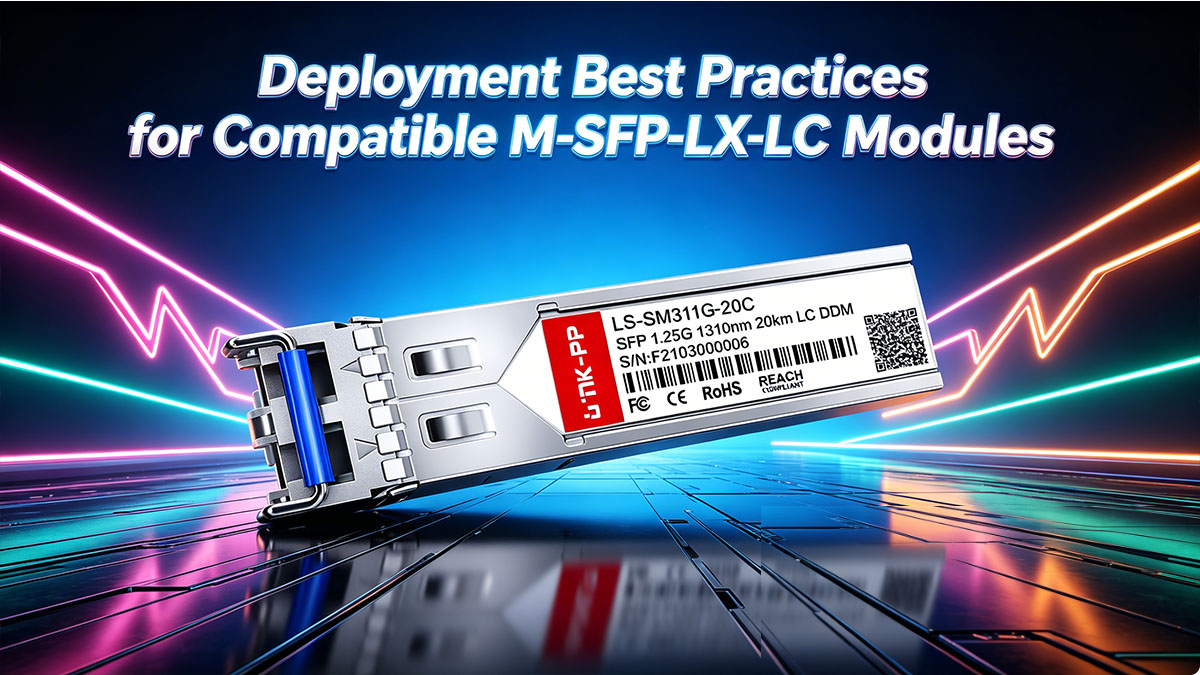
To ensure stable operation over long-distance links up to 20km, compatible modules must be deployed with proper validation, fiber planning, and ongoing monitoring. Even when using a well-engineered alternative to the Hirschmann M-SFP-LX-LC, incorrect installation or overlooked infrastructure details can lead to performance degradation or link instability.
Pre-Deployment Compatibility Verification
Before installation, it is essential to confirm that the compatible module will be correctly recognized and supported by the target device. This step minimizes the risk of deployment delays or unexpected incompatibility issues.
Key verification steps include:
- Check switch firmware version and compatibility requirements
- Confirm that the module is properly coded for Hirschmann devices
- Review vendor compatibility lists (VCL) when available
- Perform a basic insertion test to verify recognition and link initialization
These steps help ensure that the module will operate in a plug-and-play manner without requiring additional configuration. In industrial environments where downtime is costly, pre-validation significantly reduces operational risk.
In addition, testing a small batch of modules before large-scale rollout is a practical approach to validate compatibility under real conditions.
Fiber Infrastructure Planning for 20km Links
For long-distance transmission, the quality and design of the fiber infrastructure are just as important as the module itself. A properly calculated optical budget ensures that signal strength remains within acceptable limits across the entire link.
The following table outlines typical loss components in a 20km single-mode fiber link:
| Component |
Typical Loss |
Notes |
| Fiber Attenuation |
~0.35dB/km |
Depends on fiber type (OS1/OS2) |
| Connector Loss |
0.2–0.5dB per pair |
Affected by cleanliness and alignment |
| Splice Loss |
~0.1dB per splice |
Varies by splice quality |
| Total Link Budget |
≤ module budget |
Must stay within SFP optical limits |
This breakdown shows that, over 20km, fiber attenuation alone can account for a significant portion of the total loss. When combined with connector and splice losses, the total must remain within the module’s supported optical budget to maintain a stable link.
To optimize long-distance performance:
- Use high-quality single-mode fiber (preferably OS2 for longer distances)
- Minimize the number of connectors and splices where possible
- Ensure all connectors are clean and properly terminated
Careful planning at this stage helps prevent marginal links that may degrade over time.
Installation and Handling Guidelines
Proper handling during installation plays a critical role in maintaining module reliability and optical performance. Even small mistakes can introduce issues that are difficult to diagnose later.
Recommended practices include:
- Insert and remove modules gently to avoid damaging connectors
- Always use dust caps when ports are not in use
- Avoid touching fiber end faces directly
- Follow electrostatic discharge (ESD) precautions when handling modules
These practices reduce the risk of contamination, mechanical damage, and electrostatic issues, all of which can impact long-term stability.
Consistent installation procedures across teams also help maintain uniform network quality, especially in large or distributed deployments.
Monitoring and Diagnostics
After deployment, continuous monitoring is essential to ensure that the link remains stable over time, particularly for long-distance connections where signal margins may be tighter.
Compatible modules with DOM/DDM functionality provide valuable real-time insights, including:
- Transmit optical power levels
- Receive optical power levels
- Module temperature and voltage
These metrics allow operators to detect early signs of degradation, such as gradual signal loss or abnormal temperature increases.
Regular monitoring enables proactive maintenance, reducing the likelihood of unexpected link failures. In industrial networks where uptime is critical, this visibility is a key advantage of using modules with diagnostic capabilities.
? Common Issues and Troubleshooting
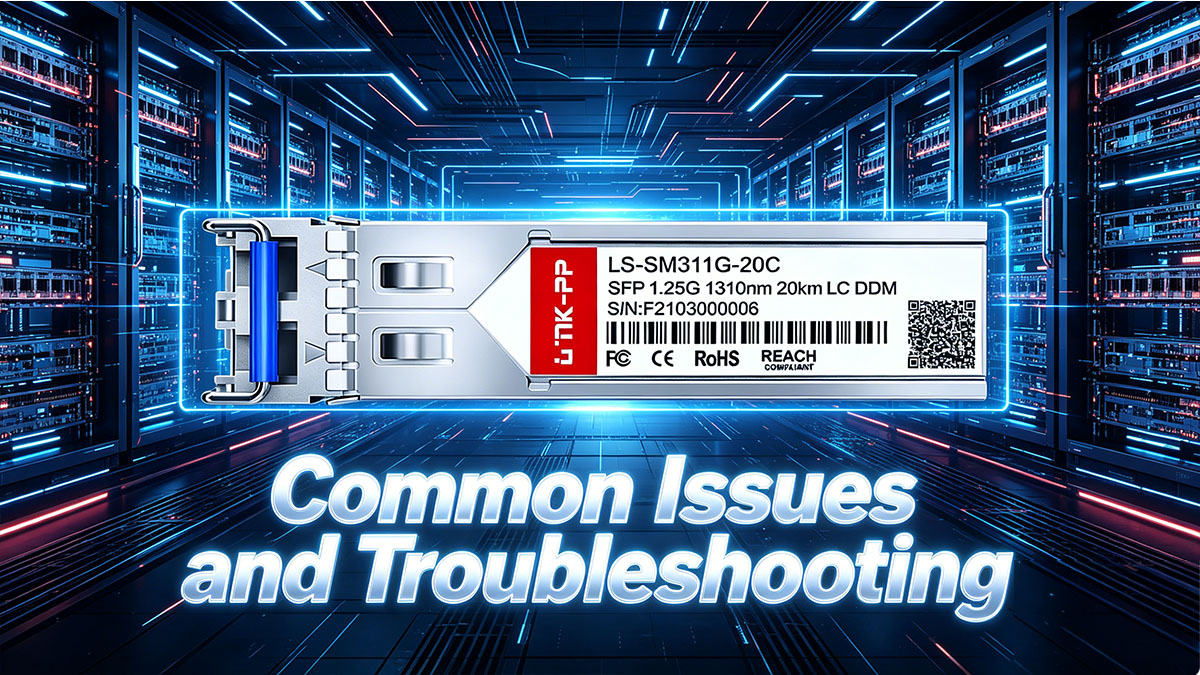
In real-world deployments, most issues related to compatible modules are not caused by the module itself, but by compatibility mismatches, fiber infrastructure problems, or environmental factors. When using an alternative to the Hirschmann M-SFP-LX-LC, systematic troubleshooting can quickly identify the root cause and restore stable operation.
Module Not Recognized by Device
If a module is not recognized after insertion, the issue is typically related to compatibility settings or device restrictions rather than hardware failure. In most cases, the problem can be resolved without replacing the module.
Common causes include:
- EEPROM coding does not match Hirschmann vendor requirements
- Switch firmware enforces strict vendor validation
- Incompatible or outdated device firmware
- Poor physical connection between module and port
To resolve recognition issues, the following steps are recommended:
- Verify that the module is specifically coded for Hirschmann devices
- Update the switch firmware to the latest supported version
- Reinsert the module to ensure proper electrical contact
- Test the module in another compatible port or device
These actions help determine whether the issue is related to coding, firmware, or hardware interface. In most cases, properly coded compatible modules will be recognized without additional configuration.
Link Instability or Signal Loss in Long-Distance Links
Unstable links or intermittent signal loss are more likely to occur in long-distance deployments approaching 20km, where the optical margin becomes more sensitive to external factors.
The following table outlines typical causes and corresponding solutions:
| Issue |
Possible Cause |
Recommended Action |
| Intermittent Link Drops |
Optical power near threshold |
Recalculate optical budget |
| High Error Rate |
Dirty or damaged connectors |
Clean or replace connectors |
| No Link |
Fiber type mismatch (SMF/MMF) |
Verify correct fiber type |
| Signal Degradation |
Excessive splice/connector loss |
Reduce link loss points |
This mapping shows that most link issues are related to physical layer conditions rather than the module itself. Long-distance transmission amplifies the impact of even small losses, making proper infrastructure maintenance essential.
In addition, verifying that both ends of the link use compatible optical specifications (e.g., both LX 1310nm modules) is critical for stable communication.
Temperature-Related Performance Drops
Industrial environments often expose equipment to extreme temperatures, which can affect optical performance if the module is not designed for such conditions.
Typical symptoms of temperature-related issues include:
- Gradual decrease in receive optical power at high temperatures
- Unexpected link drops during temperature fluctuations
- DOM/DDM readings showing abnormal temperature values
To mitigate these issues, consider the following:
- Ensure the module supports industrial temperature ranges (e.g., -40°C to +85°C)
- Install equipment in enclosures with proper ventilation or thermal management
- Avoid placing devices near heat sources or in direct sunlight when possible
Temperature effects are especially relevant in outdoor or enclosed industrial cabinets, where heat buildup can occur quickly. Monitoring module temperature through DOM/DDM functions can help identify risks before they impact link stability.
? Future Trends in Industrial Optical Connectivity
Industrial optical networks are evolving rapidly to meet the increasing demand for reliability, long-distance connectivity, and interoperability in multi-vendor environments. As 1G LX modules remain foundational, compatible alternatives such as LINK-PP modules are becoming increasingly relevant in supporting modern industrial network requirements.

Increasing Demand for Vendor-Neutral Solutions
Modern industrial networks are increasingly adopting open, vendor-neutral architectures. This approach allows operators to avoid reliance on a single OEM and leverage a broader range of compatible components.
- Growth of open networking ecosystems
Industrial networks are embracing standards-based platforms, allowing switches, routers, and optical modules from multiple vendors to coexist seamlessly.
- Reduced dependency on OEM-specific modules
By using vendor-neutral SFP modules, network operators gain flexibility in procurement and deployment, reducing supply chain constraints and operational risk.
This trend underscores the strategic value of compatible modules, which offer predictable performance without being tied to a specific manufacturer.
Advancements in Industrial-Grade Optics
Industrial applications demand optics that can withstand harsh environments while maintaining performance over long distances. Newer modules focus on robustness and optical stability.
- Wider temperature tolerance ranges
Modules are increasingly engineered to operate reliably from -40°C to +85°C, ensuring consistent performance in extreme outdoor and industrial settings.
- Improved long-distance transmission stability
Enhanced optical components and precise calibration allow modules to maintain stable 20km single-mode links, reducing the risk of signal degradation over extended distances.
These advancements make compatible industrial modules a viable choice for mission-critical applications where environmental factors and long reach are key concerns.
Role of Third-Party Manufacturers like LINK-PP
Third-party manufacturers are playing a central role in delivering compatible, high-quality modules that align with evolving industrial network needs.
- Innovation in compatibility engineering
LINK-PP and similar manufacturers develop modules with precise vendor coding and adherence to MSA standards, ensuring plug-and-play operation across multiple devices.
- Expanding global supply capabilities
By maintaining broader inventory and distribution channels, these manufacturers offer consistent availability, reducing deployment delays and enhancing network scalability.
Through these contributions, third-party manufacturers help industrial operators balance performance, cost, and operational flexibility, while supporting the broader trend toward multi-vendor, open industrial networks.
? Summary
The Hirschmann M-SFP-LX-LC remains a cornerstone in industrial optical networks, offering reliable 1Gbps single-mode transmission over distances up to 20km. For organizations seeking cost efficiency, supply flexibility, and multi-vendor compatibility, LINK-PP compatible alternatives provide a practical solution without compromising performance or stability in demanding industrial environments.
Key value points of using LINK-PP compatible modules include:
- Full compliance with Hirschmann optical specifications for 20km single-mode links
- Industrial-grade reliability with wide temperature tolerance
- Plug-and-play interoperability across multi-vendor devices
- Real-time monitoring via DOM/DDM for proactive network management
- Cost-effective procurement and broader supply chain availability
To optimize industrial network deployments, consider integrating LINK-PP compatible M-SFP-LX-LC modules, available through the LINK-PP Official Store, for high-performance, long-distance connectivity that balances reliability, interoperability, and operational efficiency.