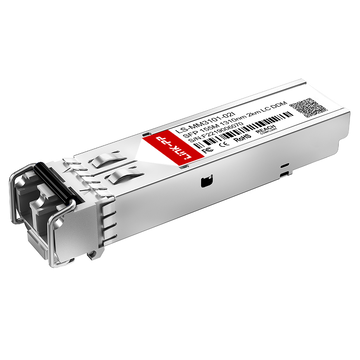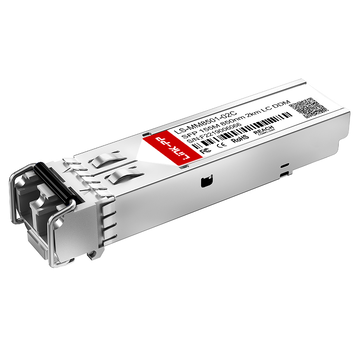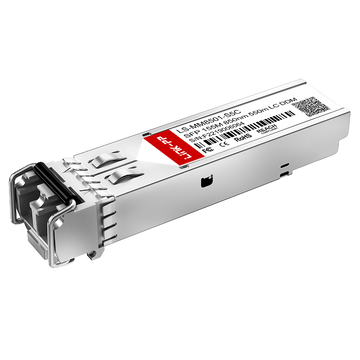


























Fiber connectivity remains an important foundation for industrial Ethernet and legacy network infrastructures where stable Fast Ethernet transmission is required. In environments such as manufacturing facilities, transportation systems, and outdoor communication networks, optical modules must provide reliable performance while handling challenging operating conditions. Ruggedized SFP transceivers help extend fiber-based connectivity into applications where standard commercial modules may not provide sufficient durability.
The Cisco GLC-FE-100FX-RGD is a ruggedized 100BASE-FX SFP optical transceiver designed for reliable Fast Ethernet communication over multimode fiber. Understanding the Cisco GLC-FE-100FX-RGD datasheet is essential for evaluating its optical characteristics, electrical interface, environmental capability, and compatibility with supported Cisco networking platforms.
This article provides a detailed overview of the key specifications and deployment considerations of the Cisco GLC-FE-100FX-RGD, including:
- Optical transmission parameters such as wavelength, fiber type, and link distance
- Electrical characteristics and SFP interface requirements
- Mechanical design and industrial operating capabilities
- Compatibility factors and common network applications
By examining these technical details, network professionals can better understand how the Cisco GLC-FE-100FX-RGD fits into Fast Ethernet fiber deployments and make more informed decisions when planning or maintaining industrial network infrastructure.
📜 Cisco GLC-FE-100FX-RGD Overview
The Cisco GLC-FE-100FX-RGD is a ruggedized 100Mbps SFP optical transceiver designed to provide reliable Fast Ethernet fiber connectivity in industrial and extended-temperature environments. It combines the compact SFP form factor with enhanced environmental durability, making it suitable for network deployments where stable optical communication is required under challenging operating conditions.
As part of Cisco’s Fast Ethernet SFP family, the GLC-FE-100FX-RGD supports the 100BASE-FX standard and uses multimode fiber with 1310nm optical transmission technology. Compared with standard commercial-grade SFP modules, its ruggedized design focuses on improving operational reliability in locations exposed to temperature fluctuations, vibration, and other industrial factors.
Key Characteristics of Cisco GLC-FE-100FX-RGD
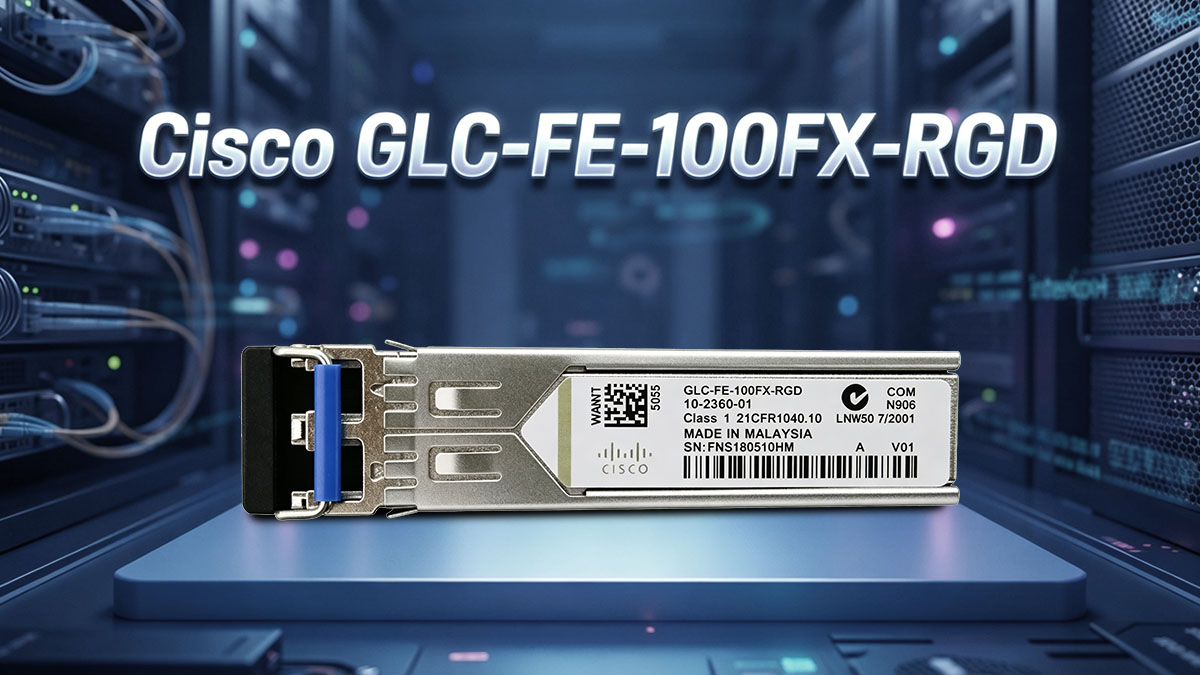
The main characteristics of the Cisco GLC-FE-100FX-RGD define its role as an industrial Fast Ethernet optical solution. These features determine its transmission capability, physical integration method, and suitable deployment environments.
Key characteristics include:
- Supports 100BASE-FX Fast Ethernet transmission with a data rate of 100Mbps
- Uses multimode fiber (MMF) for short-range optical network connections
- Operates at a 1310nm wavelength for Fast Ethernet fiber communication
- Provides transmission distances up to 2km depending on fiber quality and link conditions
- Uses a standard hot-swappable SFP form factor for easy installation and replacement
- Designed for industrial applications requiring enhanced environmental reliability
- Supports duplex LC optical connectivity for fiber network integration
These characteristics allow the Cisco GLC-FE-100FX-RGD to connect legacy Fast Ethernet systems with fiber infrastructure while maintaining compatibility with SFP-based networking equipment.
Cisco GLC-FE-100FX-RGD vs Standard Fast Ethernet SFP Modules
The primary difference between the Cisco GLC-FE-100FX-RGD and standard Fast Ethernet SFP modules is the ability to operate in more demanding environments. While both modules provide 100BASE-FX connectivity, the ruggedized version is optimized for applications requiring stronger environmental performance.
The following table highlights the major differences between the two module types:
| Feature | Cisco GLC-FE-100FX-RGD | Standard GLC-FE-100FX |
|---|---|---|
| Ethernet Speed | 100Mbps Fast Ethernet | 100Mbps Fast Ethernet |
| Fiber Type | Multimode Fiber (MMF) | Multimode Fiber (MMF) |
| Wavelength | 1310nm | 1310nm |
| Form Factor | SFP hot-swappable module | SFP hot-swappable module |
| Deployment Environment | Industrial temperature networks | Standard enterprise environments |
The ruggedized capability makes the Cisco GLC-FE-100FX-RGD better suited for industrial Ethernet applications where network equipment may be installed outside traditional data center or office environments. However, both module types still rely on proper fiber selection, compatible SFP interfaces, and correct network configuration to achieve stable performance.
📜 Cisco GLC-FE-100FX-RGD Optical Specifications
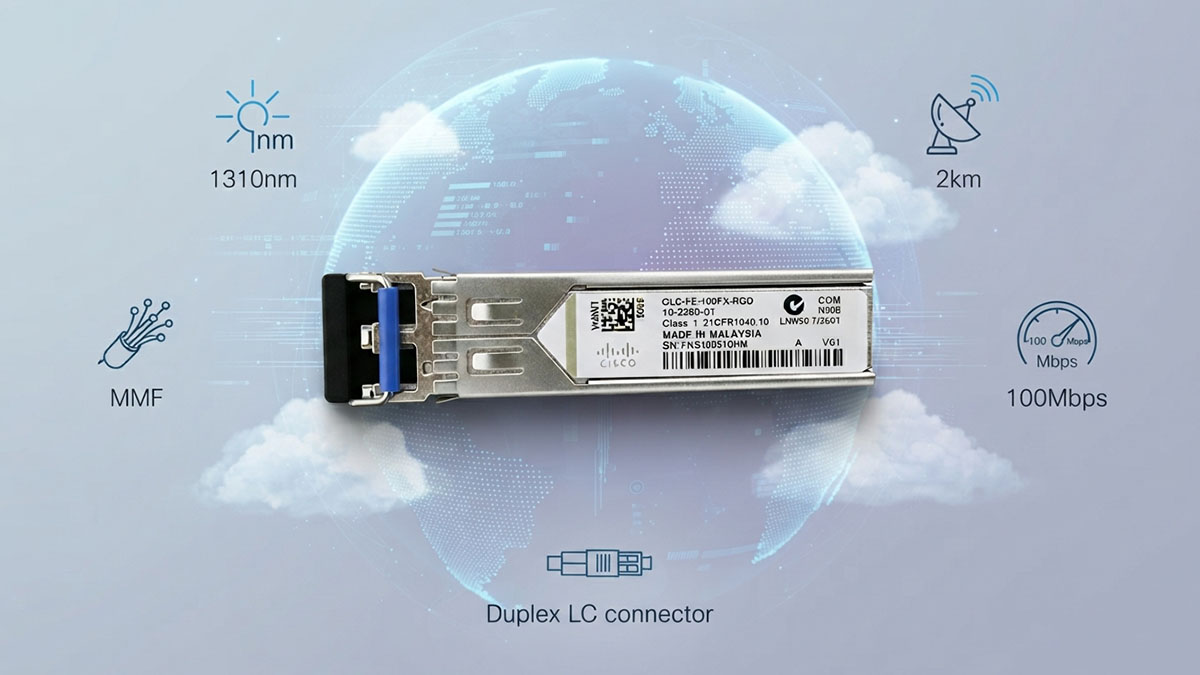
The optical specifications of the Cisco GLC-FE-100FX-RGD define its Fast Ethernet transmission capability, fiber requirements, and link performance characteristics. As a 100BASE-FX optical transceiver, it is designed to provide stable 100Mbps communication over multimode fiber (MMF) using a 1310nm wavelength range, with a maximum transmission distance of 2km under suitable cabling conditions.
Optical Interface and Transmission Parameters
The Cisco GLC-FE-100FX-RGD uses a standardized optical interface designed for short-distance Fast Ethernet fiber connections. Its optical parameters determine the supported fiber type, transmission distance, and physical connectivity requirements.
The key optical interface specifications include:
| Parameter | Specification |
|---|---|
| Ethernet Standard | 100BASE-FX |
| Data Rate | 100Mbps |
| Fiber Type | Multimode Fiber (MMF) |
| Operating Wavelength | 1310nm |
| Maximum Transmission Distance | 2km |
| Optical Connector | Duplex LC |
| Fiber Mode | Two-fiber bidirectional transmission |
These specifications allow the Cisco GLC-FE-100FX-RGD to connect Fast Ethernet switches and industrial Ethernet devices through existing multimode fiber infrastructure. The duplex LC interface provides a widely adopted connection method, simplifying integration into enterprise and industrial fiber networks.
The module’s 1310nm optical wavelength is optimized for 100BASE-FX communication, while the multimode fiber design makes it suitable for shorter-distance links commonly found in industrial facilities, campus environments, and building-to-building connections.
Optical Power Budget and Link Performance
The optical power budget determines whether the Cisco GLC-FE-100FX-RGD can maintain reliable communication by ensuring that the received optical signal remains within the receiver’s operating range. This parameter is especially important when evaluating fiber attenuation, connector loss, and overall link margin.
The main optical performance factors include:
- Transmitter optical output power
- Receiver sensitivity
- Total fiber link loss
- Connector and splice attenuation
- Available optical margin
According to Cisco optical specifications, the GLC-FE-100FX-RGD supports a 100BASE-FX optical link with transmitter output and receiver sensitivity characteristics suitable for a maximum distance of 2km over multimode fiber.
A proper optical budget calculation should consider all components within the fiber path, including:
- Fiber attenuation caused by transmission distance
- Additional insertion loss from LC connectors and patch panels
- Environmental factors that may affect long-term signal stability
- Remaining optical margin required for reliable operation
By verifying these factors before deployment, engineers can reduce the risk of intermittent link failures and ensure that the Cisco GLC-FE-100FX-RGD performs consistently in industrial Fast Ethernet networks.
📜 Cisco GLC-FE-100FX-RGD Electrical Specifications
The electrical specifications of the Cisco GLC-FE-100FX-RGD define how the optical module communicates with the host networking device, including its SFP electrical interface, power requirements, identification functions, and hardware integration characteristics. As a ruggedized Fast Ethernet SFP transceiver, it is designed to operate reliably in supported Cisco industrial networking platforms while maintaining the standard electrical characteristics required by SFP-based systems.
SFP Electrical Interface Characteristics
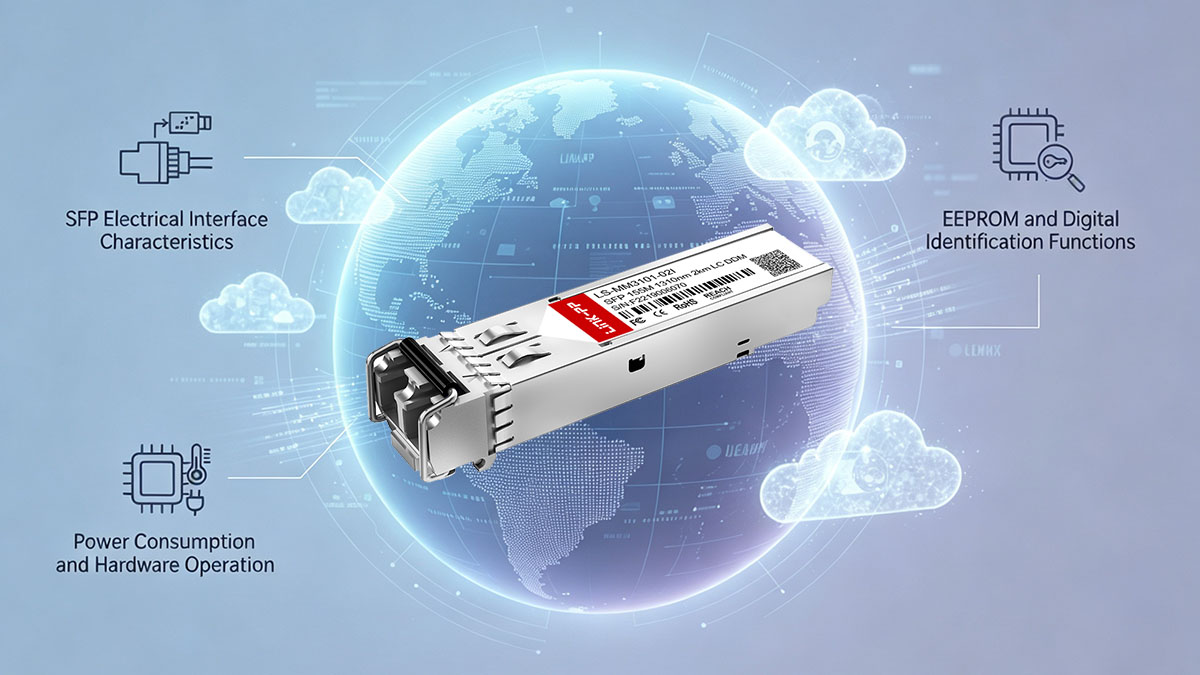
The Cisco GLC-FE-100FX-RGD uses a standard SFP electrical interface to connect with compatible Cisco switches, routers, and industrial Ethernet platforms. The electrical interface converts the host device’s electrical Ethernet signals into optical signals for fiber transmission while maintaining hot-swappable installation flexibility.
The key electrical interface characteristics include:
- Standard SFP host interface for Fast Ethernet applications
- Hot-pluggable module design for simplified installation and maintenance
- Serial identification capability through module memory information
- Compatibility with Cisco SFP-enabled networking equipment
- Support for digital monitoring functions on supported platforms
These electrical characteristics allow the Cisco GLC-FE-100FX-RGD to integrate into existing Cisco network environments without requiring additional interface converters or hardware modifications. Proper platform compatibility verification remains important because Fast Ethernet SFP modules require matching port capabilities and supported configurations.
Power Consumption and Operating Requirements
The power requirements of the Cisco GLC-FE-100FX-RGD determine its impact on host device power planning and thermal management. The module is designed for low-power Fast Ethernet operation, making it suitable for industrial switches and network devices with multiple SFP interfaces.
The primary power-related specifications include:
| Parameter | Specification |
|---|---|
| Maximum Power Consumption | Up to 1W per port |
| Module Type | 100BASE-FX Fast Ethernet SFP |
| Host Interface | SFP electrical interface |
| Operating Temperature Support | Industrial temperature range |
The low power consumption helps reduce overall system heat generation, which is especially beneficial in industrial deployments where equipment may operate inside enclosed cabinets or locations with limited cooling capability.
EEPROM and Digital Identification Functions
The Cisco GLC-FE-100FX-RGD includes serial identification features that allow compatible Cisco platforms to recognize module information automatically. These functions assist network administrators in monitoring installed transceivers and verifying hardware compatibility.
Important identification features include:
- Module vendor information storage
- Product identification data
- Transceiver type recognition
- Hardware information reporting
- Platform-based monitoring support
For supported Cisco industrial Ethernet switches, the GLC-FE-100FX-RGD can provide digital optical monitoring (DOM) support, allowing administrators to access operational information through the network device interface.
These identification capabilities simplify troubleshooting by helping engineers confirm whether the installed optical module matches the expected network configuration.
📜 Cisco GLC-FE-100FX-RGD Mechanical and Environmental Specifications
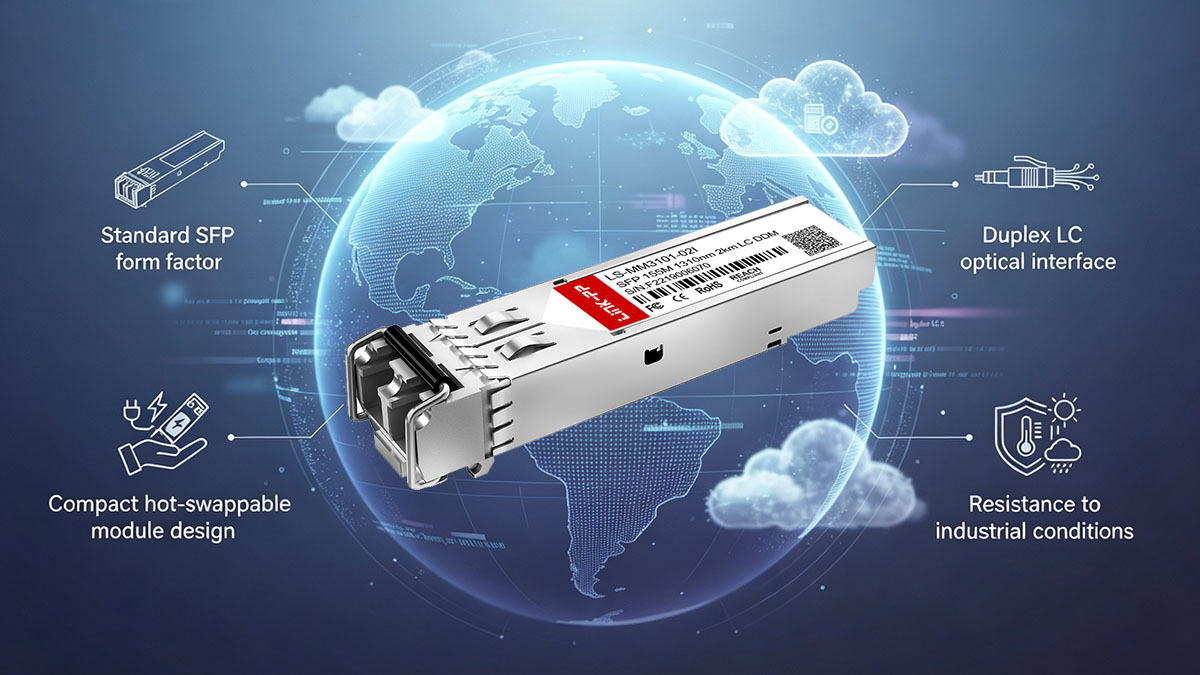
The mechanical and environmental specifications of the Cisco GLC-FE-100FX-RGD determine its physical integration capability and ability to operate in demanding industrial conditions. Unlike standard Fast Ethernet SFP modules designed for controlled environments, the GLC-FE-100FX-RGD is built with an industrial temperature rating, allowing it to maintain reliable optical connectivity in locations where temperature variations and harsh operating conditions may occur.
Mechanical Design Features
The Cisco GLC-FE-100FX-RGD follows the standard SFP form factor, allowing it to be installed directly into compatible Cisco Fast Ethernet SFP ports. Its compact design simplifies deployment in industrial switches and network devices where space efficiency and modular maintenance are important requirements.
The main mechanical characteristics include:
- Standard SFP pluggable module form factor
- Hot-swappable design for simplified installation and replacement
- Duplex LC optical connector interface
- Compact metal housing for mechanical protection
- Compatible with Cisco SFP-based industrial networking platforms
- Designed for integration into industrial Ethernet switch environments
The physical dimensions of the module follow the common SFP format, measuring approximately 8.5mm in height, 13.4mm in width, and 56.5mm in depth. This standardized design allows the Cisco GLC-FE-100FX-RGD to fit within existing SFP port architectures without requiring additional mounting hardware.
Industrial Operating Environment Support
The key advantage of the Cisco GLC-FE-100FX-RGD is its industrial temperature capability, which enables reliable operation in environments beyond the range of standard commercial SFP modules. According to Cisco specifications, the module supports an industrial operating temperature range from -40°C to 85°C, making it suitable for outdoor cabinets, transportation infrastructure, and industrial automation networks.
The primary environmental specifications include:
| Parameter | Specification |
|---|---|
| Operating Temperature Range | -40°C to 85°C |
| Storage Temperature Range | -40°C to 85°C |
| Module Type | Industrial 100BASE-FX SFP |
| Deployment Environment | Industrial and extended-temperature applications |
| Maximum Power Consumption | Up to 1W per port |
These environmental characteristics allow the Cisco GLC-FE-100FX-RGD to operate in locations where network equipment may experience extreme temperature changes, such as manufacturing facilities, utility systems, roadside communication cabinets, and outdoor industrial installations.
The industrial temperature rating does not change the module’s Fast Ethernet transmission capability but improves operational reliability by expanding the acceptable environmental conditions for deployment.
📜 Cisco GLC-FE-100FX-RGD Compatibility Considerations
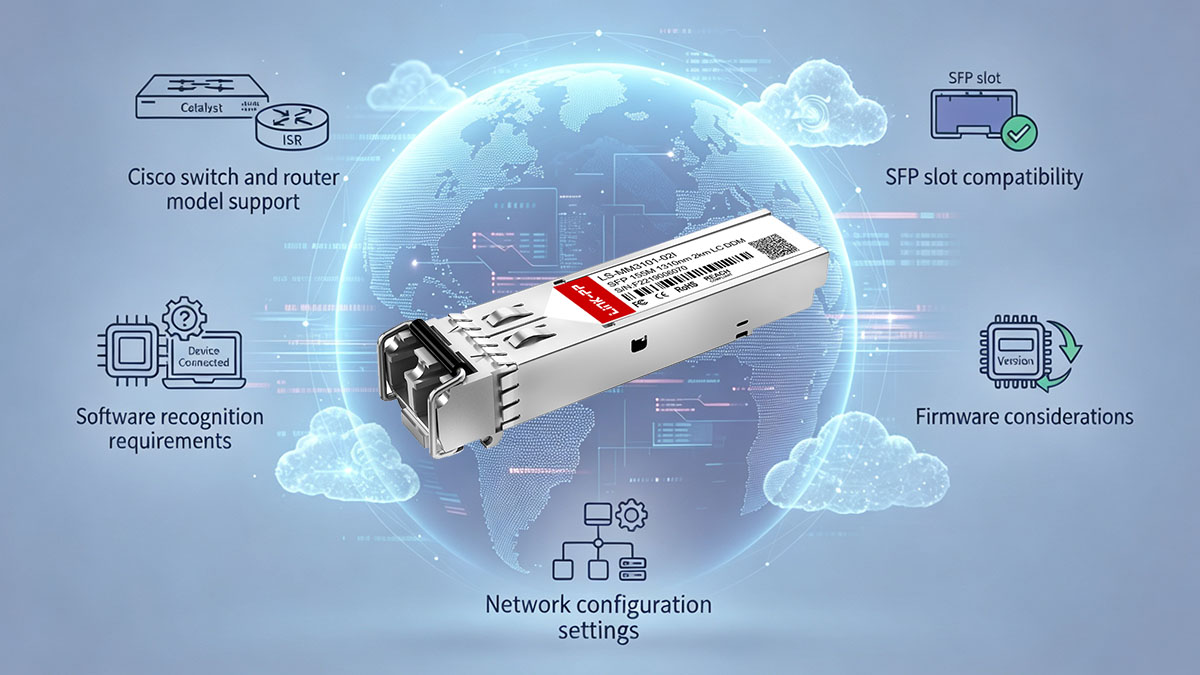
The compatibility of the Cisco GLC-FE-100FX-RGD depends on three key factors: supported Cisco platforms, Fast Ethernet SFP port requirements, and matching fiber infrastructure. As a ruggedized 100BASE-FX SFP transceiver, it is designed for Cisco Industrial Ethernet and SmartGrid networking environments that support Fast Ethernet or compatible dual-rate SFP interfaces. Verifying these compatibility conditions before deployment helps prevent link failures caused by unsupported hardware combinations or incorrect optical configurations.
Cisco Platform Compatibility
The Cisco GLC-FE-100FX-RGD is primarily intended for Cisco networking devices equipped with compatible Fast Ethernet SFP ports. Unlike Gigabit Ethernet SFP modules, this transceiver operates according to the 100BASE-FX standard, meaning the host device must support Fast Ethernet optical interfaces rather than only Gigabit Ethernet operation.
Important platform compatibility considerations include:
- Confirming that the Cisco switch or router supports GLC-FE-100FX-RGD modules
- Verifying that the SFP port supports 100BASE-FX operation
- Checking Cisco compatibility documentation for specific hardware models
- Ensuring the installed software version recognizes the optical module
- Confirming whether digital optical monitoring (DOM) functions are supported by the host platform
Cisco documentation indicates that GLC-FE-100FX-RGD modules are supported on Cisco Industrial Ethernet and SmartGrid switches and routers with compatible Fast Ethernet or dual-rate Fast/Gigabit Ethernet ports.
Selecting a compatible Cisco platform ensures that the module can be properly identified, powered, and managed by the network device. This is especially important in industrial environments where network availability and remote monitoring are critical.
Optical Fiber Compatibility Requirements
The Cisco GLC-FE-100FX-RGD requires matching optical components to achieve its rated transmission performance. Since it is a 100BASE-FX multimode fiber module, both ends of the fiber link should use compatible optical specifications to maintain stable communication.
The primary optical compatibility requirements include:
| Compatibility Item | Requirement |
|---|---|
| Ethernet Standard | 100BASE-FX |
| Fiber Type | Multimode Fiber (MMF) |
| Operating Wavelength | 1310nm |
| Maximum Link Distance | 2km |
| Optical Connector | Duplex LC |
The module is designed for duplex multimode fiber connections with LC connectors, making it suitable for existing Fast Ethernet fiber infrastructures that follow the same optical standard.
When connecting two network devices, both optical transceivers should match in terms of transmission standard, fiber type, wavelength, and distance capability. Using mismatched modules, such as combining a 100BASE-FX multimode module with a single-mode fiber module, may result in unsuccessful link establishment.
Third-Party and Compatible Module Considerations
When deploying compatible alternatives to the Cisco GLC-FE-100FX-RGD, maintaining optical and electrical consistency is essential. The replacement module should match the original module’s transmission standard, SFP interface characteristics, and network device recognition requirements.
Key evaluation factors include:
- Support for Cisco-compatible SFP identification information
- Compliance with IEEE 100BASE-FX optical specifications
- Matching wavelength and fiber type requirements
- Proper EEPROM programming for Cisco platform recognition
- Verified optical performance and environmental specifications
A compatible optical module should not only fit physically into the SFP slot but also provide reliable communication with the host device. In industrial applications, additional attention should be given to temperature rating and environmental durability to ensure the replacement module performs under the same operating conditions.
📜 Cisco GLC-FE-100FX-RGD Applications in Industrial Networks
The Cisco GLC-FE-100FX-RGD is primarily used in industrial networks that require reliable Fast Ethernet fiber connectivity under extended-temperature and demanding operating conditions. Its ruggedized design, 100BASE-FX support, and multimode fiber transmission capability make it suitable for applications where traditional copper Ethernet or standard optical modules may not provide sufficient reliability.
Unlike typical enterprise network deployments, industrial environments often involve long operating cycles, temperature variations, electromagnetic interference, and limited physical access for maintenance. The Cisco GLC-FE-100FX-RGD helps address these challenges by providing a stable fiber-based communication link for industrial Ethernet systems.

Industrial Ethernet Deployments
The Cisco GLC-FE-100FX-RGD is widely applicable in industrial Ethernet networks where reliable communication between control systems, switches, and field devices is required. Fiber connectivity helps reduce the impact of electrical interference while extending communication distances beyond typical copper Ethernet limitations.
Common industrial Ethernet applications include:
- Factory automation networks connecting programmable logic controllers (PLCs), sensors, and industrial switches
- Manufacturing facilities requiring stable communication between production areas
- Process control systems used in industrial plants and infrastructure facilities
- Industrial monitoring networks for equipment status collection and remote management
In these environments, the module provides a practical solution for maintaining existing Fast Ethernet infrastructure while supporting the operational requirements of industrial communication systems.
Transportation and Outdoor Network Applications
The rugged environmental characteristics of the Cisco GLC-FE-100FX-RGD make it suitable for transportation and outdoor communication networks where networking equipment may be installed in uncontrolled environments. Its extended operating temperature capability allows it to support applications exposed to seasonal temperature changes and outdoor installation conditions.
Typical deployment scenarios include:
- Railway communication systems
- Traffic management networks
- Roadside monitoring and control systems
- Outdoor surveillance infrastructure
- Utility communication networks
Fiber-based Fast Ethernet links are commonly used in these applications because they provide reliable data transmission while reducing susceptibility to electromagnetic interference from nearby electrical equipment.
Enterprise Legacy Fast Ethernet Networks
Although modern networks increasingly adopt Gigabit Ethernet and higher-speed technologies, many organizations continue operating legacy Fast Ethernet infrastructure due to application requirements, upgrade costs, or long equipment lifecycles. The Cisco GLC-FE-100FX-RGD can support these environments by providing fiber uplink connectivity between existing network devices.
Common enterprise applications include:
- Fiber uplinks between legacy Fast Ethernet switches
- Building-to-building network connections
- Campus network extensions
- Industrial segments connected to enterprise networks
- Remote site communication links
The following table summarizes common application scenarios and their primary requirements:
| Application Scenario | Network Requirement | Why Cisco GLC-FE-100FX-RGD Fits |
|---|---|---|
| Factory automation | Stable industrial Ethernet communication | Rugged design and fiber isolation |
| Transportation systems | Reliable outdoor connectivity | Extended temperature operation |
| Utility networks | Long-term operational stability | Industrial-grade SFP capability |
| Legacy enterprise networks | Fast Ethernet fiber extension | Supports 100BASE-FX infrastructure |
These application scenarios demonstrate that the Cisco GLC-FE-100FX-RGD is not limited to a single industry but can support various environments where dependable Fast Ethernet fiber connectivity remains necessary.
📜 How to Evaluate Cisco GLC-FE-100FX-RGD Datasheet Parameters Before Deployment
Evaluating the Cisco GLC-FE-100FX-RGD datasheet parameters before deployment helps ensure that the optical module matches the network environment, fiber infrastructure, and supported Cisco hardware. Since this module is designed for industrial 100BASE-FX applications, engineers should review optical performance, hardware compatibility, and environmental requirements together rather than focusing on a single specification. Cisco identifies the GLC-FE-100FX-RGD as a 100BASE-FX SFP module supporting multimode fiber, a 2km transmission distance, industrial temperature capability, and DOM support on compatible platforms.

Checking Optical Performance Requirements
The optical parameters are the first factors to evaluate because they determine whether the Cisco GLC-FE-100FX-RGD can establish and maintain a stable fiber link. The module operates according to the 100BASE-FX standard and is designed for multimode fiber connections using a 1310nm wavelength with a maximum distance of 2km.
Before deployment, engineers should verify the following optical requirements:
- Confirm that the network uses multimode fiber (MMF) rather than single-mode fiber
- Verify that the fiber distance remains within the 2km transmission limitation
- Check that both ends of the link use compatible 100BASE-FX optical modules
- Confirm that duplex LC connectors match the installed fiber cabling
- Evaluate optical loss caused by fiber attenuation, connectors, and patch panels
Matching these optical parameters with the existing fiber infrastructure helps avoid common issues such as insufficient optical power, unstable links, or failed communication between connected devices.
Verifying Environmental and Hardware Requirements
The Cisco GLC-FE-100FX-RGD is designed for industrial deployments, so environmental conditions and hardware compatibility must be evaluated before installation. Compared with commercial Fast Ethernet SFP modules, the ruggedized version provides industrial temperature support and is intended for Cisco industrial networking platforms.
The main hardware and environmental factors to review include:
- Supported Cisco switch or router models
- Availability of compatible Fast Ethernet SFP ports
- Operating temperature requirements of the installation location
- Power availability within the host device
- Firmware or software recognition requirements
- Support for digital optical monitoring functions
A compatible SFP slot alone does not always guarantee successful operation because the host platform must support 100BASE-FX functionality. Verifying the exact device compatibility matrix before deployment helps prevent problems caused by unsupported port speeds or module recognition issues.
Assessing Replacement and Network Upgrade Scenarios
When evaluating the Cisco GLC-FE-100FX-RGD for replacement projects or network upgrades, engineers should consider both current infrastructure requirements and future migration plans. Since many industrial networks continue using Fast Ethernet devices for long service lifecycles, maintaining compatibility with existing equipment can be more practical than immediate migration to higher-speed technologies.
The evaluation process should include:
- Reviewing the existing Fast Ethernet network topology
- Confirming whether current fiber links require 100BASE-FX connectivity
- Comparing industrial requirements with available SFP alternatives
- Checking whether future upgrades may require Gigabit Ethernet or higher-speed solutions
- Planning replacement strategies based on equipment lifecycle and operational needs
A careful evaluation allows organizations to determine whether the Cisco GLC-FE-100FX-RGD remains suitable for their application or whether another optical solution is more appropriate. By analyzing datasheet parameters together with real deployment conditions, network teams can improve reliability and reduce compatibility risks in industrial fiber networks.
📜 FAQs About Cisco GLC-FE-100FX-RGD
What type of network does Cisco GLC-FE-100FX-RGD support?
Cisco GLC-FE-100FX-RGD supports Fast Ethernet networks based on the 100BASE-FX standard, providing fiber connectivity for industrial and legacy Ethernet environments.
Is Cisco GLC-FE-100FX-RGD suitable for outdoor installations?
Yes. The module is designed for industrial deployments and supports extended operating conditions, making it suitable for outdoor cabinets, transportation systems, and utility networks.
Can Cisco GLC-FE-100FX-RGD be used in Gigabit Ethernet ports?
No. Cisco GLC-FE-100FX-RGD is a Fast Ethernet SFP module and requires a compatible port that supports 100BASE-FX operation rather than a standard Gigabit-only SFP interface.
What makes Cisco GLC-FE-100FX-RGD different from regular SFP modules?
Its main difference is the ruggedized design, which provides improved reliability for environments with wider temperature variations and industrial operating requirements.
Does Cisco GLC-FE-100FX-RGD support fiber link monitoring?
On supported Cisco platforms, the module can provide digital optical monitoring capabilities that help administrators check transceiver status and simplify network troubleshooting.
📜 Conclusion
The Cisco GLC-FE-100FX-RGD datasheet highlights a ruggedized Fast Ethernet SFP solution designed for reliable 100BASE-FX fiber connectivity in industrial and extended-temperature environments. By combining multimode fiber support, 1310nm optical transmission, duplex LC connectivity, and industrial-grade operation, this module provides a practical option for maintaining stable fiber links in demanding network conditions.
The key points covered in this guide include:
- Cisco GLC-FE-100FX-RGD supports 100Mbps Fast Ethernet transmission over multimode fiber with a maximum link distance of 2km.
- Its ruggedized mechanical design and extended temperature capability make it suitable for industrial, transportation, and outdoor network applications.
- Successful deployment requires careful evaluation of optical specifications, electrical compatibility, Cisco platform support, and fiber infrastructure requirements.
- Understanding datasheet parameters helps network engineers reduce compatibility risks and improve long-term network reliability.
For organizations maintaining Cisco-based fiber networks or evaluating compatible optical connectivity solutions, selecting modules that match both technical requirements and deployment conditions is essential. The LINK-PP Official Store provides a range of Cisco-compatible optical transceiver options designed to support various Ethernet applications, helping network teams maintain reliable and efficient fiber infrastructure.