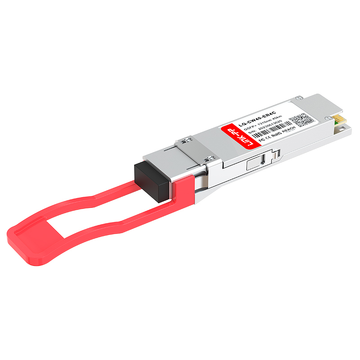
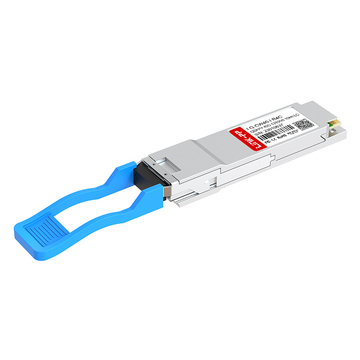
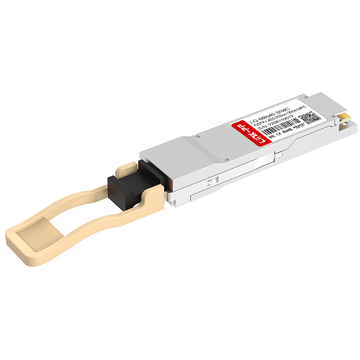
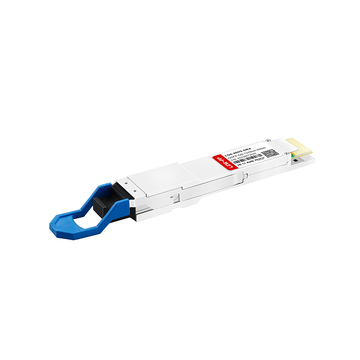
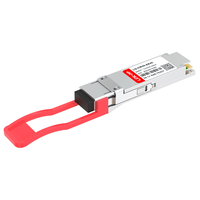
As data center networks continue to scale, high-speed optical connectivity has become essential for ensuring efficient and reliable data transmission. The PAN-QSFP-40GBASE-SR4 module, designed for short-range 40G Ethernet over multimode fiber, plays a critical role in enabling high-bandwidth interconnections within modern network infrastructures. Widely used in Palo Alto Networks devices, this transceiver supports high-density deployments while maintaining stable performance in demanding environments.
However, as organizations seek to optimize costs and improve supply flexibility, many are beginning to evaluate alternatives to the original PAN-QSFP-40GBASE-SR4 module. Third-party compatible solutions have gained traction by offering comparable performance, broader availability, and greater adaptability in multi-vendor environments. Understanding the key specifications, compatibility requirements, and selection criteria is essential for making an informed decision when choosing a reliable alternative.
? What Is PAN-QSFP-40GBASE-SR4
PAN-QSFP-40GBASE-SR4 is a Palo Alto Networks 40G QSFP+ optical transceiver built for short-reach connectivity over multimode fiber (MMF). It uses the 40GBASE-SR4 standard, which achieves 40G by running four parallel 10G lanes through a single QSFP+ module.

Overview of 40GBASE-SR4 Technology
40GBASE-SR4 is a standard defined under IEEE 802.3ba for 40-Gigabit Ethernet over multimode fiber. It uses parallel optics technology, transmitting data across four independent lanes, each operating at 10Gbps, to achieve an aggregate bandwidth of 40Gbps. This approach enables efficient short-distance communication, typically within racks or between nearby switches.
Key Features of PAN-QSFP-40GBASE-SR4
PAN-QSFP-40GBASE-SR4 is a QSFP+ short-reach, parallel-optics transceiver designed to deliver 40GbE over multimode fiber with stable performance in dense data-center environments. Its feature set is less about “long distance” and more about high port density, predictable optics behavior, and operational visibility for troubleshooting and maintenance.
Below are the standout features that make the PAN‑QSFP‑40GBASE‑SR4 a reliable and efficient choice for high‑density 40GbE networks.
- QSFP+ 40GbE Form Factor: Built in the QSFP+ footprint, it enables high 40G port density on Palo Alto devices and typically supports hot insertion/removal, making it practical for upgrades and replacements without lengthy downtime.
- SR4 Parallel Optics Architecture: Instead of one single 40G optical lane, SR4 splits traffic into four parallel lanes on transmit and receive. This design improves feasibility and cost-efficiency on multimode fiber while maintaining full 40Gbps throughput.
- MPO/MTP Multi-fiber Interface: This SR4 module uses an MPO/MTP connector (ribbon-style multi-fiber), enabling compact cabling for 40G links. This is especially useful for short in-row links or patch-panel environments, but it also means polarity/crossover and connector gender/pinning must be correct to bring links up reliably.
- 850nm VCSEL-based Multimode Optics: The PAN-QSFP-40GBASE-SR4 uses 850nm VCSEL transmitters, which are well-suited for short data-center runs over OM3/OM4 MMF and are widely adopted for cost-effective high-speed interconnects.
- Digital Optical Monitoring: A key operational advantage is the DOM/DDM feature, which typically exposes module temperature, supply voltage, TX bias current, and TX/RX optical power per channel. This helps engineers quickly isolate whether a problem is due to dirty connectors, fiber issues, excessive loss, or a failing optic.
- Low Power Draw and Thermal Friendliness: These QSFP 40G SR4 modules are generally designed to run within a relatively low power envelope for the class, supporting better thermal stability in crowded firewall or switch chassis where airflow and heat budgets matter.
Role of PAN-QSFP-40GBASE-SR4 in Data Center Networks
In data centers, PAN-QSFP-40GBASE-SR4 is mainly used for high-throughput uplinks and interconnects where distances are relatively short — think rack-to-rack or row-to-row connections. Its SR4/MMF approach helps reduce overall cabling and optics cost compared with long-reach single-mode solutions, while still delivering a major bandwidth step up for east-west traffic, aggregation, and security inspection workloads.
? PAN-QSFP-40GBASE-SR4 Specifications You Should Know
When you’re selecting (or replacing) PAN-QSFP-40GBASE-SR4 optics, the most important specs to validate are reach distance, fiber type, connector, wavelength, and platform compatibility (coding). These determine whether your link will come up reliably and whether it will meet distance and performance expectations in network infrastructure.

Transmission Distance and Fiber Type
PAN-QSFP-40GBASE-SR4 is specified for multimode fiber (MMF). The official Palo Alto transceiver spec lists:
- 100m over OM3 MMF
- 150m over OM4 MMF
This is why SR4 is ideal inside a data center — but usually not the right fit for cross-campus or metro links, where LR4/ER4 single mode transceivers (such as QSFP-40G-LR4 and QSFP-40G-ER4) are more appropriate.
Connector Type and Wavelength Details
When evaluating PAN-QSFP-40GBASE-SR4 for real-world deployment, the physical interface and the optical operating window are the two specs that most directly determine cabling choices and link behavior:
- Connector: SR4 QSFP+ uses an MPO (12-strand ribbon) connector on the transceiver side. Palo Alto’s transceiver spec sheet also notes that their 40G QSFP+ SR4 optics use MPO ribbon connectivity.
- Wavelength: SR4 operates around 850nm (VCSEL-based MMF optics). Palo Alto’s spec sheet lists 850nm for PAN-QSFP-40GBASE-SR4.
Practical cabling note: Palo Alto explicitly states that MPO transceivers, such as PAN-QSFP-40GBASE-SR4, require MPO cables with the correct guide-pin alignment (i.e., the correct pin/slot style) and describes the use of type-B crossover MPO trunk cables for direct QSFP-to-QSFP connections.
Compatibility with Palo Alto Devices
With Palo Alto platforms, compatibility isn’t only “QSFP+ fits QSFP+.” You also need the module to be recognized by the device — often involving vendor coding/EEPROM identification expected by the platform. Palo Alto’s own documentation positions their transceiver ecosystem around specific part SKUs (including PAN-QSFP-40GBASE-SR4), and the MPO cabling guidance is written specifically for those parts.
In other words, for third-party alternatives, look for modules that are explicitly Palo Alto-compatible coded (and ideally tested on the firewall model/port type you’ll use), so you don’t run into “unsupported transceiver” behavior.
Power Consumption and Performance Metrics
From Palo Alto’s official transceiver table, PAN-QSFP-40GBASE-SR4 has a maximum power listed as < 1.5W, which is a useful sanity check for thermal planning in dense chassis deployments.
Performance-wise, SR4 is built around the 40G parallel lane model, and many vendor datasheets describe it as 4 lanes with each lane capable of 10G-class operation (aggregate 40G). Third-party datasheets commonly also include optical budget and TX/RX ranges (useful for engineering margin), and these can help when you’re troubleshooting borderline links or patch-panel-heavy paths.
? Why Consider PAN-QSFP-40GBASE-SR4 Alternatives

For many data center teams, choosing an alternative to the PAN-QSFP-40GBASE-SR4 isn’t about changing the link design — it’s about optimizing cost, procurement speed, and operational flexibility while keeping the same 40GBASE-SR4 connectivity model. High-quality third-party compatible modules can be a practical option when you need faster delivery, larger spares inventory, or a standardized approach across multiple vendors. To better understand their advantages, let’s look at how third-party compatible modules differ from OEM options.
OEM vs. Third-Party Compatible Modules: What’s Different?
| Feature | OEM PAN-QSFP-40GBASE-SR4 | Third-Party PAN-QSFP-40GBASE-SR4 Alternative |
| Availability | Can be constrained by OEM channel inventory | Often broader stock and easier bulk purchasing |
| Lead Time | May vary (especially for large orders) | Frequently shorter, with quicker replenishment |
| Coding/EEPROM | Native OEM identification | Can be programmed/coded to match Palo Alto expectations |
| Testing Focus | Validated by OEM for supported platforms | Reputable vendors (like LINK-PP) test interoperability on target platforms |
| Performance | Manufacturer-verified; rigorous in-house testing | Typically equivalent, tested for compliance and reliability |
| Firmware Updates | Seamless, but restricted to brand ecosystem | Requires version checks for long-term compatibility |
Cost Differences Between OEM and Third-Party Modules
OEM PAN-QSFP-40GBASE-SR4 modules can be a major line item in network expansion — especially when you’re populating many 40G ports or building a larger spares pool. Third-party alternatives are often chosen to reduce cost per link while maintaining the same fiber type, connector style, and reach model.
In practice, this cost advantage can let teams:
- Deploy more redundant links (or keep more cold spares) without blowing the budget.
- Upgrade bandwidth sooner (e.g., moving more uplinks to 40G) instead of delaying due to optics cost.
- Standardize on one “approved compatible” vendor to simplify purchasing and reduce per-site variance.
Availability and Lead Time Issues
Even when budgets are approved, optics projects can stall because the exact OEM module isn’t readily available through the channel — or because lead times extend unexpectedly during demand spikes. Third-party suppliers often maintain larger inventories of common data center optical transceivers like 40G SR4, which helps when you need to scale quickly or replace failed modules immediately.
This matters most when:
- You’re rolling out new racks and need optics at the same time as cabling and hardware.
- You operate multiple sites and want consistent availability for planned maintenance windows.
- You need rapid replacement to restore redundancy after an optic failure.
Performance Parity with Original Modules
For 40GBASE-SR4, performance expectations are largely defined by the underlying standard and by practical optics engineering (VCSEL-based 850nm MMF operation, lane behavior, optical budget ranges, etc.). A well-built, properly coded third-party module should deliver the same functional outcomes: stable link negotiation, expected reach over OM3/OM4, and predictable operation under normal data center conditions.
That said, “performance parity” depends on vendor quality. Teams usually validate parity by checking:
- Link stability and error counters over time (CRC/FEC behavior where applicable).
- DOM/DDM readings consistency (temperature, voltage, TX/RX power trends).
- Behavior across firmware versions and across different hardware models/port types.
? Key Factors When Choosing a PAN-QSFP-40GBASE-SR4 Alternative
Choosing a third-party PAN-QSFP-40GBASE-SR4 alternative (like LQ-M8540-SR4C) is not just a pricing decision — it’s a risk-management and operational reliability decision. The best results come from evaluating whether the module will be recognized by Palo Alto hardware, meet industry compliance requirements, and deliver stable performance over time under real data center conditions.

Compatibility and Interoperability
Compatibility is the first gate: even a “QSFP+ 40G SR4 ” module can fail in the network if it isn’t correctly recognized or doesn’t behave the way the host platform expects.
- Platform Recognition Matters (Not Only the Physical Fit): Your Palo Alto device may enforce transceiver validation logic. A good alternative should be Palo Alto-coded and designed to avoid link issues such as “unsupported transceiver” warnings or ports refusing to come up.
- Match the 40G SR4 Physical Layer Exactly: Confirm it is truly 40GBASE-SR4, not a look-alike part, and that it matches your deployment requirements: 850nm, multimode, and MPO/MTP interface.
- Interoperability Across the Entire Link: Consider the whole path — patch panels, MPO trunks, polarity method, and cleanliness. SR4 links are sensitive to cabling correctness (for example, polarity and connector mating), so the optical module and cabling plan must align.
- Operational Interoperability (DOM/DDM): Prefer transceiver modules that provide reliable digital diagnostics (temperature, voltage, TX/RX optical power) so your team can troubleshoot faster and monitor health trends.
Certification and Compliance Standards
Compliance is your “baseline assurance” that the product follows recognized technical and environmental expectations — especially important when you’re buying non-OEM transceivers.
- MSA and Form-factor Compliance: Look for adherence to relevant QSFP+ mechanical/electrical expectations (commonly referenced as QSFP+ MSA behaviors). This reduces the chance of fit issues, unstable behavior, or odd edge-case incompatibilities.
- Safety and Environmental Compliance: Reputable suppliers typically provide documentation for commonly required certifications (e.g., RoHS, and other regional safety/compliance requirements depending on where you deploy).
- Standards Alignment: The module should clearly state that it supports IEEE 40GBASE-SR4 behavior. While vendors may phrase it differently, the important point is that performance characteristics align with SR4 expectations for MMF deployments.
Reliability and Quality Assurance
This is where “cheap optics” and “trusted optics” separate quickly. Reliability is not only about whether it links up today — it’s about whether it stays stable for months under heat, dust, and continuous traffic.
- Manufacturing QA and Traceability: Strong vendors offer serial-level traceability (so you can track batches, failures, and RMA patterns) and maintain consistent production testing.
- Burn-in and Environmental Screening: Optics that survive real environments typically go through screening beyond basic functional tests. Ask whether the supplier performs burn-in, temperature checks, and link stability validation.
- Per-unit Testing vs. Sample Testing: Ideally, each module is tested for TX/RX performance and DOM/DDM accuracy, not just a sample from a batch.
- Consistency Over Time: In production, the common failures aren’t always immediate — intermittent link flaps, rising error counters, or drift in optical power readings. A reliable vendor designs and tests to reduce those long-tail issues.
- Warranty Clarity: Reliability also means how failures are handled. Compare warranty length, replacement speed, and whether the vendor supports advanced replacement when downtime is critical.
? PAN-QSFP-40GBASE-SR4 Compatibility Considerations
Even if a third-party module matches the QSFP 40GBASE SR4 optical standard, real compatibility comes down to whether your Palo Alto platform accepts the transceiver, brings the link up cleanly, and stays stable across software updates. Before buying in bulk, validate model support, PAN-OS requirements, and whether the optic is correctly coded to meet Palo Alto’s transceiver identification expectations.

Supported Palo Alto Firewall Models
One of the first compatibility considerations is whether the PAN-QSFP-40GBASE-SR4 alternative is supported by the specific Palo Alto firewall model in use. Different firewall series may have varying port architectures, hardware validation rules, and transceiver support limitations. A module that works well in one platform may not perform the same way in another, even within the same brand ecosystem.
For this reason, buyers should confirm that the alternative transceiver has been tested with the intended Palo Alto devices before purchase. This is especially important in enterprise environments where multiple firewall models may be deployed across different sites. Choosing a module with verified support for the target hardware helps reduce the risk of incompatibility and ensures a smoother installation process.
Firmware and OS Compatibility Checks
Hardware fit alone is not enough to guarantee successful deployment. Firmware and operating system versions can also affect whether a PAN-QSFP-40GBASE-SR4 alternative is accepted and operates reliably. In some cases, security appliances apply stricter transceiver validation rules after firmware updates, which may influence module recognition or trigger warning messages.
Before deployment, it is important to check whether the installed PAN-OS version has any restrictions or known issues related to third-party optics. Reviewing vendor compatibility guidance and test results can help identify potential conflicts in advance. This step is particularly valuable for organizations that regularly upgrade their systems, as a transceiver that works under one software version may require reconfirmation after future updates.
Coding and EEPROM Requirements
Coding and EEPROM data play a critical role in transceiver compatibility. Many network devices rely on the EEPROM content inside the optical module to identify vendor information, supported protocols, transmission characteristics, and operational parameters. If this information is not correctly programmed for Palo Alto platforms, the module may not be recognized properly or may operate with reduced stability.
A reliable PAN-QSFP-40GBASE-SR4 alternative should be accurately coded to match the host device’s expectations. Proper EEPROM programming helps ensure that the module is detected correctly, reports valid diagnostics, and avoids unnecessary alarms or compatibility warnings. This is one of the main reasons buyers should source transceivers from suppliers that offer platform-specific coding and verified interoperability testing rather than generic, untested modules.
? How to Test and Validate PAN-QSFP-40GBASE-SR4 Alternatives
Testing and validation are essential before deploying any PAN-QSFP-40GBASE-SR4 alternative in a production network. Even when a module appears fully compatible on paper, practical testing is necessary to confirm stable operation, proper device recognition, and consistent performance under real-world conditions. A structured validation process helps minimize risks and ensures the replacement module can deliver reliable long-term service.

Pre-Deployment Testing Procedures
Pre-deployment testing should begin in a controlled environment before the module is introduced into a live network. This usually includes checking whether the transceiver can be inserted and detected correctly, verifying interface status, and confirming that link establishment occurs without errors. Basic testing should also cover optical signal levels, interface counters, and initial traffic transmission.
It is also advisable to test the module under conditions similar to the intended deployment scenario. For example, administrators may simulate expected traffic loads, verify operation with the correct fiber type, and check behavior over the required transmission distance. These steps help reveal potential issues early and reduce the chance of disruption once the module is deployed in production.
Compatibility Verification Methods
Compatibility verification should combine both device-level recognition and network-level functionality testing. At the device level, administrators can confirm whether the firewall properly identifies the module, displays relevant transceiver information, and allows the port to enter an active operational state. If the module is not fully recognized, this may indicate coding issues or host compatibility limitations.
At the network level, verification should include link stability checks, throughput validation, and packet transmission testing between connected devices. It is helpful to test the module alongside the actual switch, firewall, or peer device that will be used in production. This approach provides a more accurate picture of real interoperability and helps confirm that the transceiver can support normal traffic without excessive errors, drops, or interruptions.
Monitoring Performance After Installation
Validation should continue even after installation is complete. Once the PAN-QSFP-40GBASE-SR4 alternative is running in the production environment, ongoing monitoring is necessary to ensure that performance remains stable over time. Administrators should observe interface statistics such as error counts, packet drops, temperature readings, and digital optical monitoring values where available.
Post-installation monitoring is important because some issues do not appear immediately. A module may initially establish a link successfully but later show instability under sustained traffic loads, temperature fluctuations, or long operating hours. Continuous observation during the early deployment stage helps identify hidden reliability issues and allows corrective action before they affect network availability.
Troubleshooting Common Issues
If problems occur, troubleshooting should start with the most common causes, including improper coding, unsupported firmware, incorrect fiber type, or poor physical connections. In many cases, link failures or warning messages are not caused by the optical module itself, but by mismatched cabling, dirty connectors, or configuration inconsistencies between connected devices.
A systematic troubleshooting process usually involves reseating the module, checking fiber polarity, cleaning connectors, reviewing interface logs, and comparing device settings on both ends of the link. If the issue persists, replacing the module with a known compatible unit can help isolate whether the fault lies in the transceiver or elsewhere in the network. Working with a supplier that offers responsive technical support can also make troubleshooting much faster and more effective.
? Where to Buy Reliable Third -Party PAN-QSFP-40GBASE-SR4 Alternatives
Finding reliable third-party suppliers for PAN-QSFP-40GBASE-SR4 alternatives requires focusing on vendors with proven track records in transceiver manufacturing. Established suppliers offer cost-effective optical transceiver modules that match OEM performance without sacrificing quality or support.

Why LINK-PP Is a Trusted PAN-QSFP-40GBASE-SR4 Supplier
LINK-PP is a trusted third-party supplier for PAN-QSFP-40GBASE-SR4 alternatives because it focuses on delivering optical transceivers that combine compatibility, quality, and cost efficiency. For enterprise buyers, this means access to third-party modules that are designed to meet the performance expectations of high-speed network environments while helping control procurement budgets. Instead of paying a premium for OEM branding alone, customers can choose a solution that offers dependable functionality and practical value.
Another reason LINK-PP stands out is its emphasis on product testing and platform-oriented support. When selecting a replacement for PAN-QSFP-40GBASE-SR4, buyers need more than just a module with matching optical parameters — they also need confidence that the transceiver can be properly recognized and operated in real deployment scenarios. A supplier with strong experience in compatible transceivers can help reduce uncertainty, simplify purchasing decisions, and support smoother integration into the existing Palo Alto network infrastructure.
PAN-QSFP-40GBASE-SR4 Alternative Solutions Offered by LINK-PP
For buyers looking for a practical replacement option, LINK-PP LQ-M8540-SR4C QSFP+ 40G SR4 is a recommended PAN-QSFP-40GBASE-SR4 alternative. This 40G SR4 transceiver is designed for high-speed short-reach optical connectivity in data center and enterprise network environments, making it a suitable choice for deployments that require reliable 40G transmission over multimode fiber. As an alternative solution, it is well-positioned for customers seeking a balance between performance, interoperability, and cost savings.
The LINK-PP LQ-M8540-SR4C is especially attractive for organizations that want a third-party module capable of supporting demanding network applications without the high cost typically associated with original branded optics. It can be considered for use in scenarios where stable 40G links, efficient hardware integration, and scalable procurement are priorities. For businesses expanding data center capacity or replacing existing optical modules in Palo Alto-related environments, this model offers a strong combination of affordability and deployment flexibility.
? Final Words about Choosing PAN-QSFP-40GBASE-SR4 Alternative

Choosing the right PAN-QSFP-40GBASE-SR4 alternative requires more than simply comparing prices. Buyers should evaluate compatibility, compliance, reliability, and supplier support to ensure the selected module can deliver stable performance in real network environments. A well-matched third-party transceiver can provide the same essential functionality as the original module while improving purchasing flexibility and lowering overall deployment costs.
From understanding technical specifications to validating interoperability and selecting a trusted supplier, each step plays an important role in making the right decision. For organizations seeking a dependable and cost-effective option, working with an experienced provider can make the procurement process much more efficient and secure. To further explore alternatives to the PAN-QSFP-40GBASE-SR4, visit the LINK-PP Official Store for more product information and purchasing support.