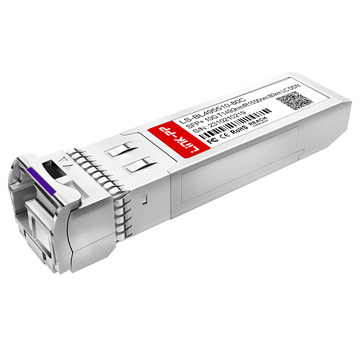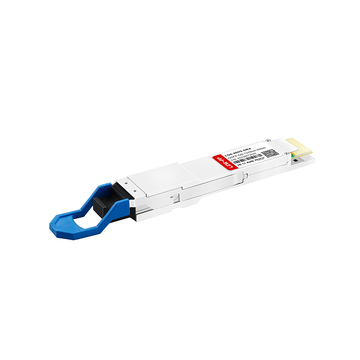
1G Cisco SFP modules serve as the backbone of countless enterprise networks, providing the essential connectivity required for seamless data transmission across switches and routers. These small form-factor pluggable transceivers offer the versatility to support various media types, from short-range multimode fiber to long-distance single-mode links. As a trusted industry standard, the 1G Cisco SFP ensures high-speed stability and reliability for mission-critical network infrastructure.
While original equipment manufacturer (OEM) modules are highly reliable, the high procurement costs of a 1G Cisco SFP can significantly inflate a network's Total Cost of Ownership (TCO), especially in large-scale deployments. To optimize network device budgets without compromising on performance, many organizations are now turning to high-quality third-party alternatives. This guide explores how selecting the right 1G Cisco SFP alternatives can provide the same level of compatibility and durability while delivering substantial cost savings for your enterprise.
? What Is 1G Cisco SFP
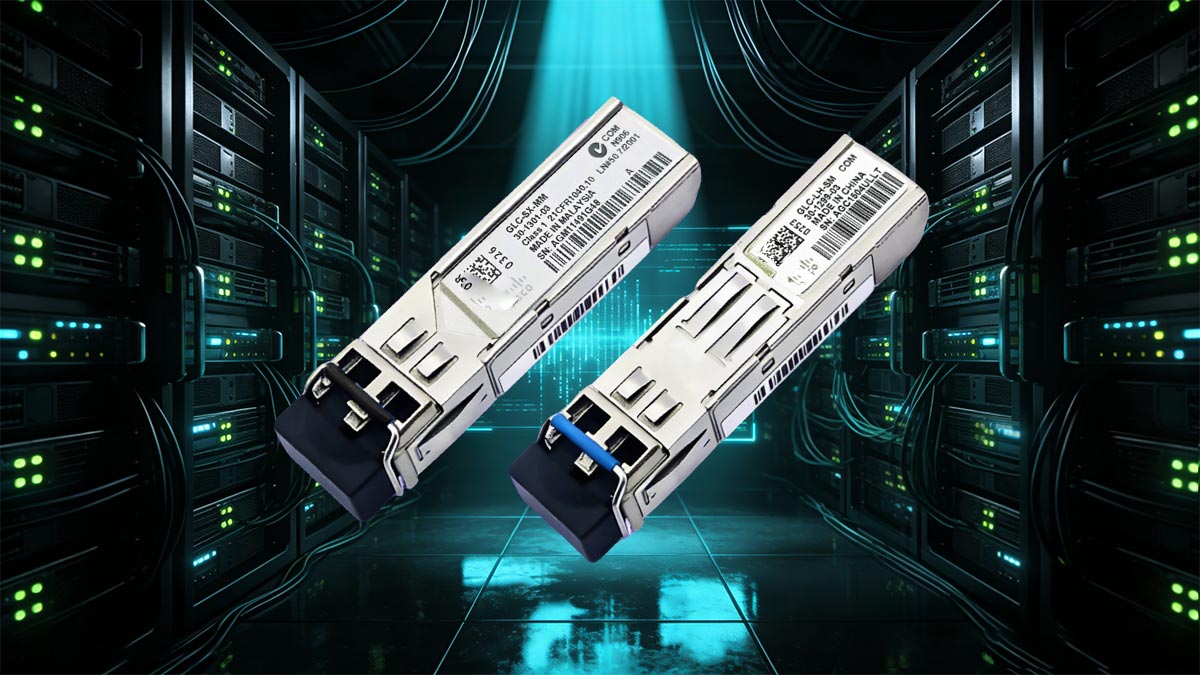
In modern enterprise and data center environments, 1G Cisco SFP modules play a vital role in enabling flexible, high-speed connectivity between network switches, routers, and other devices. These compact SFP optical transceivers or copper SFP transceivers support Gigabit Ethernet transmission, offering scalable bandwidth and reliable data exchange across various media types.
Basic Definition of 1G Cisco SFP Modules
The 1G Cisco SFP is an industry-standard Gigabit interface converter that plugs into a Gigabit Ethernet port or slot. It functions as a modular interface, converting electrical signals into optical signals (and vice versa) to facilitate data transmission at 1Gbps. While based on the Multi-Source Agreement (MSA), Cisco 1G SFP modules are programmed with unique EEPROM code to ensure seamless recognition and performance within the Cisco ecosystem.
Technical Specifications of 1G Cisco SFP
Technical specifications for these modules are governed by the IEEE 802.3z and 802.3ab standards. A typical 1G Cisco SFP supports a data rate of 1.25Gbps and utilizes various wavelengths — such as 850nm for short-range and 1310nm/1550nm for long-range transmission. Key features often include Digital Optical Monitoring (DOM) or Digital Diagnostics Monitoring (DDM), which allows network administrators to monitor real-time parameters like temperature, laser bias current, and optical power directly through the Cisco IOS interface.
Deployment Scenarios for 1G Cisco SFP Modules
In enterprise environments, 1G Cisco SFP modules are primarily deployed in the access and distribution layers of a network. They are commonly used for high-speed uplinks between switches, connecting server farms to the backbone, or extending network reach across large campus environments where traditional copper cabling cannot reach. Whether it is a short-reach connection within a data center rack or a long-distance link between separate buildings, these transceiver modules provide the reliable connectivity essential for modern business operations.
? Common Types of 1G Cisco SFP Modules for Enterprise Network
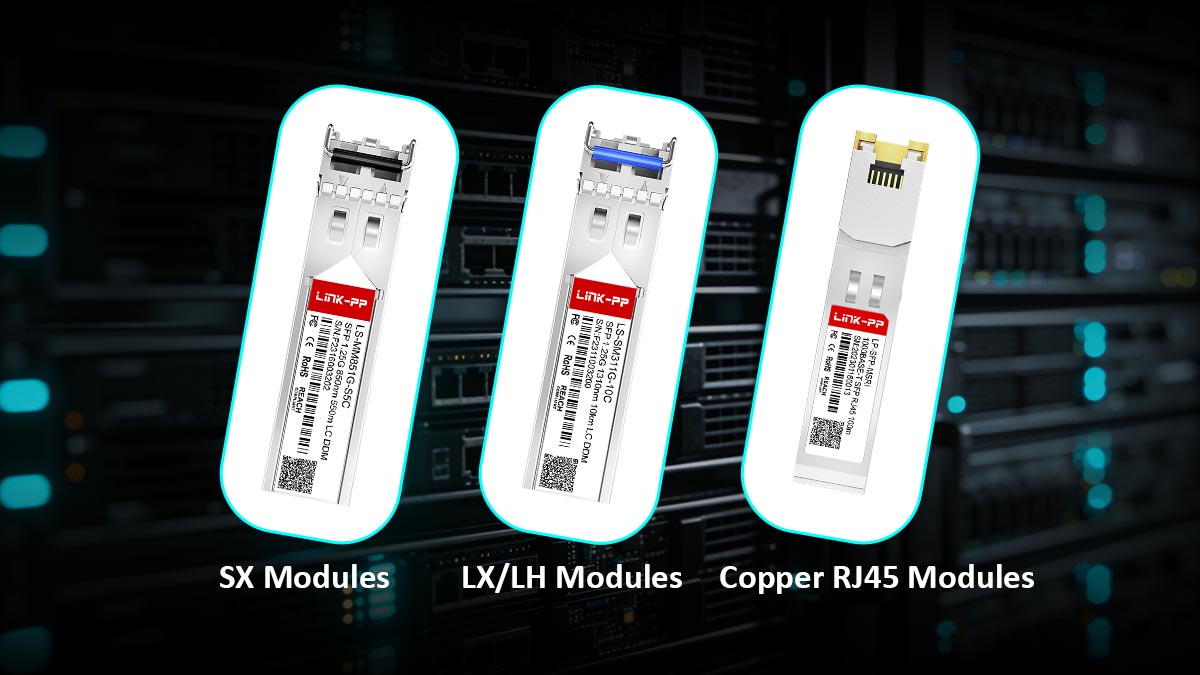
To meet the diverse needs of modern network infrastructures, Cisco offers several categories of 1G SFP modules tailored for different distances and cable types. These modules allow network engineers to customize their connectivity, whether they are linking servers in the same rack or connecting buildings across a large campus. By selecting the appropriate 1G Cisco SFP module type, enterprises can ensure optimal signal integrity and cost-efficiency.
The following table summarizes the most common types used in enterprise environments.
| 1G Cisco SFP Module Type | Typical Model | Media Type | Wavelength | Max Distance | Connector |
| 1000BASE-SX | GLC-SX-MM-RGD | Multimode Fiber | 850nm | 550m | Duplex LC |
| 1000BASE-LX/LH | GLC-LX-SM-RGD | Single-mode Fiber | 1310nm | 10km | Duplex LC |
| 1000BASE-T | GLC-T | Copper (Cat 5/5e/6) | N/A | 100m | RJ45 |
SX Modules for Short-range Multimode Fiber
The 1000BASE-SX 1G Cisco SFP module operates at an 850nm wavelength and is optimized for short-distance links over multimode fiber. It’s ideal for high-density environments such as data centers, wiring closets, or access-layer switches where distances rarely exceed several hundred meters. The module’s compact form factor and low power consumption make it a practical solution for linking servers, storage arrays, or access points within confined spaces.
From a performance standpoint, 1G-SFP-SX modules (like MGBSX1) deliver reliable Gigabit Ethernet connectivity with minimal latency and consistent throughput. Because they use multimode fiber, installation tends to be more cost-effective than single-mode options, especially for intra-building cabling. These modules represent a balance of affordability, flexibility, and robust link quality for enterprises focused on short-range connectivity.
LX/LH Modules for Longer-distance Single-mode Links
When network spans exceed the limitations of multimode fiber, the 1000BASE-LX/LH 1G Cisco SFP is employed. These modules operate at a 1310nm wavelength and are primarily used with single-mode fiber (SMF) to reach distances of up to 10km. Interestingly, LX/LH modules are also compatible with multimode fiber over shorter distances (up to 550m) when used with a mode-conditioning patch cord, providing significant deployment flexibility.
This dual-compatibility makes LX/LH modules an essential tool for campus-wide networking and building-to-building links. They ensure that data can travel across large geographical areas without signal degradation. By deploying this specific 1G Cisco SFP type, organizations can bridge the gap between separate physical locations while maintaining the high-speed throughput required for enterprise-level applications.
Copper RJ45 Modules for Flexible Ethernet Connections
The 1000BASE-T 1G Cisco SFP — often referred to as the GLC-T or GLC-TE — is unique because it allows SFP ports to interface with standard copper category cables (Cat5e, Cat6, etc.). Unlike optical modules, this transceiver uses an RJ45 connector, enabling gigabit speeds over traditional twisted-pair wiring for distances up to 100m. It is an ideal solution for connecting switches to legacy copper-based servers or workstations.
The primary advantage of the copper 1G Cisco SFP is its versatility; it allows network administrators to utilize existing copper infrastructure without needing to run new fiber optic lines. This is particularly useful in "mixed-media" environments where a switch needs to support both fiber uplinks and local copper connections. By using the SFP RJ45 copper module, enterprises can maximize the utility of their SFP slots while keeping installation costs low.
? Cost Challenges of 1G Cisco SFP in Modern Networks
While Cisco hardware is renowned for its reliability and performance, the financial burden of adhering strictly to original equipment manufacturer (OEM) optics can be significant. For many network planners, the high cost of the 1G Cisco SFP often becomes a bottleneck when trying to balance network performance with strict budgetary constraints.
High Initial Procurement Costs
The most immediate challenge is the steep price premium associated with the Cisco brand name, often referred to as the "Cisco Tax." A single 1G Cisco SFP OEM module can cost several times more than a third-party module with identical technical specifications. For enterprises building out new data centers or upgrading entire campus networks, these upfront procurement costs can consume a disproportionate share of the network device budget, leaving fewer resources for other critical infrastructure needs.
Vendor Lock-In and Licensing Issues
Cisco utilizes proprietary software checks to ensure that only "genuine" modules are recognized by its switches and routers. This system creates a vendor lock-in scenario where administrators may feel forced to purchase expensive 1G Cisco SFP OEM modules to avoid "unsupported transceiver" warning messages or potential software-level restrictions. Navigating these compatibility barriers often requires specific configurations, which can add administrative complexity and technical overhead to network management.
Maintenance and Replacement Expenses
Beyond the initial purchase, the long-term maintenance of OEM optics adds to the Total Cost of Ownership. Replacing a failed 1G Cisco SFP with another original module is an expensive recurring cost, and including optics under comprehensive support contracts like Cisco SMARTnet further inflates annual operational expenses. For many organizations, the cost of maintaining a stock of emergency spares becomes prohibitively expensive when limited strictly to OEM-branded hardware.
Scalability Constraints in Large Deployments
In large-scale enterprise deployments involving hundreds or thousands of ports, the price difference between OEM and alternative modules scales exponentially. When a project requires a massive rollout of 1G Cisco SFP modules for access-layer switches, the cumulative cost difference can reach tens of thousands of dollars. This financial pressure often forces network architects to make compromises on network density or speed, ultimately limiting the scalability and future-proofing of the entire enterprise network.
? Performance Comparison Between 1G Cisco SFP and Third-Party Alternatives
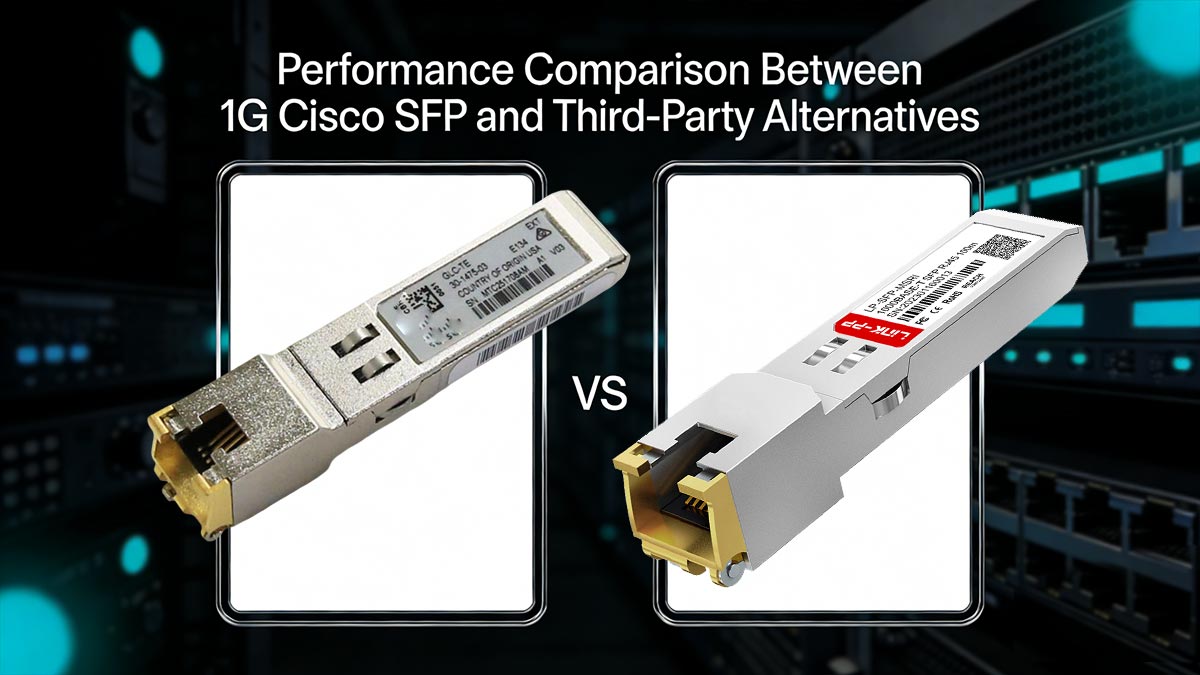
When evaluating a 1G Cisco SFP alternative, performance and reliability are the primary concerns for network engineers. While there is a common misconception that third-party modules are inferior, high-quality compatible alternatives are designed to meet or exceed the same rigorous standards as OEM products. By comparing key performance metrics, it becomes clear that the gap between original and reputable third-party alternatives is virtually non-existent.
Data Transmission Stability
Stability is the cornerstone of any enterprise link, and a high-quality 1G Cisco SFP alternative (like LINK-PP 1G SFP module ) provides consistent signal integrity across all media types. These modules utilize premium optical components and high-end chipsets that ensure a low Bit Error Rate (BER), which is critical for maintaining a "clean" connection. In long-term deployments, these alternatives demonstrate the same level of uptime as OEM modules, preventing the frequent connection flapping that can plague lower-quality components.
Furthermore, stability is reinforced by the module's ability to maintain a consistent optical output power. Whether it is a short-range SX or a long-range LX link, a reliable 1G Cisco SFP alternative ensures that the light signal remains within the receiver’s sensitivity range. This prevents data loss and ensures that the network remains robust even under heavy traffic loads, providing the peace of mind required for mission-critical environments.
Latency and Throughput Metrics
In terms of speed, a 1G Cisco SFP is governed by the same IEEE standards regardless of the brand name on the label. This means that a third-party module will deliver the same 1Gbps line-rate throughput and negligible latency as an original Cisco transceiver. Because the data conversion process happens at the hardware level using standardized protocols, there is no performance penalty for choosing a non-OEM solution.
Large-scale throughput tests often show that high-quality alternatives can handle full-duplex traffic without any packet drops. For latency-sensitive applications like VoIP or real-time video conferencing, the performance of a reputable 1G Cisco SFP alternative is indistinguishable from that of a factory-original unit. This allows enterprises to optimize their costs without sacrificing the speed and responsiveness of their internal network services.
Testing and Validation Processes
The primary reason a high-quality 1G Cisco SFP alternative can match OEM performance is the mirroring of Cisco’s own rigorous testing protocols. While Cisco validates its modules specifically for its own hardware ecosystem, reputable third-party providers perform "real-bed" testing using the exact same Cisco Catalyst and Nexus switches. This ensures that the alternative module’s signal integrity, power consumption, and thermal thresholds are identical to an original Cisco-branded transceiver under full-load conditions.
Furthermore, unlike generic optics that undergo only batch testing, premium 1G Cisco SFP alternatives are often individually tested for compatibility with specific Cisco IOS and IOS-XE software versions. This level of scrutiny ensures that the alternative module will not only be recognized by the system hardware but will also maintain its performance during critical software updates — a standard of validation that is equivalent to Cisco’s internal quality control.
? Key Features to Look for in 1G Cisco SFP Alternatives
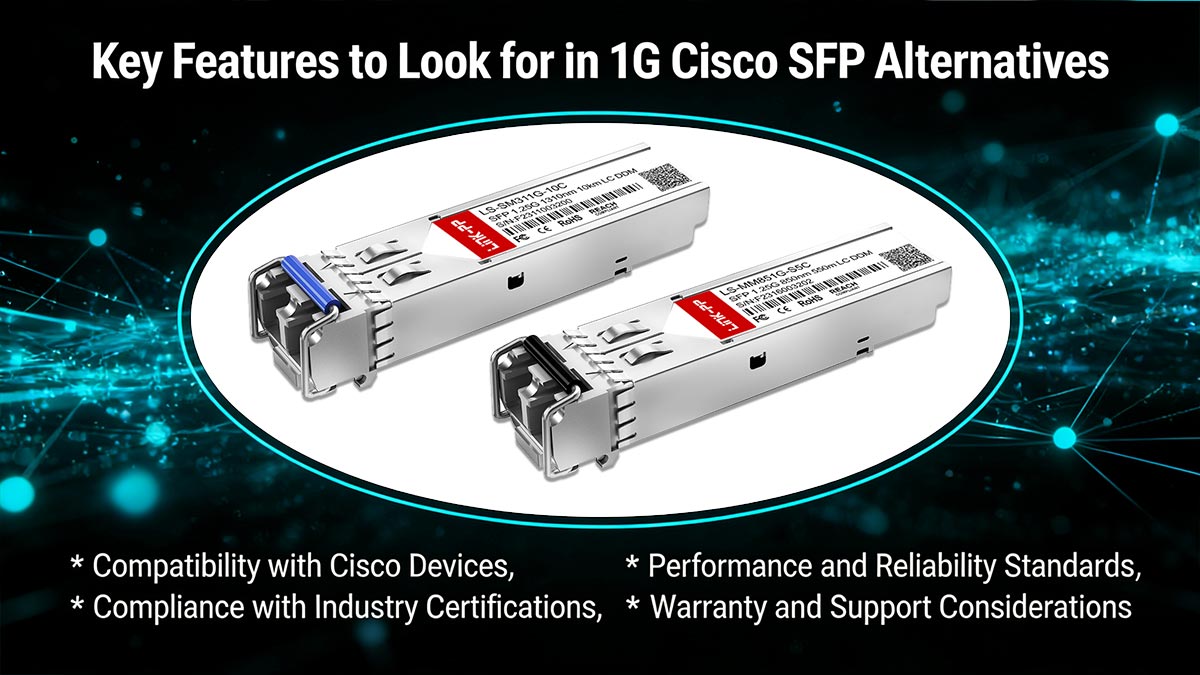
Choosing the right 1G Cisco SFP alternative requires looking beyond the price tag to ensure the product meets the technical requirements of your infrastructure. Not all third-party optics are created equal, and identifying specific high-quality features is the best way to avoid deployment headaches. A "good" alternative should be a seamless "drop-in" replacement that functions exactly like the original.
Compatibility with Cisco Devices
The most critical feature of any 1G Cisco SFP alternative is its ability to be recognized by Cisco hardware without triggering "unsupported transceiver" errors. This requires the module to have a correctly programmed EEPROM that mimics the coding used by Cisco’s original equipment. When the switch queries the module, it should see a valid Cisco Part Number (P/N) and Vendor Name, allowing for immediate activation.
Furthermore, a high-quality alternative must support Digital Optical Monitoring (DOM) or Digital Diagnostics Monitoring (DDM). This feature allows administrators to view real-time statistics such as temperature, voltage, and optical power levels through the Cisco command-line interface (CLI). Full compatibility ensures that your network monitoring tools continue to provide accurate data, just as they would with a native 1G Cisco SFP.
Performance and Reliability Standards
Any 1G Cisco SFP alternative you consider should strictly adhere to the Multi-Source Agreement (MSA) standards. The MSA defines the physical dimensions, electrical interfaces, and signaling protocols for SFP transceivers, ensuring that the module fits perfectly into any standard SFP slot. Adherence to these standards is the first step in guaranteeing that the transceiver will behave predictably within your network fabric.
Reliability is also measured by the quality of the internal components, particularly the laser driver and the optical TOSA/ROSA (Transmitter/Receiver Optical Sub-Assembly). Top-tier suppliers use components from industry-leading manufacturers to ensure a high Mean Time Between Failures (MTBF). By focusing on these internal standards, you can ensure that your 1G Cisco SFP alternative provides a long and stable service life, reducing the need for frequent replacements.
Compliance with Industry Certifications
To ensure safety and environmental responsibility, look for 1G Cisco SFP alternatives that carry recognized industry certifications. Standard certifications like CE, FCC, and RoHS indicate that the product meets international requirements for electromagnetic compatibility and the restriction of hazardous substances. These certifications are a hallmark of a professional manufacturer that stands behind its production quality.
Additionally, safety certifications such as UL or TUV for laser safety are vital for protecting the eyesight of technicians working with the fiber links. A certified 1G Cisco SFP alternative ensures that the device is safe to handle and will not cause electrical interference with other sensitive equipment in the rack. Always verify these credentials to ensure you are integrating high-quality, safe components into your infrastructure.
Warranty and Support Considerations
One of the hidden benefits of choosing a reputable 1G Cisco SFP alternative is often the superior warranty coverage. While OEM modules typically come with a limited 90-day or 1-year warranty, many third-party suppliers offer 3-5 years, or even lifetime warranties. This extended coverage is a testament to the supplier's confidence in their product and provides long-term protection for your investment.
Technical support is another key feature; a good supplier should provide pre-sales consultation and post-sales troubleshooting. If a compatibility issue arises after a Cisco software update, the supplier should be able to provide re-coded modules or technical guidance quickly. When comparing 1G Cisco SFP options, prioritize vendors that offer a robust support structure to help you maintain network continuity.
? Compatibility Considerations for 1G Cisco SFP Alternatives
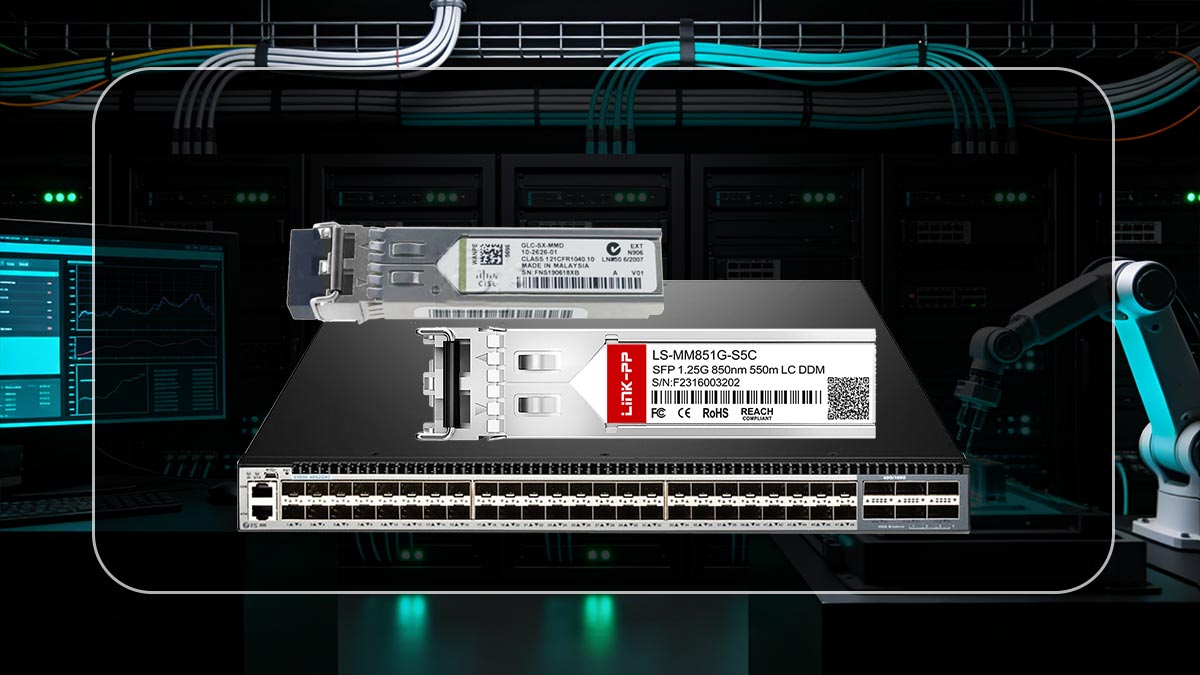
Ensuring seamless compatibility is the most critical step when integrating third-party compatible transceivers into an existing network. While high-quality 1G Cisco SFP alternatives are designed to be "plug-and-play," understanding the technical nuances of how Cisco hardware interacts with these modules can prevent configuration errors. Proper validation ensures that your alternative transceivers will be recognized and managed just like original modules.
Switch and Router Compatibility Checks
Before deploying a 1G Cisco SFP alternative, it is essential to verify the specific hardware and software requirements of your host device. Compatibility is often determined by:
- Hardware Port Capabilities: Ensure the switch port supports 1G speeds (some SFP+ ports are backward compatible, while others are not).
- Software Version: Check if your Cisco IOS or IOS-XE version requires specific commands to enable third-party transceiver modules.
- Platform-Specific Support: Confirm that the specific 1G SFP model (e.g., MGBLH1, GLC-LH-SM) is listed in the official Cisco compatibility matrix for your particular switch model.
EEPROM Coding and Vendor Recognition
Every 1G Cisco SFP contains an EEPROM chip that acts as a digital "ID card." When plugged into a Cisco device, the system reads this chip to verify the Vendor Name, Part Number, and Serial Number. If the coding does not match Cisco’s proprietary algorithm, the switch may place the port in an "err-disable" state. High-quality alternatives use precise custom coding to mimic the original OEM signature, ensuring the module is recognized as a "Cisco certified" device by the system software.
Interoperability in Mixed-brand Environments
In many enterprise networks, a 1G Cisco SFP may need to communicate with a transceiver from a different brand (such as Juniper EX-SFP-1GE-SX or Arista SFP-1G-SX) at the other end of the fiber link. To ensure smooth interoperability, consider the following:
- Standard Protocols: Both modules must adhere to the same IEEE 802.3 standards (e.g., 1000BASE-SX).
- Wavelength Matching: Both ends must use the same wavelength (e.g., 850nm) and fiber type (Multimode vs. Singlemode).
- Optical Power Levels: Ensure the transmit power of one module does not exceed the receiver sensitivity of the other, which can happen when mixing different brands on short-range links.
How to Avoid Deployment Issues and Downtime
To guarantee a successful rollout of 1G Cisco SFP alternatives and maintain 100% uptime, follow these best practices:
- Lab Testing: Always test a sample batch of third-party modules in a non-production environment before a full-scale deployment.
- Command Knowledge: Be familiar with CLI commands such as service unsupported-transceiver and no errdisable detect cause gbic-invalid as a backup measure for older legacy systems.
- Monitor System Logs: Regularly check system logs for "Transceiver validation failed" messages during the initial installation phase to catch potential issues early.
? How to Choose the Right 1G Cisco SFP Supplier for Enterprise Projects
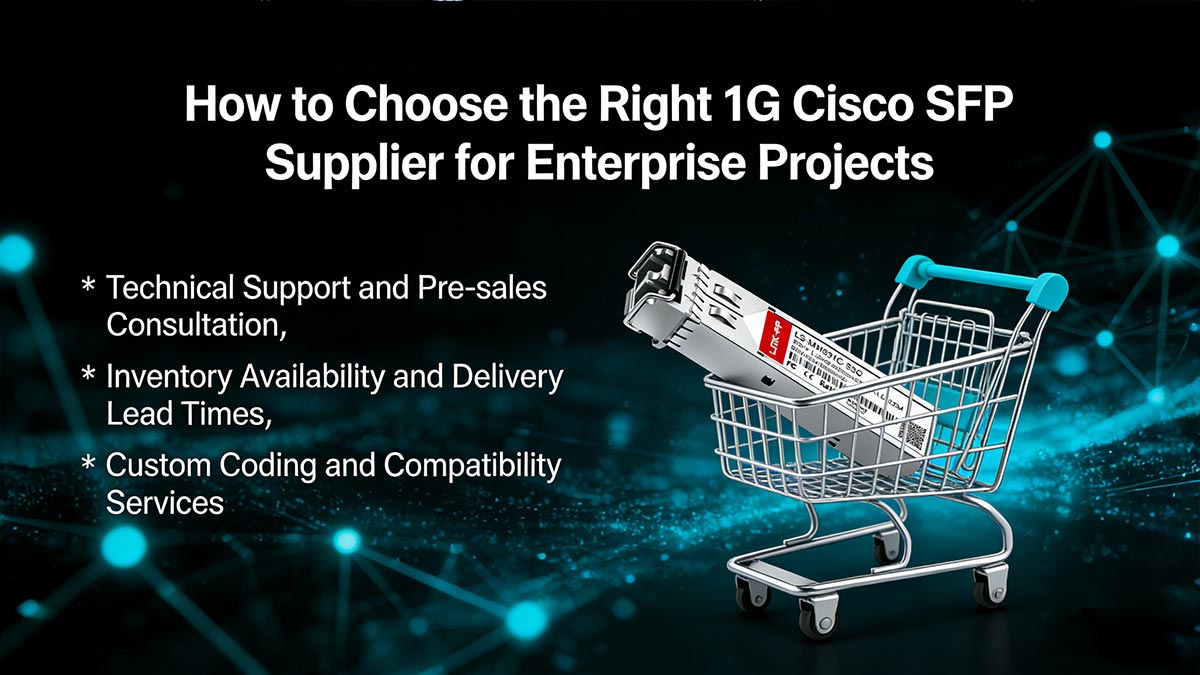
Selecting a supplier for 1G Cisco SFP alternatives is about more than just finding the lowest price; it is about finding a long-term partner who understands enterprise-scale reliability. The right supplier should offer a combination of technical expertise, robust inventory management, and high-level support services. This partnership is what ultimately ensures a low total cost of ownership (TCO) without risking network stability.
Technical Support and Pre-sales Consultation
A professional supplier should act as a technical consultant rather than just a vendor. Before you purchase a 1G Cisco SFP, they should be able to provide expert advice on reach, fiber compatibility, and hardware-specific requirements. If issues arise during installation, having access to an engineering team that understands the Cisco CLI and advanced troubleshooting protocols is invaluable for minimizing network downtime.
Inventory Availability and Delivery Lead Times
For large-scale enterprise projects, timing and consistent availability are critical. A reliable supplier of 1G Cisco SFP modules should maintain a massive, well-managed inventory and a sophisticated logistics network to ensure:
- Strategic Safety Stocking: Maintaining a dedicated reserve of modules specifically for your long-term project needs ensures that any sudden expansion or emergency replacement can be fulfilled immediately from existing stock without waiting for manufacturing cycles.
- Volume Consistency: The ability to provide hundreds or thousands of modules from the same production batch to ensure uniform performance and identical hardware revisions across the entire network fabric.
- Predictable Lead Times: Transparent communication regarding stock levels and clear delivery timelines to prevent project delays, especially during periods of global supply chain fluctuations or component shortages.
Custom Coding and Compatibility Services
Many enterprises run a mix of Cisco platforms and software versions, which can benefit from tailored SFP coding. A high-value supplier should be able to:
- Provide custom EEPROM coding to emulate specific Cisco part numbers or adjust identification fields as required.
- Re-code or re-label SFPs if your hardware or design changes, extending the lifecycle of modules you already own.
- Offer batch-testing and certification services for your exact device list, delivering “ready-to-deploy” optics.
These custom services make it easier to maintain consistent behavior across diverse environments and protect your SFP investment as your network evolves.
? Final Thoughts on Selecting 1G Cisco SFP Alternatives
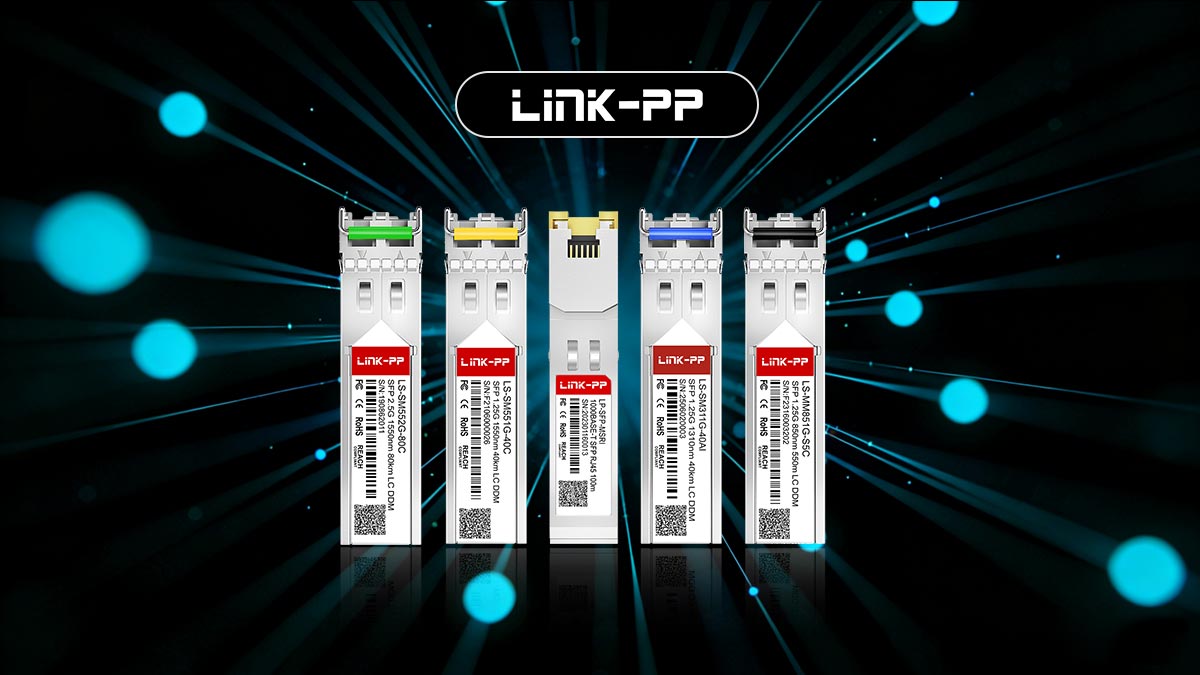
Transitioning to high-quality 1G Cisco SFP alternatives is a strategic decision that empowers enterprise networks to scale efficiently without sacrificing performance or stability. By opting for modules that adhere to MSA standards and undergo rigorous real-bed validation, you can achieve the same level of reliability as original Cisco optics while significantly lowering the total cost of ownership (TCO).
Ready to optimize your network costs? Visit the LINK-PP Official Store today for compatible 1G Cisco SFP modules with custom EEPROM coding, robust inventory, and dedicated technical support.