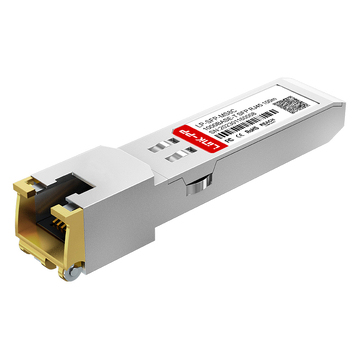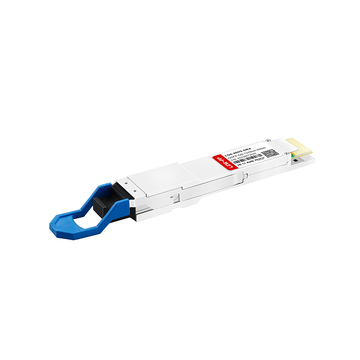
As network demands continue to grow, 10 100 1000BASE TX remains a practical and widely used Ethernet standard in modern gigabit networks. It supports 10Mbps, 100Mbps, and 1000Mbps transmission over copper cabling, making it a flexible solution for offices, server rooms, small businesses, and home networks. Thanks to its strong compatibility and easy deployment, it continues to play an important role in everyday network infrastructure.
Compared with more complex and expensive fiber-based options, 10 100 1000BASE TX SFP offers a cost-effective way to deliver reliable high-speed connectivity over short to medium distances. Its backward compatibility allows older and newer devices to work together smoothly, while its support for common Ethernet environments makes it ideal for a wide range of applications. For many organizations, it is still a simple, efficient, and dependable transceiver choice for building stable network connections.
? What Is 10 100 1000BASE TX
10 100 1000BASE TX is a common copper 1G SFP that supports 10Mbps, 100Mbps, and 1000Mbps transmission over twisted-pair cabling. It is widely used in LANs because it combines flexible speed support, simple deployment, and strong compatibility with existing network devices.
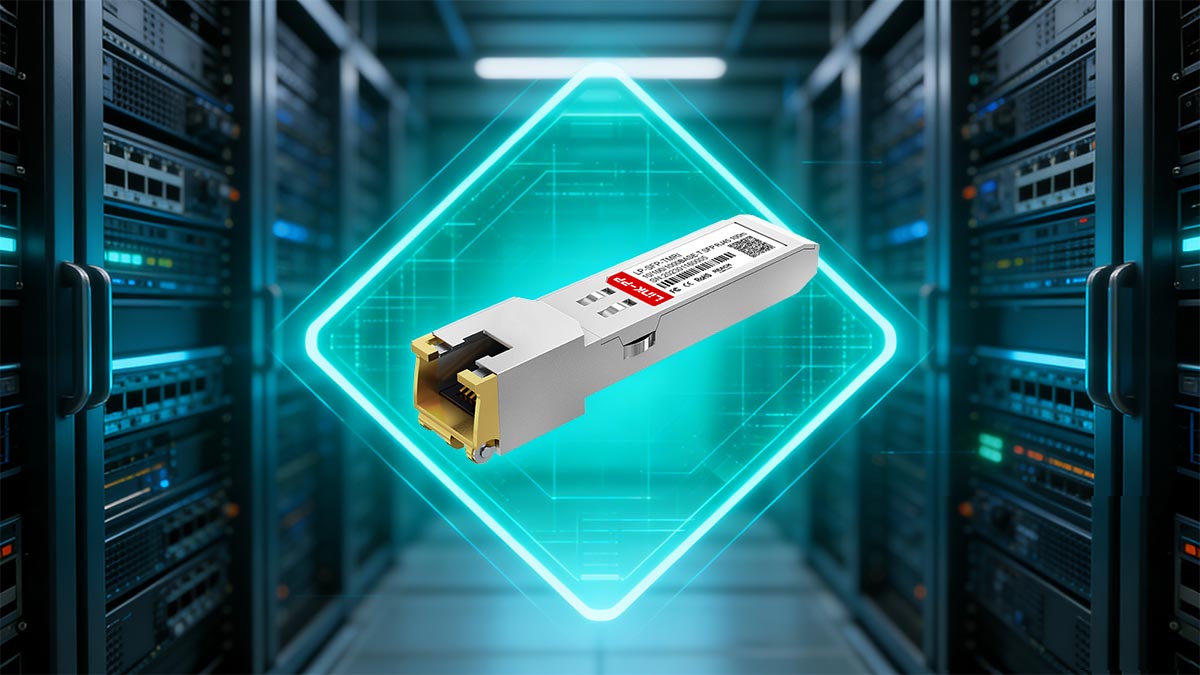
Definition and Technical Overview
10 100 1000BASE TX refers to an SFP to RJ45 module that can operate at three different speeds: 10BASE-T, 100BASE-TX, and 1000BASE-T. In practical use, this means the interface can automatically match the highest supported speed of the connected device.
It typically uses RJ45 connectors and runs over copper cables such as Cat5e, Cat6, or Cat6a. Because it relies on standard Ethernet cabling, it is easy to deploy in offices, server rooms, and home networks.
To make the technical characteristics easier to understand, the core points are summarized below.
| 10 100 1000BASE TX | Description |
| Supported Speeds | 10Mbps, 100Mbps, 1000Mbps |
| Transmission Medium | Twisted-pair Copper Cabling |
| Common Connector | RJ45 |
| Typical Cable Types | Cat5e, Cat6, Cat6a |
| Main Use Case | Short-distance Ethernet Connections in LANs |
Key Features and Performance Capabilities
One key feature of 10 100 1000BASE TX is auto-negotiation. It allows two connected devices to automatically select the best available speed and duplex mode, which makes network setup simpler and more reliable.
Another advantage is its stable gigabit performance for everyday business traffic, such as file sharing, VoIP, video meetings, and access to local servers. For many office and small business environments, 1 Gbps is enough to support regular network demands efficiently.
The following table highlights its main performance-related features.
| Feature | Performance Value |
| Auto-negotiation | Simplifies connection and reduces manual setup |
| Gigabit Bandwidth | Supports fast local data transmission |
| Low Deployment Complexity | Easy to install and maintain |
| Broad Hardware Support | Compatible with common switches, NICs, and routers |
Common Standards and Compatibility
10 100 1000BASE TX is built on established Ethernet standards, including:
- 10BASE-T for 10M SFP connections, mainly for legacy devices.
- 100BASE-TX for 100M SFP Fast Ethernet, common in older office networks.
- 1000BASE-T for 1G SFP Ethernet, supporting modern high-speed devices.
Its compatibility highlights focus on practical deployment considerations:
- Cable Requirements: Works reliably over Cat5e, Cat6, or Cat6a copper cabling.
- Distance Limitations: Optimal performance is achieved within typical LAN distances (up to 100m).
- Device Interoperability: Standardized signaling ensures consistent operation across various vendors’ equipment.
? Why 10 100 1000BASE TX Still Matters in Network Infrastructure
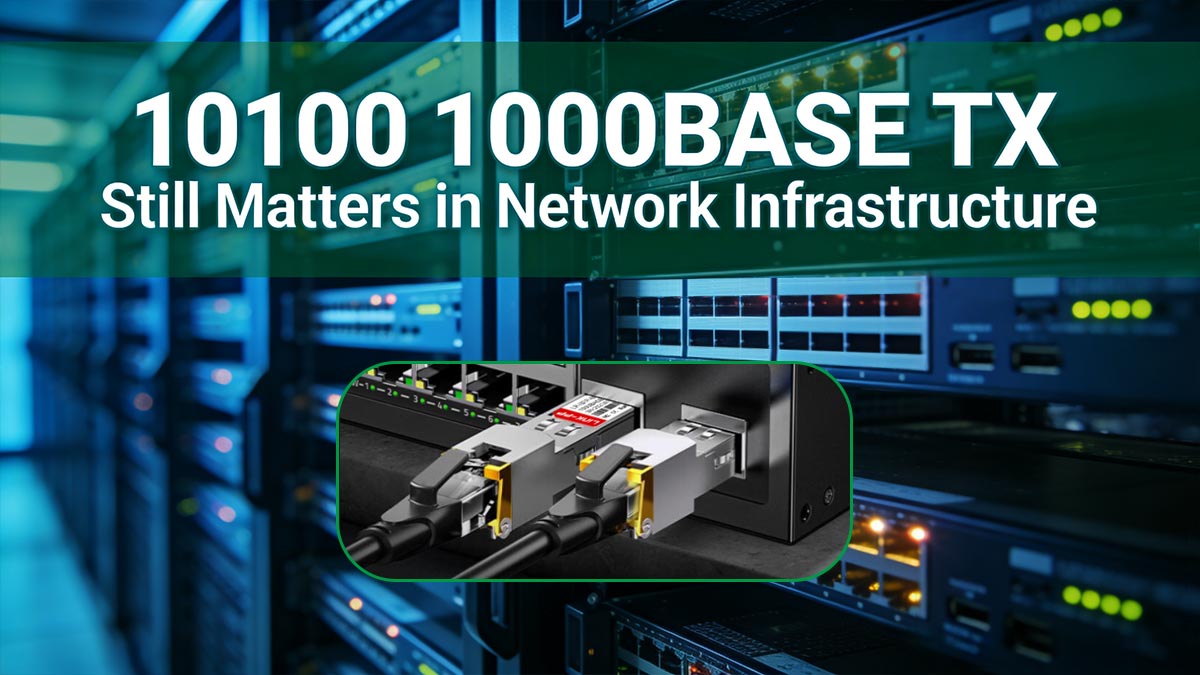
Despite the rise of multi-gigabit and fiber-based networking solutions, 10 100 1000BASE TX Ethernet continues to play a vital role in modern network infrastructure. Its longevity is largely due to its proven reliability, broad compatibility, and cost-effective deployment. Many enterprises, SMBs, and even home office setups still rely on copper-based Gigabit Ethernet to meet everyday connectivity needs efficiently.
How Backward Compatibility Supports Mixed-speed Environments
One of the most important advantages of 10 100 1000BASE TX is its backward compatibility with legacy network devices. Network administrators can deploy new Gigabit switches without immediately replacing older 10 or 100Mbps endpoints, creating a mixed-speed environment that remains fully operational. This flexibility simplifies network upgrades and reduces downtime, particularly in large organizations with heterogeneous equipment.
Additionally, backward compatibility enables smooth transitions in phased infrastructure upgrades. Organizations can gradually migrate users to higher speeds while maintaining network stability. Devices automatically negotiate the highest common speed during link initialization, minimizing configuration complexity and ensuring that even older equipment remains functional without affecting the overall network performance.
Cost Advantages Compared to Fiber Alternatives
Deploying 10 100 1000BASE TX over copper cabling is generally much more cost-effective than switching to fiber optic solutions. Copper cabling is widely available, easy to install, and does not require expensive transceivers or specialized tools, making it ideal for budget-conscious enterprises and small businesses. Maintenance costs are also lower, as copper networks are simpler to troubleshoot and repair.
Furthermore, for short-distance connections, 10 100 1000BASE TX copper module provides sufficient bandwidth for most day-to-day applications, including office productivity, VoIP, and standard file sharing. This makes it an economical choice where the performance benefits of fiber SFP — such as higher bandwidth or longer reach — are not critical, allowing organizations to allocate resources more efficiently.
When Copper SFP Still Outperforms Fiber in Real-world Use
In short-range network deployments, 10 100 1000BASE TX copper SFP transceiver can be more practical than optical modules because they support standard RJ45 Ethernet connections and work well with existing copper cabling. This makes them especially useful in offices, wiring closets, and enterprise floors where structured Ethernet cabling is already in place.
They also offer advantages in everyday deployment and maintenance. For many access-layer connections, 10 100 1000BASE-TX copper SFP modules are easier to install, simpler to troubleshoot, and more convenient for mixed-speed device environments, while fiber optic SFP module is often better suited for longer-distance or higher-bandwidth links.
? 10 100 1000BASE TX in Enterprise Office Network Solutions
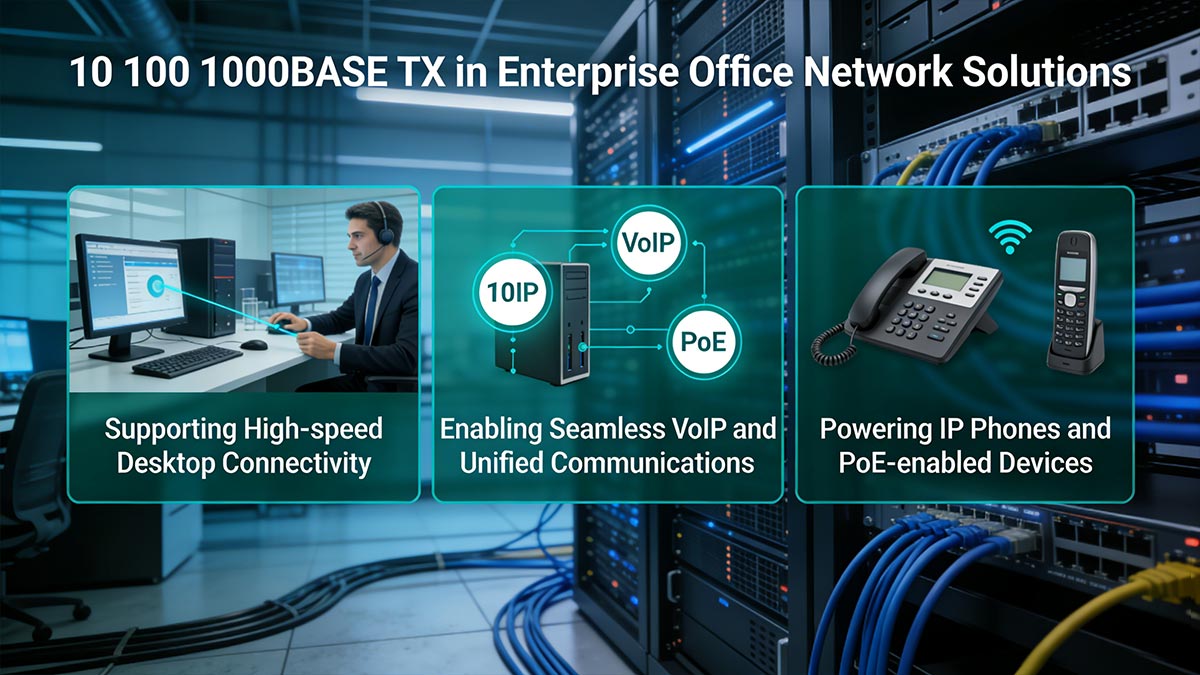
In enterprise office environments, 10 100 1000BASE TX remains a highly practical solution for delivering stable and efficient wired connectivity. It supports a wide range of daily business applications, from employee desktop access to communication systems and powered network devices. Because it combines Gigabit performance with broad compatibility and simple deployment, it continues to be a strong fit for modern office network design.
Supporting High-speed Desktop Connectivity
10 100 1000BASE TX is widely used to provide reliable wired access for employee desktops, laptops connected through docking stations, and shared office terminals. In daily office use, Gigabit Ethernet helps ensure smooth access to cloud platforms, internal systems, shared storage, large file downloads, and web-based business tools. This is especially valuable in departments such as finance, design, operations, and administration, where stable network speed directly affects productivity.
In practical office deployments, its value is reflected in several common applications:
- Connecting desktop PCs in open-plan offices and individual workstations.
- Supporting file sharing between employees and internal servers.
- Delivering stable bandwidth for ERP, CRM, and SaaS platforms.
- Reducing performance issues caused by congested wireless connections.
Enabling Seamless VoIP and Unified Communications
Enterprise offices depend heavily on voice and collaboration platforms, and 10 100 1000BASE TX helps provide the wired stability these services need. VoIP calls, video meetings, instant messaging, screen sharing, and collaboration software all benefit from consistent low latency Ethernet connections. Compared with wireless-only access, wired Gigabit links can offer more predictable performance for communication-heavy work environments.
Its application in unified communications is especially useful in scenarios such as:
- Connecting IP phones to office switches for reliable voice service.
- Supporting video conferencing systems in meeting rooms.
- Enabling desk phones with PC pass-through connections.
- Carrying both voice and data traffic across the same structured cabling system.
Powering IP Phones and PoE-enabled Devices
Another important office application of 10 100 1000BASE TX is its use with Power over Ethernet infrastructure. In many enterprise networks, a single Ethernet cable is used not only for data transmission but also to deliver power to connected devices. This greatly simplifies installation and makes it easier to deploy devices in locations where separate power outlets may be limited or inconvenient.
This is particularly useful for:
- IP phones on employee desks and reception counters.
- Wireless access points mounted on ceilings or walls.
- IP cameras for office monitoring and access control.
- Smart office devices such as badge readers and sensors.
By supporting both connectivity and power delivery, 10 100 1000BASE-TX helps enterprises build cleaner, more flexible, and easier-to-manage office networks.
? 10 100 1000BASE TX Applications in Data Centers and Server Rooms
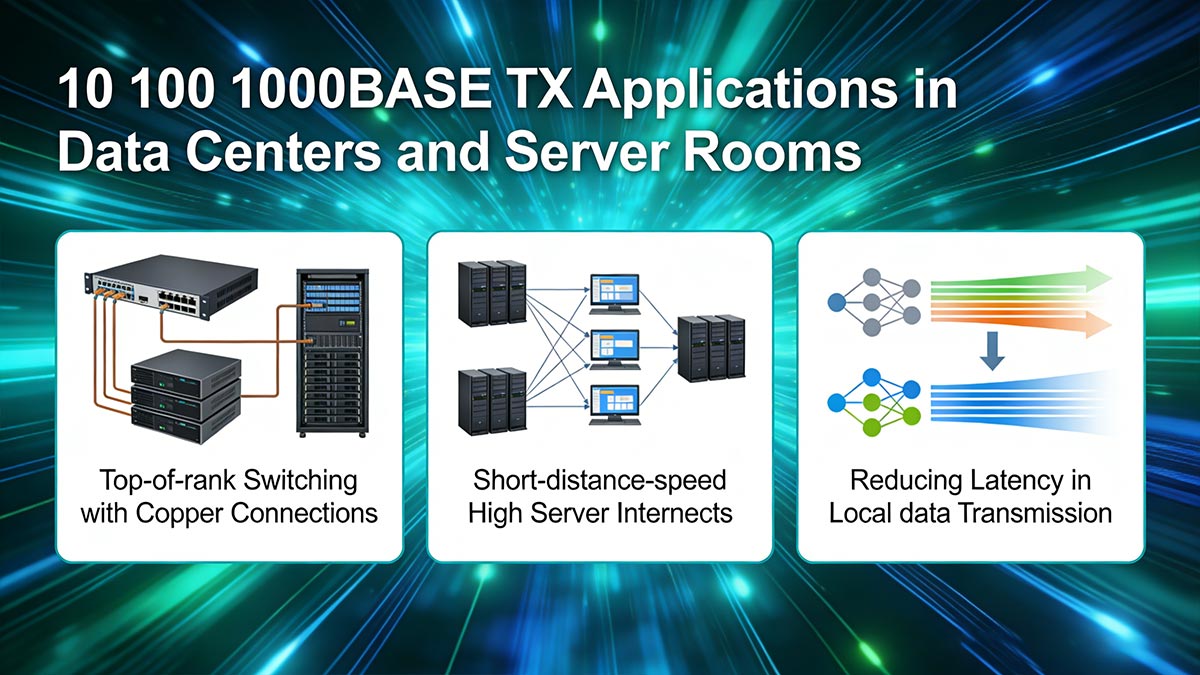
The 10 100 1000BASE TX technology is widely adopted in data centers and server rooms for reliable, cost-effective networking. Its copper-based infrastructure ensures high-speed connectivity, balancing performance with affordability for critical server and network communications. This technology provides an essential solution for maintaining high bandwidth while keeping operational costs manageable in data-heavy environments.
Top-of-rack Switching with Copper Connections
In data centers, 10 100 1000BASE TX is commonly used for top-of-rack switching, offering an efficient solution for connecting multiple servers within a rack. Copper-based connections are easier to deploy and cost-effective compared to fiber, allowing for simple network expansion and reconfiguration. The use of copper also eliminates the complexity of optical transceiver, making it easier for network administrators to install, troubleshoot, and maintain the infrastructure.
Short-distance High-speed Server Interconnects
For short-distance high-speed server interconnects, 10 100 1000BASE TX provides fast, reliable data transmission between servers within the same rack or data center. It supports low-latency communication, ensuring high performance for data-intensive applications such as virtualization and cloud computing. The simplicity and cost-effectiveness of copper cabling further enhance the deployment of high-speed interconnects, making it an ideal solution for environments that demand high throughput with minimal setup time.
Reducing Latency in Local Data Transmission
10 100 1000BASE TX reduces latency in local data transmission by providing quick, efficient server-to-server communication. Its low-latency performance ensures faster data access, which is crucial for real-time applications in server rooms and data centers where speed and synchronization are key. By leveraging copper-based Ethernet, data centers can achieve reduced communication delays, helping improve the overall performance of services such as online gaming and video streaming systems.
? 10 100 1000BASE TX for Small Business and Home Office Networking
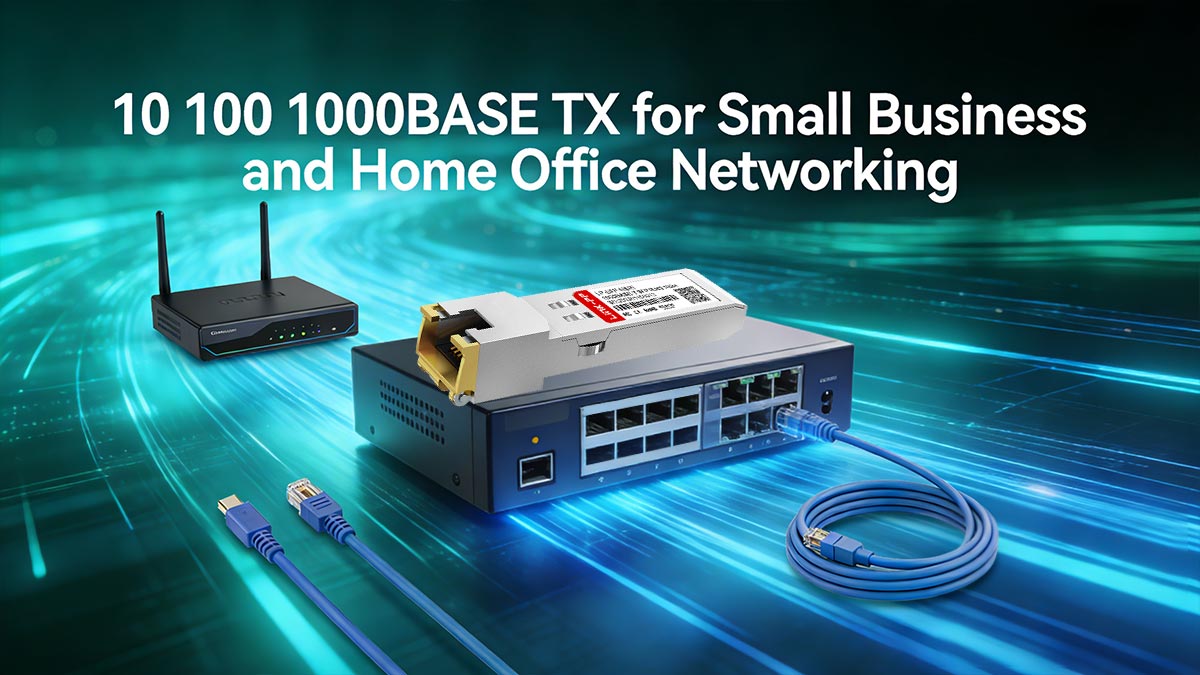
10 100 1000BASE TX is a practical networking solution for small businesses and home offices that need stable, high-speed connectivity without a large IT budget. It supports everyday operations such as file sharing, video conferencing, cloud access, and printer or device connectivity. With its wide compatibility and simple deployment, it remains a reliable choice for building efficient local networks in smaller environments.
Affordable Networking Solutions for Startups
For startups and small businesses, 10 100 1000BASE TX offers an affordable way to build a dependable network infrastructure without the higher costs associated with fiber deployments. It works well with commonly available switches, routers, and network interface cards, allowing businesses to control upfront expenses while still getting Gigabit performance for daily tasks such as email, cloud applications, shared storage, and internal collaboration.
Plug-and-play Simplicity for Non-technical Users
One of the biggest advantages of 10 100 1000BASE TX in home office and small business environments is its plug-and-play simplicity. Most devices can connect automatically through standard RJ45 Ethernet ports with minimal configuration, making it ideal for users who do not have dedicated technical support. This ease of use reduces setup time, simplifies troubleshooting, and helps maintain a stable wired connection for remote work, online meetings, and secure data transfer.
Future-proofing Home Office Setups
10 100 1000BASE TX also helps future-proof home office setups by providing enough bandwidth for current productivity needs while remaining compatible with a wide range of existing and newer devices. As remote work continues to rely on video calls, cloud platforms, NAS systems, and smart office equipment, Gigabit Ethernet gives users a more stable and scalable foundation than wireless-only networks. It also makes future upgrades easier, since many modern networking products still support this standard alongside faster options.
? Choosing the Right Hardware for 10 100 1000BASE TX Deployments
Selecting the appropriate hardware for 10 100 1000BASE TX deployments is crucial for ensuring network performance, reliability, and scalability. The right switches, network interface cards (NICs), and cables play an important role in achieving optimal speeds and maintaining cost-efficiency. Understanding the key factors involved in hardware selection can help businesses build a robust, future-proof network.
Key Factors When Selecting Switches and NICs
When choosing switches and NICs for 10 100 1000BASE TX deployments, several factors should be considered:
- Port Count and Type: Ensure the switch offers the appropriate number of ports for current and future devices, with both standard Ethernet ports and PoE (Power over Ethernet) support if needed.
- Performance Needs: Look for switches and NICs that support the full 1Gbps throughput to ensure fast data transfer speeds.
- Managed vs. Unmanaged Switches: Managed switches provide advanced features like VLAN support, traffic monitoring, and security, while unmanaged switches offer simplicity and lower cost for small-scale setups.
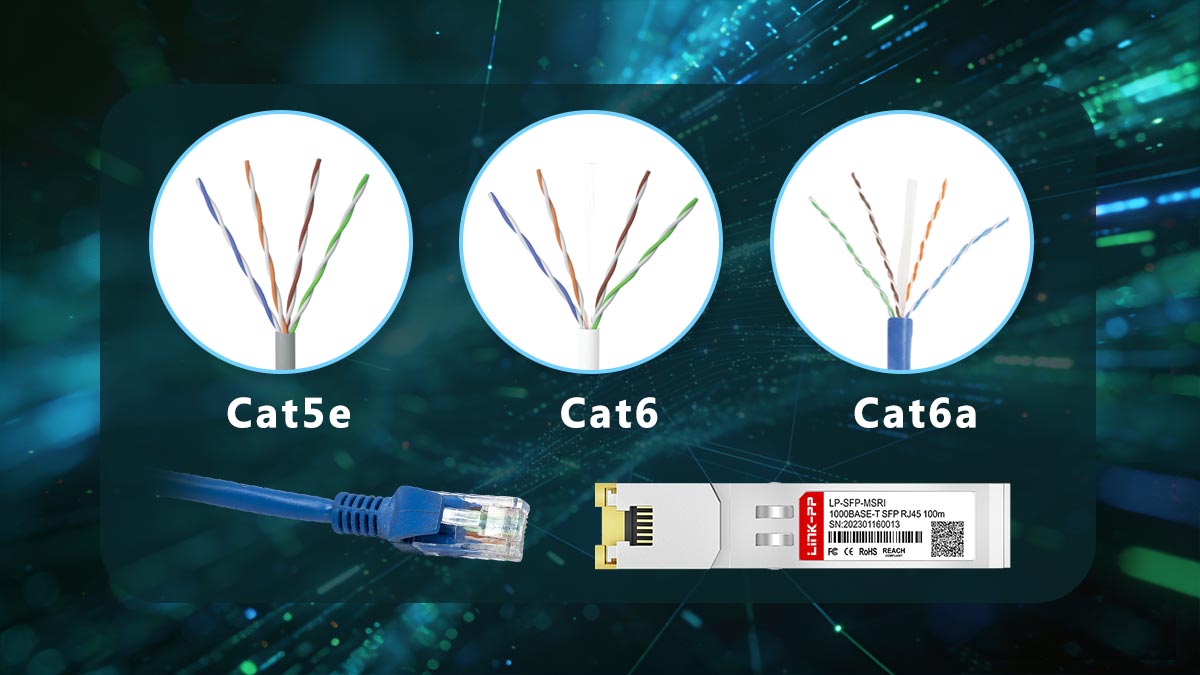
Cable Requirements (Cat5e vs Cat6 vs Cat6a)
Choosing the right cables is crucial to achieving the best performance in a 10 100 1000BASE TX network:
- Cat5e: Supports up to 1Gbps speeds over distances up to 100m, making it an affordable choice for most standard applications.
- Cat6: Provides better performance than Cat5e, supporting up to 10Gbps speeds over shorter distances (up to 55m), which is ideal for high-performance environments.
- Cat6a: Offers superior shielding and supports 10Gbps speeds over longer distances (up to 100m), making it the best option for environments where future-proofing and high-speed connectivity are essential.
Understanding Port Density and Scalability
Port density determines how many devices you can connect directly from a single switch, which affects both performance and physical layout. For small offices, a compact 8‑ or 16‑port Gigabit switch is usually enough, while larger deployments may stack multiple switches or use higher‑port models.
- Match the number of ports to your device count plus 20–30% extra headroom for growth.
- Prefer switches with SFP or SFP+ uplinks if you plan to link to other switches or to fiber backbones while keeping 10 100 1000BASE TX for end‑devices.
- If your network is likely to grow, choose models with stackable or modular designs so you can add capacity without replacing the entire core.
Compatibility Considerations with Existing Infrastructure
When deploying 10 100 1000BASE TX, it's essential to ensure compatibility with existing network infrastructure:
- Existing Cables and Equipment: Verify that your current cables (Cat5e, Cat6, etc.) and devices (computers, printers, etc.) are compatible with the new switches and NICs.
- Backward Compatibility: Ensure that your network equipment supports backward compatibility with older devices that may still use slower standards (such as 10BASE-T or 100BASE-TX) to prevent bottlenecks or connectivity issues.
? Future Trends and Limitations of 10 100 1000BASE TX Technology
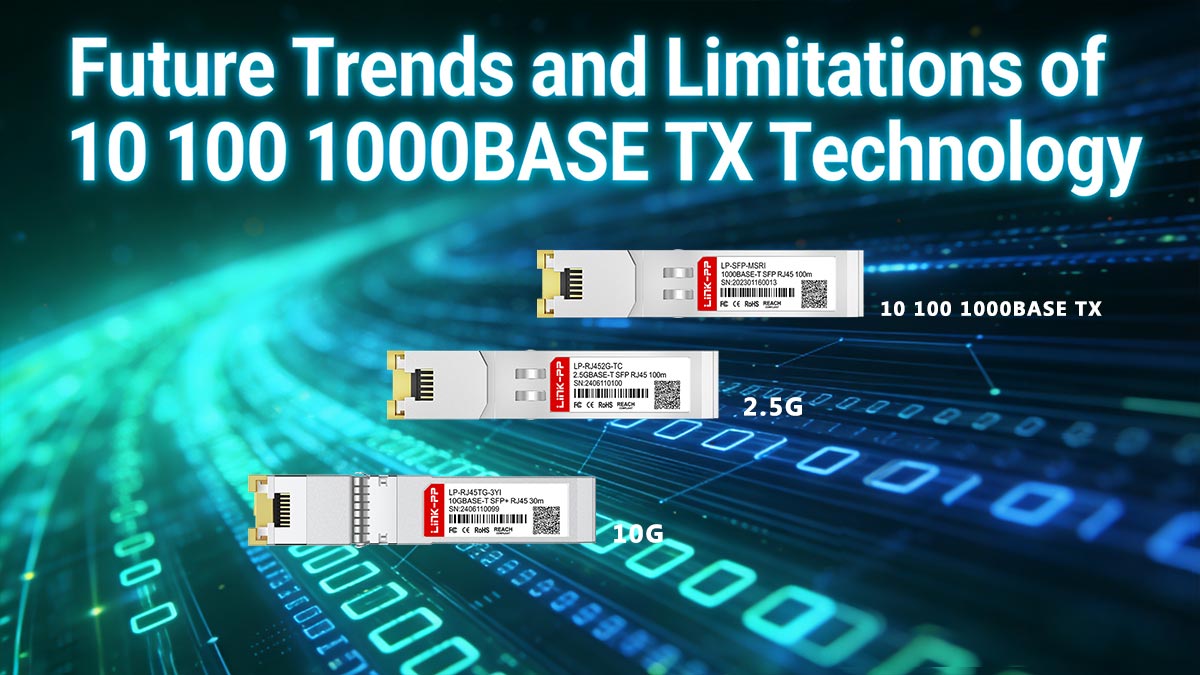
As networks continue to grow and handle more data than ever before, 10 100 1000BASE TX (Gigabit Ethernet) is still widely used — but it is no longer the fastest option available. It remains a practical choice for many everyday networking needs, especially at the edge (like offices and homes), but newer technologies are gradually taking over in high-performance environments. Understanding where Gigabit Ethernet fits today — and where it falls short — can help you make better decisions for future upgrades.
When to Upgrade to 2.5G, or 10G Ethernet
- Rising Application Demands: Modern workloads such as cloud-based collaboration tools, 4K/8K video streaming, virtualization, and large-scale data transfers can easily saturate 1 Gbps links, making upgrades necessary for sustained performance.
- Next-generation Wireless Infrastructure: Wi-Fi 6, Wi-Fi 6E, and Wi-Fi 7 access points can exceed Gigabit throughput, meaning that traditional 1G uplinks may become a bottleneck. Upgrading to 2.5G SFP or 10G SFP+ ensures optimal wireless performance.
- Future Scalability Planning: Organizations planning for growth should consider higher-speed Ethernet early to avoid repeated infrastructure upgrades, which can be more costly and disruptive in the long term.
- Cost and Cabling Considerations: 2.5G Ethernet offers a cost-efficient upgrade path that often works with existing Cat5e cabling, while 10G typically requires Cat6a or better, delivering higher performance at a higher initial investment.
Bandwidth Limitations in High-demand Environments
Although Gigabit Ethernet is sufficient for many traditional office applications, it becomes a limitation in high-demand environments. In data-intensive scenarios such as video editing studios, AI workloads, or large-scale backups, the 1Gbps ceiling can lead to congestion and performance degradation.
As multiple devices compete for limited bandwidth, issues such as packet loss, jitter, and increased latency may arise. This can negatively impact user experience and operational efficiency, especially in environments where real-time data processing is critical. Therefore, relying solely on 10 100 1000BASE TX in such scenarios may hinder overall system performance.
Hybrid Network Strategies Combining Copper and Fiber
- Optimized Network Architecture: A hybrid approach allows organizations to leverage copper for cost-effective, short-distance connections while using fiber for high-speed backbone and long-distance links.
- Access vs. Core Separation: Copper Ethernet is typically deployed at the access layer (connecting end devices like PCs, IP phones, and printers), whereas fiber is used in aggregation and core layers to handle higher traffic volumes.
- Gradual Upgrade Path: Hybrid networks enable phased upgrades, allowing businesses to transition to higher speeds without overhauling their entire infrastructure at once.
- Cost-performance Balance: This strategy ensures that organizations only invest in high-speed fiber where it is truly needed, maintaining overall budget efficiency.
The Evolving Role of Gigabit Ethernet in Modern Networks
Gigabit Ethernet is becoming more of a “standard baseline” rather than a high-end solution. It is still perfect for many everyday uses, especially for devices that do not require extremely high speeds, such as office PCs, printers, security cameras, and IoT devices. In the future, it will continue to play an important role at the network edge, while faster technologies like 2.5G, 5G, and 10G Ethernet take over more demanding tasks. In short, 10 100 1000BASE TX is not going away — it is simply becoming one part of a larger, more flexible network ecosystem.
? Key Takeaways on 10 100 1000BASE TX Applications and Value
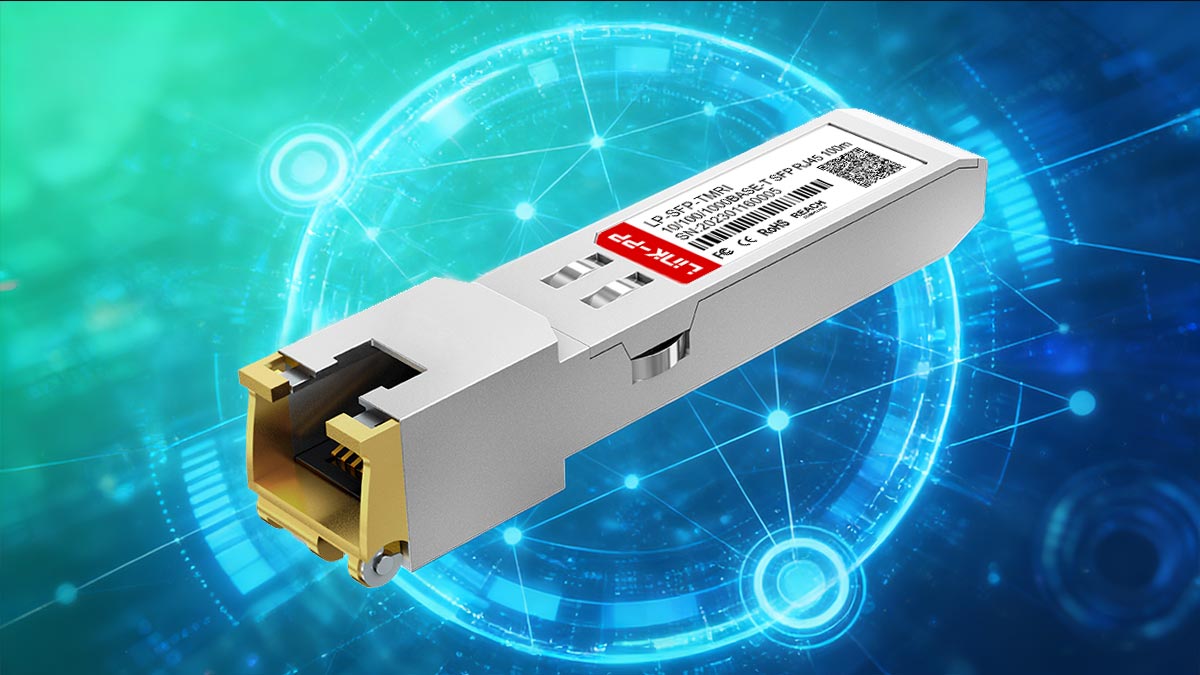
10 100 1000BASE TX continues to deliver strong value as a flexible, cost‑effective way to bring Gigabit‑class connectivity to end‑devices over copper cabling. Its auto‑negotiation, backward compatibility, and support for PoE make it ideal for desktops, IP phones, access points, and other edge gear in both small‑business and enterprise environments.
- It reduces cabling complexity by using standard Cat5e/Cat6 runs while still supporting 10/100/1000Mbps on the same infrastructure.
- In modern networks, it often serves as the access‑layer workhorse, while 2.5G/10G links and fiber handle aggregation and core traffic.
- For many organizations, upgrading selectively rather than replacing everything allows them to keep 10 100 1000BASE TX where it performs perfectly well.
If you are building or upgrading a network that relies on 10 100 1000BASE TX copper links but want to preserve the benefits of SFP‑based design, high‑quality 10 100 1000BASE TX SFP modules let you connect copper endpoints to SFP‑equipped switches and routers. For trusted 10 100 1000BASE TX SFP modules that match your copper infrastructure, explore the range available at the LINK-PP Official Store and equip your network with flexible, plug‑and‑play connectivity.