





























Modern data centers are increasingly adopting 25G Ethernet as the standard for high-performance server interconnections, and SFP-25G-CU1M Huawei direct attach copper (DAC) cables play a crucial role in enabling this shift. Designed for short-reach, high-speed connectivity, these 1-meter SFP28 modules provide reliable 25Gbps transmission with minimal latency, making them ideal for top-of-rack deployments and dense server environments. By offering a cost-effective alternative to optical transceivers, SFP-25G-CU1M reduces both power consumption and thermal load while maintaining robust signal integrity. Their plug-and-play design simplifies deployment, allowing data centers to scale efficiently without complex fiber management. As enterprises and hyperscale operators continue to expand their 25G infrastructures, understanding the features, benefits, and limitations of SFP-25G-CU1M Huawei cables is essential for optimizing network performance and planning future upgrades in modern data center architectures.
✅ Introduction to SFP-25G-CU1M in 25G Networking
SFP-25G-CU1M Huawei DAC cables are a core building block in short-reach 25G Ethernet deployments, enabling efficient intra-rack connectivity with low latency and minimal power overhead. This section explains what the module is and why 25G networking has become the dominant choice in modern data centers.
What Is SFP-25G-CU1M?
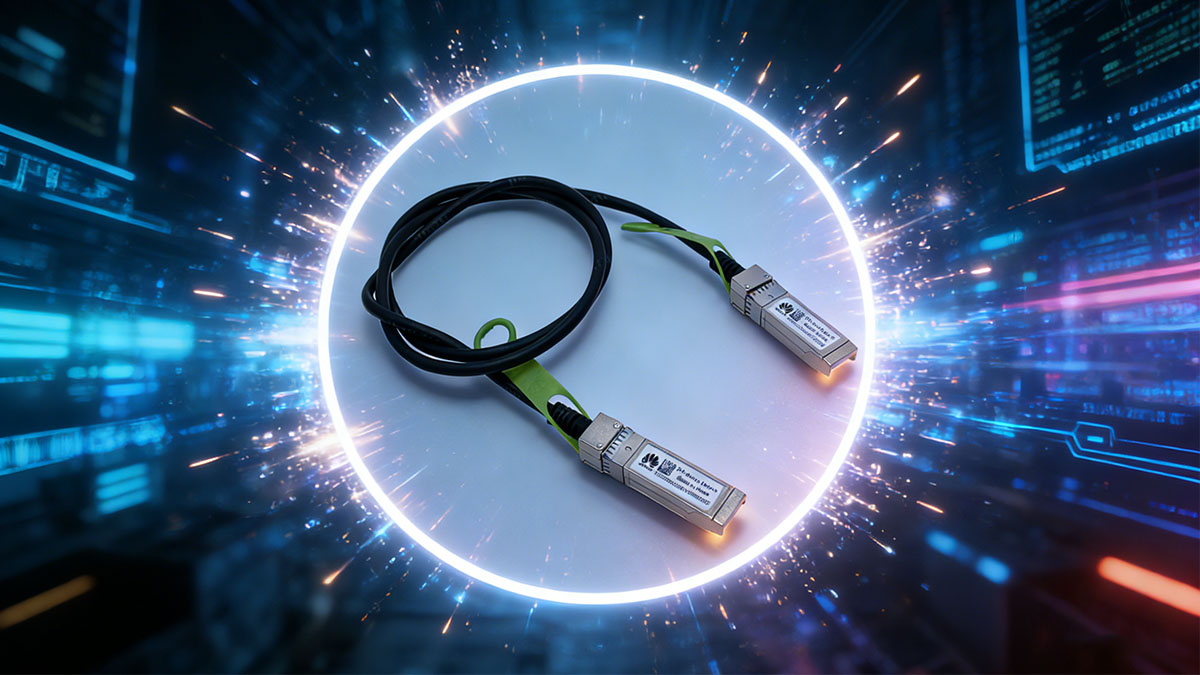
SFP-25G-CU1M is a 1-meter SFP28 direct attach copper (DAC) cable designed for 25Gbps Ethernet links, primarily used for short-distance interconnections within racks. It integrates twinax copper cabling with fixed SFP28 connectors on both ends, eliminating the need for separate transceivers and fiber.
A clear way to understand its characteristics is through its core specifications:
| Parameter | Value | Notes |
|---|---|---|
| Data Rate | 25Gbps | Single-lane 25G Ethernet |
| Cable Type | Passive DAC | No signal amplification |
| Typical Reach | 1m | Optimized for intra-rack use |
| Form Factor | SFP28 | Backward compatible with SFP+ |
Because it is passive, SFP-25G-CU1M does not include active components such as lasers or DSP chips. Signal transmission relies entirely on the electrical characteristics of the copper medium, which reduces latency and power consumption but limits transmission distance. This makes it particularly suitable for top-of-rack switching scenarios where devices are physically close.
In addition, the integrated design simplifies deployment. There is no need for fiber patching, optical cleaning, or transceiver pairing, which significantly reduces installation complexity and potential points of failure.
Why 25G Has Become a Data Center Standard
25G Ethernet has become the preferred server access speed because it delivers higher bandwidth efficiency without increasing infrastructure complexity. Compared to 10G SFP+ modules(such as 10GBASE-R), it uses the same single-lane architecture but increases the data rate to 25Gbps, making it a more scalable building block for modern network designs.
The following comparison highlights why 25G is widely adopted:
| Metric | 10G Ethernet | 25G Ethernet | Impact |
|---|---|---|---|
| Per-lane Speed | 10Gbps | 25Gbps | 2.5× bandwidth increase |
| Cable/Port Density | Lower | Higher | More efficient rack design |
| Cost per Gbps | Higher | Lower | Better cost efficiency |
| Upgrade Path | Limited | Flexible | Aligns with 100G/400G scaling |
One key driver is alignment with modern switch ASICs and server NICs. Many contemporary chips are designed around 25Gbps lanes, which means QSFP28 100G (4×25G) and QSFP-DD 400G (16×25G or higher PAM4 variants) architectures naturally build on 25G as a foundational unit. This reduces the need for complex breakout configurations and improves overall network consistency.
Another important factor is the optimization of east-west traffic in data centers. As applications become more distributed, the volume of server-to-server communication increases significantly. 25G provides the necessary bandwidth to handle these workloads while maintaining manageable power and cooling requirements.
In this context, SFP-25G-CU1M plays a critical role by delivering a cost-efficient and operationally simple solution for short-range 25G links. It allows data centers to fully leverage the advantages of 25G Ethernet without incurring the higher costs and complexities associated with optical interconnects in scenarios where they are not required.
✅ Key Features of SFP-25G-CU1M Huawei DAC Cable
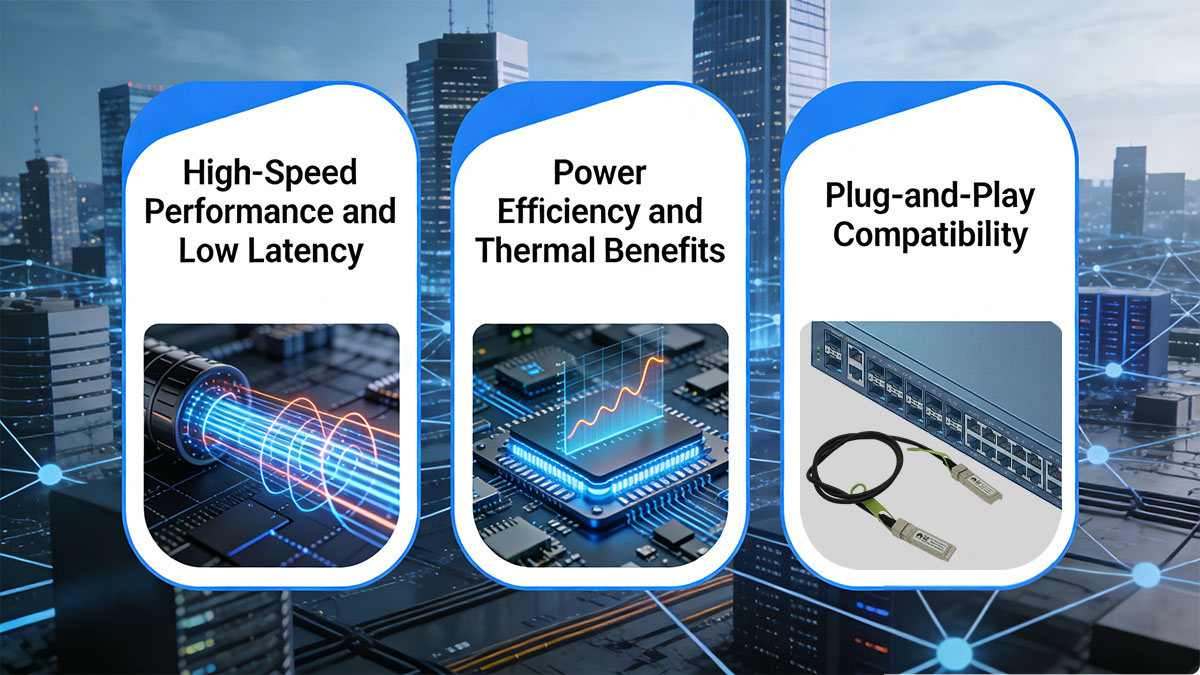
SFP-25G-CU1M Huawei DAC cables are defined by three core advantages: high-speed low-latency transmission, exceptional power efficiency, and simplified plug-and-play deployment. These features make them highly optimized for short-reach 25G interconnections in modern data centers.
High-Speed Performance and Low Latency
SFP-25G-CU1M delivers native 25Gbps throughput with extremely low latency because it avoids optical-electrical signal conversions. This makes it one of the most efficient options for intra-rack communication.
| Transmission Type | Latency Level | Signal Conversion | Typical Use Case |
|---|---|---|---|
| Passive DAC | Very Low | None | Intra-rack connections |
| Active DAC | Low | Minimal | Extended short reach |
| Optical Module | Moderate | Yes | Long-distance links |
The absence of laser transmission and digital signal processing (DSP) allows passive DAC cables to transmit data almost instantaneously at the physical layer. This is particularly important in latency-sensitive environments such as high-frequency trading platforms, distributed storage systems, and real-time analytics clusters.
Additionally, because the signal path is purely electrical and direct, there is less jitter and fewer variables affecting performance, resulting in highly predictable link behavior.
Power Efficiency and Thermal Benefits
SFP-25G-CU1M significantly reduces power consumption compared to optical transceivers, which directly contributes to lower cooling requirements and improved rack-level energy efficiency.
| Connection Type | Power Consumption | Heat Generation | Operational Impact |
|---|---|---|---|
| Passive DAC | ~0W | Minimal | Ideal for dense racks |
| Active DAC | Low | Low | Moderate efficiency |
| Optical Module | 1–3W | Higher | Requires cooling optimization |
Because passive DAC cables do not contain active electronic components, they draw virtually no power from the host device. In high-density deployments where hundreds or thousands of ports are active, this difference translates into substantial energy savings.
Lower heat output also improves airflow efficiency within racks. This reduces the burden on cooling systems and helps maintain stable operating temperatures for switches and servers, which is critical for long-term reliability.
Plug-and-Play Compatibility
SFP-25G-CU1M is designed for rapid deployment with minimal configuration, enabling efficient scaling of 25G infrastructure.
Key characteristics that support plug-and-play operation include:
- Pre-terminated SFP28 connectors on both ends, eliminating manual assembly
- Automatic port recognition through EEPROM coding
- No need for optical calibration, cleaning, or fiber management
- Immediate link establishment once connected
This simplicity reduces installation time and minimizes the risk of human error during deployment. For data center operators managing large-scale environments, the ability to quickly connect devices without additional tooling or validation steps is a significant operational advantage.
Another important aspect is consistency. Since DAC cables are factory-assembled and tested, they provide uniform performance across deployments, which simplifies troubleshooting and network standardization.
✅ Role of SFP-25G-CU1M in Modern Data Center Architectures
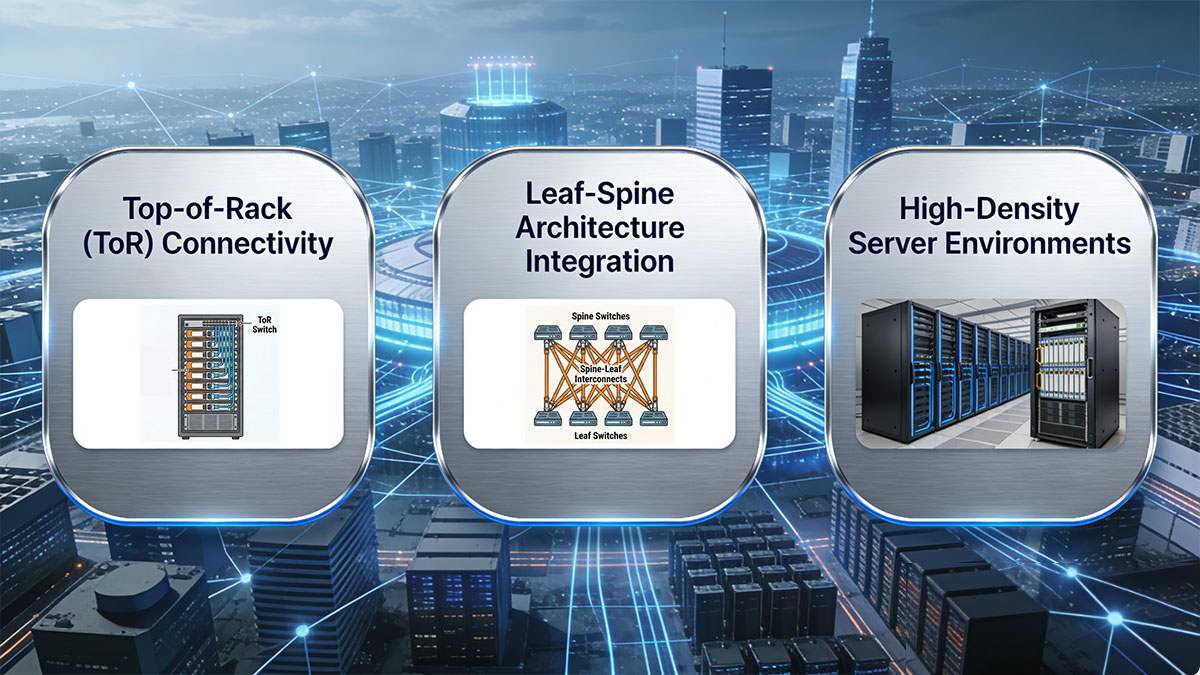
SFP-25G-CU1M Huawei DAC cables play a critical role in modern data center architectures by enabling efficient short-range connectivity, particularly within racks and across top-of-rack switching layers. Their primary value lies in optimizing high-density deployments, reducing latency in east-west traffic, and supporting scalable network designs such as leaf-spine architectures.
Top-of-Rack (ToR) Connectivity
SFP-25G-CU1M is most effectively used for server-to-switch connections within the same rack, where short cable lengths and high port density are required.
In ToR architectures, the main requirements are low latency, high bandwidth per port, and efficient cable management. SFP-25G-CU1M meets these requirements by providing direct copper links that minimize transmission delay while simplifying physical connectivity.
Typical characteristics of ToR deployments include:
- Short-distance links (usually ≤1m), perfectly aligned with SFP-25G-CU1M specifications
- High port density on switches, often 32 or 48 ports of 25G
- Large numbers of parallel server connections within a single rack
- Emphasis on cost and power efficiency at scale
Compared to optical solutions, DAC cables eliminate the need for separate transceivers and fiber patch cords, significantly reducing both hardware complexity and deployment time in ToR environments.
Leaf-Spine Architecture Integration
SFP-25G-CU1M supports the access layer of leaf-spine architectures by efficiently connecting servers to leaf switches, which then aggregate traffic toward spine switches.
In a typical leaf-spine design, different interconnect technologies are used depending on distance and bandwidth requirements:
| Network Layer | Typical Medium | Distance Range | Role |
|---|---|---|---|
| Server to Leaf | Passive DAC | ≤1–3m | Access connectivity |
| Leaf to Spine | Optical Fiber | 10m–2km+ | Aggregation and backbone |
| Spine to Spine | Optical Fiber | Longer range | Core interconnection |
SFP-25G-CU1M fits precisely into the server-to-leaf segment, where the majority of east-west traffic originates. By using DAC at this layer, data centers can reduce overall network cost while maintaining high throughput and low latency.
This layered approach allows architects to balance performance and cost: copper for short distances and optics for longer links. As a result, SFP-25G-CU1M becomes an essential component in achieving an efficient and scalable fabric.
High-Density Server Environments
SFP-25G-CU1M is particularly valuable in high-density environments where space, airflow, and cable organization directly impact operational efficiency.
In such environments, the following factors are critical:
- Cable thickness and flexibility affecting airflow
- Port density limitations on switches
- Ease of installation and maintenance
- Thermal management within tightly packed racks
The comparison below highlights how DAC supports high-density deployments:
| Factor | DAC (SFP-25G-CU1M) | Optical Fiber | Impact on Density |
|---|---|---|---|
| Cable Complexity | Low | Moderate | Easier cable routing |
| Power Usage | Minimal | Higher | Supports dense deployments |
| Heat Output | Low | Moderate | Improves thermal conditions |
| Installation Time | Short | Longer | Faster scaling |
Although DAC cables are physically thicker than fiber, their integrated design reduces the number of components required per link. This trade-off often results in simpler and more manageable cabling layouts in dense racks.
Moreover, by reducing power consumption and heat generation at the port level, SFP-25G-CU1M helps maintain stable operating conditions even as rack density increases. This is particularly important in hyperscale data centers where small efficiency gains per port can translate into significant overall savings.
✅ SFP-25G-CU1M vs Optical Transceivers
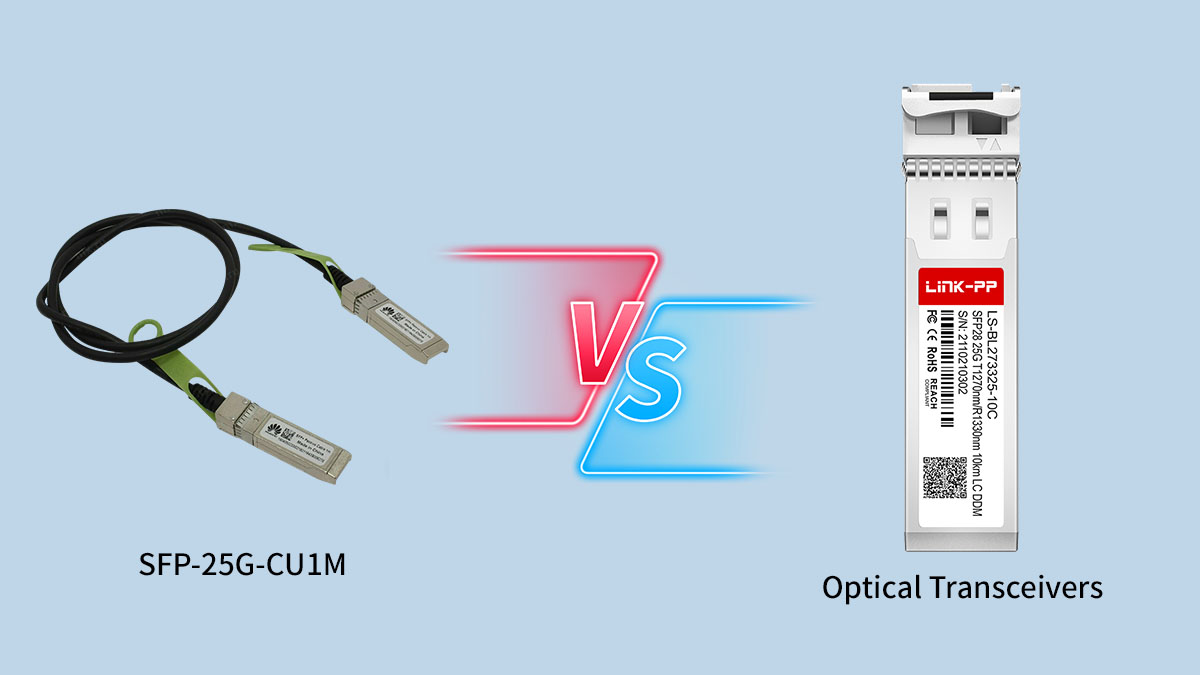
SFP-25G-CU1M Huawei DAC cables and SFP28 optical transceiver modules serve complementary roles in 25G networks: DAC is optimized for short-distance, low-cost, and low-power connectivity, while optical modules are designed for longer distances and greater deployment flexibility. Choosing between them depends primarily on distance, cost constraints, and scalability requirements.
Cost Efficiency Comparison
SFP-25G-CU1M provides a significantly lower total cost for short-reach connections because it integrates cable and transceiver functionality into a single assembly.
| Cost Component | SFP-25G-CU1M DAC | Optical Transceiver Setup | Impact |
|---|---|---|---|
| Module Cost | Low | Higher | Lower upfront investment |
| Cabling | Included | Separate fiber required | Reduced components |
| Maintenance | Minimal | Moderate | Lower operational cost |
| Total Cost per Link | Low | Higher | Better short-range value |
Because DAC cables do not require separate optical modules or fiber patch cords, they reduce both capital expenditure and ongoing maintenance complexity. This makes them particularly attractive for high-volume deployments such as server racks.
Performance Trade-offs
SFP-25G-CU1M delivers excellent performance within its intended range, but optical transceivers outperform DAC when distance and signal integrity over longer links are required.
| Performance Factor | DAC (SFP-25G-CU1M) | Optical Transceiver | Key Difference |
|---|---|---|---|
| Maximum Distance | ≤1–3m | Up to 10km+ | Optical supports long reach |
| Latency | Very Low | Low–Moderate | DAC avoids conversion delay |
| Signal Stability | High (short range) | Very High | Optical better over distance |
| EMI Sensitivity | Higher | Immune | Fiber resists interference |
DAC cables benefit from direct electrical transmission, which minimizes latency and ensures stable performance in controlled environments. However, as distance increases, signal attenuation and electromagnetic interference (EMI) become limiting factors.
Optical modules, on the other hand, convert electrical signals into light, allowing them to maintain signal integrity over much longer distances and across more complex routing paths.
Deployment Scenarios
The choice between SFP-25G-CU1M and optical transceivers becomes clear when mapped to specific deployment scenarios.
DAC is the preferred option when:
- Devices are located within the same rack or adjacent racks
- Ultra-low latency is required
- Power efficiency is a priority
- Large-scale deployments demand cost optimization
Optical transceivers are more suitable when:
- Link distances exceed a few meters
- Connections span multiple racks or data halls
- Electromagnetic interference is a concern
- Future scalability and reconfiguration flexibility are required
In modern data centers, both technologies are often used together. DAC cables dominate the access layer for short connections, while optical transceivers handle aggregation and backbone links. This hybrid approach ensures that each interconnect type is used where it delivers the most value.
✅ Compatibility and Interoperability with Huawei Devices
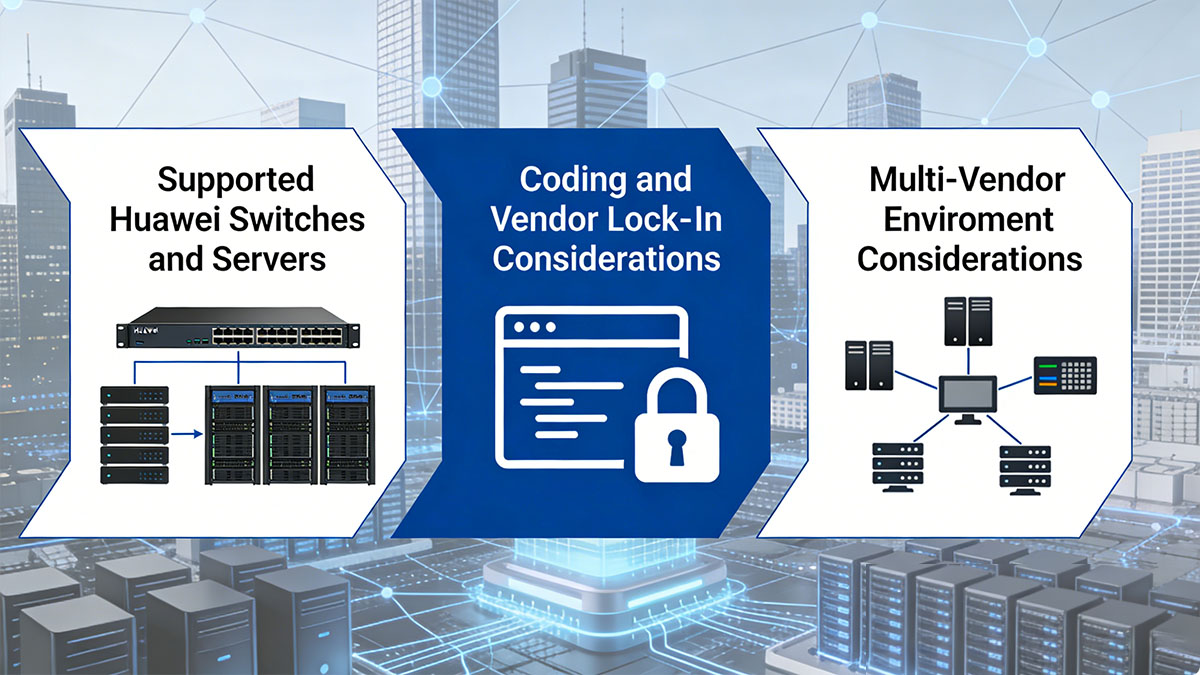
SFP-25G-CU1M Huawei DAC cables are designed to ensure seamless compatibility within Huawei ecosystems while also supporting controlled interoperability in multi-vendor environments. Proper understanding of device support, coding mechanisms, and cross-vendor behavior is essential to avoid link failures and ensure stable network operation.
Supported Huawei Switches and Servers
SFP-25G-CU1M is fully compatible with Huawei switches and servers that support SFP28 interfaces, particularly in enterprise and data center product lines such as CloudEngine switches.
The following table summarizes typical compatibility characteristics:
| Device Type | Huawei Platform | Interface Type | Compatibility Level |
|---|---|---|---|
| Data Center Switch | CloudEngine Series | SFP28 | Native |
| Access Switch | Selected Models | SFP28/SFP+ | Conditional |
| Server NIC | Huawei Servers | SFP28 | Native |
Huawei devices typically validate inserted modules through internal firmware checks. When using native Huawei-coded DAC cables, the link is established immediately with full feature support, including monitoring and diagnostics.
In addition, backward compatibility with SFP+ ports may be possible in some scenarios, but this depends on the device’s ability to downshift speed and recognize the module type.
Coding and Vendor Lock-In Considerations
EEPROM coding plays a critical role in determining whether a DAC cable will function correctly in Huawei equipment. Each SFP-25G-CU1M cable contains identification data that the host device reads during initialization.
Key aspects of coding include:
- Vendor identification fields that must match Huawei requirements
- Compliance codes indicating supported standards (e.g., 25G Ethernet)
- Digital diagnostics capabilities (if supported)
- Firmware-level validation by the switch or server
The following comparison illustrates the impact of coding:
| Cable Type | Device Recognition | Link Establishment | Risk Level |
|---|---|---|---|
| Huawei-coded DAC | Full | Immediate | Low |
| Third-party compatible | Partial/Full | Usually successful | Medium |
| Non-coded DAC | Failed/Blocked | No link | High |
Huawei devices may reject or disable unsupported modules, depending on firmware policies. Therefore, using properly coded or certified compatible DAC cables is essential to ensure stable operation.
Multi-Vendor Environment Considerations
In mixed-vendor data centers, interoperability becomes more complex, especially when connecting Huawei switches to equipment from other vendors.
To ensure successful deployment, the following practices are recommended:
- Use dual-coded DAC cables when connecting two different vendors
- Verify compatibility matrices for both endpoints before deployment
- Avoid mixing unsupported modules across critical links
- Perform validation testing in staging environments before production rollout
Another important factor is link negotiation behavior. Some vendors enforce strict compliance checks, while others are more permissive. This can lead to asymmetric compatibility, where a cable is accepted on one end but rejected on the other.
The table below outlines typical interoperability scenarios:
| Scenario | Compatibility Outcome | Recommendation |
|---|---|---|
| Huawei to Huawei | Full | Use native-coded DAC |
| Huawei to Other Vendor | Conditional | Use dual-compatible DAC |
| Other Vendor to Other Vendor | Varies | Check vendor compatibility |
In practice, many data centers adopt a standardized approach to cabling, selecting DAC cables that are pre-tested for multi-vendor environments. This reduces operational risk and simplifies inventory management.
✅ Installation and Deployment Best Practices
Proper installation of SFP-25G-CU1M Huawei DAC cables is essential to ensure stable link performance, maintain signal integrity, and optimize long-term reliability. Best practices focus on three key areas: structured cable management, maintaining signal quality, and thorough validation after deployment.
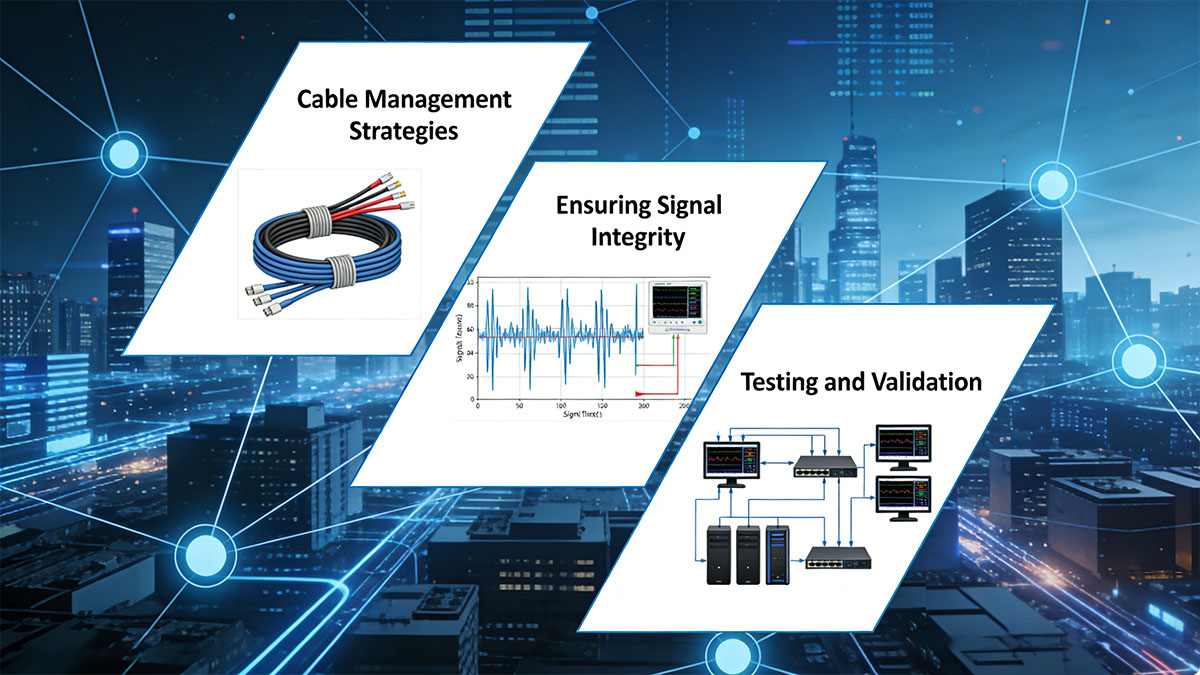
Cable Management Strategies
Effective cable management directly impacts airflow, maintainability, and overall rack efficiency. Poorly organized DAC cables can obstruct cooling paths and increase operational complexity.
The most important practices include:
- Maintain appropriate bend radius to prevent signal degradation and physical damage
- Route cables along designated cable management arms or trays
- Avoid excessive bundling that can restrict airflow
- Label cables clearly for easier identification and troubleshooting
- Separate power and data cables to reduce interference risks
A comparison of cable management approaches highlights their impact:
| Practice | Implementation Level | Impact on Operation |
|---|---|---|
| Structured routing | High | Improves airflow and access |
| Random placement | Low | Causes congestion |
| Proper labeling | High | Simplifies maintenance |
| Tight bundling | Low | Increases heat retention |
Although DAC cables are thicker than fiber, their fixed-length design can actually simplify planning when rack layouts are standardized. Pre-measured cable lengths like 1m help avoid excess slack and reduce clutter.
Ensuring Signal Integrity
SFP-25G-CU1M relies on direct electrical transmission, which makes it sensitive to physical handling and environmental conditions. Ensuring signal integrity is critical for maintaining consistent 25Gbps performance.
Key considerations include:
- Fully insert connectors to ensure proper electrical contact
- Avoid repeated plugging and unplugging, which can wear connectors
- Keep cables away from strong electromagnetic sources
- Match port speeds and configurations on both ends
- Avoid using damaged or visibly worn cables
The following table summarizes common factors affecting signal quality:
| Factor | Risk Level | Effect on Link Stability |
|---|---|---|
| Loose connection | High | Link flapping or failure |
| EMI exposure | Medium | Intermittent errors |
| Cable damage | High | Packet loss or link drop |
| Port mismatch | Medium | Negotiation failure |
Because DAC cables do not include active signal correction, physical and environmental conditions have a more direct impact compared to optical solutions. This makes careful handling and correct installation practices especially important.
Testing and Validation
Post-installation validation ensures that all links are functioning correctly and meet performance expectations before entering production.
A structured validation process typically includes:
- Verify link status on both endpoints (e.g., interface up/down)
- Check negotiated speed and ensure it matches 25Gbps
- Monitor error counters such as CRC or packet drops
- Perform throughput testing if required
- Document link configuration for future reference
The effectiveness of validation methods can be summarized as follows:
| Test Type | Purpose | Outcome |
|---|---|---|
| Link Status Check | Basic connectivity | Confirms physical link |
| Speed Verification | Configuration accuracy | Ensures 25Gbps operation |
| Error Monitoring | Stability assessment | Detects hidden issues |
| Traffic Testing | Performance validation | Confirms real-world behavior |
Consistent testing not only identifies immediate issues but also establishes a performance baseline. This is especially valuable in large-scale deployments, where early detection of anomalies can prevent widespread network disruptions.
✅ Common Use Cases of SFP-25G-CU1M Huawei
SFP-25G-CU1M Huawei DAC cables are primarily used in short-distance, high-density environments where low latency, cost efficiency, and simplified deployment are critical. Their most common applications include server interconnects, storage networking, and high-performance computing clusters within modern data centers.

Data Center Server Interconnects
SFP-25G-CU1M is most widely deployed for server-to-switch connectivity within the same rack, forming the foundation of 25G access networks.
These deployments are characterized by:
- Direct connections between servers and top-of-rack switches
- High port density, often requiring dozens of parallel links
- Short cable lengths that align with 1m DAC specifications
- Continuous east-west traffic between application nodes
Compared to other interconnect options, DAC cables provide the most efficient solution for this scenario:
| Interconnect Type | Typical Distance | Cost Efficiency | Deployment Complexity |
|---|---|---|---|
| Passive DAC | ≤1–3m | High | Low |
| Active DAC | ≤5m | Medium | Medium |
| Optical Fiber | ≥10m | Lower (short) | Higher |
Because of their low cost and minimal power usage, SFP-25G-CU1M cables are ideal for scaling server connectivity without significantly increasing operational expenses.
Storage Area Network (SAN) Environments
SFP-25G-CU1M is also well-suited for storage networking, where consistent low latency and high throughput are essential for performance-sensitive workloads.
In SAN environments, these cables are typically used for:
- Connecting storage nodes to access switches
- Linking compute servers to storage arrays within the same rack
- Supporting high-speed protocols that require stable, low-latency links
The advantages of DAC in storage scenarios include:
- Deterministic latency, which is critical for I/O operations
- Reduced packet retransmission due to stable short-range links
- Simplified cabling that reduces potential points of failure
The following comparison highlights its suitability:
| Requirement | DAC (SFP-25G-CU1M) | Optical Solution | Impact on SAN Performance |
|---|---|---|---|
| Latency | Very Low | Low | Faster I/O response |
| Stability | High (short range) | Very High | Consistent throughput |
| Deployment Simplicity | High | Medium | Easier maintenance |
These characteristics make SFP-25G-CU1M a practical choice for localized storage clusters where distance is not a limiting factor.
High-Performance Computing (HPC)
In high-performance computing environments, SFP-25G-CU1M supports fast and efficient communication between compute nodes, which is essential for parallel processing workloads.
Typical HPC deployment characteristics include:
- Large numbers of compute nodes within confined rack spaces
- Frequent data exchange between nodes during processing
- Sensitivity to latency and jitter
- Requirement for predictable and stable network behavior
DAC cables address these needs by providing:
- Near-zero latency for node-to-node communication
- Consistent signal performance without optical conversion overhead
- Cost-effective scaling for large clusters
The table below illustrates how DAC compares in HPC scenarios:
| Factor | DAC (SFP-25G-CU1M) | Optical Transceiver | HPC Impact |
|---|---|---|---|
| Latency | Minimal | Low | Faster synchronization\n |
| Cost per Link | Low | Higher | Scalable cluster expansion |
| Power Consumption | Minimal | Moderate | Efficient energy usage |
In tightly coupled HPC clusters, even small latency reductions can significantly improve overall job completion times. As a result, SFP-25G-CU1M is often preferred for intra-rack or adjacent-node connectivity.
✅ Limitations and Considerations
While SFP-25G-CU1M Huawei DAC cables provide clear advantages in short-range scenarios, they are inherently limited by distance, scalability, and physical characteristics. Understanding these constraints is essential for designing efficient and future-proof 25G network architectures.
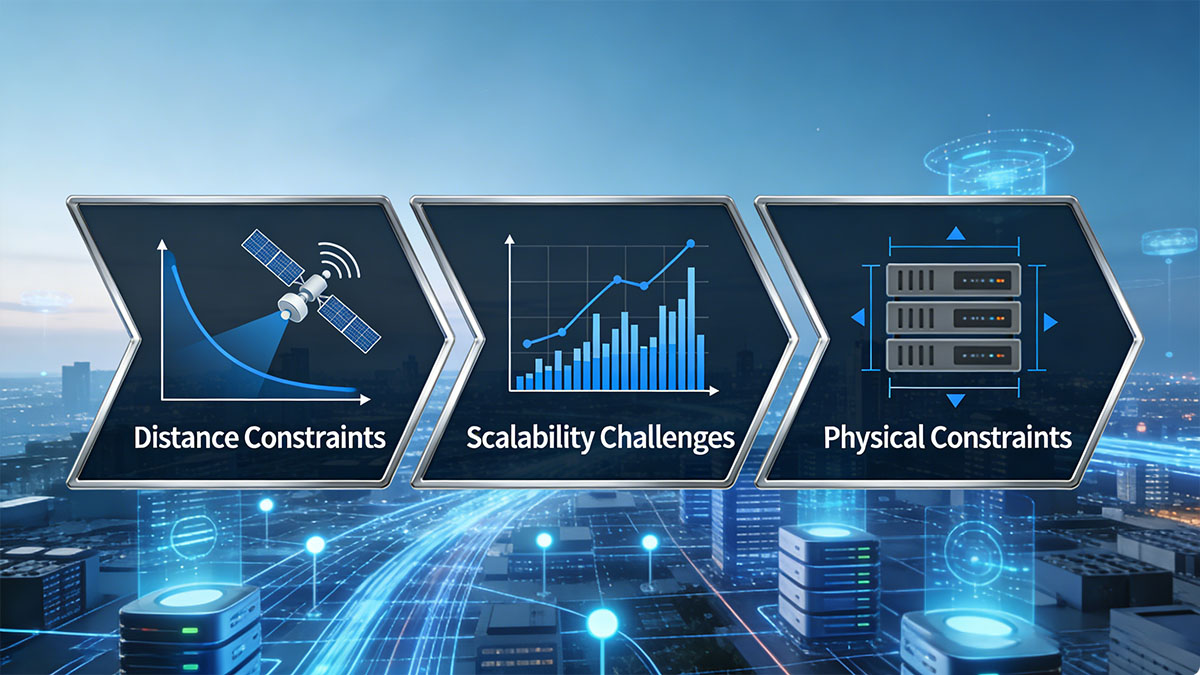
Distance Constraints
The most significant limitation of SFP-25G-CU1M is its very short transmission range, which restricts its use to intra-rack or very close inter-rack connections.
| Interconnect Type | Typical Maximum Distance | Suitable Scope |
|---|---|---|
| Passive DAC | ≤1–3m | Same rack |
| Active DAC | ≤5m | Adjacent racks |
| Optical Fiber | ≥10m to 10km+ | Cross-rack to long haul |
Because passive DAC relies on electrical signaling over copper, signal attenuation increases rapidly with distance. Beyond a few meters, maintaining stable 25Gbps transmission becomes impractical without active signal conditioning.
As a result, SFP-25G-CU1M is best positioned as a short-reach solution. Attempting to extend its use beyond designed limits can lead to link instability, increased error rates, or complete link failure.
Scalability Challenges
SFP-25G-CU1M is highly efficient at the rack level but becomes less practical as network scale and distance requirements grow.
Key scalability limitations include:
- Inability to support inter-row or data hall connections
- Increased cable management complexity as the number of links grows
- Lack of flexibility when reconfiguring rack layouts
- Dependency on fixed cable lengths, limiting adaptability
The following comparison highlights how scalability differs between DAC and optical solutions:
| Factor | DAC (SFP-25G-CU1M) | Optical Solution | Scalability Impact |
|---|---|---|---|
| Distance Flexibility | Low | High | Limits large-scale design |
| Reconfiguration | Limited | Flexible | Harder to adapt layouts |
| Network Expansion | Constrained | Scalable | Better for long-term growth |
In large data centers, this often leads to a hybrid approach where DAC is used for server access while optical links handle aggregation and backbone connectivity.
Physical Constraints
Although DAC cables simplify connectivity, their physical properties introduce challenges in dense deployments.
The most relevant physical considerations include:
- Thicker and less flexible than fiber cables
- Limited airflow optimization when densely packed
- Potential strain on ports due to cable weight
- Fixed length options that may not perfectly match all layouts
A comparison of physical characteristics illustrates these trade-offs:
| Attribute | DAC (SFP-25G-CU1M) | Optical Fiber | Operational Impact |
|---|---|---|---|
| Cable Thickness | Higher | Lower | Affects airflow |
| Flexibility | Moderate | High | Easier routing with fiber |
| Weight | Heavier | Lighter | Impacts port strain |
| Length Customization | Fixed | Flexible | Limits deployment precision |
Despite these limitations, careful planning—such as standardized rack layouts and proper cable routing—can mitigate most physical challenges.
✅ Future Trends of 25G DAC in Data Centers
25G DAC solutions such as SFP-25G-CU1M will remain relevant in modern data centers as a cost-efficient, low-latency option for short-range connectivity, even as higher-speed technologies emerge. Their future lies not in replacing newer standards, but in complementing them within hybrid architectures that balance performance, cost, and operational efficiency.
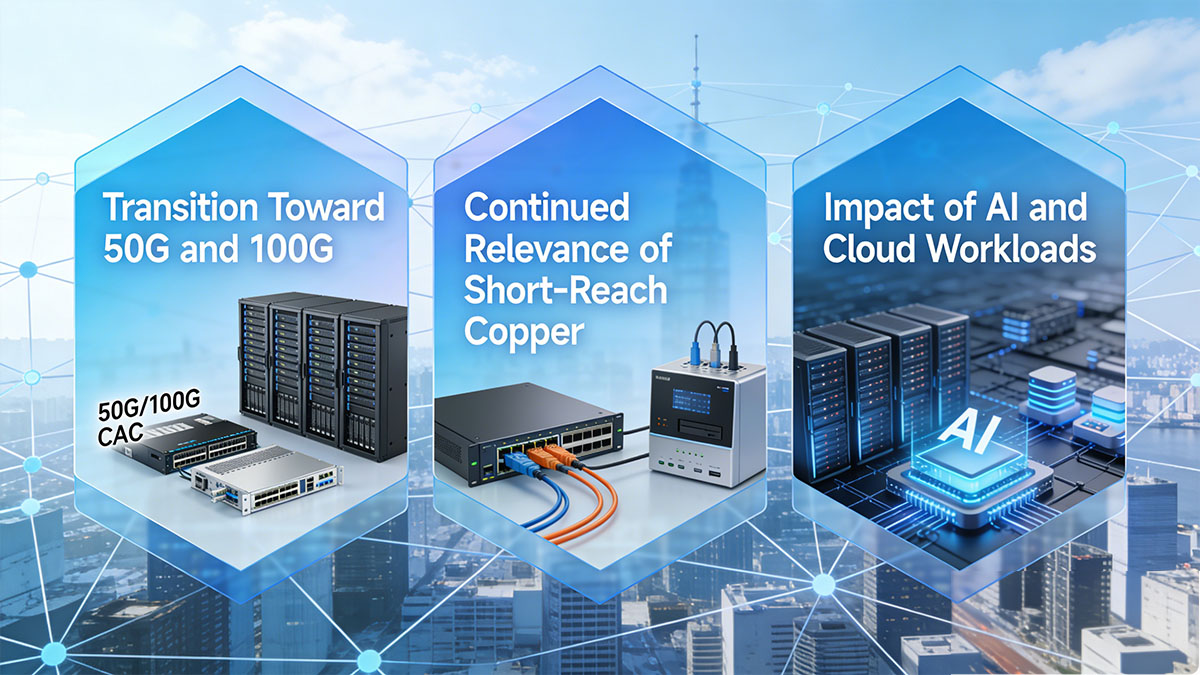
Transition Toward 50G and 100G
Data center networks are steadily evolving toward higher per-lane speeds, with 50G and 100G becoming increasingly common in both server and aggregation layers. However, this transition does not eliminate the role of 25G.
The relationship between different speed tiers can be understood as follows:
| Speed Tier | Typical Use Case | Technology Role |
|---|---|---|
| 25G | Server access | Baseline connectivity |
| 50G | Next-gen server interfaces | Emerging upgrade path |
| 100G | Aggregation / uplinks | High-capacity backbone |
Many existing infrastructures are still heavily based on 25G, and upgrading entire environments to 50G or higher often requires significant investment in switches, NICs, and cabling. As a result, 25G DAC remains a practical and widely deployed solution, especially in environments where performance requirements are already met.
In addition, 25G continues to serve as a building block for higher-speed architectures. For example, 100G links are often based on multiple 25G lanes, reinforcing its foundational role.
Continued Relevance of Short-Reach Copper
Short-reach copper solutions like SFP-25G-CU1M will continue to be widely used due to their unmatched efficiency in specific scenarios, particularly within racks and tightly coupled systems.
Their long-term relevance is driven by several factors:
- Lower cost compared to optical alternatives for short distances
- Minimal power consumption, supporting energy-efficient data centers
- Simplicity of deployment, reducing operational overhead
- High reliability in controlled environments
The comparison below highlights where DAC will continue to dominate:
| Scenario | Preferred Medium | Reason |
|---|---|---|
| Intra-rack connections | Passive DAC | Cost and simplicity |
| Adjacent racks | Active DAC | Extended short reach |
| Cross-row links | Optical Fiber | Distance and flexibility |
Even as optical technologies become more advanced and cost-efficient, DAC maintains a strong position where its limitations are not a factor. This ensures its continued presence in both enterprise and hyperscale deployments.
Impact of AI and Cloud Workloads
The rapid growth of AI, machine learning, and cloud-native applications is reshaping data center traffic patterns, placing greater emphasis on east-west communication and low-latency interconnects.
Key workload-driven trends include:
- Increased server-to-server communication within clusters
- Higher demand for predictable latency in distributed computing
- Growth of GPU and accelerator-based architectures
- Expansion of microservices and containerized applications
These trends directly benefit DAC usage in the following ways:
| Workload Type | Network Requirement | DAC Advantage |
|---|---|---|
| AI/ML Training | Low latency, high density | Fast node interconnect |
| Cloud-native Apps | East-west traffic | Efficient intra-rack links |
| Distributed Storage | Consistent throughput | Stable short-range performance |
In AI clusters and cloud environments, large numbers of nodes are often deployed within the same rack or adjacent racks. In these scenarios, SFP-25G-CU1M provides an efficient way to handle high traffic volumes without introducing unnecessary cost or complexity.
✅ Conclusion
SFP-25G-CU1M Huawei DAC cables remain a highly efficient solution for short-reach 25G connectivity, offering low latency, minimal power consumption, and simplified deployment within modern data center environments. They are best suited for intra-rack and top-of-rack scenarios, where cost efficiency and performance consistency are critical, while optical solutions complement them for longer-distance and highly scalable network layers.
Throughout modern 25G architectures, SFP-25G-CU1M plays a clearly defined role: enabling dense server connectivity, supporting east-west traffic patterns, and helping operators optimize both capital and operational expenditures. Although limitations such as distance constraints and physical characteristics must be considered, these are effectively mitigated when DAC is deployed within its intended scope as part of a balanced, hybrid network design.
As data centers continue to evolve toward higher speeds and more demanding workloads, the importance of selecting the right interconnect for each layer becomes even more critical. For organizations seeking reliable, standards-compliant, and deployment-ready SFP-25G-CU1M Huawei-compatible DAC solutions, exploring trusted suppliers with proven compatibility and quality assurance is a practical next step.
To learn more about certified 25G DAC options and compatibility-tested solutions, you can visit the LINK-PP Official Store for detailed product specifications and application guidance tailored to modern data center needs.