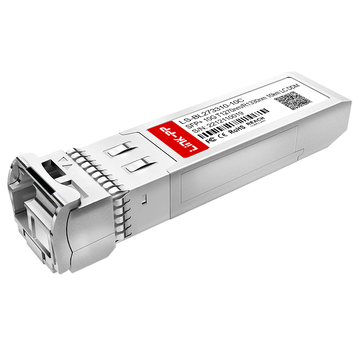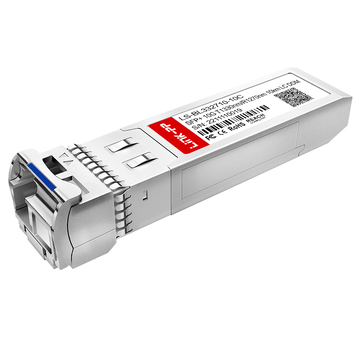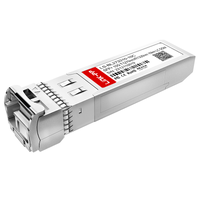
As fiber infrastructure becomes increasingly congested, the BiDi 10G SFP transceiver has emerged as a critical solution for doubling capacity without laying new glass. By utilizing wavelength division multiplexing (WDM), these modules transmit and receive data over a single strand of fiber, effectively halving cabling costs. However, the efficiency of BiDi technology relies on a strict architectural requirement: the precise pairing of BXD (Downstream) and BXU (Upstream) wavelengths to ensure a functional point-to-point link.
Beyond the physics of wavelength separation, network engineers frequently encounter the complexities of brand mismatch and hardware compatibility. While the underlying 10G SFP+ standards are universal, proprietary EEPROM coding and vendor-locked firmware can trigger "unsupported transceiver" errors in multi-vendor environments. This article provides a deep dive into the technical fundamentals of BiDi pairing logic, power budget auditing, and the strategies required to successfully integrate third-party modules into a branded switching fabric.
☁️ Decoding the Fundamentals of BiDi 10G SFP Technology
The architectural foundation of BiDi 10G SFP technology rests on the integration of a Bidirectional Optical Sub-Assembly (BOSA), which replaces the discrete TOSA and ROSA found in standard transceivers. By leveraging specialized WDM filters, these modules isolate overlapping transmit and receive signals within a single 9/125µm fiber core, fundamentally altering the physical layer requirements for 10Gbps Ethernet transport.
Single-Strand Fiber Efficiency: How WDM Works in BiDi SFP+
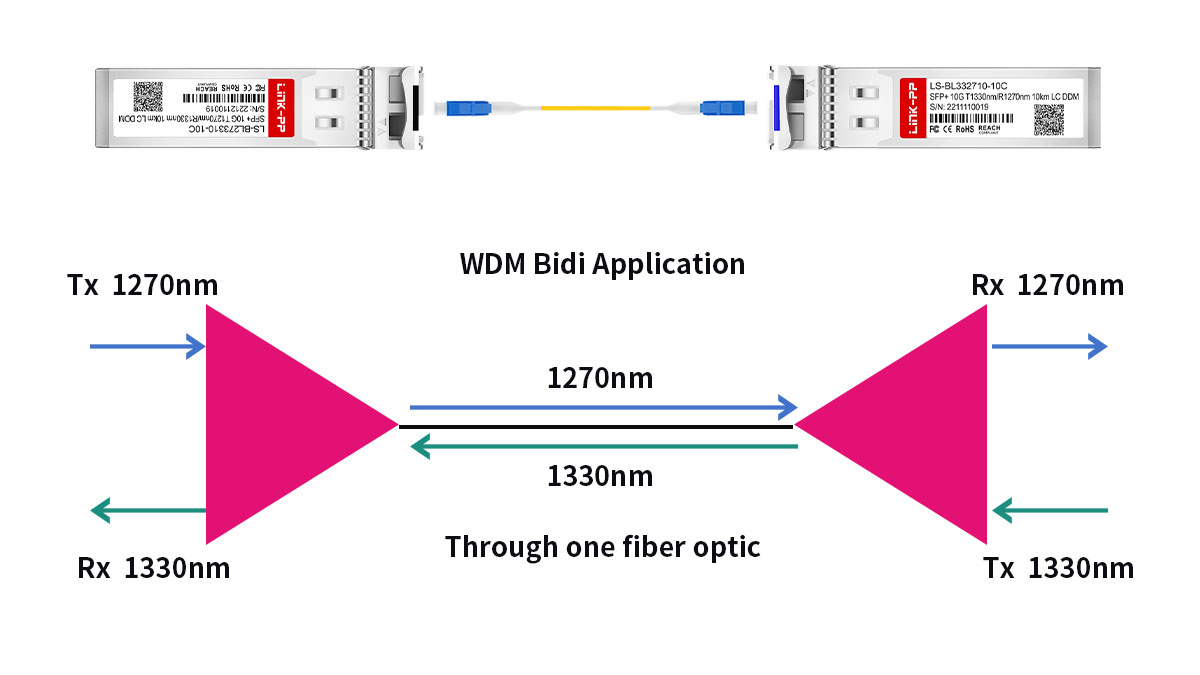
At the core of the BiDi 10G fiber SFP is wavelength division multiplexing (WDM) technology. Unlike standard transceivers that require two separate fiber strands — one for transmitting (Tx) and one for receiving (Rx) — WDM allows these two signals to coexist on a single strand by operating at different light frequencies.
This "split" transmission effectively doubles the capacity of existing fiber infrastructure. By using a single-strand approach, network operators can significantly reduce cabling costs and simplify patch management in congested conduits without sacrificing 10Gbps line-rate performance.
Simplex vs. Duplex LC Connectors in High-Density Environments
The most visible distinction of a BiDi 10G fiber optic SFP module is its simplex LC connector. While standard 10G SFP+ transceivers utilize duplex LC interfaces to accommodate two fiber strands, the BiDi design uses a single port to handle both upstream and downstream traffic.
In high-density data centers or campus backbones, this transition to Simplex interfaces reduces the physical footprint of cable management by 50%. This space-saving advantage is crucial for maximizing the port density of high-count patch panels and reducing the complexity of fiber routing in tight spaces.
The Physics of Bi-Directional Wavelength Separation
To prevent signal interference on a single strand, BiDi SFP transceivers utilize integrated BOSA (Bidirectional Optical Sub-Assembly) components. These assemblies include a diplexer that separates the incoming and outgoing light based on their specific nanometer (nm) wavelengths.
Commonly, a pair will operate on the 1270nm and 1330nm spectrum. The diplexer ensures that the internal photodiode only "sees" the intended receive wavelength while the laser diode simultaneously pulses the transmit wavelength into the same glass core, maintaining signal integrity through precise optical filtration.
Standard 10G SFP+ vs. BiDi 10G SFP: Key Architectural Differences
While both modules provide 10Gbps throughput, their internal architectures and deployment requirements differ significantly. Standard 10G SFP+ modules are essentially symmetrical in their wavelength usage, whereas BiDi 10G SFP modules are asymmetrical by necessity, requiring specific hardware logic to manage the single-path flow.
The following table summarizes the primary technical distinctions between these two architectures:
| Feature | Standard 10G SFP+ | BiDi 10G SFP |
| Fiber Requirement | Dual-strand (Duplex) | Single-strand (Simplex) |
| Connector Type | Duplex LC | Simplex LC |
| Wavelength | Identical on both ends (e.g., 850nm or 1310nm) | Complementary pairs (e.g., 1270nm Tx / 1330nm Rx) |
| Hardware Logic | Standard TOSA/ROSA | Integrated BOSA with WDM Filter |
| Deployment Mode | Identical modules on both ends | Must use BXD and BXU matching pairs |
These architectural shifts mean that migrating to BiDi technology isn't just a matter of changing cables; it requires a strategic understanding of pairing logic and optical power management to ensure link stability.
☁️ The Critical BiDi 10G SFP BXD/BXU Pairing Logic
Operational success with BiDi 10G SFP technology hinges entirely on the concept of complementary pairing between the local and remote ends of a fiber link. Because these modules utilize asymmetrical wavelengths to facilitate two-way communication over a single strand, technicians must adhere to a strict BXD/BXU matching protocol to establish a valid optical handshake.
Why Tx1270/Rx1330 and Tx1330/Rx1270 Must Match
In a BiDi link, the two connected transceivers function as a "mirror image" of one another regarding their optical spectrum. If both sides were to transmit at the same wavelength, the signals would collide or fail to be filtered by the internal diplexers, resulting in a total link failure.
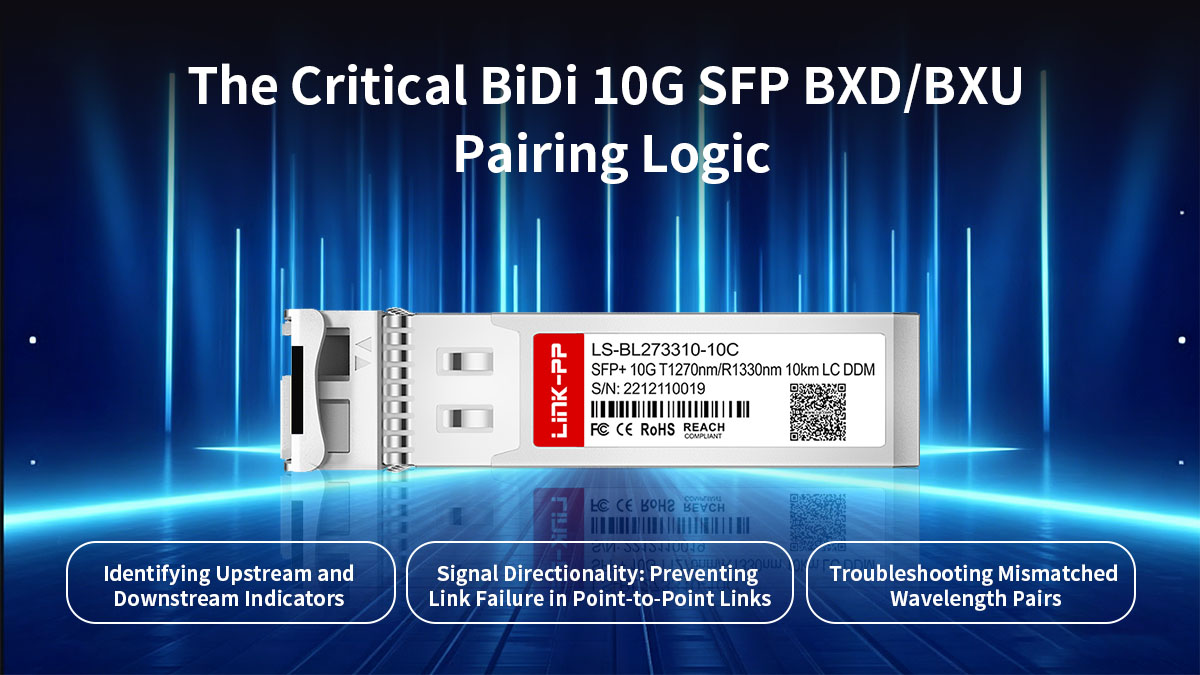
To maintain a clean data flow, the equipment must be deployed in a "cross-over" configuration. For example, Cisco SFP-10G-BXU (Tx1270/Rx1330) must always be paired with SFP-10G-BXD (Tx1330/Rx1270). Installing two BXU modules or two BXD modules on the same optical link will prevent the BiDi connection from establishing.
Identifying Upstream and Downstream Indicators
Manufacturers typically use standardized labeling and color-coding to help field engineers distinguish between the two halves of a BiDi 10G SFP pair. Rapid identification is essential during high-volume deployments to ensure that "Upstream" and "Downstream" modules are staged correctly at each end of the point-to-point link.
Common identification methods include:
- Part Number Suffixes: Most vendors append a "U" (Upstream) or "D" (Downstream) to the model name, or use "BXD" and "BXU" designations.
- Bale Clasp Color Coding: Industry conventions often use specific colors for the pull-tab, such as Blue for 1270nm and Purple/Green for 1330nm, though these can vary by brand.
- Digital Labeling: Modern modules often include the specific Tx/Rx wavelengths directly on the label (e.g., "TX1270/RX1330") to remove any ambiguity during installation.
Signal Directionality: Preventing Link Failure in Point-to-Point Links
Signal directionality in BiDi systems is rigid; the optical path is hard-coded into the BOSA hardware. This means that if two "Upstream" modules are placed at both ends of a fiber run, the link will never come "Up" because both ends are listening for a frequency that neither is sending.
Ensuring correct directionality is a foundational step in link validation. By verifying that the "Transmit" wavelength of Site A aligns perfectly with the "Receive" window of Site B, engineers can prevent "Dark Link" scenarios where the physical connection is sound, but the optical logic is fundamentally mismatched.
Troubleshooting Mismatched Wavelength Pairs
When a link fails to initialize, the first diagnostic step should always be a physical audit of the transceiver wavelengths. A mismatch is often mistaken for a faulty cable or a dead port, leading to unnecessary hardware replacements.
Effective troubleshooting involves:
- Direct Inspection: Pulling the modules to confirm the Tx/Rx specs on the labels match the intended pairing logic.
- CLI Verification: Using commands like “show inventory” or “show optic” to read the transceiver's internal EEPROM, which will identify if two identical modules (e.g., two BXD units) are attempting to talk to each other.
- Light Level Testing: Using an optical power meter to verify that light is reaching the receiver at the expected frequency; if a receiver tuned for 1330nm is receiving 1270nm light, the link will remain down despite the presence of signal.
☁️ Brand Mismatch Audit: Using BiDi 10G SFP in Multi-Vendor Environments
In modern heterogeneous networks, the ability to deploy BiDi 10G SFP modules across hardware from different manufacturers is an operational necessity. This audit focuses on the software-level handshake between the transceiver and the host switch, identifying the technical barriers that often prevent seamless cross-vendor interoperability.
The Myth of "Locked" Hardware: Vendor Code Compatibility
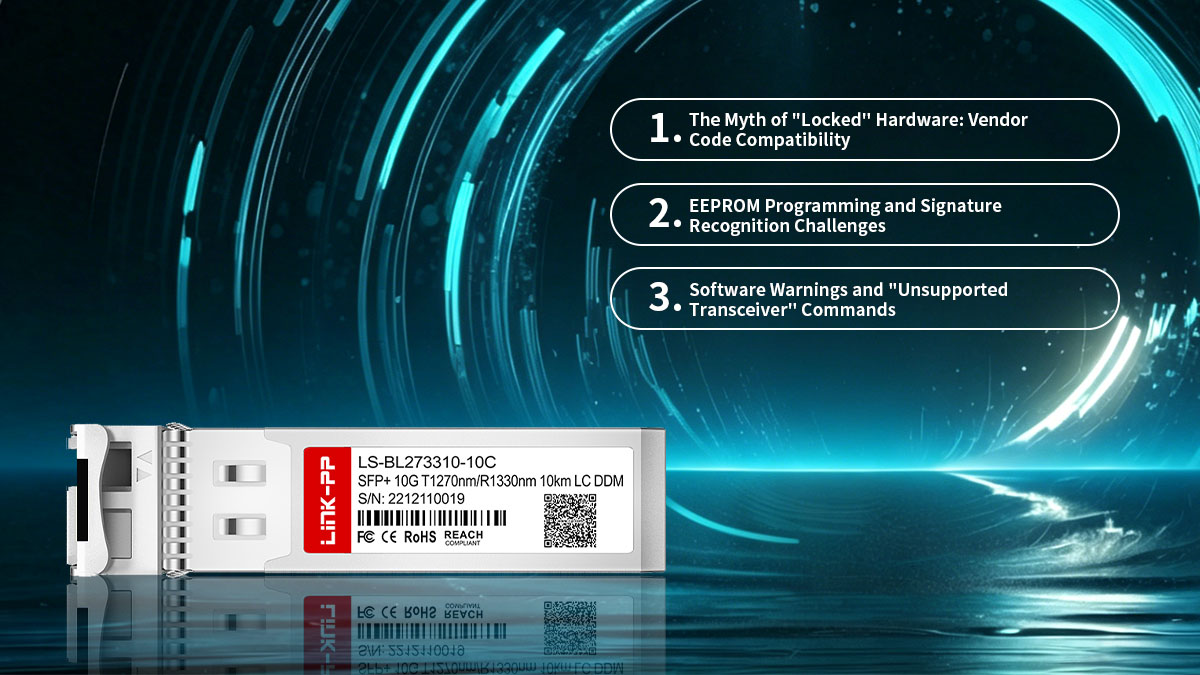
Many network administrators operate under the impression that host switches are physically locked to proprietary optics. In reality, the hardware itself is almost always compliant with MSA (Multi-Source Agreement) standards, meaning the primary barrier to compatibility is not the physical laser or electrical interface, but a software-level check performed by the host OS.
To bridge this gap, compatible BiDi 10G SFP modules are programmed with specific vendor "keys" that mimic the behavior of original equipment manufacturer (OEM) parts. By matching the expected vendor OUI (Organizationally Unique Identifier) and part number sequence, third-party BiDi SFP transceiver modules can bypass these artificial restrictions, providing the same performance levels as branded alternatives at a fraction of the cost.
EEPROM Programming and Signature Recognition Challenges
Every BiDi 10G SFP module contains an internal EEPROM (Electrically Erasable Programmable Read-Only Memory) chip that stores a digital "signature." This signature includes critical data such as the serial number, wavelength specifications, and checksums that the switch reads immediately upon insertion to verify the module's identity.
The challenge in multi-vendor environments arises when a switch expects a very specific data structure or a proprietary encryption bit within the EEPROM. If the signature recognition fails — even if the optical wavelengths are perfectly matched — the switch may disable the port entirely. Robust third-party sourcing requires modules that have been rigorously coded to match these diverse EEPROM requirements across brands like Cisco, Arista, and Juniper.
Software Warnings and "Unsupported Transceiver" Commands
When a brand mismatch occurs, the switch console typically triggers an "Unsupported Transceiver" or "Unknown Vendor" alarm. In some ecosystems, such as Cisco’s IOS, the port will remain in an err-disable state by default to prevent the use of non-branded hardware.
To resolve these software-level blocks, engineers often use specific CLI commands, such as service unsupported-transceiver, to force the port to initialize. However, a successful "Brand Mismatch Audit" aims to provide modules that are so accurately coded that these manual overrides are unnecessary, allowing the BiDi 10G SFP to be recognized as a native, fully supported component within the network inventory.
☁️ Distance and Power Budget Analysis for BiDi 10G SFP Links
To ensure BiDi 10G SFP long-term link stability, engineers must calculate a precise optical power budget that accounts for signal attenuation over single-mode fiber. This analysis evaluates the relationship between transmission power and receiver sensitivity across various distances to prevent both signal loss and receiver damage.
Link Loss Budgets for 10km, 20km, and 40km Deployments
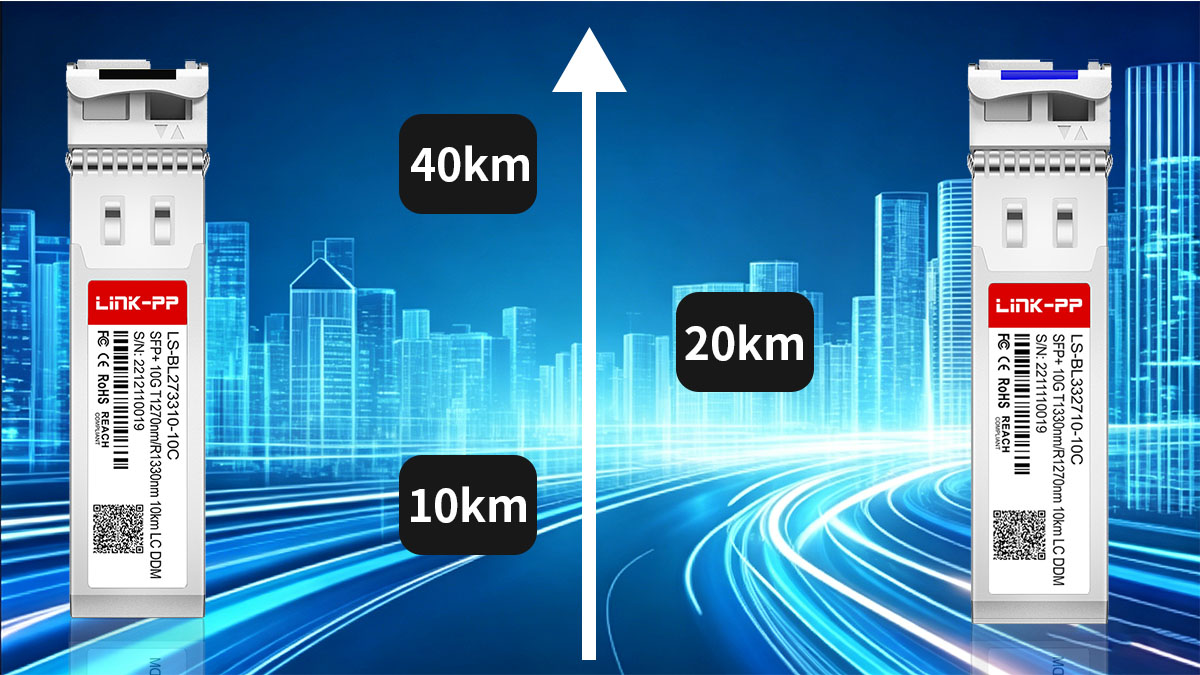
Quantifying the link loss budget is the first step in selecting the appropriate BiDi 10G SFP class for a specific span. The budget is essentially the difference between the minimum transmit power and the receiver sensitivity; for a standard 10km SFP module, this typically allows for a loss of approximately 6dB to 9dB, depending on the vendor's specifications.
As distances increase to 20km or 40km, the requirements become more stringent. Engineers must account for higher passive loss and potential fiber aging, ensuring that the total decibel (dB) loss — including the fiber path, patch panels, and splices — does not exceed the rated budget of the transceiver pair.
Assessing Insertion Loss in Single-Mode Fiber
Insertion loss is the cumulative reduction in signal strength caused by the introduction of components into the optical path. In BiDi deployments, because only one strand of fiber is used, every connector, adapter, and fusion splice along that single path becomes a critical point of potential failure.
On average, a standard LC-to-LC mating might introduce 0.25dB to 0.5dB of loss, while a fusion splice adds roughly 0.1dB. When auditing a fiber run for 10G BiDi SFP compatibility, these small values must be summed meticulously to ensure the signal arriving at the remote receiver remains within the functional window.
When to Use Optical Attenuators for Short-Span BiDi Links
A common error in BiDi deployments is the "overpowering" of short-span links. High-power transceivers designed for 40km reaches can emit a signal so strong that it overwhelms a receiver located only a few hundred meters away, potentially causing permanent hardware degradation or high bit error rates.
In these "short-span" scenarios, fixed optical attenuators (typically 5dB or 10dB) should be installed to simulate the loss of a longer fiber run. This ensures the incoming light falls into the "sweet spot" of the receiver’s dynamic range, preventing saturation while maintaining a clean, high-speed data connection.
Sensitivity and Saturation Thresholds for 10G Receivers
Every BiDi 10G SFP receiver has two critical limits: the Sensitivity Threshold (the minimum light needed to distinguish a signal from noise) and the Saturation Threshold (the maximum light it can handle before distorting). For 10Gbps traffic, these windows are often quite narrow to maintain signal integrity at high frequencies.
Monitoring these thresholds via digital optical monitoring (DOM) allows administrators to see real-time "Rx Power" levels. Maintaining the signal safely above the sensitivity floor but well below the saturation ceiling is the key to preventing intermittent "flapping" links and ensuring the longevity of the optical sub-assembly.
☁️ Validating Performance for BiDi 10G SFP Alternatives
When transitioning from OEM optics to high-quality compatible alternatives, rigorous validation is essential to ensure network reliability. The following outlines the technical benchmarks used to verify that third-party BiDi 10G SFP compatible modules meet or exceed the performance standards required for mission-critical 10Gbps data transport.
Bit Error Rate (BER) Testing for Third-Party Alternatives
The most definitive measure of a transceiver's health is its Bit Error Rate (BER). This metric quantifies the percentage of bits that have errors relative to the total number of bits transmitted. For a high-performance BiDi 10G SFP link, the industry standard is typically a BER of 10⁻¹² or better, ensuring that data packets are delivered without corruption over long-distance single-strand spans.
Testing for BER involves stressing the module under various conditions, such as temperature fluctuations and maximum cable lengths. By verifying that an alternative module maintains a near-zero error rate during peak traffic loads, engineers can confidently deploy these units in environments where data integrity is non-negotiable.
Real-Time Monitoring: Digital Optical Monitoring (DOM) Explained
Digital optical monitoring, often referred to as digital diagnostic monitoring (DDM), is a vital feature that allows network administrators to view real-time operating parameters through the switch CLI. A fully compatible BiDi 10G SFP provides live data on five key metrics: transmit power, receive power, internal temperature, laser bias current, and transceiver supply voltage.
By actively monitoring these DOM parameters, technicians can proactively identify potential failures before they result in a network outage. For instance, a sudden drop in Rx power or an unusual spike in laser temperature can trigger an automated alarm, allowing for preemptive maintenance on a specific single-strand fiber link.
Eye Diagram Analysis for Signal Integrity Validation
Eye diagram analysis is an advanced oscilloscopic technique used to visualize the quality of the high-speed digital signal. By overlaying multiple signal waveforms, an "eye" shape is formed; a wide, clear "eye opening" indicates a clean signal with minimal jitter and noise, while a "closed eye" suggests poor signal integrity that will lead to link flapping or total failure.
For BiDi 10G SFP transceivers, eye diagram validation is particularly important because it confirms that the internal WDM filters are effectively isolating the bidirectional wavelengths. A crisp eye diagram proves that the transmit and receive paths are not interfering with one another, ensuring that the alternative module provides the same timing precision and electrical stability as an expensive branded equivalent.
☁️ Deployment Scenarios: Where BiDi 10G SFP Saves Infrastructure Costs
BiDi 10G SFP modules optimize CapEx by doubling bandwidth capacity on existing fiber plants. By eliminating the need for new cable installation, these transceiver modules offer a high-density, cost-effective alternative for scaling networks under physical infrastructure constraints.
Maximizing ROI in Fiber-Constrained Campus Networks
In campus environments where underground conduits are at maximum capacity, laying new fiber is prohibitively expensive. BiDi technology allows administrators to reclaim 50% of their existing fiber strands for new services or redundancy, effectively doubling the network's value without civil engineering costs.
5G Front-Haul and Wireless Backhaul Applications
Modern 5G architectures require massive densification, often in locations where fiber resources are scarce. BiDi 10G SFPs are the industry standard for front-haul and backhaul links between Baseband Units (BBU) and Remote Radio Heads (RRH), providing the necessary 10Gbps throughput while minimizing the weight and complexity of tower-mounted cabling.
Retrofitting Legacy Data Centers with Simplex Fiber
Legacy facilities often rely on older fiber deployments that cannot support modern duplex requirements for every port. Retrofitting these centers with BiDi transceivers enables 10G upgrades over existing simplex patches, bypassing the need for disruptive and costly overhead cable tray expansions or floor-tile removals.
☁️ Avoiding Common Configuration Errors with BiDi 10G SFP
While BiDi 10G SFP technology simplifies physical cabling, it introduces specific configuration nuances that can lead to persistent link issues if ignored. Proactively addressing these common pitfalls — ranging from improper testing methods to hygiene and documentation — is essential for maintaining a high-availability 10G network.
Loopback Testing Hazards on Bi-Directional Ports
Standard loopback testing, a common diagnostic practice for duplex transceivers, is fundamentally incompatible with BiDi 10G SFP modules. In a standard module, a loopback cable simply routes the transmit signal back into the receiver; however, because a BiDi module transmits and receives on different wavelengths (e.g., Tx1270/Rx1330), a single module cannot "hear" its own signal.
Attempting a physical loopback on a BiDi port will result in a total link failure and may lead technicians to believe the hardware is faulty. For BiDi diagnostics, loopback testing must be performed via software at the switch level, or by using a complementary paired module (BXD/BXU) and a known-good patch cable to validate port functionality.
Polarity and Connector Cleaning for Simplex LC Interfaces
The transition to a simplex LC interface eliminates traditional "A-B" polarity concerns, but it increases the impact of fiber contamination. In a dual-strand system, a speck of dust on one connector might only affect one direction of traffic; in a BiDi system, a single dirty Simplex connector degrades the entire bidirectional path, leading to symmetrical bit errors or total link loss.
Furthermore, technicians must ensure they are using simplex-specific cleaning tools and patch cords. Using a duplex patch cord by stripping off one leg is a common field-expedient error that often leads to mechanical stress on the SFP port or improper seating, which can cause intermittent signal "flapping" in high-vibration environments.
Firmware Incompatibility and Interface Reset Protocols
Even when the physical wavelengths are matched, firmware mismatches between the transceiver and the host switch can prevent the link from initializing. In some cases, the switch may recognize the BiDi 10G SFP module but fail to apply the correct power levels or auto-negotiation parameters, requiring a manual interface reset to force a fresh hardware handshake.
If a BiDi link remains down despite correct pairing, it is often necessary to perform a "shut/no-shut" on the interface or clear the transceiver inventory cache. This allows the host OS to re-read the EEPROM and properly calibrate the internal DDM thresholds for the specific WDM filter characteristics of the BiDi module.
Documenting Wavelength Pairs for On-Site Maintenance Teams
One of the most overlooked best practices in BiDi deployments is proper documentation of wavelength pairs. Because BiDi links rely on complementary wavelengths rather than visible Tx/Rx separation, incorrect replacements during maintenance can easily occur.
Maintaining clear records — such as labeling ports with wavelength information or documenting BXU/BXD assignments — helps field technicians quickly identify the correct modules. This reduces human error, speeds up troubleshooting, and ensures long-term operational consistency.
☁️ Strategic Sourcing for Compatible BiDi 10G SFP Modules
Selecting the right supplier for BiDi 10G SFP modules is as important as understanding the technology itself. In multi-vendor environments, sourcing decisions directly impact compatibility, reliability, and long-term operational costs. A strategic approach helps ensure consistent performance while optimizing budget and supply chain efficiency.
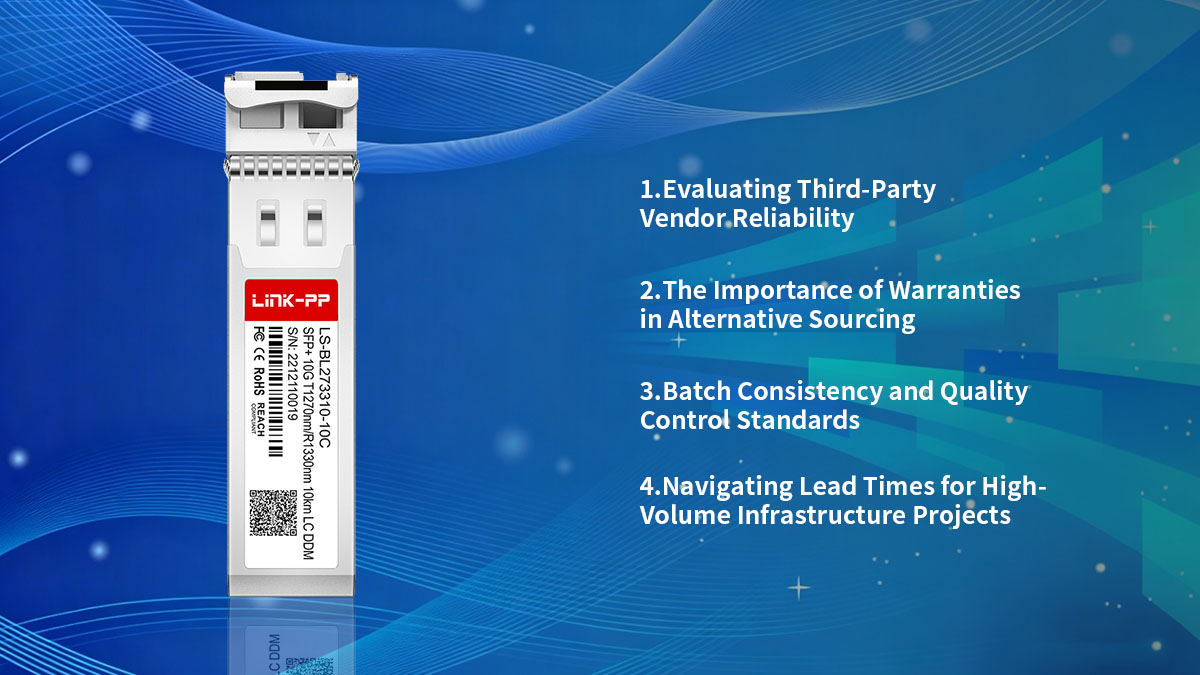
Evaluating Third-Party Vendor Reliability
When assessing third-party vendors, reliability should be measured by factors such as compatibility testing, industry certifications, and proven deployment records. Reputable vendors like LINK-PP offer BiDi 10G SFP modules that support vendor-specific coding; having undergone rigorous testing on major mainstream platforms, these modules help mitigate interoperability risks within hybrid network environments.
The Importance of Warranties in Alternative Sourcing
Strong warranty policies provide assurance that BiDi 10G SFP modules will perform over time and can be replaced if defects occur. Vendors such as LINK-PP often provide 1 - 3 years of warranties, which not only reduce long-term maintenance costs but also reflect confidence in product quality and stability.
Batch Consistency and Quality Control Standards
Consistency across production batches is critical for large-scale deployments, where even minor variations can impact link performance. Reliable suppliers implement strict quality control processes — such as optical calibration and EEPROM validation — to ensure that every BiDi 10G SFP module meets the same performance standards.
Navigating Lead Times for High-Volume Infrastructure Projects
For large infrastructure rollouts, lead time and supply availability can significantly affect project timelines. Established vendors like LINK-PP typically maintain stable inventory and scalable production capacity, enabling faster delivery and reducing delays when deploying high volumes of BiDi 10G SFP modules.
☁️ Future-Proofing Your Network with BiDi 10G SFP Upgrades
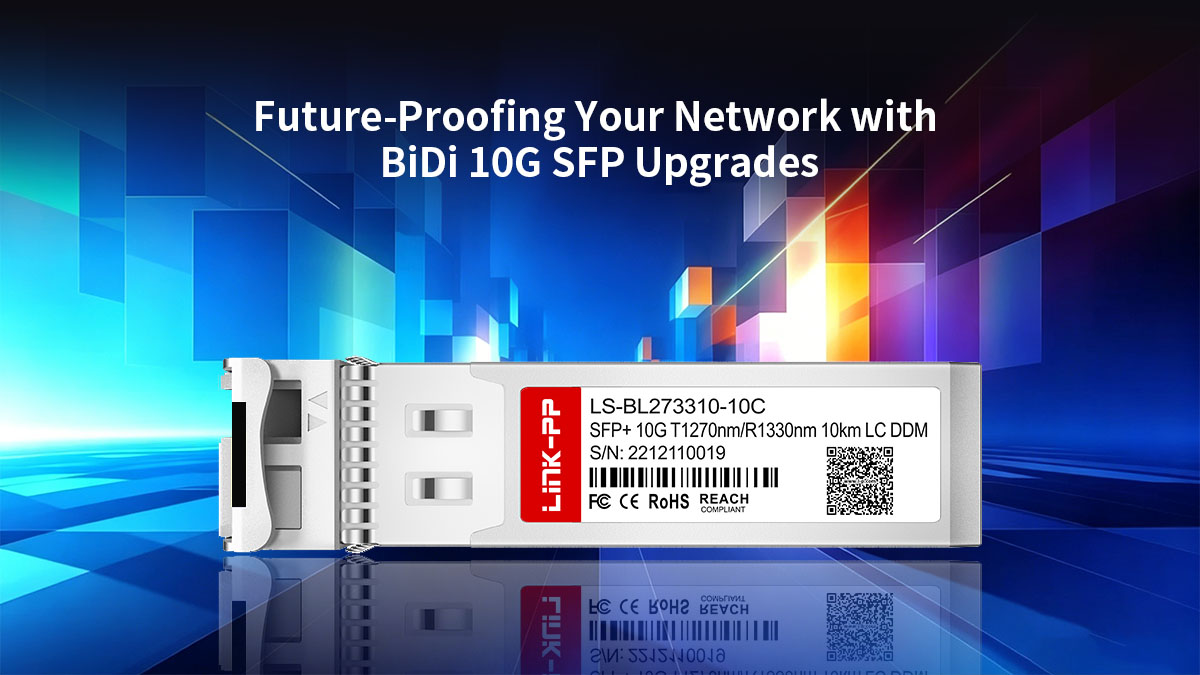
Upgrading to BiDi 10G SFP technology is a smart way to prepare your network for future data growth. By using a single-strand fiber approach, you double your capacity while keeping your infrastructure simple and cost-effective. Mastering the basics of BXD/BXU pairing and ensuring vendor compatibility allows you to build a flexible network that is easy to manage and quick to scale.
If you are looking for reliable and high-quality optical transceiver module solutions, visit the LINK-PP Official Store. You will find a wide selection of BiDi SFP modules designed to work perfectly with your existing hardware, helping you maximize your fiber investment with confidence.