





























The rapid evolution of data center architecture and storage networking has significantly increased the demand for high-speed, low-latency optical interconnects. In Fibre Channel environments, especially those supporting mission-critical workloads, 32G-class transceivers have become a key building block for ensuring stable and scalable performance. Among these components, the Avago AFBR-57G5MZ-ELX stands out as a widely deployed 32G SFP28 optical module designed for short-reach multimode fiber links in modern storage networks.
As enterprise environments continue to scale, organizations are increasingly evaluating not only OEM transceivers but also compatible alternatives that can deliver equivalent performance with greater supply flexibility and cost efficiency. This has led to growing attention on LINK-PP compatible solutions for AFBR-57G5MZ-ELX, which aim to maintain the same 32G Fibre Channel performance standards while offering broader interoperability across multi-vendor infrastructures. The focus is no longer limited to raw speed, but also to stability, lifecycle management, and deployment flexibility.
This article provides a technical overview of the Avago AFBR-57G5MZ-ELX, including its core specifications, application scenarios, and performance characteristics. It also examines LINK-PP compatible alternatives in terms of optical performance, interoperability validation, and real-world deployment considerations. By the end, you will gain a clear understanding of how OEM and compatible options compare, and how to make informed decisions for 32G Fibre Channel network deployments.
? Overview of Avago AFBR-57G5MZ-ELX
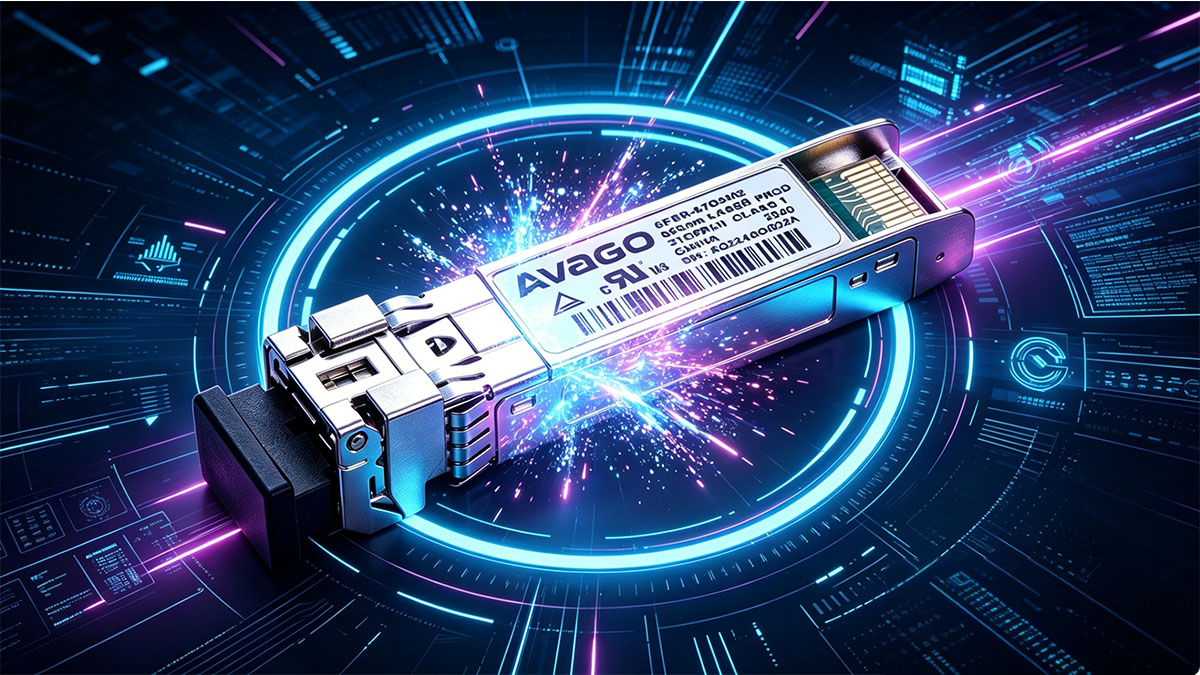
The Avago AFBR-57G5MZ-ELX is a high-performance 32G Fibre Channel SFP28 optical transceiver designed for short-reach data center and storage networking environments. Its core role is to enable reliable 32Gbps-class optical connectivity over multimode fiber, making it a critical component in modern SAN (Storage Area Network) architectures where low latency and high throughput are essential.
Key Specifications and Features
The Avago AFBR-57G5MZ-ELX is designed to meet the requirements of 32G Fibre Channel short-reach optical links while maintaining strict performance consistency in enterprise SAN environments. Beyond its core transmission parameters, its internal optical architecture and diagnostic capabilities are equally important for understanding real-world deployment behavior.
To provide a more complete technical view, the expanded specification table includes additional optical and diagnostic components:
| Parameter | Specification | Description |
|---|---|---|
| Data Rate | 32G Fibre Channel (28.05Gbps) | High-speed SAN connectivity |
| Wavelength | 850nm | VCSEL-based multimode operation |
| Reach | Up to 100m | OM4 multimode fiber support |
| Form Factor | SFP28 | Hot-pluggable optical module |
| Laser Type | VCSEL (Vertical-Cavity Surface-Emitting Laser) | High-efficiency 850nm optical source for short-reach transmission |
| Detector Type | PIN Photodiode | High-sensitivity optical signal reception for stable decoding |
| DDM Function | Supported (SFF-8472 compliant) | Real-time monitoring of temperature, voltage, Tx/Rx power, and module health status |
These additional parameters are critical in understanding how the module maintains signal integrity and operational stability under 32G Fibre Channel workloads. The use of VCSEL technology ensures efficient short-reach transmission with low power consumption, while the PIN photodiode enables accurate optical signal conversion with minimal noise interference.
Typical Application Scenarios
The AFBR-57G5MZ-ELX is primarily deployed in high-performance storage and enterprise networking environments where Fibre Channel remains a dominant protocol. Its design focuses on short-reach interconnects within controlled data center infrastructures.
Common deployment scenarios include:
- Storage Area Networks (SAN) connecting enterprise storage arrays and Fibre Channel switches
- Data center switch-to-switch interconnects within rack or adjacent rack environments
- High-performance computing clusters requiring low-latency storage access
- Enterprise backup and disaster recovery systems with high-throughput requirements
These use cases highlight its role in environments where deterministic latency and stable throughput are more critical than long-distance transmission.
Strengths and Limitations
From an engineering and deployment perspective, the AFBR-57G5MZ-ELX offers a strong balance of performance and standard compliance. Its OEM-grade design ensures predictable behavior in certified Fibre Channel ecosystems, which is essential for enterprise-grade storage networks.
However, its limitations become more apparent in large-scale deployments. The reliance on a single OEM supply chain can introduce cost pressure and procurement delays, especially in multi-site or rapidly scaling infrastructures. In addition, flexibility across mixed-vendor environments may be restricted compared to more open optical ecosystems.
Overall, while the module delivers strong technical performance within its intended scope, its operational constraints have led many organizations to evaluate compatible alternatives that preserve performance while improving procurement flexibility.
? Why Consider LINK-PP Compatible Alternatives
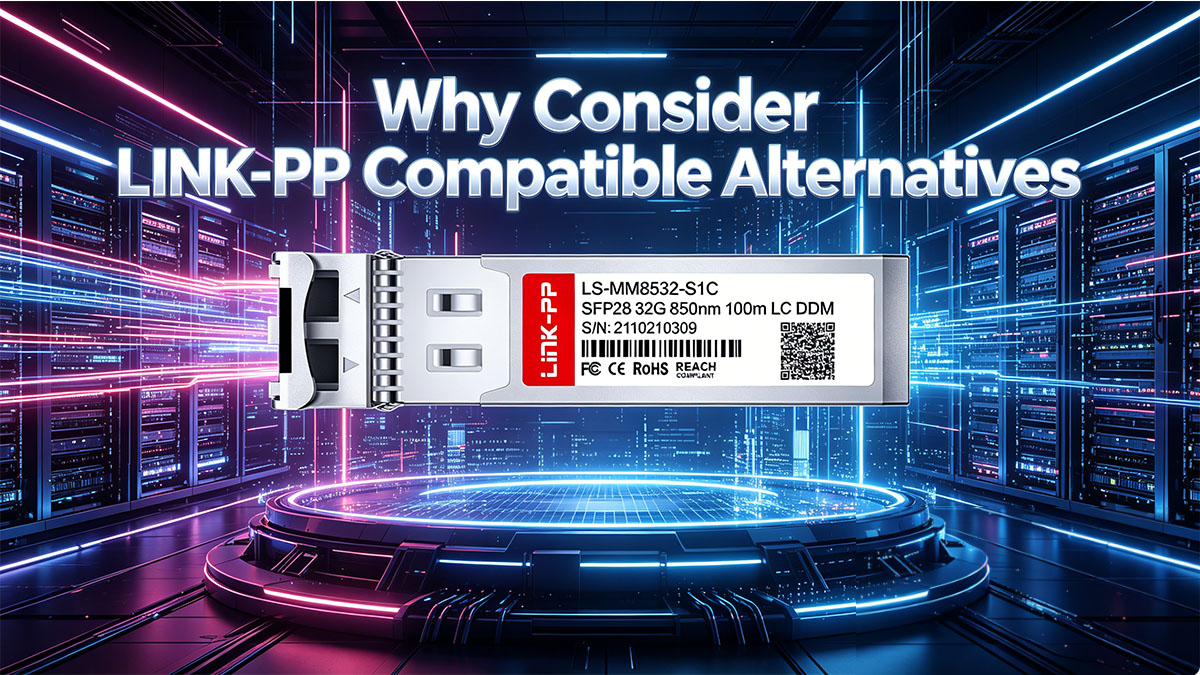
In 32G Fibre Channel environments, the Avago AFBR-57G5MZ-ELX is widely recognized for its performance and reliability. However, in large-scale storage networks and rapidly expanding data center infrastructures, organizations often evaluate compatible alternatives to balance performance requirements with operational flexibility. LINK-PP compatible transceivers are increasingly considered as a practical option in this context.
Cost Efficiency in High-Speed Environments
One of the primary reasons for considering LINK-PP compatible solutions is cost optimization without compromising core optical performance. In high-density SAN deployments, the number of transceivers can scale into hundreds or thousands, making per-unit cost differences highly significant.
From a deployment perspective, the key advantage lies in reducing total infrastructure expenditure while maintaining equivalent 32G Fibre Channel performance characteristics. This allows organizations to allocate budget more efficiently across storage expansion, switching infrastructure, and redundancy planning.
Typical cost-related considerations include:
- Reduction in per-port optical module cost in large-scale SAN deployments
- Improved budget allocation for storage arrays and switching hardware
- Lower overall expansion cost for multi-site data center environments
- More flexible refresh cycles for aging infrastructure
These factors make cost efficiency a strategic driver rather than just a procurement concern, especially in environments with continuous capacity growth requirements.
Vendor Interoperability and Flexibility
Another major factor is the increasing demand for multi-vendor interoperability in modern Fibre Channel networks. Traditional OEM-centric models can limit flexibility when integrating equipment from different switch or storage vendors.
LINK-PP compatible modules are designed to support broader interoperability across major Fibre Channel platforms, enabling more flexible network design and procurement strategies. This is particularly valuable in heterogeneous environments where multiple generations of hardware coexist.
Key interoperability benefits include:
- Compatibility with major Fibre Channel switch platforms (e.g., Brocade, Cisco MDS)
- Reduced dependency on single-vendor optical ecosystems
- Easier integration in mixed-generation SAN infrastructures
- Greater flexibility in network expansion and replacement planning
This flexibility allows network architects to design infrastructure based on performance and scalability requirements rather than vendor constraints.
Supply Chain and Scalability Benefits
Beyond cost and compatibility, supply chain stability is a critical factor in optical module selection. Global supply fluctuations and OEM allocation constraints can significantly impact deployment timelines in enterprise environments.
LINK-PP compatible alternatives often provide improved availability and shorter lead times, which is essential for time-sensitive deployments or large-scale rollouts. This advantage becomes more pronounced in projects involving multi-site expansion or urgent capacity upgrades.
Key operational benefits include:
- Improved product availability during supply constraints
- Shorter procurement cycles for large deployments
- Enhanced scalability for phased infrastructure expansion
- Reduced risk of project delays due to OEM shortages
In practice, this means organizations can maintain deployment continuity while scaling infrastructure in alignment with business growth requirements, without being heavily constrained by OEM supply limitations.
? LINK-PP Compatible AFBR-57G5MZ-ELX: Technical Deep Dive
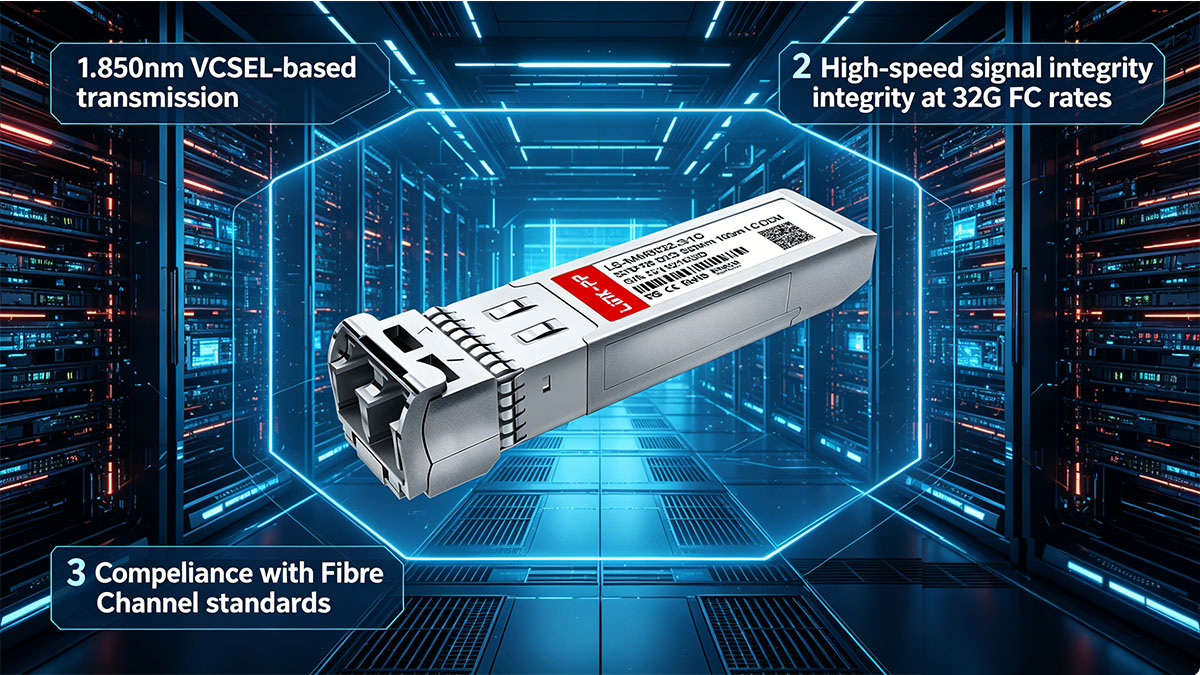
LINK-PP compatible versions of the Avago AFBR-57G5MZ-ELX are engineered to replicate the same 32G Fibre Channel optical behavior while maintaining interoperability across mainstream storage and switching platforms. The focus is not only on matching optical specifications, but also on ensuring signal integrity, protocol compliance, and long-term operational stability in high-density SAN environments.
Optical and Electrical Performance
From a performance standpoint, LINK-PP compatible modules are designed around the same 32G Fibre Channel optical requirements, targeting stable transmission at 28.05Gbps over multimode fiber. The optical subsystem typically uses 850nm VCSEL technology, which is standard for short-reach high-speed links in data center environments.
To better understand the core optical alignment, the key performance parameters are summarized below:
| Parameter | Typical Specification | Functional Role |
|---|---|---|
| Data Rate | 32G Fibre Channel (28.05Gbps) | High-speed storage connectivity |
| Wavelength | 850nm | Short-reach multimode transmission |
| Fiber Type | OM3 / OM4 | Optimized for data center cabling |
| Reach | Up to 100m | Rack-to-rack or intra-facility links |
These parameters ensure that the compatible module behaves consistently within standard Fibre Channel optical budgets. In practical deployments, signal stability and optical margin are critical factors, especially under high port density conditions where cumulative thermal and optical noise can affect performance.
Compatibility Engineering and EEPROM Coding
Beyond optical performance, compatibility at the system level is primarily determined by EEPROM coding and firmware-level identification. LINK-PP compatible modules are typically programmed to ensure recognition by major Fibre Channel switch vendors, enabling seamless integration into existing infrastructures.
Key compatibility engineering elements include:
- Vendor-specific EEPROM coding for switch recognition
- Alignment with Fibre Channel identification standards
- Interoperability validation across multi-vendor switch environments
- Plug-and-play deployment without manual configuration in most cases
This layer of engineering is essential because even when optical performance is identical, incorrect identification at the system level can lead to link rejection or limited functionality. Proper coding ensures the module is treated as a native-compatible device by the host system.
Digital Diagnostics Monitoring (DDM/DOM)
Modern optical modules rely heavily on real-time diagnostics to ensure network reliability, especially in 32G Fibre Channel environments where link stability is critical. LINK-PP compatible AFBR-57G5MZ-ELX modules typically support DDM/DOM functions based on the SFF-8472 standard.
These monitoring capabilities include:
- Optical transmit and receive power levels
- Module temperature monitoring
- Supply voltage tracking
- Laser bias current status
By continuously exposing these parameters, administrators can detect early signs of degradation such as weakening laser output or abnormal thermal conditions. In high-availability SAN systems, this enables proactive maintenance strategies and reduces the risk of unexpected link failures.
Reliability and Environmental Specifications
In enterprise deployments, reliability is as important as raw performance. LINK-PP compatible modules are designed to operate within defined environmental and mechanical stability ranges suitable for data center conditions.
Key reliability characteristics typically include:
- Extended operating temperature support for data center environments
- High MTBF (Mean Time Between Failures) design targets
- Burn-in testing to reduce early-life failure rates
- Compliance with relevant optical and safety standards
These design considerations ensure that the module can sustain continuous operation under typical SAN workloads, where uptime requirements are extremely strict and even short interruptions can impact storage availability.
Overall, the technical foundation of LINK-PP compatible AFBR-57G5MZ-ELX modules is built to align closely with OEM-level behavior, while introducing additional flexibility in sourcing and deployment scalability.
? Performance Comparison: OEM vs LINK-PP Alternative
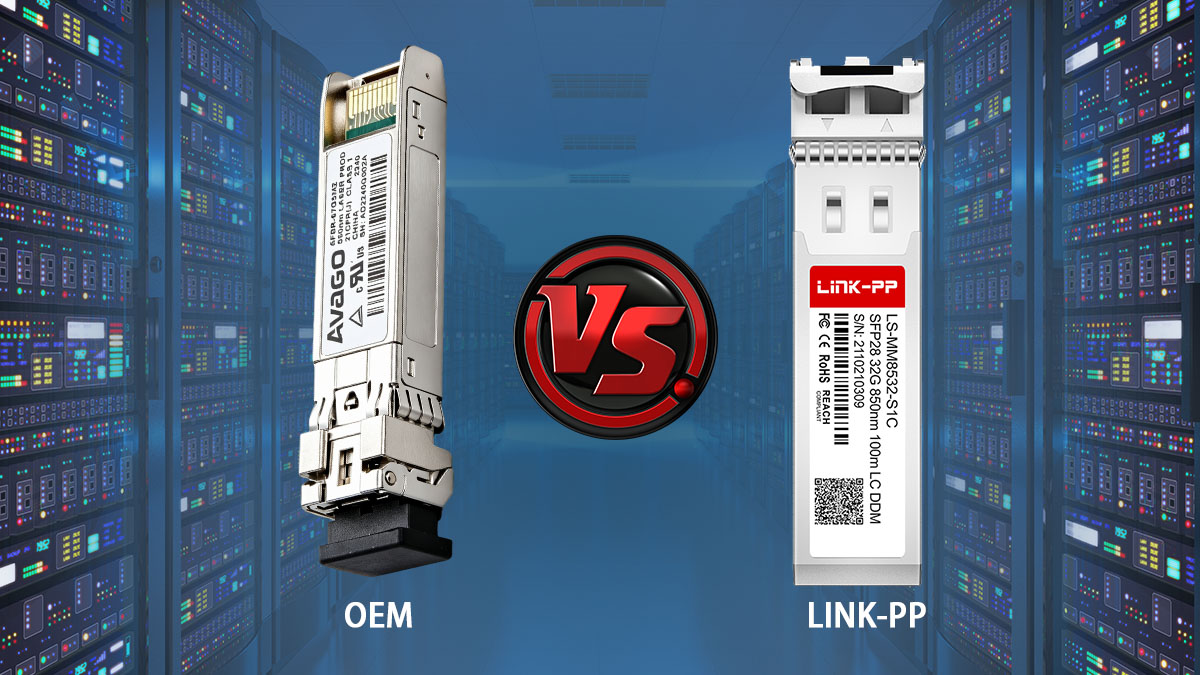
When evaluating the Avago AFBR-57G5MZ-ELX against LINK-PP compatible alternatives, the key focus is whether third-party optics can maintain equivalent 32G Fibre Channel performance under real-world SAN workloads. In practice, both solutions are designed to meet the same optical and protocol requirements, but differences may appear in consistency, system integration behavior, and long-term deployment economics.
Optical Performance Metrics
At the physical layer, both OEM and LINK-PP compatible modules are engineered to operate within the same 32G Fibre Channel optical budget. This includes 850nm VCSEL transmission over OM3/OM4 multimode fiber with a typical reach of up to 100m. The primary performance indicators are transmit power stability, receive sensitivity, and error-free transmission under full line-rate conditions.
To provide a clearer technical comparison, the key optical metrics are summarized below:
| Metric | Avago AFBR-57G5MZ-ELX (OEM) | LINK-PP Compatible |
|---|---|---|
| Data Rate | 32G Fibre Channel | 32G Fibre Channel |
| Wavelength | 850nm | 850nm |
| Typical Reach | 100m (OM4) | 100m (OM4) |
| Tx/Rx Power Stability | OEM-calibrated tight tolerance | Standard-compliant calibrated range |
From a practical deployment standpoint, both solutions are capable of maintaining stable link performance when installed within proper optical budgets. OEM modules tend to have slightly tighter manufacturing tolerances, while compatible modules focus on maintaining compliance within defined industry ranges.
Compatibility and Stability Benchmarking
Compatibility behavior is often the most critical differentiator in enterprise environments. The AFBR-57G5MZ-ELX benefits from native OEM integration with validated switch ecosystems, ensuring predictable behavior across firmware versions and hardware platforms.
LINK-PP compatible modules, however, are designed to achieve equivalent system recognition through coded EEPROM alignment and interoperability testing. In most modern deployments, they function as plug-and-play replacements without requiring configuration changes.
Key stability and compatibility observations include:
- OEM modules provide baseline reference behavior with full vendor validation
- LINK-PP modules rely on multi-platform interoperability validation
- Both support standard Fibre Channel switch environments (e.g., Brocade, Cisco MDS)
- Long-term stability is highly dependent on proper optical budgeting and fiber quality
In real-world SAN deployments, stability differences are often negligible when both module types are operated within specification-compliant environments.
Cost vs Value Analysis
Beyond technical parity, the most significant divergence between OEM and LINK-PP compatible modules lies in total cost of ownership (TCO). In large-scale storage networks, optical transceivers represent a recurring infrastructure cost, especially during expansion or lifecycle replacement cycles.
From a financial and operational perspective, the comparison can be summarized as follows:
- OEM modules: Higher unit cost, strong vendor assurance, tightly controlled ecosystem
- LINK-PP compatible modules: Lower acquisition cost, broader sourcing flexibility, scalable deployment model
- Both options: Similar lifecycle performance when properly validated and deployed
In high-density SAN environments, the cumulative savings from using compatible optics can be substantial, particularly when scaling across hundreds or thousands of ports. This makes LINK-PP alternatives an attractive option for organizations optimizing infrastructure cost without compromising core 32G Fibre Channel performance requirements.
? Deployment Best Practices for 32G SFP28 Alternatives
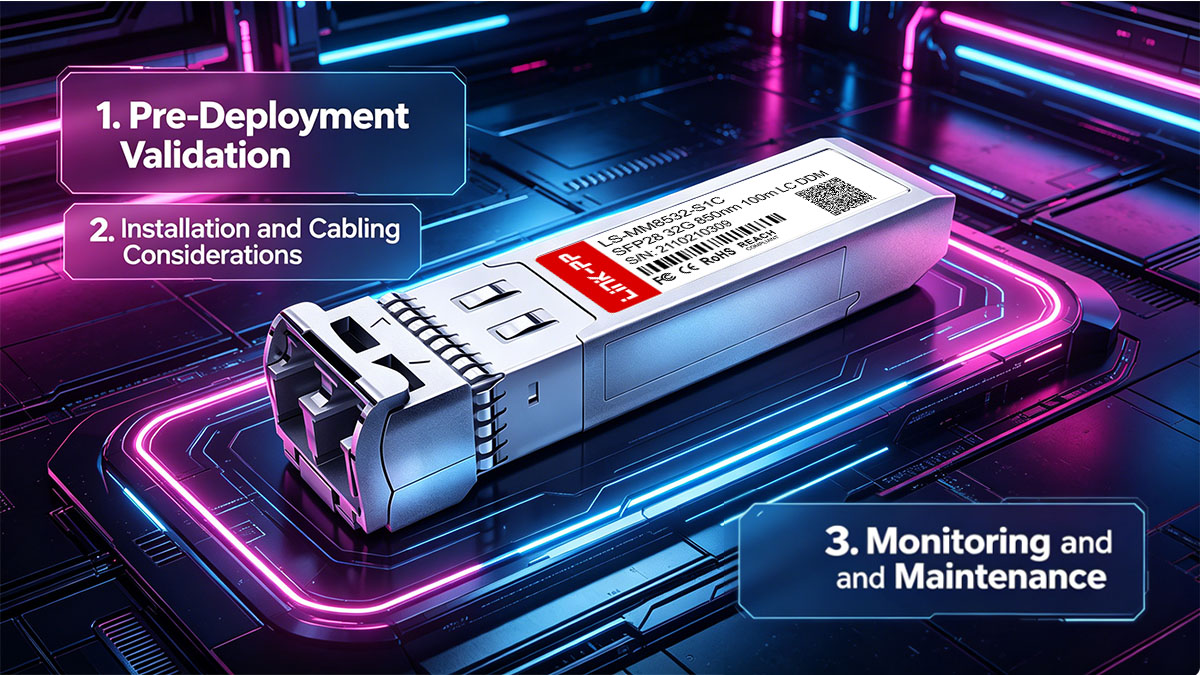
Deploying 32G SFP28 optical modules such as the Avago AFBR-57G5MZ-ELX and its LINK-PP compatible alternatives requires careful attention to optical budgeting, compatibility validation, and operational monitoring. Although these modules are designed for plug-and-play deployment in Fibre Channel environments, real-world performance depends heavily on proper installation practices and infrastructure readiness.
Pre-Deployment Validation
Before introducing compatible optics into a production SAN environment, validation in a controlled lab setting is essential. This step ensures that both optical performance and system interoperability meet operational expectations under 32G Fibre Channel workloads.
A structured validation process typically includes:
- Verifying compatibility with target Fibre Channel switch models and firmware versions
- Testing link stability under sustained 32G traffic conditions
- Confirming DOM/DDM readouts for temperature, Tx/Rx power, and voltage accuracy
- Performing interoperability checks across multi-vendor storage and switch environments
This phase helps identify potential issues such as coding mismatches or marginal optical performance before they impact production systems.
Installation and Cabling Considerations
At 32G speeds, optical link quality becomes highly sensitive to physical handling and fiber conditions. Even small deviations in connector cleanliness or fiber quality can significantly affect signal integrity.
Key installation practices include:
- Using OM4 multimode fiber to maximize reach and maintain optical margin
- Ensuring LC connectors are properly cleaned before insertion
- Avoiding excessive bend radius in fiber routing to prevent signal degradation
- Maintaining consistent labeling and polarity management across links
To highlight fiber selection impact, the following comparison summarizes typical reach performance:
| Fiber Type | Typical Reach at 32G FC | Deployment Suitability |
|---|---|---|
| OM3 | Up to 70m | Short-distance intra-rack links |
| OM4 | Up to 100m | Standard data center deployments |
OM4 is generally preferred in modern deployments due to its improved modal bandwidth, which provides better signal integrity margins in high-density environments.
Monitoring and Maintenance
Once deployed, continuous monitoring becomes critical to maintaining long-term stability in 32G Fibre Channel environments. Both OEM and LINK-PP compatible modules typically support Digital Diagnostics Monitoring (DDM), which provides real-time visibility into optical and electrical parameters.
Effective monitoring practices include:
- Tracking Tx/Rx optical power trends to detect early degradation
- Monitoring module temperature for thermal stability issues
- Setting threshold alerts for voltage and bias current deviations
- Integrating DDM data into network management systems for centralized visibility
Over time, these metrics help identify aging components or environmental issues such as dust accumulation, thermal hotspots, or fiber degradation. In high-availability SAN systems, proactive maintenance based on DDM data significantly reduces the risk of unexpected link failures and unplanned downtime.
Overall, disciplined deployment practices ensure that both OEM and LINK-PP compatible 32G SFP28 modules deliver consistent, high-performance operation across demanding storage networking environments.
? Common Concerns and Misconceptions
When deploying Avago AFBR-57G5MZ-ELX and its LINK-PP compatible alternatives in 32G Fibre Channel environments, several recurring concerns often influence decision-making. Most of these are rooted in legacy assumptions about third-party optics rather than current engineering realities. Clarifying these misconceptions is important for making informed deployment choices.

Are Third-Party 32G Optics Reliable?
A common concern is whether compatible 32G SFP28 modules can match OEM reliability in mission-critical storage networks. This concern is largely based on earlier generations of optical modules, where interoperability and quality variation were more significant issues.
In modern implementations, LINK-PP compatible modules are built under standardized optical and electrical compliance frameworks, ensuring alignment with 32G Fibre Channel requirements.
Key reliability factors include:
- Compliance with IEEE and Fibre Channel optical specifications
- Controlled manufacturing processes with calibrated optical components
- Burn-in and stress testing before shipment
- Consistent performance validation across switch platforms
In practical deployments, reliability differences between OEM and compatible modules are often negligible when operating within defined optical budgets and supported environments.
Will High-Speed Compatibility Be Affected?
Another frequent misconception is that non-OEM optics may introduce instability or compatibility issues at 32G speeds. In reality, 32G Fibre Channel operates within tightly defined optical and protocol standards, which both OEM and compatible modules must adhere to.
Compatibility is primarily determined by two factors: optical compliance and system-level identification.
A simplified breakdown is shown below:
| Compatibility Layer | Requirement | Risk Source |
|---|---|---|
| Optical Layer | 850nm, 32G FC compliance | Fiber quality, optical margin |
| System Layer | EEPROM coding, switch recognition | Misprogramming or vendor mismatch |
When properly coded and validated, LINK-PP compatible modules function identically to OEM optics at the protocol level. Most reported issues typically originate from improper installation, fiber contamination, or incorrect coding rather than inherent incompatibility.
Impact on Vendor Support Policies
A frequently discussed concern is whether using compatible optics affects vendor support agreements. While policies vary by equipment manufacturer, the technical reality is that optical modules operate as passive or semi-active components within standardized interfaces.
In most cases, support considerations focus on system-level diagnostics rather than individual transceiver branding. However, best practices typically include:
- Maintaining proper documentation of deployed optical modules
- Ensuring compatibility validation before production deployment
- Using certified or fully tested compatible vendors for enterprise environments
- Following switch vendor guidelines for third-party optics usage
From an operational standpoint, many organizations successfully deploy mixed environments using both OEM and compatible modules without impacting system stability or long-term maintenance workflows.
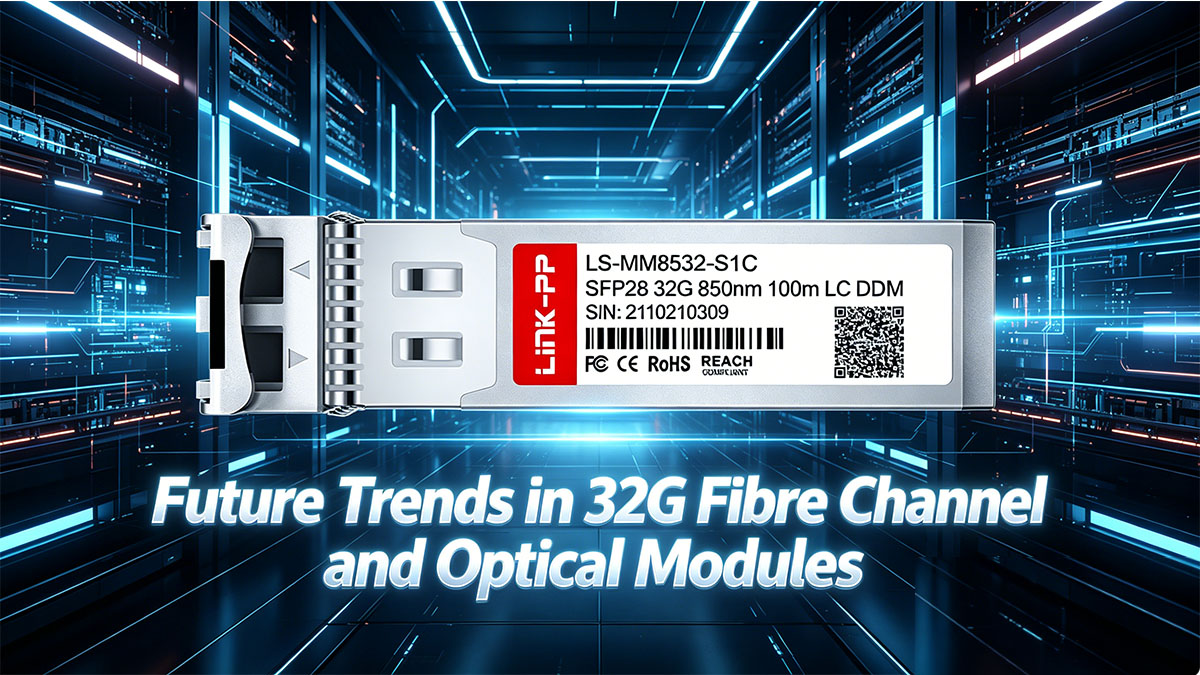
? Future Trends in 32G Fibre Channel and Optical Modules
The evolution of 32G Fibre Channel modules, including modules like the Avago AFBR-57G5MZ-ELX and their LINK-PP compatible alternatives, is closely tied to broader trends in data center networking and storage architecture. As workloads become more data-intensive and latency-sensitive, optical interconnects are expected to evolve toward higher speeds, greater interoperability, and improved lifecycle efficiency.
Evolution Toward 64G and Beyond
The Fibre Channel ecosystem is steadily progressing beyond 32G toward 64G and other high-speed transceivers., while data center Ethernet environments continue to adopt 100G QSFP28, 200G QSFP-DD, and QSFP-DD 400G solutions for higher-bandwidth applications. This transition is driven by the increasing bandwidth demands of NVMe based storage systems, virtualization workloads, and AI-driven data processing pipelines.
In this evolution, 32G optics continue to play a critical role as a stable and widely deployed base technology. Many existing infrastructures will remain in operation for years, requiring continued support for 32G SFP28 modules alongside newer generations.
Key transition characteristics include:
- Gradual coexistence of 32G and 64G Fibre Channel environments
- Backward compatibility requirements for mixed-generation SANs
- Increased emphasis on optical efficiency and power optimization
- Continued demand for short-reach multimode solutions in data centers
This means that 32G modules are not being replaced abruptly but are instead becoming part of a multi-generation optical ecosystem.
Growth of Open Optical Ecosystems
A significant industry trend is the shift toward more open and interoperable optical ecosystems. Traditional vendor-locked models are gradually being complemented by multi-vendor environments where compatibility and flexibility are prioritized.
LINK-PP compatible solutions reflect this trend by enabling cross-platform deployment without strict dependence on a single OEM source. This approach supports more dynamic infrastructure strategies.
Key developments include:
- Wider acceptance of third-party optical modules in enterprise networks
- Standardization of EEPROM coding and interoperability testing practices
- Increased emphasis on SFF-compliant designs for cross-vendor compatibility
- Growing adoption of multi-source procurement strategies
As a result, optical modules are increasingly evaluated based on performance and compliance rather than brand exclusivity.
Efficiency and Sustainability Trends
Beyond performance and compatibility, sustainability and operational efficiency are becoming central considerations in optical module deployment strategies. Data centers are under increasing pressure to reduce both capital and operational expenditures while improving energy efficiency.
In this context, 32G Fibre Channel optics contribute to sustainability goals in several ways:
- Extending lifecycle of existing SAN infrastructure instead of full replacement
- Reducing electronic waste through compatible replacement strategies
- Improving energy efficiency through optimized VCSEL-based designs
- Supporting phased upgrades rather than full system overhauls
The combination of OEM and compatible optical modules allows organizations to extend infrastructure usability while aligning with long-term sustainability objectives. This makes solutions like LINK-PP compatible AFBR-57G5MZ-ELX part of a broader strategy for efficient and scalable data center evolution.
? Conclusion
The Avago AFBR-57G5MZ-ELX, as a 32G Fibre Channel SFP28 850nm 100m optical transceiver, remains a key component in modern high-speed SAN and data center architectures. At the same time, LINK-PP compatible AFBR-57G5MZ-ELX alternatives provide a practical extension of this technology by delivering equivalent optical performance and protocol compliance while improving sourcing flexibility and deployment scalability. For organizations operating mixed-vendor or large-scale storage environments, both OEM and compatible options can effectively support stable 32G Fibre Channel connectivity when properly validated and deployed.
From a practical deployment perspective, the value of LINK-PP compatible solutions can be summarized as follows:
- Performance alignment with 32G Fibre Channel optical requirements for short-reach multimode links
- Cost optimization benefits in large-scale SAN and data center expansions
- Flexible multi-vendor interoperability across major Fibre Channel switching platforms
- Reliable DDM/DOM monitoring support for proactive network maintenance
- Improved supply chain availability and faster procurement cycles
These advantages make compatible optics a strategic option for organizations seeking to balance performance, scalability, and operational efficiency in evolving storage infrastructures.
For more detailed specifications, compatibility guidance, and enterprise-grade optical solutions, visit the LINK-PP Official Store to explore a full range of 32G Fibre Channel compatible transceivers designed for modern data center and storage networking needs.