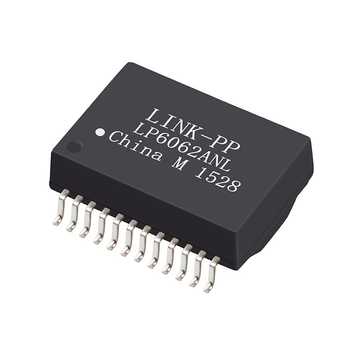
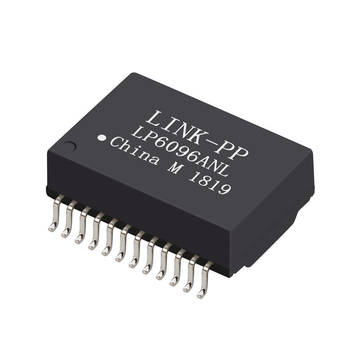
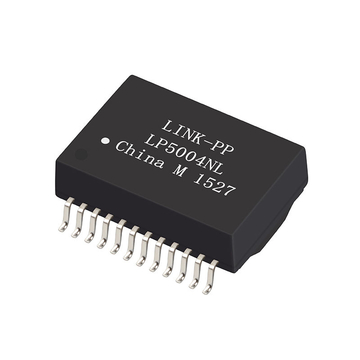
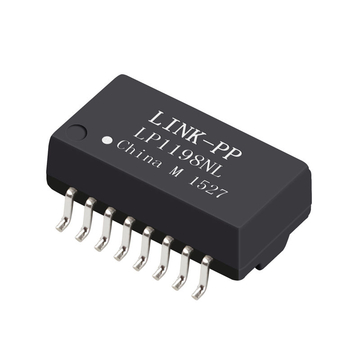
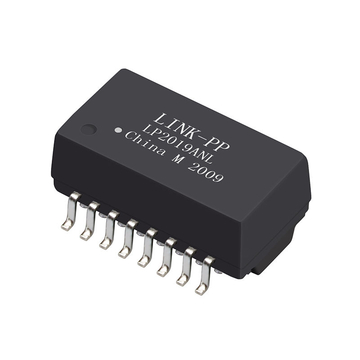
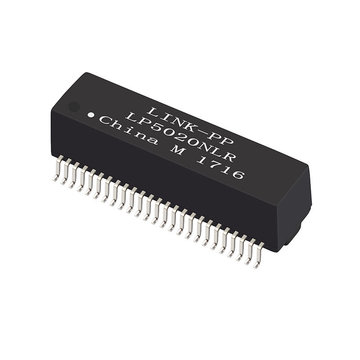
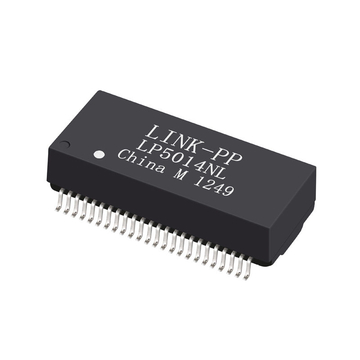
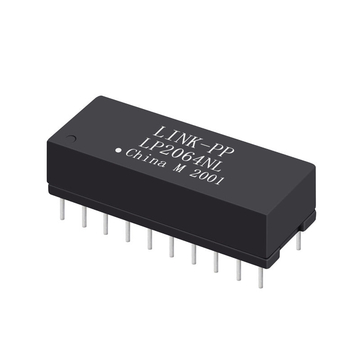
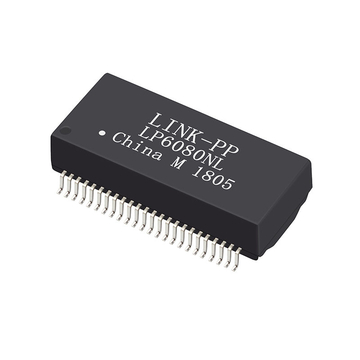
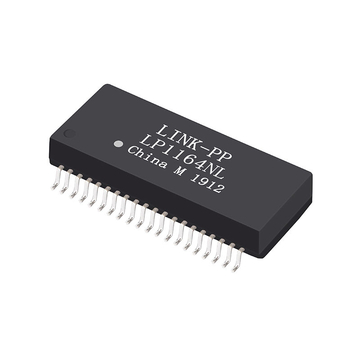
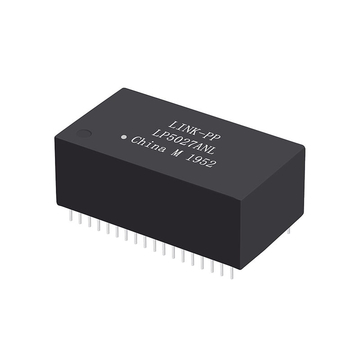
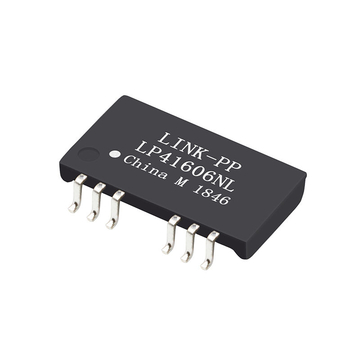
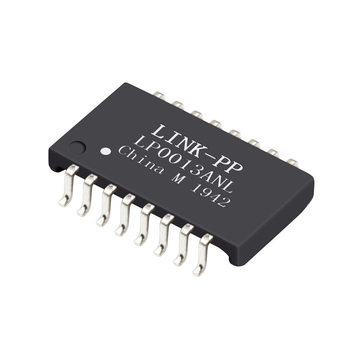
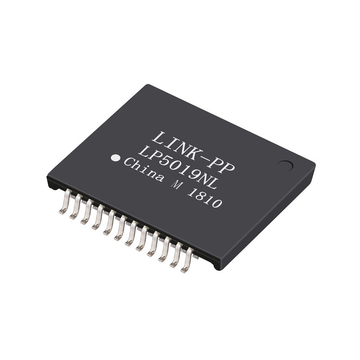
What Are LAN Transformers?
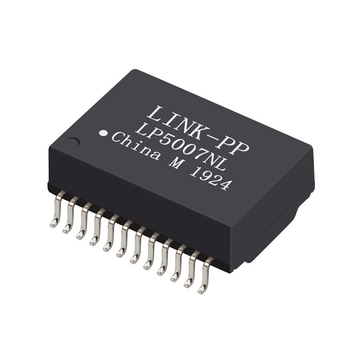
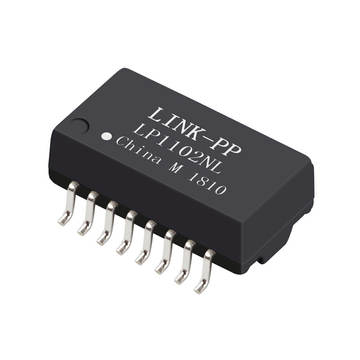
LAN transformers are magnetic interface modules designed for Ethernet equipment to couple data signals between the PHY transceiver and network cables. Also known as Ethernet transformers, their primary functions include:
- High-Voltage Isolation: Isolates DC offsets and protects sensitive PHY chips from high voltage and ESD damage.
- Signal Transmission: Efficiently couples differential signals for stable, long-distance transmission.
- Impedance Matching: Balances line impedance to eliminate reflections and preserve signal integrity.
- EMI Suppression: Filters common-mode noise and cable interference to reduce electromagnetic radiation.
Types of LAN Transformers
LAN transformers are engineered in diverse hardware configurations to meet distinct network speeds, physical board constraints, power delivery standards, and channel density requirements across commercial, enterprise, and industrial deployments.
1. By Port Count
- Single-Port LAN Transformers: Feature an isolated single-channel magnetic design optimized for space-constrained embedded computing boards, IP cameras, and consumer network endpoints.
- Dual-Port LAN Transformers: Integrate two independent Ethernet channels within a unified package to support dual-NIC industrial PCs, redundant network gateways, and edge appliances.
- Quad-Port LAN Transformers: House four separate channels to maximize PCB routing efficiency and trace layout density in multi-port routers, enterprise switches, and server network interface cards.
2. By Transmission Rate
- 10/100BASE-T LAN Transformers: Utilize two differential signal pairs designed for low-bandwidth IoT modules, utility meters, and legacy industrial automated equipment.
- 1000BASE-T LAN Transformers: Employ four twisted pairs to deliver full-duplex gigabit speeds across desktop motherboards, commercial routers, and standard enterprise switches.
- 2.5GBASE-T LAN Transformers: Deliver enhanced high-frequency filtering to support multi-gigabit throughput for Wi-Fi 6 APs, high-performance network adapters, and mainstream NAS units.
- 5GBASE-T LAN Transformers: Provide advanced return-loss suppression and minimal signal distortion to handle intermediate enterprise aggregation links and advanced Wi-Fi 7 wireless access points.
- 10GBASE-T LAN Transformers: Engineered with ultra-low parasitic capacitance to ensure exceptional signal fidelity up to 500MHz in cloud data centers, high-end workstations, and backbone network fabrics.
3. By PoE (Power over Ethernet) Capability
- Non-PoE LAN Transformers: Built solely for pure data transmission lines without DC bias capability, lowering module footprint and manufacturing costs.
- PoE LAN Transformers (IEEE 802.3af): Integrate center-tap direct current injection up to 350 mA per pair to power basic VoIP telephones and fixed network security cameras up to 15.4W.
- PoE+ LAN Transformers (IEEE 802.3at): Designed with anti-saturation magnetic cores rated for 600–720mA per pair to safely drive motorized PTZ dome cameras and dual-band wireless access points up to 30W.
- PoE++ LAN Transformers (IEEE 802.3bt): Incorporate heavy-gauge copper windings and high-saturation toroids capable of supporting four-pair power delivery from 60W to 100W for smart building lighting, digital displays, and high-draw industrial hardware.
4. By Form Factor and Profile Height
- Low-Profile PCMCIA Transformers: Feature ultra-thin packaging (typically under 2.8 mm in height) suited for ultra-compact embedded cards, thin expansion modules, and tight Z-axis vertical clearances.
- Standard-Profile PCMCIA Transformers: Feature conventional package heights offering larger magnetic volume, superior heat dissipation, and broad footprint compatibility for standard industrial card and motherboard interfaces.
How to Choose the Right LAN Transformer
Selecting the right LAN transformer ensures stable signal quality, low noise, and proper hardware protection. Focus on these 5 core parameters when evaluating transformers:
| Parameter |
Definition |
Impact on Selection |
| Insertion Loss |
Signal power lost while passing through the transformer. |
Lower values mean less signal drop, ensuring stronger data transmission over long cables. |
| Return Loss |
The amount of signal reflected back due to impedance mismatch. |
Higher dB values mean fewer reflections, better line matching, and fewer packet errors. |
| Turns Ratio |
The ratio of primary to secondary coil windings. |
Must match PHY transceiver specs (e.g., 1:1) to ensure proper voltage and current levels. |
| Isolation Voltage |
The maximum voltage the transformer can withstand between windings. |
Higher ratings (1.5kV – 3kV) provide better defense against high-voltage surges and ESD. |
| Temperature Grade |
The safe operational thermal range (Commercial vs. Industrial). |
Industrial ratings (-40°C to +85°C) prevent signal drift and hardware failure in harsh environments. |
Applications of LAN Transformers
LAN transformers provide essential signal conditioning, galvanic isolation, and noise suppression across Ethernet-based systems. Their versatility ensures reliable, high-performance connectivity across several critical sectors:
- Industrial Automation: Ensures reliable data transmission and suppresses common-mode noise to protect sensitive PHY transceivers in harsh factory environments like PLCs and HMIs.
- Networking Hardware: Delivers galvanic isolation and maintains high-bandwidth signal integrity in routers, enterprise switches, and wireless access points.
- Smart Consumer Electronics: Provides stable, interference-free wired connectivity for smart TVs, set-top boxes, and multimedia streaming hubs.
- Power over Ethernet (PoE): Simultaneously safeguards data integrity and enables safe DC power delivery for IP cameras and VoIP systems.
- Data Centers: Supports high-speed, high-density Ethernet links across rack servers, storage arrays, and switch fabrics.
FAQ
Below are answers to common engineering questions about LAN transformer performance and hardware design.
How do LAN transformers handle Power over Ethernet (PoE)?
PoE-compatible transformers utilize center-tapped windings to inject or extract DC current evenly across differential wire pairs without saturating the magnetic core. This balanced architecture allows continuous DC power delivery while high-speed Ethernet data transmits unimpeded.
Does a LAN transformer's isolation voltage rating equal full Ethernet surge protection?
No, the isolation voltage merely indicates the dielectric threshold that the LAN transformer's internal insulation can withstand under specific test parameters. True surge and ESD immunity depend on the entire Ethernet front-end design, working in tandem with the LAN transformer alongside TVS diodes, PCB clearances, grounding, and connector shielding.
Are the PHY side and cable side of a LAN transformer interchangeable?
No, they cannot be reversed interchangeably because many LAN transformer designs feature asymmetric common-mode chokes, specialized center-tap configurations, or dedicated PoE paths. Hardware designers should strictly adhere to the LAN transformer pinout and internal schematic specified in the product datasheet, even if the primary and secondary turns ratios look identical.
What is the purpose of a center tap in a LAN transformer?
Center taps on a LAN transformer serve as critical intermediate nodes for PHY DC-biasing, common-mode voltage termination, and the injection or extraction of PoE power. By feeding current through these symmetrical balance points, the LAN transformer enables DC power to run concurrently with high-speed differential Ethernet signals without degrading link performance.
Standards & Certifications
Our LAN transformers meet rigorous international standards to ensure safety, reliability, and environmental responsibility:
- CE Marking: Confirms compliance with European health, safety, and electromagnetic compatibility (EMC) directives.
- RoHS & REACH: Ensures all materials are free from hazardous substances and environmentally friendly.
- UL Recognized: Certified under UL safety standards for electrical insulation and fire resistance.
- ISO 9001: Manufactured under strict quality management and environmental protection systems.
Ordering & Support Services
- Warranty & RMA: Backed by a 3–5 year warranty with hassle-free RMA replacement.
- Technical Support: Direct assistance from the LINK-PP Test Support Center for PHY matching and circuit design.
- Global Shipping: Fast and reliable international delivery with flexible logistics options to support your project timelines.
- Samples & Customization: Free evaluation samples and flexible OEM custom specifications to fit your layout.
Find reliable LAN transformers at the LINK-PP Official Store, or contact our team with your required specs and order quantity to get a fast quote.