





























Modern enterprise networks are rapidly evolving toward higher bandwidth and lower latency to support cloud computing, virtualization, and data-intensive applications. As 10Gbps connectivity becomes the baseline for aggregation and server access layers, optical transceivers play a critical role in ensuring stable and efficient data transmission. In this context, multimode fiber solutions remain widely adopted for short-distance links due to their balance of cost, performance, and ease of deployment.
Among these solutions, the Ubiquiti UACC-OM-MM-10G-D has gained attention as a 10G SFP+ multimode module designed to integrate seamlessly within Ubiquiti’s networking ecosystem. It is commonly used in enterprise LANs, data centers, and campus environments where reliable short-range fiber connectivity is essential. Understanding its specifications, real-world performance, and compatibility is key for making informed network design decisions.
This article provides a comprehensive breakdown of the UACC-OM-MM-10G-D, covering its full technical specifications, performance characteristics, interoperability, and deployment scenarios. By the end, you will gain a clear understanding of how this module fits into modern network infrastructures and how to evaluate whether it aligns with specific operational requirements.
✅ Overview of Ubiquiti UACC-OM-MM-10G-D
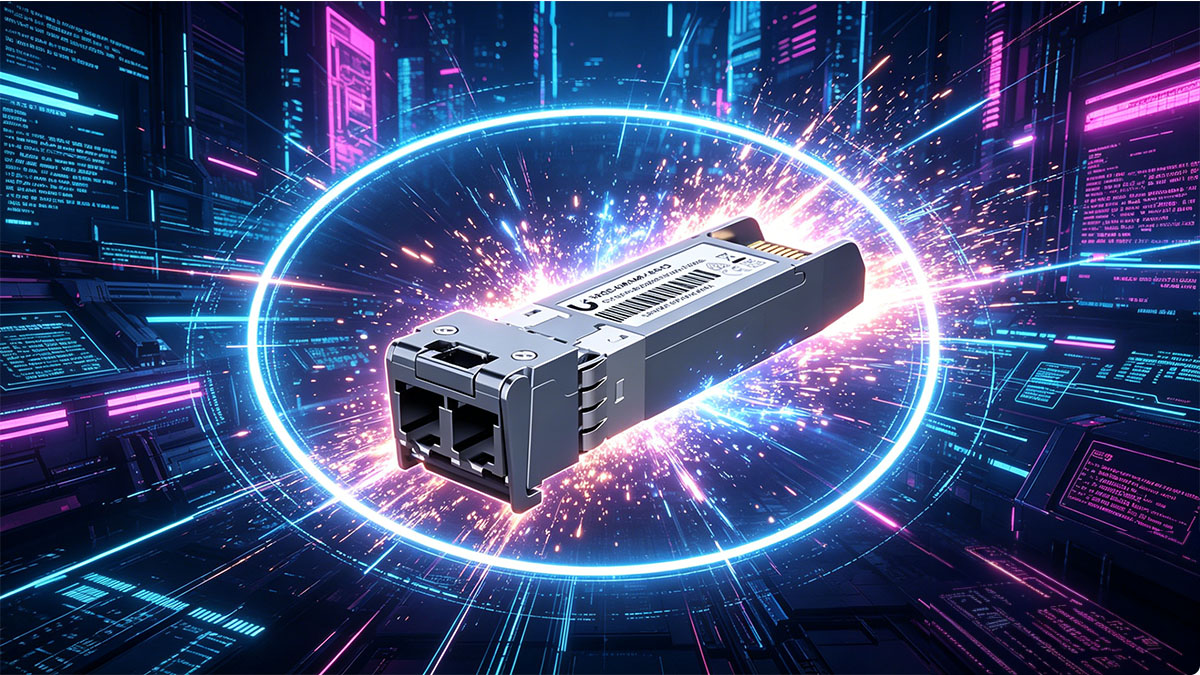
The Ubiquiti UACC-OM-MM-10G-D is a 10Gbps SFP+ multimode optical transceiver designed for short-range, high-speed fiber connectivity within enterprise and data center environments. It is optimized for seamless integration with Ubiquiti switching platforms while maintaining compatibility with standard 10GBASE-SR deployments.
Product Positioning in Ubiquiti Ecosystem
The module is primarily positioned as a native optical solution for Ubiquiti’s UniFi and EdgeSwitch product lines, enabling reliable 10Gbps uplinks and interconnections. It is most commonly deployed in scenarios where low latency and stable throughput are required over short distances.
Typical use cases include:
- Aggregation links between access and distribution switches
- Server-to-switch connections in data centers
- High-speed uplinks in enterprise LAN environments
- Short-distance backbone links within campus networks
These deployment scenarios highlight its role as a cost-efficient alternative to single mode transceivers when long-distance transmission is not required.
Key Features at a Glance
The core capabilities of the UACC-OM-MM-10G-D focus on delivering consistent 10Gbps performance with minimal complexity in installation and operation.
| Parameter | Specification | Notes |
|---|---|---|
| Data Rate | 10Gbps | Supports 10G Ethernet |
| Fiber Type | Multimode (MMF) | OM3 / OM4 recommended |
| Connector | LC Duplex | Standard interface |
| Form Factor | SFP+ | Hot-swappable |
| Transmission Mode | 850nm (SR) | Short-range optical signaling |
These features make the module suitable for high-density switching environments where ease of deployment and predictable performance are critical.
In practical terms, its SFP+ form factor ensures plug-and-play installation, while the use of multimode fiber reduces overall infrastructure costs for short-distance links. This combination positions the UACC-OM-MM-10G-D as a practical and efficient solution for modern 10Gbps network upgrades.
✅ UACC-OM-MM-10G-D Full Specifications Breakdown
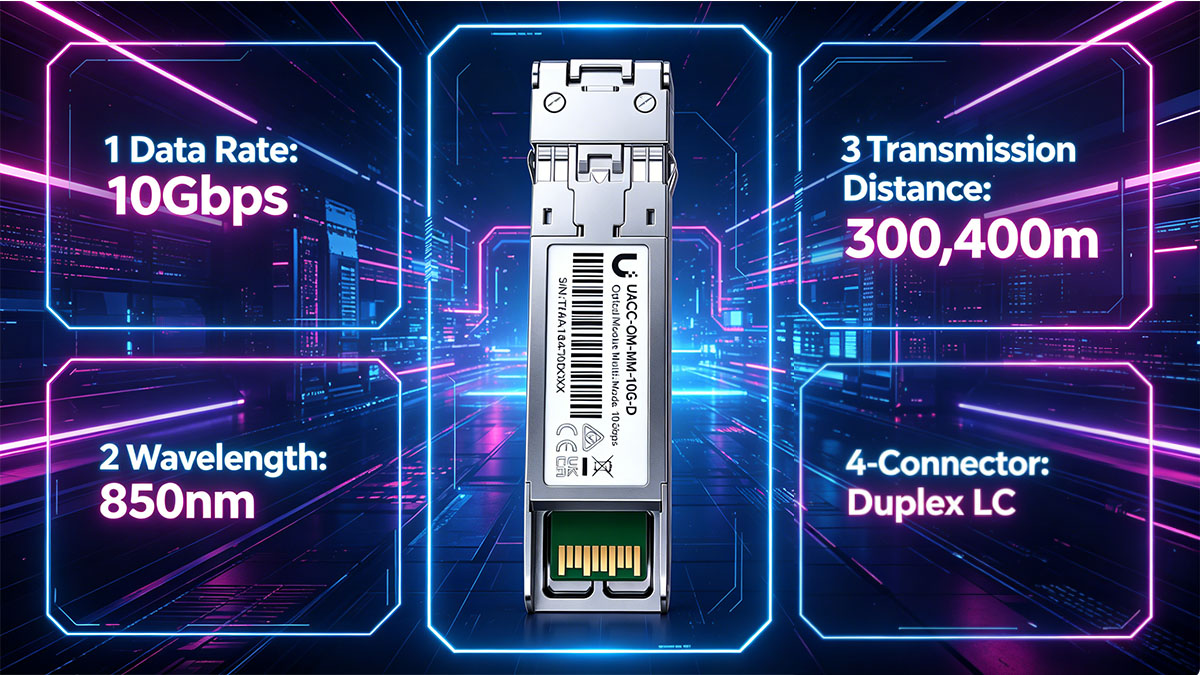
The UACC-OM-MM-10G-D follows the 10GBASE-SR standard and delivers 10Gbps transmission over multimode fiber, with typical reach up to 300m (OM3) and 400m (OM4). Its specifications are aligned with industry SFP+ optics, ensuring predictable performance in short-range deployments.
Optical and Transmission Parameters
This module operates at 850nm and is optimized for multimode fiber, making it ideal for high-speed, short-distance communication within structured cabling systems.
| Parameter | Value | Description |
|---|---|---|
| Wavelength | 850nm | VCSEL-based transmission |
| Max Distance | 300m / 400m | OM3 / OM4 fiber support |
| Fiber Type | Multimode (MMF) | Optimized for short-range links |
| Connector Type | LC Duplex | Standard fiber interface |
These optical characteristics ensure efficient signal propagation with low attenuation over short distances. In practical deployments, selecting OM4 fiber can extend link reach and improve signal margin, especially in dense environments.
Electrical and Interface Specifications
The module is built on the SFP+ form factor and complies with 10G Ethernet standards, enabling seamless interoperability with modern switching hardware.
| Parameter | Value | Description |
|---|---|---|
| Form Factor | SFP+ | Hot-swappable interface |
| Data Rate | 10Gbps | Line-rate transmission |
| Standard | 10GBASE-SR | IEEE 802.3ae compliant |
| Diagnostics Support | Yes | DDM/DOM real-time monitoring |
These specifications allow the module to be deployed without complex configuration. The presence of DDM/DOM support enables network administrators to monitor key metrics such as temperature, voltage, and optical power, improving operational visibility.
Environmental and Physical Characteristics
The UACC-OM-MM-10G-D is designed to operate reliably under standard data center and enterprise conditions, with a focus on energy efficiency and thermal stability.
| Parameter | Value | Description |
|---|---|---|
| Operating Temperature | 0°C to 70°C | Commercial operating range |
| Storage Temperature | -40°C to 85°C | Safe storage conditions |
| Power Consumption | <1W | Energy-efficient design |
| Build Type | Industrial-grade | Durable metal housing |
These environmental characteristics make the module suitable for high-density switch deployments where thermal management and power efficiency are critical. Lower power consumption not only reduces operational costs but also helps maintain stable performance across densely populated SFP+ ports.
✅ Performance Analysis in Real-World Deployments
In real-world environments, the UACC-OM-MM-10G-D consistently delivers stable 10Gbps throughput with low latency, making it well-suited for short-range, high-density fiber deployments. Its performance aligns closely with standard 10GBASE-SR expectations, particularly when paired with OM3 or OM4 multimode fiber.
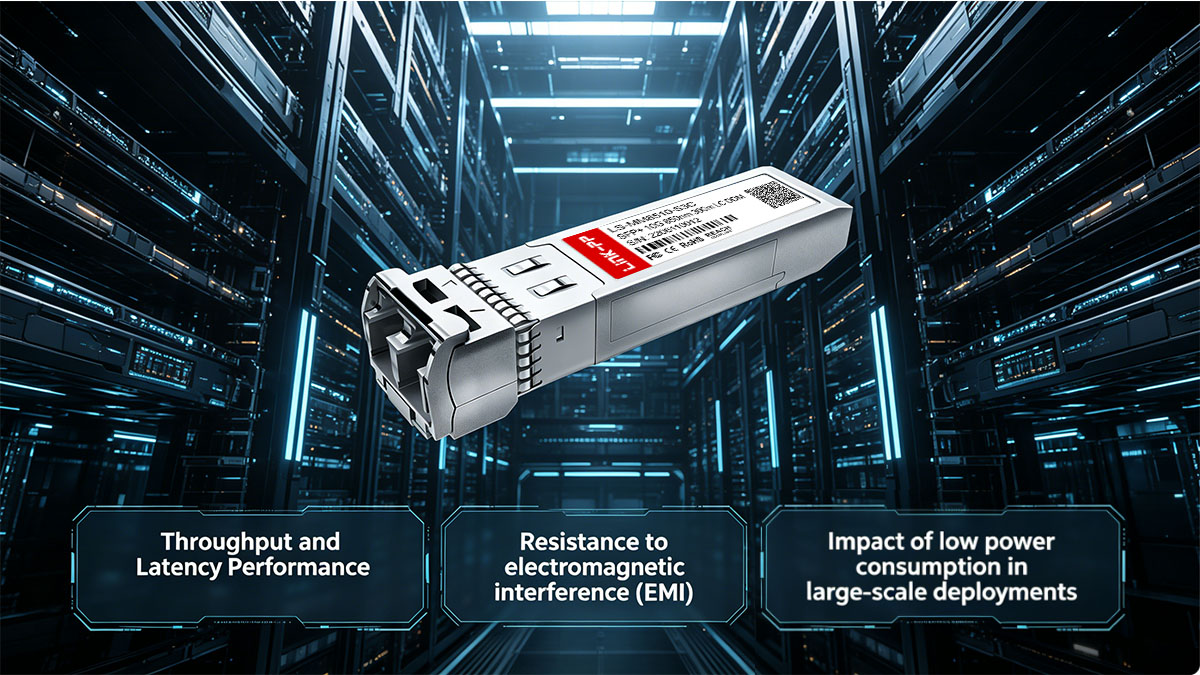
Throughput and Latency Performance
Under typical enterprise and data center workloads, this module maintains near line-rate throughput with minimal latency overhead. It is especially effective in scenarios where east-west traffic dominates, such as virtualization clusters and storage networks.
Key performance characteristics include:
- Sustained 10Gbps throughput without noticeable packet loss under normal load conditions
- Low latency transmission, typically within microsecond-level overhead
- Consistent performance across short-distance links (≤400m)
- No need for additional tuning in standard deployments
These attributes ensure that the module can support bandwidth-intensive applications such as real-time data processing and high-speed backups without becoming a bottleneck.
Reliability and Signal Integrity
Signal stability is a critical factor in optical networking, and the UACC-OM-MM-10G-D demonstrates strong reliability when deployed within its specified range and fiber type.
| Metric | Typical Performance | Notes |
|---|---|---|
| Bit Error Rate (BER) | ≤ 10⁻¹² | Meets 10GBASE-SR standards |
| Signal Stability | High | Stable over OM3/OM4 links |
| EMI Immunity | Strong | Fiber-based transmission advantage |
| Packet Loss | Negligible | Under proper installation |
These metrics indicate that the module maintains high signal integrity even in environments with significant electromagnetic interference, which is a common challenge in dense data center racks.
In practice, maintaining clean fiber connections and proper cable management further enhances reliability and minimizes the risk of signal degradation.
Power Efficiency Considerations
Power consumption remains low, typically under 1W per module, which is advantageous in large-scale deployments with many active ports. This efficiency contributes to both thermal stability and reduced operational costs.
From a deployment perspective, the impact of power efficiency can be summarized as follows:
- Lower heat generation per port, reducing cooling requirements
- Improved switch stability in high-density SFP+ configurations
- Reduced overall energy consumption in large networks
- Better long-term hardware reliability due to controlled temperatures
These factors make the module particularly suitable for environments where dozens or even hundreds of optical ports are active simultaneously, such as aggregation switches and top-of-rack architectures.
✅ Compatibility and Interoperability
The UACC-OM-MM-10G-D is fully compatible with Ubiquiti SFP+ platforms and can interoperate with many third-party switches when proper coding and standards alignment are ensured. Its adherence to 10GBASE-SR specifications makes it broadly usable across modern 10Gbps network environments.

Supported Ubiquiti Devices
This module is designed to work natively within Ubiquiti’s switching ecosystem, ensuring seamless integration and stable operation without additional configuration.
Typical supported device categories include:
- UniFi switches with SFP+ uplink ports
- EdgeSwitch series supporting 10Gbps interfaces
- Aggregation switches used in enterprise and campus networks
- Ubiquiti routing platforms with SFP+ slots
In these environments, the module benefits from plug-and-play functionality, where the device firmware automatically recognizes and initializes the transceiver. This reduces deployment complexity and eliminates compatibility uncertainty.
Multi-Vendor Compatibility
Beyond Ubiquiti hardware, the UACC-OM-MM-10G-D can function in third-party switches that support standard 10GBASE-SR optics, although compatibility may depend on vendor-specific requirements.
| Vendor Type | Compatibility Level | Notes |
|---|---|---|
| Open-standard OEM | High | Works without restrictions in most cases |
| Cisco-compatible | Moderate | May require vendor coding |
| MikroTik | High | Generally accepts standard SFP+ modules |
| Other branded OEMs | Variable | Firmware checks may apply |
This comparison highlights that while the optical standard is universal, some vendors implement transceiver validation mechanisms. In such cases, compatibility depends on EEPROM coding or firmware allowances.
To ensure stable operation in multi-vendor environments, it is important to verify switch compatibility lists or use properly coded modules when required.
Plug-and-Play Deployment
The module supports hot-swappable installation, allowing it to be inserted or removed without powering down network equipment. This simplifies maintenance and minimizes service interruptions.
The deployment process typically involves:
- Inserting the SFP+ module into the switch port
- Connecting the LC duplex fiber cable
- Allowing the switch to automatically detect the module
- Verifying link status and signal levels via system interface
This straightforward workflow reduces deployment time and lowers the risk of configuration errors.
In addition, support for DDM/DOM enables administrators to monitor real-time parameters such as optical power and temperature, which helps quickly identify compatibility or link issues during operation.
✅ Deployment Scenarios and Use Cases
The UACC-OM-MM-10G-D is best suited for short-distance 10Gbps fiber links in enterprise, data center, and campus environments, where multimode infrastructure is already in place and low-latency communication is required. Its design makes it a practical choice for upgrading network segments without introducing unnecessary complexity or cost.
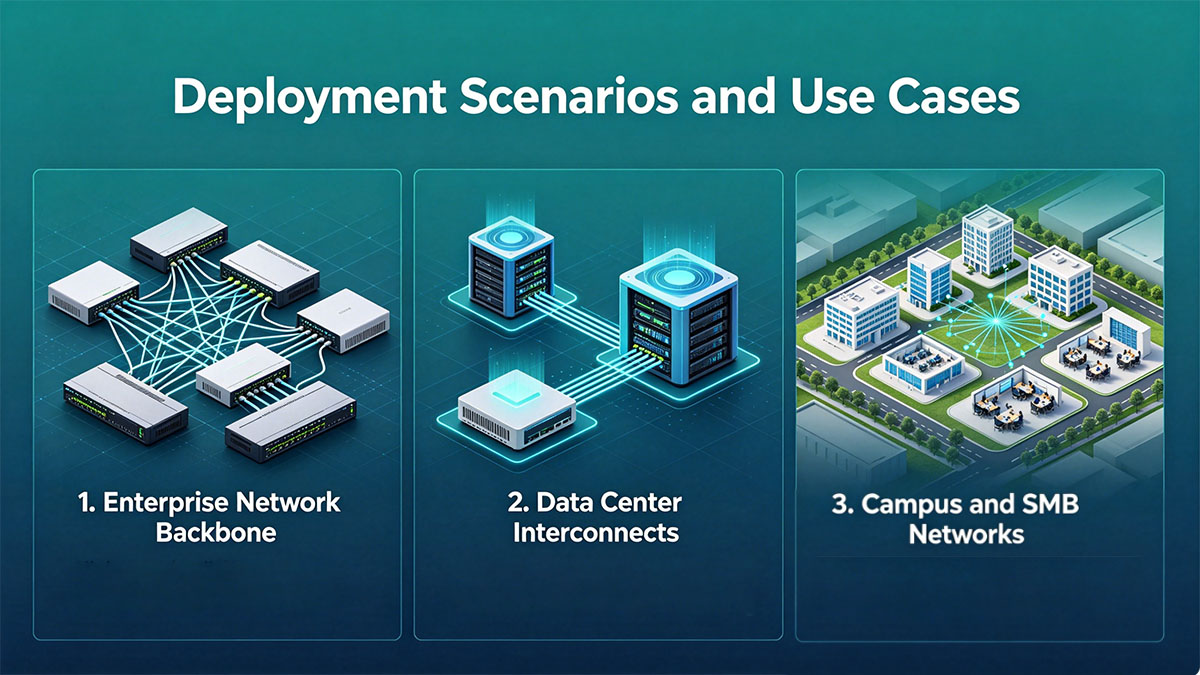
Enterprise Network Backbone
In enterprise networks, this module is commonly used to establish high-speed aggregation links between access and distribution layers. It enables efficient data flow across different parts of the network while maintaining predictable performance.
Typical deployment roles include:
- Uplink connections from access switches to aggregation switches
- Interconnection between distribution and core layers in compact networks
- High-speed links supporting bandwidth-intensive departments or services
These use cases benefit from the module's ability to deliver stable 10Gbps throughput over existing multimode cabling, reducing the need for infrastructure replacement.
Data Center Interconnects
Within data centers, the UACC-OM-MM-10G-D is widely used for short-range connections between servers and switches, particularly in top-of-rack architectures. It supports high-density deployments where multiple 10Gbps links operate simultaneously.
| Scenario | Typical Distance | Deployment Role |
|---|---|---|
| Server to ToR switch | 5m–30m | High-speed access connectivity |
| ToR to aggregation switch | 30m–100m | East-west traffic aggregation |
| Rack-to-rack links | 50m–150m | Intra-data center backbone |
| Row-level interconnect | 100m–300m | Structured cabling connections |
These scenarios demonstrate how the module fits into different layers of a data center, providing consistent performance across varying link distances. Its low latency and reliability make it suitable for virtualization, storage traffic, and distributed computing workloads.
Campus and SMB Networks
For campus and small-to-medium business networks, the module provides a cost-effective solution for upgrading inter-building or intra-building links to 10Gbps.
Common use cases include:
- Fiber connections between buildings within a campus
- Backbone links across different floors in office environments
- Upgrading legacy SFP 1G links to SFP+ 10G without changing fiber type
- Supporting high-bandwidth applications such as video conferencing and centralized storage
These deployments highlight the advantage of leveraging multimode fiber for moderate distances while maintaining scalability. In many cases, organizations can reuse existing OM3 or OM4 cabling, making the upgrade path more efficient and budget-friendly.
✅ Comparison with Similar 10G SFP+ Modules
The UACC-OM-MM-10G-D offers performance comparable to standard 10GBASE-SR SFP+ modules, with advantages in ecosystem integration and ease of deployment, while sharing similar physical and optical characteristics with other multimode transceivers.
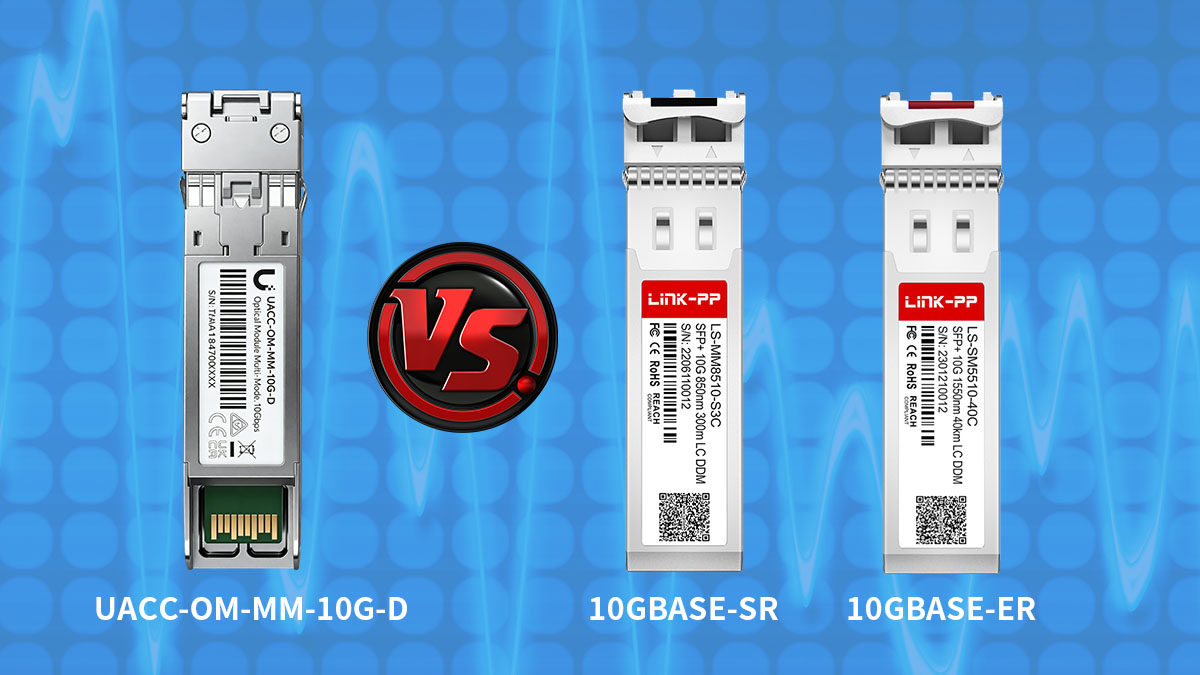
UACC-OM-MM-10G-D vs Generic 10GBASE-SR Modules
In terms of core specifications, this module aligns closely with generic 10GBASE-SR optics. The main differences lie in firmware compatibility, quality assurance, and integration within specific network environments.
| Parameter | UACC-OM-MM-10G-D | Generic 10GBASE-SR Module |
|---|---|---|
| Data Rate | 10Gbps | 10Gbps |
| Wavelength | 850nm | 850nm |
| Max Distance | 300m / 400m | 300m / 400m |
| Compatibility | Optimized for Ubiquiti | Varies by vendor |
This comparison shows that while hardware capabilities are nearly identical, the UACC-OM-MM-10G-D provides more predictable behavior within Ubiquiti systems. Generic modules may work similarly but can introduce uncertainty depending on switch firmware policies.
In environments where stability and vendor alignment are priorities, using a native module reduces potential interoperability issues.
Comparison with Single-Mode Alternatives
When compared to single-mode SFP+ modules, the primary difference lies in transmission distance and cost structure rather than raw data rate.
| Parameter | Multimode (UACC-OM-MM-10G-D) | Single-Mode SFP+ |
|---|---|---|
| Fiber Type | MMF (OM3/OM4) | SMF |
| Max Distance | Up to 400m | Up to 10km or more |
| Cost Structure | Lower (module + cabling) | Higher overall cost |
| Use Case | Short-range links | Long-distance links |
This distinction makes multimode modules more suitable for data centers and campus networks, while single-mode optics are preferred for long-haul or inter-building connections over several kilometers.
Selecting between the two depends primarily on distance requirements and existing fiber infrastructure.
Key Selection Considerations
Choosing the right 10G SFP+ modules depends on several practical factors related to network design and operational constraints.
Key decision points include:
- Required transmission distance (short-range vs long-range)
- Existing fiber infrastructure (MMF vs SMF)
- Switch compatibility and vendor restrictions
- Budget considerations for both modules and cabling
- Future scalability and upgrade path
These considerations help ensure that the selected module aligns with both current deployment needs and long-term network evolution. In most short-distance scenarios, the UACC-OM-MM-10G-D provides a balanced solution combining performance, compatibility, and cost efficiency.
✅ Advantages and Limitations
The UACC-OM-MM-10G-D provides a balanced combination of performance, cost efficiency, and ease of deployment for short-range 10Gbps connectivity, but it is inherently limited by the characteristics of multimode fiber and short-distance transmission.

Key Advantages
This module is particularly advantageous in environments where simplicity, reliability, and cost control are priorities, especially within existing multimode fiber infrastructures.
Key benefits include:
- Seamless integration with Ubiquiti switches, ensuring stable and predictable operation
- Cost-effective solution for short-distance 10Gbps links compared to single-mode alternatives
- Plug-and-play deployment with hot-swappable SFP+ form factor
- Low power consumption, supporting high-density switch environments
- Reliable performance with low latency and minimal signal interference
These advantages make it well-suited for enterprise LANs, data centers, and campus networks where distances remain within a few hundred meters and operational efficiency is critical.
Potential Limitations
Despite its strengths, the module has clear limitations that should be considered during network design and planning.
| Limitation Area | Description | Impact |
|---|---|---|
| Transmission Distance | Limited to ≤400m | Not suitable for long-haul links |
| Fiber Requirement | Requires OM3/OM4 multimode fiber | May limit flexibility |
| Scalability Range | Restricted to short-range expansion | Additional solutions needed |
| Vendor Optimization | Best with Ubiquiti ecosystem | Mixed results in some OEMs |
These limitations highlight that the module is not a universal solution for all network scenarios. Its effectiveness depends heavily on deployment context, particularly fiber type and distance requirements.
In practice, careful evaluation of network topology and future expansion plans helps determine whether multimode optics like the UACC-OM-MM-10G-D can meet both current and long-term needs.
✅ Best Practices for Deployment and Optimization
To achieve stable 10Gbps performance with the UACC-OM-MM-10G-D, it is essential to follow proper fiber selection, installation procedures, and ongoing monitoring practices. Correct deployment not only ensures optimal signal quality but also extends the lifespan of both the module and the overall network infrastructure.
Fiber Cabling Recommendations
Using the appropriate multimode fiber type and maintaining proper cabling standards directly impacts transmission distance and signal integrity.
| Fiber Type | Maximum Distance | Recommended Use Case |
|---|---|---|
| OM3 | Up to 300m | Standard enterprise cabling |
| OM4 | Up to 400m | High-performance environments |
| OM5 | Up to 400m+ | Future-ready infrastructure |
Selecting OM4 fiber is generally preferred for new deployments due to its improved bandwidth and extended reach. OM3 remains suitable for existing infrastructures where cost control is a priority.
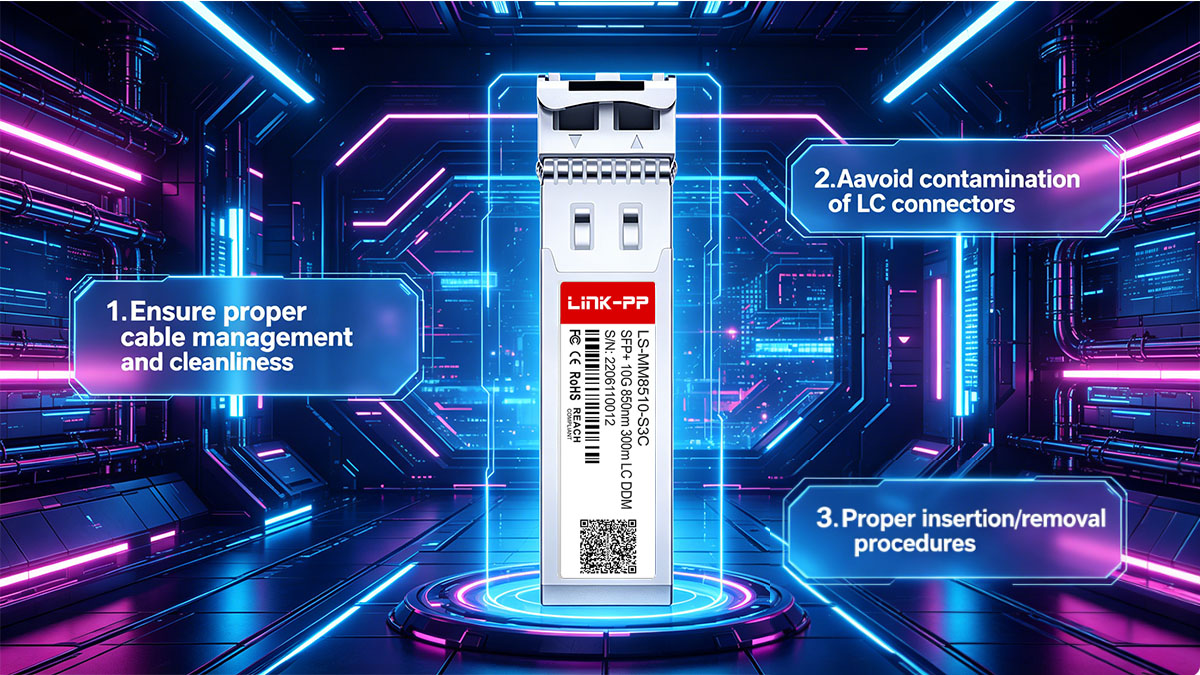
In addition to fiber type, maintaining clean and properly terminated LC connectors is critical. Contaminated or poorly aligned connectors can significantly degrade signal quality even over short distances.
Installation and Handling Tips
Proper handling during installation minimizes the risk of physical damage and ensures consistent optical performance.
Recommended steps include:
- Inspect and clean fiber connectors before insertion
- Avoid excessive bending or stress on fiber cables
- Insert the module firmly into the SFP+ port until fully seated
- Ensure correct Tx/Rx polarity when connecting LC duplex cables
- Use dust caps when ports or cables are not in use
Following these steps reduces the likelihood of link failures and helps maintain stable operation from the initial deployment stage.
In high-density environments, organized cable management also plays an important role in preventing accidental disconnections and simplifying maintenance.
Monitoring and Maintenance
Ongoing monitoring is essential for maintaining long-term performance and quickly identifying potential issues in optical links.
| Monitoring Parameter | Purpose | Benefit |
|---|---|---|
| Temperature | Detect overheating | Prevent hardware degradation |
| Voltage | Ensure stable power input | Improve reliability |
| Tx/Rx Optical Power | Monitor signal strength | Identify link degradation |
| Link Status | Verify connectivity | Enable rapid troubleshooting |
These parameters are accessible through DDM/DOM features supported by the module, allowing real-time visibility into operating conditions.
Regular inspection and monitoring help detect early signs of issues such as signal attenuation or connector contamination. By addressing these proactively, network administrators can maintain consistent 10Gbps performance and avoid unexpected downtime.
✅ Future Trends in 10G Multimode Optical Modules
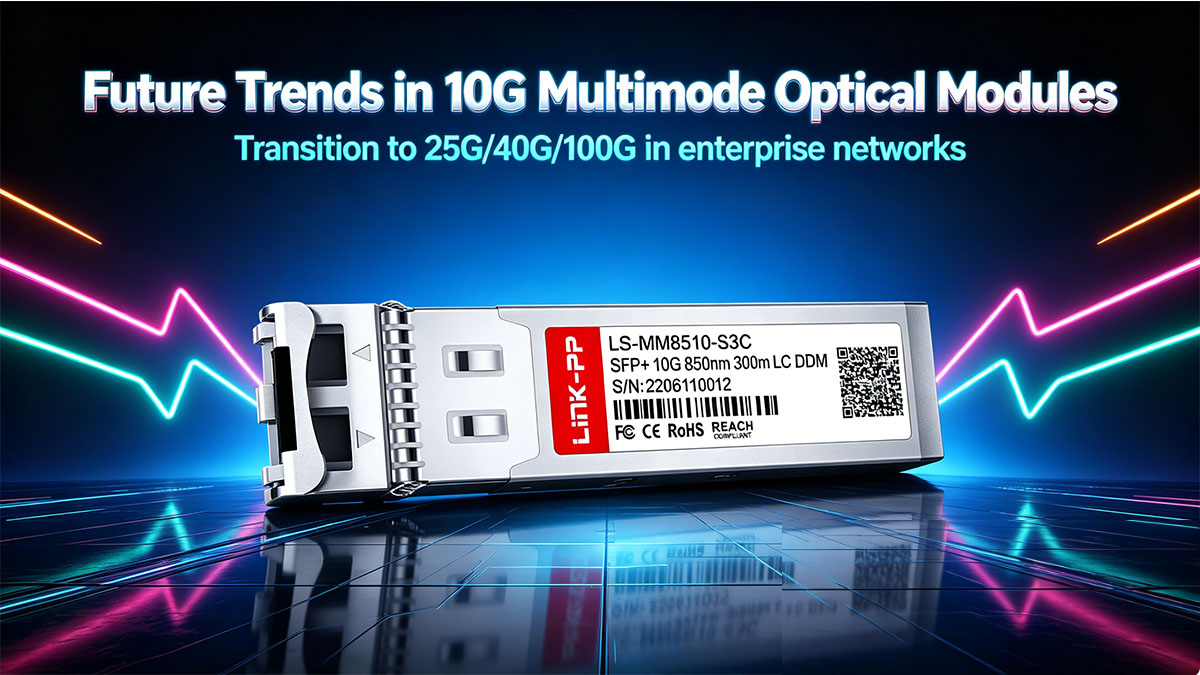
10G multimode optical modules like the UACC-OM-MM-10G-D continue to play an important role in modern networks, even as higher-speed technologies evolve. Their future relevance is shaped by increasing bandwidth demand, infrastructure reuse strategies, and the gradual transition toward higher-speed Ethernet standards.
Evolution Toward Higher-Speed Ethernet Standards
As enterprise and data center networks expand, there is a clear shift toward SFP28 25G, QSFP+ 40G, and QSFP28 100G optical connectivity. However, 10Gbps multimode modules remain widely deployed due to their maturity and cost efficiency.
Key industry trends include:
- Gradual migration from 10Gbps to 25Gbps in access and aggregation layers
- Increased adoption of breakout architectures (e.g., 40G to 4×10G)
- Continued use of 10G links in management, monitoring, and legacy systems
- Standardization of higher-speed PAM4 based optics for backbone scaling
These developments indicate that while 10G is no longer the highest-performance tier, it remains a stable foundation for many operational networks.
Continued Role of Multimode Fiber Infrastructure
Multimode fiber continues to be widely deployed in enterprise and campus environments, ensuring that 10G SR-class modules remain relevant for years to come.
| Factor | Multimode Fiber (MMF) Impact | Industry Implication |
|---|---|---|
| Existing Install Base | Extensive OM3/OM4 deployments | Reduces upgrade pressure |
| Cost Efficiency | Lower transceiver and cabling cost | Ideal for short-range links |
| Deployment Speed | Easy reuse of existing infrastructure | Faster network upgrades |
| Distance Suitability | Optimized for ≤400m links | Fits most intra-building needs |
Because large-scale fiber replacement is expensive and disruptive, many organizations continue leveraging existing multimode infrastructure. This ensures that SFP 10G SR modules remain a practical and economical solution for short-distance connectivity.
Integration with Hybrid and Scalable Network Architectures
Future network designs increasingly combine multiple speed tiers and fiber types to balance performance and cost. In this context, 10G multimode modules serve as a stable intermediate layer.
Common architectural trends include:
- Hybrid networks combining 10G, 25G, and 100G links
- Modular upgrades where access layers remain at 10G while core layers scale upward
- Increased use of leaf-spine topologies with mixed-speed leaf nodes
- Gradual replacement cycles instead of full infrastructure overhauls
This hybrid approach allows organizations to extend the lifecycle of 10G multimode optics while planning gradual transitions to higher-speed technologies.
In practical terms, modules like the UACC-OM-MM-10G-D will continue to function as a reliable connectivity layer in environments where full migration to next-generation optics is not immediately necessary, ensuring long-term operational flexibility.
✅ Conclusion
The Ubiquiti UACC-OM-MM-10G-D is a reliable 10Gbps SFP+ multimode transceiver designed for short-range, high-performance optical connectivity. Across specifications, real-world performance, compatibility, and deployment scenarios, it consistently demonstrates strong suitability for enterprise LANs, data centers, and campus networks where multimode fiber infrastructure is already in place. As a 10GBASE-SR optical module, it balances stable throughput, low latency, and seamless integration within Ubiquiti networking environments.
Key Points
To better understand its practical value in modern network deployments, the main strengths can be summarized as follows:
- Stable 10Gbps performance over OM3/OM4 multimode fiber up to 300m–400m
- Seamless compatibility within Ubiquiti switch ecosystems and broad support for standard SFP+ ports
- Low power consumption and efficient thermal behavior for high-density environments
- Simplified plug-and-play deployment with hot-swappable design and DDM/DOM monitoring support
- Cost-efficient upgrade path for short-range fiber infrastructure without full system redesign
These advantages make it a practical choice for organizations optimizing short-distance network performance while maintaining infrastructure efficiency and operational stability.
Final Perspective and Action Guidance
In modern network evolution, multimode 10G optical modules continue to serve as a foundational connectivity layer, especially in environments where existing fiber infrastructure is widely deployed. The UACC-OM-MM-10G-D stands out as a dependable option for maintaining high-speed performance without unnecessary complexity or infrastructure replacement.
For organizations planning network upgrades or expanding 10Gbps deployments, selecting well-matched optical modules is critical to ensuring long-term stability and scalability. More detailed specifications, compatible solutions, and optical connectivity options can be explored through the LINK-PP Official Store, which provides a wide range of enterprise-grade transceiver solutions tailored for diverse networking needs.