


































Reliable SFP link performance is a foundational requirement for modern campus networks, where thousands of users, devices, and applications depend on stable connectivity every day. In environments such as universities, enterprise campuses, and healthcare facilities, even minor link instability can lead to service disruptions, degraded user experience, and increased operational complexity. As network architectures evolve to support higher bandwidth and lower latency, ensuring consistent SFP link reliability becomes increasingly critical.
At its core, an SFP link connects switches, routers, and other network devices using pluggable transceivers and fiber or copper media. These links are widely used across access, aggregation, and core layers due to their flexibility, scalability, and support for various transmission distances and speeds. However, this flexibility also introduces variability in performance, as link stability depends on multiple factors including transceiver quality, fiber infrastructure, environmental conditions, and network design.
In campus networks, where infrastructure often spans multiple buildings and diverse deployment scenarios, SFP links must operate under varying physical and operational constraints. Long-distance fiber runs, high-density switch deployments, and frequent network changes all increase the risk of signal degradation, compatibility issues, and unexpected failures. Without proper optimization, these challenges can compromise overall network reliability.
This article explores how to optimize SFP link reliability specifically for campus networks. It examines key influencing factors, outlines best practices for deployment and maintenance, and provides practical strategies for improving stability, resilience, and long-term performance. By applying these insights, network engineers can build more robust campus infrastructures capable of supporting current demands and future growth.
♣️ Understanding SFP Link Architecture in Campus Networks
SFP link architecture in campus networks is built around modular transceivers, standardized interfaces, and flexible cabling systems that enable scalable and reliable connectivity across different network layers. A clear understanding of how these components interact is essential for optimizing link stability and ensuring consistent performance in real-world deployments.
Key Components of an SFP Link
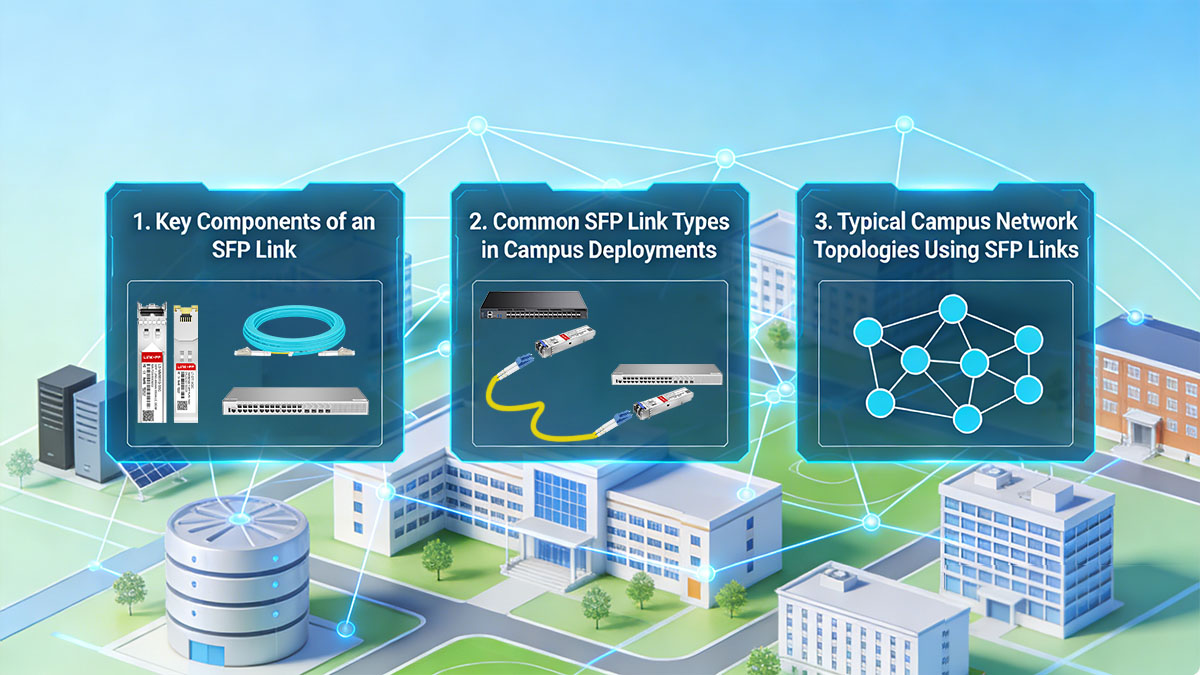
An SFP link consists of transceivers, transmission media, and switching hardware working together to deliver data reliably. Each component directly impacts signal quality and overall link stability.
- SFP transceivers: Convert electrical signals into optical signals (and vice versa) for fiber links, or handle electrical signaling in copper-based connections
- Fiber SFP or copper SFP cabling: Acts as the transmission medium, influencing attenuation, interference, and maximum distance
- Connectors and interfaces: Typically LC connectors for fiber, ensuring proper alignment and minimal signal loss
- Network switches and ports: Provide power, control, and data forwarding, while enforcing compatibility and link negotiation
Different combinations of these components define the behavior and reliability of an SFP link. For example, mismatched transceivers or poor-quality connectors can introduce signal degradation even if other elements are correctly configured.
Common SFP Link Types in Campus Deployments
Different SFP link types are designed for specific distance, bandwidth, and infrastructure requirements. Selecting the appropriate type is critical for maintaining reliable performance.
The most common SFP link configurations can be summarized as follows:
| Link Type | Fiber Type | Typical Distance | Common Use Case |
|---|---|---|---|
| SFP 1G SX | Multi-mode fiber (MMF) | Up to 550m | In-building access connections |
| SFP 1G LX | Single-mode fiber (SMF) | Up to 10km | Inter-building campus links |
| SFP+ 10G SR | Multi-mode fiber (MMF) | Up to 300m | High-speed aggregation |
| SFP+ 10G LR | Single-mode fiber (SMF) | Up to 10km | Core or long-distance backbone |
These link types differ not only in speed and distance but also in optical wavelength, power budget, and tolerance to signal degradation. For instance, multi-mode solutions are cost-effective for short distances, while single-mode links provide greater stability over longer campus spans.
Typical Campus Network Topologies Using SFP Links
Campus networks rely on structured topologies that use SFP links to interconnect different layers while maintaining redundancy and scalability.
- Access–aggregation–core architecture:
Access switches connect end devices, aggregation switches consolidate traffic, and core switches handle high-speed backbone routing. SFP links are commonly used between aggregation and core layers for higher bandwidth and longer reach. - Star topology:
Centralized design where multiple access switches connect to a central aggregation or core switch. This simplifies management but may require redundancy to avoid single points of failure. - Ring topology:
Switches are connected in a loop, allowing traffic to reroute in case of a link failure. This improves resilience but requires protocols like STP or ERPS to prevent loops. - Redundant link design:
Dual uplinks and link aggregation are frequently used to ensure continuous connectivity even if one SFP link fails.
Each topology introduces different reliability considerations. For example, star topologies depend heavily on central nodes, while ring designs emphasize fast failover mechanisms. Understanding these trade-offs helps in designing SFP link architectures that balance performance, cost, and fault tolerance.
♣️ Factors Affecting SFP Link Reliability
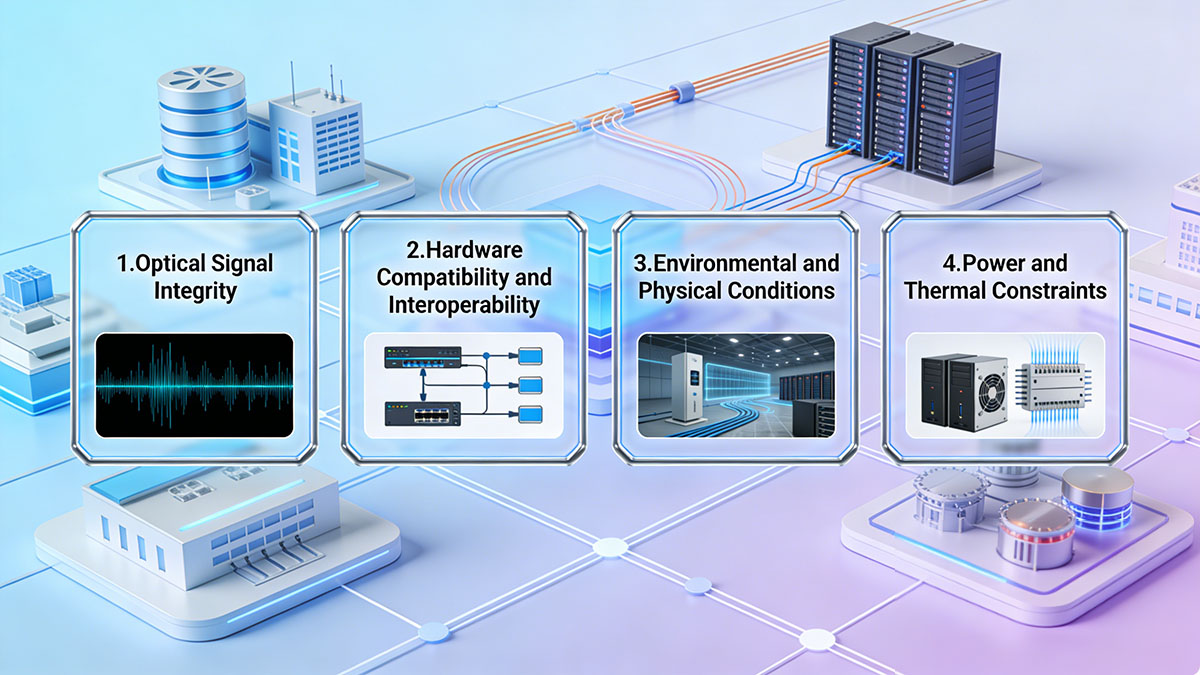
SFP link reliability in campus networks is primarily influenced by signal quality, hardware compatibility, environmental conditions, and power-related constraints. Identifying and controlling these factors is essential to minimize link failures, reduce packet loss, and maintain consistent network performance.
Optical Signal Integrity
Stable optical signal transmission is the most critical factor in maintaining reliable SFP links. Signal degradation directly leads to errors, retransmissions, and potential link instability.
The key optical factors impacting reliability can be summarized as follows:
| Parameter | Impact on Link | Typical Cause |
|---|---|---|
| Attenuation | Reduced signal strength | Long fiber distance, poor-quality cable |
| Dispersion | Signal distortion over distance | High data rates, long-haul transmission |
| Insertion Loss | Power loss at connection points | Dirty or misaligned connectors |
| Return Loss | Signal reflection | Improper fiber termination |
Attenuation increases with distance and directly reduces the received optical power, while dispersion becomes more significant at higher data rates such as 10Gbps and above. Insertion loss and return loss are often overlooked but are common causes of intermittent link issues in campus environments. Regular cleaning and proper connector alignment can significantly improve signal integrity.
Hardware Compatibility and Interoperability
Compatibility between SFP modules and network devices plays a crucial role in link stability. Even when physical connections are correct, mismatched hardware can cause unpredictable behavior.
- Vendor-specific coding may prevent third-party compatible SFP modules from being recognized
- EEPROM inconsistencies can lead to incorrect parameter reporting
- Firmware differences may affect link negotiation and stability
- Mixing different module standards can introduce performance inconsistencies
In campus networks with multi-vendor equipment, interoperability issues are a frequent source of link failures. Ensuring that SFP modules are properly coded and tested for compatibility with target switches reduces the risk of unexpected disconnections or degraded performance.
Environmental and Physical Conditions
Campus networks often span diverse environments, making SFP links vulnerable to physical and environmental stress.
- Temperature variations between equipment rooms and outdoor enclosures
- Dust contamination affecting fiber connectors and ports
- Physical stress from cable bending, pulling, or improper routing
- Exposure to moisture or vibration in certain deployment areas
These factors can gradually degrade link performance over time. For example, excessive bending of fiber cables increases attenuation, while dust contamination can significantly raise insertion loss. Maintaining controlled environments and proper cable management is essential for long-term reliability.
Power and Thermal Constraints
Power consumption and heat generation become increasingly important as network speeds and port densities grow. Poor thermal management can negatively impact SFP link stability.
- High-speed SFP+ modules generate more heat than 1G SFP modules
- Dense switch deployments can lead to localized overheating
- Insufficient airflow reduces cooling efficiency
- Power fluctuations may affect module operation
The relationship between power, temperature, and reliability can be summarized below:
| Factor | Effect on SFP Link | Risk Level |
|---|---|---|
| High temperature | Increased error rate, reduced lifespan | High |
| Power instability | Link flapping or module reset | Medium |
| Poor ventilation | Thermal buildup in switch ports | High |
| High port density | Heat concentration | Medium to High |
Sustained high temperatures can accelerate component aging and increase the likelihood of link failures. Proper cooling design, including airflow management and spacing, is critical in campus network equipment rooms.
By addressing these four key areas—optical integrity, compatibility, environmental conditions, and thermal management—network engineers can significantly improve the reliability and stability of SFP links across campus infrastructures.
♣️ Best Practices for Optimizing SFP Link Reliability
Improving SFP link reliability in campus networks requires a combination of correct component selection, high-quality infrastructure, proper installation, and continuous monitoring. Applying these best practices helps reduce failure rates, stabilize performance, and extend the lifespan of network links.

Proper Module Selection
Choosing the right SFP module for each deployment scenario is the first step toward ensuring stable link performance. Mismatched specifications are a common cause of unreliable links.
The key selection criteria can be summarized as follows:
| Parameter | Recommendation | Impact on Reliability |
|---|---|---|
| Wavelength | Match fiber type (850nm for MMF, 1310nm/1550nm for SMF) | Prevents signal mismatch |
| Transmission Distance | Select module with sufficient reach margin | Avoids weak signal issues |
| Data Rate | Align with switch port capability | Ensures stable operation |
| Operating Temperature | Use industrial-grade for harsh environments | Improves durability |
Selecting a module with some margin beyond the required distance helps accommodate unexpected losses in connectors or splices. Additionally, ensuring compatibility with switch vendors reduces the risk of link instability caused by recognition or firmware issues.
Fiber Infrastructure Optimization
The quality and layout of fiber cabling significantly influence SFP link reliability. Poor infrastructure can negate the benefits of high-quality transceivers.
- Use certified fiber cables with consistent specifications
- Maintain proper bend radius to prevent signal attenuation
- Avoid excessive cable length beyond design requirements
- Standardize connector types across the network
- Label and organize cables for easier maintenance
Well-designed fiber infrastructure minimizes physical stress and signal degradation. Consistency in cabling and connectors also simplifies troubleshooting and reduces the likelihood of configuration errors.
Installation and Handling Techniques
Incorrect handling during installation is a frequent source of long-term reliability problems. Proper procedures ensure that SFP links operate as expected from the start.
- Clean fiber connectors using appropriate tools before insertion
- Inspect end faces with fiber inspection scopes
- Avoid touching connector surfaces directly
- Insert and remove SFP modules carefully to prevent port damage
- Follow electrostatic discharge (ESD) protection practices
Even small contaminants on fiber connectors can significantly increase insertion loss. Establishing standardized installation procedures helps maintain consistent link quality across the entire campus network.
Monitoring and Diagnostics
Continuous monitoring enables early detection of potential issues before they escalate into link failures. Modern SFP modules provide built-in diagnostic capabilities that can be leveraged for this purpose.
The most important monitoring parameters include:
| Metric | Normal Range | Indication of Issue |
|---|---|---|
| Temperature | Within module specification | Overheating risk |
| Voltage | Stable within tolerance | Power instability |
| TX Optical Power | Within expected range | Transmission degradation |
| RX Optical Power | Above sensitivity threshold | Signal loss or attenuation |
Digital Optical Monitoring (DOM) allows network administrators to track these parameters in real time. Integrating this data into network management systems enables automated alerts and proactive maintenance.
By combining proper module selection, optimized fiber infrastructure, careful installation, and proactive monitoring, campus networks can achieve a high level of SFP link reliability while reducing operational risks and maintenance overhead.
♣️ Redundancy and Failover Strategies
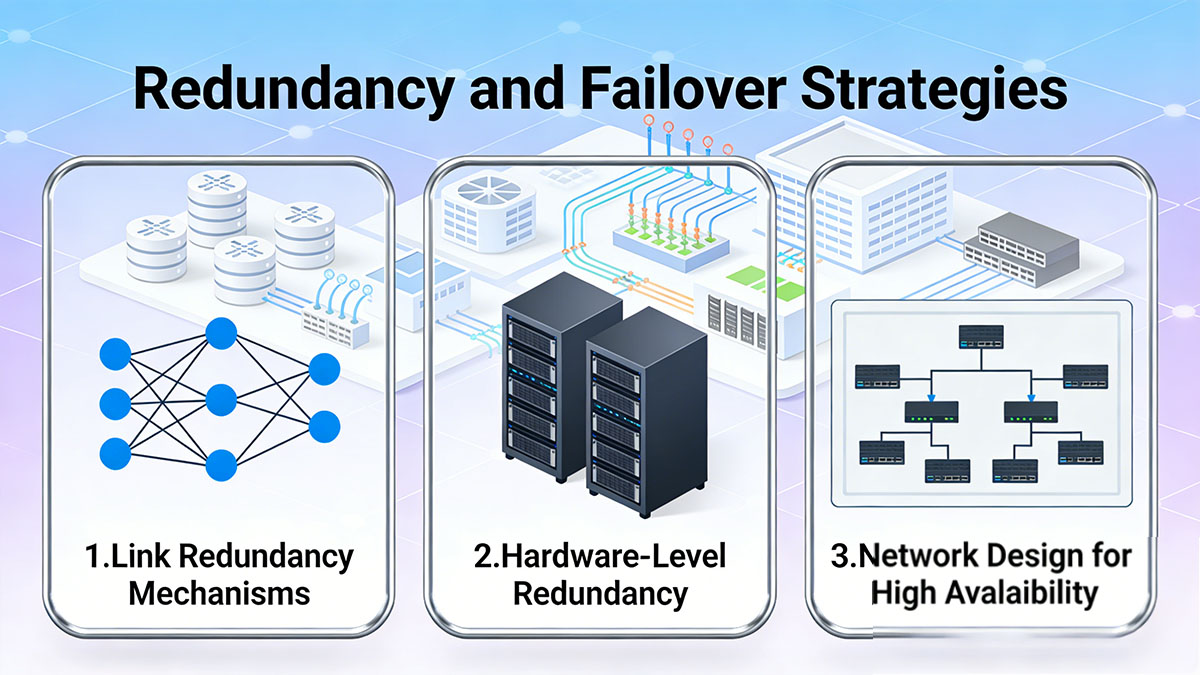
Redundancy and failover mechanisms are essential for maintaining continuous SFP link availability in campus networks. By introducing multiple paths, backup hardware, and intelligent protocols, network designers can ensure that link failures do not disrupt critical services or user connectivity.
Link Redundancy Mechanisms
Using protocol-based link redundancy is one of the most effective ways to maintain uptime when individual SFP links fail. These mechanisms allow traffic to be redistributed automatically without manual intervention.
The most commonly used redundancy technologies are summarized below:
| Mechanism | Function | Reliability Benefit |
|---|---|---|
| LAG / LACP | Combines multiple physical links into one logical link | Provides load balancing and failover |
| STP / RSTP / MSTP | Prevents loops while enabling backup paths | Ensures network stability |
| Fast Reroute | Redirects traffic quickly upon failure | Minimizes downtime |
Link aggregation increases both bandwidth and resilience by allowing traffic to continue flowing even if one member link fails. Spanning Tree–based protocols, while traditionally used for loop prevention, also enable backup paths that activate when primary links go down. Fast reroute mechanisms further reduce convergence time, which is critical for latency-sensitive campus applications.
Hardware-Level Redundancy
In addition to protocol-based solutions, physical redundancy at the hardware level provides an extra layer of protection against failures.
- Deploy dual uplinks from access switches to aggregation switches
- Use redundant core switches in active-active or active-standby configurations
- Install hot-swappable SFP modules for quick replacement without downtime
- Ensure dual power supplies in critical network devices
Hardware redundancy reduces dependency on any single component. For example, dual uplinks ensure that if one SFP link or port fails, traffic can immediately switch to the alternate path. Hot-swappable modules also simplify maintenance and reduce mean time to repair (MTTR).
Network Design for High Availability
A well-designed network architecture integrates both logical and physical redundancy to eliminate single points of failure and improve overall resilience.
Key design considerations include:
- Avoid single points of failure in aggregation and core layers
- Distribute traffic across multiple paths to prevent congestion
- Design hierarchical redundancy across access, aggregation, and core
- Balance redundancy with cost and operational complexity
The relationship between design choices and availability can be summarized as follows:
| Design Element | Implementation Approach | Availability Impact |
|---|---|---|
| Dual Uplinks | Access to aggregation redundancy | High |
| Aggregation Layer Redundancy | Multiple aggregation switches | High |
| Core Redundancy | Active-active core design | Very High |
| Path Diversity | Multiple physical routes | High |
Combining these strategies creates a resilient campus network where SFP link failures have minimal impact on overall service availability. By planning redundancy at both the link and architecture levels, network engineers can ensure stable and uninterrupted connectivity even under failure conditions.
♣️ Troubleshooting Common SFP Link Issues
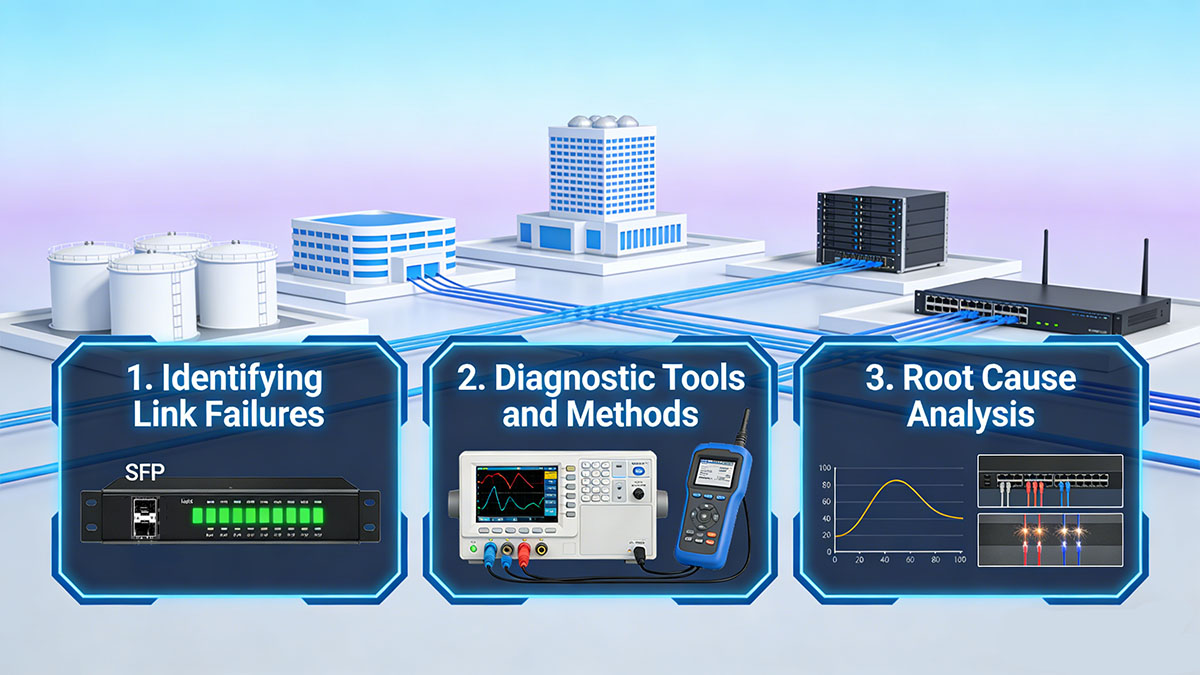
SFP link issues in campus networks can be quickly resolved by systematically identifying symptoms, using appropriate diagnostic tools, and isolating root causes. A structured troubleshooting approach minimizes downtime and ensures consistent link performance across the network.
Identifying Link Failures
Most SFP link problems present clear and detectable symptoms at the physical or network level. Recognizing these early signs helps narrow down the scope of troubleshooting.
The most common indicators of SFP link issues include:
| Symptom | Possible Cause | Impact on Network |
|---|---|---|
| Link down | Faulty module, broken fiber, incompatible device | Complete connectivity loss |
| Intermittent link | Dirty connectors, loose connections | Unstable performance |
| High BER (Bit Error Rate) | Signal degradation, attenuation | Data corruption |
| Packet loss / latency | Congestion, weak signal | Poor user experience |
A link that is completely down often indicates hardware or compatibility problems, while intermittent issues are more likely related to physical conditions such as contamination or cable stress. High error rates and latency typically point to signal integrity problems.
Diagnostic Tools and Methods
Accurate diagnosis requires the use of specialized tools and built-in monitoring features to evaluate link performance and physical conditions.
- Optical power meter: Measures transmitted and received optical power levels
- OTDR (Optical Time Domain Reflectometer): Identifies faults, breaks, and loss points along fiber
- Digital Optical Monitoring (DOM): Provides real-time module parameters such as temperature and power levels
- Switch logs and alarms: Reveal link events, errors, and compatibility issues
- Loopback testing: Verifies whether the issue lies in the transceiver or the fiber path
Each tool serves a specific purpose. For example, an OTDR is useful for locating fiber breaks over long distances, while DOM data helps detect gradual degradation before a failure occurs. Combining multiple methods increases diagnostic accuracy.
Root Cause Analysis
Once symptoms are identified and data is collected, isolating the root cause is essential for permanent resolution. Most SFP link issues fall into a few key categories.
- Faulty transceivers:
Defective or aging modules may produce unstable signals or fail entirely. Replacing the module with a known-good unit is a quick validation method. - Damaged or degraded fiber:
Physical damage, excessive bending, or poor splicing can increase attenuation and cause signal loss. Testing with OTDR or visual inspection can confirm this. - Contaminated connectors:
Dust or oil on connector end faces can significantly increase insertion loss. Cleaning and re-testing often resolves intermittent issues. - Compatibility or configuration mismatches:
Unsupported modules, incorrect speed settings, or firmware issues can prevent proper link establishment. Verifying compatibility and configuration alignment is critical.
A simplified troubleshooting workflow can be summarized as follows:
- Check link status and alarms on network devices
- Inspect and clean fiber connectors
- Replace SFP module with a known-working unit
- Test fiber using optical tools if issue persists
- Verify configuration and compatibility settings
Following this sequence helps eliminate common causes efficiently without unnecessary complexity. By applying a structured troubleshooting process, campus network operators can quickly restore SFP link reliability and prevent recurring issues.
♣️ Security and Stability Considerations
Maintaining secure and stable SFP links in campus networks requires protecting physical infrastructure, ensuring software reliability, and implementing operational controls that prevent disruptions. These measures help safeguard network availability while reducing the risk of unexpected failures or unauthorized interference.

Protecting Physical Infrastructure
Physical security is a fundamental requirement for preserving SFP link reliability, especially in campus environments where network assets are distributed across multiple buildings and access points.
- Secure fiber pathways in conduits, trays, or dedicated cable routes
- Restrict access to network rooms, cabinets, and patch panels
- Use labeling systems to prevent accidental disconnections
- Implement surveillance or access control in sensitive areas
Unauthorized access or accidental interference with fiber infrastructure can lead to immediate link failures or long-term degradation. Protecting physical assets ensures that SFP links remain stable and less vulnerable to external risks.
Firmware and Software Stability
Stable operation of SFP links depends not only on hardware but also on the underlying firmware and software running on network devices.
The key software-related factors affecting stability are summarized below:
| Factor | Risk | Recommended Action |
|---|---|---|
| Outdated firmware | Compatibility issues, bugs | Regular updates |
| Inconsistent software versions | Unpredictable behavior | Standardize versions |
| Unsupported SFP modules | Link failure or rejection | Verify compatibility |
| Firmware bugs | Link flapping, errors | Apply tested patches |
Keeping firmware up to date ensures that known issues are resolved and compatibility with SFP modules is maintained. However, updates should be tested in controlled environments before deployment to avoid introducing new instability.
Preventing Network Disruptions
Operational practices play a critical role in maintaining long-term stability of SFP links. Poor change management or unplanned modifications can introduce avoidable risks.
- Implement structured change management processes
- Schedule maintenance during low-traffic periods
- Document all network changes and configurations
- Perform pre- and post-change validation testing
- Maintain backup configurations for quick recovery
Uncontrolled changes are a common source of network instability in campus environments. By following disciplined operational procedures, network teams can minimize disruptions and ensure that SFP links continue to operate reliably.
Combining physical security, software stability, and controlled operations creates a robust foundation for both reliability and resilience in campus network SFP deployments.
♣️ Future Trends in SFP Link Reliability
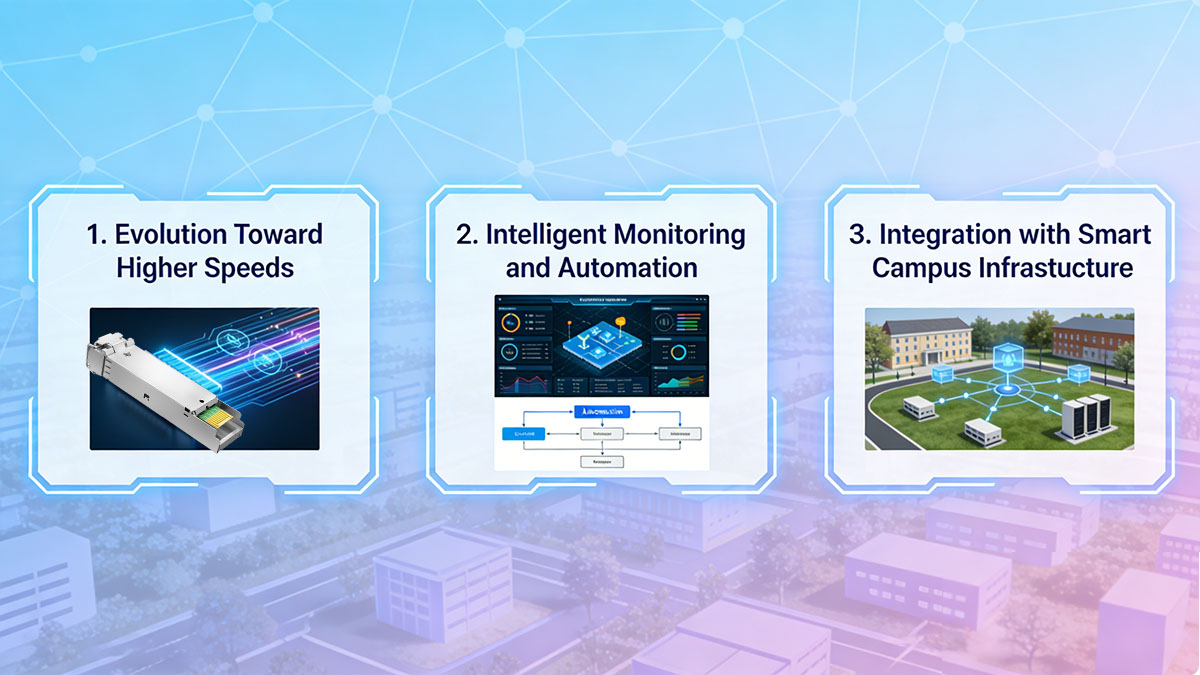
SFP link reliability in campus networks is evolving toward higher speeds, smarter monitoring, and tighter integration with intelligent infrastructure. As network demands continue to grow, future designs will focus on improving stability through automation, predictive analytics, and more advanced hardware technologies.
Evolution Toward Higher Speeds
The transition from 1G SFP and 10G SFP+ to 25G SFP28, 40G QSFP+, 50G SFP56, and even 100G QSFP28 is reshaping campus network design. Higher data rates introduce stricter requirements for signal integrity, thermal management, and component quality.
The progression of SFP link capabilities can be summarized as follows:
| Generation | Typical Speed | Key Reliability Challenge |
|---|---|---|
| 1G SFP | 1Gbps | Basic signal loss over distance |
| 10G SFP+ | 10Gbps | Increased sensitivity to dispersion |
| 25G SFP28 | 25Gbps | Higher insertion loss impact |
| 50G/100G (emerging) | 50–100Gbps | Thermal density and signal integrity |
As speeds increase, even minor imperfections in fiber quality or connector cleanliness can significantly affect performance. This trend drives the need for tighter installation standards and more precise component selection in campus environments.
Intelligent Monitoring and Automation
Traditional reactive troubleshooting is being replaced by proactive and predictive approaches enabled by intelligent monitoring systems. These technologies improve reliability by identifying issues before they impact network performance.
- Real-time analytics based on Digital Optical Monitoring (DOM) data
- AI-driven anomaly detection for early fault identification
- Predictive maintenance using historical performance trends
- Automated alerting and remediation workflows
By leveraging these capabilities, network administrators can detect gradual degradation—such as declining RX optical power—before it leads to link failure. Automation also reduces manual intervention, improving operational efficiency and consistency.
Integration with Smart Campus Infrastructure
Modern campus networks are increasingly interconnected with IoT devices, smart building systems, and latency-sensitive applications. This integration places new demands on SFP link reliability.
- Increased traffic from IoT sensors and connected devices
- Higher expectations for low-latency and uninterrupted connectivity
- Greater reliance on real-time applications such as video and automation systems
- Need for scalable and resilient network backbones
The relationship between application demands and reliability requirements is summarized below:
| Application Type | Network Requirement | Reliability Expectation |
|---|---|---|
| IoT Systems | High device density | Continuous connectivity |
| Video Surveillance | High bandwidth | Low packet loss |
| Smart Building Control | Low latency | High stability |
| Cloud-Based Services | Scalable throughput | Consistent performance |
As campus environments become more intelligent and data-driven, SFP links must deliver not only bandwidth but also consistent, predictable performance. This shift reinforces the importance of designing networks with reliability as a core objective rather than an afterthought.
By aligning with these future trends—higher speeds, intelligent monitoring, and smart infrastructure integration—campus networks can achieve more resilient and adaptive SFP link performance, ready to support next-generation applications.
♣️ Conclusion
Ensuring reliable SFP links is essential for maintaining stable and high-performing campus networks. By understanding link architecture, addressing factors such as signal integrity, hardware compatibility, and environmental conditions, and implementing best practices for installation, monitoring, and redundancy, network engineers can significantly reduce downtime and improve overall network resilience. Future trends, including higher-speed modules, intelligent monitoring, and integration with smart campus systems, highlight the ongoing importance of proactive design and maintenance to meet growing connectivity demands.
For high-quality SFP modules and reliable optical networking solutions suitable for campus deployments, explore the selection available at the LINK-PP Official Store to optimize your network performance and reliability.







