Modern data centers and enterprise networks are increasingly driven by high-speed connectivity demands. As applications such as cloud computing, virtualization, and data-intensive workloads continue to grow, short-reach 10G connections between servers, switches, and storage devices have become a critical component of efficient network design. Achieving low latency, reliable performance, and manageable cabling is essential for optimizing both cost and operational efficiency in dense network environments.
One solution that addresses these challenges is the Cisco SFP-H10GB-CU1M. This passive direct attach copper (DAC) cable offers a 1-meter SFP+ connection, ideal for Top-of-Rack (ToR) and End-of-Row (EoR) deployments. It provides low latency, near-zero power consumption, and simplified installation compared to fiber or active optical alternatives. Its compact form factor and robust signal integrity make it a popular choice for short-reach 10G network designs in high-density racks.
This article explores the technical specifications, performance characteristics, deployment best practices, and limitations of the Cisco SFP-H10GB-CU1M. Network designers and IT professionals will gain practical insights on when and how to implement this solution effectively, ensuring optimized performance, scalability, and reliability in short-reach 10G environments.
? Introduction to Cisco SFP-H10GB-CU1M
The Cisco SFP-H10GB-CU1M is a purpose-built solution for short-distance 10Gbps connectivity, offering a balance of simplicity, efficiency, and reliable performance in dense network environments. It is specifically optimized for scenarios where devices are located within the same rack or in very close proximity.
What Is Cisco SFP-H10GB-CU1M?
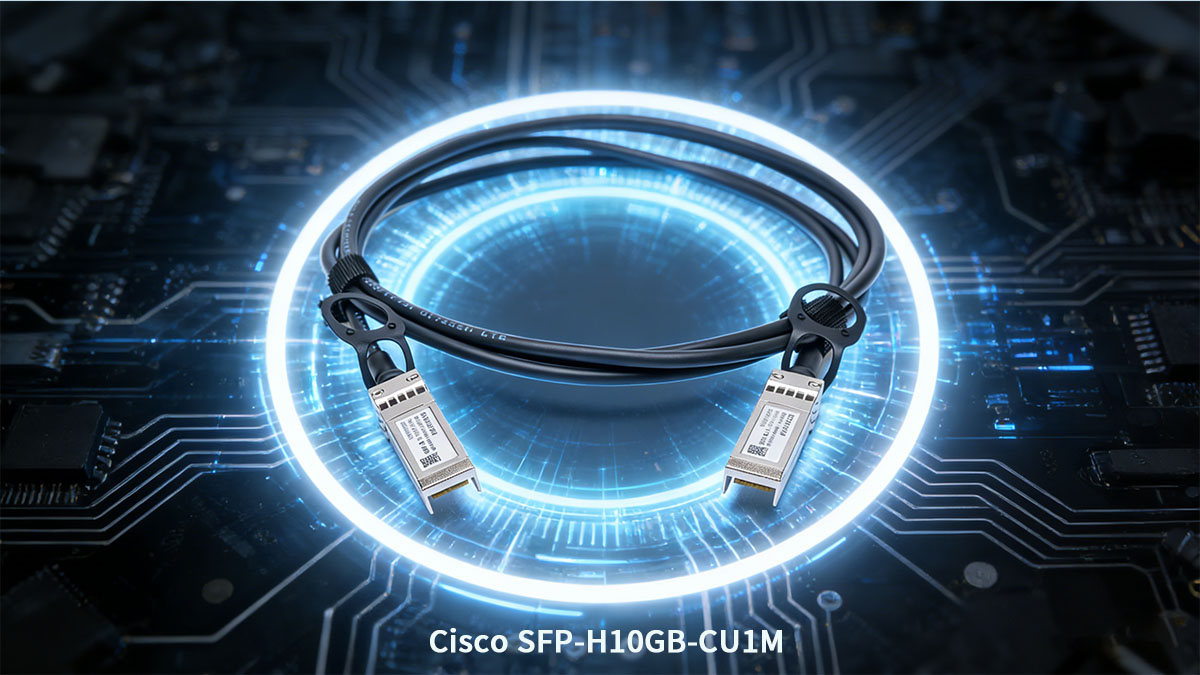
The Cisco SFP-H10GB-CU1M is a passive direct attach copper cable that provides a fixed 1-meter 10Gbps connection through SFP+ interfaces, making it ideal for intra-rack networking.
Unlike optical solutions, it combines the cable and transceiver into a single integrated assembly, which removes the need for separate optical modules and fiber patch cables. This design reduces both hardware complexity and potential points of failure. The use of twinax copper allows direct electrical signal transmission, ensuring stable performance over short distances without requiring signal amplification.
Key characteristics include:
- Passive DAC design with no additional power required
- Fixed 1-meter length optimized for short-reach use cases
- SFP+ connectors on both ends for seamless compatibility
- Plug-and-play deployment with minimal configuration
These features make it a practical choice for environments that prioritize simplicity, reliability, and cost control.
Role in Modern 10G Network Architectures
The Cisco SFP-H10GB-CU1M is best suited for short-reach connections where low latency and high efficiency are more important than long-distance transmission.
In modern data center architectures, a large portion of physical connections occurs within racks. This cable is commonly used in the following scenarios:
- Server-to-switch connections within a Top-of-Rack design
- Switch-to-switch links in adjacent racks
- High-speed connections between storage systems and compute nodes
For short distances, passive DAC cables are generally more efficient than optical alternatives. The comparison below highlights how different technologies are positioned in network design:
| Connectivity Type | Typical Reach | Power Consumption | Deployment Complexity |
|---|---|---|---|
| Passive DAC | Up to 7m | Very low | Low |
| AOC | Up to 100m | Moderate | Medium |
| Fiber + Optics | 100m to 10km+ | Higher | Higher |
This comparison shows that passive DAC cables like the Cisco SFP-H10GB-CU1M are optimized for short distances where minimizing power usage and simplifying deployment are key priorities.
As network density increases and efficiency becomes more critical, this type of connectivity continues to play an important role in reducing operational overhead while maintaining consistent 10G performance.
? Key Technical Specifications and Features
The Cisco SFP-H10GB-CU1M is defined by its simple hardware design, low power consumption, and stable 10Gbps performance, making it highly efficient for short-reach deployments where complexity and energy usage must be minimized.
Physical and Electrical Characteristics
The Cisco SFP-H10GB-CU1M uses a passive twinax copper design, which enables direct electrical signal transmission without active components, resulting in high reliability and minimal power usage.
Unlike active cables or optical modules, passive DAC cables do not include signal retimers or amplifiers. This reduces hardware complexity and eliminates additional heat generation. The cable is factory-terminated with SFP+ connectors on both ends, ensuring consistent quality and performance.
The following table summarizes the key physical and electrical attributes:
| Parameter | Description | Impact on Deployment |
|---|---|---|
| Cable Type | Passive Twinax Copper | No external power required |
| Length | 1 meter | Ideal for intra-rack use |
| Connector Type | SFP+ to SFP+ | Direct device compatibility |
| Signal Transmission | Electrical (direct attach) | Low latency, stable link |
This structure makes the cable particularly suitable for high-density racks where reducing cable complexity and improving airflow predictability are important.
Performance Metrics
The Cisco SFP-H10GB-CU1M delivers consistent 10Gbps performance with extremely low latency and near-zero power consumption, making it optimal for latency-sensitive applications.
Because the signal is transmitted electrically over a short distance, there is no need for optical-electrical conversion. This results in faster data transmission and reduced processing delay compared to optical solutions.
Key performance characteristics include:
- Data rate of 10Gbps with stable throughput
- Ultra-low latency due to direct signal transmission
- Near-zero power consumption since it is a passive cable
- Minimal bit error rate within supported distance
These features are especially beneficial in environments with high east-west traffic, such as virtualized data centers and high-performance computing clusters.
Compatibility and Standards
The Cisco SFP-H10GB-CU1M is designed for compatibility with Cisco devices while also aligning with industry standards to ensure interoperability in mixed-vendor environments.
It follows Multi-Source Agreement (MSA) specifications for SFP+ interfaces, which define mechanical and electrical standards across vendors. However, compatibility may still depend on firmware validation and vendor-specific coding.
The table below outlines compatibility considerations:
| Aspect | Description | Design Consideration |
|---|---|---|
| Vendor Compatibility | Optimized for Cisco platforms | May require validation on others |
| MSA Compliance | Supports SFP+ standards | Ensures baseline interoperability |
| Firmware Dependency | Device OS may enforce module checks | Verify before deployment |
In practice, ensuring compatibility involves checking switch or NIC support lists and confirming firmware versions. This step helps avoid issues such as link failures or unsupported module errors.
By combining standardized design with vendor optimization, the Cisco SFP-H10GB-CU1M provides both reliability and flexibility in short-reach 10G network environments.
? Advantages of Using Cisco SFP-H10GB-CU1M
The Cisco SFP-H10GB-CU1M provides clear advantages in short-reach 10G environments by reducing cost, simplifying deployment, and improving energy efficiency, making it a practical choice for high-density network designs.

Cost Efficiency in Short-Reach Deployments
The Cisco SFP-H10GB-CU1M significantly lowers overall deployment costs compared to optical solutions, especially for intra-rack connections where long-distance transmission is unnecessary.
Because it integrates both cable and transceiver into a single unit, there is no need to purchase separate optical modules and fiber patch cords. This reduces both initial hardware costs and ongoing maintenance expenses.
The cost positioning compared to alternative solutions is shown below:
| Solution Type | Components Required | Relative Cost | Typical Use Case |
|---|---|---|---|
| Passive DAC | Integrated cable + connectors | Low | Intra-rack (≤7m) |
| AOC | Active cable assembly | Medium | Short to mid-range links |
| Fiber + Optics | Transceivers + fiber cable | High | Long-distance links |
This demonstrates that for short distances, passive DAC cables provide the most cost-effective approach without compromising performance.
Simplified Deployment and Maintenance
The Cisco SFP-H10GB-CU1M simplifies installation and reduces operational complexity, which is especially valuable in large-scale or high-density environments.
Its plug-and-play design allows immediate deployment without configuration, calibration, or specialized tools. Since there are fewer components involved, the risk of installation errors is also reduced.
Key operational advantages include:
- No need for fiber cleaning or optical inspection
- Reduced number of connection points, lowering failure probability
- Faster deployment time compared to multi-component solutions
- Easier troubleshooting due to simplified physical topology
These factors contribute to improved operational efficiency, particularly in environments where frequent hardware changes or scaling are required.
Energy Efficiency and Thermal Benefits
The Cisco SFP-H10GB-CU1M minimizes power consumption and heat generation, making it well-suited for energy-conscious data center designs.
As a passive cable, it does not require electrical power for signal processing, unlike optical transceivers or active cables. This directly reduces the power load on switches and contributes to overall energy savings.
The comparison below highlights efficiency differences:
| Connectivity Type | Power Consumption | Heat Generation | Impact on Rack Density |
|---|---|---|---|
| Passive DAC | Very low | Minimal | Supports high density |
| AOC | Moderate | Moderate | Moderate density |
| Fiber + Optics | Higher | Higher | Requires cooling focus |
Lower heat output also reduces the burden on cooling systems, which is a critical factor in modern data centers where thermal management directly impacts reliability and operational costs.
By combining low power usage with reduced thermal output, the Cisco SFP-H10GB-CU1M supports more efficient and sustainable network infrastructure design.
? Limitations and Design Considerations
The Cisco SFP-H10GB-CU1M is highly effective for short-reach 10G connectivity, but its design introduces limitations in distance, flexibility, and scalability that must be considered during network planning.
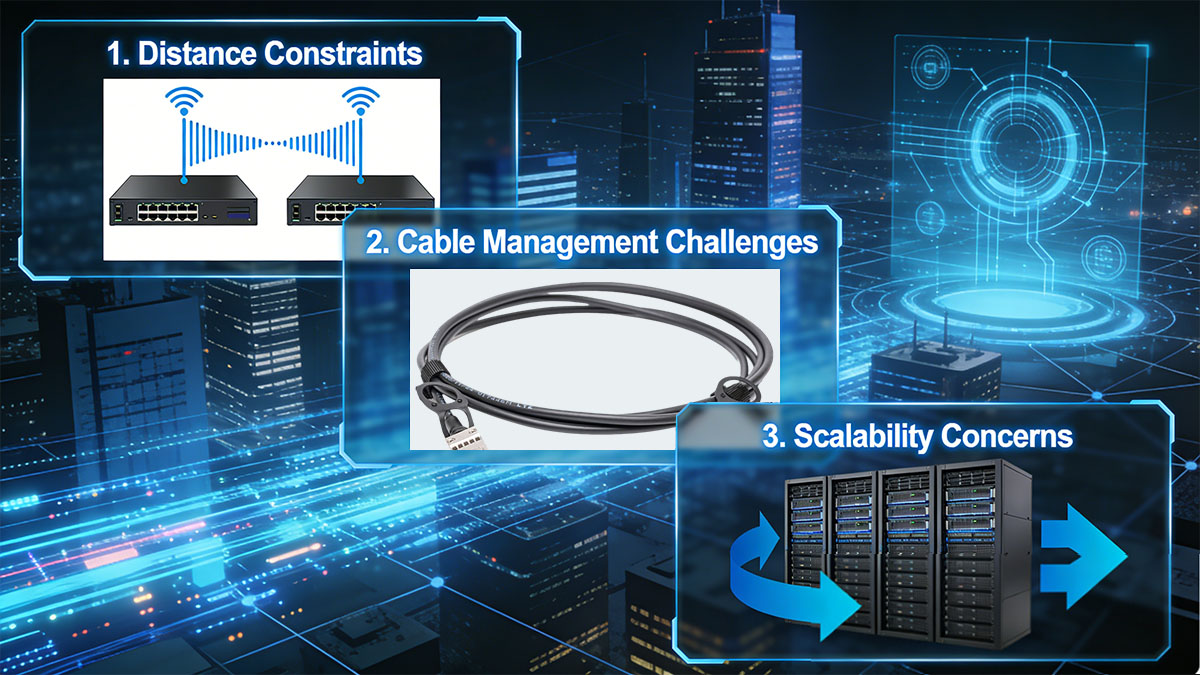
Distance Constraints
The Cisco SFP-H10GB-CU1M is limited to very short transmission distances, making it suitable primarily for intra-rack or adjacent rack connections.
As a passive DAC cable, it relies on direct electrical signaling without amplification, which restricts its maximum reach. In most deployments, passive DAC cables support distances up to 5–7 meters, with the 1-meter version specifically optimized for minimal signal loss and maximum stability.
This limitation means it is best applied in the following scenarios:
- Connections within the same rack
- Short links between neighboring racks
- Environments where cable length can be tightly controlled
For longer distances, alternative solutions become necessary.
| Connectivity Option | Maximum Reach | Suitable Scenario | Trade-off |
|---|---|---|---|
| Passive DAC | Up to 7m | Intra-rack | Limited distance |
| AOC | Up to 100m | Inter-rack | Higher power usage |
| Fiber + Optics | 100m to 10km+ | Campus / long-haul | Higher cost and complexity |
This shows that while DAC is optimal for short reach, it cannot replace optical solutions in larger-scale network topologies.
Cable Management Challenges
The Cisco SFP-H10GB-CU1M introduces physical management challenges due to the nature of copper cabling, especially in dense rack environments.
Compared to fiber cables, twinax copper cables are thicker and less flexible. This can impact airflow and make cable routing more complex when large numbers of connections are involved.
Key challenges include:
- Increased cable bulk, which can obstruct airflow in tightly packed racks
- Limited bending flexibility compared to fiber
- Difficulty in organizing multiple DAC cables in high port-density switches
To mitigate these issues, network designers often adopt:
- Structured cable routing paths within racks
- Use of cable management arms or trays
- Careful planning of port layouts to reduce congestion
Proper cable management is essential to maintain both cooling efficiency and long-term reliability.
Scalability Concerns
The Cisco SFP-H10GB-CU1M is not ideal for scalable or long-term expansion beyond rack-level deployments, particularly in evolving network environments.
While it performs well in fixed, short-distance setups, its fixed length and limited reach reduce flexibility when scaling infrastructure or reconfiguring layouts. As networks grow, the need for longer links and higher speeds becomes more prominent.
Important scalability considerations include:
- Fixed cable length restricts adaptability to layout changes
- Not suitable for spine-leaf architectures requiring longer interconnects
- Migration to 25G, 40G, 100G DAC or higher speeds DAC may require different cabling solutions
In practice, many deployments use a hybrid approach:
- DAC cables for intra-rack connections
- Fiber or AOC for inter-rack and aggregation layers
This approach balances cost efficiency with scalability, ensuring that short-reach optimization does not limit future network growth.
? Cisco SFP-H10GB-CU1M vs Alternative Connectivity Options
The Cisco SFP-H10GB-CU1M is best suited for ultra-short 10G connections, but its effectiveness depends on how it compares to other connectivity options such as fiber optic, Active Optical Cable (AOC), and 10GBASE-T. Choosing the right solution requires balancing distance, power consumption, latency, and deployment complexity.
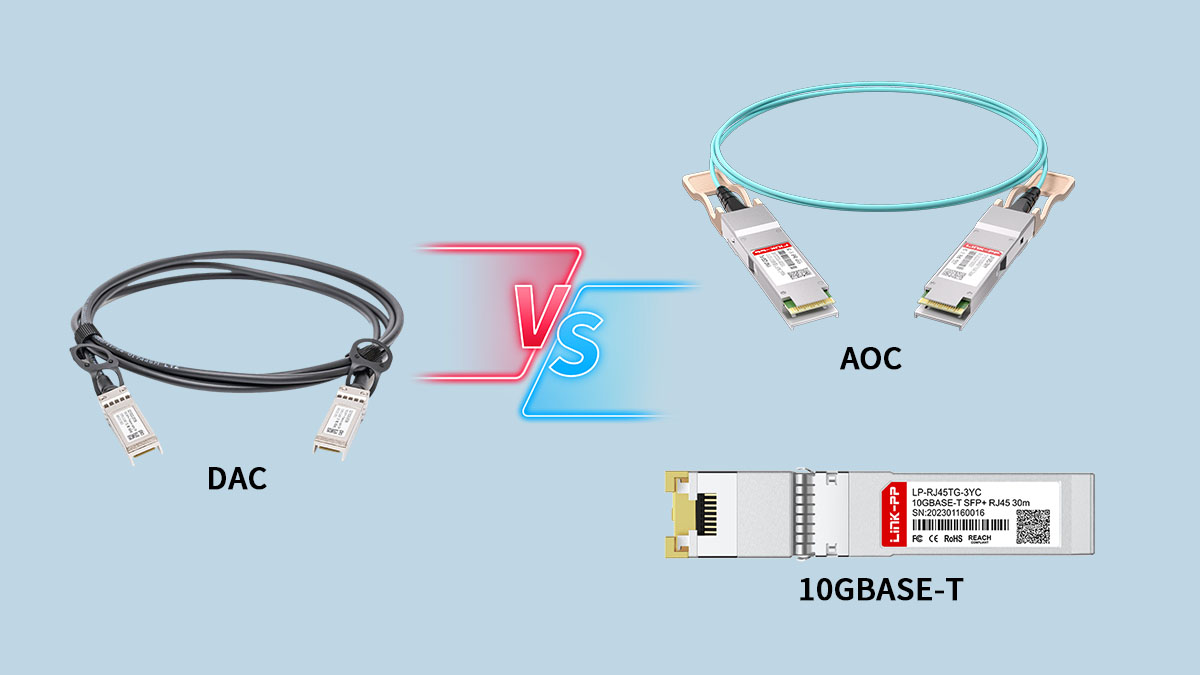
DAC vs Fiber Optic Transceivers
For short distances, the Cisco SFP-H10GB-CU1M offers lower cost and lower latency, while fiber optic transceivers (such as SFP-10G-SR or SFP-10G-LR) provide unmatched flexibility and long-distance capability.
Passive DAC eliminates optical conversion, which reduces both latency and power usage. However, fiber solutions are essential when distance exceeds a few meters or when structured cabling is required.
| Aspect | Passive DAC (SFP-H10GB-CU1M) | Fiber + Transceivers | Design Impact |
|---|---|---|---|
| Typical Reach | Up to 7m | 100m to 10km+ | Determines deployment scope |
| Latency | Very low | Low | Important for real-time traffic |
| Power Consumption | Minimal | Higher | Affects energy efficiency |
| Flexibility | Limited | High | Supports scalable architectures |
This comparison shows that DAC is optimal for fixed, short-distance links, while fiber is necessary for scalable and distributed network designs.
DAC vs Active Optical Cables (AOC)
The Cisco SFP-H10GB-CU1M provides a simpler and more energy-efficient solution than AOC for very short distances, while AOC (such as QSFP-100G-AOC3M) extends reach with moderate complexity.
AOCs integrate optical components within the cable, allowing longer transmission distances than DAC while maintaining relatively simple deployment. However, they require power and introduce additional cost.
| Aspect | Passive DAC | AOC | Design Impact |
|---|---|---|---|
| Maximum Distance | Up to 7m | Up to 100m | Determines rack layout options |
| Power Requirement | None | Moderate | Impacts switch power budget |
| Cable Flexibility | Lower | Higher | Affects cable routing |
| Cost | Lower | Medium | Influences budget planning |
In practice, DAC is preferred for intra-rack links, while AOC is often used for inter-rack connections where fiber-like reach is needed without full optical infrastructure.
DAC vs RJ45-Based 10GBASE-T
The Cisco SFP-H10GB-CU1M delivers lower latency and power consumption compared to 10GBASE-T, while 10GBASE-T (such as SFP-10G-T-X) offers greater compatibility with existing copper cabling infrastructure.
RJ45-based 10GBASE-T uses Cat6a/Cat7 cabling and supports longer distances, but it introduces higher latency and significantly higher power consumption due to signal processing requirements.
| Aspect | Passive DAC | 10GBASE-T (RJ45) | Design Impact |
|---|---|---|---|
| Latency | Very low | Higher | Affects performance-sensitive apps |
| Power Consumption | Minimal | High | Impacts operational cost |
| Maximum Distance | Up to 7m | Up to 100m | Determines deployment flexibility |
| Cabling | Twinax DAC | Structured copper | Influences infrastructure reuse |
This highlights that DAC is ideal for performance-focused, short-distance deployments, while 10GBASE-T is better suited for environments that prioritize compatibility with existing cabling systems.
By understanding these differences, network designers can select the most appropriate connectivity option based on distance, performance requirements, and infrastructure constraints.
? Deployment Scenarios and Use Cases
The Cisco SFP-H10GB-CU1M is most effective in environments where devices are located within very short distances, enabling high-speed 10G connectivity with minimal latency, low power consumption, and simplified cabling.

Data Center Intra-Rack Connectivity
The Cisco SFP-H10GB-CU1M is primarily used for intra-rack connections, where devices such as servers and switches are physically close and require fast, reliable links.
In a typical rack setup, most connections occur within a confined space, making a 1-meter DAC cable an ideal fit. It allows direct connections without the need for additional patching or structured cabling systems.
Common intra-rack use cases include:
- Server-to-Top-of-Rack (ToR) switch connections
- High-performance computing nodes within the same rack
- Storage arrays connected to compute resources
This deployment model minimizes latency and reduces both equipment and operational complexity, making it highly efficient for dense environments.
Top-of-Rack (ToR) Switch Design
The Cisco SFP-H10GB-CU1M plays a central role in ToR architectures by enabling clean, efficient cabling between servers and the rack-mounted switch.
In ToR designs, each rack contains a dedicated switch that aggregates traffic from all servers within that rack. Short DAC cables are ideal in this setup because they match the physical layout and reduce unnecessary cable length.
Key advantages in ToR deployments include:
- Reduced cable clutter due to fixed short-length connections
- Improved airflow compared to longer, unmanaged cables
- Lower latency for east-west traffic within the rack
- Simplified troubleshooting due to direct connections
These benefits make DAC cables a standard choice for ToR-based data center architectures.
Lab and Test Environments
The Cisco SFP-H10GB-CU1M is highly suitable for lab, staging, and testing environments where flexibility, speed of deployment, and cost control are priorities.
In such environments, network configurations often change frequently, requiring solutions that are easy to install and remove without specialized tools or procedures.
Typical advantages in lab scenarios include:
- Quick setup and teardown for testing different topologies
- Reduced cost when deploying temporary or non-production networks
- Lower risk of configuration errors due to simple connectivity
- Reusability across multiple test setups
The following table summarizes how the cable fits different deployment scenarios:
| Scenario | Primary Benefit | Key Requirement | Suitability Level |
|---|---|---|---|
| Intra-Rack | Low latency | Short distance | High |
| ToR Architecture | Cable simplicity | Dense server layout | High |
| Lab/Test Environment | Flexibility and low cost | Frequent reconfiguration | High |
This shows that the Cisco SFP-H10GB-CU1M consistently delivers strong value in environments where short-distance, high-speed connectivity is the primary requirement.
? Best Practices for Network Design with Cisco SFP-H10GB-CU1M
Designing networks with the Cisco SFP-H10GB-CU1M requires careful planning around cable layout, compatibility, and overall architecture to maximize performance while avoiding common deployment inefficiencies.
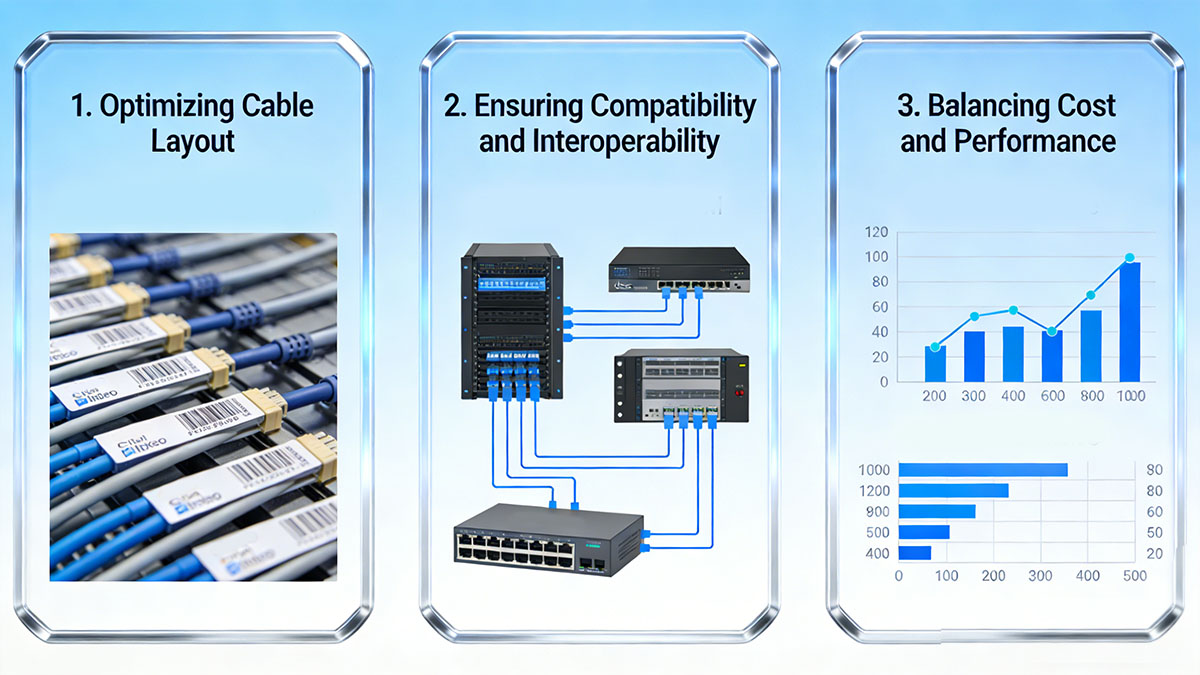
Optimizing Cable Layout
Efficient cable layout is essential when using Cisco SFP-H10GB-CU1M, as proper routing directly impacts airflow, maintainability, and long-term reliability.
Due to the thicker and less flexible nature of DAC cables, unmanaged routing can quickly lead to congestion in high-density racks. A structured approach helps prevent airflow blockage and simplifies maintenance.
Recommended practices include:
- Use predefined cable paths such as vertical and horizontal cable managers
- Keep cable lengths aligned with actual distance to avoid excess slack
- Route cables along rack edges to maintain clear airflow channels
- Group and label cables based on function or destination
A well-organized layout reduces operational complexity and helps maintain consistent thermal performance across the rack.
Ensuring Compatibility and Interoperability
Ensuring device compatibility is critical when deploying Cisco SFP-H10GB-CU1M, as mismatches can lead to link failures or unsupported module errors.
Although the cable follows SFP+ standards, vendor-specific implementations and firmware restrictions may affect interoperability, especially in mixed environments.
The table below outlines key compatibility checkpoints:
| Checkpoint | What to Verify | Potential Risk |
|---|---|---|
| Device Support | Switch/NIC compatibility list | Link not recognized |
| Firmware Version | OS and firmware requirements | Module rejection |
| Vendor Coding | Cable identification (EEPROM) | Limited interoperability |
To avoid issues, it is recommended to validate compatibility before deployment and maintain consistent firmware versions across devices.
Balancing Cost and Performance
The Cisco SFP-H10GB-CU1M delivers optimal value when used in the right scenarios, but effective network design often requires balancing it with other technologies.
While DAC is ideal for short distances, relying on it exclusively may limit flexibility in larger or evolving network environments. A hybrid approach is typically more effective.
Key decision points include:
- Use DAC for intra-rack connections where distance is minimal
- Use AOC or fiber for inter-rack or aggregation layers
- Consider future scalability when designing cable infrastructure
- Evaluate power and cooling constraints in high-density deployments
This approach ensures that cost efficiency does not come at the expense of scalability or long-term performance.
By aligning cable selection with physical layout and growth requirements, network designers can build efficient, adaptable 10G infrastructures that fully leverage the strengths of the Cisco SFP-H10GB-CU1M.
? Troubleshooting Common Issues
The Cisco SFP-H10GB-CU1M is generally reliable due to its passive design, but issues can still arise from compatibility mismatches, physical connection problems, or improper deployment practices.
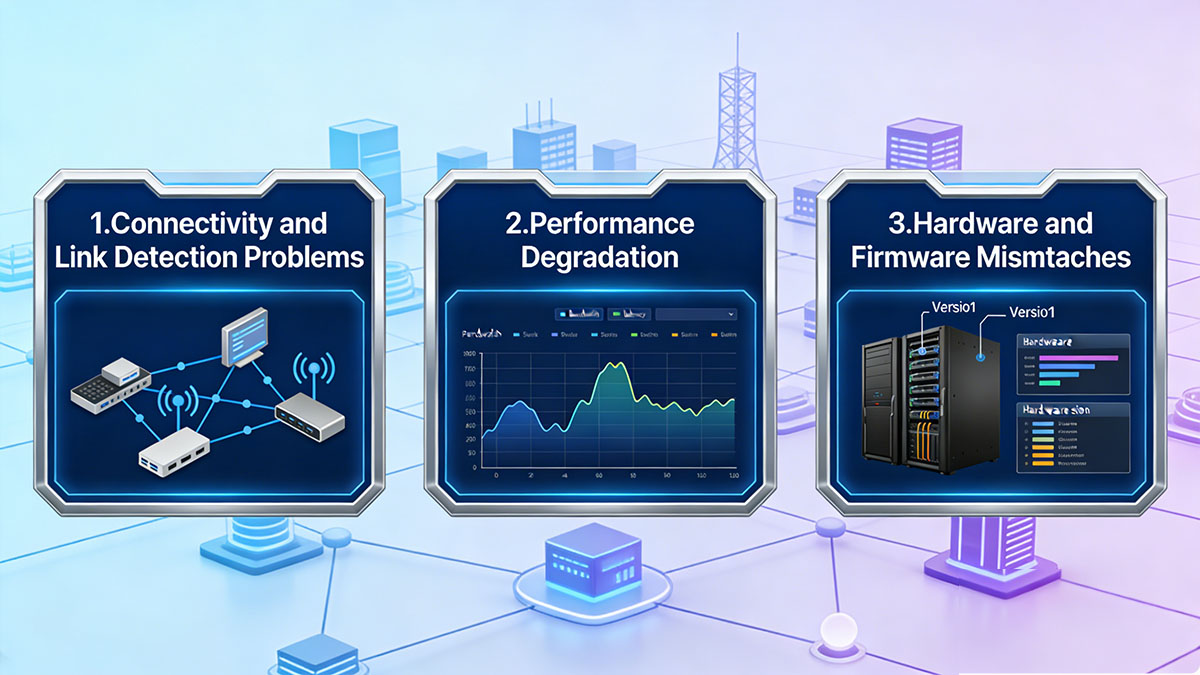
Connectivity and Link Detection Problems
Most link issues with Cisco SFP-H10GB-CU1M are caused by compatibility or physical connection problems rather than cable failure.
When a link is not detected or remains down, the root cause is often related to unsupported hardware, improper insertion, or port configuration.
Common causes and checks include:
- Verify that both switch and NIC ports support SFP+ DAC cables
- Ensure the cable is fully inserted and latched on both ends
- Confirm that the device firmware allows third-party or DAC modules
- Check port configuration (speed, auto-negotiation settings)
The table below summarizes typical symptoms and causes:
| Symptom | Possible Cause | Recommended Action |
|---|---|---|
| Link not detected | Unsupported cable | Verify compatibility list |
| Intermittent link | Loose connection | Reinsert and secure cable |
| Port disabled | Firmware restriction | Check device configuration |
Addressing these issues usually restores connectivity quickly without requiring cable replacement.
Performance Degradation
Performance issues with Cisco SFP-H10GB-CU1M are uncommon but can occur due to environmental factors or improper usage conditions.
Since DAC cables rely on electrical signaling, signal integrity can degrade if the cable is used beyond recommended conditions or exposed to interference.
Key factors to evaluate include:
- Ensure the cable length matches design specifications (avoid unnecessary extensions)
- Check for physical damage such as bends or pressure on the cable
- Avoid routing cables near sources of electromagnetic interference
- Monitor error counters on network devices (CRC errors, packet drops)
Maintaining proper installation practices helps ensure stable throughput and low latency.
Hardware and Firmware Mismatches
Compatibility between hardware and firmware is a critical factor in ensuring stable operation of Cisco SFP-H10GB-CU1M.
Many network devices enforce strict validation of connected modules, which can lead to issues even if the cable is physically compatible.
Key considerations include:
- Firmware may block unsupported or non-certified cables
- Different device models may interpret DAC EEPROM data differently
- Updates or downgrades can change compatibility behavior
The table below outlines common mismatch scenarios:
| Scenario | Impact | Resolution Strategy |
|---|---|---|
| Unsupported module | Port shutdown | Use validated cable |
| Firmware incompatibility | Link instability | Update firmware |
| Mixed vendor devices | Partial functionality | Test interoperability |
Ensuring consistent firmware versions and verifying compatibility before deployment are essential steps to prevent these issues.
? Future Trends in Short-Reach 10G Connectivity
Short-reach 10G connectivity is evolving toward higher speeds, greater density, and improved energy efficiency, while still maintaining the core advantages of low latency and cost-effective deployment.

Transition to 25G and Higher Speeds
The industry is gradually shifting from 10G to 25G and beyond, but short-reach copper solutions continue to play an important role in this transition.
While 10G remains widely deployed, especially in existing infrastructure, newer data centers are increasingly adopting 25G as a baseline due to better bandwidth efficiency per lane. However, the design principles established by 10G DAC cables, such as low power consumption and simple connectivity, are being carried forward into higher-speed DAC technologies.
Key transition considerations include:
- 25G SFP28 DAC cables offering similar deployment models with higher throughput
- Backward compatibility in mixed-speed environments
- Gradual upgrade strategies rather than full infrastructure replacement
| Technology Generation | Data Rate | Typical Use Case | Design Impact |
|---|---|---|---|
| 10G SFP+ DAC | 10Gbps | Legacy and stable systems | Cost-effective baseline |
| 25G SFP28 DAC | 25Gbps | Modern data centers | Higher bandwidth per port |
| 40G QSFP+/100G QSFP28 DAC | 40–100Gbps | Spine-leaf architectures | High-capacity aggregation |
This shows that while speeds are increasing, DAC-based short-reach connectivity remains relevant across generations.
Increasing Demand in Edge and AI Infrastructure
Short-reach 10G connectivity continues to see demand growth in edge computing and AI-related deployments, where compact, high-density infrastructure is required.
Edge environments often operate under constraints such as limited space, power, and cooling capacity. In these scenarios, simple and efficient interconnect solutions like DAC cables are highly valuable. Similarly, AI clusters and high-performance computing setups require low-latency communication between closely located nodes.
Key drivers include:
- Growth of edge data centers with compact rack designs
- Increased east-west traffic in AI and distributed computing workloads
- Demand for predictable latency in real-time processing environments
These trends reinforce the importance of short-reach solutions that prioritize efficiency and performance within confined physical spaces.
Sustainability and Energy Optimization Trends
Energy efficiency is becoming a central focus in network design, and short-reach DAC solutions align well with sustainability goals due to their low power requirements.
As data centers scale, reducing power consumption per port becomes critical. Passive DAC cables, including solutions like Cisco SFP-H10GB-CU1M, contribute to lower overall energy usage by eliminating the need for active signal processing.
Important sustainability considerations include:
- Lower power consumption compared to optical transceivers
- Reduced heat generation, easing cooling requirements
- Improved energy efficiency at scale in high-density deployments
| Connectivity Type | Power Profile | Cooling Impact | Sustainability Contribution |
|---|---|---|---|
| Passive DAC | Very low | Minimal | High |
| AOC | Moderate | Moderate | Medium |
| Fiber + Optics | Higher | Higher | Lower |
As environmental and operational efficiency become increasingly important, short-reach DAC solutions will continue to be a key component of energy-aware network architectures.
? Conclusion
The Cisco SFP-H10GB-CU1M remains a practical and efficient solution for short-reach 10G connectivity, offering low latency, minimal power consumption, and simplified deployment for intra-rack and Top-of-Rack applications. While it has limitations in distance and flexibility, its advantages in cost efficiency, ease of installation, and energy savings make it a reliable choice for dense data center environments, lab setups, and high-performance computing clusters.
When designing or upgrading networks, understanding the technical specifications, deployment scenarios, and compatibility considerations ensures that the Cisco SFP-H10GB-CU1M can deliver optimal performance and reliability. As network speeds and density continue to grow, short-reach DAC solutions will remain an integral part of modern 10G infrastructure, complementing higher-speed or longer-distance connectivity technologies.
For high-quality Cisco SFP-H10GB-CU1M modules and compatible 10G solutions, visit the LINK-PP Official Store to explore a wide selection designed to support reliable, high-performance network deployments.