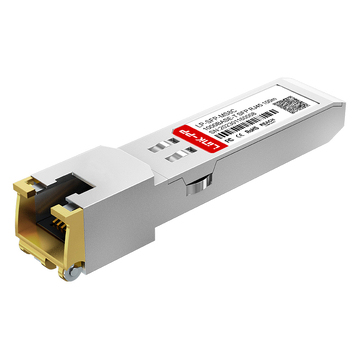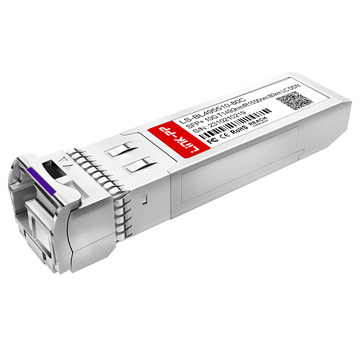






























RJ45 transceivers play a critical role in bridging traditional copper Ethernet infrastructure with modern modular networking systems. In practical terms, they allow standard Ethernet signals to be transmitted through pluggable interfaces such as SFP or SFP+ ports, enabling network designers to reuse existing twisted-pair cabling while maintaining flexibility in port configuration. This makes Transceiver RJ45 modules particularly valuable in environments where cost control, backward compatibility, and incremental upgrades are key priorities.
From a technical perspective, RJ45 transceivers are fundamentally different from optical modules. Instead of converting electrical signals into light, they rely entirely on advanced electrical design, including integrated PHY chips, digital signal processing, and complex encoding schemes to maintain signal integrity over copper media. These design choices directly influence power consumption, latency, thermal behavior, and ultimately the scalability of network deployments.
Understanding the electrical design principles behind Transceiver RJ45 modules is essential for making informed network decisions. Factors such as cable category, electromagnetic interference, and port density can significantly impact performance and reliability. At the same time, the growing adoption of multi-gigabit Ethernet and high-speed copper standards continues to reshape how these transceivers are used in enterprise networks, data centers, and edge environments.
This article explores the core electrical architecture of RJ45 transceivers and examines how their design characteristics translate into real-world network implications, helping you evaluate when and where they are the most effective choice.
? Introduction to RJ45 Transceivers
RJ45 transceivers are pluggable modules that enable Ethernet transmission over copper cabling through standard modular interfaces such as SFP or SFP+. They are primarily used to integrate traditional twisted-pair infrastructure into modern, flexible network designs without requiring fixed RJ45 ports on switches or network interface cards. In most scenarios, they provide a practical balance between compatibility, deployment flexibility, and infrastructure reuse.
What Is a Transceiver RJ45?
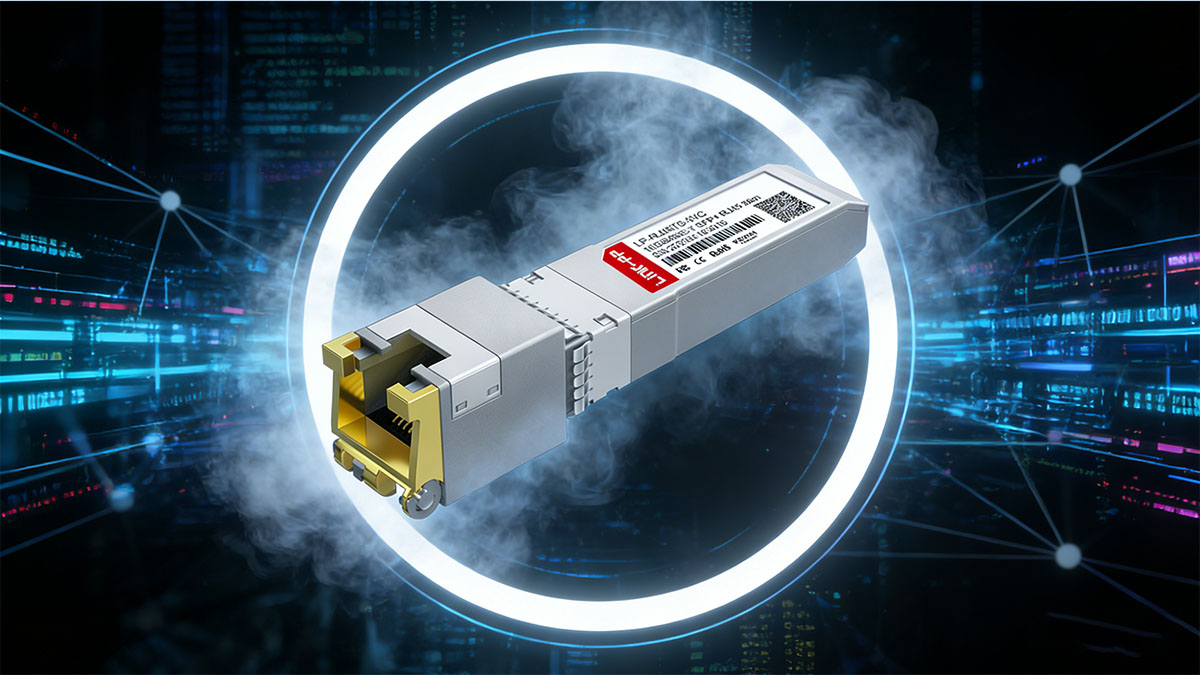
A Transceiver RJ45 is a copper-based pluggable module that converts signals between a host interface (such as SFP/SFP+) and standard Ethernet over twisted-pair cables. Unlike optical transceivers, it operates entirely in the electrical domain and relies on integrated PHY circuitry to manage signal encoding, decoding, and transmission.
The key distinction between RJ45 and optical transceivers lies in how data is transmitted and processed:
| Feature | RJ45 Transceiver | Optical Transceiver |
|---|---|---|
| Transmission Medium | Copper (twisted pair) | Fiber optic cable |
| Signal Type | Electrical | Optical (light) |
| Typical Reach | Up to 100m | From meters to tens of km |
| Power Consumption | Higher (especially at 10G) | Lower |
RJ45 transceivers are commonly available in multiple Ethernet standards:
- 10/100/1000BASE-T (like GLC-TA) for Gigabit Ethernet
- 2.5GBASE-T and 5GBASE-T for multi-gigabit applications
- 10GBASE-T (like SFP-10G-T-X) for high-speed copper networking
These modules are often used in scenarios where fiber deployment is unnecessary or impractical, particularly when existing copper cabling infrastructure is already in place.
Evolution of RJ45 Transceivers in Ethernet Networks
RJ45 transceivers have evolved alongside Ethernet standards to address the growing need for higher bandwidth and greater deployment flexibility. Initially, Ethernet switches featured fixed RJ45 ports, limiting adaptability in mixed-media environments. The introduction of pluggable transceivers shifted this model toward modularity.
The progression can be summarized as follows:
- Early networks relied on fixed copper ports with limited scalability
- SFP-based designs introduced interchangeable media types (fiber and copper)
- Multi-gigabit RJ45 transceivers emerged to support increasing bandwidth demands without replacing cabling
- Modern networks adopt hybrid architectures combining fiber uplinks and copper access links
This evolution has been driven by several key factors:
- Demand for backward compatibility with existing Cat5e/Cat6 infrastructure
- Increasing bandwidth requirements from applications such as cloud services and Wi-Fi backhaul
- The need for flexible port configurations in enterprise and data center environments
Today, RJ45 transceivers serve as an important transitional technology. They allow organizations to incrementally upgrade network performance while avoiding the immediate cost and complexity of full fiber migration. At the same time, their electrical design introduces trade-offs in power consumption, thermal density, and latency, which must be carefully considered in high-performance or high-density deployments.
? Electrical Design Fundamentals of RJ45 Transceivers
The electrical design of RJ45 transceivers is fundamentally centered on maintaining high-speed data integrity over copper media using advanced signal processing and tightly integrated circuitry. Unlike optical modules, which offload transmission complexity to optical components, RJ45 transceivers must solve challenges such as noise, crosstalk, attenuation, and impedance mismatch entirely within the electrical domain. This makes their internal architecture more complex and directly impacts power consumption, thermal behavior, and achievable performance.
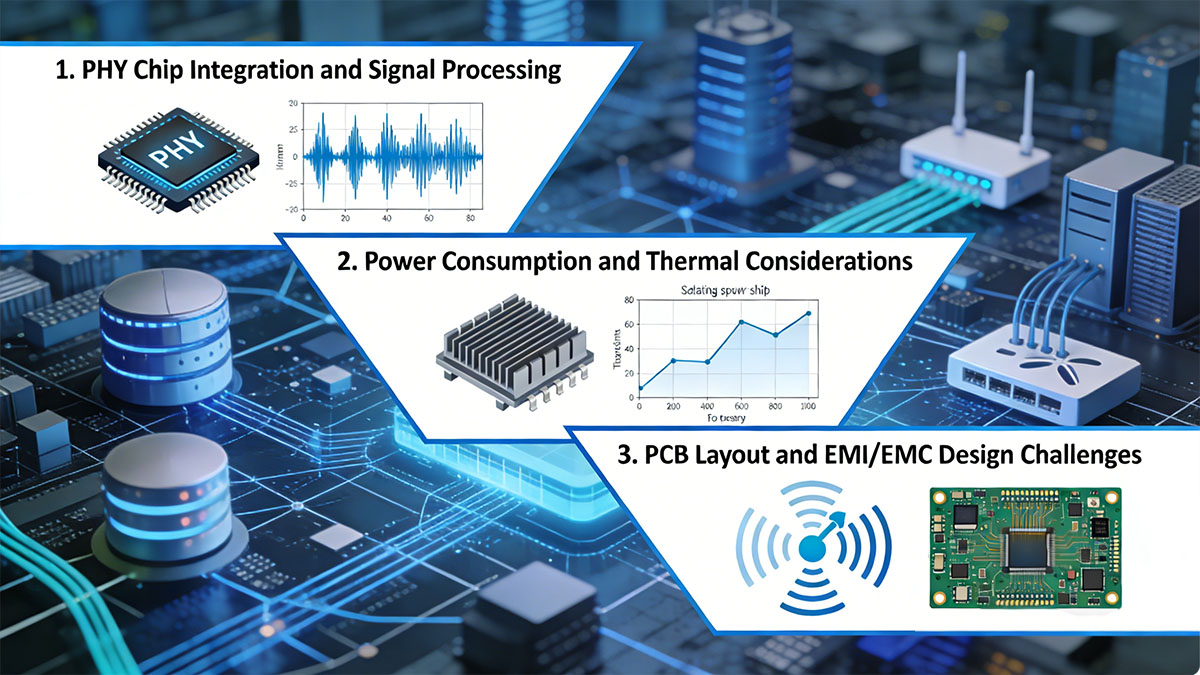
PHY Chip Integration and Signal Processing
RJ45 transceivers rely on highly integrated Ethernet PHY chips to handle all aspects of signal transmission and reception over twisted-pair cables. These PHY components are responsible for encoding digital data into electrical signals, compensating for channel impairments, and ensuring reliable communication across varying cable conditions.
At a functional level, the PHY performs several critical operations:
- Line encoding and decoding (e.g., PAM-5 for 1G, PAM-16 for 10GBASE-T)
- Echo cancellation to separate transmitted and received signals on the same pair
- Crosstalk cancellation (NEXT and FEXT mitigation)
- Adaptive equalization to compensate for signal distortion over distance
- Clock recovery and synchronization
The complexity of signal processing increases significantly with higher data rates, as shown below:
| Ethernet Standard | Modulation Scheme | DSP Complexity | Typical Use Case |
|---|---|---|---|
| 1000BASE-T | PAM-5 | Moderate | Enterprise LAN |
| 2.5G/5GBASE-T | PAM-16 | High | Wi-Fi 6/6E uplinks |
| 10GBASE-T | PAM-16 | Very High | Data center edge / aggregation |
As speeds increase, the PHY must perform more aggressive digital signal processing, which directly contributes to higher power consumption and latency compared to optical solutions.
Power Consumption and Thermal Considerations
RJ45 transceivers typically consume more power than optical modules due to the intensive signal processing required for copper transmission. This becomes particularly significant in higher-speed standards such as 10GBASE-T, where the PHY must operate continuously at high computational loads.
In general, power consumption scales with both data rate and cable length:
| Speed Standard | Typical Power Consumption | Thermal Impact Level |
|---|---|---|
| 1GBASE-T | ~1W | Low |
| 2.5GBASE-T | ~1.5–2W | Moderate |
| 10GBASE-T | ~2.5–3W+ | High |
Higher power consumption leads to increased heat generation within the compact transceiver form factor, which introduces several design challenges:
- Limited space for heat dissipation inside SFP/SFP+ modules
- Risk of thermal throttling or link instability under high temperatures
- Reduced port density in switches due to cumulative heat load
To mitigate these issues, vendors implement various thermal management strategies:
- Use of high-efficiency PHY chipsets to reduce power draw
- Optimized module casing for improved heat conduction
- Dependency on system-level airflow (switch cooling design)
These thermal constraints are a key factor when deploying RJ45 transceivers in high-density environments such as data centers.
PCB Layout and EMI/EMC Design Challenges
The printed circuit board (PCB) design inside an RJ45 transceiver plays a crucial role in maintaining signal integrity at high frequencies. Because copper Ethernet operates with multi-gigahertz signaling, even minor layout imperfections can significantly degrade performance.
Key PCB design considerations include:
- Controlled impedance routing to match twisted-pair cable characteristics
- Differential pair length matching to avoid signal skew
- Minimization of via transitions to reduce signal reflections
- Isolation between high-speed traces to limit crosstalk
Electromagnetic interference (EMI) and electromagnetic compatibility (EMC) are also critical challenges. RJ45 transceivers must operate reliably in environments with significant electrical noise while also complying with regulatory emission standards.
Common EMI/EMC mitigation techniques include:
- Shielded RJ45 connectors and module enclosures
- Proper grounding and return path design
- Use of common-mode chokes and filtering components
- Careful separation of analog and digital signal domains
The effectiveness of these design strategies directly determines the stability and reliability of the transceiver, especially in environments with dense cabling or industrial interference sources.
Overall, the electrical design of RJ45 transceivers represents a balance between performance, power efficiency, and physical constraints. These factors not only define the capabilities of the module itself but also have broader implications for network architecture and deployment decisions.
? RJ45 Interface and Copper Cabling Characteristics
The performance of RJ45 transceivers is fundamentally determined by the physical characteristics of the copper medium and the design of the RJ45 interface itself. Unlike optical transmission, where signal integrity is largely preserved over distance, copper-based Ethernet must contend with attenuation, interference, and impedance variations. As a result, cabling quality, connector design, and transmission principles directly influence achievable speed, stability, and link reliability.
Twisted Pair Transmission Principles
RJ45 transceivers rely on twisted-pair copper cabling to transmit data using differential signaling. This method sends two complementary electrical signals along each pair of wires, allowing the receiver to interpret the voltage difference while rejecting common-mode noise.
In practice, twisted-pair transmission operates on several key principles:
- Differential signaling improves noise immunity by canceling external interference
- Wire twisting reduces electromagnetic radiation and susceptibility to crosstalk
- Full-duplex communication is achieved by transmitting and receiving simultaneously on the same pairs
However, copper transmission introduces several signal impairments that must be actively mitigated:
- Near-End Crosstalk (NEXT): interference between pairs at the transmitting end
- Far-End Crosstalk (FEXT): interference observed at the receiving end
- Return loss: signal reflections caused by impedance mismatches
- Insertion loss: signal attenuation over distance
The effectiveness of RJ45 transceivers depends heavily on how well these impairments are compensated through PHY-level processing and cable quality.
Cable Categories and Performance Impact
Cable category is one of the most critical factors affecting the performance of RJ45 transceivers. Higher-category cables are designed with better shielding, tighter twists, and improved materials to support higher frequencies and reduce signal degradation.
Higher cable categories enable greater bandwidth and more stable high-speed transmission:
| Cable Category | Maximum Speed Support | Typical Maximum Distance | Common Use Case |
|---|---|---|---|
| Cat5e | 1Gbps | 100m | Legacy enterprise networks |
| Cat6 | 1Gbps (10Gbps up to ~55m) | 100m / ~55m | Office and SMB environments |
| Cat6a | 10Gbps | 100m | Modern enterprise networks |
| Cat7 | 10Gbps+ | 100m | High-performance environments |
Using lower-grade cables for higher-speed transceivers often results in reduced link distance, increased error rates, or link instability. For example, while 10GBASE-T can technically operate over Cat6, it is typically limited to shorter distances due to increased crosstalk and attenuation.
Additional considerations include:
- Cable installation quality (bending radius, termination accuracy)
- Shielded vs unshielded cables (STP vs UTP)
- Environmental factors such as temperature and electromagnetic noise
These variables collectively determine whether a transceiver can achieve its rated performance in real-world deployments.
Connector Design and Signal Integrity
The RJ45 connector itself is a critical component in maintaining signal integrity, especially at higher data rates. While often overlooked, the physical interface between the transceiver and the cable can introduce measurable signal degradation.
A well-designed RJ45 interface ensures consistent electrical contact and minimizes impedance discontinuities:
| Parameter | Impact on Performance | Design Consideration |
|---|---|---|
| Contact Resistance | Affects signal strength | High-quality plating materials |
| Pin Alignment | Prevents signal distortion | Precision manufacturing |
| Insertion Cycles | Impacts long-term reliability | Durable mechanical design |
| Shielding | Reduces EMI interference | Metal housing and grounding |
At higher frequencies, even small inconsistencies in the connector can lead to reflections and signal loss. This is particularly important for 10GBASE-T and multi-gigabit applications, where the margin for error is significantly reduced.
To maintain optimal performance, it is important to ensure:
- Proper cable termination and connector quality
- Clean and secure physical connections
- Compatibility between cable type and transceiver specification
In summary, the RJ45 interface and copper cabling form the physical foundation of RJ45 transceiver performance. Their characteristics directly influence signal integrity, achievable data rates, and overall network reliability, making them essential considerations in both design and deployment.
? Performance Characteristics and Limitations
RJ45 transceivers offer a practical and flexible solution for Ethernet connectivity over copper, but their performance is inherently constrained by electrical transmission characteristics. Compared to optical modules, they typically exhibit higher latency, greater power consumption, and more sensitivity to environmental conditions. Understanding these limitations is essential for determining where RJ45 transceivers are most effective and where alternative solutions may be more suitable.
Latency and Throughput Considerations
RJ45 transceivers generally introduce higher latency than optical modules due to the intensive signal processing performed by the integrated PHY. This includes encoding, decoding, error correction, and adaptive equalization, all of which add processing delay.
In most real-world deployments:
- Optical transceivers provide near line-rate performance with minimal processing delay
- RJ45 transceivers introduce additional microsecond-level latency due to DSP operations
- Throughput can approach theoretical bandwidth, but may be affected by cable quality and interference
The relative performance difference can be summarized as follows:
| Parameter | RJ45 Transceiver | Optical Transceiver |
|---|---|---|
| Latency | Higher (PHY processing) | Lower |
| Throughput | Near line rate (variable) | Consistent line rate |
| Error Rate | More variable | More stable |
While the latency difference is negligible for general enterprise applications, it can become significant in latency-sensitive environments such as high-frequency trading or real-time data processing.
Power vs Distance Trade-offs
RJ45 transceivers must balance power consumption with transmission distance, as maintaining signal integrity over longer copper links requires more aggressive signal processing.
In general, achieving longer reach over copper increases energy demands:
| Transmission Type | Typical Reach | Power Consumption | Efficiency Level |
|---|---|---|---|
| 1GBASE-T | 100m | Low | High |
| 2.5G/5GBASE-T | 100m | Moderate | Medium |
| 10GBASE-T | 100m | High | Lower |
Higher-speed standards, particularly 10GBASE-T, require significantly more power to compensate for signal degradation over distance. This creates several practical trade-offs:
- Increased thermal output limits deployment in high-density switch environments
- Power budgets per port may restrict the number of usable RJ45 transceivers
- Shorter links (e.g., <30m) are often more efficient for high-speed copper
Compared to alternatives such as DAC (Direct Attach Cable), RJ45 transceivers offer greater flexibility but at the cost of higher power consumption and reduced efficiency.
Environmental Sensitivity
RJ45 transceivers are more susceptible to environmental factors than optical modules because electrical signals are directly influenced by external interference and physical conditions.
Key environmental factors include:
- Electromagnetic interference (EMI) from nearby equipment or power lines
- Temperature variations affecting cable resistance and PHY performance
- Physical cable stress, bending, or improper installation
The relative sensitivity can be summarized below:
| Factor | Impact on RJ45 Performance | Typical Outcome |
|---|---|---|
| EMI Interference | High | Increased error rates |
| Temperature Changes | Moderate | Potential signal degradation |
| Cable Quality Variations | High | Link instability or drop |
To maintain stable performance, deployments should consider:
- Using higher-category or shielded cables in noisy environments
- Ensuring proper cable management and installation practices
- Maintaining adequate cooling and airflow for transceiver operation
Overall, while RJ45 transceivers provide strong compatibility and ease of deployment, their performance is closely tied to physical and environmental conditions. These limitations must be carefully evaluated when designing networks that demand high reliability, low latency, or high port density.
? Network Design Implications
RJ45 transceivers directly influence network architecture decisions by introducing trade-offs between flexibility, power efficiency, latency, and scalability. They are best suited for environments where existing copper infrastructure can be leveraged, but their electrical characteristics require careful planning in high-density or high-performance networks. Selecting when and where to use RJ45 transceivers is therefore a design-level decision rather than just a hardware choice.
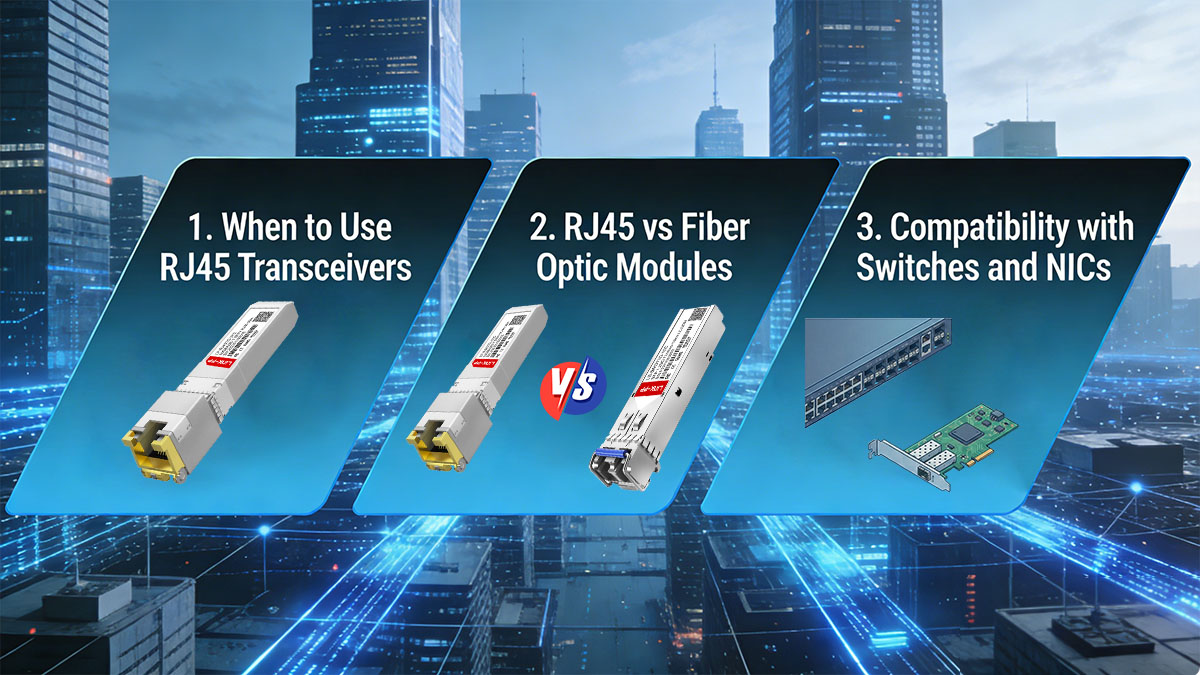
When to Use RJ45 Transceivers
RJ45 transceivers are most effective in scenarios where compatibility with copper cabling and deployment flexibility are prioritized over maximum performance or energy efficiency.
They are typically the preferred option in the following situations:
- Existing copper infrastructure (Cat5e/Cat6/Cat6a) is already deployed
- Short-to-medium distance links (up to 100m) are required
- Incremental network upgrades are being implemented
- Mixed-media environments require flexible port configuration
- Fiber deployment is cost-prohibitive or operationally complex
The suitability of RJ45 transceivers can be summarized as follows:
| Scenario | Suitability Level | Key Reason |
|---|---|---|
| Office LAN access layer | High | Reuse of existing cabling |
| Data center high-density core | Low | Power and thermal constraints |
| Campus network distribution | Medium | Balance of cost and flexibility |
| Temporary or flexible setups | High | Easy deployment and reconfiguration |
In general, RJ45 transceivers are ideal for access and edge layers but less suitable for core or aggregation layers where performance and density are critical.
RJ45 vs Fiber Optic Modules
Choosing between RJ45 and fiber optic transceivers depends on several key technical and operational factors. RJ45 modules offer simplicity and compatibility, while fiber provides superior performance and scalability.
The comparison below highlights the main differences:
| Parameter | RJ45 Transceiver | Fiber Optic Transceiver |
|---|---|---|
| Medium | Copper | Fiber |
| Power Consumption | Higher | Lower |
| Latency | Higher | Lower |
| Maximum Distance | Up to 100m | From meters to kilometers |
| Port Density | Limited (thermal constraints) | High |
From a design perspective:
- RJ45 is advantageous for short-distance, cost-sensitive deployments
- Fiber is preferred for long-distance, high-bandwidth, and high-density environments
- Hybrid architectures combining both are common in modern networks
This decision often reflects a trade-off between immediate practicality and long-term scalability.
Compatibility with Switches and NICs
Compatibility is a critical consideration when deploying RJ45 transceivers, as not all switches and network interface cards (NICs) fully support copper modules in pluggable form factors.
Key compatibility factors include:
- Vendor support: Some manufacturers restrict or validate specific SFP types
- Power budget: RJ45 modules may exceed per-port power limits, especially in SFP+ slots
- Auto-negotiation: Ensuring proper speed and duplex matching with connected devices
- Firmware support: Required for stable operation and feature compatibility
Common deployment considerations:
- Verify switch datasheets for supported RJ45 transceiver models
- Ensure sufficient cooling for sustained operation
- Test interoperability in multi-vendor environments
- Consider fallback speeds (e.g., 1G compatibility in 10G SFP+ modules)
Failure to account for compatibility can result in link instability, reduced performance, or complete port failure.
? Deployment Scenarios and Use Cases
RJ45 transceivers are widely used across different network environments due to their ability to integrate copper Ethernet into modular systems. Their primary advantage lies in enabling flexible deployment while leveraging existing cabling infrastructure. However, their effectiveness varies depending on the specific use case, particularly in relation to distance, power constraints, and environmental conditions.
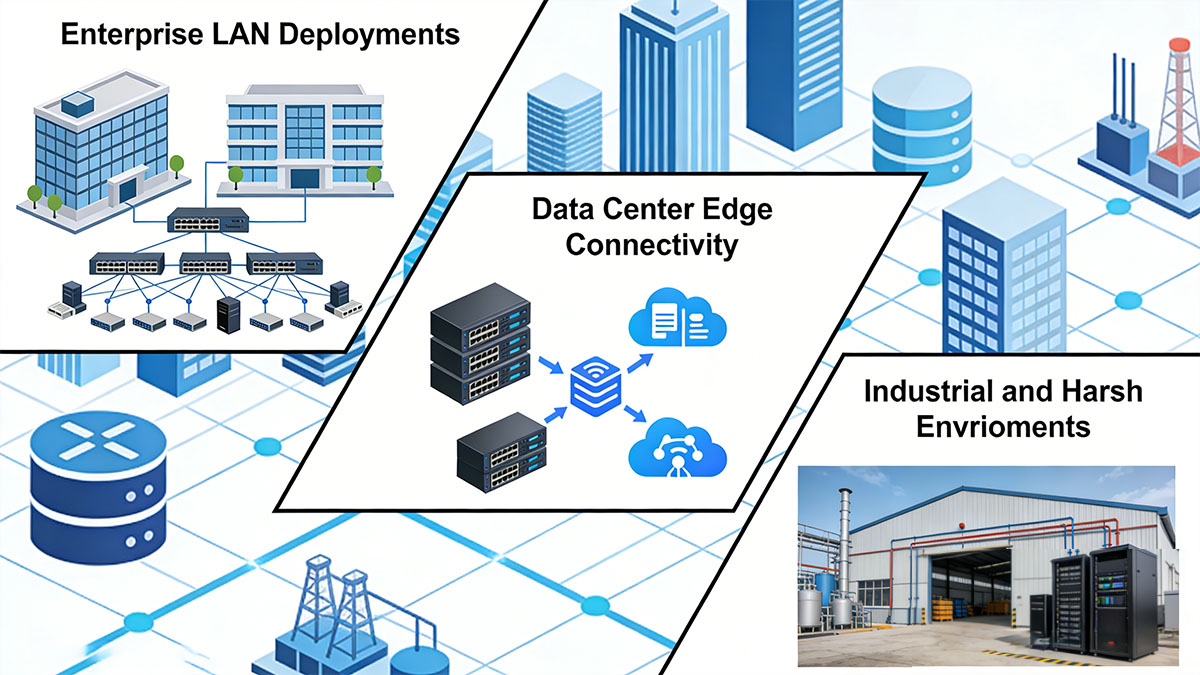
Enterprise LAN Deployments
RJ45 transceivers are most commonly deployed in enterprise LAN environments, where copper cabling is already deeply established and cost efficiency is a priority. They allow organizations to modernize network equipment without replacing structured cabling systems.
In enterprise networks, RJ45 transceivers are typically used for:
- Access layer connections between switches and end devices
- Gradual upgrades from 1000BASE to multi-gigabit Ethernet
- Supporting Wi-Fi access points requiring 2.5GBASE/5GBASE uplinks
- Extending the lifecycle of existing Cat5e/Cat6 infrastructure
The advantages in this scenario are clear:
| Factor | Impact in Enterprise LAN | Result |
|---|---|---|
| Infrastructure reuse | High | Reduced upgrade cost |
| Deployment simplicity | High | Faster implementation |
| Performance | Moderate to High | Suitable for most workloads |
In most office environments, the slightly higher latency and power consumption of RJ45 transceivers are negligible compared to their operational convenience.
Data Center Edge Connectivity
RJ45 transceivers are also used at the edge of data center networks, particularly in top-of-rack (ToR) architectures where short copper links connect servers to switches.
Typical use cases include:
- Connecting legacy servers with RJ45 NICs to SFP/SFP+ switch ports
- Supporting hybrid environments with both fiber uplinks and copper downlinks
- Enabling flexible port allocation in ToR switches
However, their use in data centers is more constrained compared to enterprise environments:
| Factor | Impact in Data Center Edge | Consideration |
|---|---|---|
| Power consumption | High | Limits port density |
| Heat generation | Significant | Requires strong airflow |
| Cable management | Moderate | Bulkier than fiber/DAC |
As a result, RJ45 transceivers are generally limited to edge or transitional roles in data centers, while fiber or DAC solutions dominate in high-density switching environments.
Industrial and Harsh Environments
RJ45 transceivers are also deployed in industrial and harsh environments, where robustness and compatibility with existing copper systems are critical. In such scenarios, fiber may not always be practical due to cost, fragility, or installation complexity.
Common industrial use cases include:
- Factory automation networks with high EMI exposure
- Transportation systems and outdoor installations
- Surveillance and security networks
- Energy and utility infrastructure
In these environments, the following factors become especially important:
| Factor | Impact in Industrial Use | Outcome |
|---|---|---|
| EMI resistance | Critical | Requires shielding and grounding |
| Mechanical durability | High | Ensures long-term reliability |
| Environmental tolerance | High | Stable operation under stress |
RJ45 transceivers used in such conditions are often paired with shielded cables and ruggedized equipment to ensure consistent performance.
? Challenges and Design Trade-offs
RJ45 transceivers introduce several engineering trade-offs that directly affect network scalability, efficiency, and long-term design strategy. While they provide flexibility and compatibility with copper infrastructure, these advantages come with constraints in power, signal integrity, and future scalability. Understanding these trade-offs is essential for making balanced design decisions, especially in environments where performance and density are critical.
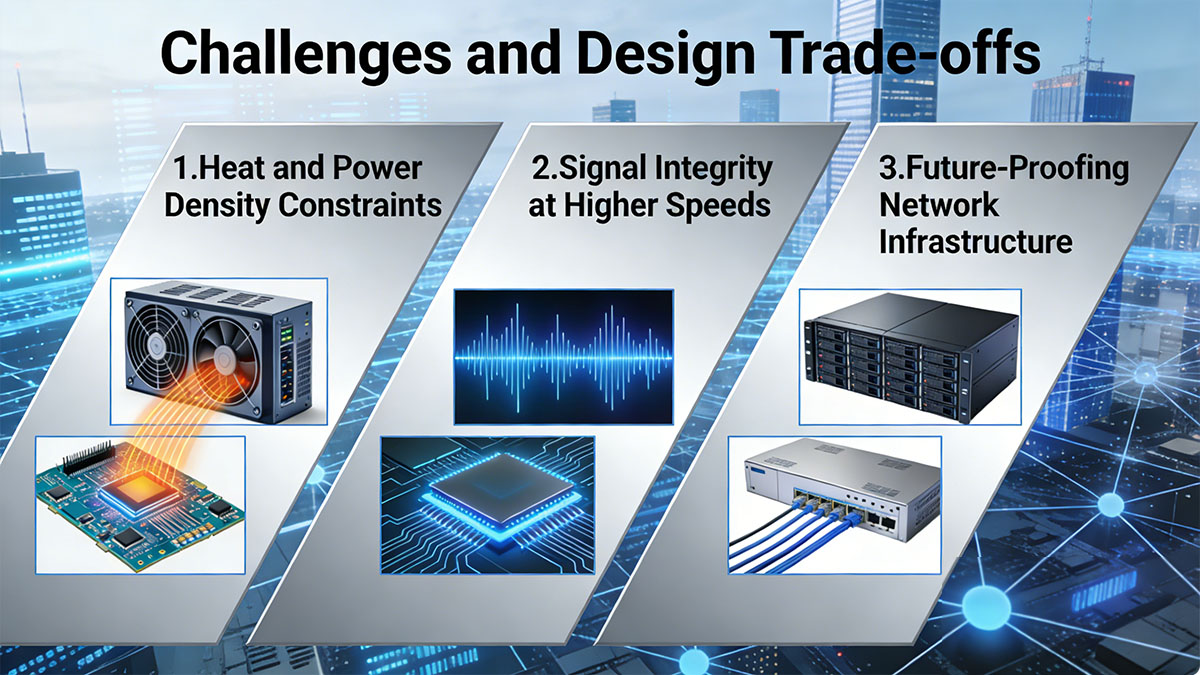
Heat and Power Density Constraints
RJ45 transceivers are inherently more power-hungry than optical modules due to the computational load of their integrated PHY and DSP functions. This increased power consumption translates directly into heat generation, which becomes a limiting factor in dense deployments.
In high-density switch environments:
- Each RJ45 transceiver contributes significantly to total thermal load
- Switch cooling systems must compensate for concentrated heat sources
- Port utilization may be limited by overall power and thermal budgets
The relationship between port density and thermal impact can be summarized as follows:
| Deployment Type | RJ45 Usage Density | Thermal Impact Level | Practical Limitation |
|---|---|---|---|
| Low-density access | Low | Minimal | No major constraint |
| Enterprise aggregation | Medium | Moderate | Cooling design becomes relevant |
| Data center ToR/core | High | High | Limits maximum port population |
As a result, many switch vendors recommend limiting the number of active RJ45 transceivers per device, especially for 10GBASE-T modules. This constraint directly affects scalability in environments where high port density is required.
Signal Integrity at Higher Speeds
Maintaining signal integrity over copper becomes increasingly difficult as data rates rise. RJ45 transceivers must compensate for a wide range of impairments, but there are physical limits to how effectively this can be achieved.
At higher speeds such as 10GBASE-T:
- Signal attenuation increases significantly over distance
- Crosstalk between pairs becomes more pronounced
- Error rates rise if cable quality is insufficient
- Retransmissions may occur, reducing effective throughput
The impact of speed on signal integrity challenges is illustrated below:
| Speed Standard | Signal Integrity Challenge Level | Typical Limitation |
|---|---|---|
| 1GBASE-T | Low | Stable across most cable types |
| 2.5G/5GBASE-T | Moderate | Dependent on cable quality |
| 10GBASE-T | High | Distance and cable constraints |
Even with advanced DSP techniques, copper transmission at higher frequencies approaches its practical limits, making it less predictable than optical alternatives in demanding environments.
Future-Proofing Network Infrastructure
RJ45 transceivers are well-suited for current multi-gigabit Ethernet needs, but their long-term scalability is constrained by the physical limitations of copper transmission. As network speeds continue to increase beyond 10G, fiber-based solutions become increasingly dominant.
Key considerations for future-proofing include:
- Copper Ethernet standards above 10G are less widely adopted and more complex
- Power efficiency becomes a critical factor in large-scale deployments
- Emerging applications (AI, cloud computing, high-performance storage) demand lower latency and higher bandwidth
- Fiber offers a clearer upgrade path for 25G SFP28, 40G QSFP+, 100G QSFP28, and other high-speed transceivers.
From a strategic perspective:
- RJ45 transceivers are effective for extending the life of existing infrastructure
- Fiber is more suitable for long-term scalability and high-performance requirements
- Hybrid architectures allow gradual migration without immediate disruption
Balancing short-term practicality with long-term network evolution is a key design challenge. While RJ45 transceivers provide immediate benefits in flexibility and cost control, their limitations must be carefully considered when planning for future growth and increasing performance demands.
? Future Trends in RJ45 Transceiver Technology
RJ45 transceiver technology is evolving to address its traditional limitations in power consumption, thermal performance, and scalability while continuing to support the widespread demand for copper-based Ethernet. The future direction focuses on improving efficiency, enabling higher speeds within practical limits, and adding intelligent features that enhance network visibility and management.
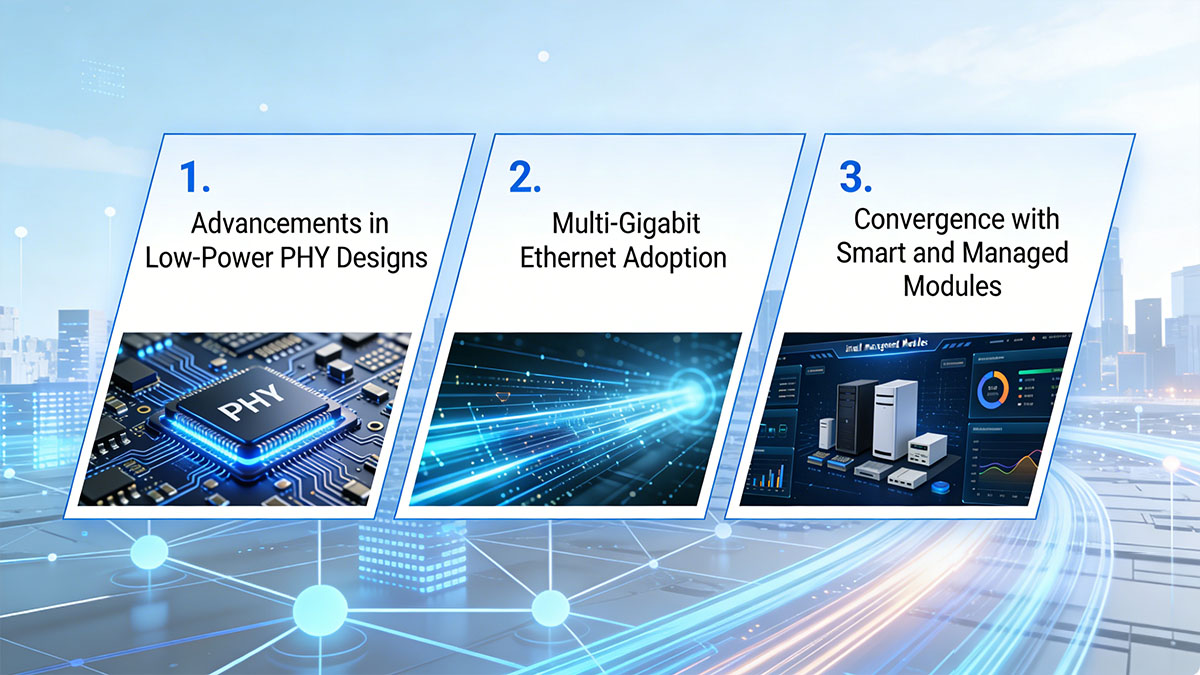
Advancements in Low-Power PHY Designs
Recent developments in Ethernet PHY chipsets are significantly reducing the power consumption of RJ45 transceivers, making them more viable for broader deployment scenarios, including higher-density environments.
Key improvements include:
- Transition to more advanced semiconductor process nodes (e.g., smaller nanometer fabrication)
- Enhanced DSP algorithms that achieve better signal quality with lower computational overhead
- Power-saving modes such as Energy Efficient Ethernet (EEE)
- Optimized link training and adaptive equalization techniques
The impact of these advancements can be summarized below:
| Generation | Typical Power (10GBASE-T) | Efficiency Improvement | Deployment Impact |
|---|---|---|---|
| Early implementations | ~4W | Baseline | Limited high-density usage |
| Current generation | ~2.5–3W | Moderate | Wider enterprise adoption |
| Emerging designs | <2.5W (target) | Significant | Improved scalability potential |
As power efficiency improves, RJ45 transceivers are expected to become more practical even in environments where thermal constraints previously limited their use.
Multi-Gigabit Ethernet Adoption
The rapid growth of multi-gigabit Ethernet (2.5GBASE-T and 5GBASE-T) is a major driver for RJ45 transceiver adoption. These intermediate speeds provide a balance between performance and infrastructure compatibility, particularly in enterprise networks.
Key drivers behind this trend include:
- Increasing bandwidth demand from Wi-Fi 6, Wi-Fi 6E, and emerging Wi-Fi 7 access points
- The need to exceed Gigabit speeds without replacing existing Cat5e/Cat6 cabling
- Lower power consumption compared to 10GBASE-T while still delivering meaningful performance gains
The positioning of multi-gigabit speeds is illustrated below:
| Speed Standard | Cable Compatibility | Power Consumption | Typical Application |
|---|---|---|---|
| 1GBASE-T | Cat5e and above | Low | General enterprise access |
| 2.5GBASE-T | Cat5e and above | Moderate | Wi-Fi uplinks |
| 5GBASE-T | Cat6 and above | Moderate | High-performance edge devices |
| 10GBASE-T | Cat6a preferred | High | Data-intensive applications |
This trend reinforces the role of RJ45 transceivers as a bridge between legacy infrastructure and modern bandwidth requirements.
Convergence with Smart and Managed Modules
RJ45 transceivers are increasingly incorporating intelligent features that were traditionally associated with optical modules. This shift enhances operational visibility and allows for more proactive network management.
Emerging capabilities include:
- Digital diagnostics monitoring (DDM) for parameters such as temperature and voltage
- Real-time link status and performance reporting
- Remote monitoring through standard management interfaces
- Integration with network automation and telemetry systems
These features provide several practical benefits:
- Improved troubleshooting and faster fault isolation
- Better thermal and power management through real-time insights
- Enhanced compatibility with software-defined networking (SDN) environments
As networks become more complex and data-driven, the ability to monitor and manage transceiver performance at a granular level will become increasingly important.
? Conclusion
RJ45 transceivers remain a crucial component for integrating copper Ethernet into modern, modular network architectures. Their electrical design enables flexible deployment over existing cabling while supporting a wide range of speeds, from standard Gigabit to multi-gigabit and 10GBASE-T. However, their performance is influenced by power consumption, thermal constraints, cable quality, and environmental factors, making careful network planning essential.
Looking forward, advancements in low-power PHY designs, wider adoption of multi-gigabit Ethernet, and the integration of intelligent monitoring features are enhancing the viability of RJ45 transceivers across enterprise, data center edge, and industrial networks. They continue to provide a practical, cost-effective solution for short-to-medium distance connectivity while maintaining compatibility with existing infrastructure.
For reliable, high-performance RJ45 transceivers that meet industry standards and support modern network needs, explore the selection available at the LINK-PP Official Store.