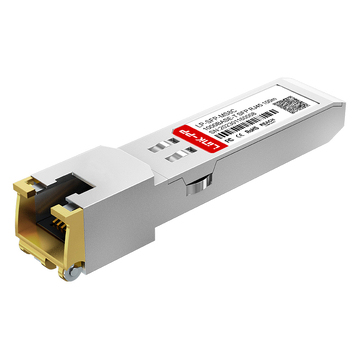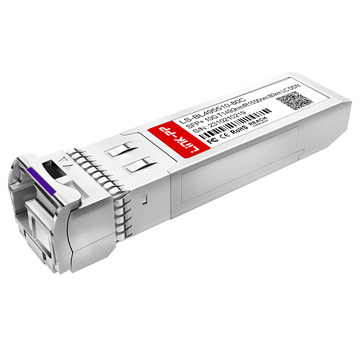

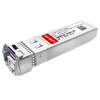



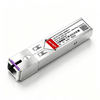
























The FS SFP-10GSR-85 has become a widely adopted solution for short-range 10Gbps optical connectivity in modern enterprise and data center networks. Designed for 10GBASE-SR applications over multimode fiber, it offers a practical balance between performance, cost efficiency, and deployment flexibility. As organizations continue to scale their infrastructure to support virtualization, cloud computing, and high-density switching, modules like this have played a foundational role in enabling reliable, low-latency communication across network layers.
However, as network environments evolve into increasingly heterogeneous ecosystems, enterprises are no longer operating within single-vendor boundaries. The demand for interoperable, cost-efficient, and readily available alternatives to the FS SFP-10GSR-85 is steadily growing. Challenges such as vendor compatibility constraints, firmware restrictions, and supply chain variability have made it essential for IT teams to evaluate replacement options that can integrate seamlessly without compromising performance or stability.
This guide is designed to provide a structured and in-depth exploration of FS SFP-10GSR-85 replacement strategies from an enterprise interoperability perspective. It will examine key technical specifications, compatibility considerations, performance benchmarks, and deployment best practices. By the end of this article, readers will gain a clear framework for selecting and validating suitable alternatives, enabling more flexible and scalable network architectures in multi-vendor environments.
? Understanding FS SFP-10GSR-85 Specifications and Role
The FS SFP-10GSR-85 is a standard 10GBASE-SR optical transceiver designed for short-range, high-speed data transmission over multimode fiber, making it a reliable choice for intra-data center connectivity. Its technical characteristics and deployment flexibility position it as a foundational component in many enterprise network architectures.

Core Technical Specifications
The module delivers 10Gbps performance over short distances using 850nm wavelength optics and is optimized for multimode fiber environments. These specifications define its compatibility and performance boundaries in real-world deployments.
| Parameter | Specification | Description |
|---|---|---|
| Data Rate | 10Gbps | Supports 10G Ethernet transmission |
| Wavelength | 850nm | Suitable for multimode fiber (MMF) |
| Max Distance | Up to 300m | Depends on OM3/OM4 fiber type |
| Connector Type | LC Duplex | Standard interface for fiber patch cords |
These parameters highlight that the FS SFP-10GSR-85 is specifically engineered for short-reach, high-density environments rather than long-haul transmission, which is a key consideration when evaluating replacement options.
Typical Deployment Scenarios
This module is primarily used in short-distance, high-bandwidth scenarios where low latency and high port density are required. It is particularly effective in structured and controlled environments such as data centers.
- Top-of-Rack (ToR) switching connections between servers and switches
- Aggregation layer links within data center fabrics
- High-density enterprise network access layers
- Storage area networks (SANs) requiring fast data exchange
These use cases demonstrate that the module is best suited for environments where consistent performance over relatively short distances is more critical than extended reach.
Why It Became a Standard Choice
The widespread adoption of the FS SFP-10GSR-85 is largely driven by its balance of cost, performance, and interoperability. It aligns well with industry standards, making it compatible with a wide range of networking equipment.
- Cost-effective compared to long-range optical modules
- Broad compatibility due to adherence to MSA standards
- Mature ecosystem with extensive vendor support
- Easy deployment with plug-and-play functionality
As a result, it has become a default option for many enterprises building or expanding 10G SFP+ infrastructure, and understanding its role is essential before selecting any replacement alternative.
? Why Enterprises Seek FS SFP-10GSR-85 Replacement Options
Enterprises look for alternatives to the FS SFP-10GSR-85 primarily to improve interoperability, control costs, and reduce operational risks in increasingly complex network environments. While the module itself is reliable, evolving infrastructure demands and business constraints often make replacement strategies a practical necessity rather than a preference.

Multi-Vendor Network Requirements
Modern enterprise networks are rarely built around a single vendor, and replacement modules are often required to ensure seamless operation across heterogeneous platforms. Interoperability becomes a critical factor when integrating equipment from different manufacturers.
- Avoiding vendor lock-in that limits flexibility in network expansion
- Supporting mixed environments such as Cisco, Juniper, Arista, and white-box switches
- Enabling consistent performance across diverse hardware ecosystems
- Simplifying procurement by allowing broader sourcing options
These factors make it essential for replacement modules to function reliably across platforms without triggering compatibility issues or requiring extensive reconfiguration.
Cost Optimization Pressures
Reducing capital and operational expenditures is one of the most common drivers behind seeking alternatives. Optical transceiver modules, especially in large-scale deployments, represent a significant portion of network hardware costs.
| Cost Factor | Impact on Enterprise Networks | Replacement Advantage |
|---|---|---|
| Initial Procurement | High in OEM modules | Lower cost with compatible options |
| Scalability Costs | Increase with network growth | More predictable budget planning |
| Maintenance Overhead | Vendor-specific dependencies | Flexible sourcing and replacement |
This comparison shows that replacing the FS SFP-10GSR-85 with compatible SFP modules can significantly reduce total cost of ownership while maintaining required performance levels.
Supply Chain and Availability Concerns
Global supply chain fluctuations have made it increasingly difficult for enterprises to rely on a single source for critical components. Replacement options help mitigate these risks and ensure continuity in network operations.
- Reducing dependency on a single vendor’s inventory and lead times
- Improving resilience against supply disruptions
- Enabling faster deployment cycles through diversified sourcing
- Supporting spare inventory strategies for critical infrastructure
In large-scale or time-sensitive deployments, having access to multiple compatible alternatives ensures that network expansion or maintenance is not delayed due to component shortages.
Overall, the shift toward replacement solutions reflects a broader trend in enterprise networking: prioritizing flexibility, resilience, and cost efficiency without compromising on performance or reliability.
? Key Compatibility Factors for Replacement Modules
When evaluating FS SFP-10GSR-85 replacement options, compatibility is the most critical consideration. Selecting a module that fails to integrate seamlessly can lead to port shutdowns, link instability, and degraded network performance. Enterprises must assess replacements based on compliance with industry standards, firmware characteristics, and platform-specific requirements.

MSA Compliance and Industry Standards
The Multi-Source Agreement (MSA) defines standard electrical, optical, and mechanical characteristics for optical modules. Replacement modules that adhere to MSA specifications are far more likely to interoperate across different switch and router platforms.
- Ensures basic electrical and optical interoperability
- Standardizes form factor and connector interfaces
- Reduces the risk of signal integrity issues
- Provides predictable performance across multiple hardware vendors
Using MSA-compliant modules allows enterprises to integrate alternatives without extensive testing in most cases, though verification on critical links is still recommended.
EEPROM Coding and Vendor Recognition
Modules often include EEPROM coding that identifies vendor and module type to the host switch. Incompatible or unrecognized coding can result in ports being disabled or performance throttled.
| Factor | Impact on Compatibility | Mitigation Strategy |
|---|---|---|
| Vendor ID Coding | Switch may reject module | Select modules validated for host |
| Product Type Identifier | May trigger unsupported warnings | Confirm coding matches target platform |
| Firmware Differences | Potential operational inconsistencies | Test module in controlled environment |
Attention to EEPROM coding ensures the replacement module is recognized correctly, preventing administrative and operational complications.
Switch and Platform Validation
Even when technical specifications match, real-world interoperability can vary depending on the switch firmware and OS. Pre-deployment validation reduces the risk of network disruptions.
- Review vendor compatibility matrices for supported transceivers
- Conduct lab tests to verify link stability and throughput
- Confirm full duplex operation and error-free transmission
- Ensure Digital Optical Monitoring (DOM) functionality is supported
By validating modules across platforms before mass deployment, enterprises minimize the risk of performance degradation and unexpected downtime.
In summary, assessing MSA compliance, EEPROM coding, and platform validation forms the foundation of a reliable replacement strategy. These factors collectively ensure that alternative modules integrate smoothly without compromising operational performance.
? Performance Benchmarks for FS SFP-10GSR-85 Alternatives
Selecting an FS SFP-10GSR-85 replacement requires a detailed understanding of performance characteristics to ensure that alternatives meet enterprise requirements. While form factor and compatibility are essential, the optical and operational performance metrics ultimately determine whether a module can reliably handle critical network traffic.

Optical Performance Metrics
The most important benchmarks for optical modules are transmit power, receive sensitivity, and bit error rate (BER). These parameters determine the maximum link distance, signal integrity, and overall reliability in short-reach 10G SFP+ applications.
| Metric | Typical FS SFP-10GSR-85 Specification | Replacement Benchmark Consideration |
|---|---|---|
| Transmit Power (dBm) | -7 to -1 | Ensure output falls within switch tolerance |
| Receive Sensitivity (dBm) | ≤ -11 | Must match or exceed original module’s sensitivity |
| Maximum Distance (m) | 300 (OM3) / 400 (OM4) | Replacement should support comparable distance |
| Bit Error Rate (BER) | ≤ 10^-12 | Confirm error rates under load are equivalent |
Replacement modules should achieve similar optical metrics to avoid degradation in high-density data center links.
Thermal Stability and Power Consumption
Operational temperature range and power efficiency are often overlooked but crucial for enterprise environments. Modules that overheat or consume excessive power can affect adjacent ports and increase cooling costs.
- Verify that the operating temperature matches switch and data center specifications
- Evaluate power consumption per module to maintain energy efficiency
- Consider long-term thermal stress testing for high-density rack deployments
Thermal stability ensures consistent performance under sustained network load, preventing sudden link drops.
Reliability and Longevity
Mean Time Between Failures (MTBF) and long-term durability are key indicators of whether a replacement module can be trusted in production networks.
- Target MTBF values comparable to the original FS SFP-10GSR-85 (often >1 million hours)
- Assess manufacturer quality control and testing procedures
- Evaluate warranty and support options for enterprise deployment
High reliability reduces operational risks and maintenance overhead, which is especially important for large-scale or mission-critical networks.
By benchmarking optical performance, thermal stability, and reliability, enterprises can confidently select alternatives that meet or exceed the standards set by the original FS SFP-10GSR-85, ensuring uninterrupted 10G connectivity across their network infrastructure.
? Comparing Replacement Options: OEM vs Third-Party Modules
When considering FS SFP-10GSR-85 replacements, enterprises must weigh the trade-offs between original equipment manufacturer (OEM) modules and third-party compatible modules. The choice impacts cost, compatibility, and operational flexibility, and understanding the differences is critical for informed decision-making.

OEM Modules
OEM modules are produced by the original switch vendor or authorized partners, guaranteeing full compatibility with the intended hardware. They are often recommended in high-stakes environments where risk minimization is paramount.
- Fully validated for switch and router platforms, reducing deployment uncertainty
- Optimized firmware and EEPROM coding to ensure recognition by host devices
- Generally backed by the vendor’s support and warranty programs
- Limited flexibility in sourcing, often with longer lead times and higher costs
OEM modules are suitable for networks where absolute reliability and vendor support are priorities, though the higher cost may be prohibitive in large-scale deployments.
Third-Party Compatible Modules
Third-party or “compatible” modules are produced by independent manufacturers adhering to MSA specifications and are designed to function across multiple platforms. These modules offer cost savings and sourcing flexibility, but require careful evaluation to ensure performance parity.
| Aspect | OEM Modules | Third-Party Modules |
|---|---|---|
| Cost | Higher | Lower |
| Compatibility | Guaranteed | Requires validation |
| Firmware & Coding | Optimized for vendor devices | May vary; testing recommended |
| Sourcing Flexibility | Limited | Broad |
| Warranty & Support | Vendor-backed | Manufacturer-dependent |
This table highlights the trade-offs enterprises must consider: while OEM modules provide assurance and simplicity, third-party modules can significantly reduce total costs when carefully selected and validated.
Hybrid Deployment Strategy
Many enterprises adopt a hybrid approach to leverage the advantages of both OEM and third-party modules. Key considerations for this strategy include:
- Deploy OEM modules on critical links where maximum reliability is essential
- Use validated third-party modules for non-critical or high-volume links to reduce costs
- Maintain a standardized testing process to ensure performance consistency
- Keep a documented inventory and compatibility list for all replacement modules
A hybrid deployment balances risk, cost, and operational flexibility, making it a practical solution for complex, multi-vendor network environments.
In conclusion, comparing OEM and third-party options allows enterprises to align their replacement strategy with operational goals, budget constraints, and network reliability requirements. Proper validation and testing remain critical to ensure seamless interoperability regardless of the chosen module types.
? Deployment Best Practices for Seamless Interoperability
Ensuring seamless integration of FS SFP-10GSR-85 replacement modules requires careful planning and adherence to deployment best practices. Proper implementation minimizes downtime, maintains link stability, and ensures consistent performance across multi-vendor environments.

Pre-Deployment Testing
Testing replacement modules before large-scale deployment is critical to identify potential interoperability issues. Even MSA-compliant modules can behave differently depending on switch firmware and network conditions.
- Conduct lab testing to validate link stability under typical traffic loads
- Verify firmware and OS compatibility with the target switches
- Confirm full-duplex operation and proper recognition of the module
- Test Digital Optical Monitoring (DOM) functions to ensure signal metrics are accurately reported
Pre-deployment validation reduces the likelihood of unexpected failures or degraded performance in production networks.
Network Design Considerations
Proper network planning ensures that replacement modules perform as intended. Factors such as fiber type, link distance, and port density must be accounted for when integrating alternative modules.
- Match fiber type (OM3 or OM4) to module specifications for maximum reach
- Evaluate link budget to ensure sufficient signal margin across all connections
- Consider high-density racks and adjacent port heat when planning module placement
- Document network layout to maintain consistency and facilitate troubleshooting
These considerations help maintain predictable performance and prevent deployment errors that can affect multiple links.
Monitoring and Troubleshooting
Continuous monitoring of replacement modules is essential to detect early signs of performance degradation. Integrating monitoring tools into the network management system improves operational visibility.
- Use DOM readings to track transmit power, receive sensitivity, and temperature
- Monitor error counts and link stability over time
- Establish proactive maintenance schedules based on performance trends
- Keep a record of module behavior to identify patterns and potential failures
By implementing these monitoring and troubleshooting practices, enterprises can maintain consistent network performance and extend the lifespan of replacement modules.
Overall, adherence to pre-deployment testing, careful network design, and ongoing monitoring ensures that FS SFP-10GSR-85 alternatives operate reliably and deliver predictable results in complex, multi-vendor enterprise environments.
? Common Challenges and How to Avoid Them
Even with MSA-compliant FS SFP-10GSR-85 replacement modules, enterprises can encounter operational challenges if deployment and validation are not handled carefully. Understanding common pitfalls and implementing mitigation strategies ensures reliable, high-performance connectivity across multi-vendor networks.

Compatibility Errors and Port Shutdowns
One of the most frequent issues is a switch failing to recognize a replacement module, leading to port shutdowns or link errors. These problems often arise from mismatched EEPROM coding, unsupported firmware, or deviations from MSA standards.
- Verify EEPROM and vendor coding against the host switch’s compatibility list
- Conduct lab tests for each module type before production deployment
- Avoid mixing untested third-party modules with critical links
- Document all validated modules for reference in future upgrades
By pre-validating modules and maintaining clear records, enterprises can prevent costly downtime caused by compatibility issues.
Performance Inconsistencies
Variations in optical performance, such as lower transmit power or reduced receive sensitivity, can result in intermittent connectivity or reduced link margins. Fiber quality, module manufacturing tolerances, and temperature fluctuations often exacerbate these issues.
- Measure optical metrics against FS SFP-10GSR-85 benchmarks before deployment
- Ensure fiber types (OM3 or OM4) and distances align with module specifications
- Monitor performance over time to identify degradation trends
- Replace underperforming modules promptly to maintain network stability
Consistently testing and monitoring performance ensures that replacement modules meet the operational standards required for enterprise networks.
Operational Risks in Large-Scale Deployments
Scaling deployments across multiple racks or sites introduces additional challenges, including configuration drift, inventory mismanagement, and inconsistent module sourcing.
- Maintain centralized inventory tracking with detailed module specifications
- Standardize procurement policies to ensure consistent sourcing of validated modules
- Implement automated configuration management to reduce human error
- Schedule periodic audits of deployed modules to verify continued compliance
By addressing operational risks systematically, enterprises can reduce errors, improve uptime, and maintain predictable network performance even at scale.
In summary, anticipating compatibility issues, monitoring performance, and managing operational risks are key to avoiding common pitfalls. Proactive testing, documentation, and standardized processes ensure that FS SFP-10GSR-85 replacements deliver reliable service in complex, multi-vendor enterprise environments.
? Future Trends in 10G SR Optical Module Replacement
As enterprise networks evolve, the demand for high-speed, flexible, and vendor-neutral optical connectivity continues to grow. Replacement strategies for FS SFP-10GSR-85 modules are being shaped by technological advancements, the shift toward open networking, and the increasing need for intelligent network management.

Transition Toward Higher Speeds
While 10GBASE-SR remains widely deployed, many enterprises are gradually migrating toward higher-speed standards to meet growing bandwidth demands. Replacement modules are increasingly expected to support backward compatibility while preparing networks for future upgrades.
- 25G SFP28, 40G QSFP+, and 100G QSFP28 deployments are becoming common in high-density data centers
- Replacement modules must maintain interoperability with existing 10G infrastructure
- Hybrid environments with mixed-speed links require careful planning of link budgets and fiber types
- Ensuring that replacement modules can coexist with other high-speed transceivers reduces long-term infrastructure costs
This trend emphasizes the need for replacement solutions that offer scalability and future-proofing without disrupting current operations.
Increasing Adoption of Open Networking
The rise of open networking and white-box switches is changing how enterprises approach optical module replacement. Vendor-neutral hardware allows greater flexibility but requires modules that adhere strictly to industry standards.
- Open networking ecosystems demand standardized MSA-compliant modules
- Multi-vendor compatibility reduces dependency on proprietary optics
- Enterprises can diversify sourcing while minimizing risk of compatibility issues
- Adoption of validated third-party modules is expected to increase as cost efficiency and flexibility become priorities
Open networking encourages innovation and allows organizations to optimize performance across diverse network environments.
Automation and Intelligent Monitoring
Intelligent monitoring and network automation are becoming integral to managing optical modules at scale. Replacement strategies now often include solutions that provide real-time visibility into link performance and predictive maintenance capabilities.
- Digital Optical Monitoring (DOM) provides metrics such as temperature, transmit power, and receive sensitivity
- AI-driven analytics can identify potential failures before they impact operations
- Automated alerts help IT teams respond to anomalies quickly, reducing downtime
- Integration with network management platforms simplifies large-scale monitoring and maintenance
By leveraging automation and intelligent monitoring, enterprises can ensure that replacement modules continue to deliver reliable performance while reducing operational overhead.
Overall, future trends in FS SFP-10GSR-85 replacement emphasize speed scalability, open networking adoption, and intelligent management. Enterprises that align their replacement strategy with these trends will be better equipped to maintain robust, flexible, and cost-efficient 10G network infrastructures.
? Conclusion
Selecting the right FS SFP-10GSR-85 replacement is a strategic decision that impacts network performance, interoperability, and operational efficiency. By carefully evaluating technical specifications, compatibility factors, and performance benchmarks, enterprises can choose alternatives that integrate seamlessly across multi-vendor environments. Adhering to best practices for deployment, monitoring, and testing further ensures consistent, reliable connectivity while mitigating risks associated with large-scale or heterogeneous networks.
For organizations seeking validated, standards-compliant FS SFP-10GSR-85 alternatives, exploring reliable sources can simplify procurement and support long-term network scalability. Discover a range of compatible solutions at the LINK-PP Official Store, providing enterprise-grade performance and interoperability for modern 10G network infrastructures.