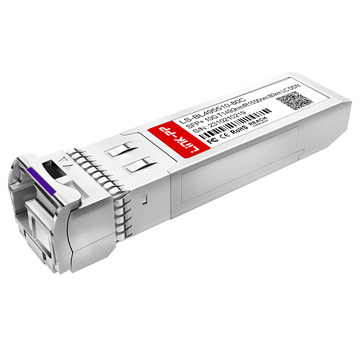
The Dahua GSFP-1310R-20-SMF is a widely used 1.25G BiDi SFP transceiver designed for single-mode fiber transmission up to 20km, utilizing a 1550nm/1310nm wavelength pairing. It is commonly deployed in surveillance networks, access switches, and fiber extension scenarios where efficient use of fiber resources is required. By enabling bidirectional communication over a single fiber strand, it helps reduce cabling complexity while maintaining stable Gigabit connectivity.
As network environments become more heterogeneous, users are increasingly concerned about whether the GSFP-1310R-20-SMF can operate reliably across different vendors' equipment. Compatibility is no longer limited to physical fit or basic link establishment—it also involves EEPROM coding, firmware acceptance, digital diagnostics, and long-term link stability. In many real-world deployments, especially those involving mixed-brand switches or media converters, these factors can directly impact network performance and maintenance efficiency.
At the same time, third-party compatible SFP modules have emerged as a practical option for extending network capacity and simplifying spare parts management. When properly selected, these alternatives can match the original fiber optic SFP module in terms of optical performance and interoperability, while offering greater flexibility in multi-vendor environments. However, choosing the right replacement requires a clear understanding of key parameters such as wavelength pairing, optical budget, interface type, and device compatibility behavior.
This article provides a structured analysis of the Dahua GSFP-1310R-20-SMF, focusing on its technical characteristics, compatibility landscape, and the selection of reliable third-party alternatives. It aims to help network engineers and system integrators make informed decisions when designing, upgrading, or maintaining fiber-based connectivity solutions.
⛰ Technical Overview of Dahua GSFP-1310R-20-SMF
The Dahua GSFP-1310R-20-SMF is a 1G BiDi SFP transceiver designed for single-mode fiber transmission over distances up to 20km, using a complementary wavelength pair (1550nm Tx / 1310nm Rx). It enables full-duplex communication over a single fiber strand, making it a practical choice for fiber-constrained deployments such as surveillance networks and access-layer extensions.

Key Optical Specifications and BiDi Design
The SFP transceiver operates on a bidirectional (BiDi) optical design, which allows both transmission and reception to occur over the same fiber by using different wavelengths. This significantly improves fiber utilization efficiency without sacrificing link performance.
| Parameter | Value | Description |
|---|---|---|
| Data Rate | 1.25Gbps | Supports Gigabit Ethernet |
| Tx Wavelength | 1550nm | Downstream transmission |
| Rx Wavelength | 1310nm | Upstream reception |
| Max Distance | 20km | Over single-mode fiber (SMF) |
This wavelength pairing requires deployment in matched pairs, meaning it must be used alongside a complementary module (1310nm Tx / 1550nm Rx) on the opposite end. Incorrect pairing will result in link failure, even if the modules are otherwise functional.
The 20km transmission capability is achieved through an appropriate optical power budget, allowing stable signal propagation over long-distance fiber links typically found in campus or metro access environments.
Interface Type and Physical Form Factor
The GSFP-1310R-20-SMF follows the standard SFP (Small Form-factor Pluggable) specification, ensuring compatibility with a wide range of networking devices that support SFP ports. Its hot-swappable design allows installation or replacement without interrupting system operation.
Key interface and physical characteristics include:
- LC simplex connector for single-fiber BiDi transmission
- Compact SFP form factor suitable for high-density switch ports
- Support for standard SFP Multi-Source Agreement (MSA)
Because it uses a simplex LC interface instead of the more common duplex LC, deployment requires careful fiber planning to ensure correct port mapping and polarity alignment.
Typical Application Scenarios
The GSFP-1310R-20-SMF is primarily used in scenarios where fiber resources are limited and long-distance connectivity is required. Its BiDi capability makes it especially suitable for reducing infrastructure costs while maintaining performance.
Common deployment scenarios include:
- IP surveillance systems, particularly in Dahua-based video networks
- Enterprise access layer connections between buildings or floors
- Campus network fiber extension with limited fiber availability
- Industrial monitoring systems with distributed endpoints
In these environments, the ability to transmit and receive over a single fiber strand simplifies cabling and reduces operational complexity, especially in retrofit or expansion projects where laying new fiber is costly or impractical.
Overall, the GSFP-1310R-20-SMF combines standard Gigabit performance with efficient fiber usage, making it a practical and widely applicable optical module for modern network deployments.
⛰ Compatibility Landscape of GSFP-1310R-20-SMF
The Dahua GSFP-1310R-20-SMF is generally compatible with standard SFP-based networking equipment, but real-world interoperability depends on multiple layers, including hardware standards, EEPROM coding, and device firmware behavior. While it follows the SFP MSA and Gigabit Ethernet standards, compatibility is not always guaranteed across all vendors without proper validation.

Supported Network Equipment Environments
In most deployments, the GSFP-1310R-20-SMF works reliably in devices that support standard 1.25Gbps fiber SFP optical modules. Its baseline compatibility is determined by adherence to SFP MSA and Gigabit Ethernet optical specifications.
Typical supported environments include:
- Dahua switches and network video recorders (native compatibility)
- Standard Gigabit Ethernet switches with SFP ports
- Fiber media converters supporting 1000Base-BX (BiDi) optics
- Industrial Ethernet devices with SFP interfaces
Because the module operates at 1Gbps and uses a standard LC interface over single-mode fiber, it can physically fit and function in most compliant SFP ports. Its BiDi design (single-fiber transmission) is also widely supported in modern networking hardware.
However, compatibility at the physical layer does not always ensure full operational compatibility at the system level.
Key Interoperability Factors
Successful interoperability depends on several critical technical factors beyond basic specifications. These determine whether the module can be recognized, initialized, and maintained by the host device.
Key factors include:
- EEPROM coding and vendor ID
Many switches validate the module's vendor information stored in EEPROM. Non-matching vendor codes may trigger warnings or block functionality. - Digital Diagnostic Monitoring (DDM/DOM) support
Some devices require DOM data (temperature, voltage, optical power). The GSFP-1310R-20-SMF may support this depending on implementation, but not all systems interpret it consistently. - Speed and protocol alignment
The module operates at 1.25Gbps (Gigabit Ethernet). Devices must support this rate without forcing incompatible negotiation modes. - Optical pairing requirements
BiDi modules must be deployed in complementary pairs (1550nm Tx / 1310nm Rx matched with 1310nm Tx / 1550nm Rx). Mismatched pairs will not establish a link even if both modules are functional.
These factors highlight that compatibility is both electrical and logical, not just optical.
Common Compatibility Constraints
Despite broad standardization, several practical constraints can affect deployment outcomes, especially in multi-vendor environments.
| Constraint Type | Description | Impact on Deployment |
|---|---|---|
| Vendor Lock-in | Devices restrict non-OEM modules | Link may be blocked or unstable |
| Firmware Limitations | Strict module validation rules | Module not recognized |
| DOM Inconsistency | Different interpretation of diagnostics | Monitoring data may be inaccurate |
| BiDi Pairing Errors | Incorrect wavelength pairing | No link establishment |
These constraints are frequently encountered in mixed-brand networks. For example, some devices may accept third-party modules but disable diagnostic features, while others may require explicit configuration changes to allow non-OEM optics.
In addition, community experience suggests that even when modules are physically compatible, issues such as auto-negotiation mismatches or vendor coding conflicts can prevent links from coming up properly, reinforcing the need for validation and testing in real deployments.
Overall, while the GSFP-1310R-20-SMF is built on widely accepted standards, achieving seamless compatibility requires careful consideration of both device behavior and optical parameters, especially when integrating third-party alternatives.
⛰ Third-Party Replacement Options
The Dahua GSFP-1310R-20-SMF can be effectively replaced by standard 1.25G BiDi SFP modules with matching wavelength (1550nm Tx / 1310nm Rx) and 20km transmission capability. In most cases, well-coded third-party modules provide equivalent optical performance and interoperability, as long as key parameters and compatibility requirements are carefully matched.

Standard 1.25G BiDi SFP Alternatives
A wide range of third-party BiDi SFP modules are available on the market, many of which follow the same 1000BASE-BX specification and can function as direct replacements when properly selected.
These modules typically share the following characteristics:
- 1.25Gbps data rate (Gigabit Ethernet compliant)
- 1550nm/1310nm BiDi wavelength pairing
- LC simplex connector for single-fiber transmission
- Up to 20km reach over single-mode fiber
Some models also include DDM/DOM support, which enables real-time monitoring of optical parameters such as temperature and transmit/receive power.
It is important to note that these modules are often sold individually or in matched pairs. Since BiDi transmission requires complementary wavelengths, both ends of the link must be correctly paired to establish communication.
Cross-Brand Compatibility Strategies
Selecting a third-party replacement is not only about matching specifications; it also involves ensuring interoperability with the target device. The following strategies help improve compatibility success rates:
- Match exact wavelength direction
Ensure the replacement uses 1550nm Tx / 1310nm Rx (not reversed), otherwise the link will fail. - Verify coding compatibility
Choose modules that are pre-coded or reprogrammable for specific vendors (e.g., Dahua, Cisco-compatible, universal coding). - Confirm protocol alignment
The module must support 1.25Gbps Gigabit Ethernet (1000BASE-BX), not Fast Ethernet or other high-speed transceivers. - Prefer widely tested generic modules
Modules validated across multiple brands tend to have fewer interoperability issues.
These strategies reduce the risk of link initialization failure, device rejection, or unstable performance in mixed-vendor environments.
Key Parameter Matching Guidelines
To ensure a third-party module can serve as a reliable alternative, several critical parameters must align with the original GSFP-1310R-20-SMF.
| Parameter | Required Match | Reason |
|---|---|---|
| Data Rate | 1.25Gbps | Ensures protocol compatibility |
| Wavelength Pair | 1550nm Tx / 1310nm Rx | Required for BiDi pairing |
| Connector Type | LC simplex | Matches single-fiber interface |
| Transmission Range | ≥20km | Maintains link stability margin |
Matching these parameters ensures that the optical link budget, signal direction, and physical interface remain consistent with the original deployment.
In addition, attention should be paid to optional features such as DDM support and operating temperature range, especially in industrial or outdoor environments. While not always mandatory, these factors can influence long-term reliability and monitoring capability.
Overall, third-party alternatives (like LINK-PP) to the GSFP-1310R-20-SMF are widely available and technically viable. The key to successful replacement lies in precise parameter matching, correct BiDi pairing, and careful consideration of device-level compatibility behavior.
⛰ Performance Considerations with Compatible Modules
Compatible 1.25G BiDi SFP modules can deliver performance equivalent to the Dahua GSFP-1310R-20-SMF when key optical and environmental parameters are properly aligned. In practice, link stability, signal integrity, and long-term reliability depend more on optical budget, deployment conditions, and module quality than on brand origin alone.

Optical Budget and Link Stability
Stable operation over a 20km single-mode fiber link requires that the optical power budget is sufficient to compensate for fiber attenuation, connector loss, and potential aging factors. If the margin is too low, intermittent link drops or increased error rates may occur.
| Parameter | Typical Value Range | Impact on Performance |
|---|---|---|
| Tx Output Power | -9dBm to -3dBm | Determines signal launch strength |
| Rx Sensitivity | ≤ -22dBm | Defines minimum detectable signal |
| Fiber Attenuation | ~0.35dB/km (1310nm) | Affects long-distance transmission |
| Link Loss Budget | ~12–14dB | Overall system tolerance |
A properly matched third-party module should meet or exceed these ranges to ensure consistent operation. In real deployments, maintaining a safety margin of at least 2–3dB is recommended to account for connector contamination, splicing loss, or environmental variations.
If the optical budget is insufficient, even a correctly paired BiDi link may experience instability, especially under temperature fluctuations or increased link length.
Environmental and Thermal Tolerance
Temperature and environmental conditions play a critical role in the performance of optical transceivers, particularly in outdoor or industrial deployments. Not all third-party modules are designed with the same tolerance levels.
Key environmental considerations include:
- Operating temperature range
Commercial modules typically operate from 0°C to 70°C, while industrial-grade modules extend from -40°C to 85°C. - Heat dissipation in high-density ports
In switches with many active SFP slots, heat buildup can affect module stability and lifespan. - Humidity and dust exposure
Poor environmental conditions can degrade connector quality and optical performance over time.
Selecting a module with an appropriate temperature rating is essential for maintaining consistent signal output and avoiding thermal-induced drift in optical characteristics.
Transmission Reliability Factors
Beyond basic link establishment, long-term transmission reliability depends on several performance indicators that are often overlooked during initial deployment.
Key reliability factors include:
- Bit Error Rate (BER) stability
High-quality modules maintain low BER over extended periods, even under marginal conditions. - Receiver sensitivity alignment
Mismatched sensitivity between paired modules can lead to asymmetric link performance. - Laser stability and aging
Over time, laser output power may degrade, reducing link margin and increasing the risk of failure. - Signal jitter and noise tolerance
Poor-quality modules may introduce timing instability, affecting data integrity.
These factors become increasingly important in mission-critical environments such as surveillance networks or industrial monitoring systems, where consistent data transmission is required.
⛰ Deployment Best Practices for BiDi Modules
Proper deployment of BiDi SFP modules like the Dahua GSFP-1310R-20-SMF is essential to ensure stable link establishment and long-term reliability. Most field issues are not caused by module defects, but by incorrect pairing, fiber handling errors, or insufficient validation during installation.

Correct Installation and Fiber Polarity
BiDi modules rely on complementary wavelength pairing, which means correct installation is the first and most critical step. A mismatch in wavelength direction will prevent the link from coming up, even if both modules are fully functional.
To ensure proper installation, follow these key steps:
- Verify module types on both ends
One side must use 1550nm Tx / 1310nm Rx, and the other must use 1310nm Tx / 1550nm Rx. - Confirm labeling and markings
Most vendors label BiDi modules as "A/B" or indicate Tx/Rx wavelengths clearly. - Use a single fiber strand
BiDi modules operate over simplex fiber, so only one strand should be connected. - Avoid mixing identical wavelength modules
Using two identical modules (e.g., both 1550nm Tx) will result in no signal reception.
After installation, a quick visual inspection and port status check can confirm whether the pairing is correct before proceeding with further configuration.
Fiber Infrastructure Requirements
The performance of BiDi modules is closely tied to the quality and type of fiber infrastructure. Even with correctly matched modules, poor fiber conditions can degrade link stability.
| Requirement | Recommended Standard | Purpose |
|---|---|---|
| Fiber Type | OS2 single-mode fiber | Supports long-distance transmission |
| Connector Type | LC simplex | Matches BiDi interface |
| Connector Cleanliness | IEC standard cleaning | Prevents signal loss and reflection |
| Link Distance | ≤20km | Ensures operation within budget |
Using OS2 single-mode fiber is essential for achieving the full 20km reach. In addition, connector cleanliness plays a significant role—dust or contamination can introduce several dB of loss, which directly impacts link margin.
Routine inspection and cleaning using fiber inspection tools are recommended, especially in environments with frequent maintenance or exposure to dust.
Testing and Validation Procedures
Before putting a BiDi link into production, it is important to validate both connectivity and optical performance. This reduces the risk of intermittent failures and simplifies troubleshooting later.
A typical validation process includes:
- Link status verification
Check that both ends report a stable link (no flapping or intermittent drops). - Optical power measurement
Use an optical power meter to confirm that received power falls within the acceptable range. - DDM/DOM monitoring
If supported, review transmit and receive power levels, temperature, and voltage for anomalies. - End-to-end connectivity testing
Perform ping or throughput tests to ensure stable data transmission.
These steps help confirm not only that the link is operational, but also that it has sufficient margin for long-term stability.
In practice, combining correct module pairing, high-quality fiber infrastructure, and thorough validation procedures significantly reduces deployment risks. This ensures that BiDi modules deliver their intended benefits in both performance and operational efficiency.
⛰ Troubleshooting Compatibility Issues
Compatibility issues with the Dahua GSFP-1310R-20-SMF or its third-party alternatives are typically caused by wavelength mismatch, vendor restrictions, or configuration inconsistencies rather than hardware failure. Most problems can be resolved by systematically checking optical pairing, module recognition, and device behavior.

Common Link Failure Causes
When a fiber link fails to establish, the root cause is often straightforward but requires structured verification. The most frequent issues are related to incorrect BiDi pairing or unsupported module behavior.
| Issue Type | Typical Cause | Result |
|---|---|---|
| Wavelength Mismatch | Same Tx/Rx modules on both ends | No link |
| Unsupported Module | Vendor lock or EEPROM rejection | Port disabled or error message |
| Fiber Connection Error | Wrong port or loose connector | Link down or unstable |
| Distance Overrun | Exceeding optical budget | Intermittent connectivity |
To isolate the issue, start by verifying that the modules are correctly paired (1550nm ↔ 1310nm) and that the fiber is properly connected. These two checks alone resolve a large percentage of deployment problems.
If the physical layer is correct but the link still fails, the issue is more likely related to device compatibility or configuration.
DOM Detection Problems
Digital Diagnostic Monitoring (DDM/DOM) is useful for observing real-time optical parameters, but it is not always consistently supported across devices and third-party modules. In some cases, the link may function normally even if diagnostic data is missing or inaccurate.
Common DOM-related issues include:
- No DOM data displayed
The host device may not support DOM for third-party modules, or the module may not provide full diagnostics. - Incorrect parameter readings
Values such as Tx/Rx power or temperature may appear out of range due to incompatibility in interpretation. - Partial monitoring availability
Some devices display only limited parameters (e.g., temperature but not optical power).
These issues generally do not affect data transmission directly, but they can complicate monitoring and maintenance. If optical visibility is critical, selecting modules with verified DOM compatibility for the target device is recommended.
Resolution and Optimization Methods
Once the root cause is identified, several practical methods can be applied to restore compatibility and improve link stability.
- Re-code or reprogram the module
Many third-party SFPs support EEPROM reprogramming to match specific vendor requirements, improving recognition by locked devices. - Update device firmware
Firmware updates may relax compatibility restrictions or improve support for third-party optics. - Replace with validated compatible modules
Using modules tested with the target device reduces uncertainty and deployment risk. - Verify optical power levels
Ensure received optical power falls within the acceptable sensitivity range to avoid marginal link conditions. - Re-check fiber quality and cleanliness
Cleaning connectors and inspecting fiber integrity can resolve hidden loss issues.
In multi-vendor environments, maintaining a small set of known-compatible modules for testing can significantly speed up troubleshooting and reduce downtime.
Overall, most compatibility issues are predictable and resolvable with a structured approach. By focusing on wavelength pairing, device acceptance, and optical performance, network operators can quickly identify and address the root cause without unnecessary hardware replacement.
⛰ Selecting the Right Third-Party Alternative
Choosing a suitable third-party replacement for the Dahua GSFP-1310R-20-SMF requires aligning optical specifications, device compatibility, and long-term operational needs. A well-selected module can deliver equivalent performance and interoperability, while a poorly matched one may lead to link instability or recognition issues.

Evaluation Checklist for Compatibility
The most effective way to ensure compatibility is to follow a structured evaluation process that verifies both hardware specifications and device behavior before deployment.
Key evaluation points include:
- Device compatibility verification
Confirm that the target switch, NVR, or media converter supports standard 1.25Gbps SFP modules and does not strictly enforce vendor lock-in. - Optical specification matching
Ensure the module uses 1550nm Tx / 1310nm Rx and supports at least 20km over single-mode fiber. - BiDi pairing confirmation
Verify that a complementary module (1310nm Tx / 1550nm Rx) is available for the opposite end. - DOM/DDM requirement assessment
Determine whether optical diagnostics are needed for monitoring and whether the module supports it reliably. - Operating environment suitability
Select industrial-grade modules if deployment involves extreme temperatures or harsh conditions.
Following this checklist helps prevent common deployment failures and ensures that the selected module integrates smoothly into the existing network.
OEM vs Compatible Module Comparison
When selecting between original (OEM) modules and third-party compatible options, the decision typically involves trade-offs between guaranteed compatibility and operational flexibility.
| Aspect | OEM Module | Compatible Module |
|---|---|---|
| Compatibility | Guaranteed with vendor device | Depends on coding and testing |
| Cost Structure | Higher | More cost-efficient |
| Flexibility | Limited to single vendor | Multi-vendor adaptability |
| Availability | Vendor-dependent | Widely available |
OEM modules provide seamless integration and full feature support, especially in environments with strict vendor requirements. However, compatible modules offer greater flexibility in mixed networks and can simplify inventory management when standardized across multiple platforms.
The choice depends on the network's tolerance for interoperability testing and the importance of vendor-specific features such as advanced diagnostics.
Lifecycle and Maintenance Considerations
Beyond initial deployment, long-term maintainability is a critical factor in selecting third-party alternatives. Standardizing module selection can significantly reduce operational complexity over time.
Important lifecycle considerations include:
- Inventory standardization
Using a unified set of compatible modules across different devices reduces spare part diversity and simplifies logistics. - Interchangeability
Modules that can operate across multiple vendors enable faster replacement and minimize downtime. - Reliability over time
Selecting modules with stable optical performance and consistent manufacturing quality ensures predictable behavior. - Future scalability
Choosing widely supported standards (such as 1000BASE-BX) allows easier upgrades and integration with future equipment.
By considering these factors, network operators can move beyond short-term compatibility and build a more resilient and maintainable optical infrastructure.
In summary, selecting the right third-party alternative for the GSFP-1310R-20-SMF is not just about matching specifications—it involves evaluating compatibility, operational requirements, and long-term network strategy to ensure consistent and reliable performance.
⛰ Conclusion
The Dahua GSFP-1310R-20-SMF is a reliable 1.25G BiDi SFP transceiver designed for 20km single-mode fiber transmission, and its compatibility largely depends on correct wavelength pairing, device support, and optical parameter alignment. In mixed-vendor environments, properly selected 1000BASE-BX compatible modules can serve as effective third-party alternatives, delivering comparable performance while offering greater flexibility for network expansion and maintenance.
To summarize the key takeaways from this guide:
- The GSFP-1310R-20-SMF uses 1550nm Tx / 1310nm Rx and must be paired with a complementary BiDi module
- Compatibility is influenced by EEPROM coding, firmware behavior, and DOM support—not just physical fit
- Third-party 1.25G BiDi SFP modules can be viable replacements when specifications and device requirements are matched
- Optical budget, fiber quality, and environmental conditions directly impact long-term link stability
- Standardizing compatible modules improves inventory efficiency and simplifies multi-vendor deployments
As networks continue to evolve toward more flexible and cost-efficient architectures, understanding compatibility and selecting the right optical modules becomes increasingly important. For users seeking reliable GSFP-1310R-20-SMF compatible solutions, exploring tested and standardized options from the LINK-PP Official Store can help ensure consistent performance, interoperability, and scalability across diverse network environments.