
























Chat en direct
Nous sommes là pour vous aider 24h/24 et 7j/7.
Envoyez-nous un message dès maintenant pour une réponse rapide.

Les Catégories
Modules SFP
Services
Assistance
À propos de nous
Ressources



Occupez-vous de vos affaires avec une variété d'options de paiement fiables.
Utilisez le numéro de commande ou le numéro de suivi pour vérifier l'état de l'expédition.
Obtenez votre devis rapidement et bénéficiez d'un service plus professionnel.
Aidez à mieux gérer votre budget et vos dépenses.
Prise en charge des échantillons gratuits, obtenez vos résultats de test efficacement.
Support et service d'équipe professionnels, pour résoudre vos problèmes à temps.
Demandez-nous ce que vous voulez, nous vous aiderons 24h/7 et XNUMXj/XNUMX.
Obtenez votre devis rapidement et offrez-vous un service plus professionnel.
Rencontrez-nous et connaissez notre mission, nos convictions, notre service et plus encore.
Trouvez nos emplacements et connectez-vous étroitement avec nous.
Gestion de la qualité, tests, compatibilité et conformité globale.
Visite du laboratoire, banc de test optique, outil de compatibilité et demandes de test.
Découvrez les dernières actualités et événements autour l-p.com
Analyse approfondie des guides techniques, des normes industrielles et des informations sur la compatibilité SFP.
Des analyses comparatives détaillées des produits et des analyses côte à côte pour vous aider à choisir le module adapté.
Découvrez des solutions de connectivité concrètes pour les centres de données, les entreprises et les réseaux de télécommunications.
Conseils essentiels pour choisir les débits de données, les distances de transmission et les types de connecteurs.
Nouveau client ? Créez un compte



Une carte SFP (Small Form-Factor Pluggable) est une carte d'interface réseau (NIC) PCIe conçue pour les serveurs et le calcul haute performance. Contrairement aux cartes réseau RJ45 classiques à ports fixes, une carte SFP dispose de modules remplaçables à chaud qui acceptent des émetteurs-récepteurs interchangeables. Cette architecture permet aux ingénieurs réseau de passer facilement des câbles DAC (Direct Attach Copper) à courte portée aux fibres optiques à longue portée, offrant ainsi des E/S réseau hautement évolutives et à faible latence, de 1 Gbit/s à plus de 100 Gbit/s, conformément à la norme IEEE 802.3.
À mesure que les centres de données d'entreprise et les laboratoires domestiques avancés se développent, les configurations Ethernet cuivre traditionnelles deviennent souvent le principal goulot d'étranglement des E/S (entrées/sorties) des serveurs. La mise à niveau vers un réseau dorsal 10G, 25G ou 40G exige bien plus que de simples commutateurs plus rapides ; elle requiert un matériel physique capable de traiter un trafic à large bande passante sans subir de limitation thermique ni d'interférences électromagnétiques (IEM). C'est là que la carte réseau SFP devient un atout indispensable.
Pour bien comprendre l'architecture SFP, il est essentiel de faire la distinction entre les deux entités physiques principales de l'écosystème :
Point de vue d'expert : Pourquoi les professionnels de l'informatique évitent le 10GBASE-T
Si les débutants en informatique optent souvent pour le 10GBASE-T (10G RJ45) par habitude, les administrateurs système expérimentés gérant des serveurs de stockage sur TrueNAS ou des hyperviseurs comme Proxmox privilégient largement l'architecture SFP+. La raison principale va au-delà de la simple vitesse : il s'agit d'efficacité matérielle et de gestion thermique.
Selon les métriques de déploiement standard, un émetteur-récepteur RJ45 10G peut consommer jusqu'à 3 à 5 W par port, générant une chaleur importante qui nécessite un refroidissement actif. À l'inverse, une carte SFP+ utilisant un câble cuivre à connexion directe (DAC) consomme moins de 1 W par port, avec une production de chaleur quasi nulle et une latence d'encodage nettement inférieure. Pour les baies de serveurs à forte densité fonctionnant 24 h/24 et 7 j/7, cette réduction de la consommation d'énergie et de la charge thermique prévient la dégradation du matériel et garantit une E/S réseau stable.
Dans ce guide complet, nous allons analyser l'évolution des normes de la technologie SFP, fournir une comparaison technique définitive entre SFP et la norme RJ45, et décrire les facteurs de compatibilité critiques — tels que l'évitement de la dépendance vis-à-vis du fournisseur et la correspondance des pilotes du système d'exploitation — pour vous aider à sélectionner la carte PCIe SFP optimale pour votre infrastructure.
Une carte réseau SFP est une carte d'extension PCIe spécialisée qui connecte un serveur à un réseau haut débit. Au lieu d'intégrer des ports fixes, elle dispose d'emplacements modulaires libres. La carte gère le traitement de la couche MAC (Media Access Control) et le déchargement du processeur, et utilise des émetteurs-récepteurs SFP remplaçables à chaud pour déterminer le support de connexion physique (fibre optique ou cuivre).
Dans le domaine des réseaux d'entreprise, le terme « SFP » provient de l'accord multi-sources (MSA), un cadre de référence standard qui garantit la compatibilité physique et électrique des composants réseau de différents fabricants. Lorsqu'on parle de carte SFP, on fait spécifiquement référence à la carte d'interface hôte (souvent appelée carte d'interface réseau ou adaptateur de bus hôte) qui se connecte directement à la carte mère du serveur via un port PCI Express (PCIe).
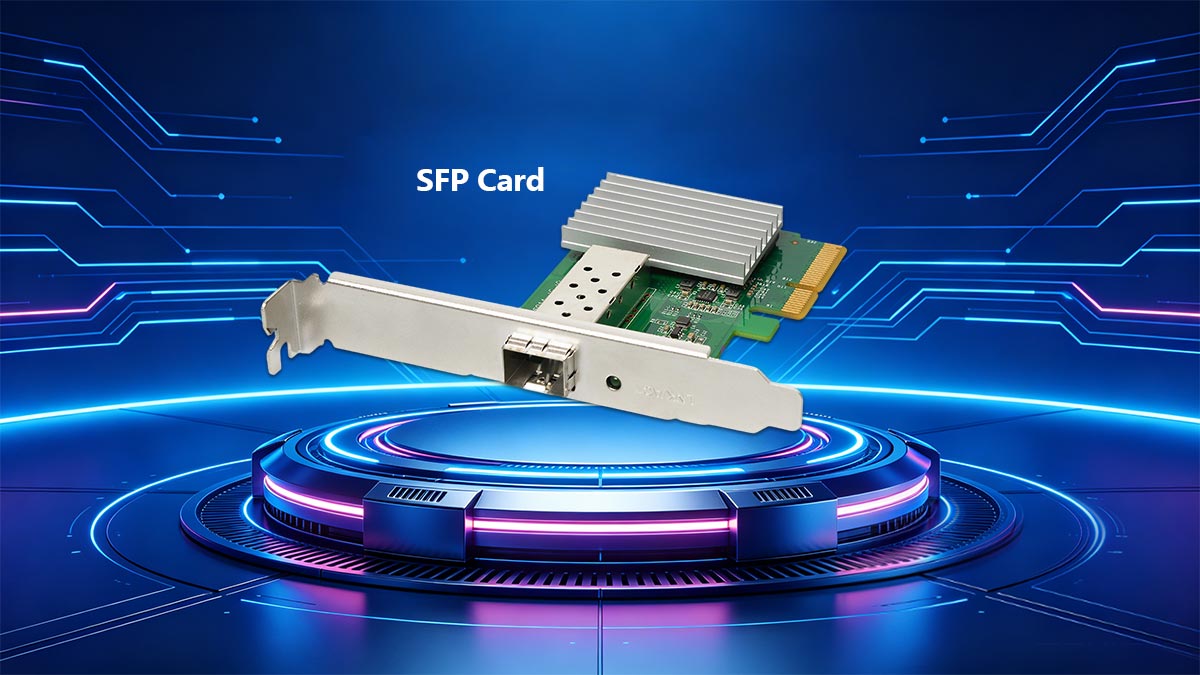
La fonction principale de la carte SFP est de convertir les signaux du bus PCIe interne du serveur en paquets de données réseau. Les cartes SFP modernes sont dotées de contrôleurs avancés qui prennent en charge des tâches de déchargement matériel, telles que le déchargement du calcul des sommes de contrôle TCP/UDP et le déchargement des envois volumineux (LSO), ce qui réduit considérablement la charge du processeur lors des opérations d'E/S réseau à large bande passante.
Une confusion fréquente chez les débutants en informatique est de confondre la carte PCIe avec la technologie des ports physiques. L'architecture SFP étant intrinsèquement modulaire, le matériel est strictement divisé en deux composants distincts fonctionnant à des niveaux différents de la pile réseau.
Pour lever toute ambiguïté, voici la distinction technique :
| Paramètre technique | Carte SFP PCIe (NIC) | Module émetteur-récepteur SFP |
|---|---|---|
| Fonction primaire | Traitement réseau, interface pilote du système d'exploitation, déchargement du processeur. | Conversion de signal (électrique vers optique / cuivre). |
| Couche OSI du réseau | Couche liaison de données (couche 2 / MAC) | Couche physique (Couche 1 / PHY) |
| Remplaçable à chaud ? | Non. L'installation PCIe nécessite l'arrêt du serveur. | Oui. Installation et utilisation immédiates, sans interruption du système. |
| Exemples d'entités | Intel X520-DA2, Mellanox ConnectX-3, Broadcom NetXtreme | 10GBASE-SR (optique), 10GBASE-T (cuivre RJ45), convertisseur numérique-analogique 10G |
En séparant le contrôleur logique (la carte) du support physique (l'émetteur-récepteur), l'architecture SFP offre une flexibilité inégalée. Si une entreprise doit migrer un serveur d'une connexion cuivre courte portée de 3 mètres vers une liaison fibre monomode de 10 kilomètres, l'administrateur informatique n'a qu'à remplacer un module émetteur-récepteur à 20 $, au lieu de changer une carte réseau PCIe à 200 $.
Une carte SFP traite les E/S du réseau du serveur via une architecture en quatre étapes : l’interface hôte PCIe extrait les données de la carte mère ; le contrôleur NIC (ASIC) formate les données au niveau de la couche MAC ; les signaux électriques traversent le boîtier SFP ; et enfin, la couche module (émetteur-récepteur) convertit ces signaux électriques en impulsions lumineuses physiques (fibre) ou en fréquences électriques (cuivre) pour la transmission sur le réseau.
Pour comprendre comment une carte SFP améliore les performances d'un serveur, il faut suivre le parcours d'un paquet de données, du processeur du serveur jusqu'au commutateur réseau externe. L'architecture d'une carte réseau SFP est spécifiquement conçue pour séparer le traitement logique des données de la transmission physique du signal. Cette séparation des tâches confère à la technologie SFP son débit élevé et sa latence minimale.
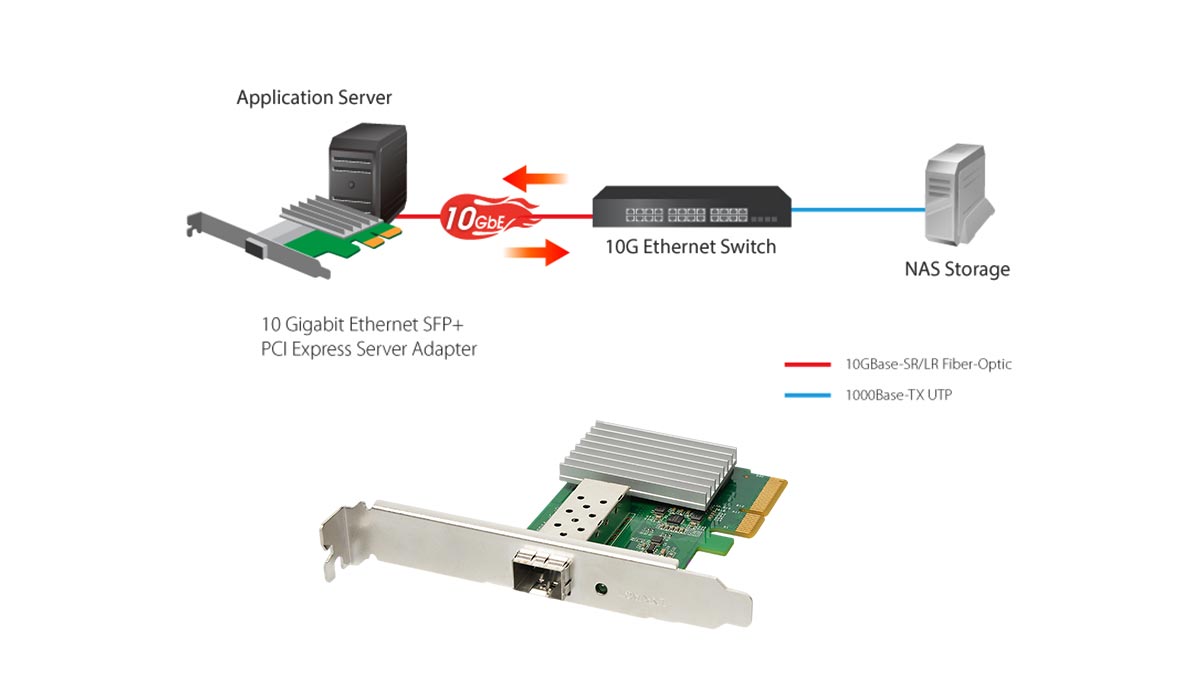
Une carte SFP de qualité professionnelle s'appuie sur quatre couches matérielles distinctes pour gérer les E/S réseau.
Le génie fondamental de l'architecture des cartes SFP réside dans la manière dont elle répartit les responsabilités entre la signalisation et la connectivité.
La carte gère la signalisation : le contrôleur NIC prend en charge les calculs complexes. Il utilise une architecture SerDes (sérialiseur/désérialiseur) pour convertir les données parallèles provenant du bus PCIe du serveur en un flux de données électriques série à haut débit. La carte applique les codes de correction d'erreurs (ECC) et gère le contrôle de flux. Elle effectue toutes ces opérations sans se soucier du support (cuivre ou fibre optique) que les données emprunteront.
Le module détermine la connectivité : une fois que le signal électrique sérialisé atteint le connecteur à 20 broches à l'intérieur de la cage, l'émetteur-récepteur prend le relais.
En limitant la carte PCIe à la signalisation logique et le module à la connectivité physique, les réseaux d'entreprise optimisent la durée de vie du matériel. Vous pouvez ainsi moderniser votre infrastructure de câblage physique sans avoir à retirer la carte réseau de la carte mère du serveur.
L'évolution des cartes réseau SFP est marquée par l'augmentation des capacités de bande passante dictée par l'accord multi-sources (MSA). Partant du SFP initial à 1 Gbit/s, l'architecture a évolué vers 10 Gbit/s (SFP+), 25 Gbit/s (SFP28) et jusqu'à 40 Gbit/s/100 Gbit/s+ grâce aux configurations Quad (QSFP). Cette progression permet aux centres de données d'adapter les E/S réseau pour prendre en charge des applications à haut débit telles que NVMe over Fabrics (NVMe-oF), tout en conservant la rétrocompatibilité.
Avec l'évolution du matériel serveur — passant des disques durs mécaniques à plateaux au stockage NVMe PCIe Gen 4/Gen 5 haute vitesse —, le réseau est devenu le principal goulot d'étranglement. Un serveur capable de lire des données à 7 000 Mo/s en interne est fortement limité si sa carte réseau ne peut exporter ces données qu'à 125 Mo/s (le débit théorique maximal d'une connexion 1 Gbit/s).
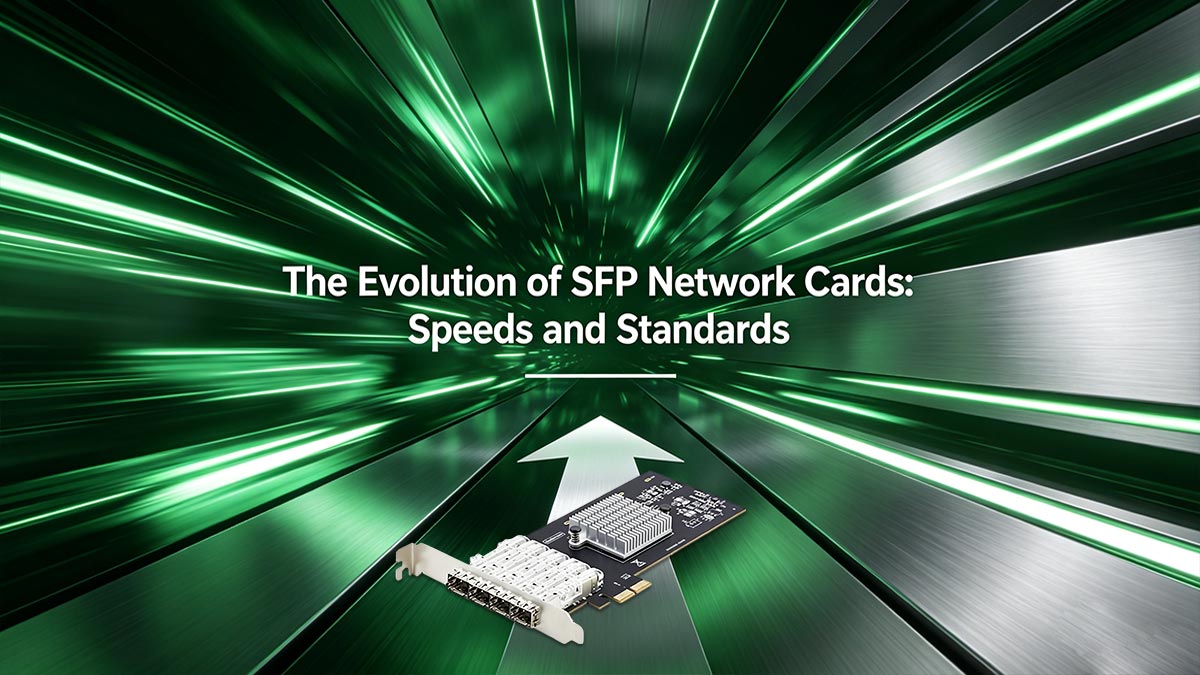
Pour répondre aux exigences de la virtualisation d'entreprise, du cloud computing et des clusters de stockage domestiques avancés, l'architecture SFP a dû évoluer. L'organisme de normalisation, la MSA, a conçu cette évolution en accordant une importance primordiale à la rétrocompatibilité. Ainsi, les dimensions physiques de l'émetteur-récepteur et du châssis de la carte PCIe sont restées globalement inchangées d'une génération à l'autre, permettant aux professionnels de l'informatique de mettre à niveau leurs commutateurs réseau et leurs cartes réseau de serveur de manière progressive.
Lors du choix d'une carte réseau PCIe, il est essentiel de comprendre sa nomenclature spécifique, car celle-ci détermine directement le débit de données maximal supporté et les normes IEEE auxquelles elle est conforme. Voici une description technique de l'écosystème SFP :
| Facteur de forme | Débit de données maximum | Architecture de ruelle | Cas d'utilisation principal | Norme IEEE (typique) |
|---|---|---|---|---|
| SFP | 1 Gbps | 1 x 1G | LAN hérité, ports de gestion | IEEE 802.3z |
| SFP + | 10 Gbps | 1 x 10G | Laboratoires domestiques, stockage pour PME, serveurs périphériques | IEEE 802.3ae |
| SFP28 | 25 Gbps | 1 x 25G | Centres de données d'entreprise, Top-of-Rack | IEEE 802.3 par |
| QSFP + | 40 Gbps | 4 x 10G | Liaisons montantes de commutateurs centraux, agrégation héritée | IEEE 802.3ba |
| QSFP28 | 100 Gbps | 4 x 25G | HPC (calcul haute performance), Spine-Leaf | IEEE 802.3bm |
Lors de la conception de l'architecture réseau de votre serveur, il est généralement recommandé de passer directement du 10G (SFP+) au 25G (SFP28), sans passer par le 40G (QSFP+). L'architecture 25G à voie unique offre une solution de mise à niveau plus économique et écoénergétique, et s'aligne parfaitement sur les capacités de bande passante PCIe 4.0 modernes.
Les professionnels de l'informatique et les administrateurs système privilégient les cartes SFP aux connecteurs RJ45 (10GBASE-T) standard, principalement pour résoudre les problèmes de forte dissipation thermique, de consommation énergétique élevée et de latence. L'architecture SFP permet l'utilisation de câbles en cuivre à connexion directe (DAC) ou de fibres optiques, qui consomment moins de 1 W par port, contre 3 à 5 W pour les connecteurs RJ45 10G. De plus, les cartes SFP offrent une grande modularité, une immunité aux interférences électromagnétiques (EMI) et la possibilité d'étendre les connexions bien au-delà de la limite de 100 mètres des paires torsadées en cuivre.
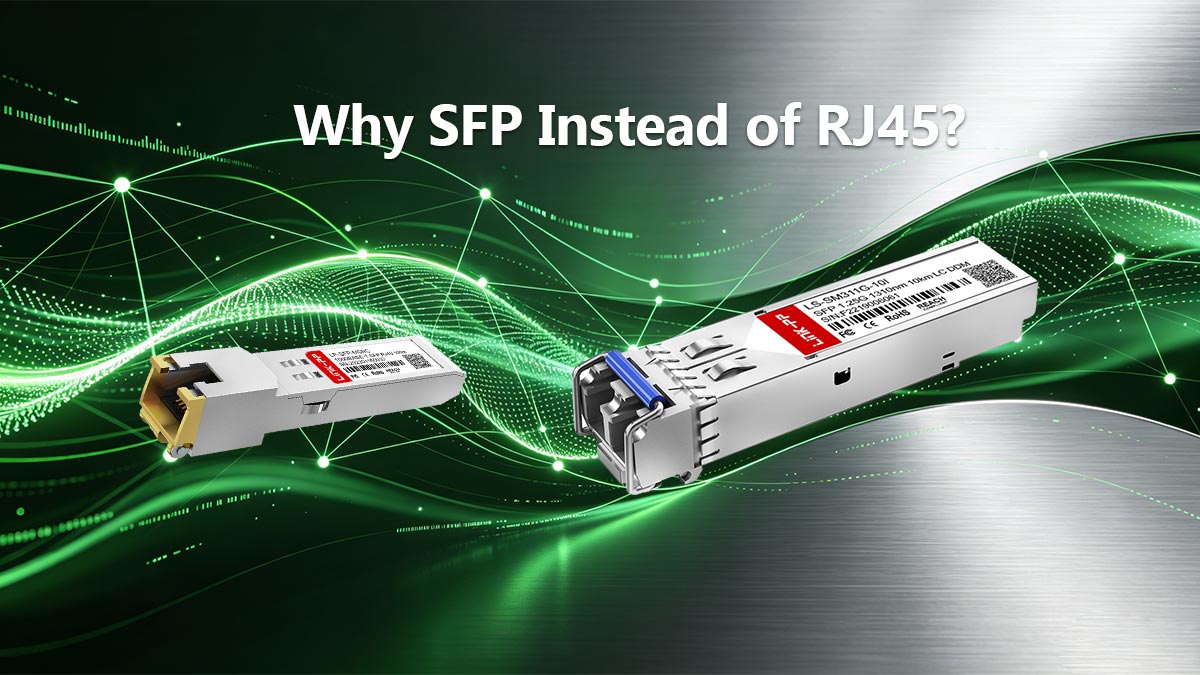
Lors de la mise à niveau d'un réseau serveur vers 10 Gbit/s ou plus, le choix entre SFP+ et 10GBASE-T (RJ45) est un sujet de débat récurrent sur les forums informatiques et les plateformes d'ingénierie d'entreprise . Le RJ45 étant la norme omniprésente dans l'électronique grand public, de nombreux débutants le considèrent comme le choix logique pour les mises à niveau de serveurs. Cependant, dans les centres de données à forte densité et les environnements de laboratoire domestiques avancés, les cartes réseau RJ45 à ports fixes sont généralement considérées comme inférieures aux cartes SFP modulaires.
Pour comprendre pourquoi les réseaux d'entreprise fonctionnent sur SFP, il faut examiner les limitations physiques de l'Ethernet cuivre et les avantages opérationnels du matériel modulaire.
Une carte réseau PCIe RJ45 standard est un composant matériel fixe. Elle est exclusivement conçue pour utiliser des câbles à paires torsadées en cuivre (de type CAT6 ou CAT6a). Si la topologie de votre réseau évolue et que vous devez connecter un serveur à un commutateur situé dans un autre bâtiment, à 500 mètres de distance, cette carte RJ45 devient inutilisable, car la portée de l'Ethernet standard est limitée à 100 mètres.
À l'inverse, une carte SFP offre une flexibilité totale au niveau de la couche physique. Le port étant simplement un boîtier vide, il est possible d'adapter le support de connectivité aux exigences précises de l'emplacement du serveur en remplaçant simplement l'émetteur-récepteur :
Avec une carte SFP, votre serveur est évolutif. Il vous suffit de mettre à niveau le module émetteur-récepteur à 20 $ au lieu de remplacer toute la carte d'extension PCIe lorsque les besoins du réseau évoluent.
La principale raison pour laquelle les experts rejettent le RJ45 10G au profit du SFP+ tient à des contraintes physiques. Transmettre 10 gigabits par seconde sur une paire torsadée en cuivre non blindée exige un traitement numérique du signal (DSP) massif pour filtrer le bruit de fond. Pour ce faire, la norme 10GBASE-T utilise un codage PAM16 (modulation d'amplitude d'impulsion) complexe.
Cette importante surcharge de traitement engendre trois pénalités opérationnelles majeures que l'architecture SFP évite totalement :
| Mesure des performances | SFP+ (avec DAC ou fibre) | RJ45 (10GBASE-T Cuivre) |
|---|---|---|
| Consommation d'énergie | ~0.7W à 1.5W par port. Très efficace. | ~3W à 5W par port. Consomme une énergie considérable. |
| Production de chaleur | Fonctionne à basse température. Convient aux boîtiers sans ventilateur ou à faible flux d'air. | Chauffe énormément. Risque de surchauffe sans refroidissement actif. |
| Latence d'encodage | ~0.1 microsecondes. Idéal pour le trading haute fréquence et les SAN. | ~2.5 microsecondes. Délai notable dans les environnements de stockage à forte activité d'E/S. |
| Immunité EMI | Immunité totale (fibres). Insensible aux lignes électriques et aux moteurs. | Vulnérable. Sensible à la diaphonie et aux interférences électriques externes. |
Risque de limitation thermique : Dans un châssis serveur 1U dense, la présence de nombreux ports RJ45 10G génère une chaleur localisée suffisante pour contraindre les ventilateurs du châssis à tourner à plein régime, augmentant ainsi le bruit et la température ambiante. De plus, l’utilisation d’un émetteur-récepteur RJ45 10G dans une cage SFP+ peut entraîner une surchauffe du module, dépassant la limite thermique de la cage et provoquant des pertes de paquets et des déconnexions réseau soudaines.
En utilisant des cartes réseau SFP associées à des câbles DAC ou à la fibre optique, les administrateurs système éliminent les goulots d'étranglement thermiques et d'alimentation de l'encodage PAM16, garantissant des E/S réseau stables à débit de ligne avec une latence ultra-faible.
Dans les déploiements réels, les cartes SFP fournissent les E/S réseau essentielles pour les migrations de machines virtuelles (VM) à chaud dans Proxmox, les pools de stockage ZFS à haut débit dans TrueNAS et le routage de paquets à débit maximal dans pfSense. Cependant, une intégration réussie exige des administrateurs informatiques qu'ils surmontent deux obstacles matériels majeurs : s'affranchir de la dépendance vis-à-vis des fournisseurs OEM en matière d'émetteurs-récepteurs et garantir la compatibilité des pilotes du noyau du système d'exploitation.
Le passage d'un réseau standard de 1 Gbit/s à une architecture SFP de 10 ou 25 Gbit/s modifie fondamentalement les capacités d'un serveur. Dans les datacenters d'entreprise, les cartes SFP28 (25G) constituent l'épine dorsale des infrastructures hyperconvergées (HCI) et des technologies NVMe over Fabrics (NVMe-oF). Pour les passionnés, les cartes SFP+ (10G) permettent de créer des SAN (Storage Area Networks) personnalisés aux performances identiques à celles des baies de stockage professionnelles.
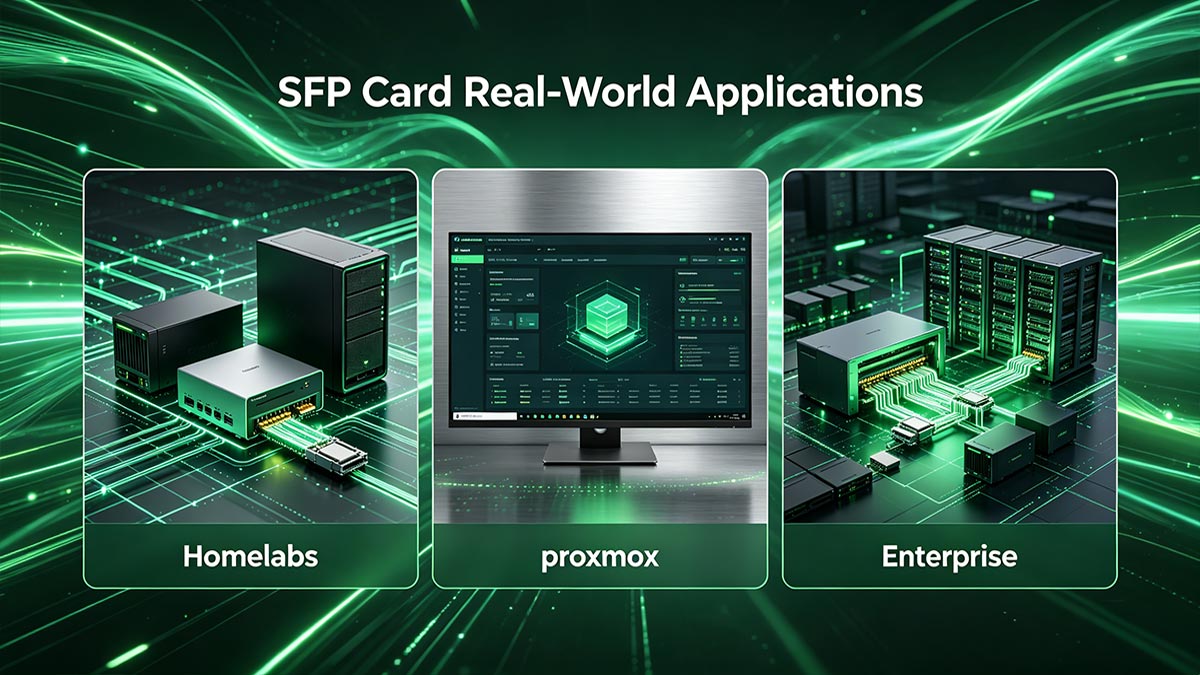
Toutefois, l'achat d'une carte réseau SFP est plus complexe que celui d'une carte graphique grand public. Pour garantir une connectivité réseau optimale, il est indispensable de prendre en compte les restrictions de l'écosystème du fournisseur et la compatibilité logicielle.
L'un des aspects les plus frustrants de l'architecture SFP est la dépendance vis-à-vis du fournisseur. Les principaux fabricants de matériel (tels que Cisco, HP et Intel) programment souvent leurs cartes PCIe SFP et leurs commutateurs réseau pour effectuer une vérification de l'EEPROM (mémoire morte programmable et effaçable électriquement) lors de l'insertion d'un émetteur-récepteur. Si la carte ne détecte pas de signature numérique propriétaire correspondant à la marque sur le module, elle génère une erreur « émetteur-récepteur non pris en charge » et désactive le port.
Étant donné que les émetteurs-récepteurs de marque OEM sont souvent majorés de 300 % à 500 %, les professionnels de l'informatique et les constructeurs de laboratoires personnels utilisent des stratégies spécifiques pour contourner ces blocages logiciels artificiels :
ixgbe allow_unsupported_sfp=1 contourne complètement le verrouillage matériel.La fiabilité d'une carte réseau dépend de son pilote logiciel. Les cartes réseau 10G RJ45 grand public (souvent équipées de chipsets Realtek ou Aquantia) sont connues pour leurs pertes de paquets, leur surchauffe, ou tout simplement pour l'absence de pilotes compatibles en dehors de Windows. Lors de la conception de serveurs d'entreprise ou de serveurs domestiques sur mesure, il est impératif de choisir une carte SFP avec un pilote natif intégré au noyau pour votre système d'exploitation.
Voici le consensus de l'industrie sur la compatibilité entre le système d'exploitation et la carte graphique pour les plateformes serveur les plus courantes :
| Système d'exploitation | Noyau sous-jacent | Cartes SFP hautement recommandées | Pourquoi cela fonctionne |
|---|---|---|---|
| TrueNAS Core / pfSense | FreeBSD | Chelsio T520/T580, Intel X520/X710 | FreeBSD est réputé pour sa grande exigence en matière de matériel réseau. Chelsio et Intel intègrent nativement des pilotes cxgbe et ixgbe directement dans le noyau BSD, garantissant ainsi une stabilité à toute épreuve pour le stockage et le routage. |
| Échelle Proxmox VE / TrueNAS | Debian Linux | Mellanox ConnectX-3 ou ConnectX-4, Intel | Linux bénéficie d'une large prise en charge, mais les cartes Mellanox offrent des capacités SR-IOV (Single Root I/O Virtualization) supérieures prêtes à l'emploi, vous permettant de transmettre des interfaces réseau virtuelles directement aux machines virtuelles avec une latence quasi nulle. |
| VMware ESXi (vSphere) | Hyperviseur propriétaire | Mellanox ConnectX-4/5, Intel X710 | ESXi 7.0 et 8.0 ont progressivement déprécié les anciens pilotes (comme vmklinux). Les cartes graphiques anciennes telles que la ConnectX-3 ou l'Intel X520 risquent de ne pas être reconnues. Il est impératif de toujours vérifier la compatibilité matérielle avec la liste officielle VMware Hardware Compatibility List (HCL). |
En associant une carte SFP de qualité professionnelle, compatible avec tous les matériels (comme une Mellanox ConnectX-3 d'occasion), au noyau natif approprié, vous garantissez un fonctionnement optimal de votre serveur en termes d'E/S réseau, en évitant complètement la limitation thermique et les plantages de pilotes associés aux équipements réseau grand public.
Pour fournir des réponses claires et immédiates aux administrateurs réseau et aux acheteurs de matériel informatique, voici les questions les plus courantes concernant l'architecture SFP, présentées de manière à faciliter la consultation.
Une carte SFP sert d'interface haut débit entre la carte mère d'un serveur et les réseaux externes. Elle traite le trafic réseau de la couche liaison de données (MAC), déchargeant ainsi le processeur des calculs d'entrée/sortie. Grâce à ses emplacements modulaires, elle permet aux administrateurs réseau d'adapter le serveur à différents supports de connexion physiques, notamment la fibre optique et le cuivre, par simple remplacement des modules émetteurs-récepteurs.
Une carte réseau SFP est une carte d'extension PCIe spécialisée (carte d'interface réseau ou NIC) conçue pour les serveurs et les réseaux d'entreprise. Contrairement aux cartes réseau standard dotées de ports Ethernet RJ45 permanents, une carte SFP utilise des modules SFP (Small Form-Factor Pluggable). Cette architecture modulaire permet à la carte de prendre en charge plusieurs débits réseau (de 1 Gbit/s à plus de 100 Gbit/s) et supports de transmission en fonction de l'émetteur-récepteur intégré.
Les professionnels de l'informatique privilégient le SFP au RJ45 (10GBASE-T) principalement pour éviter une forte dissipation de chaleur et une consommation d'énergie excessive. Alors que les émetteurs-récepteurs RJ45 10G consomment jusqu'à 5 W par port et risquent une limitation thermique, les cartes SFP utilisant des câbles DAC ou la fibre optique consomment moins de 1 W. De plus, l'architecture SFP offre une latence d'encodage réduite, une immunité totale aux interférences électromagnétiques (EMI) et la possibilité de dépasser la limite de portée de 100 mètres du RJ45.
Le choix de la meilleure carte SFP dépend de cinq facteurs : la vitesse du réseau, la compatibilité avec le système d’exploitation, l’interopérabilité avec les commutateurs, la longueur du câble et l’évolutivité future. Pour la plupart des serveurs d’entreprise et des déploiements NAS, les adaptateurs SFP+ 10G à deux ports offrent le meilleur compromis entre performances et coût, tandis que les cartes SFP28 25G sont mieux adaptées aux clusters de virtualisation, au stockage NVMe et aux environnements de centres de données modernes.
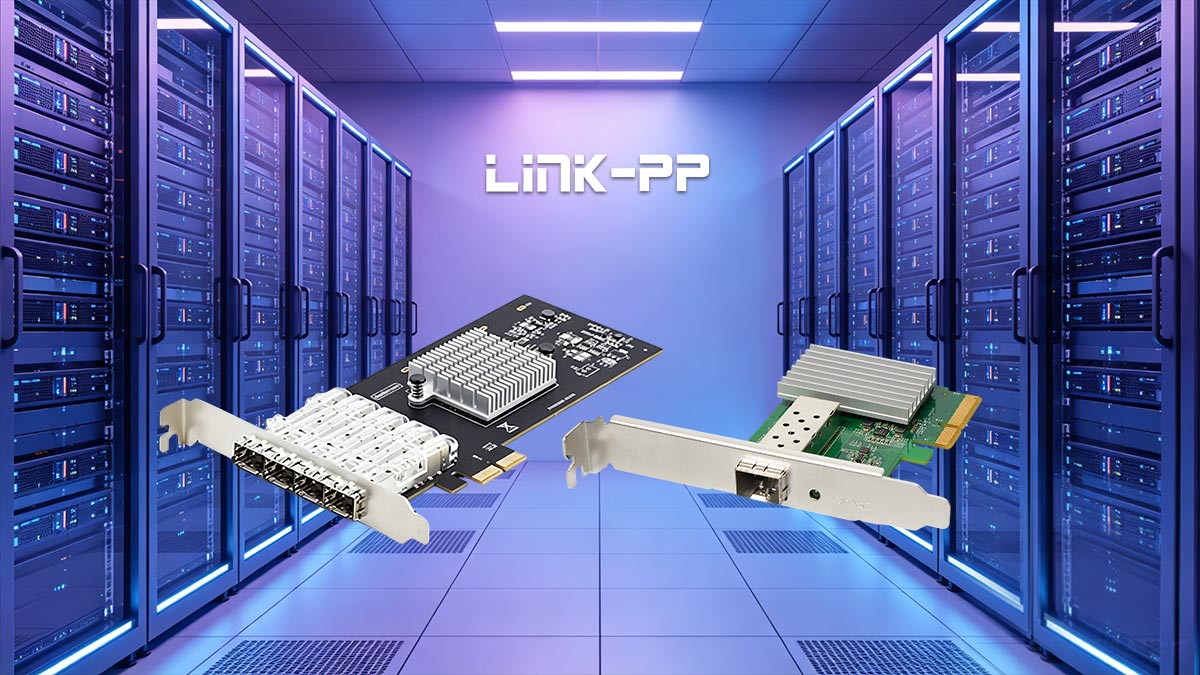
Choisir une carte SFP ne se limite pas à sélectionner une vitesse réseau. L'adaptateur doit être compatible avec votre plateforme serveur, votre système d'exploitation, votre commutateur réseau et votre infrastructure de câblage. Évaluer ces exigences avant le déploiement permet d'éviter les problèmes de compatibilité et de réduire les coûts de mise à niveau ultérieurs.
La première décision consiste à déterminer le débit réellement requis par vos charges de travail. Surdimensionner une carte réseau augmente souvent les coûts sans apporter de gains de performance mesurables.
Avant d'acheter une carte réseau, vérifiez que son chipset est entièrement compatible avec votre système d'exploitation et votre plateforme hyperviseur.
La disponibilité des pilotes et la prise en charge à long terme du firmware sont souvent plus importantes que les spécifications brutes.
Les performances du réseau dépendent de l'ensemble de la chaîne de connectivité. Certains commutateurs imposent une validation stricte des émetteurs-récepteurs, tandis que d'autres prennent en charge une gamme plus étendue d'optiques tierces.
Lors du déploiement de cartes SFP, assurez-vous de la compatibilité entre :
L'utilisation d'émetteurs-récepteurs conformes à la norme MSA peut simplifier l'intégration dans des environnements multi-fournisseurs.
La distance physique entre les appareils a un impact direct sur le type de solution de connectivité requis.
| Distance | Médias recommandés | Cas d'utilisation typique |
|---|---|---|
| 0-5 m | DAC passif | Connexions serveur-commutateur au sein d'un rack |
| 5-30 m | DAC actif ou AOC | Déploiements inter-racks |
| 30-300 m | Fibre multimode + optique SR | Interconnexions des centres de données |
| 300 mois et plus | Fibre monomode + optique LR/ER | Réseautage sur le campus et à distance |
De nombreuses organisations déploient initialement des réseaux 10G, puis migrent vers des architectures 25G ou plus rapides. Choisir du matériel à la compatibilité éprouvée et offrant des options de connectivité évolutives permet de prolonger la durée de vie de votre infrastructure.
Pour les déploiements à faible coût, les adaptateurs réseau d'entreprise reconditionnés offrent souvent un excellent rapport qualité-prix. Pour les environnements critiques, les cartes réseau d'entreprise neuves, bénéficiant d'un support du fournisseur, restent la solution privilégiée.
| Application | Solution recommandée |
|---|---|
| Serveur pour petites entreprises | SFP+ 10G à deux ports |
| Stockage NAS | 10G SFP+ avec connectivité DAC |
| Cluster de virtualisation | Double port 25G SFP28 |
| IA et calcul haute performance | 25G SFP28 ou supérieur |
| Centre de données pour les entreprises | 25G SFP28 avec connectivité fibre |
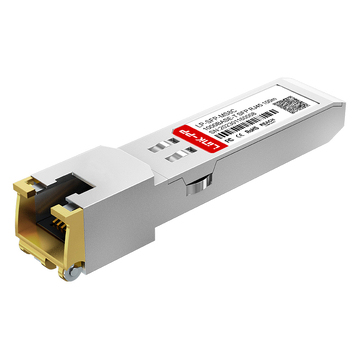
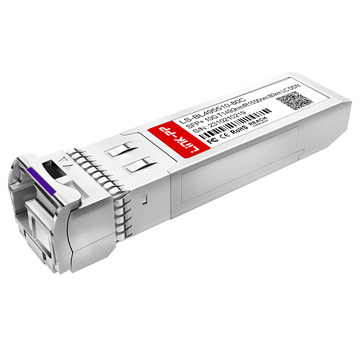
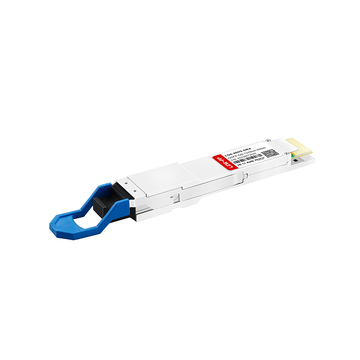
Choisir la carte SFP appropriée ne représente qu'une partie du processus de déploiement. La fiabilité des performances du réseau dépend également de la sélection d'émetteurs-récepteurs, de câbles DAC, de câbles à fibre optique et d'interfaces de commutation compatibles, fonctionnant ensemble au sein d'un écosystème complet.
Pour les organisations qui prévoient de déployer de nouveaux serveurs ou de mettre à niveau leur infrastructure réseau existante, LINK-PP Boutique officielle propose une large gamme d'émetteurs-récepteurs SFP, SFP+ et SFP28, de câbles DAC et de solutions de connectivité conçus pour les réseaux d'entreprise, les centres de données, les systèmes Ethernet industriels et les environnements de cloud computing.
Le choix de composants réseau vérifiés et conformes aux normes contribue à garantir un fonctionnement stable, simplifie l'interopérabilité entre les fournisseurs et fournit une base évolutive pour la croissance future de la bande passante.
Connectez-vous ou créez un compte pour suivre votre demande en ligne.